
Circle of Transmission: The Living Loom
“守定” — Stillness as the Root of Return: An Annotated Reading of the Xiuzhen Baochuan (修真寶傳)
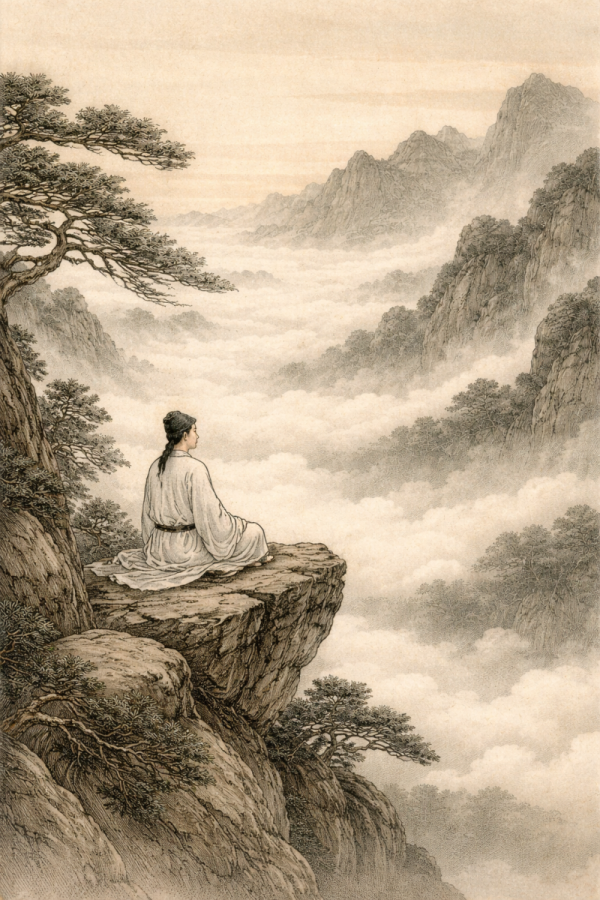
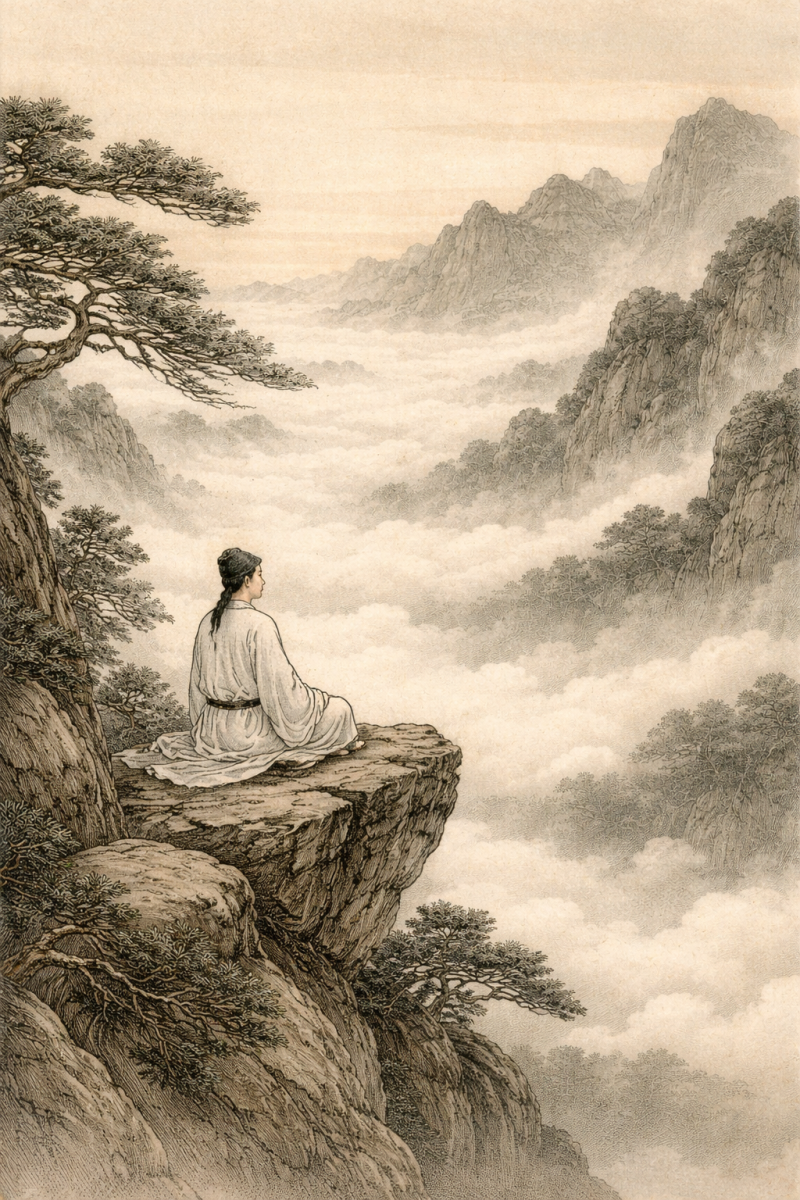
The illustration, ‘the mountain contemplative‘, is offered as a visual echo—not of the text’s origin, but of its atmosphere.
*
Today’s sharing from the Blue House of Via-HYGEIA is a selection presenting extracts from the Xiuzhen Baochuan (修真寶傳, Precious Transmission of Cultivating Reality), focusing on the theme of stillness — drawn from pages 6 to 8 of a Qing-dynasty woodblock print, acquired at Panjiayuan antique market in Beijing in the year 2000 and held in our personal collection. This article’s intention is not to elaborate towards a scholarly edition — but to be just an occasional reader’s transmission. We plan to select soon more passages from the ‘Xiuzhen Baochuan‘ on a thematic basis. The next selection will be: ‘The body as alchemical vessel‘.
**
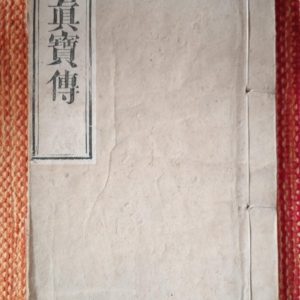
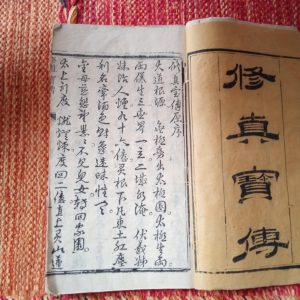
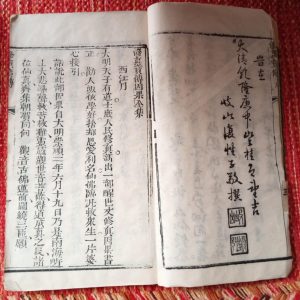
A Contextual Introduction
The Xiuzhen Baochuan belongs to the “precious scroll” (寶卷 bǎojuàn) tradition — vernacular texts composed not for academic study, but for chanting, memorization, and embodied practice among lay communities. Circulated hand-to-hand, printed on coarse paper with woodblocks, they were tangible vessels offering a clear and experience-induced method of cultivation aiming at salvation. Though this particular copy dates to the late Qing dynasty, its teachings crystallized in the syncretic religious movements of the late Ming: Daoist internal alchemy refracted through Buddhist vows, cosmology pressed into the service of practice.
Across its pages, the text articulates a practical soteriology — not abstract doctrine, but a path of transformation. Through eight interwoven passages spanning cultivation, crisis, and completion, a threefold movement unfolds. First, the practitioner learns to maintain stillness (守定 shǒudìng). Presented not as withdrawal from the world, but as the necessary foundation for cosmic return, it is the stabilization of the three fires: essence, qi, and spirit. When these are held still, the ‘holy infant‘ gestates. Then the world enters crisis (三災將近 sān zāi jiāng jìn — the three disasters approaching). Finally, from that stillness, the practitioner is born anew, ready to descend again as savior (親身臨凡 qīn shēn lín fán). The bodhisattva path, here, is not sudden enlightenment but gestation; not escape, but cultivated return.
This annotated reading traces the architecture of stillness across the text’s progression — offering pinyin transliterations to render its technical vocabulary accessible to non-Chinese readers, while preserving the syncretic vitality of its Daoist-Buddhist alchemical vision. What follows is an invitation: to read slowly, to let the phrases settle, to return — again and again — to 守定.
Unexpectedly, in the midst of this architecture, a Luohan appears — Bodhidharma, the First Patriarch, revered in the folk tradition — and weeps. His tears are not for himself, but for the world that received his teaching as name, not substance.
*
The Selection
*
Passage 1: The Foundation of Stillness
Location: Page 6, right column, lines 3–6
三火守定 空身空心 存無守有 頃刻而成
回光返照 產出聖嬰
Sān huǒ shǒu dìng, kōng shēn kōng xīn, cún wú shǒu yǒu, qǐng kè ér chéng.
Huí guāng fǎn zhào, chǎn chū shèng yīng.
The three fires guard stillness—
empty body, empty heart.
Preserve non-being, abide in being;
in an instant, it is accomplished.
Turn the light inward:
the holy infant is born.
Commentary
‘守定’ (shǒudìng) is the hinge. Not passive quiet but vigilant abiding. The ‘three fires‘ are essence, qi, and spirit—the three treasures that must be stabilized before transformation can occur. When they are stilled, the body and heart empty not by force but by settling. The light that once chased outward turns back to its source. What gestates there, the text calls ‘holy infant‘.
*
Passage 2: The Paradox of Emptying
Location: Page 6, right column, lines 6–8
杳杳冥冥 三年九載 一紀飛昇
得者成聖 聞之超生
Yǎo yǎo míng míng, sān nián jiǔ zǎi, yī jì fēi shēng.
Dé zhě chéng shèng, wén zhī chāo shēng.
Dark and deep, still and obscure—
three years, nine years, a full cycle, then flying ascent.
Those who attain become sages;
those who hear of it transcend birth.
Commentary
The doubling of “杳杳冥冥” (yǎo yǎo míng míng) echoes the Daodejing’s description of the Tao as ‘elusive, evasive‘. This is not mere physical stillness but a return to the state before heaven and earth parted. The infant gestates in darkness. Nothing ‘happens‘ for years—then, suddenly, ascent. The text promises that even to hear of this path is to receive its momentum.
*
Passage 3: The Danger of Distraction
Location: Page 6, left column, lines 9–14
不修片善 害死殺生
貪嗔痴愛 奸盜邪淫
不信佛經
Bù xiū piàn shàn, hài sǐ shā shēng.
Tān chēn chī ài, jiān dào xié yín.
Bù xìn fó jīng.
Not cultivating even a fragment of goodness—
harming, killing living beings.
Greed, anger, delusion, attachment—
treachery, theft, sexual misconduct.
Not believing the Buddha’s scriptures.
Commentary
Where Passage 1 names what to cultivate, this lists what must be abandoned. These are not sins in a juridical sense but disturbances—movements of mind and body that prevent 守定. The restless chase after phenomena; the still one abides. The text does not moralize; it diagnoses.
*
Passage 4: The Cosmic Response to Stillness
Location: Page 5, right column, lines 1–8
古佛聖壽無疆爾時 觀音古佛升座九蓮臺上現大神通
演說大乘無為妙法只見天垂寶蓋地湧金蓮
金童玉女兩邊分 龍天八部來站定
Gǔ fó shèng shòu wú jiāng ěr shí, Guānyīn gǔ fó shēng zuò jiǔ lián tái shàng xiàn dà shén tōng.
Yǎn shuō dà chéng wú wéi miào fǎ, zhǐ jiàn tiān chuí bǎo gài, dì yǒng jīn lián.
Jīn tóng yù nǚ liǎng biān fēn, lóng tiān bā bù lái zhàn dìng.
At that time of the Ancient Buddha’s limitless sacred longevity,
the Ancient Buddha Guanyin ascended the nine‑petaled lotus throne
and manifested great spiritual powers,
expounding the Mahayana wondrous method of non‑action.
One saw heaven hanging with precious canopies,
earth springing forth golden lotuses;
golden lads and jade maidens arranged on both sides;
the eight classes of dragon deities came and stood still (來站定).
Commentary
Here the same character, 定 (dìng), appears as the effect of sacred presence. The dragon deities, wild forces of nature, do not need to suppress their motion—they simply stand still when the Ancient Buddha ascends the throne. This is the promise: when one’s original nature takes its seat, the scattered energies of body and world settle of their own accord.
*
Passage 5: The Method of Returning
Location: Page 4, left column, lines 1–6
大道根源 無極動出太極圈
太極生兩儀 生三才 生萬物
伏羲姊妹治人烟 九十六億靈根下凡塵
Dà dào gēn yuán, wú jí dòng chū tài jí quān.
Tài jí shēng liǎng yí, shēng sān cái, shēng wàn wù.
Fú Xī zǐ mèi zhì rén yān, jiǔ shí liù yì líng gēn xià fán chén.
The root source of the Great Dao—
from Wuji, movement produces the Taiji circle.
Taiji produces the two modes, the three powers, the myriad things.
The Fu Xi siblings governed human affairs;
9.6 billion spiritual roots descended to the dust of the world.
Commentary
This is the cosmological diagnosis: manifestation is movement away from source. The ‘spiritual roots‘ (靈根 líng gēn) are the original souls sent down into incarnation, scattered into multiplicity. Stillness is the method of return—not by adding anything, but by reversing the sequence. From the myriad, back to the three; from the three, back to the two; from the two, back to the circle; from the circle, back to the stillness before the circle moved.
*
Passage 6: The Urgency of Practice
Location: Page 3, right column, lines 1–6
達摩東土勸善普度九月返回天宮哭訴
拿顏 金剛 韋馱 奏 累集訓仙
共議其事 難以收圓 開荒先度 祇門面哄名
Dámó Dōng tǔ quàn shàn pǔ dù, jiǔ yuè fǎn huí tiān gōng kū sù.
Ná yán, Jīn gāng, Wéi tuó, zòu, lěi jí xùn xiān.
Gòng yì qí shì, nán yǐ shōu yuán, kāi huāng xiān dù, zhǐ mén miàn hōng míng.
Bodhidharma in the Eastern Land exhorted goodness and universally saved;
in the ninth month returned to the Heavenly Palace, weeping and lamenting…
They jointly discussed this matter—difficult to bring to completion.
Opening the wilderness, first saving—merely fooling people with superficial names.
Commentary
The appearance of Bodhidharma is unexpected. He came, he taught, he returned—weeping. Mind‑to‑mind transmission, it seems, was not enough. People received the name but not the substance; they were ‘fooled by superficial names‘. The implication is quiet but firm: without genuine stillness, even the patriarch’s mission fails. The scripture itself becomes necessary—these words on this paper, the concrete instructions that surface conversion cannot replace.
*
Passage 7: The Fruits of Stillness
Location: Page 7, right column, lines 1–6
有傷天地 末劫釀成 三災將近 八難來臨
金母悲切 珠淚長傾 吾見不忍 立願度人
有緣有分 得上天京 無緣無分 掃入幽冥
Yǒu shāng tiān dì, mò jié niàng chéng, sān zāi jiāng jìn, bā nàn lái lín.
Jīn mǔ bēi qiè, zhū lèi cháng qīng, wú jiàn bù rěn, lì yuàn dù rén.
Yǒu yuán yǒu fèn, dé shàng tiān jīng, wú yuán wú fèn, sǎo rù yōu míng.
Injury to heaven and earth—the final kalpa brews to completion.
The three disasters approach, the eight difficulties arrive.
The Golden Mother grieves deeply, pearl tears flow long.
Seeing this, I cannot bear it—I vow to save people.
Those with affinity and share ascend to the heavenly capital;
those without affinity and share are swept into darkness.
Commentary
The world in motion is the world in crisis. The Golden Mother’s tears are not sentiment; they are the response of compassion to chaos. And her response is not to intervene directly but to teach—the text itself is her vow made visible. Those who practice the stillness of Passage 1 ascend; those caught in the movement of Passage 3 are swept away. The choice is not punishment and reward but cause and effect.
*
Passage 8: The Confirmation of Attainment
Location: Page 8, right column, lines 1–8
得圓覺會中 金剛菩薩劉素真法吾當年度圓覺之故
先度十位信善男女以作香花燈水果茶食寶珠衣佛壇運用
待候三會收圓 吾當親身臨凡 大開普度
Dé yuán jué huì zhōng, Jīn gāng pú sà Liú Sù zhēn fǎ, wú dāng nián dù yuán jué zhī gù.
Xiān dù shí wèi xìn shàn nán nǚ, yǐ zuò xiāng huā dēng shuǐ guǒ chá shí bǎo zhū yī fó tán yùn yòng.
Dài hòu sān huì shōu yuán, wú dāng qīn shēn lín fán, dà kāi pǔ dù.
Attained the assembly of Perfect Enlightenment—
the Vajra Bodhisattva Liu Suzhen’s method.
I, in that year’s degree of Perfect Enlightenment…
first saved ten faithful men and women,
using incense, flowers, lamps, water, fruit, tea, food,
precious pearls, robes, Buddha altars…
awaiting the three assemblies to gather completion,
I shall personally descend to the world and universally save.
Commentary
‘圓覺’ (yuán jué)—Perfect, Complete Enlightenment—is the fruit of sustained stillness. What were obstacles in Passage 3 (greed, attachment, chasing after things) are here transformed into offerings. The practitioner who stabilized the three fires becomes the Vajra Bodhisattva who can ‘personally descend‘. Stillness completes itself in movement. The infant born in darkness returns to save.
*
The Architecture of Stillness:
A Reader’s Synthesis
| Phase | Passage | Practice / Theme | Key Line(s) / Concept |
|---|---|---|---|
| Foundation | 1 | 三火守定 — Stabilizing the three treasures | ‘The three fires guard stillness’ |
| Purification | 1 | 空身空心 — Emptying body and mind | ‘Empty body, empty heart’ |
| Gestation | 2 | 杳杳冥冥 — Dark, obscure stillness | ‘Dark and deep… three years, nine years…’ |
| Birth | 1 | 產出聖嬰 — The holy infant is produced | ‘Turn the light inward: the holy infant is born’ |
| Distraction | 3 | 貪嗔痴愛 — The obstacles to stillness | ‘Not cultivating even a fragment of goodness’ |
| Cosmic Echo | 4 | 龍天八部來站定 — The world responds to stillness | ‘The dragon deities came and stood still’ |
| Return Path | 5 | 無極動出太極圈 — Reversing the cosmological fall | ‘From Wuji, movement produces the Taiji circle’ |
| Urgency | 6 | 達摩哭訴 — The failure of surface transmission | ‘Bodhidharma returned… weeping and lamenting’ |
| Crisis | 7 | 三災將近 — The world in motion is the world in crisis | ‘The three disasters approach’ |
| Completion | 8 | 圓覺 — Perfect enlightenment | ‘Attained the assembly of Perfect Enlightenment’ |
| Return | 8 | 親身臨凡 — Personal descent to save others | ‘I shall personally descend to the world…’ |
This table is not in the original text. It is one reader’s attempt to trace the arc that the text itself, through repetition and echo, quietly teaches; now including all eight passages as essential nodes in the journey from stillness to return.
*
Conclusion
Stillness, in this transmission, is not withdrawal. It is the necessary condition for genuine movement. The Xiuzhen Baochuan does not promise escape from the world; it promises the capacity to return to the world as one who can truly help. Bodhidharma wept because words alone were not enough. But words, when they are the vessels of stillness, can become more than words. This treatise is such a vessel. It does not describe stillness; it offers it.
*
Xiuzhen Baochuan (修真寶傳)
A complete online PDF is available
***
Related Articles


Leave a Reply