
Circle of Transmission: The Living Loom
以身作鼎爐:身體作為煉丹之器-The Body As Alchemical Vessel: An Annotated Reading of the Xiuzhen Baochuan (修真寶傳)
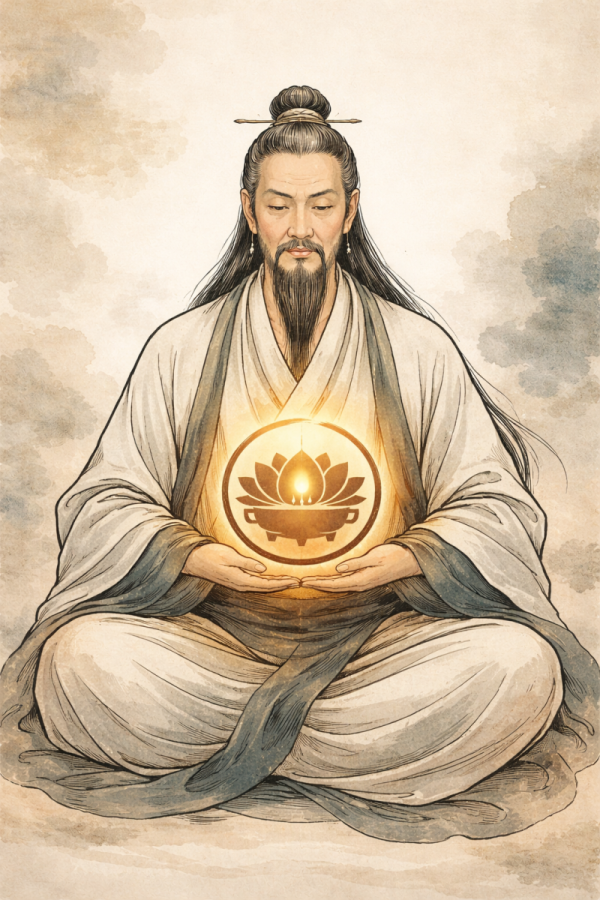
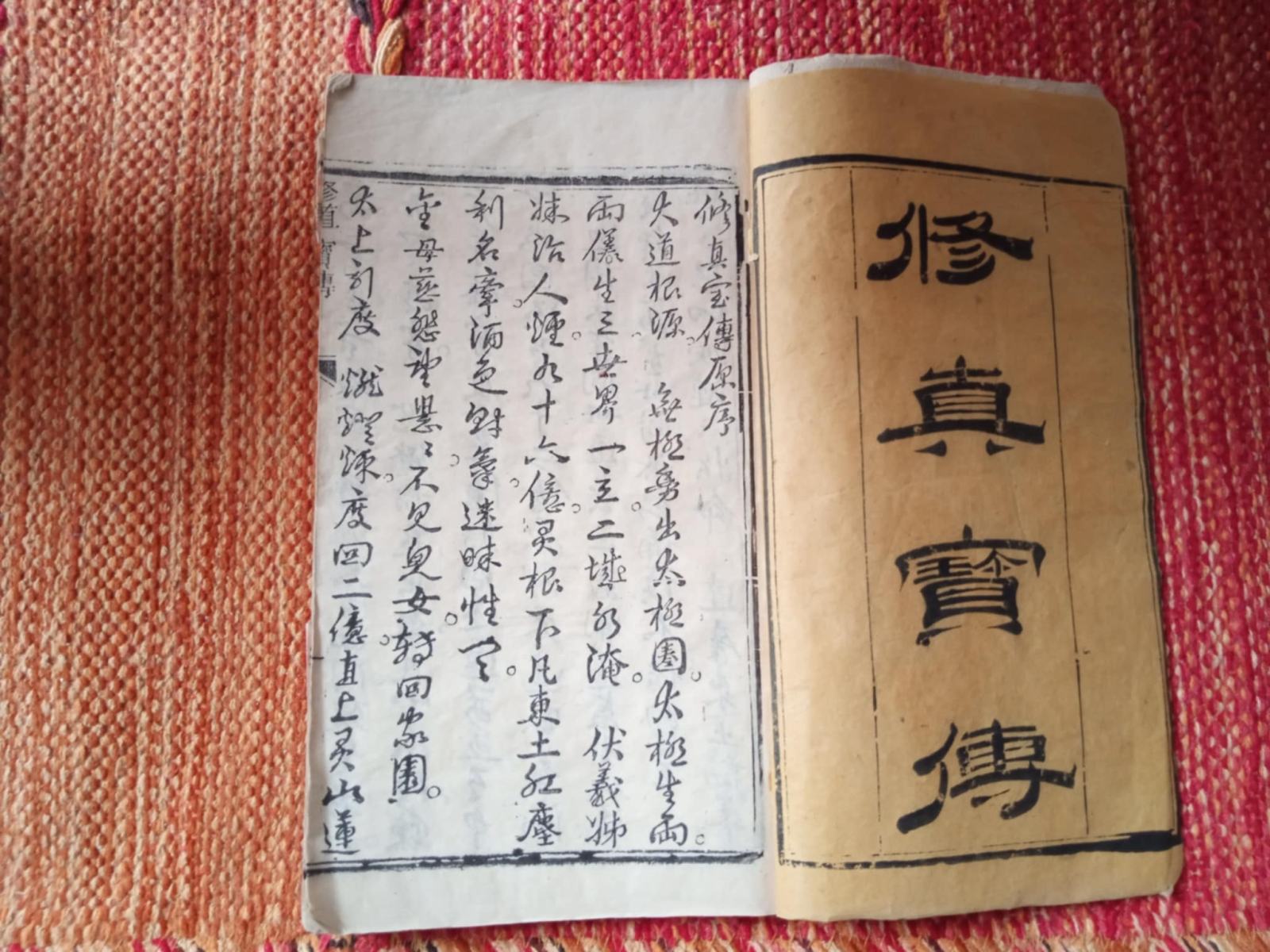
Another sharing for today from the Blue House of Via-HYGEIA presents more excerpts from the 《修真寶傳》 (Xiuzhen Baochuan / Precious Transmission of Cultivating Reality), a late imperial Chinese spiritual text of the neidan (內丹 / internal alchemy) tradition. Our focus is the body as alchemical vessel — the lu ding (爐鼎 / furnace and cauldron) where the three treasures of essence (jing 精), qi (氣), and spirit (shen 神) are gathered, refined, and reborn as the immortal embryo. This is not metaphor alone, but somatic technology: the text treats the body as the indispensable instrument of salvation, the microcosmic workshop where cosmic dissolution is reversed and original nature restored.
**
A Contextual Introduction:
The Vessel and the Crisis
The 《修真寶傳》 emerges from a world in eschatological urgency. The text speaks of the mòjié (末劫 / final kalpa) — the dissolution of cosmic order, when ‘the three disasters approach, the eight difficulties arrive‘- Sān zāi jiāng jìn, bā nàn lái lín (三災將近,八難來臨). Against this backdrop of impending collapse, the text offers not escape from the body, but transformation through it. In the classical terminology of Chinese internal alchemy, the practitioner becomes the waidan (外丹 / external alchemy) laboratory turned inward: the lower dantian (丹田 / elixir field) becomes the furnace (lu 爐), the middle dantian the cauldron (ding 鼎), and the body itself the sealed chamber where the shengtai (聖胎 / holy infant, sacred fetus) gestates. This is the dao (道 / way) of xiuzhen (修真 / cultivating reality) — not the denial of embodiment, but its alchemical completion. The following eight passages trace the architecture of this somatic soteriology: from the emptying of the vessel, through the ignition of the three fires, through the dark incubation of gestation, to the emergence of the completed being who may ‘personally descend to save‘- qīn shēn lín fán (親身臨凡). Each passage is presented with original Chinese, pinyin transliteration, English translation, and bibliotherapeutic commentary.
The Eight Selections
Passage I:
The Empty Vessel
Page 6, right column, lines 3–4
「空身空心」
Kōng shēn kōng xīn.
‘Empty body, empty heart’.
Exegesis: Before the vessel can contain the elixir, it must be emptied of ordinary contents. Kong (空 / empty, void) here carries the Buddhist resonance of śūnyatā — not mere absence, but pregnant openness. The body must become xu (虛 / hollow), like the dao itself: ‘The way is empty, yet using it does not fill it‘ (Daodejing 4). This is the preparatory stage: the alchemical vessel cannot hold the holy infant while still cluttered with the passions and attachments of mundane existence. The bibliotherapeutic invitation is to feel, in reading, where the body holds tension, where it grasps, where it refuses to empty — and to let these soften.
*
Passage II:
The Three Fires Stabilized
Page 6, right column, lines 3–4
「三火守定」
Sān huǒ shǒu dìng.
‘The three fires maintain stillness’.
Exegesis: The sanhuo (三火 / three fires) are the three treasures — jing (essence), qi (breath/energy), shen (spirit) — ignited and stabilized within the bodily furnace. Shou (守 / guard, maintain) implies vigilant attention without force; ding (定 / stillness, samadhi) is the stabilized condition of meditative absorption. The fires must neither flare wildly nor be extinguished; they require the huohou (火候 / fire timing) that is the master’s secret. In bibliotherapeutic terms, this is the discipline of sustained attention: keeping the ‘fires‘ of our vital energies gathered at the center, not dissipated in distraction.
*
Passage III:
The Gestation
Page 6, right column, lines 6–7
「杳杳冥冥,三年九載」
Yǎo yǎo míng míng, sān nián jiǔ zǎi.
‘Dark and obscure, dim and shadowy — three years, nine years’.
Exegesis: The condition inside the sealed vessel is yaoyao mingming (杳杳冥冥) — a reduplicative phrase evoking the pre-cosmic darkness before differentiation, the hundun (混沌) state of primal chaos. The temporal markers (san nian jiu zai / three years, nine years; yi ji / one full cycle of twelve years) indicate that this is slow work, resistant to haste. The holy infant cannot be rushed; it requires the long incubation of sustained practice. For the bibliotherapy reader, this is permission for slowness, for the wisdom of not-knowing, for trusting processes that unfold in darkness.
*
Passage IV:
The Birth of the Holy Infant
Page 6, right column, lines 4–5
「回光返照,產出聖嬰」
Huí guāng fǎn zhào, chǎn chū shèng yīng.
‘Turn the light back to reflect within — the holy infant is produced’.
Exegesis: Huiguang fanzhao (回光返照 / return the light, reflect back) is the pivotal technique: the outward-flowing awareness is reversed, turned inward to illuminate the interior landscape. When this neiguan (內觀 / inner observation) is sustained, the shengying (聖嬰 / holy infant) emerges — also called the yuanshen (元神 / original spirit) or zhenren (真人 / realized person). This is the practitioner reborn, not through death but through the death of the old self within the alchemical vessel. The bibliotherapeutic moment: what in us waits to be born, if only we would turn our attention inward?
*
Passage V:
The Cosmic Correspondence
Page 5, right column, lines 1–8
「觀音古佛升座九蓮臺上」
Guānyīn gǔ fó shēng zuò jiǔ lián tái shàng.
‘The Ancient Buddha Guanyin ascended to the nine-petaled lotus throne’.
Exegesis: The jiu lian tai (九蓮臺 / nine-petaled lotus throne) is the macrocosmic throne of enlightenment; the text invites us to recognize it as the microcosm of our own body. The nine petals correspond to the orifices and energy centers; the lotus rises unstained from the mud of ordinary existence. Guanyin here is not merely the bodhisattva of compassion, but the gufu (古佛 / ancient buddha) of one’s own original nature, ascending in the practitioner’s interior space. This is the architecture of correspondence: as above, so below; as within, so without.
*
Passage VI:
The Impurities
Page 6, left column, lines 9–14
「貪嗔痴愛,奸盜邪淫」
Tān chēn chī ài, jiān dào xié yín.
‘Greed, anger, delusion, and attachment; treachery, theft, sexual misconduct’.
Exegesis: These are the za (雜 / impurities) that foul the vessel. In alchemical terms, they are the qian (鉛 / lead) and gong (汞 / mercury) in their unrefined, poisonous state — necessary materials that have not yet been purified by the fires. The text does not deny their presence but names them as what must be transmuted. The tanchi (貪嗔 / greed and anger) are fuel for the fire, once recognized and redirected. Bibliotherapeutically: what in us poisons the vessel? Can we meet these energies without denial, trusting the fire to refine rather than destroy?
*
Passage VII:
The Crisis of the Unrefined Vessel
Page 7, right column, lines 1–6
「有緣有分,得上天京;無緣無分,掃入幽冥」
Yǒu yuán yǒu fèn, dé shàng tiān jīng; wú yuán wú fèn, sǎo rù yōu míng.
‘Those with affinity and share ascend to the heavenly capital; those without affinity and share are swept into darkness’.
Exegesis: The stakes could not be higher. The Jinmu (金母 / Golden Mother), cosmic mother of immortality, weeps for the unrefined vessels — those who have not completed the work of xiuzhen. Youyuan youfen (有緣有分 / having affinity and share) means possessing both the karmic connection (yuan) and the allotted destiny (fen) to practice; but these require activation through bodily work. The unworked body becomes not a vessel of salvation but a tomb. This is the eschatological urgency: the vessel must be sealed, fired, completed — now, before the final kalpa closes.
*
Passage VIII:
The Completed Vessel Descends
Page 8, right column, lines 1–8
「吾當親身臨凡,大開普度」
Wú dāng qīn shēn lín fán, dà kāi pǔ dù.
‘I shall personally descend to the world, and universally save’.
Exegesis: The qinshen linfan (親身臨凡 / personally descend to the world) is the mark of the completed vessel. The Vajra Bodhisattva Liu Suzhen, whose method is recorded here, has gestated the holy infant to term; the body that was the site of practice becomes the vehicle of compassion. The ‘incense, flowers, lamps, water, fruit, tea, food, precious pearls, robes‘ — xiāng huā dēng shuǐ guǒ chá shí bǎo zhū yī (香花燈水果茶食寶珠衣) — are the transformed contents of the vessel — what were obstacles are now offerings. This is the final stage: the alchemical gold, once produced, is not hoarded but poured out for the salvation of all.
*
Synthesis:
The Architecture of the Alchemical Body
| Stage | Textual Reference | Vessel Function |
|---|---|---|
| Preparation | Passage I | Kongshen kongxin (空身空心) — Emptying the vessel |
| Ignition | Passage II | Sanhuo shouding (三火守定) — Stabilizing the three fires |
| Gestation | Passage III | Yaoyao mingming (杳杳冥冥) — Dark incubation |
| Birth | Passage IV | Chanchu shengying (產出聖嬰) — The holy infant emerges |
| Correspondence | Passage V | Jiu lian tai (九蓮臺) — Body as lotus throne |
| Purification | Passage VI | Refining the passions into fuel |
| Crisis | Passage VII | Mojie (末劫) — The unrefined vessel faces dissolution |
| Completion | Passage VIII | Qinshen linfan (親身臨凡) — The perfected vessel descends to save |
Conclusion:
The Body’s Hidden Workshop
The 《修真寶傳》 offers no escape from embodiment. Its soteriology is radically somatic: the body is not the obstacle to liberation but its essential instrument. Through the classical lexicon of neidan — the shengtai (聖胎) and sanbao (三寶), the lu (爐) and ding (鼎), the shouding (守定) and huiguang (回光) — the text maps a technology of transformation that requires nothing outside the practitioner’s own flesh and breath. This is bibliotherapy in its most ancient sense: the text as fang (方 / prescription), the reading as xiu (修 / cultivation), the body as the site where word becomes flesh. The eight passages trace an arc from emptiness through crisis to completion, offering the reader not mere information but a dao (道 / way) to walk — a way that begins and ends in the vessel of the body, emptied, fired, and finally filled with the holy infant who is none other than one’s original face. May the vessel be sealed! May the fire be steady! May the infant be born!
Source
Xiuzhen Baochuan (修真寶傳)
Related Articles


Leave a Reply