
Circle of Transmission: The Living Loom
A Little Bernard Gorceix Sampler – Part 4: The Three Mystical Idiosyncratic Characteristics of Johann Georg Gichtel

Professor Bernard Gorceix.
Picture by Vincent B. Gorceix,
via Wikimedia Commons.
*
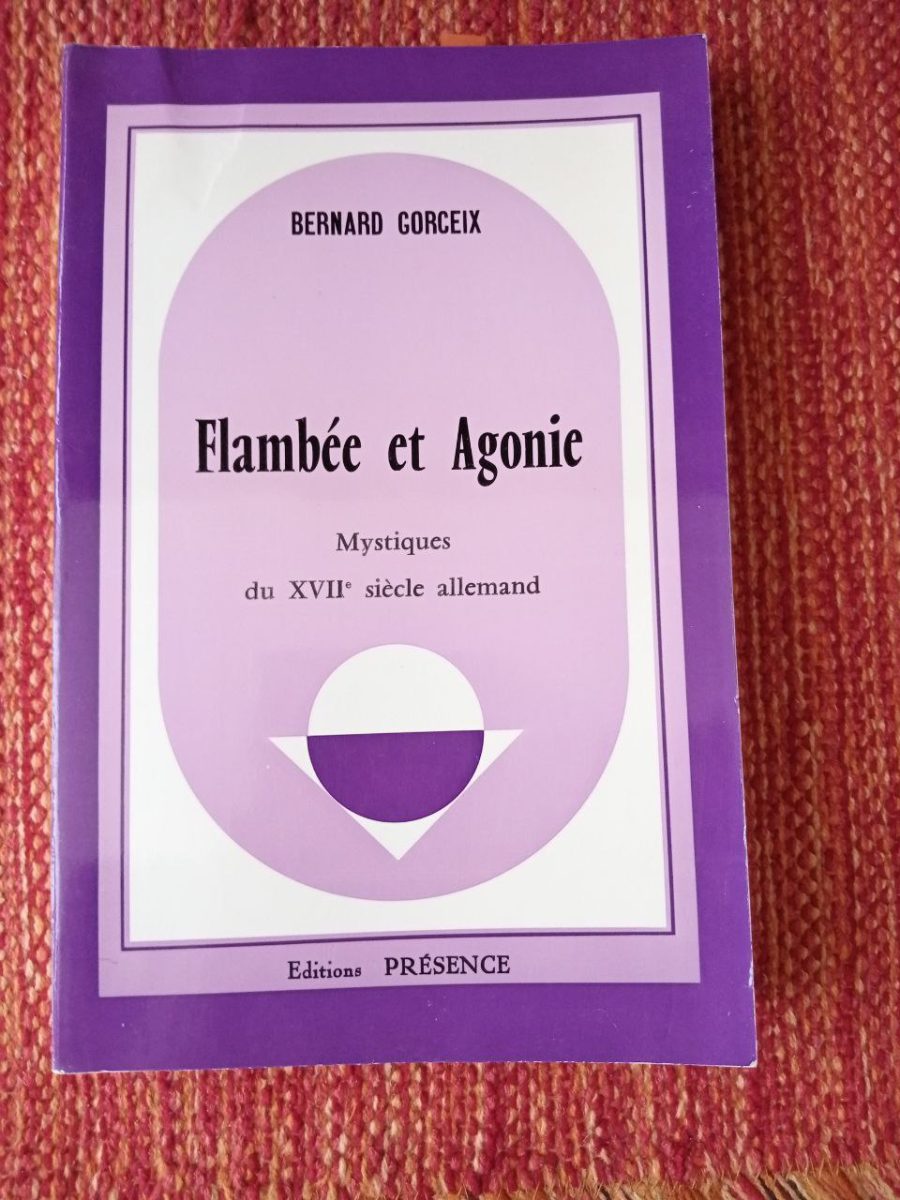
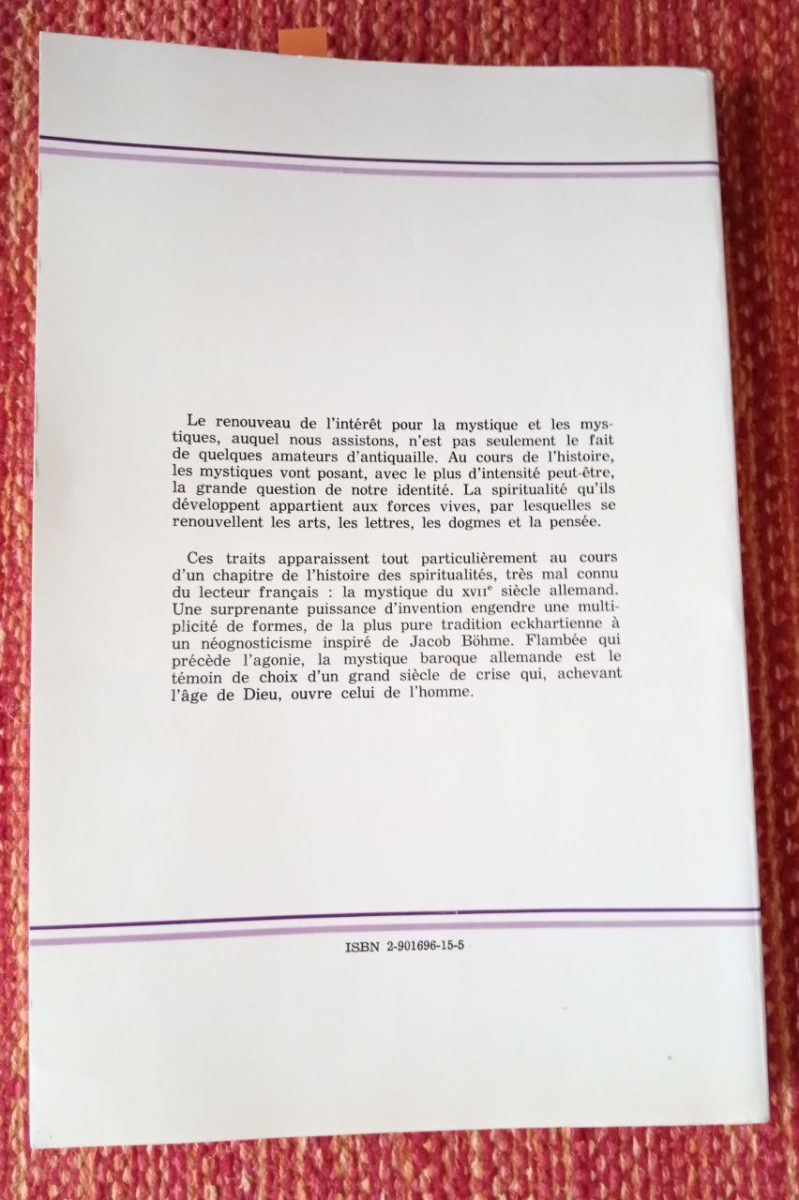
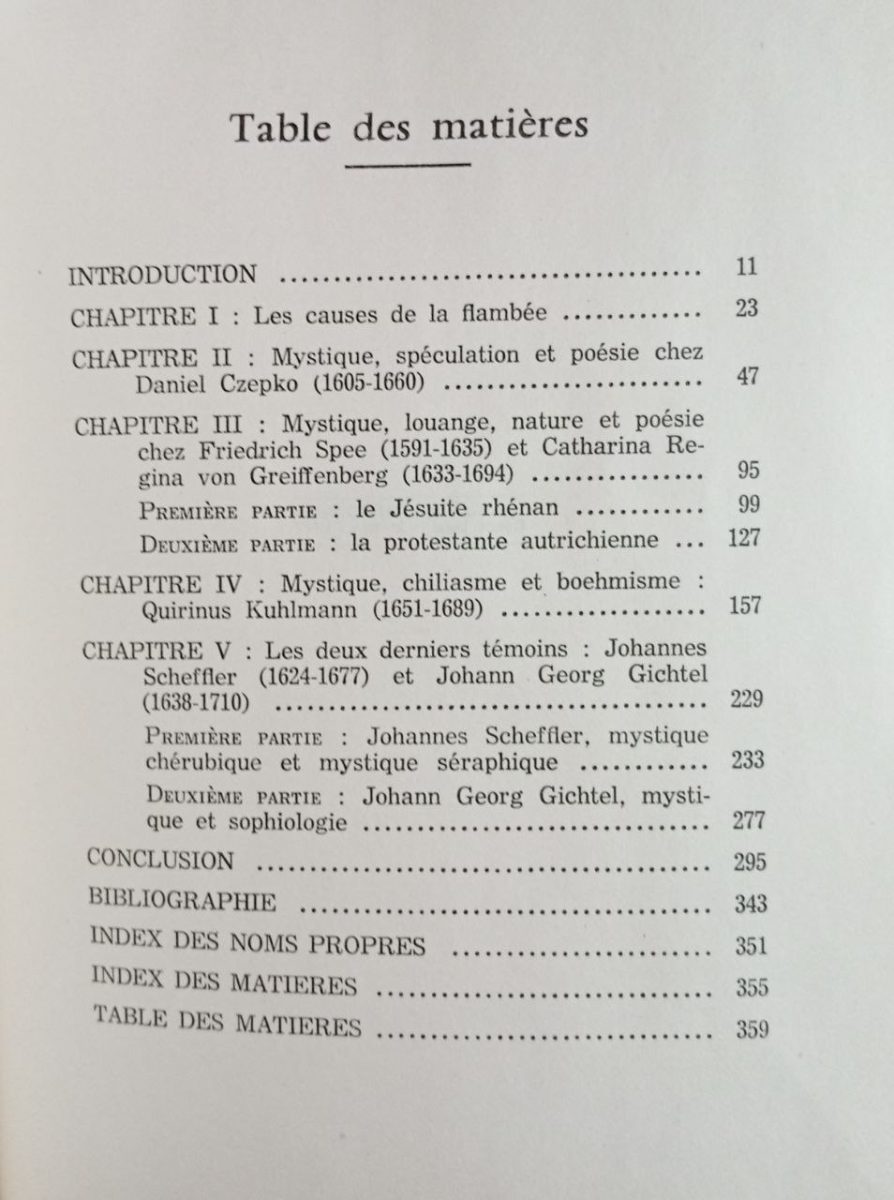
Today’s sharing from the Blue House of Via-HYGEIA is part 4 of the sampler dedicated to the memory of professor Bernard Gorceix, an extract of his ‘Flambée et Agonie, Mystiques du XVIIIe siècle Allemand‘ (Blaze and Agony, German Mystics from the XVIIth century Germany). Editions Présence, Paris, 1971. From page 280 to page 285.
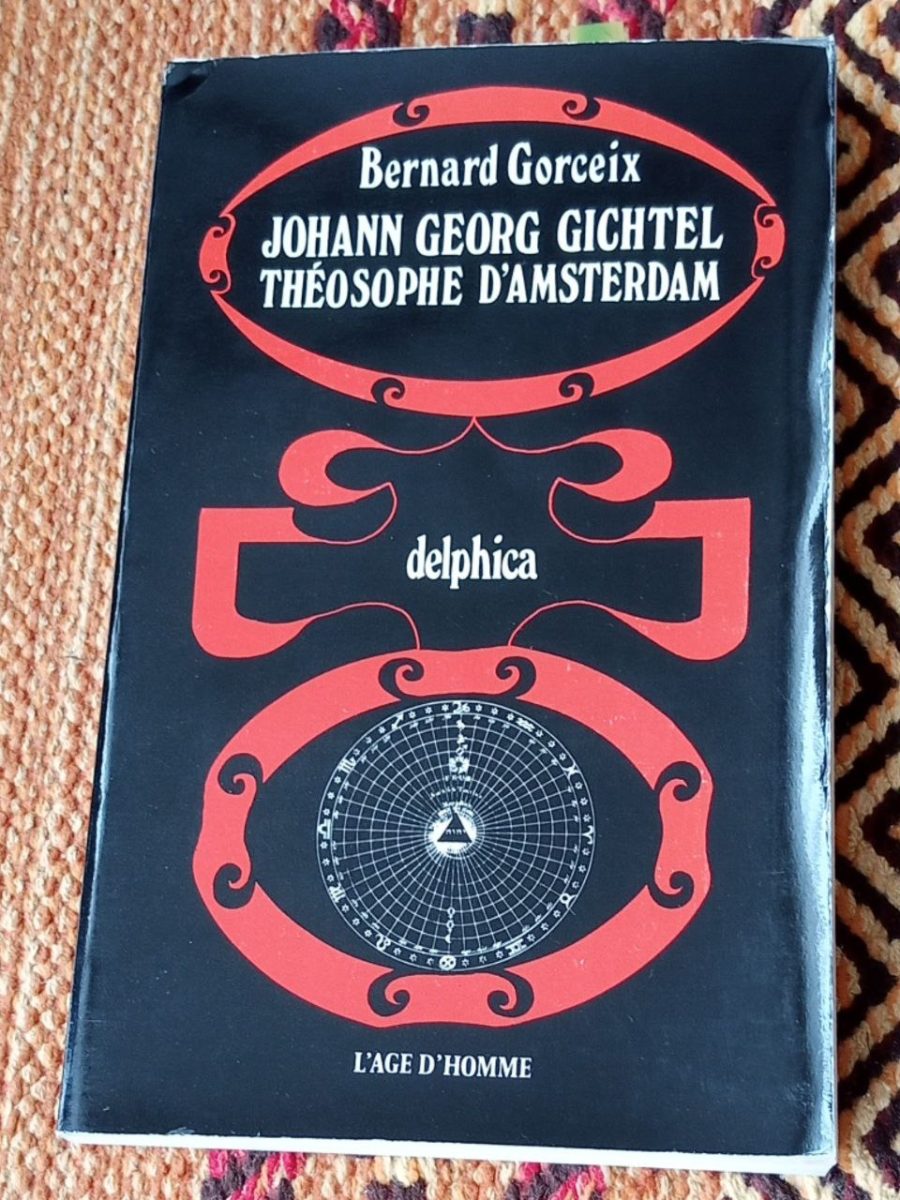
Forthcoming Part 5 will come from his’ ‘Johann Georg Gichtel, théosophe d’Amsterdam’ published by Editions l’Age d’Homme in 1975, and its title will be: ‘The sweetness of Divine Union, the new body and the priesthood of Melchizedek‘.
**
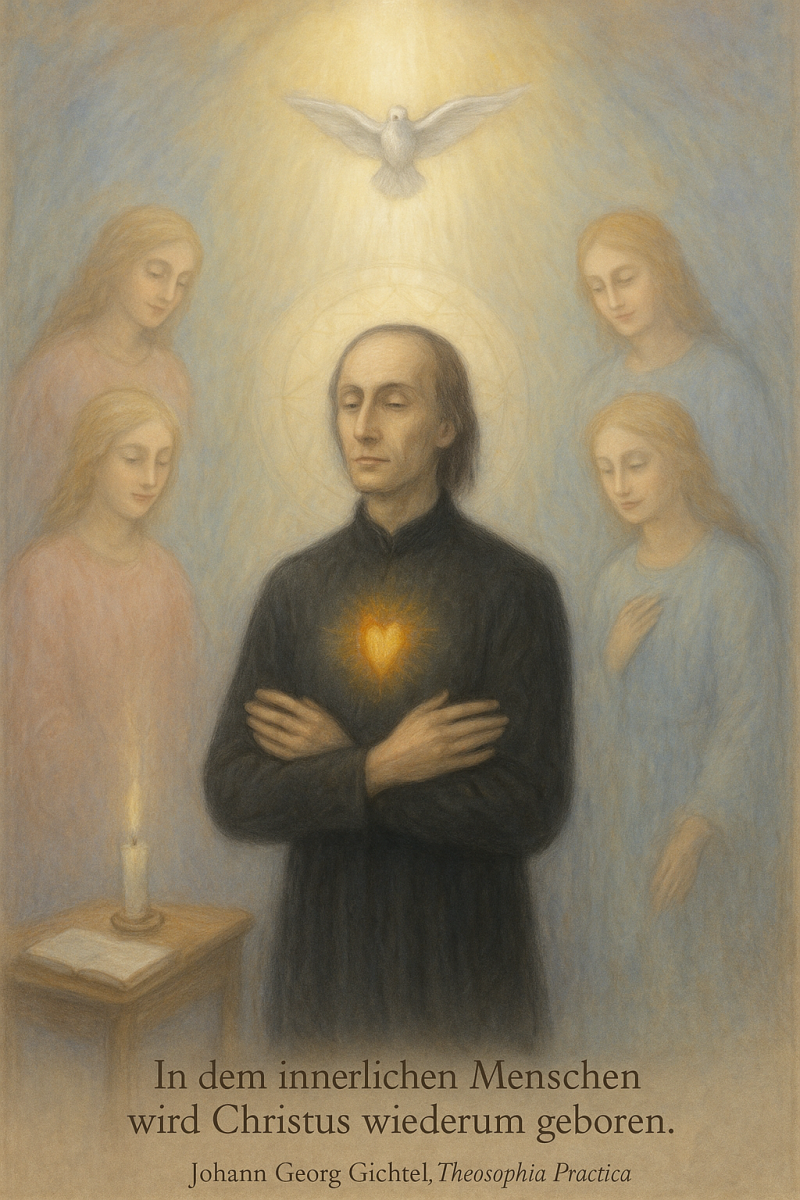
In reading and studying the spirituality of Johann Georg Gichtel, we find, exacerbated and pushed to their limit, three characteristics that we had already encountered among the mystics of the second half of the 17th century, in Quirinus Kuhlmann in particular.
The first is the dramatization of the spiritual life. This phenomenon is already apparent in the emphasis the letter-writer places on the conception of history familiar to the spiritualist movement. Traditional eschatology hardens, is torn asunder. The naturalized Dutchman lives in a tormented expectation of the powerful metamorphoses that precede the great day. The imminence of the Parousia, the gigantic hope of the era of the return, when the great loop of history will close, barely helps to overcome the fear that fills believers as much as sinners. The devil redoubles his attacks, the fountains of the abyss open, false prophets multiply, the Antichrist announces himself like a rising cloud to obscure the earth, the elements tremble, the heavens are shaken, Michael and the dragon enter the fray.
On the level of inner life, this mixture of revolutions and revelations, of horror and hope, is just as dramatic and heart-rending. Sebastian Franck, Friedrich Spee, even Johannes Scheffler, knew the difficulties of the via mystica. Nevertheless, the great process of reversion is illuminated by periods of calm, by a diffuse certainty that Luther called plerophoria. In Quirinus Kuhlmann, jubilation did end up drowning out the anguish.
In Johann Georg Gichtel, the difficult stasis is squarely broken, shattered. The crisis erupts, without compensation; everything is struggle, trial, pain. The believer always knows the depths of distress, rarely the heights of inner quietude. The style struggles to follow the description of these torments: ‘Fiery and desperate combat… with the infernal abyss, with the No… We must struggle in a terrible despair… We are importuned beyond our limits… Death, where is thy sting? Hell, where is thy victory?‘ (we quote from our book, ‘Johan Georg Gichte, Theosophe d’Amsterdam’. l’Age d’Homme, Lauzanne, 1975. Page 55). The thought of suicide is the daily lot of the neurotic spiritual man, whom everything undermines and drives to despair, confirming him in the most radical of pessimisms.
If, however, light is able to be born in the mystical union, it will no longer be a silent dawn nor a peaceful possession. It will be an explosion, an irruption, an overflowing, a breakthrough, a fire, a blaze. The spiritual life in the last mystic of the 17th century is torn apart, rent asunder, disorganized. Theology provides a foundation for the anxieties: the devil asserts himself in the ‘Theosophia Practica‘ with unprecedented force. Indeed, the diabolical psalter has not only poisoned the external world as in Valentin Weigel. It has also totally corrupted our mental being, which has become entirely uncertain, unfaithful, false, evasive. Without Christ, and above all without Sophia, all would be irretrievably lost.
The dismantling, the rending apart of the spiritual life, explains the place given to vision. The discreet evocation of God’s presence in the soul is no longer possible. To dispel the clouds, a shattering revelation is needed. The German mystical tradition, unlike that of Spain and France from the late 16th and early 17th centuries, is almost completely unaware—the fact is worth noting—of the visionary phenomenon. It only appears in the second half of the Baroque century, as we noted in Quirinus Kuhlmann.
The echoes of the century explain this resurgence: Quirinus Kuhlmann and Johann Georg Gichtel discover new spiritual traditions in the United Provinces, those in particular of Madame Guyon and Antoinette Bourignon. The Bavarian also made contact with the Philadelphians; now, John Pordage had begun his career as a visionary as early as 1651, and Jane Leade was seeing Sophia as early as 1670. The German edition of her journal of visions dates, it is true, only from 1697; but the revelations had been circulating from hand to hand for twenty years already. In Amsterdam, in these last decades of the 17th century, religious experience necessarily passed through the visionary experience. To be taken seriously, one had to testify to a full calendar of fantasies and ecstasies.
Johann Georg Gichtel, from 1690 onwards, but especially from 1697, when the awareness of his mission became affirmed in his letters and when the speculation on the androgyne and Sophia was definitively constituted, opposed to his despised colleagues ‘authentic’ illuminations coming from the Holy Spirit. We have identified three phases. The first, in the years 60 to 70, with three important visions in 1664, 1668, 1673-1674, seems to have triggered and then confirmed the mystical conversion in Boehmist Gichtel: transport before God the Father, and vision of Christ crushing the serpent, revelation of the ‘mystery of time, in particular of the struggle of Michael and the dragon‘, appearance above all of the Virgin Sophia who promises eternal fidelity.
The second phase, from the 1680s to the years 1703-1704, is dominated by struggles and diabolical temptations; the third, from 1704 until his death, is occupied by visions of triumph. Throughout the year 1708 in particular, Wisdom ‘finally denudes herself totally‘. Christ is enthroned in the heart, we reach the gate of the sacred ternary, the Trinity, the seventh seal is broken, our enemies become our friends. Along with the analyzed texts of the Kuhlmannian Psalter, the testimonies of Johann Georg Gichtel are the rare properly visionary documents in the German language that we have for the 17th century, a century so fertile in French evocations of illuminations and ecstasies.
However, the dismantling of the spiritual life and the affirmation of the visionary are not what most surprised and perplexed the few readers. What struck them most is this: the spiritual itinerary is entirely enclosed, sheathed in the particular language of Boehmian metaphysics. The subtleties of the stages of the soul’s return to God are translated into concepts and speculations that are borrowings from the philosophy of the Teutonic. In Daniel Czepko and Quirinus Kuhlmann, Boehme is everywhere present. In Gichtel, he is omnipresent. A true relay, he takes up and transmits at the dawn of the Enlightenment and in the German language the most profound intuitions of Boehmian thought, those very ones that would contribute to the overthrow of the Aufklärung and to the formation of German Romantic philosophy.
Forcefully, he concentrates, like his master, his theogony around the polar opposition of darkness and light, of wrath and love, of God and Lucifer, in short, of evil and good. He affirms that this bipolarity can only have reality and meaning if it is already present and active in God himself. It is necessary, he repeats incessantly, to posit within the Trinity and in a veritable ‘divine nature‘, in a ‘body of God‘, the essential polarity of a negative, destructive force and a positive, salvific force. Two dynamic nodes which balance each other and whose violent opposition guarantees their maintenance. An opposition which is no longer merely that of an undetermined deity and a God of will, or the expression of the majestic personality of a God who punishes and rewards. The differentiation is much more at the root of all life, no longer only in God, or in man, but also in the entire creation.
The disciple perfectly grasps what Alexandre Koyré calls the central metaphysical intuition of the Teutonic Philosopher, the ‘double necessity for being and thought of a struggle and an opposition of contraries whose synthesis constitutes life’ (‘La philosophie de Jacob Böhme’, Vrin, 1971, p. 72). The opposition in God is the basis of a revelation that is realized in contraries. In modern language: the structure of the absolute, and hence of being, is dialectical; darkness is born from the will of God, and from this obscurity light springs forth through the intermediary of fire. Darkness, fire, and light are the three syllables of the name Je-ho-vah, in which they are united without the slightest distinction (‘La philosophie de Jacob Böhme‘, page 82).
Assimilating and glossing this knot of meditation, the Bavarian also takes up its implications:
The first is the considerable weight given to revelation, to the divine life, which allow for the resolution of the fundamental contradiction: evil is in God, but God is not the author of evil. For in God, darkness, fire, and light are good, because they remain in equilibrium, as in a well-regulated hearth, because they are, as Johann Georg Gichtel tells us, tempered. The terrible nature of fire is certainly present, but it does not manifest itself. It is, moreover, contained and mastered, the devouring fire of the Father, by the goodness of the Son. In God, fire illuminates and warms, like that of a stove; it does not consume or destroy, like a forest fire. In short: the negative force, evil, has no independence in the eternal nature. It is Lucifer, Lucifer alone who, refusing the domination of the principle of light, decides to break the equilibrium of the contraries in God, and thereby triggers the long process of the creation of the world. All things considered, evil takes first place. It is not only present in the Ungrund; by seeking to individualize itself, by affirming its independence, it also decides the creation of the world. For God, to compensate for its devastating effects, must reestablish a new equilibrium, that of the earthly paradise, and places at its center Adam, giving him a freedom which he will unfortunately abuse, seduced by the same pride as the tempter.
The second implication is the description of an extremely complex divine physiology, very close to that of Gnosticism, which allows for an account of the history of the Trinitarian life, of creation, but also of the double status of man, who becomes the locus of the cosmic struggle between good and evil, of the luminous and paradisiacal empire and the infernal and wrathful empire. The body of God, first of all, is the expression of the three famous principles that the mystic, like the metaphysician, calls: ideas, beginnings, Fiat. These three principles determine the ‘spiritual fecundation and engenderment of the Holy Trinity‘. The first, which corresponds to the Father, is the principle of darkness, or the ‘center of nature‘ (since it is this which, after the falls, dominates the whole of nature). The second is the Son, the principle of light; the third, at the hinge of the Trinity and creation, participating at once in the hypostasis and the created, animates the Trinity, accounts for its activity, is its motive element: it is the Holy Spirit. To these three principles, and always as in Jacob Boehme, are joined the seven qualities or forms, the seven forces of the eternal nature, which our author, moreover, merely cites without revisiting the details of the exegesis: attraction, repulsion, whirlwind-anguish, fire, love, sound, & body.
In contrast, Johann Georg Gichtel develops with extreme fidelity the dogma of the Divine Wisdom, which he calls ‘the mystery that allowed him to progress in Christianity‘. Throughout his letters, he develops the role of the eternal Virgin, the celestial Virgin, Sophia, whose presence he defines at all moments of hiero-history: in the eternal divine nature, in Adam, in Mary, in Christ, in created nature. The theosopher of Amsterdam knows all the stages of Boehmian meditation. Plan, pre-existing model before creation, intermediary between God and nature, veritable archetype, Sophia completes and perfects the eternal nature, to which she gives a body, a garment, and a dwelling. She is the imagined, but not yet manifested, expression of God.
It is also Boehmian metaphysics that determines, in Johann Georg Gichtel, the process of regeneration and restoration. The basic data of Rheno-Flemish mystical psychology are indeed no longer sufficient to account for the situation of the soul in the world, just as they struggled to account for the complexity of the divine physiology. They are complemented above all by the exaggeration of a fourth power of the soul—after memory, understanding, and will—a force that already expressed, in Sophia, the creative dynamism of the Trinity, and which is nothing other than the imagination. As in Jacob Boehme, it is the imagination, a plastic power, a formative power, that becomes the new mechanism, the new principle of action, the new ‘tincture’, as he says, which allows man to give real consistency to his project of salvation, just as it already allowed God to found His project of creation.
The preceding pages have quickly established three fundamental characteristics of Gichtelian spirituality: 1. The dramatization of the spiritual life. 2. The place reserved for vision. 3. Boehmism.
It is also through them that the properly mystical theology of Gichtel-the Sophiologist develops, meaning a cosmogonic, anthropological, and soteriological narrative, which can be divided into three: 1. The account of the emanation and separation, of the creation of the soul and the fall. 2. The description of the essence of the soul, more concretely, of the situation of Man in the world. 3. The return of the said soul to God, which culminates in the experience of union.
*
Source
*
*
Coming soon
A Little Bernard Gorceix Sampler – Part 5:
‘The sweetness of divine Union, the new body
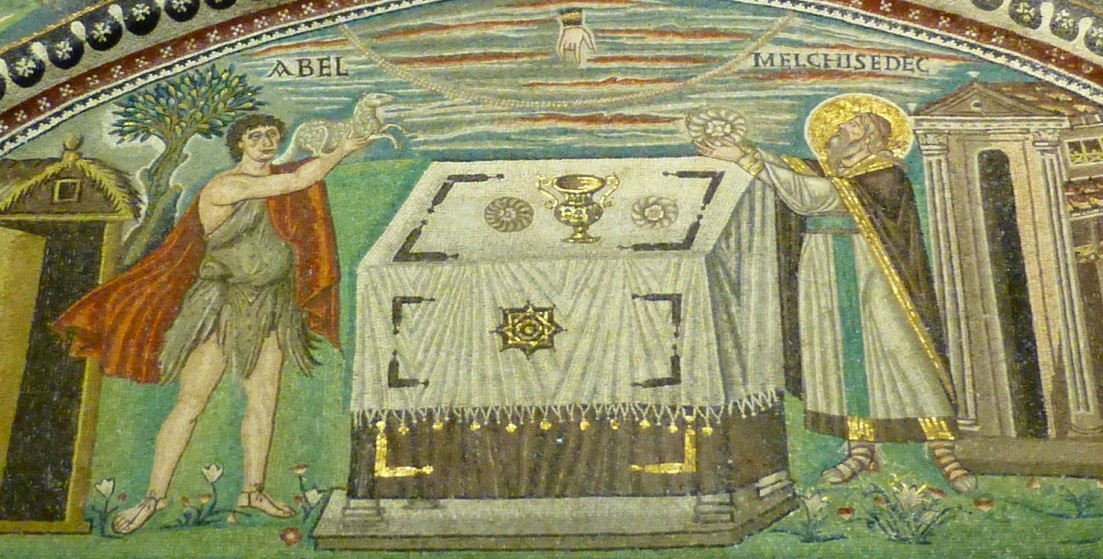
and the priesthood of Melchizedek’.
*
***


Related Articles

Leave a Reply