
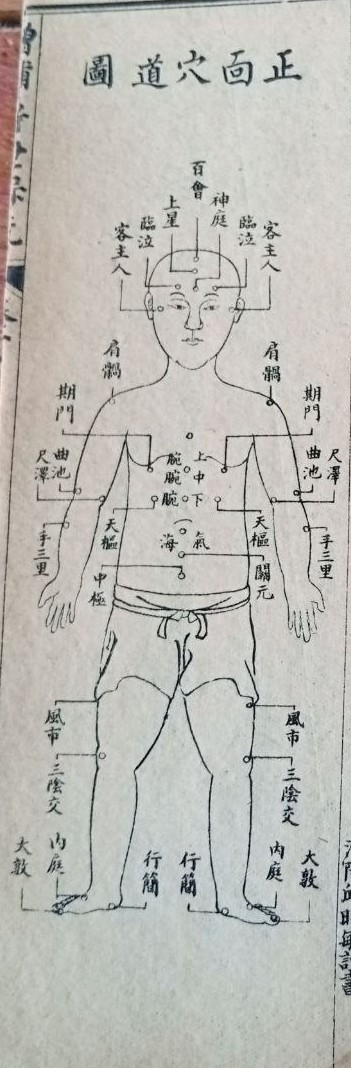
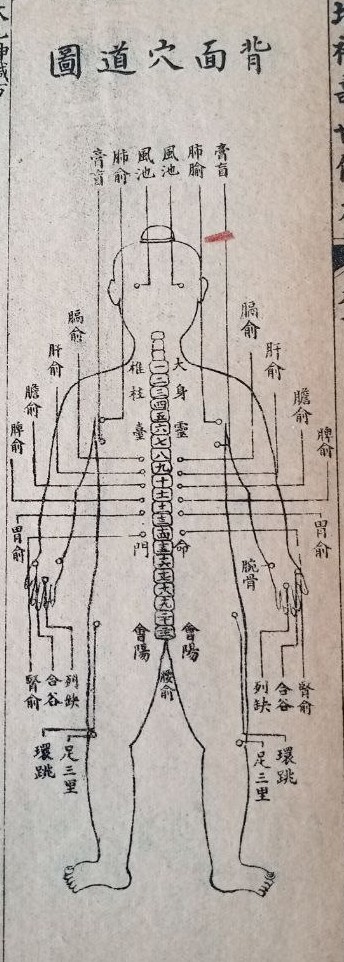
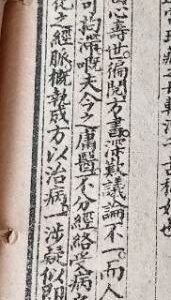
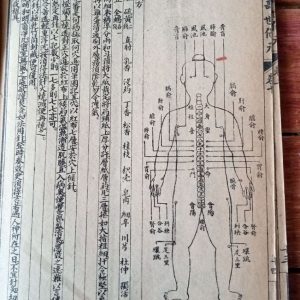
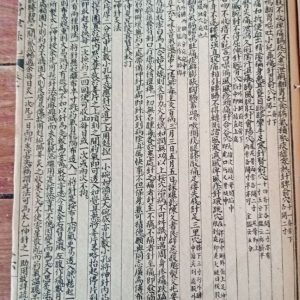
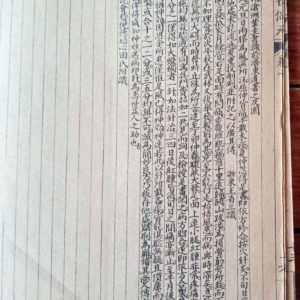
The Bottom Text: In the bottom right corner, there is a small, partially cut-off line of text: “…右寸皆用…” This is a fragmented instruction referring to the proportional measurement system (cun) used to locate these points, a continuation of the measurement rules discussed on the previous pages.
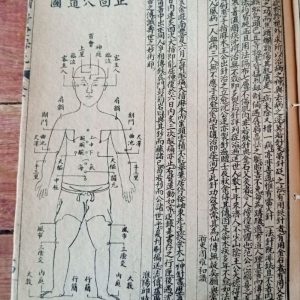
Epistemological Shift: The charts omit internal organs entirely. Their purpose is not anatomical education but procedural navigation: the practitioner matches a symptom from the list to a dot on the diagram, measures the cun with the patient’s own finger, and applies the stick. This is the shift from channel theory to schematic empiricism.
“真射[香]” (True Musk): The character is partially damaged, but in every transmitted recension this is 麝香 (shexiang, musk). Musk is the volatile carrier that drives the other medicinals through the cloth and into the intestines.
Septenary Counting: Counting by sevens (7, 14, 21… 49) is a ritual-medical numerology derived from the Yijing and Daoist physiology, structuring the duration of treatment.
Red Cloth: Seven layers of red cloth serve as a thermal diffuser and ritual filter. Red is yang, fire, and protection; seven is the number of completion.
Terminology Note: Although translated as “Needle” to reflect the original title (Shen Zhen), the object described here is physically a thick, combustible moxa stick, not a metal instrument.
*
Part IV: The Symptom-Point Correspondences
Context: The longest continuous section of the Taiyi Shen Zhen is the symptom-point list, which maps symptoms directly to points without recourse to channel theory. This is the clinical heart of the text. Below is a representative selection showing the range of conditions covered, from neurological emergencies to gynecological disorders and what would now be called psychiatric conditions.
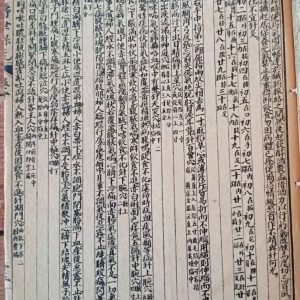
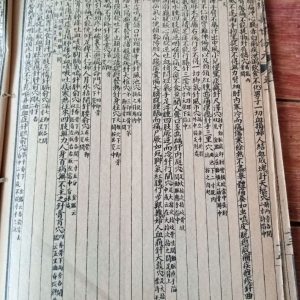
Chinese Text (Selected Entries): 凡中風、頭風、風癱、角弓反張、心前氣絕、肚脹、耳聾,針百會穴。凡肚腹堅硬、痞氣塊、小水不調、男子遺精、婦人赤白帶下、經水不調、產後惡露不止、小兒遺尿,針氣海穴。凡狂邪、鬼魅、風癇、腕肘不得屈伸,針腕骨穴。凡小腸疝氣、小便頻數、陽縮入腹、尸厥如死、腳氣紅腫、行步艱難、婦人血崩,針大敦穴。凡五勞七傷、翻胃氣膈、腸鳴、肚脹、癖積、胸膈蓄血、咳嗽吐痰、腿膝酸痛、足痿不能行,針足三里穴。
Pinyin: Fán zhòngfēng, tóufēng, fēngtān, jiǎogōng fǎnzhāng, xīnqián qìjué, dùzhàng, ěrlóng, zhēn Bǎihuì xué. Fán dùfù jiānyìng, pǐqì kuài, xiǎoshuǐ bùtiáo, nánzǐ yíjīng, fùrén chìbái dàixià, jīngshuǐ bùtiáo, chǎnhòu èlù bùzhǐ, xiǎo’ér yíniào, zhēn Qìhǎi xué. Fán kuángxié, guǐmèi, fēngxián, wǎnzhǒu bùdé qūshēn, zhēn Wàngǔ xué. Fán xiǎocháng shànqì, xiǎobiàn pínshuò, yángsuō rùfù, shījué rú sǐ, jiǎoqì hóngzhǒng, xíngbù jiānnán, fùrén xuèbēng, zhēn Dàdūn xué. Fán wǔláo qīshāng, fānwèi qìgé, chángmíng, dùzhàng, pǐjī, xiōnggé xùxuè, késòu tǔtán, tuǐxī suāntòng, zúwěi bùnéng xíng, zhēn Zúsānlǐ xué.
Translation:
-
For wind-stroke, head wind, wind paralysis, opisthotonus, qi exhaustion in front of the heart, abdominal distension, deafness—needle Baihui.
-
For hard and firm abdomen, pi-stagnation qi lumps, urinary dysfunction, male seminal emission, female red-white discharge, menstrual irregularity, postpartum lochia not stopping, childhood enuresis—needle Qihai.
-
For mad evil, demonic haunting, wind epilepsy, wrist and elbow unable to bend or extend—needle Wangu.
-
For small-intestine hernia qi, frequent urination, retracted yang into the abdomen, corpse-like reversal as if dead, foot qi with red swelling, difficulty walking, female flooding bleeding—needle Dadun.
-
For five labors, seven injuries, regurgitation, qi diaphragm [obstruction], intestinal rumbling, abdominal distension, pi-accumulations, chest diaphragm blood stasis, cough with phlegm, leg and knee soreness, foot atrophy unable to walk—needle Zusanli.
Notes:
-
“狀如覆蓋/狀若覆盆” (Like an overturned cup/basin): Image-diagnoses—the abdomen is felt or seen as an overturned cup or basin, indicating fixed accumulations (ji). The vocabulary belongs to the Shang Han and Jin Gui tradition.
-
“尸厥如死” (Corpse-like reversal): Shijue, a sudden collapse resembling death. The Taiyi Shen Zhen is explicitly framed as an emergency intervention.
-
“鬼魅” (Demonic haunting): The needle’s “divine” (shen) quality is not merely rhetorical; it is exorcistic. The text treats conditions that would now be classified as psychiatric or seizure disorders.
-
Repetition: The repetition of “足痿不能行” (foot atrophy, unable to walk) across multiple points indicates that this was a high-priority condition for the technique—likely because the pressing-moxa stick delivers deep heat to the large muscles of the leg.
*
Part V: The Technical Mutation (Daoguang Era)
Context: The appended section (c. 1825) marks the most significant evolution in the text. An anonymous author (the text says only “用針者自叙”, “The Needle-User’s Own Account”) admits that the original “pressing” method is too difficult for laypeople and introduces a “dough bowl and ginger” method, effectively turning the “needle” into a controlled moxa box. A nearby colophon by Wu Gongxuan (吳貢軒, “Collated by Wu Gongxuan of Wuling, midsummer of the yiyou year of Daoguang [1825]”) indicates that this modification was circulating in the same textual milieu, but the dough-bowl method itself is anonymous. It should not be attributed to Wu Gongxuan without further evidence. This anonymity is typical for practical innovations in Qing medical texts: theoretical works get named authors, while practical “kitchen fixes” often circulate under generic titles like “The Needle-User’s Own Account.”
Chinese Text: 附太乙神針灸法 用生薑一大片,厚二分許,中扎數小孔,平放應針穴道之上。用麵捏一小碗,如酒盞大,碗底亦扎數小孔,將神針內藥料拆出,再加新艾絨,火燒捏作團,置於碗內,點著,平放於薑片之上。頃刻之間,灼氣即可透入。如覺甚熱,將薑片略抬起,停片刻,即再放下。看碗內藥料盡,即取起另換。每一次換約三四回,便可收止。每日或一次,或兩次,不拘。用針者自敘太乙神針有兩種用法:一將針懸起,離布半寸許,灼氣自能隔布透入;一將針實按布上,藥氣更易透入。然懸起一法,取效較緩;實按一法,輕則布易燒焦,重則火易滅灼,有微礙。不如以針為灸,較為善取,取效亦速。今夏余左臂患麻,左腹作痛,數月未痊。山陰唐君對余云:「以所製太乙神針按灸,先用懸針法,疼痛難減,而未竟脫然;繼用實按法,奇其不傷。」因愛而為灸。又思太乙法皆用艾作團,照穴點著,懸離則力不專,濃團大則皮膚易傷。故用麵碗隔薑灸之,收束文火,不使空星散亂,而藥氣溫暖,不刻許已直達病處。頓覺肌腠疏通,風寒暢過。余每日灸一次,凡三日而所患若失。竊謂此法可為太乙神針之一助,用最神妙法。判附書後。
Pinyin: Fù Tàiyī Shénzhēn Jiǔfǎ. Yòng shēngjiāng yī dà piàn, hòu èr fēn xǔ, zhōng zhā shù xiǎokǒng, píngfàng yìng zhēn xuédào zhī shàng. Yòng miàn niē yī xiǎowǎn, rú jiǔzhǎn dà, wǎn dǐ yì zhā shù xiǎokǒng, jiāng shénzhēn nèi yàoliào chāichū, zài jiā xīn àiróng, huǒ shāo niē zuò tuán, zhì yú wǎn nèi, diǎnzháo, píngfàng yú jiāngpiàn zhī shàng. Qǐngkè zhī jiān, zhuóqì jí kě tòurù. Rú jué shèn rè, jiāng jiāngpiàn lüè táiqǐ, tíng piànkè, jí zài fàngxià. Kàn wǎn nèi yàoliào jìn, jí qǔqǐ lìnghuàn. Měi yīcì huàn yuē sānsi huí, biàn kě shōu zhǐ. Měirì huò yīcì, huò liǎngcì, bùjū. Yòng Zhēn Zhě Zìxù. Tàiyī shénzhēn yǒu liǎng zhǒng yòngfǎ: yī jiāng zhēn xuánqǐ, lí bù bàn cùn xǔ, zhuóqì zì néng gé bù tòurù; yī jiāng zhēn shí àn bù shàng, yàoqì gèng yì tòurù. Rán xuánqǐ yī fǎ, qǔxiào jiào huǎn; shí àn yī fǎ, qīng zé bù yì shāojiāo, zhòng zé huǒ yì mièzhuó, yǒu wēi ài. Bùrú yǐ zhēn wéi jiǔ, jiào wéi shàn qǔ, qǔxiào yì sù. Jīn xià yú zuǒ bì huàn má, zuǒ fù zuòtòng, shùyuè wèi quán. Shānyīn Táng jūn duì yú yún: “Yǐ suǒ zhì Tàiyī shénzhēn àn jiǔ, xiān yòng xuán zhēn fǎ, téngtòng nán jiǎn, ér wèi jìng tuōrán; jì yòng shí àn fǎ, qí qí bù shāng.” Yīn ài ér wéi jiǔ. Yòu sī Tàiyī fǎ jiē yòng ài zuò tuán, zhào xué diǎnzháo, xuánlí zé lì bù zhuān, nóng tuán dà zé pífū yì shāng. Gù yòng miànwǎn gé jiāng jiǔ zhī, shōushù wénhuǒ, bù shǐ kōngxīng sànluàn, ér yàoqì wēnnuǎn, bù kèxǔ yǐ zhídá bìngchù. Dùn jué jīcòu shūtōng, fēnghán chàngguò. Yú měirì jiǔ yīcì, fán sānrì ér suǒ huàn ruò shī. Qiè wèi cǐ fǎ kě wéi Tàiyī shénzhēn zhī yī zhù, yòng zuì shénmiào fǎ. Pàn fù shū hòu.
Translation: Appended: Taiyi Divine Needle Moxibustion Method. Use a large slice of fresh ginger about two fen thick. Pierce several small holes through it. Place it flat over the point where the needle is to be applied. Use dough to form a small bowl the size of a wine cup; pierce several small holes in the bottom as well. Remove the medicinal material from the divine needle, add new mugwort floss, burn it and form it into a lump, place it inside the bowl, ignite it, and place it flat on the ginger slice. In a short while, the burning qi can penetrate inward. If it feels too hot, lift the ginger slice slightly, pause for a moment, then place it down again. When the medicinal material in the bowl is exhausted, remove it and replace with fresh material. Each time, replace about three or four times, then stop. Do this once or twice daily, without rigid adherence.
The Needle-User’s Own Account: The Taiyi Divine Needle has two methods of use. One suspends the needle half a cun above the cloth—the burning qi can naturally penetrate through the cloth. The other presses the needle firmly on the cloth—the medicinal qi penetrates more easily. However, the suspended method achieves effect more slowly. The pressing method, if too light, easily scorches the cloth; if too heavy, the fire easily extinguishes—there are slight obstacles. It is not as good as using the needle as moxibustion [instead], which is more excellent and achieves effect more quickly. This summer, my left arm suffered from numbness and my left abdomen had pain that had not healed for months. Mr. Tang of Shanyin said to me: “Using the Taiyi Divine Needle that I have prepared, press and burn it. First I used the suspended needle method—the pain was hard to reduce but not completely eliminated. Then I used the pressing method—strangely, it did not cause injury.” I therefore loved it and used it as moxibustion. I also reflected that the Taiyi method all uses mugwort formed into lumps, ignited at the point. If suspended, the force is not concentrated; if the lump is large and thick, the skin is easily injured. Therefore I use the dough-bowl with ginger-separated moxibustion to gather and restrain the gentle fire (wen huo), not allowing empty stars to scatter in disorder, so that the medicinal qi is warm and mild, and in less than a quarter of an hour it directly reaches the diseased area. Suddenly I felt the muscle and interstices open and the wind-cold flow freely. I burned it once daily; in three days, my affliction disappeared as if lost. I privately consider that this method can serve as an aid to the Taiyi Divine Needle—its use is the most divine and wonderful method. I have appended this judgment to the back of the book.
Notes:
-
Technical Innovation: This is the crucial technical mutation of this recension. The original Taiyi Shen Zhen was a shi’an jiu technique: a thick paper stick burned and pressed through cloth. Here it is modified into ginger-separated moxibustion (ge jiang jiu) using a dough bowl.
-
“以針為灸” (Using the needle as moxa): The needle is reconceptualized as a vehicle for moxibustion, not as a metal puncture tool.
-
“麵碗隔薑” (Dough bowl separating ginger): The dough bowl and ginger slice create a thermal chimney that concentrates heat and medicinal vapor while protecting the skin. This is the ancestor of modern moxa boxes.
-
Attribution: Wu Gongxuan’s 1825 colophon (Daoguang yiyou year) appears nearby but records only that he collated (jiaoding) the text. The dough-bowl method is introduced anonymously. The two should not be conflated.
*
Part VI: The Economic Reality (Tongzhi Era)
Context: The Tongzhi-era postscripts (1863 and 1868) provide a rare glimpse into the economics of Qing medicine. Wang Sanshi’s 1863 note records a successful treatment of knee pain; Tian Shi’s 1868 postscript provides a startlingly honest account of poverty and improvisation. He cannot afford the full formula (four taels of silver—roughly two months’ wages for a skilled craftsman) and successfully treats himself with a reduced version, validating the method for the poor.
Chinese Text (Wang Sanshi): 同治癸亥,余宦楚北。元旦旦,兩膝為風濕所注,屈伸皆痛,半載未痊。夏仲,忽得是書,即依方修合,按穴針灸。不旬日,病良已。其功效之速,不亦神乎?惜板存他處,未能流通。爰重授剞劂,並附記之,以廣其傳。浙東王者三識。
Pinyin: Tóngzhì guǐhài, yú huàn Chǔběi. Yuándàn dàn, liǎngxī wéi fēngshī suǒ zhù, qūshēn jiē tòng, bànzǎi wèi quán. Xiàzhòng, hū dé shì shū, jí yī fāng xiūhé, àn xué zhēnjiǔ. Bù xúnrì, bìng liáng yǐ. Qí gōngxiào zhī sù, bù yì shén hū? Xī bǎn cún tāchù, wèinéng liútōng. Yuán chóng shòu jījué, bìng fù jì zhī, yǐ guǎng qí chuán. Zhèdōng Wáng Shēngsān shí.
Translation: In the guihai year of Tongzhi [1863], I was an official in northern Chu [Hubei]. On New Year’s Day, both knees were afflicted by wind-dampness—bending and extending were both painful. For half a year I had not recovered. In midsummer, I suddenly obtained this book. I immediately followed the formula to prepare the compound, and applied it according to the points with needle and moxibustion. In less than ten days, the disease was truly cured. Was not the speed of its efficacy remarkable? I regret that the printing blocks were stored elsewhere and could not circulate. Therefore I had them recarved, and append this record to broaden its transmission. Recorded by Wang Sanshi of Eastern Zhejiang.
Chinese Text (Tian Shi): 余於同治乙丑,由臬移板家。月餘,覺右足面時有閃痛,步履維艱。竊意十里送歸,關山跋涉,為損勞筋骨所致,而不知染患風疾也。旋即疼去,逮亦置之,不加理會。迄次年秋,在武林,又復攀登,較前為甚,幾至不能行走。始悟風患,而病與時深矣。急欲五加皮及愈風等酒以治之,雖覺稍痊,無所大礙,而時發時止,殊為所苦。逮至丁卯仲春,驟然大發,足面上連小腿,紅腫非常,疼痛難忍,寸步不能移動。遍覓方藥,服洗兼施,均無效驗。適有同寓吳門費君貽如,二尹,見而詢及,檢授是書。閱之,病方吻合。遂即依方合製,其原料約需四金。因於資斧,只合十分之一,僅得如大燈燭者一針。如法針治,三四日後,紅腫皆消;旬日之間,痛亦漸止;至半月後,而竟霍然。行動步履如常,並無稍減。洵稱神效。因思余所患,僅惟足風,已得神效神速若此。以針所載各症,自能俱驗無疑。且價廉而事省,較便於他項醫調。蓋可以減料合製,或合十二之一,或三五分,均無不可。誠為簡妙良方。乃板存他處,購刷為難。惜其愛人傳布,爰手錄之,冀廣流行,並述經驗之由,俾得咸知神效。遇病即針,為壽世益人之助也。同治七年清和上浣,會信倪德信心田氏附識。
Pinyin: Yú yú Tóngzhì yǐchǒu, yóu niè yí bǎn jiā. Yuè yú, jué yòu zúmiàn shí yǒu shǎntòng, bùlǚ wéijiān. Qiè yì shílǐ sòngguī, guānshān báshè, wéi sǔnláo jīngǔ suǒ zhì, ér bù zhī rǎnhuàn fēngjí yě. Xuánjí téng qù, dài yì zhì zhī, bù jiā lǐhuì. Qì cìnián qiū, zài Wǔlín, yòu fù jǔfā, jiào qián wéi shèn, jī zhì bùnéng xíngzǒu. Shǐ wù fēnghuàn, ér bìng yǔ shí shēn yǐ. Jí yù wǔjiāpí jí yùfēng děng jiǔ yǐ zhì zhī, suī jué shāo quán, wúsuǒ dàài, ér shí fā shí zhǐ, shū wéi suǒ kǔ. Dài zhì dīngmǎo zhòngchūn, zhòurán dàfā, zúmiàn shàng lián xiǎotuǐ, hóngzhǒng fēicháng, téngtòng nánrěn, cùnbù bùnéng yídòng. Biàn mì fāngyào, fú xǐ jiānshī, jūn wú xiàoyàn. Shì yǒu tóngyù Wúmén Fèi jūn Yírú, èr yǐn, jiàn ér xúnjí, jiǎn shòu shì shū. Yuè zhī, bìng fāng wěnhé. Suì jí yī fāng hézhì, qí yuánliào yuē xū sì jīn. Yīn jiān yú zīfǔ, zhǐ hé shífēn zhī yī, jǐn dé rú dà dēngzhú zhě yī zhēn. Rúfǎ zhēnzhì, sān sì rì hòu, hóngzhǒng jiē xiāo; xúnrì zhī jiān, tòng yì jiàn zhǐ; zhì bàn yuè hòu, ér jìng huòrán. Xíngdòng bùlǚ rú cháng, bìng wú shāo jiǎn. Xún chēng shénxiào. Yīn sī yú suǒ huàn, jǐn wéi zú fēng, yǐ dé shénxiào shénsù ruò cǐ. Yǐ zhēn suǒ zài gè zhèng, zì néng jù yàn wúyí. Qiě jiàlián ér shì shěng, jiào biàn yú tā xiàng yī tiáo. Gài kěyǐ jiǎn liào hézhì, huò hé shí zhī yī, huò sānwǔ fēn, jūn wú bùkě. Chéng wéi jiǎn miào liángfāng. Nǎi bǎn cún tā chù, gòushuā wéinán. Xī qí àirén chuánbù, yuán shǒulù zhī, jì guǎng liúxíng, bìng shù jīngyàn zhī yóu, bǐ dé xián zhī shénxiào. Yù bìng jí zhēn, wéi shòushì yìrén zhī zhù yě. Tóngzhì qī nián qīnghé shàng huàn, Huìxìn Ní Déxìn Xīntián shì fù shí.
Translation: In the yichou year of Tongzhi [1865], I moved the blocks from the Fujian Provincial Surveillance Commission to my home. After a month, I felt occasional flashing pain in the top of my right foot—walking was difficult. I secretly thought that traveling ten li to return, crossing mountains and passes, had damaged and strained my sinews and bones, not knowing that I had contracted a wind disease. The pain soon departed, so I also set it aside without paying attention. Until the autumn of the next year, in Wulin [Hangzhou], it recurred, more severe than before—almost to the point of being unable to walk. Only then did I realize it was a wind affliction, and the disease had deepened with time. I urgently drank five-add-bark (wujiapi) and wind-healing wines to treat it. Although I felt somewhat recovered without great impediment, it recurred from time to time, which was truly suffering. Reaching the mid-spring of the dingmao year [1867], it suddenly flared up greatly—the top of my foot and connected lower leg were extremely red and swollen, the pain unbearable, unable to move an inch. I searched everywhere for formulae and medicines, using both internal and external washing, all without effect. By chance, there was a fellow lodger, Mr. Fei Yiru, Vice-Prefect (eryin) from Wumen, who saw it and inquired. I showed him this book. Upon reading it, the disease matched exactly (wenhe). Thereupon I followed the formula to prepare the compound. The raw materials cost about four gold [taels]—roughly two months’ wages for a skilled craftsman. Because I was short of funds (zifu), I prepared only one-tenth, obtaining just one needle [the size of] a large lamp candle. I treated it according to the method. After three or four days, the redness and swelling both disappeared; within ten days, the pain gradually stopped. After half a month, I was suddenly completely recovered (huoran). Moving and walking were as usual, without any slight reduction. Truly it is called divine efficacy. I therefore reflected that my affliction was merely foot wind, yet it obtained such divine efficacy and such speed. The various conditions recorded in the needle [text] can naturally all be verified without doubt. Moreover, it is inexpensive and the matter is simple, more convenient than other medical treatments. One can reduce the materials to prepare the compound—whether to one or two tenths, or three to five fen, all are possible. It is truly a simple and wonderful good formula. Since the blocks were stored elsewhere and purchasing/printing was difficult, I regretted that it was loved by people and transmitted. Therefore I hand-copied it, hoping to broaden its circulation, and narrated the origin of my experience so that all may know its divine efficacy. When encountering disease, immediately needle—it is an aid to benefiting the world and helping people. Appended record by Ni Dexin, style name Xintian, of Huixin, first decade of the fourth month, seventh year of Tongzhi [1868].
Notes:
-
“資斧” (Zifu): Literally “traveling funds and axe” (tools for a journey), a classical metaphor for ready cash. Tian Shi’s confession that he could not afford four taels is a rare moment of economic transparency in a medical text.
-
“霍然” (Huoran): A sudden, complete recovery—like the clearing of a storm. It is the standard term for miraculous cure in Qing anecdotal medical literature.
-
“為壽世益人之助也” (An aid to benefiting the world): The final sentence closes the circle back to the title of the host volume, Shou Shi Bao Yuan. The appendix justifies its place by claiming to be an “aid” (zhu) to the same project.
*
Part VII: The Republican Lithograph
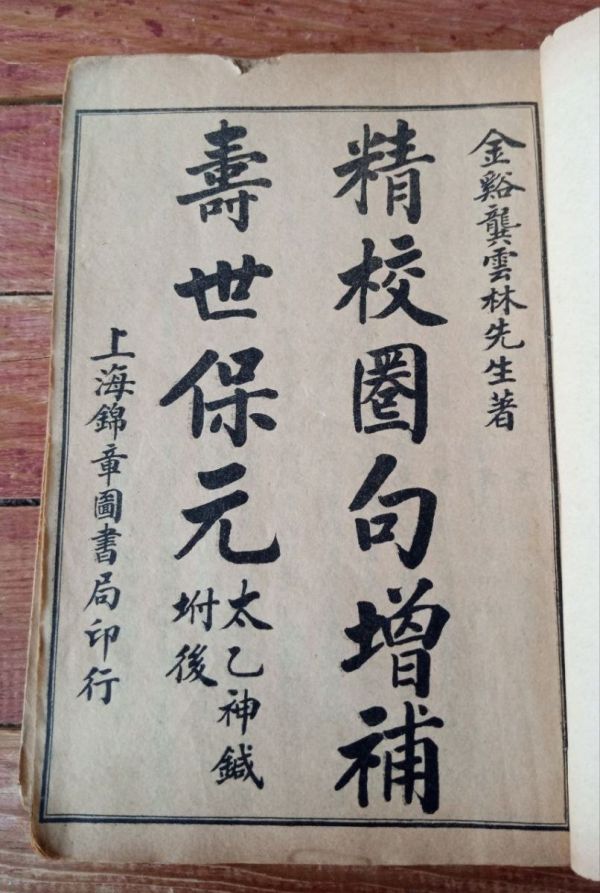
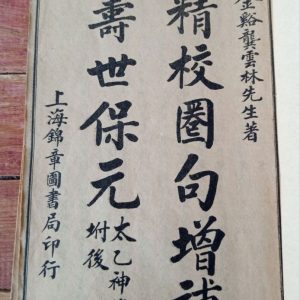
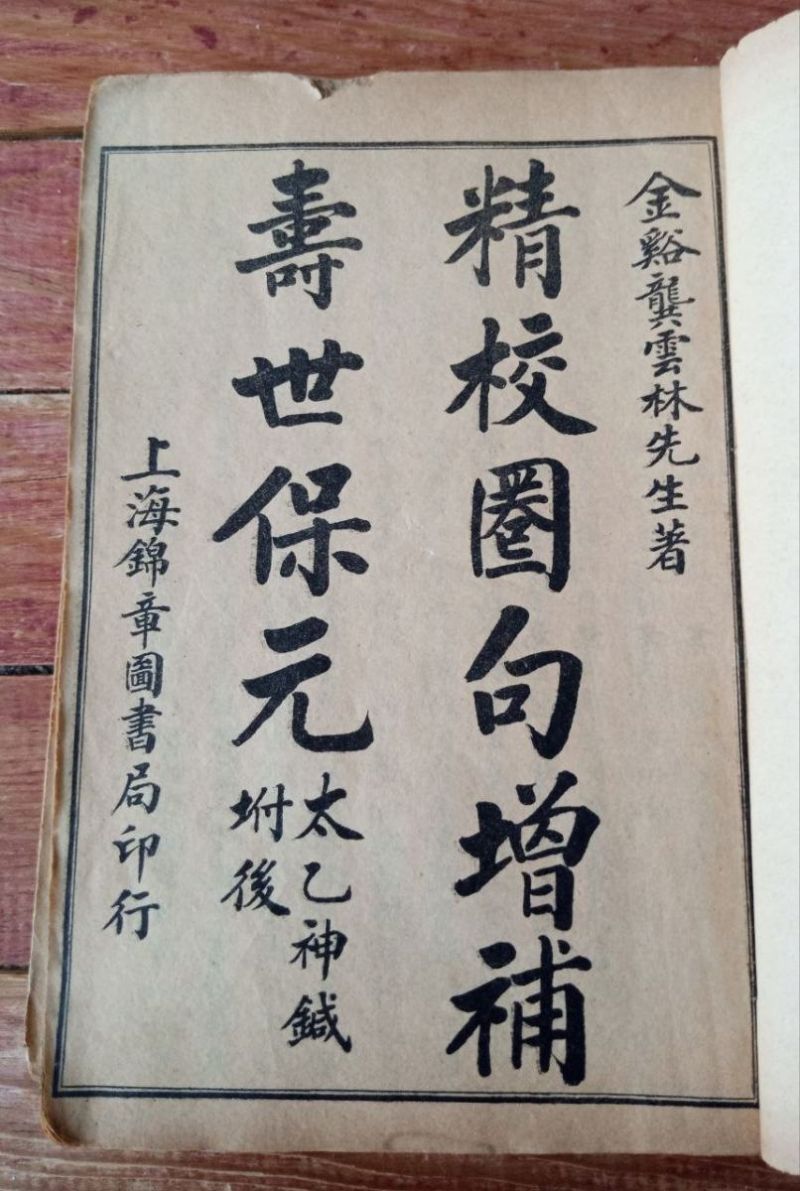
Context: The final layer is not a preface but a publishing event. The Shanghai Jinzhang Book Bureau (上海錦章圖書局) was one of the most prolific Republican-era publishers of cheap lithographic medical reprints. Their business model relied on bundling: taking a famous Ming or Qing medical classic and appending one or more practical manuals to increase the volume’s perceived value. By attaching the Taiyi Shen Zhen to Shou Shi Bao Yuan, Jinzhang transformed a physician’s desk reference into a household self-treatment compendium.
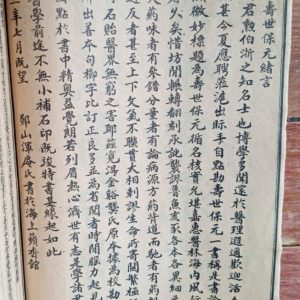
The foreword to the main Shou Shi Bao Yuan (dated Xuantong 3 [1911]) explicitly frames the project as correction and democratization: the editors collated the Gong family original against Yu Xunbo’s punctuated edition, added circles and dots for readability, and lithographed the result at low cost. The Taiyi Shen Zhen appendix rides on this infrastructure. It requires no additional binding, no separate title page, and no extra marketing—merely the words Taiyi Shen Zhen Fu Hou (“with the Taiyi Divine Needle appended at the back”) on the main title page.
This bundling is historically significant for two reasons. First, it detaches the Taiyi Shen Zhen from its Qing social context (military officials, woodblock patronage, handwritten colophons) and reattaches it to a Ming encyclopedic framework, creating a spurious continuity between Gong Tingxian’s internal medicine and Fan Yuyi’s external therapy. Second, it lithographically freezes a Daoguang-era recension: the Jinzhang edition reproduces the anonymous dough-bowl modification, the Wu Gongxuan colophon, and both Tongzhi postscripts without editorial comment, treating these accretions as a single seamless text. Visually, the lithographic process renders these distinct historical layers in identical typography, making the palimpsest invisible to the Republican reader, who receives it as “the” Taiyi Shen Zhen.
*
Conclusion
The 1911 Jinzhang edition of Shou Shi Bao Yuan with the Taiyi Shen Zhen appendix serves as a microcosm of the transformation of Chinese medicine from the late Imperial to the Republican era. It demonstrates a clear trajectory: the migration of medical authority from the elite scholar-physician to the lay household, facilitated by technological shifts (from woodblock to lithography) and methodological simplifications (from complex decoctions to standardized moxibustion that could be prepared with kitchen ingredients).
Each layer of the palimpsest represents a different social class solving the same problem: how to bring the heat of the channels into the home. Han Yifeng (1717) theorized the technique for court physicians. Fan Yuyi (Yongzheng) transmitted it as a military corrective to herbal orthodoxy. Zhou Yonghe (Qianlong) socialized it through official networks. An anonymous Daoguang practitioner domesticated it with a dough bowl and ginger slice. Wang Sanshi and Tian Shi (Tongzhi) validated it through personal anecdotes of knee and foot pain. Finally, the Jinzhang Book Bureau (1911) mass-produced it as an affordable appendix to a Ming classic.
To read the Taiyi Shen Zhen is therefore to read not one text but a century of medical anxiety—anxiety about cost, about access, about the dangers of untrained herbal prescription, and about the body’s need for heat in a world where physicians were expensive and far away. The needle is divine not because it is miraculous, but because it is adaptable: it shrinks to fit a lamp candle when the patient is poor, expands to fill a dough bowl when the family is cautious, and slips between the pages of an encyclopedia when the publisher needs to sell books.
*
Bibliography
Primary Sources
- Gong Tingxian 龔廷賢。Shou Shi Bao Yuan 壽世保元 [Protecting the Origin of Longevity for the World]. 1615. (Various reprints available).
- Han Yifeng 韓貽豐。Taiyi Shen Zhen Xin Fa 太乙神針心法 [The Taiyi Divine Needle: Heart Method]. 2 juan. 1717. (Original Kangxi edition; modern reprint in Zhongguo Gu Yiji Zhenben Congkan 中国古医籍珍本丛刊).
- Jing Xiao Quan Ju Zeng Bu Shou Shi Bao Yuan 精校圈句增補壽世保元 [Carefully Collated, Punctuated, and Enlarged Shou Shi Bao Yuan]. Shanghai: Jinzhang Tushuju 上海錦章圖書局,1911. (The source document for this study).
- Zhang Jianbin 张建斌 & Tang Yichun 唐宜春,eds. Taiyi Shen Zhen Xin Fa 太乙神針心法。Beijing: Zhongguo Zhongyiyao Chubanshe (China Press of Traditional Chinese Medicine), 2016. (Modern annotated edition).
Secondary Sources
- Andrews, Bridie. The Making of Modern Chinese Medicine, 1895–1937. Vancouver: University of British Columbia Press, 2014.
- Leung, Angela Ki Che. “Organized Medicine in Ming-Qing China: State and Private Medical Institutions in the Lower Yangzi Region.” Late Imperial China 8, no. 1 (1987): 134–166.
- Unschuld, Paul U. Medicine in China: A History of Ideas. Berkeley: University of California Press, 1985.
- Wang Xuetai 王雪苔。”Taiyi Shen Zhen Liu Chuan Kao” 太乙神针流传考 [Study on the Transmission of the Taiyi Divine Needle]. Zhongyi Wenxian Zazhi 中医文献杂志, no. 2 (2001): 1–2.
- Zhang Qicheng 张其成,ed. Zhongguo Zhenjiu Dacidian 中国针灸大辞典 [Great Dictionary of Chinese Acupuncture and Moxibustion]. Beijing: Beijing Tiyu Chubanshe, 1999.
*
Appendix: Glossary of Key Terms
| Term (Pinyin) | Characters | Literal Meaning | Context & Translation Note |
|---|---|---|---|
| Cun | 寸 | “Inch” | The traditional Chinese unit of measurement used in acupuncture. Proportional to the patient’s own body (e.g., the width of the patient’s thumb). In this text, measured using the creases of the middle finger. |
| Eryin | 二尹 | “Vice-Prefect” | A Qing dynasty subofficial rank (Assistant Magistrate). Fei Yiru held this position, indicating the text circulated among lower-ranking officials, not just high commanders. |
| Gongzhu | 公諸 | “Make Public” | Short for gongzhu yu shi (make public to the world). Refers to the Qing practice of distributing useful texts, though Zhou Yonghe’s edition was likely sold rather than given away. |
| Huoran | 霍然 | “Suddenly” | Literally “like a storm clearing.” A standard trope in Qing medical case histories indicating a miraculous, instantaneous recovery. |
| Jingmai | 經脈 | “Channels and Vessels” | The invisible pathways through which qi and blood flow. The text argues that mediocre doctors ignore these, while the Taiyi Shen Zhen targets them directly. |
| Jijue | 剞劂 | “Carving Knife” | A classical term for woodblock carving. Wang Sanshi “chong shou jijue” (had [the blocks] recarved), indicating he funded a new woodblock edition. |
| Qi | 氣 | “Vapor / Energy” | The vital life force. In this text, it refers both to the patient’s internal energy and the therapeutic vapor/smoke emitted by the burning moxa needle (zhuo qi 灼氣). |
| Renshen | 人神 | “Spirit-in-Man” | A Daoist calendrical concept where a spiritual entity travels through different parts of the body on specific days. Acupuncture/moxibustion was forbidden on the occupied body part. |
| Shi’an Jiu | 實按灸 | “Pressing Moxibustion” | The specific technique described in the original Taiyi Shen Zhen: a heated, medicated moxa stick wrapped in cloth and pressed firmly onto the skin or acupoint. |
| Shou Shi | 壽世 | “Preserving Life for the World” | A moral-medical concept meaning “to benefit the world by extending life.” Echoes the title of the host volume (Shou Shi Bao Yuan) and frames the text as public charity. |
| Tangtou | 湯頭 | “Soup Heads” | Colloquial term for standardized herbal decoction formulas. Physicians memorized these rhyming summaries. Fan Yuyi criticizes reliance on tangtou as rigid and often ineffective. |
| Tou | 頭 | “Head / Plug” | In the formula instructions, the thick, blunt end of the rolled moxa stick that is pressed against the cloth. |
| Wen huo | 文火 | “Civil / Gentle Fire” | A low, slow, controlled flame. In the appended method, it describes the modified moxibustion that avoids scorching the skin, contrasting with the fierce heat of the original pressing method. |
| Wind (Feng) | 風 | “Wind” | A major pathogenic factor in Chinese medicine. “Wind” diseases are characterized by sudden onset, movement, and symptoms like paralysis, tremors, dizziness, or wandering pain. |
| Zifu | 資斧 | “Funds / Axe” | Literally “traveling funds and axe” (tools for a journey). A classical metaphor for ready cash. Tian Shi lacked the zifu to buy the full formula. |
| Jiu | 灸 | “Moxibustion” | The therapeutic burning of mugwort (Artemisia argyi) on or near the skin. This text specifically describes moxibustion (heat therapy), not metal needle insertion. |



Leave a Reply