
Circle of Transmission: The Living Loom
A Little Simone Weil and Classical Exegesis Sampler–Part IX: About the Pythagorean Doctrine

Simone Weil (1909–1943),
a French philosopher,
*
Today’s sharing from the Blue House of Via-HYGEIA, is the ninth part of our sampler, dedicated to the memory of French Philosopher Simone Weil, with the subject of ‘the Pythagorean Doctrine‘. The excerpt is from ‘Intuitions Pré-Chrétiennes‘ (Pre-Christian Intuitions) published by La Colombe, Editions du Vieux Colombier, Paris 1951. From page 108 to 117.
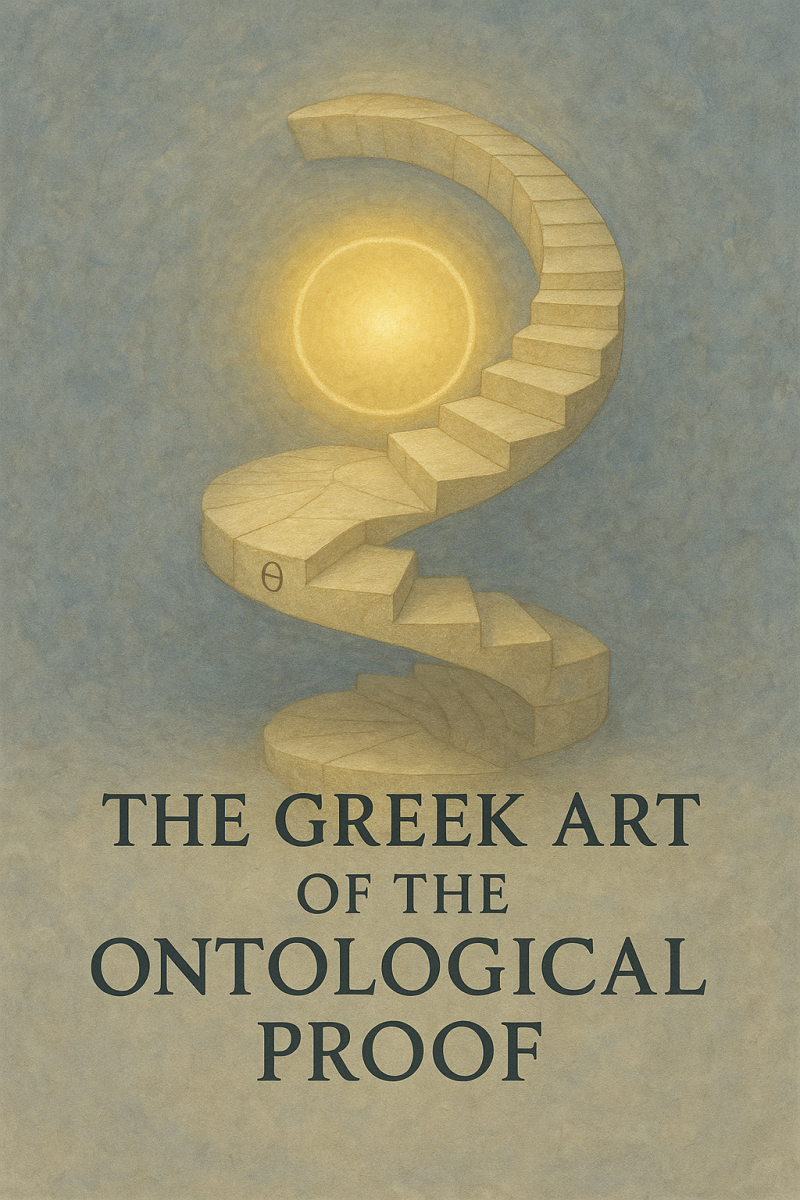
The forthcoming tenth sampler, also coming from the same essay, will be bearing the title: ‘The Greek Art of the Ontological Proof’ and will echo Pierre Deghaye’s recently published ‘A Theology of the Image‘.
**
1. The Elusive Trail of a Primitive Revelation
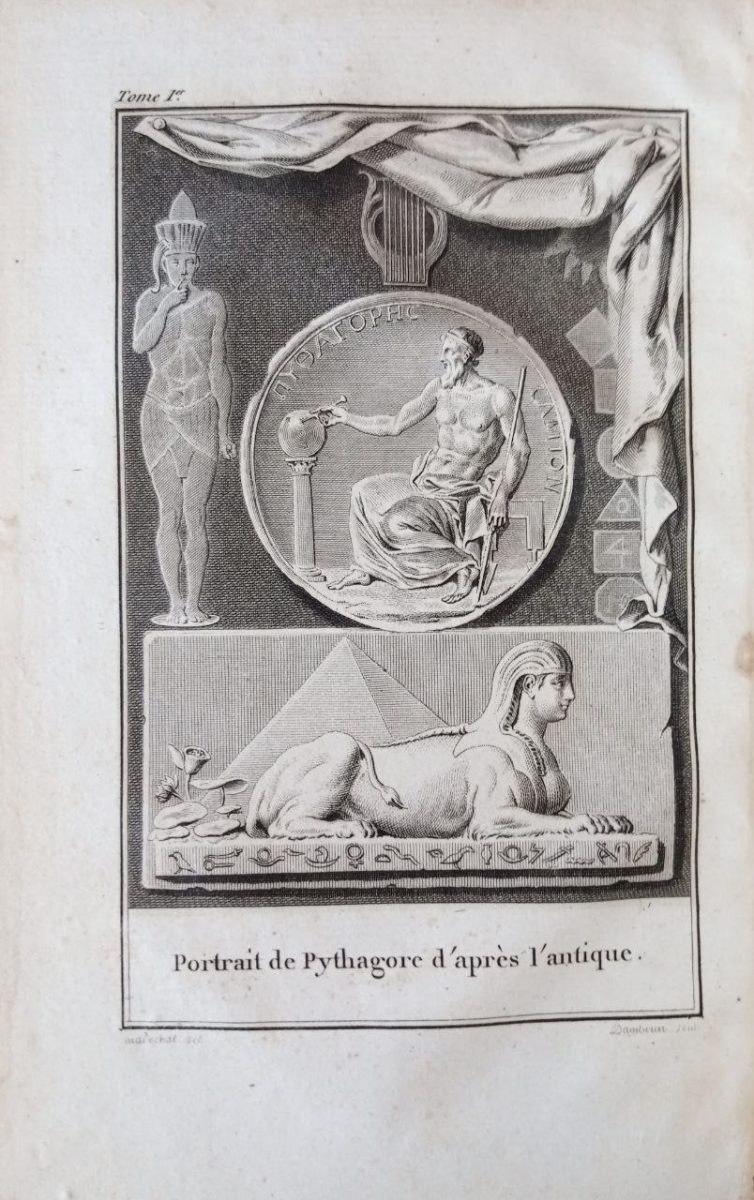
Pythagorean thought is for us the great mystery of the Greek civilization. We find it everywhere. It impregnates almost all of the poetry, and almost all of the philosophy (especially Plato, whom Aristotle considered a pure Pythagorean), music, architecture, sculpture, all of the preceding science, arithmetic, geometry, astronomy, mechanics, biology: this science which is fundamentally the same as ours. Plato’s political science (under its authentic form, as exposed in the ‘Republic’) derives from it, and it was embracing all parts of mundane life. There was then between the different parts of the mundane life, and between the whole of mundane life and supernatural life, as much unity that there is nowadays separation.
The roots of the Pythagorean thought go back far deep into our past. Plato, by exposing the conception that stands a the center of his doctrine, hints at a very ancient revelation, which may be the primitive revelation (‘Philebus’). Herodotus says that the Pythagoreans borrowed from Egypt, at least a great part of their beliefs. Another historian, Diodorus of Sicily, signals analogies between Pythagorean thought and druidic thoughts. Diogen Laertius tells us that it was considered as one of the sources of the Greek Philosophy, which, in passing, obliges us to consider the druidic religion as originating from Iberia, in the same manner we ought to look at the metaphysical and religious part of the Greek civilization as originating from the Pelasgians.
Iberians & Pelasgians (meaning Aegean-Cretan), Trojans & assimilated, Phoenicians, Sumerians, Egyptians, seemed to have formed before historical times around the Mediterranean, a homogenic civilization, impregnated of a pure and supernatural spirituality. Most of these people are named in the Bible among the descendant of Cham. The Helens arrived in Greece, as Greek writers tell us, without a specific spirituality; we can from that draw a valuable conclusion for the whole Indo-Europeans.
The Bible shows that there is very little spirituality in Israel until the Exile. Among the Indo-European people that are connected to Japhet, and those the Bible considers semites, there are two groups. The first group has learned from conquered populations and have assimilated their spirituality. Such were the Celts, the Greeks, the Babylonians. The second group stayed obstinately deaf. Such were the Romans, probably the Assyrians, and the Hebrew (until the Exile).
If we (re)read the episode of Noah’s three sons, it comes to our mind that Noah, who was a vey pure being-just and perfect-had a mystical intoxication followed by nudity (in the mystical sense) and there was a revelation; it seems that Chams took part in it, but not the two others refused. The curse that fell upon Chams would be the one that is attached to things too pure. We ought to notice that there has to have been a revelation with Noah, as the Bible says God concluded a pact with Humanity through his person; a pact symbolized by the rainbow. The cannot be a proper revelation without a pact. It is interesting to see that Deucalion, the Greek Noah, is Prometheus’ son, to whom Aeschylus and Plato attributed a revelation. The Hebrews have arranged this story in such a manner that it had justified the massacre of the Canaanites.
But Ezekiel compares expressively Egypt to the tree of life of the terrestrial Paradise, and Phoenicia (at least at the beginning of his story) to the Kerubim standing near the tree.
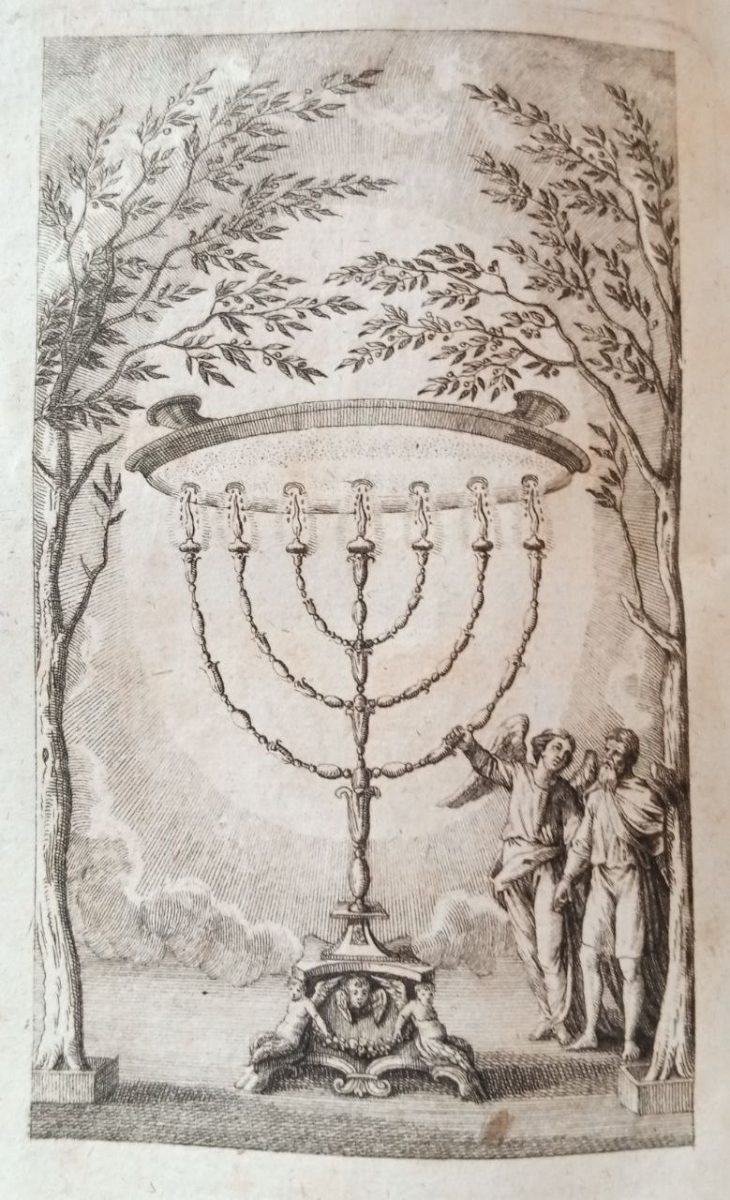
If this way of seeing things is exact, it would imply that a vast current of a perfectly pure spirituality would flow throughout the Antiquity, surging from prehistoric Egypt to Christianity. This very current went through Pythagoreanism.
Nowadays, we cannot glimpse anything from the depth of the Pythagorean thought without operating a sort of divination, that can only be operated but from the inside, which mean if we have truly drawn from the spiritual life embodied in the texts we are studying.
The fundamental texts I am sharing further below are a few fragments of Philolaus, a excerpt from the ‘Gorgias’, two from the ‘Philebus’ and one excerpt from the ‘Epinomis’, followed by one from the ‘Timeus’ and closing these platonic excerpts, one from the ‘Symposium’. To which we have added the fragment from Anaximander (even though he was no Pythagorean, as Pythagoras is thought to have been one of his pupils). Finally, we ought to have in mind ‘the broader Greek civilization’.
*
2. The Texts
In Simone Weil’s original text, the following excerpts are her own
French translations from the original Greek.
*
A-Fragments from
Philolaus of Tarentum
Here in the 1948 English translation
by Kathleen Freeman (at sacred texts dot com).
‘All existing things must necessarily be either Limiting, or Non-Limited, or both Limiting and Non-Limited. But they could not be merely Non-Limited (nor merely Limited). Since however it is plain that they are neither wholly from the Limiting nor wholly from the Non-Limited, clearly then the universe and its contents were fitted together from both the Limiting and the Non-Limited. This is proved also by actual existing things; for those of them which are made of Limiting (elements) impose Limit, whereas those made of both Limiting and Non-Limited (elements) both do and do not impose Limit, and those made of Non-Limited (elements) will appear Non-Limited’. (2 B47).
‘For there could not even be an object set before knowledge to begin with, if all things were Non-Limited‘. (3B49).
‘Actually, everything that can be known has a Number; for it is impossible to grasp anything with the mind or to recognise it without this Number’. (4 B58).
‘This is how it is with Nature and Harmony: the Being of things is eternal, and Nature itself requires divine and not human intelligence; moreover, it would be impossible for any existing thing to be even recognised by us if there did not exist the basic Being of the things from which the universe was composed, (namely) both the Limiting and the Non-Limited. But since these Elements exist as unlike and unrelated, it would clearly be impossible for a universe to be created with them unless a harmony was added, in which way this (harmony) did come into being. Now the things which were like and related needed no harmony; but the things which were unlike and unrelated and unequally arranged are necessarily fastened together by such a harmony, through which they are destined to endure in the universe. . . .‘ (6 B62).
‘The first composite (entity), the One, which is in the centre of the Sphere, is called Hestia‘. (7 B91).
‘The One is the beginning of everything‘. (8 B150).
‘Harmony is a Unity of many mixed (elements), and an agreement between disagreeing elements’. (10 B61)
‘One must study the activities and the essence of Number in accordance with the power existing in the Decad (Ten-ness); for it (the Decad) is great, complete, all-achieving, and the origin of divine and human life and its Leader; it shares . . . The power also of the Decad. Without this, all things are unlimited, obscure and indiscernible.
For the nature of Number is the cause of recognition, able to give guidance and teaching to every man in what is puzzling and unknown. For none of existing things would be clear to anyone, either in themselves or in their relationship to one another, unless there existed Number and its essence. But in fact Number, fitting all things into the soul through sense-perception, makes them recognisable and comparable with one another as is provided by the nature of the Gnômôn, 1 in that Number gives them body and divides the different relationships of things, whether they be Non-Limited or Limiting, into their separate groups.
And you may see the nature of Number and its power at work not only in supernatural and divine existences but also in all human activities and words everywhere, both throughout all technical production and also in music.
The nature of Number and Harmony admits of no Falsehood; for this is unrelated to them. Falsehood and Envy belong to the nature of the Non-Limited and the Unintelligent and the Irrational.
Falsehood can in no way breathe on Number; for Falsehood is inimical and hostile to its nature, whereas Truth is related to and in close natural union with the race of Number‘. (11 B139-160).
(Note by Simone Weil: Plato teaches us many marvelous conceptions concerning divinity by the means of mathematical notions. And Pythagorean wisdom uses it as a veil to hide the mystical path of the divine doctrine. This is the case for the ‘Hieros Logos’, and Philolaus in his ‘Bacchants’, and the whole teaching method of Pythagoras regarding divinity).
*
B- Plato, ‘Gorgias’, 507 e and 508a.
Translated by W.R.M. Lamb, at Perseus.
‘A man who would be blessed with the needful justice and temperance; not letting one’s desires go unrestrained and in one’s attempts to satisfy them—an interminable trouble—leading the life of a robber. For neither to any of his fellow-men can such a one be dear, nor to God; since he cannot commune with any, and where there is no communion, there can be no friendship.
And wise men tell us, Callicles, that heaven and earth and gods and men are held together by communion and friendship, by orderliness, temperance, and justice; and that is the reason, my friend, why they call the whole of this world by the name of order, not of disorder or dissoluteness.
Now you, as it seems to me, do not give proper attention to this, for all your cleverness, but have failed to observe the great power of geometrical equality amongst both gods and men: you hold that self-advantage is what one ought to practice, because you neglect geometry‘.
*
C-Plato, ‘Philebus’, 16b, 26b, 31d.
Translation by David Horan.
At Foundation for Platonic Studies.
SOCRATES: ‘No, it is not, my boys, as Philebus calls you. Well, there is not, nor could there be, a better method than the method whose constant lover I am, though it has often deserted me and left me alone and perplexed…‘
SOCRATES: ‘To me, it is evidently a gift to humanity from the gods, hurled from the realm of the gods, along with the brightest fire, by some Prometheus. And the men of old, being superior to us and dwelling closer to the gods, passed on constantly the statement that all of the things which are generally said to be are from one and many, with limit and limitlessness enshrined within them. Now, since this is how they are arranged, we should always assume that there is a single form associated with everything in each case, and we should search for that, and we shall find that it is there.
Then, if we can apprehend it, we should consider two after one, if there is any second, and if not, we should consider three or some other number. And each one of those again in the same manner until we can see that the initial one is not only one, many and limitless, but also how many it is. But we should not apply the form of the limitless to the multiplicity until we can discern its entire number lying between the limitless and the one, and at that stage we may then quite readily allow each one of them to proceed towards the limitless.
Now, the gods, as I said, have passed on to us this manner of enquiry, understanding, and teaching one another. But the wise men of today make one and many too quickly or too slowly in a random manner, and after one they go immediately to unlimited, and whatever is in between escapes them. And therein lies the distinction between the dialectical and disputatious approach to our discussions‘.
SOCRATES: ‘Then, I claim that when harmony is disrupted in us living creatures, then a disruption of our natural state and a generation of pain arise at the same time.
(Note by Simone Weil: The limit, its ‘the essence of the equal and of the double and of all that prevent contrary things between them to diverge, rather putting them in proportion by impressing the number‘.)
PROTARCHUS: Quite likely.
SOCRATES: But if harmony is again restored and it returns to its own nature, we should say that pleasure arises, if we must speak on a vast subject briefly and most hastily‘.
*
D-Plato, ‘Epinomis’, 990d to 991b.
Translated by W.R.M. Lamb, at Perseus.
‘When he has learnt these things, there comes next after these what they call by the very ridiculous name of geometry, when it proves to be a manifest likening of numbers not like one another by nature in respect of the province of planes; and this will be clearly seen by him who is able to understand it to be a marvel not of human, but of divine origin. And then, after that, the numbers thrice increased and like to the solid nature, and those again which have been made unlike, he likens by another art, namely, that which its adepts called stereometry; and a divine and marvelous thing it is to those who envisage it and reflect, how the whole of nature is impressed with species and class according to each analogy, as power and its opposite continually turn upon the double.
Thus the first analogy is of the double in point of number, passing from one to two in order of counting, and that which is according to power is double; that which passes to the solid and tangible is likewise again double, having proceeded from one to eight; but that of the double has a mean, as much more than the less as it is less than the greater, while its other mean exceeds and is exceeded by the same portion of the extremes themselves.
Between six and twelve comes the whole-and-a-half (9=6+3)and whole-and-a-third (8=6+2): turning between these very two, to one side or the other, this power (9) assigned to men an accordant and proportioned use for the purpose of rhythm and harmony in their pastimes, and has been assigned to the blessed dance of the Muses‘.
*
E-Plato, ‘Timeus’, 31b to 32c.
Translated by W.R.M. Lamb, at Perseus.
‘Hence, in beginning to construct the body of the All, God was making it of fire and earth. But it is not possible that two things alone should be conjoined without a third; for there must needs be some intermediary bond to connect the two. And the fairest of bonds is that which most perfectly unites into one both itself and the things which it binds together; and to effect this in the fairest manner is the natural property of proportion.
For whenever the middle term of any three numbers, cubic or square, is such that as the first term is to it, so is it to the last term, and again, conversely, as the last term is to the middle, so is the middle to the first,—then the middle term becomes in turn the first and the last, while the first and last become in turn middle terms, and the necessary consequence will be that all the terms are interchangeable, and being interchangeable they all form a unity.
Now if the body of the All had had to come into existence as a plane surface, having no depth, one middle term would have sufficed to bind together both itself and its fellow-terms; but now it is otherwise: for it behoved it to be solid of shape, and what brings solids into unison is never one middle term alone but always two.
Thus it was that in the midst between fire and earth God set water and air, and having bestowed upon them so far as possible a like ratio one towards another—air being to water as fire to air, and water being to earth as air to water, —he joined together and constructed a Heaven visible and tangible.
For these reasons and out of these materials, such in kind and four in number, the body of the Cosmos was harmonized by proportion and brought into existence. These conditions secured for it Amity, so that being united in identity with itself it became indissoluble by any agent other than Him who had bound it together‘.
*
F-Plato, Banquet, 202d
Translation by Via-Hygeia.
‘Love…is a great Daimon, and to be a Daimon is to be an intermediate between God and Man. By being in the middle of both, as such, he fills the distance so that the whole is duly connected to the particular.’
‘So that he sees the beauty of the sciences, turning towards the vast sea of Beauty.’
*
G-Anaximander Fragment
Translation Via-Hygeia.
‘Such is the starting point of the birth of things, and the term of their destruction, happening according to necessity; because they bear a punishment and an expiation from one another, because of their injustice according to the order of the time‘.
*
Closing Simone Weil’s choice of texts,
we find a little selection of quotes of the Gospel of Saint John,
from the ‘broader Greek civilization’:
(All English translations below
are using the biblical ‘New International Version’).
John, 17, 6-11.
‘…I have revealed you to those whom you gave me out of the world. They were yours; you gave them to me and they have obeyed your word. Now they know that everything you have given me comes from you. For I gave them the words you gave me and they accepted them. They knew with certainty that I came from you, and they believed that you sent me. I pray for them. I am not praying for the world, but for those you have given me, for they are yours. All I have is yours, and all you have is mine. And glory has come to me through them. I will remain in the world no longer, but they are still in the world, and I am coming to you. Holy Father, protect them by the power of your name, the name you gave me, so that they may be one as we are one‘.
*
John, 17, 18.
‘As you sent me into the world, I have sent them into the world’.
*
John, 10, 14
‘I am the good shepherd; I know my sheep and my sheep know me—just as the Father knows me and I know the Father’.
*
John 15, 9.
‘As the Father has loved me, so have I loved you. Now remain in my love. If you keep my commands, you will remain in my love, just as I have kept my Father’s commands and remain in his love‘.
*
Source
*
Coming next:
A Little Simone Weil and
Classical Exegesis Sampler–Part X:
***


Related Articles

Leave a Reply