
Circle of Transmission: The Living Loom
Karl von Eckartshausen – Upon Fantasy & Imagination
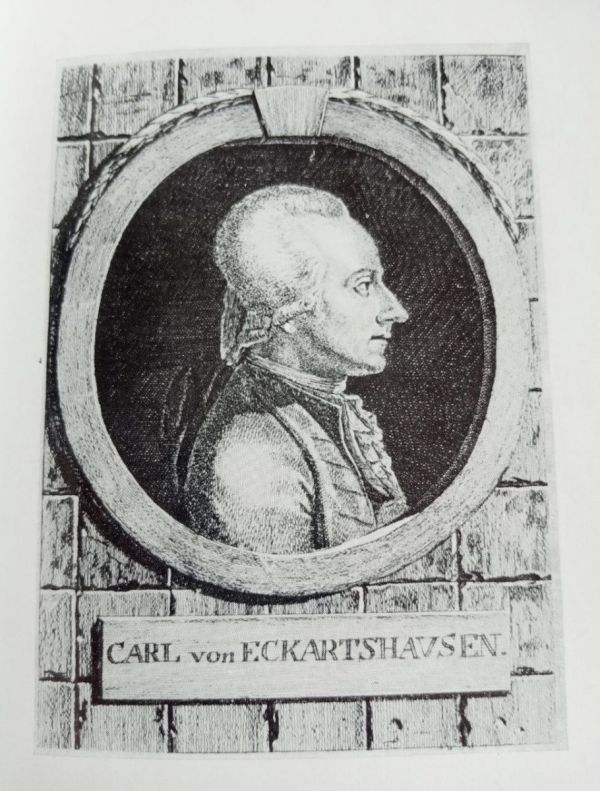
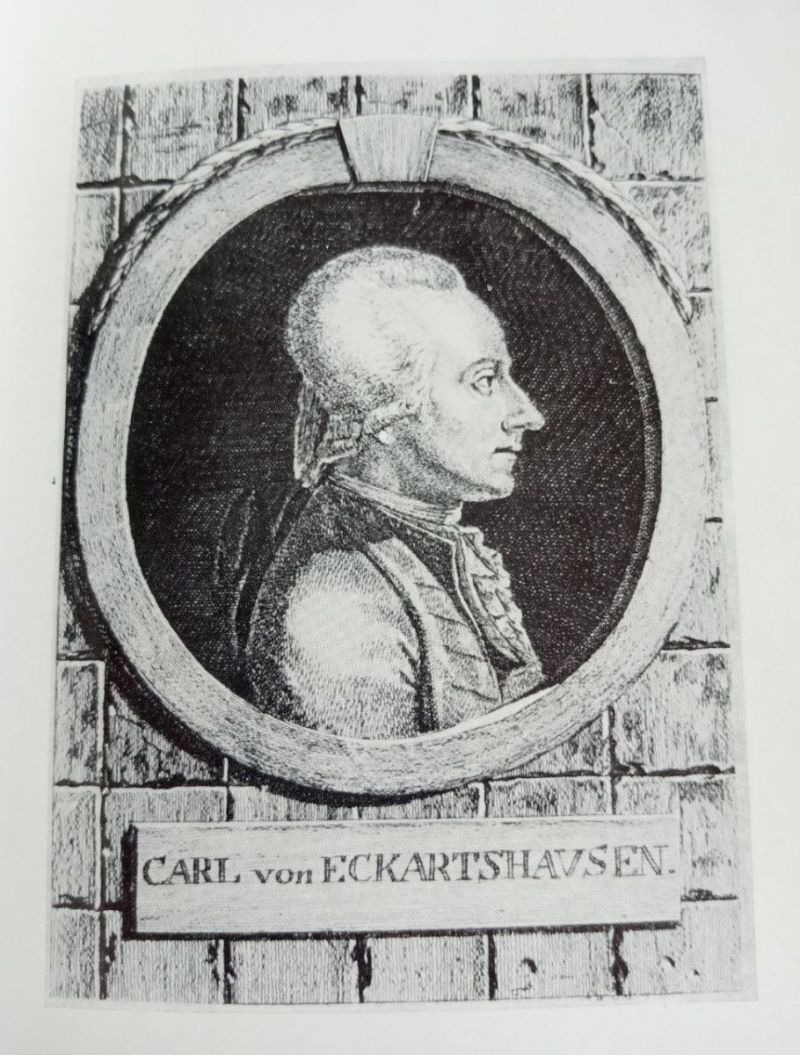
A portrait of Karl von Eckartshausen,
in Antoine Faivre’s trail blazing 1969 ‘Eckartshausen
et la Théosophie Chrétienne’, Klinglisek, Paris.
(portrait number 3).
*
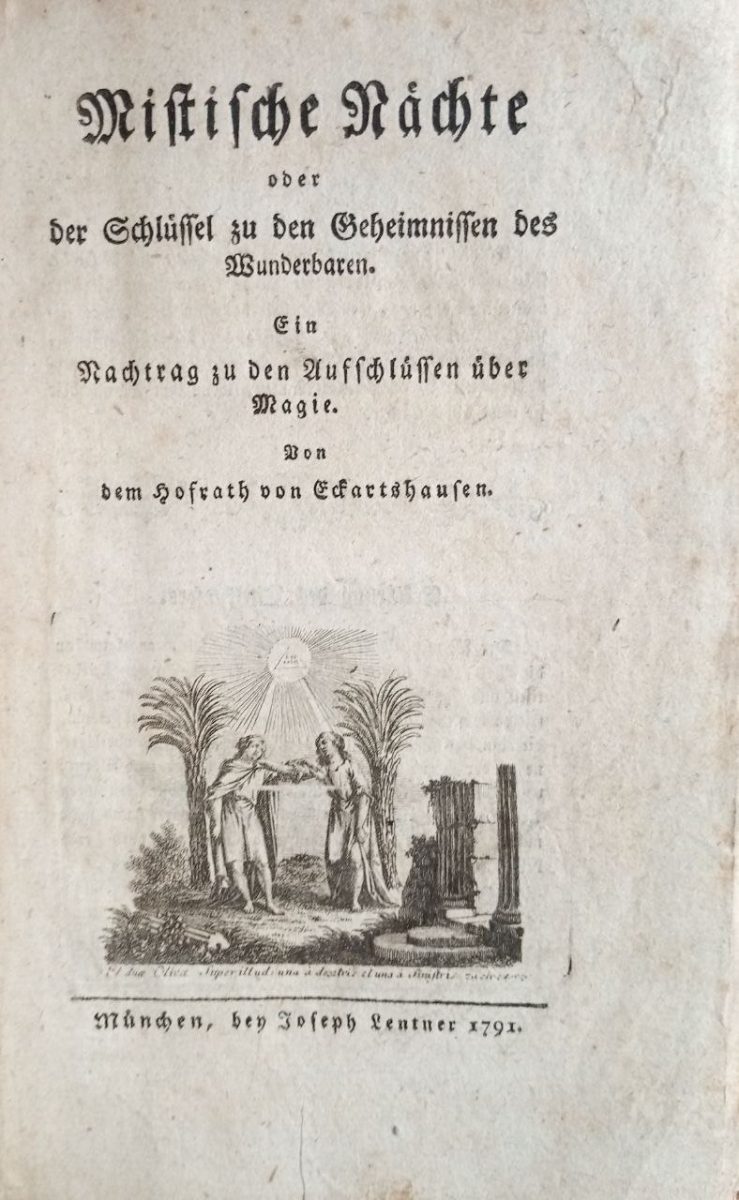
Today’s sharing from the Blue House of Via-HYGEIA is an excerpt from Karl von Eckarshausen’s ‘Mystische Nächte‘, from page 80 to 86. Published in Munich in 1791, it stands as a cornerstone text bridging late-Enlightenment theosophy, early Romanticism, and the revival of Western esoteric traditions. It is recognized as a crucial and sophisticated work that encapsulates a major strand of esoteric thought at the dawn of the modern era, and its themes of inner transformation and a universal spiritual tradition continue to resonate, ensuring its ongoing study. Here is a breakdown of the three main themes running through the text:
1. The Concept of the ‘Inner Church’ (die innere Kirche) is the central, most-studied concept in ‘Mystische Nächte‘. Eckartshausen distinguishes between the external, institutional church and the eternal, invisible ‘Inner Church‘ composed of true seekers of divine wisdom across all times and places. Scholars analyze this as a critique of religious formalism, a vision of esoteric ecumenism, a precursor to Romantic ideas of individual spiritual genius.
2. The Path of Spiritual Rebirth (Wiedergeburt): The book outlines a detailed, stage-by-stage process of inner alchemy—the purification and transformation of the soul to achieve union with the Divine. Commentaries often compare this process to the Purgatorio of Dante, the stages of Lutheran pietism, and classical mystical itineraries.
3. The Symbolism & the Language of Nature: Eckartshausen expounds on the idea that nature is a ‘book‘ written in divine symbols. True magic, for him, is the ability to read this ‘signature of all things‘. Scholars place this within the tradition of Naturphilosophie and the Romantic quest to reunite science & spirituality.
The relationship between Fantasy & Imagination is a touchstone question. This text gives us useful keys to safely navigate this perilous Sargasso Sea, freeing us from this bogged down threshold and allows us to further move-on the path. We have added, as an appendix, a little work to help those who would be interested to labor on this subject, as it does give sound & wise guidance. Valete amici et bonam lectionem vobis optamus!
**
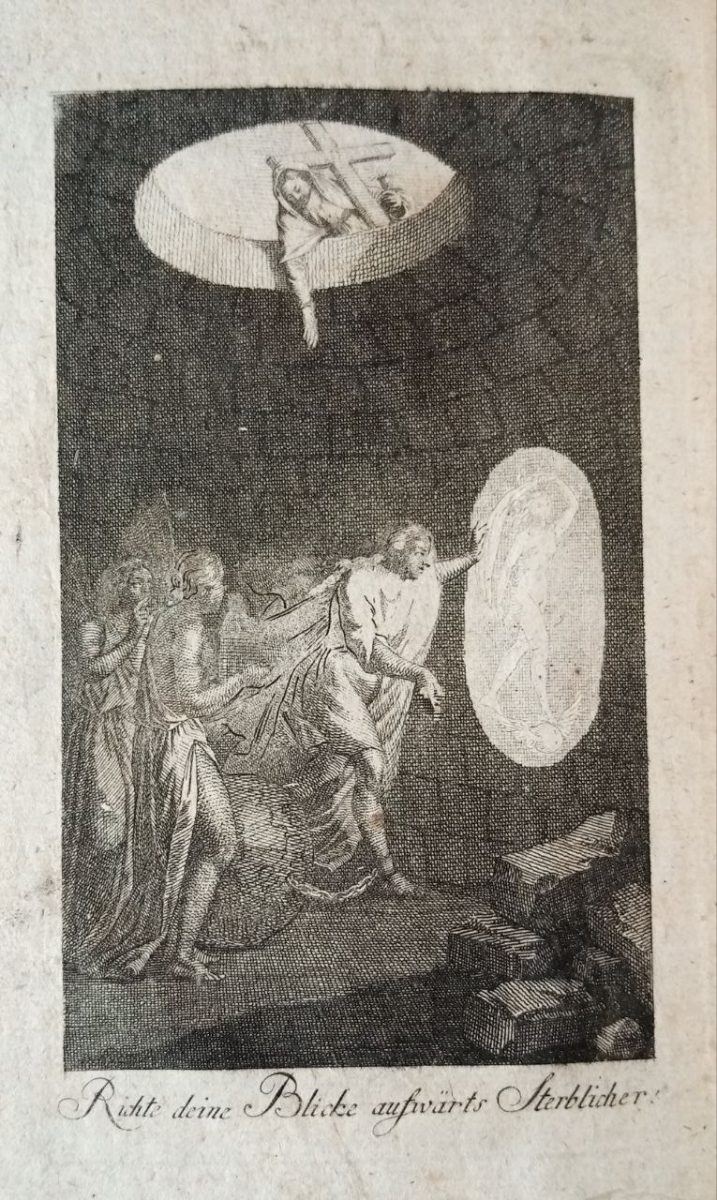
The Taming Of Fantasy &
The Cultivation Of Moral Imagination
‘I need not elaborate at length that, with regard to the moral character of man, much depends on whether the Grand, the Wondrous (especially that which springs merely from novelty or rarity), and the Beautiful, by which his imagination is set in motion, deserve this name, or whether it is merely apparent and essentially vain. The difference in the consequences is astonishingly important, and through its influence on the general welfare, always so much more important the more a man, because of his external circumstances, can affect the whole. Thus, the impression which the romantic deeds of an Alexander and the even more romantic promotions of the same are apt to have on a fiery imagination can still make of a prince a world-conqueror and a Phalaris of his people ( A Via-Hygeia Note: Phalaris was the Tyrant of Acragas, and a Sicilian Ruler during the 6th Century B.C.E.), just as a fortunate view and impression of true greatness can form from him a Titus or a Henry the Fourth.
Had those who strove for the fame of being great historians and poets made this observation before they elaborated their works, we would have no Curtius (A Via-Hygeia note: Quintus Curtius Rufus was a Roman historian, likely active in the 1st century AD), or he would have described the quieter, more venerable, though less famous deeds of a peaceable king. He would perhaps have been less read, but he would never have been harmful.
The passions and fantasy stand in a close connection, and indeed through an immediate and commonly very lively interaction: However, strictly speaking, the latter does not generate the passions, but it nourishes them, it inflames them, their object to pursue more persistently and swiftly. Imaginations have almost the same consequences as actual sensations, and often their effects are not only promoted but also more lasting. Actual sensations place man into a pleasant or unpleasant condition, and thereby they incite no active power either to maintain it or to free himself from it. Imaginations can… One awakens almost as reluctantly from a beautiful dream as one lets oneself be disturbed in the enjoyment of real happiness.
All these are experiences which one must remind people of, not only because they deserve to be considered due to their importance, but also because the rules are founded upon them which must be observed if the power of imagination is to be elevated to a moral perfection. If the power of imagination is to become a moral perfection: it is necessary that one bring it and its effects into an exact and friendly harmony with the original constitution of nature and with the ultimate great purpose of all its powers.
It must therefore stand in a correct relationship with these, and although there is infinite variety in the mixture of the same with them, which can exist with the great intentions of our Creator and is instrumental, together with other causes, in forming countless beautiful variations in the character of righteousness and virtue: yet it must not outweigh any of the other powers of our soul to such a degree that they would be either cast into complete inactivity or even hindered from contributing their share to the true perfection of our being.
The rules, the observance of which is to make fantasy moral, must therefore have a twofold ultimate purpose: its faults must be altered thereby, but its good and praiseworthy qualities must be increased and elevated.
Whoever wishes to change the faults of his imagination will have to undertake the following very serious and important investigations concerning himself: Is mine in its effects merely fiery, or is it violent and unrestrainable? Is it unstable, wavering, and changeable? Does it pursue one object for too long, or is it too impatient to allow itself the requisite time, even when it is necessary? Is it rash and dazzling in its ideas? Does it magnify, does it diminish, or do the images it sketches in their features accord with the nature of the things to which they refer? It is certainly impossible to make it moral if one has neither the inclination nor the courage to ask these questions, and even less the desire and the fortitude to answer them impartially.
If the imagination in its effects is all too fiery; then one must avoid everything that can increase its vivacity and ignite it into even fiercer flames. To dampen its disorderly vehemence, one must seek to put the other powers of the soul into a more vigorous and sustained motion. Think more with reason than with fantasy, and, what is more powerful still, do not forget that you are destined more for an active than a contemplative life: thus, you will not be permitted to occupy yourselves with pleasant or distressing dreams. It is with the powers of the soul as with the nerves of the body. If one does not constantly exert them, they grow slack.
It is a great misfortune to have an unclear and wandering imagination. For it makes one frivolous, imprudent, and fickle in all undertakings. A man who suffers from this may well venture upon a great and noble deed; he may be sincerely resolved to execute it; he may even have made a fortunate beginning, and yet complete nothing, because his mutable fancy compels him to hasten from one object and goal of his activity to another.
Because it is natural for the imagination to change everything and to show it in new and unusual shapes, to invent possibilities and give them the appearance of realities, whereby the passions are heated to chase after seductive objects: so, one must endeavor to make reason the ruling power of one’s soul, so that one may reject all proposals of fantasy which are not approved by it.
Reason examines; it does not satisfy itself with mere semblance, however much it may glitter. Whether our imagination is directed principally towards what is grand, or towards what is wondrous, or towards the pleasant and beautiful: if reason rules, it will guide us accordingly and it will never let us become romantic in our aims and undertakings; it will also help us discover hidden ugliness and shield our ears from the voice of flattering and dangerous sirens’.
Source
*
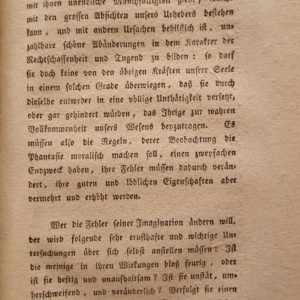
German Text



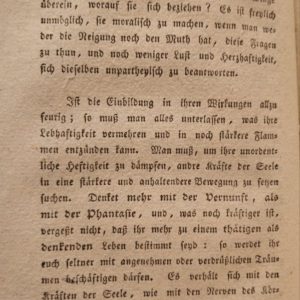
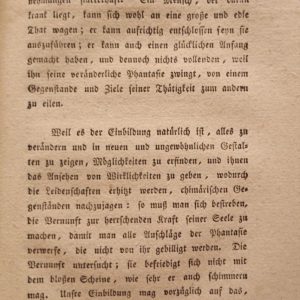

*
Appendix
CATECHISM UPON MORAL IMAGINATION
From Phantasm to the Mirror of Divine Light
Based on “Mystische Nächte” (1791) .
*
PREAMBLE FOR THE STUDENT
The imagination is not idle fancy — it is the soul’s inner workshop, the lens through which you perceive, desire, and act. Ungoverned, it enslaves you to sensation, illusion, and passion. Governed by reason and divine light, it becomes the throne of wisdom and the forge of virtue.
These questions and exercises are not for contemplation alone — they demand daily praxis. The unruled imagination breeds frivolity, inconstancy, and moral danger. The disciplined imagination — harmonized with reason, nature, and divine order — is the foundation of true virtue and the mirror of heavenly light.
Begin here.
Begin now.
*
PART I: THE FOUNDATIONS —
WHY AND HOW TO TAME THE IMAGINATION
Q1: What is the soul’s great misfortune?
A1: To possess an unclear, wandering imagination. It makes one frivolous, imprudent, and fickle — capable of beginning noble works but incapable of completing them, as mutable fantasy drags the soul from one object to another.
Q2: What is the natural tendency of untamed fantasy?
A2: To change everything — to present the world in new, often false shapes; to invent possibilities and clothe them in the appearance of reality. This ignites the passions, seducing them to chase glittering, often hollow, objects.
Q3: What, therefore, is the first and sovereign rule?
A3: To make Reason the ruling power of your soul. All proposals of fantasy must be brought before its tribunal and rejected unless they receive its sanction. Reason examines; it is not satisfied with semblance, however brightly it may shimmer.
“Die Vernunft untersucht; sie befriedigt sich nicht mit dem bloßen Scheine…” (p. 94)
Q4: To what end must the imagination be directed?
A4: To moral perfection — aligning its images and impulses with the original constitution of your nature and the ultimate purpose of all your powers. It must serve not the self, but the good, the true, and the divine.
Q5: Why must the imagination be made moral?
A5: Because it is the engine of desire and the lens of perception. An impure imagination distorts reality, inflames passions, and leads the soul astray from truth. Only a moral imagination can align with virtue and receive divine impressions.
“Wenn ohne Vernunft keine Weisheit… das Herz kann nicht moralisch seyn, wenn es, nicht die Einbildung ist.” (p. 80)
Q6: What is the primary source of the imagination’s corruption?
A6: The soul’s innate craving for sensual pleasure. The imagination naturally dwells on sensory impressions and seeks to recreate or intensify them — often at the expense of truth.
“Da nun die Sucht nach Vergnügen der herrschende Grundtrieb unserer Seele ist…” (p. 85)
*
PART II: THE PRAXIS —
SELF-INQUIRY AND DISCIPLINE
Before you can govern your imagination,
you must know its character — with severe honesty.
Q7: What is the nature of your imagination’s fire?
A7: Is it merely active — or violent and unrestrainable? Discern this. If it is all too fiery, you must avoid stimuli that increase its vivacity. Shun what feeds its disorderly vehemence.
Q8: What is its manner of movement?
A8: Is it unstable, wavering, and changeable? Does it pursue one object too long — or is it so impatient it refuses to grant even important matters the time they require?
Q9: How does it form its ideas?
A9: Is it rash and dazzling? Does it magnify or diminish things? Do the images it sketches accord with the true nature of the things they represent — or does it distort them?
“Sie setzt hinzu; sie nimmt hinweg; sie vergrößert oder verkleinert…” (p. 83)
Q10: Why is this inquisition vital?
A10: It is impossible to moralize the imagination without the courage to ask these questions — and the fortitude to answer them impartially. To ignore them is to remain a slave to phantoms.
Q11: How do you dampen unruled heat?
A11: By putting the other powers of your soul — especially reason and the will for action — into a more vigorous and sustained motion. Strengthen the counterbalancing faculties.
Q12: What is the supreme practical maxim?
A12: “Think more with reason than with fantasy, and do not forget that you are destined more for an active than a contemplative life.” This is the sovereign remedy. Idle fantasy weakens the soul as idle muscles weaken the body.
*
PART III: THE CULTIVATION —
FROM PURIFICATION TO DIVINE REFLECTION
Q13: What guards against “romantic” aims?
A13: The rule of Reason. It will never let you become romantic in your undertakings; it will help you discover the hidden ugliness behind seductive appearances and shield your ears from the voices of flattering and dangerous sirens.
Q14: Upon what does moral character crucially depend?
A14: Upon the quality of the objects that excite your imagination. You must discern: does the Grand, the Wondrous (especially that born of mere novelty), and the Beautiful that moves you deserve these names — or are they merely apparent and essentially vain?
Q15: What is the first practical step to purify the imagination?
A15: Exercise in Vigilant Observation.
For one day, observe without judgment every flight of your imagination. Notice when it adds to, subtracts from, or beautifies a memory or expectation. Write down three instances where it clearly altered reality to suit desire or fear.
Q16: How does one establish reason’s sovereignty over fantasy?
A16: Exercise of the Inner Judge.
When a strong image or daydream arises — especially one tinged with fear, envy, or vain desire — pause. Ask reason to interrogate it: “Is this true? Is this necessary? Does this lead me toward divine light or deeper into shadow?” Consciously reject its false embellishments.
Q17: How can the imagination be redirected toward the good?
A17: Exercise of Sacred Replacement.
Deliberately feed your imagination with images of moral beauty, divine order, and selfless virtue. At day’s end, recall one act of kindness you witnessed or performed, and hold its image vividly in mind before sleep — allowing it to displace the day’s sensory clutter.
“Ist sie regelmäßig und auf das gerichtet, was eine würkliche Größe, eine wahre, und besonders eine moralische Schönheit hat…” (p. 81)
Q18: Can the purified imagination truly grasp divine things?
A18: Not in their essence — for God is beyond sense. But a disciplined imagination can receive divine truths clothed in light — through symbols, analogies, and inspired forms that reason then illuminates. It becomes a translator of spirit to soul.
“Weil sie aber eben dadurch dem, was bloß Geist und Seele ist, so zu sagen, einen Körper geben kann…” (p. 86)
Q19: What is the highest purpose of a purified imagination?
A19: To become a still mirror that reflects divine light and wisdom without distortion — and a polished lens that concentrates that light into loving action in the world.
“Jeder Gedanke, der aus der Seele des Menschen zur Gottheit aufsteigt, ist Annäherung des Wesens zum Schöpfer, Annäherung zum Lichte, und lohnt mit Erleuchtung.” (p. 44)
Q20: How will you know progress is being made?
A20: You will experience increasing inner stillness, fewer involuntary surges of distracting or troubling images. Moral beauty will move you more deeply than sensual charm. You will begin to think in light — to sense divine truth not as abstract doctrine, but as a living, illuminating presence in your mind’s eye.
“Wirkliches Wachen wäre aber derjenige glückliche Zustand unsrer Seele, da wir entweder Gott denken, oder etwas, das Gott geboten hat, thun.” (p. 52)
*
PART IV: THE DAILY PATH —
EXERCISES FOR PURIFICATION
1. Morning Intention
Upon waking, affirm: “Today, I shall watch over my imagination. I will seek truth over fantasy, and moral beauty over sensory charm.”
2. Vigilant Observation (Daytime)
- Notice when your mind embellishes a memory or anxiety.
- Briefly note the alteration in a journal.
3. The Pause of Reason (In-the-Moment)
- When agitated by a mental image, stop and breathe.
- Ask: “Is this true? Does this lead me toward light or shadow?”
- Choose to release or reform the image.
4. Sacred Replacement (Evening)
- Recall one instance of moral beauty witnessed today.
- Visualize it in detail before sleep.
5. Nightly Examination
- Review the day’s imaginative activity.
- Give thanks for one moment of clarity.
- Resolve to improve one point tomorrow.
*
PART V: THE PROMISE —
THE TRANSFORMATION
“Derjenige, der einen guten Willen hat, wird finden; und dem werden die Pfarten aufgetan werden, der klopft.” (p. 134)
The one who purifies the imagination does not merely gain self-control — they gradually transform the very organ of their perception. They begin to dwell in “wirkliches Wachen” — real waking — a state where the soul is alive to God and acts from divine love.
Their imagination, once a source of deception, becomes the inner mirror of angelic life, receiving and reflecting the primal light (Urlicht), so that they themselves become a point from which wisdom and love shine into the world.
*
FINAL BLESSING
Go now, and work in the hidden laboratory of your soul.
Make your imagination moral — that your heart may be pure,
and your mind a lamp for the divine.
The path is gradual.
The goal is nothing less than becoming a living mirror of heaven.
*
Compiled from “Mystische Nächte oder der Schlüssel zu den Geheimnissen des Wunderbaren” (1791). For personal use in the pursuit of wisdom.
***

Related Articles


Leave a Reply