
Circle of Transmission: The Living Loom
Francis Warrain: ‘Eternal Nature According To Jacob Boehme’
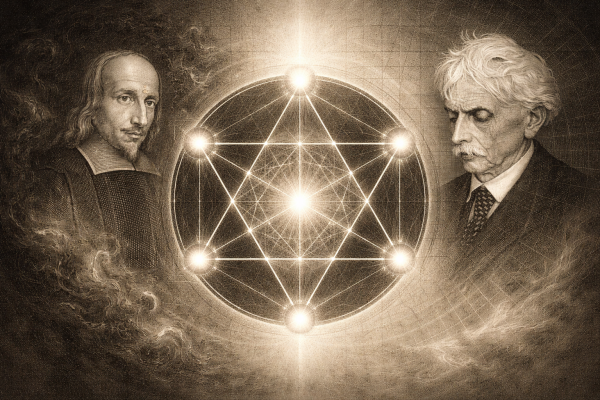
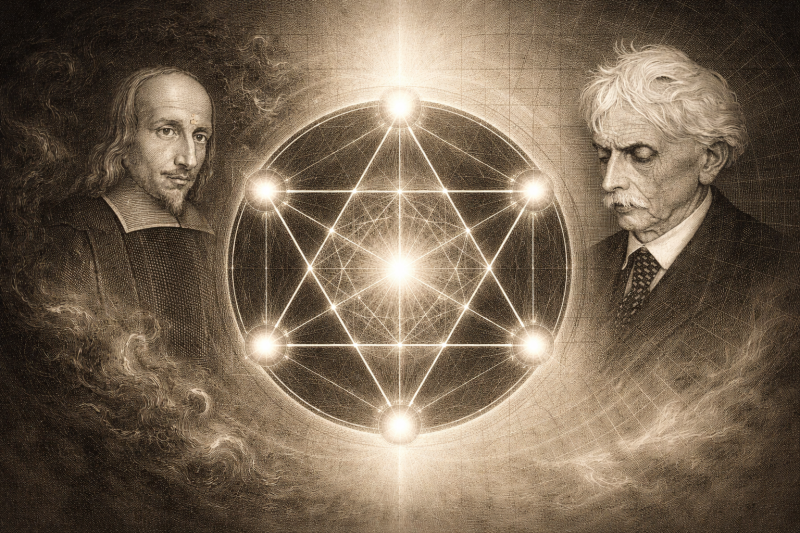
Legend: Between Jacob Boehme and Francis Warrain unfolds not a dialogue, but a transformation. On the left, Boehme’s vision emerges from depth—turbulent, fiery, and unformed—expressing the living tension of will, anguish, and becoming. On the right, Warrain receives and resolves this intensity into clarity, rendering the same forces as ordered relations, measurable and intelligible.
At the center, the geometric figure does not illustrate but mediates: it is the silent locus where intuition becomes structure, where chaos is transmuted into law. What appears as a conversation is, more precisely, a passage—an alchemy of thought—through which the obscure is not denied, but fulfilled in form.
*
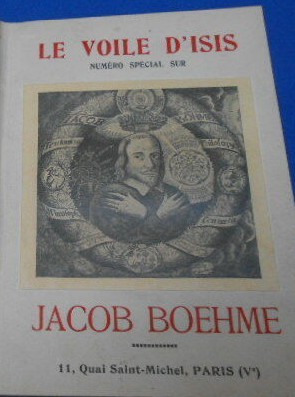
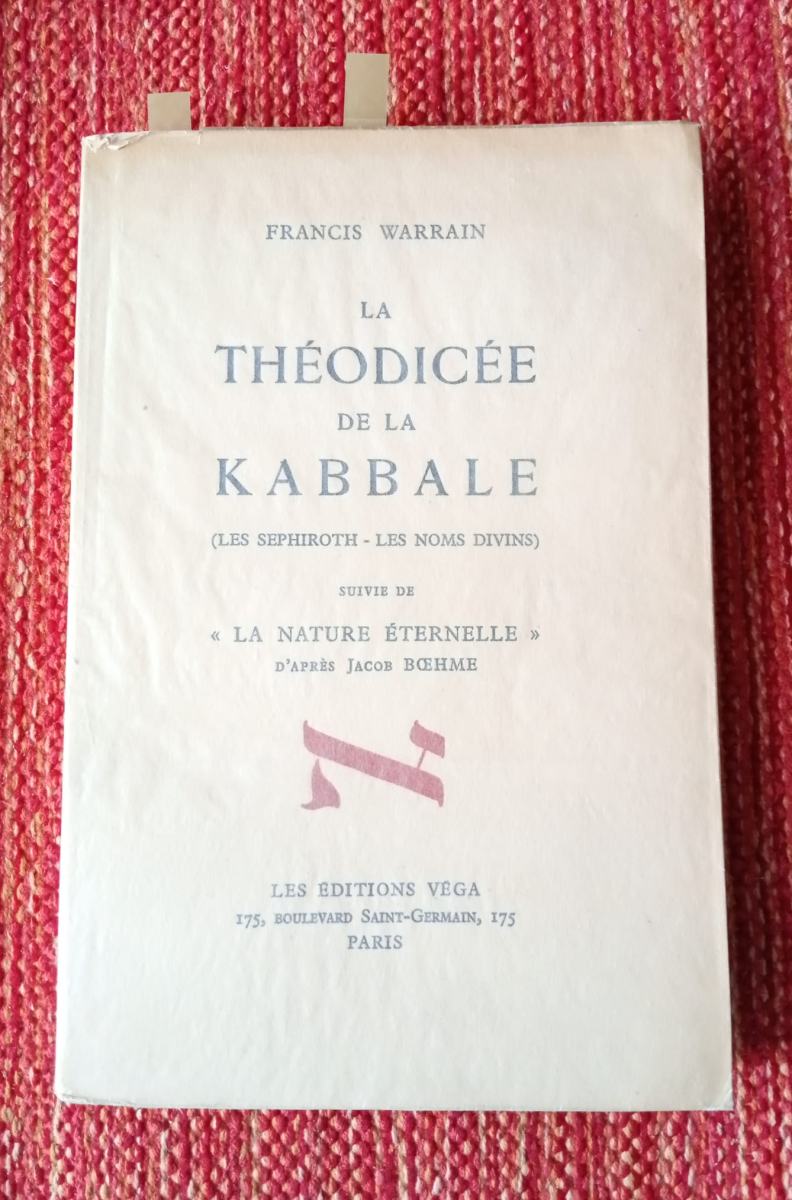
Today’s sharing from the Blue House of Via-HYGEIA is an article from Francis Warrain, ‘La Nature Eternelle selon Jacob Boehme‘ (Eternal Nature according to Jacob Boehme), initially published in ‘Le Voile d’Isis‘, 4rth Series-Special Issue devoted to Jacob Boehme in April 1930, and re-published posthumously by his friends (those of the Petrus Talemarianus project) as third part of the ‘Théodicée de la Kabbale‘ in 1949. From page 203 to 222.
In this seminal 1930 text, Francis Warrain performs a rare intellectual feat: he translates Jacob Boehme’s fiery, intuitive visions into the precise language of metaphysical geometry.
Moving beyond mere commentary, Warrain reveals the hidden architecture of the ‘Seven Qualities‘, aligning Boehme’s Theosophia with the Sephirothic tree and Wronski’s ‘law of creation‘.
Here, the apparent chaos of divine anger and love is resolved into a coherent system where evil is revealed not as a substance, but as a disordered relation of forces. A masterclass in synthesizing German mysticism, Jewish Kabbalah, and French rationalism!
**
A Contextual Introduction
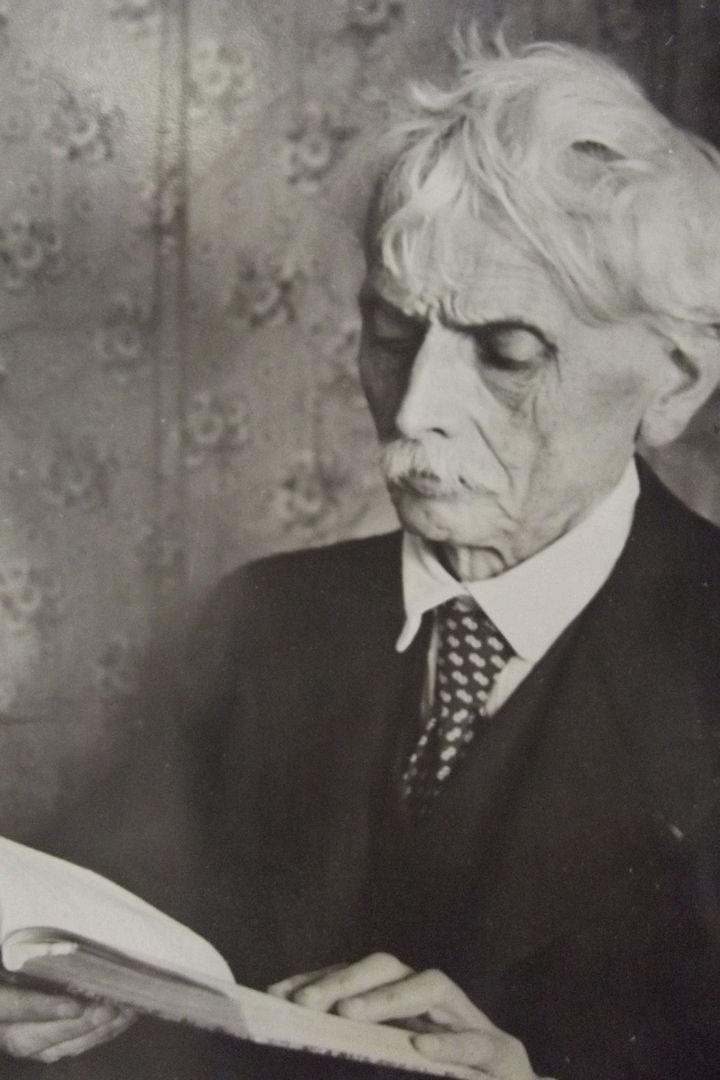
Francis Warrain (1867–1941) occupies a unique space in 20th-century esoteric thought. Unlike many of his contemporaries who approached mysticism through poetry or vague intuition, Warrain was a thinker of rigorous structure—a mathematician of the invisible. His work stands as a bridge between the speculative depth of the Kabbalah and the dynamic psychology of Western mystics like Jacob Boehme.
This article, ‘The Eternal Nature According to Jacob Boehme‘, originally published in the famous periodical ‘Le Voile d’Isis‘ in 1930, represents Warrain at his absolute best. It is not merely an exposition of Boehme’s ideas; it is a structural rehabilitation of them.
What makes this text distinctively ‘Warrain-esque‘ is his refusal to accept obscurity as a virtue of the divine. Where Boehme often writes in a torrent of paradoxical images—fire, bitterness, the wheel of anguish—Warrain steps in with the calm precision of an architect. He identifies the ternary logic beneath the chaos.
From Intuition to Geometry: Warrain takes Boehme’s psychological introspection (the drama of Will vs. Knowledge) and maps it onto the sephirotic tree. He demonstrates that Boehme’s ‘Seven Qualities‘ are not random emotional states but necessary ontological steps in the manifestation of the Absolute.
The Reversal of the Columns: Perhaps Warrain’s most brilliant insight in this text is his analysis of the ‘Reversal of the Order‘. He explains why Boehme’s system feels so disruptive: it starts from the side of Being (Rigor/Intelligence) rather than Knowledge (Wisdom/Mercy). Warrain shows that this reversal is not an error, but the very key to understanding the origin of evil and the necessity of the Incarnation.
Evil as Dissonance, Not Substance: True to his high metaphysical stance, Warrain clarifies that for Boehme, evil has no independent existence. It is simply the ‘first principle‘ (Desire/Will) failing to resolve into the ‘second principle‘ (Love/Understanding). This transforms the problem of evil from a theological scandal into a structural dissonance that demands resolution.
In an era where esoteric studies often drift into syncretic vagueness, Warrain’s article stands firm as a model of comparative metaphysics. He does not flatten differences between traditions; he uses them to illuminate each other. By aligning Boehme’s Qualities with the kabbalistic Sephiroth and the alchemical Ternary, he reveals a universal grammar of divine manifestation.
Dear Reader, may you peruse this not as a historical artifact, but as an active key! Warrain invites us to see our own inner conflicts—between contraction & expansion, anger & love, being & knowing—as reflections of the eternal drama within the Divine Nature itself.
*
And now the Text:
‘Eternal Nature According to Jacob Boehme’
By Francis Warrain
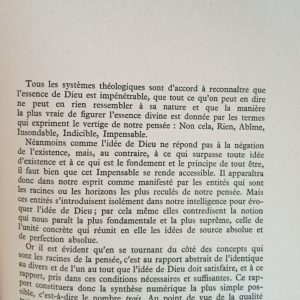
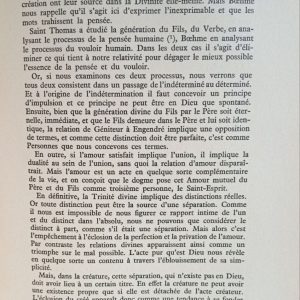
All theological systems agree in recognizing that the essence of God is impenetrable, that everything that can be said about it can in no way resemble its nature, and that the truest way to depict the divine essence is given by terms expressing the vertigo of our thought: Not that, Nothing, Abyss, Unfathomable, Unutterable, Unthinkable.
Nevertheless, since the idea of God does not correspond to the negation of existence, but, on the contrary, to that which surpasses every idea of existence and which is the foundation and principle of all being, this Unthinkable must render itself accessible. It will therefore appear in our mind as manifested by entities which are the roots or the farthest horizons of our thought. But these entities introduce themselves in isolation into our intelligence to evoke the idea of God; by this very fact they contradict the notion which appears to us the most fundamental and supreme, that of the concrete unity which reunites in itself the ideas of absolute source and absolute perfection.
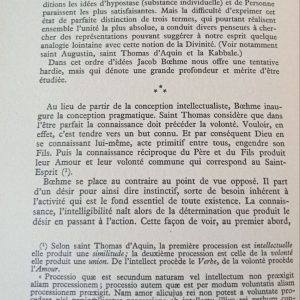
Now it is evident that in turning towards the concepts which are the roots of thought, it is to the abstract relation of the identical to the diverse and of the one to the whole that the idea of God must satisfy, and to this relation, taken in these necessary and sufficient conditions. This relation will therefore constitute the simplest possible numerical synthesis, that is to say, the number three. From the qualitative point of view, three terms are necessary and sufficient to reconcile the opposition of the identical and the diverse. Thus numbers and the primordial relations of abstract logic intervene as the essential foundations of every divine manifestation intelligible to our mind. At the extreme opposite, to satisfy the idea of plenitude and complete autonomy we have the idea of a perfectly unified Whole, where the parts one might wish to extract from it are the Whole itself, but grasped by one of its functions. Now the necessary and sufficient functions for a unity to be a whole reduce to three. In the triad which represents Divinity for us, each of these functions must therefore present itself as eminently concrete, and revealing within itself the other two. To answer these conditions the ideas of hypostasis (individual substance) and Person seem the most satisfactory. But the difficulty of expressing this state of perfect distinction of three terms, which together nevertheless achieve the most absolute unity, has led various thinkers to seek representations that can suggest to our mind some distant analogy with this notion of Divinity. (See Saint Augustine, Saint Thomas Aquinas and the Jewish Kabbalah).
In this order of ideas, Jacob Boehme offers us a bold attempt, but one which denotes great depth and deserves to be studied.
Instead of starting from the intellectualist conception, Boehme inaugurates the pragmatic conception. Saint Thomas Aquinas considers that in the perfect being knowledge must precede will. To will, indeed, is to tend towards a known goal. And consequently God in knowing Himself, the primitive act above all, engenders His Son. Then the reciprocal knowledge of the Father and the Son produces their Love and their common will which corresponds to the Holy Spirit.
Boehme, on the contrary, places himself at the opposite point of view. He starts from a desire, so to speak instinctive, a kind of need inherent in activity which is the essential foundation of all existence. Knowledge, intelligibility, is then born from the determination produced by desire when passing into action. This way of seeing, at first glance, appears defective; it seems to make God arise from what is most inferior in existence, and to engender thought from matter. But if one looks closely, one will see that the two points of view are closely linked to each other and that they express the two sides of a process of which we can only form an idea by dissociating it.
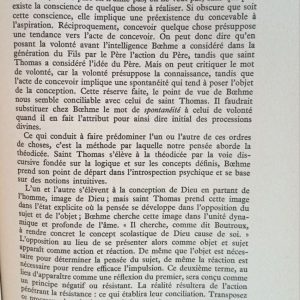
Indeed, on the one hand, one does not love, one does not will, without the pre-existence of the consciousness of something to realize. However obscure this consciousness may be, it implies a pre-existence of the conceivable to aspiration. Reciprocally, to conceive something presupposes a tendency towards the act of conceiving. One can therefore say that by positing will before intelligence, Boehme considered in the generation of the Son by the Father the action of the Father, while Saint Thomas Aquinas considered the idea of the Father. But one can criticize the word will, for will presupposes knowledge, whereas the act of conceiving implies a spontaneity which tends to posit the object of conception. This reservation made, Boehme’s point of view seems to us reconcilable with that of Saint Thomas Aquinas. In Boehme, one would need to substitute the word spontaneity for that of will when he makes it the, so to speak, initial attribute of the divine processions.
What leads to making one or the other of these orders of things predominate is the method by which our thought approaches theodicy. Saint Thomas Aquinas rises to theodicy by the discursive path founded on logic and defined concepts; Boehme takes his starting point in psychic introspection and bases himself on intuitive notions.
Both rise to the conception of God starting from man, image of God; but Saint Thomas Aquinas takes this image in the explicit state where thought develops in the opposition of subject and object; Boehme seeks this image in the dynamic and profound unity of the soul. ‘He seeks‘, as Boutroux says, ‘to render concrete the scholastic concept of God cause of Himself‘. (‘Le philosophe allemand Jacob Boehme‘ by Émile Boutroux, Paris-1888). The opposition then presents itself not as object and subject but as action and reaction. Just as the object is necessary to determine the thought of the subject, so reaction is necessary to render the impulse effective. This second term, instead of appearing as a reflection of the first, will be conceived as a negative or resistant principle. Reality will result from action penetrating resistance: which will establish their reconciliation. Transpose this process into the domain of knowledge, and you will have the idea. And thus the two points of view are only the translations into schemas of thought and schemas of activity of the same act which indissolubly unites thought and activity.
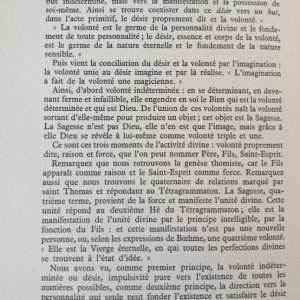
‘Nature is nothing other than the qualities of the adoption of the born proper desire, which proceeds from the infinite variety of the Word which exhales it…” “The divine unity of Nature is the desirous adoption; it is incomprehensible‘. (Jacob Boehme, ‘Clavis‘, paragraph 25).
‘Nothingness desiring to become something, tends not towards an indeterminate goal, but towards the manifestation and possession of itself. Thus there coexist in this desire towards a goal, in the primitive act, desire properly speaking and will‘.
‘Will is the germ of divine personality and the foundation of all personality; desire, essence and body of will, is the germ of eternal nature and the foundation of sensible nature‘.
Then comes the conciliation of desire and will by imagination: will united to desire imagines and thereby realizes. ‘Imagination has made of will a magician‘.
Thus, first, indeterminate will: in determining itself, in becoming firm and infallible, it engenders within itself the Good which is determined will and which is God. From the union of these wills is born the will going out of itself to produce an object; this object is Wisdom. Wisdom is not God, it is only His image, but thanks to it God reveals Himself to Himself as triple and one will.
These are the three moments of divine activity: will properly speaking, reason, and force, which one can name Father, Son, Holy Spirit.
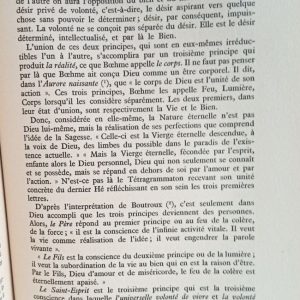
Note that we find the Thomist genesis, for the Son appears as reason and the Holy Spirit as force. Note also that we find the quaternary of relations marked by Saint Thomas Aquinas and corresponding to the Tetragrammaton. Wisdom, the fourth term, proceeds from force and manifests divine unity. This unity corresponds to the second He of the Tetragrammaton; it is the manifestation of divine unity by the intelligible principle, by the function of the Son: and this manifestation is not a new person, or, in Boehme’s expressions, a fourth will. ‘It is the eternal Virgin, in whom all the divine perfections are found in the state of idea‘.
We have seen, as first principle, indeterminate will or desire, pure impulsivity towards existence in all possible ways; as second principle, direction towards personality which alone can found existence and satisfy the desire to exist. This opposition, considered in its abstract state, is that of the universal and the individual, in the transition from abstract to concrete, that of Essence and Substance, finally, in its concrete state, that of Principiation and Personality. Now these two tendencies present themselves as antagonistic. To reconcile them is to engender absolute reality. But within this reality they undergo as constitutive elements. As soon as one separates them from each other one has the opposition of good and evil. Evil is desire deprived of will, that is to say, desire aspiring towards something without being able to determine it; desire, consequently, impotent. Will is not conceived separated from desire. It is determined, intellectualized desire, and thereby Good.
The union of these two principles, which are in themselves irreducible to each other, will be accomplished by a third principle which produces reality, what Boehme calls the body. One must not think thereby that Boehme conceived God as a corporeal being. He says, in ‘Aurora’ (Chapter XXI, paragraph 58), that ‘the body of God is the unity of his action‘. These three principles, Boehme calls Fire, Light, Body when he considers them separately. The first two, in their state of union, are respectively Life and Good.
Therefore, considered in itself, Eternal Nature is not God Himself, but the realization of His perfections which the idea of Wisdom comprises. ‘The latter is the eternal Virgin descended, at the voice of God, from the limbo of the possible into the paradise of actual existence‘. ‘But the eternal Virgin, fecundated by the spirit, then gives birth to the personal God, God who not only knows and possesses Himself, but spreads Himself outside Himself through love and action‘. Is this not the Tetragrammaton receiving its concrete unity from the last He reflecting in its bosom the first three letters?
According to Boutroux’s interpretation, it is only in the accomplished God that the three principles become persons. Then, the Father corresponds to the first principle or to the fire of wrath, of force; ‘he is the consciousness of infinite vital activity. He wills life as the realization of the idea; he wills to engender the living word‘.
‘The Son is the consciousness of the second principle or of light; he wills the subordination of life to the good which is its reason for being. Through the Son, God of love and mercy, the fire of wrath is eternally appeased‘.
The Holy Spirit is the third principle which is the third consciousness in which the universal will to live and the good will draw near and reconcile.
If personality has consciousness as its foundation, it supposes a reflection upon itself. Although in God all is eternal, one therefore conceives that there are ontologically in the divine essence original modes of the divine personalities.
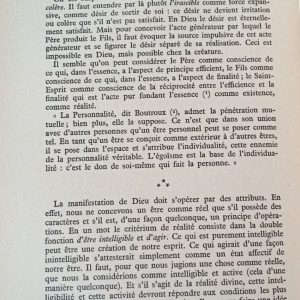
One is surprised to see the Father considered as the principle of wrath. One must understand by this rather the irascible as expansive force, as desire to go out of oneself: this desire only becomes irritation or wrath if it is not satisfied. In God desire is eternally satisfied. But to conceive the generative act by which the Father produces the Son, one must evoke the impulsive source of this generative act and imagine desire separated from its realization. This is impossible in God, but possible in the creature.
It seems that one can consider the Father as consciousness of what, in essence, has the aspect of efficient principle, the Son as consciousness of what, in essence, has the aspect of finality; the Holy Spirit as consciousness of the reciprocity between efficiency and finality which is the pure act founding essence (essence taken here in its scholastic meaning) as existence, as reality.
‘Personality’, says Boutroux, ‘admits mutual penetration; moreover, it presupposes it. It is only in its union with other persons that a personal being can posit itself as such. Insofar as a being conceives itself as external to other beings, it posits itself in space and attributes to itself individuality, that enemy of true personality. Egoism is the basis of individual ability: it is the gift of self that makes the person‘.
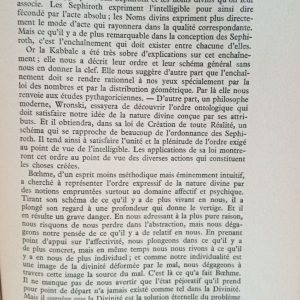
The manifestation of God must operate through attributes. Indeed, we conceive a being as real only if it possesses characters and if it is, in some way, a principle of operations. In a word, the criterion of reality consists in the double function of being intelligible and acting. What is purely intelligible may be a creation of our mind. What would act in an unintelligible way would simply attest itself as an affective state of our being. For us to judge a thing as real, we must consider it as intelligible and active (in some way). And if it concerns divine reality, this intelligence and this activity must answer to the most complete conditions of intelligibility and action. To form an idea of the attributes of God, we will therefore have recourse to the characters which express the deepest foundation, the vastest envelopment; the perfection of the intelligible in the act and the perfection of the act through the intelligible. It is to this reciprocal expression of the intelligible by action and of action by the intelligible that the qualities applied to the Sephiroth and the divine names associated with them correspond. The Sephiroth express the intelligible, so to speak fecundated by the absolute act; the Divine Names more directly express the mode of act which will radiate in the corresponding quality. But what is most remarkable in the conception of the Sephiroth is the chain that must exist between each of them.
Now the Kabbalah has been very sparing with explanations on this chain; it has described to us their order and their general schema without giving us the key. It suggests to us, on the other hand, that the chain must be rendered rational in our eyes especially by the law of numbers and by geometric distribution. By this it refers us to Pythagorean studies. — On the other hand, a modern philosopher, Hoëné Wroński, will try to discover the ontological order which must satisfy our idea of divine nature conceived through its attributes. And he will obtain, in his law of Creation of all Reality, a schema which is very close to the ordering of the Sephiroth. He thus tends to satisfy the unity and plenitude of the order required from the intelligible point of view. The applications of his law will show this order from the point of view of the various actions which constitute created things.
Boehme, of a less methodical but eminently intuitive spirit, sought to represent the expressive order of divine nature by notions borrowed especially from the affective and psychic domain. Drawing his schema from what is most alive in us, he plunged his gaze into a depth that gives vertigo. And this results in a grave danger. In addressing pure reason, we risk losing ourselves in abstraction, but we free our thought from what is relative in us. By taking support on affectivity, we plunge into what is most concrete, but at the same time we rivet ourselves to what is most individual in us; and since our individuality is an image of divinity deformed by evil, we extract through this image the source of evil. This is what Boehme did. He does not fail to warn us that the pejorative state he takes as a starting point never existed as such in Divinity. But he suggests that Divinity is the eternal solution of the most formidable problem, and that divine essence rests upon the very act which transmutes the principle of evil into sovereign perfection. The point of view at which he places himself is therefore sublime and perilous. He who reads Boehme superficially will take him for a crude pantheist and even for a satanist! But looking more closely, one sees in this doctrine the sublime idea that God is the necessary being, not by a kind of fatality, but by pure spontaneity, and that His immutability is not a state but an eternal act. Boehme finally suggests that the essence of absolute reality, which constitutes this act, is the eternal triumph over the possibility of evil.
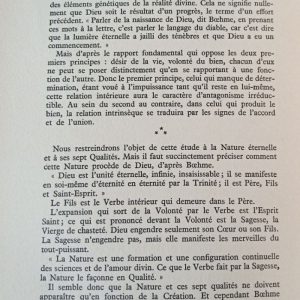
Hence it is not from the analysis of a preformed perfection that Boehme draws the characters of divinity; he constructs them as genetic elements of divine reality. This by no means signifies that God is the result of a progress, the term of a preceding effort. ‘To speak of the birth of God‘, says Boehme, ‘taking these words literally, is to speak the language of the devil, for it is to say that eternal light burst forth from darkness and that God had a beginning‘.
But according to the fundamental relation which opposes the first two principles: desire for life, will for good, each of them can only posit itself distinctly by relating to a function of the other. Therefore the first principle, the one lacking determination, being doomed to impotence as long as it remains in itself, this interior relation will have the character of irreducible antagonism. Within the second, on the contrary, in that which produces good, the intrinsic relation will be translated by the signs of accord and union.
*
We will restrict the object of this study to Eternal Nature and its seven Qualities. But we must succinctly specify how this Nature proceeds from God, according to Boehme.
‘God is the eternal, infinite, ungraspable unity; He manifests Himself in Himself from eternity to eternity through the Trinity; He is Father, Son and Holy Spirit‘.
The Son is the inner Word which remains in the Father.
The expansion which goes out from the Will through the Word is the Holy Spirit; what is pronounced before the Will is Wisdom, the Virgin of chastity. God engenders only His Heart or His Son. Wisdom does not engender, but she manifests the wonders of the Almighty.
‘Nature is a continuous formation and configuration of the sciences and of divine love. What the Word does through Wisdom, Nature fashions into Quality‘.
It seems therefore that Nature and these seven qualities should only appear in function of Creation. And yet Boehme also considers them with respect to the very procession of the divine persons. This is conceivable if one considers that the principles of creation have their source in Divinity itself. But Boehme reminds us that here it is a matter of expressing the inexpressible and that words betray thought.
Saint Thomas Aquinas studied the generation of the Son, of the Word, by analyzing the process of human thought (‘De potencia Dei‘, Q. IX, article V), Boehme by analyzing the process of human will. In both cases it is a matter of eliminating what pertains to our relativity to best extract the essence of thought and will.
Now, if we examine these two processes, we will see that both consist in a passage from the indeterminate to the determined. And at the origin of indetermination one must conceive a principle of impulse and this principle can only be spontaneous in God. Then, although the divine generation of the Son by the Father is eternal, immediate, and the Son remains in the Father and is identical to Him, the relation of Begetter to Begotten implies an opposition of terms, and since this distinction must be perfect, it is as Persons that we conceive these terms.
Moreover, if satisfied love implies union, it implies duality within union, without which the relation of love would disappear. But love is an act in some way complementary to life, and one conceives that dogma posits this mutual Love of the Father and the Son as the third person, the Holy Spirit.
Ultimately, the divine Trinity implies real distinctions. Now any distinction can be the source of a separation. As it is impossible for us to imagine this intimate relation of the one and the distinct in the absolute, we can only consider the distinct separately, as if it were a separation. But then it is the hindrance to the blossoming of perfection and the privation of love. By contrast, divine relations thus appear as a triumph over possible evil. The pure act that is God reveals to us, as it were, a content through the dazzling of His simplicity.
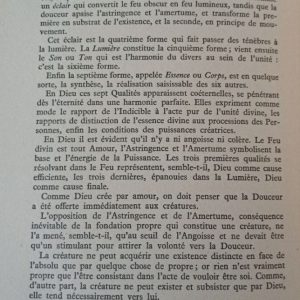
But, in the creature, this separation, which does not exist in God, must take place in a certain respect. Indeed the creature can only have its own existence if it is detached from the creative act. The blossoming of the created therefore appears as a tendency to found itself on itself by exclusivity; this is what characterizes radical individuality; and it is this movement of concentration that Boehme seems to have in view when he posits as the first form Astringency. But this exclusivity which founds proper existence can only be a tendency in the creature, for the creature, being nothing by itself, can only find itself empty in seeking itself. Hence a tendency which drives it to go out of itself, an insatiable avidity that Boehme symbolizes by Bitterness, the source of movement.
The antagonism between astringency and bitterness engenders Anguish which is like a breaking wheel, an infernal torment. To escape it, the will must direct itself towards something other than itself, and rise up into Sweetness. This liberating act is like a lightning flash which converts the dark fire into luminous fire, while sweetness appeases astringency and bitterness, and transforms the first into a substrate of existence, and the second into a principle of movement. This lightning flash is the fourth form which makes the passage from darkness to light. Light constitutes the fifth form; then comes Sound or Tone which is the harmony of the diverse within unity: this is the sixth form. Finally, the seventh form, called Essence or Body, is, in a way, the synthesis, the graspable realization of the other six.
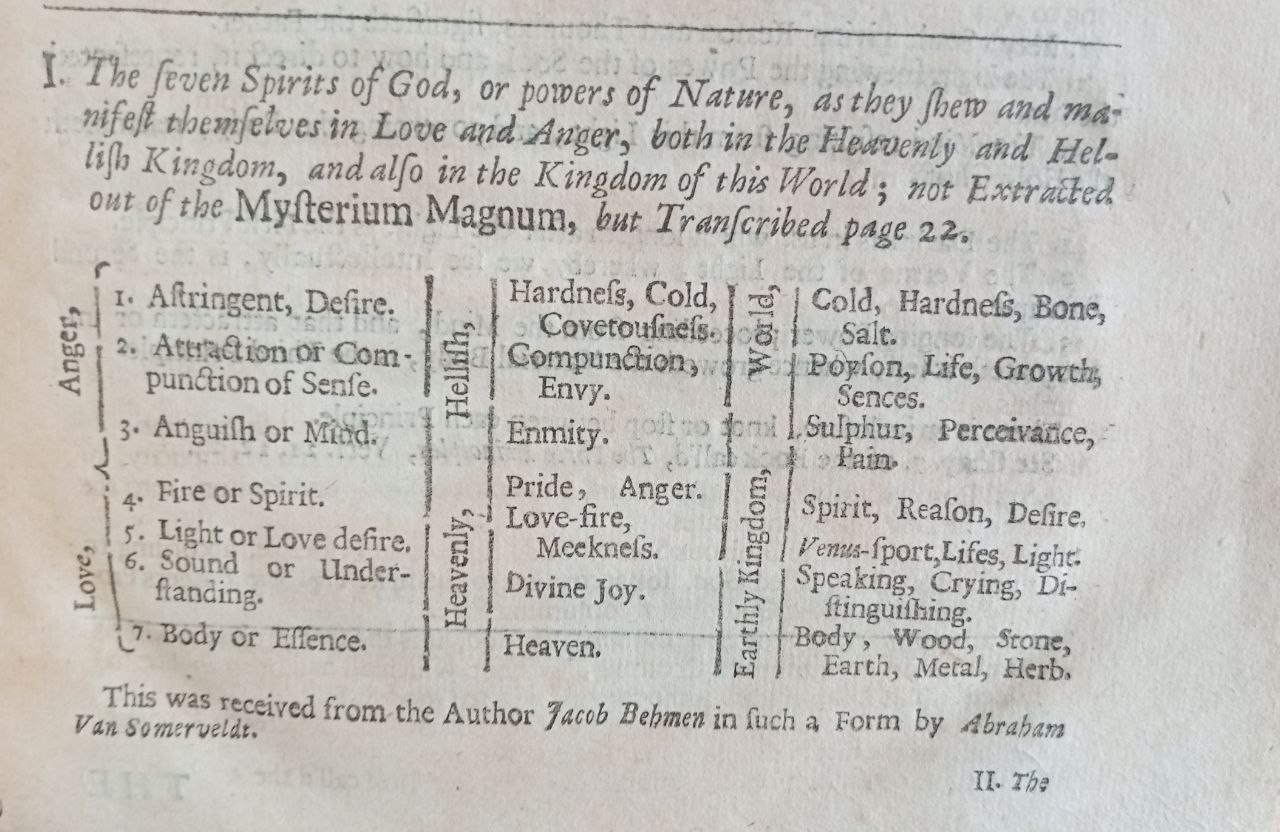
(A Via-Hygeia Note: Key Vocabulary from the Table:
The Seven Spirits/Principles
- Astringent, Desire – the contracting, focusing force.
- Attraction or Compunction of Sense – drawing toward, sensory awareness with moral weight (“compunction”).
- Anguish or Mind – suffering as consciousness, the birth of self-awareness.
- Fire or Spirit – transformative energy, the lightning flash.
- Light or Love desire – illuminating, unifying force.
- Sound or Understanding – vibration as comprehension, the Word.
- Body or Essence – manifestation, substantiality.
Three Realms of Manifestation
- Anger (first three principles) – the dark, wrathful fire world.
- Love (principals 5-7) – the light world.
- Heavenly vs. Hellish – showing how the same principles manifest differently.
- World vs. Earthly Kingdom – material correspondences.
Notable Terminology
- “Compunction” – more nuanced than simple “attraction,” implies moral stirring.
- “Perceivance” – archaic form suggesting active perception rather than passive reception.
- “Venus-sport” – alchemical/astral reference to generative forces.
- “Distinguishing” – the act of differentiation as a cosmic principle.
Conceptual Structure
The table’s power lies in showing how each principle
manifests across four columns:
1. The principle itself,
2. Its hellish/dark manifestation,
3. Its heavenly/light manifestation,
4.Its material/earthly correspondence.
End of note).
*
This reveals Boehme’s core insight: the same forces create both torment and bliss, depending on their harmony or conflict.
In God these seven Qualities appear coherent, interpenetrating from eternity in perfect harmony. They express as mode the relation of the Unutterable to the pure act of divine unity, the relations of distinction of divine essence to the processions of the Persons, finally the conditions of the creative powers.
In God it is evident that there is neither anguish nor wrath. Divine Fire is all Love, Astringency and Bitterness symbolize the base and the energy of Power. The first three qualities resolving themselves in Fire represent, it seems, God as efficient cause, the last three, blossoming in Light, God as final cause.
As God creates through love, one must think that Sweetness was offered immediately to creatures.
The opposition of Astringency and Bitterness, an inevitable consequence of the proper foundation which constitutes a creature, seems to have led it only to the threshold of Anguish and was to be only a stimulus to draw the will towards Sweetness.
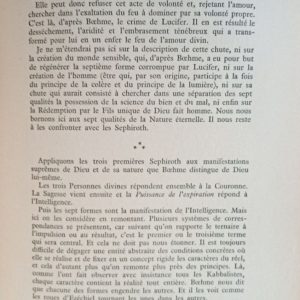
The creature can only acquire a distinct existence in the face of the absolute by something of its own; now nothing is truly one’s own except being consisting in the act of willing to be oneself. As, on the other hand, the creature can only exist and subsist through God, it necessarily tends towards Him.
But so that in its union with Him, it can subsist without being annihilated within the absolute, this union must be its work insofar as it can cooperate in it. It must therefore adhere to God through a will of love which operates in humility and sweetness, and thereby it creates itself, so to speak, anew and participates in divine life.
It can therefore refuse this act of will and, rejecting love, seek in the exaltation of fire to dominate through its own will. This is, according to Boehme, the crime of Lucifer. This resulted in desiccation, aridity, and dark conflagration which transformed the fire of divine love into a hell for him.
I will not dwell here on the description of this fall, nor on the creation of the sensible world, which, according to Boehme, had the purpose of regenerating the seventh form corrupted by Lucifer, nor on the creation of man (a being who, by his origin, participates at once in the principle of wrath and the principle of light), nor on his fall which would have consisted in seeking in a separation of the seven qualities the possession of the knowledge of good and evil, nor finally on Redemption by the only Son of God made man. We limit ourselves here to the seven qualities of Eternal Nature. It remains for us to compare them with the Sephiroth.
Let us apply the first three Sephiroth to the supreme manifestations of God and of His nature that Boehme distinguishes from God Himself.
The three divine Persons together correspond to the Crown. Wisdom comes next and the Power of expiration corresponds to Intelligence.
Then the seven forms are the manifestation of Intelligence. But here they are considered in ascending order. Several systems of correspondences present themselves, for depending on whether one relates the ternary to impulse or to result, it is the first or the third term that will be central. And this should not surprise us. It is always difficult to extract an abstract entity from the concrete conditions where it is realized and to fix the characters of the real in a rigid concept, and this all the more as one rises closer to principles. There, as all Kabbalists have insistently observed, each character contains the whole reality. Boehme tells us that each of the forms engenders the others. And he sees them like the wheels of Ezekiel turning one within another.
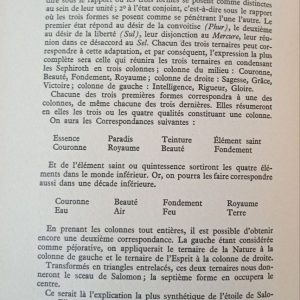
One can therefore, through each of these forms, grasp the entire system. But this diversity of acceptable correspondences warns us that there must exist a superior point of view which operates the synthesis of the others. It seems to consist in seeking in the same ternary the representation of the three forms of spirit. Boehme moreover tells us that the first form is identical to the seventh, the second to the sixth, and the third to the fifth, and that the fourth is double-faced. This will not prevent applying the seven forms to seven different Sephiroth since they all interpenetrate; but to express the identity of the forms two by two, one must choose an adaptation contained within a single ternary. This ternary will be taken: 1. in the disjoint state, that is to say, from the aspect where the three forms posit themselves as distinct within their unity; 2. in the conjunct state, that is to say, from the aspect where the three forms posit themselves as interpenetrating each other. The first state corresponds to the desire of covetousness (Phur), the second to the desire of freedom (Sul), their disjunction to Mercury, their reunion in this discord to Salt. Each of the three ternaries can correspond to this adaptation, and consequently, the most complete expression will be that which reunites the three ternaries by condensing the Sephiroth into three columns; middle column: Crown, Beauty, Foundation, Kingdom; right column: Wisdom, Grace, Victory; left column: Intelligence, Severity, Glory.
Each of the first three forms will correspond to one of the columns, likewise each of the last three. They will summarize in themselves the three or four qualities constituting a column. One will have the following correspondences:
| Essence | Paradise | Tincture | Holy Element |
|---|---|---|---|
| Crown | Kingdom | Beauty | Foundation |
And from the holy element or quintessence will come forth the four elements in the lower world. Now, one can also make them correspond in a lower decade:
| Crown | Beauty | Foundation | Kingdom |
|---|---|---|---|
| Water | Air | Fire | Earth |
Taking the columns as a whole, it is possible to obtain yet a second correspondence. The left being considered pejorative, one would apply the ternary of Nature to the left column and the ternary of Spirit to the right column. Transformed into interlocking triangles, these two ternaries will give us the Seal of Solomon; the seventh form will occupy its center.
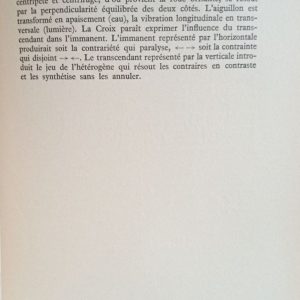
This would be the most synthetic explanation of the Star of Solomon. It indicates why the two triangles, instead of placing themselves one on top of the other in a lozenge, interlock, and why the inverted triangle is dark and the other luminous. This is because it is simply what the harmonic ternary would become if one reverses the attractive center. The T placed in the center and corresponding to the fourth principle shows that the antagonism between the two opposing forces, centripetal and centrifugal, from which the breaking wheel arises, is resolved by the perpendicular balanced on both sides. The sting is transformed into appeasement (water), the longitudinal vibration into transverse (light). The Cross seems to express the influence of the transcendent in the immanent. The immanent represented by the horizontal would produce either the contrariety which paralyzes, ← →, or the constraint which disjoins → ←. The transcendent represented by the vertical introduces the play of the heterogeneous which resolves contraries into contrast and synthesizes them without annulling them.
*
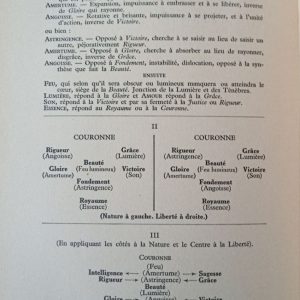
CORRESPONDENCES OF THE SEVEN QUALITIES
OF THE MOVEMENT OF NATURE WITH THE SEPHIROTH
*
Section I: The Three Fundamental Qualities
| Quality | Definition |
| ASTRINGENCY | Contraction, powerlessness to grasp oneself, inverse of the Foundation which is the point of support. |
| BITTERNESS | Expansion, powerlessness to embrace and liberate oneself, inverse of Glory which radiates. |
| ANGUISH | Rotative and breaking, powerlessness to project oneself, and to the unity of action, inverse of Victory. |
Or rather (pejorative aspect):
| Quality | Opposition |
| ASTRINGENCY | Opposed to Victory; seeks to grasp itself instead of grasping another—pejoratively Severity. |
| BITTERNESS | Opposed to Glory; seeks to absorb instead of radiating—disgrace, inverse of Grace. |
| ANGUISH | Opposed to Foundation; instability, dislocation, opposed to the synthesis enacted by Beauty. |
*
Section II: The Double Crown
(Nature on the left. Liberty on the right)
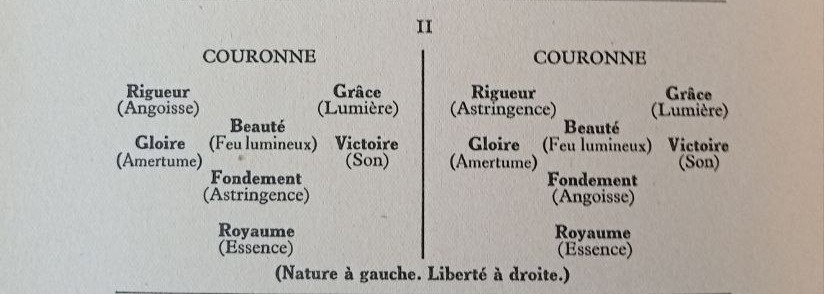
This section presents two parallel models of the divine structure. The left model represents the order of Nature, while the right model represents the order of Liberty.
1. The Model of Nature (Left Side)
- Crown: The supreme principle.
- Severity: Associated with Anguish.
- Grace: Associated with Light.
- Beauty: Described as Luminous Fire, situated between Severity and Grace.
- Glory: Associated with Bitterness.
- Victory: Associated with Sound.
- Foundation: Associated with Astringency.
- Kingdom: Associated with Essence.
- Note: In this configuration, the text specifies ‘Nature on the left‘.
2. The Model of Liberty (Right Side)
- Crown: The supreme principle.
- Severity: Associated with Astringency (shifted from Foundation).
- Grace: Associated with Light.
- Beauty: Described as Luminous Fire.
- Victory: Associated with Sound.
- Glory: Associated with Bitterness.
- Foundation: Associated with Anguish (shifted from Severity).
- Kingdom: Associated with Essence.
- Note: In this configuration, the text specifies ‘Liberty on the right’.
Legend of Terms:
- Crown (Kether): The primordial will or the supreme source.
- Wisdom (Chokmah) & Intelligence (Binah): Though not explicitly labeled in this specific diagram’s rows, they correspond to the right and left pillars generally. In Warrain’s text, Intelligence is often linked to the left (Severity) and Wisdom to the right (Grace).
- Severity (Gevurah): The principle of restriction, judgment, or force. Here linked to Anguish in Nature and Astringency in Liberty.
- Grace (Chesed): The principle of expansion, mercy, and love. Linked to Light.
- Beauty (Tiphareth): The harmonizing center. Linked to Luminous Fire.
- Glory (Hod): Often associated with splendor or form. Here linked to Bitterness.
- Victory (Netzach): Often associated with endurance or emotion. Here linked to Sound.
- Foundation (Yesod): The channel of transmission. Linked to Astringency in Nature and Anguish in Liberty.
- Kingdom (Malkuth): The final manifestation or result. Linked to Essence.
- Astringency: The contracting, hardening force (Boehme’s first quality).
- Bitterness: The expanding, agitating force (Boehme’s second quality).
- Anguish: The rotational, conflicting force resulting from the clash of Astringency and Bitterness (Boehme’s third quality).
*
Section III:
(Applying the sides to Nature and the Center to Liberty)
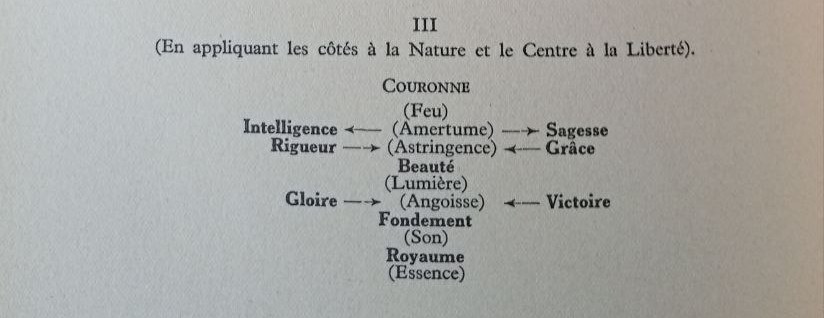
Key to the structure:
- Center Column: Represents the divine qualities (Fire, Light, Sound, etc.) and the central principle of Liberty.
- Left Side (Nature): Shows the qualities associated with the left column of the Sephiroth (Intelligence, Severity, Glory).
- Right Side (Liberty/Spirit): Shows the qualities associated with the right column (Wisdom, Grace, Victory).
- Arrows (← →): Indicate the relationship and interaction between the opposing forces, resolved by the central principle.
*
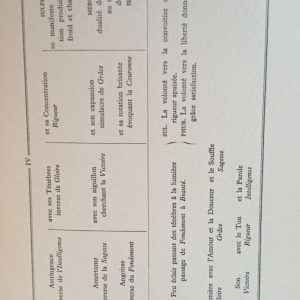
Section IV: The Alchemical & Sephirotic Correspondences
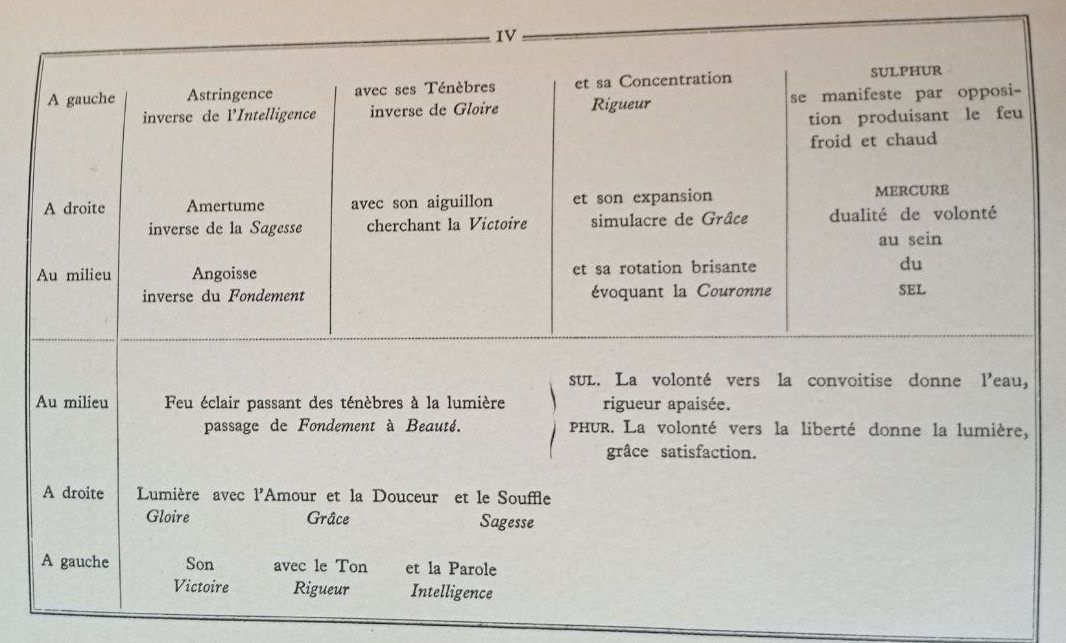
This table maps Boehme’s seven qualities and their emotional states to the Sephiroth (divine attributes) and the three alchemical principles (Sulphur, Mercury, Salt). It is divided into three spatial sections: Left, Right, and Middle.
1. The Left Column (The Contracting Force)
- Position: ‘On the left‘
- Boehme’s Quality: Astringency (The contracting, hardening force).
- Sephirotic Correspondence: Described as the inverse of Intelligence.
- Emotional State: Linked to Concentration and Severity (Rigueur).
- Alchemical Principle: SULPHUR.
- Description: Manifests through opposition, producing a fire that is both ‘cold and hot‘.
2. The Right Column (The Expanding Force)
- Position: ‘On the right‘
- Boehme’s Quality: Bitterness (The expanding, agitating force).
- Sephirotic Correspondence: Described as the inverse of Wisdom.
- Emotional State: Linked to Expansion and described as a simulacrum of Grace.
- Alchemical Principle: MERCURY.
- Description: Represents the ‘duality of will‘ residing within SALT (the body/matter).
3. The Middle Column (The Synthesis)
- Position: ‘In the middle‘ (Upper Section)
- Boehme’s Quality: Anguish (The rotational, breaking force).
- Sephirotic Correspondence: Described as the inverse of Foundation.
- Emotional State: Described as a ‘breaking rotation‘ that evokes the Crown (the supreme source).
- Alchemical Dynamic:
- SUL (Will towards Water/Desire): Produces ‘cold fire‘ (rigor appeased).
- PHUR (Will towards Light/Freedom): Produces ‘hot fire‘ (satisfaction).
4. The Lower Synthesis (The Resolution)
The bottom section of the table describes the resolution of these conflicts into higher states:
- Central Event: The Fire Flash passing from darkness to light.
- Meaning: This marks the passage from Foundation to Beauty.
- Right Side Resolution (The Harmonious Trinity):
- Elements: Light, Love, Sweetness, and the Breath.
- Correspondences: Glory, Grace, and Wisdom.
- Left Side Resolution (The Structured Trinity):
- Elements: Sound, the Tone, and the Word.
- Correspondences: Victory, Severity, and Intelligence.
Summary of Key Terms
- Astringency vs. Intelligence: Astringency is a blind contraction, whereas Intelligence implies a structured understanding. Hence, one is the ‘inverse‘ of the other.
- Bitterness vs. Wisdom: Bitterness is an endless, agitated expansion; Wisdom is a directed, fruitful expansion.
- Sulphur & Mercury: In alchemy, Sulphur is the active/male principle (fire), and Mercury is the passive/female principle (fluidity). Here, they represent the conflicting wills that must be balanced in Salt (the physical result).
- SUL / PHUR: These are likely roots referring to Sulphur. Warrain splits the concept: Will directed toward material desire (‘water‘) creates a cold, rigid state; Will directed toward spiritual freedom (‘light‘) creates a luminous, satisfying state.
*
Boehme is the only Western philosopher who seems to rely on an initial principle having the appearance of evil. His study gives us a glimpse into Eastern conceptions so poorly known and vaguely qualified as Manichaeism, those conceptions where evil is considered as a more or less primordial and necessary principle. These doctrines are extremely dangerous because, insufficiently meditated upon, they expose one to the most terrible deviations: they become the source of all black magics and all secret associations more or less tainted with Satanism. — Boehme, however, gives us a glimpse of the intimate link which exists between divinity and man. By making divine nature rest on a malefic ternary, he shows us that the most exact image of divine unity resides in us, but that this image is in us dissociated, troubled, and that the act which best characterizes divinity in function of all creation consists precisely in transforming into perfect good that which, seen without this act, would be absolute evil.
Words fail when one wants to render explicit these troubling intuitions: I only try here to draw attention to the sublime and terrible problem raised by Boehme’s conceptions.
Unconsciously or not, Boehme reversed the order of the right and left in the sephirotic tree. Instead of leaning on the side: Wisdom, Mercy and Victory which serves as a principle for our knowledge, he attached himself to the side: Intelligence, Severity and Glory which founds being. The speculative consequences of this reversal produce the intuitive, sentimental, mystical and obscure character of Boehme’s philosophy. The practical consequences could be formidable. For by making act prevail over reason (where these two principles are not indissolubly united) one inevitably ends up in physical and moral ruin. This reversal pushed to the extreme is likely the cause of the fall of the Angels, as Boehme himself insinuates. Boehme thus approached the edges of the abyss, and if he did not fall into it, it is because a superior instinct of virtue, a profound faith and a sincere humility preserved him.
Let us show how Boehme’s point of view is a reversal of the order of the right and left columns in the Sephiroth.
Everything that posits itself as reality, that is to say, as subsisting outside the mental act which conceives it, is revealed by analysis as constituted by the intimate and indissoluble union of two elements which can only be separated by abstraction and which, as such, are entirely heterogeneous: being and knowing, or if you prefer the function of existing and the function of answering to something intelligible. Isolate one or other of these functions, reality vanishes. Link them by a variable relation, you will have relations which, in the final analysis, reduce to the supreme relation of the subject who knows and the object known. To suppose that a thing exists outside the act by which it is known is therefore to suppose that there is, simultaneously, in it intelligibility and existence. For existence is the affirmation of something, and affirmation is a verb, that is to say, something which belongs to the domain of knowledge. We will therefore say, with Wronski, that all reality is constituted by the identification of a being element and a knowing element. And since these two elements taken as distinct have nothing in common, what identifies them makes a third element appear, the act, what makes the passage from possible to real.
This established, a reality is conceived as absolute when it is or presents itself as determined by its sole manifestation without being related to anything else. To this case, therefore, corresponds the perfect identity between the being element and the knowing element. The disjunction which operates between these elements and substitutes for this perfect identity the reunion by a bond makes relativity appear. From this genesis of the relative starting from the consideration of the absolute necessarily follow certain aspects, certain states of relativity. The rigorous deduction of these aspects is what constitutes the Law of Creation. Wronski developed it and his law more or less fits the ordering of the Sephiroth and seems to be its explanation. I cannot undertake to expound it here (See my publication, ‘The Metaphysical Framework Established According to Hoëne Wronski’s Law of Creation‘- Paris, Ed. Felix Alcan, 1925 ). I simply note in this law three columns as for the Sephiroth. The right column is that of knowing, the left column that of being. We arrive at the point which interests us specially here. (A Via-Hygeia note: You can see here the diagram Warrain mentions).
The being side and the knowing side must be correlative in the absolute, for one cannot conceive a knowing which does not imply being, nor a being which does not imply knowing (since to know or to be intelligible one must exist, and to exist one must be something, therefore be in function of the intelligible). But the manifestation of the absolute, or of anything appearing as such, addresses itself to knowing; this object, insofar as it is known, conceivable, will show the knowing side as preponderant. Being indeed posits itself in knowing as what remains impenetrable to it. To have an idea of being is still to express being in function of knowing and not in function of being itself. That is why as soon as one tries to strip the idea of being from the subordination to knowing which it implies by the sole fact that it is an idea, being is immediately conceived as something privative, since it then grasps itself only as excluding all designation. To grasp being freed from this subordination, one would have to incarnate oneself in being or assimilate oneself to it, in a word become one with this being instead of having to conceive it.
Therefore wherever we try to conceive being it takes on more or less the privative aspect of matter. And that is why many minds have made the absolute into matter. To avoid this pitfall we have no other recourse than to characterize the absolute as being by the negative notions of unutterable, not-that, nothing or non-being, meaning by these terms the negation of everything that subordinates itself to knowing.
Thus being in its absolute independence is found to be relegated beyond the pretensions of knowing as it manifests itself to every relative intelligence like ours. The Law of Creation formulated as we can conceive it in its highest expression will develop the determinations of the absolute in function of knowing. It must present being as showing vis-à-vis knowing the minimal subordination without which it completely escapes our thought. This is why, in the Prototype of the Creation of the Universe, in the applications of the Law of Creation to the first principles of thought and the world, Wronski places the knowing element before the being element. It is only when arriving at the sensible world where the object is proposed as existing before rendering itself intelligible, that one must put the being element before the knowing element. But when it concerns transcendent realities, that is to say those which posit themselves before our eyes only insofar as we conceive them by an act of our mind, the knowing side necessarily takes precedence over the being side.
Always knowing will take precedence over being, for it is to knowing that the manifestation of a thing addresses itself, and for it to take place, being must adapt its nature to that of knowing rather than the contrary. This preponderance of knowing is therefore inevitable when it concerns the communication of the Absolute to the relative by way of knowledge or operation as long as relative reality posits itself as a receiver distinct from what it receives.
This does not prevent that in the foundation inaccessible to thought upon which all creation rests, Necessity and Severity may predominate. But this predominance is inaccessible to thought and to the autonomous existence of created beings. And it seems that it is for having wanted to establish this predominance of being over knowing or of Intelligence over Wisdom, of Necessity and Severity over Liberty and Grace that Lucifer and his militia fell. This is what Boehme expresses by saying that the fall of Lucifer came from his wanting to penetrate into the principle of Severity instead of entering into that of Sweetness. This is indeed wanting to traverse in reverse the process by which God engenders His Son, manifests Himself to Himself, founds His own reality and then makes creation possible, that is to say, the production of relative realities. In these realities there is a certain disjunction between being and knowing and consequently the union implies a relation, therefore something which is accomplished only in and through intelligence (or knowing).
The knowledge of good and evil is likely the possibility of attempting this reversal of order between being and knowing, a reversal which is permitted only to God, which has the result of enclosing Him within Himself, and which He restricts to the minimum required by the incommunicability of His absolute essence to the creature. This is, one may think, the divine fire. It is a fire, for this incommunicability necessarily consumes any being that would try to violate it by seeking to found its own reality on the principle of being, that is to say, on the side by which there exists an insurmountable barrier between God and the creature, a barrier whose rupture would lead to pantheism.
On the contrary, through the knowing side, God makes the creature possible, produces it and manifests Himself to it. Through this side He resolves the irreducible antinomy between the Absolute and the relative, an antinomy by virtue of which the existence of the Absolute would entail the annihilation of all created or relative reality. And it is by resolving this antinomy through His Knowledge that God changes His Fire into Light, engenders His Son, who, as manifested by Creation and to Creation, will be the Word, and as support of the reality of creatures will be the Incarnate Word, the Adam Kadmon, the God-Man, Jesus Christ.
Boehme named as first principle the side of Severity and as second principle the side of Sweetness. In a certain sense this order is logical, for it goes from the incommunicable absolute to the intelligible absolute. But his attempt to expound this process, that is to say, to translate it into an intelligible order, comes up against the reverse march which is required for any construction of knowledge, and for any communication between the Absolute and us. Hence the ground he posists first of all shows itself as something infernal, irreducible to the harmony and concrete unity which founds and simultaneously implies the intelligible, although in Itself, in the Absolute this state does not exist at all, for from the origin, as Boehme says, the first Principle engenders the second. Now this second Principle, which is Sweetness, corresponds to the Knowing side, to that which adapts the relative to the Absolute instead of rendering Creation impossible by the plenitude of its being.
And the Zohar expresses the same idea when it speaks to us of the broken vessels, residues of a prior creation. Finally, the Gospel according to Saint John says to us speaking of the Word: ‘All things were made by him; and without him was not any thing made that was made‘. (I, 3)
‘No man hath seen God at any time; the only begotten Son, which is in the bosom of the Father, he hath declared him‘. (I, 18). ‘No man cometh unto the Father, but by me. If ye had known me, ye should have known my Father also… from henceforth ye know him, and have seen him‘. (XIV, 6-7). ‘The Father that dwelleth in me, he doeth the works‘. (XIV, 10), etc.
But, these remarks made to show the, so to speak, extra-logical character of Boehme’s theodicy, we can only admire its depth. If these expressions are often incorrect and lay themselves open to unfortunate interpretations, it is because he attempted to explain the inexpressible and to write what only superior intuition can grasp when man receives in his being a more intimate operation of the divine influx. This is the pitfall of all writings of the great mystics. One must meditate on them and follow them as much as one is able to discover the truth often hidden under an incorrect formula which, taken literally, is erroneous. That is why these books are dangerous and can be the source of perverse doctrines.
Let us retain from Boehme’s theodicy this view of a strange profundity: what seems to us to express in the most intimate way the essence of God is to transmute Severity into Sweetness, is to know, to be able, to will eternally to engender His Son. One thus conceives better in what sense the Absolute Being is Pure Act, in what He is the Sovereign Good, in what His essence which is His eternal act is an act of absolute knowledge and absolute perfection.
One grasps at the same time the principle of evil in the absence of resolution of the first principle into the second, of desire into Will. And one finally conceives how the relative and the creature are possible and by what path they can be and attach themselves to the Absolute Being who draws them from His Wisdom and His Power (that is to say, from His Knowledge and His Word) and not from His own Nature as pantheists claim.
*
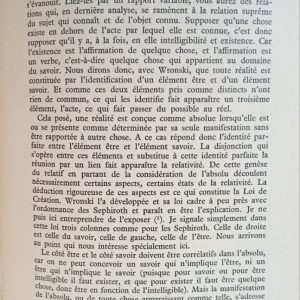
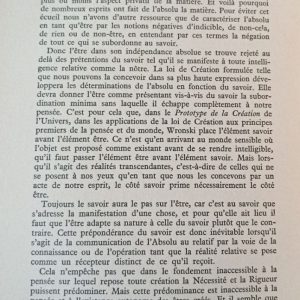
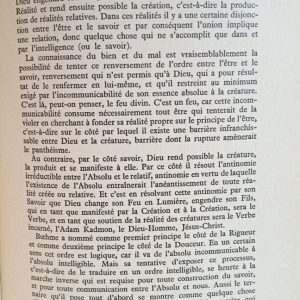
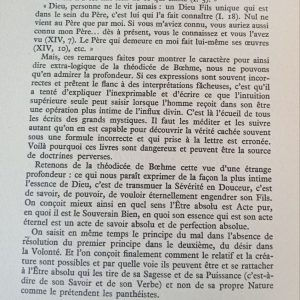
Original French
*
Source
For the whole document press below:
Avril 1930-Le Voile d’Isis-Numero special-Jacob-Boehme
(Gratitude to Vincent Mercier for finding this rare gem 🙂 )
*
And our source text is taken from the 1949 re-publication
*
As an appendix,
we share this ‘Ouverture de Fête‘ by French composer Jacques Ibert,
as its essence and spirit match Francis Warrain’s article in an uncanny manner.
Happy discovery!
***
Related Articles


Leave a Reply