
Circle of Transmission: The Living Loom
Edward Taylor: From the 1691 ‘Jacob Behmen’s Theosophick Philosophy Unfolded’- Teaching As A Strictly Mediatory Function Within A Living Chain Of Transmission
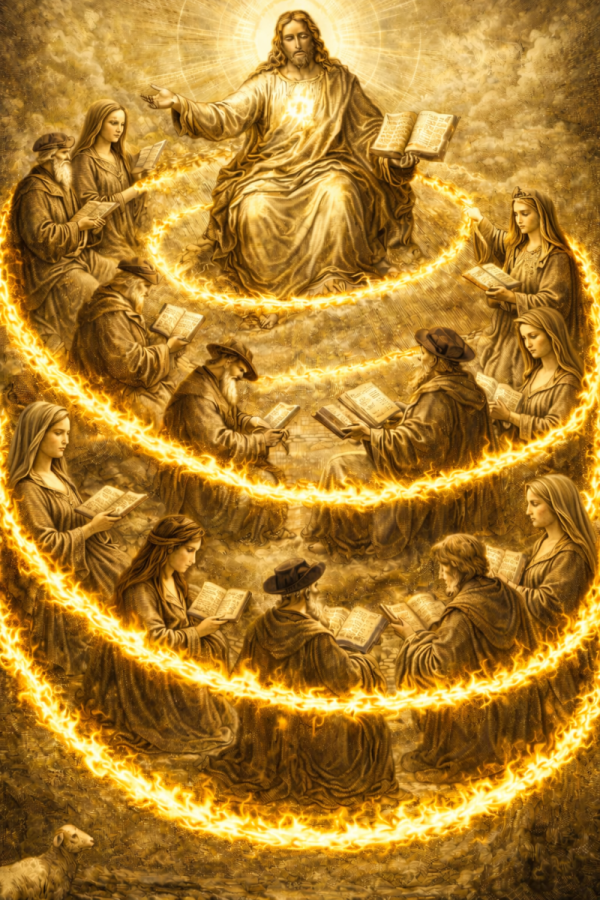
‘…Within a living chain of spiritual transmission.‘
*
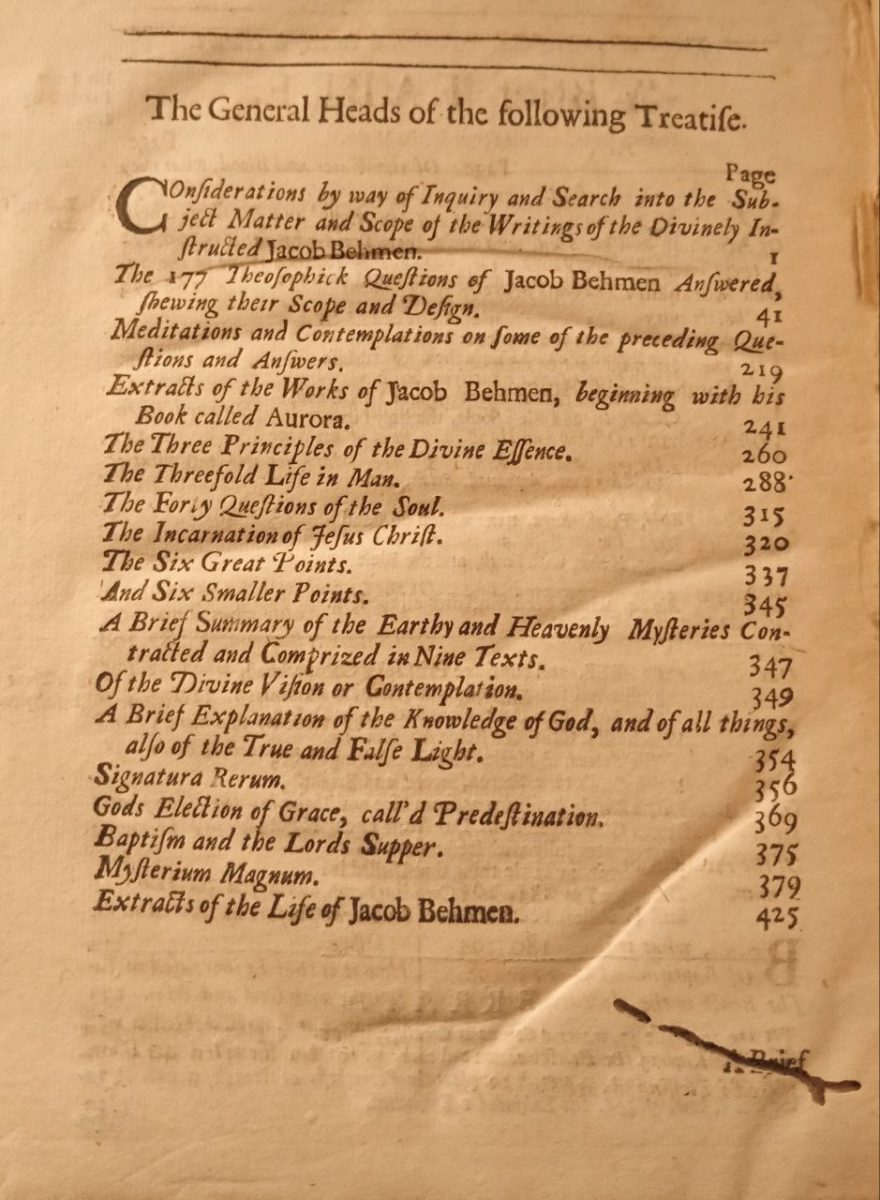
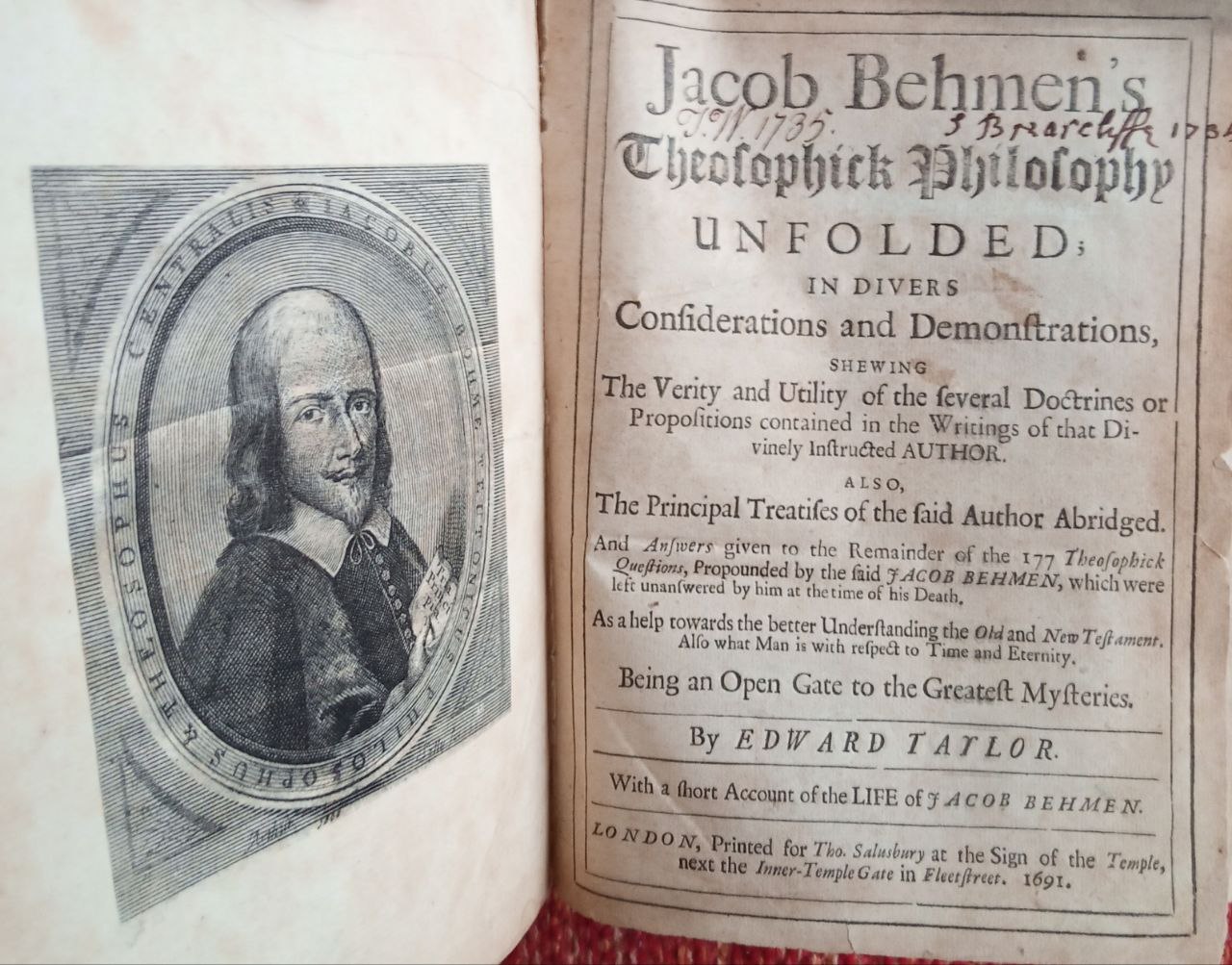
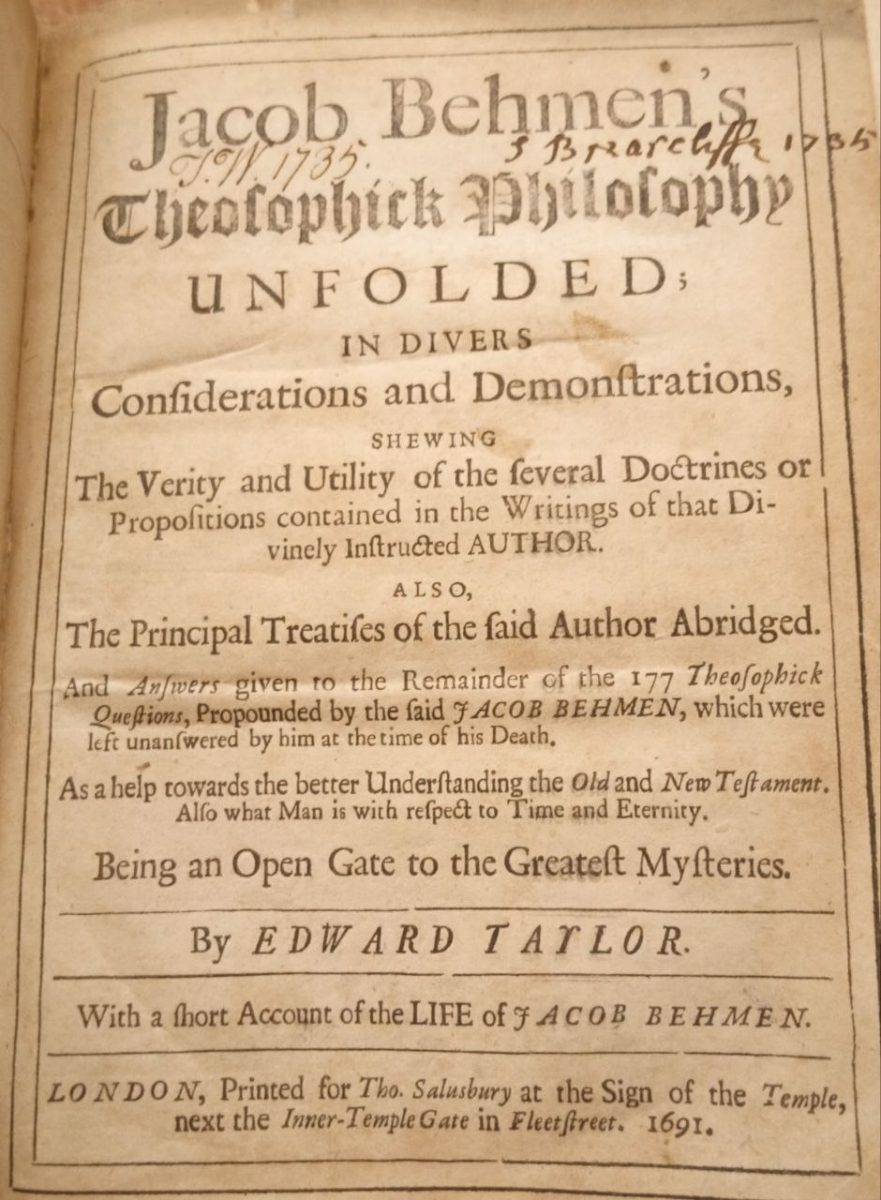
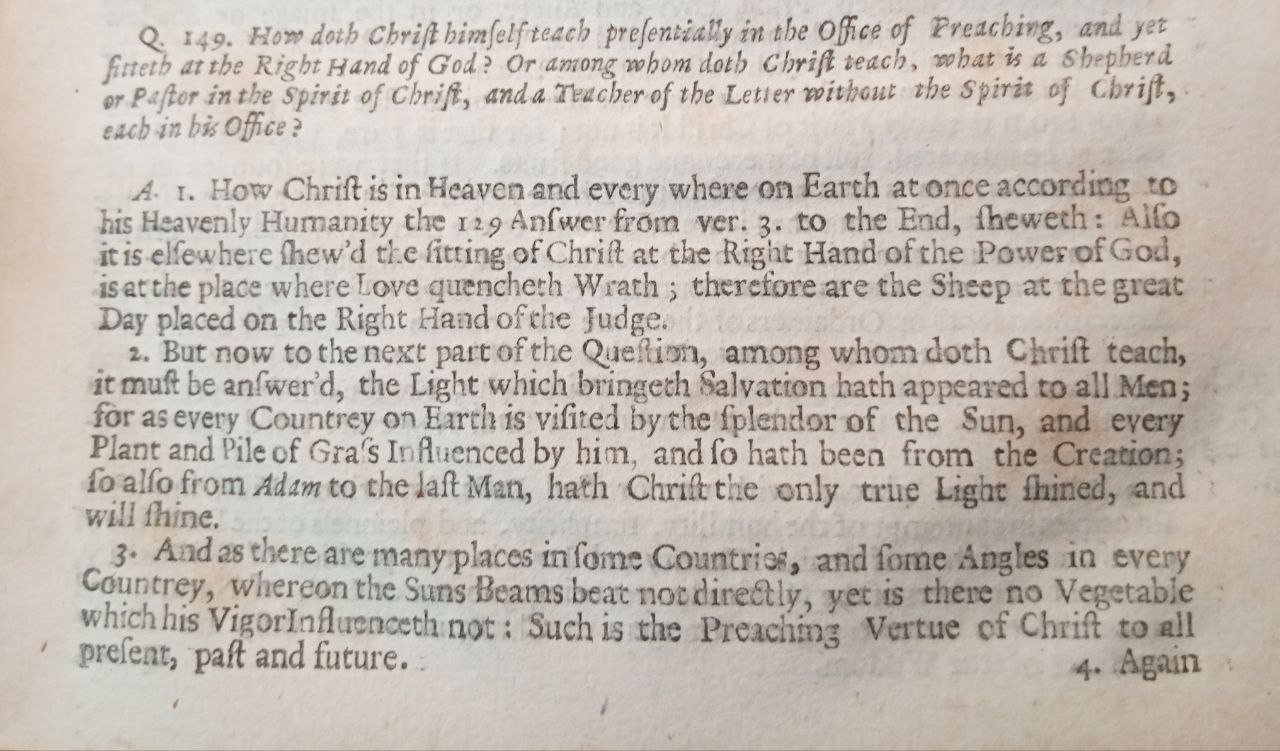
Another sharing for the day from the Blue House of Via-HYGEIA, is an extract from Edward Taylor’s 1691 ‘Jacob Behmen’s Theosophick Philosophy Unfolded In Diverse Considerations & Demonstrations‘, which includes the ‘177 Theosophick Questions of Jacob Behmen Answered, shewing their Scope and Design‘ from which our extract come from, as Question 149. Jacob Boehme died having only answered questions 1 to 14. Edward Taylor took upon himself to answer the remaining questions.
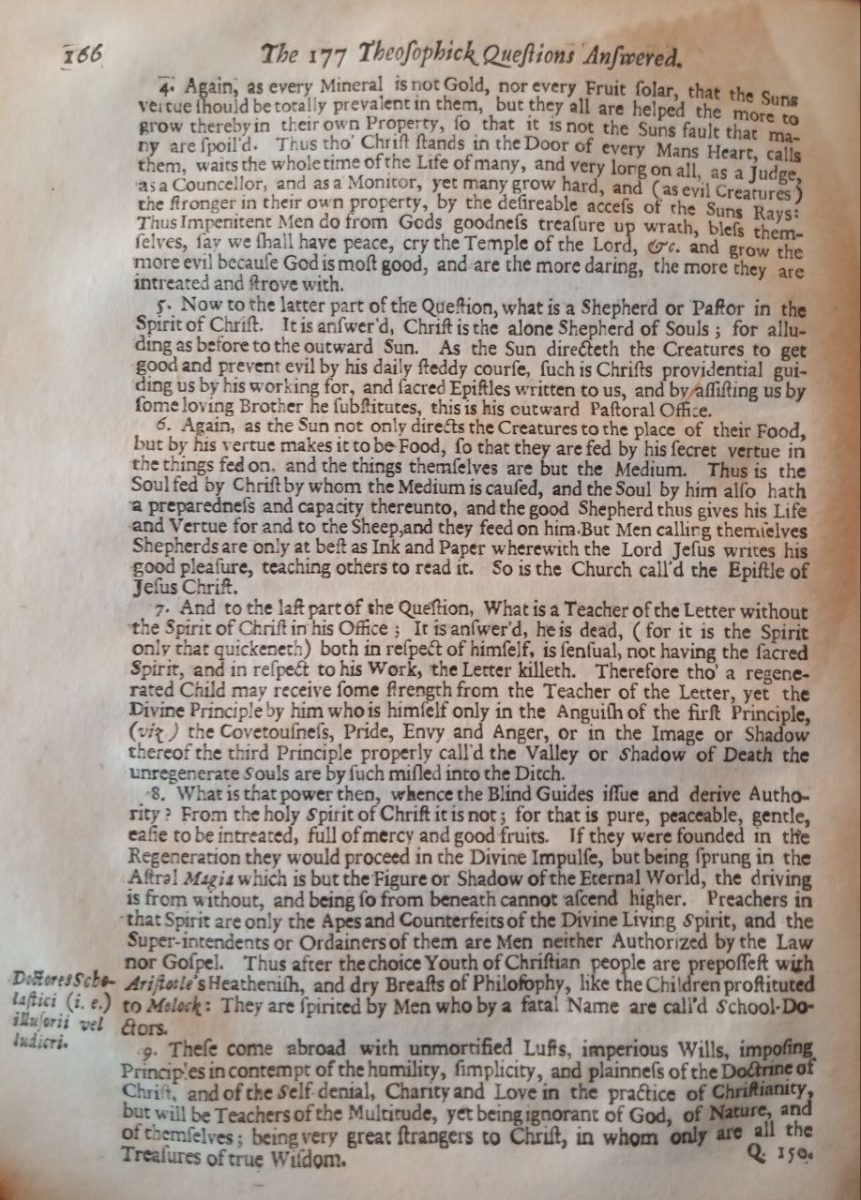
In Question 149, Taylor’s argument follows a clear, hierarchical logic: Christ alone is the true Teacher and Shepherd — present everywhere spiritually. Human teachers are only mediators — ‘Ink and Paper‘ — not sources. The ‘Letter without Spirit‘ is dead — it kills because it lacks divine life. ‘School-Doctors‘ are the worst offenders — they substitute pagan philosophy (Aristotle) for divine wisdom, and seduce the young. Their authority is counterfeit — rooted in ‘Astral Magia‘, not regeneration. They block access to ‘the Open Gate to the Greatest Mysteries‘: direct, living communion with Christ. This is not merely a critique of bad teachers — it is a rejection of institutionalized theology as a system that substitutes human authority for divine presence.
*
A Contextual Introduction-Part 1
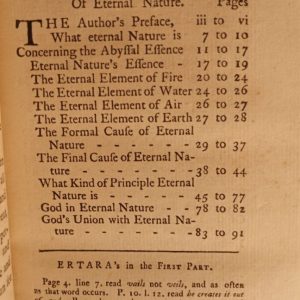
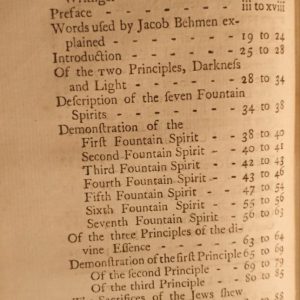
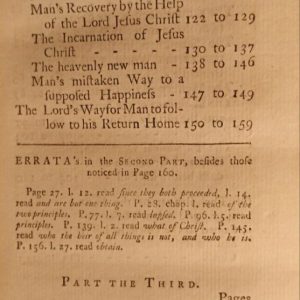
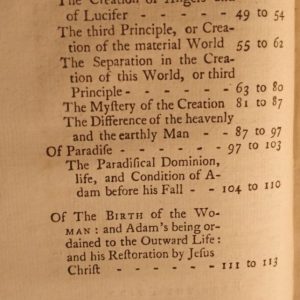
Our copy show this table of content:
1. Clarifying the Author
This Edward Taylor (d. 1684) is not the American colonial poet of the same name (c. 1642 – June 29, 1729) , but an English theological writer and follower of Jacob Boehme, active in Dublin and London during the late 17th century. His work, ‘Jacob Behmen’s Theosophick Philosophy Unfolded‘, was published in 1691 — decades before the American Taylor’s writings were rediscovered in the 20th century.
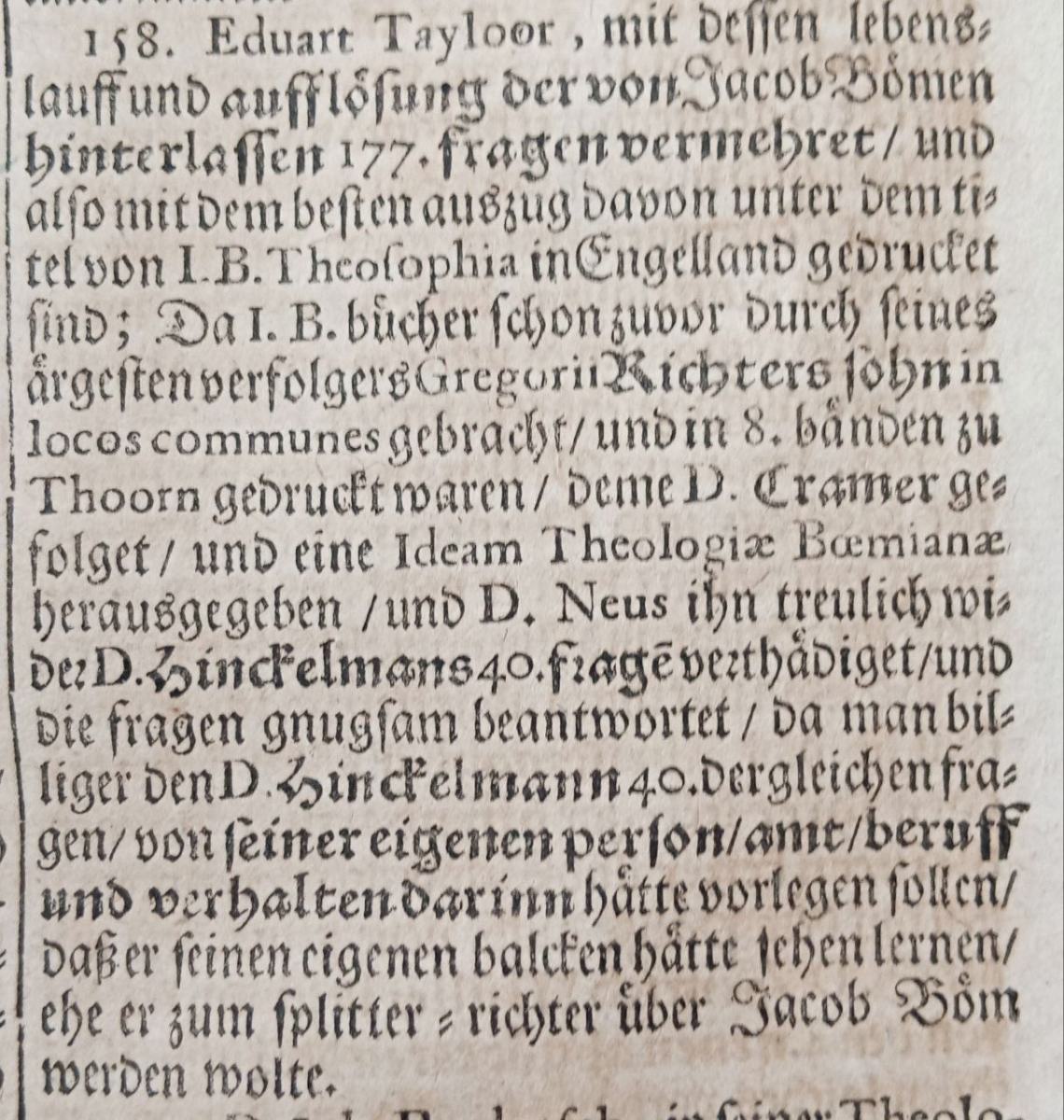
Here is what in 1699, Gottfried Arnold says about Edward Taylor, in the volume 2, part IV, section III, chapter XIIX, page 777. notice number 158:
- Eduard Taylor, whose life story and resolution of the 177 questions left behind by Jacob Böhme were expanded and published in England under the title I.B. Theologia, along with a useful excerpt thereof; whereas I.B.’s books had already earlier been systematized into commonplaces (loci communes) by his most envious persecutor, Gregorius Richter, and printed in eight volumes in Thorn; to which D. Cramer added an Ideam Theologiae Bœmianæ; and D. Neus faithfully undertook Dr. Hinckelmann’s 40 questions and answered them sufficiently—though one might more justly have expected Dr. Hinckelmann himself to have posed forty such questions concerning his own person, office, vocation, and conduct, so that he might first learn to see the beam in his own eye before presuming to act as a splinter-judge over Jacob Böhme.

(A Via-Hygeia note: Gottfried Arnold’s ‘verve‘(sarcastic tone) in this passage stems from his core project in the ‘Unparteyische Kirchen- und Ketzer-Historie’ (Impartial History of Churches and Heretics, 1699–1700): to invert the traditional narrative of church history by arguing that true Christianity often survived not within the institutional church, but among those it labeled heretics, mystics, or outsiders. For Arnold, Jacob Böhme was a prime example of a ‘true witness‘ (Zeuge der Wahrheit)—a layman illuminated directly by God, whose wisdom exposed the spiritual dryness and hypocrisy of the established clergy.
His sarcasm against critics like Hinckelmann is therefore not merely personal invective but a theological weapon. By mocking Hinckelmann for needing to ‘learn to see his own beam‘ before judging Böhme, Arnold is accusing the orthodox theologian of possessing academic knowledge (Wissenschaft) without spiritual life (Leben). In Arnold’s view, men like Hinckelmann hid behind their titles, ‘office, and vocation’ to mask their lack of divine experience. The ‘splinter-judge‘ jab cuts deep because it suggests that the critic’s aggression is a projection of his own spiritual failure; he attacks Böhme’s mysticism precisely because it reveals his own emptiness. Arnold writes with the heat of a reformer who believes the institutional church has lost its way, using irony to strip away the critics’ authority and reveal them as the true blind men).
*
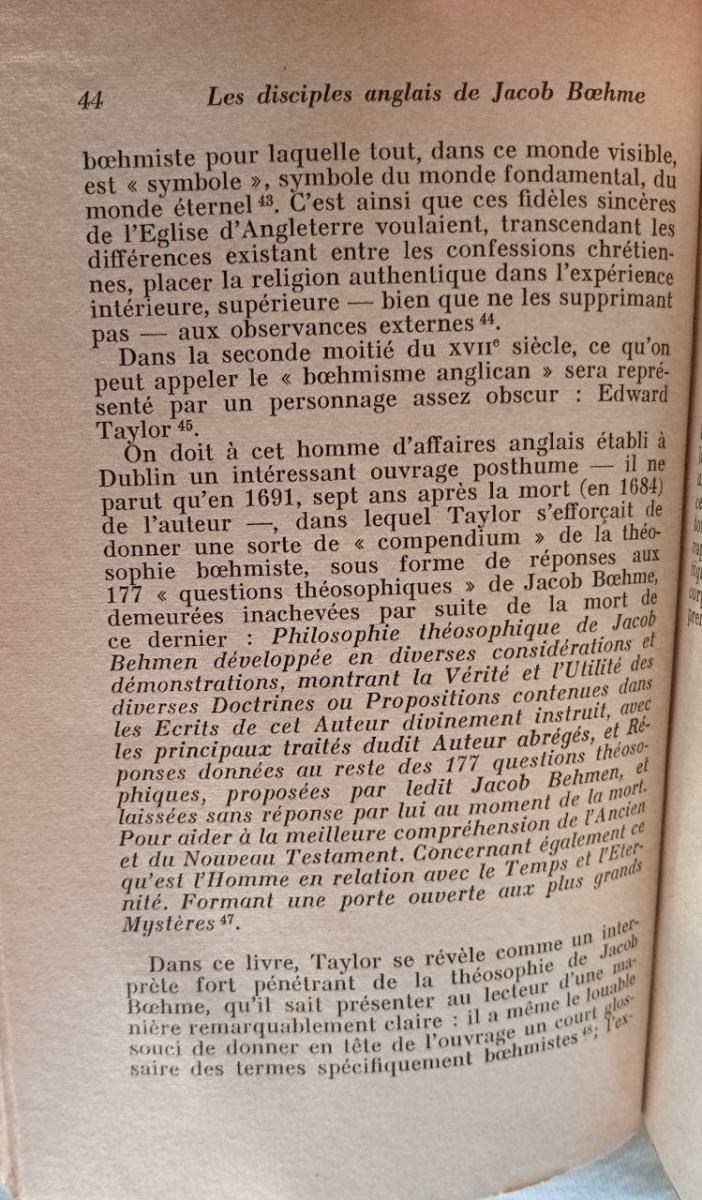
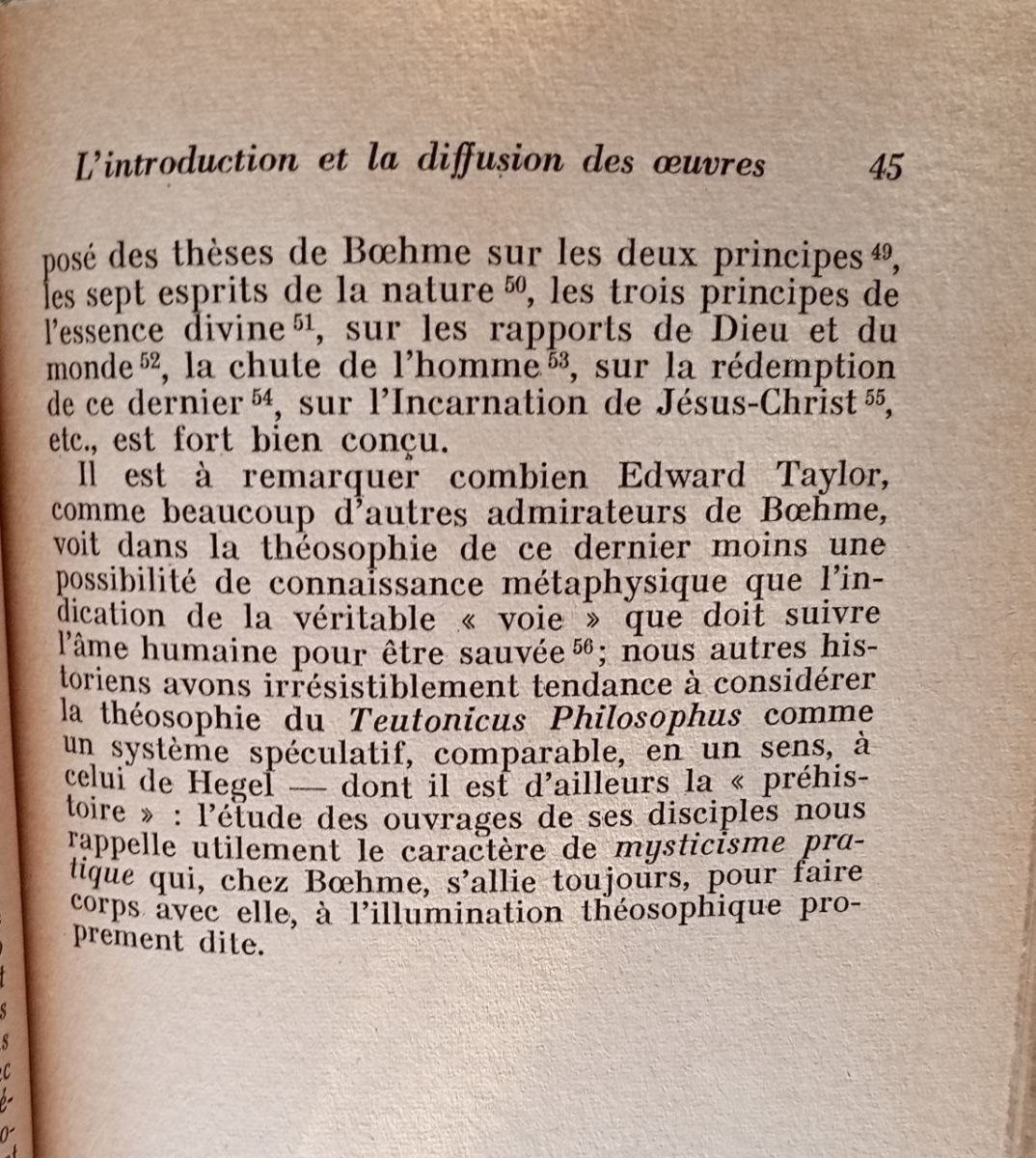
Here is what Serge Hutin also says about him in his celebrated ‘Les disciples anglais de Jacob Boehme‘:
‘In the second half of the 17th century, what one might call ‘Anglican Boehmism‘ would be represented by a rather obscure figure: Edward Taylor.
We owe to this English businessman established in Dublin an interesting posthumous work — it only appeared in 1691, seven years after the author’s death (in 1684) — in which Taylor endeavored to provide a sort of ‘compendium‘ of Boehmist theosophy, in the form of responses to the ‘177 theosophical questions‘ of Jacob Boehme, left unfinished due to the latter’s death: ‘Theosophical Philosophy of Jacob Behmen developed in diverse considerations and demonstrations, showing the Truth and Utility of the various Doctrines or Propositions contained in the Writings of this divinely instructed Author, with the principal treatises of the said Author abridged, and Responses given to the remainder of the 177 theosophical questions, proposed by the said Jacob Behmen, and left unanswered by him at the time of his death. To aid in the better comprehension of the Old and New Testament. Also concerning what Man is in relation to Time and Eternity. Forming an open door to the greatest Mysteries’.
In this book, Taylor reveals himself as a highly penetrating interpreter of Jacob Boehme’s theosophy, which he knows how to present to the reader in a remarkably clear manner: he even had the laudable concern to provide at the head of the work a short glossary of specifically Boehmist terms, explaining Boehme’s theses on the two principles, the seven spirits of nature, the three principles of divine essence, on the relations between God and the world, the fall of man, on the redemption of the latter, on the Incarnation of Jesus Christ, etc., is very well conceived.
It is worth noting how much Edward Taylor, like many other admirers of Boehme, sees in the latter’s theosophy less a possibility of metaphysical knowledge than the indication of the true ‘path‘ that the human soul must follow to be saved; we other historians have an irresistible tendency to consider the theosophy of the Teutonicus Philosophus as a speculative system, comparable, in a sense, to that of Hegel — of which it is moreover the ‘prehistory‘: the study of the works of his disciples usefully reminds us of the character of practical mysticism which, in Boehme, always allies itself, to become one with it, with theosophical illumination properly so called’. (Source: Serge Hutin, ‘Les disciples anglais de Jacob Boehme’, La tour Saint-Jacques-Editions Denoël, 1960).
*
*
2. The 1770 Edition and Attribution
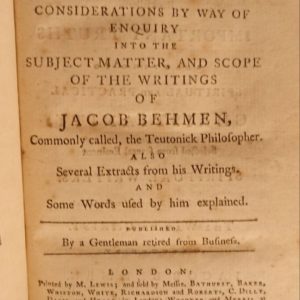
An anonymous 1770 edition presents largely the same content as Taylor’s 1691 volume, with one major alteration: Taylor’s answers to Boehme’s ‘177 Theosophick Questions‘ are replaced by John Pordage’s ‘A Treatise of Eternal Nature’. The rest of the text remains nearly identical, though the ‘extracts’ of Boehme’s writings have been considerably reduced. Notably, the 1770 edition attributes the work to Pordage — despite his death in 1681, predating both the 1691 and 1770 publications.
We propose that the 1770 editors likely encountered Taylor’s manuscript among Pordage’s papers and, assuming authorship by Pordage — a prominent Boehmean figure — attributed the work to him without verification. This misattribution is plausible: scholars have documented how Pordage’s followers, particularly within Jane Lead’s Philadelphian circle, occasionally reattributed Boehmian texts to him posthumously — even when authored by others, including Taylor. Taylor’s 1691 edition, therefore, clearly precedes and underlies the 1770 variant.
*
A Contextual Introduction-Part 2
We find Taylor’s vision of teaching particularly fascinating for its insistence upon teaching as a strictly mediatory function within a living chain of spiritual transmission. Where Christianity has traditionally constructed its identity around the ‘fathers of the church‘—those great luminaries whose teachings constitute the building blocks of core doctrine—Taylor offers a penetrating criticism of such sedimented authority.
While Taylor does not explicitly reject all doctrinal tradition, his insistence that only Christ — not human teachers, institutions, or philosophical systems — can transmit living truth implies a radical critique of any structure that elevates human authority over divine presence.
His answer to Question 149 reveals the dangers inherent in this patristic model: as history amply demonstrates, the Spirit readily dies beneath the rigid letter, while love and wisdom become buried beneath pomp and worldly considerations. For Taylor, the true teacher does not stand as an originating source but as transparent medium—like ‘Ink and Paper wherewith the Lord Jesus writes his good pleasure‘—through which Christ alone, the sole Shepherd of Souls, continues to nourish and instruct.
The ‘Teacher of the Letter‘, by contrast, operates from the ‘anguish of the first principle‘, perpetuating a dead tradition that kills even as it claims to transmit. In this respect, Taylor’s theosophy challenges not merely corrupt ecclesiastical practice but the very structure of doctrinal accumulation upon which institutional Christianity has historically depended.
Taylor extends this critique with particular vehemence toward the institutional theologian, whom he condemns in language that strips away all pretense of spiritual authority. The ‘School-Doctors‘, as he names them, represent the final degradation of this deadened transmission: ‘Thus after the choice Youth of Christian people are prepossessed with Aristotle’s Heathenish, and dry Breaths of Philosophy, like the Children prostituted to Moloch: They are spirited by Men who by a fatal Name are call’d School-Doctors’.
The force of this passage lies in its cumulative imagery—pagan philosophy as heathenish contamination, Scholastic disputation as desiccated breath, theological education as child sacrifice to a devouring idol. The ‘fatal Name‘ itself becomes a kind of curse, marking those who bear it as blind guides and ‘Apes and Counterfeits of the Divine Living Spirit‘, operating from ‘Astral Magia‘ rather than genuine regeneration.
For Taylor, the university-trained theologian embodies the worst betrayal of the teaching office: not merely transmitting the letter without the Spirit, but actively seducing the young into a counterfeit wisdom that bars them from the ‘Open Gate to the Greatest Mysteries‘.
**
Question 149
*
Commentaries
*
Commentary I — On Transmission & Mediation
In Edward Taylor’s answer, the figure of the teacher is rigorously displaced from the position of origin and resituated as a medium within a living economy of transmission. Christ alone teaches; all human instruction is secondary, instrumental, and conditional. The recurrent solar analogy is not ornamental but technical: as the sun illuminates without possessing what it quickens, so the true teacher communicates without appropriating the source of illumination. Authority, therefore, is not conferred by office, learning, or succession, but by transparency to an inwardly operative Spirit. Any attempt by the teacher to convert mediation into possession interrupts the chain of transmission and substitutes domination for illumination.
*
Commentary II — On The Danger Of The Letter Without Spirit
Taylor’s condemnation of the ‘teacher of the letter without the Spirit‘ articulates a precise metaphysical danger rather than a moral failing. Instruction proceeding from the unregenerate principle does not merely lack efficacy; it actively communicates death, because it fixes truth in external form and arrests the inward motion toward regeneration. The letter, detached from the Spirit that alone quickens it, becomes an instrument of obstruction, generating authority without life and doctrine without transformation. In this sense, false teaching is not neutral error but a deformation of transmission itself, replacing living continuity with static control.
*
Commentary III — On responsibility and humility
The responsibility of the teacher, as implied throughout Taylor’s answer, lies not in the correctness of formulation but in the purity of the source from which speech proceeds. Pride, imperious will, and philosophical self-sufficiency are not merely ethical defects; they are structural disqualifications, because they re-center the self and render the teacher opaque to the divine impulse. Humility thus appears not as an edifying virtue but as a technical condition of transmission. Where humility fails, even orthodox speech becomes counterfeit; where it prevails, silence itself may preserve the integrity of the chain more faithfully than instruction.
Edward Taylor’s answer presents teaching as a strictly mediatory function within a living chain of transmission whose sole source is Christ as inward, universal Teacher. The human teacher neither originates nor possesses truth, but serves as a transparent medium through which the divine impulse may pass, analogous to the sun’s illumination of growth without ownership or control. Authority, therefore, does not arise from office, learning, or succession, but from inward authorization grounded in regeneration. When instruction proceeds from the letter without the Spirit, it does not merely fail to vivify; it actively obstructs transmission by fixing truth in external form and substituting control for illumination.
The responsibility of the teacher lies not in doctrinal correctness as such, but in fidelity to the source of speech itself. Humility thus functions as a technical condition of transmission: where the self is re-centered, the chain is broken, and even orthodox teaching becomes a vehicle of death rather than life.
*
Original Source
*
*
*

*
Further Reading:
- ‘Jacob Behmen’s Theosophick Philosophy Unfolded’ (London: Tho. Salusbury, 1691) — Early English Books Online (EEBO) Database.
- Boehme and the English Behmenists’ by A. H. Armstrong (1977).
- ‘The Cambridge History of American Literature’ — on the American Taylor (for contrast).
***

Related Articles


Leave a Reply