
Circle of Transmission: The Living Loom
ALCHEMY FOR THE ALGORITHMIC AGE – A Via-Hygeia Bibliotherapy-Book Review of Michael Robert Osborne’s ‘The Alchemy of William Blake’
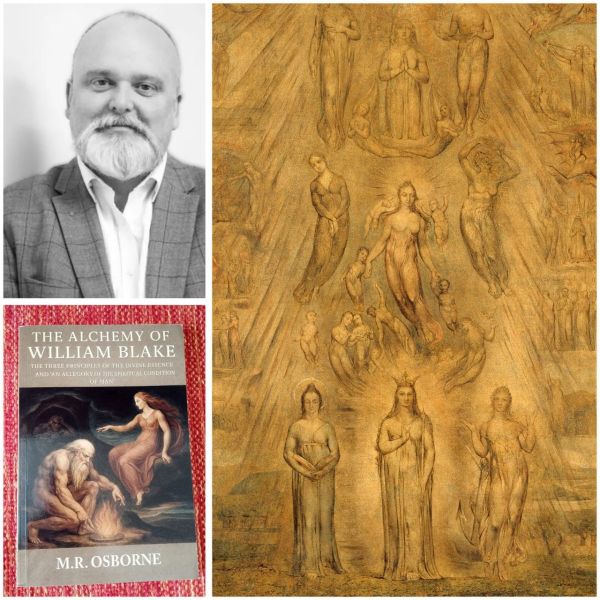
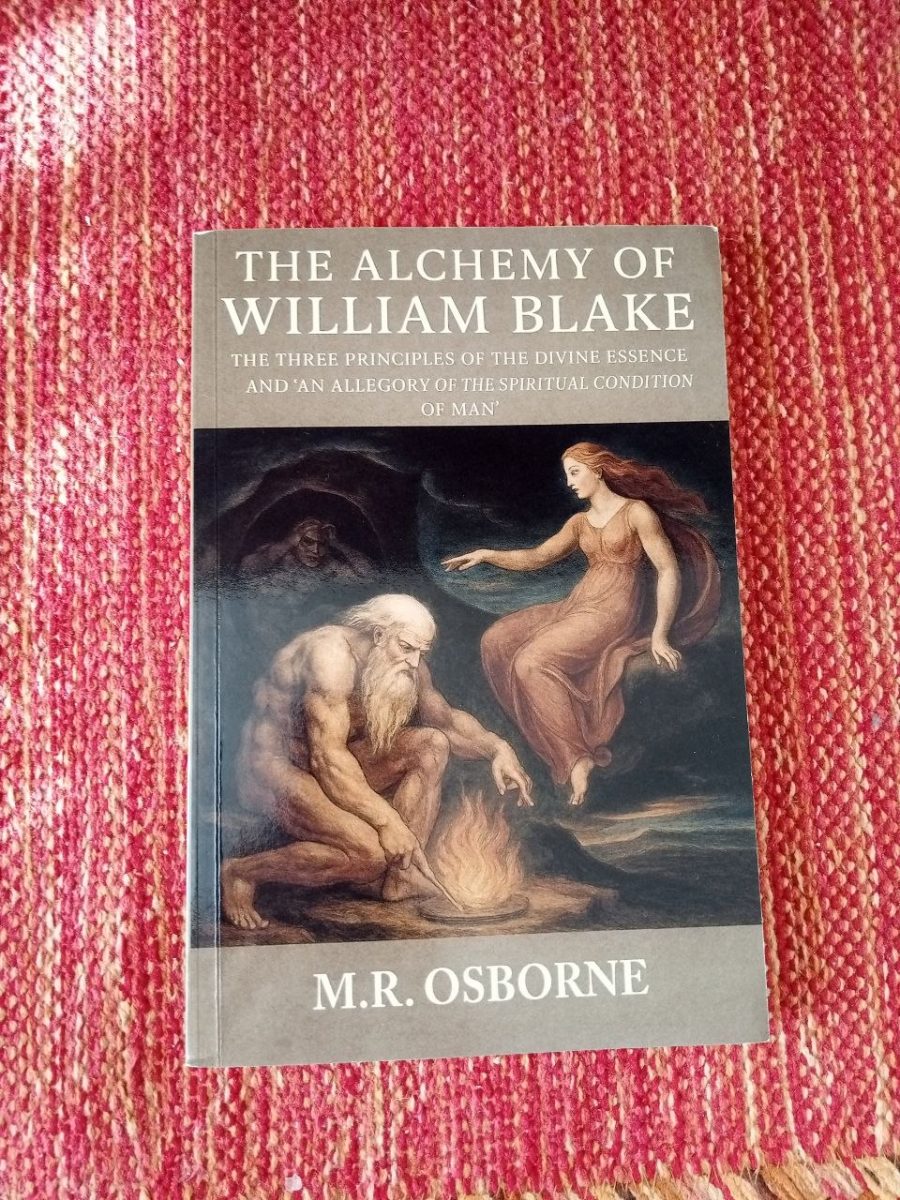
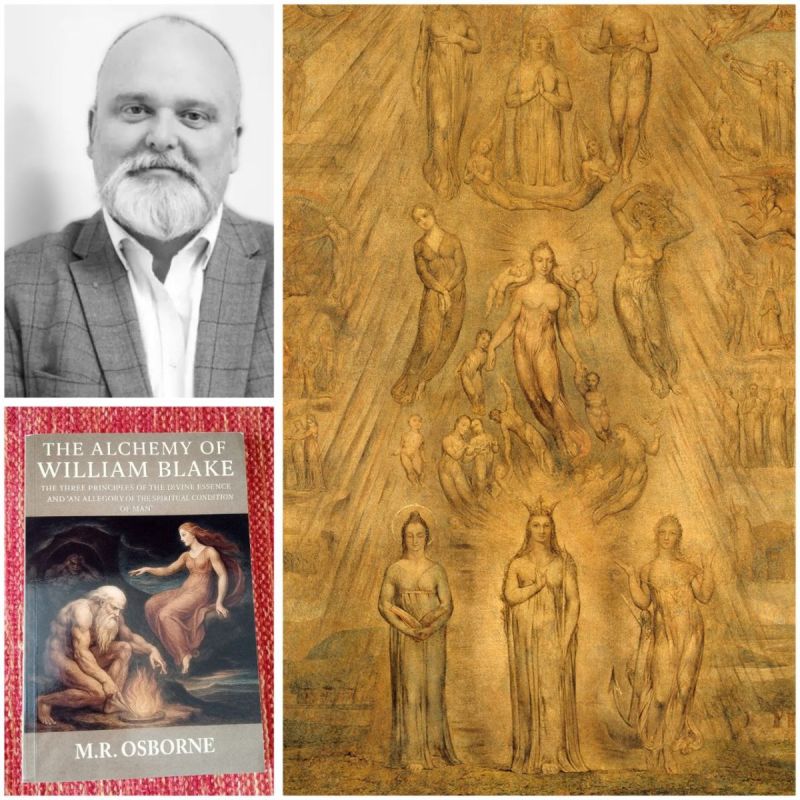
Another sharing for the day, from the Blue House of Via-HYGEIA, is our review of Michael Robert Osborne’s ‘The Alchemy of William Blake’, published in 2024 (and reissued in its second edition in 2025) by Rose Circle Books and Piers A. Vaughan.
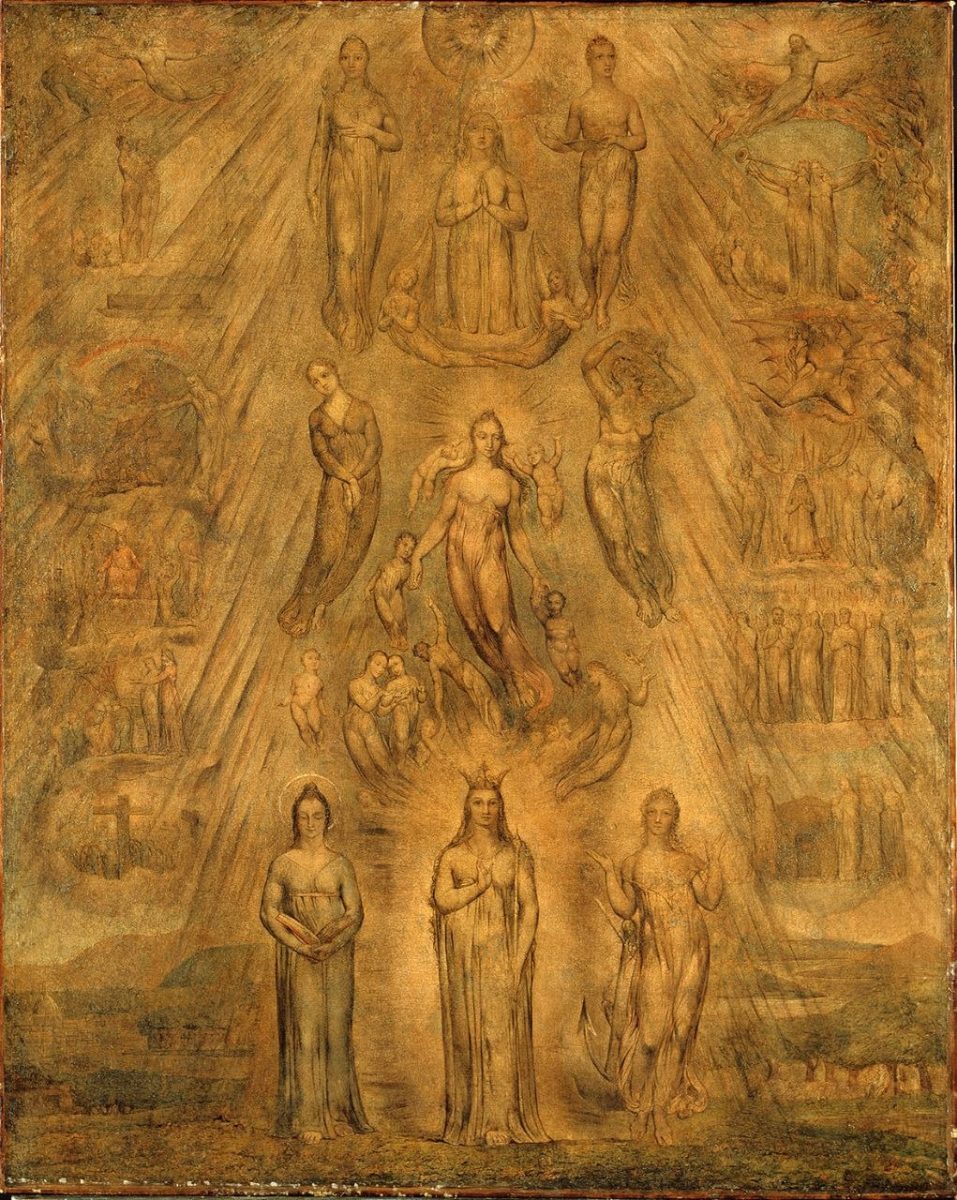
In his commentary on William Blake’s ‘An Allegory of the Spiritual Condition of Man — a visionary artwork pulsing with symbolic density and spiritual urgency — Michael Robert Osborne does more than interpret imagery: he deploys it as a weapon against the hegemony of mindless, empty visual pollution. In an age saturated with algorithmic feeds, clickbait aesthetics, and attention-grabbing noise, Blake’s illuminated plates become acts of defiance — not merely beautiful, but necessary: demanding presence, discipline, and imaginative labor.
Osborne does not leave this resistance at the level of form. He gives it flesh — and fire — by weaving Blake’s visionary psychology with Jacob Boehme’s cosmic alchemy. Together, they offer not escape, but a living grammar for spiritual re-enchantment: a map of descent and ascent, calcination and conjunction, that mirrors our own collective unraveling — and potential rebirth. What emerges is not nostalgia, but a radical, embodied counter-narrative to the flattening of soul, psyche, and planet.
**
Alchemy for the Algorithmic Age
(How Blake and Boehme Reclaim Imagination, Ecology, and the Soul from Digital Disconnection. A review of Michael Osborne’s ‘The Alchemy of William Blake’).
Michael Osborne’s study arrives at a moment when spiritual language is either commodified into wellness aesthetics or relegated to nostalgic mysticism. Yet Osborne avoids both traps. By placing William Blake and Jacob Boehme within an explicitly alchemical and developmental framework, ‘The Alchemy of William Blake‘ reads less like a work of historical synthesis than a manual for diagnosing modern spiritual malaise. What emerges is not escapist mysticism, but a counter-narrative to the psychological flattening, ecological estrangement, and algorithmic passivity that define contemporary life.
Osborne’s book is rigorously structured. Its movement — from philosophical alchemy, through the Three Principles, into descent and ascent — mirrors the inner itinerary described by both Blake and Boehme. This structural fidelity is one of the book’s quiet strengths: form and content are inseparable. The reader is not merely told about transformation; they are led through it.
*
Imagination Against Algorithm
Osborne’s treatment of Blake foregrounds a concept that feels uncannily urgent: imagination as ontological ground. Blake’s insistence that ‘the imagination is not a state: it is the human existence itself‘ stands in direct opposition to contemporary attention economies. Algorithms function by narrowing imaginative range — predicting, curating, and reinforcing patterns of desire. Blake’s ‘mental fight‘, as Osborne shows, is not metaphorical heroism but an active resistance to spiritual automation.
In an age of predictive algorithms, Blake’s imagination is the ultimate anti-recommendation engine.
Seen this way, Blake’s prophetic books read less like arcane mythopoesis and more like warnings against passive spectatorship. Vision, for Blake, is participatory. To see is to act. In a culture dominated by endless feeds and frictionless consumption, Blake’s demand that perception itself be disciplined and purified becomes radical. Osborne is particularly effective in showing, in his careful study of Blake’s ‘An allegory of the Spiritual Condition of Man‘— the visionary artwork that anchors the book — how Blake’s symbolic density is not obscurantism, but a deliberate training of attention.
One contemporary metaphor suggests itself: Blake’s illuminated books function almost like a corrective to modern visual overload — fast, vivid, emotionally charged, yet resistant to skimming. They require presence. They do not optimize; they initiate.
*
Boehme and the Re-Enchanted Cosmos
If Blake offers a psychology of resistance, Boehme provides a cosmology of responsibility. Osborne’s exposition of the Three Principles — darkness, fire, and light — avoids both theological abstraction and New Age dilution. Boehme’s universe is not a static machine but a living drama — tense, unfinished, and demanding participation. Nature is not inert matter but a dynamic expression of divine struggle and desire.
This has immediate ecological implications. Boehme’s account of the descent and ascent of man mirrors contemporary experiences of ecological grief and planetary anxiety. The fall is not merely moral but ontological: humanity’s alienation from nature is a rupture in the very fabric of being. Osborne convincingly presents Boehme as offering a metaphysical foundation for ecological ethics — one that does not rely on sentimentality or technocratic management, but on participation in a living cosmos.
One might say that Boehme’s Three Principles function like an operating system rather than a doctrine. They describe how reality runs. To violate them is not to break a rule, but to destabilize the whole. In an era of extractive economies and ecological collapse, this vision feels less speculative than diagnostic.
*
Alchemy as Collective Process
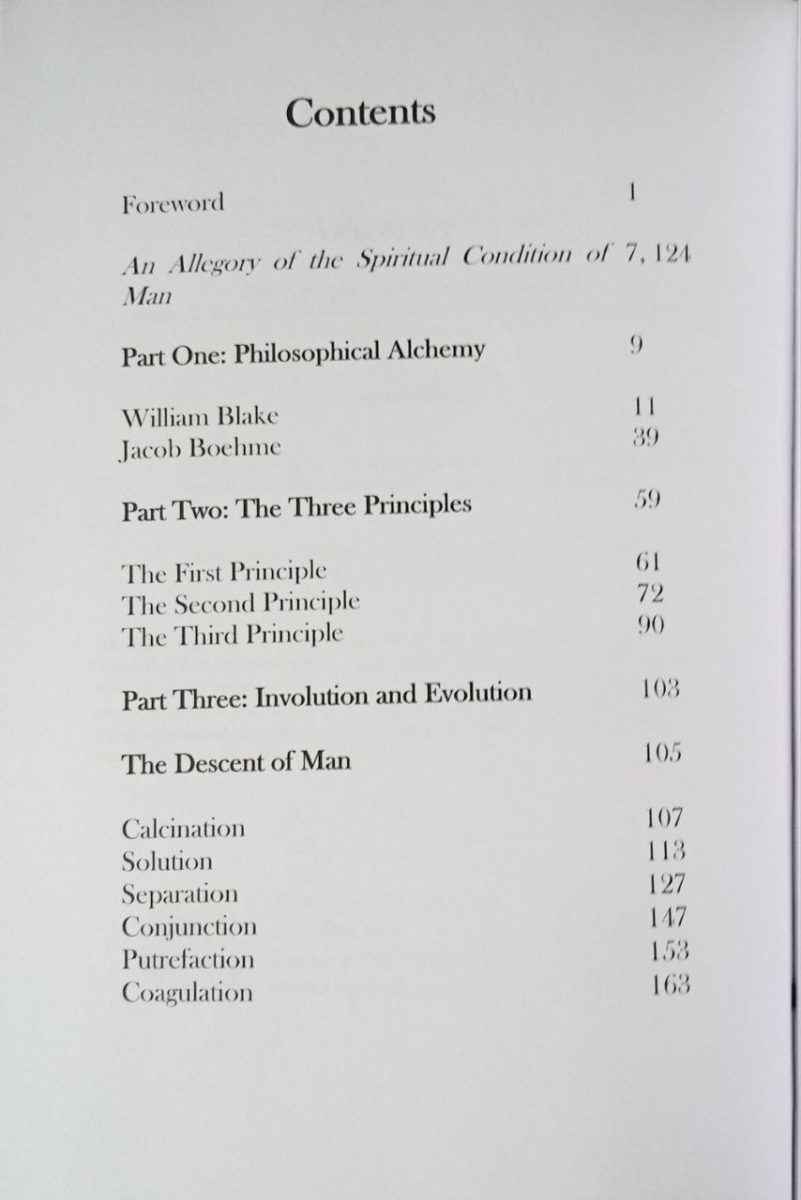
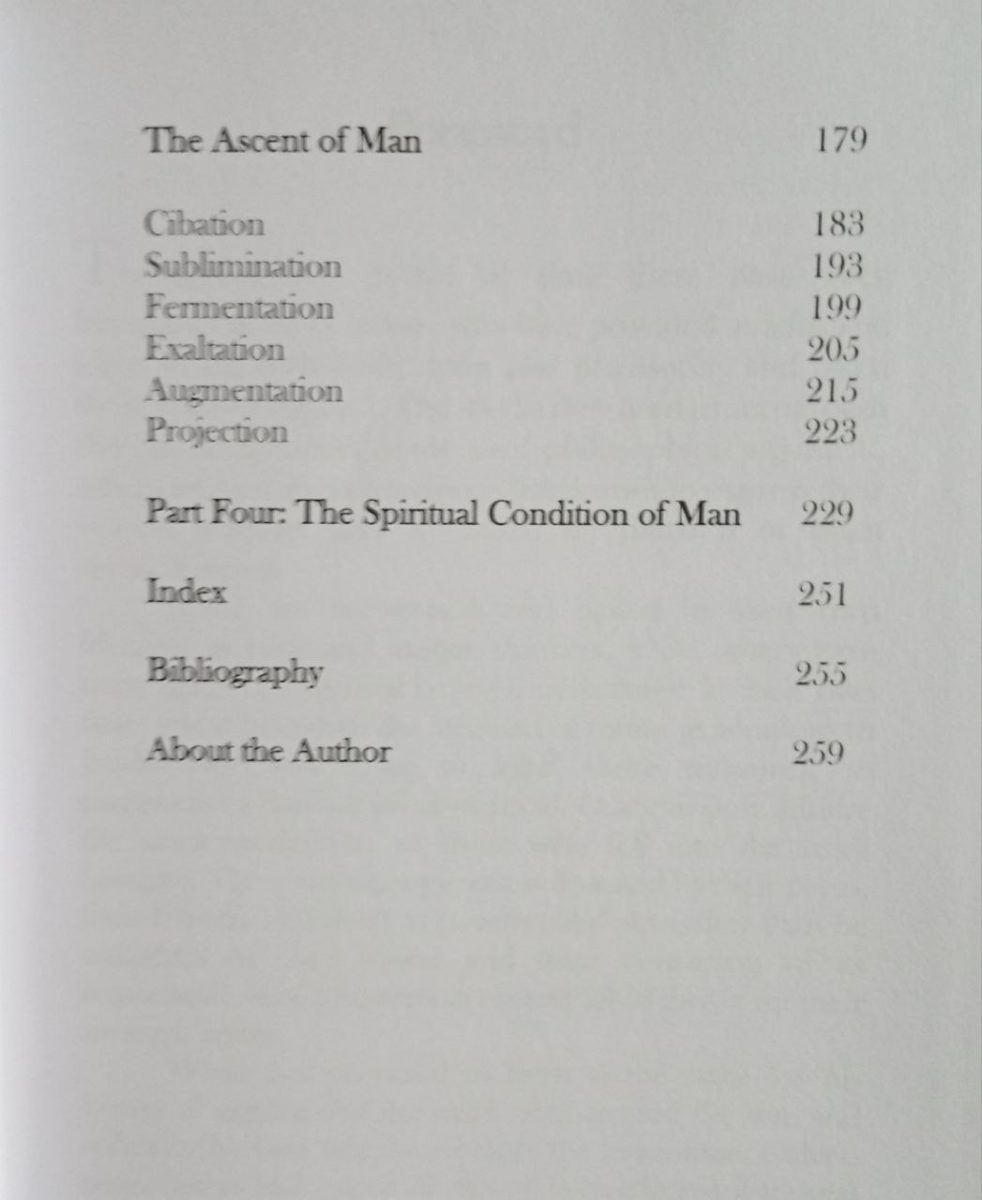
The heart of Osborne’s book lies in its twelve-stage alchemical sequence: Calcination, Solution, Separation, Conjunction, Putrefaction, Coagulation, Cibation, Sublimination, Fermentation, Exaltation, Augmentation, and Projection — these are not decorative metaphors, but stages of necessary breakdown and reassembly — both personal and planetary.
The descent of man corresponds to breakdown: cultural polarization, climate anxiety, mental health crises. Calcination names the burning away of false certainties; putrefaction, the necessary confrontation with decay and loss. Yet the ascent — through fermentation, exaltation, augmentation, and projection — points toward re-integration rather than escape.
What makes this compelling is Osborne’s refusal to isolate spirituality from history. Alchemy here is not private transcendence but a grammar for collective transformation. The work must be done inwardly, but it manifests outwardly — in ethics, imagination, and action.
*
Why This Book Matters Now
In a cultural landscape saturated with AI-generated content, performative spirituality, and optimization-driven narratives of progress, Osborne’s Blake and Boehme offer something unfashionable: difficulty, suffering, and transformation without guarantees. Meaning, they insist, is not found in efficiency or control, but in imaginative risk and spiritual labor.
This is what makes ‘The Alchemy of William Blake‘ more than a scholarly contribution. It is a reminder that re-enchantment is not regression. It is resistance. Blake and Boehme do not offer escape from the modern world, but tools for inhabiting it without surrendering the soul.
Osborne’s achievement is to show that these tools are not relics. They are unfinished work — demanding, unsettling, and urgently human.
In a world optimized for distraction, Osborne’s Blake and Boehme offer not answers — but the courage to ask better questions. From the mere description of an artwork, a whole world of possibilities has been shown to us — with care, with love. Are we now up to the task?
*
Source
*
*
*

***


Related Articles


Leave a Reply