
Circle of Transmission: The Living Loom
A Little Louis-Charles-Edouard, Viscount of Lapasse Sampler: Selections from ‘De La Conservation de la Vie’ (1860) – Part 2- The Triple Constitution of the Human Being
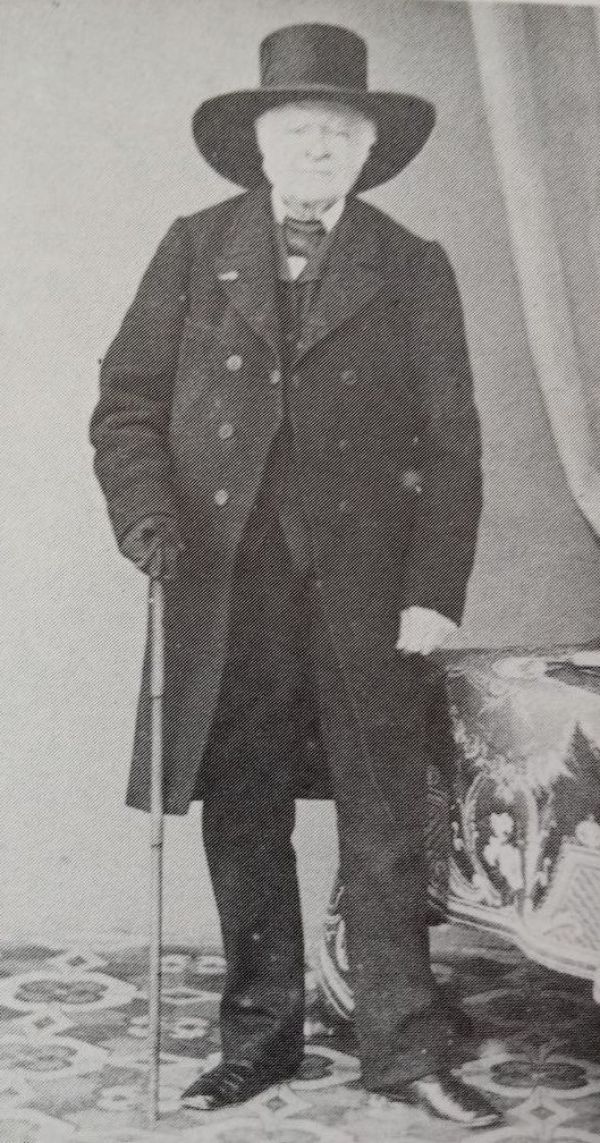
Louis-Charles-Edouard, Viscount de Lapasse.
From the Grenier de Gardenal Archives &
the Gerard Galtier Collection.
*
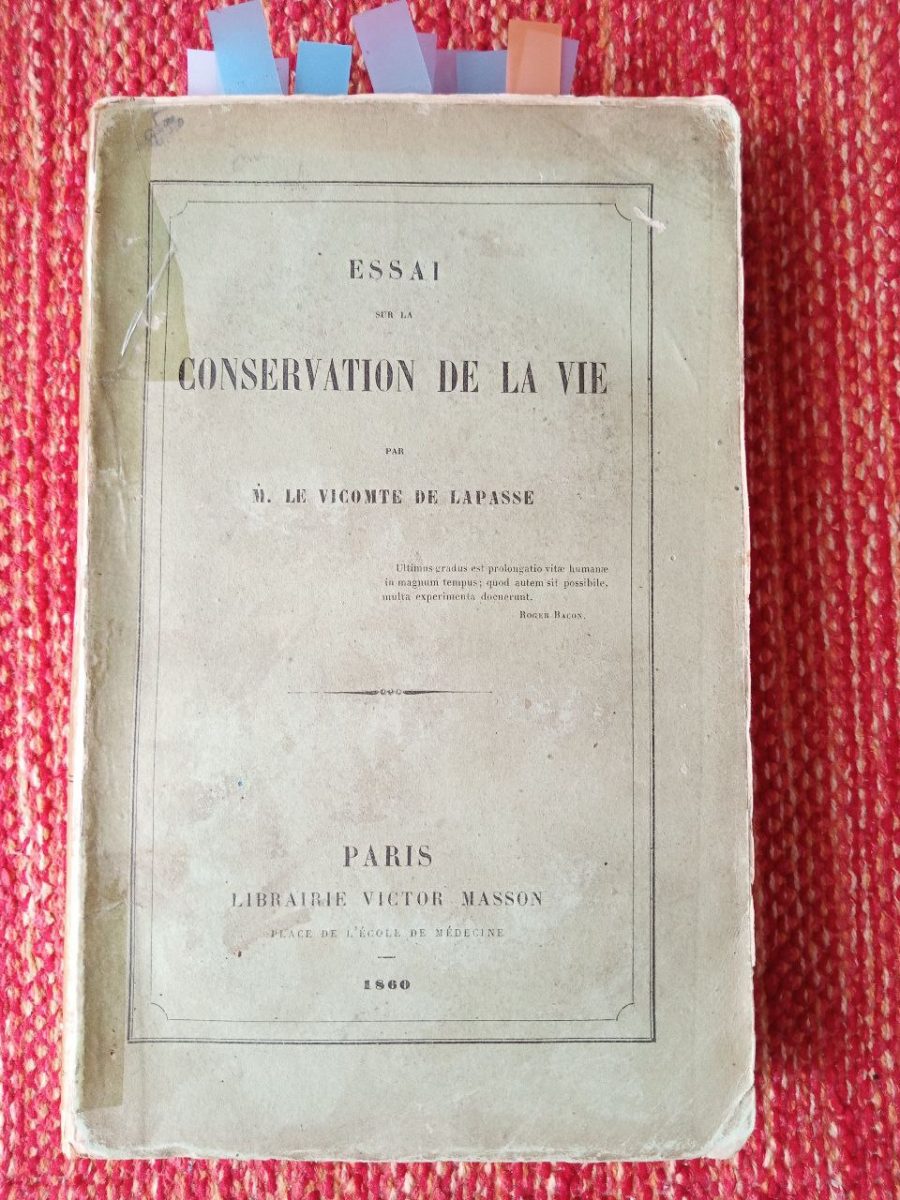
Today’s sharing from the Blue House of Via-HYGEIA is part 2 of the planned series devoted to the memory of Louis-Charles-Edouard, Viscount de Lapasse (1792-1867), based upon selections from his main treatise, the ‘Essai sur la Conservation de la Vie’ (Essay upon the Conservation of Life), published in 1860 by Librairie Victor Masson in Paris. It is the whole chapter XIII which begins part III of Lapasse’s Essay. From page 263 to 284.
In this foundational chapter, Lapasse develops a unified science of life based on forces rather than matter, culminating in a triple constitution of man—material, instinctive, and intellectual—whose harmonious equilibrium is health. The natural human lifespan of 150–200 years can be attained only through the conservation and proper direction of all three orders of life.
After the translated chapter, we provide two specially crafted appendices that examine the architecture of vital forces & its therapeutic implications, and Lapasse’s ideal profile as an archetypal ‘Rosicrucian physician’.
**
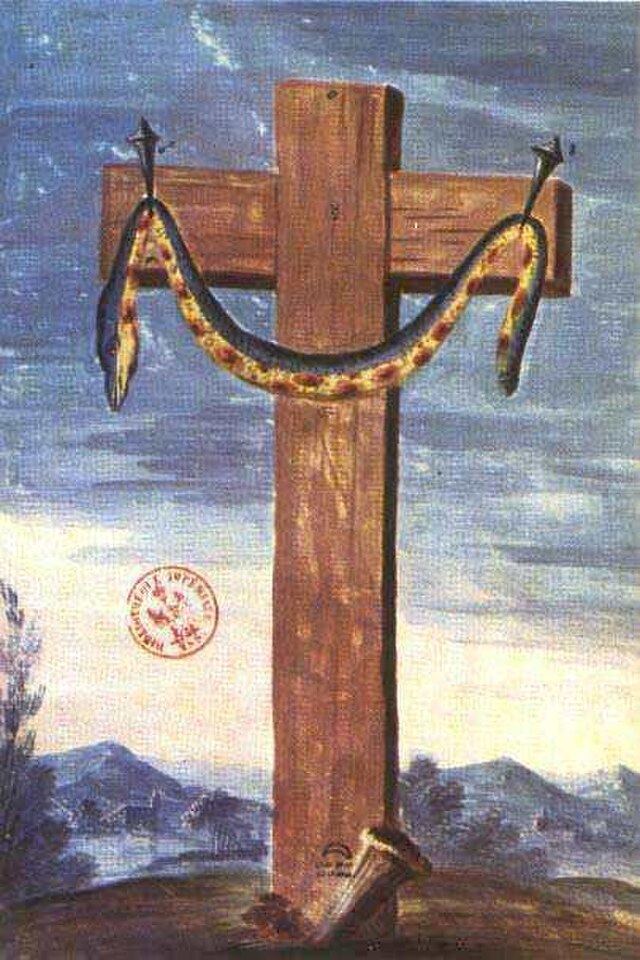
‘Essay upon the Conservation of Life’,
Part III, Chapter XIII
CHAPTER XIII
I. Spirit and Matter. — II. Constitution of Bodies. — III. Mineral Life. — IV. Vegetable Life. — V. Animal Life. — VI. The Vital Force is a Resultant. — VII. Triple Nature of the Human Being. — VIII. Connexity among the Various Forces. — IX. The Vital Force is Susceptible of Assimilating Homogeneous Forces.
I. — When man turns his meditations toward the causes of his life, the constitution of his being, and its relations with all that surrounds him, he perceives infinite complications. Yet it is possible for his thought to grasp these relations by generalizing them under the form of a great dualism: God the Creator and created things, spirit and matter. Genesis has told us: On the day when the supreme will desired that the world exist, the word of God resounded in the abysses of space, and things began.
The study of luminous phenomena and the law of analogies authorize us to suppose that the spheres moving in the depths of the sky are composed of the same matter as that which is trodden beneath our feet. We do not know whether the combinations of this matter are identical to those existing on our globe, whether the causes of action and of life are other than those given to the earth; the matter is the same, the forces may be diverse.
Around us, where we are permitted to observe phenomena with the aid of our senses, to compare them by reasoning, we find another great dualism: matter and the forces which vary its combinations. Primitive matter is inert in its essence. It must be so for the sole reason that our spirit comprehends it. Remove movement by thought, and matter will not cease to exist for that; it will merely be immobile.
II. — Science has posited an impossible hypothesis by establishing what are called the properties of matter. In reality, there exist only diversities of phenomena according as matter is subjected to the action of the various causes which modify its combinations.
Bodies, however, have properties, but they owe them not to their atomic composition, but to their molecular arrangements. Some scholars have sought the cause of these molecular arrangements in elements which they call imponderables, interposed in a latent state between the constituent atoms of molecules. But, as we have already said, these imponderables are not matter; we can only understand them as forces, that is to say, causes of action. The ivory of the elephant’s tooth and the bone of its tibia have the same material composition, yet their properties are different. Why? Here, physiology comes to the aid of the chemist and the physicist; it teaches us that the formation of dental ivory is centripetal, that of bones centrifugal (1). Thus two bodies composed of the same atoms, but subjected to different forces; it is for this reason that they do not have the same molecular state, nor consequently the same properties.
This diversity in the properties of bodies always shows us causes superior to matter even in phenomena produced in appearance by combinations of matter, that is to say, by the action of certain bodies upon other bodies.
Why does willow bark and cinchona bark cure tertian fever, and not that of birch? How does it happen that morphine stupefies, while strychnine tetanizes?
It is useless to answer that the composition of these bodies is not absolutely identical. What! one or two atoms of carbon or hydrogen more or less in a substance could produce such prodigious effects? But then I should experience similar phenomena when I add a pinch of sugar or starch to my food. Yet nothing of the sort occurs.
Science moves a little closer to the truth by explaining these differences between the properties of bodies by differences in their various molecular constitutions. But how could the same elementary atoms have grouped themselves in morphine and in strychnine into different molecules? Necessarily under the influence of two different forces. But as long as these molecules remain organized, it is evident that they are still under the influence of these forces, otherwise the inert matter composing them would no longer have properties. Consequently, we are authorized to affirm that the properties of bodies result from their molecular arrangements, and that these molecular arrangements are themselves maintained by special forces interposed between the molecules.
As can be seen: to arrive at the knowledge of things, it is not matter that must be studied, but forces. This is also why the natural sciences reduce to the study of phenomena. These phenomena are innumerable, because the number of possible combinations is infinite; but one always finds one or more acting forces and matter subjected to their action.
Chemistry, considered from this general point of view, merges with physics; indeed, these two branches of science are linked by connexities that become more intimate every day. One can neither combine nor decompose bodies without releasing forces; and every time forces are applied to bodies, decompositions and combinations are obtained. The art of analysis, that is, the decomposition of bodies, has been pushed very far; perhaps too far to hope to arrive, through analyses, at the knowledge of the primitive atom. If chemistry ever attains this goal, it will be, on the contrary, through syntheses. Proust’s law is thought-provoking. “The proportions according to which simple bodies unite among themselves are expressed by numbers which are all multiples of hydrogen by a whole number.” If one compares this fact with the density and weight of hydrogen, if one reflects on the mysterious regularity that presides over the harmonies of creation, one is authorized to suppose that hydrogen is, of all bodies, the one in which the elementary atom is closest to primitive matter, which itself began by being gaseous, then passed to the liquid state and to solidification. These hypotheses are probable, but they cannot be demonstrated; it is not the same with the identity of matter; all facts concur to prove that matter is one. To suppose that God would have created 54 or 68 simple bodies, primitive elements, is almost impiety, because it is to misunderstand the character of harmonious regularity that has been imprinted on divine works.
A chemistry professor will tell you: the atom of zinc is different from the atom of copper. What does he know about it? He has never been able to isolate either one. All he is permitted to affirm is that the molecule of zinc does not have the same properties as the molecule of copper; but organic chemistry has demonstrated, to the point of evidence, that the same bodies which it calls simple, that is, the same atoms, chemically speaking, can unite to form compounds endowed with different properties, and also having a very different molecular state. Carbon, hydrogen, and oxygen combine in the same proportions to make sugar or paper.
It is more essential than is generally thought to insist on this identity of matter, because it is the only means of simplifying complicated questions. The human spirit only understands simple things well. Hence it is through the understanding that we arrive at truth; complications and doubts always come from our senses.
The primitive element, essential matter of all bodies, is therefore always the same; but the combinations of this matter constitute the diversity of bodies and their properties; these combinations, which vary infinitely, are the result of certain causes that scholars call forces.
We do not know the nature of these forces; we can only affirm that they are not matter; and it is permissible to consider as permanent manifestations of the divine will the phenomena they produce.
III. — These forces appear to us multiple in their effects; but they are governed by a common law. Beside the unity of matter, there is the harmony of movements, whose constant and regular order constitutes what certain scholars have called universal life.
Our globe itself can, up to a certain point, be conceived as a being having its special life and a sort of gigantic organization. At the center, a nucleus of incandescent matter; then a layer of water retained in a liquid state by the double pressure of the atmosphere and the terrestrial crust; finally this solid shell. Such is the organization of this great body; its life consists in its regular movements, represented by algebraic formulas and connected to the general harmonies of the universe, as well as the emissions and absorptions of caloric, the discharges of electricity which, with the regular variations of the angles of declination of the magnetic needle, indicate and establish a connexity between this special life of the globe and all the phenomena of terrestrial things.
The earth on which man was one day to be placed was thus endowed by the Creator with all the conditions necessary for these regular movements, for this constant succession of disaggregations and aggregations which is a sort of rudimentary life: this is why it is the great reservoir, the inexhaustible source of the forces which act upon brute matter. The life of inanimate bodies, their properties, their organization, their innumerable combinations, are the results of the action of these forces. It is always the great dualism of the primitive design, spirit and matter, cause and subject.
A stone is composed of inert atoms identically similar to those of another stone, but grouped in diverse molecules by the action of different forces which, here, constitute gold, and elsewhere, iron.
Such is the whole secret of the alchemists.
IV. — It is still the same matter, still the same forces, that we find in bodies endowed with vegetable life and even with animal life; but there, the physical and chemical forces are dominated by special forces of a superior order. Thus the phenomena are more complicated, but they preserve the imprint of creative unity.
Chemical analysis finds in vegetable or animal matter the same elements as in brute bodies. Cellulose, the basis of vegetable tissues, is a ternary compound (C. H. O.). We also find, in plants, other elements: nitrogen, salts, alkaloids; but they do not form an integral part of the tissues, they are interposed in them; so that certain minds inclined toward mysticism might be tempted to seek a meaning in this material trinity.
Perhaps, even, strictly speaking, one might extend it to the more complicated animal matter: it would be possible to attach its composition to a doubly ternary formula (C. H. O. + N. S. P.). But these reveries are unworthy of serious minds. It is not in material organization that one must seek a reflection — no doubt very imperfect — of the divine trinity, but in the immortal faculties with which man has been endowed by his Creator.
The plant is therefore only a matter organized by forces, some of which are identical, others superior to those which govern minerals.
Give a chemist a certain number of molecules of sulfur, oxygen, and calcium, he can make plaster; perhaps even, by manipulating carbon under certain conditions, he might see diamond crystals emerge from his apparatus; but he may torment matter as he will, he will never fabricate a tree leaf: for the organization of the plant is the result of a special force linked to its germ. The oak which must one day cover the valley with its vast branches already exists, under the botanist’s magnifying glass, in the pulp of the acorn; its growth will be the result of the force of assimilation, concurring with the action of other natural forces and modifying them.
It is therefore in the assimilative functions that one must seek the secret of vegetable life, and it is by assimilating that the plant fulfills the purpose assigned to it on this globe. Like all that exists here below, the vegetable is subject to the empire of physical and chemical laws, but it modifies their action by certain forces proper to itself which permit it to assimilate certain principles which plants are charged to elaborate, whether for the nourishment of animals or for the innumerable needs of social man. All that is not necessary to this end, the plant repels through secretions.
V. — If we rise from vegetable life to animal life, this hierarchy of forces appears even more clearly. Animal matter, much more complicated in its atomic and molecular composition than vegetable matter, required, for this very reason, the concurrence of a greater number of forces. In fact, the animal feels, like the plant, the action of physical and chemical forces; like the plant, it has been endowed with vegetable life: nails, hair, horns are subject to the laws of vegetation; the animal, as well as the plant, assimilates the nutritive materials necessary for the maintenance of its material substance; better than the plant, it rejects to the outside that which has not been elaborated for the maintenance of life and which has become unfit to sustain it. Finally, a more perfect machine, it is endowed with sensation, locomotion, the instinct of reproduction and conservation; and the superior species have received from the supreme artisan a still more elevated faculty, the instinct of sociability, which touches almost upon the faculty of loving, and the instinct of domesticity, which brings the animal close to man, its master and king, too often its tyrant.
All these multiplied functions are governed by special forces which, up to a certain point and within certain limits, modify the action of physical and chemical forces upon animal matter. This is proved by observation.
The gastric juice of certain animals dissolves animal substances, even bones; this property is the result of a chemical force inherent to this compound; but, during the life of the animal, how can its own intestines resist the corrosive action of this liquid which operates, in the act of digestion, the decomposition of animal matters exactly similar to the intestines? There must necessarily be, by virtue of a special force of a superior order, what physiologists call vital resistance. This is so true that, very often, after a violent death, the intestines are perforated by the action of the gastric juice, which resumes its chemical properties after the cessation of life.
The muscular and nervous motor forces also act, on their part, upon the organs of the animal, which is not limited, like the plant, to assimilating, but which was created to act. Finally, all these acts, and consequently all these forces, are dominated by instinct, the faculty which permits the animal to defend and preserve its life to fulfill the purpose assigned to it by the creator; this purpose is to serve the needs of man. All animals concur therein, even carnivores, which serve man, unbeknownst to them, by arresting the excessive proliferation of other species. Thus as human societies take possession of a desert to fertilize it, ferocious animals disappear little by little.
But, to fulfill its mission on this earth, the animal had to preserve its life, and its instinct, which ceaselessly impels it thereto, rises, in certain animals, to a kind of natural self-medication. In general, animals are warned by taste or smell of the harmful qualities of foods, and their instinct leads them to abstain. But sometimes this conservative instinct allows itself to be led astray by other instincts, which are the passions of the brute; sometimes also the digestive and assimilative functions are troubled by external causes; then the animal goes to choose, among plants, the medicine appropriate to its ailment. It sniffs, it examines, it overcomes the disgust that bitterness causes it, but it does not deceive itself; it chews the herb that a physician might have indicated to it, whether it contains emetine, or whether it belongs to the class of laxatives or diuretics.
Behold an act of instinct carried to its highest power, and which indicates an intimate connexity between these faculties which we call instinct and the very principle of animal life.
VI. — By bringing together this observation with what has been said above, on the role of physical and chemical forces and of the forces which preside over functions, in the phenomena of animal life, we come to understand that this force called vital, although it forms a single whole during the life of the animal, must nevertheless be complex in its essence: we can therefore consider it as a resultant of several forces.
This way of envisaging life does not reveal its mystery to us; man will never know its essence and intimate nature; but by thus explaining vital phenomena, one clarifies questions hitherto very obscure and one can arrive at practical applications. — Science must not elevate its ambition higher. The knowledge of first causes is forbidden to it, but a vast field remains to it in the study of second causes. It cannot materially analyze forces which are not matter; but it can observe phenomena, apply intelligence to classify and generalize them, it can finally employ both the reason and the hand of man to direct natural forces, to reproduce in a given order phenomena useful to his needs.
We therefore consider the vital force of animals as a single resultant of several elementary forces:
-
Physical and chemical forces,
-
Forces which preside over functions,
-
Forces or instinctive faculties.
VII. — We find this same complication of forces if we rise to man, who assimilates, who acts, and who thinks. Frail creature, if compared to a bar of metal or a quarter of rock, it is he nevertheless who has fashioned steel and uses it to pulverize granite. His power is his will directed by his reason, acting outwardly by means of forces which themselves govern the phenomena of universal life. These forces also exert their empire over the human being who, touching the earth by the composition of his organs, is thereby subject to the laws of the life of terrestrial things; the action of these laws upon the life of man can be directed in a sense of conservation or destruction.
There exists between man and the brute an essential difference.
The animal rarely shortens its life by excesses and does not commit suicide; man, on the contrary, is subject to expending, in a few years of youth, the forces which have been given to him for an entire life, and often he commits the crime of suicide. This sad faculty is a consequence of his liberty which elevates him above the animal, whose acts are enchained, in a narrow circle, by instincts.
But from this faculty of destruction, it necessarily results that we also possess that of conservation; and divine providence, in granting it to us, has necessarily joined the means of exercising it. These means consist in the action of certain forces spread around us, forces whose action we are permitted to direct by our intelligence and our will.
A certain degree of heat is necessary to life; this heat results from an action of force which man has doubtless not created, but which he can reproduce at will, by bringing together combustible materials which ignite and warm him.
The life of man is thus maintained by forces; these forces, which are proper to him, are homogeneous with other natural forces, called by scholars physical and chemical forces, and susceptible of being, up to a certain point, assimilated by the vital force, which thus repairs what it has expended. But man has, by his intelligence, a certain empire over these natural forces; consequently, he can employ them, in a certain measure, for the conservation of his life. This is clear: it is quite as evident that in giving him the faculty of conservation, God has imposed upon him the duty.
We have, here below, a goal to attain, a mission to fulfill; the catechism has told us so from our youngest age; our conscience repeats it to us every day. Man is placed on earth to love his fellow men, to soften the pains of life, to adore God and serve Him. But he cannot fulfill these duties except with the integrity of his faculties; therefore it is obligatory for him to conserve them.
There lies not the difficulty: instinct tells us as much.
It is above all a matter of knowing how the will of man can act upon these conservative forces of his life. To resolve the problem, we must finish exposing our ideas on the nature of the human being, establish the conditions which differentiate him from the animal.
One takes into account, in general, only the most striking difference, that which results from immaterial faculties. In a purely metaphysical sense, one is perhaps right; to feel, to reason, and to love, that is the life of man. Sensation, from which action results; reason, which directs the will; love, that is to say the affinity of our being for other beings, an affinity susceptible of elevating itself to God Himself: it is by these three faculties that man is King of the earth, and it is their ensemble which can be considered as a sort of trinity, an image, no doubt very distant, of supreme perfection. The proof that these three faculties constitute a single whole is that if man exercises them separately, he goes against nature and troubles a necessary equilibrium. The too exclusive satisfaction of sensations makes man descend to bestiality; intelligence alone is egotistical, doubt leads to negation, that is to say atheism; love which is not governed by reason and which tries too soon to separate itself from matter arrives at mysticism and folly.
The noblest of human faculties, those which permit man to detach himself, by thought, from terrestrial matter, are therefore intimately united and form only a single immaterial essence: this psychic being is, at the same time, linked by intimate connexities to forces which themselves are united to material atoms and constitute an acting machine.
Such is the human being considered in its ensemble.
The error of philosophers, like that of many physicians, is to wish to consider separately what God Himself has intimately united. Man is no more a psychic being than he is brute matter or a machine. Hippocrates, Sydenham, Stahl, Bordeu, Barthez, all the great physicians of all centuries, have understood, in man, the existence of a principle superior to matter and dominating it. Reciprocally, Saint Thomas, Bossuet, de Maistre, all Christian philosophers, have posited the principles of veritable medical theories, in well specifying the intimate relations of the human machine with the immaterial essence which directs its movements.
In this principle or this immaterial cause, there are also complications; it is a whole formed of distinct elements, by their origin and their chances, but closely linked in their action. Important truth revealed to man by the books of Moses, as by the word of the apostle; Genesis (1) and the epistles of Saint Paul (2) distinguish the principle of life (anima) from pure intelligence (spiritus).
But this corporeal soul and this spirit are so united, during the life of man, that all the power of the word of God is needed to divide them; it is again Saint Paul who teaches us this (3). So that, in a certain sense, it is permitted to say that the separation of these two principles is the death of man; his life is the consequence of their intimate fusion.
Stahl and Barthez were therefore both right; the one, when he considered the soul as the cause of our life, and made the phenomena of illness and health ascend to it; the other, when he explained all the phenomena of life by the existence of a special principle charged with directing the organism. Their fault was perhaps not to have well understood and, consequently, not to have clearly explained the intimate union of these two principles, diverse, we repeat, in their origin and their essence; but which, while animating the body of man, form, with this body, a single whole. The genius of Barthez had divined this lacuna in his theory, when he had wished for the discovery of a third principle superior to what he names the psychic forces and the vital forces; this superior force is none other than the bundle of forces whose simultaneous action presides over all the acts of life. Man touches the earth by the composition of his organs, and the world of pure intelligences by the divine breath with which God Himself animated his body; this is a truth trivial by dint of having been repeated, but which cannot serve to explain the phenomena of his terrestrial existence. To comprehend them and direct them in a useful sense, it is necessary to recognize, in human life, a trinity:
-
Material life, under the empire of physical and chemical forces;
-
Instinctive life, under the empire of those forces which modern science calls vital;
-
Intellectual life, under the empire of psychic forces.
The bundle of these three lives constitutes a unity; their regular and simultaneous action is health; the perturbation of one of these forces, or even its excess, is illness.
Sometimes it happens during sleep, in magnetic somnambulism, in paroxysms of passions, in certain illnesses, that one of the forces comes to dominate the others, which remain momentarily inert. These exceptional states, such as magnetic somnambulism, can serve to demonstrate the reality of the existence of the three elements of which the bundle of our life is constituted; but, in the healthy and complete man, all phenomena attest the simultaneous action of these forces, as well as their intimate connexities.
Notes on the biblical quotes:
(1) Genesis – Likely Genesis 2:7: “And the Lord God formed man of the dust of the ground, and breathed into his nostrils the breath of life; and man became a living soul.” This distinguishes the anima / living soul from the spiritus / breath of God.
(2) Saint Paul distinguishing anima from spiritus – Probably 1 Thessalonians 5:23: “And the very God of peace sanctify you wholly; and I pray God your whole spirit and soul and body be preserved blameless unto the coming of our Lord Jesus Christ.” This explicitly lists spirit, soul, and body.
(3) Saint Paul on the division of soul and spirit – Almost certainly Hebrews 4:12: “For the word of God is quick, and powerful, and sharper than any two edged sword, piercing even to the dividing asunder of soul and spirit, and of the joints and marrow, and is a discerner of the thoughts and intents of the heart.” This matches Lapasse’s statement that “all the power of the word of God is needed to divide them.”
VIII. — The study of these relations among natural forces is a lacuna of science; when it shall be filled, one will find that certain phenomena produced, in appearance, by opposed forces, are in reality the result of the modifications of a single and same cause. By thus reducing the number of forces, one will generalize the laws of nature and facilitate the study of sciences. Complications, we have already said, are the result of the errors of our senses, subject to deceiving themselves, because sensation addresses itself first to instinct and momentarily makes this faculty dominate over the intellectual faculties; but when the spirit takes the upper hand and seeks to generalize, it perceives the relations among phenomena, and it glimpses the unity of the grand plan.
Science has already recognized connexities among luminous, caloric, and electrical phenomena: it is the trinity of material forces, as human life, a superior trinity, is the resultant of all the forces and of all the lives spread over the terrestrial globe.
Most of the forces which are revealed to us by the study of phenomena present analogies which permit one to believe in the identity of first causes.
When the chemist makes the molecules of certain bodies react upon one another, in his capsule or in his crucible, they come to juxtapose themselves in an invariable order. Sulfur, oxygen, and lime, placed in presence, always unite immediately and energetically to form plaster: it is by virtue of a special force which one calls the law of affinities. But, on the other hand, physiologists have observed that, in the formation of the bodies of animals, the arrangement of organs and their respective positions were subject to a law which they have called the law of symmetry. Now, as the phenomena of this law of symmetry are exactly similar to those of affinity, one must conclude that there is identity in the cause which produces them.
We find again this empire of the law of affinities, if we rise to the phenomena of instinct and intelligence, because instinctive and intellectual life make but one whole with material life.
If one takes the trouble to reflect and to bring together facts, one perceives, among the phenomena of the material order, the instinctive order, and the intellectual order, analogies which demonstrate the identity of first causes.
Passions are evidently under the empire of this general law which chemists have defined as the application to the movements of matter of the affinity of bodies. This affinity is exercised among the most opposed bodies in forms and properties. Every time one places in presence acetic acid, a liquid body, and ammonia, a gaseous body, acetate of ammonia, a solid body, will invincibly and immediately form. Likewise, moralists have observed that passionate love unites preferably the most opposed characters, the most timid woman to the most courageous man. But love, “this passion of uniting to something,” following Bossuet’s expression, dominates all the other passions. “Remove love,” said Bossuet again, “there are no more passions; place love, you make them all arise.” One can, in effect, class all passions in two great categories: active passions, which have for goal to unite or to acquire, such as courage, joy, ambition, etc.; repulsive passions, when we fear to lose, hatred, fear, avarice, etc. The latter are a consequence of love, just as, by a result of the law of chemical affinities, certain bodies refuse energetically to unite in combinations, and just as, finally, in electro-magnetic affinity, one sees the magnetized needle repelled by certain bodies, attracted by others.
Beside the law of affinities, there is also the hierarchy of forces which, in chemistry, explains the displacement of strong acids by weak acids.
Physical laws, natural forces, as philosophers say, and chemical laws are all second causes. First causes, on the contrary, all belong to the spiritual order.
This division of causes into second, in the material order, and first, in the intellectual order, can explain a great number of anomalies: it is analysis coming to the aid of synthesis; it is the thread which can guide us in the labyrinth of facts recorded by science; it is the only explanation of phenomena in appearance contradictory.
There existed a planet which traversed its orbit in some distant depth of the empyrean, on the side of Jupiter. This planet was destroyed only a few centuries ago; it is Mr. Le Verrier who informs us of this. One could not deny this fact without calling into doubt the bases of astronomical science; but how to reconcile it with the immobility of the law of gravitation, with the harmony of the laws of cohesion and affinity, which maintained the constituent molecules of the matter of this planet? It is explained, on the contrary, if there was a moral necessity, for example, a great act of justice and expiation; the law of the superior order took precedence over that of the inferior order.
It is thus that one must explain, in the human being, the phenomena of health and of illness.
Physical and chemical forces constitute the organs; they are dominated by the forces which preside over functions, and these are directed by reason and will, faculties or psychic forces.
Each of these orders of forces finds, outside of man, who lives only by their action, forces of the same nature which can equally serve to facilitate or to trouble the normal equilibrium of vital movements; and it is thus, we have already said, that the human being is in constant relation with the exterior world.
IX. — Without pushing these comparisons further, and without attempting a nomenclature of forces, a classification perhaps impossible in the present state of science and which would lead us beyond our subject, we shall limit ourselves to repeating that these natural forces, less numerous than one generally believes, all concur in the phenomenon of life, of which they are integral causes. Consequently, man can, up to a certain point and within certain limits, assimilate homogeneous forces to his vital force, placed by the Creator at the disposal of his instincts and his intelligence, and thus repair the loss of his own forces.
This is what every man does, in a state of health, when he assimilates, by good nourishment, the physical and chemical forces interposed between the molecules of alimentary substances, and thus maintains his material life; when, by moderate exercise, he maintains the functional equilibrium of his various organs, and repairs, by sleep, the losses of his instinctive forces; then finally, when assimilating the thought of others, or adding new facts to those which his memory already possesses, he develops his intellectual forces and thus becomes the complete being to whom nothing more is lacking to fulfill his terrestrial mission.
But perfect man, such as he came from the hand of the Creator, such as he still was at the moment of the first fault, is no longer but a memory or an ideal type. Sin brought death and illness, because moral laws are forces of a superior order to the forces which govern matter. However, the first period of humanity still offered a longer and more energetic life, because the organism and the forces which governed it were still what they had been at the first moment; the psychic forces alone had been troubled. But when, after the great diluvian cataclysm, the conditions of human life were modified, it is permitted to affirm that the sins of men, causes of the deluge, also occasioned the brevity of life and the multiplication of illnesses; consequently, finally, the vicious habits in a family, a race, in a nation, must influence longevity and health. All moralists have made this observation; experience is here in accord with theory.
But outside of these causes of life attached to the laws which govern the world of spirits, there remain the causes which govern organic and instinctive life; concerning the latter, we have demonstrated that man can exercise an action; it remains to examine in what circle and up to what point it is possible to extend this conservative action of human vitality.
Man, we have said, is a machine whose material cogwheels called organs are constituted and governed, in their functions, by forces of diverse nature, but homogeneous with one another and forming only a single whole during the life of man. If, when one reaches adult age, the organs are regularly constituted, if the forces are intact and if they are sufficiently happily equilibrated so that none of their elements dominates over the others, health is perfect. It is even possible that, in certain exceptional and unfortunately very rare cases, individuals thus constituted reach extreme old age without having known either pain or illness. These die by extinction of forces and because the intimate association of physical, instinctive, and psychic forces cannot last but a certain time. Up to this limit, it would only remain to come to the aid of vital forces by the assimilation of forces of the same nature placed at the disposal of man by divine providence, and he will maintain his life up to the extreme limit marked by the law of duration.
This law, we have said elsewhere, is regulated by a proportionate relation to the law of growth; it assigns to the human being a terrestrial existence of one and a half to two centuries; if it rarely attains this limit, it is by the effect of other causes which it would be possible for him to avoid: we hope to finish demonstrating this in the following chapters. But before entering into this order of ideas which will lead us to cast a rapid glance over various branches of medical science, we must summarize the most important consequences of the theory which we have just expounded.
-
The combinations of matter are governed by forces; these forces constitute the diversity of bodies, and maintain their molecular state, until they are displaced by a superior force, which occasions other combinations, by modifying the molecular constitution.
-
The division of chemistry into mineral and organic is faulty: this science is one, and one should not separate it from physics. This science of bodies is summarized in a study of forces; these forces manifest themselves to our senses by phenomena; these phenomena indicate to us connexities among the diverse forces.
-
The study of vital phenomena permits one to class them in a ternary hierarchy: vegetable life, animal life, human life. These three forms of life are manifested and maintained by functions; these functions themselves obey forces; the bundle of these forces constitutes a unique force which maintains the life of the plant, of the animal, or of man.
-
Human life also represents a trinity: vegetative life, animal life, intellectual life, in the sense that all our functions, all our faculties, are governed by three orders of forces: physical and chemical forces, vital or instinctive forces, intellectual or psychic forces.
-
These diverse orders of forces are subordinated to one another, the action of physical and chemical forces being modified by the vital or instinctive force, and the functions of instinctive life being also able to be modified by the force of will; so that, up to a certain point and within a certain limit, it depends upon the will of man to maintain the regular order of the functions of which the ensemble constitutes his existence.
-
The plant assimilates the physical and chemical forces of atmospheric gases drawn in by its leaves, and those of the earth where its roots creep; the animal assimilates the forces interposed between the molecules of the substances of which it makes its nourishment; man finally can assimilate all the forces homogeneous to his vitality which are spread around him and whose action his intelligence can direct and modify the phenomena.
End of Chapter XIII

*
Source
*
Appendix 1
The Architecture of Vital Forces &
Therapeutic Implications
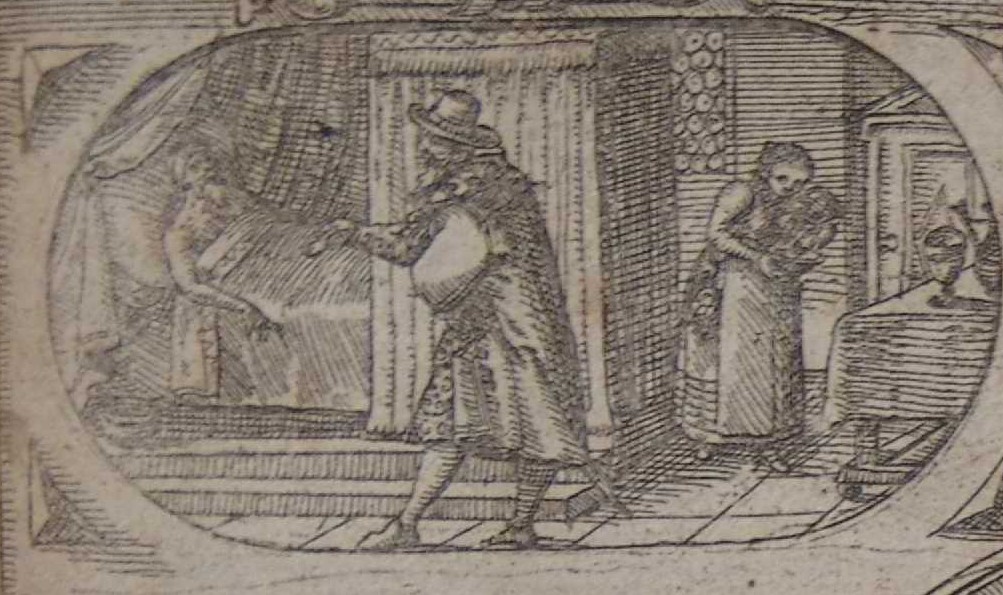
At the heart of Lapasse’s physiology lies a force-based understanding of reality where matter is merely the inert substrate animated by dynamic principles. He argues that the properties of all bodies, from a stone to a human bone, derive not from their atomic composition but from the specific molecular arrangements governed by directional forces—a concept that dissolves the artificial boundary between inorganic chemistry and organic life.
Lapasse establishes a hierarchy of life-forms ascending from mineral to vegetable to animal to human, each level incorporating and transcending the forces of the level below. At each stage, physical and chemical forces are dominated by superior forces: vital forces in organisms, instinctive forces in animals, and psychic forces—reason, will, and love—in human beings. The vital force itself is not a mysterious entity but a complex resultant emerging from the simultaneous action of three distinct orders: physical-chemical forces, functional-organic forces, and instinctive forces.
Health is defined as the equilibrium of these forces, while disease represents a perturbation or excess within this triad. This leads directly to his conception of the triple human constitution: material life governed by physics and chemistry, instinctive life by vital organic functions, and intellectual life by psychic forces. Lapasse insists that these three levels form an indissoluble unity—”what God Himself has intimately united”—and their separation, whether in theory or practice, invites pathology.
Drawing upon St. Paul’s distinction between anima (principle of life) and spiritus (pure intelligence), Lapasse reconciles the medical traditions of Stahl (psychic vitalism) and Barthez (organic vitalism) by recognizing a third, superior principle: the bundle (faisceau) of all forces acting as one simultaneous whole.
The chapter advances a profound law of universal affinity that operates identically across all orders of existence—from chemical combination to biological symmetry to instinctive attraction to human passion—demonstrating connexities (systematic correspondences) among forces that science has hitherto studied in isolation. This permits a unified therapeutics based upon homogeneous assimilation: the organism can repair its depleted forces by appropriating forces of the same nature from nutrition, environment, sleep, exercise, intellectual communion, and spiritual practice, provided these are directed by intelligence and will.
Furthermore, Lapasse introduces a moral dimension to etiology, suggesting that sin and vicious habits disrupt the spiritual order, thereby shortening the natural human lifespan, which he calculates via the law of growth to be between 150 and 200 years. The brevity of life and the multiplication of disease originate in the disruption of spiritual order—first by primordial sin, then by the diluvian catastrophe, and continuously by individual and collective vicious habits.
From these premises, a comprehensive framework for expanded, holistic medicine emerges. A clinician following Lapasse would evaluate not just organ integrity but also the quality of instinctive functions like sleep and digestion, and the coherence of the patient’s intellectual and moral life. Symptoms in one domain may originate in another; for instance, a loss of vital resistance may allow chemical forces to become destructive, much like gastric juice perforating the intestines after death.
Therapeutic modalities are tailored to the specific force level: nutritional and environmental interventions for the physical body; sleep therapy and instinctive re-education for the vital body; and cognitive, relational, and spiritual practices for the psychic body. The guiding axiom is homogeneous assimilation: the physician helps the patient appropriate forces from nature, art, and relationship that resonate with their specific vital needs.
Ultimately, the Lapassian clinic rejects the fragmentation of modern science, viewing physics, chemistry, and biology as a unified study of forces. It seeks the connexities between emotional trauma and digestive failure, or between moral conflict and insomnia, employing a synthesis of material, vital, and psychic therapies simultaneously. The physician’s role is not merely to prescribe but to participate, using their own harmonized vitality to direct natural forces toward the patient’s restoration.
The esoteric dimension is not an addendum but the very foundation, preventing medicine from devolving into a materialist mysticism that seeks the secret of life in chemical formulas rather than in the living connectivity of forces.
*
Appendix 2
The Viscount as an archetypal
‘Rosicrucian Physician’
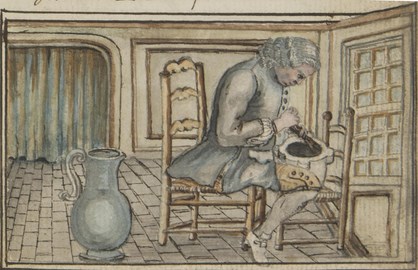
Although there is no undeniable factual proof that Viscount de Lapasse founded a Rosicrucian order in 1850, a close examination of biographical evidence and doctrinal parallels suggests that he emerges as an archetypal ‘Rosicrucian Physician’ in the precise sense intended by the Fama Fraternitatis, the Confessio Fraternitatis, and the Chymical Wedding of Christian Rosenkreutz. We find that in 1831, the viscount sojourned in Palermo, which was a great center for the ancient classical medicine, which still maintained notable archives and libraries. He later returned to France in 1842, to resume his medical practice with the distinctive commitment to curing the sick for free.
This adherence to gratuitous healing aligns perfectly with the first and most defining article of the Rosicrucian Brotherhood, which mandated that members profess nothing other than curing the sick without charge.
Furthermore, Lapasse integrated seamlessly into secular society without adopting special monastic habits, and while he maintained secrecy regarding his curing methods, he eventually revealed his medical-scientific doctrine in the Essai of 1860, fulfilling the manifesto’s cycle of secrecy followed by public revelation.
The doctrinal content of Chapter XIII of his Essai mirrors the specific reforms called for in the Rosicrucian manifestos. The Fama Fraternitatis demands a general reformation of the world through a recovery of ancient wisdom received by Adam, and Lapasse’s text performs exactly this by restoring the primordial unity of matter and force, presenting it not as a new invention but as a recognition of divine truth found in Genesis.
Like the Brethren who studied physics, mathematics, and magic alongside the Cabala, Lapasse synthesizes these disciplines, unifying physics and chemistry while explaining the ‘magic’ of the vital force as a lawful resultant.
He explicitly rejects the vulgar alchemy of gold-making, focusing instead on the transmutation of forces and the conservation of life, which echoes the Confessio’s promise of health and inner calm to those not blinded by greed.
His triple constitution of man serves as a ‘fortress of truth’ against both materialist reductionism and theological superstition, structured much like the initiatory narrative of the Chymical Wedding, where the reader is led through progressive revelations from the cosmos to the inner nature of humanity.
Lapasse’s work embodies the specific medical doctrines of the Rosicrucian tradition, particularly the Paracelsian heritage where the archeus is reinterpreted as the force presiding over functions and the vital force as the mumia or life-essence.
His practice of healing gratis was not merely charity but a spiritual economy, reflecting the belief that health is a divine gift to be shared rather than a commodity. In this light, his Essai functions as a public Fama, inviting the educated to unite in a scientific and spiritual reform of medicine.
He goes beyond mere emulation of the manifestos by offering doctrinal innovations within the tradition, such as a rigorous phenomenology of forces that are measurable and therapeutically manipulable. He systematizes the esoteric hint of extended life into a calculable natural limit of 150 to 200 years, attributing the failure to reach this span to avoidable moral and vital causes.
Therefore, Viscount de Lapasse stands as an ideal & prototypal ‘Rosicrucian Physician’ in the most rigorous doctrinal and archetypal sense. Practicing the art of free healing, and authoring a treatise that systematically unfolds the triple wisdom of physics, alchemy, and theology, he fulfills the promise of the manifestos.
His Essai sur la Conservation de la Vie is not merely a medical text but a Rosicrucian treatise in its own right, revealing the connexities between matter and spirit, force and will, and health and holiness. It offers a path toward the ‘divine and humane general reform’ envisioned by the archetypal Brethren, accessible to the physician yet resonant with the Primordial Tradition.
*
Coming next
A Little Louis-Charles-Edouard, Viscount of Lapasse Sampler:
Selections from ‘De La Conservation de la Vie’ (1860) – Part 3-
‘Action of the Vital Principle upon the body‘ (Chapter IX).
***
Related Articles

Leave a Reply