
Circle of Transmission: The Living Loom
A Little Johannes Buxtorf the Younger Sampler – Part 1: Moses ben Maimon’s ‘Epistle upon Astrology’ & The Fascinating Buxtorf Connection
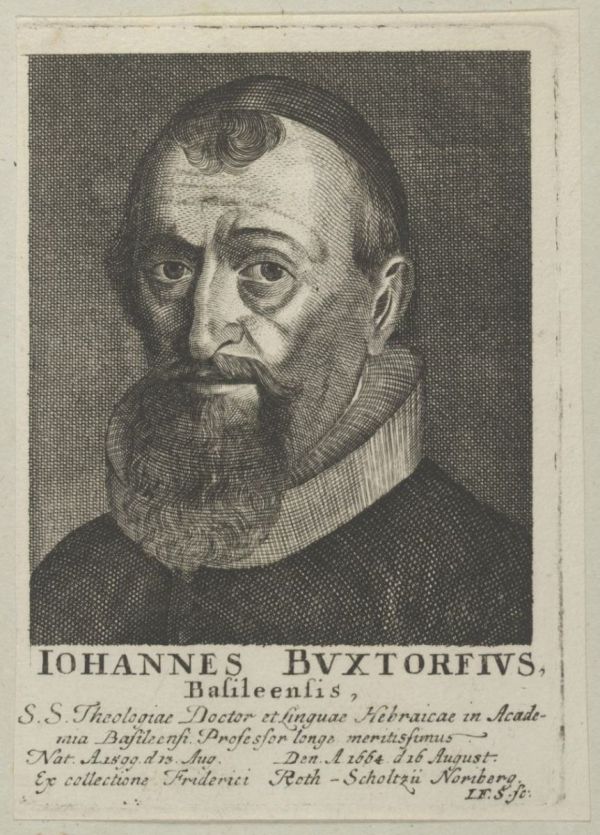
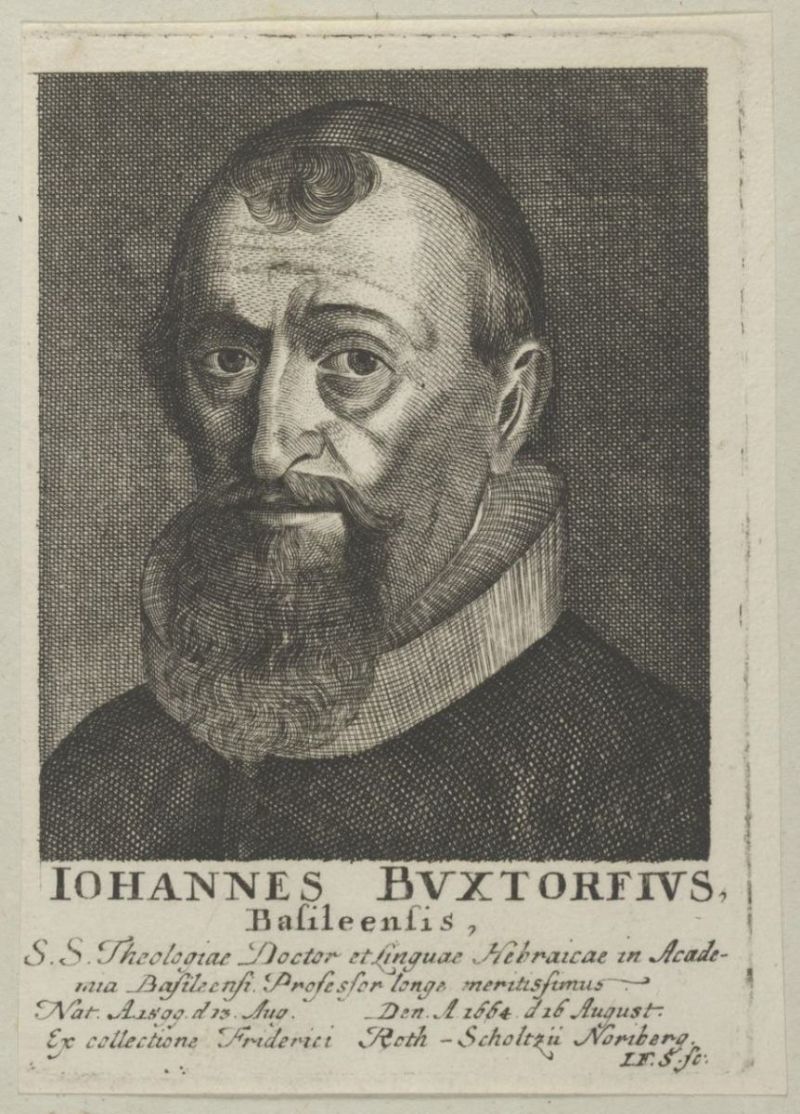
Johannes Buxtorf the Younger, a portrait by L.F. S. (?),
in the collections of the Münster-LWL Museum of Art and Culture
(Westphalian State Museum).
Translation of the portrait’s legend:
Johannes Buxtorf of Basel, Doctor of Sacred Theology and Professor of the Hebrew language at the University of Basel, most deserving. Born at Basel on 13 August 1599 . Died on 16 August, in the year 1664. From the collection of Friedrich Roth-Scholtz of Nuremberg.
*
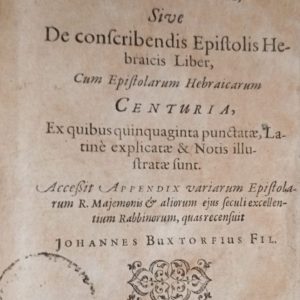
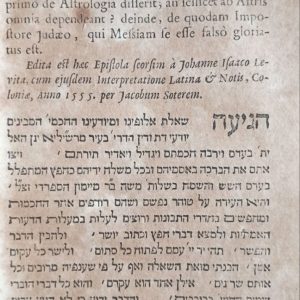
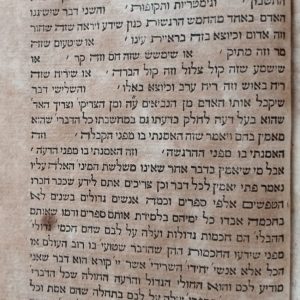
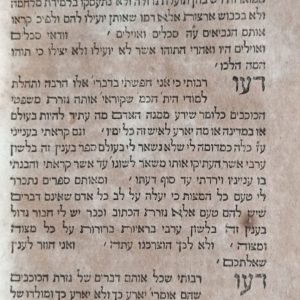
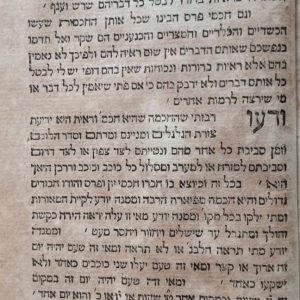
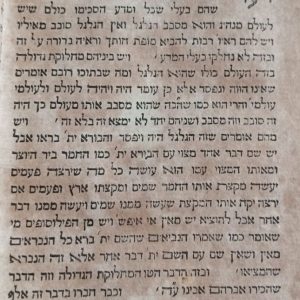
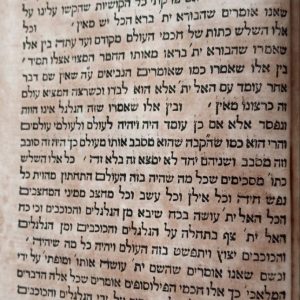
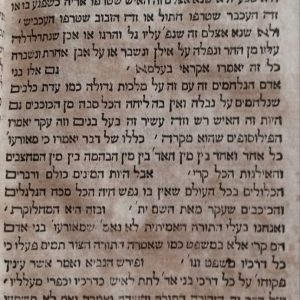
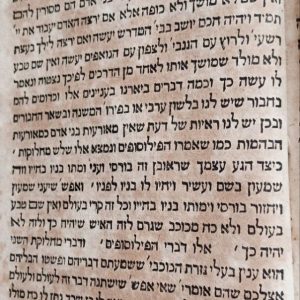
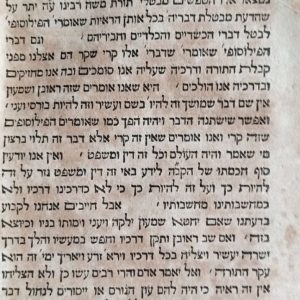
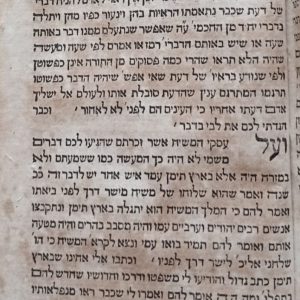
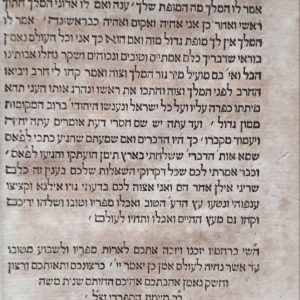
Today’s sharing from the Blue House of Via-HYGEIA is the first instalment of a sampler series dedicated to the memory of the Buxtorf father and son. We begin here with an epistle by Moses ben Maimon (1138–1204) sent to the Jewish community of Marseille, France. He is commonly known as Maimonides & also referred to by the Hebrew acronym Rambam. This letter is found in the second part of the 1629 ‘Institutio Epistolaris Hebraica‘, published in Basel by Johannes Buxtorf the Younger. From page 444 to 454.
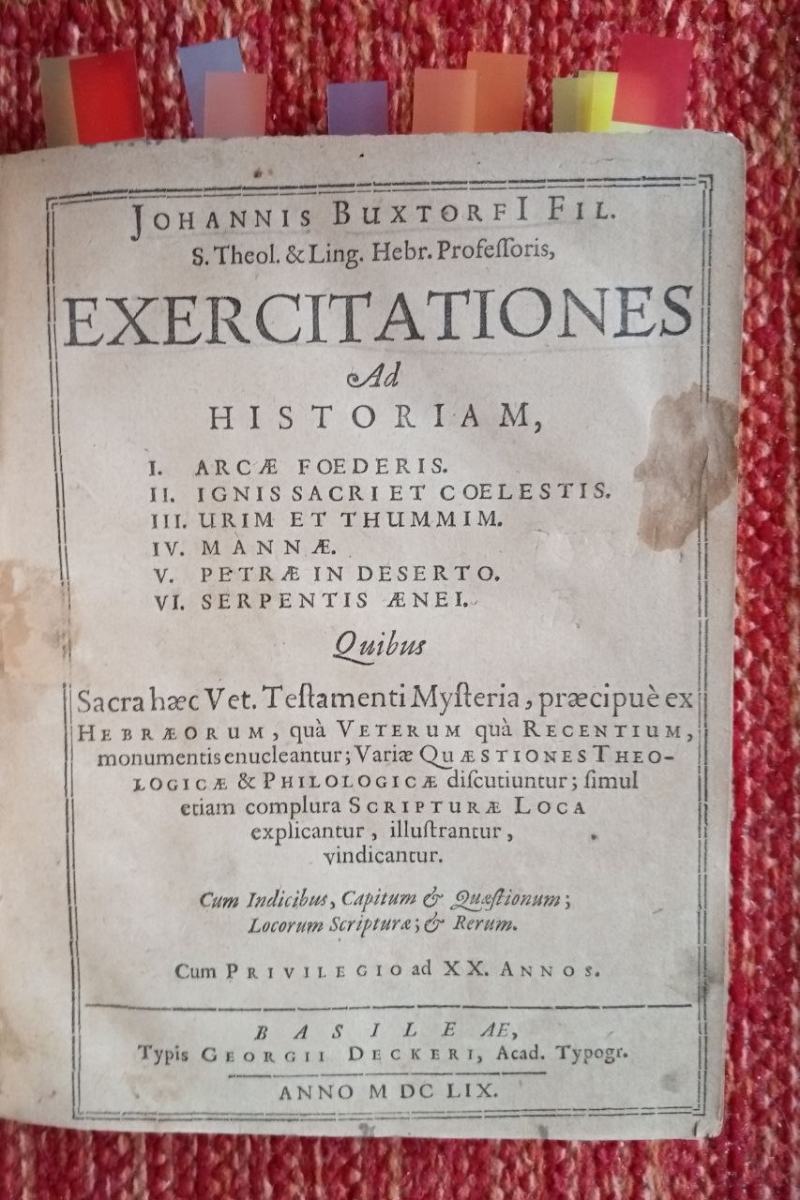
Sampler part 2, will present Johannes Buxtorf the Younger’s other seminal work, the 1659 ‘Exercitationes ad Historiam‘ and offer the translation of part III, chapter 1: ‘Upon Urim & Thummim.
**
Part I. A Contextual Introduction
in two parts:
1. The Buxtorf Dynasty
Johannes Buxtorf, with father and son together forming one of the most important learned dynasties of Christian Hebraism, stands at the very heart of early-modern European engagement with Hebrew, Aramaic, and rabbinic literature. The title page you shared belongs to the Institutio Epistolaris Hebraica, published in Basel in 1629 by Johannes Buxtorf the Younger (1599–1664). To understand the background of this work, it is helpful to look at both the father, Johannes Buxtorf the Elder (1564–1629), and the son, because their scholarly projects are deeply intertwined.
Johannes Buxtorf the Elder (1564–1629):
“Rabbi of the Christians”
Buxtorf the Elder was one of the greatest Hebraists and Christian readers of rabbinic literature in the early seventeenth century. His achievements were foundational. In the field of rabbinic philology and lexicography, his ‘Hebrew–Chaldaic–Rabbinic Lexicon‘ (1607; revised 1615) became the standard Christian reference for Hebrew, Aramaic, and rabbinic usage for two centuries. He insisted—against many contemporaries—that full mastery of Hebrew required immersion in rabbinic sources like the Talmud, Midrash, responsa, and later commentaries, and he learned a significant amount from direct contact with the Jewish community of Basel and its scholars.
As an editor and interpreter of Jewish tradition, Buxtorf edited or translated works of grammarians and Masoretic authorities, including David Kimḥi (Radak), Eliyahu Levita (though often with polemical intent, especially in debates over the antiquity of vowel-points), Abraham de Balmes, and Menaḥem di Lonzano, among others. His most famous and controversial treatise was ‘Tiberias sive Commentarius Masoreticus‘ (1620), which defended the divine antiquity of the vowel points and Masoretic accents—a major theological question for Protestants. He was truly a bridge between Christian and Jewish scholarship, remarkable for learning directly from Jewish informants, collecting vast manuscript material, and producing some of the first systematic Christian introductions to Jewish texts such as the Talmud, Midrash, and medieval grammatical treatises. He died in 1629.
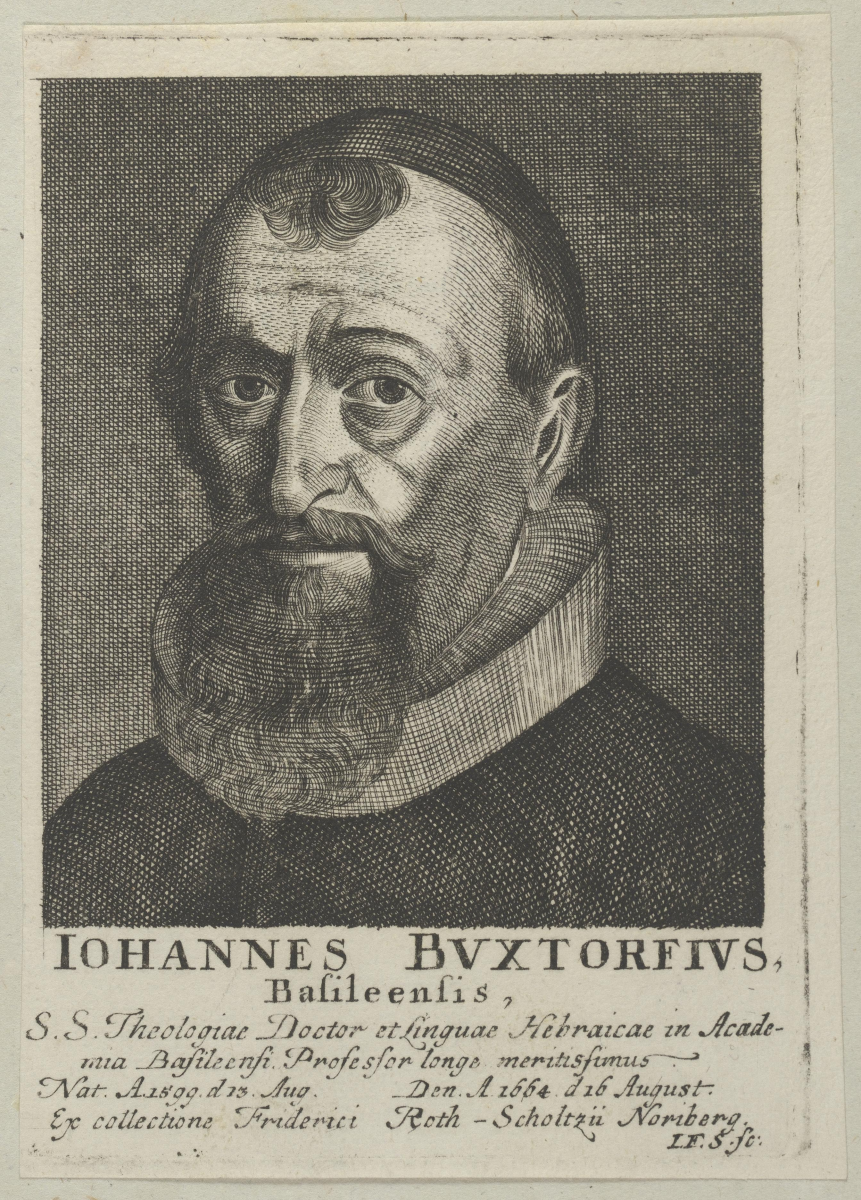
Johannes Buxtorf the Younger (1599–1664)
The son continued almost all his father’s projects, editing many of his manuscripts and expanding upon them. In his role as Professor of Hebrew at Basel, his achievements included editing the ‘Biblia Rabbinica‘ (2nd ed., 1618–1619) and authoring an expanded edition of ‘Synagoga Judaica‘, a description (and sometimes polemical critique) of Jewish ritual life. He also continued and defended the family position in the debate over vowel points against Louis Cappel. He was known for producing more systematic, pedagogical works than his father, such as grammars, introductions, and practical manuals.
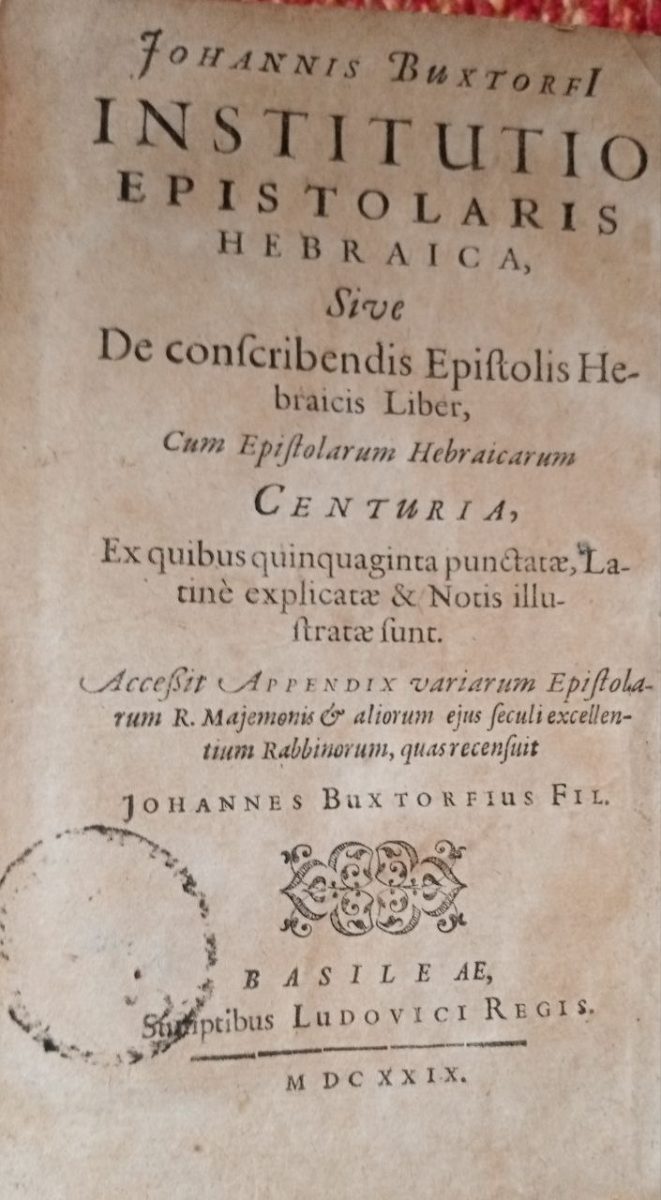
Background of the ‘Institutio Epistolaris Hebraica’ (Basel, 1629)
This work is by Johannes Buxtorf the Younger, printed the same year his father died, and it reflects several important intellectual currents. Firstly, it responded to a growing Christian interest in Hebrew letter writing. Beginning in the late 16th century, Protestant universities increasingly wanted students capable of practical Hebrew—especially for reading rabbinic responsa, interacting with Jews, and studying biblical philology. Consequently, handbooks appeared that taught how to compose Hebrew letters, including typical openings and closings, idiomatic formulae, and examples based on real rabbinic correspondence, with Buxtorf’s book being one of the earliest systematic manuals for this purpose.
Secondly, the book adapted the model of humanist epistolary handbooks to Hebrew. Renaissance education placed enormous value on the art of letter writing (Latin epistolographia), and Buxtorf adapted this tradition by offering rules for style and structure, forms of salutation and blessing, and examples reflecting authentic Jewish usage, complete with interlinear transliteration, Latin translation, and copious notes explaining rabbinic idioms. It is thus both a pedagogical manual and a window into Jewish epistolary culture.
Thirdly, the work was made possible by the Buxtorf family’s unparalleled access to Jewish correspondences. They had large collections of Hebrew letters from rabbis, responsa, and examples of medieval and early-modern Jewish private correspondence. The Centuria of fifty annotated model letters in the book draws from this manuscript material, which was pioneering; while Christian Hebraists usually studied Scripture and medieval grammarians, Jewish letter-writing as a living practice was rarely presented in print.
Finally, the Appendix, which includes letters of Maimonides and other rabbis, was a significant addition. The title page notes the ‘Appendix variarum Epistolarum R. Maimonis & aliorum eius seculi excellentium Rabbinorum’, meaning Buxtorf provided Hebrew letters attributed to Maimonides (R. Moshe ben Maimon) and additional letters from medieval rabbis, complete with Latin notes and explanations. The inclusion of Maimonides gave the work prestige and pedagogical depth, and it shows that early-modern Christian scholars were beginning to see rabbinic responsa literature as a historical source, not merely polemical or theological material.
Why This Book Matters
The ‘Institutio Epistolaris Hebraica‘is important for several reasons. It was the first systematic manual of Hebrew letter-writing for Christian students and set the model for later manuals in Germany and the Netherlands. It also serves to preserve Jewish linguistic and social conventions, such as formulae of blessing, honorifics, rhetorical structures, and seasonal greetings, often taken directly from real rabbinic practice. Furthermore, it was part of the larger Buxtorf effort to integrate rabbinic Hebrew into Christian scholarship, which later influenced figures like Carpzov, Schickard, Hottinger, Surenhusius, and the Amsterdam Portuguese Jewish printers, and even indirectly affected the study of early Hasidic epistolary conventions by modern scholars. Lastly, as a historical artifact from the transitional year of 1629—the year the elder Buxtorf died and the younger took over his scholarly legacy—the book holds significant symbolic weight within the Buxtorf dynasty.
Johannes Buxtorf’s influence—both direct and indirect—on Christian Kabbalah and the broader Christian study of Jewish mysticism represents a fascinating paradox. His role was deeply ambivalent; he was simultaneously an anti-Kabbalist yet a foundational figure for the field.
Buxtorf’s Ambivalent Role: Anti-Kabbalist but Foundational
Buxtorf the Elder, and to a lesser but real degree his son, was not a pioneer of Christian Kabbalah in the sense of Pico, Reuchlin, or Knorr von Rosenroth. He was deeply learned in Hebrew and rabbinic literature but remained suspicious of post-biblical mysticism, especially speculative Kabbalah. He was often polemical when dealing with Zoharic claims of antiquity and was committed above all to philological accuracy and linguistic purity. And yet, because he created a rigorous infrastructure of Hebrew–Aramaic philology, later Christian Kabbalists and historians of mysticism came to rely entirely on his tools. Thus, Buxtorf influenced Christian Kabbalah largely by empowering others, even when he himself objected to its core doctrines.
Key Areas of Influence
Buxtorf’s influence manifested in several key areas. First, he provided the essential lexicographical foundations for reading Zoharic Aramaic. His dictionaries—especially the ‘Lexicon Hebraicum et Chaldaicum‘ and the ‘Lexicon Chaldaicum, Talmudicum et Rabbinicum‘—became the indispensable tools for Christian readers tackling the Zohar, the Baḥir, Midrashic literature with mystical themes, and Merkavah traditions embedded in the Talmud, Hekhalot texts, and Midrashim. Even Christian kabbalists who opposed Buxtorf’s theology admitted they could not do without his dictionaries. For instance, Knorr von Rosenroth’s ‘Kabbala Denudata‘ (1677–84), the greatest Christian Kabbalist compendium, presupposes Buxtorf’s lexical work entirely. In this way, Buxtorf unintentionally standardized how Christians read the Zohar for 200 years.
Second, his detailed description and mapping of rabbinic literature gave Christian scholars a clear guide to where Jewish mystical themes were located. Through his introductions to the Talmud, Midrash Rabbah, commentarial traditions, and masoretic treatises, Buxtorf provided a genealogy of Jewish literature, a chronological discipline, and a sense of which texts were authoritative and which were marginal. This was new; before Buxtorf, Christian Kabbalists often read Jewish mysticism in isolation, with little sense of its textual context. His work directly shaped the way 17th-century theologians and Christian esotericists contextualized the Kabbalah historically.
Third, his battle over the antiquity of the vowel points had profound, if indirect, implications for Christian Kabbalah. Buxtorf’s fierce argument that the vowel points were Sinaitic and divine became a major battlefield. This mattered because kabbalistic cosmology, gematria, and theosophy rely heavily on the spiritual meaning of letters, textual permutations, and numerical correspondences. If vowels were later human additions, as his opponent Louis Cappel argued, the entire mystical edifice based on vocalization was weakened. By defending the divine origin of the points, Buxtorf helped protect the theological possibility of a mystical Hebrew cosmology and maintained the idea of Hebrew as a revealed language with embedded mysteries. Thus, even though he personally rejected most kabbalistic speculation, his arguments preserved the status of Hebrew as a sacred symbolic architecture, which Christian Kabbalists could then exploit.
Finally, through his preservation and transmission of Jewish sources, Buxtorf ensured that later Christian Kabbalists had better access to authentic rabbinic citations, accurate quotations from Midrash, reliable readings of Targumic material, and a refined awareness of the difference between Zoharic Aramaic and Talmudic Aramaic. His philological rigor meant that Christian esotericists encountered Jewish mysticism in something closer to its own idiom, unintentionally purifying the field from the gross misunderstandings that were common in the 16th century.
Buxtorf’s Influence on Specific Later Figures
This infrastructural influence is evident in the work of major later figures. Christian Knorr von Rosenroth (1636–1689), the editor of the ‘Kabbala Denudata‘, used Buxtorf’s dictionaries, grammar, and bibliographic descriptions constantly; without Buxtorf, his great work would not have been possible. Similarly, Henry More and the Cambridge Platonists, in their engagement with the Zohar and Lurianic themes, depended on Buxtorfian Hebrew scholarship to distinguish what they saw as ‘true Kabbalah‘ from superstition. Even Gottfried Wilhelm Leibniz, though not a Kabbalist himself, studied Buxtorf’s lexicons and grammar, and his reflections on the ars characteristica (an ideal language) were influenced by the conceptual universe opened by Buxtorf’s rigorous treatment of Hebrew as a logical-symbolic system. Later Pietists and philologists like Carpzov, Schickard, and Hottinger, who nourished the soil for Christian theosophical Kabbalah, transmitted Buxtorf’s textual tools even when they opposed Kabbalah itself.
Indirect Influence on Christian Theosophy and Mysticism
This influence extended indirectly into Christian theosophy and mysticism. The Buxtorfian world deeply shaped the Protestant scholars who later influenced mystical thinkers like Johann Georg Gichtel, Friedrich Christoph Oetinger, and the later interpreters of Jakob Böhme. These thinkers approached Hebrew mystically, but they always did so through the philological-historical framework first established by Buxtorf. Furthermore, in a final irony, even while rejecting its theology, Buxtorf insisted on the Zohar’s importance as a major Jewish text. This academic recognition prevented the Zohar from disappearing into obscurity in Christian libraries, meaning Buxtorf inadvertently helped preserve the very mystical corpus he distrusted.
Why Buxtorf Matters for the History of Christian Kabbalah
In conclusion, Buxtorf did not contribute new mystical interpretations himself. His influence is instead structural and infrastructural. He standardized the language through which Christian Kabbalists could read Jewish mysticism, transmitted key texts and preserved the Jewish canon in its integrity, and defended the sanctity and antiquity of Hebrew letters—a concept crucial for letter-based mysticism. He gave Christian readers a map of Jewish literature that allowed the Zohar, Midrash, and Kabbalah to be contextualized rather than fantasized, and in doing so, he purified the field and made possible the scholarly sophistication of later Christian Kabbalah in the 17th and 18th centuries. In short, Buxtorf was the philological architect whose tools enabled deeper Christian engagement with Jewish mysticism, even though he personally disliked the mystical superstructure that others built upon them.
*
2. Moses ben Maimon
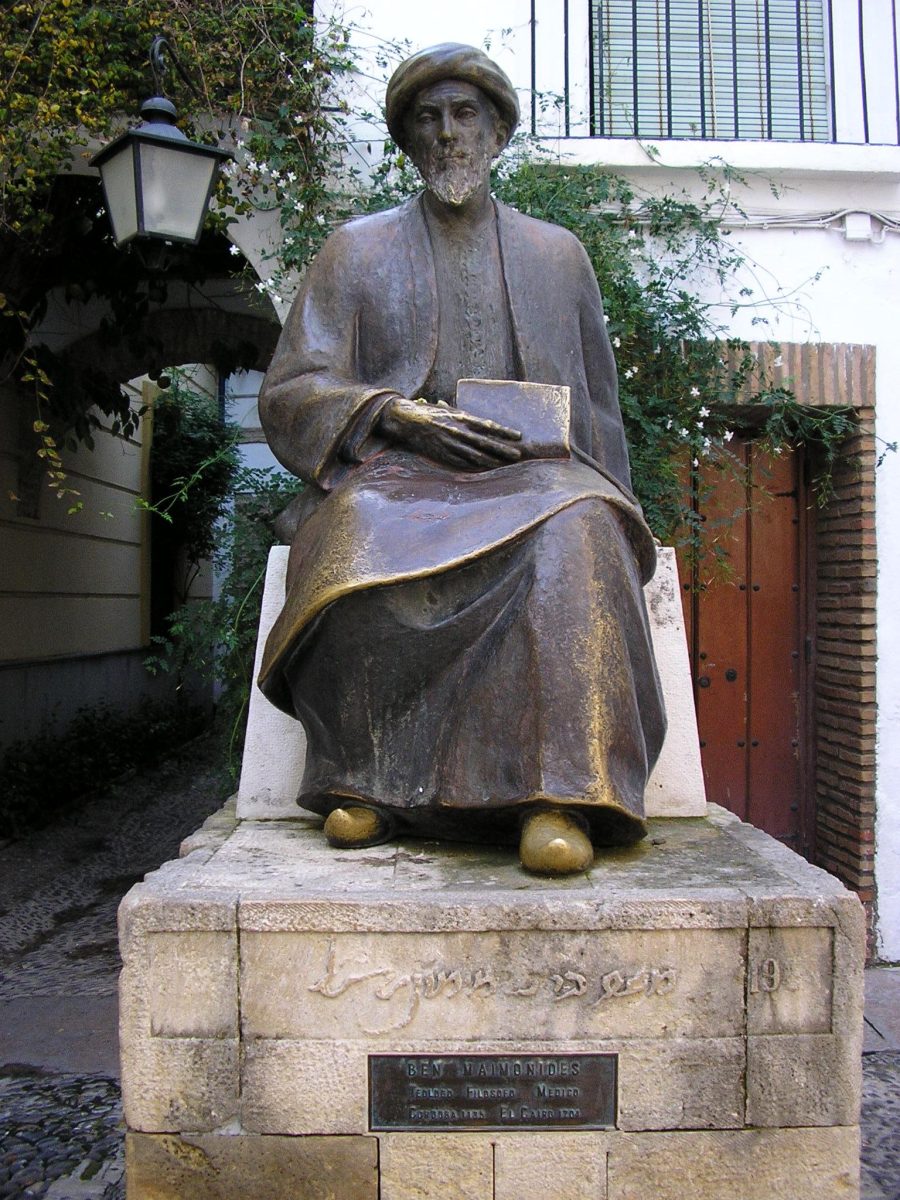
Moses Maimonides (1138–1204), known in Hebrew as Rambam, stands as a colossal figure in Jewish thought, whose influence radically reshaped medieval philosophy and continues to resonate today. Born in Córdoba, Spain, but spending much of his life as a refugee and eventual court physician in Egypt, Maimonides synthesized the rigorous legal tradition of Rabbinic Judaism with the systematic philosophy of Aristotle, creating a body of work that serves as a cornerstone for both Jewish law and intellectual history.
The Pillars of His Work:
Code, Philosophy, and Medicine
Maimonides’ legacy rests on three foundational pillars, each a monumental achievement in its own right. His first great contribution was the ‘Mishneh Torah‘ (c. 1180), a comprehensive code of Jewish law. Prior to this work, navigating the vast sea of the Talmud and its commentaries was a formidable task reserved for scholars. The ‘Mishneh Torah‘ systematized the entire corpus of Jewish law, organizing it into a logical structure, written in a lucid and accessible Hebrew. This work was revolutionary; it was not merely a digest but a authoritative restatement, aiming to make the law knowable to every Jew. Its comprehensiveness and clarity ensured it became an indispensable reference, though its attempt to sidestep the Talmudic dialectical process also drew criticism from some quarters.
His second, and perhaps most famous, pillar is ‘The Guide for the Perplexed‘ (c. 1190). Written in Judeo-Arabic and structured as a letter to a brilliant student troubled by the apparent conflict between religious tradition and Aristotelian philosophy, the ‘Guide‘ is a profound philosophical masterpiece. It seeks to reconcile faith and reason, arguing that the truths of philosophy and the truths of the Torah are ultimately one and the same. Within its pages, Maimonides tackles the most challenging theological issues: he develops a sophisticated negative theology, asserting that God can only be described by what He is not; he provides rational interpretations of biblical anthropomorphisms and commandments; and he explores the limits of human knowledge of the divine. The ‘Guide‘ was intended for the intellectual elite, and its often-esoteric and dialectical style has spawned centuries of interpretation.
The third pillar of his work was his career in medicine. As a physician to the court of the Vizier in Cairo, Maimonides wrote several influential medical treatises in Arabic, blending classical Greek knowledge with his own practical experience. Works like his ‘Aphorisms of Moses ben Maimon‘ and ‘Medical Treatise on Hemorrhoids‘ were studied by both Jewish and Christian scholars for centuries. His medical practice informed his philosophical outlook, emphasizing the health of the body as a prerequisite for the enlightenment of the mind and the soul.
The Core of His Philosophical Revolution
Maimonides’ ideas represented a radical intellectual shift. Central to his thought was the harmonization of reason and revelation. He asserted that where a biblical passage conflicts with an empirically demonstrarable truth, it must be interpreted allegorically. This conviction in a rational universe created by a rational God placed intellectual comprehension at the center of religious life.
Furthermore, he formulated the famous ‘Thirteen Principles of Faith‘, a seminal attempt to define the core, non-negotiable tenets of Judaism. These principles, which include the belief in God’s unity, incorporeality, the prophecy of Moses, and the coming of the Messiah, were popularized in his ‘Commentary on the Mishnah‘ and later in the liturgical poem ‘Yigdal‘. This codification of dogma was a novel concept in Judaism, which had traditionally emphasized legal practice over doctrinal creed, and it provided a clear theological framework that continues to shape Jewish liturgy and thought.
A Contested but Enduring Legacy
The impact of Maimonides was immediate, profound, and fiercely debated. Within the Jewish world, his works ignited the Maimonidean Controversy, a series of heated disputes that lasted for generations. Traditionalists, particularly in parts of Europe, feared that his Aristotelian rationalism would lead to the neglect of traditional Torah study and even heresy. At one point, his books were publicly burned by Jewish opponents. Yet, despite this opposition, his authority as a legal decisor (posek) became nearly unassailable, and the ‘Mishneh Torah‘ remains a primary source for Jewish law to this day.
His influence extended far beyond the Jewish community. Latin translations of The Guide for the Perplexed profoundly shaped medieval Christian scholasticism. Thinkers such as Thomas Aquinas, Albertus Magnus, and Duns Scotus engaged deeply with his ideas, particularly his proofs for God’s existence and his views on the relationship between faith and reason. Aquinas’s famous Five Ways, for instance, bear the clear imprint of Maimonidean argumentation. In the Islamic world, his philosophical works were also studied and respected.
In the modern era, Maimonides’ legacy is multifaceted. For Jewish Enlightenment (Haskalah) figures, he was a hero of rational religion. For more traditional communities, he remains the definitive codifier of Jewish law. For contemporary philosophers, he is a perpetual source of insight into the challenges of religious language, the problem of evil, and the pursuit of a life lived by both wisdom and law.
Why Maimonides Matters
In summary, Maimonides matters because he successfully built bridges between disparate worlds: between the Talmudic academy and the philosopher’s study, between Jewish particularism and universal reason, and between the pious practice of law and the lofty pursuit of intellectual perfection. He provided a structured legal system that empowered the common person and a philosophical guide that challenged the sophisticated thinker. His career as a physician exemplified his holistic view of human flourishing. As a result, Maimonides stands not merely as a historical figure, but as an enduring architect of the Jewish intellectual and spiritual tradition, whose works continue to guide, perplex, and inspire.
*
Part II, the Text:
‘A Epistle upon Astrology‘
A Short Summary of the Letter
Maimonides writes to the sages of the Jewish community of Marseille in response to their questions, particularly about astrology and about a false messianic figure in Yemen.
He explains that:
• One must believe only in matters grounded in demonstration, in sense-perception, or in the transmission of the prophets.
• Astrology (‘the sayings of the ḥoverei ha-shamayim‘) is nothing but folly, rejected by reason, by scientific knowledge, and by the Torah itself.
• The philosophical sciences (astronomy, mathematics, physics, metaphysics) are genuine wisdom; but the belief that stars determine human fate is ignorance inherited from Chaldeans and Egyptians.
• Divine Providence governs humanity, and the misfortunes or successes of people are never ‘chance’, nor determined by constellations, but by the justice of God.
• He warns against being misled by isolated aggadic statements or ancient books.
• He then recounts the full story of the Yemenite pseudo-prophet who claimed to be the forerunner of the Messiah, and how Maimonides refuted him in writing; the man was eventually executed by an Arab ruler.
• The letter concludes with Maimonides urging them to uproot the ‘tree of error’ and to plant instead the ‘tree of knowledge’ and the ‘tree of life’.
*
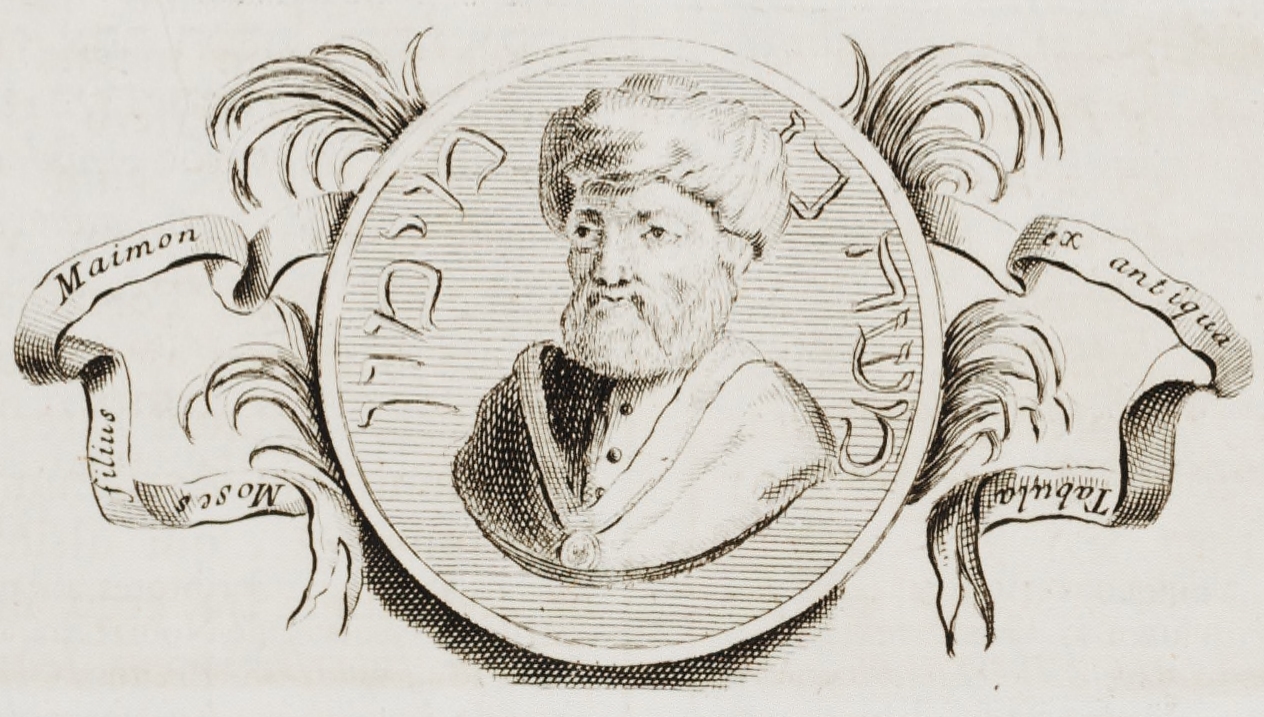
The Letter
A question has reached us from our chiefs and beloved companions, the wise and understanding, knowers of religion and judgment, who dwell in the city of Marseille—may the Lord protect them, increase their wisdom, and magnify and exalt their Torah. May He set blessing in their storehouses and in all the work of their hands, according to the desire of the one who prays for them—Moses son of Maimon, the Spaniard, of blessed memory.
Your letter testifies to the purity of your souls: that you pursue the light of wisdom, search out the chambers of understanding, seek to ascend the steps of true knowledge, and desire to discover words of delight and writings of uprightness. May the hand of the Lord be with you, to open every sealed matter and to make straight every crooked one.
I prepared myself to answer this question, although its branches are many. Yet all the branches return to one root, and that root is the sayings of the astrologers (ḥoverei ha-shamayim) and those who divine by the stars. It is known to you that the composition I wrote on the judgments of the Torah, which I called Mishneh Torah, has not yet reached your hands. For if it had, you would already know my opinion regarding all the matters you asked, for I explained the entire subject in the Laws of the Foundations of the Torah and the Laws of Idolatry. But it seems to me that a portion of this response will reach you, as it has already spread in Sicily, and as it has spread in the East and West, in Yemen, and in many places.
Know, my masters, that it is not fitting for a person to believe except in one of three categories. The first: a matter for which there is clear demonstrative proof from the intellect, such as arithmetic, geometry, and the calculation of the seasons. The second: a matter apprehended through one of the five senses, such as seeing that this is black and that is red; tasting that this is bitter and that is sweet; touching that this is hot and that is cold; hearing a clear sound or a confused noise; smelling a foul odor or a pleasant fragrance. The third: a matter received from the prophets, peace be upon them, and from the righteous. A man of understanding must distinguish in his mind everything he believes, saying: ‘This I believe because of tradition; this because of sense-perception; and this because of rational demonstration‘.
But he who believes in anything outside these three categories is included in the verse: ‘The simpleton believes every word‘ (Proverbs 14:15). You must further know that fools have composed thousands of books, and many aged men—not wise men—have wasted their days studying those books, imagining their vanities to be exalted wisdom, and thinking themselves sages because they mastered those false sciences. This is the great sickness and grievous malady: that whatever is found written in books is imagined at first glance to be true, especially if the books are ancient; and if many people have discussed them, the hasty mind leaps to say: ‘Would the scribes’ pen have toiled in falsehood?‘ and he imagines them wisdom for no reason.
This misguided belief is what destroyed our kingdom, laid waste our Holy Temple, prolonged our exile, and has brought us to this day. For our ancestors, finding many books of the star-gazers—the very foundation of idolatry—imagined them to be profound wisdom and of great utility, and did not devote themselves to the arts of warfare nor to conquest, but thought those practices would avail them. Therefore the prophets called them fools and dolts, and indeed they were fools, pursuing vanity that neither profits nor saves.
My masters, I have searched greatly into these matters. Indeed, the beginning of my learning was with a sage in the discipline called the Judgment of the Stars, meaning that by it one could know what would occur in the world, in a state, or in the life of an individual. I read every book on this subject in the Arabic language translated from other tongues, until I comprehended them fully and descended to the bottom of their thought. And from those books I came to understand the reasons for all the commandments, for it might come into a man’s heart that they have no reason but the decree of Scripture. I composed a great work in Arabic on that subject with clear proofs for each commandment; but this is not our present concern.
I now return to the matter of your question.
Know, my masters, that all the matters of the astrologers—their claims that ‘such-and-such will happen’, or ‘such-and-such will not happen’, and that the nativity of a man draws him to be thus, and that such-and-such will befall him and not another—are not wisdom at all, but absolute foolishness. I have flawless and clear proofs refuting the foundations of those claims. Never has any sage of Greece, the true philosophers, engaged in this matter or composed a book about it, nor mentioned it in their writings, nor committed the error of calling it ‘wisdom’. Only the Chaldeans, Egyptians, and Canaanites—their ancient religion—held such beliefs. But the philosophers of Greece, who composed works in true wisdom and pursued knowledge in all its branches, strove with clear proofs to uproot all their words, root and branch. Likewise the Persian sages understood that the ‘wisdoms’ of the Chaldeans, Egyptians, and Canaanites were falsehood.
Do not imagine that these matters lack refutation, so that we merely ‘choose not to believe’ in them. I possess clear and decisive proofs against them, and only a simpleton who believes every word, or one who seeks to deceive others, will cling to them.
In contrast, the genuine wisdom—the demonstrable science—is the knowledge of the form of the celestial spheres, their number, their measure, the order of their revolutions, the inclination of each toward the north or the south, their turning to the east or the west, the orbit of every star and its path, and how each proceeds in all these matters. The sages of Greece, Persia, and India composed great works on this noble and abundant wisdom. From it one knows eclipses of the luminaries and their times in every place; the moon’s appearance like a bow, increasing until full and decreasing again; when its whiteness will be seen or not seen; why one day is long or short; why two stars may rise together but not set together; why in one place the day is ten hours, in another fifteen, sixteen, or twenty though it is the same day; why at one latitude day and night are equal perpetually, while in another place a day lasts a month or two or three months, until one finds an entire year consisting of six months of day and six months of night. Many constant phenomena are known through this science. All this is unquestionably true. This is the calculation of the seasons and geometry, which our sages, of blessed memory, called ‘wisdom and understanding in the eyes of the nations’. But the matters of the astrologers are nothing.
I will now set forth for you the chief principles of these matters, which are the secrets of the world.
All the sages of the nations—the philosophers, possessors of intellect and knowledge—agree that the world has a Governor who causes the sphere to revolve, and the sphere does not revolve by itself. They have many proofs and decisive demonstrations for this, and in this matter the knowledgeable do not disagree.
But they dispute concerning the origin and eternity of the world. Their positions fall into three sects:
(1) The majority say that the world is not subject to generation or corruption, but stands as it is, eternal and everlasting. Just as the Creator has eternally caused it to turn, so it has eternally turned; one is not found without the other.
(2) Others say the sphere existed, and the Creator, blessed be He, formed it from an eternally existing matter that exists with Him—like clay in the hand of the potter. From that matter He fashions whatever He wills: sometimes from part of it He makes the heavens, sometimes the earth; sometimes He takes that very part from which He made the heavens and forms something else from it. But to bring forth something from nothing, they say, is impossible.
(3) A third group says, as the prophets said, that the Creator, blessed be He, made everything ex nihilo, and that nothing exists with Him—He alone is, and when He so willed, He brought forth this world from nothing.
On this matter the great controversies revolve, and this was the truth recognized by Abraham our father, peace be upon him.
Thousands of books have been composed with proofs arranged for each view. But the foundation of the perfect Torah is that the Creator, blessed be He, alone is the First and the Last; besides Him there is no God; and He created all things ex nihilo. Whoever denies this denies a fundamental principle and cuts down the planting’.
I composed a great work in Arabic concerning these matters, demonstrating the existence of the Creator, blessed be He, His true unity, His incorporeality, and answering all the objections raised against creation ex nihilo.
Yet despite their dispute about creation, all three sects of philosophers agree on one point:
that everything in the sublunar world—the generation of every living soul, every tree, herb, and mineral—comes through a force that first operates upon the spheres and stars, and from the spheres and stars it flows into this world and becomes all that comes into being. Thus the Holy One, blessed be He, willed it. And just as we say that God performs deeds and miracles through the angels, so the philosophers say that all natural processes in the world are done through the spheres and stars, which they consider endowed with soul and knowledge. All this is true, and I have fully explained that it does not contradict religion; indeed, I found in the Midrashim of our sages, of blessed memory, statements in agreement with the philosophers.
But while the three sects agree about natural causation, they also agree—incorrectly—that the events of individuals are chance: that no decree governs a lion killing a man or a cat killing a mouse; that a stone falling from a mountain upon a man, tree, or another stone is mere accident; that armies fighting over a kingdom are like dogs fighting over a carcass; that wealth, poverty, fertility, or barrenness are random. In sum: individual events are chance, while species and general natural laws follow from the spheres.
But we, adherents of the true Torah, do not say that human events are chance, but judgment. As the Torah says: “The Rock—His work is perfect; all His ways are justice” (Deut. 32:4). And the prophet says that God’s eyes are upon all the ways of man, “to give to every man according to his ways and according to the fruit of his doings.” And the Torah warns us not to ascribe calamities to chance (keri). “If you walk with Me with keri, I will walk with you in the fury of keri.” This is a foundation of our religion: all sufferings that befall in the world are judgments. Our sages said: ‘There is no death without sin, and no suffering without transgression’.
Another foundation: all philosophers admit, as do we, that human acts are in our hands. No constellation compels a person. If he desires to serve the Lord always and dwell in the study-hall, he may; if he desires to pursue violence and lust, he may. Therefore commandments and prohibitions were given. Nature imposes no necessity.
Thus, reason demonstrates that the events of men are not like the events of animals, as the philosophers claimed.
Consider the following: Reuben is a tanner and poor; his sons die in his lifetime. Simon is a perfumer, rich, and his sons live. It is possible that Simon become poor and Reuben wealthy, that Reuben’s sons live and Simon’s die. According to the philosophers, these things are chance; we say they are not chance, but judgment, according to the will of Him who spoke and the world came into being. We do not know the limit of God’s wisdom to determine by what law He decreed this man be thus and that man be thus—’For My thoughts are not your thoughts, nor your ways My ways’, says the Lord (Isa. 55:8). But we must establish in our minds that if Simon sins, he will be punished, become poor, and his sons die; and if Reuben improves his ways and walks uprightly, he will prosper, see children, and lengthen his days. This is the foundation of the Torah.
One must not object: ‘Many have done thus and not succeeded‘. That is no proof. Perhaps a sin caused it, or they received suffering in order to inherit something better.
Our minds cannot grasp the judgments of the Creator in this world and the next. But from the outset we know: all the words of star-gazers are falsehood in the eyes of all who possess knowledge.
I know you may find statements of individual sages in the Talmud, Mishnah, or Midrash that appear to attribute influence to the stars at a person’s birth. Let this not trouble you. One does not overturn established, demonstrated truths because of words of a single sage—perhaps something was hidden from him at that moment, or his words contain a secret, or they were said regarding a particular circumstance. Many verses of the Torah cannot be taken literally; because reason demonstrates literal meaning to be impossible, the Aramaic translator rendered them according to what reason can bear. A man must never cast his reason behind him, for the eyes are in front, not behind.
I have now revealed to you the thoughts of my heart. I turn to the matter of the Messiah, which you mentioned, saying that words from me reached you. The event did not occur as you heard, nor in the East, but in the land of Yemen. A certain man arose—this occurred about a year ago—and claimed that he was the messenger of the Messiah, sent to straighten the way before his coming. He told them that the Messiah would soon be revealed in Yemen. Many people, Jews and Arabs, gathered to him. He led them through the mountains and deceived them constantly, saying: ‘Come with me, let us go forth to meet the Messiah, for he has sent me to prepare his way before him‘.
Our brothers in Yemen wrote me a long letter, informing me of his conduct, his innovations in prayer, and what he used to say. They told me they had seen wonders from him. They asked my judgment. I understood the matter from their words, and recognized that the man was a foolish simpleton, though God-fearing, without any wisdom. Everything they claimed he did or that appeared through him was falsehood.
I feared for the Jews, and I composed for them three pamphlets on the subject of the King Messiah, his signs, and the signs of the time of his appearance, warning them to warn that man lest he perish and cause the community to perish with him.
After a year he was captured, and all who had gathered to him were interrogated. One of the Arab kings, after seizing him, said: ‘What is this you have done?‘ He replied: ‘My lord the king, in truth I acted by the word of the Lord‘. The king asked: ‘What is your proof?‘ He said: ‘My lord the king, sever my head, and afterward I shall revive and rise as before‘. The king said: ‘There is no greater proof than this. If so, I and the entire world will believe your words as true, and that our fathers inherited lies and vanity‘.
Immediately the king ordered a sword brought; they brought it before him. He commanded, and they severed his head, and thus that wretched man was slain—may his death be an atonement for him and for all Israel. Great punishments befell the Jews in many places on his account. And even now some fools there say: ‘He will yet rise from his grave‘.
If you heard that my writing reached Fez, it is possible that the words I sent to Yemen were copied and brought there.
I have told you already that all the particulars of your questions on this subject are all branches of one tree. And I now command you with my opinion: Cut down that tree, and hew off its branches; plant instead the tree of the knowledge of good, and eat of its fruit and its goodness! Stretch forth your hands also to the Tree of Life, eat, and live forever!
May the Merciful One grant us and you to behold its fruit and be satisfied with its goodness, until we live forever. Amen—may the Lord fulfill your will and desire, and the upright longing of your faithful love.
Your brother, who signs again,
Moses son of Maimon, the Spaniard, of blessed memory.
*
Source
An excerpt from
Johannes Buxtorf the Younger’s
‘Institutio Epistolaris Hebraica‘ (Basel, 1629)
*
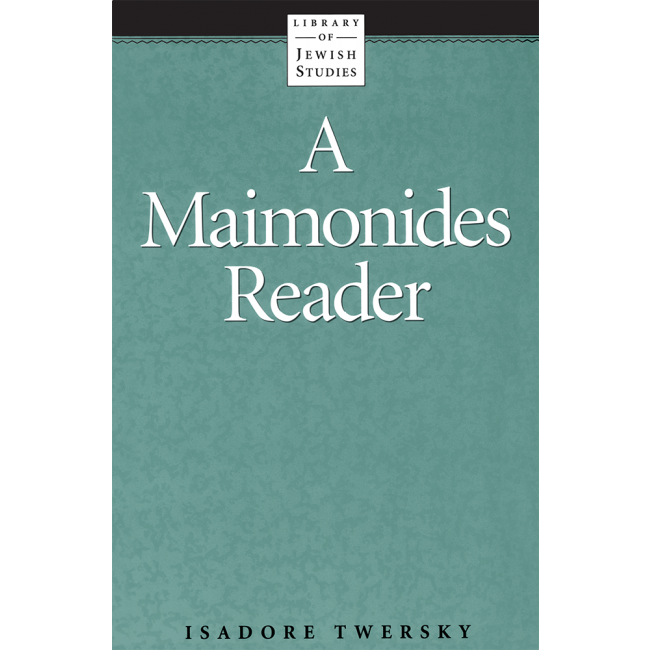
Another English translation
by Isadore Twersky
can be found here
*
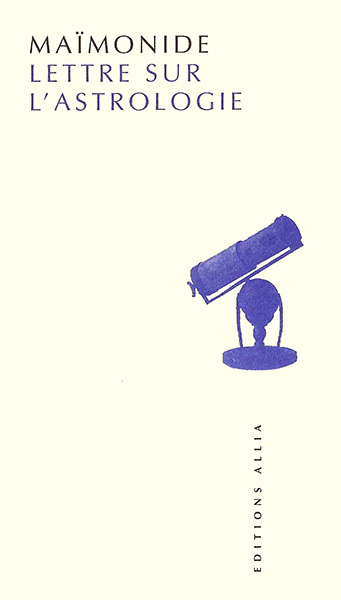
It was also published in a French translation
by René Lévy at Editions Alia.
*
Coming soon:
A Little Johannes Buxtorf the Younger Sampler- Part 2,
will present another of his seminal work,
the 1659 ‘Exercitationes ad Historiam‘,
and offer the translation of part III, chapter 1:
‘Upon Urim & Thummim.
***

Related Articles

Leave a Reply