Today’s sharing from the Blue House is a little musing tracing the evolution of the identification of four metals with four empires—from its origins in a fascinating rabbinic Midrash on Exodus 35:5, through its elaboration in Kabbalah, to its full trans-mutation into the works of early alchemists & Christian kabbalists and later into XVIIIth century esotericists’ sacred loge-dramaturgy.
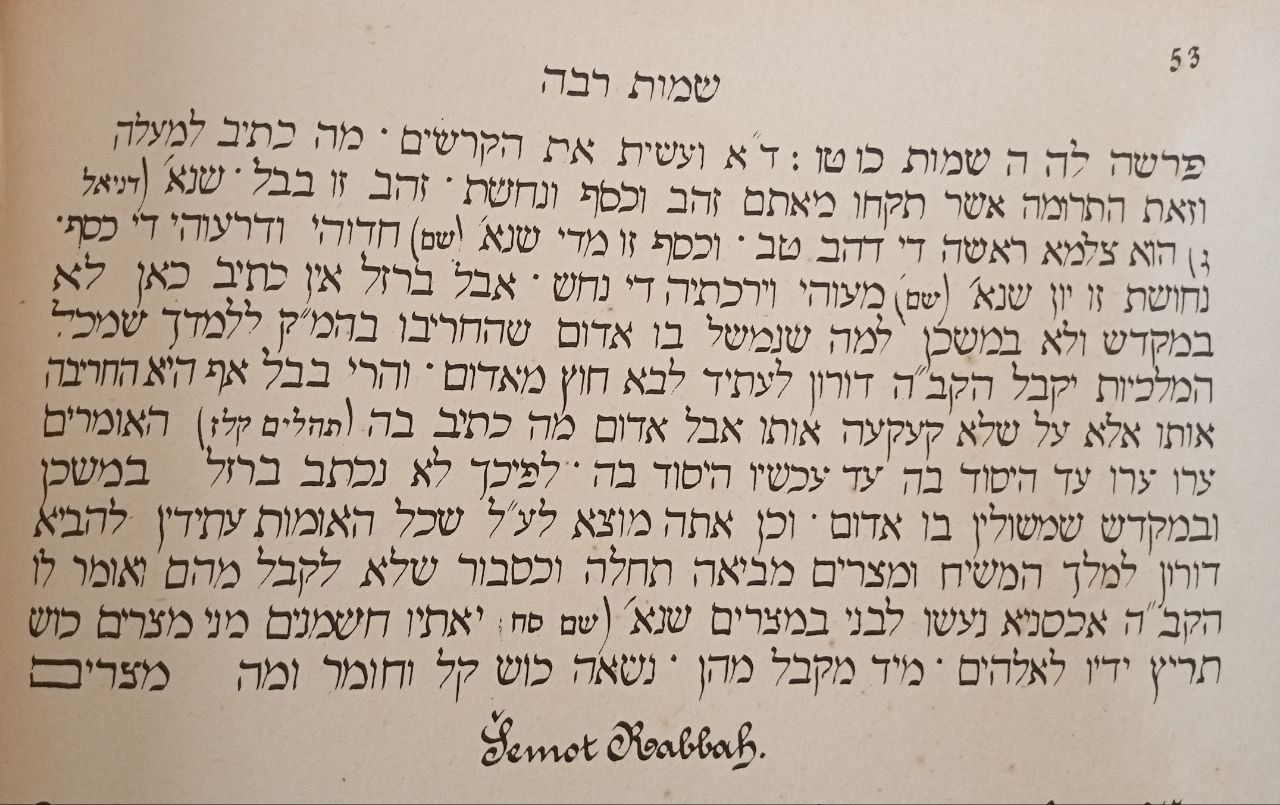
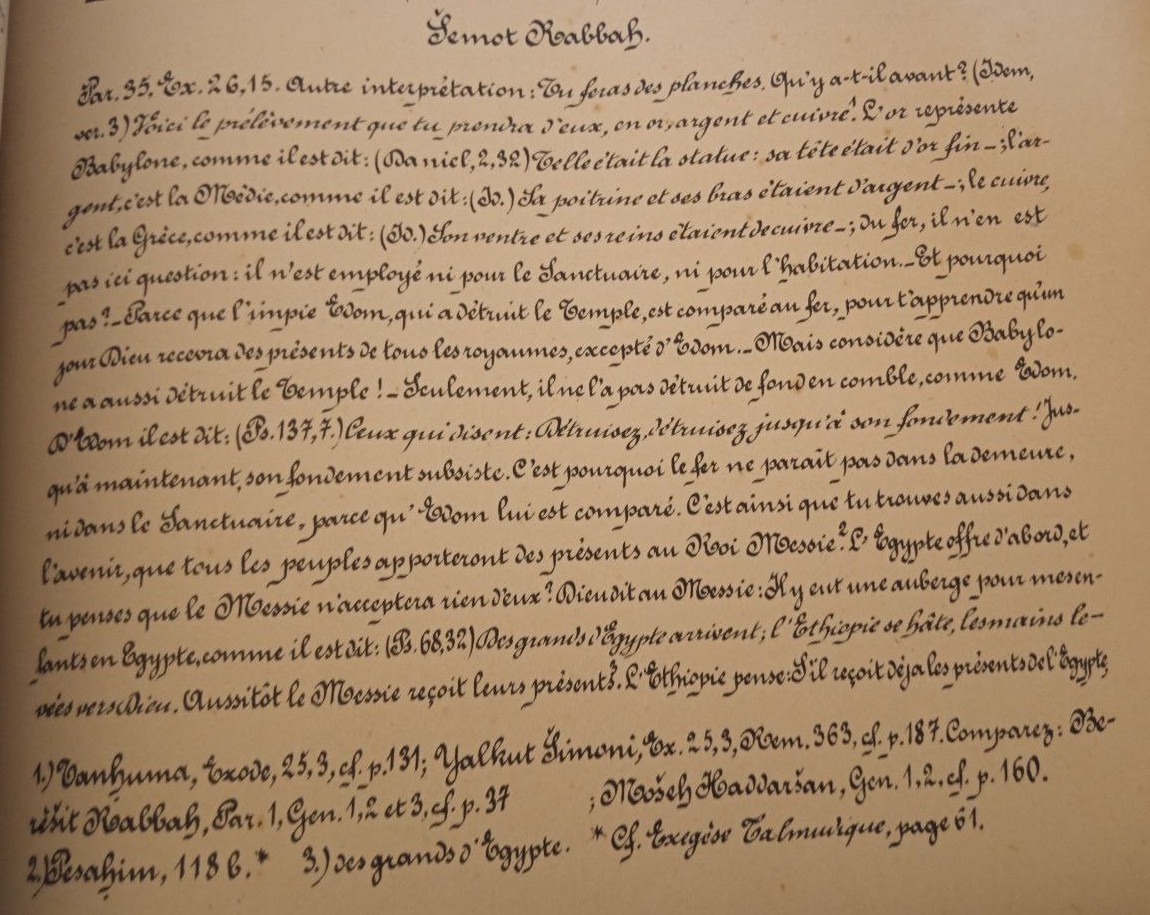
Source text of the Shemot Rabbah 35:5 comes from Jean-Joseph Brierre-Narbonne’s ‘Exégèse Midrashique des Prophéties Messianiques‘, Librairie Orientaliste Paul Geutner, Paris, 1935. Page 53.
We will dedicate a proper Memorial-Sampler-Series to Jean-Joseph Brierre-Narbonne in the near future, as his impressive and meticulous work is a gold mine!
**
1. Introduction:
The Midrashic Commentary
The excerpted text below is a passage from Shemot Rabbah 35:5, a classical Midrashic compilation on the Book of Exodus, likely redacted in the 5th-6th centuries C.E. The text comments on Exodus 35:5, which lists the materials for the Tabernacle: ‘gold, silver & bronze‘.
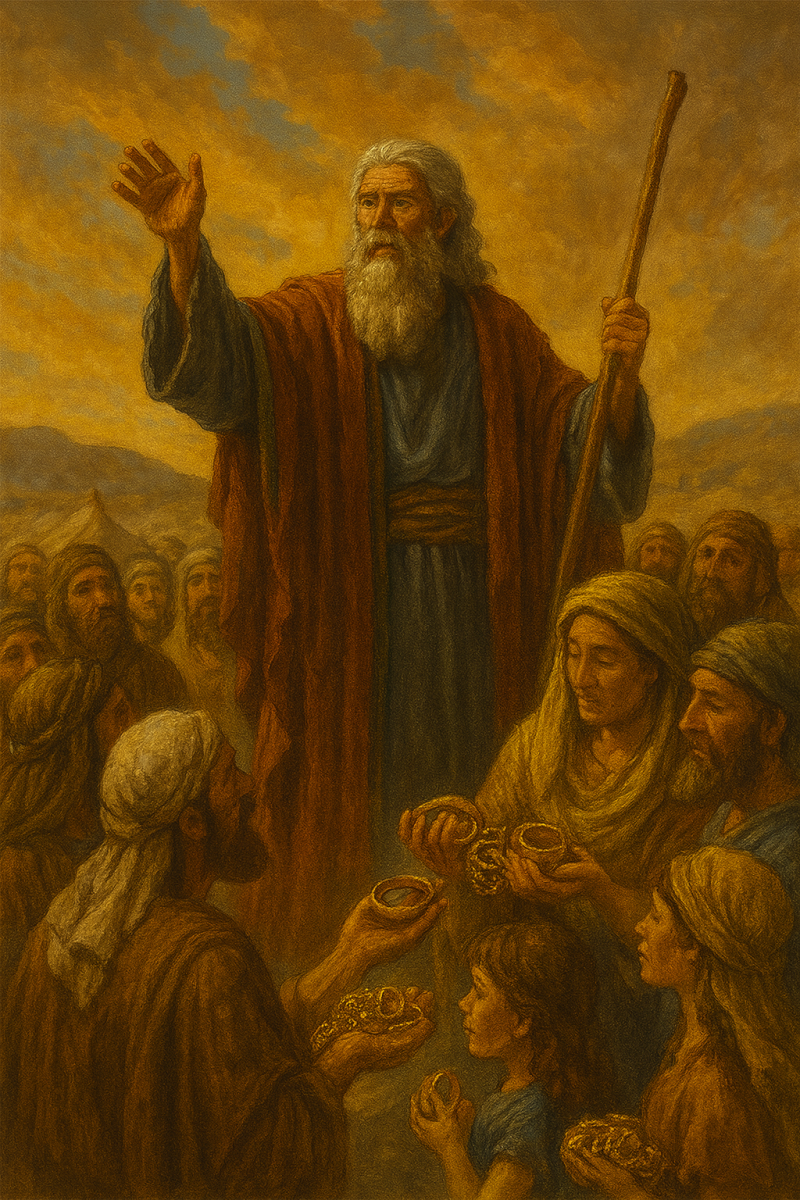
Exodus 35:5: ‘Take from yourselves an offering for the Lord; every generous hearted person shall bring it, [namely] the Lord’s offering: gold, silver, and bronze; הקְח֨וּ מֵֽאִתְּכֶ֤ם תְּרוּמָה֙ לַֽיהֹוָ֔ה כֹּ֚ל נְדִ֣יב לִבּ֔וֹ יְבִיאֶ֕הָ אֵ֖ת תְּרוּמַ֣ת יְהֹוָ֑ה זָהָ֥ב וָכֶ֖סֶף וּנְחֽשֶׁת:
*
Shemot Rabbah 35:5
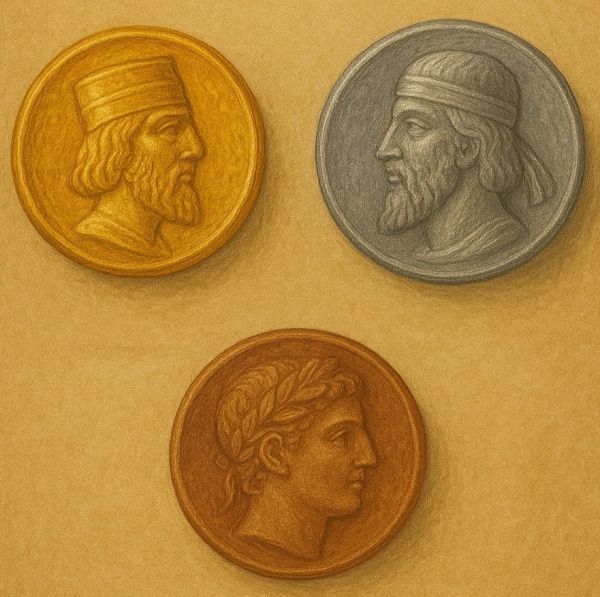
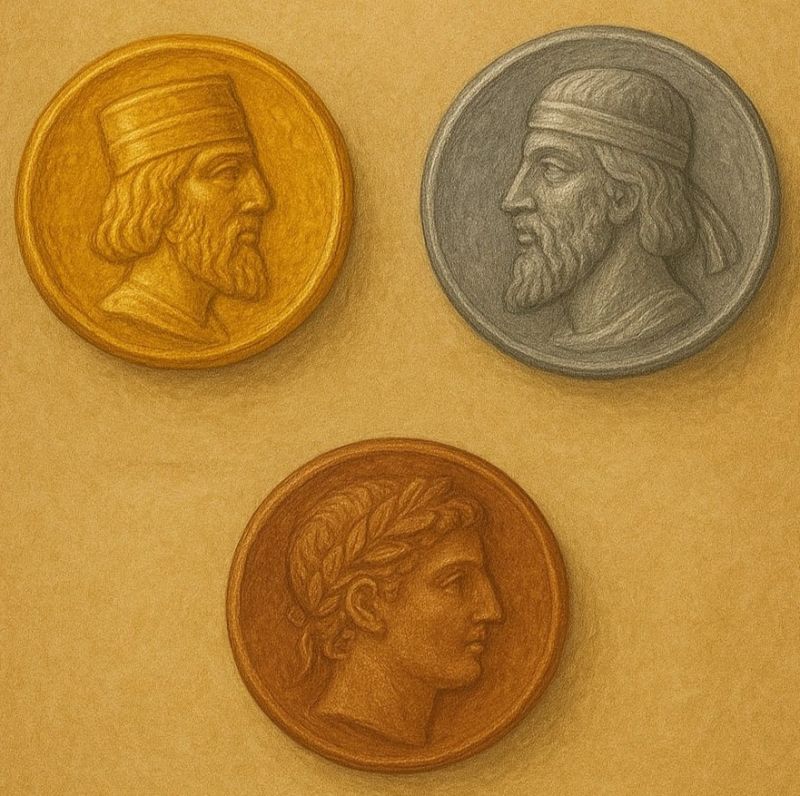
‘Another interpretation: ‘And this is the offering that you shall take from them: gold, silver, and bronze’. The gold represents Babylon, as it is said: ‘You are the head of gold’ (Daniel 2:38). The silver represents the Medes [and Persians], as it is said: ‘Its breast and its arms were of silver’ (Daniel 2:32). The bronze represents Greece, as it is said: ‘Its belly and its thighs were of bronze’ (Daniel 2:32). As for the iron, it is not mentioned here—why?
Because the wicked Edom (a cipher for the Roman Empire), who destroyed the Temple, is likened to iron (Daniel 2:33), to teach you that just as iron shatters all things, so did Edom destroy the sanctuary. Yet, notice: Babylon has been entirely destroyed… But Edom has not been destroyed from top to bottom… That destruction has not yet come; its foundation still remains. And this is why iron does not appear among the offerings for the sanctuary—because Edom, whom it symbolizes, still endures.
Thus you also find, for the time to come, that all nations shall bring their gifts to the King-Messiah. Egypt will come first, as it is said (Ps. 68:32): ‘Envoys will come out of Egypt; Kush will hasten to stretch out her hands to God’. Immediately, the Messiah will receive their tribute. Egypt will offer first; then Kush (Ethiopia) will follow swiftly; the descendants of Edom will come last’.
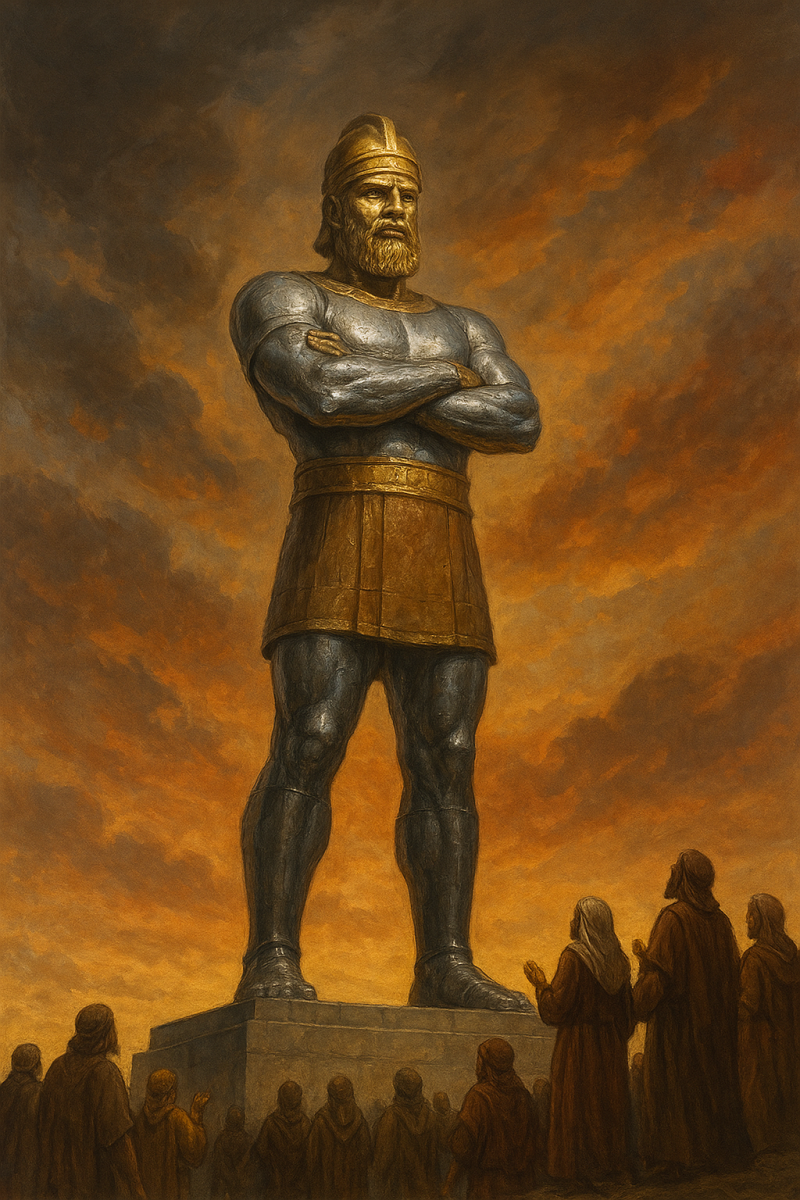
A Symbolic representation of Daniel’s dream of the metallic statue (Daniel 2:31-45).Hebrew original from Jean-Jospeh Brierre-Narbonne, ‘ExégèseMidrashique des Prophéties Messianiques‘.French translation by Jean-Jospeh Brierre-Narbonne, in ‘Exégèse Midrashique des Prophéties Messianiques’.
This Midrash draws explicitly from Daniel’s dream of the metallic statue (Daniel 2:31-45), but introduces a critical theological and moral interpretation: the instrument of destruction and the enduring, unredeemed empire cannot be a building block for the sacred space.
*
2. The Rabbinic Framework:
Metals as History & Ethics
In the Midrashic imagination, the four metals are not merely historical referents but embody moral-spiritual principles. This dual-layered reading is central to the symbol’s longevity.
The Prohibition of Iron: The omission of iron from the Tabernacle offerings is rooted in the biblical injunction against using iron tools on the altar (Deuteronomy 27:5; cf. 1 Kings 6:7). The midrash amplifies this into a cosmic principle. As expressed elsewhere in the Talmud (Middot 3:4), ‘Iron was created to shorten man’s life, while the Altar was created to lengthen it; it is not fitting that that which shortens should be lifted against that which lengthens‘.
The following table synthesizes the symbolic framework established in this rabbinic tradition:
Metal
Empire
Moral/Spiritual Principle
Symbolic Duality
Gold
Babylon
Radiance, Kingship, Glory
Pride, Arrogance
Silver
Medes-Persia
Purity, Reflection, Faith
Ambiguity, Duplicity
Bronze
Greece
Strength, Culture, Art
Vanity, Aestheticism
Iron
Edom/Rome
Power, Domination, Cruelty
Violence, Untransformed State
This framework provides a ‘proto-alchemical’ principle: the same substance that kills can, when transformed, sanctify—but not in its raw, unrefined state.
*
3. Kabbalistic Elaboration:
A Sephirotic Anatomy
Medieval Kabbalah (13th century onward) systematically mapped these symbols onto the divine anatomy of the Sefirot and Adam Kadmon (Primordial Man). This recast the historical-metallic sequence as a dynamic map of cosmic and psychological forces.
Iron as Gevurah: The association of iron with the severe, judgmental aspect of God (Gevurah) is explicit in the Zohar. For instance, in Zohar II:174a, the ‘severity of judgment’ (דינא קשיא) is linked to the ‘iron furnace’ of Deuteronomy 4:20.
Systematic Correspondence: Kabbalists like Moses Cordovero (16th c.) in his systematic work Pardes Rimonim further refined these associations, creating a coherent symbolic language where metals, body parts, and divine attributes were intertwined.
Sefirah
Metal
Body Part
Planetary Association
Spiritual Function
Keter/Hokhmah
Gold
Head / Brain
Sun
Divine Intellect, Source
Binah
Silver
Heart / Breast
Moon
Understanding, Reflection
Tiferet
Bronze/Copper
Torso / Beauty
Venus
Harmony, Compassion
Gevurah
Iron
Arms / Hands
Mars
Judgment, Force, Restraint
This kabbalistic elaboration transformed the Midrashic narrative into a skeleton of cosmic anthropology, providing a template that would be directly recognizable to later alchemists working with the ‘microcosm/macrocosm’ model.
*
4. The Alchemical Transmission:
Trans-mutation in Christian Kabbalah
Renaissance and early modern thinkers, armed with new access to kabbalistic texts, enthusiastically adopted and adapted this symbolic system. For Christian kabbalists, the goal became the transmutation of the base metal (iron) into the noble metal (gold). When Renaissance thinkers like Pico della Mirandola and Johann Reuchlin encountered the Midrashim through Latin or Hebrew intermediaries, they found in them a symbolic lexicon for understanding Scripture as cosmic anatomy. The Shemot Rabbah’s reading of gold–silver–bronze–iron as successive kingdoms became a universal history of the soul.
In Latin alchemy (13th–17th c.) and particularly in Christian Kabbalah, we see these transpositions:
Metal
Planet
Bodily humor / organ
Empire (per Daniel)
Spiritual correspondence
Gold
☉ Sun
Heart / blood
Babylon
Divine spirit
Silver
☽ Moon
Brain / lymph
Persia
Reflection, faith
Copper (Bronze)
♀ Venus
Liver / bile
Greece
Beauty, culture
Iron
♂ Mars
Muscles / red bile
Rome
War, passion
Lead
♄ Saturn
Bones
Future fallen world
Death, melancholy
Some later Christian kabbalists (e.g., Paracelsus, Knorr von Rosenroth) explicitly quote the midrashic dictum that iron was created to shorten life and use it to justify the idea that redemption requires transmutation of iron into gold, i.e., turning Mars (violence) into Sol (illumination).
Jewish Midrash
Christian Kabbalah re-interpretation
Gold = Babylon = head
Gold = intellect / divine illumination
Silver = Medes/Persia = heart
Silver = reflective faith, moonlight
Bronze = Greece = belly
Bronze = beauty and art, harmony
Iron = Rome = limbs
Iron = active will, passion, war — to be sanctified
Robert Fludd (1574–1637): In his Utriusque Cosmi Historia (1617-1621), Fludd depicted the Tabernacle as a divine alchemical laboratory. His engravings show sacred architecture as a blueprint for the purification of the soul and cosmos, where impure matter is refined into spirit.
Christian Knorr von Rosenroth (1636–1689): In his monumental compilation Kabbala Denudata (1677-1684), Knorr explicitly linked Daniel’s metallic statue to the kabbalistic Four Worlds (Atzilut, Beriah, Yetzirah, Assiah). He identified the ‘iron’ of Edom/Rome with the coarse, material world of Assiah and the cliphotic (fallen) forces that must be redeemed.
Jacob Boehme (1575–1624): The German theosopher internalized this process entirely. In works like Aurora and Signatura Rerum, Boehme described the Fall as the hardening of the soul’s subtle ‘gold’ into the coarse ‘iron’ of wrath and self-will. Salvation, therefore, is an alchemical process: ‘Man’s soul is a mine: when he returns to Sophia, his iron is turned again into gold‘.
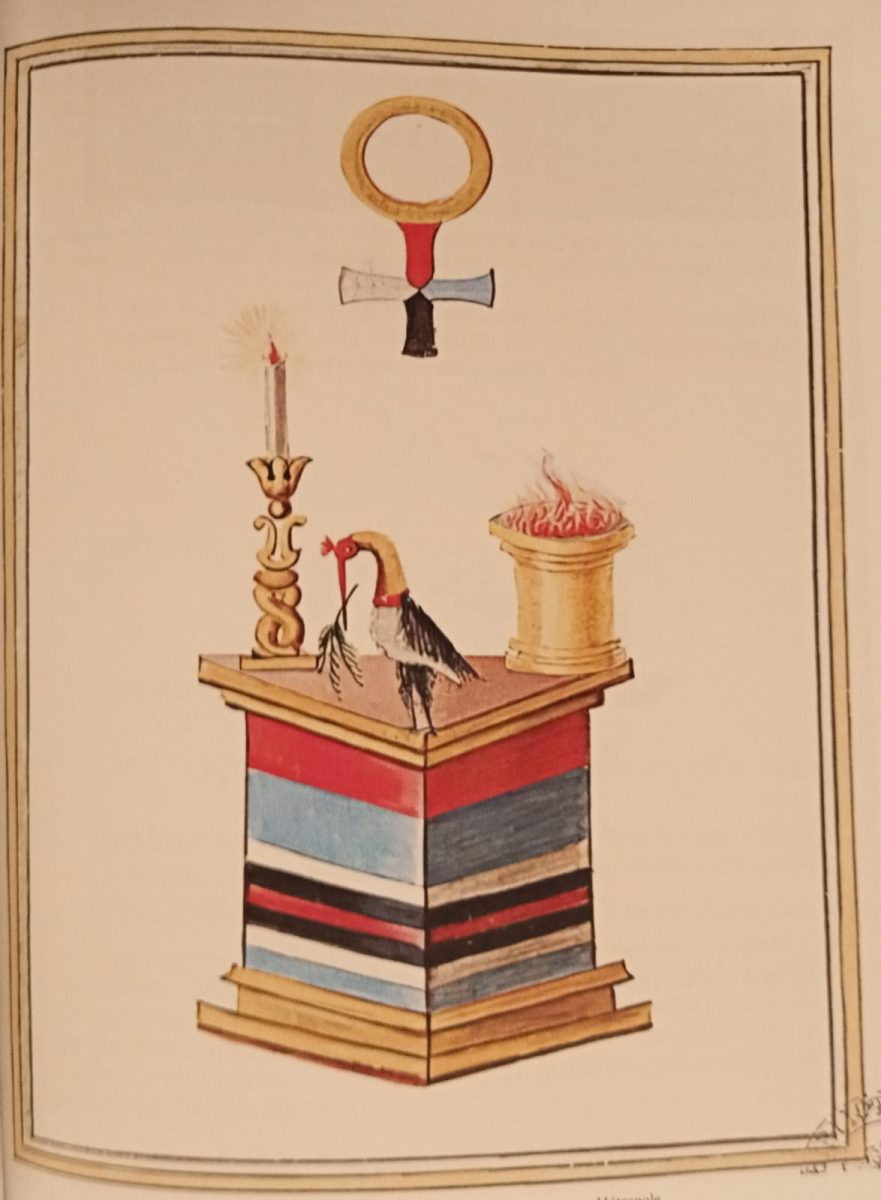
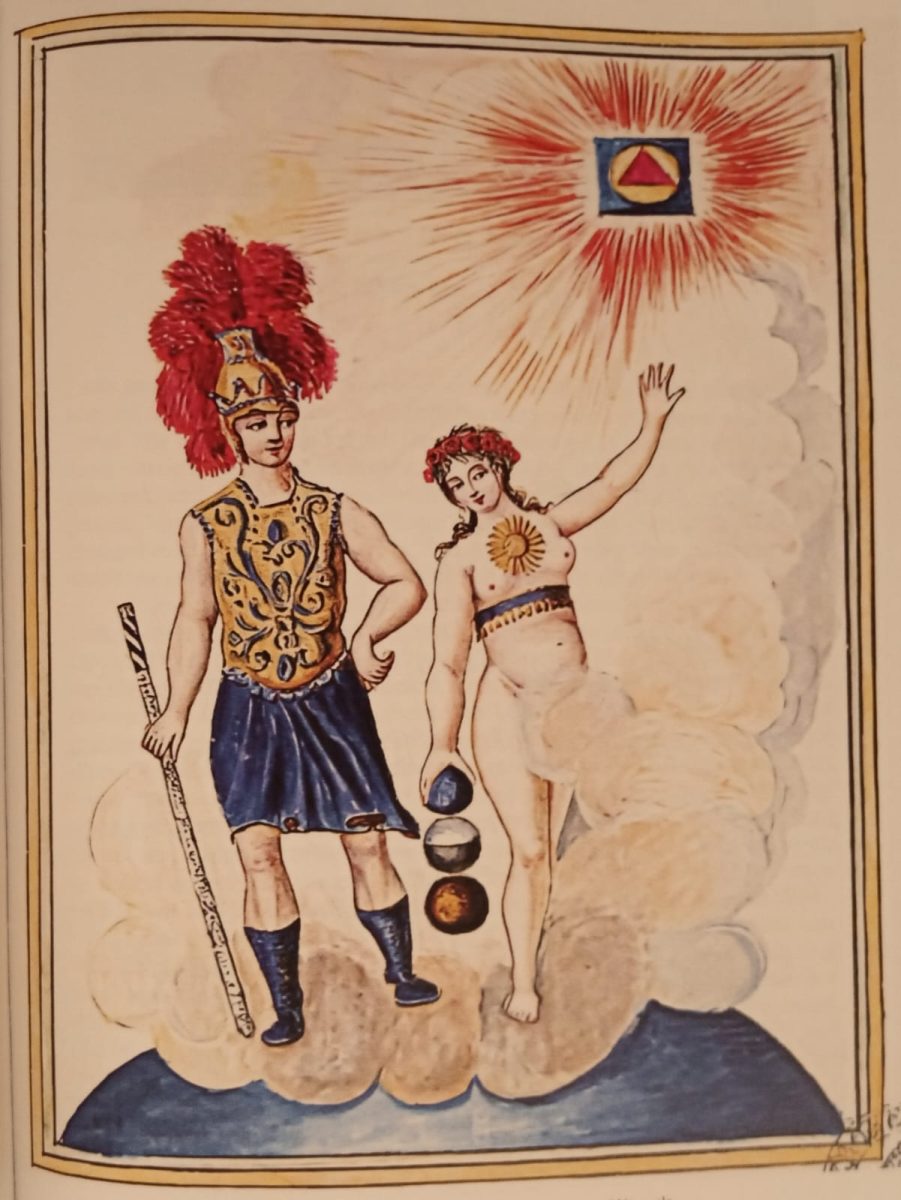
By the late 17th and 18th centuries, this genealogical thread culminates in works like The Most Holy Trinosophia, where the initiate passes through chambers of colored metals, undergoing moral trials until achieving a final, solar transmutation. The historical empires have fully dissolved into stages of psychic purification.
‘The Most Holy Trinosophia’ was written by an esoterist master of incomparable insight & understanding. It is therefore not long in contemplation of it before feelings of reverence can arise within us Clairvoyants, so we are told, often try to convey what they ‘see’ of the spiritual world through their feelings, in place of the physical organs of perception.
It is as if merely by smelling a rose they can ‘see’ the color without sight of it. If spiritual realms beyond our ordinary senses do indeed exist, then perhaps they are experienced by awakening a primeval third sight long since lost in waking, ordinary existence.
With the right approach to it, the ‘Most Holy Trinosophia’ can operate as a working tool to reacquire these latent abilities. On one level this is its true significance; another is it acts as a guide for what lies ahead, beyond the grave‘. Michael Robert Osborne (Page 5 of the Introduction).
From ‘The Most Holy Trinosophia‘ (‘La Très Sainte Trinosophie‘), published in 2021 by Michael Robert Osborne & Rose Circle Publications..
From ‘The Most Holy Trinosophia‘ (‘La Très Sainte Trinosophie‘), published in 2021 by Michael Robert Osborne & Rose Circle Publications.
*
5. Conclusion:
The Crucible of the Soul
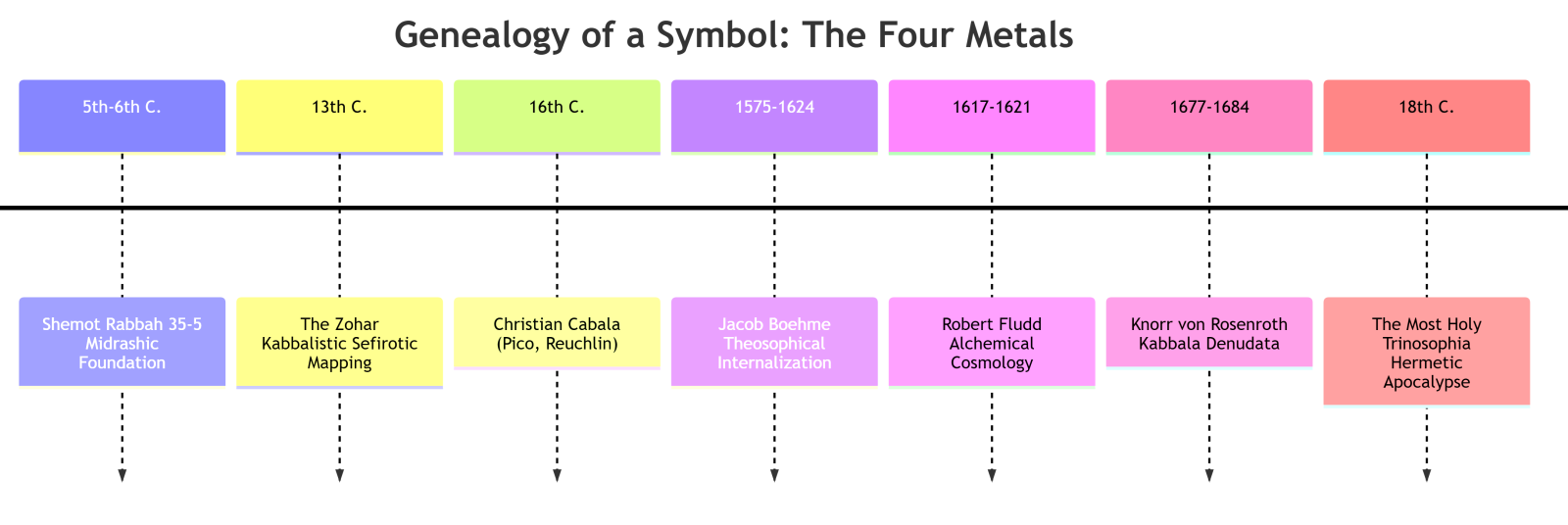
The following timeline visualizes this transmission of ideas:
The journey from the Shemot Rabbah to the Most Holy Trinosophia—demonstrates a remarkable continuity in Western esoteric thought. What began as a rabbinic commentary on a biblical verse evolved into a universal key for understanding: History: As a succession of spiritual qualities. Cosmology: As a hierarchy of emanated forms. Soteriology: As the imperative to transform the base (iron/ego/wrath) into the noble (gold/spirit/love).
The ‘iron’ was never merely a metal; it was a theological problem concerning the nature of evil & redemption. The enduring solution, from the Midrash to the alchemist, was that it must not be used in its raw state, but must first be offered up and transmuted in the divine fire of the heart’s sanctuary.
*
Appendix:
A Summary of
the Transformative Journey
Level
Symbolic Field
Shemot Rabbah & Daniel
Alchemical-Kabbalistic Goal
Historical
Nations/Empires
Babylon, Persia, Greece, Rome
Transmutation of World Ages
Material
Metals
Gold, Silver, Bronze, Iron
Purification of Matter
Psychological
Human Qualities
Glory, Reflection, Art, Violence
Refinement of the Soul
Mystical
Body/Cosmos
Head, Heart, Torso, Hands
Illumination of Adam Kadmon
Theurgical
Divine Action
—
Tikkun (Repair) of the Cosmos
***
More about ‘The Most Holy Trinosophia’: https://via-hygeia.art/a-via-hygeia-bibliotherapy-book-review-of-michael-robert-osbornes-2021-edition-of-the-most-holy-trinosophia 🌿And: https://www.mrosborne.co.uk/book/the-most-holy-trinosophia🌿 About the publisher: https://rosecirclebooks.com


Leave a Reply