
Circle of Transmission: The Living Loom
A Little Christine Thouzellier Sampler – Part 2: About the Cathar Ministry and the Reception of the Consolamentum

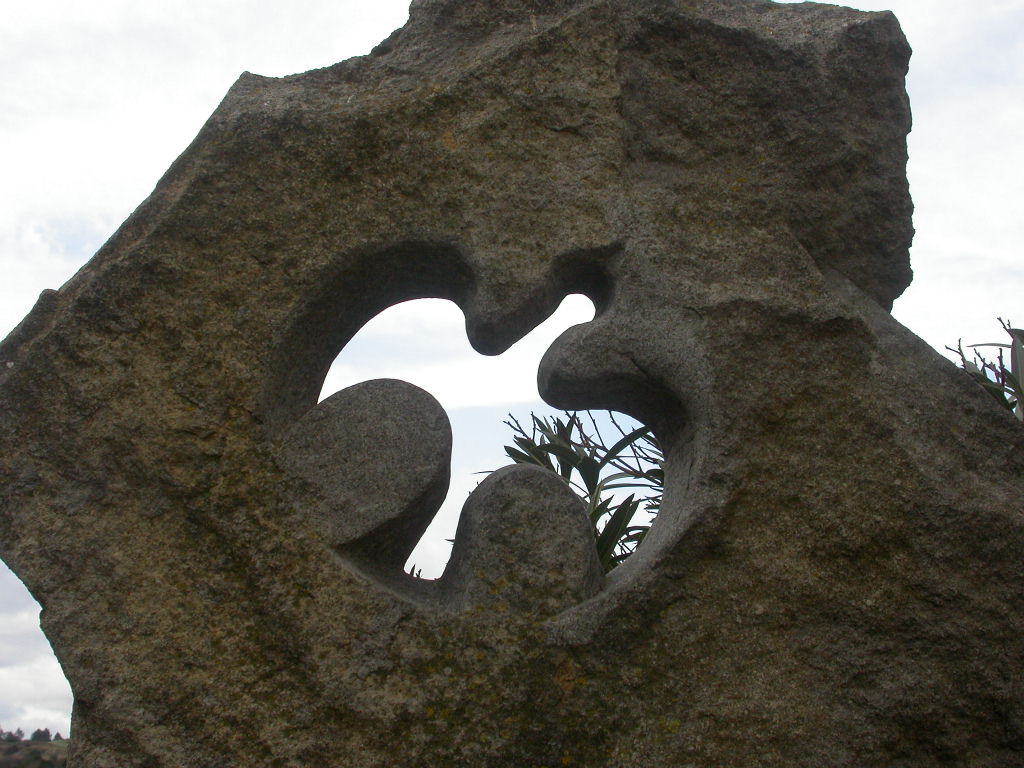
1982 sculpture by Jean-Luc Séverac,
Stella in remembrance of the Cathar victims
of the inquisition in 1210.
Picture by Guilhelma, at Wikimedia Commons.
*
Today’s sharing from the Blue House of Via-HYGEIA, is the second of a planned few dedicated to the memory of professor Christine Thouzellier (1902–1988), here about ‘the Cathar Ministry and the Reception of the Consolamentum‘.
Section I are excerpts from the introduction that points to both context & purpose (from page 87 to 104), and section II, are the rituals themselves.
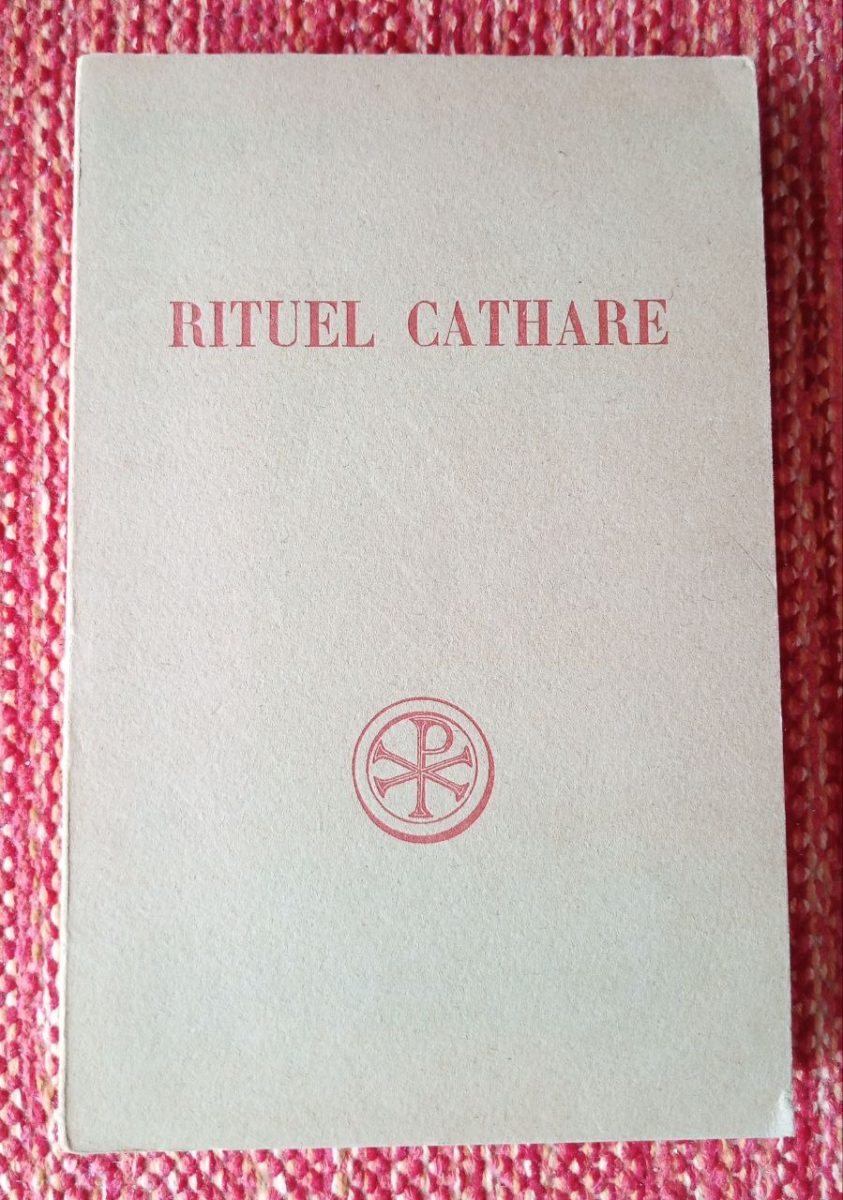
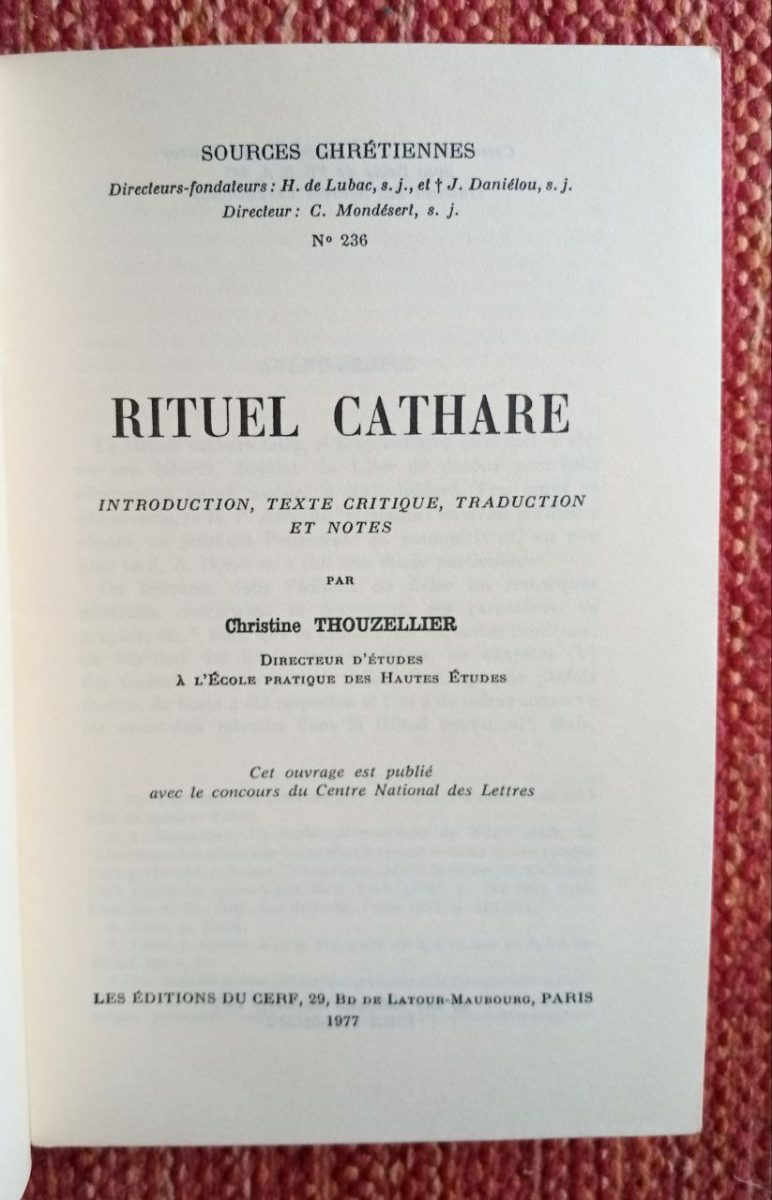
Source: the ‘Rituel Cathare: Introduction, Texte Critique, Traduction et Notes‘, in Sources Chrétiennes 236. — Éditions du Cerf, Paris, 1977. From page 219 to 225 and 257-259-261. English translation from the original French by Via-HYGEIA.
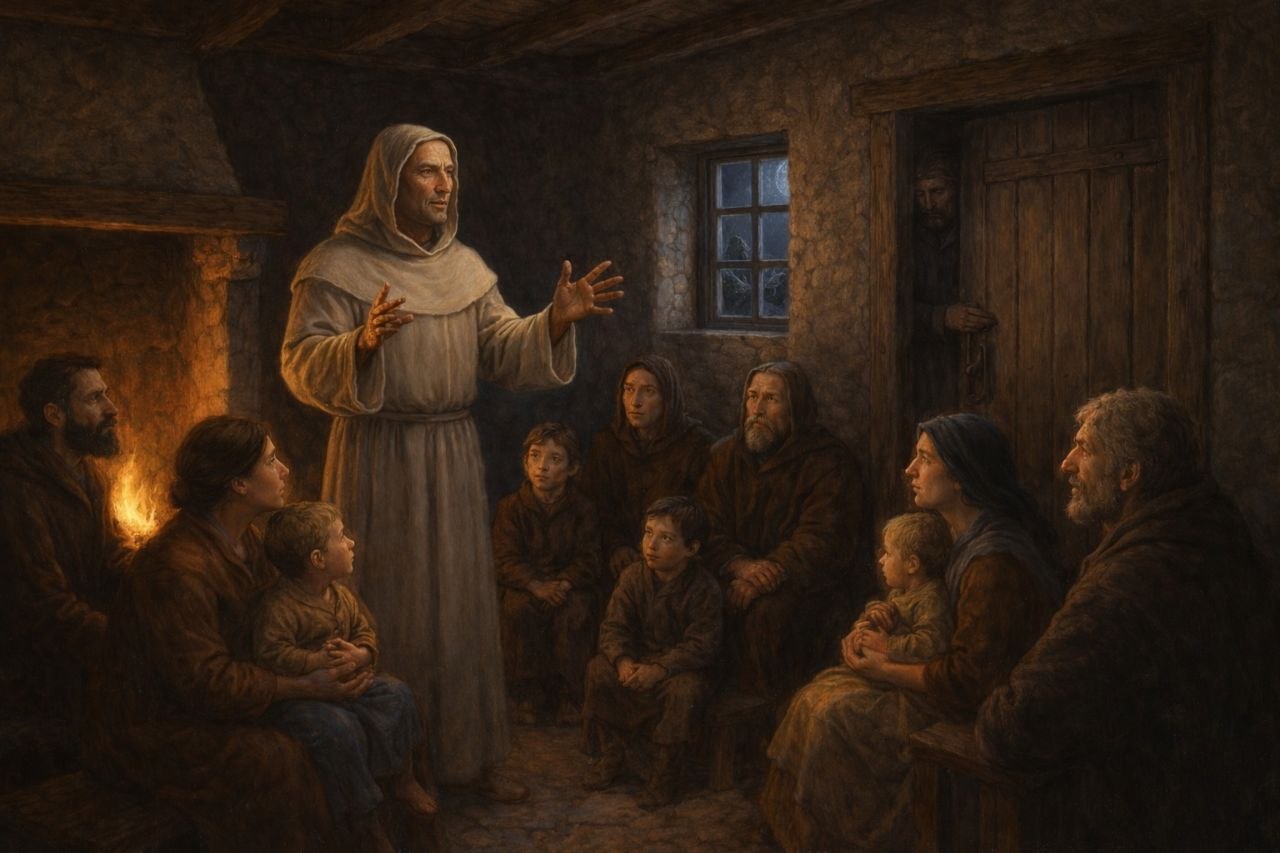
Next to come as part 3, the ‘Cathar Sermon or Predication‘.
**
Section I – Context & Purpose
The second act of the Cathar liturgy follows immediately the ‘Pater‘ (‘Our Father’) ceremony. It consists to confer to the postulant the baptism of the Spirit, the initiation to the life of a Perfect, or Good Fellow (Parfait or ‘Bonhomme’). The Cathars, in fact deny any value to the water-baptism conferred by John the Baptist with a matter created by the devil and which is an obstacle to Christ’s baptism or ‘gift of the Holy Spirit‘. They perform this sacrament, the ordinamentum by the laying of the book and of the hands upon the head of the recipient who receives in that manner the Spirit-Paraclete or Comforter, the spirit that the fallen soul has left behind in Heaven.
The postulant or recipient, and the Elder (l’Ancien), from their welcoming position, bow three times (melioramentum) and walk towards the Minister (ordinatus) praying; the Minister and the assembly of the faithful say seven prayers to obtain Heaven’s good favors to flow upon the officiant, who humbles himself and invokes forgiveness for sins. The Ancianus (an Elder) who assists him absolves him in the name of the holy Father, just and true, etc. The celebrant then says ‘Amen‘ and the assembly bow three times and during each of them the Benidicite, and imploring divine Mercy. In turn, the Celebrant absolve the group of the faithful by repeating the same formulas. These are clearly exceptional purification rites from the Minister and the assembly, who, together are going to proceed to the baptism.
To that end, the ordinatus (equal to the Elder) prepares himself the table with the book, The recipient receives the Book from his hands and bows three times, like for the ‘Pater‘ ritual. Simultaneously, the minister asks him: ‘Are you eager to receive the spiritual baptism of Jesus Christ, and the forgiveness of your sins with the assistance of all good Christians, with the laying of the hands and keep it all your life with humility and chastity?’.
When the recipient agrees, imploring God’s help, the Minister repeats the same formulas as comprised in the Traditio orationis, asking God for the recipient the grace to grant this favor to him and starts his sermon or predication (Note: This will be part 3 of this Sampler Series). The Minister tells the recipient the commandments in the New Testament, prohibiting adultery, homicide, lying, taking oath, stealing, harming another person. He also ask forgiveness, the love for the enemy, prayer for the slanderers, coping with injuries and professes a hate for this world. After this lengthy and ultimate exhortation, the Consolamentum ceremony begins.
The ordinatus takes the Book from the hands of the faithful (the recipient) and asks him again if he wants to receive the holy baptism as tradition dictates. To the affirmative answer, the officiant then proceeds further. The recipient stands in reverence before the Minister and repeats the formula that the Ancient is pronouncing, as he is assisting the Celebrant: it is an invocation for the absolution of previous sins and the intersession of the Minister. To his request, the Celebrant grants the recipient the perdonum ‘in the name of God, in his own name, and of the Church of the faithful (the Cathar Church), with the help of divine Mercy‘. ‘Amen‘ replies the recipient.
With the recipient, one of the Good Fellows perform his melioramentum (bows) in front of the Celebrant and says to the whole assembly: ‘Parcile nobis…‘ gesture and invocation that the recipient (now a true Believer) repeats in turn. It is in fact a general absolution given to the new believer and to the assembly as well.
After all of these expiatory preliminaries, testifying of the moral rigor of the Cathar Church, the solemn moment has arrived. The new Believer stands up and put his hand upon the table before the ordinatus who lays the hand upon his head, followed by all of the ordained participants and the lay true believers laying their right hand over his head, while the celebrant pronounces the ritual words: ‘In the name of the Father, the Son and the Holy Spirit‘. to which the Elder who is assisting the celebrant and the whole assembly answer: ‘Amen‘. The minister then recites the ‘Benidicite…Fiat nobis…Pater and Filius…Percat omnia‘ and three ‘Adoremus‘, recalling the earlier expiatory prayers performed at the earlier stages of the ritual.
The Cathar liturgy demonstrates to which extent the dualist sect, considers itself as a special order, a true fraternity representing the Church of Jesus Christ & God the Father. Its members are composed of ministers or hierarchical priesthood (ordinati and ordines), of Good Fellows (Bonhommes) or Perfects (Parfaits)(who are considered authentic Christians, as they have received the Consolamentum), and of Believers or Faithful, who are admitted to recite the ‘Pater‘, and aspire to be baptized. Only the Ordines and the Perfects are authorized to celebrate with the Minister the baptism ceremony; and the assembly plays a role through its prayers, intercessions, and its participation in the laying of hands.
The initiation requires abstinence, hard and severe privations, the submission to rigorous moral life principles. The long liturgic preparation insists upon the total integrity of the supplicant (the postulant), the absolution of the sins for both the assembly and the postulant. There is for all of them a real quest for a deep purity of their inner-selves, a sort of core spiritual ascesis, which once the baptism of the Holy Spirit is received, grants salvation. We can see how much their Traditio orationis is rooted in the highest Christian antiquity.
The Consolamentum liturgy invokes the same primitive church of the Apostles, of whom the Perfect or Bonhommes are maintaining the perennity of succession. Besides the expiatory prayers, the core of the ceremony is the laying of the book and the laying of the hands. The laying of the hands does not belong to the primitive baptism per-se, but it completes it. Should we see a confirmation rite? Most probably.
The insistence of the Cathars to consider their Baptism (Consolamentum) as originating from the cradle of Christianity is justified by liturgic documents, such as the Traditio apostolica of the Third. century A.D. in which it is considered as an ordination and later a baptism rite. The Consolamentum, or Baptism of the Spirit, is connected to episcopal and presbyteral ordinations, as crystalized in the Traditio.
*
Section II – The Rituals
*
Of the Ecclesiastic
Ministry
May the Ordained tell the Believer:
-‘Say with me the prayer word after word and say the ‘perdonum‘
And when he and the Believer had said it, as also the person standing near the Ordained,
then the Ordained starts with the perdonum.
Then he ought to say the prayer (the ‘Pater’), as it is customary.
The prayer being said, and the ‘graces‘ as well,
the Believer says in front of the Ordained, with respect:
‘ May You bless and have mercy upon us, Amen!
So be it, Lord, according to your Word!’
And the Ordained say:
-‘On Behalf of God and us, and on behalf of the Church and its holy order, and by its holy commandments and its disciples, may you have the power to say this prayer before eating and drinking, let it be day or night, alone or in company, as it is the custom within the Church of Jesus Christ; you ought to prevent yourself from eating or drinking before saying this prayer; and if some failings occur, you will report it to the Ordained of the Church and you will accept the penance he will impose upon you. May the Lord, true God, give you the grace to be able to implement in practice this prayer in Honor to God and for your salvation!‘
The Believer bows three times and say:
‘Bless us, bless us, bless us, O lord! May God grant you this good reward done for the love of Him.’
If the Believer is not to be then ‘comforted‘, he will receive the ‘Servilium‘ and is to be sent home.
*
Of the Reception of
the Consolamentum
On the day, before the ceremony in which a ‘Consolamentum‘ ceremony is held, the postulant must come with the Ancient from his ‘hospice’ and when arriving they must do three bows before the Ordained and pray for the good fortune of this faithful. Then the whole ceremony begins.
After having received the prayer (the ‘Pater‘), the Ordained and the assembly of the faithful must pray God with seven prayers, so that the Ordained’s wish may be granted and when this is done, the Ordained say:
‘ Brothers and Sisters, if I have said or did anything against God, and my salvation, may you pray for me the Lord God to spare me’.
To this, the Ancient says:
‘May the holy Father, just, true and merciful-who in the heavens and on earth, holds the power to forgive sins- restore you and forgive all of your sins in this century, and grant you mercy in the next century.’
To which the Ordained answers:
‘Amen! So Be It! O Lord, according to your Word!‘
The all of the assembly of the faithful bow three times, in saying:
‘Bless you, bless you, bless you, have mercy upon us! If we have said, or done anything against God and our salvation, pray the Lord of mercy that he has pity upon us; Bless you, May You have mercy upon us!’
And the Ordained to answer:
‘May the holy Father-just, true and merciful, who in the heavens and on earth, holds the power to forgive sins-restore you and forgive all of your sins in this century, and grant you mercy in the next century‘.
*
Of the Reception of the Book
When this is done, may the Ordained place a table (discum) in front of him. Then the new Believer walks towards him and receives the Book from his hands, while bowing three times. Then the Ordained ought to say:
-‘John (Jean) do you have the will to receive the spiritual baptism of Jesus Christ and the perdonum (the forgiveness) of your sins, obtained due to the supplications of the good Christians with the laying of the hands, and to keep it for all of your life with chastity and humility, and with all the other virtues God would grace you?‘
And the Believer is to answer:
-‘ Yes I have this will. May you pray God that He grants me Himself His strength‘.
Then the ordained will say:
-‘ May God grant you the grace to receive it for His sake and your salvation! In the Name of God, in our name, of the Church and its holy order, of its sacred principles and of all its disciples, may you receive, forgiveness and mercy, and may God absolve all of your sins and lead you towards eternal life!’
And the Believer to add:
-‘ Amen, So be it, Please God do this according to your Word!‘
He stands up and places his hand on the table in front of the Ordained, while the Ordained places the book upon the head of the Believer and the assembly place their right hands upon his head.
The Ordained then says:
-‘In the the Name of God, and the Son and the Holy Spirit.’
while the assembly answers:
‘Amen!‘
The Ordained then says:
-‘ Bless us O Lord, have mercy upon us! Amen ! So be it, O Lord, according to your Word: May the Father and the Son and the Holy Spirit absolve you and forgive you all of your sins. Lets worship the Father, the Son and the Holy Spirit; Lets worship the Father, the Son and the Holy Spirit; Lets worship the Father, the Son and the Holy Spirit. Fair Father, who is in Heaven, may your Name be blessed…etc...’
Five ‘Pater‘ (‘Our Father’) are then said out loud, followed by the ‘adoremus‘ (‘lets worship’) as just said above, followed by another ‘Pater‘. The reading from the prologue of Gospel of John is then read out loud: ‘In the beginning was the Word, etc…’ When the reading of the Gospel is concluded, three ‘adoremus‘ follow with another ‘Pater‘ as thanksgiving.
The Elder kisses the book and bows three times, saying:
-‘Bless, bless, bless us, O Lord! Have mercy upon us! May God rewards you for this act of Love you have just demonstrated to us!‘
The assembly, receive then the servitium
(spiritual guidance and community services)
according to the Church’s custom.
*
‘May all the good Christians pray God for the salvation
of the person who wrote this ritual, Amen ! Amen! Amen!’
*
Source
*
Coming soon:
A Little Christine Thouzellier Sampler – Part 3:
‘A Cathar Sermon or Predication’.
***


Related Articles


Leave a Reply