
Circle of Transmission: The Living Loom
A Little Guillaume Postel Sampler: Part 5 – Two Short Commentaries in Christian Kabbalah
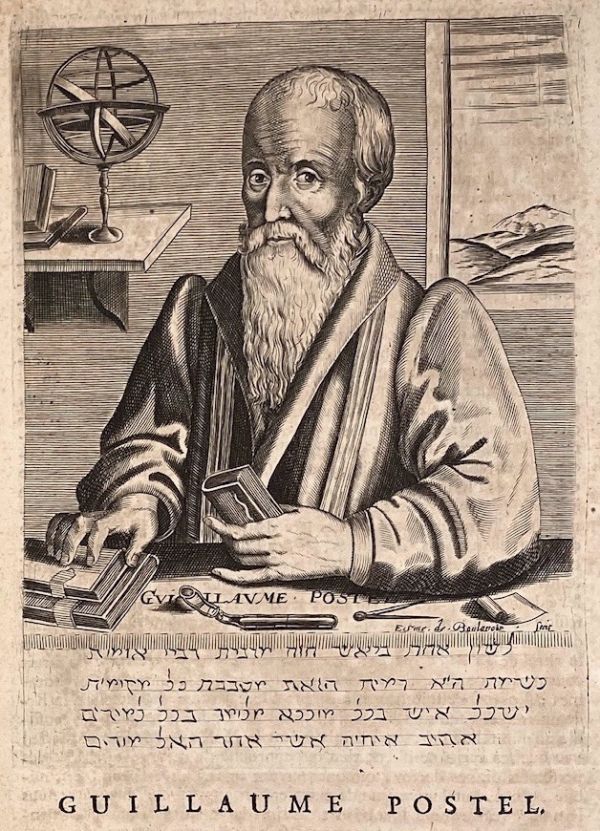
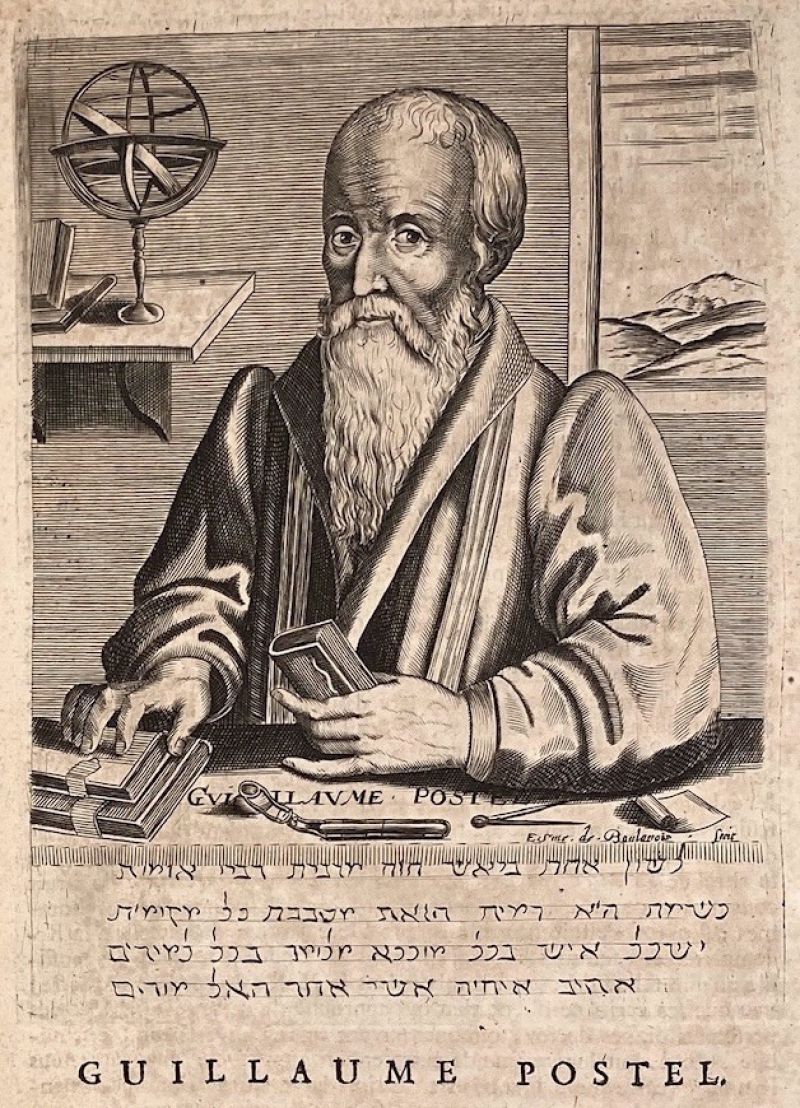
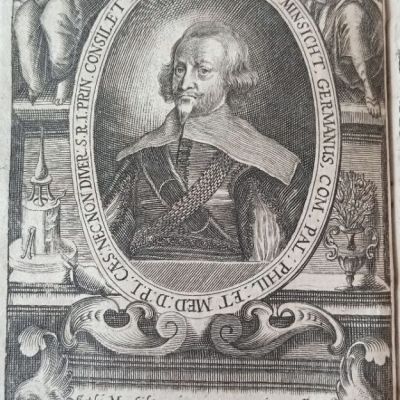
Sitting portrait of Guillaume Postel, French linguist, astronomer, Cabbalist, diplomat, professor, and religious universalist, engraved on a copperplate by Esme de Boulonois; from the book ‘Académie Des Sciences Et Des Arts’ by Isaac Bullart, published in Amsterdam by Elzevier in 1682.
(for translation of the legend, see part IV)
*
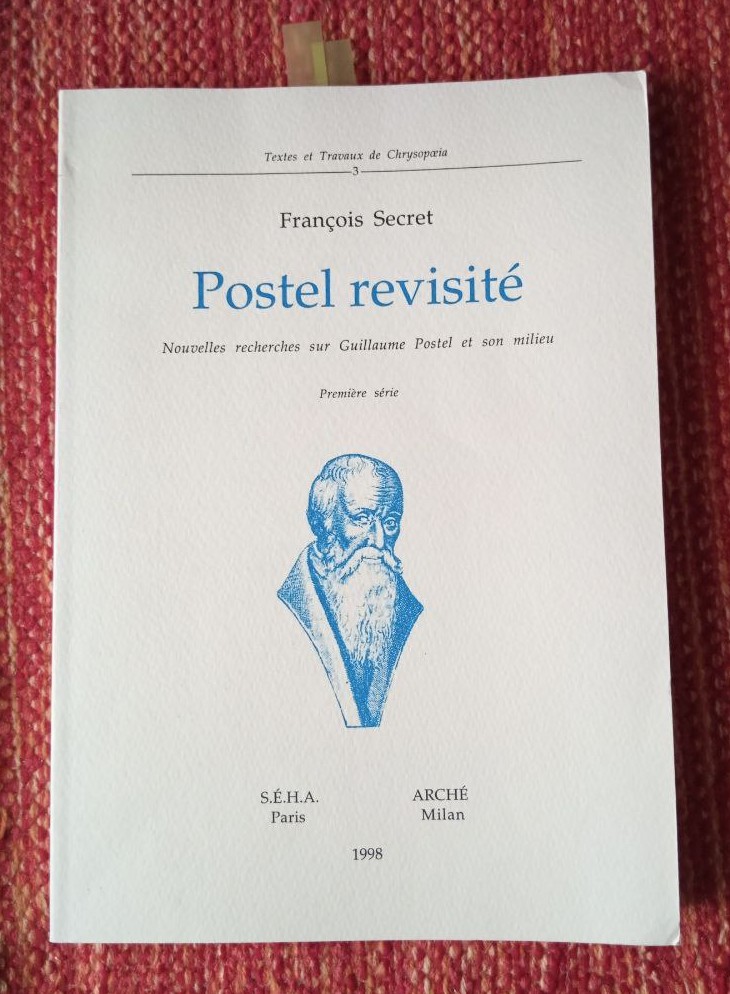
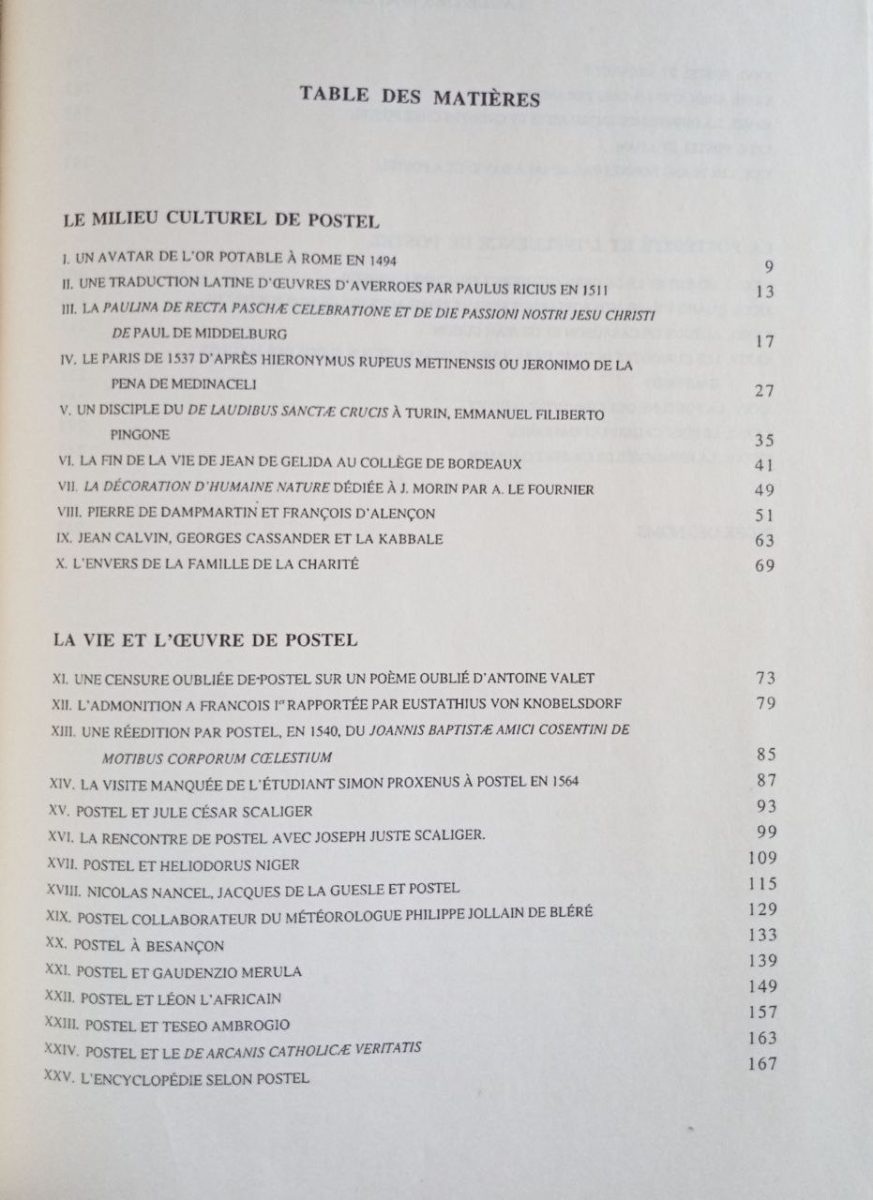
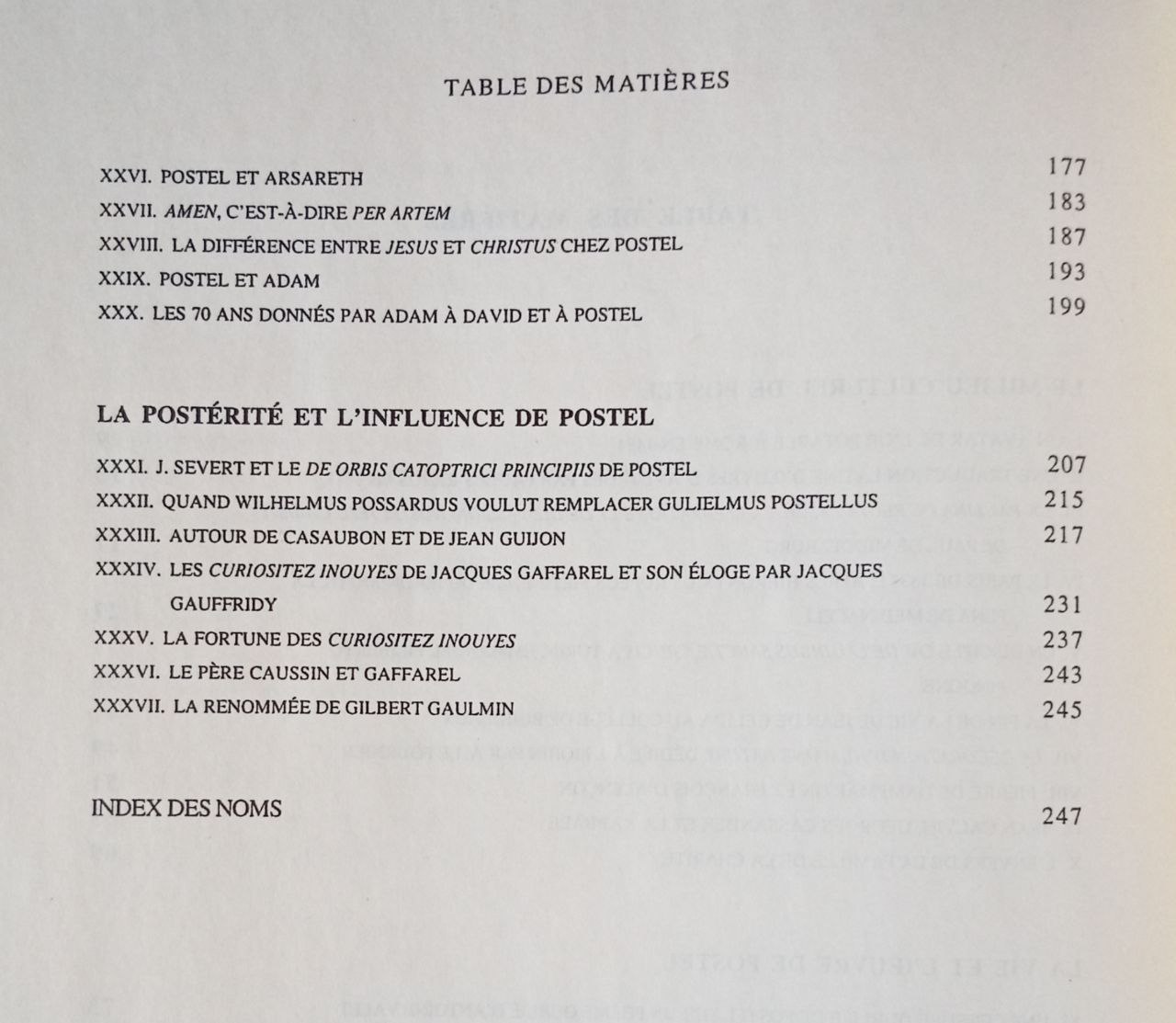
Today’s sharing from the Blue House of Via-HYGEIA, is part 5 of our little Guillaume Postel sampler, highlighting two previously unpublished texts presented and commented by professor François Secret, in ‘Postel Revisité, nouvelles recherches sur Guillaume Postel et son milieu‘ (Postel Revisited, new research upon Guillaume Postel and his entourage), jointly published S.E.H.A. and Arche editions (Milano) in 1998, as number 3 of the revue ‘Chrysopoeia’.
We will dedicate to Professor Secret his own Little Sampler soon.
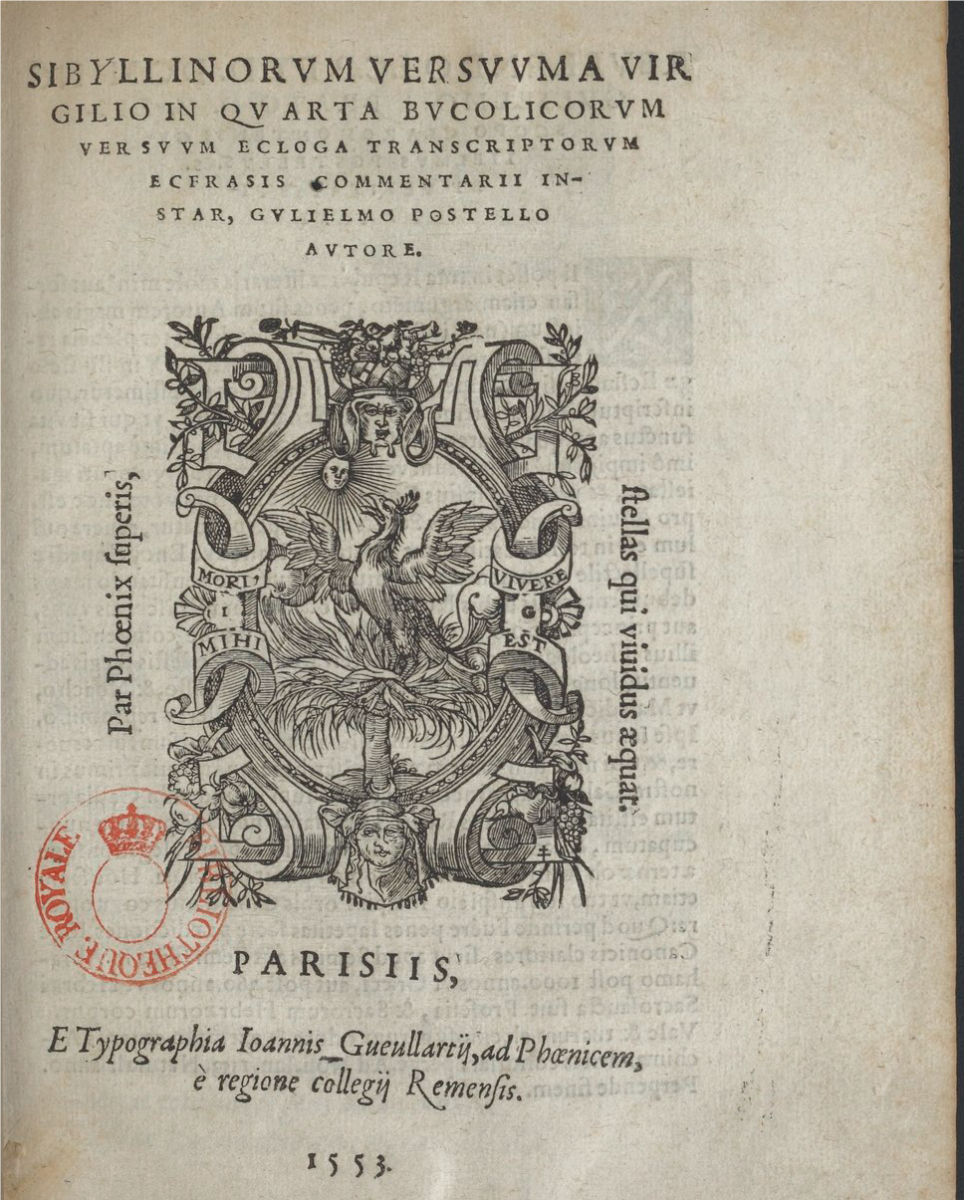
Next Sampler, part 6, will be a translation of Postel’s ‘A 1553 explanation, in the manner of a commentary, by Guillaume Postel, of the Sibylline verses transcribed by Virgil in his Fourth Eglogue‘.
**
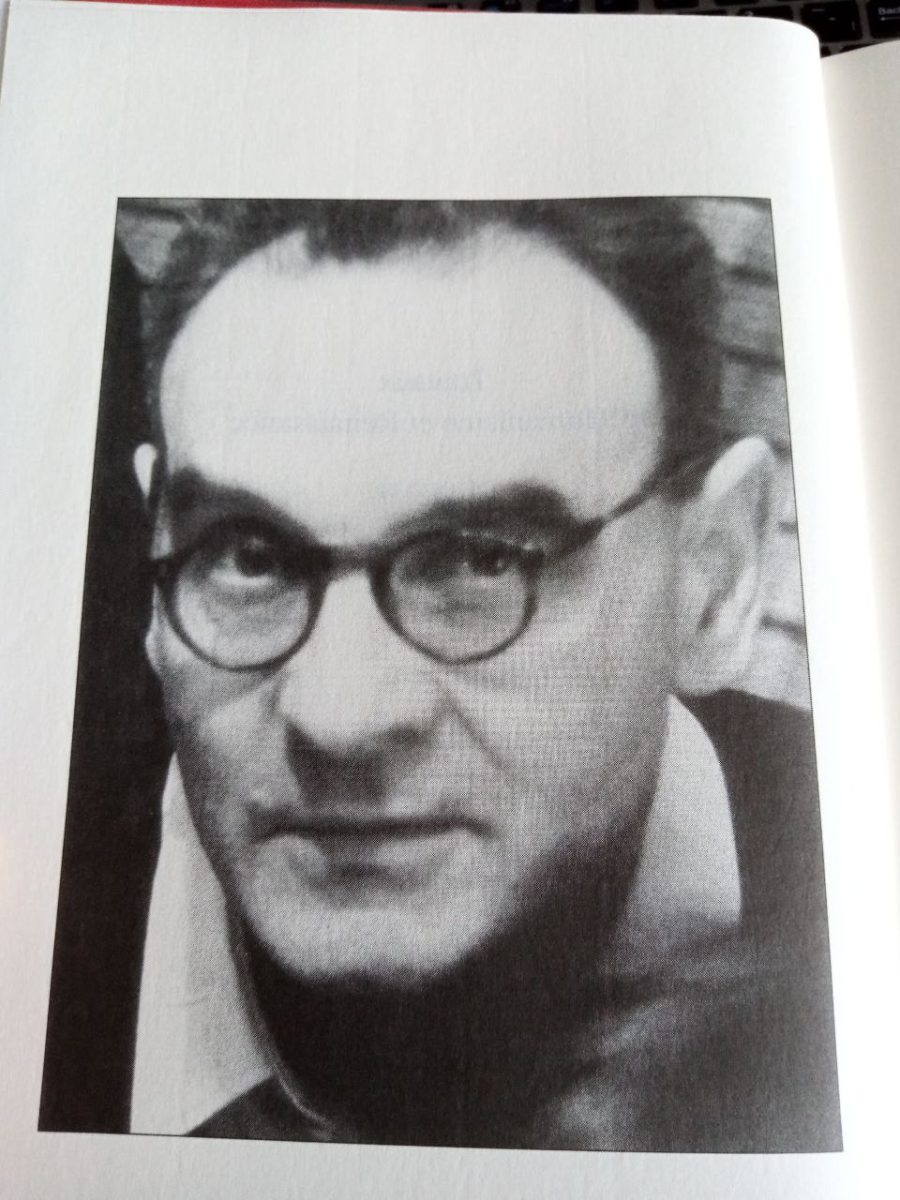
1. ‘Amen, which means Per Artem’,
presented and commented by professor François Secret’
In a treatise written by Guillaume Postel published by Claude-Gilbert Dubois, we find regarding Matthew 19-28: ‘Jesus autem dixit illis: Amen, dico vobis‘ (‘And Jesus said to them: Amen, I say to you‘ ) meaning ‘per artem‘. The explanation is found, as often, in another text. Therefore, we can find in the ‘Commentary upon Revelation III, 14′:
British Museum, Sloane 1409, f. 285r-v:
He says these things, ‘Amen, the faithful and true witness, who is the beginning of God’s creation.’
This word ‘Amen’ is of a truly great, indeed the very greatest mystery, and for this reason it has been preserved in all foreign languages at the end of vows and prayers, not without a mystical meaning. Truly, it signifies the Redeemer as faithful, truthful, and perfect. But especially we must take note of this entire title, which is the endpoint of the sevenfold period of the Church of God.
For since in the entire Scripture this word is never found except in the manner of one wishing, or indeed in the manner of one affirming (as has been believed and explained until now), it cannot be without great mystery that here it is so manifestly placed for the Son of God, who has the dispensation of the universe. Certainly, Christ in the Gospel always used it as a name and not as an adverb, yet in such a way that in the first three evangelists it is never repeated, but in the fourth and final Gospel of the eagle [John], except at the beginning so that it may be united with the preceding ones, it is always doubled, and not without a mystery it is repeated twenty-five times in it, as the fulfillment of the three preceding weeks into one statement.
And thus He wishes to say: ‘Amen I say to you,’ i.e., ‘I who am the Amen, the beginning and the end.’ And because in the first three ages of His Church He alone treads the winepress, and there is scarcely one living being with Him—since all of us, even the saints, to this day are separated from Him by the unlikeness of the flesh, even after the soul is restored through His death—therefore a simple ‘Amen’ is placed in the three Gospels corresponding to Nature, Scripture, and Grace.
But in the Gospel of John, where all things are restored and the human creature is renewed in the likeness of Christ, it will advance the glory of Christ and God. Therefore, ‘Amen, Amen’ is always repeated in John, except at the beginning, which corresponds with the end of corruption.
Moreover, it is clear among the Latin people that the principal meaning of the Redeemer, concerning Him who undertakes the care and risk of some great work, such as constructing a building, so that when he finally completes it he may receive the money under the name of the work, is understood. The reasoning for ‘faithful,’ ‘truthful,’ and ‘perfect’ is sufficiently clear. However, more will be said about this ‘faithful and true’ in chapter 19‘.
It is only after a delineation upon an immobile God, and a mobile Mediator, that Postel will give the source of his interpretation:
MS. Sloane 1409, f. 285v-286
‘Those 72 Elders, endowed with the spirit of Moses, handed down to posterity through sacred oracles that this ‘principium’ [beginning], of which Moses says, ‘In the beginning God created heaven and earth,’ is ‘Amen.’ But in a double significance. For it is AMN (אָמַן) or AMN (אָמֵן), the Redeemer ‘covered and humbled.’
Moreover, this word is rarely written by Moses with its letter Vau [i.e., as אָמֵן], so that, with it signifying all things, it can be interpreted in both senses. Indeed, they draw that meaning from the 8th chapter of Proverbs, in which the offices of the same Wisdom, both created and uncreated, are clearly explained, from what is said in our version [the Vulgate]: ‘When he prepared the heavens, I was present.’ For in Hebrew it says: ‘I was with him, and his emanation [was] AMN (אָמוֹן),’ which is read without a Vau, so that it is free to read there Amon, Aomen, and Amen.
But [they distinguish] two different aspects of Wisdom…they note so secretly and humbly that it is read as AMN (אָמוֹן), the ‘pedagogue,’ for the hidden wisdom or redemption. If, however, it is read as AMN (אָמֹן), let it be as a ‘nurse,’ a meaning which is drawn from Esther, where it is said: ‘And he himself brought up Hadassah’ (that is, the myrtle), who is Esther. For in that one word, those two things needed to be joined: that for spiritual and formal things, he should be a ‘pedagogue,’ doing those things which he saw the Father doing. But for material and sensible things, it was necessary that, as a ‘nurse,’ he should educate and nourish all things with a certain material and sublime milk‘.
It is what Postel had translated, at the beginning of the Bereshit Rabba:
MS. Sloane 1409, f. 2r-v
‘Rabbi Hossaias [began] with a feminine voice, great [is the theme]: ‘I was, I am, and I will be with him, brought up…’ and ‘I was, I am, and I will be his delight from day to day.’ (This is the statement of the divine Intelligence and of Wisdom itself, eternally, inseparably, and unconfusedly united, written in the 8th chapter of Proverbs to teach that: just as God, who is the Form of forms and entirely immovable with respect to particulars, willed to reveal Himself to Moses under the repeated name ‘ehieh asher ehieh’—that is, ‘I WAS, I AM, and I WILL BE who I WAS, I AM, and I WILL BE’—so too He willed to give all His things to this His emanated Nature. Concerning which, Aristotle rightly said that God and Nature act and are one, so that they can do nothing in vain.
But this emanated Nature holds all things by a mode of distinction, which God contains from eternity by a mode of equivalence. Thus, [Wisdom] itself is ‘brought up’ with God inseparably, so that all things are poured into it as seed into a mother, drawn from the man sowing and transferred into her. And whatever things are of God Himself are also of this [Wisdom]. Therefore, even all the highest names of God apply to this second place, just as to the Active Intellect, the Passive Intellect, and the made [intellect], to the arbiter of the form, matter, and composite of the universe: ‘Amon’—that is, the ‘brought-up pedagogue’ (because it receives all God’s creatures into its bosom), the ‘brought-up craftsman,’ or the ‘veiled Artisan,’ the ‘humbled Artificer.”
A note by François Secret: Cf. Midrash Rabbah vol. I Genesis Rabbah, trans. B. Maruani and A. Cohen-Arazi, Paris 1987, p. 31 ff. on Amon: pedagogue, enveloped, concealed, eminent, Ouman: artisan. Postel could not be satisfied with this explanation. In his translation of the Zohar on Genesis, MS. Sloane 1410, f. 308v, regarding ‘Amon pedagogue‘ Postel writes: ‘Quum autem sit ille filius, soror, conjux et amica Dei et speciali nomine אילן et אילנא, artifex et Arbor universi’ and in English: ‘But when that one is the son, sister, spouse, and friend of God, and by a special name אילן and אילנא, the artisan and the Tree of the universe‘ (The Tree of Life).
*
2. ‘The Difference between Jesus & Christus
in the writings of Guillaume Postel’
If it happens quite often that Postel uses indifferently the terms of Jesus Christ, Christ and Jesus, he does distinguish their values notably in his early texts written while he was living in Venice. In his ‘Commentary upon the book of Revelations‘. He insists as early as in the title: ‘The Apocalypse of Jesus, which is the revelation about Salvation and the Savior’:
Ms. Sloane 1409, f. 232
‘God, therefore, from the beginning of the world, reveals Jesus through the things that have been made, so that Jesus himself may reveal God. For this reason, it is called the Revelation of Jesus […] This is the revelation of Jesus, who is not only Jesus, but Christ. For to no one is the governance of the universe more deservedly owed than to the author of the universe himself, who set in motion the source from which all things are composed, so that he can restore all things. Hence it happens naturally that all peoples, hoping for Jesus incarnate and as king, desire a salvation very widely available, so that although they may never have heard of that king and saviour, they all nevertheless desire the highest good, Jesus, to appear to the whole world in the unity of empire. Whence it happens that that revelation which is made through nature and grace from the creation of the world deals with nothing other than Jesus Christ, so that finally through him we may come into the knowledge of the Father.
Through nature we know that the ages always progress, and much more so through the power of the intellect, from which, however, it is necessary to arrive at the revelation of the cause of the universe, through which all things are received and preserved in safety. Through grace we know this very thing when, by the authority of the ancient interpreters of the Law, it is established that the whole Law tends only to the revelation of Tiferet and Shekhinah, i.e., of the Messiah in his humanity and dwelling in us, through whom, therefore, all prayers by that name end and sometimes begin, because no one goes to the Father except through him. In the New Testament, however, Peter says: ‘We are kept by faith for the revelation of Jesus Christ, and the salvation ready to be revealed at the last time,’ by which argument it is clear that at some time that salvation will be revealed to the whole world, which the whole world, without seeing it, believes in and seeks‘.
By interpreting Revelation XIX, 12: ‘And there is a name that nobody knows, if it is not Himself’, Postel notes: Here we are speaking of Jesus, to whom the Father gives a name which is above everything, a name before all kneel (Philip. XI, 9). But also Ms. Sloane 1409, f. 364: ‘But since God is entirely impartible and in no way communicable according to his substance, yet we cannot obtain immortality except from him. It is necessary that we receive eternal essence from his name Jehovah, through Jesus‘. As there is nothing that He does not transmit, Christ will give first to the ‘restored‘ the mystery of His name, so that nobody will know it but the person who has received it on a white stone.’ (Revelation, II, 17) (An expression common in Postel. On this text of the Apocalypse, cf. Sixtus of Siena, Bibliotheca sancta, Paris 1610 ed., p. 46, quoting Arethas, Bishop of Caesarea: ‘Moreover, to the one conquering the devil, he promises a white stone, i.e., a reward shining with honour and fame. He used, however, in this place, ‘a white stone,’ because it was known to those who used to compete in theatres and stadiums. But the ‘new name’ is the reward of eternal beatitude, which they ignore in the present life, for ‘eye has not seen, nor ear heard, what things God has prepared for those who love him’ […] when we enter into their possession after this life‘. Because there is but One God Christ, in whom Christ lives, in other words, the mystery of YHWSAinH, in whom there are YHWH together with YSWAinH. Here it is in Ms. Sloane 1409, f. 398: ‘This is Jesus, to whom God the Father has given the name that is above every name, so that in the name of Jesus every knee should bow. But because Christ has nothing that is incommunicable, He will therefore give to those first restored the very mystery of His own name, so that none may know it except the one who has received it in the white stone. For God alone is the Christ, and those in whom Christ truly lives will know the mystery יהושע, in which is יהוה with ישוע (Yehosah)’.
The reading of Jesus in Hebrew is not the one Reuchlin proposed in both the ‘De Verbo Mirifico‘ and in the ‘De Arte Cabbalistica, the Tetragram, YHWH made utterable with the letter Shin replacing the abreviation IHS. It is not also the YSW, YSU of Francesco Giorgio Veneto’s ‘De Harmonia Mundi‘. Indeed, Postel writes:
Ms. Sloane 1410, f. 291v-292
‘Rabbi Hiyya said: There is nothing new under the sun. And here (in Psalm 93:1): ‘He saved his right hand for himself’… This is new, and it is under the sun, because it must be under the sun, and what is it? It is the Moon. And so it is new under the sun. Why? Because he has done wonderful things. And what are these wonderful things? Those which are written: ‘He saved or jesuavit [made Jesus] his right hand for himself‘ […]’
or here again, Ms. Sloane 1410, f. 604r-v: ‘Because on the northern side there are many ravaging spirits of evil prepared there. And there are evil cohorts ready to bring harm to the world. And therefore Jacob prayed, saying: But I will wait for Jesus, or for your salvation, Jehovah. Among all the tribes he did not say ‘in Jesus’ or ‘in your salvation’ except in this one‘.
Postel models the SALUTARE tuum of the Vulgate (Gen. XLIX, 18: YSWAin) on Jesuah, though sometimes on Yehosuah; and in a text from 1580 he will say that Jesus is “in a manner altogether most eminent Iess, that is to say Being,” adding: “One must derive the etymology of Jesus from Yes, Yesu, Yesuah, Iess, Iessu, Jasusah, that is to say Ens [Being]; Jesus, the thing saved of the whole of nature, is the dwelling of the entire world where all things are, before and better than they could be in themselves.” And in a passage of the Zohar on Joshua (Yehosua), he writes:
MS. Sloane 1410, f 90
‘Joshua had received a crown like the others on Sinai, and had sinned; and yet he wanted to lay it down and die, because the just man who accuses himself is all the more just the more he accuses himself, because the only just and upright Lord loves such justices, because in this all the just see their faces; but there is a mystery here, for this Jesus, the successor of Moses, is the type of the true Jesus, successor of the Law, indeed more, of its very author, indeed more, he is the Law. As Jesus was the immortal Messiah, he, though innocent, wanted to die for the unjust, to lay down the crown of his immortality, which is the act of infinite justice and merit; but he was called by the name of Jesus for the salvation brought to the people led into the holy land, which is common to him as it is to Paul, who was caught up to the third heaven. For he says [Heb. 4:8]: ‘If Jesus (Joshua) had procured rest for them, he would never have spoken of another’, which is true of the typological Jesus in relation to Christ, but even more true of the manifest Christ in relation to the same latent one, who must arrive for all in the second advent. For if Jesus had procured absolute rest by redeeming the soul with the blood of immortal life shed in death, Scripture would never have spoken of another, saying [Acts 3:21]: ‘It is necessary for heaven to receive Jesus until the times of the restoration of all things’, when he will come in his second advent, to complete the redemption both of the first, typological Jesus and his own’.
In many other passages, Postel refines further in crafting a ‘Christus masculus et Jesus femina‘. Hence in the Zohar:
MS. Sloane 1410, f. 82
‘The first house is the written Law, masculine, whose lower beginning is the inferior Abraham, whose end is Christ, masculine and suffering, its duration lasting to this day among the blind people. The other Law, that of the mouth, now being born, is feminine, whose obscure beginning is the 70 elders, whose end is the Zohar, a clear light now being disclosed under Jesus, the feminine restorer of the flesh, in the Grace of God, destined to last eternally until not one iota or one apex of it, through its innumerable senses being examined, remains untouched, and until not only all things are known, but are done‘.
Postel calls from time to time Mother Johanna ‘Jesusiohanna our androgyn‘, but the gender can change according to the relationship towards God or towards Man, hence:
MS. Sloane 1410, f. 458v
‘Truly, the Church of Israel said that [sentence] to its King Solomon of its peace (for all the particular deeds and sayings which are in the Sacred Scriptures must necessarily be understood in their highest sense concerning the female and the male: first in [physical] sex, then in the body and the soul, thereafter in the Church and Christ, then in the Church and Christ together—and here is the androgynous Joseph, having in himself the rights of all according to the will of the Father, and pairing the rights for all and conferring in act liberty in the midst of Egypt to those true Israelites who are nothing other than shepherds of sheep redeemed by blood, thinking only of leading the sole man to his end. The ultimate [sense] is concerning Christ, who in relation to God is female, in relation to the creature, male, and concerning God himself, who in his immobility is male, but in his mobility [is] female, conceded to his Christ‘.
Or again:
MS. Sloane 1410, f. 457v
‘We read that [Ps. 122:3] God made the lower Jerusalem (the mother of the world) on the model of the superior one (of the glorious Christ), and she is fitted to her, as it is written [Exodus 15:17]: ‘the sanctuary, Lord, your hands established.’ For God was ready to bring down the superior Jerusalem as is fitting, and it was built. One should have said ‘they joined’, but the mother was associated with the daughter (for there are two women who propagate the name Christ and Jesus; also, the demonstration of his greater perfection is accomplished in the woman), and the two are one as was decreed‘.
Is it necessary to recall that Henri Bernard-Maître published the noteworthy pages of ‘Des merveilles des Indes et du Nouveau Monde‘ (‘On the Wonders of the Indies and the New World‘) where the location of the Earthly Paradise is shown, from 1553, both in his article for the revue Recherches de Science Religieuse, ‘Aux origines françaises de la Compagnie de Jésus. L’apologie de Postel’ (‘The French Origins of the Company of Jesus. The Apology of Postel’), & in his article for the revue Monumenta Nipponica, ‘L’orientaliste G. Postel et la découverte spirituelle du Japon en 1552‘. (‘The Orientalist G. Postel and the Spiritual Discovery of Japan in 1552‘).
Therein, one finds one of the sources for Postel’s long meditation on the name of Jesus. There he pays homage to Ignatius of Loyola, who was ‘the means of giving me the true knowledge of myself, as natural as it was supernatural‘, and to Francis Xavier.
Source:
*
*
*
Coming soon:
A Little Guillaume Postel Sampler: Part 6 –
‘An explanation, in the manner of a Commentary, by Guillaume Postel,
of the Sibylline verses transcribed by Virgil in his Fourth Eglogue’.
***
Related Articles


Leave a Reply