
Circle of Transmission: The Living Loom
A Little Hadrian von Mynsicht Sampler – Part 1: A Contextual Introduction, followed by the Thesaurus et Armamentarium Medico-Chymicum’s Epilogue & The Testament of Hadrian
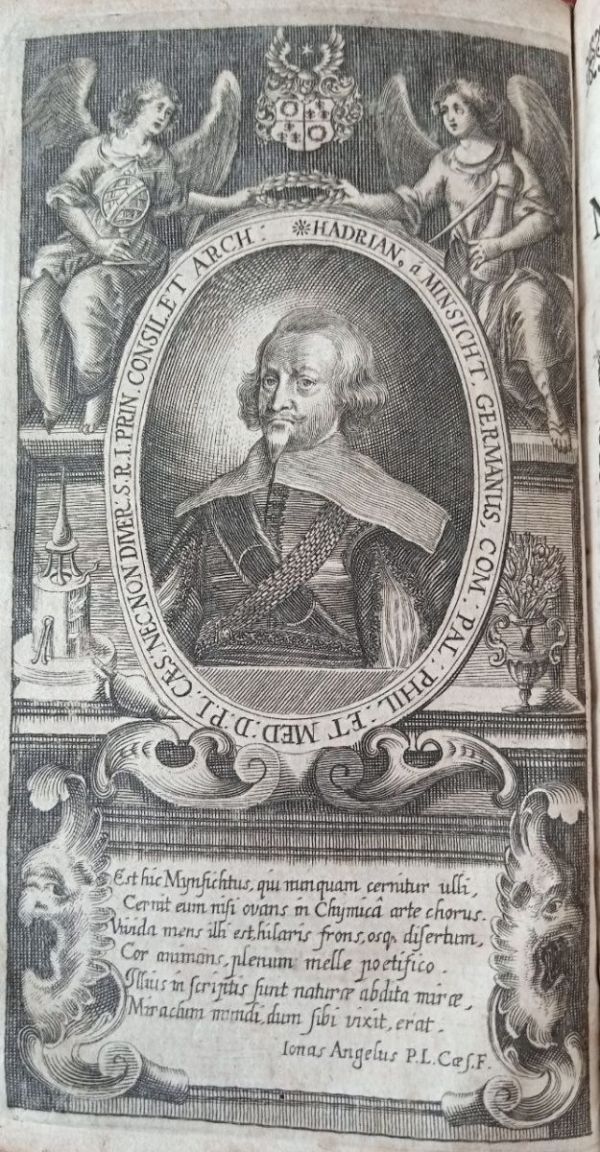
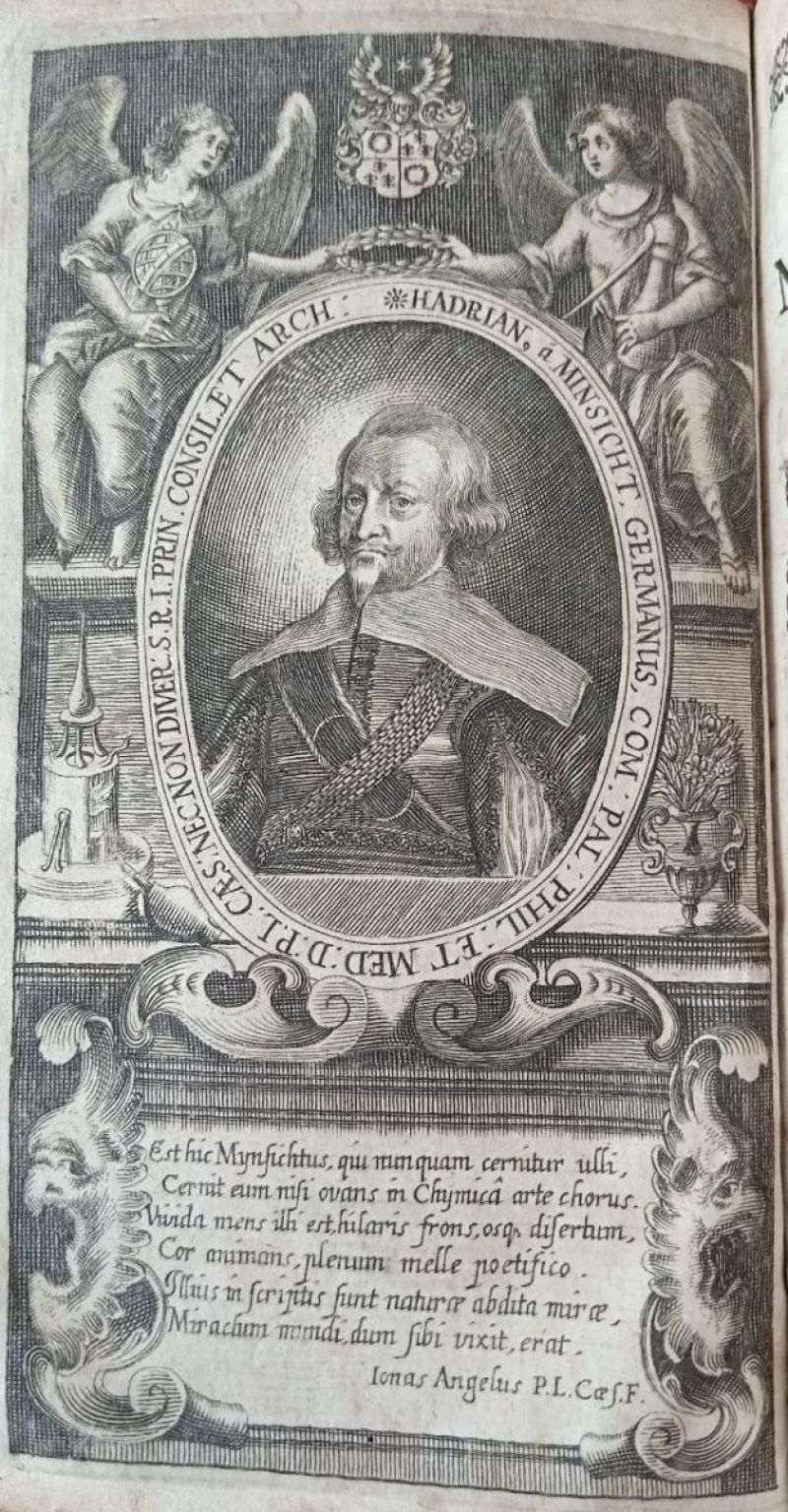
‘Hadrian von Mynsicht, Architect and Musician of the Prince’s College, Counsellor to the Holy Roman Empire in Various Councils, and likewise a Gallo-German Count Palatine, Doctor of Philosophy and Medicine’.
A Portrait facing the author’s forewords of his 1675 ‘Thesaurus et Armamentarium Medico-Chymicum‘. The legend translation is as follows: ‘Behold the sage Mynsicht—unseen by mortal eye, known only to the alchemists’ triumphant choir. Long live to that joyous mind, in chemistry’s bright dance, a heart ablaze with song, with honeyed verse entranced. His works conceal deep wonders, nature’s secret art— A living miracle: in life, he was the of the Heart‘. (poem written by Jonas Angelus, Imperial Crowned Poet).
*
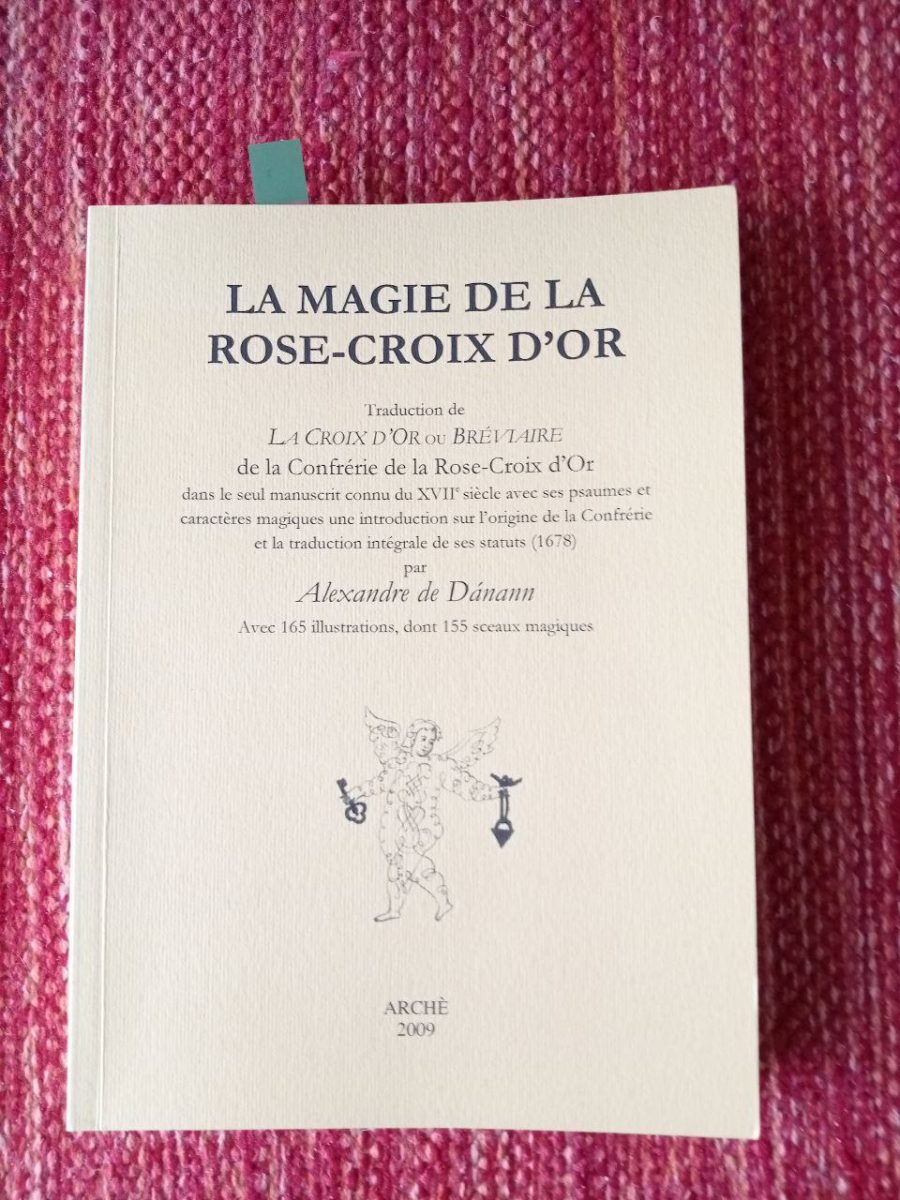
Today’s sharing from the Blue House of Via-HYGEIA is the first of a planned few dedicated to the memory of Hadrian von Mynsicht and his alchemical and hermetic legacy. The contextual introduction comes from the introduction of ‘La Magie de la Rose-Croix d’Or‘ by Alexandre de Danann (Alessandro Boella & Antonella Galli) published by Arche Milano in 2009. From page 15 & 16.
Then follows working translations of the Epilogue from Mynsicht’s ‘Medical-Chemical Treasury and Arsenal‘ & of ‘The Testament of Hadrian, concerning the Golden Philosopher’s Stone‘.
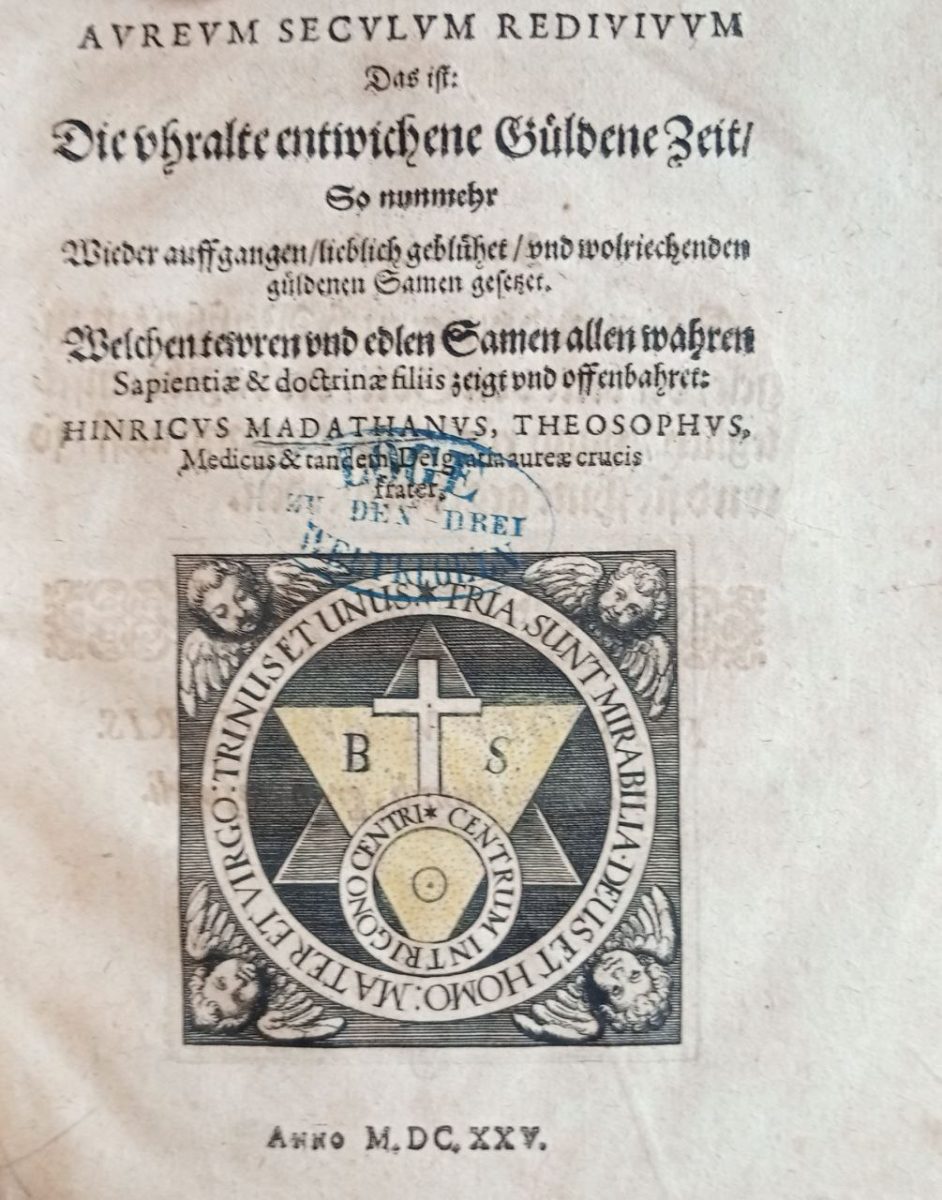
Part 2 of this Little Hadrian von Mynsicht Sampler will offer the 1625 German edition of the ‘Aureum Seculum Redivivum‘ (‘The Golden Age Restored‘) and its English translation.
We are very surprised that there are no academic translations of the ‘Thesaurus‘, as it contains many alchemical and spagyric recipes-but also many formulas that have long now integrated modern medicine-many to be found in the Viscount of Lapasse‘s ‘Treatise on the Preservation of Life‘, in which he gives a few of Cagliostro’s formulas.
This sharing of such an important work is but ‘an imperfect work in progress‘ and its only aim is to give a taste of the texts’ wealth, embedded with Wisdom & Love. Hopefully, a daring publishing company one day will provide us with a full translation and editions of this masterpiece for the common good of the English speaking community!
**
1. A Contextual Introduction
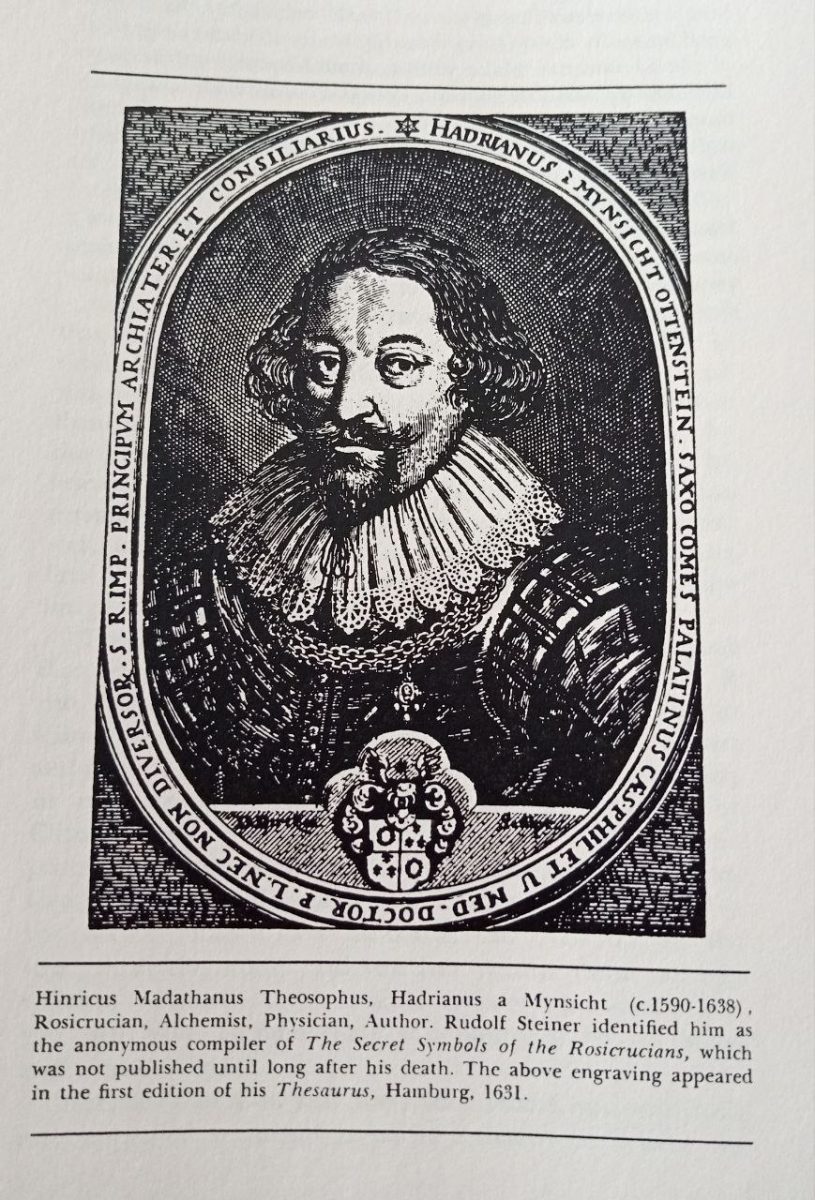
Madathanus (Madasthanus, Madastanus), pseudonym of Hadrianus à Mynsicht, born in 1588 in Ottenstein, in the Braunschweig district, doctor of medicine in Helmstädt under the name of Tribudenius, who called himself Mynsicht after his ennoblement.
This latter name would in fact be a transposition of Symnicht, which would itself be yet another modification of his real name: Sumenicht or Seumenicht. Another pseudonym, as well as the anagram of Henricus or Hinricus Madathanus, is Harmannus Datichius.
He was a physician and chemist, count palatine, imperial crowned poet in 1631, councilor and physician to Duke Adolphe Frederick of Mecklenburg. He died in 1638 in Schwerin (Neue Deutsche Biographie, Berlin 1997, vol. XVIII, article Mynsicht).
Mynsicht is best known for his allegorical alchemical text ‘Aureum Saeculum Redivivum‘ (‘The Golden Age Restored‘), in which he crafted a symbolic alchemical poem depicting the Philosopher’s Stone’s creation, echoing the Paracelsian school’s esoteric style and concepts from works like ‘Archidoxis Magica’ (1591). It was published pseudonymously as Henricus Madathanus around 1621–1622 and later reprinted in major collections like the Musaeum Hermeticum (1625).
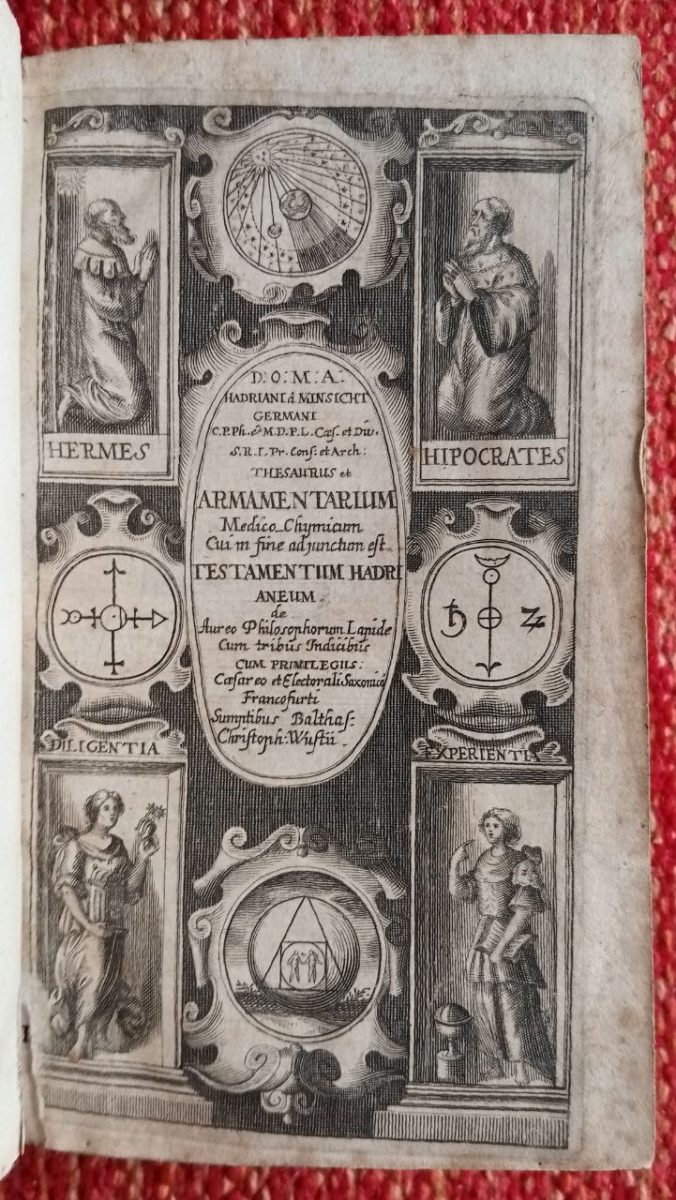
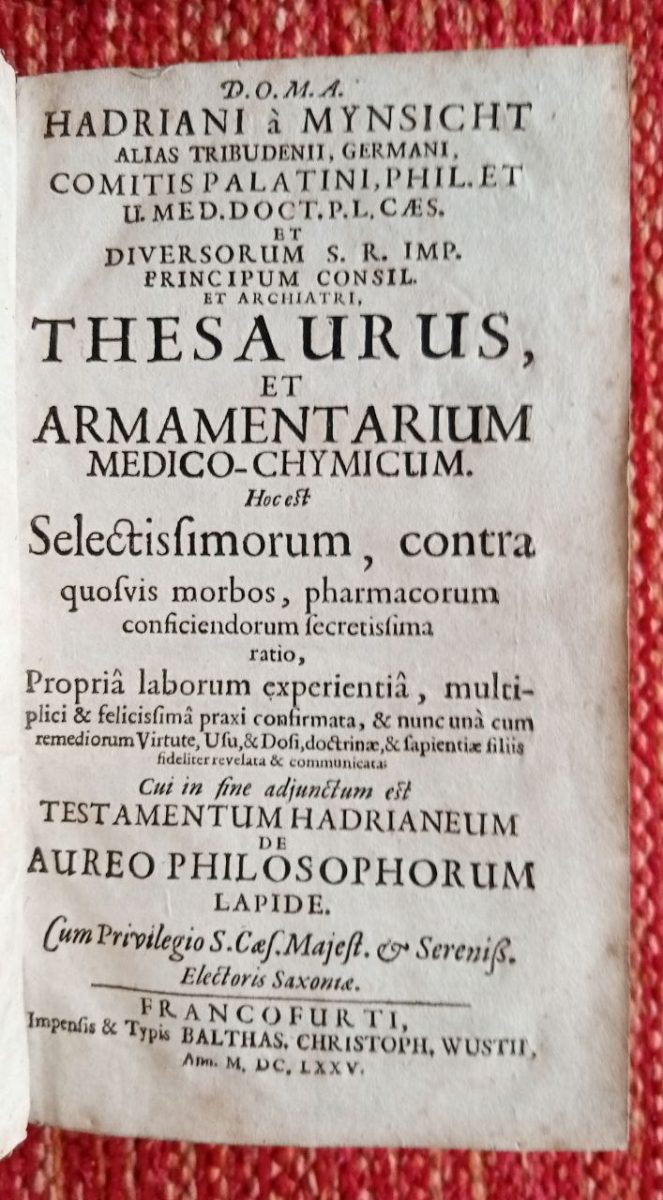
His ‘Thesaurus et Armamentarium Medico-Chymicum‘ offered over 800 spagyric recipes using minerals such as antimony and mercury to treat diseases like plague and syphilis, directly implementing Paracelsus’s doctrine that chemical processes unlock nature’s healing secrets and that physicians must master chemistry. Through these texts, Mynsicht bridged Paracelsian theory with sound clinical practice, helping sustain and spread the movement’s challenge to traditional Galenic medicine. Many reprints followed the 1628 first edition and we used both the 1641 and the 1675 editions to prepare this post.
Finally, Rudolph Steiner said he believed Mynsicht to be the driving creative force behind the study-book ‘Geheime Figuren der Rosenkreuzer aus dem 16ten und 17ten Jahrhundert‘ which was published a very long time after his 1638 death, in Altona in 1785.

*
*
*
2. The Thesaurus’ Epilogue
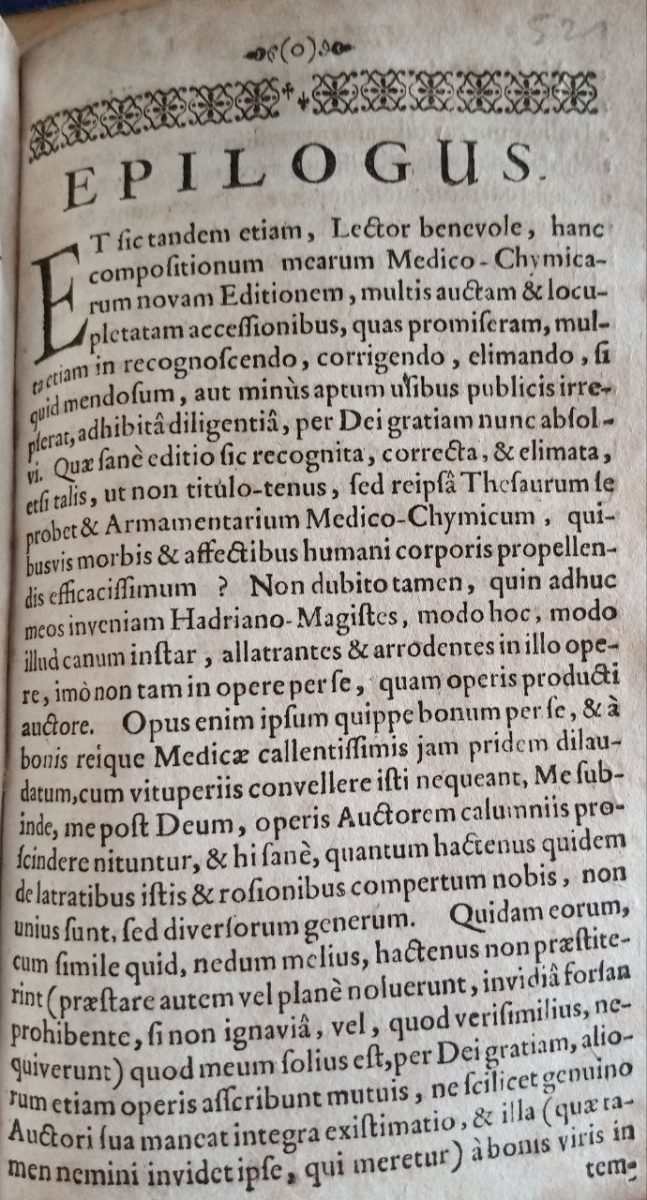
Thus at last, benevolent Reader, I have now completed, by the grace of God, this new edition of my Medico-Chemical compositions, enriched and augmented with the many additions I had promised, having also applied diligence in reviewing, correcting, and polishing it, should anything erroneous or less suitable for public use had crept in. This edition, thus reviewed, corrected, and polished, although such that it proves itself to be, not merely in title but in reality, a truly effective Treasury and Armory of Medico-Chemical remedies for driving away all diseases and affections of the human body; I nevertheless do not doubt that I will still find my ‘Hadrianomastiges‘, ‘Hadrian-slanderers’, who, like dogs, now bring this, now that accusation, snarling and gnawing at that work, nay, not so much at the work itself, as at the author of the produced work. For since they are unable to assail the work itself with reproaches—as it is indeed good in itself and long praised by good and most skilled men of Medicine—they strive to lacerate me, me, the author of the work, God’s follower, with calumnies.
And these, certainly, as far as we have ascertained concerning those snarlings and gnawings, are not of one kind, but of diverse sorts. Certain of them, since they have not produced anything similar, let alone better, hitherto (either they did not want to, perhaps envy preventing them, if not laziness, or, what is more likely, they were not able), they ascribe to the works of others what is mine alone, by the grace of God, lest, forsooth, full esteem remain with the genuine Author, and those monuments (which yet I myself, who deserve them, envy no one) long since suspended in the temple of fame and good mind by good men. And so, to tear these down from their place, or at least to sprinkle them with the stains of suspicions, they strive to assault and attack with various missiles gathered here and there, yet vain and powerless.
The principal accusation, and which they think is the prize-winning one, is this: ‘Art is long, life is short‘; therefore, they say, how can it be that so many disparate, particular experiments, requiring very long experience throughout the whole Medical art, are of one man alone? I could here, if I wished, recount at length what and how much others, before me, both in this and in other faculties, have singularly accomplished, each in his own way, with great praise and admiration, and that in years of their life not so very numerous; but, those men now dismissed, I will speak only of my own labor, by the grace of God most successful, with which I am now engaged. I have found this labor difficult, I admit, and very demanding; but yet finally, God inspiring, so surmountable, that those things which through Him, from the light of grace and nature, were discovered at great expense, and have been successfully applied and approved in very many years of my life in many and various cures as much of great Princes as of others, I have not been ashamed to emit into public light out of love for promoting the public good.
If the envious still persist in denying that these published things are mine alone, come, let them demonstrate at last by whom and through whom they were otherwise discovered, by whom and from what other men they were communicated to me. But since this demonstration by those men seems unlikely to succeed as wished, with them failing and succumbing, another cohort of others, having taken the place of those prior wicked ones and attempting to bring subsidiary aid, tries to ascribe to a familiar spirit whatever has been accomplished in this small work—praiseworthy indeed in itself, even to them, commending itself by its own goodness, like a saleable wine, they ascribe it to a familiar spirit.
They would be right indeed, if by this spirit they understood first and principally Him who works all things in all, from whom, and in whom, and through whom are all things, in whom we live, move, and have our being, namely the divine and omnipotent Spirit, familiar with all good things. To Him alone, the giver of life and mover of all things, I uniquely attribute whatever good is here. And I pray to Him with daily prayers that He may always be and remain most familiar, clement, and propitious. If then, secondly and subordinately, by the name of that familiar spirit, they meant either him who is given and born with me by the gift of that omnipotent Spirit, and so instructed and equipped by the principal cause for undertaking this labor and producing the effect, as a ministering and instrumental cause—namely, the force and genius of the mind, informed, illuminated, confirmed by art, use, and experience—without which familiar Spirit, inseparable from any actions, words, and thoughts of my life, there would daily be, to be sure, little distinction between me and a brute animal, nay a trunk and a block.
But in truth, since it is clear by not obscure indications what kind of spirit, familiar and suggesting all things to me, they intend—namely, that one who, surrendering himself to the services of reckless men impiously desiring his clandestine suggestions, sometimes allows himself to be enclosed for a time in crystals, rings, or other prisons, to be bought and sold, sent and returned, often to the supreme peril of both soul and body of the possessors—deservedly indeed, relying on the testimony of my conscience, innocent of those impious slanders, and on God Himself, the searcher of hearts, I deem these calumniators, who attribute the gifts of God conceded to me by divine gift, evidently used for the glory of God and the salvation of men, to an evil demon, not without the horrendous crime of blasphemy—deservedly, I say, I consider these impious blasphemers worthy of no other place than that in which our Christ Himself placed the Pharisees, that brood of vipers, attributing divine works to Beelzebub… To that worst demon and Satan, therefore, who odiously attributes those gifts, divinely granted for the salvation of men, in the Pharisaical manner, so that they merit the same Satanic and Diabolic name and title as their author, they will also not escape, unless they seriously repent, a punishment worthy of such a nefarious crime in due time.
Besides these, finally, I experience the forward and shameless audacity of others (shall I call them Cata-pancratiasts, or Cata-pancritonists?) who, according to their custom and canine impudence, with which they snarl at everything, snarl, gnaw, magnify nothing but their own things, but despise all other things, even the more liberal arts and sciences, however little tasted by them, with a lofty verdict, and they pursue them not only with laughter and hissing, but moreover with scurrilous insults, proclaiming them vanities, trifles, dung. With the same rashness, without a doubt, they will also arrogate to themselves the task of breaking Me and My things; forgetful, indeed wretched fellows, foolish and half-baked pseudo-Doctors, nay, if I should call them by the title of commentators, ‘Asses of Cumae‘, how scant is their supply both of Medical matters and of other arts and sciences.
But, as the proverb says, ‘The more ignorant, the more imprudent‘, this has befallen our these Zoiluses and Aristarchuses, if it pleases the Gods, most sharp censors. Since they cannot become famous by their own virtue and fame, attempting the matter another way, by detracting from the virtue and fame of others with calumnies, but magnificently boasting of themselves and their own things, especially among the ignorant and simpler, they hunt for praise and glory for themselves, mindful of the proverb… But oh, that wretched praise, that vain and empty little glory! Which, if one must get to the point, and dance in Rhodes like prove oneself in that of which they so utterly and more than Thraso-like boast, clearly vanishes, and so undergoes the fate of Icarus, whose temerity it arrogantly emulates, with equal disgrace, so that it finds a place for that Horatian saying: ‘Could you refrain from laughing, friends?‘ By which his certain ignominious fall, which it draws upon itself (I speak of things seen and known), that affected glory finds no curable remedy in all its de-coctions or re-coctions, let alone seals, amulets, and a thousand other vanities…
But why should I say much about this family of Thrasonical Censors, admiring only themselves and their own things, but marking the works of others, whatever they may be, with a black coal according to their own authority and license, which they arrogantly assume for themselves? The sow convicts itself by its own evidence. So our those Censors, with their rash and insipid judgment… For which they merit no other reward than what Midas once received when he judged concerning Phoebus: ‘King Midas has ass’s ears‘…
And this, without envy, let our Midases have for themselves as a reward, and let them, conspicuous by this, please only themselves, abound in their own sense, and persuade themselves that they alone know and are able to do what men wonder at. I meanwhile shall not cease to serve the Medical Commonwealth with that talent conceded to me, and to spend oil and labor for promoting the lawful advantages of you, candid Reader.
In which matter also, yielding to the encouragements of my friends, nay, of Princes and Magnates, in publishing this as well as the former work, I have learned not to fear the canine snarlings of barking Zoiluses. Indeed, I had first collected these things for my own practice only, as a storehouse for daily supply, so that I might always have them at hand wherever I was, both at home and abroad, then being unconcerned about their publication; but the authority of the primary Physicians of almost all of Germany, urging and persuading the edition with me, finally prevailed, so that I changed my mind and allowed what had been collected for private uses alone to go forth into public, being mindful in this part also that I was born not for myself alone, but for others also, who need my work.
To such as these, therefore, and not truly to those Aristarchuses, admiring nothing but their own things (whose judgments, since they themselves, still ignorant of the very foundations of Medicine, or preoccupied by some nasal defect, or even offering judgment on our things with unwashed hands and feet from a recent stable, precipitously judge these things to be partly virulent, partly imperfect, useless and superfluous, yet have not brought forth anything more ingenious, more excellent, and safer into the open hitherto—these I certainly do not delay for)—to these good men I willingly wished to communicate my things, and to hide nothing enviously, to this end: that for the glory of God and the utility of neighbor, he whom it pleases may use it, and even flee hither as to a refuge, if anyone, placed in peril of health and life, should desire help; nay, that from this, as from a most well-equipped Armory, he may draw forth salutary arms, remedial arms, against any diseases and affections whatsoever; the varied and multiple use of which, as it most abundantly supplies, so it most evidently approves to those using them. Which the fundamental and Dogmatic Physicians, and all the sounder Practitioners, of whom there is no lack of use, will affirm with full voice. Try, you who wish, the outcome itself is enough here for praises. But if these things cannot nevertheless please and satisfy all, I think it is enough if they please the good and skilled.
And these things, sincere Reader, spoken in place of an Epilogue concerning our ‘Medico-Chemical Treasury and Armory‘, produced not without the greatest labor and sweat, let them suffice. Which indeed, now enriched with not a few of those additions promised in the previously published Treasury, may you use and enjoy for a long time, until, if it should be permitted by divine favor, other, perhaps far more secret things, no less the inventions of my own genius, may follow in their own time into the light, and for the eternal benefit of the whole Medical Commonwealth. Meanwhile, farewell, and likewise increase me by your steady work and prayers.
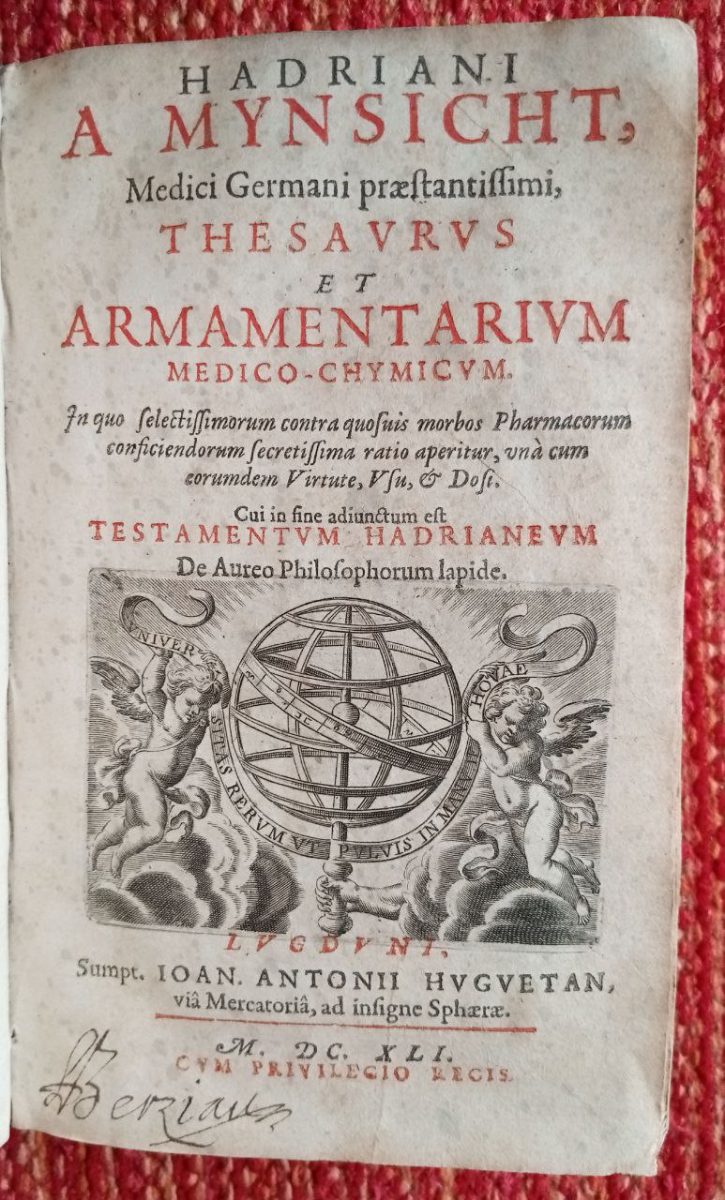
Original Latin
Mynsicht-Thesaurus-1641-epilogus
*
3. The Testament of Hadrian
*
To the disciples and heirs of the Great Hermes Trismegistus
and to Posterity, who will remember and be grateful for the blessing.
About those others who, in their discourses, increase the faculties of the mind — often forming opinions, refining them with elaborate care, issuing yearly, biennial, or triennial reports, burdened with entrusted duties, audits, and restitutions, which they imagine to be blessed things.
However prudent any of them may be, they still wander in that common hallucination of the mind, straying through their own self-made paths — some exhausting their strength upon mechanical arts, others consuming their time and patience upon idle ideas.
But we do not, for your sake, present something like Daedalus’ entanglement, nor Tantalus’ elusive apples, nor the suspended labors of Ixion: we do not weave fictions or shadows.
Instead, we bring before you the ultimate work of Colchis (that is, the Philosopher’s Golden Fleece), and we show forth the Saturnine kingdoms and the blessed and ratified hours of the goddesses — recalling the beatific estates of the divine powers.
Professing sincerely that in Sulphur, Salt, and Sol the true nature of all things lies hidden; and as if leading Theseus by Ariadne’s thread, we guide you through dissolution and coagulation — that feminine and abject work — (the “solution and coagulation” being the two alternating poles of the alchemical process).
We show the office of the union: how twice, from one thing, two arise, and again how these two unite and return into one circle (the coniunctio oppositorum, the return to unity).
Finally, we sing and commend the bold labor of Fermentum (fermentation) and of Mulciber (the divine Smith, Vulcan) in the work of digestion — that is, the secret heat which perfects the stone.
Neither do we offer you conjectures from the Mantica (prophetic guessing), nor the progressive interpretations of Vasquius or the Britons, who only aim at ultimate knowledge.
More clearly than the majesty of the thing itself will allow, we unfold to you — when the Archeus (the inner vital spirit) has been unlocked — how the immaterial becomes material, and, breaking open the shell of nature, we reveal the kernel (that is, the essential seed of the work).
We are not imitators of Ramon Lull’s Testament, but interpreters.
Therefore, be steadfast in spirit, and show yourselves worthy — so that you may become heirs to that noble treasure of the ancient Titan (alike Promethean wisdom).
And this shall come to pass when you find your friendly and gracious Nature, your Aphroditic and Marian consort, in her own bath — that is, when you discover the radical moisture and universal solvent in its natural conjunction and purification — whereby you may both increase and multiply.
Farewell, i leave this work to posterity:
May you SAVOR the trust of Hermetic inheritance!
*
TO THE ILLUSTRIOUS AND GENEROUS
COUNT AND LORD, LORD GEORGIUS LUDOVICUS,
COUNT OF SCHWARTZBERG,
LORD OF HOHENLANDESBERG, etc.
His Sacred Imperial Majesty’s Councilor, Chamberlain, and Supreme Marshal of the Court, his most kind Lord. Mindful of those things, Generous Lord, which, after illustrious concessions, with Phoebus auspicious, your countenance recognized, where the great-souled hero Tilly lay down, pierced by fire-vomiting metal; nay, when afterwards threatening Sicilian plague, meeting with fatal blows, harrowed your very fibers equally for Him and for You; yet driven away by the force of our Art, blessed by the sacred breath of the Deity: What benefits, what Grace then accompanied my Muses! And how gratefully did Apollo then recognize the honor of so great a Patron!
These things sit in my mind as if memorable, and shine forth deservedly. Where it is right, they loosen my grateful lips in speech: Thus, given to come forth, why should I not now, with a longer handle, allow those same things to go forth and travel through the learned world? It is a great glory for him to have had the exalted minds of his followers as cultivators of studies. What hero is more illustrious in doctrine, even in this, which reveals the secrets of nature, which searches out the chemical riches, and the Philosophers’ Stone?
This one (for what is more precious than a Philosopher?) while I offer, described in these Testaments of nurturing Wisdom, in the usual way, so that I may publish it more worthily, unless by this safeguard, your virtue, Illustrious Count, well-known to the Phoebus-born men, rightly claims for itself by right, and that knowledge of yours of a rare example. Therefore, accept graciously what is owed by these titles, accept, and defend with the shield of Favor, O Generous Count, to be remembered by our Muses, while Apollo will move the mind to these, the voice, the plectra!
Most devoted to the Illustrious and Generous Lord,
HADRIANUS A MYNSICHT
Count Palatine, Doctor of Medicine, Laureate, Imperial, etc.
*
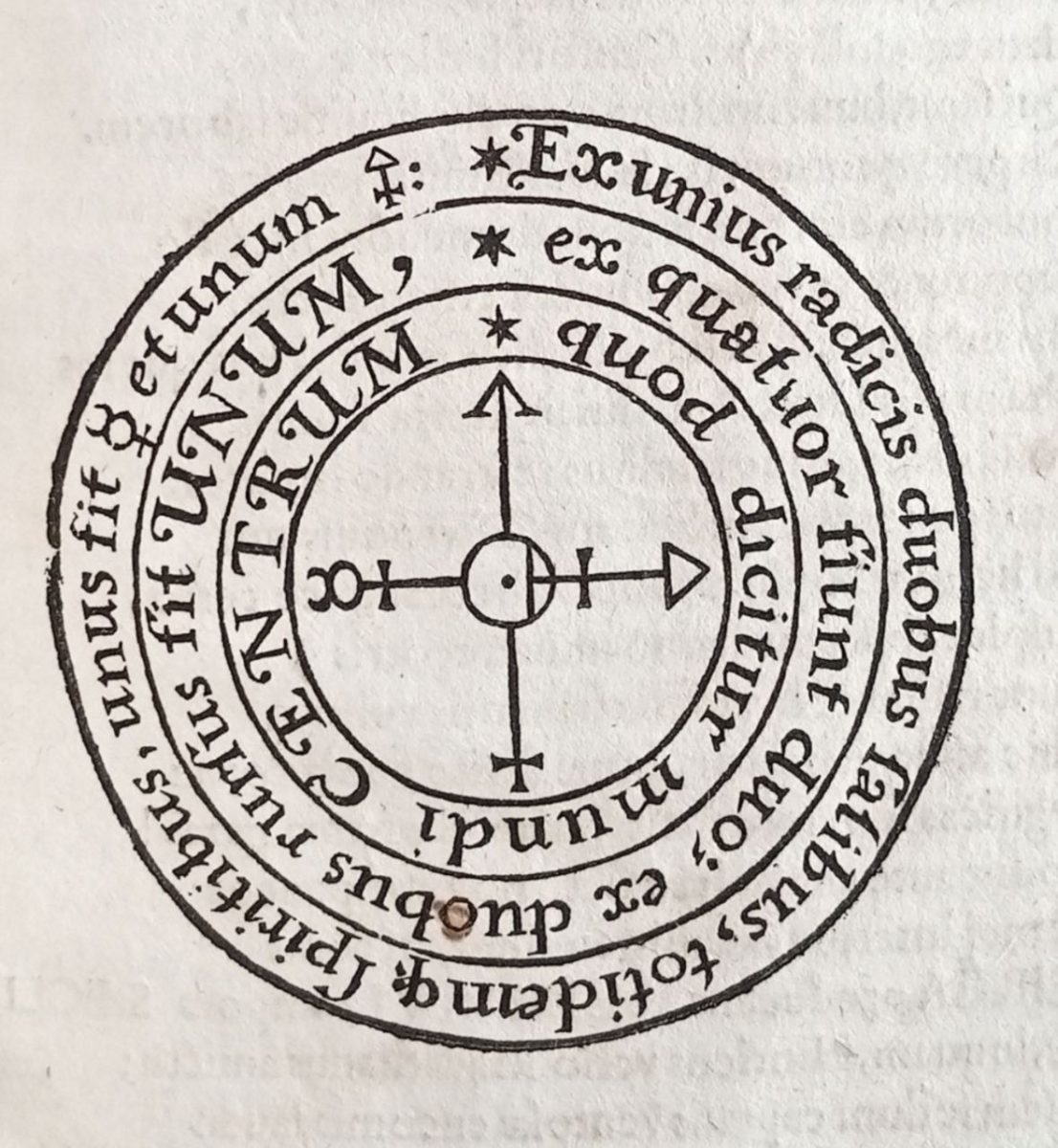
HADRIAN’S GOLDEN AGE REVIVED
I weighed it, I found it, I purified it often, and likewise
I combined it, I matured it, a Golden Tincture followed,
which now is called the center of the world; behold
the many perceptions, the many writings of men, and the varying symbols!
I freely confess to all: this Medicine is superior
to metals and gems alike. A point of divine origin.
From one root, two ascend;
from which is made that which is called
the ‘Directed’, or ‘Perfected Stone’.
*
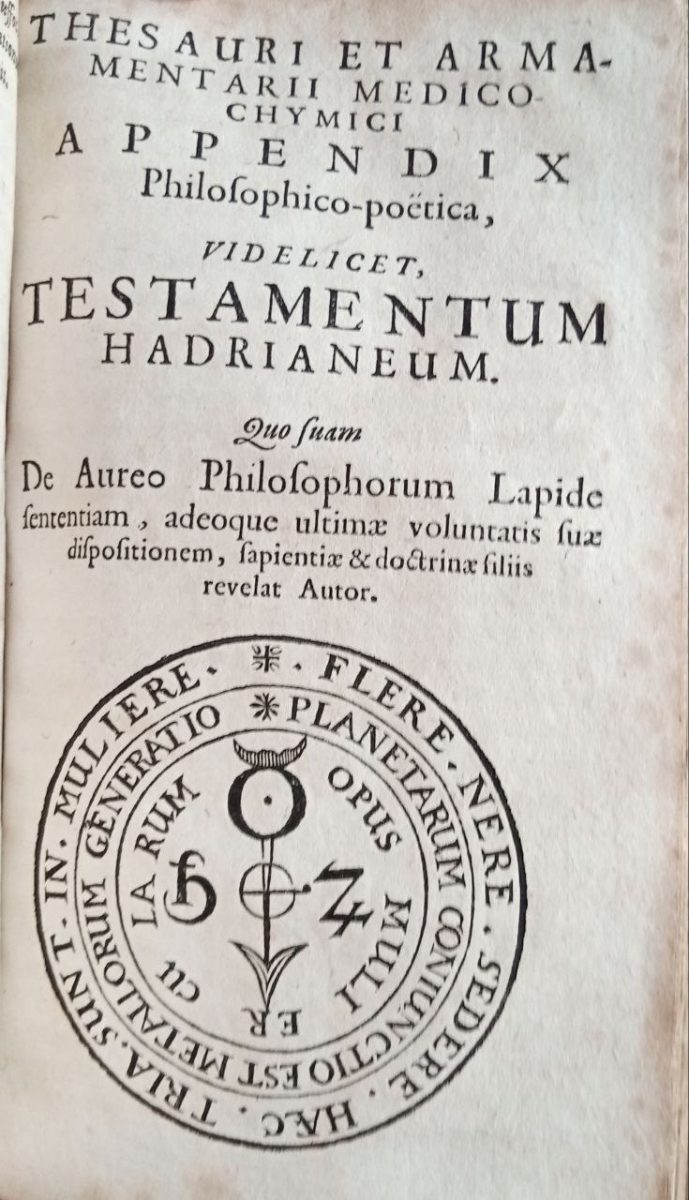
The Testament of Hadrian
Concerning the Golden Stone of the Philosophers
(1641 edition pagination, page 476 / 477)
A treasure you have, O Reader, discovered by divine favor and with immense care and cost, which, should it please you to effect, Apollo, not envious, has granted it to be accomplished, that god who bestows his gifts upon us.
I lay bare my secrets to noble men, produced for the common good at their request; as for Zoilus, who with mad mouth gnaws at any daring work, I am not anxious; let a fair Censor, he who is wise, be enough that our labor has not displeased.
Take this, you few, whom Jupiter fashioned from better metal, and commanded to discern the straight from the crooked.
To these judges I submit all these things of mine; to those to whom God has granted knowledge of the deep mysteries of my Golden Fountain, by revealing the hidden paths of Nature.
He whom it is permitted to penetrate these (a privilege granted to the one true scion of Sophia alone, a gift divinely bestowed by a sure auspice), happy wisdom blesses this man with her countenance, honor attends him, the horn of plenty makes him richer than the most abundant royal treasures.
(Page 477 / 478)
Some years ago, the genuine interpreter of my genius, under a feigned name, brought forth into the air THE GOLDEN AGE RESTORED.
He, I say, Hinricus Madathanus, with his guise changed; while some worthless Batillus, seeking for himself the windy praises of fame, lies with a boastful front, behold, justly indignant that an unworthy honor was being stolen, he himself, provident for his own, and Apollo for his client, restored it in its own name to the direct Author, lest thereafter the deceitful little crow might strut with borrowed plumes.
It was not my purpose to reveal the mysteries contained in the leaves of my book more clearly to an ungrateful world; nor is it owed or permitted, for holy things are not for profane dogs.
Yet, lest I seem to have envied the exceptional talents conceded to me for the sons of the wise, born not for myself alone but also for them: behold, I give to you, O progeny of heaven, that which my Messenger once reported, bound in a foreign garment.
I myself, having cast off that disguise (which the higher ones seem to wish), willingly present all things with a public hand, but in public Testamentary tablets, in that solemn form which is fitting.
You, O Heir, use with a grateful mind, as is right, the monuments of my heart which I bequeath to you, in praise of the nurturing Divinity.
(Page 478 / 479)
Therefore, so that its perfection may be confirmed by the Testament, I call as witnesses with me the summoned Seven, affixing their Hermetic seals: old Man Saturn, Phoebus, the winged Cyllenian [Mercury], that good Jupiter, Mars, the Cyprian Goddess [Venus], the Moon.
Added to these is the father of them all, Hermes, that Sage, the required Scribe, who records all things in the conceived words, and preserves them in a faithful, secret archive.
But it is by no means right for anyone in their absence, with any sign broken at will, to unseal what is closed. It is not; but with all those witnesses present, as is fitting to be done, so is it right to complete the act, for the deeds are void, they are annulled in force, if even one witness is lacking for this open Testament.
But how great a treasure lies hidden here, O Heir, committed to your uses by this legacy, the things themselves, once these Testaments are bequeathed, will teach, laid open in the solemn manner.
In the meantime, while the Hermetic caskets keep it closed, let it be held for your use alone in secret, O venerable offspring of Divine Sophia, You to whom minds illuminated by a hidden light have been granted, minds apt to penetrate into secret shrines.
Let these things of ours be of benefit for your good; let them be unknown to common intellects, and not betrayed; although often a reckless tongue, seized by temerity and erroneous daring, might lick at them, and having tasted, vomit them from its mouth, just as the judge between Pan and Apollo once, King Midas, deserved the ears of a ridiculous ass.
For that man, unless a thing answers to his own deeds and is kin to his own brain, approves nothing ever.
O the crowd of men unworthy of secrets! By the indulgence of the nurturing Divinity, which he obtains with many prayers and many struggles, not wearied by immense labor, and not broken by the weapons of envy, nor the bites of the hydra…
O how often for me, while wrestling with the varied Chimaera, and for me the Goddess (for Pallas leads to the art)!
How many tricks, what dire calumny, what frauds are cast at me! Or let him retract the disgraceful deeds from his troops. Yet the love of truth conquers, nurturing Knowledge conquers.
(Page 479 / 480)
O Knowledge, chosen by me over countless coins!
And why not? Since it is more excellent than all the wealth which any king, however rich, ever held in his coffers.
Great once were the riches of Solomon, great was the opulence of Croesus, the semi-virile King of Assyria, Sardanapalus, possessed great heaps of gold in his hall, great kings and dukes have held great treasures; but this one alone surpasses them all, as much as a living spring surpasses a stagnant swamp.
Therefore, whoever you are who desire the streams of the Golden Fountain to bubble up for you, and to drink the sacred, everlasting ambrosial waters, abandon that folly which clings to the vitals of vegetal or animal nature, mixed with the complex web of various things, which, while it labors vainly at natures remote, obscures both itself and the very art with black shadows.
Hold to our naked truth: search out the mineral veins, dig out what nature brings forth for you from her nearby bosom.
Here you will find her, who is known to be the one and only matter of the Stone, the first origin of so many great goods (though vile in external appearance).
Here is that sacred Fountain, this blessed Lymph of the sages, the Mercurial glory, the fertile Flower of gold, the one nuptial Chamber of the noble spouses, and the noble seed.
Thus there was one material of things, which the nurturing right hand of JEHOVA established, one Chaos, one Beginning for all, from whence, by the power of the supreme God, all just things come forth, which the whole world contains.
And our Stone proceeds from a very similar single mass, a mass compact, confused, in which the four created elements lie contained—the seeds, from whose womb is at last born that noble offspring of nurturing nature and of art.
(Page 480 / 481)
One and the same is both the mother of our Stone and herself the first mother of metals, which must be known above all else, itself capable of forms, by which every species is seen brought forth from the deep bosom of the earth, over which the sevenfold order of the Planets presides.
But behold, stronger than all these, than all these more powerful, is one; if any metals are to be dissolved by art into their congenital forms, and then rendered back to their first matter, that Master Stone rules by its power, commanding the imperfect to assume the perfect form.
This one thing alone can do it, a thing not imitable by any other of the things subject to the poles; as it is a property unique to the magnet to draw iron, or for iron to join itself to it.
Hence the perfect honor of the Physician, hence depends the mastery from this one key, the crown of our theatre, the lofty Art producing glorious triumphs for the Artist!
Therefore, whoever desires these, be content to adhere to the one Matter I have spoken of, delaying not for those things which many a Philosopher, described in various books, offers you, seeking various sterile materials, truly remote from the Fountain.
One it is, one remains the door of our Secret: seek this, and by seeking rightly, you will find what you desire.
(Page 481 / 482)
‘But what is this like?‘ you ask, ‘Under what depths is this matter to be found, and by what name is it finally to be designated?‘
It is, as was said before, the mother of metals, which, with all the ores the earth anywhere displays, conceives, nourishes, and from the mineral womb finally brings forth, when the times of the parents are ripe.
I add, that it itself generates man, and having been generated, thereafter it nourishes and sustains bodies with strong limbs, a powerful Hermaphrodite, bearing indeed under one body both Female and Male, with a two-fold, virgin seed.
The elements minister its lofty form and powers, and the earthy force fashions the form of the rest from its own substance.
This is not to be sought under the Spanish sky, or in the Indian mountains; not in Italian soil, nor under the Libyan stars; it is brought forth in Our land, it is seen in Our earth.
Daily, a thing common, common in use, often exercised in boyish play through the streets, a thing of little value, indeed ignorant of its hidden power, known to how few, conceded by the gift of the Gods.
And rightly: for what is grasped by the raging hands, and by the monstrous horn of the Rhinoceros?
This same thing would accomplish that, however excellent it is in itself, if a mad crowd were to offer it for an insane life; it becomes so much the worse for stirring up the whole mob, and mixing the lowest with the highest, the sacred with the profane, as the one thing is more noble than all things.
But what do they say of this same thing? They say its substance is false, it is a dry water, it is a water beloved by all spirits, it is an oily fire, so that it is not combustible like wood.
It vomits forth the fire of Vulcan from whatever angry mouth, it is a restoring, enclosed thing, rendering all things conformable to itself, all things, the wonderful key of hidden Nature.
It offers itself with a crude face, and with members to be seen as impure, when it first proceeds from its birth: yet it itself produces such virtues from such a body.
It mends the corrupt belly, heals the injured intestines, it restores pure flesh, the putrefaction having been driven out, it drives away every harmful, evil-smelling air from the nostrils: a common Medicine for all, whether you abound in things, or endure a life of want under a poor roof.
Hence it is heard to speak of itself with such titles: ‘I am the Stone, the governance of the rule of Kings, the solace of the needy life, which both rich and poor hold by equal right, I am a childish game, and a woman’s work, often I am contemplated, thrown down in the mud, which the foot involves in the filth of the muddy streets; yet the sevenfold order of the metallic Synod acknowledges me as King, and prone, adores my Scepters‘.
(Page 482 / 483)
Therefore, her who has lain unknown to the world, and until now a boundary in darkness, uncultivated, sterile, and lying without honor, God inspiring, the light of our Testament will abundantly illuminate, and will show the pleasant fruits.
And so that I may finally furnish a suitable name for it for you, know that she is the daughter of the ancient, variegated face of Calchas, arisen at once in the Orty (quail) of rapacious Myrrha, at whose birth I too was born in the Chymical art, at the time when the fire-powerful Mulciber (Vulcan) caught Mars with his Wife in his net, and exhibited them to the Gods to be seen.
You, if you can take away from her our heavy dew; the blood of the Virgin, and if you can remove the dry and snowy moisture of the winged creature, for you the crown of the king is obtained; for a white wave flows around the yellow yolks.
But to what end? It is enough to have explained here, what that Matter of ours is, what innate name it bears, and in what places it is to be sought. Henceforth leave the vain sophistries luring you through curved winding paths, leave every kind of herb (it is a forbidden way), leave the bodies of animals, while it is your care to seek our Stone.
No flesh, no blood, and whatever is excreted from them, menses, sperm, brought forth from the genital vessels of men, and dung and wine will give nothing; nothing from hair, eggs, nothing from afterbirth, nor will you find it in a glassy herb.
The fruit corresponds to the seed, of course; and hence he who sows dung will find a stercoraceous field.
Nor less in vain will he sweat, whoever seeks it in Gold and Silver. It is necessary that it be purer,
It is necessary that it be more digested than the common matter of Gold or Silver, which by its own power can penetrate metals, can, changing whatever into Silver or Gold, enter into our work not at all, O common Sophists!
It is drawn from Mercury alone, with which we tinge, and which perfects the imperfect. This is the point, this is the middle of Nature, which separates the impure from the pure, this is that thing which, although extracted by no art from any metals, whether perfect, knowing not to admit changes, or whether they be imperfect (for indeed those which are utterly chaste and devoid of vital and genital seed of life, can generate no fetus similar to themselves.
What then? And those imperfect ones are full of impure diseases, hence needing the cure of means, by exaltation, from which virtue, absent in their own, is denied) yet all the power is in this one, whichsoever metals, which minerals and vegetal nature holds, nay even which the seven powerful Dynasts above possess, it prevails, and works wondrously upon human limbs.
(Page 484 / 485)
Behold, I present to you the Matter, O progeny of Phoebus, of our Ethereal Stone. Then, while you seek the same, make the footsteps of the Green Lion known to you.
But once this sign is offered to your sight under Jove’s auspices, and at last You have the Matter in your hands, learn next what must be done, that you may be permitted to reach the desired goal of your vow.
The first wisdom is to separate the pure from the impure. Only through matter well-purged, dissolved of its grossness, and properly sublimated, will the medium of tingeing be made—those subtle spirits which exit from the innermost vitals of nature, whose powers, by penetrating, are able to draw out these hidden things.
This achieved, wisely draw forth from the purified matter the two contained within: the Salt, distinguished by philosophers with the name Mercurial, and then, under the form of an oil, the red Sulphur, full of weight.
All secrets lie hidden in this Salt; whoever knows how to dissolve it will penetrate into the inmost sanctuary of the Temple.
This is the White Eagle, kin to the Green Lion: this is the Bridegroom, most beautiful with his snow-white and ruby countenance, chosen among thousands, his head of pure gold.
But know from experience: not the whole body of that White Eagle is to be taken; but the innermost part of its corporeal sap, the crystals, I say, shining with snowy brightness: so too, not all the limbs of the Red Lion are to be captured; but the inner humor of its ruddy blood—the Sulphur, clearly, purified of all impurity.
This is the principal labor, the effort of great price, which unless you employ well, and lay open the inner vitals, neither Sulphur nor Salt will ever avail you.
From the Salt, let the Mercury proceed—that Virgin’s Milk, and that White Snow of the Philosophical school—this one is the wonder of Wisdom and the key-bearer of the whole art.
Concerning the Red and the White, these things, as if to be elicited by labor, suffice; it follows, in what way they must then be conjoined, so that they may be perfected for the intended work.
(Page 485 / 486)
Therefore, whoever has progressed thus far under divine auspices, and now fully possesses the purified Sulphur with the Salt, let him proceed further to conjoin them according to the true Philosophical weight, which Nature herself, retaining what is necessary, shows as if with a pointing finger.
Hence, having sealed them with the Hermetic sign, apply a moderated heat in a suitable degree— such as a hen, with ardent care, gives to the eggs placed beneath her, or a mother fosters in her womb.
For all labor will be vain, all care fruitless, unless you govern the subject fire with a prudent hand.
Thus, with the Snow-White and Ruby spouses joined in a closed bridal chamber, adore the celestial Divinity with suppliant prayer, that you may see the husband mingled with the wife in this work.
And lo, in a short time, you will behold the two mixed into one: a black Ethiopian and the head of a black raven!
This must be guarded against with the greatest zeal and diligence, that the door of the glassy chamber not be opened until the enclosed matter takes on a perfect redness, having become most apt to generate its like.
Hence, let the begun rest of our sleeping beloved not be disturbed, nor should she feel any injury before it has pleased the King of the Philosophers himself.
They, enclosed in their vessel, soon begin to sweat and send forth vapors; the subtle parts rise upward, and the more they are cooked by a governing fire, the greater the spirit, the stronger the host becomes.
‘You are a garden‘, (that same Royal Wisdom sings), ‘A garden enclosed, a sealed fountain, a flower of the pleasant garden, the quickening life of a flowing stream from Lebanon: arise, O North wind, and come, O South; blow upon my garden, that its spices may flow out’.
Behold, the sweet voice of my beloved is at hand; lo, he comes leaping upon the mountains, skipping upon the hills, like a young roe coming from the udder of its mother.
For a wondrous motion of the glassy union arises; now they rise high, now they are seen sunk to the very bottom. they are often dissolved, often cooked, and they themselves mortify themselves, and then restore life, until, having putrefied, they put off the blackness and assume perfection.
This is the first work of our Stone—(for the corruption of one is the generation of another)—whence is born
the crow’s head, the King of the Ethiopians, and the black tail, as the Sun and Moon undergo a dark eclipse.
(Page 486 / 487)
For as soon as the blackness has sufficiently increased, surpassing pitch and every blackness of black, the matter becomes truly pregnant, the bodies being dissolved, generating a black earth with putrefaction—the beginning (which rejoices!) of the work.
That blackness, to be sure, is this, but it is a very beautiful maiden, that black raven without wings (for by this Nigredo the purest Whiteness is hidden, concealed).
Scarcely is there any work of generative Nature more grievous, yet none more excellent. Let it only be your care that the flower of her feminine hair, and the marrow of the raven’s feather, be not burnt up by too great a fire.
Thus, with the Blackness consumed, let Vulcan’s fire be strengthened by one degree, until a green color succeeds the black, and to the green, the tail of the peacock, reflecting all the colors that are in the world.
Whiteness follows these, to be drawn forth by Vulcan’s strength augmented a third time, and then guided gradually through all degrees by fire, until it is brought to its summit.
For not just any whiteness, but a most perfect one, tinges and makes the tinged metal equal to the Moon’s rays, producing a metal perfect by nature, unharmed by the fire, with a constant white gleam.
At last, redness succeeds the concluded whiteness—that most desired of all the colors of our Stone, the summit and wished-for end of the undertaken labor, if the divine work is happily completed with the flame directed in the just way.
Therefore, O prudent philosopher, proceed here to govern the fire moderately, proceed to increase it by degree, diligently attending the subject sand, proceed, until you see it grow yellow with the ripe fruit.
Then further, your Vulcan must be ruled with prudent reason.
(Page 487 / 488)
Until the Queen, most beautiful with a ruby face, free from all stain, offers herself to be seen, similar to the dawn and the sparkling heavens: and yet, do not allow her to leave her chamber, through whose bright windows she is to be glimpsed by you, until she, grown ruddy, has put on a perfect redness.
Meanwhile, beware lest the Stone, vitrified by too great a fire, deceive your hope with its power burnt out; as the fire promotes the decoction by just degrees, so an immoderate heat can ruin the whole work.
Then at last, God guiding, the confected Stone will come forth into the air—that King of all-healing, powerful with invincible virtues, the Panacea, than which there is no more salutary medicine in the whole world.
It penetrates all parts of the pneumatic body with its force, even if taken under the weight of a single grain.
This, like smoke driving bees, so drives harmful humors from the body, banishes every kind of sickness, and, the root of evil torn out utterly, restores better things.
Indeed, in the manner of an eagle, it renews and restores the green vigor of youth in its flower, and does not permit one to perish by a malign fate, unless that boundary set for man by the highest God has closed a life full of age.
(For common death is not to be declined by any, in the end, whoever is born from mortal seed).
The first Adam used this, our forefathers, healthy, drew out a long life into ages with this medicine.
The age of the wise of old flourished by this, by this itself a name eternal for a century is made with rich genius. No monster of a disease is incurable to it.
Let it be dire dropsy, or scabrous leprosy, or the torturing gout in the feet, and in the hands chiragra (gout in the hands), and those many more torments of men despaired of by other remedies—that death-in-life of a living corpse; nothing is insuperable to our Stone; all things are conquered by this one invincible thing.
Those other medicines which in a long time scarcely cure, this one strengthens the sick in a few hours.
O gift of Medicine so great, for which whatever is in the world, nothing but use merits the excellent trophy!
(Page 488 / 489)
But just as impure, uncorrected metals remain in a leprous filth; so, once stripped of every vice of nature, they may be affected with the highest honor: one must proceed further, and the operation of the Stone must be known and multiplied, that it may acquire new, god-like powers.
Therefore, take the confected Stone and again place it in its Mother, by which it was born—namely, in a double quantity of the two mercurial salts, that blessed Fountain—and, placed under the just weight of the Philosophers, let the crystalline vessel of the new heaven, sealed with the Spagyric seal, enclose it.
Thus placed in its Mother, thus received in a pellucent (translucent) chamber, let new baths with fresh coals cook it anew, until the matter, led through every kind of color in order (which you will finish in a single month, what before was scarcely perfected in ten), may once more beget from two, one body.
The virtue of this will be so much the more divine in purging the impure and in tinging metals, the more often it is re-cooked in the philosophical fire.
He whom God supports with a long age of life, if it be permitted to repeat this labor so many times, could tinge every impure grain of the world, so that it shines forth more purely than pure gold.
(Page 489 / 490)
The Ferment remains, that ultimate particle entering our Tincture, showing the sure path for penetrating impure metal with fixed constancy, so that Theseus, liberated from the impure prison of the labyrinth, may merit to bear the shining crown of the King.
This Fermentation is done thus: let a most thin leaf of purified, sublime gold be made, which Vulcan in one bridal chamber should gently associate with the Stone; then, with a stronger fire, he compels a coition for three nights and as many flowing days.
Thus the Gold, adorned with spiritual gifts, with sublime vigor, penetrates all impure metals it encounters.
For the Stone accomplishes nothing and will never tinge anything, unless it has been fermented by conjoined Gold.
It delights in its like, with which, being well-associated, the Tincture enters the body, and, the impurity being dissolved, produces it with a pure garment.
Thus the Stone is fermented, thus prepared again, You will at last have found the divine use of tingeing: let one part be taken into a thousand parts; nay, into innumerable parts, as the Tincture, multiplied by coction, is mixed with the molten metals; and behold! a new offspring, noble with precious gold!
For one body embraces another with a willing affection, however dissimilar it may be by birth. one passes into the other, its nature compelled by virtue; hence a thing like to its like is born into the world.
He, therefore, who uses this medium of the Ferment well, to him all Fixation lies open and revealed, that unique thing than which no more sublime thing exists among all created things: this Is The Grain Of The Center, The Noble Center.
He who has become master of this, let him extol JEHOVAH with grateful praise, the author of so great a gift, by which dire poverty, sickness, and black sadness flee; whence wisdom flows in abundant streams.
So great a good is this Tincture of ours, through all the world, to which you can equate nothing of equal powers.
This is the Golden Shower of Jove: this is that one spirit, by which Noah, the tiller, founded the preserving ark of the world: by which Solomon gave the Temple and the shining Vessels of the Temple, most celebrated in all the world.
This is it, with which he had before constructed the forecourt of the Temple, the Mole, and had raised it, radiant with much gold.
This is it, with which Ezra restored the collapsed state of the fatherland, and made firm and renewed it with his laws.
This is it, which prevails over all spirits, that one spirit which is born in the vitals of all things whatsoever.
He is the giver of good fortune, virtue, honor, poverty and the mass of evils having been utterly destroyed,
He bestows all else with sweet peace. He gives good things to the good, whatever they wish, prepared both honor and the happy times of a long life; so for the depraved, by depraved abuse it is condemned, devoting the ungrateful to be tormented in eternal Orcus (the Pit of the Damned: This is not just a statement about the stone’s power to reward, but also its power to judge).
With these verses the Mysteries of the Sacred Stone are concluded.
You have them, candid reader, and the Testament of Hadrian: which, having been begun to be written in whose name—in the holy Name of God—let it be solemnly closed in this name.
To Him, the highest King of the celestial spheres,
who directs with benign guidance whatever is done here,
To this bestower of so noble an Art, and of whatever good,
The race of men holds, to omnipotent Jove,
Praise, & Glory for all ages!
THE END.
Glory to the
Triune
God !
*
Original Latin
Mynsicht-Testamentum Hadrianum-1641
*
Coming soon:
A Little Hadrian von Mynsicht Sampler Part 2:
1625 German edition of the ‘Aureum Seculum Redivivum’
and its English translation.
***

Related Articles

Leave a Reply