
Circle of Transmission: The Living Loom
A Little Gottfried Arnold Sampler – Part 1: An Early History Of The Rosicrucian Movement (1699)
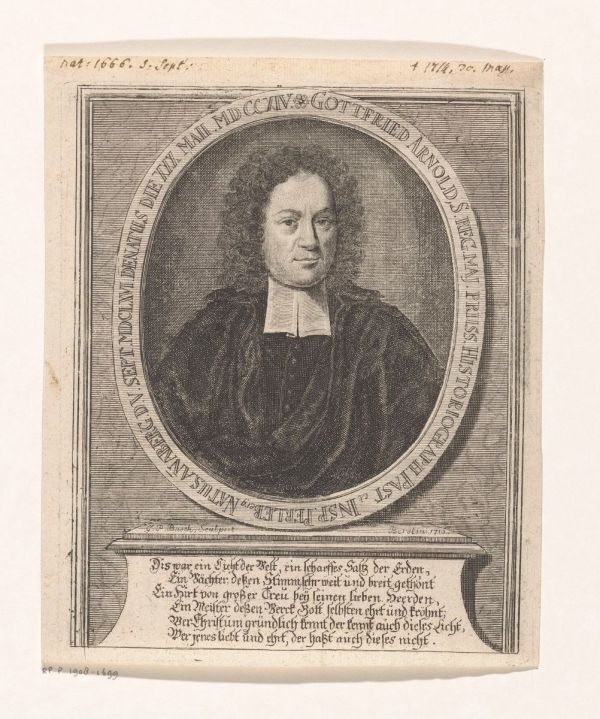
Gottfried Arnold (1666-1714).
A 1716 engraving by printer Georg Paul Busch,
after a painting attributed to Johann Heinrich Schwartz.
Picture at Wikimedia Commons.
The legend under the portrait says:
‘This man was a light of the world, a sharp salt of the earth, a watchman whose voice was heard far and wide, a shepherd of great faithfulness to his beloved flocks, a master whose work God Himself honors and crowns; whoever knows Christ thoroughly, knows also this light, whoever loves and honors the former, does not hate this one either.’
*
Today’s sharing from the Blue House of Via-HYGEIA is a rare treat: a very early history of the Rosicrucian movement by the Protestant historian Gottfried Arnold!
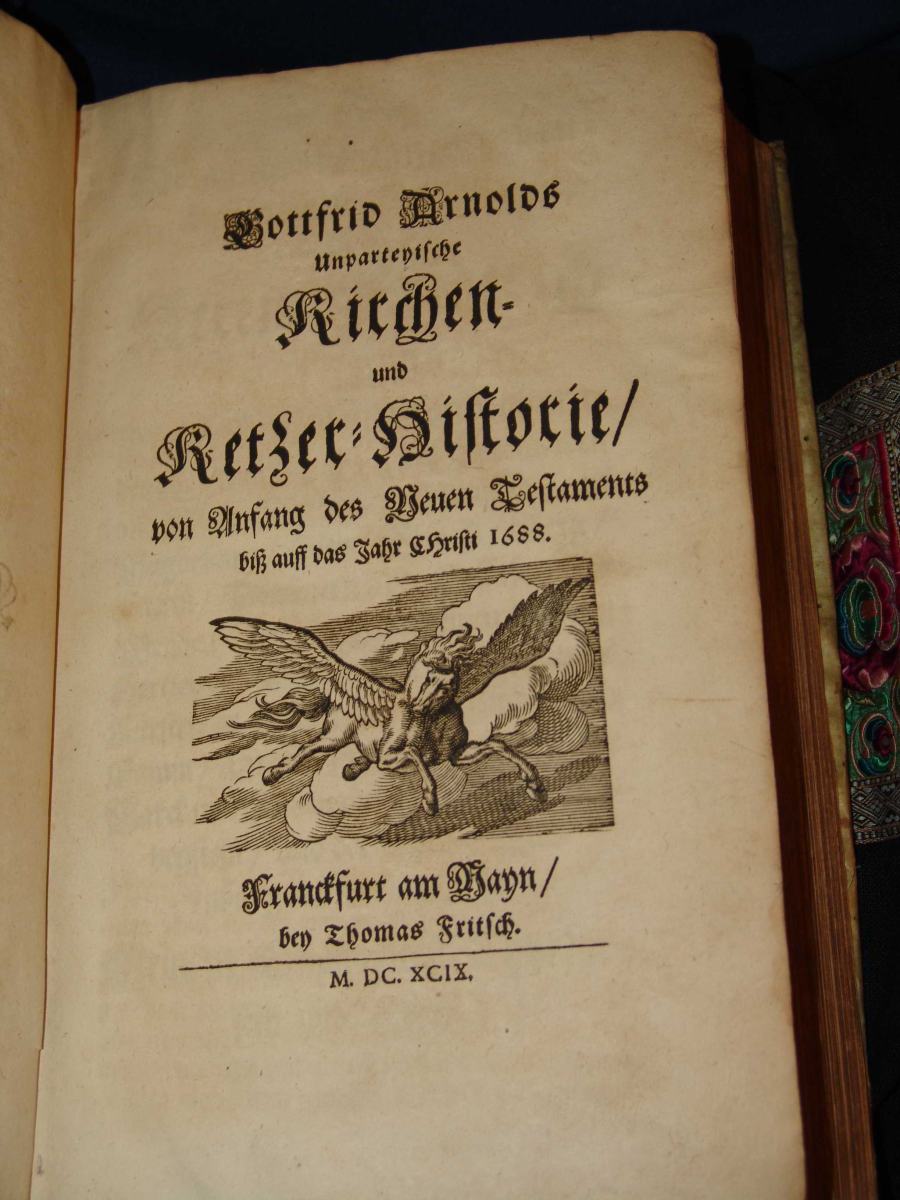
This excerpt is drawn from his incredible treasure trove—akin to a Noachide Ark—titled Unparteiische Kirchen- und Ketzerhistorie (Impartial History of the Church and of Heretics, 1699–1700). Specifically, we present Volume 1, Part 2, Chapter 18 (pp. 640–656), followed by an Addendum from Volume 2, Part IV, Section III, Chapter 11 (pp. 624–625).
To frame these texts in the best possible condition, we have provided a brief biography of Gottfried Arnold, a contextual introduction, and a comprehensive index of all names encountered in the article ‘Von denen Rosen-Creuzern’.
We offer this working translation as a modest but firm contribution. Our goal is solely to convey the flavor of the original German text. We undertook this work independently, with the barest technical infrastructure and without any financial gain; for us, this is purely a service to the community, one that often remains unnoticed.
We hope this excerpt attracts the attention of the scholarly world and encourages the preparation of a critical edition. Such a project would restore Arnold’s incredible endeavor to its rightful place, offering the English-speaking community a fascinating glimpse into seventeenth-century German society. And as you will find, delving into these fresh sources proves that the history of this famous movement is far from boring!
Coming Soon: A Little Gottfried Arnold Sampler, Part 2 will present the entirety of Chapter 19 from Arnold’s Unparteiische Kirchen- und Ketzerhistorie, devoted to Jacob Boehme: “An 1699 History of Jacob Boehme: Biography, Bibliography, and the Essence of His Theosophy.”
**
Gottfried Arnold (1666–1714)
A Short Biography
Gottfried Arnold was one of the most provocative and influential church historians of the early modern period. Born on September 5, 1666, in Annaberg, Saxony, where his father served as a schoolmaster, Arnold’s early education took him to the Gymnasium in Gera (1682) and subsequently to the University of Wittenberg (1685), where he specialized in theology and history.
His intellectual trajectory changed decisively through his encounter with Philipp Jacob Spener, the father of Pietism, who secured Arnold a position as a tutor in Quedlinburg. Under Spener’s influence, Arnold developed the reform-minded, spiritually oriented Christianity that would characterize his life’s work.
Arnold’s first major publication, ‘Die Erste Liebe zu Christo’ (1696), achieved remarkable success—five editions by 1728—and established his reputation as a rising theological voice. The following year, he was called to the University of Giessen as professor of church history. Yet academic life proved deeply unsatisfying; he resigned in 1698, citing his aversion to academic politics and what he perceived as the deadening formalism of university culture.
It was immediately following this resignation that Arnold sought a living example of true spirituality in Amsterdam, joining the circle of Johann Georg Gichtel and the Angelische Brüder (Angelic Brethren). Initially drawn to Gichtel as the foremost disciple of Jacob Boehme, Arnold hoped to find a community practicing the ‘Theosophia Practica’. However, close proximity led to profound disillusionment. He witnessed how the brotherhood had hardened into an exclusive sect, venerating Gichtel as a prophetic figure while subtly distancing themselves from the universal, Christ-centered core of Boehme’s vision. Arnold’s departure was not a rejection of Boehme’s Theosophy—which he continued to revere—but a firm stand against what he saw as a new form of sectarian pride. This painful separation taught him that true spirituality could not be confined to any single leader or institution, a realization that became the bedrock of his historical method.
It was upon his return from this experience that Arnold began publishing his magnum opus, the ‘Unparteyische Kirchen- und Ketzer-Historie’ (Impartial History of the Church and of Heresy), which appeared in two volumes in 1699 & 1700. The work marked a watershed in historical methodology: Arnold directed his sharpest criticism against those who wrote deeply biased ‘orthodox‘ histories, arguing that ‘heresy-making‘ was typically the defensive reaction of those in authority rather than a true indictment of unconventional thinkers. He identified the establishment of Christianity as the imperial religion under Constantine as the church’s worst calamity—a startling claim for his era.
A lesser-known but significant work followed: ‘Geheimniss der göttlichen Sophia’ (The Secret of Divine Wisdom), which revealed Arnold’s engagement with mystical traditions, including a sophisticated theological treatment of Wisdom (Sophia) as a feminine aspect of divinity. His spiritual poetry also found lasting recognition; one of his hymns was later set by Johann Sebastian Bach (‘Vergiss mein nicht‘, BWV 505).
Arnold’s life took a decisive turn with his marriage and his acceptance of a pastoral position—developments that marked a shift from radical Pietist critique to more practical pastoral theology. He died on May 30, 1714, leaving behind a complex legacy as both a learned theologian and a fierce critic of ecclesiastical power.
Recent German scholarship has continued to illuminate Arnold’s significance. Critical editions of his ‘Correspondence with Tobias Pfanner‘ (1696–1705), his Giessen inaugural lecture ‘De corrupto historiarum studio‘ (On the Corruptedness of Historiography), and his ‘Gedoppelter Lebenslauf‘ (Doubled Curriculum Vitae)—an autobiographical text later completed by friends—have all appeared in the Edition Pietismustexte series. These sources reveal Arnold as a figure who, from the very beginning of his academic career, consciously positioned himself against what he saw as the distortions of power-inflected history-writing.
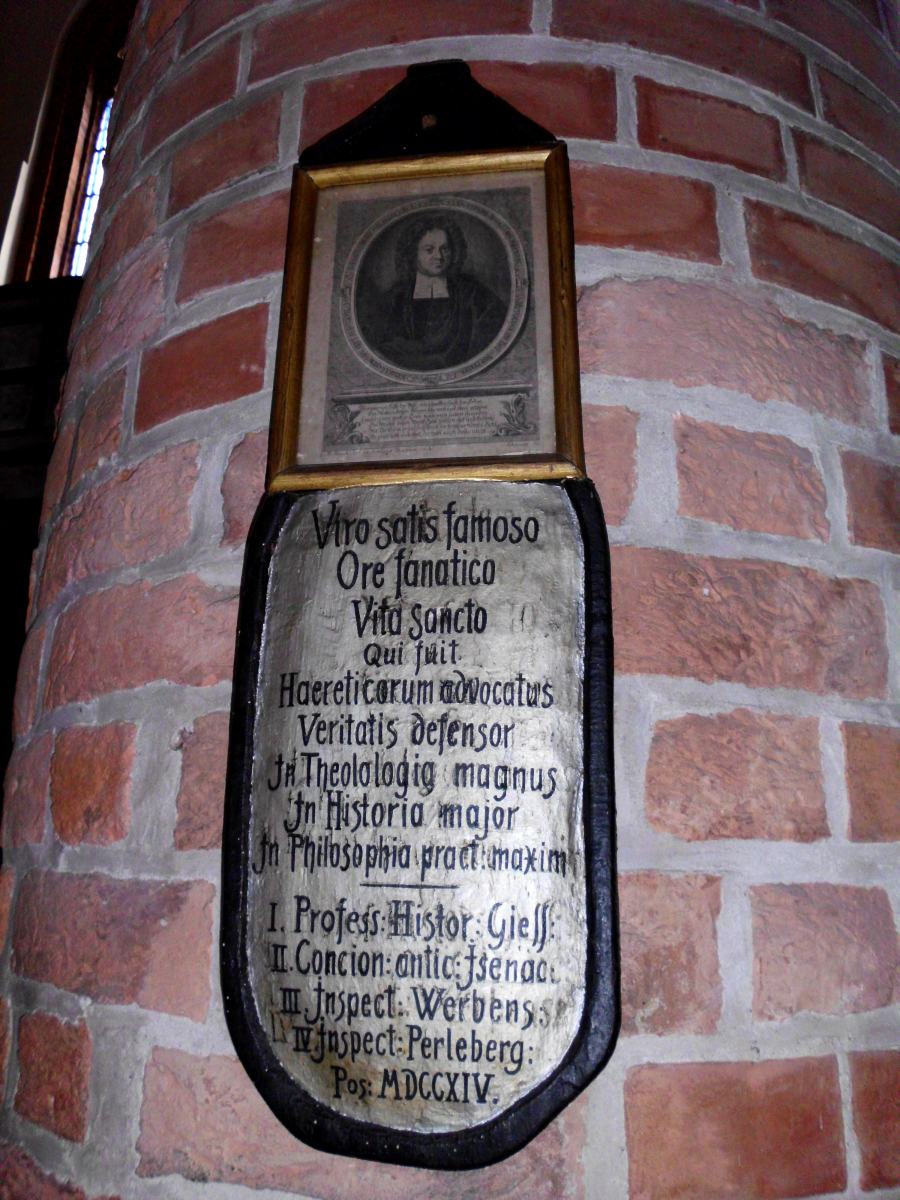
*
Why Arnold’s Empathic Views Matter Today?
Arnold’s insistence on writing history ‘without partisanship‘ (unparteyisch) was, paradoxically, a deeply partisan act—one that privileged the voices of the condemned over those of the triumphant. His conviction that orthodoxy often masquerades as self-serving propaganda remains startlingly relevant in an age of polarizing certainties.
In contemporary scholarship on esotericism and religious dissent—from the French school of Antoine Faivre and his successors to current work on intellectual tolerance—Arnold’s methodology prefigures a crucial insight: that understanding marginalized traditions requires more than documenting their errors. It demands what we might call hermeneutic empathy: the willingness to reconstruct how a movement appeared to its own adherents before subjecting it to external judgment.
Arnold’s approach also challenges modern readers to reconsider the relationship between piety and critical historiography. He was neither a detached skeptic nor an apologist for heresy; rather, he argued that genuine historical understanding required a spiritual disposition—a form of intellectual humility that acknowledged the historian’s own susceptibility to bias.
For scholars of Rosicrucianism, Arnold’s 1699 chapter remains foundational precisely because it refused the easy path of ridicule or condemnation. In an era when the manifestos were still living memory, he treated their authors as sincere Lutheran reformers rather than occult charlatans. This willingness to take seriously what power dismisses as marginal—to listen before judging—is perhaps Arnold’s most enduring gift to historical practice.
*
A Contextual Introduction:
Gottfried Arnold &
the Earliest Critical History of the Rosicrucian Movement
Gottfried Arnold’s Unparteyische Kirchen- und Ketzer-Historie (Impartial History of the Church and Heretics, 1699–1700) remains a landmark in the historiography of Christian esotericism. A Pietist theologian who broke with Lutheran orthodoxy, Arnold sought to recover the voices of those condemned as heretics, arguing that authentic piety often survived outside institutional structures. His treatment of the Rosicrucians in Chapter XVIII (‘Concerning the Rosicrucians‘) and the subsequent Addendum (Volume 2, 1700) constitutes the first sober, source-critical attempt to disentangle the historical reality of the movement from the legends and polemics that had accumulated over the preceding century.
The Nature of the ‘Poem’ and the Role of Johann Valentin Andreae
Arnold’s central thesis, developed meticulously across §§1–5, is that the Rosicrucian fraternity was not a literal secret society but a ‘poem’ (Gedicht) or a ‘comedy‘ (ludibrium) devised by a circle of learned Lutheran theologians. He identifies Johann Valentin Andreae (grandson of the reformer Jacob Andreae) as the primary architect. Drawing on Andreae’s own later confessions in ‘Menippus’ (1617) and ‘Turris Babel’ (1619), Arnold demonstrates that the manifestos (‘Fama Fraternitatis’ and ‘Confessio Fraternitatis’) were a satirical device intended to test the spirits of the age. The goal was to distinguish true seekers of wisdom from the ‘curious‘ (Curiosi), alchemical frauds, and dogmatic scholastics. As Andreae himself admitted, the project was a ‘witty game among the learned‘ that spiraled out of control when the public took the fiction for a literal conspiracy.
Orthodox Lutheran Piety vs. Institutional Opposition
A distinctive feature of Arnold’s account is his insistence on the Lutheran orthodoxy of the Rosicrucian authors. Contrary to the accusations of heresy leveled by opponents like Andreas Libavius and Christianus Gilbertus, Arnold argues (§§10–12) that the Rosicrucians were devout Lutherans who confessed the Augsburg Confession and the Formula of Concord. Their ‘reform‘ was not a rejection of Christianity but a call to purge the church of Aristotelian scholasticism, moral corruption among the clergy, and the greed of the medical establishment. Arnold details the fierce backlash this provoked (§§13–18). Theologians feared a ‘general reformation‘ would undermine their authority; physicians (§18) were enraged by the Rosicrucian promise to cure the sick gratis and their rejection of Galenic dogma in favor of Paracelsian medicine. Arnold portrays the opponents not as defenders of truth, but as defenders of privilege who resorted to slander, labeling the Rosicrucians ‘enthusiasts‘, ‘magicians’, and even ‘incarnate devils’ (§35).
The Spectrum of Defenders and Detractors
The text provides a comprehensive survey of the literary battle surrounding the movement. Arnold highlights key defenders such as Robert Fludd, whose ‘Apologia’ and ‘Summum Bonum’ argued for the compatibility of Mosaic wisdom, Kabbalah, and Christianity; Michael Maier, who defended the fraternity in ‘Silentium post clamores’ and ‘Themis Aurea’; and David Mederus, a Lutheran preacher who validated the spiritual intent of the manifestos. Conversely, he catalogs the vitriol of detractors like Libavius, who attacked the Paracelsian roots of the movement, and the deceptive writings of Irenaeus Agnostus (likely a pseudonym for a hostile actor), who sought to discredit the brotherhood by attributing absurd and dangerous opinions to them (§§30–31).
New Revelations in the Addendum
The Addendum from Volume 2 (1700) significantly deepen the historical picture. Here, Arnold incorporates posthumous testimony from Christoph Hirsch and Johann Arndt, confirming that Andreae had revealed the secret sub rosa: the Fama was a strategic probe published by a circle of roughly 30 men in Württemberg to identify ‘hidden lovers of truth‘ across Europe. This section also includes a rare Dutch Rosicrucian prayer, offering a glimpse into the personal piety of the movement, and cites a 1696 confirmation from a Professor of Physics in Kiel, who affirmed that the ‘true’ Rosicrucians were orthodox Lutherans scattered invisibly throughout the world, distinct from the charlatans who usurped their name.
Historiographical Significance
Arnold’s work predates the scholarly efforts of the 19th and 20th centuries by nearly three centuries. Unlike later esoteric antiquarians who often sought to validate the literal existence of the order, Arnold practiced a form of ‘history from below‘, utilizing marginal sources, private letters, and the admissions of the authors themselves. He challenges the modern dichotomy between ‘esotericism‘ and ‘mainstream religion‘, presenting the Rosicrucian phenomenon as an internal Lutheran reform movement that sought to revitalize faith through a synthesis of piety, natural philosophy, and social critique. For the modern reader, Arnold’s account offers an indispensable window into the late 17th-century reception of the manifestos, preserving the memory of a movement that sought, however briefly, a ‘general reformation of the whole world’.
The following translation is based on the original Fraktur German of the 1699 and 1700 editions. It preserves Arnold’s section numbering and marginal citations, complete with explanatory notes to identify persons, works, and historical references. For the first time in English, readers can encounter Arnold’s full chapter as he intended it: an irenic, erudite, and deeply sympathetic account that serves as a critical defense of a misunderstood movement, which he regarded not as a heresy but as a noble attempt to revive the spirit of primitive Christianity in an age of corruption
*
Based on the full text of Gottfried Arnold’s Chapter XVIII and the Addendum, here is a comprehensive Index of Key Names. This index categorizes individuals by their role in the Rosicrucian controversy (Authors/Defenders, Opponents, The Central Figure, and Historical/Legendary Figures) as presented in Arnold’s analysis.
Index of Key Names:
I. The Central Figure & The “Circle”
- Andreae, Johann Valentin (Dr.): Identified by Arnold as the primary author (‘inventor‘) of the Fama Fraternitatis and Confessio Fraternitatis. A Lutheran theologian and grandson of Jacob Andreae. Arnold cites Andreae’s later works (Menippus, Turris Babel) where he admits the fraternity was a ‘comedy‘ or ‘poem‘ intended to test the learned. The Addendum confirms he acted with a circle of ~30 men in Württemberg.
- The “30 Understanding Men“: A group of Lutheran theologians and wise men in Württemberg (mentioned in the Addendum via Arndt and Comenius) who collaborated with Andreae to publish the manifestos as a probe for hidden truths.
II. Defenders & Sympathizers (Rosicrucian Apologists)
- Arndt, Johann: A prominent Lutheran theologian. Arnold defends him against accusations of Rosicrucian fanaticism, noting his friendship with Andreae. The Addendum reveals Arndt knew Andreae’s secret sub rosa and encouraged the publication of Rosicrucian texts (e.g., by Christoph Hirsch).
- Fludd, Robert (de Fluctibus): English physician and philosopher. A major defender who wrote Apologia compendiaria and Summum Bonum. He argued against Libavius, defending the compatibility of Mosaic wisdom, Kabbalah, and true magic with Christianity.
- Maier, Michael: Royal Count Palatine and physician. Author of Silentium post clamores (defense against slander) and Themis Aurea (laws of the fraternity). He defended the possibility of natural secrets and the Universal Medicine.
- Mederus, David: A Lutheran preacher in Thuringia. Wrote Judicium Theologicum (1616/1617), one of the earliest defenses, arguing that a Christian could conscientiously join the fraternity and validating their Lutheran orthodoxy.
- Gassendi, Pierre (Latinized as Gassendus): A renowned French philosopher, scientist, and mathematician. Cited by Arnold in §19 & §25 as a defender of the Rosicrucian cause. Gassendi argued that Alchemy, Magic, and Cabala were essentially one and the same discipline when pursued correctly. His inclusion in the text serves to validate the Rosicrucians as a subject worthy of serious philosophical inquiry, countering the accusations that they were merely frauds or fanatics. Arnold notes that Gassendi defended the brotherhood against common slander, linking their work to the broader pursuit of divine wisdom.
- Schweighart, Theophilus: Author of Pandora Sextae Aetatis (Mirror of Grace). Presented the fraternity’s wisdom as applicable to soul and body health.
- Sperber, Julius: Mystic author of Echo der von Gott erleuchteten Fraternität. Claimed the Fama’s promises were true and had been foretold in earlier private writings.
- Nollius, Henricus: Professor at Helmstedt, later preacher in Darmstadt. Defended Hermetic philosophy ex professo in works like Theoria Philosophiae Hermeticae.
- Heydon, John: English writer who published defenses in English (e.g., Infallible Principles), though less known in Germany.
- Stellatus, Josephus (Stella): Author of Pegasus Firmamenti. Argued against scholastic philosophy and for wisdom attained through the Holy Spirit.
- Florentinus de Valentia: Pseudonym (likely Andreae himself). Wrote Rosa Florens against Menapius.
- Helias Tertius: Anonymous author of a judgment dedicated to the Brothers, calling them ‘chosen instruments of God‘.
- Bacon, Roger: Cited in Rosicrucian collections (e.g., Epistola de Secretis Operibus), though historical, his name was used to lend authority to the movement.
- Dee, John: English mathematician and occultist. His works were edited and published by Rosicrucian sympathizers; he refuted Libavius.
III. Opponents & Critics (The “Orthodox” Detractors)
- Libavius, Andreas: Doctor of Medicine and headmaster. The most vocal early critic. Wrote Bedencken von der Fama and Analysis. He attacked Paracelsians and Rosicrucians as heretics, defending Aristotelian and Galenic orthodoxy. Refuted by Fludd and Maier.
- Gilbertus, Christianus (de Spaignart): Theologian. Author of Theologischen Wächterhörnlein. Accused Rosicrucians of being enthusiasts and devils; wished violent punishment upon them.
- Agnostus, Irenaeus: Pseudonym for a hostile author (Arnold suggests possibly Menapius). Wrote a series of tracts (Clypeum Veritatis, Prodromus, etc.) that feigned support while subtly mocking and discrediting the fraternity.
- Menapius, D.G. (F.G.): Critic who feigned complicity before attacking. Wrote Anticritica and appended hostile verses to Agnostus’s works.
- Himmel, Johannes: Author of Speculum Ambitionis. Extremely biased, stating he would reject the Rosicrucians even if they descended from Luther himself.
- Neuhusius (Neuhuf), Henricus: of Danzig. Wrote Admonitio de Fratribus (1618), warning that the group would confuse religions.
- Hunnius, Nicolaus: Theologian who wrote against ‘new Paracelsian and Weigelian theology‘.
- Grießmann, Valentin: Author of Getreuen Eckhart, grouping Rosicrucians with Anabaptists and enthusiasts.
- Rostius, Georgius: Author of Seldenbuch vom Rosenkreuzer-Orden.
- Hornbekius, Johannes: Theologian at Leiden. Part of the Dutch effort to label Rosicrucians as magicians and fanatics.
- Voetius, G.: Influential Dutch theologian whose Politica Ecclesiastica argued for suppressing the movement.
- Brokoffer, Radolph & Strooffert, Erasmus: Minor polemicists listed by Arnold as writing against the reformation proposals.
IV. Historical & Legendary Figures (Within the Rosicrucian Mythos)
- Rosencreutz, Christian (C.R.C.): The legendary founder of the order. According to the Fama (cited by Arnold), he was born in 1378, traveled to Damascus and Egypt to learn wisdom, and died at over 100 years old. His grave was said to be discovered 120 years later. Arnold treats him as a symbolic or fictional character created by Andreae.
- Luther, Martin: Frequently cited by Arnold to prove the Rosicrucians’ orthodoxy. Arnold notes the false claim that Luther founded the order, but emphasizes that the Rosicrucians confessed his teachings.
- Andreae, Jacob: Grandfather of Johann Valentin Andreae. Co-author of the Formula of Concord. Arnold uses his orthodoxy to validate the grandson’s intentions.
- Paracelsus (Theophrastus): Swiss physician and alchemist. The Rosicrucians revered him (unlike the Galenists). Arnold notes the Fama praised him, causing conflict with traditional physicians.
- Tauler, Johannes: Medieval mystic. Some tried to trace Rosicrucian origins to him, which Arnold refutes.
- Weigel, Valentin: Mystic writer. Often grouped with Rosicrucians by critics, though Arnold distinguishes them.
- Adam & Solomon: Cited in the Rosicrucian promise of a ‘General Reformation‘ to restore the world to the state of innocence (Paradise) or Solomonic wisdom.
V. Informants & Later Sources (Cited in Addenda)
- Hirsch, Christoph: Preacher at Eisleben. His posthumous papers contained the confession from Johann Arndt regarding Andreae’s secret circle.
- Comenius, Johann Amos: Educator and theologian. Cited in the Addendum as receiving a letter from Andreae confirming the ‘30 men‘ plan.
- The Professor of Physics in Kiel (Unnamed): A 1696 source (author of Osculum Philosophiae) who confirmed the Rosicrucians were orthodox Lutherans and distinct from frauds.
VI. Pseudonyms & Anonymous Authors Discussed
- Julianus de Campis: Author of a letter/report; Arnold suspects him of being a secret enemy despite his defensive tone.
- A.O.M.T.W.: Author of Fraternitatis Rosatae Crucis Confessio Recepta.
- Christianus Philadelphus: Author of a eulogy on the symbol ‘Jesus mihi omnia‘.
- Theophilus Philaretus: Physician (possibly Hoffmann) who wrote a skeptical Pyrrhone.
- Elias a Cruce: Author of Miraculum Artis, described by Arnold as confused and zealous.
*
And now the text:
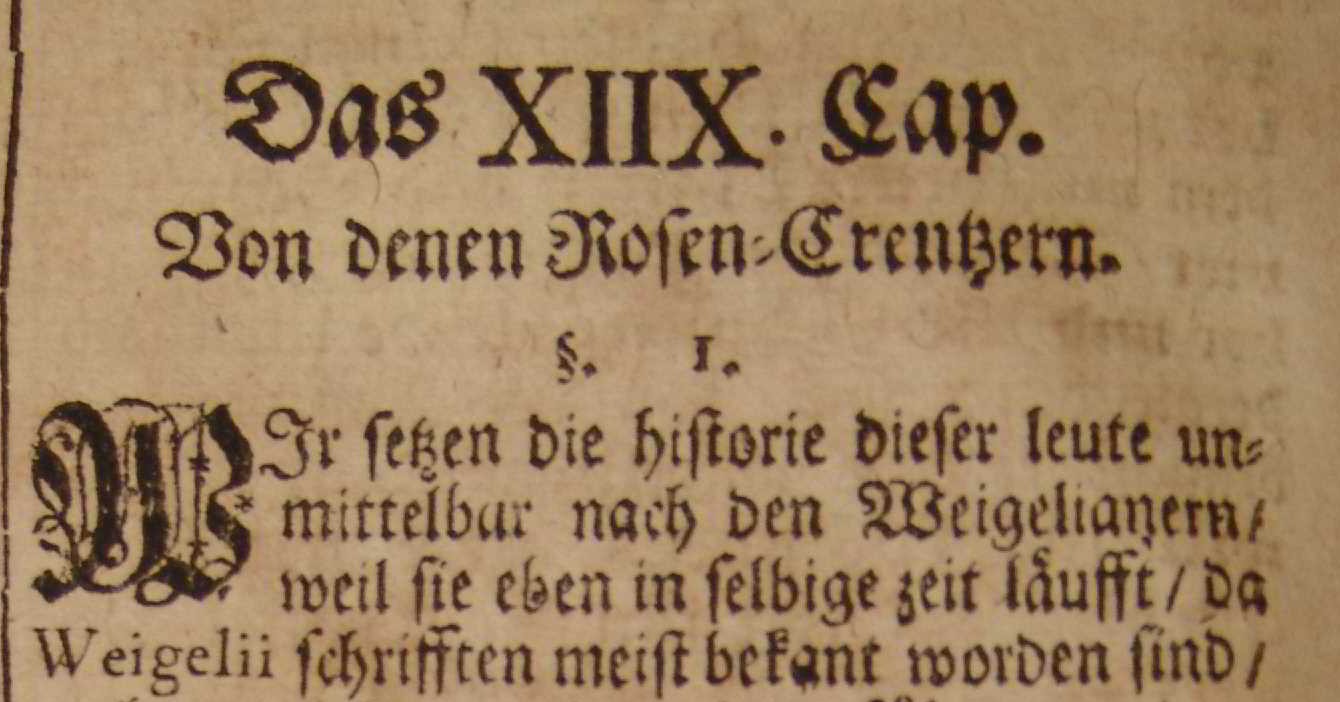
Chapter XIIX (18). – Concerning the Rosicrucians
§ 1
We place the history of these people immediately after the Weigelians, because it unfolds in the same period when Weigel’s writings became widely known, and many [Rosicrucians] were said to have emerged from them — though without foundation, as has already been demonstrated. Yet this history can be presented all the more thoroughly and clearly here, the more certainly the origin and beginning of this matter have been ascertained through diligent investigation of many circumstances.
As for the name, the poet [i.e., the author of the Fama] chose that it should be called the Fraternity of the Praiseworthy Order of the Rosy Cross, as he immediately placed it on the title of the Fama Fraternitatis. Some indeed have derived it from the supposed founder of this order, “Rosicross”; but Robert Fludd explains the symbolic meaning: they call themselves after the cross because one cannot follow Christ without the inner and mystical cross, which is sprinkled with the rose-colored blood of Christ — from which they are called brothers, that is, sons, prophets, and friends of God.¹ Thereby the other conjecture also falls away, that the name derives from the well-known seal and coat of arms of Luther, in which there was a heart on a rose and on the cross a crucifix, according to the words:
“The Christian’s heart on Jesus leans, When with a red cross it appears.”
The time when these writings actually came to light is reported differently. The most reliable account, however, is that already around the year 1610, and even earlier, there were writings of such authors, Paracelsists, and alchemical tracts. For David Mederus wrote in 1616 that already five years prior, the Fama Fraternitatis and Confessio had been printed and circulated in five languages.² Hence some place the beginning in the year 1612,³ while others erroneously say 1617⁴ — even though the aforementioned Fama already appeared in 1615 at Frankfurt and elsewhere.
¹ In Libro: Summum Bonum, quod est verum, verae Magis, Cabala, Alchymiae Fratrum Roseae crucis verorum subiectum, p. 4.
² In Judicium Verborum non de Fama und Confid. der Brüdersch. praxi ad Lect.
³ And. Caroli Memoria, Sec. XVII. lib. II. c., p. 225 & c.25, p.21.
⁴ Colberg Platon. Christenth. P.I. c. 66., p.167.
§2
As for the origin itself, some have tried in vain and falsely to trace it back to Tauler, the author of the German Theology, and to Luther himself, who supposedly commended it, as well as to Weigelius, who wrote about it — claims soon refuted by their own inconsistency.
Others have approached the matter with more plausible conjecture: that it was merely a bare poem or fiction, invented by one or more idle and cunning heads of similar orders, devised with strange circumstances to make fools of and deceive the world.⁵ To this conjecture they afterwards found so much confirmation, even in the Fama itself — for example, in the preface it is expressly stated:
“Whether these things may seem somewhat strange to someone, and many may hold them for such — that it is only a blind philosophical extract, and no true history, as was published and issued by the Fraternity of the Rosy Cross — yet it will sufficiently appear from the Confessio that there is more in the recess than one supposes, and everyone, provided he is not an ignoramus, can easily perceive and understand what is meant by these things at the present time.”⁶
In these words, the objection that the brotherhood is a poem is not removed, but rather confirmed — and at the same time it is tacitly indicated that other secret intentions lie hidden beneath it, which the ignoramuses do not perceive, and thus would be thundered against.
Michael Brelerus, author of Mysterii Iniquitatis Pseudo-Evangelicae, also wrote soon after in the year 1621:
“So much is still known about these disguised brothers, and I exhort and warn them that they should not further trouble themselves publicly with the investigation of the same. For these written testimonies (Fama Fraternitatis) come from three distinguished men, who, through this ingenious poem, wanted to lure others — of whom it was said that they possessed the Philosophers’ Stone — and to find out whether the rumor was true or false. And this is not merely a conjecture, but the thing itself; and what others write against it is pure lies.”⁷
Footnotes for §2:
⁵ Vid. Frid. Seilerus verstellt. Wiedertauff. P. I., p. 80; Himmelius Anti-Enthus. l. c., p. 10; Roltius im Helden-Buch Cap. I. qv. 2, aliique.
⁶ Vorrede, p. 314.
⁷ Cap. III, p. 100.
*
§3
But so that we may have closer information about this and find the authors themselves, we will present the writings of the Lutheran theologian, D. Johann Valentin Andreae, and thereby see that he was the most distinguished inventor and last abbot of this fraternity — as the old and in such matters well-experienced Friedrich Breckling has also called him in a letter from Holland not long ago.
From this it becomes clear that the Rosicrucians, with their teachings and writings, originated from a distinguished Lutheran theologian — namely, the renowned Doctor and Author of the Formula Concordiae, Jacob Andreae’s grandson (whose orthodoxy and praises we have seen above). This Andreae wrote around the same time many sharp satirical writings against the common heathens and papists, and saw not only this, but also the true wisdom and godliness, which he thoroughly established against the false learnedness that made itself known. In this he corresponded with many clever and godly people of his time, and without doubt, with the knowledge of some trusted friends, brought forth the aforementioned Fama and Confessio. His intention he himself made known to the world in the Menippus (1617), when he writes of these invented brothers:
“That all true Christians belong to their order, and that they should order everything according to the rules of Christ; it was, however, only a ludibrium [mockery/play] of the Curiosorum [curious ones], thereby mocking those who, instead of seeking the simple way of Christ, let themselves be pleased by an artificial and unusual one.”⁸
Another conjecture at the time was that the brothers would be some good pious people, or else a zealous preacher who, under such a guise, sought to urge people to repentance and true godliness.⁹ Andreae himself writes about this in the Mythologia, where he speaks the truth simply:
“As a disguised person [he played] a witty game among the learned, he would begin such a thing, especially at a time when everyone is looking for something new: a heap of writings pro and con have sprung up, and I have not without amusement watched how new persons always came onto the stage. He also gives the reason why he did not continue such writings: because the whole theater was filled with all kinds of quarrels over opinions, and they mostly fight with suspicion, conjecture, scolding, and slandering; I have withdrawn from it so as not to recklessly plunge myself into danger.”¹⁰
Footnotes for §3:
⁸ Menippus Sive Dialogorum Satyricorum Centuria Inanitatum Nostratium Speculum, Cap. XII, p. 30–31.
⁹ Auctor der wolvermeynten Defension deren Teutschen Gesellschaft, p. A 3.
¹⁰ In Althea Exule, p. 329.
*
§4
Elsewhere, he clearly indicates what he holds regarding those who, through these writings, have attached themselves to the fraternity. The wonderful brotherhood, he writes, which now performs comedies throughout all of Europe, has recently also, against Libavius (a great enemy of the Rosicrucians), come to Freystadt, and aroused all kinds of spectators with their trumpet sound.
First, there were some pious people among them, who were well-acquainted with the errors of the human fable and, being weary of them, therefore sought a mitigation herein. Next, there were some wretched fellows, who had either lost their knowledge or their money, and thought to regain it here; for the unfortunate alchemists dreamed of something good, who otherwise were lame and blind laborers. Also, the gout-ridden and others afflicted with desperate diseases believed they could drive away their time and pain thereby. Finally, there were also many deceivers, who, with all sorts of invented riddles and alleged great secrets, wanted to wheedle the lords and make the Aurum potabile.¹¹ With which description he then shames those who, with this comedy of the fraternity, had betrayed their foolishness.
Finally, he has also made the finale of the comedy itself quite clear, and certainly showed us and taught from this action to the world; namely, when he already in the year 1619 published a book under the title of the Babylonian Tower, or Turris Babel & Judiciorum de Fraternitate Roseæ Crucis chaos. Here he introduces 3 persons speaking, whose names are Fama, Obstinatus, and Resipiscens.¹²
Fama speaks: “One has mocked the people long enough; we want now to free them from the doubtful hopes, to raise up the fallen, to bring the scattered back together, to heal the sick. Well, you mortals, you may no longer wait for any brotherhood. The comedy is now played; the Fama has now performed its role, and again withdrawn.”
Fama says: “Now enough of this game. So many curious or even foolish people have come together with each other, and because you have not fallen for it, we will now stop.”
Obstinatus asks: “What shall we do now?”
Resipiscens answers: “What else but that we become wiser? So much our hitherto errors have been.”
Obstinatus: “Should we then pretend to be wise before mortals?”
Resipiscens: “So says the Fama.”
Obstinatus: “Should these simple and modest people be deceived? Should we speak falsely of such signs and credible things?”
Resipiscens: “So says the Fama.” Whereupon he [the author] lays his judgment on those who came forth with writings about it, which he wants to mention last.¹³
Footnotes for §4:
¹¹ Manipulo VI, n. 13, p. 290.
¹² Cap. XXV, p. 69.
¹³ Ibid.
*
§5
From these his own words it is at least certain that he knew exactly the origin of this poem. His ingenious mind and the love for truth and wisdom, also for the general improvement of Christendom, do not allow us to doubt that he himself was the author of the thing. Therefore, even then, some compared the Rosicrucian writings with his Menippus and other satirical writings, and concluded without doubt from the similarity of style and genius overall.
The disguised Irenaeus Agnostus, a secret enemy of the Rosicrucians, has also betrayed Valentinum Andreae, stating that he wrote his Turbo under the name Andreae de Valentia, and that he was a stipendiary in Tübingen.¹⁴ With this he presumably wanted to embroil him openly in this dispute with names, from which, however, the other wisely guarded himself.
From these circumstances and the above, it is first of all to be seen how badly and shamelessly so many Orthodox applied their religious zeal, since they fought so fiercely against a Non-Entity and a mere poem of a Lutheran theologian himself. Which, moreover, turned out all the more unfortunately, as we shall soon see clearly, that the most important accusations, which they brought against the Rosicrucians, did not concern these, but rather their enemies, the Orthodox themselves — as those who, under the name of the Rosy Cross and in its ruin, wrote the most dangerous and malicious things into the world.
But the zeal of the Orthodox was so great that they would have rather brought the supposed Rosicrucians at once to gallows and wheel, if they had only had the power. One of them made this epigram about them as a true saying:
‘Res est insignis fratrem Crucis esse Rosæq;Sed vereor, fiat ne Rosa forte Rota
Et crux : debetur quia mors ceu furibus atra : Es Rosa : nam redoles suave καὶ ἀλύφραντον’.
(“It is a noble thing to be a brother of the Cross and of the Rose; / But I fear, lest the Rose perhaps become a Wheel [of torture], / And the Cross: for a grim death is owed to them as to thieves. / You are a Rose: for you smell sweetly, / And [yet you are] unanointed.”)
Another wished for them that they would be visibly swallowed up by the earth, or turned into pillars of salt, or burned by fire from heaven, or torn apart by lions, etc.¹⁵ He warned against everything that is Christian, noble, and honest, as if from the Rosicrucian bat-mice, as from the devil himself.¹⁶ Libavius counted them among the main heretics, and did not want to let them pass as orthodox at all.¹⁷ As he, along with others, held this fraternity to be more than true, and not fictional, he therefore sought all the more eagerly and laboriously against them, of which more will follow soon.¹⁸
Footnotes for §5:
¹⁴ In Clypeo Veritatis, p. B. 2.
¹⁵ Apud Himmelium Anti-Enthus. l. c.
¹⁶ Christianus Gilbertus im Theologischen Wächterhörnlein, p. 52.
¹⁷ Ibid., p. 127.
¹⁸ Im Bedencken von der Fama. Cap. IIX., p. 52. seqq. 60. & Henric. Neuhusius in Admonitione de Fratribus Roſ. Crucis, p. 6. 48. & alibi.
*
§6
The opponents of that era, along with their successors, have thus far erred greatly by holding this poem to be an actual society. Accordingly, they formed all sorts of slanderers, enthusiasts, and crackpots [Grillenfesser], and used the name ‘Rosicrucian’ almost as a term of abuse to defame others. In doing so, however, they have only too blatantly prostituted themselves and, as it were, tacitly admitted that the heresies they claimed to find scattered throughout the world were in fact concentrated within the Rosicrucians themselves.
We intend, however, to provide a detailed account of this matter: first of all by recounting the circumstances worthy of note at its outset, and then by showing what else transpired under this name. To this end, I shall first cite the judgment of a more recent writer, who also believed that certain individuals were indeed involved:
“Yet one can clearly perceive that those honest people (whoever they may have been) intended something far different and better with their genuine and true writings than is commonly attributed to them.”¹⁹
It is also probable that many a person of art, rank, and office was involved in such an undertaking — more than one might guess. But it was inconvenient for truth and time that one could not make all the circumstances and true aim [scopum] of this work known to the world. This, however, has given enough to the wise and prudent in God to understand: Mundus interea voluit decipi. Et quid animus ad lyram? (“Meanwhile the world wished to be deceived. And what is the mind to the lyre?”)²⁰
If, however, the true and sincere Fratres R.C. (for we speak not here of false brothers, of whom many wicked ones were found, deceiving people with such pretense) had revealed [themselves] more openly with their intentions, or had become professors at public universities to teach the alchemical art of metal transmutation — which is still so eagerly sought after — along with its underlying principles and other secret matters, and had thus brought gold and silver into the world openly, they would undoubtedly have won many adherents among the learned in Germany and gained a better repute.²¹
But God ordained this neither then nor today. Consequently, they were forced to endure slander from their enemies, especially from certain greedy and ambitious prelates, who wrote them off as Rosicrucian fanatics, fantasists, enthusiasts, crackpots, and the like. Another has nonetheless confessed that their profession agreed with the Holy Scriptures and the prophets, and cited their prophecy.²²
Footnotes for §6:
¹⁹ Wahremund Freyburger, Gelehrtenbecher, Chil. S. §.293, p.418.
²⁰ Ibid., p.419.
²¹ §.295, p.420; Kuhlmann, neubeg. Böhm., c.XXI, p.379.
²² Noted in margin.
*
§7
But concerning, first, their writings (we speak now of this poem as if it were a true history, and understand by the “Rosicrucians” the true authors of such writings), one can readily observe the great distinction between them, since most were fabricated under their name to their own detriment. The very first, from which the greatest outcry arose, were the Fama and Confessio; which appeared in the year 1615 in Frankfurt in German — “Fama Fraternitatis, Die Fama oder Entdeckung der Brüderschafft des löblichen Ordens des Rosen Creuzes, etc.” — and at the same time in Marburg and Danzig; as well as in the year 1616 in Kassel in Latin, in 4to, together with the Consideratione Secretioris Philosophiæ.
They have appealed to the impulse and revelation of the Spirit of God, and have not only ascribed to their so-called “Father” a higher discovery than all previous revelations, but also claimed it was dictated by the Spirit of God, so that He has opened special secrets in nature, just as they write in the Confession:
“The Lord JEHOVAH, who turns the course of Nature, has revealed what previously could be attained only with great toil and unceasing labor; [revealed it] to those who might otherwise not esteem it or even think of it, while to others who desire it, He offers it freely.”²³
And another wrote to them:
“What an absurd claim it would be if you, O enlightened Theosophers, say: You wish, ante finem mundi [before the end of the world], to declare and explicate the Lumen Gratiæ [Light of Grace] through the Lumen Naturæ [Light of Nature], so that human reason may here be illuminated by a great light, and God’s Word be given approval and steadfast faith — especially since Christ Himself says: ‘There is nothing hidden,’ Luke 12:2, 3.”²⁴
They have also said much about the ministry of angels: “God sends the holy angels to those who are still, humble, and few in words, that they may commune with them; but the useless chatterers He casts into the wilderness.”²⁵
Footnotes for §7:
²³ Confess., p. 44 & 54.
²⁴ Helias Tertius or Urtheil von der Brüdersch., p. 75.
²⁵ Concil., p. 77.
*
§8
And in this they have been approved and supported by others who wrote in a similar vein. Thus one wrote:
“In the school of the Holy Spirit, all is substantial; and one must judge spiritual things spiritually, not according to reason or rationally, as Tauler and the German Theology teach.”²⁶
Another also demonstrated in a whole chapter the Light of Grace, which indeed belongs only to the reborn, and complained first about the fleshly learned, who maliciously label every revelation and prophecy as an Anabaptist enthusiasm. Then he cites the judgment of a Professor of Theology from Saxony, which reads as follows:
“One must not immediately laugh off as a fool anyone who says that a revelation or vision from God has happened to him, nor judge him according to the flesh, whoever he may be, or from wherever, or of whatever age, teaching, or standing he may be. For even to the servants and maidservants in the New Testament, prophetic foretellings are promised (Joel 2; Acts 2). One should not require them to work miracles to prove their calling; for one does not read of all prophets that they worked miracles. Rather, one should follow the rule found in Deuteronomy 18.”
He then proves this Light of Grace both from Scripture (Psalm 25, Joel 2, Wisdom 6) and from Luther’s Catechism and his exposition of the Third Article — namely, that the Holy Spirit must call through the Gospel and enlighten with His power. Furthermore, he describes the stages of illumination:
1. The first is inspiration and impulse of God, by which one is moved to do something by God (especially in Christianity, Rom. 8:14).
2. The second is divine dreams.
3. The third is prophetic visions, which are presented as in a mirror to a purified and God-consecrated soul, when the bodily senses are withdrawn from external things and drawn inward, and the mind, freed from bodily service, is occupied solely in contemplating the visions presented.
He also cites words from Luther’s Church Postil on the Gospel of St. Stephen, stating that God sends various preachers into the world, also prophets who preach from the mere impulse of the Holy Spirit, who have not received it from Scripture or through human agency.²⁷
Footnotes for §8:
²⁶ M.A.O.T.W. in Fratre Crucis Rosata, p. 31.
²⁷ Joseph. Stellat, in Pegaso Firmamenti, cap. VI, p. 5 seqq.
*
§9
With these words of Luther, he compares the Confession of the Rosicrucians, as if they had written: “It is indeed evident that even to this day, the beloved God and Father teaches, admonishes, and visits the human race in manifold ways and means.”
Finally, he concludes that no one may set goal or measure to the infinite wisdom and omnipotence of God. And since the prophecies of the Rosicrucians are also confirmed by [their] outcome, one must let them pass. He reminds us that from such a Light of Grace, the true Cabala or prophetic illumination also arises.²⁸
Another of their defenders expressed the nature of illumination as follows:
“Now you might ask, my dear friend: ‘Where should one seek and find Christ, who makes souls blessed?’”²⁹
Their Prophecies
What Stellatus above mentioned regarding the Rosicrucian prophecies was applied by a Lutheran preacher himself to the transformation of the Roman Empire. Another Lutheran writer later interpreted it as fulfilled in the German War [Thirty Years’ War], citing their words about the “Lion who was to come from the North” and the “strong child who was to be born” as referring to the King of Sweden, Gustavus Adolphus (who liberated the Lutherans from the Papists). These were held as fulfilled, but it is not now the time to speak further of them.³⁰
Footnotes for §9:
²⁸ I.c.p.F. (Likely In loco citato, pagina Following — see prior context)
²⁹ Theophil. Schweighart, Pandora Sextæ Ætatis, §1, Speculo Gratiae, p. 43–44.
³⁰ Vid. Fama & Conf., p. 69, 89, 90; & Conf. David Mederi Indic. Theolog. von der Fama u. Conf., p. 5; & Anonymi Dreyfaches Paßport des Mitternächtigen Post-Reuters, p. 27.
*
§10
In particular, the following appears in their Confession regarding the use and authority of Holy Scripture:
‘We exhort everyone to diligent and perpetual reading of the Holy Bible. For whoever knows that he has found favor with God shall make a proper way to come to our Fraternity. For just as this [Bible] is the sum and content of our rule, so that there should be no book in the world which is not grasped and accepted by it; thus those are almost equally and nearly related to us who make that one book, the Holy Bible, the rule of their life, the goal and purpose of all their studies; indeed, the compendium of the whole world. Not that they should always have it in their mouths, but rather that they should know how to apply its true meaning to all times and ages of the world and to judge by it. For our use is not to exploit and vulgarize Holy Scripture in such a way that, since an innumerable multitude of interpreters is found, some draw it to their opinion, while others slander it and maliciously compare it to a wax nose, which the Theologians, Philosophers, Physicians, and Mathematicians can twist as they please. Against these we publicly confess that from the beginning of the world no more excellent, better, more wondrous, and more wholesome book has been given to men than precisely the Holy Bible. Blessed is he who possesses it; more blessed is he who reads it diligently; but most blessed is he who studies it, and whoever understands it rightly; for he is most like and nearest to God‘.
But concerning their religion, they confess this:
‘We can be suspected by no one of any heresy or evil undertaking against the worldly government, seeing that we condemn the blasphemy of both the Orient and the Occident (that is, of Mohammed and the Pope) against our Lord Jesus Christ. And further: So that every Christian may know what people we are in faith and trust, we confess our knowledge of Jesus Christ, as it has arisen brightly and clearly in these last times, especially in Germany, and is still today (excluding all enthusiasts, heretics, and false prophets) maintained, defended, and propagated in certain and designated lands. We also enjoy two Sacraments, as instituted, with all the phrases and ceremonies of the first renovated Church‘.³¹
From these and other of their words, some have extensively proven that they were no so-called Sacramentarians or Calvinists; but rather true Lutherans, although others will by no means acknowledge them as such.³²
Footnotes for §10:
³¹ Conf., p. 74–75.
³² Ibid., p. 55.
³³ Fama, p. 45.
³⁴ Anonym. Auctor Famæ remissæ ad Fratr. Ros. Crucis, p. B3 seqq.
*
§11
That they were, nevertheless, pious and God-fearing souls, someone wished to prove in the following manner, addressing them directly:
That you are God-fearing appears sufficiently from the following:
1. Because you prefer the Bible to all other books and esteem it as your highest treasure, and you exhort others to read it unceasingly.
2. Because you testify: “Vos decretum esse, ut Fraternitatis vestræ numerus hoc tempore augeatur” [“That it is decreed that the number of your Fraternity be increased at this time”]. Likewise: “Vos Dei Spiritu actos alios ad palatia vestra vocare” [“You, moved by the Spirit of God, call others to your dwellings”].
3. Because your devout, spiritual, and highly enlightened father, in whose footsteps you tread, left behind his grave, which he prepared for himself during his life, adorned with such beautiful spiritual sayings, as these are: “Jesus mihi omnia” [“Jesus is my all”]; “Granum pectori Jesu insitum” [“A grain grafted into the breast of Jesus”]; “Ex Deo nascimur, in Jesu morimur, per Spiritum reviviscimus” [“We are born of God, we die in Jesus, we revive through the Spirit”].
4. Because you fulfill God’s command with a cheerful spirit, undertaking nothing without it.
5. Because you do not boast of gold-making, nor of a thousand other even better arts, but rejoice that your names are written in the Book of Life.
6. Because you condemn those books and figures which have appeared under the chemical name to the contempt of the Gloria Dei [Glory of God], and refuse to communicate their catalog.
7. Because you confess for your knowledge Jesus Christ, as He has arisen brightly and clearly in these last times, especially in Germany, and enjoy two Sacraments, as instituted, with all phrases and ceremonies of the first renovated Church; you enjoy Christ, the Son of God, and the sole Mediator between God and men, confessing and loving Him in purity and truth; practicing a pure, unadulterated Christian philosophy, and living and walking as befits and is proper for a human being.
8. Because you curse with mouth and heart the horrible and abominable blasphemies which both the Turk and Pope pour out terribly against our Lord and Savior Jesus, and prophesy to the Roman Impostor his deserved reward and downfall, namely that the same is now before the door.
9. Because you end your Fama quite Christianly, and conclude with these words: “Sub umbra alarum tuarum JEHOVAH” [“Under the shadow of your wings, JEHOVAH”].
10. Because you claim nothing that has not also been claimed by other holy and wise men of God in the Old and New Testament.
Without this, and since you presume to pervert the Gospel of Christ, I would, with St. Paul, much rather help to curse you than seek your friendship and burden my conscience. However, one need not fear this at all, as Julianus de Campis proves in his send-letter or report.
Footnotes for §11:
¹ Helias Tertius, f. Urtheil oder Meynung von dem Orden der Brüdersch., p. 4, 5, 6.
§12
A Lutheran preacher himself has publicly and without hesitation confessed of them that they were true Lutherans, and that they also confessed the unaltered Augsburg Confession and its Apology, indeed the entire book of Christian Concordia, and that they were nevertheless neither Papists, Calvinists, Flacians, new Manicheans, Anabaptists, Schwenckfelders, Photinians, nor Arians and similar sectarians, but in religion, faith, and doctrine were pure and correct.¹
For this reason, he also added this wish: “May the Almighty GOD and Father of our Savior JESUS Christ preserve and govern this praiseworthy Society through His Holy Spirit.”²
Another likewise described and introduced them as Lutherans.³ And yet another derived their religion from the symbol of the Rosicrucians (JESUS mihi omnia [Jesus is my all]), namely that they were neither Papists nor Calvinists, but Lutherans, under the title:
“A eulogy derived from the symbol of the Primary Father of the Order of the Rosy Cross: JESUS IS MY ALL, in which not only is it explored, but also to some extent expressed, of what religion the Brothers of this Order are, written by Christiano Philadelpho, a pansophic lover.”⁴
Such writings received these and similar judgments at that time, and whoever wished to contradict them publicly nevertheless did not venture to accuse them of specific heresies, except for what Libavius and Christianus Gilbertus did, who however remained only in generalities and rested upon conjectures. It was noteworthy, however, that at that time no theologian from the universities wrote expressly against these matters, since mostly only after that time were the Rosicrucians lumped together with the enthusiasts.
Footnotes for §12:
¹ David Mederus in Judicio Theolog. von den Rosen-Creutz Br., p. B.2.
² Ibid., p. B 5.
³ Iren. Agnostus Clyp. Verit., p. B.3.
⁴ Evlogistà è symbolo… [Evlogistà è symbolo Patris Primarii Ordinis de Rosea Cruce: JHESUS MiHI OMNIA: deducta, qua non solum exploratur, sed etiam qvdatenùs exprimitur, cujusnam sint religionis hujus Ordinis Fratres, scripta à Christiano Philadelpho πανσοφίας amore].
*
§13
That which seemed most dangerous and suspicious to many, and through which the controversy in these writings was chiefly kindled and sought out, was that appended to the Confessio was a Discourse on the General Reformation of the Whole World. In it, not only were general follies, errors, abuses, and corruptions presented, but all sorts of counsel for improvement were brought to light; and in particular, the previously used methods and inadequate means of reformation were pointed out and rejected, as can be seen at length in that writing itself.
This, I say, found disfavor with many—both Theologians and Jurists, as well as Physicians—who did not hesitate to resist it with hand and foot so fiercely, as if the feared reformation were already at their throats.
The Theologians complained that the doctrine of Christ could not be improved, although every single one wished to occupy himself with the trivialities of reforming. They feared that from the Rosicrucians a general upheaval (Aufruhr) might arise. They discoursed so shamefully about all sorts of defects: the servile running about of notaries, the boastful pretensions of advocates, the secret practices of judges, the deceptions of apothecaries, the cheating of tailors, etc.
The Physicians likewise, along with the Theologians, took it ill that through a General Reformation everything might be brought back to the first state of Adam or Solomon; indeed, that Paradise itself should be restored. It had the appearance as if the Fraternity were a kind of Anabaptists who wanted to reform everything and purify it completely.
[The Critics argued:] “Reformation would indeed be a fine thing if the world had not, on account of sin, vanity, and disorder, necessarily fallen into the curse. And in this opinion it must also remain. Therefore they denied outright that any improvement was to be hoped for, or even possible, and threatened: ‘Whoever wants to start this, an iron reformation shall be set against him.’”
The Ministerium Ecclesiasticum and the other estates already had their certain laws and orders, according to which reformations were carried out, and whatever other objections there were.
Footnotes for §13:
¹ Christ. Gilbertus Theolog., Wächterbriefl., p. 29.
² Ibid., p. 54.
³ Andreas Libavius, Bedencken von der Fama und Confessio, cap. I, p. 17.
⁴ Cap. II, p. 18. cap. XXXV, p. 216. ⁵ Ibid. cap. II, p. 21.
*
§14
In particular, it displeased the Theologians; they took it ill when the slightest thought of an improvement in their profession was conceived. Especially since, from the Rosicrucians’ general confession, a necessary General Reformation [was implied].
[The Critics argued:] “If their multitude of theology students, with great seriousness, dispute their own ways and interpret everything, and with their pedantic mindset—although the Holy Spirit has neither spoken through them nor been considered by them—[do so] without any consideration that the letter kills, but the Spirit gives life.”
Likewise: “One sees today in all schools, yes even in the churches, so many articles of faith, Locos Communes and Distinctions, which are brought to light with the most unseemly and ridiculous gestures after the scholastic Logic or Disputier-Kunst [art of disputation]; will this be held as the highest art of knowledge? Will anyone say: The Brothers R.C. are better? They themselves answer with all apostolic humility: ‘We are god‑fearing, not of ourselves, but [we are god‑fearing] through God; it is not from us (as Aristotle says), but from God.’ They do not have a self‑forged religion; rather, they have the highest gift that God gave: Faith, which alone saves (as Paul himself testifies), as is pointed out in many places of Scripture. The Brothers do well to keep their faith purified from the surreptitiously introduced corruptions, especially of the supposed philosophy. They wish that the remaining use of the Peripatetic or Aristotelian philosophy in such high matters of faith and religion be left aside, and that the bare, pure, holy Scripture, or the manifold glossed Scripture formed from Aristotelian philosophy, which they also recognize pro norma controversiarum [as the rule for controversies] together with the Brothers, be used. Whoever now believes rightly with the Brothers, or lives rightly with all orthodox Christians, he also lives well with them. For where there is a pure Theology, there is right living, justifying faith, fervent love, hope, etc. They use in their writings rarely or not at all the philosophical terms, which we all too willingly bring into our Theology, [thinking them to bring] more benefit than hindrance.”
Footnotes for §14:
¹ Einfältige und kurze antwort über die ausgegangene Fama, p. 3, 4.
² Fraternitatis Rosatæ Crucis Confessio recepta, p. 97, B.1. seqq. 7, &c.
*
§15
Following this testimony concerning corrupted Theology, there are also found others who complain about the practice (praxi) and common life of the preachers—though unfortunately it is no secret that nothing is more important than this: when one enters the churches, one finds much evil and scandalous life, also among the clergy, who build up with one hand and tear down with the other, or who pass over in silence the manifold vices of their hearers. Should one not also lodge complaints with the city council—for who among them does not line his own pockets?—as well as about the open courts, where favor [is traded] for favor and violence for justice? Should one not complain about both—the churches as well as the schools, the seminary, the school in which all virtues should especially shine—but which is often stained with the most shameful vices? Which, even if those who teach in it are praised for their innocence and learning, yet it will be difficult for them to answer before God’s strict judgment that they have not strayed from the Christian community. No faculty in particular will I mention this time.
These and similar confessions attracted much hatred again toward the Rosicrucians, so that we see under the frequent specious pretexts and condemnations of the embittered preachers against them. Therefore these and similar counter-arguments came forth:
“The preaching office is, among these same [three], the highest of all three hierarchies and should not subject itself to any lay detractor of the three; God wanted to let no self-appointed intruder lay hold of this order. If the Rosicrucian brothers equally concerned only the political estates, preachers could tolerate it with patience. But since they attack religion itself and with religious contempt of the Word and sacraments cause offense, the Theologians must oppose this learning and faction with all seriousness.”¹
They carried it out with bitterness, because they found no other weapons—[being unable] to invoke the God-called doctrine—to call upon. The Lutheran/Papist/Calvinistic doctrine in several articles they sought to attack through unskilled masters; the ordinary Ministerium they despised.² Their adherents and defenders did not hold much to churches and sacraments, or at least in the church no one preaches to them; rather, they held these for lies and fables.³ They let it be heard that they could preach just as well and perform the divine service, etc. Therefore one had to fear that they would persuade the people and the authority in particular that no preacher was needed, and [that the Rosicrucians] would divide the parish goods among themselves.⁴
From this one sees that the clergy must not have been well-disposed in these matters; therefore they cried all the more eagerly: “Fire! Fire!” and blew the watch-horns, so that these masked brothers might not make an incursion and take land and people.
Footnotes for §15:
¹ Confessio Recepta, l.c. p. D4.
² Christ. Gilbertus, im Wächterhörnlein wider das eingelegte feuer der selbst-gewachsenen neuen Propheten und Rosencreutz-Brüder, p. 27.
³ Ibid. præf. G. Voetius, Polit. Eccl. P. I. Lib. II. Tr. I. c. I., p. 120.
⁴ Gilb. l.c. p. 123.
*
§16
Thus it was also generally unwelcome to the learned, what in the Fama among other things stated concerning common Philosophy: although this served the thoughtless and the worldly-wise little, and blasphemy, laughter, and scorn is ever more — also among the learned, pride and ambition were so high that they could not agree to come together, and from all that God in our century has richly bestowed, they could not compile a librum Naturæ or a regulam of all arts, but rather each part did much against the other; one remained with the old doctrines, and had to defend Pope, Aristotle, Galen, indeed whatever looked like any codex, against the clear light of God. Who without doubt themselves, if they lived [accordingly], would with great joy correct themselves; but here one is too weak for such a great work. And although in Theology, Physics, and Mathematics the truth is set forth, the old enemy still lets his tricks and grudges be seen in abundance, in that he through enthusiasts, strife, and vagabonds hinders and obstructs such a beautiful course.¹
Likewise in the further account concerning the condition of the Rosicrucian Brothers: ‘What happiness and unhappiness has the miserable philosophy caused only a short time ago; has not the miserable principle of Substance and Accident, never founded by themselves, awakened war in all churches and schools among the Flacians; what great evil it still causes today I would gladly relate, if time and occasion would permit, which would be so much the easier for me because I have been involved with it almost from youth and dealt with it; now that I am grown, I find it not only useless but harmful. For nothing is in these three disciplines, where one is at an impasse, or can reassure or satisfy his mind; it is all mere chatter about everything, and that in a sophistical way according to the art called Logic. Yet there is no rule in all of Logic that cannot be overturned with another source, and by means of this Logic others are overthrown and set up. Therefore everything under it is nothing; nothing is so good that Logic cannot make it evil; nothing is so evil that Logic cannot make it good. The worst is that the enemy has brought this evil weed even into the churches and schools‘.²
And then in Cruce absque cruce: ‘I merely noticed what our Theology and Philosophy has lacked until now: the former indeed, that one has gone more upon hearing than living, more upon the letter than the inner Spirit; the latter but, that it with Aristotle, Plato, and other heathen Philosophers never went with God and Nature in the same tone and harmony‘.³
Footnotes for §16:
¹ Fama p. 13.
² M.A.T.W. Frater Crucis Rosatæ p. B. 4.
³ Vitus del Capo de la bona speranza p. A. 4.
*
§17
In other such writings this matter is discussed at great length, partly regarding what is to be corrected in the old philosophy, and partly how true wisdom from God alone must be obtained through prayer and faith.¹ The famous Robert Fludd, in his apology for the Rosicrucians, dealt with this in the whole second part of De Impedimentis Scientiarum hodierno in scholis vigentium. In the first chapter he refuted Libavius with his old philosophy and medicine; in the second he showed the great deficiencies in all the sciences taught in the schools; in the third, especially in natural philosophy, medicine, and alchemy; in the fourth, the mathematical disciplines; in the fifth, ethics, economics, politics, jurisprudence, and theology. Concerning the latter he writes: “The controversies of theologians are the source of so many heresies and sects, each of whom is accustomed to twist Holy Scripture according to his own fantasy and opinion.” He then proves from 2 Cor. 3:6 that Scripture must be interpreted only by the Holy Spirit, through whose help alone all improvement must be accomplished.²
And over this and similar matters, the others again became so fearful that they feared: if the Rosicrucians were to make study so contemptible, the youth would soon throw their ABCs, Donatus, and primers into the fire and drive the teachers out of the schools. Indeed, if the Rosicrucians were to release their book in which a man could find whatever he wished or desired, it would finally come to a lack of preachers and all the crafts, because the cooks, tailors, shoemakers, and the like would no longer want to work — and such wretched fears.³
Footnotes for §17:
¹ Josephus Stellatus in Pegaso Firmamenti Cap. I. & II.
² Robert Fludd, Tractatus Apologeticus P. II. c. I. seqq. impr. p. 138. 139.
³ Gilbertus de Spaignart l.c. p. 35. 36.
*
§18
On the Opposition of Physicians
Most of all, the medical profession set itself against the Rosicrucians, because the latter promised an improvement in Physics and Medicine. For this reason, the physicians were envious of them and defamed them as intruders, since the Rosicrucians exempted themselves from their [the physicians’] confession. In the laws of the Fraternity, the first rule is: “The only profession of the Brothers of the Rosy Cross shall be to cure the sick, gratis and without payment.”¹ This would have taken the bread out of the others’ mouths. But because the physicians were divided into parties—namely Galenists and Paracelsists—the authors of the Rosicrucian writings approved only the latter, while they rejected the former along with their discarded philosophy. Those who were also called Hermetics and Spagyrists they especially commended, together with their author Theophrastus Paracelsus (of whom mention was made in the previous book), and the ancient philosophers; because these maintained that the light of the Holy Spirit is also required for the sciences of nature, as was extensively argued by them and their defenders.²
The Fama praises the aforementioned Paracelsus with honor, among other things with these words: “The writings of the learned and artists show that he was so formed by God that he could confer peacefully with others concerning the blessing of nature; and therefore in his writings he devoted more effort to refuting impostors than to presenting himself completely; yet harmony is found fundamentally in him, which he would no doubt have imparted to the learned, if he had found the learned worthy of greater art than he felt; as it was, he wasted his time with those of free and careless life and left the world to its foolish joy.”³
In the Rosa Florens they also defended Paracelsus against Menapius—which Johann Valentin Andreae, as the author himself, did.⁴ And another anonymous author wrote in 1617: The Clear Discovery of what one should think of Theophrastus Paracelsus, whether he had his higher wisdom and art from God or the Devil—in which he is thoroughly defended from his writings against the common objections—and in the appendix the Rosicrucians are also found to be good.⁵ All of this grieved Libavius and others greatly, but they could bring forward nothing solid or wise against it, instead persistently comforting themselves with their old prejudices, as their writings show.⁶
Footnotes for §18:
¹ Auctor Confessionis Receptae p. E. 5. Helias tertius p. 71. & c.
² Apud Mich. Maierum in Themis aurea Cap. IV. p. 37.
³ Confessio recepta l. c. p. D. 1. seqq. Fludd, Meierus de Medicis aliquot.
⁴ Fama p. 23.
⁵ Florentinus de Valentia Rosa floresc. p. B. 3.
⁶ Vid. Libavii Judicium Cap. IX. p. 70. seqq.
*
§19
On the Authors of the Rosicrucian Writings
That the authors of the Rosicrucian writings are not merely gold-makers, as some have maliciously made them out to be, they themselves have clearly and openly declared, and thus the common slanderers have been refuted.
In their Fama it is stated: “What is to be said by us? Nothing except that the godly and cursed alchemical gold-making is sought so eagerly and desired by many, that it has already been sold to many poor people, causing great confusion and much harm and giving occasion for misuse and deception, as has also been given to many; therefore, it is held as the mutation of metals and the philosopher’s stone, the highest apex and fastigium [summit] of gold-making, of natural philosophy, and everything else is done thereby, and the same God must have particularly loved it, if one could make gold-masses and lumps, so that one could exhibit them without shame before the world, and thereby make the all-knowing God and the holy place known.”
This testifies openly that such is false, and that the true gold-making is thus calumniated. Gold is made only by a certain path, and they say that our beloved father C.R.C. wished for gold, not for himself, but for the whole world, so that fire might not lack gold, or that Christ might say to him: “Depart, you devil, from me!” but that he [C.R.C.] may stand open in heaven before the angels of God, and be seen and known to all living beings.¹
This project, though [seemingly] imprudent, has been defended by the authors themselves not merely as alchemists, but as seekers of wisdom, and thus they have been attacked and despised by many. Therefore, the renowned Gassendus has also defended this brotherhood with Alchemy, Magic, and Cabala as one and the same [thing],² and another French philosopher has also sought this gold-making in the name itself, and interpreted Rosea Camera from Ros (dew) and Crux (cross), which among them [signifies] Lux (light),³ which both things the alchemists have used most.
Nevertheless, in their few writings they have not entirely rejected alchemy; rather, in their true and chief work they designate it merely as a parergon [side task], placing their primary focus instead on the Lapidem Philosophorum or the Stone of the Wise, which they consider a universal medicine for all illnesses.
They have also sought and found the transmutation of metals within the preparation of the true Magia and the Science of the Wise; as is also known from the secret art of the true and new philosophers, they have abundantly defended true chemistry against their enemies in their apology.⁵
Concerning which and similar secrets of nature, one can read more in the chemical work of the highly esteemed Christian Rosencreutz, in the Raptus Philosophicus of Rhodophili Stauropolis, in the Pegaso Firmamenti, or in the introduction to the ancient sages, which [the] Magia, [brought] once from Egypt and Persia, [is] today through a venerable fraternity of the Rosy Cross called Panosophia; as also in the relation of the Rosicrucian grave in the Fama,⁶ and other such hidden treatises of the philosophical stone.⁷
Footnotes for §19:
¹ p. 47. 48.
² Exam. Philosophiæ Fluddianæ Art. I. p. 249.
³ Eusebius Renaudot, Tom. IV. Conferences publ. p. 87.
⁴ Cap. XIV. p. 131. seqq.
⁵ p. 31. seqq.
⁶ p. 47.
⁷ p. 47.
*
§20
On the Question of Theology, Medicine, and Philosophy
That which they held concerning Theology, Medicine, and Philosophy is as follows. In matters of Governance [Regimentsachen], they appeared at first most dangerous, because they desired likewise a Reformation in the Civil Order [Policy] where needful. Notwithstanding, they proceeded very cautiously with their Fama, and declared: (t)
(1) That they intended not to alter the present Kingdom or Empire, nor to change the Head of the Christians;
(2) That they understood well enough what Reformation signified; giving this for their reason: “That the Princes, being unrighteous and Anti-Christian, shall themselves, with their Dominions, be brought low and subjected unto them; then shall they obtain grace, so that the Neighbours shall henceforth hold their peace and live in unity.”
(3) Concerning those who find the same in their Writings, which they have published to their shame, it is said that Justinianus wrought such a reconciliation by them, and pacified and united the conflicting and embittered minds, which else could not have been brought to pass. (u)
(4) Had they written of such things in a more lively and godly manner, they would have given thanks to God therefor so much the more; but they are accused of seeking to muzzle the people, and to hinder the craftsmen [or mechanicks], as oft happens with their adversaries. Yet this could not be denied: that the Rulers and their Ministers, by such accusations and their Inquisition, hindered such persons from coming forward; for if those who were somewhat more acute and learned in the Schools had been permitted to speak freely, they would easily have perceived that the matter was but a jest [ludibrium], and that the school-children might have profited thereby as well as the accused, through inconsiderate zeal. (x)
Footnotes for §20:
(t) p. 46. (Refers to the Fama, regarding their cautious declaration)
(u) p. 189. (Refers to the writing concerning Justinianus and reconciliation)
(x) Esaias sub Cruce Mirac. Artis p. 71. Iren. Agnostus Frat. non Frat. p. A. 2. (Refers to the “inconsiderate zeal” and the reaction of the adversaries)
*
§21
On Future Things
Finally, these Rosicrucian Writings do not permit that one should speak of future things, nor of any good that is to be hoped for. As in their Confessio it is stated: “The World is now fallen into her end, and all shall return unto its beginning. God hath already begun His work, and the World shall soon follow her decline; none shall be able to work, act, live, and be saved, save only those who are lost in Paradise.” (y) Likewise: It must be as it was with Adam and with Solomon, beheld in the light of the whole World, and of the light of the Spirit. (z) The Brethren have resolved to hide the number of their Brotherhood. The Pope and his Adherents shall at last see what is come to pass.
On the General Reformation: That general Reformation whereof they spoke consists in these things:
1. In an overthrow of the godless [Ps. X. 18], and in the propagation of the Doctrine of Christ throughout the whole World, insomuch that even the Jews shall be converted unto Christ.
2. In abundance of all things.
3. In all wisdom and blessedness, and consequently in security, even as Adam should have been in Paradise.
4. [They speak also] of the Sabbath-rest [Sabbatismus] which remained for the people of God, Hebrews IV. 9. Whereunto they adduced many other testimonies from Holy Scripture, (a) which were too long to rehearse here.
Footnotes for §21:
(y) p. 55. & 69. (Refers to pages in the Confessio regarding the end of the world)
(z) p. 57. (Refers to the page discussing the General Reformation)
(a) Vid. Epistola Rogerii Baconis de secretis Operibus artis & naturæ, ép. ad Lect. p. 14. (See the Epistle of Roger Bacon concerning the secret works of art and nature, letter to the reader, p. 14)
§22
On the Authors of the Writings
These were the chief points whereby these Writings made themselves famous and beloved, and whereby they were furthered and strengthened. For one must understand the stories and declarations contained in the Fama, and trace them to their fountain-head; they follow from their origins, and are a common treasure of the Wise, whence the fairest and most profitable things for the Rosicrucians may be drawn. The chief of these concerneth the so-called Christian Rosencreutz, from whom the Brethren derive their lineage, both spiritual and bodily, as their Father and Founder, as the Fama itself witnesseth and declareth. Now, in the year of our Lord 1378 was he born, and that in Germany, from whence he is said to have made pilgrimage unto the Holy Sepulchre, and also to Damascus, where he learned Magic and the Cabbala among the wise men of Egypt. Afterward he returned into Germany, without ostentation, to amend the sciences in his fatherland, or to take up other sciences then in use, wherewith he began and continued in this century. (b) His grave and epitaph were not found until the following words were set down in the Fama: (c)
“A grain fixed in the breast of Jesus. C.R.C., born of a noble and splendid German family, a man of his age, was, through divine revelations, most subtle imaginations, and unwearied labours, initiated into the heavenly arcana, after [he had mastered] the mysteries and secrets of men. After he had gathered his treasure—more than royal or imperial—through his travels in Arabia and Africa, a treasure not yet meet for his own tender age, but to be dug up and guarded by posterity; and having already established faithful and most united heirs of his arts and of his name; having fashioned a Microcosm [little world] answering to all the motions of that Macrocosm [the Great World]; and having finally extracted this compendium of things past, present, and to come: Being above a hundred years old, driven [or compelled] by no disease (which he himself had never suffered in his body, nor ever permitted to afflict others), but called forth by the Spirit of GOD, he yielded up his illuminated soul unto the Creator GOD (amidst the embraces of the Brethren and their last kisses). [Here lieth] the most beloved Father, the most favoured Brother, the most faithful Teacher, the most upright Friend, hidden by his own [Brethren] for 120 years.”
The List of the Brethren this section sets forth the initials of the founding members who discovered the tomb and the successor. (Note: The original text provides only initials; modern attributions are speculative.)
1. Fr. J. A. – By election, the head of the fraternity.
2. Fr. G. V. M. P. C.
3. Fr. R. C. – The younger heir of the Holy Spirit.
4. Fr. F. B. M. P. A.
5. Fr. G. G. M. M. P. I. – Cabbalist.
Of the Second Circle:
1. Fr. P. A. – Successor to Fr. I. O. Mathematician.
2. Fr. A. – Successor to Fr. P. D.
3. Fr. R., successor of father C.R.C. with Christ triumphant. Per Spiritum sanctum reviviscimus. (By the Holy Spirit we revive.)
Footnotes for §22:
(b) Fama Fraternit. p. 15 seqq.
(c) Ibid. p. 41.
§23
On Other Untrue and Unbelievable Stories
Concerning other untrue and incredible stories, which some have published under their name in writings to be read, and which their opponents have so foolishly and carelessly cast forth: we desire shortly to prove that all these were sent forth to mock and injure the Brotherhood. For the present, however, we must suffer the defenders and spreaders of this matter first to tell their tale among themselves, that we may afterward distinguish the different writings one from another.
Here I must also remember that certain zealous persons have rendered Johann Arndt very suspect and embittered against the patron, or rather the originator, of the Rosicrucian writings, as if Johann Corvinus had already done this at Danzig. (d) But this cannot be proven by the slightest token, especially since the good man with spiritual zeal sought to help and preserve the will of God’s elect, and had friendship with D. Andreae and others, so that these could not have been enemies to him. We have seen above from his preface that he was of the true divine philosophy and secret wisdom. One may see also from his writings the humanity, not of a haughty spirit, but of one who treated of the rebirth and sanctification of man, comparing it unto the rebirth or transmutation of metals. (e) Even as D. Gerhard compared this Lapis Philosophorum with the essence of the Church, namely Christ. (f)
One observed also his Exercitationes upon the books of the Arabian Chymicus Geber concerning the sum of perfection, wherein is treated of metals and their mutation and perfection, as also of the stone itself; as well as the Analysis upon the Pater Practica of Lully, as it came forth at Tübingen. Therefore some have gathered from this that Johann Arndt was a lover of these things and of the Philosophia Adepta, which belongs not here. (g) For here are to be seen only the authors of the Rosicrucian writings and their defenders.
Footnotes for §23:
(d) Apud Herm. Rathmannum Antwort auff Corvini Schreiben p. E. 3.
(e) p. 12. 11.
(f) Meditat. S. piet.
(g) Auctor Metallurgia Bechm. praf.
*
§24
On Other Lutheran Teachers Who Defended the Rosicrucians
Among other Lutheran teachers who have defended the Rosicrucians, not only the aforementioned Andreae, but also the Thuringian preacher David Meder, hath espoused this cause and called it a theological and pastoral fruit of Christ’s teaching. This man wrote in 1616, even before the Rosicrucians were generally known, and defended them against common received principles. He showed himself also to be a good Lutheran and earnest philosopher and theologian, as is witnessed by his book: Judicium Theologicum, or A Christian and Prudent Judgment on the Fama and Confession of the Brotherhood of the Laudable Order of the Rosy Cross: Whether a Christian Can Conscientiously Join This Fraternity. A Faithful and Well-Meaning Address to All Who Are Devoted to Natural Magic, as the Highest Wisdom Known According to God’s Will.
This writing was printed in 1617, and the author shrank not from defending the Rosicrucians against the Egyptians and Babylonians, who were accused of gold-making and alchemy, whereof the Apostles and Prophets were not ashamed. (h) He freely confessed also that many of our brethren had more hope of finding gold than they found. Nevertheless, this noble work was rejected by none, but rather commended.
The renowned Morhofius commended Michael Maier, Royal Count Palatine, Knight and Doctor of Medicine, as a highly learned man in Germany, who also undertook the defence of the Rosicrucians in an official writing. (i) This work, however, bore no name, and appeared only under the initials K.M.F., coming forth also in 1617, with the title: Silentium post clamores, that is: An Apology and Vindication Against Certain Unseemly Slanders That Have Been Cast Upon the Fraternity of the R.C., Desiring but Obtaining No Answer to Their Liking; Calumnies and Abusive Speeches Which Have Been Poured Out Against the Same: Together with a Full Declaration Wherefore the Aforementioned Fraternity Hath Hitherto Refrained from Answering Such Clamors Despite Urgent Entreaties, and from Revealing Itself to Everyone’s Request, Which the Entire Laudable Society Hath Considerately Weighed.
In this he had particularly demonstrated that not all secrets of nature are yet revealed, but that many more remain hidden. In particular, that the secrets of the Fraternity are indeed as they claim, and especially concerning their Universal Medicine, which had also been described long ago by the ancient Sages.
Whereupon he then legitimatized the circumstances of this society alongside their writings, and set forth also the reasons why they have not all been admitted into their society, as they claim; and finally severally refuted the objections and accusations against this matter. After this, he published also the laws of the Fraternity in Latin in the year 1618, wherein he presented divers considerate institutions of the same, and exposed and punished quite clearly the common faults and abuses among physicians. The title is this: THEMIS AUREA, that is, A Treatise on the Laws of the Fraternity of the R.C., in Which Their Agreement with Private Convenience, Public Utility, and the Necessary Cause of the Medical Art Are Unfolded and Demonstrated. Frankfurt, 8vo.
Footnote for §24:
(h) Christ. Gilbertus l. c. p. 49/72.
(i) Lib. I.
§25
On Robert Fludd
The famous English physician and philosopher Robert Fludd [a Fluctibus] also composed sundry works in defence of these views. First, the Apologia compendiaria, Fraternitatem de Rosea Cruce suspicionis & infamiae maculis aspersam, veritatis quasi fluctibus abluentem & abtergentem. Leiden 1616. Then the Tractatus Apologeticus, integritatem Societatis de Rosea Cruce defendens. In which it is proved against the slanders of D. Libavius and others of the same sort, that the marvelous things offered to us by the Fraternity of the R.C. can be performed without wicked imposture of Magic, or the tricks and collusions of the Devil. 1617. And afterward the Summum Bonum, quod est verum verae Magiae, Cabalae, Alchymiae fratrum Ros. Cruc. verorum subjectum.
He dedicated also the second volume of his collected works to this Fraternity, and praised them as “those who are illuminated by the brightness of the uncreated light and moved by holy longing, and who are governed also by faith, religion, and charity.” What extraordinary gifts this writer had from God, even his detractors and opponents were forced to confess. Gassendus said of him, not without praise: “He was free in truth, and he made known also many things that have been hidden from all previous centuries.”¹
Others, though they called him a defender of superstitious arts, nevertheless confessed “that he discovered many excellent things in mathematics, applied much from the Kabbalists, from the doctrine of numbers, from the wonderful power of the Tetragrammaton, and from the Bible to natural things, and made a new system of physics, from which one may recognize his extraordinary intellect.”²
This is yet more evident from his books, such as the Philosophia Mosaica, in which the sacred and truly Christian wisdom and science of creation and the creature (whose basis or foundation is the one corner stone Jesus Christ) is accurately and clearly explained. Gouda 1638. fol. Utriusque Cosmi, majoris scilicet & minoris, Metaphysica, Physica atque Technica Historia. Oppenheim 1617. fol. Meteorologia Cosmica. Frankfurt 1626. Monochordum Mundi symphonicum. ibid, 1623. Medicina Catholica sive Mysticum Artis medicandi sacrarium. ib, 1629. Amphitheatrum Anatomiae. ibid. 1623. And others, which are generally condemned by the ignorant under the name of Rosicrucianism, but highly esteemed by lovers of true divine wisdom.
Footnotes for § 25:
¹ In Epist. Exercit. adv. Philosophiam Fludd. dedic.
² Morhofius Lib. I. Polyh. c. 7. p. 394-395. Conf. J. Jac. Boissardi via Doct. Vir. Freherus Theatr. Vir. Illustr. p. 1342.
Another Englishman, John Heydon, also published many writings in favor of the Rosicrucians, but all in English, and therefore they remained little known in Germany. One of these is said to be: Infallible Principles of the Rosicrucian Brethren for Knowing the Past, Present, and Future.
To these belong also the works published by the well-known mystic Julius Sperber under the title: ECHO der von Gott erleuchteten Fraternität des löblichen Ordens R.C. (Echo of the God-Enlightened Fraternity of the Praiseworthy Order R.C.), that is: An Exemplary Proof that not only what is offered in the Fama and Confessio of the Fraternity R.C. is possible and true, but that such marvelous works of God were already communicated to certain godly persons nineteen and more years ago, and were foretold in their private writings. Also included is: A Princely Magical Script and Treatise Dedicated to the Highly Praiseworthy Fraternity R.C., published in a German edition at Danzig, 1616, 8vo. At the end of the preface, the author’s name is given by the initials J.S.P., dated Danzig, 1615. The circumstances surrounding this work, as well as the author’s person and other writings, shall be discussed in detail elsewhere.
Some sources also attest that the theological professor Henricus Nollius—who later became a preacher in Darmstadt (as I find in a manuscript; see also his Theoria Philosophiae Hermeticae; he was previously Professor at Helmstedt)—likewise publicly defended the Rosicrucians.¹ His writings belong here insofar as he pursued Hermetic philosophy ex professo (as his explicit profession). Such are the aforementioned Theoria, which contain seven treatises: (1) Verus Hermes; (2) Porta Hermeticae Sapientiae; (3) Silentium Hermeticum; (4) Axiomata Hermetica; (5) De Generatione Rerum Naturalium; (6) De Regeneratione Rerum Naturalium; (7) De Renovatione (Danzig, 1617). Also his Sanctuarium Naturae or Physica Hermetica, published at Frankfurt, 1619; the Discursus Posthumus pro eadem, Jena, 1636; and likewise the Trias Scholastica Gnostica, Didactica & Metaphysica, Frankfurt, 1625.
Footnote for §26:
¹ Vid. Fridericus Brecklingius, Ancilator, p. C. 7, and in Pseudosophia Mundi, p. 16.
Concerning anonymous and pseudonymous authors
Shortly after the publication of the Fama, a certain writer under the name Julianus de Campis circulated a letter or report addressed to all who had heard rumors of the new brotherhood of the order called the Rosy Cross, or had learned of the matter through conversation.¹ In it, he appears to defend the cause, yet often renders it more suspect through a flimsy and superficial account, whereby many reckon him among the secret enemies of the Fraternity.
On the other hand, Josephus Stella (as he names himself), in his Pegasus Firmamenti or Introductio Brevis in Veterum Sapientiam, Magiam & Pansophiam, argued earnestly and sternly that common scholastic philosophy is worthless, and that the true wisdom of the ancients—especially that of the Hebrews—is to be sought elsewhere; and that without the light of the Holy Spirit, nothing valid can be attained in the higher arts.²
Furthermore, [Stella] argues that true wisdom must be attained through the Spirit of God, and in support thereof he cites the writings of Luther, praising them as is fitting.³
Florentinus de Valentia (who was presumably Valentinus Andreae himself) published Rosiam Florentem against the slanders of Menapius in the year 1616, and most wisely maintained the cause of the Fraternity. An anonymous Doctor of Medicine also wrote a judgment or opinion on the matter in the same year, which he entitled Helias Tertius and dedicated to the Brothers. In it, he calls them “chosen instruments of God” and “highly enlightened men, who, driven by the Spirit of God, increased their number, suppressed lies, and wanted to bring truth forth from darkness.” His arguments concerning the orthodoxy of the Brothers have been cited above; alongside these, he also sharply attacks heathen philosophy, while recommending and upholding true theology and Biblical wisdom.
Footnotes for §27:
¹ Julianus de Campis is probably a pseudonym.
² Josephus Stella is likely a pseudonym for a Rosicrucian sympathizer.
³ (n) Vid. Cap. II, p. 2; Cap. III, p. B. 4 & C. 5, etc. Cf. Brecklingius, Philosophia Mundi, p. 16.
The author of the aforementioned work attributed to Theophrastus states that he initially defended the Fraternity especially against its detractors. Yet another, who styles himself a special lover and studiosus of pure, unadulterated theology and conceals himself under the initials A.O.M.T.W., wrote in the year 1617 this tract: Fraternitatis Rosatae Crucis Confessio Recepta—that is, a further, not insignificant, yet thorough discourse—concerning the excellent confession or faith of the Rosicrucian Fraternity, intended to instruct not only the Fraternity itself but also in evangelical doctrine. From this, we have already noted above sundry points touching common theology.
At that very time there appeared from Theophilus Schweighart, a student of Constantianus Pansophia, the work entitled Pandora Sextae Aetatis, sive Speculum Gratiae (that is, The Pandora of the Sixth Age, or Mirror of Grace). In it, he sets forth the entire art and wisdom of the divinely-ordained Fraternity of Christian Rosencreutz, showing how it may be usefully applied for the health of both soul and body, and how it can protect us from and refute all calumnies. He reveals the universal, true wisdom and divine magic hidden within the beloved brotherhood, wishing that it might soon be uncovered for the long-desired reformation and progress [of the world]. He deals with this in the first chapter on the knowledge of GOD and His wonders, in the second on the knowledge of oneself, and in the third concludes with a Panosophia concordans to be established. Therefore, in the aforementioned Colloquium Rhodostauroticum, it is rightly and god-fearingly written alongside Florentinus de Valentia. (o)
Footnotes for §28:
(o) p. 91.
This Colloquium appeared in the year 1621 and was composed as a dialogue to set forth opinions concerning the Brotherhood, containing many peculiar observations from which several consequences were soon drawn—albeit altered—regarding the writing called Frater Crucis Rosatae. It poses two central questions:
- Whether and how one might serve in the churches with a good conscience;
- Whether theology ought to be argumentative (An Theologia sit argumentativa?).
The answer to the second is negative. Yet [the author argues] it is highly necessary for Christians, especially students of theology, to consider these matters, for whose benefit it was written. The author thereof is the same who wrote the Confessio Recepta mentioned above. To his collected tracts may also belong the following:
1. Epistola Fratris Rogerii Baconis de Secretis Operibus Artis & Naturae and Baco de Nullitate Magiae;
2. Opera Johannis Dee Londinensis, corrected from multiple exemplars and restored to their true sense, now issued by a certain lover of truth for the benefit of candidates of true science, with notes partly by John Dee himself and partly by the editor (Hamburg, 1618);
3. Responsum ad Fratres Rosatae Crucis Illustres;
4. Heu! Leo Crucis Fidis; Lux Satho Die (1618);
5. And finally, The Golden Little Book of Life with Seven Sealed Seals and the Collegio Spiritus Sancti of the Community in Christ’s Kingdom, presented as a New Year’s gift by Christ. Theophilus & Fraternitate Christi (Erfurt, 1621).
Not to mention the replies and similar writings printed at that time against the Fama, some with ill intent, others out of a simple desire to learn. Also appearing already in the year 1616 at Frankfurt was a volume entitled Judicia Clarissimorum Virorum de Statu & Religione Fraternitatis R.C., in which the matter was approved.
In an autograph letter from the Holstein theologian Dr. Johannes Tarnovius, I find that an epistle was printed there in the year 16[..] [date illegible], by which certain theologians presumably sought to invite this Fraternity—though it rather vexed them. That some afterwards appeared in France, even in Paris itself, under this name, is gathered chiefly from public proclamations (Programmata) that were found posted unburned on street corners in Paris in the year 1624, wherein one sought merely to exercise his own views or those of another. (p)
In Holland, the theologians of Leyden took the trouble to compose a Responsum against the Rosicrucians, in which they rejected them as Enthusiasts, Fanatics, Magi, and the like. They deemed it necessary to resist this feared insurrection earnestly in both churches and republics, and to restrain such people with severity—inasmuch as they (as one later wrote) desired ‘to refine and distill theology in their furnaces.’ (q) Indeed, even a frivolous clamor was enough to cast into care and fear those who suspected that, through alien principles and teachings, the Rosicrucians might win the minds of the people with more emphasis and power than was presumed of their own.
Footnotes for §29:
(p) Refers to the sightings in Paris and the Programmata of 1624.Source in text: Vid. Colberg’s Rhodostratus (or Plato Philosophus), pp. 95 and 99.
(q) Refers to the Dutch theologians’ fear of “refining and distilling theology.” Source in text: Vid. Ioh. Hornbekius, Summa Controversiarum, Lib. VI, p. 461; Io. Henr. Ottius, Annales Anabaptistarum, p. 249; Carolus, Memorabilia Saeculi XVII, Lib. III, c. 32, p. 615. (Also Hornbekius, Appendix, p. 993; G. Voëtius, Politica Ecclesiastica, Pt. II, p. 220).
Menapius and the Agnosticus Deception
Among those who rehashed these writings, the foremost and most efficacious was perhaps a certain D.G., who hid himself under the name F.G. Menapius. At first, he feigned complicity with the Rosicrucians, whereupon the aforementioned Florentinus de Valentia issued a brief report and reply in 1617. Menapius, however, in the following year added an Anticritica—a brief duplication and defense—and at the same time published a Virgilian and Ovidian cento concerning the Brothers of the Rosy Cross.
He also appended to the writings of Irenaeus Agnosticus—commonly either hostile tracts or heaps of Latin verses—in which he most thoroughly vilifies and drags the Rosicrucians through the mud. Whence it was concluded that all the writings of Agnosticus came from Menapius,(r) who otherwise describes his seat as being in the Noric region (in Agro Norico).
The circumstance with these writings of Agnosticus was this: under the pretense of praising and defending the Fraternity, he sought to bring it into the greatest suspicion and disrepute. He published, under that name, many treatises in succession, such as:
1. Prodromus Fraternitatis
2. Tintinnabulum Sophorum
3. Clypeum Veritatis
4. Thesaurus Fidei
5. Liber T or Portum Tranquillitatis
6. Speculum Constantiae
7. Raptum Philosophicum
8. Frater non Fratrem
9. Fontem Gratiae
10. Epitomen Libri Mundi
11. Epitimia F.R.C., etc.
All were published under the name of a Notary of the Fraternity, thereby deceiving the people into believing they originated from the Fraternity itself.
Note for §30:
(r) Colloquium Rhodostauro. praef. p. 3. & p. 89 seqq.
And although in the aforementioned writings of Agnostus much that is good and useful is interwoven—enough to elucidate the matters treated therein—yet he did all this only for show, and with this intent: that he might be held for an upright, godly, and humble man, and for the most intimate friend of the Fraternity. In this regard, however, he betrays himself sufficiently in the remainder through silly and vulgar expressions, coarse invective, and other dangerous content, thereby revealing his true intentions.
Moreover, he diligently intermingled many dangerous, false, and among Christians inadmissible opinions, solely so that all this might be attributed to the Rosicrucians by their enemies. And just hence arose so many horrible accusations and charges against this society, in which these lies and dealings were all imputed to the original authors; likewise, so many mockeries over the abominable falsehoods that were spread abroad under the name of the Rosicrucians in Agnostus’s writings, and afterward warmed up again by refuters and stirred up as the most egregious lies—of which we have already seen sundry examples above, and more may be found in such writings.
And therefore, the aforementioned Maierus already in the year 1618, in a whole chapter of his Themis, proved and complained that under the name of the Rosicrucians so many fables and fool’s tricks were being spread abroad. And the chief originator, Andreae, also deemed it advisable henceforth to remain silent, because the matter would otherwise turn into a scandalous brawl and twaddle—whose words we shall soon hear.
Notes for §31:
(s) Vid. Gilbertus l.c. p. 115. Colberg. Platon. Schrifftenth. P. I. c. 6. p. 282, & 290. ac infra no‑ / minandi.
Next to these, in refutation of this matter, Andreas Libavius was most occupied—a Doctor of Medicine and Gymnasiarch (headmaster of a Latin school) first at Rotenburg and afterward at Coburg, experienced in academic and public affairs, who died in the year 1616 and left behind various chemical writings.
This man wrote against the Rosicrucians the following tract: ‘A Well-Meant Consideration Concerning the Fama and Confession of the Brotherhood of the Rosy Cross, Concerning a Universal Reformation and Overturning of the Whole World from the Last Day into an Earthly Paradise, as Adam Possessed It Before the Fall, and the Restitution of All Arts and Wisdom, as Adam After the Fall, Enoch, Solomon, etc. Had, Concerning the Same’. (u)
In it, he attacks violently not only the Paracelsians, Adepts, Cabalists, Magi, and the like, but especially the supposed Rosicrucians; whereas he exalts and defends the Aristotelians and Galenists, along with other hypocrites in philosophy and theology. He was refuted, however, both by the aforementioned Johannes Dee (an Englishman) in the preface to Bacon’s epistle, and by Florentinus de Valentia—but especially by Robertus Fludd, who directed his Tractatus Apologeticus chiefly against him.
Libavius also published on this subject an Analysis of the Confession and an Examination of the New Philosophy; but these are just like his first writing: all filled with ancient prejudices and the common conceit of an affected perfection of the Orthodox in doctrine and manner of life, wherewith he sought to cloak himself and others in his offices with a semblance of honorable integrity—as an awakened eye can see clearly enough upon reading these writings.
Even so it went with the other refuters, whom I shall mention only briefly by their titles.
Notes for §32:
(u) Vid. Adrianus Beyerus, Nomenclatura Professorum Jenensium; and Freherus, Theatrum Virorum Illustrium, p. 1314.
Henricus Neuhufus of Danzig wrote in the year 1618 an Admonitio de Fratribus (Admonition Concerning the Brothers), wherein he first discusses the various rumors about the Rosicrucians—whether they exist, what kind of people they are, and what aims they have—but finally warns against them, arguing that they would confound the religions and introduce new sects.¹
Another, named Johannes Himmel, wrote a Mirror of Ambition, or a Refutation of the Newly-Appearing Sects, but proved himself to be the most unreasonable and biased of all, going so far as to say: “Even if the Rosicrucians had originated from the relics and bones of Luther himself, one would still have to abhor them as heretics.”²
Another, writing under the name Elias a Cruce, published in 1619 a Miraculum Artis, or Revelation of Many Secrets, which is likewise full of foolish and confused things; it appears, however, that he was led to this not through the writings of the genuine [Rosicrucians], but rather out of a zeal wherein he imagined these things came from the Rosicrucians themselves.
An unnamed author of the Fama Remissa also involved himself, but presented little more than a polemic against the Reformed [Calvinists], which he pursued in the manner of the previous spiteful pages; he would not acknowledge the Fraternity as legitimate until they candidly submitted to the Augsburg Confession.³
The so-called Theophilus Philaretus (who was a physician named Hoffmann, as noted in my copy) wished to behave neutrally in his Pyrrhone Clidensi Redivivo (Leipzig 1616), but raised so many doubts and objections that he seemed to consider the matter impossible and vain.
The other writers against them were: Radolph Brokoffer,⁴ Erasmus Strooffert in his Elucidario majore super reformationem totius mundi, F.R.C., Johannes Siverri (whom one Hojes Bilchipach, as he calls himself, refuted in an Examinatio of 1617), whom Florentinus de Valentia also mentions at the end of his Rosa florens. Also Eusebius Christophori filius in the so-called Speculum, and Melchior Rudolphus in the Arena, whom the aforementioned Elias a Cruce cites—to say nothing of others.
Notes for §33:
¹ Henricus Neuhusius, Admonitio de Fratribus Rosae Crucis (1618).
² Johannes Himmel, Speculum Ambitionis, p. E. i.
³ Fama Remissa, p. H. 6.
⁴ Rodolph Brokoffer.
*
Among the theologians, initially few spoke against them, and indeed scarcely at all in the ongoing dispute: apart from what D. Nicolaus Hunnius brought forth against them in his Betrachtung der neuen Paracelsischen, Weigelianischen Theologie; and the oft-cited Christianus Gilbertus de Spaignart in his Theologischen Wächterhörnlein; Valentin Grießmann in his Getreuen Eckhart wider die Wiedertäufer, Schwenckfelder, Rosencreuzerische Schwärmereyen; Georgius Rostius in the Seldenbuch vom Rosenkreuzer-Orden or Gründlichen Bericht von den Rosenkreuzern, Chiliasten und Enthusiasten, as well as in his Prognostico Theologico; Theobaldus in the Bericht von Wiedertäufern, Weigelianern und Rosenkreuzern; and afterward the theologians generally.
One would indeed have gladly refuted the supposed Rosicrucians realiter [in reality], had they only become visible and allowed their zealots to meet them; to which thirst for revenge and bitterness the aforesaid false and foisted-upon frivolous writings most contributed.
Therefore, the refuters admonished the authorities, officers, and subjects: that they should by no means tolerate such defamers; but rather consider that they bear the sword not in vain, and [must] remove the evil so that others might fear. (z) Just as the earlier factions and enthusiasts were successively destroyed by the authorities; and because the persons could not be apprehended by constables and bailiffs, it came to other means with which they sought to harm them.
They invented all manner of false, foolish tales against them, of which not the slightest foundation existed. For example:
That the Rosicrucians slink about and change their clothes daily, also not remaining in one place more than two nights, so that they might not be recognized. (a) That they had joined with Ezechiel Merhen. (b) That they sought to persuade the princes to urge innovations. (c) That they were sheer sorcerers who wished to deceive people through diabolical delusions and arts. (d) Yea, that they were Socinians, and adhered to this heretical fellowship, also agreeing with the Jews themselves in their doctrine. (e) They also reckoned them among the Anabaptists (f) (and thus among the rebels, Müntzerite and Münsterite rabble—from which charge of sedition we have already heard above), as also among the Calvinists. (g) Contrary to all the certain testimonies cited above, and their own confessions. (h)
Notes for §34:
(x) Gilbertus l. c. p. 15. Grießmann Getreuer Eckhart Cap. I. p. 175.
(a) Schelhammer Bibel-Berle, Ber. Profil. Weigeli p. 12.
(b) Himmelius Disp. Antienthus. Disp. I. p. 10.
(c) Libavius Bedencken von Rosenkreuz Cap. X. p. 89.
(d) Vid. Apologia F. R. C. Cap. XVI. p. 13.
(e) Neuhusius Admonit. de F. R. C. Cap. IV. p. 44. 46.
(f) Ibid. p. 43. & 61. Libavius l. c. Cap. Nic. Hunnius Betrachtung der Paracels. Theol. p. 52. Grießmann Getreuer Eckhart Cap. I. p. 48.
(g) Ibid. p. 43. Libavius l. c. Cap. IX. p. 66. Fama Remissa p. H. 6. seq. (h) Vid. Colberg Platon. Schriftenf. P. I. Cap. VI. p. 268.
§35
A catalogue of polemical insults
That many ungodly taunts and blasphemies were poured out on this account is lamented by Dr. Andreae himself in the judgment cited above;(j) therefore, he deemed it advisable to withdraw from writing, so that the slander might finally cease. Another complained at the time: “The Fraternity is so despised in towns and lands that some pastors devote entire sermons to them and paint them as devils; indeed, the Doctors at the universities call them diabolos incarnatos, incarnate devils — which grieved not a few sensible people not a little.”
And of this, there are still so many monuments preserved in writings, wherein these people are expressly called incarnati diaboli [incarnate devils]; item, a brood of basilisks that crept about the chief authors and promoters of the preachers, so that the latter feared such harm from them.
Item, they have been called “sixty-year-old youngsters and newly-hatched little letter-brothers, dull-hard and thick-headed Adelphoi, prophets fallen from heaven, fresh-baked Rosy-cakes, cross-spirits, cross-birds, loutish lads, stilt-brothers, willow-brothers, etc., lovers of the cross-graves, inutilia pondera terrae [useless burdens of the earth], squint-sighted, cross-crucifying horse-brothers, crossless traitors who thrust themselves forth as preachers and despise the theologians and preachers.”(k) (l)
In sum, thereby was also revealed the blindness and ungodly character of many would-be theologians, which the chief author of the matter, Dr. Andreae, reckoned among the injuries from which he would yet have recovered. We wish here to hear, in conclusion, his Bedencken [thoughts] on the whole affair, published already in the year 1619, which — had the others thoroughly considered it before their uninformed judgments — they might well have stayed at home with their own affairs; but their blind zeal and wonted inclination to stir up alarm prevented them.
Notes for §35:
(j) Colloquium Rhodostaur. Append p. 4.
(k) Grickmann l.c. p. 16. 48. 50.
(l) Vid. Hifaias sub Cruce Mirac. Artis p. 22. 60. 67. 68. Gilbertus l.c. p. 61. 95. 108. 113. 124. &c. Grickmann Getreuer Eckhard p. 123.
§36
His words are as follows:
“One must distinguish well and precisely the writings of the Rosicrucians; for some are manifestly wanton, some confused, some frivolous and cunningly composed, but some also pious and wise. In all one still finds something; some show the sum of the matter, others are manifestly false and deceitful. Whoever confuses all of this or takes it for one thing will surely be deceived: for in such a manner Christ would be rejected, the world approved, vanity praised, deceivers esteemed, and truth despised.
Now, though I let the society of the Fraternity itself go, I will nevertheless never forsake the true Christian brotherhood that smells of roses beneath the cross and keeps itself far from the world’s filth, confusions, follies, and vanities; rather, I would gladly join it with all pious, sincere, and sensible people. — Let us now live under Christ, who has prescribed for us abundantly what pleases him and serves our souls.
Meanwhile, we wonder:
1. at the weakness of the human mind, that it undertakes enormous things;
2. at the hidden resistance of men, which hides itself under the cover of reassurance, gnaws, and seeks every sort of outlet;
3. at the audacity of curiosity, which offers itself even to all unknown things as soon as there is praise to be gained;
4. at the shameless scribblers who, under false names, hatch every mischief and rage abroad in the hope that they will not be punished;
5. at the danger of idleness, whereby the mind takes up all manner of follies and fables and is drawn away from the true duty of man;
6. at the inventions of poverty, whereby it casts off hunger and disgrace and shuns no danger;
7. at the turbulent zeal of their many followers, and the rash boasting of those who are accustomed to pass judgment even upon the most unknown things and thereby make a show of themselves;
8. at the inconstancy of people, who so easily reject what is customary and take pleasure in whatever is new, no matter how monstrous;
9. at the growth of the smallest words and matters, so that a spark can become a fire;
10. at the inequality of our judgments even among those who seem to be completely united under one religion and one commonwealth, indeed under the same rules;
11. at the misery of the arts and sciences among those whom the common folk hold to be the greatest sages;
12. at the groundlessness of many reformations, which consist more in words than in deeds;
13. at the strife of truth with mere opinion, and its sufferings under curiosity, but its victory under simplicity;
14. at the slipperiness of trust, and the poor foundation of the greatest things in the world;
15. at the sparks of righteousness and piety in many, which lie buried and covered under common customs;
16. at the wounds of human society, which consist more in imagination than in necessity;
17. at the paradoxical things of the Kingdom of Christ, which stand directly opposed to the affairs and customs of the world.
This and similar things one could observe while this comedy was being played. Whether there are still Rosicrucian brothers or not (concerning which I am rather of the opinion that there are none), I am content to be a brother of Christ and of all true Christians. I will keep Christ’s religion, honour Christ’s polity, love Christian wisdom, choose such manners alone, and enjoy Christ’s roses. I will bear the cross of Christians, protect their order, follow their discipline. I will live and die as a Christian.”
Notes for §36:
(m) Turris Babel sive Judiciorum de Fraternitate Rosaceae Crucis Chaos, num. 25, p. 69, seq.
*
Source
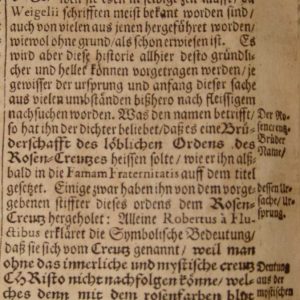
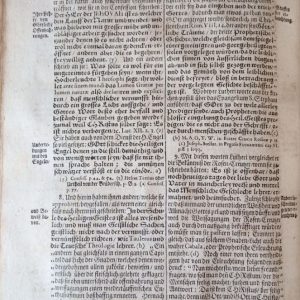
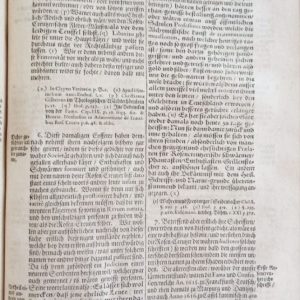
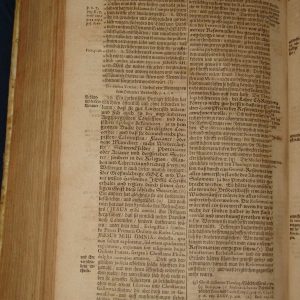
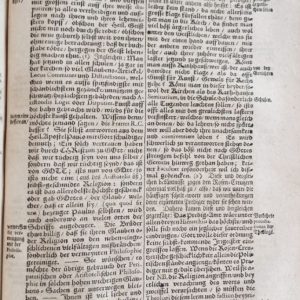
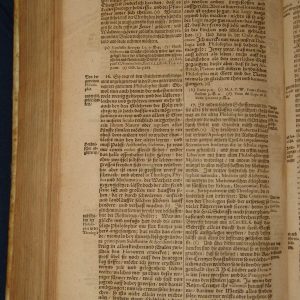
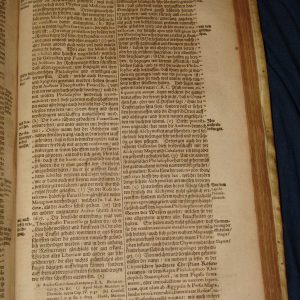
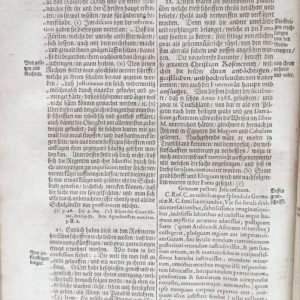
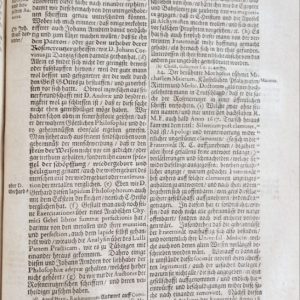
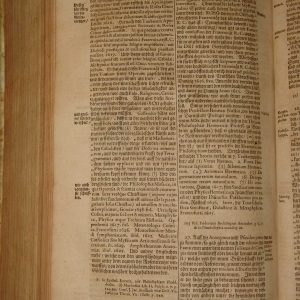
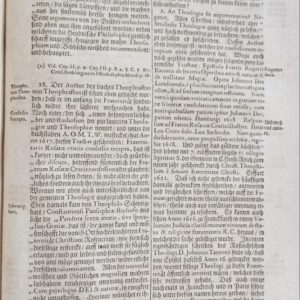
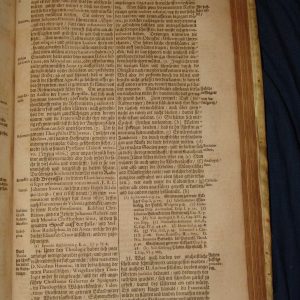
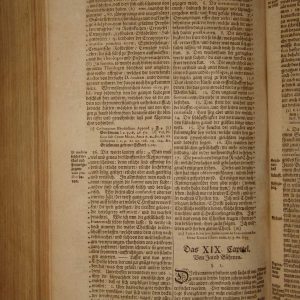
*
Addendum
from Volume II: Part IV, Section III
(pages 624–625).
*
NUM. XI
Elucidation of the Rosicrucian History. Regarding the origin of the Rosicrucian affairs, I have, since [writing] the previous report, subsequently learned the following:
Regarding the origin of the Rosicrucian affairs, I have, since [writing] the previous report, subsequently learned. In the posthumous writings of M. Christoph Hirsch, preacher at Eisleben, it was found that Johann Arndt had confidentially reported to him—as his trusted friend and former colleague there—that Dr. Joh. Valentinus Andreæ had also revealed this secret to him sub rosa [under the rose/secrecy]: namely, that he (Dr. Andreæ), along with 30 other persons in the Württemberg region, had first published the Fama Fraternitatis in order to learn, from behind the curtain, what judgments would be passed on it in Europe, and what hidden lovers of truth and wisdom were lurking here and there who would step forward because of it.
Furthermore, this M. Hirsch, at Arndt’s suggestion, secretly published many such Rosicrucian writings, especially the Pegasus Stellatus, the Astronomia Supracœlestis, the Gemma Magica, and the like. The author of the book called the Rauchmarck of the Rosicrucians is also said to have revealed this whole work subsequently, though it has not yet come into my hands.
The aforementioned Andreæ himself confesses in an epistle to Comenius, which stands in his Operibus Didacticis, that about 30 understanding men had intended such a reformation, and through this Fama only wished to make an attempt.
From all this, two things are primarily elucidated: firstly, what was hinted at in the history of Johann Arndt’s love for secret Philosophy, Magic, and Chemistry from his epistle; secondly, that most authors of Rosicrucian books were eminent Lutheran teachers, indeed even in Luther’s fatherland itself: which would have given zealots great cause to scold and do evil, had it become known to them. Moreover, one sees from this how wise and prudent men have always been concerned with the improvement of the church, and began this in all sorts of ways, although mostly in vain due to the hindrances of the godless and hypocrites.
Meanwhile, an old prayer printed in forma patenti [open form] has also come into my hands from Holland, in which a Rosicrucian expresses his intention and mind before the all-knowing GOD himself. It may stand here as a remembrance and for further elucidation of this history.
(The Dutch text follows here)
The current Professor of Physics in Kiel, in the year 1696, without hesitation made the following known about the Rosicrucians in the Osculum Philosophiæ Adeptæ & Theologiæ Orthodoxæ, in the Postlogue, page antepenultimate [third from last]:
“Among the Adepts, there are also various grades of perfection: The most distinguished among them are the Rosicrucians, whose most holy society is scattered throughout the world. However, they do not make themselves known without cause.
Regarding their religion, they adhere to the Unchanged Augsburg Confession and do not deviate from it by a hair’s breadth. Many writings circulate under their name, but until now they have released nothing under the name of the Rosy Cross, nor will they publish anything; the writings that boast with this name do not belong to the Rosicrucians, but to others who wish to lend authority to their own writings by using this name.
(Here the Author adds this margin remark: ‘The Rosicrucians are not Weigelians or Fanatics, but truly Lutherans or Evangelicals, of which one could demand clear testimonies if it were still possible; which the Author undoubtedly adds to legitimize himself’).
These brothers now have free access to the innermost secrets of nature. I do not concern myself here with the judgment of the Theologians of Leiden, which concerns the false brothers, not the true ones, who are beloved by GOD.
The Englishman Fludd wrote a defense for them, and indeed earned great praise for it, yet he has by no means fully recognized this society.
Michael Maier also defended the same in his ‘Silentium Post Clamores’, and eventually became an Adept himself, although he attained this fortune only after much sweat and labor.”
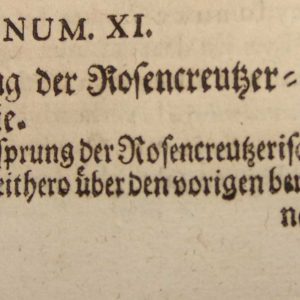
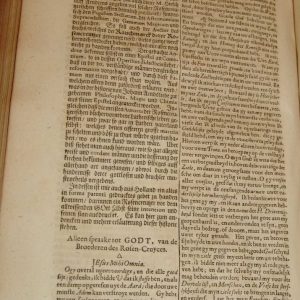
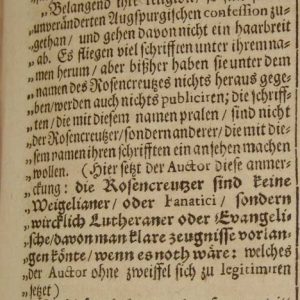
*
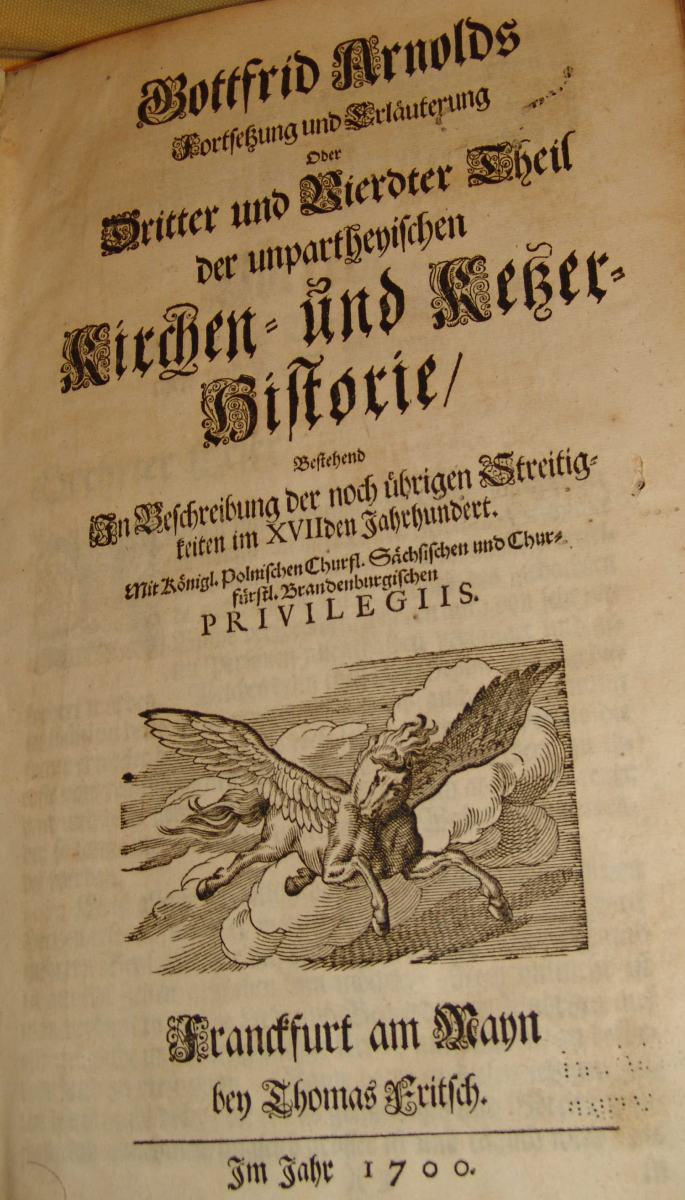
*
Coming Soon
‘A Little Gottfried Arnold Sampler Part 2’:
‘An 1699 History of Jacob Boehme: Biography, Bibliography,
and the Essence of His Theosophy.’
*
‘Le travail a été mien,
le profit en soit au lecteur,
et à Dieu seul la Gloire’
Jean Rey
***
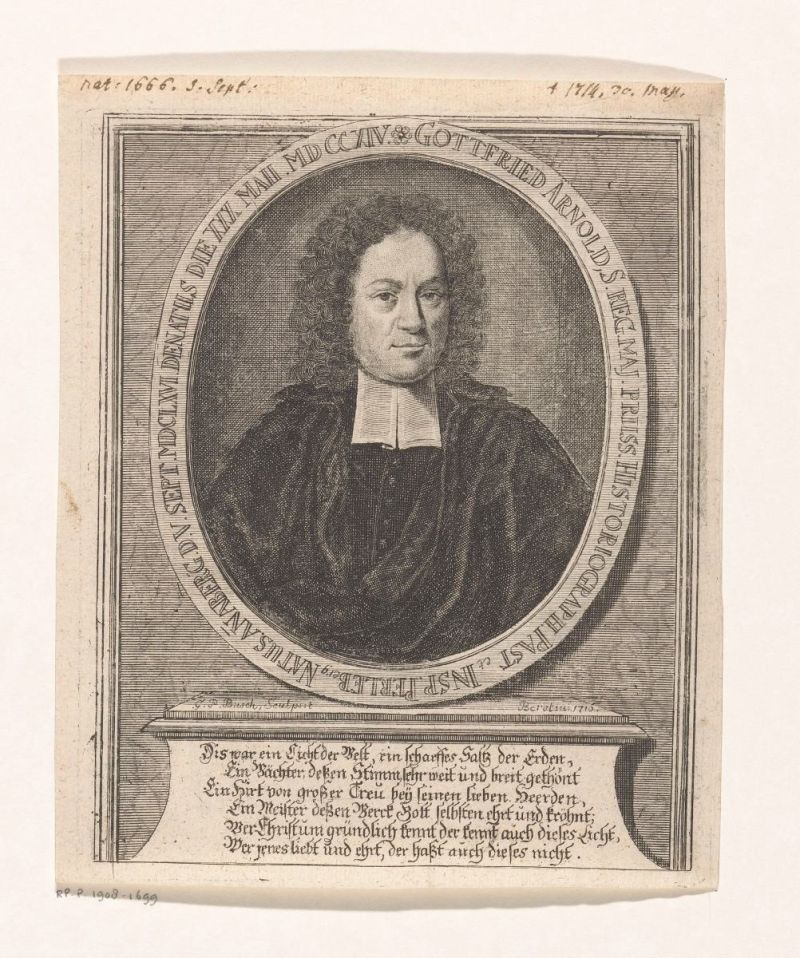


Related Articles

Leave a Reply