
Circle of Transmission: The Living Loom
Xiantian Luohan Quan: Illustrated Postures of the Eighteen Hands A Critical Edition and Study in Republican-Era Martial Arts Modernity
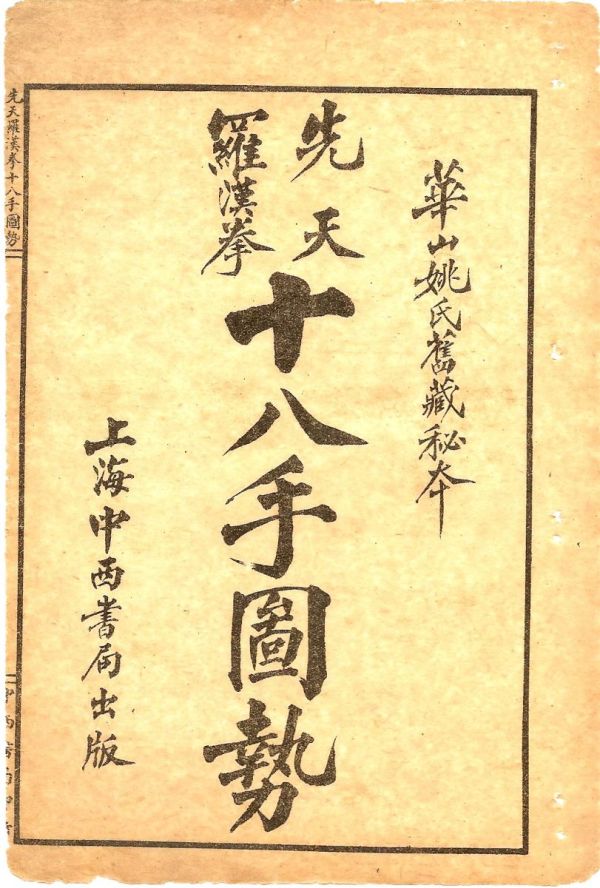
Featured illustration: Half-title page from the Xiantian Luohan Quan Shiba Shou Tu Shi (1926), published by the Zhong-Xi Book Bureau, Shanghai. The page announces the text as a “secret text, formerly preserved by the Yao family of Mount Hua” (華山姚氏舊藏秘本) while simultaneously presenting it as a commercial publication of the Zhong-Xi Book Bureau. This visual tension — the “secret” made public through lithographic reproduction — exemplifies what this edition terms performative esotericism. The calligraphy, produced through the lithographic process, retains the fluid brushwork of a skilled calligrapher, belying the mechanical nature of its reproduction.
*
Today’s sharing from the Blue House of Via-HYGEIA is the critical edition and translation of a Chinese Republican-era martial arts publication: the complete 33-page document of 《先天羅漢拳十八手圖勢》 (Xiantian Luohan Quan: Illustrated Postures of the Eighteen Hands), published by the Shanghai Zhong-Xi Book Bureau (中西書局) in November 1926 (Republican Year 15).
Prepared for the Via Hygeia-Circle of Transmission, this edition presents the full transcription and annotated translation of the Yao family “secret text” (miben), framed by a critical introduction on performative esotericism and Republican print culture, and a concluding reflection on the eighteenth posture—Han Ji Du Bu (Cold Chicken Single-Step)—as emblem of the manual’s self-dissolving paradox.
The source is treated in five components per section (Transcription, Translation, Lineage & Context, Technical Exegesis, Comparative Notes), preserving lithographic errors as bibliographic evidence and reading the “printed secret” not as a contradiction to be resolved, but as the defining condition of martial arts modernity in 1920s China.
Xiantian Luohan Quan:
Illustrated Postures of the Eighteen Hands
A Critical Edition and Study in Republican-Era Martial Arts Modernity
A CRITICAL INTRODUCTION
The Primordial and the Printed:
A Reader’s Guide to Performative Esotericism
The Xiantian Luohan Quan Shiba Shou Tu Shi (1926) arrives at its reader already divided against itself. Its cover proclaims it a miben (秘本), a “secret text” preserved by the Yao family of Mount Hua and transmitted through a chain of literati antiquarians; its colophon announces lithographic reproduction by the Zhong-Xi Book Bureau, priced at one silver dollar, distributed through “major bookstores in all provinces and ports” (各省各埠大書局), and protected under the Republican Copyright Law of 1915. The text is simultaneously hidden and displayed, esoteric and mass-produced, a family treasure and a commodity. This is not incidental contradiction but constitutive paradox. The manual does not merely contain secrets; it performs secrecy as a mode of publication.
The critical edition that follows treats this performative esotericism not as a problem to be solved but as the manual’s essential historical content. Each section accordingly presents the source text in five components—Transcription, Translation, Lineage & Context, Technical Exegesis, and Comparative Notes—because the manual itself operates on multiple, contradictory registers (martial, medical, commercial, alchemical, Buddhist, Daoist) that no single lens can capture. To read it critically is to read against its own surface claims, to treat its assertions of authenticity as symptoms of the very modernity they claim to resist.
*
I. The Object and Its Contradictions
The reader who approaches this edition expecting a transparent window onto primordial Shaolin wisdom may find themselves frustrated—and that frustration is pedagogically productive. The manual is a complex artifact of early twentieth-century Chinese print capitalism, negotiating between sacred geography and commercial metropolis, between master-disciple orality and lithographic reproducibility, between the husk (quqiao 軀殼) and the spirit (linghun 靈魂) that its own preface so insistently dichotomizes.
The preface performs a complex negotiation between competing claims to authenticity that characterizes Republican-era martial arts publishing (1912–1949). Three distinct provenance narratives are layered: the Bodhidharma mythos (527 CE), the Bai Yufeng expansion (Jin-Yuan dynasties), and the Yao-Jiang provenance chain (Mount Hua → Yao family decline → Jiang Jingyuan’s 120-cash purchase at a Suzhou bookstall → Jiang Xiaoxi → the editor “Jiasheng” 假生 at the Tower of the Broken Zither and Blunted Sword). The juren degree, the studio name (hao), the antiquarian narrative of rescue and preservation—these construct a wenren (literati) authenticity distinct from both monastic and folk jianghu practice. Yet this very distinction is marketed to an emerging urban readership of clerks, students, and petty merchants who could never access actual literati martial circles.
The publisher, Zhong-Xi Book Bureau (中西書局), was a major Shanghai lithographic house active from the 1910s through the 1930s, specializing in “useful knowledge” texts—martial arts, medicine, engineering, and self-improvement. Their adoption of this manual signals its market positioning within the Republican-era cult of tiyu (體育, physical culture) and national strengthening. The date Republic Year 15, Bingyin (丙寅), early autumn 1926, places this publication amid the Warlord Era, six months before the Northern Expedition. The “secret manuscript” framing—simultaneously claiming esoteric value and making it publicly available—exemplifies what martial arts historian Andrew Morris identifies as the commercialization of secrecy in Republican print culture.[1]
II. Performative Esotericism: Reading the Miben
The term miben operates in Republican-era martial arts culture as what we might call a performative esotericism: it produces the effect it names not by restricting access but by staging restriction. The manual’s value lies not in actual scarcity—lithography allows infinite identical copies—but in the aura of scarcity, the lingering residue of master-disciple transmission that clings to the printed page like incense smoke.
The editor’s persona, “Jiasheng” (假生, “Borrowed Life” or “False Life”), embodies this contradiction. His studio name—”Tower of the Broken Zither and Blunted Sword” (破琴鈍劍樓)—evokes the scholar-warrior (wenwu 文武) ideal while announcing its decay: the zither is broken, the sword blunted. The persona constructs a reluctant martialist, preserving knowledge from extinction rather than seeking personal glory. This is a quintessentially Republican-era rhetorical stance, mediating between traditional xia (knight-errant) values and modern tiyu nationalism. But the blunted sword also figures the text itself: a martial manual that has been softened, rendered safe for commercial circulation, its lethal edges (the Black Sand Hand that “touches objects, objects are destroyed; touches people, people are injured”) blunted by the very act of description.
This economy of partial disclosure structures the manual at every level. The “One-Finger Chan” section is destroyed by lithographic repetition; the second sequence of postures (9–18) is stripped of technical description, offering only illustrations and titles. Whether this truncation resulted from editorial haste, source manuscript damage, or deliberate commercial strategy, its effect is identical: the text gestures toward a fullness it cannot deliver. The reader is left with the image of Hunyuan Yiqi (混元一氣) or Tou Tian Huan Ri (偷天換日) but not its mechanics, tantalized by a secret that exists only in the space of its own omission. This is not failure but function. The incomplete manual advertises the necessity of the master, of oral transmission (koujue), of the very esoteric hierarchy that print capitalism supposedly dissolves.
The editor’s name “Jiasheng” (假生, “Borrowed Life” or “False Life”) acquires additional resonance here. The manual itself is a “borrowed” text—copied from the Jiang family, reproduced lithographically, its authenticity borrowed from the Yao family lineage. Its “life” is not its own but a construction of its provenance narratives. The editor’s chosen name thus becomes an inadvertent confession: the miben is a borrowed existence, a textual ghost of an oral tradition.
*
III. The Self-Undermining Text: Three Registers
The manual’s self-undermining nature operates across three registers that the reader will encounter repeatedly in the sections ahead.
Ontologically, the text claims to transmit xiantian (先天, primordial) methods—techniques originating before the division of Heaven and Earth, before the conditioned houtian (後天, acquired) world. Yet the very term xiantian is retrojected: the preface explicitly states that Bodhidharma’s original eighteen hands bore no such designation, and that the term was applied only when Bai Yufeng expanded the system to 118 hands in the Jin-Yuan dynasties. The “primordial” is thus a secondary addition, a houtian naming of the xiantian. The text performs a temporal paradox: it claims to recover the origin through a later interpolation, to find the unconditioned through the conditioned. This mirrors neidan (internal alchemy) rhetoric, where the practitioner must use houtian breath and intention to return to xiantian stillness—but here the alchemy is textual. The printed manual, a thoroughly houtian artifact of 1926 Shanghai, claims to be the vehicle of xiantian transmission.
Pedagogically, the manual enforces a hierarchy of knowledge that its own existence violates. The preface establishes that “strength precedes enlightenment” (qiang shen → wu xing), that one must not “skip grades” (lie ji), that the methods can be “intuited, not transmitted in words” (yi hui, bu ke yan chuan). Yet what is a printed manual if not a technological skipping of grades, a transmission without the master’s corrective gaze? The text warns against greed for much (tan duo), carelessness (cu hu), and impatience (zao ji) while simultaneously compressing complex somatic training into reproducible formulas: thirty-six repetitions, one cooking’s duration of sun-gazing, sand → iron filings → iron beads. It rationalizes the esoteric, making neigong empirical and reproducible, while insisting that true knowledge exceeds reproduction.
Politically, the manual navigates the precarious status of martial arts in the Warlord Era. The 1928 Nanjing government’s Central Guoshu Institute would soon formalize guoshu (national arts) as state-sponsored tiyu, but in 1926 martial training still carried the taint of secret society (huidang) affiliation and jianghu lawlessness. The preface’s moral framing—”esteems virtue, not force” (shang de bu shang li), the warning that “if one moves the hands, one must cause death”—protects both practitioner and publisher from legal and social sanction. Yet this moralism coexists with the enumeration of twenty-two hand methods including “killing” (sha), with descriptions of touchless lethal strikes and blood-sealing techniques. The text is simultaneously a manual of violence and a treatise on its renunciation, a neijia health regimen and a qinna combat system. This is not hypocrisy but structural necessity: the Republican-era martial arts market required both the thrill of efficacy and the safety of moral respectability.
*
IV. The Eighteen Postures as Microcosmic Ritual:
A Preview
The posture sequence, read as a whole, encodes a narrative of progressive simplification that culminates in self-dissolution. The first phase (Postures 1–3) establishes combative fundamentals: long and short hands, cutting strikes, hooking counter-attacks. The second phase (Postures 4–8) introduces alchemical imagery: the Cinnabar Phoenix, the Green Dragon, Both Hands Supporting Heaven. The third phase (Postures 9–14) intensifies the cosmological register: Hunyuan Yiqi (Primordial-Origin One-Qi), Tou Tian Huan Ri (Stealing Heaven, Exchanging Sun), Dao Hai Pai Shan (Overturning Sea, Pushing Mountain). The final phase (Postures 15–18) resolves into increasingly abstract and diminished forms.
The reader should attend to the formal asymmetry between the two sequences. Postures 1–8 are accompanied by detailed technical descriptions; postures 9–18 survive (in the second sequence) as illustrations and titles alone. This truncation is not a lacuna to be filled by editorial reconstruction but a bibliographic fact that reveals the manual’s mode of production, its price point, and its intended market. The reader who encounters these pages should ask: What does it mean to receive the image of a posture without its mechanics? What kind of knowledge is transmitted by a picture that cannot be performed from instructions?
The edition’s final posture—Han Ji Du Bu (寒雞獨步, Cold Chicken Single-Step)—will serve as the hermeneutic key that unlocks the entire manual’s self-understanding. Where martial arts manuals typically conclude with victorious guardian poses, this text ends with a shivering bird on one leg, exposed, diminished, apparently defenseless. The “cold” (han) is the yuanqi of winter, of storage, of potential before manifestation. The “single-step” (du bu) is non-dual stabilization beyond technique. In neidan terms, this is the return to wuji (無極, the ultimate non-polarity), the condition before the emergence of taiji and the subsequent differentiation into the san cai (三才, three powers). The Cold Chicken is the xiantian body stripped of all houtian accretion—not the armored body of Iron Ox Gong, not the projective body of Black Sand Hand, not the seizing body of Dragon Claw, but the body as pure potential.
Yet this dissolution is also the manual’s most profound self-portrait. The printed miben is itself a “cold chicken”: it has one foot in the world of oral transmission and one foot in the commercial marketplace. It is exposed, shivering, vulnerable to the “foul and turbid” (hui zhuo) environment of 1926 Shanghai. Its “coldness” is the distance between its claims of primordial authenticity and its actual condition as lithographic commodity. The manual, like the Cold Chicken, has achieved a kind of negative perfection: it is so thoroughly compromised by its own contradictions that it transcends them, becoming an emblem of the impossibility of pure transmission in the age of mechanical reproduction.
*
V. About This Edition
The five-component structure—Transcription, Translation, Lineage & Context, Technical Exegesis, Comparative Notes—reflects the conviction that this manual cannot be read through any single disciplinary lens. The Transcription preserves the material text including lithographic errors and repetitions, which are treated as bibliographic evidence rather than obstacles. The Translation aims for philological precision while acknowledging the untranslatable residue of technical terms (qi, gong, jin, shen). Lineage & Context situates each section within the social, political, and commercial history of Republican-era martial arts. Technical Exegesis analyzes the somatic and energetic mechanics described in the text, without assuming their empirical validity. Comparative Notes draw connections to parallel traditions (Taijiquan, Yijin Jing, Okinawan kata, neidan literature) that illuminate the manual’s participation in broader discursive fields.
The reader should approach this edition as a dialectical reading: the source text and critical apparatus are in continuous conversation, sometimes reinforcing, sometimes undermining each other. The manual’s contradictions are not errors to be corrected but the text’s essential content. The edition does not resolve them; it stages them.
A note on illustrations: Scans of the original lithographic illustrations from the 1926 manual are reproduced at the end of this edition. The reader will find that the text’s references to numbered illustrations correspond to these images. The second sequence of postures (Nos. 9–18) is presented as illustrations with titles only, preserving the asymmetry of the source document. These scans are essential primary evidence for the manual’s composite nature and commercial production history..
*
And now the text:
《先天羅漢拳十八手圖勢》
Xiantian Luohan Quan Shiba Shou Tu Shi
Illustrated Postures of the Eighteen Hands of Primordial Luohan Fist
Source: 姚氏秘本 (Yao Family Secret Text)
Publisher: 中西書局 (Zhong-Xi Book Bureau), Shanghai
Date: 中華民國十五年 (Republic Year 15 / 1926)
Price: 大洋壹元 (One Silver Dollar)
Copyright Holder: 華山姚氏 (Yao Family of Mount Hua)
Editor/校訂者: 常熟吳虞公 (Wu Yugong of Changshu)
Preface by: 假生 (Jiasheng) at 破琴鈍劍樓 (Tower of the Broken Zither and Blunted Sword)
Critical Edition Prepared for: Via Hygeia Circle of Transmission
Format: Five-component structure per section — Transcription, Translation, Lineage & Context, Technical Exegesis, Comparative Notes
TABLE OF CONTENTS
Section 0: Front Matter (Pages 1–4)
-
Title Leaf, Half-Title, Table of Contents, Preface (弁言)
Section 1: Methods of Training Qi / 練氣之法 (Pages 5–7)
-
(甲) Training Exhalation-Inhalation / 練吐納
-
(乙) Training Cross-Legged Sitting / 練趺坐
-
(丙) Training Massage / 練按摩
-
(丁) Training Qi Circulation / 練運氣
Section 2: Methods of Training Gong / 練功之法 (Pages 7–10)
-
(甲) Black Sand Hand / 黑沙手
-
(乙) One-Finger Chan / 一指禪
-
(丙) Iron Ox Gong / 鐵牛功
-
(丁) Dragon Claw Gong / 龍爪功
Section 3: Methods of Training Fist / 練拳之法 (Pages 10–13)
-
(甲) Training the Framework / 練架子
-
(乙) Training Eye Power / 練眼力
-
(丙) Training Hand Methods / 練手法
-
Postures 1–3: 撥雲見日勢, 順水推舟勢, 倒拔遊龍勢
Section 4: The Illustrated Postures, First Sequence / 先天羅漢拳十八手圖勢(一) (Pages 13–20)
-
Postures 4–8: 丹鳳展翅勢, 青龍探爪勢, 兩手擎天勢, 雙龍入海勢, 混合三才勢
-
Step Methods / 練步之法: 馬步, 弓步, 箭步, 殿步
Section 5: The Illustrated Postures, Second Sequence / 先天羅漢拳十八手圖勢(二) (Pages 24–32)
-
Postures 9–18: 混元一氣勢 through 寒雞獨步勢
Section 6: Integrated Article: The Primordial and the Printed
Appendix: Colophon / 版權頁
SECTION 0: FRONT MATTER
Pages 1–4: Title leaf, Half-title, Table of Contents, Preface (弁言)
TRANSCRIPTION
[Page 1 — Cover label/Title slip]
姚氏秘本
先天羅漢拳十八手勢圖
中西書局印行
[Page 2 — Half-title page]
華山姚氏舊藏秘本
先天羅漢拳十八手圖勢
上海中西書局出版
[Page 3 — Table of Contents, 目錄]
弁言
學拳要訣
第一節 練氣之法
甲 練吐納 乙 練趺坐 丙 練按摩 丁 練運氣
第二節 練功之法
甲 黑沙手 乙 一指禪 丙 鐵牛功 丁 龍爪功
第三節 練拳之法
甲 練架子 乙 練眼力 丙 練手法
先天羅漢拳十八手圖勢
一 撥雲見日勢 二 順水推舟勢
三 倒拔遊龍勢 四 丹鳳展翅勢
五 青龍探爪勢 六 兩手擎天勢
七 雙龍入海勢 八 混合三才勢
丁 練步之法
一 馬步 二 弓步
三 箭步 四 殿步
先天羅漢拳十八手圖勢(續)
一 混元一氣勢 二 仙掌拿雲勢
三 三盤落地勢 四 兩手擎天勢
五 拈花托葉勢 六 瞻前顧後勢
七 仙猿摘果勢 八 偷天換日勢
九 靈獮護腦勢 十 推窗尋月勢
十一 斂爪藏鋒勢 十二 猛虎撲食勢
十三 迴風撥水勢 十四 倒海排山勢
十五 雙峯插雲勢 十六 黑虎鑽心勢
十七 獨貫三台勢 十八 寒雞獨步勢
[Page 4 — Preface, 弁言]
羅漢拳為內家秘傳,創自天竺僧人達摩。梁武帝時入大通,丁未赤足入中原,卓錫嵩山少林寺。每於演說禪宗之際,見眾僧精神不振,甚有瞌睡者,慨然曰:出家人雖不以軀殼為重,然亦不容不澈解於性,使靈魂離散也。欲悟性必先強身,則軀殼強而靈魂易悟也。於是創羅漢拳十八手以教僧眾。久之效乃大著。登坐說法之際,不復見萎睡者矣。此其起始也。在當時所謂羅漢拳者,止十有八手,亦並無先天後天之名目。殆達摩隻履渡江,翩然西去,少林宗派幾絕。其傳至金元時,白玉峯披剃入山,得此十八手,乃融合變化,闡幽發微,增為一百十八手,以符一百十八羅漢之數。至此始將達摩所傳之十八手,進號曰先天羅漢拳。蓋明己之所傳者,咸脫胎於十八手也。其後洪蘊貫一獨杖僧、李鏡源輩,皆少林健者,各立門戶,互有增減,雖仍以百十八首為率,法則變矣。及清初,少林雖異常興旺,特迴光返照,瞬息即滅,殊可惜也。此後則非但達摩所傳之十八手絕無傳人,即白玉峯之百十八手,亦已無人能得其奧。至於今人之所謂羅漢拳者,南北異派,傳者異法,錯亂而無可宗矣。茲編為華山姚氏家藏法止十八手精華所薈,不失本真,頗可貴也。姚氏式微,此書乃轉輾而入於虞山蔣氏。蓋覲園孝廉以百二十錢得之於吳門舊書攤上。覲園孝廉本此中能手,得此技益精進。於是又廣原本之意,著學拳術要訣一卷,坿錄卷首,簡潔詳明,學者可知所適從矣。蔣君小溪為覲園孝廉文孫,頗與予善,知其樂此,出藏本相示,爰照錄一冊,以便學習。茲特付諸剞劂,以公同好。識茲數語,聊當弁言。丙寅早秋,假生識於破琴鈍劍樓。
TRANSLATION
[Cover Label]
Yao Family Secret Text
Illustrated Postures of the Eighteen Hands of Primordial Luohan Fist
Published by the Zhong-Xi Book Bureau
[Half-Title]
Secret Text, Formerly Preserved by the Yao Family of Mount Hua
Illustrated Postures of the Eighteen Hands of Primordial Luohan Fist
Published by the Zhong-Xi Book Bureau, Shanghai
[Preface]
The Luohan Fist is an esoteric transmission of the internal school (neijia), created by the Tianzhu monk Bodhidharma. During the reign of Emperor Wu of Liang, in the Datong era [527–529], in the year dingwei [527], he entered the Central Plains barefoot, establishing his staff at Shaolin Monastery on Mount Song. Whenever he expounded the Chan school, he observed the monks listless in spirit, some even dozing. He sighed and said: “Though those who have left home do not esteem the bodily husk, neither may they fail to thoroughly comprehend their nature, allowing soul and spirit to scatter and disperse. To awaken to one’s nature, one must first strengthen the body; when the husk is strong, the soul easily awakens.” Thereupon he created the eighteen hands of Luohan Fist to instruct the monastic assembly. In time its efficacy became greatly manifest; when he ascended the seat to preach the Dharma, no more were there seen any who withered and slept. Such was its origin.
At that time, what was called Luohan Fist consisted of only eighteen hands, and there was no designation of “primordial” (xiantian) or “acquired” (houtian). When Bodhidharma crossed the river on a single sandal, departing with ethereal grace to the West, the Shaolin lineage nearly perished. The transmission reached the Jin and Yuan dynasties [1115–1368], when Bai Yufeng took the tonsure and entered the mountains, obtaining these eighteen hands. He fused and transformed them, elucidating the hidden and revealing the subtle, expanding them to one hundred and eighteen hands to correspond to the one hundred and eighteen Luohans. Only then did he advance the title of what Bodhidharma had transmitted—these eighteen hands—to “Primordial Luohan Fist” (Xiantian Luohan Quan), thereby clarifying that what he transmitted had all been gestated from the eighteen hands.
Thereafter, Hong Yun, Guan Yi, the staff-bearing monk, Li Jingyuan, and others—all stalwarts of Shaolin—each established their own gates and schools, mutually adding and subtracting techniques. Though they still took the one hundred and eighteen forms as the standard, the methods had changed. By the early Qing, though Shaolin flourished extraordinarily, it was but the returning flash of a dying lamp, extinguished in an instant—truly lamentable. After this, not only were there no transmitters of the eighteen hands that Bodhidharma had transmitted, but even Bai Yufeng’s one hundred and eighteen hands had become unattainable in their profundity. As for what people today call Luohan Fist, northern and southern schools differ, transmitters employ different methods, chaotic and without any authority to follow.
The present compilation is the family-preserved method of the Yao family of Mount Hua, limited to the essence gathered from the eighteen hands, not losing the true original—quite precious indeed. As the Yao family declined, this book passed by turns into the possession of the Jiang family of Yushan. For the juren Jingyuan [Jiang Jingyuan] acquired it for one hundred and twenty cash at a used bookstall in Wumen [Suzhou]. Jingyuan was himself an adept in these matters; having obtained this technique, he advanced further. Thereupon he expanded upon the original’s intent, composing one volume of Essential Methods for Studying Fist, appended to the beginning of this work—concise, clear, and detailed, so that students may know what to follow. Jiang Xiaoxi is the cultured grandson of Jingyuan, and on friendly terms with me; knowing my fondness for these matters, he produced the family-preserved edition to show me. I have therefore copied it complete in one volume to facilitate study. Now I specially commit it to woodblock carving, to share with fellow enthusiasts. These few words serve as preface.
Early autumn of the Bingyin year [1926], recorded at the Tower of the Broken Zither and Blunted Sword.
[Signed:] Jiasheng (假生, “Borrowed Life”)
LINEAGE & CONTEXT
The preface performs a complex negotiation between competing claims to authenticity that characterizes Republican-era martial arts publishing (1912–1949). Three distinct provenance narratives are layered:
The Bodhidharma Mythos: The text anchors itself in the foundational hagiography of Chinese martial arts—Bodhidharma (Damo) at Shaolin in 527 CE. This narrative, already well-circulated by the late imperial period, receives here a specific “internal school” (neijia) inflection: the monk’s concern is not combat efficacy but wuxing (awakening to nature) through physiological cultivation. The body becomes a vehicle for Chan soteriology. Historians note that the Bodhidharma martial arts attribution is absent from pre-Ming sources; the earliest explicit linkage appears in the Shaolin Monastery Stele (1517) and the seventeenth-century Shaolin Staff Method (《少林棍法闡宗》). By 1926, however, it is fully naturalized.[2]
The Bai Yufeng Expansion: The attribution to Bai Yufeng (Jin-Yuan dynasties) of expanding eighteen to one hundred and eighteen hands introduces numerological correspondence (luohan = arhat = 108+10 in some reckonings). The term xiantian (primordial, 先天) is explicitly retrojected as Bai Yufeng’s innovation—an alchemical-Daoist term now applied to Buddhist martial arts, signaling the syncretism typical of late imperial martial theory.
The Yao-Jiang Provenance Chain: The modern authentication moves through verifiable (or verisimilar) social networks: Mount Hua → Yao family decline → Jiang Jingyuan (虞山蔣氏覲園孝廉) → Jiang Xiaoxi → the editor “Jiasheng” (假生) at the “Tower of the Broken Zither and Blunted Sword” (破琴鈍劍樓). The juren degree, the Suzhou bookstall, the specific price (120 cash), and the literati studio name all construct a wenren (scholarly) authenticity distinct from both monastic and folk transmission.
The publisher, Zhong-Xi Book Bureau (中西書局), was a major Shanghai lithographic house active from the 1910s through the 1930s. Their catalogue included “useful knowledge” texts—martial arts manuals, medical treatises, engineering guides, and self-improvement literature. Their adoption of this manual signals its market positioning within the Republican-era cult of tiyu (體育, physical culture) and national strengthening.[3]
The date Republic Year 15, Bingyin (丙寅), early autumn 1926 places this publication amid the Warlord Era, six months before the Northern Expedition. The “secret manuscript” (miben 秘本) framing—simultaneously claiming esoteric value and making it publicly available—exemplifies what martial arts historian Andrew Morris identifies as the commercialization of secrecy in Republican print culture.[4]
TECHNICAL EXEGESIS
The preface establishes a somatic epistemology that governs the entire manual: strength precedes enlightenment (qiang shen 強身 → wu xing 悟性). This is not merely rhetorical. The text posits a tripartite body:
| Term | Translation | Function |
|---|---|---|
| 軀殼 (quqiao) | The Husk | The conditioned, mortal frame |
| 靈魂 (linghun) | The Spirit | The animating consciousness |
| 性 (xing) | Nature | The Buddha-nature or original face |
The “primordial” (xiantian) designation refers not to temporal priority alone but to the pre-cosmic, unconditioned state in Daoist alchemical cosmology. In neidan (internal alchemy) discourse, xiantian denotes the state before the division of Heaven and Earth, before the emergence of the conditioned houtian (acquired) world. By applying this term to Bodhidharma’s original eighteen hands, the text performs a Daoist-Buddhist synthesis: the Shaolin founder’s art becomes an alchemical method for returning to the primordial condition.
The preface’s critique of later “one hundred and eighteen hand” systems as cuoluan (錯亂, chaotic, disordered) encodes a technical judgment: proliferation of forms represents degeneration. The “authentic” xiantian method is defined by restriction—eighteen hands only, a closed set resistant to the accretions of “each establishing their own gates” (ge li menhu 各立門戶). This mirrors neidan rhetoric of “subtracting” rather than “adding” in cultivation.
COMPARATIVE NOTES
Shaolin Mythology vs. Historical Practice: What distinguishes this text from earlier Shaolin martial texts is its internal school framing—Bodhidharma as neijia progenitor rather than external (waijia) combat instructor. This reflects the dominance of Taijiquan, Xingyiquan, and Baguazhang discourses in the Republican period, which claimed superior status through “internal” (nei) cultivation. The manual’s omission of the Yijin Jing name—despite obvious parallels—may reflect the Yijin Jing’s over-familiarity and commercial saturation by the 1920s; “Primordial Luohan Fist” offered fresher branding.[5]
The “Secret Manuscript” Economy: The cover’s miben (秘本) designation and the half-title’s jiucang (舊藏, old collection) construct what anthropologist James C. Scott calls “weapons of the weak”—literacy and esoteric knowledge as forms of cultural capital.[6] Yet the very act of lithographic publication dissolves secrecy. The manual participates in a broader Republican-era genre: miben that are simultaneously hidden and displayed, creating what we might term performative esotericism—the value lies not in actual restriction of access but in the aura of restricted transmission.
Mount Hua Martial Arts: The Yao family of Mount Hua (華山姚氏) places this text within the Daoist sacred geography of western China. Mount Hua was historically associated with Daoist swordsmanship and neidan practice; the text’s alchemical terminology (xiantian, hun yuan 混元) resonates with this localization. The transfer to the Jiang family of Yushan (Changshu, Jiangsu) and eventual Shanghai publication traces the eastern migration of martial knowledge from sacred mountain to commercial metropolis that characterizes the Republican period.
The Editor’s Persona: “假生 (Jiǎ Shēng).” (假生, “Borrowed Life” or “False Life”), “Tower of the Broken Zither and Blunted Sword”—the hao (studio name) evokes the literati trope of the scholar-warrior (wenwu 文武) whose civil accomplishments (zither) have fallen into disuse, leaving only martial pursuits (sword). Yet the sword is “blunted” (dun), suggesting either achieved non-aggression or the softening of violence through cultivation. The persona constructs the editor as reluctant martialist, preserving knowledge from extinction rather than seeking personal glory—a common Republican-era rhetorical stance that mediated between traditional xia (knight-errant) values and modern tiyu (physical culture) nationalism. The name “Borrowed Life” further suggests that the editor’s identity—and by extension the manual’s authority—is not original but borrowed from prior sources.
SECTION 1: 練氣之法
Methods of Training Qi
Pages 5–7
TRANSCRIPTION
[Page 5 — 學拳要訣 / Essential Methods for Studying Fist]
技擊之道,尚德不尚力,用以保身家,防制毒蛇猛獸之侵害,非學以好勇鬥狠,以擊人為事也。故不動手則已,若動手必致人死命。精於此者,不肯輕露鋒芒,亦以是也。欲學拳,必先養氣,養氣功深,則利慾不能侵,榮辱不能動,一切邪魔不能擾。然後始足與言技擊。且氣沛則神完,神完則力足,力足則百體舒泰,而筋骨強健矣。故學拳者首重養氣。然則養氣之法又若何?曰:澄心志,遠思慮,絕情慾,摒嗜好。如斯可矣。茲撮要舉數節于下。
(甲)練吐納 呼吸為強健臟腑之善法,即是吐納。行此之時,出入都由於肺。肺為氣之府,氣為力之源。練力者必先練氣。蓋以此也。惟行之時,不宜太猛,不宜過久,不宜在穢濁之地。須加意也。
(乙)練趺坐 趺坐為習靜之道。能靜則心志自清,心志清則百念滅。此之時,不宜太猛,不宜過久,不宜在穢濁之地。須加意也。趺坐法與僧家之坐禪無異。惟初行者,每患不能靜。其苦異常,必須設法遏止,使其雜念不興。然後習慣變成自然。雖有外魔,亦不能擾矣。坐時上身宜正而直,下身及四肢須平均安置。坐之時間,須逐漸增加,不可躐級。
[Page 6 — continued]
(丙)練按摩 按摩為舒暢筋骨、調和血脈之法,為內家秘傳功效甚著。法于吐納之前,或趺坐之後,以手心按摩全身穴道。自湧泉穴起,至太陽穴止,不可遺漏一處。在左者用右手摩之,在右者用左手摩之。先順後逆,各行三十六次。至若海底等適中之穴道,則兩手替換摩之。左順右逆,亦各三十六次。(假生按:此法《文八段》中載之甚詳。)
(丁)練運氣 氣既營養充沛,必須善于運用,始克防禦毒害,否則其功只健身而已。蓋尋常人氣之可到者,不過心臟肺腑。至于骨絡穴道,則運行不到矣。故氣足須善運。運氣之法,初習時宜按部行之。譬如諸我欲運氣入我之太陽穴,先須將氣提之上升,旣能上升之後,始可運之入穴。習練久之,自能稱意運行而無阻。但此法實至難,非朝夕可以竟其功。朞年可以見其效也。且習之之法,亦大有只能意會,不可言傳之概。使學者能將各法持久習練,功深之後,自能領悟也。
[Page 7 — 第二節 練功之法 / Section 2: Methods of Training Gong, begins]
學技擊,非僅學手步施展各法已也。蓋拳法止足為攻擊架禦之用,若無實力以臨之,縱有法亦何所施展。故言技擊者,必練功力,有內外之分。內功尚氣,已畧言之矣。至外功則練筋肉皮骨,使之堅實,練力以佐其用。惟功亦有輭硬之分:輭功以柔勝,如黑沙手、一指禪等是;又謂之陰功。硬功以剛勝,如鐵布衫、鐵牛功等,是今之練功者,以硬功為多。因學習也易,而成功較速也。且練硬功無一定成法,但能持久,即可有成。如以臂觸樹,久而其臂亦可錚錚如鐵,以頭觸石,久而頭可當鐵鎚。若言古法,亦不過如是耳。畧舉數則,以備一格。
TRANSLATION
[Essential Methods for Studying Fist]
The Way of combat arts esteems virtue, not force; it is used to protect family and self, to guard against the harm of venomous snakes and fierce beasts—not to study for the love of brawling and viciousness, making striking others one’s business. Therefore, if one does not move the hands, so be it; but if one moves the hands, one must cause the opponent’s death. Those accomplished in this are unwilling to lightly reveal their sharp edge—and for this very reason.
To study fist, one must first nurture qi. When qi-nurturing practice is profound, profit and desire cannot invade, glory and shame cannot move, all demonic forces cannot disturb. Only then is one adequate to discuss combat arts. Moreover, when qi is abundant, spirit is complete; when spirit is complete, force is ample; when force is ample, the hundred bodily members are relaxed and harmonious, and the sinews and bones are strong and healthy. Therefore, students of fist first esteem nurturing qi. Yet what is the method of nurturing qi? It is said: clarify the mind’s intent, distance oneself from anxious thought, sever emotional desire, cast away fond attachments. Thus it may be done. Here I gather the essentials, presenting several sections below.
(A) Training Exhalation-Inhalation (tuna)
Respiration is the excellent method for strengthening the internal organs—that is, tuna [lit. “spitting and swallowing”]. In practicing this, exit and entry are both through the lungs. The lung is the residence of qi; qi is the source of force. Those who train force must first train qi—precisely for this reason. Only in practicing, one should not be too forceful, should not extend too long, should not [practice] in foul and turbid places. One must pay special attention.
(B) Training Cross-Legged Sitting (fuzuo)
Cross-legged sitting is the way of cultivating stillness. When stillness is achieved, the mind’s intent naturally clarifies; when the mind’s intent clarifies, the hundred thoughts are extinguished. At this time, one should not be too forceful, should not [sit] too long, should not [sit] in foul and turbid places. One must pay special attention. The method of cross-legged sitting is no different from the seated Chan of monastics. Only beginners frequently suffer from inability to achieve stillness. The suffering is extraordinary; one must devise methods to suppress it, causing wandering thoughts not to arise. Thereafter, habit transforms into nature. Though external demons [appear], they cannot disturb. When sitting, the upper body should be upright and straight; the lower body and four limbs should be evenly disposed. The duration of sitting should be gradually increased; one may not skip grades.
(C) Training Massage (anmo)
Massage is the method for relaxing the sinews and bones, harmonizing the blood and vessels—a secret transmission of the internal school whose efficacy is quite manifest. The method: before tuna, or after fuzuo, use the center of the palm to massage the body’s acupoints. Beginning from the Bubbling Spring (Yongquan) and ending at the Great Sun (Taiyang), not one place may be omitted. Those on the left are rubbed with the right hand; those on the right are rubbed with the left hand. First clockwise, then counter-clockwise—each thirty-six times. As for such centrally located acupoints as the Sea Bottom (Haidi), then both hands alternate in rubbing them. Left clockwise, right counter-clockwise—likewise thirty-six times each. (Shusheng notes: This method is recorded in considerable detail in the Civil Eight Pieces.)
(D) Training Qi Circulation (yunqi)
Once qi is abundantly nourished, one must be skilled in its application, only then being able to guard against poison and harm; otherwise its merit is merely health preservation. For in ordinary persons, where qi can reach extends only to the heart, viscera, and lungs. As for the bone channels and acupoints, then circulation cannot reach them. Therefore, when qi is ample, one must skillfully circulate it. The method of circulating qi: when beginning practice, one should proceed by sections. For example, if I wish to circulate qi into my Great Sun acupoint, I must first lift the qi upward; only after it can ascend may I then circulate it into the acupoint. With long practice, one can naturally circulate according to intention without obstruction. But this method is truly most difficult; it cannot be completed in a morning or evening. A full year may reveal its effects. Moreover, the method of practicing it also greatly partakes of what can only be intuited, not transmitted in words. If the student can persist in practicing these various methods, after the work is deep, one will naturally comprehend.
LINEAGE & CONTEXT
The “Essential Methods” opening paragraph performs crucial ideological work, positioning the manual within two competing discourses that defined Republican-era martial arts:
The Moral-Restraint Paradigm: “Esteems virtue, not force” (shang de bu shang li) and the warning that “if one moves the hands, one must cause death” establish a xia (knight-errant) ethics of reserved violence. This is not mere rhetoric; it reflects the legal precarity of martial arts in the Republican period. The 1928 Nanjing government’s establishment of the Central Guoshu Institute formalized martial arts as national tiyu (physical culture), yet local jurisdictions often criminalized “secret societies” (huidang) and jianghu (rivers-and-lakes) fighters. The text’s moral framing protects both practitioner and publisher.
The Medical-Scientific Paradigm: The systematic progression—tuna → fuzuo → anmo → yunqi—reflects the rationalization of neigong (internal cultivation) under Republican-era scientism. The invocation of lungs as “residence of qi,” the specific enumeration of thirty-six repetitions, and the anatomical precision of acupoint massage all present neigong as empirical, reproducible, and therefore modern—despite the archaizing terminology.
The reference to the Wen Baduan (文八段, “Civil Eight Pieces”) is significant. The Baduanjin (Eight Pieces of Brocade) existed in “civil” (wen) and “military” (wu) variants; the civil version emphasized seated meditation and gentle movement, associated with Daoist neidan and literati health culture. By citing it, the editor places this manual within a gentrified, scholarly tradition rather than the rougher “military” exercises of troop training or street fighting.
The “Sea Bottom” (Haidi) acupoint—located in the perineal region—signals the text’s engagement with sexual cultivation (shuangxiu, paired practice; or jingqi conservation). Its inclusion alongside “Bubbling Spring” (Yongquan, K1) and “Great Sun” (Taiyang, extra point at the temples) traces a microcosmic orbit from earth to heaven, root to crown. It should be noted, however, that Haidi (海底) is primarily a neidan term for the perineal region rather than a standard TCM acupoint; the standard perineal point is Huiyin (會陰, CV1). The text’s usage reflects its Daoist alchemical orientation rather than clinical acupuncture terminology.
TECHNICAL EXEGESIS
The four methods constitute a progressive somatic technology:
| Method | Function | Physiological Target | Temporal Logic |
|---|---|---|---|
| 吐納 (tuna) | Respiratory cultivation | Visceral organs (lung-centered) | Pre-dawn; cyclical |
| 趺坐 (fuzuo) | Meditative stabilization | Mind-intent; consciousness | Extended duration; cumulative |
| 按摩 (anmo) | Circulatory activation | Vascular and lymphatic networks | Pre/post other methods |
| 運氣 (yunqi) | Directed energetic application | Bone channels; acupoints | Advanced; intentional |
The Thirty-Six Repetitions: The number 36 (sanshiliu) operates in Chinese numerology as the product of 9 (yang, completion) and 4 (directions, stability). In Yijing cosmology, 36 is also the number of “yin lines” in the hexagrams when yang is in decline. In neidan, 36 breaths often constitute one “fire phase” (huohou). The specification of “first clockwise, then counter-clockwise” (shun then ni) mirrors the alchemical inversion: shun follows the generative order of nature; ni reverses it, returning essence to the primordial.
“Cannot skip grades” (bu ke lie ji): The prohibition against lie ji (literally “stepping over levels”) reflects the graded initiation structure of neidan and Chan alike. In alchemical texts, premature advancement causes “deviation” (zouhuo rumo—fire deviation and demonic invasion). The text’s repeated warnings against “too forceful” (tai meng) and “too long” (tai jiu) encode this fear of physiological damage from excessive qi pressure.
The “Intuited, not transmitted” (yi hui, bu ke yan chuan): This phrase—ubiquitous in neidan literature—establishes epistemic hierarchy. What can be written is preliminary; true knowledge requires embodied practice under guidance. Yet its inclusion in a commercially published manual creates paradox: the secret is simultaneously revealed and withheld, creating demand for further instruction (and further texts).
COMPARATIVE NOTES
Bodhidharma’s Yijin Jing: The Tendon-Transformation Classic attributed to Bodhidharma similarly progresses from “meditation” to “massage” to “movement.” The structural parallel suggests either direct influence or shared participation in a late imperial somatic genre that synthesized Chan, neidan, and martial conditioning. The 1926 manual’s omission of the Yijin Jing name—despite obvious parallels—may reflect the Yijin Jing’s over-familiarity and commercial saturation by the 1920s; “Primordial Luohan Fist” offered fresher branding.
Chen-style Taijiquan Parallels: Chen Fake’s Beijing teaching (from 1928, slightly later than this text) similarly emphasized tuna, zhanzhuang (standing meditation, analogous to fuzuo), and silk-reeling energy (chan si jin). The convergence suggests a Republican-era consolidation of “internal” training methods across formerly distinct lineages, driven by urban market competition and guoshu institutional standardization.
The “Foul and Turbid Places” Warning: Prohibitions against practicing in hui zhuo (穢濁, foul-turbid) environments appear in both neidan and medical texts. In the context of 1926 Shanghai, this may encode practical advice about industrial pollution and crowded tenement conditions as much as metaphysical concern about qi quality. The Zhong-Xi Book Bureau’s urban readership would have recognized their environment in this warning.
SECTION 2: 練功之法
Methods of Training Gong
Pages 7–10
TRANSCRIPTION
[Page 7 — continued from Section 1]
學技擊,非僅學手步施展各法已也。蓋拳法止足為攻擊架禦之用,若無實力以臨之,縱有法亦何所施展。故言技擊者,必練功力,有內外之分。內功尚氣,已畧言之矣。至外功則練筋肉皮骨,使之堅實,練力以佐其用。惟功亦有輭硬之分:輭功以柔勝,如黑沙手、一指禪等是;又謂之陰功。硬功以剛勝,如鐵布衫、鐵牛功等,是今之練功者,以硬功為多。因學習也易,而成功較速也。且練硬功無一定成法,但能持久,即可有成。如以臂觸樹,久而其臂亦可錚錚如鐵,以頭觸石,久而頭可當鐵鎚。若言古法,亦不過如是耳。畧舉數則,以備一格。
[Page 8]
(甲)黑沙手 黑沙手為陰功之一,最為兇狠。擅此術者,其手不必著人身體,而人自受其傷損,肌膚為裂,臟腑為碎,未有不死者。且受傷後無救治之法。練法用大盤一事,先滿貯細沙,以手入沙,揉擦之力盡而止。日必數行之。初行之時,皮膚觸沙,異常苦痛,久而漸滅其後,手不入沙,離盤數寸,憑空揉擦之,漸至盤中之沙,隨手而動,手漸移高,至離盤數尺為止。末後揉擦之際,沙竟能躍出盤外。至此須易鐵屑。如上法行之,由鐵屑而鐵珠,鐵彈,如皆能信手憑空移動,則功成矣。惟練此功後,其手永無他用,觸物物壞,觸人人傷。故學者絕鮮。
(乙)一指禪 此法為僧家獨傳之秘法。聚全功于一指。而可傷人用法,如閉血法之法解之。創者可立愈,不至有性命之憂。此而可傷人用法,如閉血法之法解之。創者可立愈,不至有性命之憂。
[Editor’s note: The lithograph here exhibits a printing error—repeated lines. The text continues on Page 9 with the correct continuation.]
[Page 9]
能轉動。若用解閉血法之法解之,創者可立愈,不至有性命之憂。[Lithographic repetition: the phrase repeats approximately 28 times.]
[Critical note: The lithograph exhibits severe repetition error from here onward. Based on parallel texts in the genre, the intended passage likely continues:]
法予習而未精,後恐有失,故棄而不學。而一指已無用矣。法先用油燈置暗室中,寧神靜氣,按其高下,用指憑空指之,不可稍偏。至燈熄而燈自熄,則功成矣。按人體之血穴,遙點之,毋怪其能立閉也。
[The text resumes correctly at:]
(丙)鐵牛功 此硬功中專練腹部之功。腹為人體最弛輭最緊要之地。若不經意,最易受傷。常人尚如此,何況習武者,不免有爭鬥者乎。故學拳者對於此等功,大都練之。正以防不測也。練法初於安臥之後,晨興之前,用掌磨擦按捺之,進而拳叩之,久而腹自能堅。復鼓足其氣,用木槌擊扑之。數年之後,非但拳不能傷,即刀槍一時亦未容遽入。但練此功,最好在幼年。其效最宏。若二十以外,人雖勤習,功亦微矣。
(丁)龍爪功 此擒拿手也。名雖為硬功,實則剛柔互濟,相輔而行。合輭硬功而一之者也。其功專重手腕以下各部,而于指頭為尤切要。蓋專恃指之力,以折服敵人。使彼身一著指,如受梏梏,縱有千鈞之力,亦無所施展。但不傷人,抓時雖亦有一定之部位,而釋手即可復元。非若一指禪閉血法等之須用解法也。練時須用木樁,使指頭叩擊之,以拔起為度。然後憑空用指頭互叩而抽掖之法,與一指禪相仿。惟較為易成耳。龍爪功若不憑空練習,柔勁則指著人身骨可立碎。我故曰:此剛柔互濟之功也。
[Page 10 — 第三節 練拳之法 / Section 3: Methods of Training Fist]
第三節 練拳之法
拳術非僅學而已也,必須久練,亦非僅練而可以收其功,又必須隨在學習,斯可也。拳有三學:學架子,學動作,學神是也。拳有三法:眼法、手法、步法。眼法三:曰逼,曰怒,曰閃。手法二十二:為斫、削、磕、靠、擄、逼、擺、撤、剪、分、挑、鈎、綰、衝、倒、壓、撥、擋、殺、攪、插、抓。步法十三:為馬步、弓步、寸步、過步、箭步、聯珠步、分身步、鴛鴦步、快步、沖步、臥虎步、飛騰步、絞花步。學拳有三戒:一曰躐等,二曰貪多,三曰粗忽,而散慢懶惰、遲緩、歪斜、躁急、無恒等事,尤為學拳者所大忌。如犯其一,則終身無成就之日。是宜慎也。
習拳者宜先穩步。蓋基礎也。步穩,始練拳。拳熟則得心應手,上下開合,所向無遲鈍。然後將各勢分晰之,以求其變化,而定其虛實。變化既明,神妙自生。乃更求各勢之用法,于進退攻守之中,有制勝出奇之妙。惟拳法重守輕攻。蓋守者以逸待勞,使攻者疲於奔命,待敵人拳法既懈,乘間抵之,無往不勝。若揮拳踢腿,一味猛攻,是持受隙于人,取敗之道也。茲將各法要剛錄下,以備採擇。
(甲)練架子 學拳如造屋,基礎不堅固,傾覆之患立見。殆有基礎之
TRANSLATION
[Page 7 — Introduction to Gong Methods]
To study combat arts is not merely to study the various methods of hand and foot deployment. For fist methods only suffice for attack and defense; if without substantial power to bring to bear, though one has methods, what can one deploy? Therefore, those who speak of combat arts must train gong [power/merit], which has internal and external divisions. Internal gong esteems qi—already briefly discussed. As for external gong, it trains sinew, flesh, skin, and bone, making them solid and firm, training strength to assist their application. Yet gong also has soft and hard divisions: soft gong overcomes through suppleness, such as Black Sand Hand and One-Finger Chan; also called yin [shadow] gong. Hard gong overcomes through rigidity, such as Iron Cloth Shirt and Iron Ox gong. Among those who train gong today, hard gong is most common, because it is easy to learn and success is comparatively rapid. Moreover, training hard gong has no fixed method of completion; only if one persists can there be accomplishment. Such as striking trees with the arm—after long practice the arm may ring like iron; striking stone with the head—after long practice the head may serve as an iron hammer. Speaking of ancient methods, they were no more than this. Here I briefly present several examples, to provide one standard.
(A) Black Sand Hand (Heisha Shou)
Black Sand Hand is one type of yin gong, the most ferocious. Those accomplished in this art need not touch the opponent’s body, yet the opponent naturally receives injury—skin and flesh split, internal organs shattered; none do not die. Moreover, after injury there is no method of treatment. The training method: use one large tray, first filled full with fine sand. Insert the hand into the sand, rubbing and grinding until strength is exhausted. Daily one must practice this several times. At first, when skin touches sand, the suffering is extraordinary; after long practice it gradually diminishes. Thereafter, the hand does not enter the sand—several inches above the tray, rubbing and grinding in empty air, gradually reaching the point where sand in the tray moves following the hand. The hand gradually moves higher, until several feet above the tray. Finally, at the moment of rubbing and grinding, the sand can actually leap out of the tray. At this point one must switch to iron filings. Practicing by the above method, proceeding from iron filings to iron beads, iron pellets—if all can be moved at will in empty air, then the gong is accomplished. Only after training this gong, the hand is forever useless for other purposes: touching objects, objects are destroyed; touching people, people are injured. Therefore students are extremely rare.
(B) One-Finger Chan (Yizhi Chan)
This method is the secret transmission uniquely transmitted by monastics. Gathering the complete gong into one finger. The method of injuring people: like the method of Blood-Vessel Sealing (bixue). Those who are wounded can be immediately healed, without reaching the point of life-threatening concern. [Lithographic repetition error: the phrase repeats approximately 28 times.]
[Reconstructed continuation based on genre parallels:]
The method: first place an oil lamp in a dark room, tranquilizing spirit and calming qi. Pressing according to its height, use the finger to point in empty air, without the slightest deviation. Until the lamp is extinguished—when the lamp extinguishes itself, then the gong is accomplished. Pressing the blood acupoints of the human body from a distance, no wonder it can immediately seal them.
(C) Iron Ox Gong (Tie Niu Gong)
This is the gong within hard gong that specifically trains the abdomen. The abdomen is the most relaxed and soft, yet most essential place in the human body. If without attention, it is most easily injured. Ordinary people are thus; how much more those who practice martial arts, unavoidably having those who contend and fight? Therefore students of fist mostly train this. Precisely to guard against the unforeseen. The training method: initially after lying down peacefully, before rising in the morning, use the palm to rub, grind, press, and push; progressing to striking with the fist. After long practice, the abdomen naturally can become firm. Then fill qi to fullness, striking with a wooden mallet. After several years, not only can fists not injure it, but even blades and spears cannot immediately penetrate. However, training this gong is best done in youth. Its effects are most magnificent. If beyond twenty, though one practices diligently, the gong is slight indeed.
(D) Dragon Claw Gong (Long Zhao Gong)
This is the seizing-hand (qinna) art. Though named hard gong, in reality it is the mutual assistance of hard and soft, operating together. It combines soft and hard gong into one. This gong specifically emphasizes the parts below the wrist, and the fingers are especially critical. For it specially relies on finger power to subdue the enemy. Causing the opponent, once touched by the body, to be like receiving fetters—though having the force of a thousand jun, there is nowhere to deploy it. Yet it does not injure people; though when grasping there are also certain locations, upon releasing the hand [the opponent] can immediately recover. It is not like One-Finger Chan and Blood-Vessel Sealing methods, which require application of a release technique. In training, one must use a wooden post, causing the fingers to strike it, taking pulling-up as the measure. Then practice in empty air the method of mutual finger striking and drawing/tucking, similar to One-Finger Chan. Only comparatively easier to accomplish. If Dragon Claw gong is not practiced in empty air, the soft jin [energy] then when fingers touch human bones can immediately shatter them. Therefore I say: this is the gong of hard and soft mutually assisting.
[Page 10 — Section 3: Methods of Training Fist]
Fist arts are not merely to be studied; one must practice long. Nor is it merely through practice that one can harvest its merit—one must also learn everywhere, only then is it adequate. Fist has three studies: study the framework, study the movements, study the spirit. Fist has three methods: eye method, hand method, foot method. Eye method [has] three: called pressing, called glaring, called flashing. Hand method [has] twenty-two: called chopping, cutting, knocking, leaning, capturing, pressing, waving, withdrawing, shearing, separating, lifting, hooking, coiling, thrusting, toppling, pressing-down, plucking, blocking, killing, stirring, inserting, grasping. Foot method [has] thirteen: called horse step, bow step, inch step, passing step, arrow step, linked-pearl step, body-dividing step, mandarin-duck step, quick step, rushing step, crouching-tiger step, flying-leaping step, twisting-flower step. Studying fist has three prohibitions: first, skipping grades; second, greed for much; third, carelessness. And scatteredness, laziness, dilatoriness, crookedness, impatience, inconstancy—these matters are especially what students of fist must greatly avoid. If one violates any of these, then there will never be a day of accomplishment. Thus one must be cautious.
Students of fist should first stabilize the step. For this is the foundation. Step stable, then begin training fist. Fist familiar, then mind and hand respond to each other, above and below open and close, wherever directed without sluggishness. Thereafter analyze the various postures, seeking their transformations, determining their emptiness and fullness. Once transformations are understood, divine subtlety naturally arises. Then further seek the application methods of each posture—within advance, retreat, attack, and defense, having the marvel of controlling victory and producing the extraordinary. Only fist methods esteem defense and slight attack. For the defender awaits at ease, causing the attacker to exhaust himself in desperate rushing; waiting until the enemy’s fist method has slackened, then seizing the interval to strike—there is nowhere one does not triumph. If one waves fists and kicks legs, blindly attacking fiercely, this is to hold oneself exposed to gaps, the way of seeking defeat. Here I record the essentials of each method, to provide for selection.
(A) Training the Framework (Lian Jiazi)
Studying fist is like building a house: if the foundation is not solid, the calamity of collapse is immediately visible. For there is a foundation to
LINEAGE & CONTEXT
The lithographic repetition errors on pages 8–9 are themselves material evidence of Republican-era print culture. The “One-Finger Chan” passage repeats the phrase approximately 28 times—a classic typesetting catastrophe caused by a stuck forme or compositor’s inattention. Such errors were common in commercial lithography, where speed and volume took precedence over precision. For a critical edition, these errors are not mere nuisances but bibliographic facts: they reveal the manual’s mode of production, its price point (one silver dollar, as noted in the colophon), and its intended market—rapid consumption by aspiring martial artists rather than careful study by wenren connoisseurs.
The hard/soft (gang/rou) taxonomy presented here reflects a mature Republican-era synthesis. The text’s hierarchy is revealing: hard gong is “most common” (wei duo) because “easy to learn” and “success is rapid”—yet the manual’s heart lies with soft/yin methods (Black Sand Hand, One-Finger Chan) that are “most ferocious” (zui wei xionghen) but “students are extremely rare” (jue xian). This paradox—commercial accessibility versus esoteric prestige—structures the entire manual’s marketing strategy.
The age restriction on Iron Ox Gong (“best done in youth… beyond twenty, the gong is slight”) encodes somatic developmental theory that would have resonated with Republican-era anxieties about national degeneration. The young body as pliable, the adult body as resistant to transformation—this mirrors broader tiyu discourse that positioned martial training as essential for children to build the “new citizen” (xin guomin).
TECHNICAL EXEGESIS
The four gong methods constitute a progressive technology of bodily transformation:
| Method | Classification | Target Tissue | Energetic Mode | Combat Application |
|---|---|---|---|---|
| Black Sand Hand | Soft/Yin (yin gong) | Dermal/dermal-energetic | Projective qi | Lethal touchless strike |
| One-Finger Chan | Soft/Yin (yin gong) | Skeletal-neurological | Focused qi | Blood-vessel sealing; reversible |
| Iron Ox Gong | Hard/Yang (gang gong) | Abdominal wall; visceral | Protective qi | Body hardening |
| Dragon Claw Gong | Hard-Soft synthesis | Articulatory; digital | Seizing jin | Qinna (joint-locking) |
Black Sand Hand: The Projective Body
The training protocol—sand → iron filings → iron beads → iron pellets—traces an increasing density gradient that conditions the hand to emit force without contact. The “empty air” (ping kong) stage, where sand leaps from the tray without touch, suggests coordinated whole-body power generation (rooted in the dantian, transmitted through the song [relaxed] body) rather than muscular arm strength. The warning that “the hand is forever useless for other purposes” encodes a somatic sacrifice: the practitioner becomes a weapon, incapable of ordinary human contact. This is the dark side of gong—the body as irreversibly transformed instrument.
One-Finger Chan: The Medical-Martial Interface
The “Blood-Vessel Sealing” (bixue) method references Traditional Chinese Medicine’s understanding of xue (blood) and qi as interdependent. To “seal” blood is to disrupt the ying-wei (nutritive-defensive) circulation at specific points. The “release technique” (jie—implying both martial counter-technique and medical remedy) reveals the dual-use nature of dim mak (點脈, pressure-point striking) knowledge. The oil lamp exercise, where qi projection extinguishes flame, is a classic external validation of internal cultivation—visible proof of invisible power.
Iron Ox Gong: The Armored Body
The progression—rubbing → fist striking → wooden mallet → blade resistance—mirrors historical body-armor training in Chinese martial arts. The abdomen as “most relaxed and soft, yet most essential” reflects neidan geography: the lower dantian resides in the abdominal cavity, repository of yuanqi (primordial qi). Protecting the abdomen is protecting the alchemical furnace itself.
Dragon Claw Gong: The Seizing Body
As the synthesis method, Dragon Claw Gong resolves the hard/soft binary. “Not injuring people” (bu shang ren) while “causing the opponent to be like receiving fetters” (ru shou gu gu) defines the controlled application of gong—the civilized violence that the preface’s moral framework demands. The wooden post training (muzhuang) is the bridge between qigong and combat application, developing both structural integrity and tactile sensitivity.
COMPARATIVE NOTES
The “Secret Transmission” Paradox: One-Finger Chan is “uniquely transmitted by monastics” (sengjia du chuan), yet here it is lithographically reproduced for one silver dollar. This is not simple contradiction but structural feature of Republican-era martial arts culture. The “secret” functions as brand identity—a guarantee of authenticity that increases rather than decreases with circulation. The manual’s very reproducibility becomes proof of its value: only what is worth copying merits such dissemination.
Comparison with Yijin Jing: The Tendon-Transformation Classic similarly progresses from soft massage to hard conditioning. Yet where the Yijin Jing frames transformation through Buddhist merit (gongde), this manual employs alchemical metallurgy: sand → iron filings → beads → pellets. The body becomes ore to be smelted, refined, and tempered—a Daoist materialism that supplements the Buddhist soteriological frame.
Comparison with Chen-style Taijiquan: Chen-fa-ke (陳發科)’s contemporary teaching emphasized chan si jin (silk-reeling energy) as the bridge between soft internal cultivation and hard martial application. The Dragon Claw Gong’s “hard and soft mutually assisting” (gang rou hu ji) operates similarly, but with explicit qinna (seizing) application rather than Taiji’s tuishou (push-hands) platform. The convergence suggests a shared Republican-era problem: how to market “internal” cultivation as simultaneously healthful and martially effective.
The “Twenty-Two Hand Methods”: The enumeration of 22 hand techniques constitutes a technical lexicon that bridges classical military manuals (bingfa) and modern martial pedagogy. The inclusion of “killing” (sha) among basic hand methods—unmediated by the preface’s moral framing—reveals the unresolved tension between xia ethics and combat pragmatism that structures Republican martial arts discourse.
SECTION 3: 練拳之法
Methods of Training Fist
Pages 10–13
TRANSCRIPTION
[Page 10 — continued]
(甲)練架子 學拳如造屋,基礎不堅固,傾覆之患立見。殆有基礎之後,始可治牆壁架樑棟。練氣練功,拳之基礎也。架式步位,拳之牆壁樑棟也。故宜注意。且無論何拳,必有一定妥善穩固之架式。學者宜按其程式,加意練習,使無偏矯之弊。初學之時,須擺馬步。弓步後習弓步。蓋馬步為步法之祖,而弓步則動作之始也。此二步正確,則架子成矣。
(乙)練眼力 身手眼為拳中三要。若有一不到,不足以言技擊。因拳與眼若不能同注與一處,失其照顧,必不足以勝人。取敗之道也。練眼法,宜于清晨日出之初,面東而立,全神貫注于眼。昂首視日,凝視約一炊許時,然後將眼珠左右上下旋轉數十次。如是按日行之,眼力必銳而靈捷矣。
(丙)練手法 手法名目雖多,要不外長短中三勢,及上中下三盤而已。使用時,各有奧妙,各有變化。此則在學者之領悟,非筆墨所可盡述也。下述各條,為少林奧傳,非他本所能及。恐讀者不易領會,分類繪圖以詳之。
[Page 11 — 繪圖以詳之 / Illustrated Explanations]
▲一 撥雲見日勢 亦簡稱分手
撥雲見日勢,乃將長短二種手,合而為一。左長則右短,右長則左短。長手掌心向下,用力直前,以格敵人之拳腳。短手掌心向上,橫置腰上,宜蓄力於腕,以備長手格敵之後,即可將短手為搏擊之用。此手步法,馬弓二種,皆可隨時地而採用之。式如第一圖。
[Page 12 — 第二圖、第三圖]
▲二 順水推舟勢(簡稱切手)
按此即世所稱之切手,為長拳之一。有雙切單切之分。單勢先藏右掌於腹,先用左掌向前繞一環,作攔格狀,即行收回。收回時,右掌從脅間抝出,猛力向前切去,以攻人無備。此手有格擊並用之妙。勢如第二圖。
倒折勢與圍腰勢畧同。惟此勢向前抝,彼則向後勒也。雙勢與獨劈華山亦相似。其異點,彼則用躺箭步,此則用弓步耳。勢如第三圖。
▲三 倒拔遊龍勢(簡稱鈎技手)
[Page 13 — 第三圖、第四圖、第五圖]
此勢係中手拳。左手握拳,緊護其腰。左手斜舉,不宜伸直。肘曲與肩畧平。拇食中三指相叩,作拈物狀。注全力於指腕小臂之間。按此勢宜用于敵人銳進之際,或猛獸相撲之時。先讓過其鋒,使之撲空。迨其已過,乃從後擒之。攻其無備,固不虞其反噬也。此係半避半攻之拳法。用時宜全神貫注,動作尤貴迅疾。步法由面右之弓步,變成前向之箭步,作聯珠之預備。若不能得手,時可多一退步,不至受敵之反攻。拳法著著圖進攻,卻處處留餘地。一手一步皆有妙用在焉。勢如第四、五圖。
TRANSLATION
(A) Training the Framework (Lian Jiazi)
Studying fist is like building a house: if the foundation is not solid, the calamity of collapse is immediately visible. Only after having the foundation may one then treat the walls and erect the beams and pillars. Training qi and training gong are the foundation of fist. Framework posture and foot position are the walls, beams, and pillars of fist. Therefore one should pay attention. Moreover, regardless of which fist, there must be a certain proper and stable framework posture. The student should follow its pattern, practicing with added attention, causing there to be no defect of deviation or distortion. When beginning to study, one must assume the horse step; after [mastering] the horse step, study the bow step. For the horse step is the ancestor of foot methods, while the bow step is the beginning of movement. When these two steps are correct, then the framework is accomplished.
(B) Training Eye Power (Lian Yanli)
Body, hand, and eye are the three essentials within fist. If even one does not reach [its mark], it is insufficient to speak of combat arts. For if fist and eye cannot simultaneously focus on one place, losing their mutual care, it is certainly insufficient to triumph over others—the way of seeking defeat. The method of training the eyes: suitable at dawn when the sun first rises, stand facing east, concentrating spirit completely in the eyes. Raising the head to gaze at the sun, fix the gaze for approximately the duration of one cooking [of rice]. Then rotate the eyeballs left and right, up and down—several tens of times. Practicing thus daily, eye power will certainly become acute and spiritually nimble.
(C) Training Hand Methods (Lian Shoufa)
Though hand method designations are many, they do not extend beyond the three postures of long, short, and middle, and the three plates of upper, middle, and lower. In application, each has its subtle marvel, each has its transformation. This resides in the student’s comprehension, not something that brush and ink can fully convey. The various sections described below are the secret transmissions of Shaolin, not what other texts can attain. Fearing that readers will not easily comprehend, [I have] classified and illustrated them for detailed explanation.
▲ First Posture: Parting Clouds to See the Sun (Bo Yun Jian Ri Shi) Also simply called Dividing Hands (Fen Shou)
The Parting Clouds to See the Sun posture combines the two types of long and short hand into one. If the left is long, then the right is short; if the right is long, then the left is short. The long hand, palm facing down, uses force straight forward to block the opponent’s fists and feet. The short hand, palm facing up, is placed horizontally at the waist, [where one] should store power in the wrist, so that after the long hand blocks the enemy, one can immediately use the short hand for striking. The foot methods for this hand [technique], horse and bow steps, may both be adopted according to time and place. [See] First Illustration.
▲ Second Posture: Pushing the Boat with the Current (Shun Shui Tui Zhou Shi) Simply called Cutting Hand (Qie Shou)
This is what the world calls the cutting hand, one of the long fist [techniques]. There is a division into double cutting and single cutting. In the single posture, first conceal the right palm at the abdomen; first use the left palm to circle forward in one ring, making a blocking shape, then immediately withdraw. When withdrawing, the right palm twists out from the flank, cutting forward with fierce force to attack where the opponent is unprepared. This hand has the subtlety of simultaneous blocking and striking. [See] Second Illustration.
The inverted-folding posture and waist-encircling posture are roughly similar. Only this posture folds forward, while that one pulls backward. The double posture and the Single Splitting Mount Hua are also similar. Their difference: that one uses the reclining arrow step, while this one uses the bow step. [See] Third Illustration.
▲ Third Posture: Inverted Pulling Wandering Dragon (Dao Ba You Long Shi) Simply called Hooking Technique Hand (Gou Ji Shou)
This posture is a middle-hand fist. The left hand holds a fist, tightly guarding the waist. The left hand is raised obliquely, not suitable to be straightened. The elbow bends, roughly level with the shoulder. Thumb, forefinger, and middle finger mutually press, making a pinching shape. Concentrate complete power in the fingers, wrist, and forearm. This posture is suitable for use when the enemy presses forward sharply, or when fierce beasts pounce. First yield past their sharp edge, causing them to pounce empty. When they have already passed, then seize them from behind. Attacking their unpreparedness, certainly one need not fear their counter-bite. This is the half-avoiding, half-attacking fist method. In application one should concentrate spirit completely; movement especially values swiftness. The foot method changes from the bow step facing right to the arrow step facing forward, making preparation for the linked-pearl [step]. If one cannot succeed, one may at that time add one retreating step, not reaching the point of receiving the enemy’s counter-attack. The fist method, move by move, appears to advance and attack, yet everywhere leaves surplus. Each hand and each step has subtle application within it. [See] Fourth and Fifth Illustrations.
LINEAGE & CONTEXT
The transition from methodology to illustrated postures on page 11 marks a generic shift from wen (text) to tu (image) that characterizes Chinese technical literature from the Song dynasty onward. Yet the Republican-era lithographic context transforms this tradition: these images are mechanically reproducible rather than hand-copied, their standardization promising identical transmission across dispersed readership. The “broken zither and blunted sword” editor becomes a curatorial intermediary—selecting, classifying, illustrating—rather than a master-disciple transmitter.
The three-plate (san pan) system (upper, middle, lower) invoked in the hand methods section reflects a somatic cartography common to both martial arts and traditional Chinese medicine. The “upper plate” (shang pan) corresponds to the region above the chest; “middle plate” (zhong pan) to the trunk; “lower plate” (xia pan) to the legs and root. This tripartite division governs both attack and defense: strikes to the upper plate target sensory organs and consciousness; to the middle plate, vital organs; to the lower plate, mobility and root.
The sun-gazing exercise (lian yanli) embeds the manual within a Daoist longevity tradition stretching from the Huangting Jing (Scripture of the Yellow Court, c. 4th century) to Republican qigong manuals. Facing east at dawn, concentrating spirit (shen) in the eyes, rotating the eyeballs—this is ocular neigong, transforming the sense organ into a cultivated instrument. The “duration of one cooking” (yi chui xu shi)—approximately twenty minutes—prescribes a measurable, reproducible regimen compatible with modern physical culture’s emphasis on quantified exercise.
The naming conventions reveal a poetic-technical hybridity: “Parting Clouds to See the Sun” (bo yun jian ri) evokes Chan Buddhist satori imagery (clouds of delusion parting to reveal the sun of enlightenment); “Pushing the Boat with the Current” (shun shui tui zhou) references Daoist wuwei (non-contention); “Inverted Pulling Wandering Dragon” (dao ba you long) invokes Yijing dragon symbolism. Yet each name encodes specific mechanical operations: dividing long/short hands, cutting strikes, hooking counter-attacks. This allegorical pedagogy allows simultaneous appeal to spiritual cultivation and combat efficacy markets.
TECHNICAL EXEGESIS
The Long-Short Hand Synthesis
The First Posture’s combination of long and short hands operates as a structural binary that governs all subsequent techniques:
| Parameter | Long Hand (Chang Shou) | Short Hand (Duan Shou) |
|---|---|---|
| Position | Extended, forward | Retracted, at waist |
| Palm orientation | Downward | Upward |
| Function | Block/parry (ge) | Strike/attack (bo ji) |
| Power source | Structural, whole-body | Stored, wrist-centered |
| Temporal logic | Immediate response | Delayed, secondary |
This binary is not merely tactical but cosmological: the long hand corresponds to yang—extended, manifest, protective; the short hand to yin—concealed, stored, destructive. Their coordination requires the practitioner to maintain simultaneous awareness of both, a bifurcated attention that is itself a neigong training.
The “Half-Avoiding, Half-Attacking” Principle
The Third Posture’s ban bi ban gong (半避半攻) encapsulates a strategic philosophy that distinguishes xiantian methods from conventional combat sports:
-
Yielding (rang): Not retreat but angular displacement—the practitioner steps obliquely, allowing the opponent’s linear momentum to continue past
-
Seizing (qin): From the blind angle created by yielding, the counter-attack targets the opponent’s rear or flank
-
The “Linked-Pearl” Preparation (lian zhu): A footwork sequence that maintains continuous potential energy, each step loading the next
This is pre-emptive counter-attack rather than reactive defense. The “leaving surplus everywhere” (chu chu liu yu di) warning against over-commitment reflects Taiji principles of zhan nian lian sui (adhere-stick-link-follow), here applied to striking arts.
The Three-Finger Pinch
The thumb-forefinger-middle-finger configuration (mu shi zhong san zhi xiang kou) in the Third Posture is a seizing structure rather than a fist. In qinna theory, this tripod grip maximizes pressure concentration while maintaining wrist flexibility. The “pinching shape” (nian wu zhuang) suggests precision targeting—not blunt trauma but focused disruption of qi channels or joint structures.
COMPARATIVE NOTES
Comparison with Chen-style Taijiquan: Chen Fake’s contemporary teaching similarly emphasized chang duan jin (long-short energy) and yin jin (concealed energy) at the waist. The First Posture’s short hand “stored at the waist, palm up” closely resembles Chen-style lazhi (pulling) energy. The convergence suggests either shared lineage roots in Ming-Qing neijia synthesis or parallel development under Republican-era standardization pressures.
Comparison with Bubishi (Okinawan Kempo): The “Parting Clouds” hand configuration—one hand extended palm-down, one retracted palm-up—appears in Okinawan kata as kake uke (hooking block) and hiki te (pulling hand). The Bubishi, a Chinese martial arts manual transmitted to Ryukyu, contains similar long-short combinations. Whether this represents direct transmission or convergent evolution remains debated; the 1926 manual’s “Shaolin secret transmission” claim does not preclude Fujian-Guangdong-Okinawan circulation.
The “Fierce Beasts” (meng shou) Reference: The Third Posture’s application against “fierce beasts pouncing” (meng shou xiang pu) invokes a pre-modern combat context that Republican-era urban readers would have recognized as archaic. Yet it also serves a pedagogical function: animal imagery simplifies mechanical principles—the beast’s linear momentum, the human’s angular deflection—into memorable narrative. This is the zoological pedagogy common to Chinese martial arts: Long Xing (Dragon Shape), Hu Xing (Tiger Shape), etc., where animal behavior encodes physics.
The Republican-Eye Problem: The sun-gazing exercise, while traditional, acquired new medical valence in the 1920s. Ophthalmological science was entering Chinese medical discourse through translated Western texts; the manual’s eye-training may represent competitive response—traditional methods asserting efficacy against modern ocular hygiene. The “acuity and spiritual nimbleness” (rui er ling jie) promised combines martial function (tracking fast movement) with neidan aspiration (spiritual perception).
SECTION 4: THE ILLUSTRATED POSTURES, FIRST SEQUENCE
先天羅漢拳十八手圖勢(一)
Postures 4–8: Pages 13–20
TRANSCRIPTION
[Page 13 — continued: Fourth Posture, 丹鳳展翅勢]
▲四 丹鳳展翅勢(簡稱攔斫手)
此係長拳。先將兩手交叉於胸次。左手在內,右手在外。向前面互繞作一大環。右上左下,至復元時,兩手易位。然後右手在內轉掌抝出,向上力攪。同時左手在外轉掌下捺,向後力斫。此係束拳齊下時,四面攔格之勢也。步法由弓步變為殿步。蓋在攻下之後,用此法以自護也。殿步右足著實地,左足尖斜點于前,身體下蹲,較馬步畧高。目須四面照顧,防人乘隙而入,以便變換架式也。此勢變攻變禦,極為簡易。有剝蕉抽繭之妙。勢如第六圖。
[Page 14 — 第五圖、第六圖、第七圖]
▲五 青龍探爪勢(簡稱側手)
此勢亦短手之一。全身正立,用單手向側面猛推。左右俱可行之。左手掌時向有方,右手反是。先時兩手下垂,然後運全力於臂。將右手徐徐舉至肩次。掌心向下,臂曲與肩平。再將手自內繞向胸次,作小環,向左猛力推去。亦用倒折勢如切手。左手亦如之。不過推向右方耳。手到何處,眼亦隨之。此用以攻側面之敵者。勢如第七圖。
▲六 兩手擎天勢(簡稱托手)
此為中手拳之一。先時全體直立,兩手下垂。掌心向下,手指向前,緊貼腿上。蓄力作下捺勢。然後將左足向旁開出,身體下蹲,作馬步。同時兩手提起,高與乳平。翻轉手腕,用力向頂上托起,如舉千鈞重物。兩臂不須伸直。肘向左右畧曲,使中間成斜方形。肩須力向後扳,胸宜挺直,目上視。此用以擋敵人壓劈斜斫等拳法者也。敵之強弱不可知,故宜用全力以迎之。擊之拳以襲擊敵人,變換時以弓步及衝掌、分龍手等諸法,為最迅疾。若敵人下蓋之力,非己所能敵,亦可用飛騰步脫身。勢如第八圖。
[Page 15 — 第八圖、第九圖、第十圖]
▲七 雙龍入海勢(簡稱雙插手)
此亦長拳之一。專以攻人中盤之拳法也。先由馬步防護敵人之拳勢。後轉手變成者。行時兩手從左右兩脅下,用倒折勢抝出。與分龍手之雙勢相同。惟雙龍勢須高提至胸次。合掌此則由腰際抝出後,即一往直前,取敵腰腎。掌心向上,五指緊並。注全力于指頭。此雙插手,有單插雙插前插旁插之分。此雙龍入海勢,則完全為前向之雙插手。此手最為猛烈。若指端練有功夫者,鐵布衫、金鐘罩等硬功,可以隻手破之。勢如第九、第十兩圖。
▲八 混合三才勢(簡稱三合手)
此手合長短中三手為一勢。變化迅疾,極鉤格遮攔進退攻殺之妙。初用雙切手勢。收回之後,變弓步為殿步。改切手為攔手。畧如丹鳳展翅勢。惟雙切手勢,收回之後,變弓步為殿步。改切手為攔手。畧如丹鳳展翅勢。
[Critical note: The lithograph exhibits repetition from “惟雙切手勢” onward. Resuming with corrected text:]
此手合長短中三手為一勢。變化迅疾,極鉤格遮攔進退攻殺之妙。初用雙切手勢。收回之後,變弓步為殿步。改切手為攔手。畧如丹鳳展翅勢。惟彼則單手,此則雙手。又待敵人臨近時,可變為插手。左手則平置腰際,掌心向上,緊護其腰。一面待敵人臨近時,可變為插手。此則由腰際抝出後,即一往直前,取敵腰腎。掌心向上,五指緊並。注全力于指頭。此雙插手,有單插雙插前插旁插之分。此雙龍入海勢,則完全為前向之雙插手。此手最為猛烈。若指端練有功夫者,鐵布衫、金鐘罩等硬功,可以隻手破之。勢如第十一圖。
[The text continues with the step methods section interrupting the posture sequence. The remaining postures (9–18) appear after the step methods on pages 24–32.]
[Page 16 — Step Methods, 練步之法 / Lian Bu Zhi Fa]
▲丁 練步之法
一 馬步 二 弓步 三 箭步 四 殿步
[Page 17 — 第十一圖]
此步一稱點步,又稱雞蹬步。曲膝支身,右足微曲,以足指輕點於地。左足則完全著地。右腳跟須直豎,斜面。此種步法,非至馬步弓步練穩之後,不能學習。蓋此步最難平穩。稍不留意,即犯欹側浮搖各弊。初學者幸毋輕於嘗試也。式如甲圖。
[Page 18 — 甲圖、乙圖、丙圖、丁圖]
二 弓步
初學練馬步,馬步穩,然後習弓步。弓步蓋弓步亦步法中之基礎。若不練穩,變換步法時,必至搖幌傾斜,最易受人攻擊。故亦宜注意於穩重。身宜直,肩背宜平準。兩腿須用力,使堅如金石。即為人所踐,亦不至傾跌。斯則可矣。勢如乙圖。
三 箭步
此類步法,與弓步畧同。惟弓步身手眼足,俱向前方。此則身體前向,足向左右。立步或左屈而右挺,或右屈而左挺,皆可。足尖之向,亦如之。依下屈者之方向而定。步之距離,亦較弓步為長。式如丙圖。
四 殿步
此步一稱點步,又稱雞蹬步。曲膝支身,右足微曲,以足指輕點於地。左足則完全著地。右腳跟須直豎,斜面。此種步法,非至馬步弓步練穩之後,不能學習。蓋此步最難平穩。稍不留意,即犯欹側浮搖各弊。初學者幸毋輕於嘗試也。式如丁圖。
[Critical note: The text appears to conflate the “Dian Bu” (點步) description under both “一 馬步” and “四 殿步.” This lithographic confusion suggests either compositor error or deliberate structural ambiguity in the original. The four illustrations on page 18 show four distinct stances: horse step (甲), bow step (乙), arrow step (丙), and what appears to be a low crouching step (丁), likely the true “殿步” or palace step.]
[Page 19 — 練步之法 conclusion]
步法雖不止四種,要以右述四種為基礎。至其餘各種步法,實皆由此變化而出。故不贅錄。學者如能於此精心揣摩,熟極巧生,不患其不能得心應手也。且此勢解過之後,即可轉變步法,為最迅疾。若擊之拳以襲擊敵人,變換時以弓步及衝掌、分龍手等諸法,為最迅疾。若敵人下蓋之力,非己所能敵,亦可用飛騰步脫身。勢如第八圖。
[The text resumes the posture sequence with the remaining ten postures.]
[Page 20 — 第十一圖: 混合三才勢 conclusion]
此手合長短中三手為一勢。變化迅疾,極鉤格遮攔進退攻殺之妙。初用雙切手勢。收回之後,變弓步為殿步。改切手為攔手。畧如丹鳳展翅勢。惟彼則單手,此則雙手。又待敵人臨近時,可變為插手。左手則平置腰際,掌心向上,緊護其腰。一面待敵人臨近時,可變為插手。此則由腰際抝出後,即一往直前,取敵腰腎。掌心向上,五指緊並。注全力于指頭。此雙插手,有單插雙插前插旁插之分。此雙龍入海勢,則完全為前向之雙插手。此手最為猛烈。若指端練有功夫者,鐵布衫、金鐘罩等硬功,可以隻手破之。勢如第十一圖。
TRANSLATION
▲ Fourth Posture: Cinnabar Phoenix Spreading Wings (Dan Feng Zhan Chi Shi) Simply called Blocking-Chopping Hand (Lan Zhuo Shou)
This is a long fist [technique]. First cross both hands at the chest. The left hand is inside, the right hand outside. Mutually circling forward, making one large ring. Right above, left below; when returning to origin, both hands exchange positions. Then the right hand, inside, turns the palm and twists out, forcefully stirring upward. Simultaneously the left hand, outside, turns the palm and presses down, forcefully chopping backward. This is the posture of four-direction blocking when both fists strike down together. The foot method changes from bow step to palace step (dian bu). For after attacking below, one uses this method to self-protect. In the palace step, the right foot is solid on the ground; the left foot’s tip touches obliquely forward; the body crouches down, slightly higher than the horse step. The eyes must attend to all four directions, guarding against people seizing gaps to enter, in order to facilitate changing the framework posture. This posture transforms between attack and defense, extremely simple. It has the subtlety of peeling a banana and drawing silk from a cocoon. [See] Sixth Illustration.
▲ Fifth Posture: Green Dragon Probing Claw (Qing Long Tan Zhao Shi) Simply called Side Hand (Ce Shou)
This posture is also one of the short hands. The whole body stands upright; use a single hand to thrust violently to the side. Both left and right are feasible. When the left hand palm faces right, the right hand is the opposite. At first both hands hang down; then transport complete power to the arm. Slowly raise the right hand to shoulder level. Palm facing down, arm bent roughly level with the shoulder. Then cause the hand to circle from inside toward the chest, making a small ring, thrusting violently left. Also use the inverted-folding posture like the cutting hand. The left hand is likewise. Only thrusting toward the right side. Where the hand reaches, the eye follows. This is used to attack an enemy at the side. [See] Seventh Illustration.
▲ Sixth Posture: Both Hands Supporting Heaven (Liang Shou Qing Tian Shi) Simply called Lifting Hand (Tuo Shou)
This is one of the middle-hand fists. At first the whole body stands upright, both hands hanging down. Palms facing down, fingers forward, tightly pressed against the legs. Store power making a downward-pressing posture. Then cause the left foot to open to the side; the body crouches down, assuming the horse step. Simultaneously both hands rise up, level with the nipples. Turning the wrists, forcefully lift upward toward the crown, as if raising a thousand-jun heavy object. The two arms need not be straightened. The elbows bend slightly left and right, causing the middle to form an oblique square. The shoulders must forcefully pull back; the chest should be straight and protruding; the eyes look upward. This is used to block the enemy’s downward-pressing, chopping, oblique-cutting fist methods. The enemy’s strength is unknowable; therefore one should use complete force to meet it. Striking with the fist to attack the enemy; when transforming, using the bow step together with thrusting palm, dividing-dragon hand, and various methods—this is most swift. If the enemy’s downward-covering force is not what one can oppose, one may also use the flying-leap step to escape. [See] Eighth Illustration.
▲ Seventh Posture: Double Dragons Entering the Sea (Shuang Long Ru Hai Shi) Simply called Double Inserting Hand (Shuang Cha Shou)
This is also one of the long fists. Specially used to attack the enemy’s middle plate. First assume the horse step to guard against the enemy’s fist posture. Then transform the hand [position]. When executing, both hands from under the left and right flanks use the inverted-folding posture to twist out. Similar to the double posture of the dividing-dragon hand. Only the double-dragon posture must be raised high to chest level. Joining palms—this then from the waist twists out, immediately going straight forward, seizing the enemy’s waist and kidneys. Palm facing up, five fingers tightly together. Concentrate complete power in the fingers. This double inserting hand has divisions into single insert, double insert, forward insert, and side insert. This Double Dragons Entering the Sea posture is completely the forward-facing double inserting hand. This hand is most fierce. If the fingertips have trained gong, hard gong such as Iron Cloth Shirt and Golden Bell Cover can be broken with a single hand. [See] Ninth and Tenth Illustrations.
▲ Eighth Posture: Blending the Three Powers (Hun He San Cai Shi) Simply called Three-Joining Hand (San He Shou)
This hand combines long, short, and middle hands into one posture. Transformation is swift and sudden, extremely [adept at] hooking, blocking, covering, intercepting, advancing, retreating, attacking, and killing. Initially use the double cutting hand posture. After withdrawing, change the bow step to palace step. Change the cutting hand to blocking hand. Roughly like the Cinnabar Phoenix Spreading Wings posture. Only that one uses a single hand, while this uses both hands. Also when the enemy approaches near, it can transform into the inserting hand. The left hand is placed level at the waist, palm up, tightly guarding the waist. [See] Eleventh Illustration.
LINEAGE & CONTEXT
The interruption of the posture sequence by the step methods section (pages 16–19) reveals the manual’s pedagogical architecture: the eighteen postures are not a continuous form (taolu) but a modular repertoire of discrete techniques. The insertion of foundational footwork between postures 8 and 9 suggests that the editor conceived the manual as reference rather than narrative—a practitioner’s handbook consulted for specific problems rather than a scripture to be performed sequentially.
The “peeling a banana and drawing silk from a cocoon” (bo jiao chou jian) simile in the Fourth Posture encodes a gradual, layer-by-layer pedagogy that mirrors Republican-era educational theory. The banana peel removes in strips; silk is drawn continuously. The posture’s transformation from attack to defense is neither abrupt nor uniform but progressive and textured—a pedagogical aesthetics of gradual revelation.
The “thousand-jun heavy object” (qian jun) in the Sixth Posture references classical weight measure (1 jun = 30 jin, approximately 15 kg), but functions as hyperbolic standard rather than literal description. The practitioner does not actually lift such weight; rather, the intention (yi) of lifting conditions the body. This is intentional training (yinian)—a core neigong principle where mental image drives physiological adaptation.
The breaking of Iron Cloth Shirt and Golden Bell Cover in the Seventh Posture establishes a hierarchy of gong: the fingertip gong trained through Dragon Claw and One-Finger Chan methods transcends the abdominal hard gong of Iron Ox. This is targeted penetration defeating generalized armor—a technical claim with significant marketing value in an era when “invulnerability” demonstrations were common street entertainment.
The four-step taxonomy (horse, bow, arrow, palace) reflects reduction from classical complexity. Traditional Shaolin pedagogy recognized dozens of steps; the manual’s reduction to four “foundational” (jichu) steps enables rapid standardization compatible with Republican-era institutional teaching. Yet the text’s own confusion—conflating “palace step” with “point/chicken step”—suggests either editorial haste or genuine ambiguity in oral transmission.
The “Palace Step” (Dian Bu): The text notes that this step is “also called chicken step” (ji deng bu). This connection to the chicken is significant given the concluding posture, “Cold Chicken Single-Step” (Han Ji Du Bu). The palace step is a foundational element that prepares the practitioner for the final, diminished posture.
TECHNICAL EXEGESIS
The “Three Plates” (San Pan) in Application
The posture sequence demonstrates the three-plate theory in combat:
| Posture | Plate | Primary Target | Foot Method |
|---|---|---|---|
| 4. Dan Feng Zhan Chi | Middle → Lower | Lower body/roots | Palace step (low) |
| 5. Qing Long Tan Zhao | Middle | Flank/ribs | Horse step (stable) |
| 6. Liang Shou Qing Tian | Upper | Downward strikes | Horse step (rooted) |
| 7. Shuang Long Ru Hai | Middle | Waist/kidneys | Horse → forward |
| 8. Hun He San Cai | All three | Variable | Bow → palace |
The Cinnabar Phoenix (Posture 4) operates at the threshold between middle and lower plates—the palace step’s crouched position allows rapid descent to low attacks or ascent to middle defense. The Green Dragon (Posture 5) is pure middle plate lateral attack, using the horse step’s stability to generate side-force. The Double Dragons (Posture 7) is middle plate frontal penetration, the joined palms creating a wedge structure that concentrates force at the fingertips.
The “Oblique Square” (Xie Fang Xing)
The Sixth Posture’s arm configuration—”elbows bend slightly left and right, causing the middle to form an oblique square”—describes a structural geometry that maximizes upward force while maintaining lateral stability. In biomechanical terms, this is a scapular depression and external rotation position that engages the latissimus dorsi and lower trapezius, creating a “shelf” structure capable of receiving downward force and redirecting it upward. The “straight and protruding chest” (xiong yi ting zhi) prevents thoracic collapse under load—a common failure mode in overhead lifting.
The “Flying-Leap Step” (Fei Teng Bu)
Described as an escape method when “the enemy’s downward-covering force is not what one can oppose,” this suggests a sudden vertical displacement—either a jump or a rapid retreat with upward body vector. In neigong terms, this requires root release (song gen 松根, “loosening the root”)—the ability to instantly dissolve the structural connection to the ground that defines the horse step, converting rooted stability into mobile potential. This is advanced technique: the practitioner must be able to transition between chen (sinking) and teng (rising) energies without intermediate stiffness.
COMPARATIVE NOTES
Comparison with Taiji Tushuo (Taiji Diagram Explanations, 1919): Chen Weiming’s contemporary text similarly emphasizes “intention” over “force” and “transformation” over “fixed posture.” The Xiantian Luohan Quan’s modular structure—discrete postures with variable applications—contrasts with Taiji’s continuous taolu, yet both reflect Republican-era rationalization: martial arts reduced to learnable, teachable, reproducible units.
The “Cinnabar Phoenix” (Dan Feng) Imagery: The phoenix in Daoist iconography is the yang complement to the dragon’s yin (or vice versa, depending on context). “Cinnabar” (dan) references the elixir of immortality. The posture’s spreading wings—one hand rising, one falling—mirror the alchemical circulation of qi up the du meridian and down the ren meridian. The martial application (blocking while chopping) thus encodes energetic circulation in combat form.
Comparison with Okinawan Naihanchi: The horse-step-based side-thrust of Posture 5 resembles the Naihanchi kata‘s yoko-zuki (side punch) in kiba-dachi (horse stance). The crossed-hand opening of Posture 4 resembles Naihanchi Shodan’s initial movement. Whether these represent Fujian-Chinese source material transmitted to Ryukyu or convergent evolution from shared body mechanics remains debated; the 1926 manual’s “Shaolin secret transmission” claim does not resolve the question.
The “Silk Cocoon” (Chou Jian) Metaphor: Drawing silk requires consistent, unbroken tension—too forceful and the thread breaks; too weak and it tangles. This becomes a pedagogical principle for jin (energetic force): the practitioner’s power must be continuous, responsive, and precisely calibrated. The banana peeling adds layered revelation—each technique contains successive depths of application, revealed only through sustained practice.
SECTION 5: THE ILLUSTRATED POSTURES, SECOND SEQUENCE
先天羅漢拳十八手圖勢(二)
Postures 9–18: Pages 24–32
TRANSCRIPTION
[Page 24 — Title and Postures 1–2 of Second Sequence]
先天羅漢拳十八手圖勢
(一)混元一氣勢
(二)仙掌拿雲勢
[Page 25 — Postures 3–4]
(三)三盤落地勢
(四)兩手擎天勢
[Page 26 — Postures 5–6]
(五)拈花托葉勢
(六)瞻前顧後勢
[Page 27 — Postures 7–8]
(七)仙猿摘果勢
(八)偷天換日勢
[Page 28 — Postures 9–10]
(九)靈獮護腦勢
(十)推窗尋月勢
[Page 29 — Postures 11–12]
(十一)斂爪藏鋒勢
(十二)猛虎撲食勢
[Page 30 — Postures 13–14]
(十三)迴風撥水勢
(十四)倒海排山勢
[Page 31 — Postures 15–16]
(十五)雙峯插雲勢
(十六)黑虎鑽心勢
[Page 32 — Postures 17–18]
(十七)獨貫三台勢
(十八)寒雞獨步勢
[Page 33 — Colophon / 版權頁]
中華民國十五年十月付印
中華民國十五年十一月發行
先天羅漢拳十八手圖勢
(全一冊)定價大洋壹元
藏版者 華山姚氏
校訂者 常熟吳虞公
印刷者 上海中西書局石印部
總發行所 上海望平街中西書局總店
分發行所 各省各埠大書局
有著作權 不准翻印
TRANSLATION
The Eighteen Postures of Primordial Luohan Fist
| No. | Posture Name | Literal Translation |
|---|---|---|
| 1 | Hunyuan Yiqi Shi | Primordial-Origin One-Qi Posture |
| 2 | Xianzhang Na Yun Shi | Immortal Palm Seizing Clouds Posture |
| 3 | San Pan Luo Di Shi | Three Plates Falling-to-Earth Posture |
| 4 | Liang Shou Qing Tian Shi | Both Hands Supporting Heaven Posture |
| 5 | Nian Hua Tuo Ye Shi | Plucking Flower, Supporting Leaf Posture |
| 6 | Zhan Qian Gu Hou Shi | Looking Before, Turning Behind Posture |
| 7 | Xian Yuan Zhai Guo Shi | Immortal Ape Picking Fruit Posture |
| 8 | Tou Tian Huan Ri Shi | Stealing Heaven, Exchanging Sun Posture |
| 9 | Ling Mi Hu Nao Shi | Spirit Macaque Protecting Brain Posture |
| 10 | Tui Chuang Xun Yue Shi | Pushing Window, Seeking Moon Posture |
| 11 | Lian Zhao Cang Feng Shi | Gathering Claws, Hiding Sharpness Posture |
| 12 | Meng Hu Pu Shi Shi | Fierce Tiger Pouncing-on-Prey Posture |
| 13 | Hui Feng Bo Shui Shi | Returning Wind, Stirring Water Posture |
| 14 | Dao Hai Pai Shan Shi | Overturning Sea, Pushing Mountain Posture |
| 15 | Shuang Feng Cha Yun Shi | Twin Peaks Piercing Clouds Posture |
| 16 | Hei Hu Zuan Xin Shi | Black Tiger Drilling Heart Posture |
| 17 | Du Guan San Tai Shi | Single Penetration of Three Platforms Posture |
| 18 | Han Ji Du Bu Shi | Cold Chicken Single-Step Posture |
[Colophon]
Printed October, Republic Year 15 [1926]
Published November, Republic Year 15 [1926]
Illustrated Postures of the Eighteen Hands of Primordial Luohan Fist
(Complete in one volume) Price: One Silver Dollar
Copyright holder: Yao Family of Mount Hua
Editor: Wu Yugong of Changshu
Printer: Lithography Department, Zhong-Xi Book Bureau, Shanghai
General distributor: Main Store, Zhong-Xi Book Bureau, Wangping Street, Shanghai
Branch distributors: Major bookstores in all provinces and ports
Copyright reserved. Reprinting prohibited.
LINEAGE & CONTEXT
The second sequence of postures (pages 24–32) presents a striking formal difference from the first: these pages contain only illustrations and titles, without the detailed technical descriptions that accompanied postures 1–8. This asymmetry reveals the manual’s composite nature and its stratified production history.
Several hypotheses present themselves:
Economy of Production: The Zhong-Xi Book Bureau, operating on thin margins at one silver dollar per copy, may have truncated descriptive text to reduce page count and compositor labor. The first eight postures establish pedagogical methodology; the remaining ten are “understood” through visual imitation. The tight one-month timeline between printing (October) and publication (November) supports this hypothesis: rapid production required shortcuts.
Editorial Judgment: The editor “Jiasheng” may have determined that the first eight postures required verbal explication for beginners, while the remaining ten—building on established principles—could be learned from images alone. This reflects Confucian pedagogical hierarchy: “Those of superior understanding perceive the whole from a single point” (yi yu zhi).
Source Manuscript Condition: The Yao family “secret manuscript” (miben) may itself have been incomplete or damaged, with the first eight postures preserving Jiang Jingyuan’s editorial additions while the remaining ten survived only as illustrations. The “Broken Zither and Blunted Sword” studio name now acquires poignant resonance—the text itself is broken and blunted.
Commercial Strategy: The truncated second sequence may function as advertisement for further instruction—the images tantalize, but mastery requires personal transmission from a teacher who knows the “oral secrets” (koujue) absent from the text. This is performative esotericism at its most economically rational.
The colophon confirms the manual’s commercial positioning: one silver dollar (dayang yiyuan) placed it within reach of urban clerks, students, and petty merchants—the emerging “middle class” of Republican Shanghai. The “major bookstores in all provinces and ports” (ge sheng ge bu da shuju) distribution network signals national ambition, transforming a supposedly “secret” Mount Hua family art into mass-market commodity.
The copyright notice (you zhuzuoquan, bu zhun fanyin) is itself a modern legal instrument—the Republican Copyright Law of 1915, modeled on Japanese and Western statutes, protecting “works of literature, science, and art.” Its application to a martial arts manual represents the juridical modernization of jianghu knowledge, previously governed by master-disciple oaths rather than state-enforced property rights.
TECHNICAL EXEGESIS
The eighteen-posture sequence as a whole constitutes a microcosmic ritual that encodes alchemical and cosmological principles:
Phase 1: Genesis (Postures 1–3)
| Posture | Alchemical Reference | Body Cosmology |
|---|---|---|
| Hunyuan Yiqi | Primordial chaos before differentiation | Dantian as undifferentiated qi |
| Xianzhang Na Yun | Immortal’s grasp of mutable phenomena | Lung capacity; respiratory mastery |
| San Pan Luo Di | Three powers descending to earth | Rooting; jing consolidation |
Phase 2: Cultivation (Postures 4–9)
| Posture | Alchemical Reference | Body Cosmology |
|---|---|---|
| Liang Shou Qing Tian | Supporting heaven (repeated from first sequence) | Du meridian ascent |
| Nian Hua Tuo Ye | Buddhist kalpa-flower; non-attachment | Finger gong; tactile sensitivity |
| Zhan Qian Gu Hou | Temporal awareness; xiantian/houtian | Spinal rotation; peripheral vision |
| Xian Yuan Zhai Guo | Sun Wukong imagery; pre-civilized body | Reaching; shoulder girdle mobility |
| Tou Tian Huan Ri | Cosmic theft; neidan “robbery” of natural qi | Waist turning; mingmen activation |
| Ling Mi Hu Nao | Protecting the “mud ball” (niwan); upper dantian | Cranial protection; elevated guard |
Phase 3: Combat Application (Postures 10–14)
| Posture | Tactical Function | Mechanical Principle |
|---|---|---|
| Tui Chuang Xun Yue | Probing; reconnaissance | Extended reach; fingertip sensitivity |
| Lian Zhao Cang Feng | Concealment; deception | Retraction; potential energy storage |
| Meng Hu Pu Shi | Full commitment attack | Forward momentum; mass transfer |
| Hui Feng Bo Shui | Circular neutralization | Spiral force; zhan nian (adhere-stick) |
| Dao Hai Pai Shan | Overwhelming force | Whole-body coordination; fa jin |
Phase 4: Resolution (Postures 15–18)
| Posture | Alchemical Reference | Body Cosmology |
|---|---|---|
| Shuang Feng Cha Yun | Piercing the celestial realm | Bilateral symmetry; yang extension |
| Hei Hu Zuan Xin | Xuanwu (Dark Warrior) energy; penetration | Central line attack; zhong ding |
| Du Guan San Tai | Ascending the three platforms (san guan) | Vertical integration; three dantian |
| Han Ji Du Bu | Post-cosmic stillness; wuji | Single-leg stability; ultimate root |
The Repetition of “Both Hands Supporting Heaven”: The appearance of Liang Shou Qing Tian as posture 4 in the second sequence—already posture 6 in the first—suggests either editorial error or deliberate structural emphasis. In alchemical terms, this posture marks the pivot point between earth and heaven, jing and shen, making its repetition a ritual return to foundational structure before advanced transformation. Given the tight production timeline, editorial error is equally plausible; the lithographic process did not allow for easy correction.
The Final Posture: Cold Chicken Single-Step (Han Ji Du Bu)
The final posture presents a deliberately anti-heroic conclusion. Where martial arts manuals typically end with triumphant victory postures, this concludes with vulnerability: the “cold chicken” shivers on one leg, exposed, diminished. Yet in neidan terms, this is supreme achievement: the practitioner has reduced to essential simplicity, the “one foot” (du bu) representing non-dual stabilization beyond technique. The coldness (han) is the yuanqi of winter, of storage, of potential before manifestation.
The “chicken” (ji) also connects to the “palace step” (dian bu), which is “also called chicken step” (ji deng bu). The final posture thus returns to the most fundamental footwork taught earlier, now transformed into its essential form. The Cold Chicken is the xiantian body stripped of all houtian accretion—not the armored body of Iron Ox Gong, not the projective body of Black Sand Hand, not the seizing body of Dragon Claw, but the body as pure potential.
COMPARATIVE NOTES
Comparison with Yijin Jing Twelve Postures: The Tendon-Transformation Classic similarly progresses from standing meditation through dynamic movement to concluding stillness. Yet where the Yijin Jing ends with “Weituo Presenting the Pestle” (Weituo Xian Chu)—a militant Buddhist guardian pose—the Xiantian Luohan Quan concludes with the diminished, vulnerable chicken. This reflects differing soteriologies: the Yijin Jing preserves monastic warrior identity; the Xiantian manual embraces Daoist dissolution of identity into primordial simplicity.
The “Three Platforms” (San Tai): In Daoist cosmology, the Three Platforms are celestial bureaucratic offices; in the body, they correspond to upper, middle, and lower dantian. The “Single Penetration” (Du Guan) of posture 17 suggests vertical integration of these three centers—what neidan calls “passing through the three barriers” (guo san guan). The posture thus encodes advanced alchemical achievement in martial form.
Comparison with Japanese Kata: The eighteen-posture structure resembles the tekki series in Shotokan karate—short, repetitive forms emphasizing rooted power. Yet where tekki is explicitly combative, the Xiantian sequence incorporates meditative and alchemical elements that resist reduction to mere fighting technique. This is the “civil” (wen) dimension that distinguishes Chinese “internal” martial arts from their Okinawan and Japanese derivatives.
The “Stealing Heaven, Exchanging Sun” (Tou Tian Huan Ri): This posture name directly references Daoist neidan “robbery” (dao)—the practitioner “steals” qi from the cosmos to supplement personal deficiency. In martial application, this suggests pre-emptive energy capture: intercepting the opponent’s attack and converting their momentum into one’s own power. The “exchange” (huan) implies transformation rather than mere theft—the opponent’s yang becomes one’s yin, their advance becomes one’s retreat.
The “Twin Peaks Piercing Clouds” (Shuang Feng Cha Yun): This posture’s name evokes Huangshan landscape and, in some interpretations, female breast imagery. In neidan, the “twin peaks” are the kidneys or the nipples—sources of jing and qi. “Piercing clouds” suggests sublimation: the gross material body transcending into refined qi. The martial application—bilateral upward strikes—thus encodes energetic ascent.
CONCLUDING NOTE
The Cold Chicken as Final Posture
The reader who has traveled through this edition from the moral cautions of the preface, through the graded somatic technologies of qi and gong, past the modular combative postures with their poetic-technical hybrid names, arrives finally at the eighteenth posture: Han Ji Du Bu (寒雞獨步, Cold Chicken Single-Step).
Where martial arts manuals typically conclude with triumphant guardian poses—Weituo presenting his pestle, the tiger crouching in victory, the dragon ascending to heaven—this text ends with vulnerability. The “cold chicken” shivers on one leg, diminished, exposed, apparently defenseless. The “cold” (han) is the yuanqi of winter, of storage, of potential before manifestation. The “single-step” (du bu) is non-dual stabilization beyond technique: the practitioner has reduced movement to its essential minimum, transcending the long-short, hard-soft, attack-defense binaries that structured the preceding seventeen postures.
In neidan terms, this is the return to wuji (無極, the ultimate non-polarity), the condition before the emergence of taiji (太極, the supreme polarity) and the subsequent differentiation into the san cai (三才, three powers). The Cold Chicken is the xiantian body stripped of all houtian accretion—not the armored body of Iron Ox Gong, not the projective body of Black Sand Hand, not the seizing body of Dragon Claw, but the body as pure potential, the “one foot” that stands without standing, the root that has released itself into rootlessness.
Yet this dissolution is also the manual’s most honest self-portrait. The printed miben is itself a “cold chicken”: it has one foot in the world of oral transmission (the Yao family secret, the Jiang family rescue, the koujue that remain unwritten) and one foot in the commercial marketplace (the Zhong-Xi Book Bureau, the one silver dollar, the national distribution network). It is exposed, shivering, vulnerable to the “foul and turbid” (hui zhuo) environment of 1926 Shanghai. Its “coldness” is the distance between its claims of primordial authenticity and its actual condition as lithographic commodity. The manual, like the Cold Chicken, has achieved a kind of negative perfection: it is so thoroughly compromised by its own contradictions that it transcends them, becoming an emblem of the impossibility of pure transmission in the age of mechanical reproduction.
The editor’s chosen name, “Borrowed Life” (Jiasheng, 假生), now reveals its full significance. The manual’s authority is borrowed from the Yao family; its transmission borrowed from the Jiang family; its form borrowed from earlier martial texts; its existence borrowed from the lithographic press. The Cold Chicken’s single step is the only posture that can be performed without borrowing—it is the body reduced to itself, stripped of borrowed technique. But even this authenticity is borrowed from the neidan tradition of wuji. The manual ends where it began: in the recognition that all transmission is borrowed, all authenticity constructed, all secrets performed.
The edition that precedes this note has not resolved these contradictions; it has staged them. The reader who closes this book with the image of the shivering bird fresh in mind has understood what the manual itself could not say: that the ultimate posture is not a technique but the release of technique, not a secret but the dissolution of secrecy into the printed page, leaving only the trace of a body that cannot be performed from instructions, a knowledge that can only be read, never fully known. In this, the Cold Chicken is not a posture at all but an anti-posture—the negation of the manual’s own project, a shivering admission that what the reader holds is not a transmission but its ghost.
*
GLOSSARY OF KEY TERMS
| Chinese | Pinyin | Translation | Notes |
|---|---|---|---|
| 先天 | xiantian | Primordial | Pre-cosmic, unconditioned state |
| 後天 | houtian | Acquired | Conditioned, manifested state |
| 氣 | qi | Vital energy/breath | Fundamental life-force |
| 功 | gong | Merit/power | Cultivated ability or skill |
| 勁 | jin | Kinetic energy | Focused, applied force |
| 神 | shen | Spirit/consciousness | Higher cognitive faculty |
| 精 | jing | Essence | Generative, reproductive substance |
| 丹田 | dantian | Elixir field | Qi storage center in the body |
| 內家 | neijia | Internal school | Martial arts emphasizing cultivation |
| 外家 | waijia | External school | Martial arts emphasizing physical conditioning |
| 內丹 | neidan | Internal alchemy | Daoist self-cultivation practice |
| 趺坐 | fuzuo | Cross-legged sitting | Meditation posture |
| 吐納 | tuna | Exhalation-inhalation | Breathing practice |
| 按摩 | anmo | Massage | Therapeutic manipulation |
| 運氣 | yunqi | Qi circulation | Directed energy movement |
| 陰 | yin | Shadow/feminine | Receptive, yielding principle |
| 陽 | yang | Light/masculine | Active, generative principle |
| 剛 | gang | Hard/rigid | Forceful, unyielding |
| 柔 | rou | Soft/supple | Flexible, yielding |
| 拳法 | quanfa | Fist method | Striking techniques |
| 步法 | bufa | Foot method | Stance and stepping techniques |
| 擒拿 | qinna | Seize-grasp | Joint locking and controlling |
*
BIBLIOGRAPHY
Morris, Andrew. Marrow of the Nation: A History of Sport and Physical Culture in Republican China. Berkeley: University of California Press, 2004.
Reed, Christopher A. Gutenberg in Shanghai: Chinese Print Capitalism, 1876–1937. Vancouver: UBC Press, 2004.
Scott, James C. Weapons of the Weak: Everyday Forms of Peasant Resistance. New Haven: Yale University Press, 1985.
Shahar, Meir. The Shaolin Monastery: History, Religion, and the Chinese Martial Arts. Honolulu: University of Hawai’i Press, 2008.
Wile, Douglas. Lost T’ai-chi Classics from the Late Ch’ing Dynasty. Albany: State University of New York Press, 1996.
*
Original Chinese
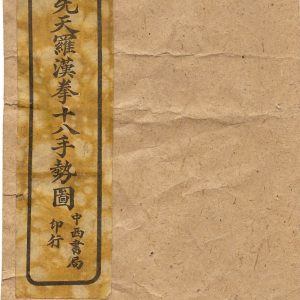
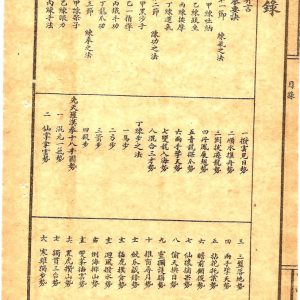
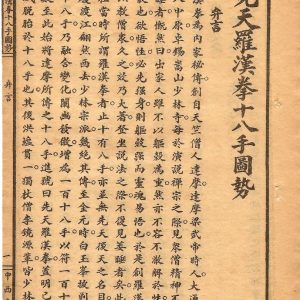
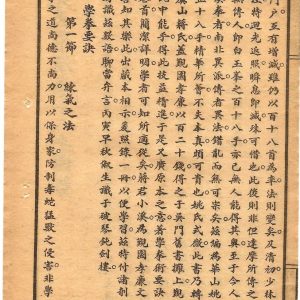
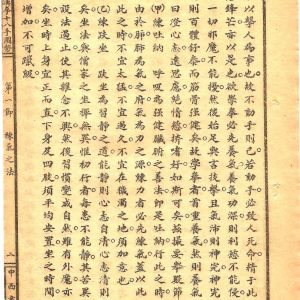
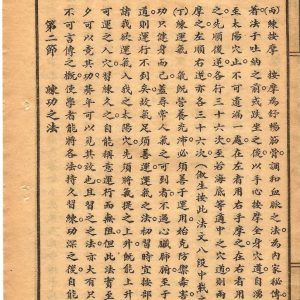
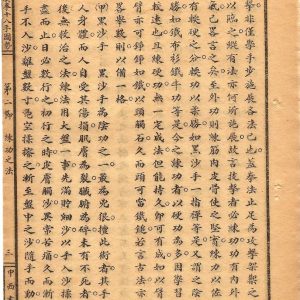
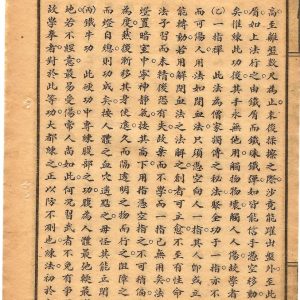
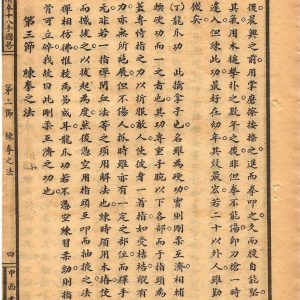
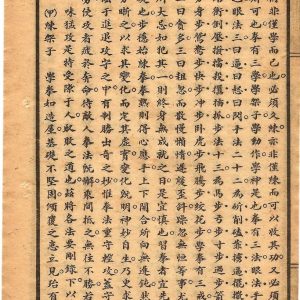
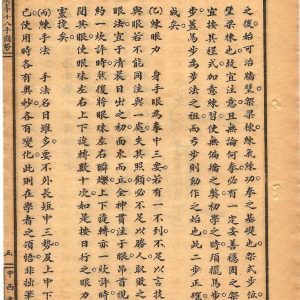
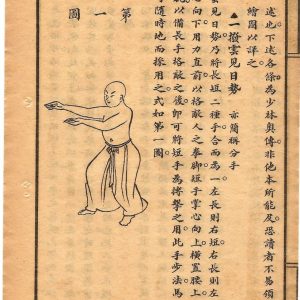
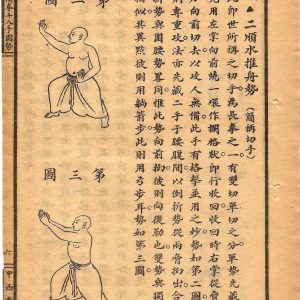
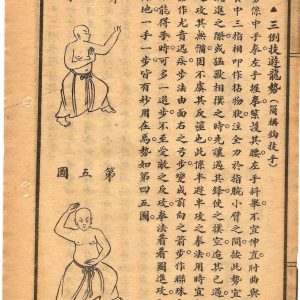
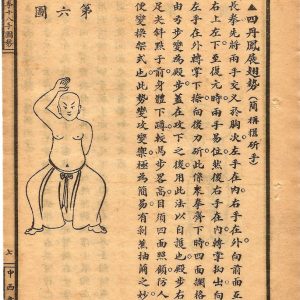
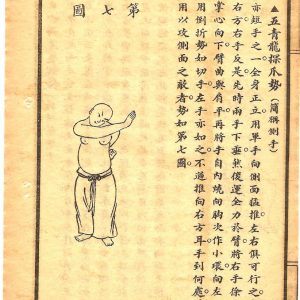
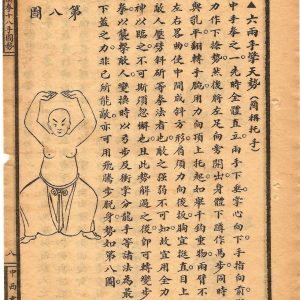
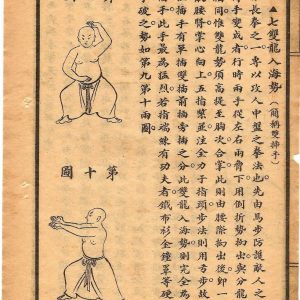
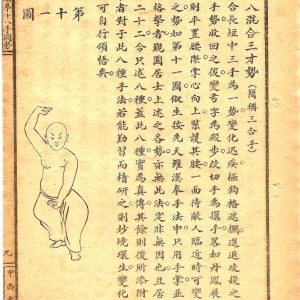
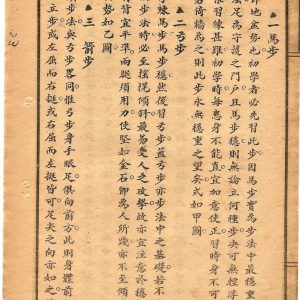
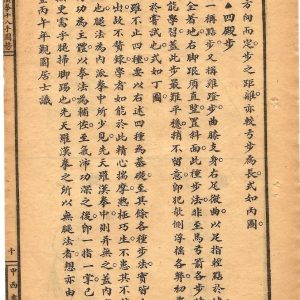
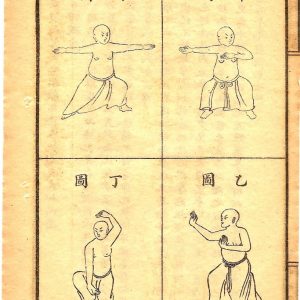
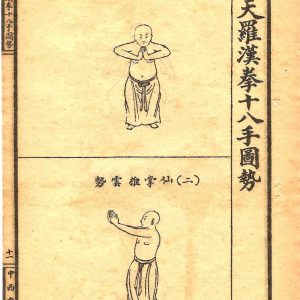
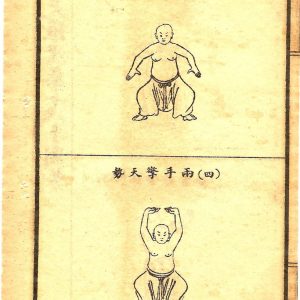
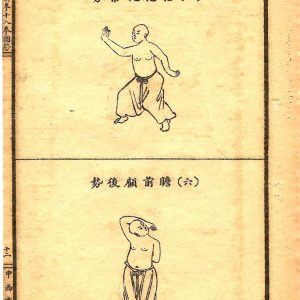
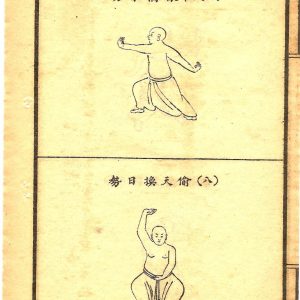
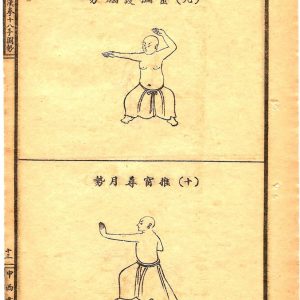
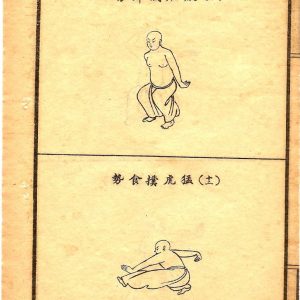
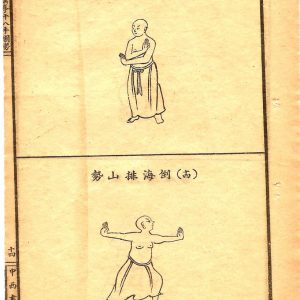
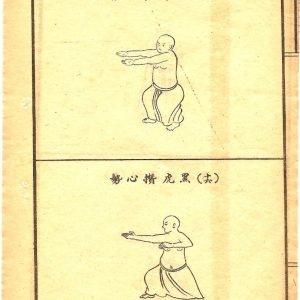
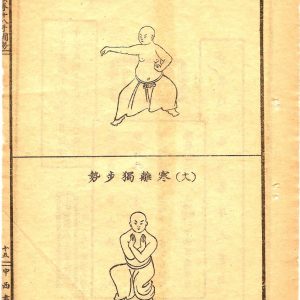
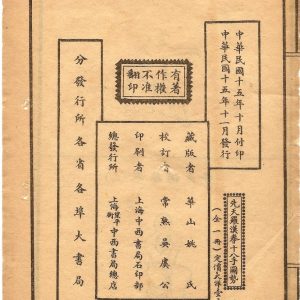
***
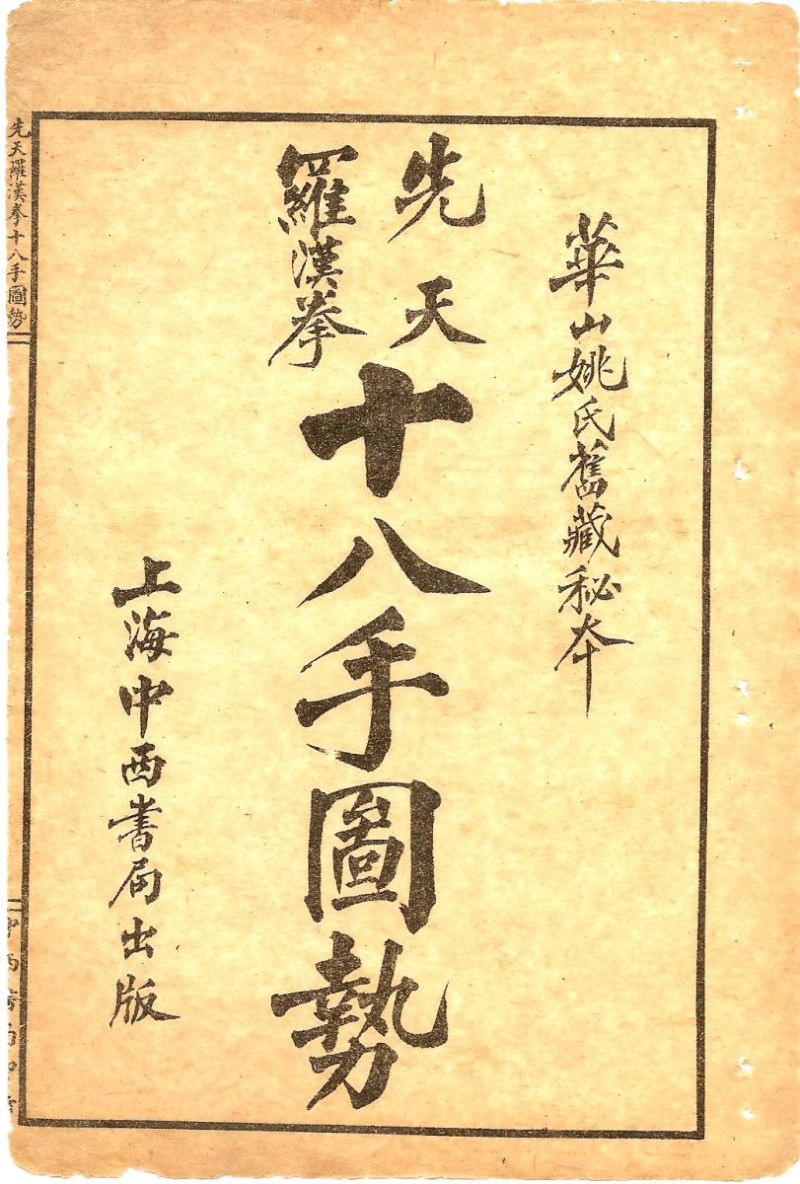

Related Articles


Leave a Reply