
Circle of Transmission: The Living Loom
A Via-Hygeia Bibliotherapy-Book Review of Michael Robert Osborne’s 2021 Edition of ‘The Most Holy Trinosophia’
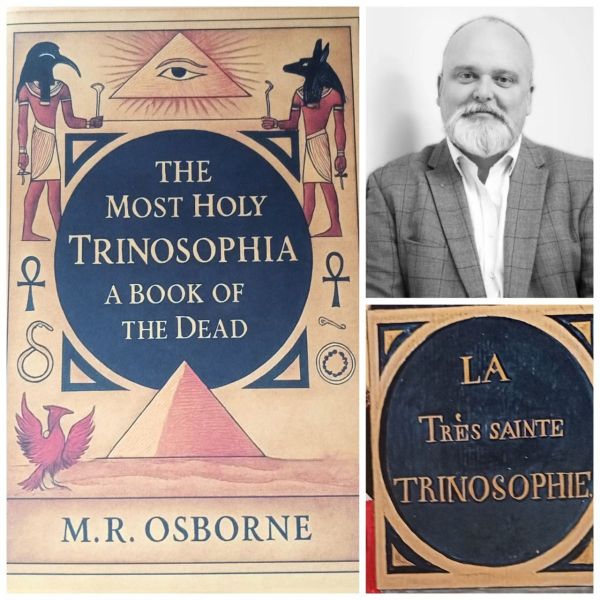
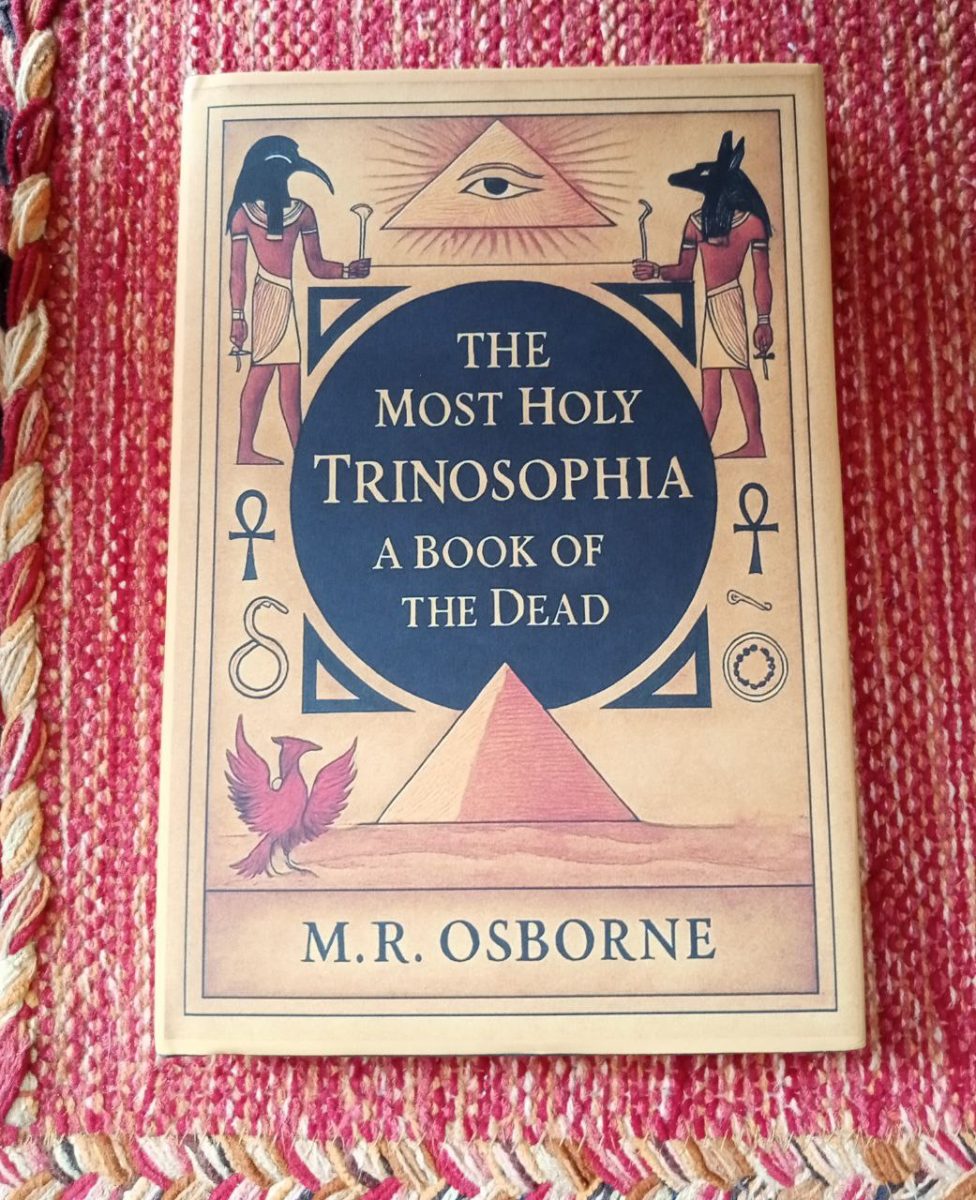
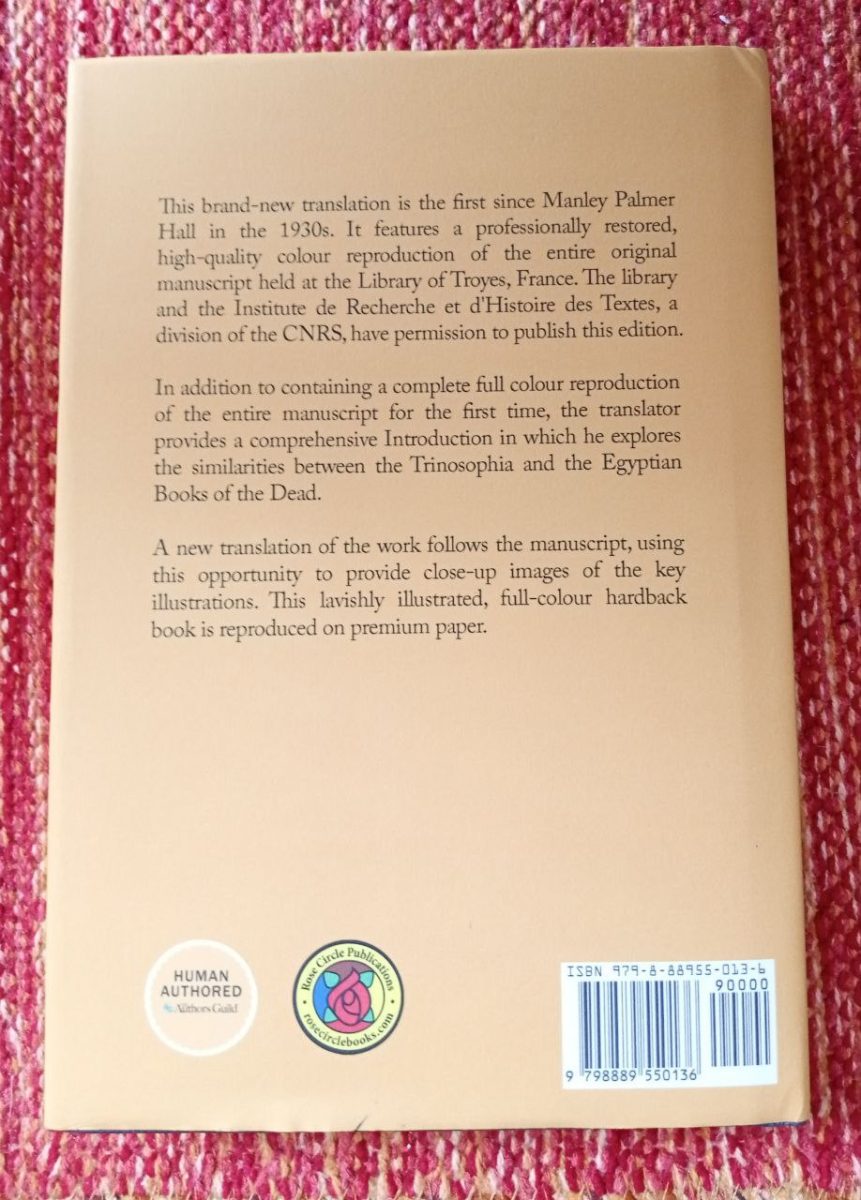
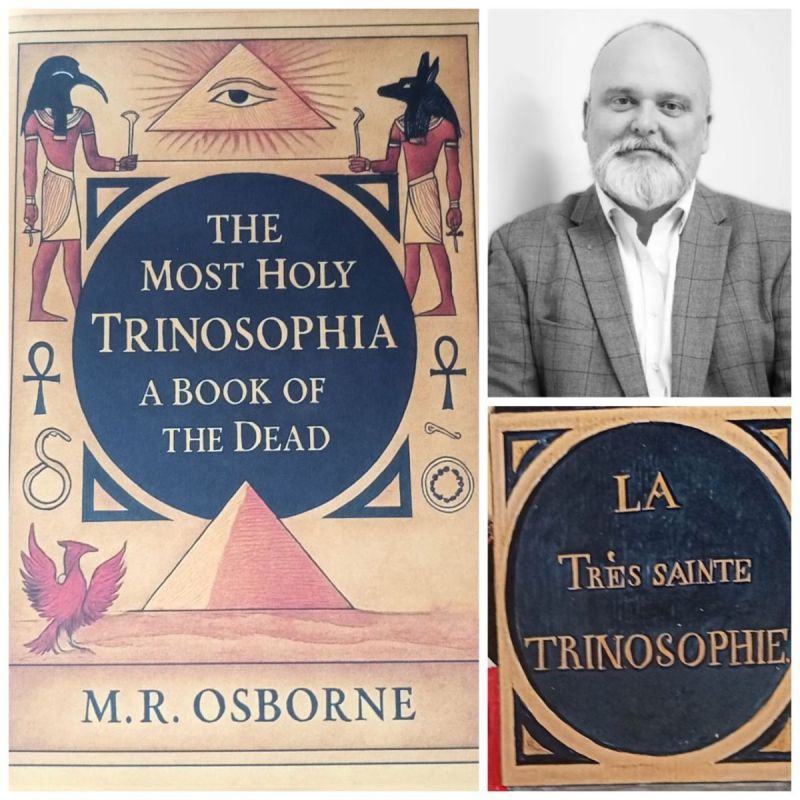
Today’s sharing from the Blue House of Via-Hygeia is the review of Michael Robert Osborne’s remarkable modern English edition of Manuscript No. 2400 in the French Library at Troyes, the in(famous) “The Most Holy Trinosophia‘ (‘La Très Sainte Trinosophie‘), published in 2021 by Rose Circle Publications in partnership in France with the Institut de Recherche et d’Histoire des Textes (IRHT, part of the CNRS, the French scientific academic research pole), the Bibliothèque de Troye (the City of Troye’s Public Library) and the Mediatèque Jacques Chirac. This was a massive undertaking made possible by the advance of photographic technology and book digitalization. A long due dusting of a manuscript that has a lot to offer, misunderstood for what it is not….and basically ignored! There is a lot to say, so bare with us, it’s a long read.
**
Part I. A French Bibliographic Context
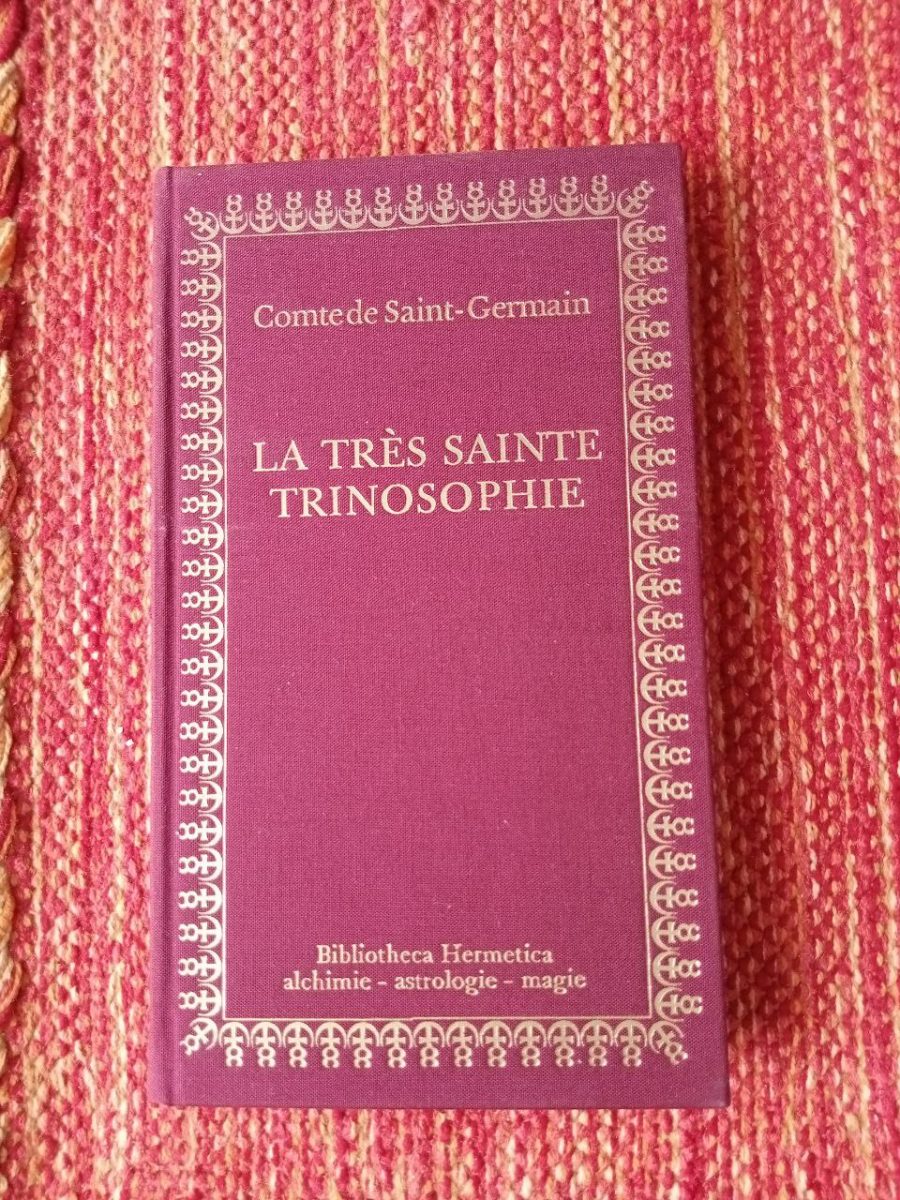
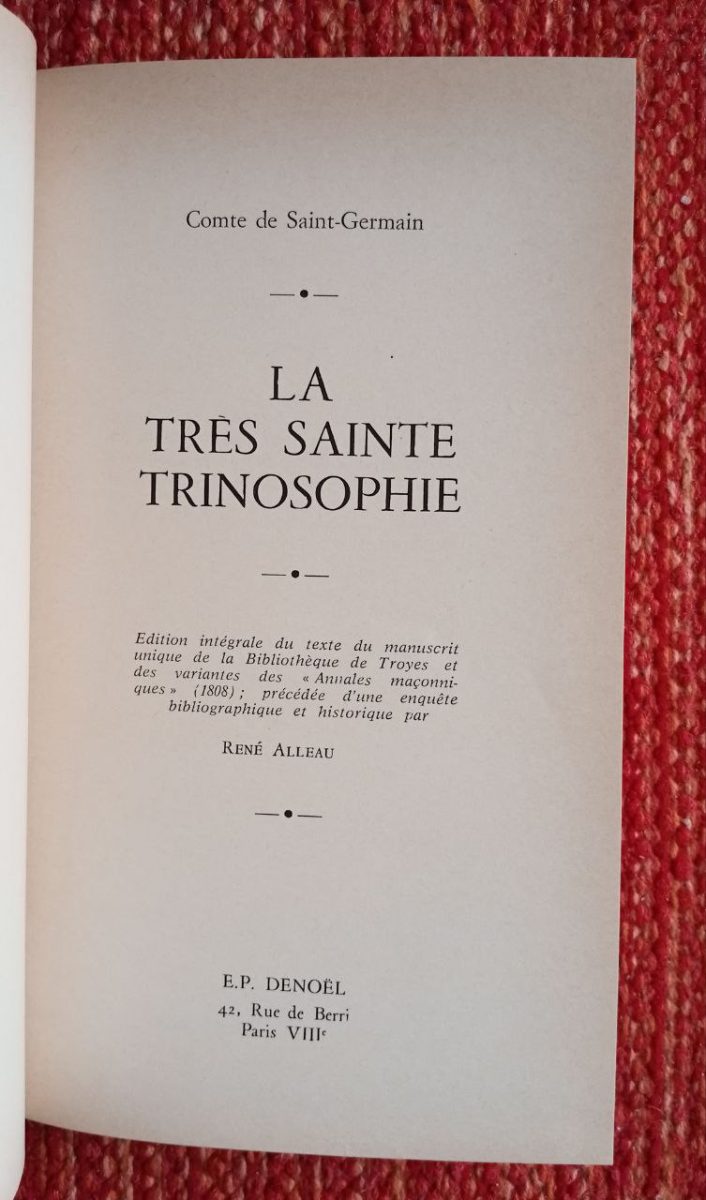
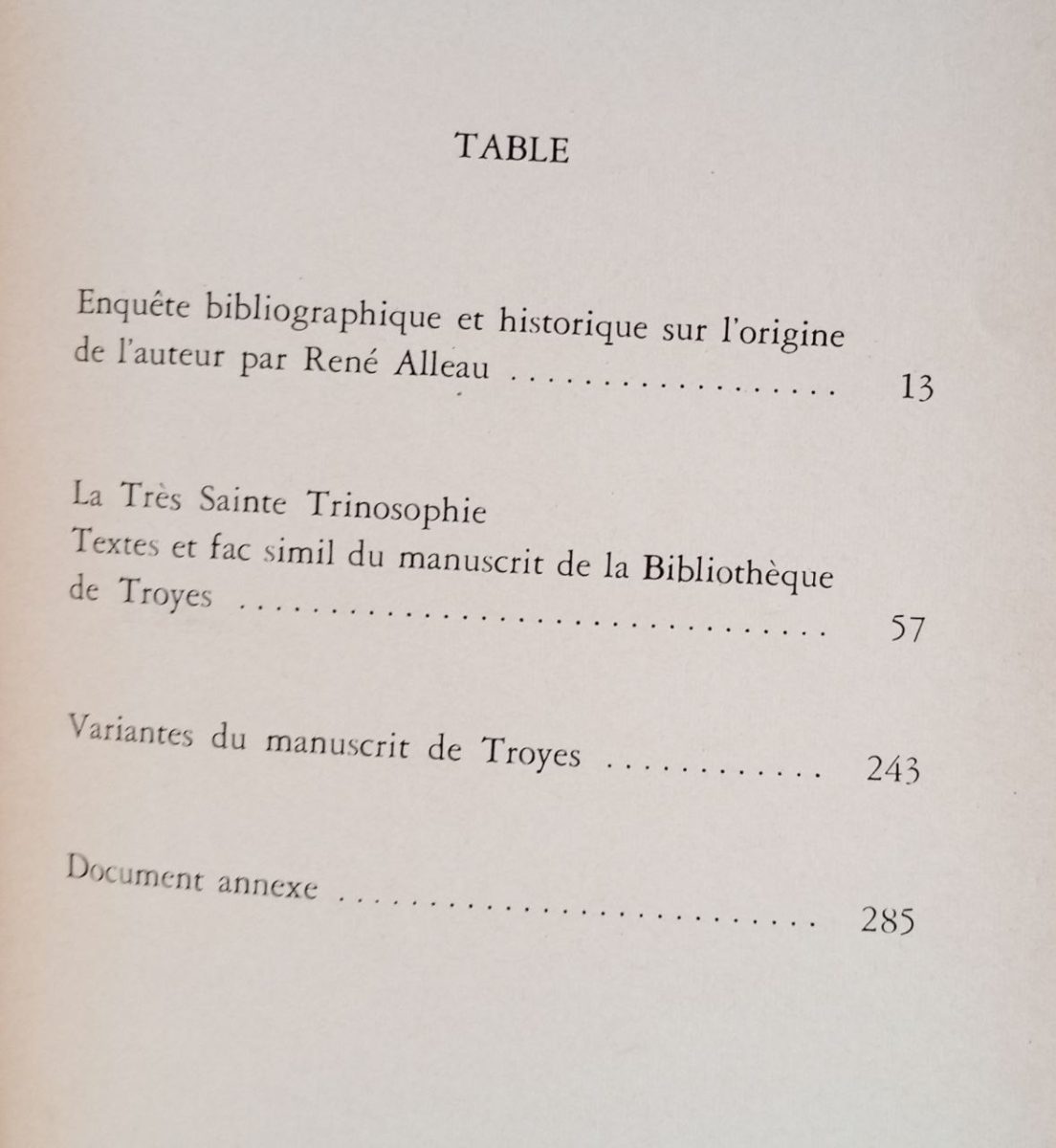
My first encounter with the ‘Most Holy Trinosophia‘ (MHT) goes way back to the late eighties, when I bought the René Alleau 1971 edition at the La Table d’Emeraude bookshop. I was asked, as a subject of study, one evening fraternal meal after the workings of the Loge ‘The Pilar of Egypt‘ of the Masonic Egyptian Rite of Memphis-Misraim, to compare the MHT with the rituals Count de Cagliostro used in Lyon. This was the beginning of my interest in this manuscript and the reason I bought the book. As it was attributed to the Conte de Saint-Germain, it felt for me bizarre that that particular Elder brethren asked me to study it, in comparison with the ‘Rituels de la Maçonnerie Egyptienne‘ (Egyptian Masonry rituals) as published in 1948 by ‘Les Cahier Astrologiques’ edited by Dr. Marc Haven (Emmanuel Lalande).
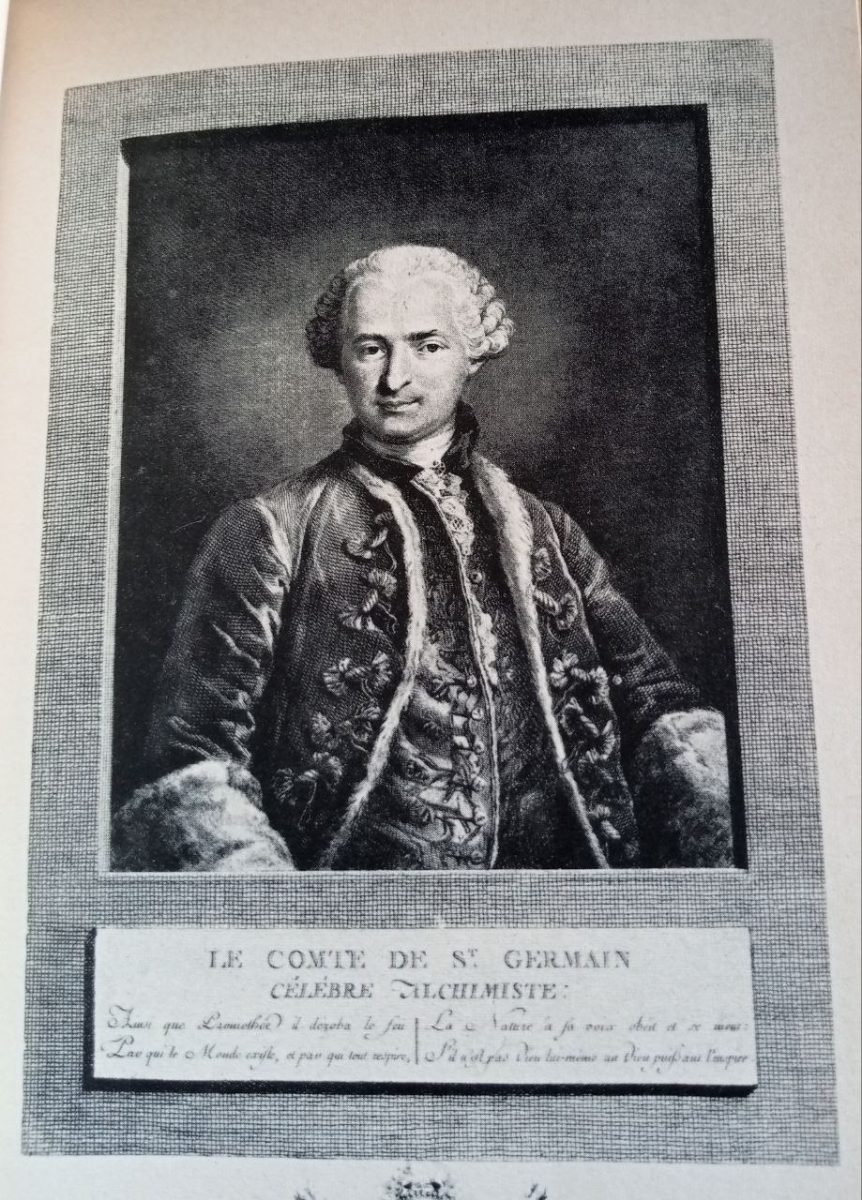
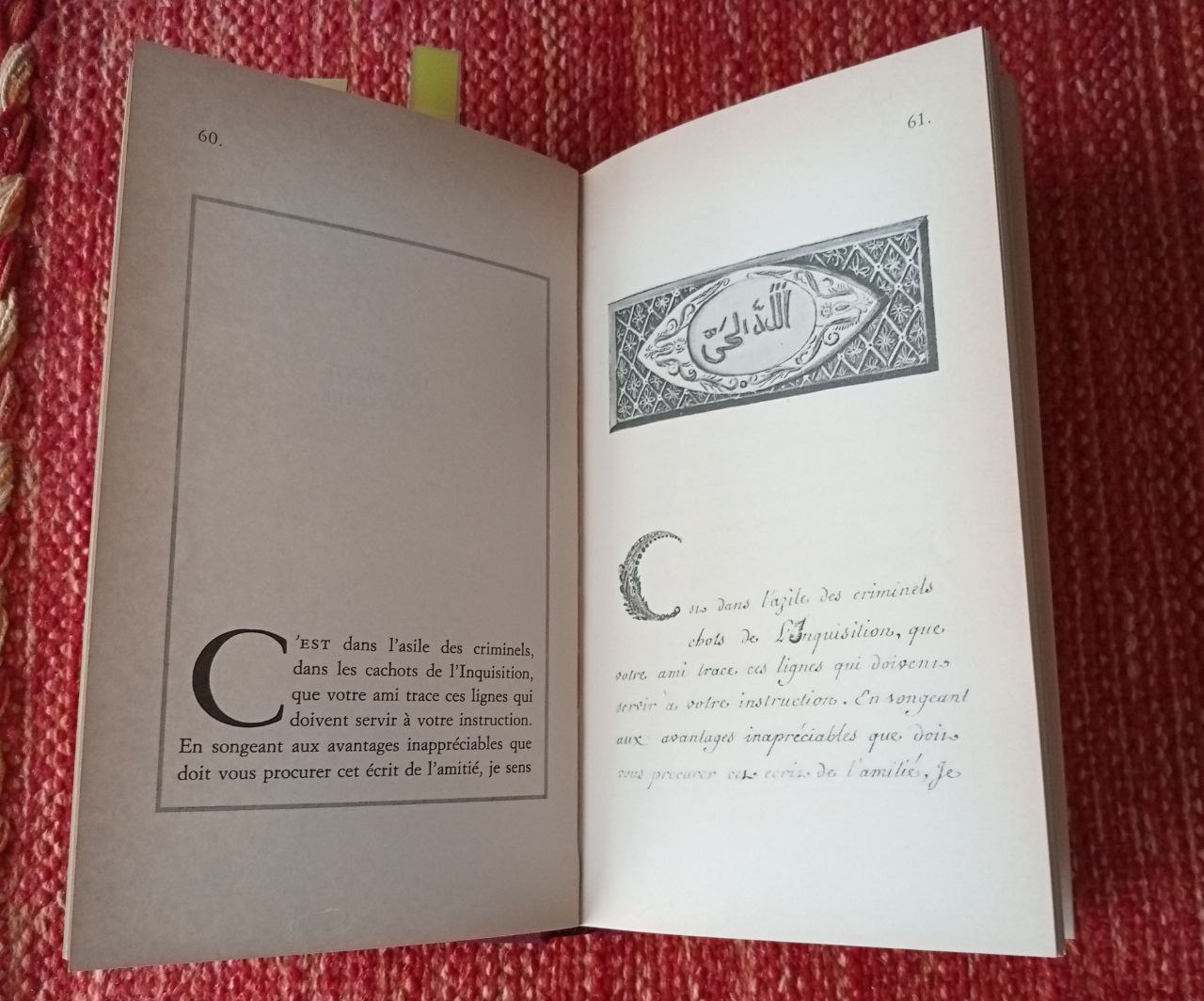
The Alleau edition was the first time the MHT aquarelles and the text were published together with the precious publications of alternate readings from various scattered sources. One deterrent was the fact the illustration were in black & white, another was the whole legend associated to the Count de Saint Germain, especially its sticky drowsy ‘theosophical avatar‘.
Last but not least, parts of this Troy manuscript were published in fragments much earlier at the dawn of the twentieth century by ‘The Annales Maconniques‘, based on two sources, one which vanished (!), the other being the Bibliothèque de Troy MS. 2400, the 1971 Alleau edition is based upon.
*
*
*
*
*
My second exposure with the MHT, came from the reading of the beloved Belgian Pythagorean & Alchemist Emmanuel D’Hooghvorst’s ‘Le Fil de Peneloppe‘, volume II, published by La Table d’Emeraude Editions in 1998 (A seminal collection of articles & essays published earlier in journals such as Inconnues & Le Fil D’Ariane):
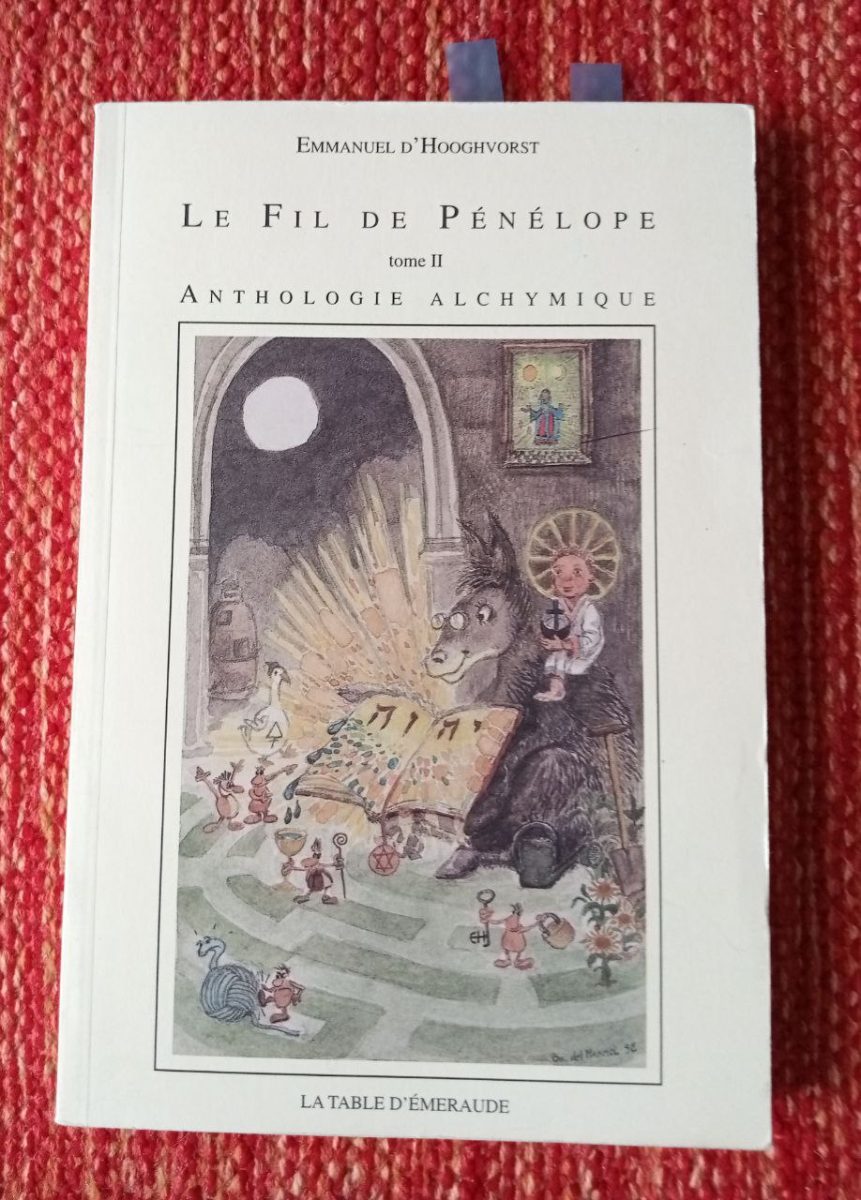
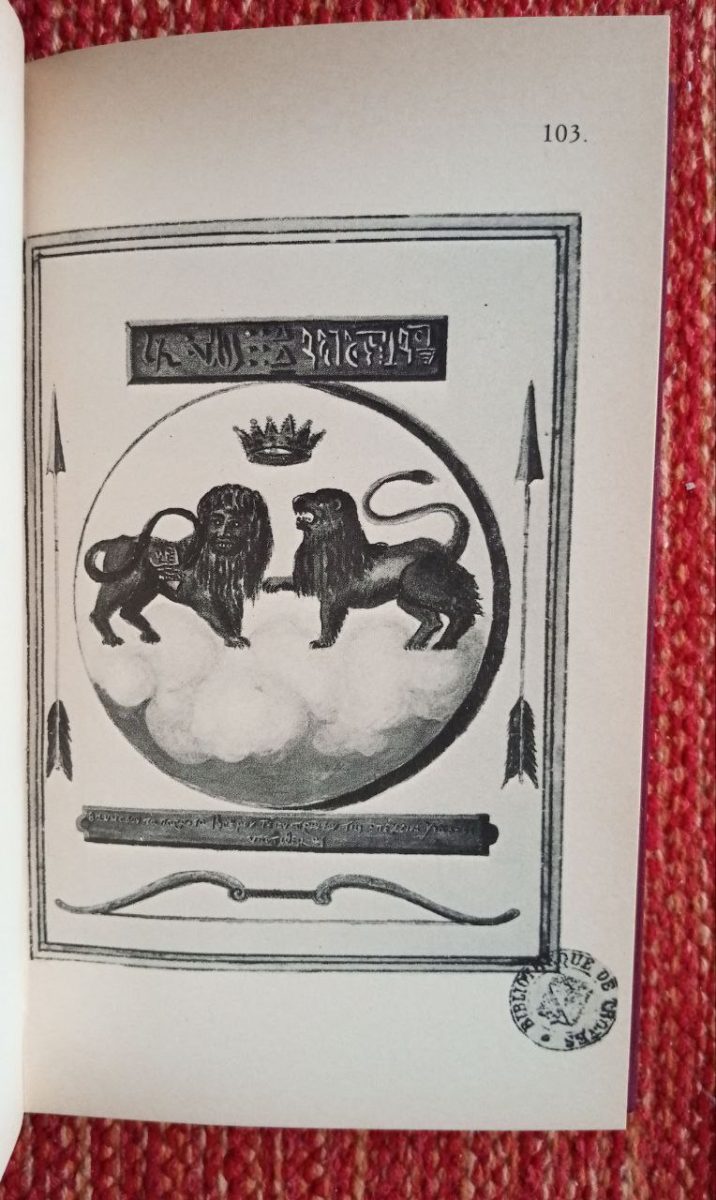
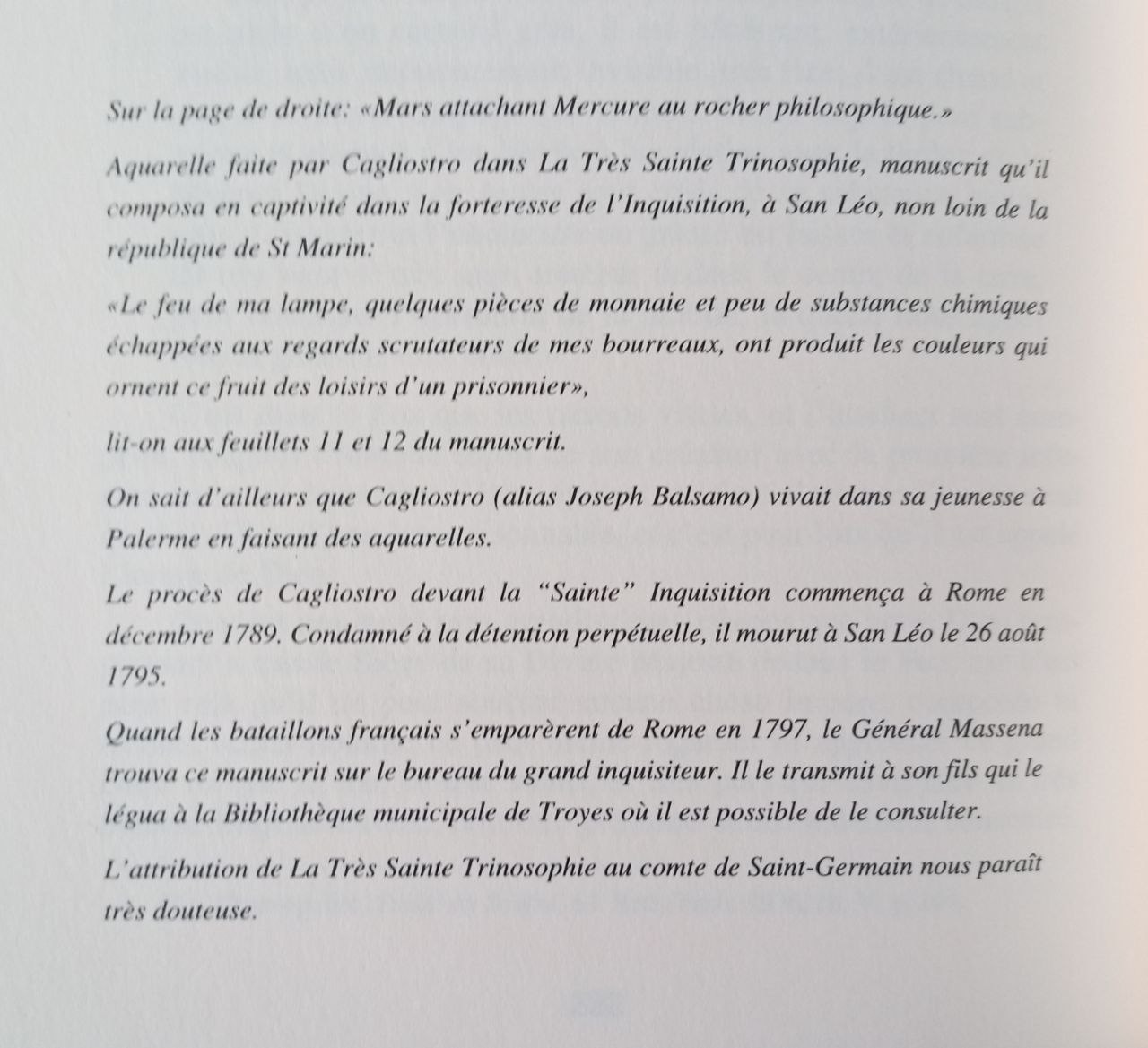
in which he says exactly this: ‘On the right-hand page: ‘Mars fastening Mercury to the philosophical rock’. A watercolor painted by Cagliostro in The Most Holy Trinosophia, a manuscript he composed while imprisoned in the Inquisition’s fortress at San Leo, not far from the republic of San Marino: ‘The flame of my lamp, a few coins, and a few chemical substances that escaped the scrutinizing eyes of my torturers, produced the colors that adorn this fruit of a prisoner’s leisure’, one reads on folios 11 and 12 of the manuscript. It is also known that Cagliostro (alias Joseph Balsamo) lived in Palermo in his youth, making watercolors. Cagliostro’s trial before the ‘Holy’ Inquisition began in Rome in December 1789. Sentenced to life imprisonment, he died in San Leo on August 26, 1795. When the French battalions seized Rome in 1797, General Massena found this manuscript on the Grand Inquisitor’s desk. He passed it on to his son, who bequeathed it to the Municipal Library of Troyes, where it is possible to consult it. The attribution of ‘The Most Holy Trinosophia’ to the Count of Saint-Germain seems very doubtful to us’.
*
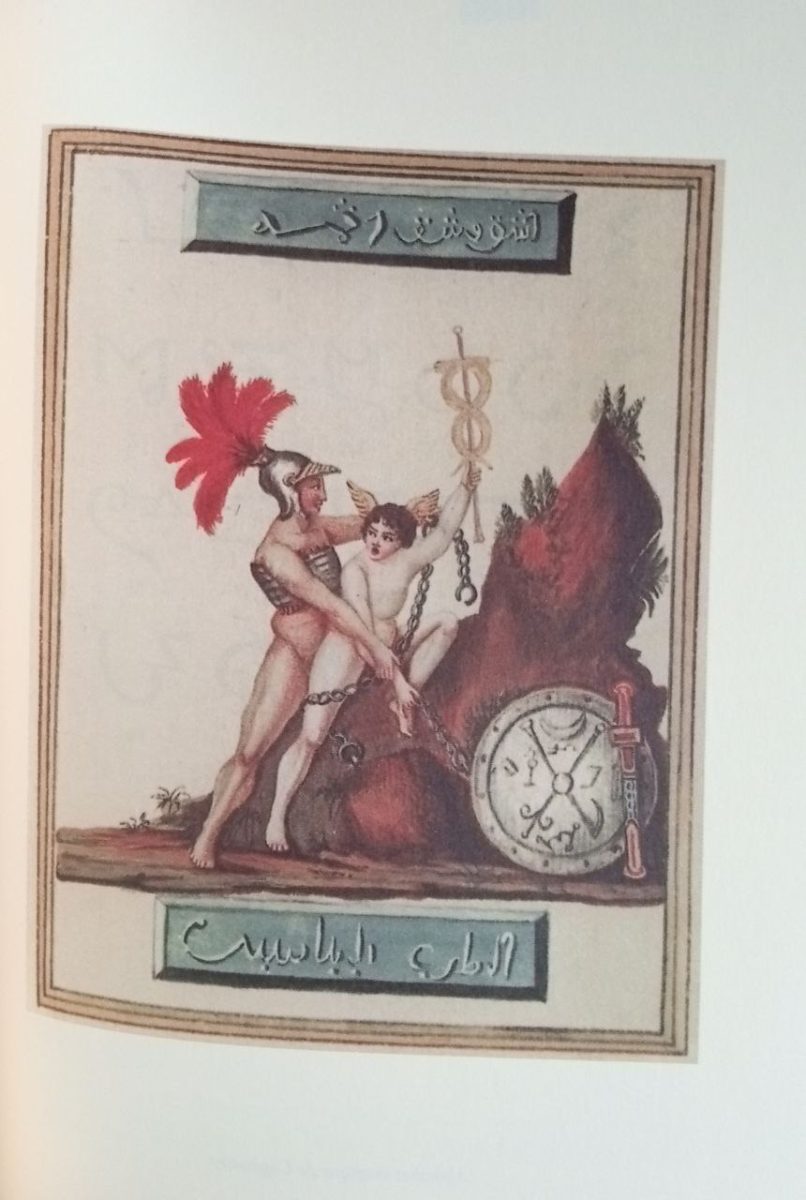
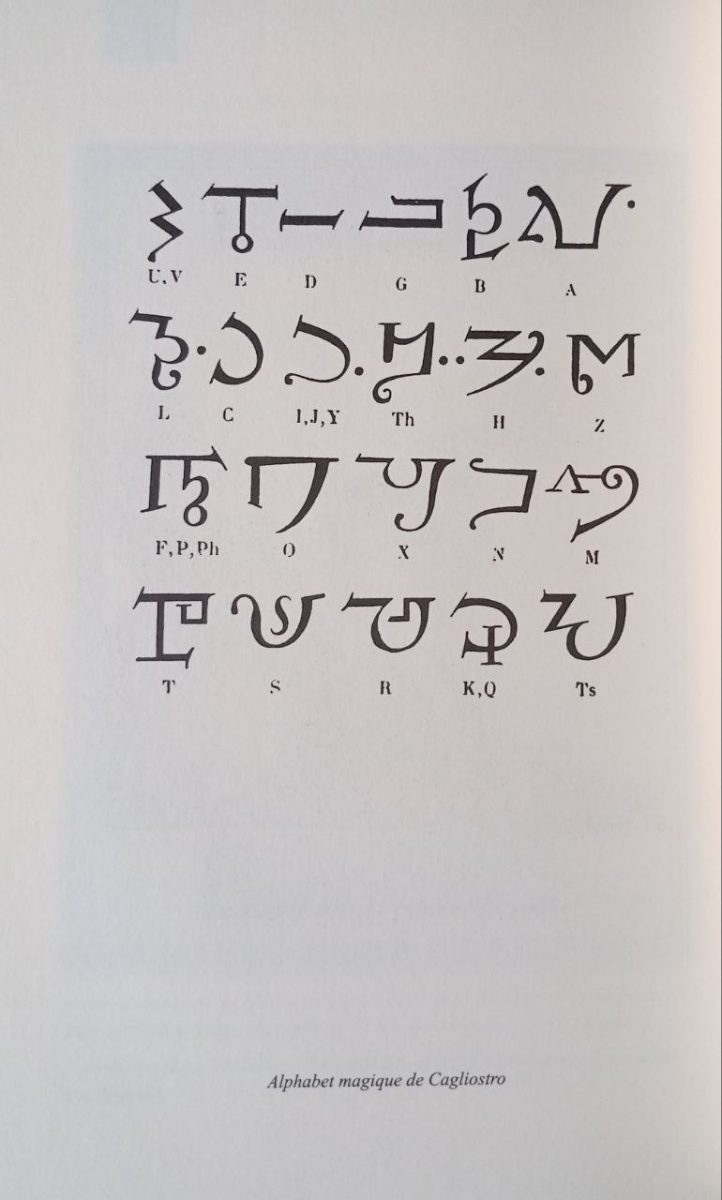
And unexpectedly shares one candidate (out of a few possible more missing) key to the cyphers (!)
published at the end of the proper text:
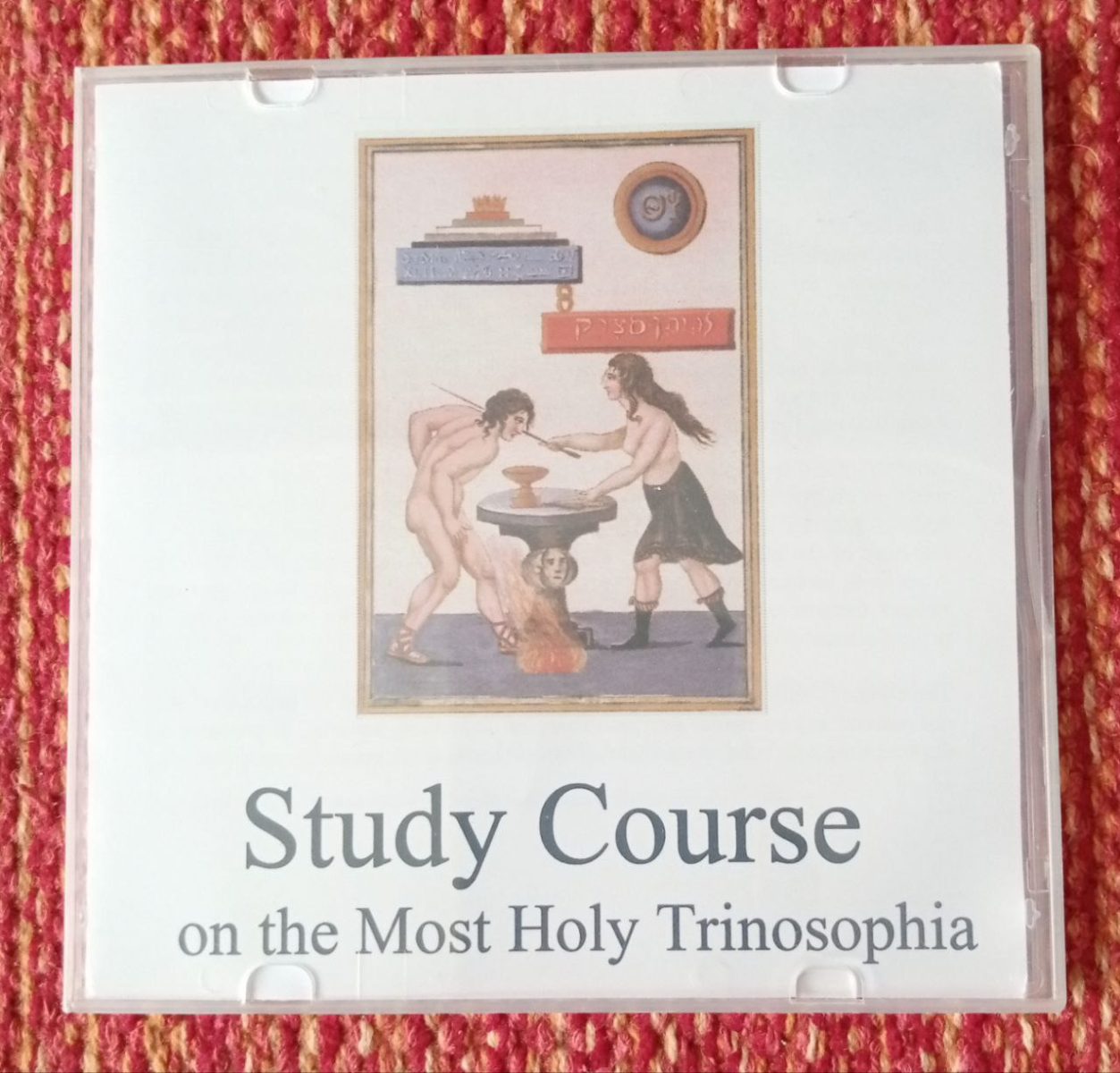
Reading this just confirmed the unease I had about the Saint Germain attribution and made me longing for a color edition of the MHT, which DID NOT COME UP in France, but in the English speaking world with Adam MacLean proposing a study course based upon the MHT in 2004:
*
This specifically French bibliographical & contextual background now duly established, there is a need to open another field:
Do you know that there were almost no articles and study of the MHT by the academics of the EPHE and of the Early Aries journal? Only mentions in passing, in a generally much broader context, that of the XVIIIth century effervescent occult & secret societies milieu, before the cataclysmic French Revolution shook everything upside-down; some scholars spoke of the MHT as an ‘eclectic tapestry‘, a ‘syncretic esoteric text blending masonic, rosicrucian, and kabbalistic motifs‘ (Faivre in the 80′ and 90’); others saw ‘a pastiche for the ‘a la mode salons of the time‘ (Jean-Marie Lhôte in 1989). Only very recently, has the MHT been seen academically as an elaborate, intentional composite, designed to guide an initiatic experience. Its eclecticism is part of its method, not a sign of literary parody.
There is a clear feeling that the French scholars of the end of the twentieth century did not attach too much importance to the MHT, which would explain the absence of a modern 21st century French edition in color due to its peddled reputation to be ‘obscure’. What was it that prevented them to dig deeper? How is it that no-one in the French speaking communities has bothered to decipher the cyphers, as we have seen that keys were made available? (d’Hooghvorst, 1998).
René Alleau is the only one in France to have bothered up to now to present the first academic edition of the MHT. In his presentation, he speaks of the MHT as a genuine initiatory allegory rooted in late 18th-century Hermetic, Masonic, and alchemical culture, possibly connected with Saint-Germain but not exclusively his. Its strength lies in highlighting the symbolic initiatory pedagogy and placing the text in its esoteric milieu. Its weakness lies in the avoidance or in the insufficiency of firmer historical or literary proofs for vindicating his thesis, especially regarding authorship factless, hence boring discussions. In the absence of more recent editions, we were left unsatisfied, as we know that much more could be done with the MHT; but, for this, the answer came from not academia, but from the Anglo-Saxon esoteric milieu. And this is when Michael Robert Osborne’s 2021 MHT edition came in.
Part II. The 2021 Osborne-Rose Circle Edition
We will not speak of the 1933 Manli Hall english translation and edition of the MHT, as we are not familiar with it. But, in the publisher’s foreword, Piers A. Vaughan writes this: ‘It has been over eighty years since Manly Hall presented this work to the English-speaking world. Now, with the amazing advances in technology and the skills of Michael Robert Osborne, we have a chance to experience this book in its original glory and rediscover its alchemical secrets for ourselves.’
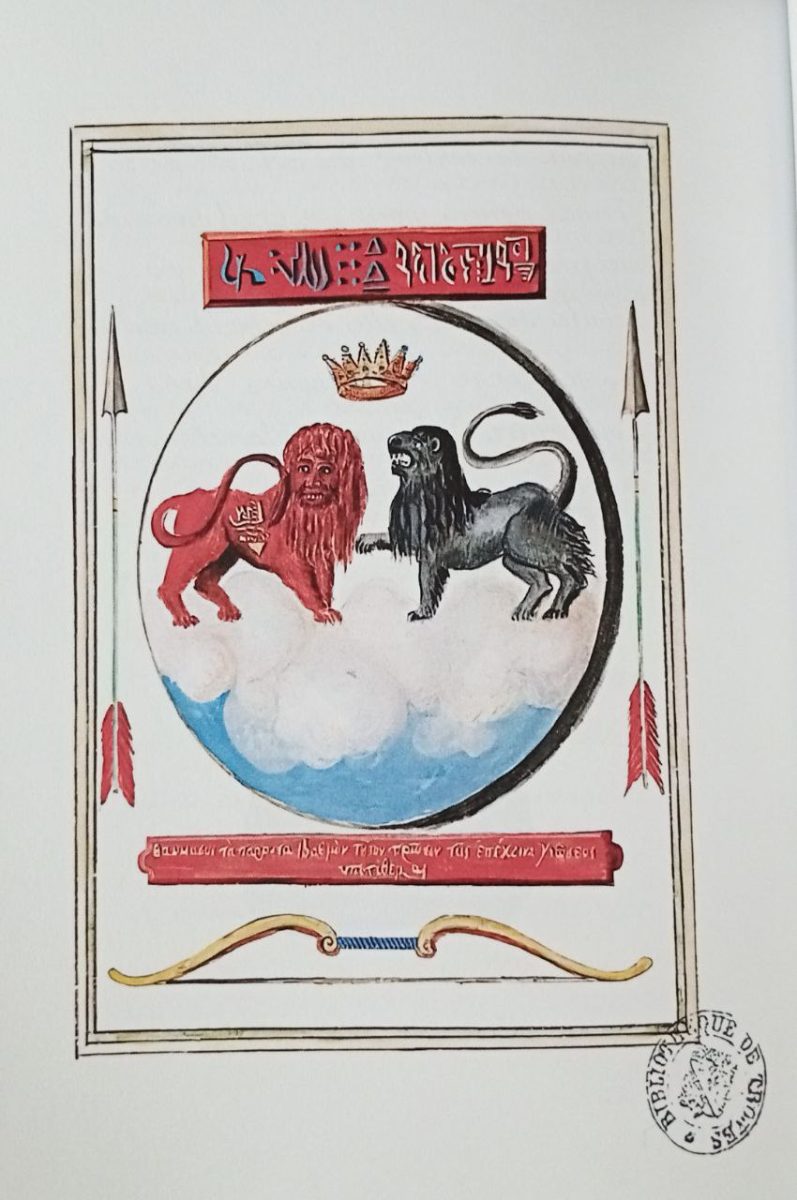
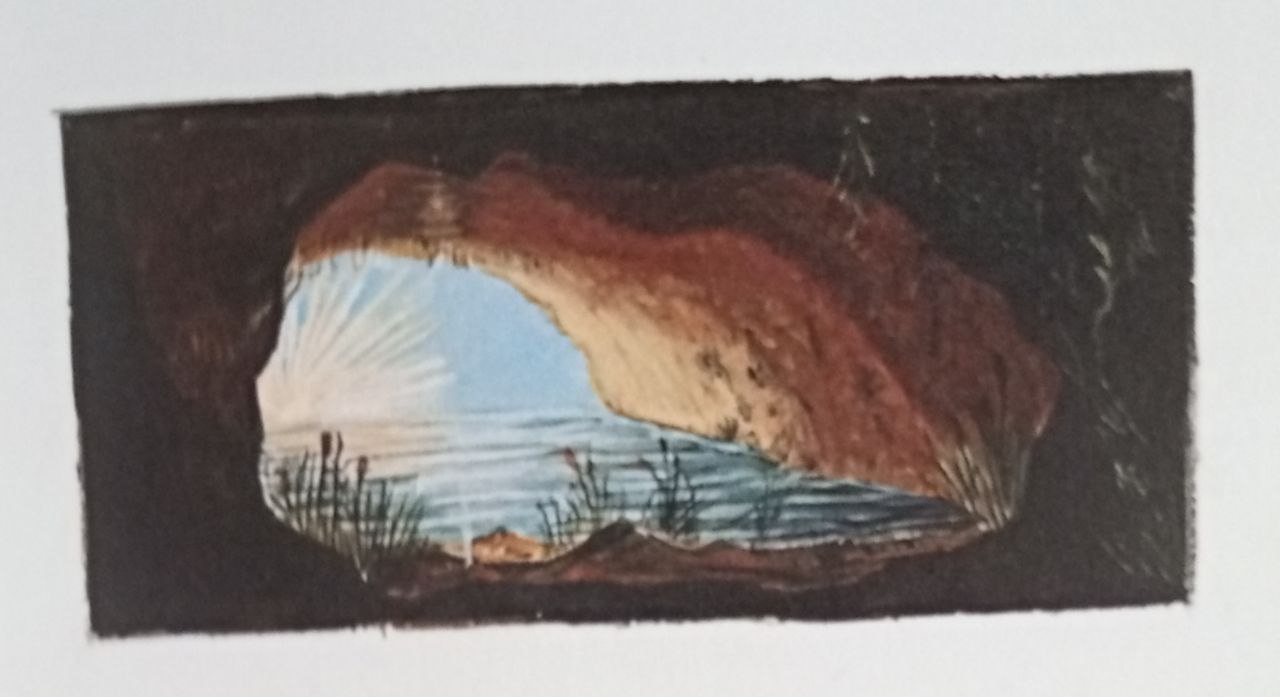
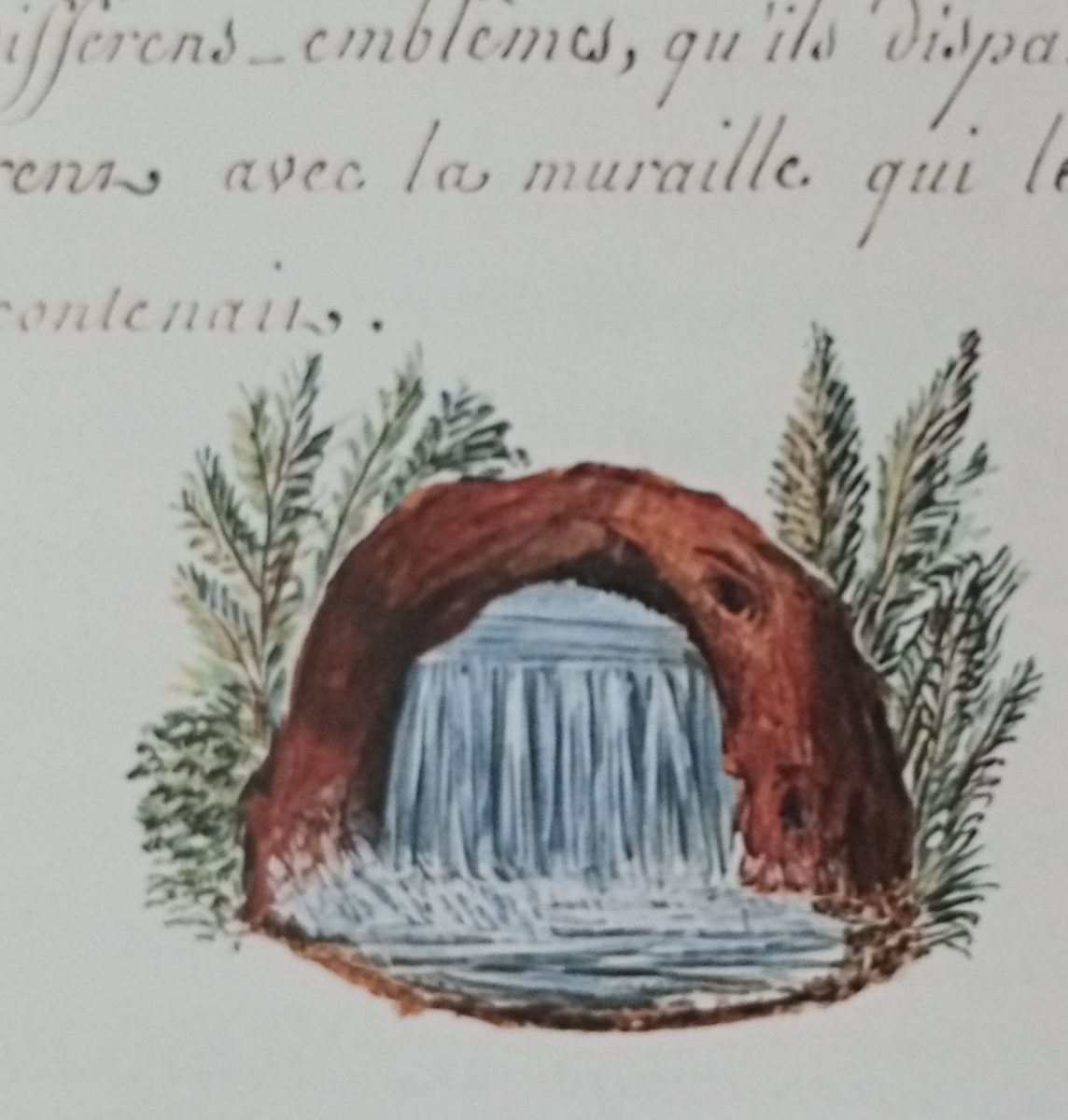
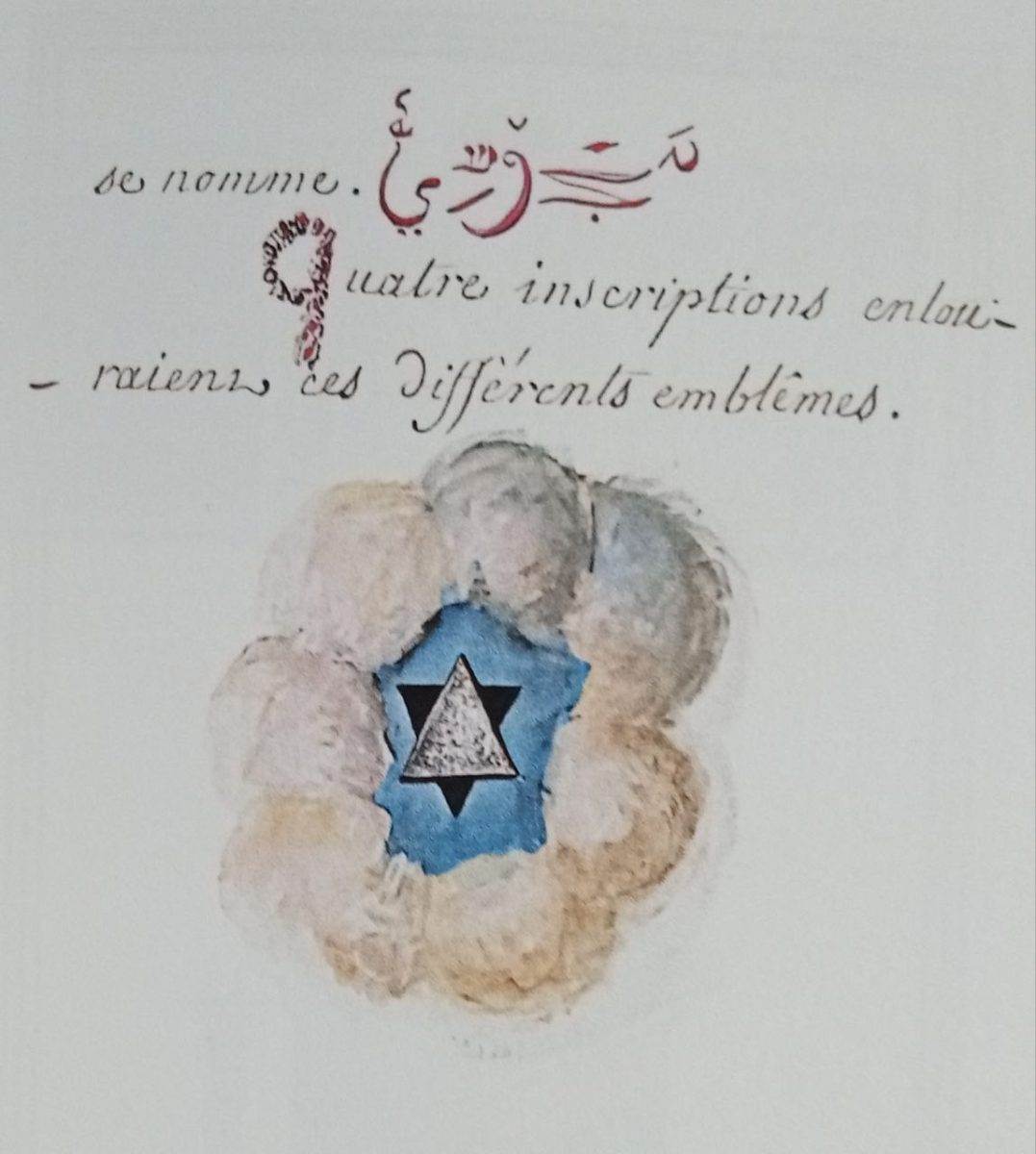
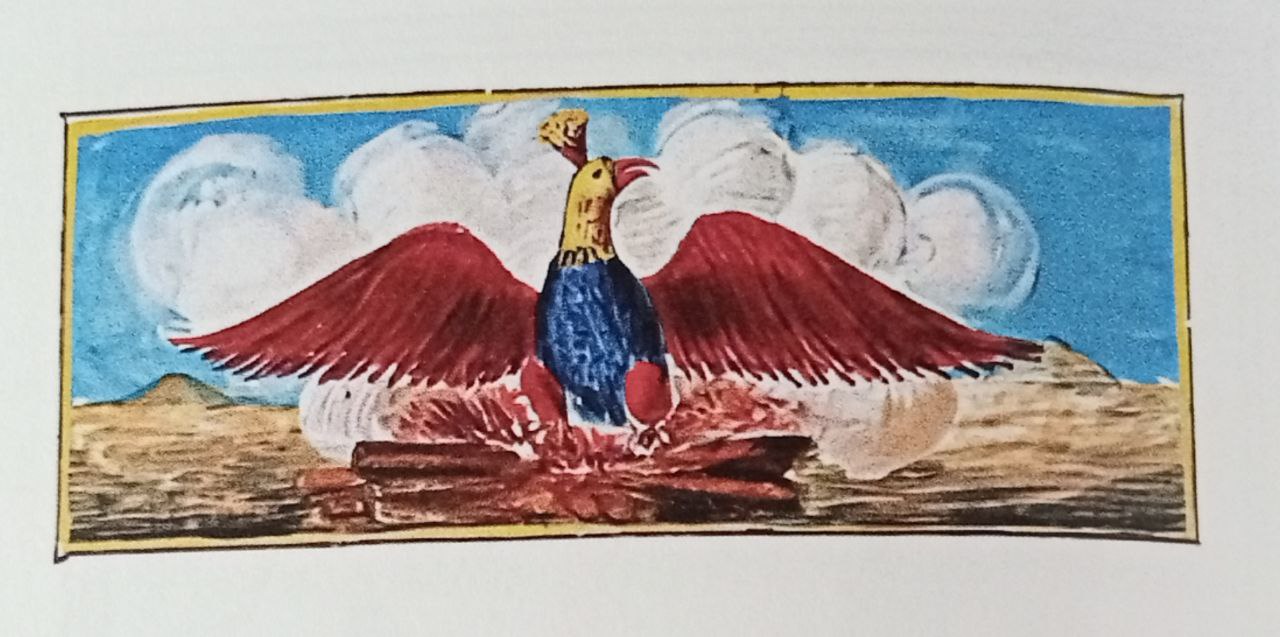
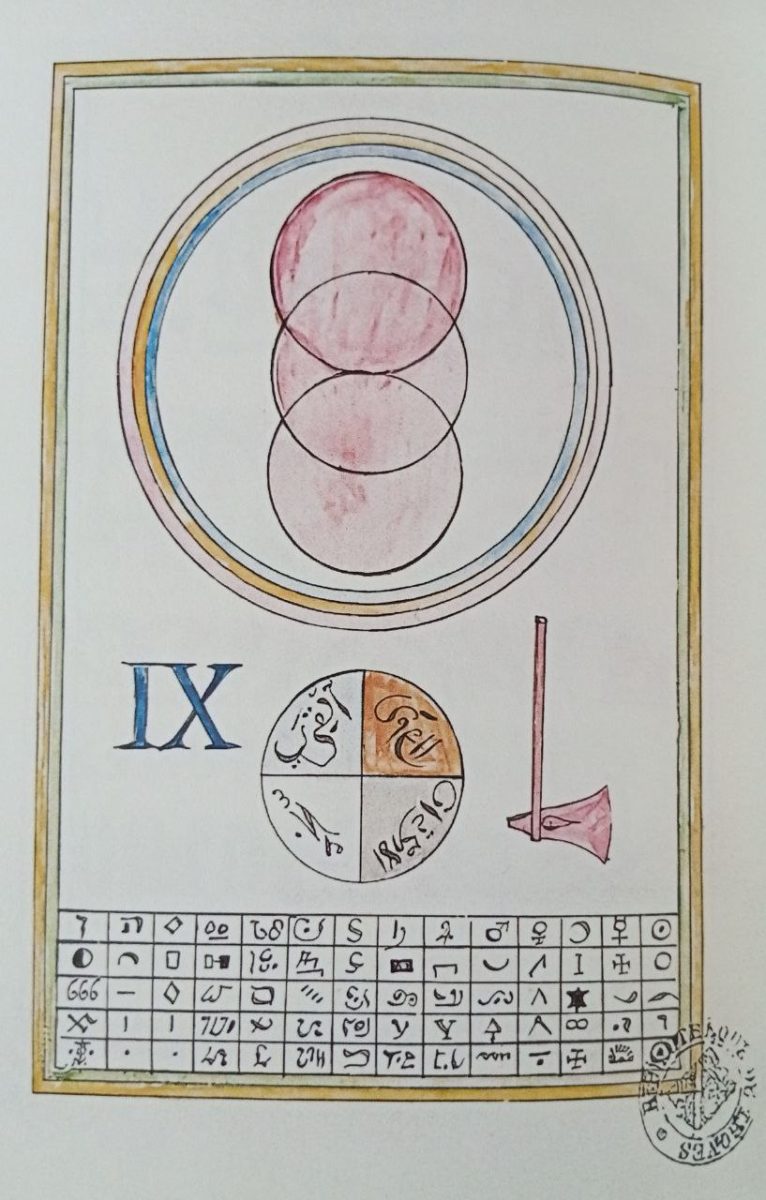
What Michael Robert Osborne’s new trail blazing edition proposes is a FEAST for the eyes and for the soul! First this is what you will discover of its visual beauty (on purpose, we do not show the obvious aquarelles. It is for the fortunate reader to unveil them, one by one):
*
*
*
*
*
*
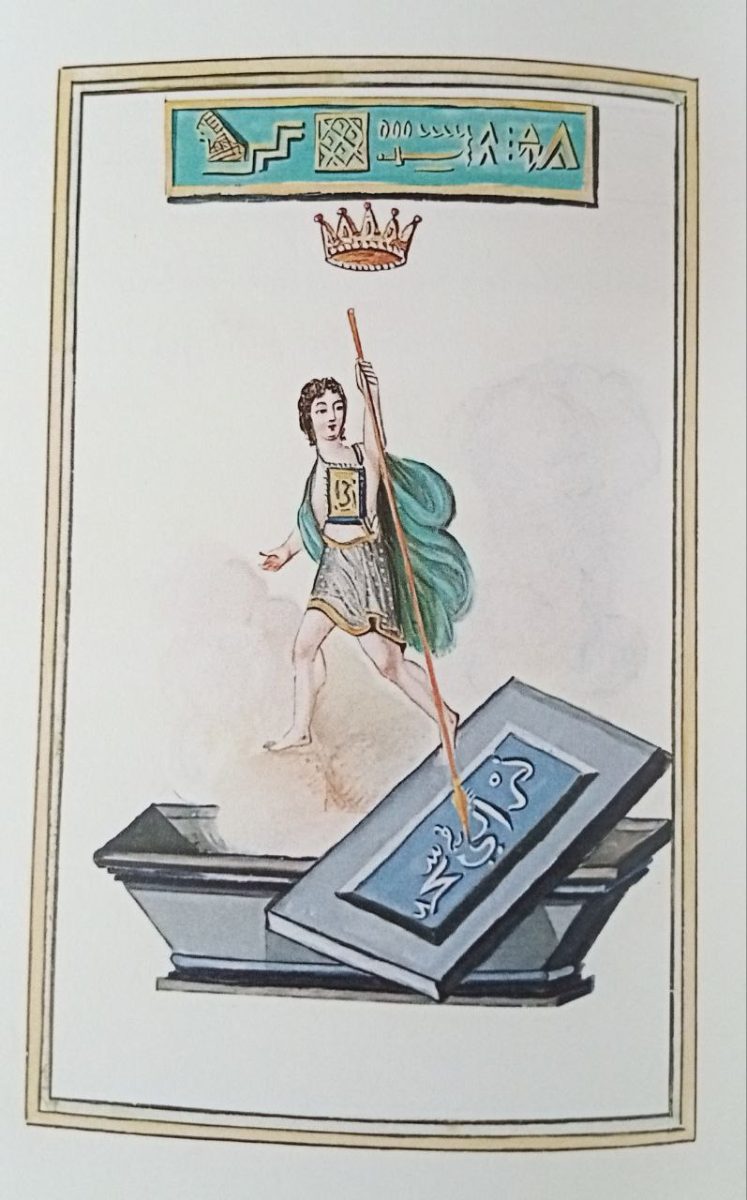
As you can discover, the aquarelles are splendid and impressive, as they were meant to be. The images are fulfilling a role held simultaneously with the declamation of the words of the text. From start, Michael Robert Osborne invites us to consider the role of Imagination (in the Greek sense, not the chaotic flow of the fantasque mind): ‘The ‘Most Holy Trinosophia’ is perhaps the most inspiring of all the alchemical manuscripts, because this beautiful book speaks to the soul through the imagination‘ (page 4 of the Introduction). And further on: ‘How is it that certain art, particularly of a devotional kind, has such an impact on the mind? The answer may lie in our shared experience of the numinous, which is something very core indeed. It comes as no surprise that art awakens a long forgotten spiritual memory within us, because it also represents the stylised memory of the artist; with whose own mind we make a direct connection‘. (Page 4 of the Introduction).
Henry Corbin comes to mind with his precious definition of the Imaginal World (in which our Imagination blossoms): ‘…That is why, guided by my Iranian philosophers, I have for many years endeavored to restore both logically and gnoseo-logically a mediating and intermediary world which I call mundus imaginalis (Arabic ‘alam al-mithal). This is an imaginal world not to be confused with the imaginary. Such has been my great meeting-ground with our friend, James Hillman, and I congratulate you for having shown so well in your book the originality and courage of his position. If Iranian philosophers have considered the mundus imaginalis indispensible for placing the visions of prophets and mystics, this is because it is there that they take place, and deprived of this imaginal world they no longer take place‘(in ‘Letter to David Leroy Miller‘).
This is the space, the field, in which the MHT images are skillfully offered and where the words of the text can be voiced out to release their power. The mysterious author of the MHT is described as such: ‘The Most Holy Trinosophia’ was written by an esoterist master of incomparable insight and understanding. It is therefore not long in contemplation of it before feelings of reverence can arise within us Clairvoyants, so we are told, often try to convey what they ‘see’ of the spiritual world through their feelings, in place of the physical organs of perception. It is as if merely by smelling a rose they can ‘see’ the color without sight of it. If spiritual realms beyond our ordinary senses do indeed exist, then perhaps they are experienced by awakening a primeval third sight long since lost in waking, ordinary existence. With the right approach to it, the ‘Most Holy Trinosophia’ can operate as a working tool to reacquire these latent abilities. On one level this is its true significance; another is it acts as a guide for what lies ahead, beyond the grave‘. (Page 5 of the Introduction).
Michael Robert Osborne tells us that this is ‘a Book of the Dead‘: ‘The authorship of the ‘Most Holy Trinosophia’ may elude us, but we can be certain that whoever wrote the manuscript had a complete understanding of ancient Egyptian cosmogony. The ‘Most Holy Trinosophia’ is not an initiatory manual from a long extinct masonic order: it is an abridged Book of the Dead. More accurately, it is a book for the Dead. Like its Egyptian counterpart, the manuscript deals with the theme of the soul approaching death and passing through the trials of the underworld on its journey to immortality‘. (Page 35 of the Introduction).
When you read this, it makes you think of the Orphic Golden Tablet, which are alike ‘passports for the Underworld‘ as would Ronnie Pontiac would call them page 57 in the seminal study written with Tamra Lucid, ‘The Magic of the Orphic Hymns‘: ‘What are these gold leaf objects? Leaf in the sense of gold foil, but a few are cut to look like leaves. Historians usually call them gold tablets, though they are very small and thin. German scholars call them totenpass, meaning a passport for the dead. One Gold leaf’s message starts with the word password‘.
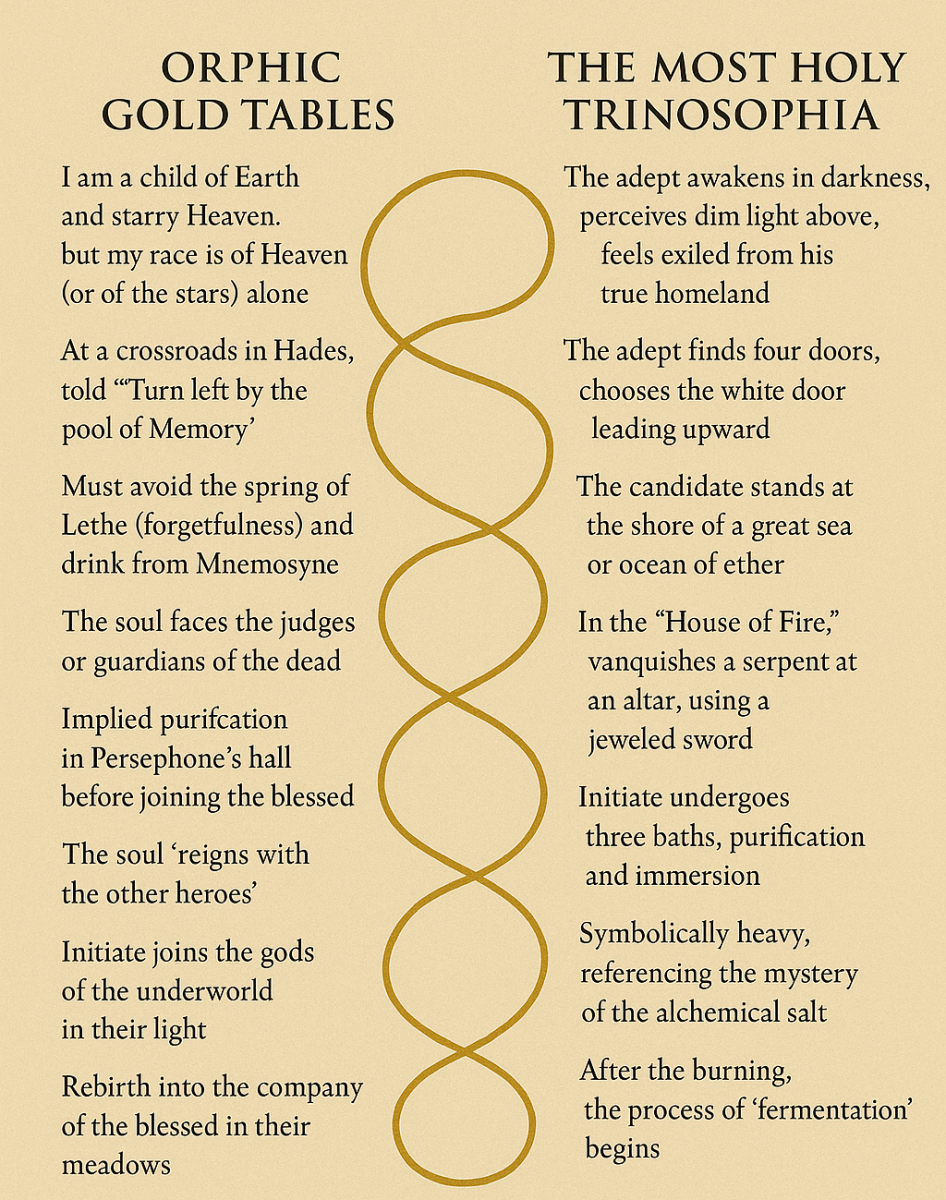
We have prepared a little chart which proposes in parallel a few samples from the events the Orphic Golden Tablets describe and the events happening in the MHT:
*
It is striking and we ought to ask ‘who‘ are the dead? Here we are at the core of the initiatic process. Here, who better than Fernando Pessoa to explain what it takes: ‘How someone in search for Initiation must prepare? He should start by getting acquainted with the philosophical systems and the philosophies that the most recent scientific discoveries have, legitimately or not, fostered. Once he is well rooted in their fundamentals, he must ponder and compare, confront systems to systems, theory to theory and a part of a system with the other parts. This is how he will develop his abstract intelligence-without it the intuition he seeks to develop will be nothing but just a loose emotion.
He must then also first to detach himself from all dogmatic prejudices, from all that he has been indoctrinated by customs and education. One doesn’t access the path of initiation through the gates of one church, one must cross all the gates of all the churches at the same time or pass through none. He will then get deeper acquainted with all kinds of religious systems, all kinds of philosophical systems, etc… He will then elaborate, from the best he can, slowly built with the help of all he learned, his own system, without necessarily writing it, a system of interpretation of the universe as consistent as possible on the three planes of truth, beauty and ethics.
He will have then to abandon the system he has built. He would be, understandably, attached to it, but it will be the time for him to recognize that even his philosophical system is no better than the ones he compared and rejected in establishing his very own. Like this, he will have crossed the 4 stages that are the temptation of the World: Dogma, Concrete Intelligence or Science, Abstract Intelligence or Philosophy and Critical Intelligence. Dogma that ties him to others. Science that ties him to Nature. Philosophy that ties him to the mind of others. His own Philosophy that ties him to himself. The World is all of that. Once he will have crossed these four stages of the first level- that of the Neophyte, he is ready for initiation‘ (From ‘On Initiation‘).
The individual who has reached this stage described by (Knight of Christ) Pessoa is the neophyte-actor to whom the ‘Book of the Dead’‘ is destined; this book, as designed, acts as visual & verbal mystagogue, who leads the candidate into the mysteries of initiation & transformation towards illumination; the MHT describes or shall we say ‘unfolds‘ and lead us by its word-flow and rhythm. We can find the same method with Damascius in passages of his ‘Commentary on Plato’s ‘Phaedo‘, in which the ‘commentary‘ hides sequences made to help unpack ‘certain hidden knowledge‘ inherent to the Mysteries. For example, this verse: ‘Like Kore, the soul descends into genesis, like Dionysus she is scattered by generation, like Prometheus and the Titans she is chained to the body. She frees herself by acquiring the strength of Hercules, gathers herself together through the help of Apollo and of Athena the Savior, i.e. by truly purifying philosophy, and she elevates herself to the cause of her being with Demeter‘. (Damascius, ‘Commentary on Plato’s ‘Phaedo‘, book I, verse 130. Westerink edition).
Michael Robert Osborne in his deliberately concise but charitable introduction leads us through selected symbols & sacred figures the reader meet as he unfolds the pages of the manuscript: Thoth, Maat, Seshat, the winged sun, the altar and its three wisdoms, the two pillars Jakin & Boaz, etc…The aim is to make us be-come curious and try ourselves to ‘decipher‘ what we see & hear in the unfolding of what Henry Corbin calls ‘A symbolic exegesis, the ta’wil of the text‘, which Pierre Lory translate into ‘a mental liturgy‘ and Corbin adds: ‘therefore it denotes the importance of Imagination as a spiritual faculty, independent of the organism, because it is true Imagination which creates the link between the alchemical operation and inner-transmutation. Hence the necessity of theses material operations we ought to go through.’ (Pierre Lory’s introduction to Henry Corbin ‘L’alchimie comme art hiératique‘ -‘Alchemy as a hieratical Art‘, page 12 & 13). This method, this dynamic, this process is embedded in the MHT and it awaits readers to start what could become the adventure of a life-time!
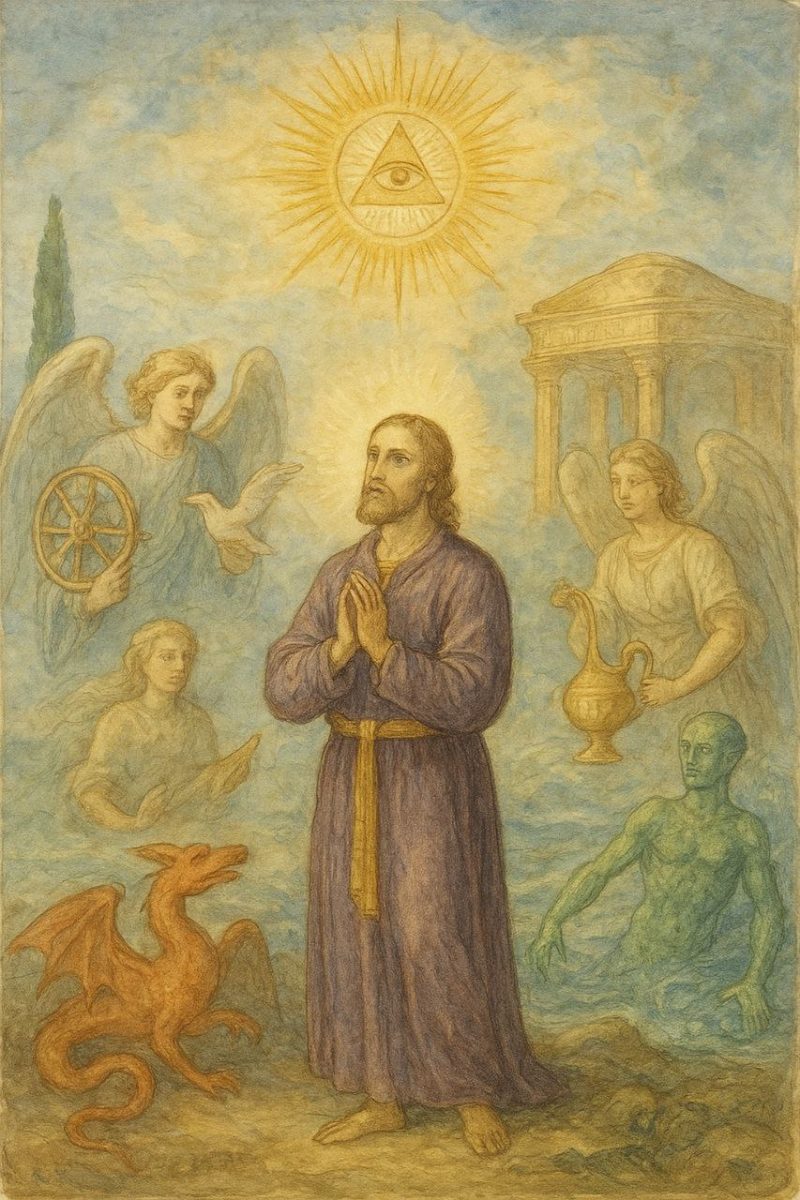
Finally, the importance of the dream dimension in the initiatic process ought to recalled: there are dreams that visit us, and dreams into which we are called. In the common dream, the soul wanders among phantoms; in the initiatic dream as enacted by the MHT, Nature herself dreams through the soul. Across the text, dream is not a literary ornament but the very athanor of transformation.
The night of the senses becomes the laboratory of revelations. Sleep is solve, awakening is coagula. The soul is dissolved in the maternal bath of Nature; it is recombined through the art of medicine & the solar tincture; it becomes crystalline, transparent to the divine in-flux. Therefore, dreaming is the philosopher’s stone in disguise: an inner reaction between the mercurial Imagination and the sulphureous Will. To dream consciously is to perform the Magnum Opus upon oneself!
At its center dwells the universal oneiric principle: the World dreaming itself back to God. To read the MHT is to feel the pulse of the Earth. To study the MHT is to learn the art of Solar remembrance. Then all of these symbols cease to be metaphors. To meditate upon the MHT is to awaken the dreamer himself!
It is our intimate conviction that the ‘The Most Holy Trinosophia‘ was given to be ‘enacted‘, ‘role-played‘, by candidates desiring becoming members of the Loge ‘La Sagesse Triomphante, à l’Orient de Lyon’.
Thus, duly ‘prepared‘, this would have enabled them to ‘soak‘ and fully live, awake, the beautiful rituals of Cagliostro’s Egyptian Masonry. But this is only our little humble opinion 🙂
Source:
🌿 The must have treasure-book,
we all ought to study & to be part of any worthy esoteric library 🌿
*
***

Related Articles


Leave a Reply