
Circle of Transmission: The Living Loom
A Little Joséphin Péladan Sampler – Part IV

Sâr Joséphin Péladan. A sculpture by Zacharie Astruc
in the collections of the Musée des Beaux-arts de Lyon.
*
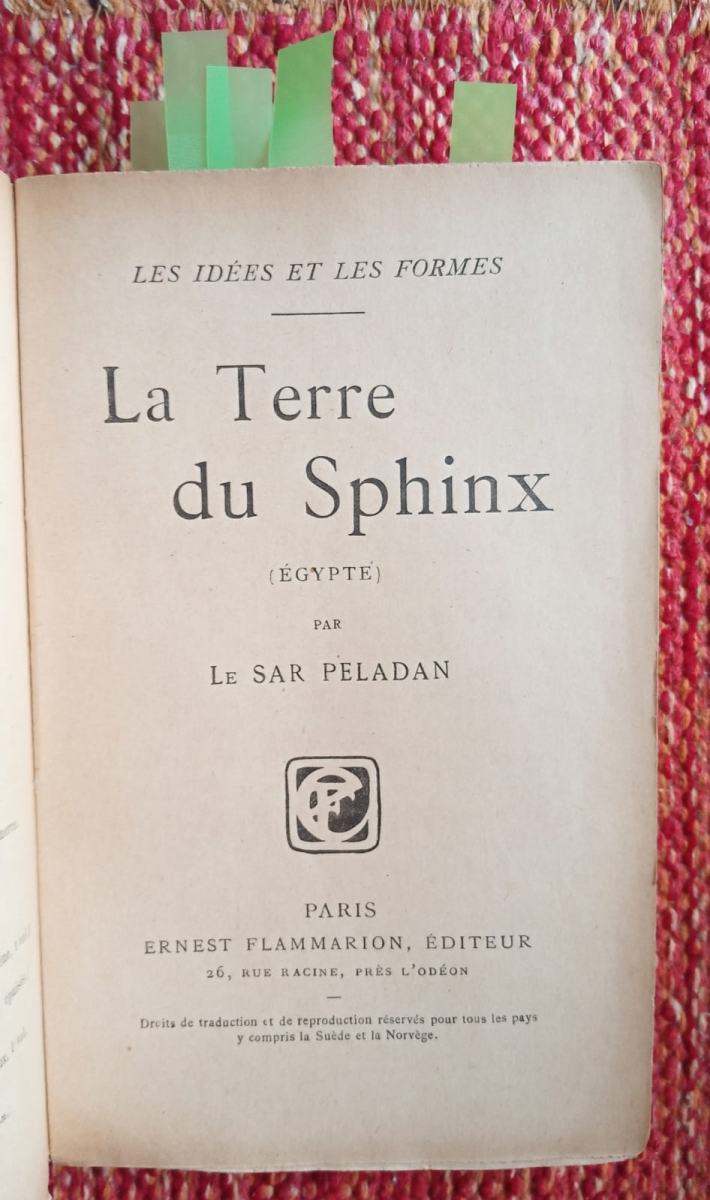
In today’s sharing, from the Blue House of Via-HYGEIA, we journey further among quotations & excerpts from the works of Joséphin Péladan, here excerpted from the 1898-1900 ‘La Terre du Sphinx’ (Land of the Sphinx), published by Editions Ernest Flammarion in Paris. From chapter XI, ‘Au Musée de Gizeh’.
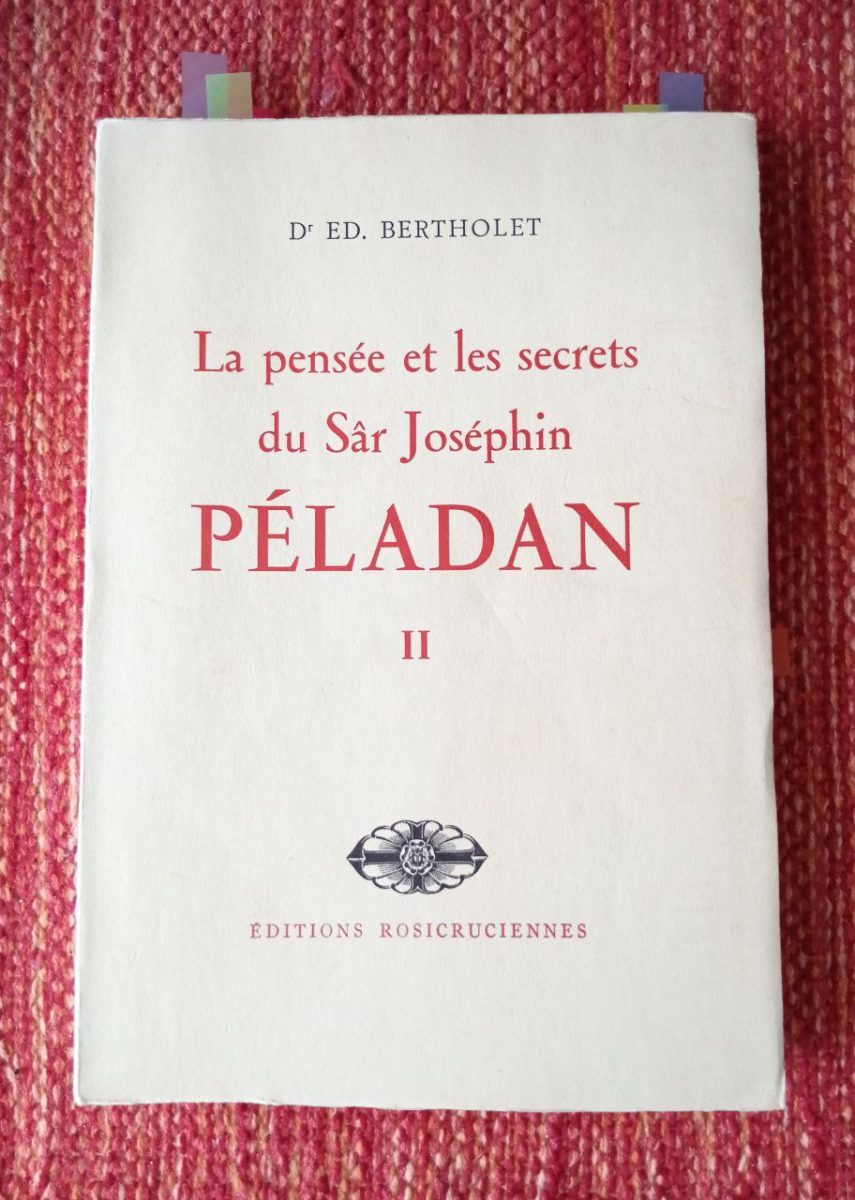
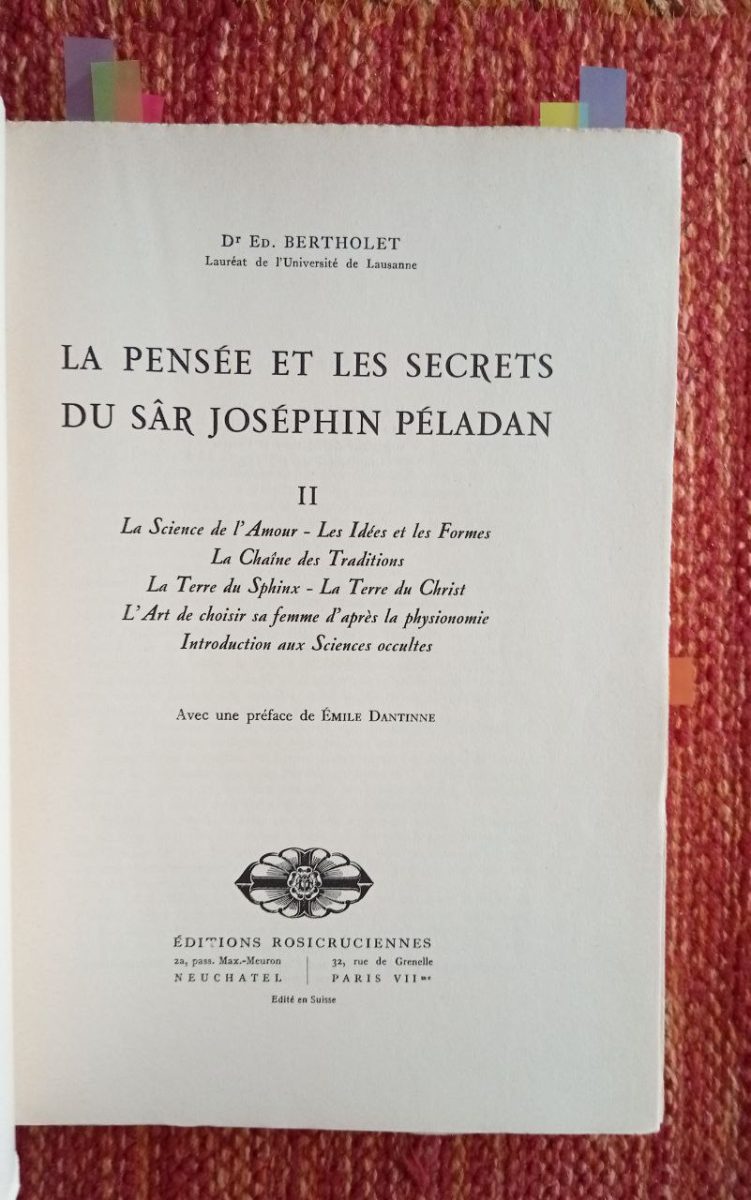
The 4 extracts are followed, first by a note regarding terminology and then by an appendix, extracted from Dr. Edouard Bertholet’s seminal commentaries published in his invaluable ‘La Pensée et les Secrets du Sâr Joséphin Péladan‘, published by éditions Rosicruciennes de Neuchatel, Suisse in 1952. From page 249 to 254. English translation from the original French by Via-HYGEIA.
**
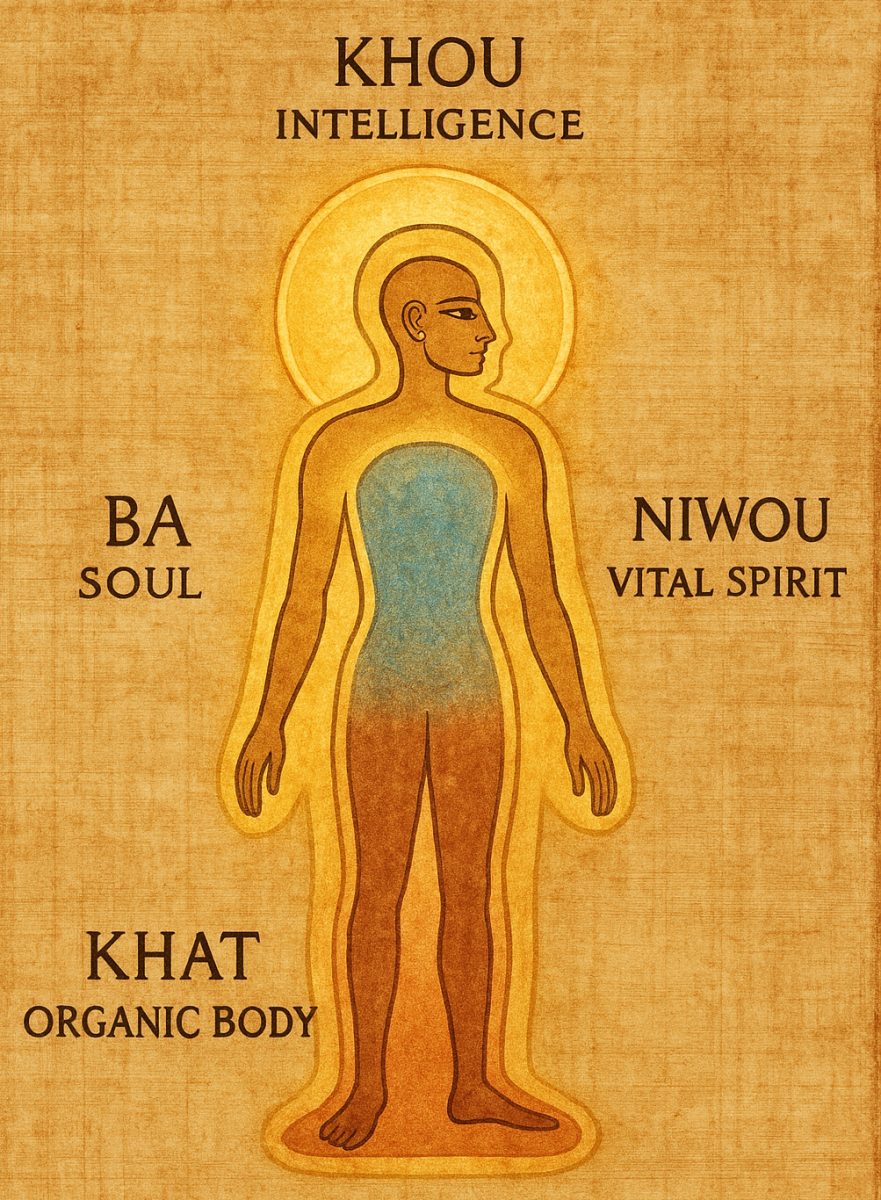
‘…The Egyptians considered that Man was composed of four elements: KHOU, Intelligence; BA, the Soul; NIWOU, the vital spirit; and KHAT, the organic body.
At birth, BA, the soul wears like a coat NIWOU or the vital principle, a fluidic body, the transition between what is immortal & what is mortal; it is NIWOU, duly animated, which flows: it is to KHAT-the organism, what steam is to the engine.
Finally, KHOU, the Intelligence or spirit, reaches down to BA, the soul. We have here the earliest analysis of Man; the occultists from all ages followed it, doubling at time some of these principles which brought them to the number of seven, as did Hindu esoterism.
It is far more superior than the Christian formula: ‘Man is a creature composed of a body and of a soul‘! No psychology is possible with that notion! Usually, NIWOU, sort of of soul of the body and body of the spirit, is called the devil; he is the one doing all the miracles or the occult crimes; the one appearing, who saves or bewitches.
At death, KHAT, the organic body become immobile starting from the heart, blood ceases to circulate; NIWOU or vital & moving principle, exteriorizes, without leaving the earth nor the proximity of the organic body it just left. The spirit KHOU becomes light and re-integrates the spiritual sphere. As for the soul BA, that the texts identify to the notion of a heart deprived of the light of the spirit-but also freed from the weight of the organic body, it arrives to the tribunal of Osiris.
‘O Heart, heart that came from my mother, my heart while I was on Earth, do not struggle against me, as a divine chief, do not accuse me in front of the great god!‘
Whatever the tribunal’s sentence is, KHOU, the spirit will re-integrate the Soul BA, in order to be-angel or demon-its executor: and the damned finds his torment in him-an Eumenides-a hidden gad-fly: it is hell, in the middle of the hostility & incoherence of the elementary whirlwind: the very spirit of the damned avenges justice.
A Leyde papyrus formally indicates that the tormented souls seek a body to root themselves and that they are able to ‘slip into‘ an organism. This is how the many crimes attributed to vampires, werewolves, incubus & succubus can take place.
Gaston Maspero, the great Egyptologist says: ‘After centuries, when it reaches the fixed-term of its suffering, it is to bear a second death and fall back into the void‘. One could see here how the avenging spirit exhausts the resistance of the unrepentant, consumes it and both rises definitively up to their essential dwelling.
Paradise is preceded with a series of trials corresponding to the Catholic idea of Purgatory, but better developed than in its catechism. Once found JUST by the celestial tribunal, the soul BA sees the spirit KHOU come back, but this time as an inspiring and protecting guardian angel.
Maspero, in deciphering these Egyptian papyri, had insisted upon the allegoric meaning of the metamorphoses of the soul: It does not become an sparrowhawk, nor a lotus, nor into the Bennu bird: these locutions designate stages of the soul.
In the ‘Book of the Dead‘, the Elect identifies himself successively with the diverse divine activities: First, he calls himself Osiris; it is the first of the metamorphoses or Ushabti. He then passes to the state of Horus. ‘I arrive, he said, as an sparrowhawk and get out as a Bennu. I am the god of the morning; I am the dogs of Horus‘.
Finally, in his ascension, the JUST joins the chorus of the gods, powers; some wandering, some fixes, that we ought to precise, as the certainly realize the most mystical idea of eternity in God. Here is delineated the pure and admirable part of the religion of the river Nile’.
*
‘…Through which magical operations the body of Osiris was re-constituted, nobody could say; but, in this circumstance, Anubis invented the art of embalming; and it is Horus’ father who became the first mummy. This good son, his mother Isis, the Trismegistus and Anubis did more: they resurrected him, in the same manner Paracelsus would heal. The author of the 1536 ‘Prognosticatio Ad Vigesimum Quartum annum duratura‘ would make a puppet model with clay, an image of the patient, and upon this simulacre use energetic remedies he wouldn’t been able to employ if he would have had to apply on the living body directly. It is truly the spirit which was medicated and which would react upon the double.
Homeopathy, and its derivative electro-homeopathy, does not have any other nature of action: the infinitesimal dose-the ten millionth dilution-of, for instance, chamomilla, would not act upon the organic body, a minuscule particle in the midst of the much more characterized elements of food; but the vital spirit is subtle enough to receive from it such a delicate an impulse, and it transmits it to the double of the body or astral body, and the astral operates upon the organs. This explanation is new, I think, by dint of being ancient. It would be worth a development, and I signal it as an important key of the human mystery; i have found it in the Gizeh Museum, and I deliver it to everybody, as a determinism that was lost and would be the ideal subject for a treatise.
So, surrounding Osiris’ mummy, the magical gods wanted to force the soul to re-integrate it. They modelled a statue in Osiris’ image and breathed upon it; they would magnetized it. The text say: ‘They made the gesture of opening the eyes, and to give breaths, and Osiris’ soul re-incarnated‘.
*
‘…In a note in his ‘History of Art‘, Gaston Maspero mentions the trial documents of the case brought against those who tried to bewitch Ramses the third. Practices of all sorts, obsession, works of hate or of desire, are told by Chabas & Leemann: Menstrual blood, nails hair and clothes soaked with the sweat of the patient, are indicated as the foundation of curses & venefices. Skills of priests, or belief, any disease would be a possession; physical ailment would have an evil cause.
Herodotus, was surprised that Egyptian medicine was almost exclusively practiced by specialists, and even though half-conjuring-alike the Chaldean-this medicine supposed a experimental development. The role given to the microbes would be fulfilled by ‘invisibles‘. We ought not to mock as vain, the conjurations, the psycho-sympathetic treatments in which magnetism had as much power as it acted simultaneously with the ailing patient’s faith.
Mesmer’s ‘Aphorisms‘, amplified by Deleuze, Dupotet and now by Durville, appear to be only formless sketches in comparison with the original Egyptian doctrine of the SAH. The SAH is the Greek Ambrosia, ἀμβροσία ‘immortality’.
There is bas-reliefs in which a statue of a god makes a transfusion of its SAH to his devotee, who is kneeling in front of the statue but his back turned from it: the hands of the colossus makes magnetic passes upon the occiput of the devotee. If I understand well the Egyptian thought, a god does not dwell into a consecrated statue or animal, but only his double’.
*
‘…Therefore, a miracle is a phenomenon, essentially terrestrial & human; supernatural because it requires rare conditions and for many unspecified, but natural by its Norm; nowhere is it better described than in the land of the Sphinx.
This double, this fluidic look-alike, belonging to the human being, is not organic; and yet it lives: it breathes, inhaling & exhaling. There must be, besides the gaseous atmosphere, element of the organic life, a more subtle atmosphere attending to the life of the double.
A humanity of doubles therefore exists which is maintained by an atmosphere other than the one we breathe; and as organic humanity secretes emanations, the humanity of the doubles also emanates a fluidic life: the natural domain & field of the supernatural.
Faith, lively & common, in a temple, engenders miracles; extend this liveliness and this common-ness to a country and to a people, and the supernatural phenomenon will become frequent, endemic & natural’.
*
A via-Hygeia note
I have noticed some difference in the terminology of the parts between Péladan and the commonly used terms in Egyptian religion’s depiction of Man. So I’ve asked Deepseek this:
Here is a description made by Joséphin Péladan of the different parts man is made of: ‘The Egyptians considered that Man was composed of four elements: KHOU, Intelligence; BA, the Soul; NIWOU, the vital spirit; and KHAT, the organic body‘. I want to know is the KA is similar to what Péladan calls NIWOU? Later he talks about the SAH: Mesmer’s ‘Aphorisms‘, amplified by Deleuze, Dupotet and now by Durville, appear to be only formless sketches in comparison with the Egyptian doctrine of the SAH. The SAH is the Greek Ambrosia, ἀμβροσία ‘immortality’. There is bas-reliefs in which a statue of a god makes a transfusion of its SAH to his devotee, who is kneeling in front of the statue but his back turned from it: the hands of the colossus makes magnetic passes upon the occiput of the devotee. In the Egyptian thought, the god does not dwell into the consecrated statue or animal, but only his double‘. How would the SAH combine with he four other parts mentioned by Péladan?
Here is the answer
Péladan, a French occultist, was interpreting Egyptian concepts through his own esoteric lens, which can sometimes differ from modern Egyptological understanding.
Let’s break this down by first clarifying the standard Egyptian components of a person and then seeing where Péladan’s terms fit in.
The Standard Five Components (According to Modern Egyptology)
While the number could vary, a common model includes five parts, not four as Péladan states. Here they are:
-
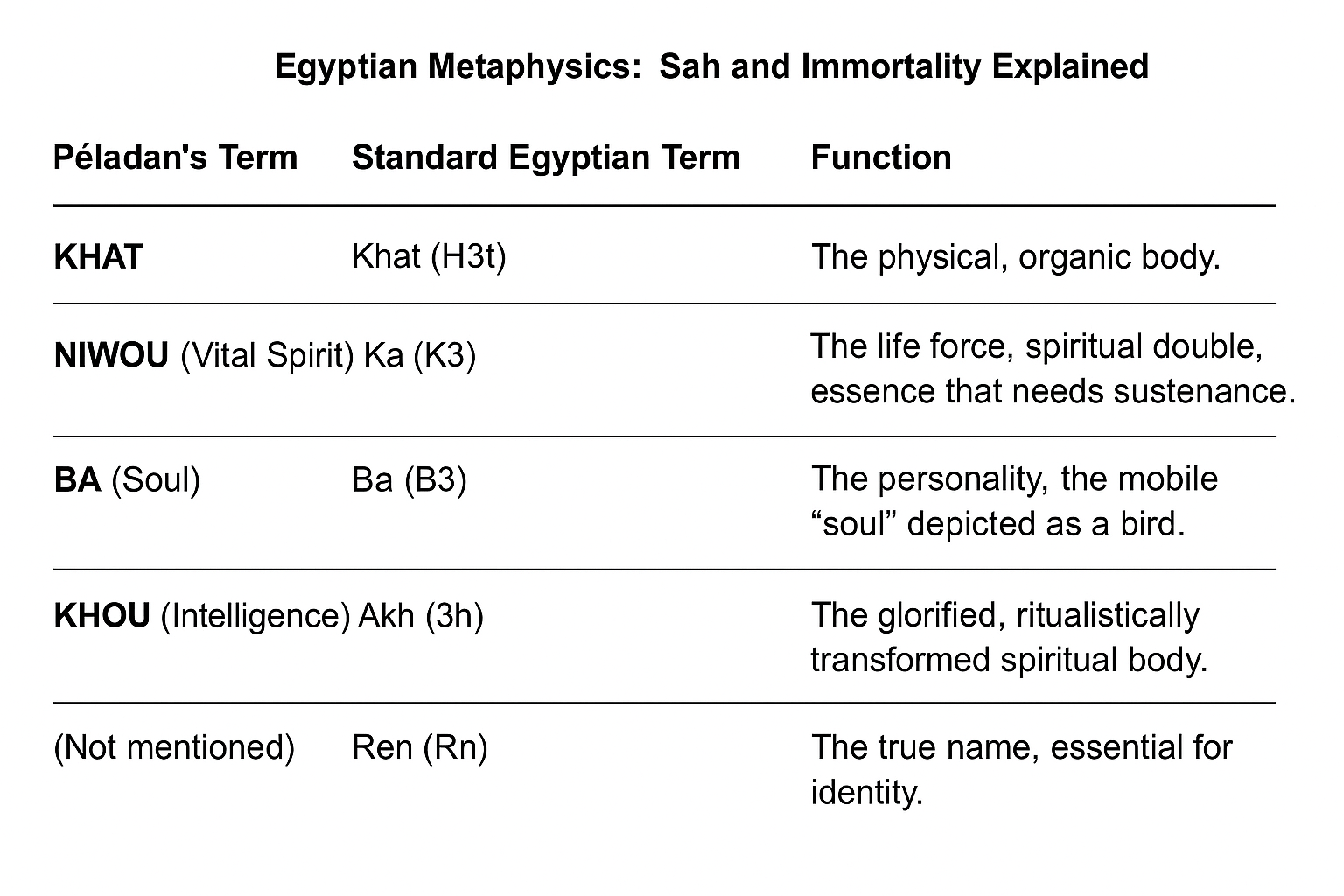
Khat (Ḥ3t – Péladan’s KHAT): The physical, organic body. It was essential for the afterlife, which is why it was mummified.
-
Ka (K3): This is your vital spark, the life force. It is the “double” of the person, their essence and sustenance. It is created at birth and needs nourishment (often through food and drink offerings) even after death. It is not the same as the “soul” in a Western sense.
-
Ba (B3 – Péladan’s BA): This is the closest concept to our “soul.” It is the personality, the unique characteristics of an individual. After death, the Ba could travel between the tomb and the afterlife, but it needed to be reunited with the Ka and the mummy to live eternally. It is often depicted as a human-headed bird.
-
Akh (3ḫ – Péladan’s KHOU): This is the “effective spirit,” the immortal, shining, transformed self that exists after a successful judgment in the afterlife. It is the state of being a blessed ancestor or an “effective” spirit. Péladan translates this as “Intelligence,” which is a valid interpretation of its enlightened, divine nature.
-
Ren (Rn): The true name. A person’s identity was bound to their name. To erase a name was to destroy the person and their legacy.
Addressing Your First Question: Is the KA similar to NIWOU?
Yes, absolutely. Péladan’s “Niwou” is almost certainly a transliteration attempt of the Egyptian term Ankh (ˁnḫ), which means “life.”
-
Ka (K3): The life force, the sustaining spiritual essence.
-
Ankh (ˁnḫ): The state of being alive, life itself.
In Egyptian thought, these are intrinsically linked. You have a Ka because you are alive (Ankh). Péladan is using “Niwou” (Ankh) to mean “the vital spirit,” which is functionally identical to the role of the Ka. So, while he uses a different word, he is describing the same concept that Egyptologists call the Ka.
The SAH and its Place in the System
The Sah (S3ḥ) is a crucial and advanced concept. It is not a sixth component, but rather a transformed and glorified state of the physical body.
-
The Sah is the “Spiritual Body” or “Glorified Body.” Through the correct funerary rituals (especially those described in the Pyramid Texts and Coffin Texts), the deceased’s Khat (physical body) was magically transformed into a Sah—an incorruptible, luminous, and powerful body capable of dwelling with the gods.
-
It was this Sah that was the vehicle for becoming an Akh (the effective spirit). The process can be thought of as: Khat (Body) + Rituals → Sah (Glorified Body) → Unified with Ba & Ka → Akh (Immortal Spirit).
How the SAH Combines with the Other Parts
Péladan’s description of the god transferring Sah via magnetic passes is a beautiful, if esoteric, interpretation. In Egyptian doctrine, the divine power (the “Sah” of the god) could be transferred to a person (living or dead) to grant them divinity, life force, and protection.
Here is how the Sah integrates with the other parts to create the complete, immortal being:
-
Foundation: The Khat (Body) and its Transformation.
The process starts with the preservation of the Khat through mummification. Without a body, the Ba had nothing to return to. Rituals then transform this preserved body into the Sah. -
Empowerment: The Ka (Vital Force) and the Ba (Soul) unite with the Sah.
The funerary rituals were designed to ensure the Ka would recognize and inhabit the Sah, providing it with eternal sustenance. The Ba, which could travel freely, would return to the tomb to reunite with the Ka and the Sah. -
The Divine Spark: The Khou (Akh/Intelligence) is the Result.
The successful union of the Ba (Soul) and the Ka (Vital Force) within the Sah (Glorified Body) resulted in the creation of the Akh (Péladan’s Khou). This was the final, immortal, and intelligent spirit—a “star among the gods.” -
The Divine Transfusion: The Role of the God’s “Double” (Ka) and his SAH.
Péladan is correct that the god’s essence in a statue was his Ka (his “double” or power). When a devotee received a “transfusion of Sah” from a god’s statue, they were receiving a divine, life-giving force that would strengthen their own components. This was a ritual act to imbue the mortal with the qualities of the Sah—incorruptibility and divinity—thus ensuring their successful transformation into an Akh.
*
A Summary Table
*
In conclusion
Péladan’s system is a coherent, if slightly idiosyncratic, esoteric interpretation. His “Niwou” is the Ka. The Sah is the key that unlocks immortality; it is the divine vessel formed from the physical body that allows the Ba and Ka to unite permanently and become the immortal Akh (Khou). The divine transfusion of Sah is the ultimate blessing, completing this sacred alchemy of the soul.
*
Source
*
Appendix:
Commentaries
By Dr. Edouard Bertholet
‘…The Egyptian priests became masters of magic, or better, of theurgy; they knew how to manipulate fluids and act upon the double through magnetic methods that held no secrets anymore for them. In our previous publications regarding the magnetizers’ fluid, we have insisted, more than one time, upon the fact that the Egyptians had a deep understanding of magnetism & suggestion and that they did not confuse both of these healing methods, unlike most of the modern physicians do, ignoring everything from the benefit of magnetic laying of the hands, of warm breathing, of the use of water & magnetized objects.
This complete misunderstanding of most of the physicians in regard to the healing powers of animal magnetism is explained by, on one side, the fact that the question was never dealt with in their faculties of medicine during their studies, and on the other hand, they did not deem necessary to complete their medical knowledge by a serious study of the many books dealing with the healing aspect of magnetism, of its modalities and of its nature. Furthermore, during a trial set against a magnetizer, we have heard a teacher of psychiatry say that magnetism & hypnotism were but the very same thing. Such an ignorance is not allowed nowadays, as books about it are everywhere, and Psychical Societies & their libraries can be found in almost every city, offering to those eager to make an opinion for themselves through the study of the texts and not upon more or less fancy data.
From the outmost antiquity, The Wise and the Magi knew that through the laying of the hands one could heal the sick. In a Leyden papyrus, we can read this thoughtful advice: ‘Put your hands upon the sick to calm his pain and say that the pain will go‘. Another passage of the ‘Book of the Dead‘ alludes to the healing power of the imposition of the hands: ‘ I am laying my hands over you, Osiris_X (the name of the sick person), for your own good, so that you may live‘.
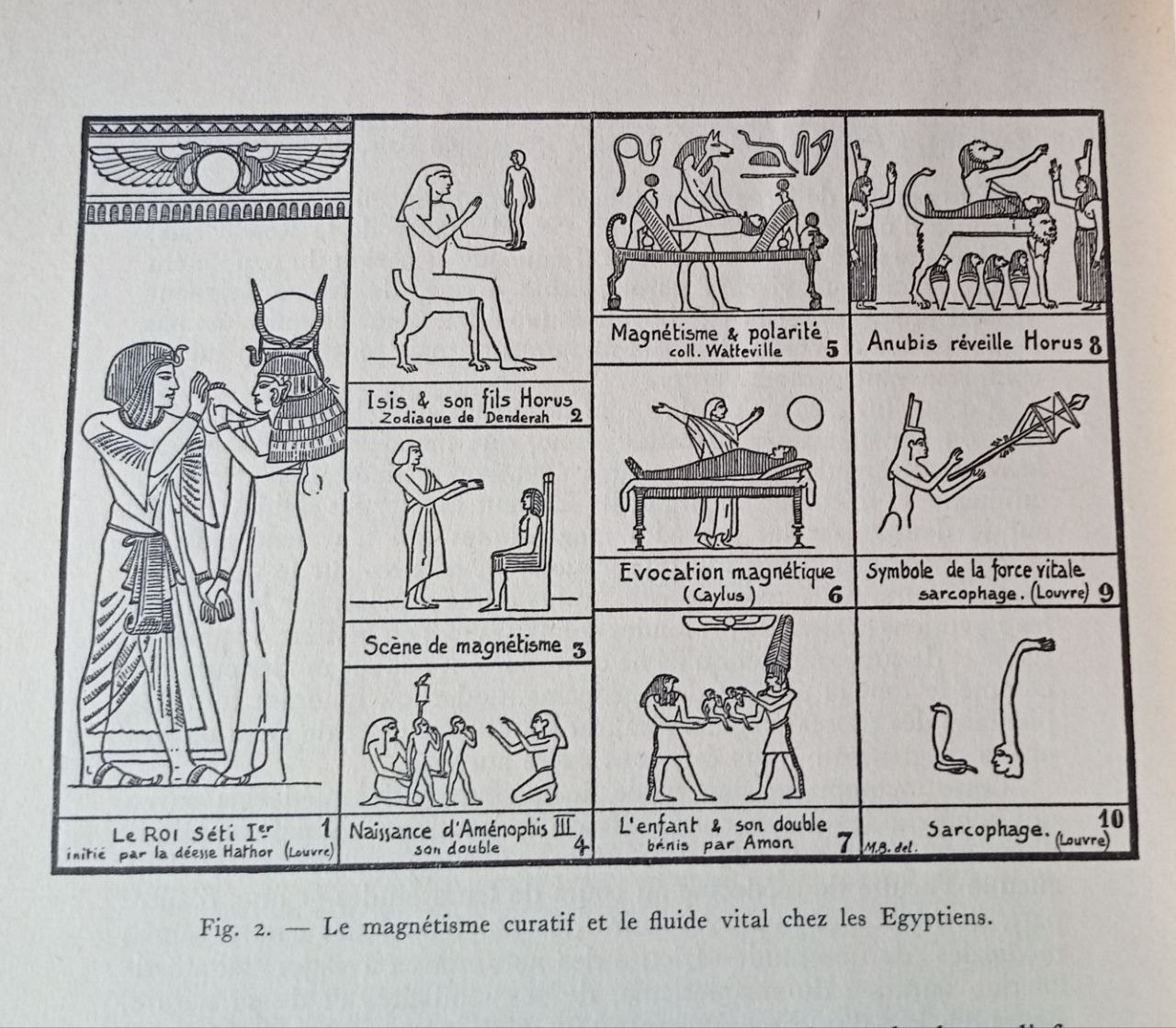
Right above, these reproductions of Egyptian bas-reliefs obviously show us that the Wise men of Egypt knew the existence & the curative action of the magnetic fluid.
Scene 1 represents King Seti the First to whom the goddess Hathor bestow sacred powers; the goddess carries on her head, held by the two horns of the sacred bull, the solar disc around which coils the Uraeus, the cosmic snake, symbol of the universal Force, from which flows all strength & all life; the goddess lays her hands according to the principle of the polarity of the fluid, consistent with what the magnetizers teach; her hands are placed in a heteronomous position; this is exactly the ideal position for the fluidic penetration to be applied.
Scene 2, a figure of the Denderah zodiac, show us Isis laying her hands on her son Horus to transmit her healing fluids and her vital force.
A typical scene of magnetism is given by scene 3. The patient is seated on a low chair, his hands rested upon his knees, in a state of deep relaxation; he holds his chest strait in the prolongation of the head, so to facilitate the circulation of the fluids along the marrow, therefore allowing their distribution in all the body; the healer proceed to a series of laying of the hand with strong currents from the head to the solar plexus.
Scenes 5 & 8 represent with some variations of details the same scene. They show is the officiant, the god Anubis laying hands over the solar plexus and upon the heart of a mummy to recall it to life; on the right of the magus, we can see the sun surrounded by the sacred snake, symbol of the fluidic force of positive life. and on his left the moon circled by a broken snake, symbol of the negative force of the fluid-the broken snake symbolizes the opening through which the positive force will penetrate in order to restore life and health.
Scene 8 illustrates the magnetic rite intended to hasten the awakening of Horus; the priest, from his right hand raised towards the heavens, calls with fervor the cosmic life-force, while he lays the left hand upon the the heart of the patient to infuse the vivifying fluids drawn from the Cosmos.
The person from scene 6 gives us a typical example of a magnetic treatment; the sun symbolizes again the cosmic vital force to which the officiant appeals in favor of the sleeper laying upon a resting bed.
Scenes 9 & 10, taken from sarcophagi that are now in the Louvre Museum, are very revealing:
In scene 9, we see a sail, filled with the breath of the officiant, symbolizes the powerful curative force that flows from the breath; this action being backed-up by the magnetic fluid that flows from the hands.
Scene 10, which is in the British Museum, means that the vital force, symbolizes by the snake, accumulates in the brain, from which it then flows down to be given by the hand of the magnetizers.
Finally, scenes 4 & 7 are worth our attention for two reasons: we discover there the magnetic practice of laying hands upon a new born in order to attract the cosmic vitalizing and curative forces; furthermore, these scenes reveal to us the level of knowledge the Ancient Egyptian had already about the existence of the fluidic double upon which we can act remarkably by using healing and spiritual practices; the child is, in fact, represented together with his etheric double or astral body that follows him everywhere and constitute the vehicle of his soul.
Joséphin Péladan tells us that Horus was the father of the Magi who knew how to manipulate the subtle fluids of the magical operations. ‘It is therefore‘, he says, ‘the spirit that was medicated and was acting upon the double‘. From this he draws an ingenious conclusion with what he thinks the curative action of homeopathy may be; he writes: ‘…the infinitesimal dose-the ten millionth dilution-of, for instance, chamomilla, would not act upon the organic body, a minuscule particle in the midst of the much more characterized elements of food; but the vital spirit is subtle enough to receive from it such a delicate an impulse, and it transmits it to the double of the body or astral body, and the astral operates upon the organs. This explanation is new, I think, by dint of being ancient. It would be worth a development, and I signal it as an important key of the human mystery; i have found it in the Gizeh Museum, and I deliver it to everybody, as a determinism that was lost and would be the ideal subject for a treatise. So, surrounding Osiris’ mummy, the magical gods wanted to force the soul to re-integrate it. The modelled a statue in Osiris’ image and breathed upon it; they would magnetized it. The text say: ‘They made the gesture of opening the eyes, and to give breaths, and Osiris’ soul re-incarnated‘.
We will remember that the great Paracelsus, heir of the antique wisdom, was operating similarly when he would make a puppet model with clay, an image of the patient, and upon this simulacre use the energetic remedies on the limb or part of the body that needs care; he wouldn’t be able to employ this cure by applying directly on the living body. There again Péladan makes an interesting parallel between the practices of the ancient Magi & Paracelsus.
The Sâr mentions, after Maspero, bewitching by usage of wax figurines or potions: ‘Menstrual blood, nails hair and clothes soaked with the sweat of the patient, are indicated as the foundation of curses or venefices. Skills of priests, or belief, any disease would be a possession; physical ailment would have an evil cause. We ought not to mock as vain, the conjurations, the psycho-sympathetic treatments in which magnetism had as much power as it acted simultaneously with the ailing patient’s faith’.
Péladan noticed in the Gizeh Museum, a statue where we can see very well a god performing a transfusion of vital force to his devotee, who is kneeling in front of the statue but his back turned from it: the hands of the colossus makes magnetic passes upon the occiput of the devotee.
Regarding sacred animals and their role in the Egyptian religion, he makes this interesting remark: ‘If I understand well the Egyptian thought, a god does not dwell into a consecrated statue or animal, but only his double‘.
Péladan condemns the perpetual tendency of the modern West to always put everything as a rationalist ‘fair & square setting’ (mise au carreau rationaliste) of the hyper-physical world it blatantly ignores and of which the ancient West knew but forgot. His position regarding miracles is as such: ‘…Therefore, a miracle is a phenomenon, essentially terrestrial & human; supernatural because it requires rare conditions and for many unspecified, but natural by its Norm; nowhere is it better described than in the land of the Sphinx. This double, this fluidic look-alike, belonging to the human being, is not organic; and yet it lives: it breathes, inhaling & exhaling. There must be, besides the gaseous atmosphere, element of the organic life, a more subtle atmosphere attending to the life of the double. A humanity of doubles therefore exists which is maintained by an atmosphere other than the one we breathe; and as organic humanity secretes emanations, the humanity of the doubles also emanates a fluidic life: the natural domain & field of the supernatural. Faith, lively & common, in a temple, engenders miracles; extend this liveliness and this common-ness to a country and to a people, and the supernatural phenomenon will become frequent, endemic and natural‘.
Péladan considers that there is nothing extra-ordinary about the fluidic double of a statue-charged with magnetism and duly consecrated by the priests-TO MANIFEST & TO VIVIFY that very statue.
*
Source
*
*
*
A Little Surprise
Bonus
🙂
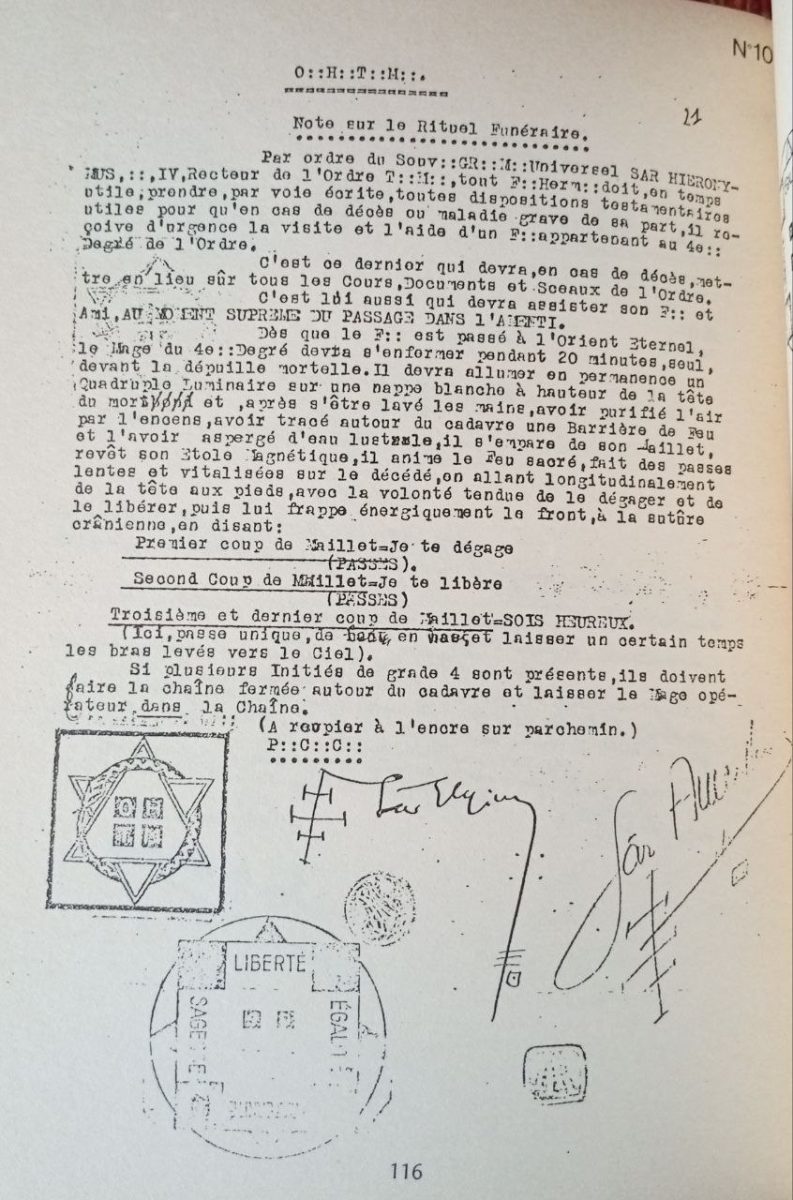
Note on the O::H::T::M::
Funerary Ritual
By order of the Sovereign Grand Master Universal SAR HIEROTYMUS IV, Rector of the Order, every Brother must, in a timely manner, take all necessary testamentary dispositions in writing so that, in the event of his death or serious illness, he urgently receives the visit and aid of a Brother belonging to the 4th Degree of the Order.
It is the latter who must, in the event of death, remove to a safe place all the Charts, Documents &Seals of the Order. It is also he who must assist his Brother to THE SUPREME RITE OF PASSAGE INTO THE ETHER.
As soon as the Brother has passed to the Eternal Orient, the initiate of the 4th Degree must enclose himself for 20 minutes, alone, before the mortal remains. He must keep a Quadruple Luminary burning continuously on a white cloth at the height of the head of the deceased and, after having washed his hands, purified the air with incense, traced a Barrier of Fire around the corpse, and sprinkled it with lustral water, he takes his Dagger, dons his magnetic Stole, animates the sacred fire, makes slow & vitalized laying of the hands over the deceased, going longitudinally from the head to the feet, with a Will tensed to disengage & liberate him, then strikes his forehead energetically, at the coronal suture, while saying:
First strike of the dagger:
I disengage you.
(LAYING OF THE HANDS)
Second strike of the dagger:
I liberate you.
(LAYING OF THE HANDS)
Third and final strike of the dagger:
BE HAPPY!
(Then, a single laying of the hands from top to bottom and leave the arms raised towards Heaven for a certain time.) If several initiates of the 4th grade are present, they must form a closed chain around the corpse and let the operating initiate work within the Chain. (To be requested in ink on parchment).
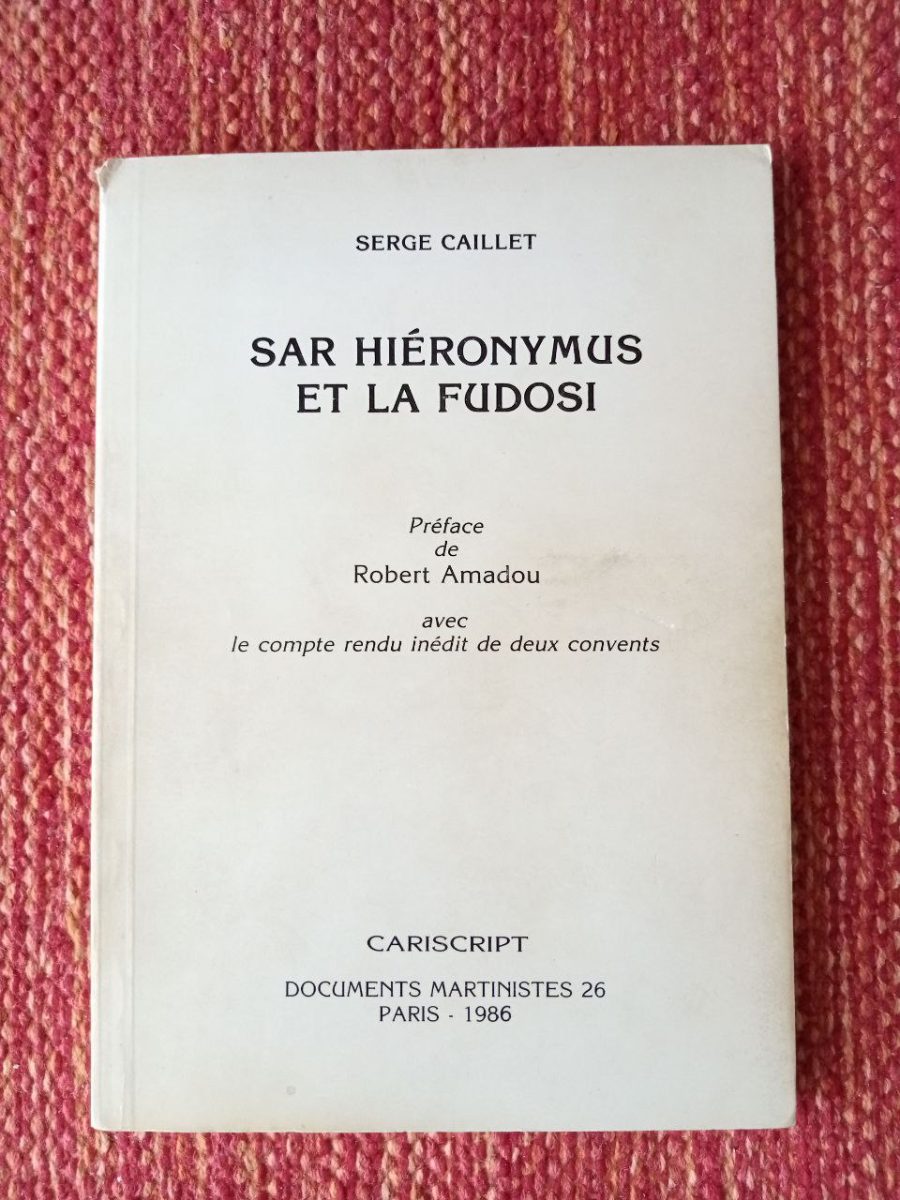
Source: Appendix 10 in Serge Caillet’s 1986
‘Sar Hieronymus et la F.U.D.O.S.I.’, page 116.
*
For
EVERYTHING
Péladan
with the latest
scholarship
by polymath
Sasha Chaitow:
***

Related Articles


Leave a Reply