
Circle of Transmission: The Living Loom
From Sylvain Maréchal’s ‘Les Voyages de Pythagore’: ‘Mythra’s Cave’ – A Critical Reading: Anachronism as Revolutionary Method
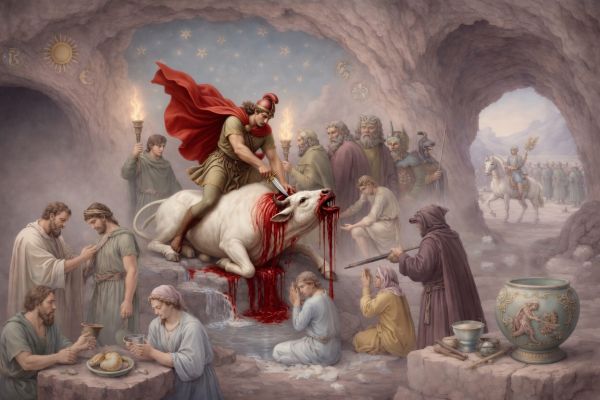
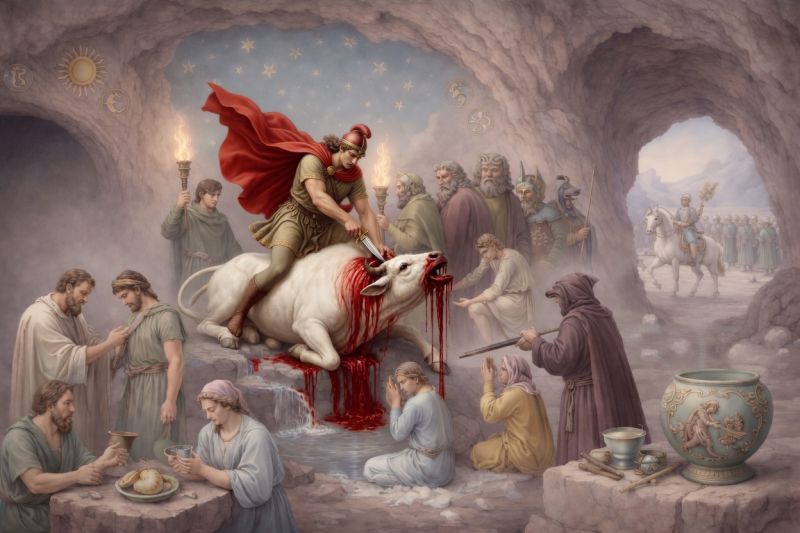
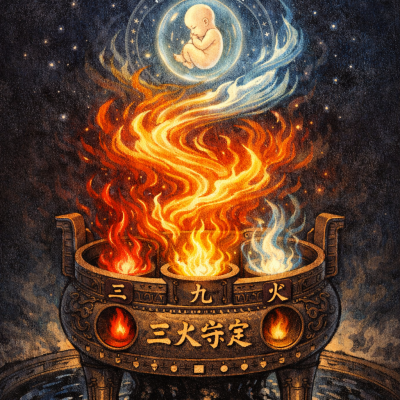
A fantasy scene
of a ‘Mithraic‘ Initiation.
*
Today’s sharing from the Blue House of Via-HYGEIa is an excerpt from Sylvain Maréchal’s Les voyages de Pythagore (Paris, 1799), Volume 3, Chapter CV, L’Antre de Mythra (pages 95–99).
The text below is presented exactly as Maréchal wrote it, preserving its chronological impossibilities, its Orientalist speculations, and its revolutionary fabrications. We have resisted the urge to annotate or correct the narrative itself, allowing the reader to experience the raw ‘confusion‘ of Enlightenment-era myth-making.
Instead, all historical fact-checking, contextual analysis, and methodological critiques have been consolidated in the accompanying postface, A Critical Reading: Anachronism as Revolutionary Method. There, we dissect Maréchal’s inventions—the agrarian oath, the inclusion of women, the ice-throwing ritual—not as errors to be mocked, but as deliberate political tools that reveal more about the French Revolution than about ancient Persia.
Read the excerpt as a utopian novel dressed in antiquarian costume; read the postface to understand the mirror Maréchal was holding up to his own time.
**
CHAPTER CV
The Cave of Mythra
Page 95. I went outside the city to the entrance of a very dark grotto; and I admired the bizarre choice of location for solemnising the brightest of stars. Admitted as part of a very small group of spectators, I saw so many ceremonies performed before my eyes that my complaisant and faithful memory could scarcely suffice; I recall them with the confusion that indeed reigned there.
First I saw the initiates around a spring of living water[3], washing their entire bodies while invoking the divinity to obtain purity of spirit. I saw Zoroaster, who himself fulfilled the functions of hierophant, or father of the mysteries[4], imprinting an indelible mark upon the chest of each of them. Proud of this distinction, I saw them take, eat and drink a wheat loaf and a vessel of water – emblem of their resurrection, or of their passage to a new life, in the manner of the sun which was opening a new year. This they expressed in hymns and prayers.
Page 96. A subordinate minister, called the sacred Raven[1], presented to each of them a crown[2] hanging from the point of a sword. They all refused it, repeating a certain formula: Mihir is my crown.
Deep within the mystic cave, I managed to make out – not a statue (the Persians admit none in their worship) but a representation of Mithras[3], a handsome young man seated on a bull, holding in his hand the sword of Aries, a sign consecrated to generation.
Then I saw the king advance wearing the mask of a lion, with a bee in its mouth[4]; several of his courtiers followed him, also masked, some as eagles, others as hawks, dogs, griffins… Women dear to the prince were admitted, their faces hidden, under the figure of a bier (whose name they also bear). All these people were subjected to a few light trials. They were forced to traverse a kind of very dark labyrinth[5], to walk barefoot among heaps of artificial snow and ice, and to receive on their bare shoulders fifteen strokes of a rod called the whip of the sun, or of Mithras.
Page 97. Thanks to my linen robe, similar to those of all this multitude, I was able to approach the venerated image of Mithras closely enough to grasp several singular details. The young god, called the sole Invincible[1], is in the posture of subduing a vigorous bull, which he seems about to slaughter. Wearing a Persian tiara curved over the forehead like that of monarchs, he is armed with the acinaces[2]. His entire costume consists of a short tunic, and over it the anaxyrides of the country[3]. I thought I could make out a small cloak[4] on his shoulders. Two figures accompanying him lack this garment, though otherwise dressed the same. One of these attendants holds a torch aloft; the other also carries one, but inverted. Their sex is anything but equivocal. This, I was told, is the revered symbol of the reproduction of beings. A few drops of blood flow from the wounded bull’s throat; around it are several characters[5], which were explained to me by the words: Dew of heaven.
The background of the scene is scattered with countless small figures of living animals, representing in the Persian calendar the sun, the moon, the planets and various constellations.
Page 98. The most interesting and wisest of all these religious practices is the oath[1] that each initiate of either sex pronounces in turn, addressing the god Mihir:
“I swear to increase the number of rational creatures that populate the earth, and to kill every harmful animal. I swear to cultivate an uncultivated soil and to plant a fruit tree. I swear to bring fresh water to an arid land, and to build or repair a road. And I consent to be excluded from the abode of the blessed after my death[2], if during my life I do not fulfil these sacred obligations.”
I sense that, out of complaisance, Zoroaster excused the prince and his retinue from the great and true trials of Persian initiation[3]. Would courtiers and luxurious women ever have been able to endure a total abstinence from all food for forty days, an almost continuous flagellation for two entire days, another twenty days spent in heaps of snow, only to be suddenly transported into the midst of several blazing pyres? But also, none of these initiates was admitted to climb the seven planetary steps. None could attain the final degree of perfection.
Page 99. Only, to conclude the solemnity, the king and his principal familiars were allowed to drink, after the initiates, a little wine mixed in a golden cup[1] shaped like an egg. I was permitted to approach close enough to make out the subject depicted on the sides of this beautiful cup: among other things, I saw an almost naked farmer, or rather a kind of Priapus god strongly characterised[2], in the posture of a robust man sowing a field.
We left the mystic cave in order and with all the gravity of a religious procession. The people waited outside, holding pieces of ice in their hands. I could hardly guess for what purpose. I was soon enlightened. The march was led by a handsome adolescent mounted on a superb white steed, holding in his hand a fan of feathers[3]. The crowd followed him, throwing these pieces of ice at him – an ancient custom whose origin tradition has preserved only for the initiates…
We were at that season when expiring winter still insulted the arrival of the beautiful season in several regions…
The Persians in their invocations say: Triple Mithras[4]! meaning sometimes light, heat and time, of which the sun is the dispenser; sometimes wisdom, power and goodness, the principal attributes of Nature.
*
Original Footnotes
Page 95
(1) Eubulus, cited by Porphyry, On the Cave of the Nymphs.
(2) Igne coelesti absumptus creditur. Volaterranus.
(3) Marcian, Book 13, On Baptism.
(4) Pater sacrorum (Father of the sacred rites).
Page 97
(1) Deo soli; sol invictus Mithra. Gruter. – This is the Feridoun of today in the East.
(2) Weapon of the Persians, a fairly wide iron blade.
(3) These are the wide breeches of the Persians.
(4) Th. Hyde, Religio Persarum.
(5) Nem, or Nam.
Page 98
(1) Le Sadder.
(2) Urbs Paradisiaca. Sadder, porta 19.
(3) Voy. the notes of ‘Antic Inscriptions’ Syllog. A. Guil, Fleetwood, London 1691. In-8.
Page 99
(1) Athenaeus, Book XI, Deipnosophistae.
(2) Th. Hyde, Religio Persarum.
(3) Idem (same).
(4) Vossius, Idololatria, folio.
*
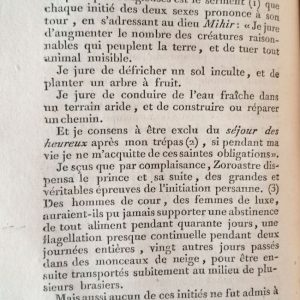
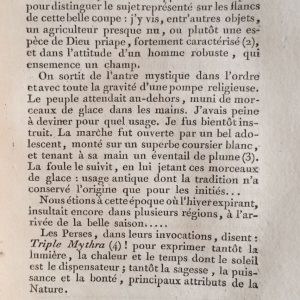
Original French
*
Source
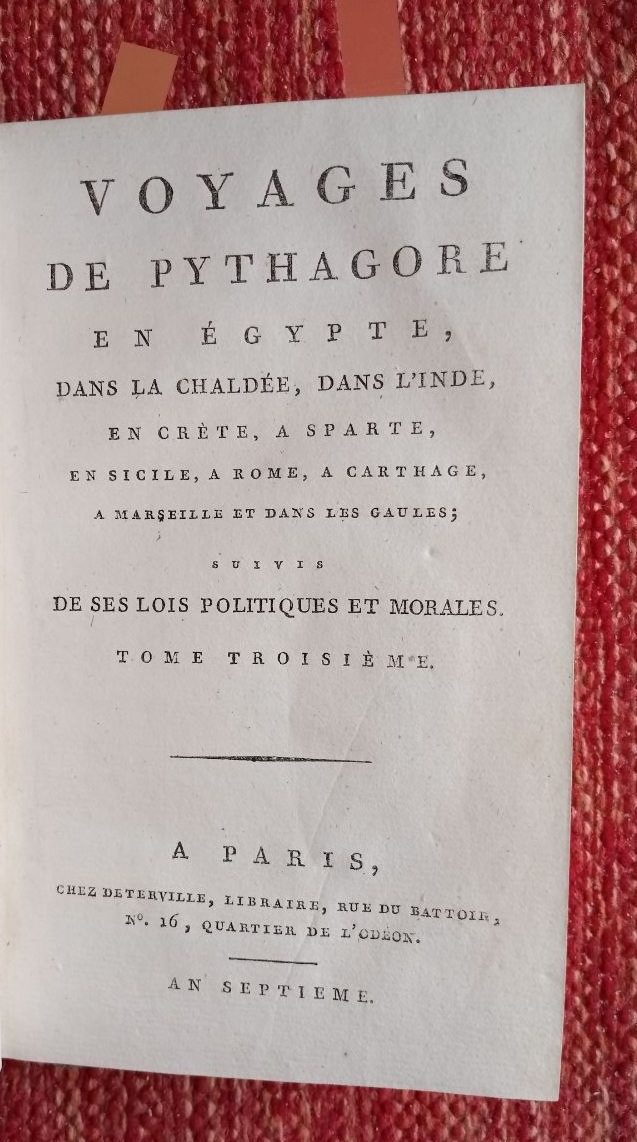
Volume III, full text here
*
Postface
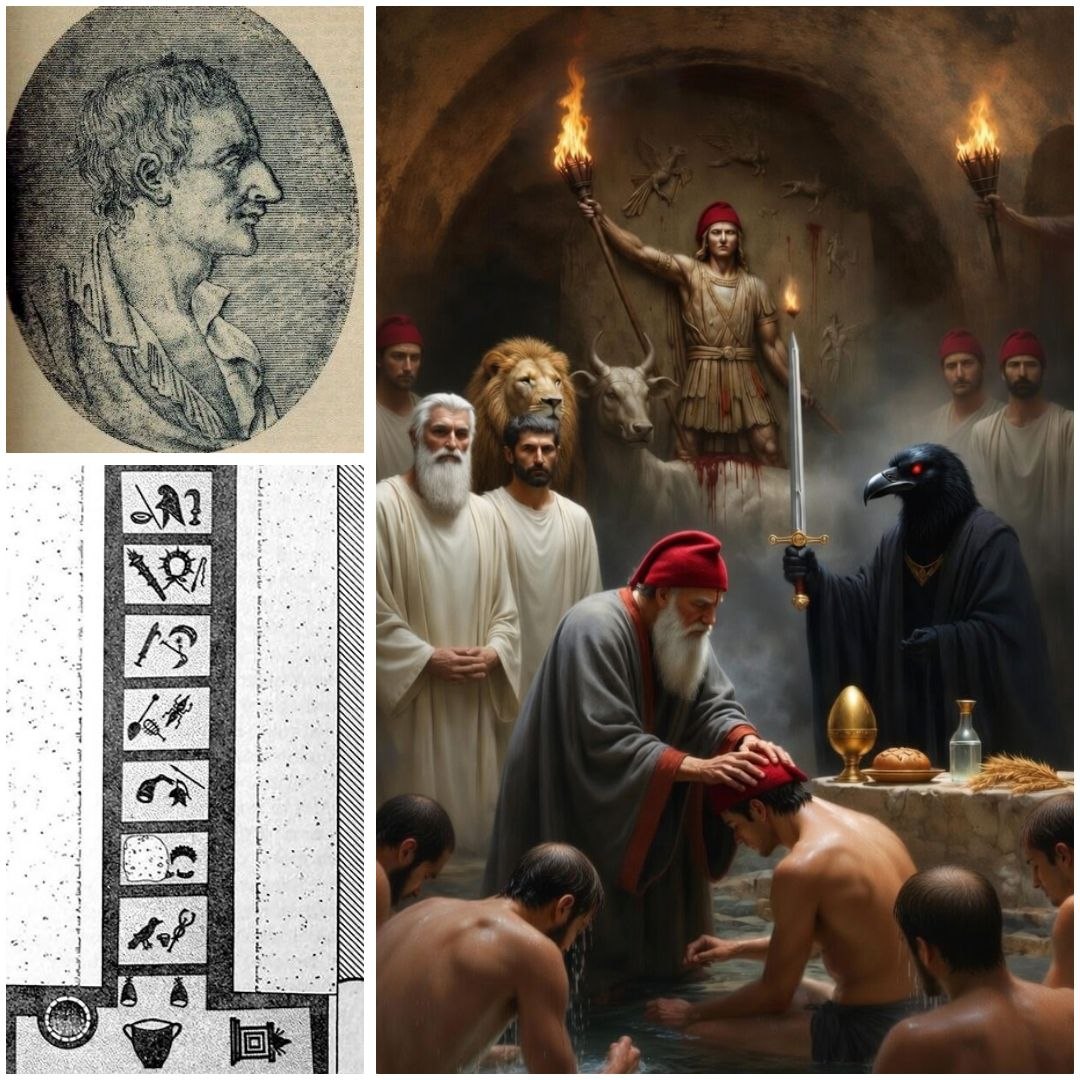
A Critical Reading:
Anachronism as Revolutionary Method
*
I. The Proposition: A Deliberate Collision
This volume presents an apparent absurdity. The Greek philosopher Pythagoras (c. 570–495 BCE) is described witnessing the rites of the Roman god Mithras, a cult whose floruit belongs to the period between 100 and 400 CE—half a millennium after Pythagoras died. Guiding him is Zoroaster, a figure whom modern scholarship places between 1500 and 1000 BCE, if he lived at all. Chronologically, this is impossible. Culturally, it is incoherent.
The natural impulse of the modern scholar is to correct such errors—to annotate them, to tut-tut at Maréchal’s credulity, to separate fact from fiction with the scalpel of source criticism. We have chosen not to do that within the text itself, preserving Maréchal’s 1799 narrative as a pristine artifact of Enlightenment imagination. Instead, we foreground these errors here. This reading argues that L’Antre de Mythra is best understood not as failed antiquarianism, but as successful myth-making. Maréchal was not trying to reconstruct the past as we now demand; he was using the past to think about the present. The cave he describes is not a Mithraeum; it is a revolutionary dream chamber, decorated with Persian motifs and lit by the candles of 1789.
*
II. What Maréchal Thought He Was Doing
Sylvain Maréchal (1750–1803) was a radical journalist, a poet, and a conspirator who co-authored the Manifesto of the Equals (1796). His Voyages de Pythagore uses the ancient sage as a philosophical Odysseus who judges religious systems not by historical accuracy, but by ‘the light of nature and reason‘. The Mithras episode serves a clear rhetorical purpose within this project. It prioritizes fertility over asceticism as a direct critique of Christian otherworldliness, and it elevates utility over dogma; the initiates swear to dig wells and plant trees rather than believe in metaphysical creeds. Furthermore, the text subverts Christian ritual by echoing its trials—fasting and flagellation—but repurposing them to reward the initiate with the tangible goods of a well-cultivated earth.
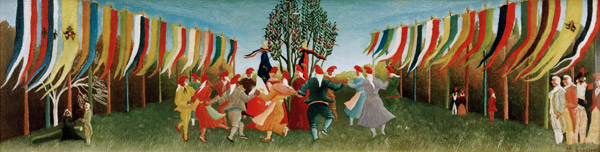
Maréchal drew on the best available sources of his day, including Porphyry’s On the Cave of the Nymphs, Athenaeus’s Deipnosophistae, and Thomas Hyde’s Religio Persarum (1700). The problem was not his diligence but the state of the field in 1799. No Mithraeum had been properly excavated; the great finds at Rome, London, and the Rhine frontier were still a century away. Crucially, the distinction between the Persian Mithra (a god of covenants) and the Roman Mithras (the bull-slaying figure of the mysteries) was not yet understood. Maréchal assembled his ‘Mythra‘ from fragments and filled the gaps with revolutionary imagination.
*
III. Three Specific Distortions – and What They Tell Us
The Oath of the Initiate: A Theology of GDP In Maréchal’s account, the initiate swears to cultivate uncultivated soil, plant fruit trees, and build roads. No ancient source records such an oath; Roman Mithraic inscriptions concern loyalty, silence, and brotherhood within the military cohort. Maréchal’s invention is pure 18th-century agrarian radicalism. It echoes the Physiocrats, who believed all wealth derived from the land, and the de-Christianization efforts of the French Revolution. Maréchal is effectively drafting a ‘Cult of Reason‘ liturgy. Where the Christian catechumen renounces Satan, Maréchal’s initiate renounces idleness. It is a theology of Gross Domestic Product before the term existed, sanctifying the material output of the nation as the true path to the “abode of the blessed.”
The Admission of Women: Correcting the Record Maréchal includes women among the initiates, hidden under the figure of a ‘bier‘. This stands in stark contrast to the historical reality: the Roman Mithras cult was exclusively male. Inscriptions, temple layouts, and the iconography of the seven grades point to a closed, military, intensely homosocial environment where women are entirely absent from the archaeological record. The text relies on a French pun lost in English translation: bière means both ‘bier‘ (coffin stand) and a type of hood or mask. Maréchal uses this wordplay to smuggle women into a male space. Having argued for the equality of sexes in other works, Maréchal could not tolerate a ‘virtuous’ religion that excluded half of humanity. His inclusion of women is a deliberate correction of history, projecting the egalitarian ideals of the Manifesto of the Equals onto the ancient past.
The Ice-Throwing and the ‘Sword of Aries’: Confused Geography and Astrology Maréchal describes Mithras holding the ‘sword of Aries‘, yet in actual Mithraic iconography (the tauroctony), Mithras plunges a dagger into the bull’s neck; he does not wield a sword associated with the Ram. While the sign of Aries sometimes appears in the zodiacal ring surrounding the scene, the weapon itself is distinct. Maréchal conflates the zodiacal sign with the weapon, likely confusing astrological exaltations with the ritual action.
Similarly, the crowd throwing ice at a procession is an ‘invented tradition‘ found in no ancient source. It is likely a garbled European interpretation of Nowruz (Persian New Year) purification rituals involving water, filtered through a French winter landscape. Maréchal imagines a Spring Equinox ritual but populates it with snow and ice, revealing his own geographical bias. Amidst these errors, he includes a ‘sacred Raven‘, one of his few accurate details, as Corax (Raven) was indeed the first grade of initiation in historical Mithraism. However, he repurposes the Raven’s role from serving nectar to presenting a crown, showing that he had access to correct terminology which he then remixed for his narrative.
*
IV. Our Method: Productive Anachronism
We do not present this text as a source on Mithras. We present it as a source on Maréchal—and on the limits and desires of Enlightenment antiquarianism. Our method is threefold:
First, we employ source criticism to trace how he transformed Porphyry and Hyde, asking why he diverged where he did.
Second, we engage in an ideological reading, treating the oath as a manifesto, the admission of women as a correction, and the ice-throwing as a creation; by reading the text as ideology, we recover its coherence.
Finally, we adopt a pedagogical use for these errors. Each anachronism opens a question: What do we now know that Maréchal did not? The cave becomes a classroom in the history of knowledge.
*
V. A Final Irony: The Cave of Mirrors
There is a final irony. Maréchal’s Pythagoras pretends to reveal the secrets of antiquity. We, in turn, have pretended to reveal the secrets of Maréchal. But we too are situated. Just as Maréchal projected the laboureur (ploughman) onto the Persian priest, today we project our own obsessions. Modern pop culture reinvents Mithras constantly: in comics, he is a cosmic entity; in video games, a boss monster; in conspiracy theories, a precursor to Christianity. We often analyze the cult through lenses of ‘toxic masculinity‘ or ‘military hierarchy‘ because those are the anxieties of the 21st century.
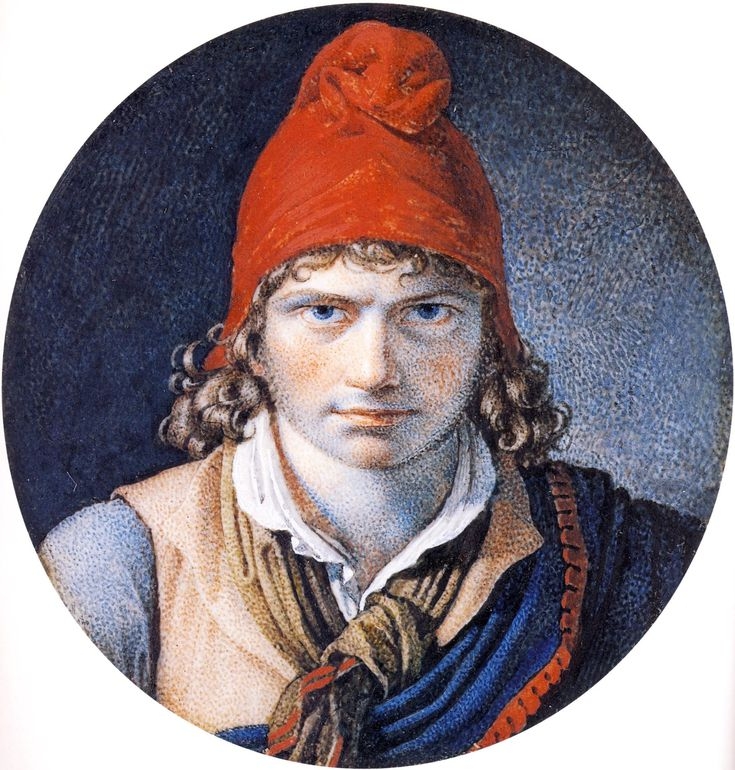
Future scholars will one day point out our blind spots. They may smile at our certainty that we have finally demystified the cult, just as we smile at Maréchal’s ice-throwing crowds. The cave of Mithras, it turns out, is a cave of mirrors. Each generation enters it, holding up its own torch, and sees—not the god himself—but its own reflection, dressed in Persian clothes, whispering an oath that sounds suspiciously like its own political platform. Maréchal saw his reflection. We see ours. The only difference is that we have learned, perhaps, to be a little more suspicious of the mirror. That suspicion is the beginning of wisdom. And it is the only gift this critical reading dares to offer.
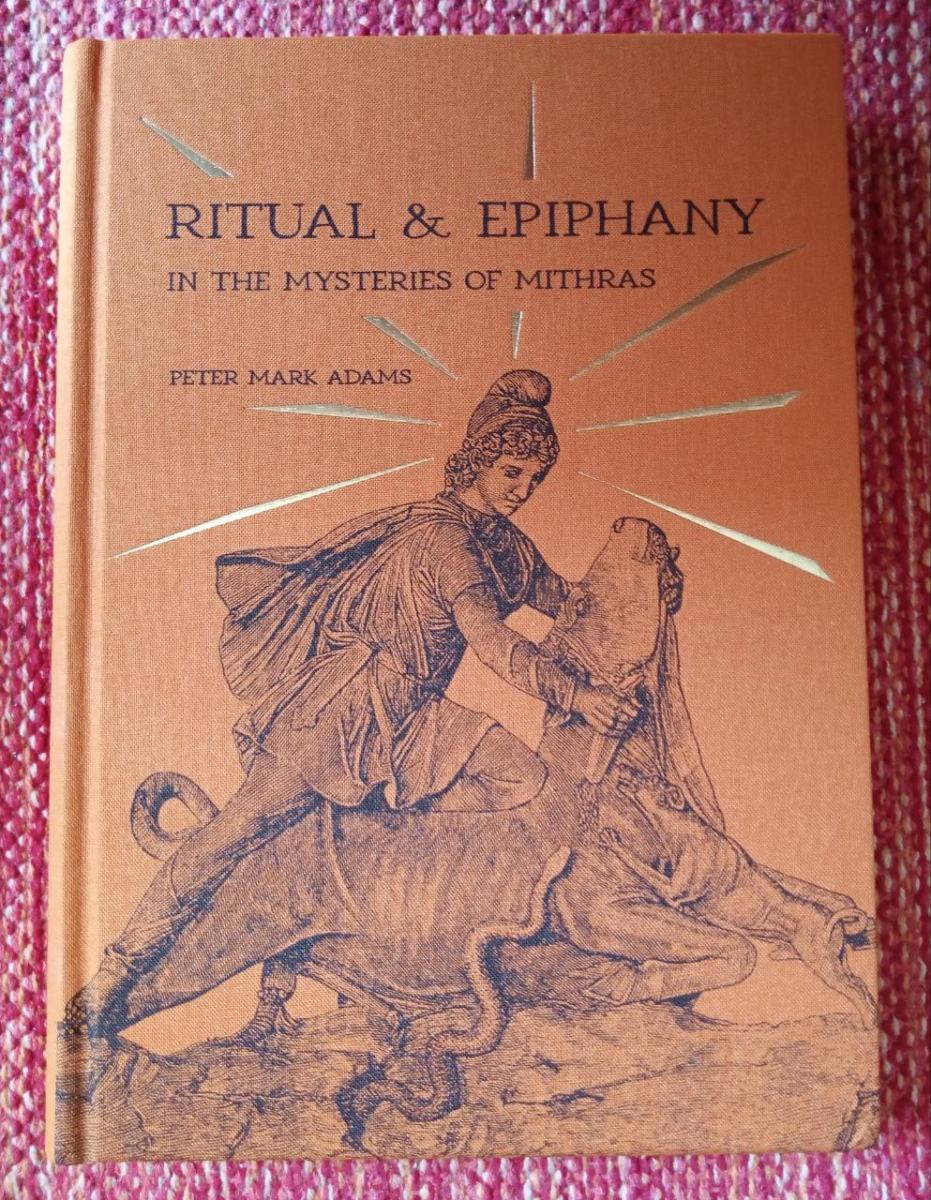
For real scholarship upon Roman Era Mithraism, we warmly recommend ‘Ritual & Epiphany in the Mysteries of Mithras’ by Peter Mark Adams, published in 2025 by Theion Publishing. A Companion volume is underway !
***

Related Articles


Leave a Reply