A Little Sergueï Semionovitch Ouvaroff Sampler – Part 2- Pagan Sages Repurposed: Antiquity Luminaries in Byzantine Greek Orthodox Hymnography-A Study Based on Ouvaroff’s Note on a Lenten Sticheron
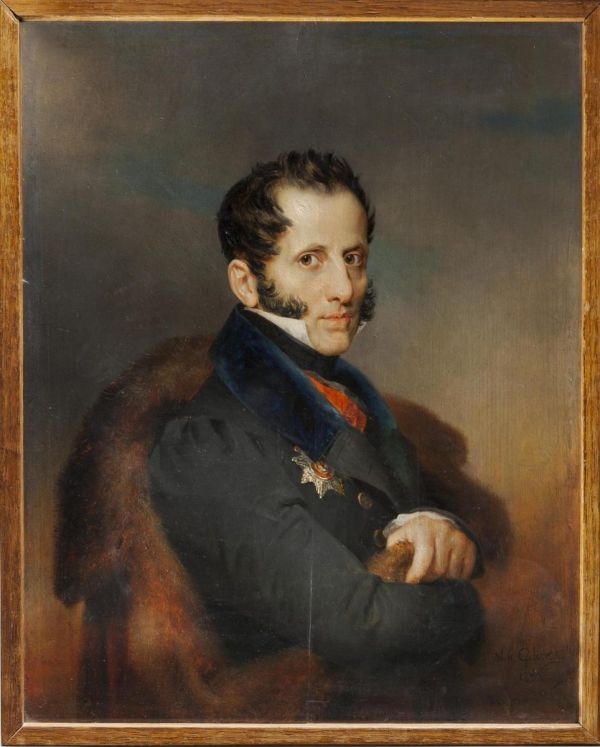
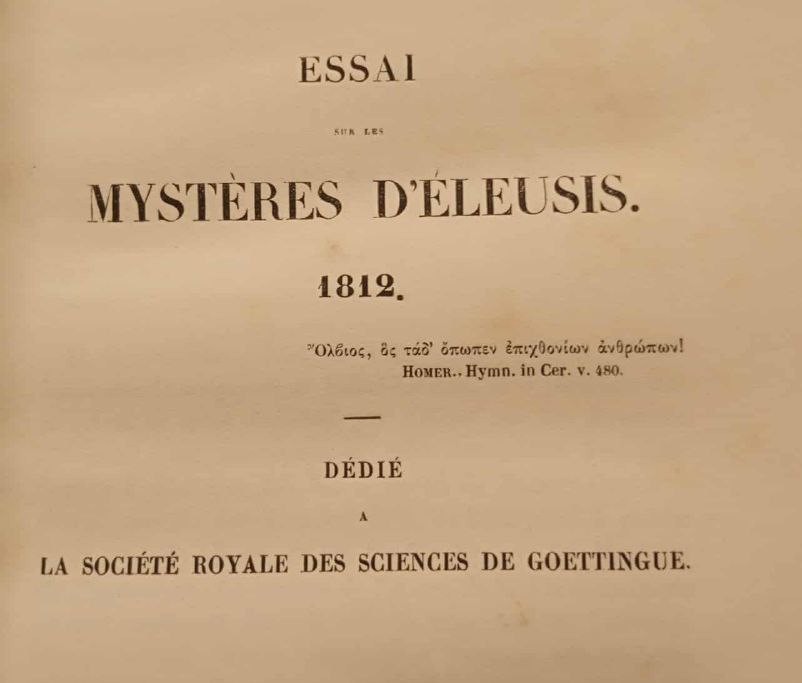
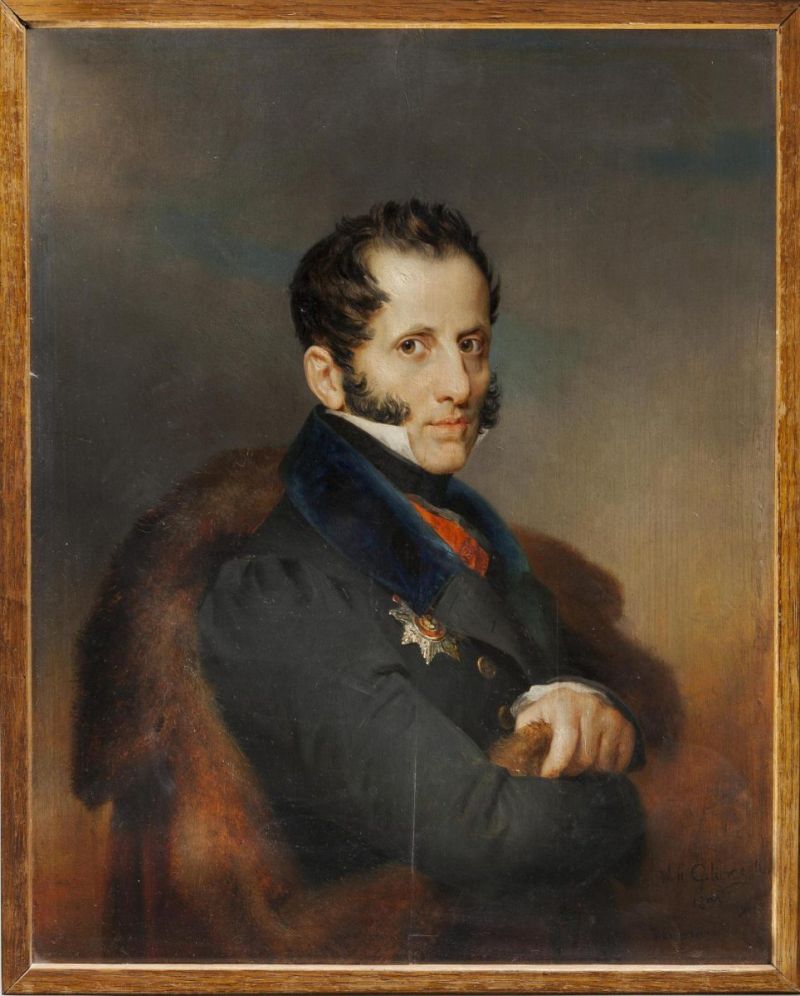
Today’s sharing from the Blue House of Via-HYGEIA is part 2 of our Little Sampler dedicated to the memory of Count Sergueï Semionovitch Ouvaroff (1786–1855). It is a little sleuthing musing in which we followed a note taken from his influential ‘Essay upon the Mysteries of Eleusis’, published in 1812. On pages 170–171, two paragraphs question the presence of ancient classical luminaries’ names—specifically Plato and Pythagoras—in a Christian devotional hymn. This note is not a mere curiosity; it points toward what scholar friend, Sasha Chaitow, insightfully identified as a ‘ritual re-enactment of triumph‘ within the Byzantine liturgical imagination—a staged silencing of pagan wisdom as Christianity’s symbolic victory.
Yet this polemical voice, striking as it is, was never the only one in Byzantium. While hymns such as this one performed a dramatic ‘burial’ of Greek philosophical authority, classical paideia remained deeply embedded in the empire’s secular and court culture, and even within monastic and intellectual circles.
Plato could be denounced in a Lenten hymn and simultaneously studied, copied, and visually honored in monastery manuscripts and iconography; astronomy and astrology, often conflated, continued to be practised by learned clerics and court officials, even amid ecclesiastical criticism.
This hymn, therefore, does not testify to a clean rupture with antiquity, but to one powerful strand of a much more ambivalent and layered conversation—where liturgy could ritually reject what culture continually preserved and renegotiated.
The hymn in question is a sticheron (Greek: στιχηρόν, plural στιχηρά), a short liturgical hymn in the Byzantine rite composed to be sung with psalm verses during the Divine Office. In liturgical hierarchy, stichera are among the oldest and most pervasive forms of Byzantine hymnography, prominent from Late Antiquity onward. Stichera like those presented below were sung during Vespers or Matins, not during the Divine Liturgy, embedding their message within the daily rhythm of prayer.
We have been obsessed by this note for a while and finally “went down the whole rabbit hole” searching for the very hymn Ouvaroff mentions, driven by the question of why this adversarial memory was liturgically preserved. What follows is the result of that search.
Our forthcoming Little Sergueï Semionovitch Ouvaroff Sampler, Part 3, will be excerpted from ‘A Critical Examination of the Fable of Hercules‘ (1818).
**
*
*
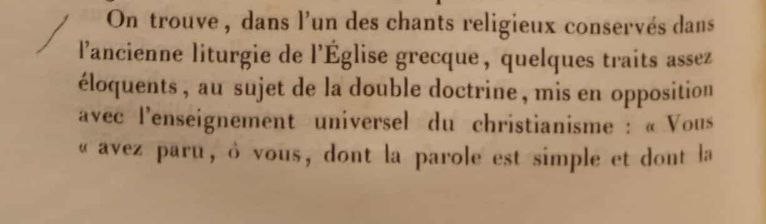
‘…One finds, in one of the religious chants preserved in the ancient liturgy of the Greek Church, several rather eloquent features concerning the doctrine of the double teaching, set in opposition to the universal instruction of Christianity:
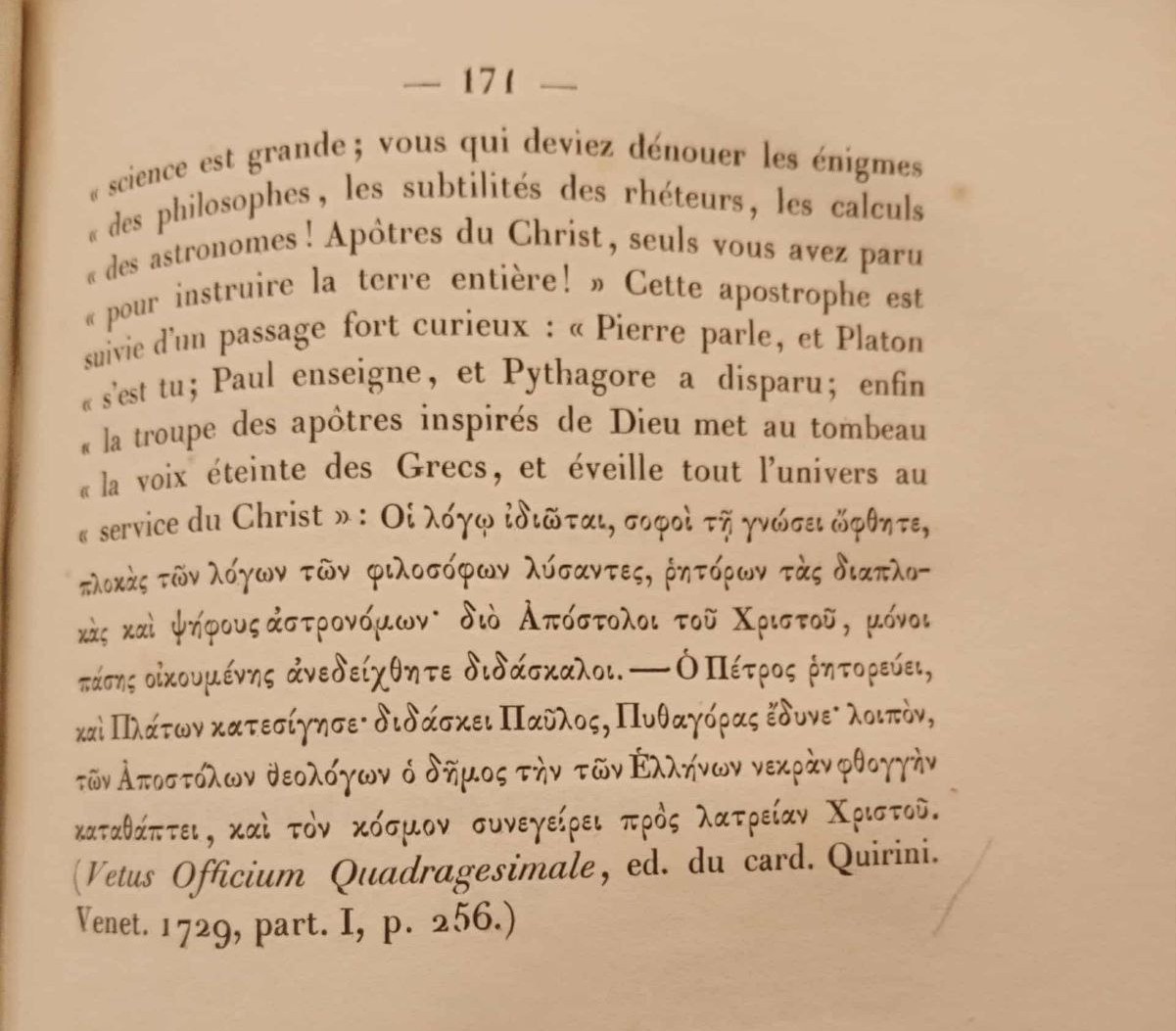
“You have appeared—you, whose word is simple and whose knowledge is great; you who were to unravel the enigmas of the philosophers, the subtleties of the rhetoricians, the calculations of the astronomers! Apostles of Christ, you alone have appeared to instruct the whole earth!”
This apostrophe is followed by a very curious passage:
“Peter speaks, and Plato is silent; Paul teaches, and Pythagoras has disappeared; finally, the company of the apostles inspired by God consigns to the tomb the extinguished voice of the Greeks, and awakens the entire universe to the service of Christ.”
(Vetustissimum Officium Quadragesimale, ed. by Cardinal Quirini, Venice, 1729, part I, p. 256.)’.
*
Pagan Sages Repurposed:
Antiquity Luminaries in Byzantine
Greek Orthodox Hymnography
A Study Based on Ouvaroff’s
Note on a Lenten Sticheron
*
Abstract
A little-known sticheron preserved in older Constantinopolitan Lenten offices explicitly names Plato & Pythagoras, depicting their wisdom as silenced by apostolic proclamation. First highlighted in a note by Count Sergueï Semionovitch Ouvaroff, this hymn provides rare liturgical evidence for how Byzantine Christianity ritually positioned itself against classical philosophy and ancient initiation traditions. This article identifies the hymn, situates it within the Triodion tradition, and contextualizes it alongside other hymnographic references to Homer & Orpheus, demonstrating a consistent strategy of inverted initiation polemic within Byzantine worship.
*
1. The Sticheron from the Lenten Office mentioned by Ouvaroff
(Triodion, old Constantinopolitan recension)
Mentioning Plato & Pythagoras
Source Vetus Officium Quadragesimale, ed. A. M. Quirini, Venice 1729, I, p. 256.
Though unlettered in speech, you were shown to be wise in knowledge, undoing the tangled arguments of the philosophers, the interlacings of the rhetors, and the calculations of the astronomers. Therefore, O Apostles of Christ, you alone were revealed as teachers of the whole inhabited world.
Peter speaks as an orator, and Plato was silenced; Paul teaches, and Pythagoras set and disappeared. Thus the assembly of the God-speaking Apostles buries the dead voice of the Greeks and rouses the world to the worship of Christ.
*
2. Ouvaroff’s Note & the Problem of Identification
Ouvaroff’s brief but significant note draws attention to a Greek Orthodox hymn in which Pythagoras is explicitly named—an exceptional occurrence in liturgical texts. The note cites the Vetus Officium Quadragesimale (Venice, 1729), edited by Angelo Maria Quirini, a collection preserving older Constantinopolitan material not fully incorporated into later standardized Triodia.
Ouvaroff’s question is implicit but crucial: Why does Byzantine hymnography, which generally avoids naming pagan Sages, preserve this explicit polemic? Until recently, the hymn remained largely unidentified in modern liturgical usage due to:
Printed witness: ‘Vetus Officium Quadragesimale‘, ed. A. M. Quirini, Pars Prior, Venice 1729, p. 256.
The hymn is anonymous, consistent with most early Byzantine hymnography.
*
3.2 The Key Passage
The sticheron contrasts the Apostles with pagan authorities and includes the striking lines:
Peter speaks, and Plato is silenced; Paul teaches, and Pythagoras sinks.
The language is not metaphorical in a loose sense but deliberately adversarial, embedding the defeat of ancient wisdom within the liturgical act itself.
*
4. Translation & Philological Observations
The verb used for Pythagoras, ἔδυνε (“set” or “went down”), carries astronomical and symbolic weight. It evokes:
the setting of a star,
the disappearance of a luminary,
and implicitly, the failure of cosmic or mathematical wisdom before revelation.
Likewise, the phrase νεκρὰ φωνὴ τῶν Ἑλλήνων (“the dead voice of the Greeks”) does not refer to Greek language or culture as such, but to pre-Christian philosophical authority.
This language aligns closely with Acts 4:13 (ἀγράμματοι καὶ ἰδιῶται), reinforcing the theme of divine wisdom overturning paideia.
Plato appears more frequently than any other philosopher, always as:the emblem of rational philosophy, silenced by apostolic proclamation. His naming is polemical and ritual, not discursive.
*
5. Other Antiquity Luminaries in Byzantine Hymnography
While Pythagoras is rare, he is not isolated, as he is in good company with Plato, who is more often encountered. Comparable hymnographic material confirms a pattern, not an anomaly. Here are examples of other luminaries also found in the hymns:
5.1 Homer
Homer appears primarily as:
the representative of poetic myth,
a symbol of aesthetic falsehood exposed by Incarnation.
His presence reflects early Christian critiques of μῦθος rather than philosophy proper.
5.2 Orpheus
Orpheus occupies a unique position:
acknowledged as powerful,
but depicted as a failed mystagogue.
Hymns contrast Orpheus’ song—which enchants nature but cannot save—with:
David’s psalmody,
Christ’s descent into death.
Orpheus thus functions as a foil for Christian soteriology, not merely a dismissed pagan.
*
6. Inverted Initiation as a Hymnographic Strategy
The consistent treatment of these figures reveals a deeper structure.
Ancient initiation traditions emphasized:
secrecy,
graded ascent,
illumination through knowledge.
Byzantine hymnography retains the vocabulary of initiation but reverses its meaning:
ascent becomes descent (Incarnation),
secrecy becomes proclamation,
illumination becomes personal (Christ himself),
initiation is abolished in favor of universal access.
The burial of the ‘Greek voice‘ replaces purification of the initiate. Pagan wisdom is not transformed—it is ritually interred.
*
7. Historical and Theological Significance
This hymnographic material preserves something later theology tends to soften: a liturgical memory of a slow ‘rupture, redefinition & repurposing‘ between Christianity and ancient initiatory systems. Notably:
hymnography names Plato, Pythagoras, Homer & Orpheus,
While systematic theology often avoids direct naming, patristic and hymnographic texts still retain polemical references to reinforce Christian identity.
Liturgical poetry thus becomes a privileged witness to Christianity’s self-definition at the ritual level, where polemic is enacted rather than argued.
*
Conclusion
Ouvaroff’s note points to more than a curiosity. The sticheron naming Pythagoras belongs to a coherent hymnographic strategy in which Byzantine Christianity stages the defeat of ancient wisdom within worship itself. Pythagoras, Plato, Homer & Orpheus are not merely rejected; they are ritually repositioned as witnesses to a wisdom they cannot fulfill. This material merits renewed scholarly attention as evidence of how Byzantine liturgy negotiated its relationship with classical antiquity.
*
Appendix
Some Byzantine Hymns Mentioning
Pagan Luminaries Mentioned Above
(Greek Texts & English Translations)
Textual variants exist across manuscripts,
but core theological contrasts (e.g., Orpheus vs. Christ) remain stable.
*
Appendix A
Sticheron contrasting Christ & Orpheus
Resurrectional / Paschal thematic cycle
Status The following text is secure in substance,
though minor verbal variants occur across manuscripts.
Egon Wellesz, ‘A History of Byzantine Music and Hymnography‘ (1961).
Dimitri Conomos, ‘Byzantine Hymnography and Byzantine Chant‘ (1984).
Alexander Lingas, ‘Byzantine Hymnography and the Quest for Orthodox Unity‘ (2020).
*
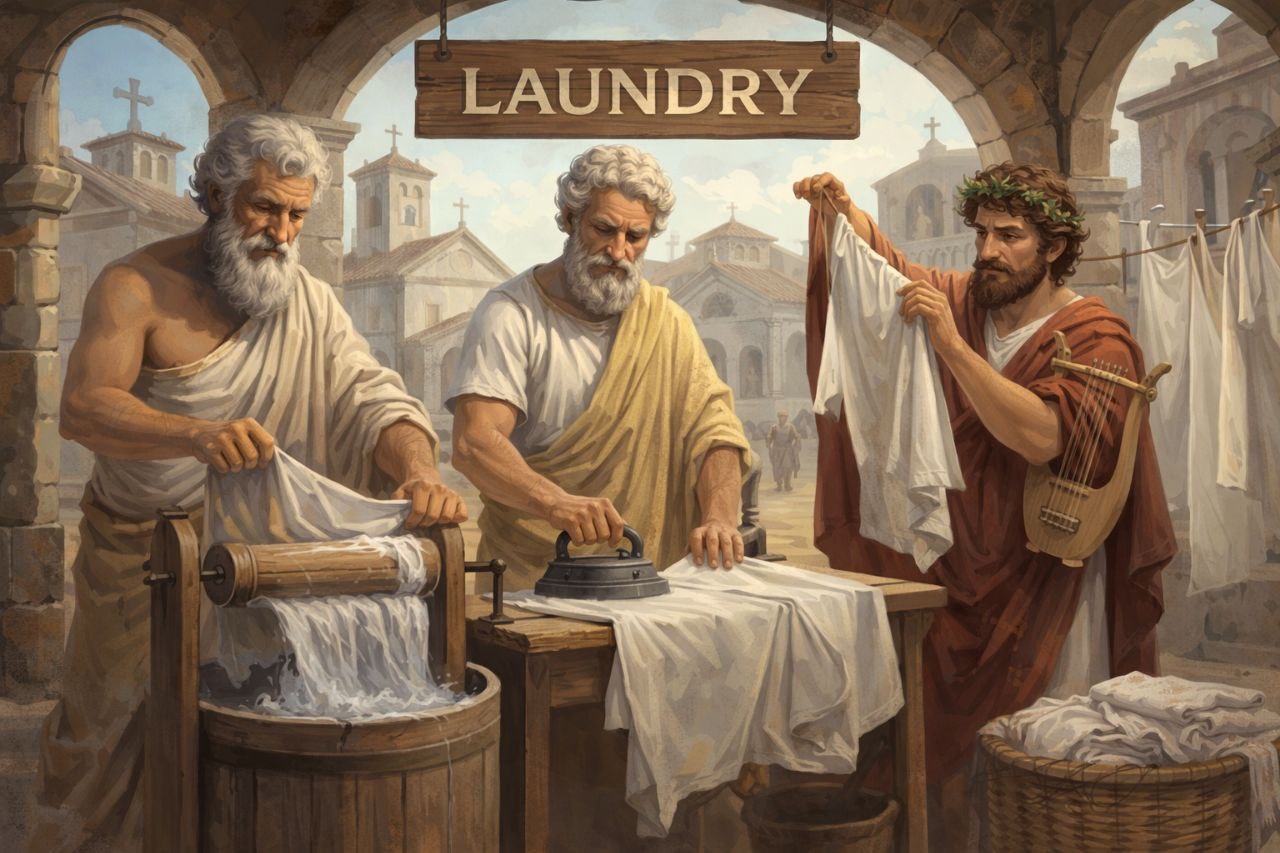
‘Pythagoras, Plato et Orpheus postea tabernam lavatoriam prosperam aperuerunt, dum Homerus cauponam maritimam aperuit.’. Lombricus Modicus, ‘Vita Crapulae et Memoriarum Nubilosarum‘, Opera II, Caput VIII, paragraphus IX.
*
Coming soon:
A Little Sergueï Semionovitch Ouvaroff Sampler – Part 3:
‘A Critical Examination of the Fable of Hercules‘.
*
Note: To explore more about this fascinating subject




Leave a Reply