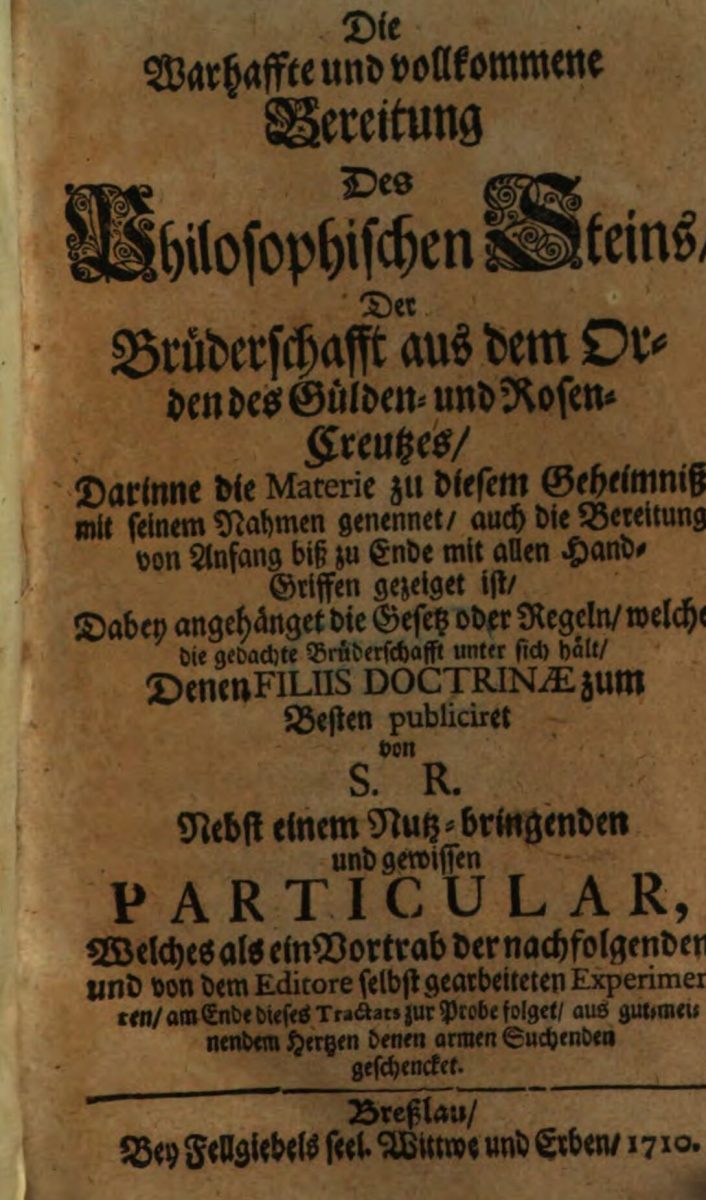
Today’s sharing from the Blue House of Via-HYGEIA, is part 2 of the sampler devoted to the memory of Samuel Richter, a.k.a. Sincerus Renatus. We have excerpted the ‘Capitulatio‘ chapter from his 1710, ‘The true and perfect preparation of the Philosophical Stone of the Brotherhood of the Order of the Golden and Rose Cross‘ published in Breslau.
These statuses and inner rules were translated in full (1-52) by A.E. Waite his 1887, ‘The Real History of the Rosicrucians‘ (from page 274 to 282) and discussed in his 1924, ‘The Brotherhood of the Rosy Cross‘ (from page 402 to 416), and examined by scholars such as Frances A. Yates in her 1972, ‘The Rosicrucian Enlightenment‘(page 224), Roland Edighoffer in his 1994 ‘Les Rose-Croix‘, (from page 103 to 105) and Christopher McIntosh in his 1987 ‘The Rosicrucians: The History, Mythology, and Rituals of an Esoteric Order‘(from page 78 to 80). This is not an exhaustive list, and does not take into account the German, Spanish, Portuguese, Czech, Polish and Italian modern scholarly domains, to name a few, devoted to Rosicrucian History.
Even though, Hermann Fictuld’s Gold und Rosenkreutzer alte System (Old System of the Golden and Rosy Cross. a.k.a GuRC), which had emerged as a Masonic-Rosicrucian synthesis and is not ‘stricto-senso‘ the same order as Samuel Richter’s Brotherhood of the Order of the Golden and Rose Cross, we are eager to salute in passing, the timely publication of the English translation of Bernhard Beyer’s 1925 landmark study of the Order of the Golden and Rosy Cross by Ian Gladwin, Pansopher Press, 2025. A forthcoming companion volume, ‘The Golden and Rosy Cross: Ritual, Revelation, and the Legacy of Rosicrucian Alchemy’ is due some time this year! Rosicrucian scholarship is in good hands!
We wish you now a pleasant (re)discovery of this seminal text encapsulating the perennial spirit of the R+. It is an impressive & demanding witness of an Age in which doing was the mirror of being.
**
A Contextual Introduction
to the ‘Capitulatio’ Chapter
The ‘Capitulatio‘ forms the concluding and highly structured institutional chapter of the alchemical treatise ‘The true and perfect preparation of the Philosophical Stone of the Brotherhood of the Order of the Golden and Rose Cross‘ published in Breslau in 1710 under the nomen mysticum, Sincerus Renatus. While the preceding sections detail the practical and spiritual processes for obtaining the Philosopher’s Stone, this chapter shifts focus to the governance, rituals, and strict code of conduct of the secret Brotherhood of the Golden Cross (Brüderschaft des goldnen Kreuzes).
Presented as the official statutes of the order, the ‘Capitulatio‘ offers a rare, detailed glimpse into the operational secrecy and communal life of an early modern esoteric society. It outlines rules for membership, election of leaders, financial discretion, interaction with the outside world, and the profound oath of silence required of initiates. The procedures for recognition between brothers, the handling of the Stone, and the severe consequences for betrayal highlight the text’s dual nature: it is both a practical document for internal use and a symbolic reinforcement of the alchemical path as a sacred, hidden vocation.
More than mere bylaws, these statutes reflect the core ethos of the work—the fusion of spiritual piety, philosophical pursuit, and absolute secrecy. They serve to protect the ‘greatest temporal good‘ (the Stone) from misuse and to ensure the Brotherhood’s survival in a world perceived as hostile or unready for its secrets.
Thus, the ‘Capitulatio‘ is essential for understanding the complete worldview of the text, where the inner transformation of the alchemist is safeguarded and sustained by a strict outer framework of discipline and fraternal loyalty.
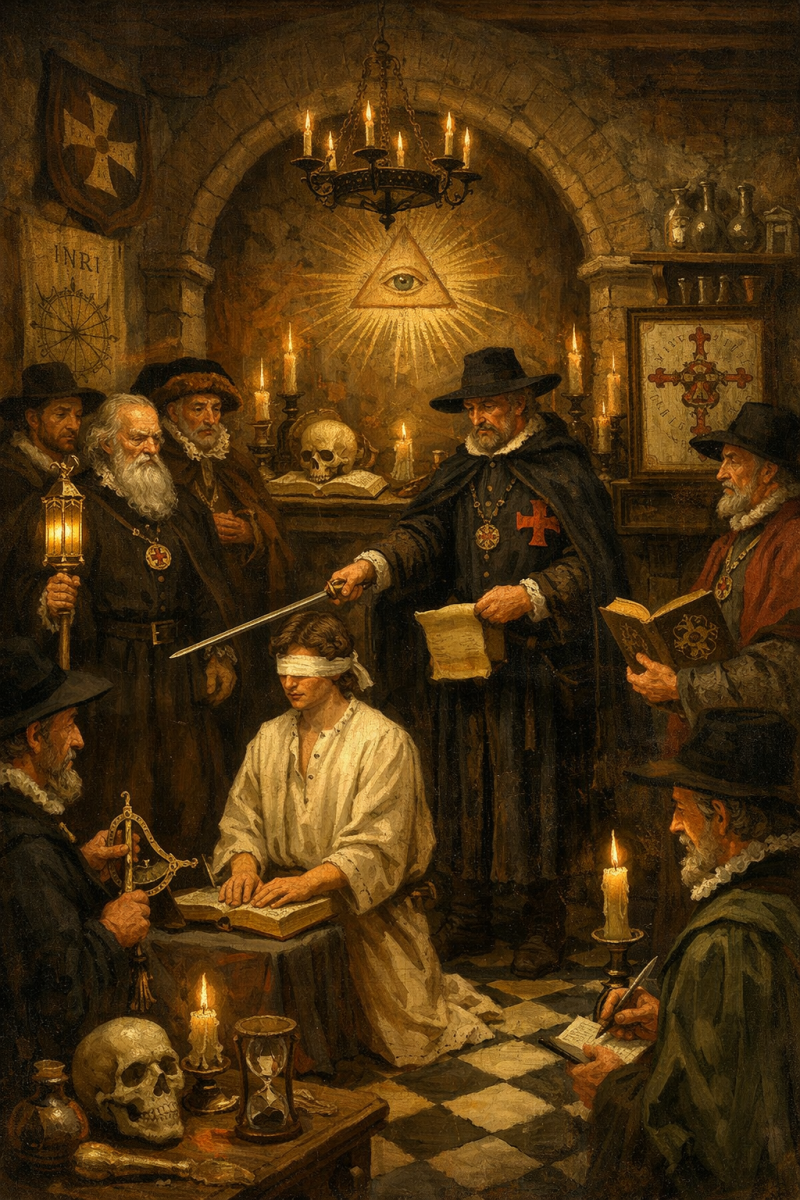
A symbolic interpretation of the ritual initiation described in the ‘Capitulatio’.
‘CAPITULATIO’
Rules or Statutes which the Brotherhood of the Golden Cross
Must Observe After They Have Made Their Profession,
As Is Still Customary Among Us Today
Our inner congregation was in former times established by our old heroes with very strict laws and statutes, through which the new brethren perceived that this alone was the reason why so few of them were found. Therefore, in the year 1624, they caused a vote and resolution to be passed throughout the whole world, to summon the brethren, of whom only nine brothers and two disciples were found. After long and mature deliberation, it was finally resolved that this brotherhood should be increased, so that such a precious jewel—which is the greatest among the temporal goods of this world—might not be lost.
Therefore, the entire assembly unanimously agreed and confirmed to keep the following points:
That the brotherhood, which formerly consisted of 23 brothers, shall be increased to 63 and more.
That, according to the aforementioned resolution, namely in 36 articles, no one shall be accepted on account of his papers, which was done because our former brethren were Evangelical. And because Catholics have been accepted for important reasons, and this has only stirred up hatred among us, it is hereby ordained to prevent this division: that a brother shall not question another about his faith, but allow each to live freely according to the religion he professes. And if someone raises this question, it shall be judged that he is not one of our brethren, since it is a sign that he knows nothing of our constitution.
That, after the decease of the present Imperator (head of the order), another shall be elected, and he shall remain until his end, thereby annulling the old election—namely, every ten years.
That the Imperator shall have the name and homeland of each on his list, as well as the country where they reside, so that they can rescue each other in case of need. Also, the Imperator shall always be chosen according to seniority, namely the eldest brother. For this purpose we have established two houses, namely in Lüneburg & Ancona, where our future assembly shall take place.
We declare that if two or three brethren are together, they cannot elect another brother without the consent of our Imperator. And if someone else should be found, he shall not be recognized as valid in our realm.
That each disciple, or brother, shall obey no lord, even unto death.
That the brethren shall not eat openly with one another, except on Sundays; but if they work together, they may also live together, and eat and drink with one another.
We forbid that, when we wish to elect a brother, the father shall elect his son or brother, unless he has first recognized his nature physically and well tested it. Otherwise, he should rather elect a stranger, so that it cannot be said that the art is hereditary.
Although the brethren are aware of their burning fire, they may nevertheless allow no one, whoever he may be, to make a profession unless they have first carefully practiced with him and experimented in all operations, so that he bears a sincere desire for the art.
When the brethren wish to make an heir, he shall take the oath in a church built according to our pattern. Afterwards, they shall keep him as a disciple for two years, instructing him gradually about the nature of our congregation, and shall secretly inform the Imperator of the disciple’s name and surname, fatherland, profession, and origin, so that at the proper time he may dispatch two or three brethren with the seal to accept and receive him.
When the brethren come together, the customary greeting shall be: Ave Frater, and the other shall answer: Rosæ & Aurea. Then the first shall again say and add: Crucis. And when they have recognized their station, they shall say together: Benedictus Dominus Deus noster, qui dedit nobis signum. Then they shall show one another their seal; and if the name should perhaps be false or suppositious, the seal cannot be falsified. And if it is noticed that such has occurred, one shall immediately flee the city and not return to his lodging.
It is expressly commanded that after the brother has been accepted into our great house, has taken the oath, and has then been dispatched with the Stone (for everything is given to him so that he may live honorably for 60 years), he shall immediately begin to work, but shall first vow to God and promise not to use the magistery to offend Him, to enrich or ruin any kingdom, or to elevate a tyrant out of ambition or for other reasons. Rather, the brother shall show himself zealous above all, and shall say that this divulged magistery is only a deception of men.
It is forbidden that the brethren have any images of our secret printed unless they have first been revised by our congregation, nor to speak with the enigmas or characters of the brethren. Likewise, the opposite—to have nothing printed against the art—is also forbidden.
When the brethren wish to speak of the secret, they shall be alone together in a well-secured place, and then each may open his heart to the other.
That a brother may give the Stone to another, and indeed freely, so that it cannot be said that this thing exists to be sold.
It is forbidden to perform a projection before any person, for whatever reason, unless he has been received among us.
That the brethren should avoid great company and not seek to take a wife. If, however, he should lust after the flesh, he is permitted to have one, but he must live with her philosophically. And if he has a wife and child, he should not let them associate much with young brethren, but with old ones, on account of the consequences, as happened in the year 1661; and he should value the honor of his children as his own.
The brethren are commanded to make no perpetual light or exaltations among men, nor to reveal the condition of souls, nor of men, trees, or plants—as things that are quite natural among us but appear miraculous to the common man—since by this one may easily be discovered, as happened at Rome in 1620. Yet the brethren may, when alone, reveal the secrets of nature.
It is forbidden to give the Stone to a pregnant woman, otherwise she would miscarry prematurely.
It is also forbidden to use the Stone in hunting.
It is forbidden, when one has the Stone, to beg any favor from anyone, whoever it may be.
It is forbidden to make precious stones or pearls larger than the ordinary ones.
It is forbidden (under penalty of confinement in one of our great houses) that anyone should dare to reveal the blessed matter, or any manipulation, congelation, or solution thereof.
Since in some cities one or another of these brethren may occasionally be found, this advice is given them—though not as a command—that on Monday, if one wishes to be recognized, one should go out of the gate facing the sunrise, and in that direction lights-with the appropriate words-if one is of the Golden Cross brotherhood, a red cross or a green cross, if one is of the Red Cross brotherhood; and then he is to remain in that direction until sunrise, paying attention whether another brother might come to also light his cross. Then they may meet one another with the customary greeting, make themselves known, and inform the Imperator thereof.
It is commanded that the Imperator shall change his residence, as well as his name and surname, every ten years, which he may do all the more often if he finds it necessary and good. And for this reason he shall inform the brethren thereof with all possible precaution and secrecy.
It is an express command that each brother, after he has been received by us, shall change his name and surname, and alter his years with the Stone; also, as often as he travels from one kingdom to another, he shall change his name, so that he may not be recognized.
That a brother shall not stay away from his fatherland longer than ten years; and if he travels to other countries, he shall only inform where he goes and what name he has assumed.
Likewise, that one should not work before having first lived a year in the same place, and having well informed himself of both the place and the people, and expressly avoiding ignorant professors.
That none of our brethren shall be so rash as to show his riches—be it gold or silver, or whatever it may be—to anyone, whoever it may be; especially he should beware of religious persons, because in the year 1641 in Austria we lost two of our brethren through such revelation. Therefore, it is also commanded that none, under whatever pretext, shall accept from these persons, nor give any alms.
When the brethren work, they should rather employ old, aged people than young ones, yet also, as much as possible, not let them handle things.
When the brethren wish to renew themselves, they shall not do so until they have traveled through another kingdom; and where they have renewed themselves, they shall stay a long time, or allow themselves to settle, before returning to the place where they were, until they come back into the condition they were in before they renewed themselves. (A Via-Hygeia Note: Regeneration by using ‘Potable gold‘, or similar ‘Life elixir‘ obtained with the Philosopher’s Stone).
When the Brethren eat together, the one who has invited the others should, as far as possible, however in accordance with the conditions mentioned above, seek to teach and instruct them.
That the brethren shall, as often as possible, assemble at Pentecost in our great houses, and communicate to one another the Imperator’s name, as well as his residence, also for other important reasons.
When the brethren travel, they shall not attach themselves to women, nor engage in any conversation with them, but rather associate with one or two good friends. However, if possible, they should know nothing of our Mysterio.
When the brethren wish to depart from a place, they shall tell no one where they are going, nor sell the things they cannot take with them, but say to the master of the house: if they do not return within six weeks, he may give them to the poor.
That the traveling brother shall carry nothing with him, especially in powder form, and that in the first projection, enclosed in a metal box with its metal key.
That the brother shall carry no written instructions of our Magisterio (especially with him); and if he has any, they shall be so numbered (crypted) that no one can understand them.
Brethren who travel and practice in the world shall eat nothing unless the food is first tasted by the one who invited them; and if this cannot well be done, they shall take one grain of our medicine in the projection in the morning before going out; afterwards he may eat without any worry. Yet they shall commit no excess in eating or drinking.
That no brother shall give the Stone in projection to strangers who are sick, except alone to our brethren.
That the brother, when he practices with others and is asked about his station (order level), shall say that he is one of the novices, and pretend ignorance.
It is expressly commanded that, when a Brother wishes to work and has another Brother with him, he shall not allow any outsider to see his work; and if this is not possible, he shall make use of an apprentice, yet even to him he shall not allow everything to be seen.
It is forbidden to admit any married man into our brotherhood; and when one wishes to choose an heir, he should be one who has as little friendship as possible. And if he still has friends, he shall take a special oath that he will not communicate the slightest thing—under the penalty imposed on him by the Imperator.
Brethren who wish to make heirs may, after they have reached the tenth year, accept them as disciples and have them make profession; after he has obtained confirmation from the Käpfer (A Via-Hygeia note: the order’s confirming officer, most of the time the Imperator), whereby he is actually received into the brotherhood, they may first make him their heir.
It is hereby declared that if any of our brethren should, through misfortune, accident, or imprudence, be discovered by a potentate, the brother shall rather surrender to death than reveal the secret. And we, together with our Imperator, hereby pledge that if we learn of such, we will pledge his very redemption. But if misfortune would have it that the aforementioned potentate is satisfied, and the brother should surrender to death for the sake of the secret, we declare him a martyr, and promise to receive one of his bloodline relatives in his place, to help his friends, and to erect a mausoleum with enigmatic (Aenigmatischen) inscriptions.
It is expressly commanded that when a new brother is made, the usual solemnity shall take place only in a church built according to our pattern, in the presence of the six required brethren, who have been written to beforehand so as to appear at the proper time. The new brother, however, shall first be instructed for three months, provided with all necessities, and then given the sign of peace—namely, an olive branch and three kisses—saying: Dear brother! We enjoin silence upon you. When this is done, the brother kneels before the Imperator in ‘pontifical’ regalia (A Via-Hyheia note: comes from ‘pontifex maximus‘, in modern days we would say hierophant), according to the manner of our ceremonies, with two advocates at his sides—namely, on the right side his Magister, and on the left another brother—and speaks thus:
I, N.N., promise to the only and living God, the Secretum which has been communicated to me (here he raises two fingers), to reveal to no single human being, but to keep it sealed with the natural seal within me for the time of my life; and also, of the heir, as much as shall be known to me through written revelation from you, or taught by you, not to reveal the least thing, nor to disclose anything of the state of our brotherhood—neither the place, nor the name and surname of the Imperator—nor to show the Stone to anyone; and for this I promise to keep a strict silence, even at the risk of my life, so help me God and His Word!
Then his master comes and cuts seven hairs from his head, puts them into seven sealed papers, writes the brother’s name and surname thereon, and gives them to the Imperator for safekeeping.
The next day the brethren go to the new brother’s quarters and eat together, without speaking a word or greeting one another. But when they leave, they shall say: Frater Aura vel Rosæ, Deus sit tecum cum perpetuo silentio, Deo promissio & nostræ Sanctæ congregationi (Brother of the Aura (radiant emanation) or of the Rose, may God be with you in perpetual silence, by a promise to God and to our Holy Congregation); and they shall do this for three days in succession.
46. When the three days are past, they shall, according to their discretion and intention, distribute some gifts to the poor.
47. They may remain together in one of our houses for two months, but no longer.
48. During this time the brethren may be free with the new brother, and may instruct and teach him as much as possible.
49. The brethren are commanded not to make more than three exaltations, because they are in our great house, where there are certain operations which belong only to our Magisterio, to draw more light in this secret, and so that all may remain secret.
50. That when the brethren associate with one another, they shall call one another by the name given to them on the day of their Profession.
51. But among strangers they shall let themselves be called by their true name and surname.
52. The new brother shall always be given the name of the last deceased brother. And thus the aforementioned rules shall be strictly observed by all brethren who have been received among us and have taken the oath in the name of our Lord Jesus Christ.
Then, after the oath has been taken,
it is collectively said:
We, gathered in the name of Jesus Christ, our Savior, in this blessed congregation of the Golden Cross, humbly beseech the living, ineffable, and almighty God, who exists from eternity, that through His infinite goodness and mercy, and with His almighty hand, He will open the eyes of wisdom and understanding of our brethren, and grant them the silentium or silence, so that they may never reveal anything, whatever it may be, from our holy congregation, or secreto secretorum, to men not akin to the art.
We also pray that He will not permit this light, or truth of this holy knowledge, to fall into the hands of the world-sinners, but only to those upon whom the gifts of the Holy Spirit are bestowed, and who love God above all and bear compassion for their neighbor, to whom alone these great gifts are given freely by the Most High.
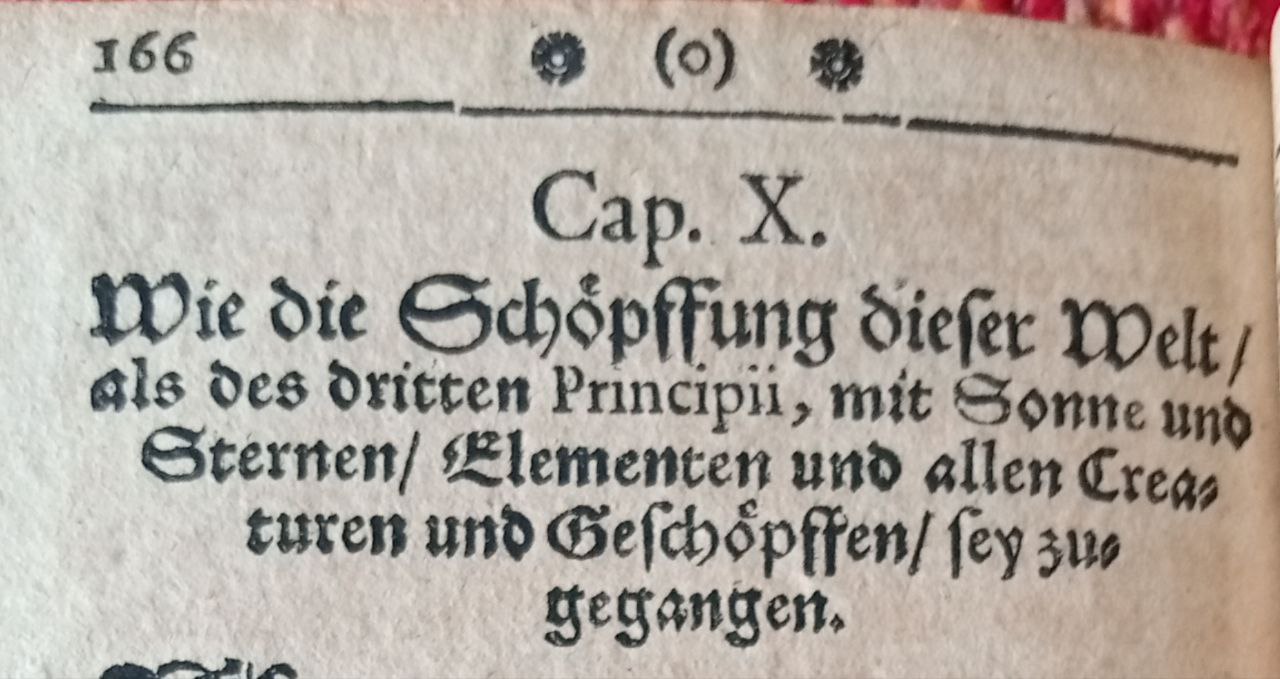
A Little Samuel Richter (Sincerus Renatus) Sampler – Part 3: From Chapter X of the ‘Theo-philosophia theoretico-practica’:–How the creation of this world, as the third principle, with sun and stars, elements, and all creatures, came to pass.
***
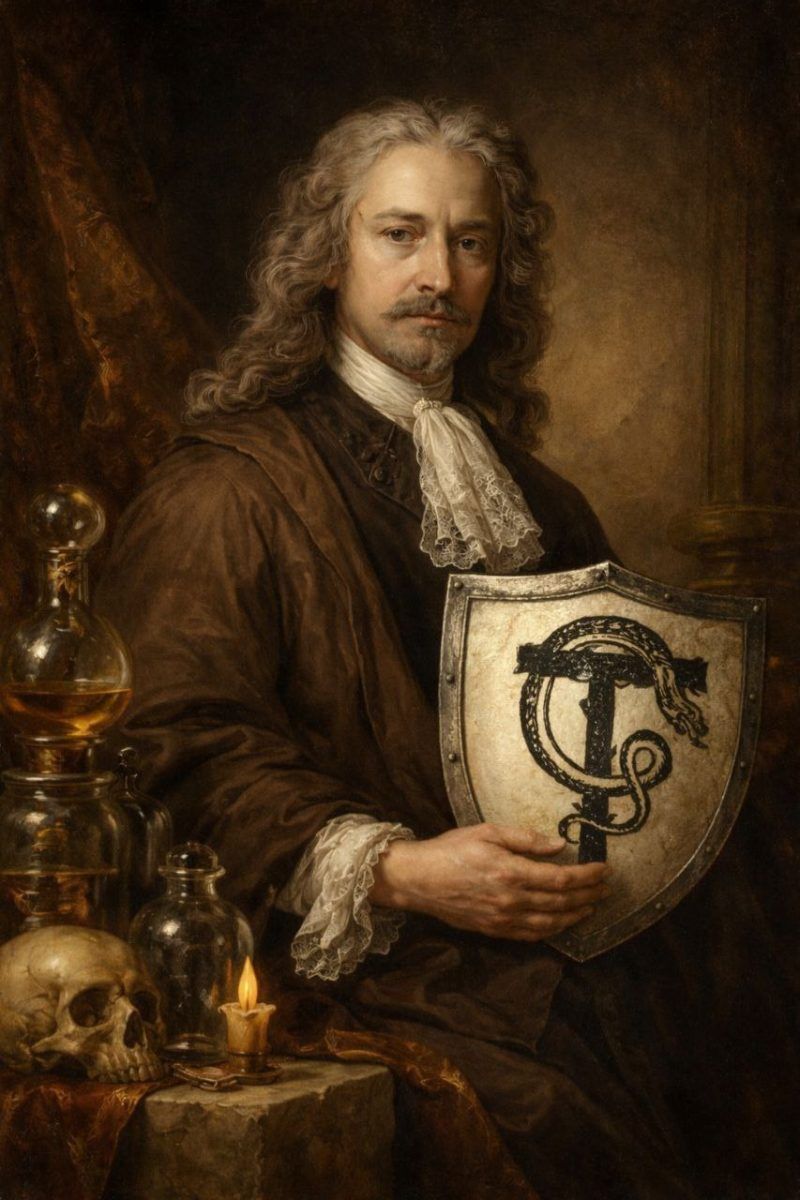
More about Samuel Richter: https://de.wikipedia.org/wiki/Samuel_Richter



 ***
***


Leave a Reply