in ‘Storia d’Etiopia‘ by Carlo Conti Rossini. Bergamo.
Picture at Wikimedia Commons.
*
Today’s sharing from the Blue House of Via-HYGEIA are the two Ethiopian Apocrypha, the Prayer of Mary at Bartos, and the Prayer of Mary at Golgotha, translated from Ethiopian and Arabic by René Basset, and published in serial form, with an introduction and notes, in volume 2 of the periodical La Haute Science, Paris, 1894. English translation of the French article by Via-Hygeia.
Basset’s Introduction establishes these prayers as a unique syncretic blend, belonging “at least as much to Gnosticism as to Christianity.” He traces their probable origins in Coptic magical traditions, identifies the famous SATOR AREPO TENET OPERA ROTAS palindrome embedded in both texts, and corrects the geographical confusion of Bartos (not Beirut, but the land of the Parthians). His manuscript work collates Ethiopic codices from the Bibliothèque nationale and establishes the first critical framework for these apocrypha.
The Prayer at Bartos presents the Virgin Mary pronouncing a secret prayer taught her by Christ on the cross, in order to deliver the Apostle Matthias from iron bonds in the city of Bartos. The text unfolds as a powerful ritual conjuration: Mary adjures Michael, Gabriel, and the celestial hierarchies; invokes the sun, moon, and stars by their secret names; commands the twenty-four elders and the four living creatures; and seals the efficacy of water and oil for healing and exorcism. The iron melts, the dead rise, demons flee, and Christ himself descends to confirm the prayer’s perpetual power for all who bear it.
The Prayer at Golgotha, pronounced by Mary on the tomb-mountain of her Son, similarly mobilizes the entire cosmic order. Mary implores Christ through the memory of her own body—the womb, the breasts, the back that carried him—through the topography of salvation (Bethlehem, Tabor, Zion, the Mount of Olives), and through the angelic hosts. The response is a theophany of terrifying glory: ten thousand myriads of angels, Christ in fire and light, and a covenantal promise extending to every future devotee who builds a church, clothes the naked, or carries this prayer as shield and remedy.
The Appendix presents the Arabic version of the Prayer at Bartos, attributed to St. Cyril of Jerusalem—a frame narrative of marvelous economy. Mary arrives at Bartos on a cloud of light, heals a possessed boy, melts every iron instrument in the city (from prison bars to razors, from shovels to dog chains), and converts governor, king, and populace. The episode of the resurrected birds flying from the cooking pots, and the idols speaking from their ashes, preserves veritable traits of popular tale-craft, while the final liturgical procession and the Virgin’s disappearance on a luminous cloud close the drama in triumph.
**
A short biographical note about René Basset
René Basset (1855–1924) was a preeminent French Orientalist and philologist who served as the founding director of the École supérieure des lettres d’Alger. A master of Ge’ez and Amharic, he played a pivotal role in introducing Ethiopic manuscripts to the Western academic world through his critical editions for the Corpus Scriptorum Christianorum Orientalium. Renowned for his meticulous work on apocryphal literature, Islamic traditions, and North African folklore, Basset’s serialization of the Ethiopian Apocrypha (1893–1896) remains foundational scholarship. It is distinguished by his prescient recognition of the syncretic blend of Gnostic, Coptic, and Christian elements within these ancient prayers, establishing a philological framework that continues to inform modern ritual studies.
*
Abba Pentalewon Monastery in Aksum, Tigray Region, Ethiopia. Picture by A. Savin, at Wikimedia Commons.
René Basset’s Introduction to the Two Prayers
The two pieces known as the Prayer of the Virgin to Bartos and the Prayer of the Virgin at Golgotha, translated here for the first time from unpublished texts, belong at least as much to Gnosticism as to Christianity in their inspiration, although orthodox doctrines on the unity of God, the Trinity, the Incarnation, the Redemption, etc., are frequently recalled in them. Alongside these dogmas, the influence of the stars and celestial powers, which one can master by invoking them, and diseases attributed without exception to evil spirits that can be conjured away by evocations and magical formulas—all these beliefs connect, incontestably, with what we know of the state of mind existing among the followers of Egyptian gnosis, for whom Gnosticism had been, in its practices and undoubtedly also in its dogmas, merely an evolution of the ancient Egyptian religion.
This mixture of orthodoxy and heterodoxy should not surprise us. Many other examples exist. “The sacraments were largely their creation (the Gnostics); their anointings, especially on the sickbed of the dying, produced a great impression. Holy Chrism, confirmation (initially an integral part of baptism), the attribution of supernatural power to the sign of the cross, several other elements of Christian mysticism come from them. Young and active, the Gnostics wrote much, boldly launching into the apocryphal. Their books, initially discredited, eventually entered the orthodox family. The Church soon accepted what it had first cursed. A host of beliefs, feasts, symbols of Gnostic origin thus became Catholic beliefs, feasts, symbols. Mary, mother of Jesus, in particular, with whom the orthodox Church was very little concerned, owed to these innovators the first developments of her almost divine cult.” (1)
The first of these texts has reached us in a double version, in Arabic and in Ethiopic. Both differ absolutely, except for the main premise: the apostle Matthias is about to perish at Bartos; the Virgin delivers him through a prayer that melts iron into water, and the miracle converts the inhabitants. But while the Ethiopic version, limiting itself to this account, devotes long developments to prayers and magical conjurations, the Arabic version, a translation of which will be found in the appendix, is filled with fantastic details, some of which are veritable traits of popular tales: the governor’s embarrassment when all iron instruments in the city have liquefied, or that of the cooks when, the Virgin having pronounced the formula that raises the dead, the birds they were preparing for her dinner return to life and fly away from the pots. This latter version has not preserved the long list of angels and powers that make the Ethiopic text an important contribution to the study of angelology and demonology, and classify it in the category of magical prayers (Prayer of Golgotha, Prayer of Cyprian, mystery of Baharia-Mikâel, etc.) where survive the formulas and sometimes the theogony of vanished religions.
The Ethiopic version was first noted by Ludolf (2) who gave very short excerpts from manuscripts in Paris, Altdorf, and Vienna: he concludes by supporting the opinion of his Ethiopian teacher, Gregory: “Such little books were once brought from Egypt (namely, the mother of superstitions) and were copied and read by the ignorant populace.”
Ludolf transcribed Bartos, the scene of the miracle, as Berytus (now Beirut), and this identification was preserved by Messrs. Dillmann and Zotenberg in the catalogs of Ethiopian manuscripts where they noted this apocryphon. But M. Guidi has shown (3) that this is a mistake analogous to that encountered in the Arabic version (and also in the Ethiopic version) of the apocryphal acts of St. Andrew. The legend places the scene of the latter’s martyrdom among the Parthians (Πάρθοι, Parthoi). This word, passing from Greek into Arabic (and doubtless also from Greek into Coptic), becomes Bart’os, in Ethiopic Bartos. The suppression of a diacritical point in some Arabic texts even substituted an n for the t, which led A. Mai and M. de Slane to read Barnous or Barnos.
The acts, both apocryphal and authentic, of St. Matthias (4) make no mention of a mission of this saint in the land of the Parthians. Here we are faced with a confusion of names between Matthew and Matthias, a confusion that already exists in the Greek Menaia, as recognized by Lipsius. (5) Matthew, as in the Arabic version of the Prayer of Bartos, is exposed to the danger of being devoured by cannibals, in an apocryphal account entitled Πράξις Ματθαίου καὶ Ἀνδρέου ἐν τῇ πόλει τῶν ἀνθρωποφάγων (Praxis Matthaiou kai Andreou en tē polei tōn anthrōphagōn – Acts of Matthew and Andrew in the City of the Cannibals). (6)He arrives in the city of the cannibals who blind strangers, reduce them to the level of beasts by a drink, and eat them after thirty days. These last two traits recall one of the episodes of the voyages of Sindbad the Sailor. Matthew is delivered by St. Andrew (not by the Virgin) and taken up on a cloud.
These apocryphal acts date, according to Gutschmidt (loc. cit. p. 378), from the 6th century. The framework of the Ethiopic version (in its original language) and the entire Arabic version are therefore later. As for the very core of the former, comprising the magical prayers, it seems earlier, taking into account possible interpolations. The primitive redaction appears to have been made in Coptic or perhaps Greek; but it is from a Coptic text that the Ethiopic version derives. We find proof of this in the transcription of a Latin palindrome phrase that strangely appears in the Prayer of Bartos and in the Prayer of Golgotha and is missing in the Arabic version of the former. In the latter, the words composing this phrase are given as the names of the nails; in the second, as the very names of Jesus Christ. It is the well-known phrase:
SATOR AREPO TENET OPERA ROTAS
which can be read backwards. In the Ethiopic text, it is rendered thus:
SADOR ARADOR DANAT ADERA RODAS
Examining the transcription errors, we see that the confusion of D and P (Arador = Arepo, Adera = Opera) could only occur in Ethiopic where the two letters have a similar form; but also that the transcription of T by D (Sador = Sator, Danat = Tenet; Rodas = Rotas) can only be explained by Coptic. It is undoubtedly through a Greek intermediary that the Latin phrase passed into the latter language. Indeed, if Greek or Eastern expressions are found in Latin (cf. Kyrie eleison, agios o theos, alleluia, Deus Sabaoth etc.), the opposite fact is not rare. A Byzantine formula, published by M. Vassiliev, (7) presents the following phrases: δόμινι τέσσομ Κρίστε (domini tessom Kriste – Domine Jesum Christe); λίππα δι τστομορ βόσ πεμμέττιμπλα τάβσπους ἦλυποῦ ζα (lippa di tstomor bos pemmettimpla tabsous ēlypou za – liberate istum morbum per matrem (?) beatam virtuosam (?) e(t) gloriosa(m) etc.). The phrase cited in the Prayers of Bartos and Golgotha was, moreover, very widespread, as it is still invoked today against eye diseases in the popular beliefs of the Wends on the banks of the Spree. (8)It doubtless came to them from Germany, where it is still used to put to flight witches present at a gathering. It is written on a slip of paper as follows:
SATOR + Kreuz Jesu Christi mild Epos AREPO + Kreuz Jesu Christi mild Mesipos TENET + Kreuz Jesu Christi mild Habenepos OPERA ROTAS
and this slip is placed in a leather sachet with male fern root and half an ounce of the plant called moto. (9)Ignorance of the language in which these cabalistic formulas are written only increased the confidence placed in them, especially when they could be read backwards, (10)like certain verses, works of Latin decadence: Signa, te signa, temere me tangis et angis.Roma tibi subito motibus ibit amorMitis ero, retine leniter ore sitim. (11)
In summary, as regards the Ethiopic version of the Prayer of Bartos, it is probable that it consists of two elements: a core of conjurations, borrowed at least as much from Gnosticism as from Christianity, framed by the summary of a legend later than the 6th century, a legend that soon became popular in Ethiopia, as shown by these verses quoted by Ludolf:
Tire me from the bonds of error, O mother of Christ,From the strong chains and terrible links,As you today delivered your servant Matthias.
As seen from the quotations made by Ludolf and Dillmann, the Prayer of Bartos exists in two unpublished works which I could not consult: the Salota Régelt and the Mash’afa qédr. The latter is a “service read for a renegade returning to the Christian church, or after sexual relations between a Christian and a Muslim… This service is accompanied by a sprinkling of water and oil.” (12)
As for the Arabic version, it comprises only the highly developed framework: it was undoubtedly made in Egypt as M. Guidi suggests in the notice he devoted to it based on manuscript 170, f. 211 of the Vatican Library.
For the Ethiopic, I used two manuscripts from the National Library of Paris, numbered 56 and 57. (13) Although the first is from the 15th century and earlier than the second, its text is far less correct: moreover, it has a lacuna of one folio after f° 2: I therefore followed mainly n° 57, which I supplemented at the end with n° 56. Not to mention those indicated by Ludolf, other manuscripts of the Prayer of Bartos exist: at the National Library (Zotenberg n° 95,3), at the British Museum (Dillmann, 78,6 — Wright, n° 148), in M. d’Abbadie’s collection (n° 153), at the Royal Library of Berlin (Dillmann n° 73,2 and 74,1), and at Tübingen (Zeitschrift für die Kunde des Morgenlandes, t. V, p. 183).
The Arabic version attributes the Prayer of Bartos to St. Cyril of Jerusalem, a mention I have found nowhere; (14) nothing in the works of this bishop justifies this attribution. Indeed, it is unlikely that it rests on this passage from the Catecheses (xvi, 19): “Often the demon that chains of iron cannot hold is tamed by the power of prayer and the virtue of the Holy Spirit.” I can only explain it by the fact that in several Arabic manuscripts, the Prayer of Bartos follows a Panegyric of the Virgin attributed to St. Cyril: the two works will have been, by a fairly explicable confusion, placed under the name of a single author. I translated the text from n° 73, Arabic supplement of the National Library. M. J. Perruchon was kind enough to copy and collate for me this manuscript, which is quite difficult to read and very incorrect in style, and I am happy to express my thanks to him here. The National Library possesses two other manuscripts of this text (old Arabic fonds 143; Arabic Supplement 74.)
The Prayer of Golgotha, of which there is, to my knowledge, no version in other Oriental literatures, appears to have passed into Ethiopia at the same time as that of Bartos, i.e., between the 8th and 14th centuries, closer to the former date than the latter, if it was made, which is probable, from a Coptic original. It was supposedly pronounced, according to our text, on the 21st of Sané (variants: the 20th, 24th, 25th). But the Ethiopian Synaxary makes no mention of this event on any of these dates, nor does the Coptic synaxary (month of Baounah). In composition, this prayer closely resembles what forms the core of that of Bartos, i.e., it contains a series of formulas against all sorts of evils, formulas whose efficacy is guaranteed by Jesus Christ in person. The scene takes place on Golgotha, as in other apocrypha relating to Mary that I plan to translate later from unpublished Ethiopian texts: the Transmission of the Virgin(15) and the Vision of Mary dated either the 16th or 27th of Magabit. According to some manuscripts, the Prayer of Golgotha is attributed to Prochorus, one of the seven deacons of the primitive church, (16)the same one who wrote the apocryphal Acts of St. John the Evangelist. Just as the Transmigration of the Virgin and the Vision of Mary are attributed to the latter, we see the relationship between these various compositions.
My translation was made from nos. 58 and 68, Ethiopian fonds of the National Library: they present some variants between them, of which I have indicated only the most important. Besides these manuscripts, there exist at the National Library (Zotenberg n° 59), at the British Museum (Dillmann, n° 53 and 59; Wright, n° 85, 136, 165), in M. d’Abbadie’s collection (nos. 26, 142, 171, 214), and at the Royal Library of Berlin (Dillmann, n° 72).
*
Notes to the Introduction
Renan, Marc Aurèle, Paris, 1884, in-8°, ch. VIII, p. 144 and following. Cf. also Maury, La magie et l’astrologie dans l’antiquité et au moyen âge, Paris, 1877, in-18, ch. VI.
Ad suam historiam Commentarius, Francfort-sur-le-Mein, 1691, in-fol., L. III, ch. IV, n° XXXV, p. 349-351; these passages were reproduced in the Dictionnaire des apocryphes of Migne, Paris, in-4°, t. II, col. 803-804.
Gli atti apocrifi degli apostoli in testi copti, arabi ed etiopici, Rome, 1889, in-8°, p. 6; Note miscellanee (Giornale della Società asiatica italiana, t. III, 1889), p. 173-176.
Even those whose Coptic fragments were published by Father Georgi, De miraculis sancti Coluthi, Rome, 1793, in-4°, p. …
Die apokryphen Apostelgeschichten und Apostellegenden, t. II, 3° partie, Brunswick, 1884, in-8°, p. 135-136. Cf. also Gutschmidt, Die Königsnamen in den apokryphen Apostelgeschichten (Kleinere Schriften, t. II, Leipzig, 1890, in-8°).
Published by Thilo: Acta SS. Apostolorum Andreae et Matthiae et commentatio de eorum origine, Halle, 1846, in-4°. A Syriac redaction of this legend was published with an English translation by Wright: Apocryphal Acts of the Apostles, London, 1871, 2 vol., in-8°. There is also an Ethiopic version. In the 4th and 5th centuries, St. Ambrose and St. Paulinus of Nola already said that St. Matthew died among the Parthians. On this part of the apocryphal legend of the evangelist, cf. Lipsius, Die apokryphen Apostelgeschichten, t. II, 3° partie, p. 134-135.
Anecdota graeco-byzantina, I, Moscow, 1892, in-8°, p. 136.
W. von Schulenburg, Wendische Volkssagen und Gebräuche aus dem Spreewald, Leipzig, 1880, in-12, p. 318, where it is given in this form: SATUR AREP TENET OPERA.
Tuchmann, La Fascination, ap. Mélusine, t. IV, n° 11, November 1888, col. 352-353, and the authors cited in note. Cf. on the unlikely interpretation of this formula as a so-called solemn Roman chant, Heim, Incantamenta magica graeca latina, Leipzig, 1892, in-8°, § 177, p. 530. He recalls this recommendation in a monastic rule: SATOR AREPO TENET ET OPERAre RatiO TUA Sit.
Cf. Kopp, Beiträge zur griechischen Excerptenliteratur, and Schwartz, Die Zauber des rückwärts Singens und Sprechens, cited by Heim, op. laud., p. 530.
There are also some in French, witness this one: L’aîné des uns jamais n’use de…
D’Abbadie, Catalogue raisonné des manuscrits éthiopiens, Paris, 1859, in-4°, n° 211, p. 113; Dillmann, Lexicon linguae aethiopicae, Leipzig, 1865, in-4°, col. VIII et 465.
Cf. the description in Zotenberg, Catalogue des manuscrits éthiopiens de la Bibliothèque Nationale, Paris, 1877, in-4°.
There is no question of it in the chapter that Abbé Delacroix devoted to the works attributed to this saint (S. Cyrille de Jérusalem, Paris, 1863).
The Arabic text was published with a Latin translation by Enger: De transitu beatæ Mariæ Virginis liber, Elberfeld, 1854, in-8°; and translated into French (from the Latin version): Migne, Dictionnaire des Apocryphes, t. II, p. 503-532.
Cf. on Prochorus, Lipsius, Die apokryphen Apostelgeschichten, t. I.
*
‘Assumption of the Virgin‘, Coptic Christian manuscript, Ethiopia, Amhara people, miniature c. 1960- Chazen Museum of Art. Picture at Wikimedia Commons.
1. PRAYER AT BARTOS
In the name of the Father, the Son, and the Holy Spirit, one God, this is the prayer of Our Lady Mary: she pronounced it in the city of Bartos: she undid all bonds and delivered Matthias (Mátyás) the disciple: all the inhabitants became believers. May her blessing and her prayer be with us. Amen.
Our Lord, our God, our Savior, Jesus Christ—glory to him—said to his pure apostles (1), to his holy and chosen disciples concerning this prayer: “There is no one who knows it among the angels of heaven, their leaders, the Cherubim (Kiroubêl), the Seraphim (Sourâfêl), nor any among the celestial hosts: only the Father, the Son, the Holy Spirit, one God, knows it (2): My name is Alpha (alfa), the first of the letters; that of my father is Ala, which is its completion (3); that of the Holy Spirit is Arádyál (4). We form only one divinity, one will, one essence. I will teach you [(5), Mary, my mother, to possess this important thing and to implore through this prayer.]”
When Our Lady Mary heard these words from her beloved Son, she stood on her feet and begged Our Lord Jesus Christ to save the apostle Matthias from captivity and to unloose at that moment all the fetters of the city. She turned towards the East, looked up towards the heavens, towards her beloved Son, and began to recite this prayer: “Thus I implore you, my Lord, my God, my Son, my Beloved, my King, Jesus Christ: I am your mother Mary, I am Mârihâm, I am the mother of life for the whole world; I implore you today and I ask you to hear my prayer and to send me the army of angels, Seraphim, Cherubim, all the heavenly host to accomplish my plan, my wish, and all the good deeds I desire: for you are my help and my hope; in you I put my trust, O my beloved Son (6), so that today the stones may be broken and the chains melted, so that closed doors may open quickly, so that the powers of darkness may withdraw and all their power disappear from any place where this prayer is recited. I open my mouth and say: Hail to the excellent Father who hailed me through the chief angel Gabriel (Gabrêl) the pure; hail to the throne of the cherubim upon which sits the Ancient of Days (Daniel, vii, 11); hail to the eternal light which is upon his head. Hail to the powerful names, the sixty names of the excellent Father: They are: Alfa (var.-Alfàèl), Alfâ, Alfâ, Alfâ, Alfa, Alfâ, Alfa (7). Iyâèl, Iyâèl, Iyâèl, Iyâèl, Iyâèl, Iyâèl, Iyâèl, Iyâèl. Hidâèl, Hidâèl, Hidâèl, Hidàèl, Hidâèl, Hidàèl, Hidâèl, Yodâèl, Yodâèl, Yodàèl, Yodâèl, Yodàèl, Yodâèl, Ournàèl, Ournâèl, Ournàèl, Ournâèl, Ournâèl, Ournâèl, Ournâèl. Hernàèl, Hernâèl, Hernâèl, Hernâèl, Hernâèl, Hernàèl, Hernâèl, Hernâèl, Omis, Omis, Omis, Omis, Omis, Omis, Omis, Omis. Dëhdi. Nëldikani. Hëhdoudi (8). Hail to the august retreat. Hail to the veil that covers the sanctuary. Hail to the angels who sat continually before the work came forth from the Father through the intermediary of a Virgin to whom he sent word by Gabriel: The Son of the Lord will come upon you. Hail to you, mother of Christ who reigns in peace. Hail to virginity that was not ravished. Hail to the salutation that the Father addressed to his Son. Hail to the glorious throne upon which he will sit at the right hand of the Father. Hail to him who inclined his head towards me when he was on the wood of the glorious cross: then he said to me: My mother, go in peace. Hail to the eyes that made a sign to Jesus [Yoh’aannaës]: John, he said, take my mother into your home. Hail to the mouth that sucked the milk of my breasts. Hail to the hands that formed Adam. Hail to the feet that walked in Paradise. Hail to the Word of the Father who is with peace, Jesus Christ. Hail to him who said to me: Ask what you wish, O my mother, wish what pleases you through this prayer: through it shall be healed from illness and dangerous fever whoever has a robust faith in it, the erring and sinners will be led back and guided into the way of life; through it will be freed those who are prisoners and captives in the bonds of Satan; through it the afflicted will be relieved, as well as all those who are in chains and in misfortune and the oppressed: they will be delivered the moment this prayer is recited over them.”
After speaking thus, the spotless Virgin turned right and left and saw the angel Gabriel standing with the power of the race of angels. Then she was very frightened, but he said to her: “Do not be afraid, Mary, I am Gabriel, the angel who brought you a message from the Father, before you gave birth to your cherished son. Behold, I have come to you to fulfill your request.” The Virgin replied: “My lord, who is that holding a golden staff in his hand?” He answered: “It is the chief of angels, Michael (Mikâel).” She said to him in a gentle voice: “I conjure you, Michael, by your cherished son who granted you power over all his angels, who gave you the scepter of command over celestial beings, who took it away from the malevolent Satan, who made you a gift of it and commanded you to strip him of glory, dignity, and power, who cast him into the depths of the abyss, him and all his troops, who transferred to you the treasury of clemency and mercy so that you might intercede on behalf of every creature, who made your name illustrious and famous in heaven and on earth, accomplish everything I have indicated with my mouth. And you too, Gabriel, who brought me the message concerning the birth of my beloved Son, when I saw you, I was afraid and said: How will this happen to me, for I know no man (Luke 1:34). After hearing my words, you recognized that I was frightened, you began again, then you said to me: Do not fear, Mary: behold, Elizabeth (Elsabèt), who is your relative, is pregnant in her old age: this is the sixth month, though she was called barren, for nothing is impossible with God (Luke 1:36-37). Then I arose and went into a vineyard: when I saw Elizabeth pregnant, I believed your word. Today I pray to you and ask you to accomplish for me all that I have desired. I beseech you, O my beloved Son, by your miraculous birth, by the words you spoke when I gave birth to you in Bethlehem (9), which are: The name of the blessed Father is Félélmyo; that of the only Son T’ino Tiqános, that of the life-giving Holy Spirit: Kuérkuéryanos: I ask you by the five nails that were driven into your body on the glorious cross: they are: Sator, Arepo, Tenet, Opera, Rotas (10). I beseech you, by the four symbolic animals that bear the throne of your greatness (11), whose names are: Alfà (the ox), Léouon (the lion), Quanà, and Ayàr; send me twelve armies of angels who will stay with me until they have accomplished what is in my heart and on my lips. I beseech you, O Tèryàl (var. 56, Tèryon), by the three secret names which are Danàs, Diki (from the Greek δίκη, dikē? 56. Dikà), Maràfà (56 Ouaràfà); I will not let you go until you have accomplished what is in my heart. I adjure you, stars; you Bèz (Lucifer), morning star, by your powerful and secret name which is Soufàr (12), by the power of the superior beings who walk with you, whose names are: Aksàr, Mardyàl, Madaryàl (13), Aféàl, Aséàl, Aftiàl. I beseech you and I adjure you, do not leave before having accomplished what is in my heart and my spirit. I conjure you, O mysterious evening star, by the certain and powerful name you bear, which is Souràkiyàl, by the powers that walk with you, whose names are: Aryàmyàl (var. 56 Ar’àmyàl), Aqtàal, Arsaàl (var. 56 Asàal), I adjure you not to leave me until you have accomplished what is in my heart and what I ask of you. I conjure you, O Sun, by your certain name, by the power that belongs to you, by all the power given to you by the Lord who created you, by this great light, by the chosen powers whose names are: Sousaryàl, Fardyàl, Arayàl (14), Marádyál, Mardyál, I conjure and beseech you, do not leave until you have finished the matter I desire. I beseech you, O Moon that shines in the night, I implore and conjure you by your names and by your powers, to whom you were entrusted by the Lord, by the orders you obey, by your orbs, by your circles, I conjure you, by the powerful name that is written, do not leave me, you and your powers, do not depart before having accomplished the desire I form. I adjure you, Sun, Moon, as well as all the powers that walk with you, that the sun stop at midday, the moon at midnight until my wish is fulfilled, along with all that is at this hour in my thoughts: may your servant N*** live sheltered from all pain and from all external or internal illness, and may the favor of the Holy Spirit rest upon him. When you ascend to the Father, when he questions you in these terms: Why did you delay today and not hasten to come to the task assigned to you? tell him: it is the queen, the mother of the Lord, of the Creator, who detained us by conjuring us by your august, terrible, and dreadful name that cannot be faced with impunity; she detained us until we had accomplished her vow and executed her desire. I adjure you, O first Heaven, created by the only Son in his wisdom, join your efforts to mine with all the angels who stand in you so that what I desire may be accomplished today. I implore you, O second Heaven, by the wise Adonâi, my cherished Son, who created you by his word, join your efforts to mine for the accomplishment of my request. I adjure you, O third Heaven, by the Truth that formed you, which established in you the throne of its glory upon which it sits, I conjure you by its august name, by its glorious throne, accomplish my desire.“
The Virgin spoke thus, then she raised her eyes and saw the sky open: she perceived her beloved Son, seated in the highest heaven, at the right hand of the Father: she turned away and saw the stones splitting before her: all the heavenly hosts appeared to her one after another, beneath the throne of her beloved Son. At this sight, she implored her only Son. At the same instant, the iron melted and became like water; the closed doors opened, as did the kingdoms of death and the tombs: the dead came forth, the demons were terrified and fled; the earth trembled three times to the right and left; twelve troops of angels descended from heaven; their armies followed their leaders. Then the Virgin said: Adonai, Adonai, Adonai, Emmanuel (Amánouel), Messiah, my God, come quickly to me to accomplish what I have in mind. May whoever carries this prayer be delivered from illness, suffering, fever, and the torments of war from an enemy hostile to your servant N***; restore his body and soul and forgive him his sins; may he be as on the day of his birth. May all evil spirits depart from him and return to their place through the virtue of this prayer: Holy, holy, holy is the Lord, God of hosts (Egziahbêh’êr S’abâot), perfect, who fills heaven and earth (Isaiah vi, 3; Revelation, iv, 8). Holy is his glory. On his right is Michael, on his left Gabriel; Raïaël is before him, Souryâl behind him; Sadâkyâl (15) bears a crown above him; Sarâtyâl (16) presents glorification and praise to the Lord; with him is Anânyâl. I, Mary, implore you (17), as well as your armies of light, and Sadâkiyâl, the angel of compassion: join your efforts to mine so that your servant N*** (18) may be healed by the Lord from all external and internal illness, may be restored to his strength, and may his sins, which you know, O Lord, be forgiven him. If you wish that for his benefit and chastisement this illness remain upon him, send from heaven to his aid the spiritual angels so that they may carry him to you without torment: may he experience your heavenly clemency in this world and the next, for you possess power and glory; you are adored and obeyed for ever and ever, Amen.
I adjure you today, O you twenty-four celestial elders, each by your name: Akiyäl, Fanouël, Qartiyäl, Dartiyäl, Ilyäl, Zartiyäl, Titäl, Youlyäl, Kartiyäl, Lëbtiyäl, Mitäl, Miräl, Aksiäläl, Aouktiyäl, B’itäl, Ràouäl, Sarouäl, Sakarouäl, Aniouäl, Filäläl, Akerstiyäl, Aksiäl, Aounouäl (19); by the twenty-four crowns that are on your heads (Cf. Revelation, iv, 4), I pray you to come and make with your hands of light the sign of the cross over this water and this oil: do not leave before what I ask of the Lord and of you is accomplished. For this good work, I beseech you again by the name of him who is with peace, my beloved Son, by the seven veils that hide the invisible Father, I adjure you, O you seven angels who stand near the seven veils, whose names are: Bardâmiyâl, Ouasidényâl, Armyâl, Aryâmi, Arnâmyal, Aldyal, Aouyâl (20), you are not permitted to leave before having accomplished what is in my heart and my spirit and what I ask of you. I adjure you, O you four symbolic animals that bear the glorious throne of the Lord, whose six wings are full of eyes; with two wings they veil the face, with two the feet, and they fly with the last two, proclaiming the glory of God day and night without ceasing for a single instant (Isaiah vi, 2; Revelation, iv, 8). I adjure the three angels who shaded me with their shadow when my son was in my womb, whose names are: Yâab, Fâamâ, Fâyâm (21). I implore the three angels who protected my beloved Son when he was in the stable where I had laid him in Bethlehem (BétâLéh’èm), whose names are: Sardour, Matouadâi, Arâdyâl. I implore the three angels who guarded the body of my son, the only one of his father, when he was lying in the tomb, whose names are Râoul, Fâroul, Fârtêkâ (22); I invoke you and I adjure you, by the incomparable greatness of the Father, by the inconceivable glory of the Son, by the grace of the Holy Spirit who proceeds from the Father and comes from the Son, you are not permitted to remain in your places until you have all come to me and accomplished my desire for good works. I implore you, O Kâryoun (23), star that rose when I gave birth to my beloved Son; I order you to shine before the face of whoever carries this prayer: if it is recited in any place or over anyone, may all the evil spirits established there flee as soon as they see your great light. If anyone anoints himself with this ointment, or drinks this water and this oil, or washes with it, protect his path and may darkness depart from him”.
When Mary, the immaculate Virgin, had spoken thus, the earth trembled three times: she was afraid, but the spiritual angels came to her and said to her: “Amen, Amen, Amen“. The Lord sent Michael, the chief of angels, to accomplish her desire and called out to her from the heights of heaven with a gentle voice: “O my mother,” he said, “this is enough for you, for the earth trembles and your prayer has reached me, even to the throne of my Father, the author of all; what you have asked of him, he will accomplish well and joyfully, for your sake.” When Mary heard these words, she withdrew into herself for three hours; she was stupefied, fell silent, and spoke no word. Then she came back to herself and said aloud: “Souhâl, Souhâl (24), shine upon me today and until my desire is accomplished.”
At that same moment all the celestial powers came to her: Michael, Gabriel, Raphael, Souryâl, Sadâkyâl, Sarâtyâl, and Anânyâl, the seven great chiefs of angels. “Hail,” they said to her, “Queen of all women in the whole world; all that you have asked, we will accomplish for you, for your prayer is powerful, pleasing, and effective.” She answered them: “I wish you to be constantly beneath me until I have recited the following prayer: Hail to you, Gabriel, the messenger of the King of the world. Hail to you, Michael, the angel of salvation and mercy. Hail to you, Raphael, who gladdens hearts, sweet and good. Hail to you, Souryâl, master of the great troop, amiable among the angels. Hail to you, Sadâkiyâl, comforter of the afflicted. Hail to you, Ananyâl, who presents the prayers of the saints before the Lord with the twenty-four celestial spiritual priests. Hail to you, Sarâtyâl, who preserves the souls of saints and just men from the temptations of demons that frighten the soul. Hail to you, Ahêrâtyâl, and to you Hêrmâsyâl. Hail to you, Aqmâyêyâl. Hail to you, Afdâmyal. Hail to you, Adsêmyâl, and to you Zidââl. Hail to you, Sourouk and to you Mansouk. Hail to you, Hêbryânos the powerful Cherub. Hail to you, Afnânyâl. Hail to you, Tououâl (25). Hail to you, my beloved Son; hail to you, my King and my God, O Messiah, who dwelt nine months and five days in my womb, who sucked the milk of my breasts so that the incarnation might be complete: [it is he who nourishes by his clemency all that has a body]. Hail to all the angels who come to me in great joy.”
Then all the celestial powers, all the spiritual angels, all those who surround the throne came to her. They stood with her until her prayer was accomplished, as well as everything she asked and desired. The Virgin said to them: “By the power of my beloved Son, go to any place where this prayer is recited and make the sign of the cross over the water and the oil over which one prays in all parts of the earth.” All answered: “So be it, O glory of all women in the world, by the power of your beloved Son Jesus Christ, our Lord and our God.” The Virgin said to them: “By the power of my Son, on this day and at this hour, until the consummation of the ages, when this ointment is poured over the body of your servant N*** and when he is anointed with it, draw your swords of fire and drive out the evil spirits and serious illnesses from the body and limbs of anyone who washes with it, in any place and at any time (26): drive them out and let them be like dust before the wind, by the power of Abyar, Abrâq, Râq (57 Râg), Râdâ. I implore you today, all of you whose names are hidden, who are near the veil of the Father, come to me, wherever I am, and accomplish the good I desire. You are not permitted to neglect my request, but grant this satisfaction to whoever pronounces this prayer, from the East to the West, in every land, in every region. Angels who stand in the ether, come to me today and heal the bearer of this prayer, N*** (27), whoever upon whom it is recited and whoever anoints himself with great faith, with this water and this oil. I adjure you, O Firmament of angels who have charge of it to be feared by all, that the angels come from the highest heavens, that they arrive at this prayer, that they do all the good I ask (28). Come to me, Cherubim who are in the highest heavens, heal whoever washes with this water and anoints himself with this ointment. Come, you four angels who stand at the four corners of the world (Revelation vii, 1) and are named Fértiyàl, Férfài, Fàmouàl, Fanànyàl. I call you today so that you may all come and accomplish my request. I adjure you, you four angels who stand at the receptacles of the winds, and are named Didyàl, Afdàyàl, Dànádyàl, Maràdèkiyàl (29), remain with me until you have completely accomplished my request and until Y’aqob (57, Safonyàs) is healed of all his external and internal illnesses. I adjure you, O Cherub who guards the source of the water of life in Paradise so that no one may drink of it, come to me at this prayer and heal your servant N*** (30), come to his aid to do good, renew his soul and his body, forgive him his faults and his sins: may he be as on the day he came into the world.”
When the mouth of the immaculate Virgin had pronounced these words, Our Lord Jesus Christ came to her with thousands of myriads of angels and the chiefs of angels in great glory such as cannot be expressed. Seeing him, she said to him: “Blessed is he who comes in your name! How beautiful is your coming today, O my King, my God, my Son who remained nine months in my womb.” The Lord answered her: “Hail, Mary, my mother; truly I say to you, all that you have asked on earth, I will accomplish for you in heaven and on earth; whoever makes a request to me in my name and in yours, I will grant it to him; all that he has desired on earth will be accomplished for him in heaven. May the wickedness of the subterranean demons be calmed and may they flee from him when they hear the words of this prayer; may they be scattered like smoke before the wind; may all the powers of darkness melt like wax in the fire wherever this prayer is recited. Wherever the name of my Father, yours, and mine are found, I will dwell there every week; my angels will come there every day and prostrate themselves before the Father, before my image, and before yours. I hear you, Mary, my mother; all that pleases you, I will do. Just as I chose you, deemed you worthy, and dwelt in you, so will I accomplish all your requests. Wherever this prayer is, may my blessing, my grace, my peace, and my love be there as well. May fertility, abundance, and pleasure be there forever. May my angels protect him wherever he is. When this prayer is recited in any place, may the evil spirit not approach it and may he never resist it, because my name, that of my Father, that of the Holy Spirit, and yours will be there and remain there stably. May they remain upon him who writes this prayer, upon him who possesses it, upon him who receives it with confidence and a good heart. I will send Michael and Gabriel to go to the place where this prayer will be, since your mouth, O Mary, my mother, has pronounced it. I have confirmed it by my powerful hand, by my life-giving cross, by my august arm. I hear you, Mary, my mother, for whoever believes in this prayer, I will hear him and grant his request, when he cries out to me with robust faith: Whoever is sick and implores me through this prayer, I will heal him; travelers, I will accompany them and guide them in peace to their homes; those captive in prison, I will deliver them when this prayer is recited for them. If it is pronounced over water and oil and a possessed person is sprinkled with it, the sons of Adam as well as the young of animals will be delivered; if someone carries it, may spells be powerless against him, may the evil eye not harm him. When this prayer is recited over a sick person, if he is to live, I will raise him up quickly; if he is to die, I will have his soul transported by the angels of light to the place of light. All those who recite it sincerely and with a humble heart, I will bless their homes, their fields, and their harvests; I will multiply their crops, for there is no one like you, O Mary, either in heaven or on earth. I tell you: Whoever is sick, I will heal him; if evil spirits lay traps for him, I will pull him out by the virtue of this prayer, and I will restore him as he was on the day of his birth. All those who implore me and invoke me through your prayer and your request, I will hear them.”
Thus spoke Our Lord and our Savior [Jesus Christ; praise to him and to the Virgin his mother. Then he greeted her and ascended back to heaven in great glory. May he be praised and celebrated for ever and ever. Amen.] (31)
*
Notes to the Prayer at Bartos
Ludolf: “à ses anges.”
All this passage, from the beginning, is cited by Ludolf, Commentarius ad historiam æthiopicam, p. 349; it appears to exist in the Mash’afa Qédr, as seen from a citation of Dillmann, Lexicon æthiopicum.
Ms. 57: Alâa = Eloba (?). Is it a question here of the two letters E for (A) and L whose reunion forms the word El, God (?)
According to p. 14 of ms. 57, it is also the name of one of the angels who sheltered Jesus Christ in the cave of Bethlehem.
All the passage between brackets is missing in ms. 57, which has a lacuna of one folio.
Ms. 57 adds: Adonâi, Adonâi. Cf. for what follows Ecclesiasticus, xxiv.
A little higher Alfa is given as the name of Jesus Christ. One will note that these names are repeated in the manner of Gnostic invocations. One of the latter, moreover, begins with an identical formula: “Hear me, my Father, I invoke your incorruptible names which are in the æon of the Treasury, etc.” Cf. Amélineau, Notice sur le papyrus gnostique Bruce, Paris, 1871, in-4°, p. 187.
In place of these two names, ms. 56 gives only Hadoudi. It is to be observed that we have here only 56 names instead of 60.
Var. 56, “that you pronounced in my dwelling.” The magic names of the three persons are given only by 56. In Félélemyo, one could perhaps see the Greek (?).
The Ethiopic text has Sàdor (57, Sador), Aràdor (57, Arador), Dànât (57, Danât), Adérâ, Rodâs (57, Rodas).
Cf. Apocalypse xiv, 17. There exists in Ethiopic a treatise on these four animals, attributed to St. John Chrysostom. Cf. D’Abbadie, Catalogue, n. 211, p. 103.
Var. Sofir = Saphir (?) The name is found in the form Sofar (Σοφαρ) in a Solomonic charm published by Politis in a Byzantine Sylloge: «Sofar, sacred, powerful and redoubtable name.»
These two names are replaced by Madâryal in ms. 56, which suppresses the two following.
Aràdyâl in ms. 56, which suppresses the two following names.
In the Prayer of Golgotha, Sadâqiyâl is given as “the consoler of the afflicted, the angel of compassion.”
Perhaps the same as Salâtyâl, cited in the Prayer of Golgotha.
Ms. 56 adds: “Today, I, Marihaâm, beseech you.” This name of Mariham for Mariam seems to be found in the Arabic version. “Sic inepti putant Mariam hebraicé vocari” (Ludolf).
This list is that of ms. 56. Ms. 57 gives: Akiyâl, Fanouèl, Qartiyâl, Dartiyâl, Elyâl, Titâal, Didàal, Elyâl (twice), Kartiyâl, Labliyâl, Mitaaâl, Miraaâl, Aksifaaâl, Akèrtiyâl, [name missing], Réal ouâl, Sarouâl, Saourouâl, Aniouàl, Filâlaaâl, Aberstiyâl, Aksifaaâl, Aounouâl: in all twenty-three names. Cf. Apocalypse, iv, 4, 10. These names differ completely from those given in a Greek formula intended to teach letters to children: “Silonanos, Iôdimélaos, Koryptuônépôn, Didaktikos, Domaxiléos, Synippos, Synadolitis, Mikhadôn, Kyvoltômatos, Simakénéos, Sidékénéos, Késapolitos, Hidymos, Ekhimôn, Métris Sophôtatos, Psaltymatikos et Kosmianos.” This list contains only eighteen names instead of twenty-four (Vassiliev, Anecdota graeco-byzantina, t. I, p. 345).
Ms. 57: Kêryoun. Cf. Nativité de Marie, xiii. “And a great star shone over the cave, from evening until morning, and never had one seen its like in greatness since the beginning of the world.” In the Syriac apocryphon of the Cave of Treasures, the star appears to the Magi two years before the birth of Christ: one perceived there a young girl who carried a child; on her head was placed a crown. Cf. Bezold, Die Schatzhöhle, Leipzig, 1883, in-8°, p. 56. Another legend claims that at the very moment when Jesus Christ came into the world, the star appeared to King Korech who sent three messengers bearing a sack of incense, a sack of myrrh, and a sack of gold (Mas’oudi, Prairies d’or, ed. and trans. Barbier de Meynard, t. IV, Paris, 1865, in-8°, ch. lxviii, p. 79-80).
The Mash’afa Qédr gives the variant Souhâl (Chouhâl) which Dillmann assimilated to Zohâl, name of Saturn among the [Ethiopians].
Ms. 57 gives the following names: Ahêrâtyâl, Hêrmâsyâl, Armyâl, Aqmâyêyâl, Asrâm, Zidâal, Sourouk, Mansouk, Khêbryânos, Afnânyâl, Têouâl, Harstâl. Afnânyâl appears to be the same as Fanânyâl who is given further on as one of the four angels who stand at the four corners of the world.
Ms. 56 adds this phrase which appears to be interpolated: “May they (the demons) withdraw from the body of your servant N*** and from every place where this prayer is recited.”
Ms. 56, in superscription: Ant’ons and the copyist Isavris — Ms. 57: Safonyâs.
Ms. 57: “May they heal Safonyâs.”
Ms. 57: Didyâl, Afdyâl, Dânâdyâl, Marâdèlcyâl.
Ms. 56: Gabra-Mikâêl and Fêré-Kâhèn. — Ms. 57: Radéa-Krûstos.
The passage between brackets is missing in manuscript 56, which is incomplete at the end.
In the name of the Father, the Son, and the Holy Spirit, one God. This is the prayer of Our Lady Mary, mother of Our Lord, the holy Virgin (1), mother of Light. May her prayer, her request, her intercession, and her blessing be with us (2). Amen. She pronounced it on the 21st of Sané on the mountain of Golgotha (Golgota), which is the tomb of Our Lord Jesus Christ.
“My Lord and my God, my Son and my King, Jesus Christ, who was born of me by your will, who sucked the milk of my breasts, whom heaven cannot contain, whom the ends of the world cannot enclose, whom the earth cannot bear, whose hand the interior of the abyss, the depth of the seas, the floods of rain cannot fill; whom angels and powers cannot approach, my Son and my King, I pray to you and I implore you, I, Mary your mother, I, your servant. I carried you in my womb for nine months and five days; you dwelt in my belly, you sucked the milk of my breasts, you fed on my milk for three years (68: four years); I carried you on my back for five years. Remember, Lord, that I wandered with you for thirty years; I fled with you from country to country when Herod (Herodes) wanted to kill you. My Lord, hear my prayer and my request, O my Lord, my God. Remember, Lord, that I carried you in my womb for nine months and five days; remember, Lord, that you remained in my belly; remember, Lord, that I gave birth to you in Bethlehem, at the time of cold and ice; remember, Lord, that I exiled myself and went with you from country to country; remember, Lord, my exile in a foreign land, how I experienced hunger, thirst, and misery. Is there not reason to implore you on behalf of the righteous alone, and of sinners who will make commemoration of me? My Lord, hear the prayer and request I address to you, that you may hear my suppliant words and accomplish all that is today in my heart; that you may send me at this moment twelve angels of mercy who will stand with me, who will accomplish what is in my heart and the requests for good things that my lips address to you. I implore you, O my Son and my Beloved, by the Lord, your Father who was with you before the creation of the world. I implore you (3) by Christ, your name which was with you before the creation of heaven and earth, before that of angels and men, before that of the sun and moon (68, and of the stars), before the separation of night and day. I implore you by the Paraclete (P’araqlit’os), the Holy Spirit, who came forth from the Father, who proceeds from you, who was with the Father and the Son before the appearance of the evening star and the morning star. I implore you by the womb where I carried you nine months and five days; I beseech you, my Son and my Beloved, by the bosom you inhabited. I implore you, my Son and my Beloved, by the breasts you sucked for three years; I beseech you by my back which carried you for five years. I beseech you, my Son and my Beloved, by the hunger and thirst I suffered because of you, when we fled from Herod and went to the land of Egypt (Geb’s): I implore you by the tears that came from my eyes and fell upon your glorious flesh — by the mouth that kissed you — by the tongue that spoke with you — by my ears that heard your sweet words — by my feet that walked with you for thirty-four years — by the manger on which you slept — by the swaddling clothes you were wrapped in, flame of divinity — by Michael, the angel of your wisdom; by Gabriel, the messenger of your birth, who gloriously announced to me the good news that I would give birth to you — by Raphael who is the angel of mercy — by Uriel (Ourèl), the angel of conservation and salvation — by Sadakiyal, the comforter of the afflicted — by Salatyâl, the just and virtuous — by Anányal, the angel of clemency — by the four animals, endowed with seven wings and many eyes, who support your throne — by the twenty-four celestial elders (Apocalypse, iv, 4, 10) who incense your throne and together glorify your essence — by the seventy-nine classes of angels who serve you — by the ten thousand who stand at your right — by the ten thousand who stand at your left — by the ten thousand who stand before you — by the ten thousand who stand behind you — by the ten thousand thousands and the myriads who surround you — by the expanse of the heavens — by the breadth of the earth — by the angels who advance in the clouds — by those who advance in the sun and in the moon — by those who inhabit and who existed before the creation of mountains and hills — by the angels who advance in fire — by heaven, your throne, by the earth which is the footstool of your feet — by Jerusalem (Iyarousâlém), your city, by Mount Tabor (Tábor), your retreat, upon which your image and likeness were transfigured — by Mount Zion (S’yon) — by the Mount of Olives, entrance to your kingdom — by John (Yoh’anés) who baptized you — by your Holy Spirit — by your holy cross — by the nails of your hands and your feet — by your holy body and your glorious blood — by your passion and your death — by your stay in the bowels of the earth for three days and three nights — by your coming from among the dead — by your descent into Hell (Siol) — by your resurrection from among the dead on the third day — by your ascension into heaven in great glory — by your second coming (4) — by the flame of your throne — by the heights of your dwelling — by your years which will not pass away and will not cease — by Iyouël (68: Iyâel), your name that conquers the enemy — by Tâdâèl, your name invincible to the enemy — by Séqâ and S’éqâ, your name — by God (Egziabhêh’er), your name before the creation of the world — by your hidden name that is not pronounced — by your revealed name that is not exposed — by Sâdor, by Adéra, by Yonâr, by Alâdor, your name (5) and also by Sidâèl, your name. I also ask as grace, my Son and my Beloved, that you remain with me, that the doors of prisons may open, that the power of evil spirits may be driven away from every place, that the powers of darkness may be chased out, that every dwelling of idols may become like water, that all the temples of false gods be destroyed, that all their images be broken, that all idols be annihilated, that all the power of darkness be abolished. I myself will unloose the bonds of sin: those who have had faith in this prayer will be delivered from sin and free at the voice of your heavenly Father, at your saving voice, at the voice of the Paraclete, the Holy Spirit, free from all sin, whose mouth is sharper than a razor separating roots from roots, he who separates the soul from the body. O my Son and my Beloved, I ask you and I beseech you to hear the voice of my prayer, to come with me (and to accomplish all that is in my heart). (6)”
When Our Lady Mary, the holy Virgin, had spoken thus, the earth trembled, the rock split, the tombs were uncovered, the closed doors opened; from heaven descended twelve troops of angels who stood to the right and left; their armies followed their leaders. With them descended Our Lord and Savior Jesus Christ, having with him ten thousand myriads: ten thousand standing at his right, ten thousand at his left; ten thousand before him and ten thousand behind him; seven lights before him, seven lights behind him; fourteen troops of lights (58: seven lights) before his face, shining more than ten thousand suns and moons. At this sight, Our Lady Mary felt great fear; she fell as if dead to the ground. Our Lord and Savior Jesus Christ stretched out his hand, raised the Virgin his mother, and made her stand before him. “My mother,” he said, “what has happened to you? Why are you crying? You who once carried me in your womb, who carried me on your back: what has frightened and terrified you so that you fell to the ground?” The blessed Virgin answered her beloved Son: “I have never seen you like this before, I who carried you in a mortal and visible body; now I see you with the formidable power of fire. Before, I saw you with the appearance of a man; now I see you with a formidable and terrible aspect.”
Our Lord answered her: “O my mother, you who carried me in your womb for nine months and five days, who carried me on your back, who fed me with the milk of your breasts, sweeter than honey and sugar, whiter than milk, clearer than the water of the Garden of Eden (Edom), what shall I do for you, and, O Mary my mother, for what deed have you called me? What request shall I grant you (7)? What do you want from me? What shall I do for you?“
The blessed Virgin said to her beloved Son: “My Son and my Beloved, my Lord Jesus Christ, my God, my Savior and my King; you are my hope, my refuge, my strength; in you I put my trust; by you I was strengthened in my mother’s womb; you protected me in her womb; it is you whom I will mention at all times and at the end of days; you were born of me by your will and with the consent of your Father and the Holy Spirit. Now, my Lord, hear my prayer and my request and my supplication, lend an ear to the words that my mouth will pronounce. I am your mother Mary and your servant. I ask you, for those who will make commemoration of me, for those who build churches in my name, build for them dwellings of light that will not be destroyed; whoever clothes a naked man in my name, clothe him, Lord, with the garment of the heavenly wedding feast and with the coat of mail of justice that neither the hand of man has woven nor made, which is admirable in its length. Whoever visits the poor in my name, visit him with your mercy and your clemency. Whoever feeds the hungry and gives drink to the thirsty in my name, make him sit, Lord, at your celestial table. Whoever gives drink in my name to the thirsty man, make him drink from the river of the water of life that flows from the Garden of Eden. Whoever consoles the afflicted in my name, relieve him, Lord, when his soul comes out of his body. Whoever cheers the sad, rejoice him, Lord, and place him among all your saints who please you and accomplish your will. As for him who writes and who has this book written (8), write their names in the Book of Life with a golden pen. For him who hangs this prayer on his neck, grant him, from you, O Lord, a beautiful reward such as the eye of man has never seen, such as the ear has never heard mention of, such as the heart of man has never imagined. I ask you and I beseech you, Lord, whoever believes in me, deliver him from Hell. Whoever sings my praises on the day of my feast, make him hear, O Lord, the songs of the choirs of spiritual angels.”
The Lord answered her: “Let it be done as you say. Whoever will have built churches under your invocation, I will build for him dwellings of lights and I will give him a brilliant place in the kingdom of heaven; I will conciliate for him the favor of my Father and of the Holy Spirit. Whoever will have visited the sick in your name, I will visit him when he is sick and lying in his bed; when he leaves this corrupt world, I will not have him drink the bitterness of the cup of death, and I will not leave him alone until he has come into the kingdom of heaven. If evil spirits claim him, I will assist him and I will be a defender for him on the day of his affliction. Whoever will have clothed a naked man in your name, I will clothe him with the garment of Life, which has neither been woven nor spun and is difficult to see; I will crown him with the crown of eternal and endless life. Whoever, in your name, will have fed the hungry with his bread, I will feed him with the bread that the hand of man has not made. Whoever will have given drink in your name to the thirsty man, I will have him drink the cup of the water of life that gushes from the Garden of Eden, sweeter than honey and sugar. Whoever will have consoled the afflicted in your name, I will console him when he is in the grip of pain and sorrow. Whoever, because of you, will have rejoiced the afflicted man, I will rejoice him in my kingdom and in that of my heavenly Father. Whoever will have had written or will have written your praise, I will write his name in the Book of Life. Whoever will have given, in your honor, a lamp to the church, I will have shine for him in the kingdom of heaven a lamp seven times like the sun (Isaiah, xxx, 26) ‘and the moon.’ Whoever will have given your name (to his son or to his daughter), I will grant him my favor before celestial beings and earthly beings. — Everywhere this prayer will be (where your name will be, where your image will be placed), where your name will be invoked, where commemoration is made of you, if someone prays before your image (9), the powers of evil spirits will not approach him; the impure armies of darkness and all the evil spirits will depart from him. Whoever carries this prayer on him, the power of the Enemy will not prevail against him nor attack him; evil spirits will not approach him, nor the foreign or unclean spirit, neither at night nor by day, whether they manifest themselves by a thorn prick or by a stumble of the foot (10); whether they manifest themselves in a night dream or in the daytime, whether by… (58 h’anak’a, 68 h’anik’a?) of bread, or by… (h’anqiza?) of water or wine; whether in drunkenness and anger, whether by… (11); whether by headache, whether by toothache; by bitterness of mouth or by heartache; whether by the illness of smallpox or by an ailment in hand and foot; whether by malignant fever, or by a catarrh; whether by stomach ache or by trembling; at sea or on land; in trees or in stones, in fire (12), or in water; by pride, by voluptuousness, by derision and by hatred; by the cries of beasts or by the songs of birds; by the heat of the sun, frost or snow; by the violent agitation of winds, by the bite of dogs, by that of serpents, by that of vipers and scorpions; by the conflagration of fire, by the flow of blood; in the darkness of night or the light of day, none of these spirits will be able to approach (the one who carries this prayer) (13). The evil eye will spare him (and cannot strike the one who carries this prayer; if it is recited, thieves of grain cannot approach the fields, nor those who steal wheat, barley, or any kind of crop; the same for the strength of animals by day and night; if they appear, they can do nothing against him, nor the force of hail and locusts of various kinds: all this cannot approach the one who carries this prayer. All those who carry it will be safe from epidemic, drought, unfortunate captivity; whoever carries this prayer, I will save him from all sorrow, all suffering); he will escape all serious illness. If he is afflicted with a curable illness, I will quickly deliver him from it; if he has committed sins, they will be forgiven him. If his illness is mortal, I will send him angels of light who will carry his soul to a place of light and bring him to me; the evil angels will not approach him; the evil spirits who are in the firmament of the third heaven will not reclaim him. It is I who will reclaim him and will be his guide on the day of his sorrow; I will go to him with my Father and the Paraclete; with me will come the twelve armies of angels adorned with gold necklaces, carrying censers and gold rings, precious garments, crowns of gold and nard resembling the rainbow (some of fire, others of lightning) as far as the fifth heaven to receive the one who has carried this prayer (14). I will take him to my breast, I will have him cross the sea of fire and I will bring him before my throne. When the celestial hosts see him, they will cry out with joy, applaud with their wings, (strike the ground with their feet), rejoice because of him, and surround this man who has carried this prayer. Have you not heard, my mother, what I say in my holy Gospel: ‘The man who owns a hundred sheep; if he loses one of them, does he not leave the ninety-nine in the desert to go after the one that is lost? When he finds it, he carries it on his shoulders and rejoices over it more than over the ninety-nine that were not lost. He calls his friends and his neighbors and says to them: Rejoice with me, I have found the one that was lost. Truly I tell you, there will be more joy in heaven over one sinner who repents than over ninety-nine righteous persons who need no repentance’ (15). All the celestial hosts will rejoice because of the one who has carried this prayer (16). When his soul leaves his body and leaves this transient world, I will show him my holy mountain (Cf. Isaiah lvi, 7) and I will restore him to favor with my father. Everywhere this prayer will be, there will be compassion, mercy, grace, and joy eternally. The places where this prayer is recited will be safe from plague, illness, … (58 aknâouâfé: 68 ekouâfîl?) and all dangerous illnesses, according to their names. Whoever carries this prayer, I will bless him, his wife, his children, all his possessions, and all that he asks for in your name through this prayer and this writing: whether he washes, whether he exorcises, whether he drinks, (whether he makes his way), whether he makes sprinklings in his house with a pure heart, orthodox faith, without unbelief. I will quickly examine his prayer and will do what his heart desires. Michael and Gabriel will go to him and serve him wherever he is. All the troops of angels will come to gaze diligently upon the one who carries this prayer. Virgin Mary, my mother who gave birth to me, I have granted you all this as a gift, (I have made a covenant with you), and I have given you glory in heaven and on earth.”
The blessed Virgin asked him: “Are you telling the truth, my son?” The Lord Jesus replied: “I swear to you that I do not lie to you, O Mary, my mother: I swear to you by the Lord, my Father, by Christ who is my name, (by the Paraclete, the Holy Spirit), by Michael, the angel of my Wisdom; by Gabriel, who announced my birth; by the four animals that bear my throne, with seven wings and many eyes; by the twenty-four celestial elders who incense my throne (and celebrate the glory of my essence; by the ten thousand angels) who stand at my right, (by the ten thousand who stand at my left; by the ten thousand who are before me, by the ten thousand who are behind me), by the thousands of myriads, by the ten thousand angels who watch: by Adam the ancient, my firstborn, by Abel and by Seth (Sêt), by Qâïnân and Malâleêl, by Hénos and Hénok, by Yârès and Methuselah (Mâtousâlâ), by Noah (Nokh), my servant, with whom I made a covenant in heaven and on earth, saying to him: ‘I will never again destroy the earth by the waters of the flood (17).’ I swear it by Melchizedek (Malka-S’édék), my priest and my symbol; by Abraham, my beloved; by Isaac (Yesh’aq), my servant; by Jacob (Ya’qob), my holy one, in whom I planted twelve branches; by Judah (Yehouda), by Fares, by Benjamin (Ben-yam), by Levi (Leoni), by Issachar (Yesâkor), by the people of the twelve tribes of Israel, by all the holy innocent fathers, by Hénok, by Elijah (Elyás), the writers of my commandments. I swear it to you by your pure entrails where I dwelt for nine months and five days; by your breasts where I drank milk sweeter than honey and sugar, ‘whiter than the water of Eden.’ I swear it to you by the fourteen myriads of children of Bethlehem that Herod had killed because of me; by the fifteen prophets who announced my reign; by the twelve apostles, my messengers; by all my disciples who sacrificed their lives because of me; by heaven, my dwelling, by the earth that my feet have trodden, by the ninety-nine classes of angels, by the flame of the fire of my veil, by the summits that are my dwelling; by the shedding of my blood and by the pain of my death (18); by my stay of three days in the bosom of the earth; by my descent into Hell, by my exit from the tomb, by my resurrection from among the dead on the third day, by my ascension into heaven; by my second coming in great glory; by my holy body; by my holy blood; by free Jerusalem; by the heavenly Zion adorned with glory; by the sabbath of Christians on which I was born, on which I was baptized, on which I proclaimed my resurrection for life and salvation; by the holy Church, the adorned bride; by Mount Zion; by the Mount of Olives, entrance to my kingdom; by Golgotha, my tomb, (by Mount Tabor, my retreat on which my Transfiguration took place; by the Christian Church, my betrothed); by your white and shining image, by all this, I swear to you, Virgin Mary my mother, you who gave me birth, that my promise will not deceive you, that my word will not be false to you, and that I will not forget the assurance I have given you. If a sanctuary is consecrated in your name, I will inhabit it and I will accept the fragrance of its burnt offerings like that of Abel ‘the just’ (19).”
The blessed Virgin answered him: “Blessed are you, as well as your Father and the Holy Spirit, you who have granted me all this by your will. Praise to you, Lord, glory to your kingdom ‘and to the life-giving Holy Spirit.’ Praise to your heavenly Father, at every moment, now and for ever and ever. Amen.”
Our Lord, having finished his conversation with his mother, gave her the greeting and ascended back to heaven in great glory. The Virgin returned to her house with immense joy, praising the Lord and saying: “Blessed are you, Lord; may your name be glorified and blessed with your Father and the Holy Spirit, for ever and ever. Amen” (20).
*
Notes to the Prayer at Golgotha
The passages in italics exist only in ms. 58. Those between brackets are found only in ms. 68.
Ms. 68 adds these words foreign to the text: “Be with your servant Oualda-Mikâèl in the centuries of centuries.”
Ms. 68 makes each invocation follow the exclamation “my Son and my Beloved.”
This phrase is replaced in ms. 68 by the following, which has been erased in ms. 58: “By the flame of your veil…”
Ms. 68 gives: Sador, Alâdor, Dânât, Adérâ, Rodâs. These are the altered Latin words of which it has already been question in the Prayer of Bartos: “Sator arepo tenet opéra rotas.”
Ms. 58 replaces this phrase by: “what is in the heart of your servant Egalé”; one of the owners of the manuscript [added his own name].
Ms. 58 adds: “your servant Egalé.”
Ms. 58 replaces this phrase by: “For me, your servant Egalé, who had the praise of the Virgin written, and for him who wrote this prayer.”
Ms. 68: “If someone invokes your…”
That which was considered as an omen, as it seems by a passage of the Clementines cited by Dillmann, Lexicon æthiopicum, col. 983, s.v. ënqaft.
Baâlaq (68 baâlaq) or baqah’êr (?)
Ms. 68 replaces this phrase by: in the forests.
58: your servant.
58: your servant.
Luke, xv, 4-7.
58: your servant Fêré-Kibên.
Genesis, ix, 11, 15. The text cited here is not in conformity with the Ethiopic version of the Bible. Cf. Dillmann, Octateuchus æthiopicus, Leipzig, 1849-1855.
Ms. 68: by the wound of my side, by my sufferings and by my…
Ms. 68 adds these words foreign to the text: “Likewise you made a pact with your servant…”
Ms. 58: “May the prayer, the blessing and the request of Our Lady the Holy Virgin Mary, mother of the Lord, be with her servant Oualda-Mikâèl, in the centuries of centuries, Amen.”
*
APPENDIX
PRAYER OF THE VIRGIN AT BARTOS
(Arabic Version)
In the name of the Father, the Son, and the Holy Spirit, one God. Story of the apostle Matthias (Matyás) and the miracles that Our Lady the Virgin Mary performed (1), made known by St. Cyril (Kirlos), patriarch of Jerusalem (Ourchelim): he found it written in a library from the time of the Apostles…
After the resurrection of Our Lord Jesus (Yasou’) the Messiah from among the dead, he appeared to the twelve Apostles and charged them to go and announce the holy Gospel in the regions of the world. Our Lady the Virgin Mary was in Jerusalem with other virgins: Satan (Ech cheft’an) inspired the chiefs of the priests and the Jews to drive the immaculate Virgin from that city. With heart afflicted because of the plot of the Jews, she said to herself: “What to do? Where to go? With whom to take refuge, since my cherished Son has departed to the heavens and the Apostles are in the world preaching to the nations? I will go to John (Youh’anna), the beloved of my Son, in Ephesus (Efesis) or in Bart’os, near the apostle Matthias.” While she was reflecting, the Lord Jesus appeared to her and said: “Hail, my mother, why is your heart troubled? No one can harm you. Arise, my mother, mount this cloud of light and go to the city of Bartos to release Matthias from prison, for he is bound with iron chains; he is in extreme distress, having no apostle near him to strengthen him: it is you who will deliver him, as well as all the people of the city, through the prayer that I taught you when I was on the wood of the Cross, so that the Father and the Holy Spirit may be glorified with me because of you, my mother. There is no one but you who can save this city. My mother, do not be afraid, I will be with you at all times and I will not leave you.” When Our Lady heard these words of the Savior, she rejoiced greatly and her face lit up. Jesus ordered a cloud which transported her and brought her to the city gate (2).
While Our Lady was standing at the gate of Bartos, she found an old woman sitting weeping outside the city. Seeing her, the Virgin said to her: “Why are you crying, woman? What has happened to you? Let me know what you have, and my Son Jesus Christ will help you.” The old woman answered: “Be careful that someone from this city does not hear you while you mention this name of Jesus the Messiah, lest you suffer harm, for you are a stranger.” Our Lady asked her: “Tell me what has happened to you and why you are sitting here crying.” She answered: “My sister, three days ago a man named Matthias entered this city: he performed great wonders by virtue of this name of Jesus the Messiah: he cast out demons, raised the dead, restored sight to the blind; a crowd of people followed him, saying: ‘There is no God but the God of Matthias.’ When the governor Macedonius (3) learned of it, he had him brought in chains, and when he appeared before him, he said to him: ‘Is this not the name under which you announce a new God, Jesus Christ, O magician who has bewitched the people of this city so that they have abandoned Apollo?’ Saint Matthias answered him: ‘Macedonius, you say that this miserable Apollo, made by the hands of men, is God! What great folly exists in the hearts of humans, to invoke wood and stone as his God!… If you wish, I will not leave him in his temple, but I will order the earth to swallow him up and no trace of him will ever be found. What God has created heaven, earth, seas, trees, mountains, man, and animals, if not the Most High God who is everywhere? He created the two great lights to illuminate the sky, and he created man in his image and likeness to praise and glorify him. Now return to the living God; repent, stop sinning, and God will forgive you.’ Governor Macedonius said to his servants: ‘Seize him along with all those who are with him, take them to prison, and deliver one each day to my son so that he may devour them.’ Then they led them to prison and they went through the city, seizing the small and the great. But behold, a cloud carried Matthias away from their hands, without them knowing where he went. They took everyone else to prison and the governor had it proclaimed in the city that his anger had calmed down, that none of those who had hidden would suffer harm, and that they should show themselves. Perhaps Matthias, learning this, will return to the city and we will seize him to kill him. I heard that the man of God is supposed to return to Bart’os to help the faithful who are there. So I came and sat here so that, when he returns, I may bring him to my son, for the demon is in him: for three days he has not let him eat, drink, or sleep. There, I have told you what happened in this city because of this name of Jesus, so that you may not suffer harm because of him.”
When the Virgin heard these words, she said to the woman: “Rise, spread out your veil.” She rose and spread her veil. The Virgin took one end and added: “Take the other end, perhaps we can catch some of the sunlight.” The other said to her: “My lady, who could catch the sunlight?” — “Likewise, no one among the kings of this world could seize this name which is that of Jesus Christ, nor his spotless apostles. Go, show me your child; my son Jesus Christ will heal him because of me.” The woman answered: “Come, my lady, and speak to me your sweet language that gives life, for I have never heard anything sweeter than your words.” She rose and went with the Virgin until she reached her house. When Our Lady stood at the door, the demon fled from the child. He got up and went out crying: “Blessed be the hour when the Queen, mother of Our Lord the Messiah, the heavenly King, came!” The Virgin said to the woman: “Your heart is comforted by the healing of your son. Rise, come with me to the prison where Matthias and the multitude have been locked up, so that the city may obtain rest through my arrival.” The woman rose and left for the prison with the Virgin Mary. The latter saw the quantity of iron bars closing the doors and pronounced the prayer that her son had taught her when he was on the wood of the cross. Immediately, all the iron bars closing the doors melted and became like water. The same happened to the chains holding the prisoners. All came out crying together: “It is the God of the holy one in whom we believe who has saved us today from death. May the governor be put to shame!“
Hearing the cries of this crowd, the governor asked: “What are these clamors today in the city?” He was told: “These are the prisoners locked up because of the apostle Saint Matthias, who have come out crying together in the markets and streets: ‘It is the God of Saint Matthias!‘” When he heard these words, the governor became violently angry. He summoned the jailers and ordered them to kill all the prisoners. But they found their swords melted like water on the ground. The governor flew into an extreme fury and said to them: “You too have received gifts, you have released Matthias and his band after him, and you are guilty towards us.” While he was speaking thus, the chief of the jailers came to him and said: “Calm yourself, lord, so that I may speak to you. Today, very early, we were gathered, my companions and I, busy eating bread, after having closed the doors of the prison with iron bars: there was a little slave of mine who was pouring us a little wine to drink. The iron vessel he was holding fell and became like water on the ground. We were extremely astonished: I got up to strike the slave and I saw the iron saber I was holding in my hand fall to the ground like water. I was very surprised. While we were sitting, all bewildered, behold a cloud of light covered the prison and we heard a voice say to the prisoners locked up because of Jesus: ‘A benefit has reached you all from the mother of Jesus the Messiah, who has come to you to inform the governor that whoever believes in Jesus the Messiah and his pure apostles, no harm will befall him.’ After hearing these words, we rose, went to the prison, and wanted to seize the prisoners, but we could not walk because we had become as heavy as stones. If you do not believe my words, see the iron bars which are melted on the ground and have become like running water on the soil. As for the old man you imprisoned yesterday, a strange thing happened to him: he whom tortures and violent blows have broken is dead and we left him for dead. But we came to tell you: Lord, we saw him, with our own eyes, all luminous, and we touched his body. He said to the people: ‘It is because a benefit from Mary my mother has descended and reached the people of this city, thanks to the prayer she pronounced… the nails melted and became like water.’ The man came out alive from the crowd saying: ‘The God of Saint Matthias is one.’ That is what we had to tell you about what happened to us: this is not the power of a man, but that of a powerful God.” When Macedonius heard these words, he said to them: “Is this speech not a game?” He ordered the guards to seize the jailers, tie them in the winepress, and kill them with lances, so that no one would do as they did and undermine authority. When the servants seized them to tie them in the winepress, which was fitted with iron, they found all the iron utensils it contained melted, as well as the lances and swords, which had become like water. At this sight, the servants felt astonishment and fear: they informed the governor, who ordered his horse brought to him to mount it. But when they went to saddle it, they found the bridle, stirrups, and saddle girth ring melted and become like water on the ground. They were surprised and said to themselves: “What has happened today in this city?“
While the governor was thus perplexed, behold, a man arrived with ten workers who worked for him every day until evening and received a wage. When evening came, they brought back the shovels; but that day, they reported that they were melted. The governor asked for explanations; they answered: “We were working, holding the shovels in our hands, when they suddenly melted and became like water: this adventure that befalls us has never happened to anyone.”
They were still speaking when an individual arrived at the governor’s with a barber and said to him: “Look what this man did to me! He made me an object of ridicule and shame among the people; he shaved half my head and did not finish the other half; yet he received his wages from me.” The barber replied: “Listen to me, Lord Governor; what is happening to me has never happened to anyone. While I was shaving this man’s head, suddenly the razor in my hand melted like water. I reached for my toolbox to get another, but I found them melted into water: this is unheard of.”
Meanwhile, people brought the keepers of a herd tied up and said: “Lord Governor, listen to us: these shepherds set their dogs on us, and they bit this man and this woman as they were entering the city and tore them to pieces. We seized them and brought them to you for judgment.” The shepherds answered: “Lord, hear us: we did not set the dogs on them, but they freed themselves. We only send them against wild beasts and thieves who approach our flock; then we release them to help us, for they rip out the entrails of the one against whom we send them. The strongest man could not remove the chains that bind them. When we saw the dogs were loose, we quarreled among ourselves, fearing that through some negligence we had not tied them securely. We came to where they were tied and found the chains on the ground, turned into water.“
Thereupon the canal workers arrived, naked, saying: “Listen to us, Lord Governor, what is happening to us has never happened to anyone. This morning we got up, took out the oxen, gave them food, made them drink, and took them to the canals; we found that the nails, iron bars, hooks, buckets, all the iron utensils in the canals had melted on the ground like water: we have come to inform you, lest you kill us if the city suffers from thirst.”
At the same time, the slaves of the chief of police of the city presented themselves; they came to say: “Lord Governor; our master is angry with us because of three scoundrels he had imprisoned in a cellar after tying them securely with iron chains, ordering us not to give them food or drink until they died. We saw with our own eyes that the fetters around their feet were like water, and we do not know what this means.”
The governor said to those present: “I have one more thing to do: I will go to find my son, the demon-possessed; I will see if the chains that hold him bound have melted or not; if they have melted, I will believe in the God of Saint Matthias the apostle.” He ordered the groom to bring him his mule to ride, but he found that the bridle, the saddle girth ring, and … had melted and become like water on the ground. The governor was going on foot, when his son, the possessed one, arrived from the middle of the city, crying and saying: “There is no other God but Jesus the Messiah, the God of Saint Matthias: it is the intercession of Our Lady that has reached us today. My father, what wrong did the apostle Matthias commit that you seize him, bind him, and want to deliver him to me so that I may devour him? … Who drove the demon out of you?” asked the governor. “Who delivered you from the iron bonds that held you? …” “My father, it is a woman who came and delivered me, whereas this morning I was given a man to devour. While I was eating him, a woman stood before me, extremely brilliant, like the sun; her clothes were white as snow; she said to me: ‘Paul (Bâoulâs), son of Macedonius, governor of this city, leave this place and this prison today; leave this dark place where you devour human bodies, so that I may bring you to your father today.’ As soon as she stood near me, the demon within me came out, saying: ‘My lady, Virgin, mother of our Lord Jesus, do not destroy me. Are you not the gracious one?’ She chased him, drove him out of me, and brought me with her here on a cloud: then she left me, and here I am, restored to reason like reasonable people.”
The governor returned with all the inhabitants of the city, crying: “There is no God in heaven or on earth but the Lord Jesus the Messiah, son of the pure Virgin Mary.” He wrote a report and sent it to the king to inform him of all that had happened in the city, how they had been delivered from the error of Satan. He gave the letter to the commander of the army and sent his son, who had been possessed, with him, so that he might inform him of how he had been delivered. When the report was read to the king, he poured dust on his head, cried out, and wept over the gross error in which he had been. Then he felt great joy and said: “There is no God but Jesus, Son of the living God, glory to him forever, Amen.” Then he wrote to the governor a letter conceived thus: “I prostrate myself at the feet of the Mother of God, the true creator of all creatures, because she came to deliver me from the deceitful error which has dissipated before her, far from me and all the people of my house, so that God may have mercy on me, that he may not raise the nations against me, for all the instruments of war, the weapons, and all the iron objects that are in my hands and those of my soldiers have melted like water.” When the governor read the king’s letter, he rose and went around the whole city to find the place where the Mother of Life was. He found her in the house of the woman whose son had been delivered from Satan by her. He knocked at the door, asking for her intercession: “Have pity on me, my Lady, Virgin, immaculate, mother of my Lord, the King Jesus, the Messiah.” At that moment, Mary, the spotless Virgin, came out: her clothes shone like lightning or like the rays of the sun; no one could look at her face. Seeing her, the governor and the city officials were afraid and fell to the ground like dead men at her feet. The Virgin Mary took pity on them and raised them up. They all prostrated themselves before her; then the governor asked her to come to his house so that it might be blessed. She answered him: “Go; tomorrow, by the will of God, I will let you know what you have to do.” He summoned the city officials and ordered them to spread the streets with beautiful clothes from his house to the place where the Virgin was, to set up a golden throne, to adorn it with rubies, hyacinths, and precious stones for Mary to sit on, so that she might show them the way of truth. He also had all the guards come and ordered them to tell the people of the city to decorate the markets and streets with colored silks, palm branches, olive branches, perfumes, so that Mary, as she passed through the markets, might see them adorned: “She will bless us,” he said, “and bless our city.” The crier proclaimed everywhere: “Whoever does not adorn his house well will perish.” He had lamps hung in the markets all night long, and they were lit. Our Lady Mary, the immaculate Virgin, arose and made a prayer: she humbled herself before her beloved Son and said: “My son, my Lord, my God, Jesus the Messiah; it is you who sent me to this city for the sake of the apostle Matthias to deliver him. Since I came, I have not seen him and I do not know where he is. I ask you now, my Lord Jesus the Messiah, to order the cloud to bring him from where he is and to lead him here so that he may help me strengthen the belief of all the people of this city in your holy name.”
At the same instant, a cloud brought Matthias back to where the Virgin was, as she had requested: she was celebrating the glory of the celestial angels who praise her on Sunday. Matthias embraced the feet of the Virgin and received her blessing: he heard the voices of the crowd who cried all night: “There is no God but Jesus the Messiah.” He said to the pure Virgin: “What have you done in this city that all this crowd believes in the Lord Jesus the Messiah? For I have performed great miracles, I have healed the blind and restored their sight, I have cast out demons, I have made the deaf hear, I have raised the dead. Despite all that, they did not believe me and wanted to kill me when the Most High God saved me from their hands.” The immaculate Virgin answered: “My son sent me here because of you. When I inquired about you, I was told that you had been thrown into prison to be devoured by the governor’s son. Then I asked my beloved Son to send a cloud to bring you here so that you might help me towards all those who believed because of you in Jesus, the Lord, the Messiah, and who were thrown into prison, bound with iron chains. When I arrived in the city, I recited the prayer that my beloved Son taught me when he was on the wood of the Cross: iron became like water; all the prisoners were saved and fled because of the great power of this prayer.” Matthias rejoiced that the city believed in the Messiah through Mary, mother of the Lord, and said to her: “Blessed are you for a benefit greater than all the world, for formerly, when I was with the Apostles, I saw nothing like this great miracle that you have performed. I beseech you, my Lady, Mother of God, you who are the salvation of the whole world, tell me this prayer, so that I may hear it, that iron may melt another time.” While she was speaking in the language of angels, Matthias was anxious hearing this discourse. He said to the Virgin: “I cannot understand.” She answered: “Neither you nor the angels can hear this prayer, for my beloved Son recited it to no one but me. He told it to me when he was on the wood of the Cross: he called me and said to me: ‘My mother, come near me so that I may teach you this prayer, so that none of the princes of this world may prevail against you during your lifetime.’ No celestial or terrestrial being knows this prayer, except me, my Father, and the Holy Spirit. When my Son Jesus the Messiah recited it to me, I felt very strengthened and I knew that nothing in the world would prevail against me until the day of my death.” Matthias replied: “I beseech you, beloved Mother, repeat it once more, perhaps I may hear it.”
The Virgin began it a third time; Matthias heard voices from heaven and Mary was completely enveloped in light. The dwelling where they both were was shaken: at that moment, the apostle fell as if dead at the feet of the immaculate Virgin. The ceiling of the house opened, the Angels descended with praises and blessings, saying in their language: “Blessed are you, Queen, mother of our God.” Behold, Our Lord Jesus, the Messiah, arrived on a cloud from heaven. The whole place shone like the sun and moon. The Savior raised the apostle and said to him: “Matthias, my chosen one, recognize me, your Lord.” Then he stood up joyfully, as if drunk: “Forgive me,” he said, “my Lord and my God, for I was preoccupied by this prayer that you taught to your mother the immaculate Virgin: you teach it to no one, neither to me nor to my fathers the Apostles.” Jesus answered him: “Matthias, I tell you truly: the whole world is not worthy of the miracles that have been prepared for my Apostles, and there is no one like my mother on earth.” — “My Lord and my God,” replied Matthias, “I am persuaded that under heaven there is no one among creatures who equals the miraculous power of your mother.” The Savior said to him: “Matthias, my chosen one, during this short moment that you were stretched on the ground, the angels carried my mother Mary to the heavens; she went around them and descended from them.” After speaking thus, the Savior returned to the Virgin and said to her: “Mary, my mother, you will receive from me great power in this city: do not be afraid, I am with you and with your chosen Matthias. Raise all those who have died, instruct them: let them not return to the dead gods they worshiped before.” When he had said these words, Jesus gave them the greeting and ascended back to heaven in great glory, while his pure angels celebrated his praise and holiness.
The next morning, the governor had the road spread with silk bands and the whole city adorned: he prepared a litter for four white mules and placed golden rods in the hands of two hundred soldiers. Then all the city leaders and the governor gathered and came to the house where the Virgin Mary and the apostle Matthias were. They threw themselves to the ground, prostrating themselves before her and her companion, and said: “Hail to Mary, immaculate Virgin, mother of the King of glory, Jesus the Messiah, the master of great powers; descended into our city. We ask you to mount this litter and to come before us to go completely around the city to bless it and its inhabitants, for you are the mother of the King of glory.” The immaculate Virgin answered them: “I would not like to mount it, but I will mount it because of the oath; but as for all this magnificence… I want none of it, so as not to disturb the crowd.” There were ten trumpets sounding, five on the right and five on the left. Those on the right said: “The whole earth belongs to the Lord“; those on the left answered: Amen.
Then the Virgin mounted the litter: some guided its front; those carrying the torches and gold instruments were in front. The governor was close to the litter, writing all that he saw and heard when the Virgin ordered prayer for the resurrection of the dead who had perished the day the iron melted and who came to her. — Her servants presented themselves before the pure Virgin, saying: “Have pity on us, Our Lady, mother of the King.” She stopped the litter and said: “What do you want?” — “Our Lady, our master the governor ordered us yesterday to take all kinds of birds and beasts to prepare an excellent meal, and he added: ‘It is because of the Mother of Life, the Virgin Mary, for tomorrow she will come to us to eat there, bless us, and grant us salvation.’ All night long, we have not ceased cooking the meats and we have prepared them. But when the sound of the trumpets was heard, each of the animals cried in its language: ‘Blessed be the hour when the mother of Life came to us and gave us life.’ — All the birds and the roosters that were in the pots grew wings and flew away blessing the Lord. — Now, we inform you of this, Our Lady, lest the governor be angry with us and kill us.” Then the immaculate Virgin raised her eyes to heaven and said: “Glory to you, O my Lord Jesus, the Messiah.” Then, turning towards the cooks, she added: “Do not fear, I have invoked my beloved Son for the resurrection of the souls of the dead, and those too have been resurrected at this moment.”
Then she said to the groom: “Stop the litter when it arrives at the place where is the idol that was worshipped” — it was called El-Akhit’as in the language of the people of this city. Immediately it fell, as did all the other bronze ones that were with her. The Virgin said to them: “What do you do to bewitch this city and all this multitude in your errors?” — At once a voice came out of the ashes of the idols: “Our Lady, do not treat us as we have acted: it is not we who deserve reproaches, but those who made us. When you entered the city, Satan stood before us weeping and saying: Woe to me, for Mary, mother of the Messiah, has penetrated into this city. We asked him: Can you do nothing? — He answered us: Today my strength is chained before you: my idols will perish, but if I can leave the city over which I had power, I will do so and I will return to re-establish the idols another time.” The immaculate Virgin said to the governor and all the inhabitants: “You now know that he is without force; do not invoke him again, lest you be led astray another time.” And immediately, she ordered the idols to be thrown into the abyss until the day of judgment when they will testify against those who made them.
The litter was then conducted with great honors to the praetorium; carpets were spread for the immaculate Virgin, and she was seated on a golden throne. As for all the golden idols, their heads were broken, and they prostrated themselves before the throne, saying: “We adore the seat on which the immaculate Virgin sits.” She said to Governor Macedonius: “You have made golden gods that dominate the seat of justice and stand before the King of kings, the God of heaven and earth, who is the Father, the Son, the Holy Spirit, the one and triune God, the creator.” When she had spoken thus, she took Matthias by the hand, descended from the litter, and sat on the throne that had been set up for her. Then the earth trembled, thunderclaps multiplied, the dead rose, came out of their tombs, and came near the tribunal; the abyss opened, the rivers of hell appeared, as well as the angels of favors and devouring fire. A place filled with sulfur and pitch was seen. At that moment, Michael and the angels arrived, bearing crowns and mantles… The Virgin said to those rising from the dead: “My children, this is not the catastrophe… coming from God who is the master of all, the powerful king, the divine, the just; return to your tombs and rest until the day of the appearance of Jesus the Messiah, my son: he will come on the day of resurrection, he will sit on the throne of his glory; before him will stand thousands and myriads of angels; he will judge the living and the dead from the time of our father Adam until that terrible day when each will give account of his actions: O my children, blessed is he who believes in him and practices good! For he will reward him with the kingdom of heaven, with a paradise of delights, with an eternal dwelling in a place of joy… in the light of the saints where he will shine with a splendor like that of the sun. They will rejoice before the Lord and sing his praises with his angels and all the saints. O my children! Blessed is he who believes in the Messiah and works to satisfy him! For he will obtain eternal life in the place of mercy and perpetual dwelling, for ever and ever.” When she had spoken thus, all, great and small, men and women, said to her: “From today on, we believe that there is no other God in heaven and on earth than Jesus the Messiah, Son of the living God; we believe in his apostle Matthias the pure, it is he who will make us know his prescriptions, his prohibitions, and his commandments; we believe that Mary is the immaculate Virgin.”
At that moment, she blessed them and disappeared from their sight: she left the city; a cloud of light carried her to Jerusalem and deposited her at the door of her house. She found all the virgins sitting, their hearts afflicted because of her; she changed her face so as not to be recognized and addressed them: “What afflicts you thus? What has happened to you?” They answered her: “We are sad because of Our Lady the Virgin Mary, mother of Our Lord Jesus, the Messiah, for it is three days since she disappeared from our sight, and we do not know where she has gone. It is as if she had been taken up to heaven, for the doctors of the law and the princes of the priests wanted to harm her, but she has no need to fear the leaders because of the virtue of the prayer that her son the Savior taught her.” At that moment, the Virgin full of grace appeared to them and said: “Peace be upon you, my brothers: may he whom you all praise keep you and strengthen you to prevail against all the snares of the enemy who attacks everyone who believes in the Messiah.” When the holy Virgin had spoken thus to them, they rejoiced extremely in recognizing her. They all rose, saying: “Our mother, Our Lady, where have you been these three days? We were like a flock without a shepherd.” The Virgin instructed them about the appearance of the Savior; she told them what he had said to her… because of the persecution of the princes of the priests, and how the cloud had transported her to the city of Bart’os to deliver the inhabitants from the error of Satan. Hearing Mary’s words, the virgins who were present felt great joy, blessed the Lord, glorified him, and sang his praises because he had manifested his power and his miracles through his mother, the Holy Virgin. As for Matthias the apostle, he remained in the city, instructing the inhabitants and baptizing them in the name of the Father, the Son, and the Holy Spirit, one God. He built them a beautiful church, which they adorned and gilded; he preached the Gospel to them, ordained priests and deacons for them, offered prayer and the holy sacrifice, and gave them, among the holy mysteries, the body and blood of our Lord, our God and our Savior Jesus the Messiah, to whom are due glory, veneration, and adoration, as well as to his just Father and to the living and creating Spirit, from now and for ever and ever. Amen.
*
Notes to the Arabic Version
The Arabic text bears a barbarous form: Mahimaham, which appears to be an alteration of Mariham, which one encounters in the Ethiopic text. In ms. 140, old Arabic fonds, one reads ourat mariam (from the Syriac maria mariam, Our Lady Mary).
In the apocryphon entitled “Passage of the Virgin,” it is likewise a cloud that carries Mary away from the persecution of [the Jews].
The text has Makrooinous or Makdouinous, Malsrouinons, Makriueu… One could also read Macrobios.
*
Afterword: René Basset
and the Study of Marian Apocrypha
(From Orientalist Philology to Ritual Studies)
*
I. Basset’s Foundational Achievement
When René Basset published these translations in the 1890s, he was working in a field that barely existed. Ethiopic manuscript studies were in their infancy; the Corpus Scriptorum Christianorum Orientalium had only begun publication in 1903, and the great catalogs of the Bibliothèque nationale were still recent. Basset’s achievement was threefold, and each aspect deserves recognition.
First, he identified the Prayer of Bartos and the Prayer of Golgotha as belonging to a distinct textual family—what we would now call “magical-apocryphal prayers”—that circulated across Coptic, Arabic, and Ethiopic milieus. His recognition that the texts “belong at least as much to Gnosticism as to Christianity” was remarkably prescient. Working decades before the Nag Hammadi discoveries (1945) and before the systematic publication of Coptic magical papyri, Basset intuited that the elaborate angelologies, the secret names, and the adjurations of celestial bodies represented not mere medieval superstition but a deep structural continuity with Egyptian religious practices.
Second, his manuscript work established the primary evidence. By collating Parisian manuscripts (BnF éth. 56, 57, 58, 68) and identifying the Arabic Vatican manuscript, Basset created the first critical framework for these texts. His observation that the Ethiopic version derived from a Coptic original—demonstrated through the palindrome SATOR AREPO TENET OPERA ROTAS—remains a model of philological argumentation. The corruption of Latin P into Ethiopic D and of T into D (via Coptic) is a deduction that still commands assent.
Third, Basset correctly resolved the geographical crux. By following Ignazio Guidi’s identification of Bartos with the Parthian land (Πάρθοι, Parthoi) rather than Berytus/Beirut, he clarified a confusion that had misled Ludolf, Dillmann, and Zotenberg. This correction was not merely antiquarian; it situated the text within the broader apocryphal Acts tradition, particularly the Praxis of Matthew and Andrew among the Cannibals, where the “land of the cannibals” often symbolized the chaotic margins of the known world beyond the Roman sphere.
*
II. From ‘Gnostic Survival’ to Ritual Agency
Basset interpreted the magical elements of these prayers through the lens of ‘survival’—the idea that Gnostic doctrines had degenerated into popular superstition. This was characteristic of his era, shaped by Ernest Renan’s evolutionary model of religion and by the fascination with “decadence” that pervaded late-nineteenth-century orientalism. Modern scholarship has largely abandoned this framework, replacing it with approaches that take ritual efficacy seriously on its own terms.
The work of David Frankfurter on Christian magic in late antique Egypt, and more recently the studies of Jacques van der Vliet and Korshi Dosoo on Coptic magical texts, has shown that prayers like these were not ‘degenerate’ remnants but active, creative adaptations. Where Basset saw ‘degenerate’ superstition, scholars now see active ritual agency. These prayers were not fossils of a dead religion but living weapons used by communities to exert control over illness, demons, and social instability. The adjuration of angels, the manipulation of water and oil, and the use of the texts as physical amulets were not signs of religious decline but of a vibrant, if heterodox, ritual economy. The texts functioned simultaneously as apotropaic devices (protecting the bearer), liturgical scripts (recited over substances), and narrative performances (invoking Mary’s authority through her remembered speech).
Recent manuscript studies—particularly the work of Alessandro Bausi and Gianfrancesco Lusini on Ethiopic codicology—have confirmed Basset’s intuition about the monastic context of transmission. The prayers survive not as isolated “superstitious” pamphlets but within service books, synaxaria, and collections of Marian miracles. This suggests that the boundary between ‘orthodox’ liturgy and ‘magical’ practice was far more permeable than Basset assumed, and far more permeable than modern taxonomies often allow.
*
III. The SATOR Square and the Continuum of Magical Tradition
Basset’s treatment of the SATOR AREPO square remains one of the most valuable sections of his introduction. He traced its appearance from the Ethiopic prayers to German folk practice (the Wendish charm against eye disease) and to Byzantine Greek formulas. Subsequent scholarship has abundantly confirmed this wide diffusion. The palindrome appears in Coptic magical texts, in medieval European grimoires, and in archaeological contexts from Pompeii to Cappadocia.
What Basset could not have known is the extent to which the SATOR square functioned as a ‘travelling motif’ across religious boundaries. Modern studies of Coptic magical corpora (notably the Michigan and Berlin collections) show similar patterns: Christian, Jewish, and pagan elements coexist not through confusion but through deliberate bricolage. The square’s appearance in the Prayer of Bartos as the names of the crucifixion nails, and in the Prayer of Golgotha as the names of Christ himself, demonstrates a sophisticated hermeneutic—one that Basset recognized even if he could not fully contextualize it.
*
IV. Marian Authority and the Apocryphal Imagination
Basset noted that Mary, “with whom the orthodox Church was very little concerned, owed to these innovators the first developments of her almost divine cult.” This observation has been profoundly confirmed and complicated by modern research. Stephen Shoemaker’s work on early Marian devotion, and the studies of Maximilian Horn and others on the Dormition and Transitus Mariae traditions, have shown that apocryphal texts like these were primary vehicles for the expansion of Marian cult.
The Prayer of Bartos and the Prayer of Golgotha participate in what we might call a ‘Marian magical paradigm’: Mary possesses a secret knowledge (the prayer taught by Christ on the cross) that grants her authority over demons, iron, and death itself. This is not simply ‘Gnostic’ in the narrow sectarian sense. Rather, it reflects a broader late antique pattern in which female intercessory figures—whether Mary, the Synagogue, or Wisdom (Sophia)—mediate between the human and divine. Modern scholarship, influenced by gender studies and by the reevaluation of ‘Gnosticism’ as a category (notably the work of David Brakke and Michael Allen Williams), would resist Basset’s easy equation of Marian authority with Gnostic heterodoxy. The prayers are better understood as evidence of the creative, often subversive, expansion of Christian devotion beyond ecclesiastical control.
*
V. The Arabic Version: Literary Transmission and Textual Fluidity
Basset’s treatment of the Arabic appendix was characteristically nuanced. He recognized its ‘fantastic details’ as popular narrative traits while noting its loss of the angelological lists that make the Ethiopic version valuable for “the study of angelology and demonology”. Modern work on the Arabic Miracles of Mary cycle (by, among others, Paolo La Spisa and Barbara Roggema) has confirmed Basset’s insight that the Arabic and Ethiopic versions represent distinct textual strategies.
The Arabic version, with its attribution to Pseudo-Cyril of Jerusalem, its dramatic frame narrative, and its episodic structure, belongs to a literary tradition aimed at edification and entertainment. The Ethiopic version, with its dense lists of angelic names, its adjurations, and its practical instructions for anointing and aspersion, belongs to a ritual tradition aimed at efficacy. They are not simply ‘versions’of the same text but functional adaptations for different communities and different purposes. Basset’s decision to print both, and to distinguish their characters so clearly, was methodologically exemplary.
*
VI. Conclusion: Basset’s Enduring Relevance
René Basset worked without the Nag Hammadi library, without the great Coptic magical papyri, and without the theoretical tools of modern ritual studies. Yet his intuitions have proven remarkably durable. He understood that these texts could not be read through a simple orthodox/heterodox binary. He recognized their Egyptian roots. He established the manuscript evidence with care. And he approached them with a scholarly generosity that did not dismiss their ‘superstitious’ elements but sought to understand their logic.
What modern scholarship has added is, above all, context. Basset provided the indispensable foundation: the manuscripts, the translations, and the intuition that these texts defy simple categorization. Modern scholarship has built upon this by revealing the context: the monastic scriptoria where these texts were copied, the ritual environments where they were performed, and the lived religion of late antique Christianity. We have learned to see these prayers not as fossils of a dead Gnosticism but as living instruments of religious practice—adaptable, powerful, and profoundly rooted in the devotional world of the past.
Future scholarship on the Prayer of Bartos and the Prayer of Golgotha will necessarily begin where Basset left off, recognizing that these “magical” texts are often the most honest witnesses to the devotional life of the past. His work remains the starting point for any serious study of these fascinating apocrypha.
*
Suggestions for Further Reading
Coptic Magical Texts: The ongoing publication of the Corpus Papyrorum Magicarum Copticarum and studies by David Frankfurter, Jacques van der Vliet, and Korshi Dosoo on ritual practice in late antique Egypt.
Ethiopic Manuscript Studies: The cataloguing and digitization projects led by Alessandro Bausi, Gianfrancesco Lusini, and the Beta maṣāḥǝft project, which have greatly expanded our knowledge of the manuscript traditions Basset first surveyed.
Marian Apocrypha:Stephen Shoemaker’s work on early Marian devotion and the critical editions of the Transitus Mariae in various oriental versions.
The SATOR Square:Archaeological and epigraphic studies by scholars such as Miroslav Marcovich and, more recently, the reassessment of the square’s Christian, Jewish, and pagan contexts.
‘The Resurrection‘, painted and written on parchment in the 17th or beginning of the 18th century in Ethiopia and written in Ge’ez. Chester Beatty Library W 942, f.2v. Picture at Wikimedia Commons.
***
More about René Basset: https://en.wikipedia.org/wiki/René_Basset

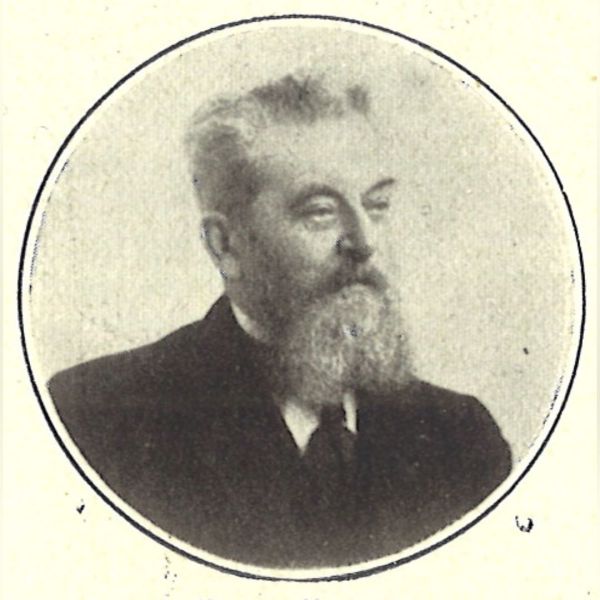
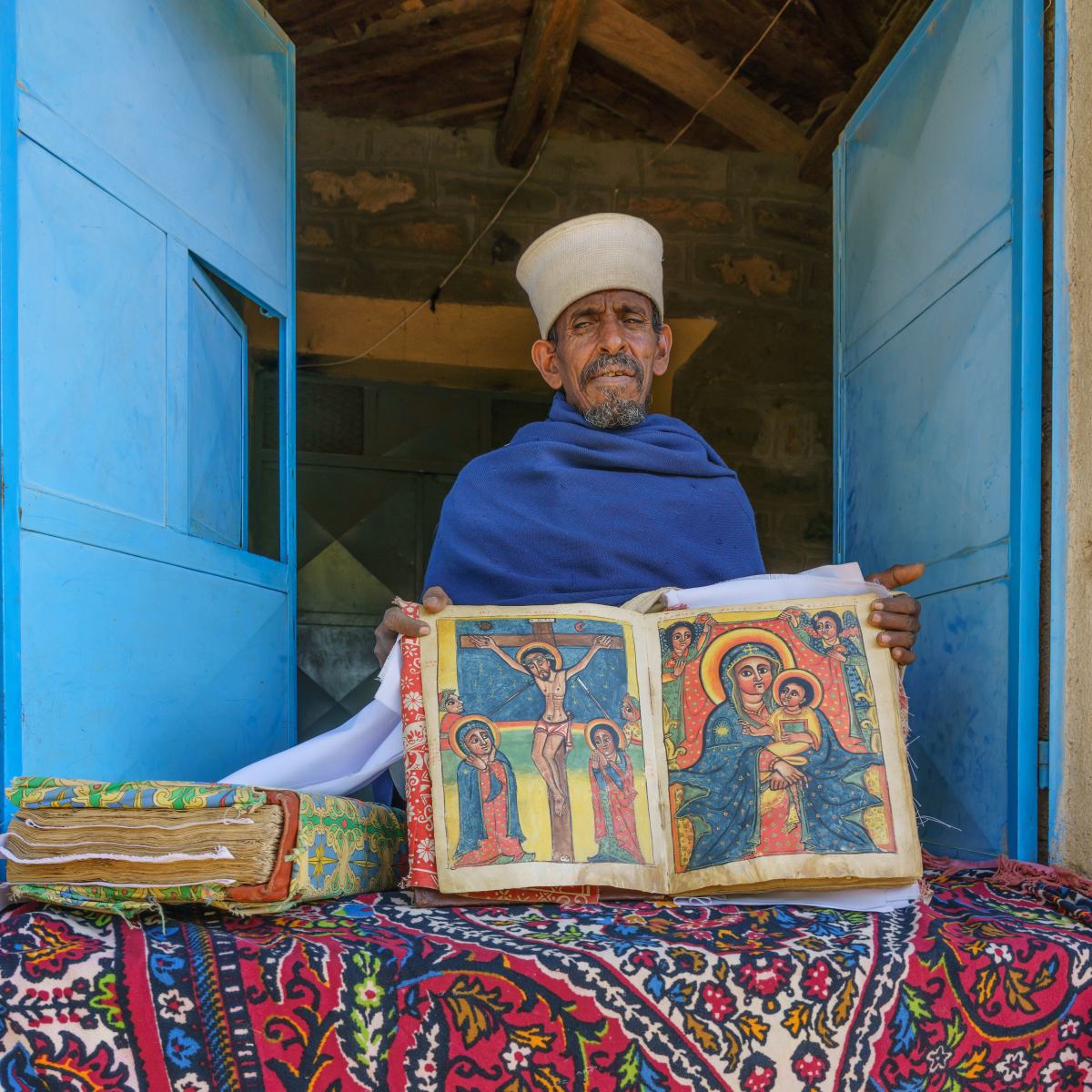
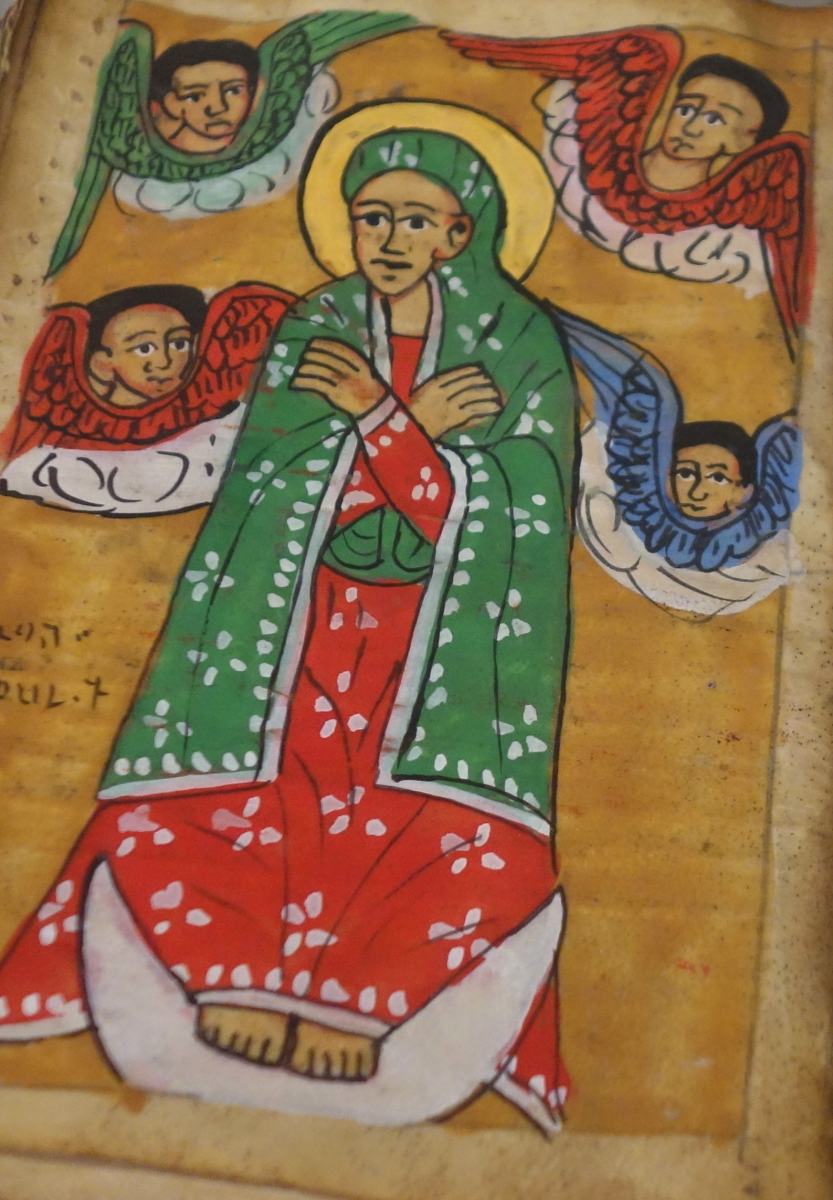
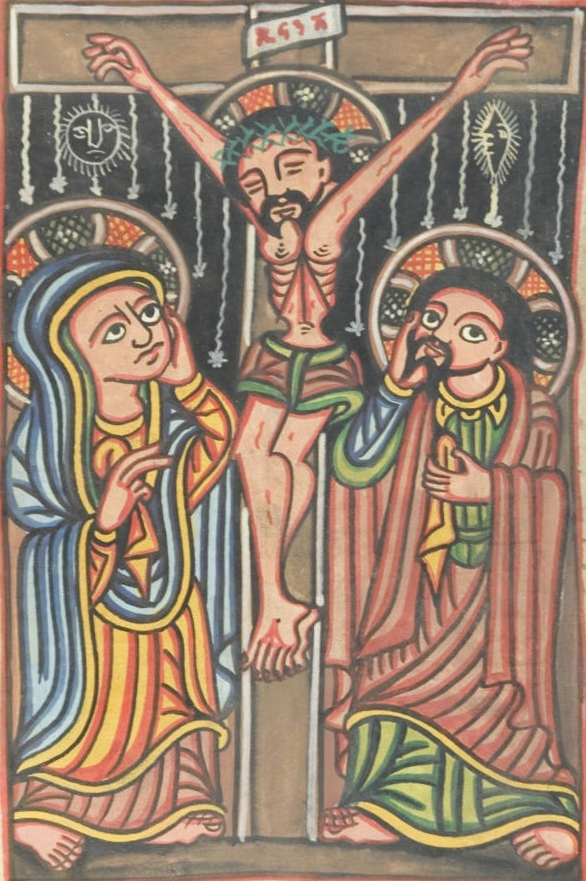
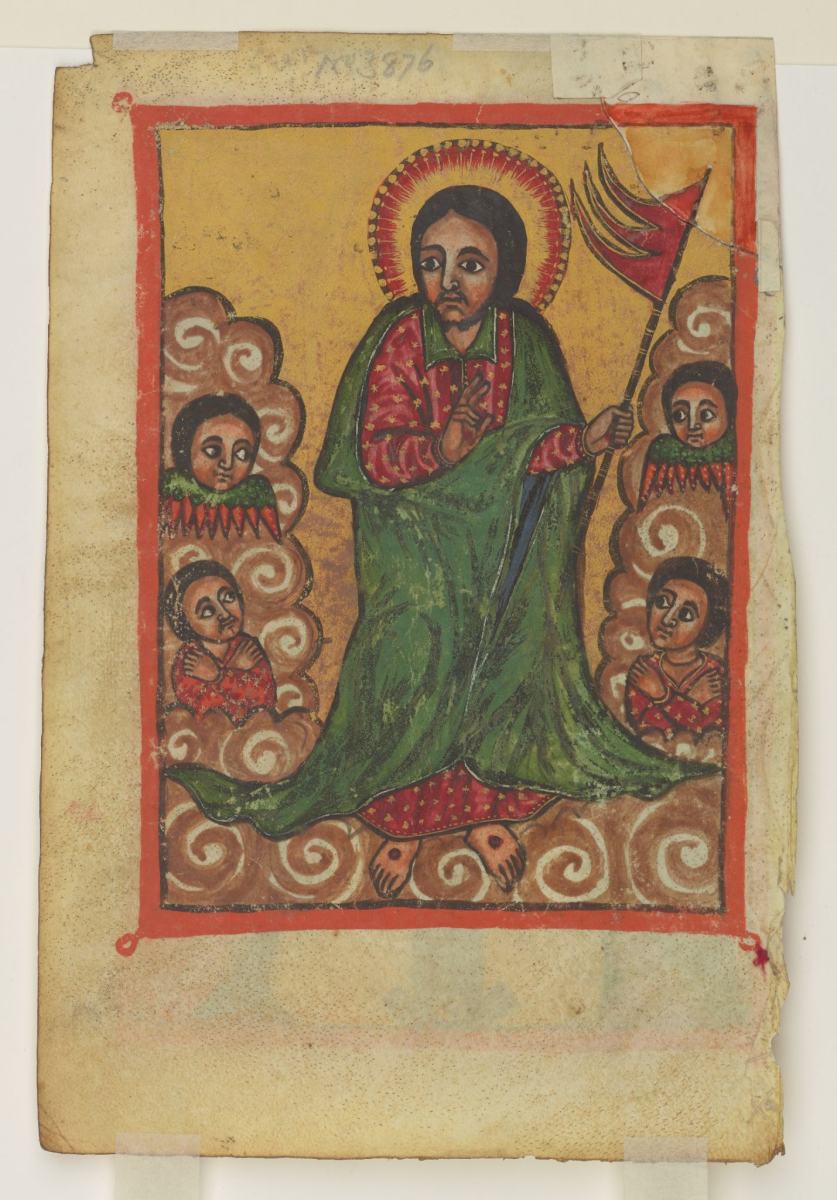
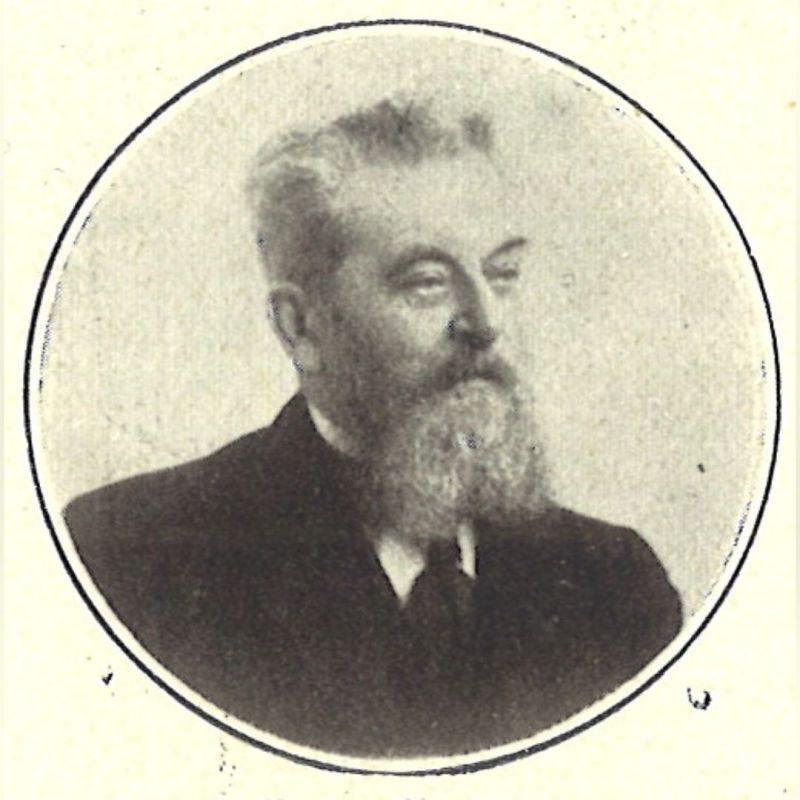

Leave a Reply