
Circle of Transmission: The Living Loom
A Little Franz Anton Mesmer Sampler – Part 1: A Contextual Introduction
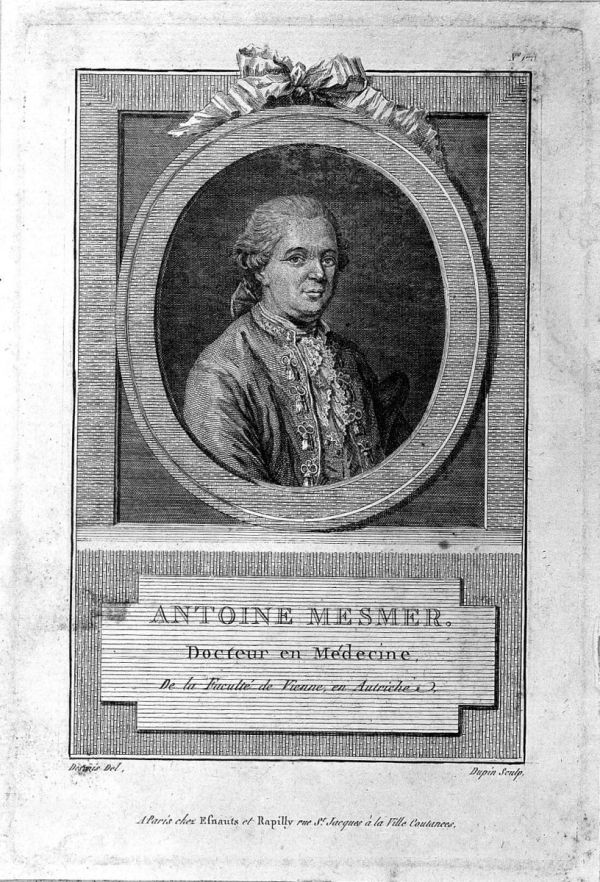
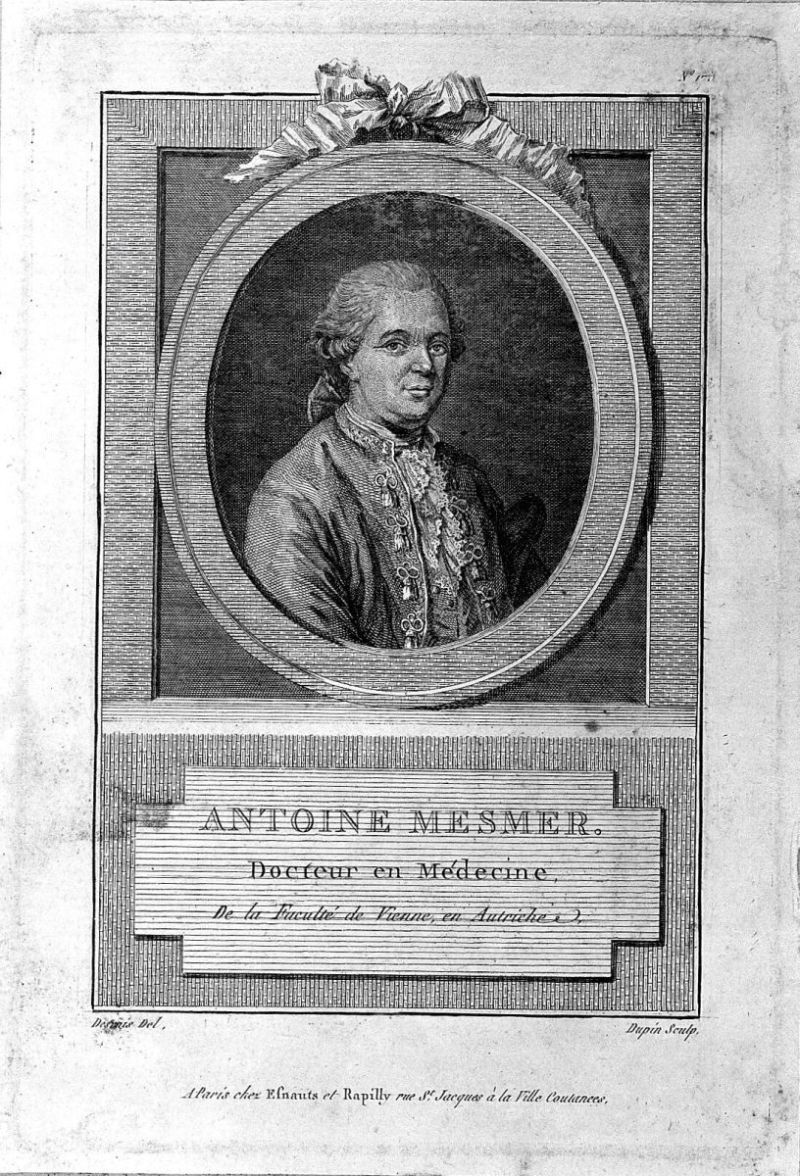
Portrait of Franz Anton Mesmer.
Engraving by Dupin after C.-L. Desrais.
From the Wellcome Collection.
Wikimedia Commons.
*
Today’s sharing from the Blue House of Via-HYGEIA is part 1 of a planned series devoted to the memory of Doctor Franz Anton Mesmer. For this contextual introduction, we have selected a biographic panorama in 4 sections from diverse sources that have pioneered magnetism.
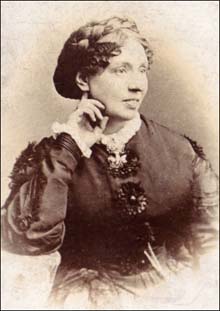
Section 1 comes from the biography devoted to Mesmer by Justinus Kerner published in 1856, as selected and translated from its original German into English by Emma Hardinge Britten in the edition of the 1898 treatise, ‘Art Magic‘, a Chicago published compendium of Occultism. E.H.B, herself being a famous spiritualist & a seer, an occasional mouth of the elusive Orphic Circle. The text shares also the very early twenty-seven aphorisms Doctor Mesmer sent to all the European Academies as soon as 1775, unbeknown to him that a very long, arduous and painful road was ahead of him.
We follow with section 2, with an excerpt from Amand-Marie-Jacques de Chastenet, Marquis of Puységur’s 1809, ‘Du Magnétisme Animal‘ which gives us an extraordinary lively idea of the period context and with section 3, an excerpt from naturalist Joseph-Philippe-François Deleuze’s 1813 ‘Histoire du Magnétisme‘, which provides us with an experimental glimpse into the techniques of Magnetism. Both became the unlikely but genuine spiritual heirs to Doctor Mesmer’s legacy with flying colors. They did not ask for it, but through their tireless endeavors earned that title right. These two sections are translated from their original French into English by Via-HYGEIA.
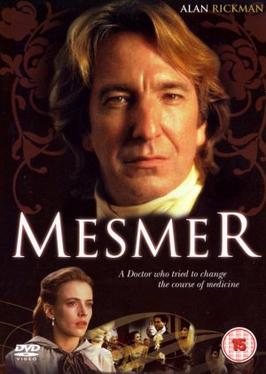
Section 4, brings the viewing of the 1994 Austrian-Canadian-British-German biographical film directed by Roger Spottiswoode based on a script by Dennis Potter. It stars Alan Rickman as Franz Anton Mesmer and depicts his radical new ways as a pioneering physician. It is a bit cheesy and at time otherworldly, but conveys much of Mesmer’s persona and perceived ambiguity. We discover also an Alan Rickman before Harry Potter!
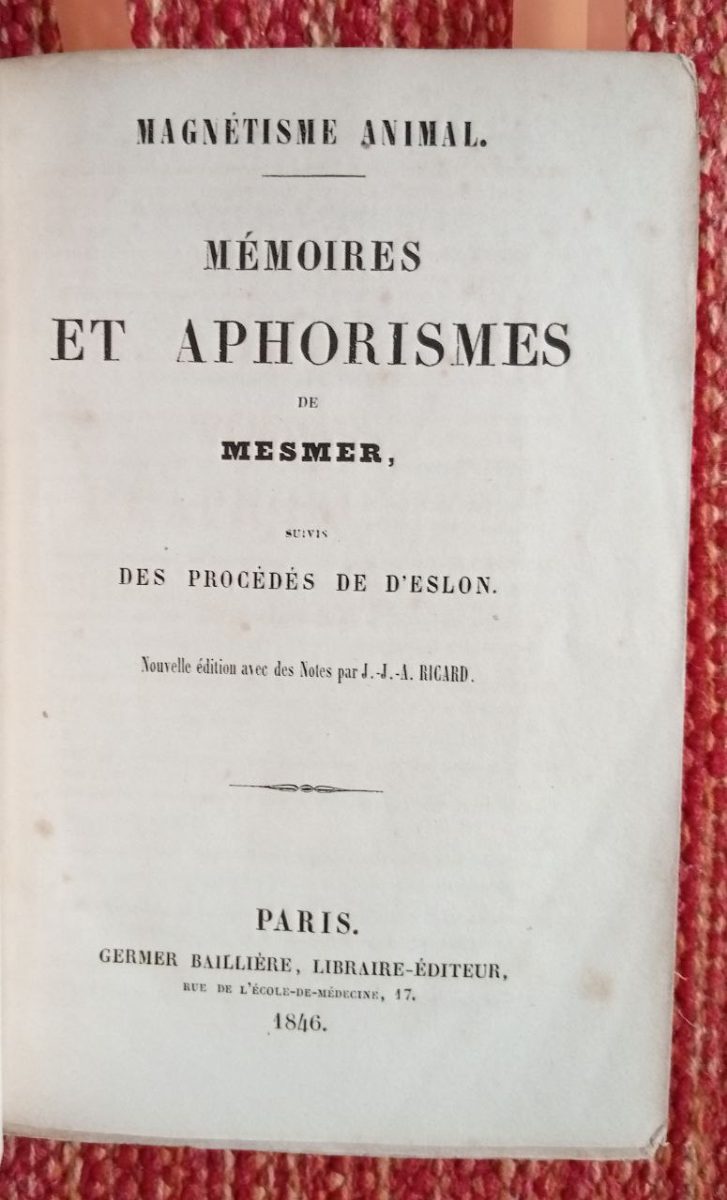
Finally, Sampler part 2 will follow soon with a selection from Franz Anton Mesmer’s influential writings.
**
Introduction
section 1
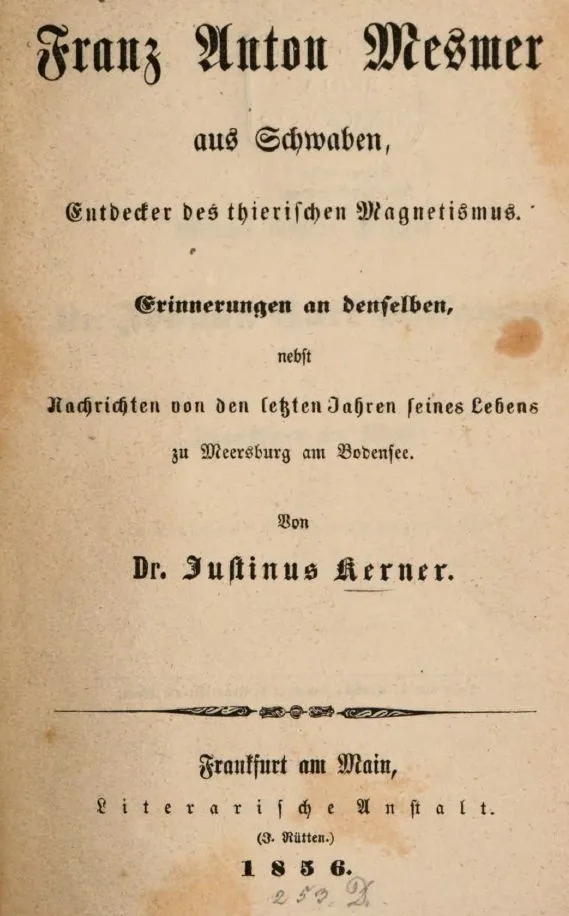
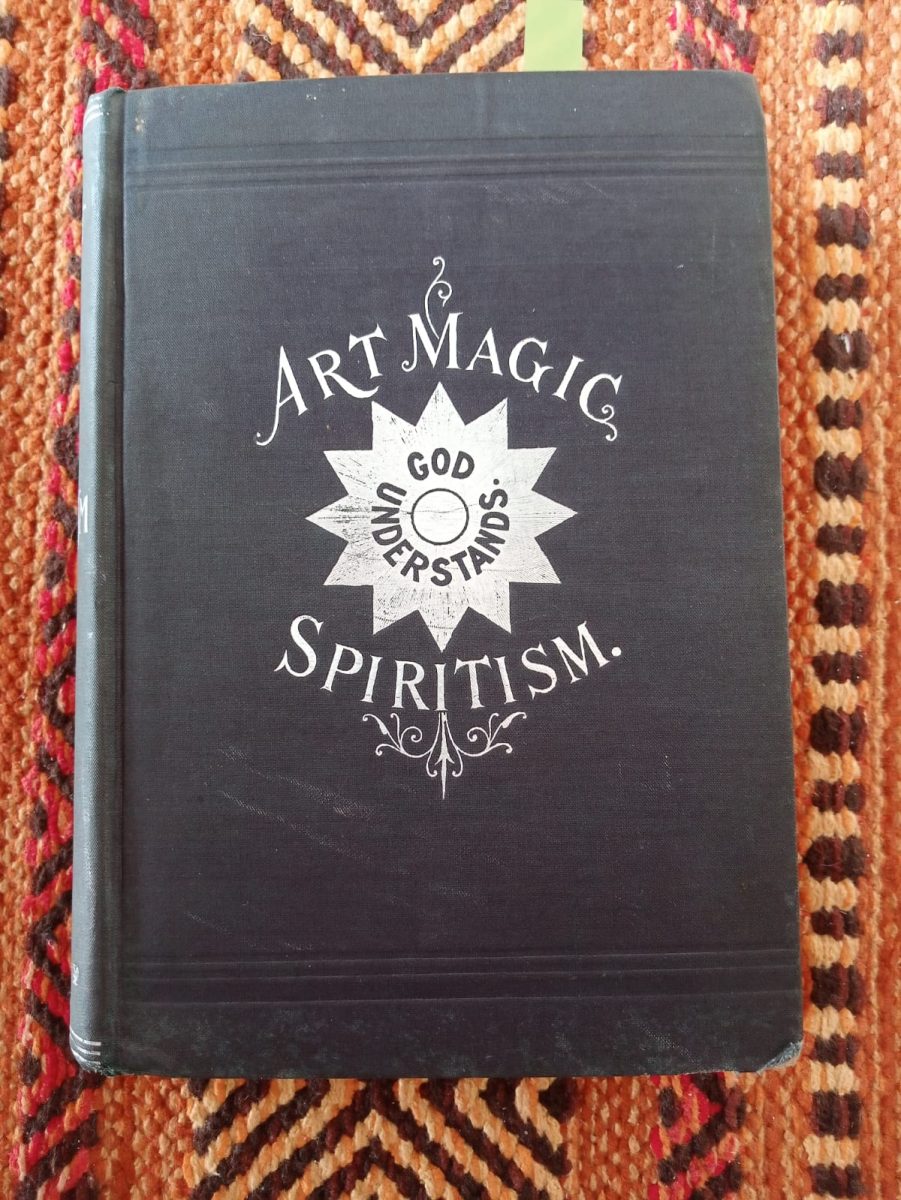
It is from Dr. Justinius Kerner’s clear yet reverential notices of the life of this inestimable man, so little appreciated in his own time, so ill understood even yet by the cold world upon which he opened up such a realm of spiritual sunshine, that we extract the following items:
‘Anton Mesmer first saw the light at Weiler, on the Rhine, May the 23d, 1734. As quite a young child, he is said to have exhibited a remarkable predilection for running water, delighting to follow up the course of streams and brooks to their source, and frequently neglecting his scholastic duties for the pleasure of hovering on the banks of the mighty Rhine, gathering stones, shells, and disporting, with a strange joy, in the falling rain, the wild wind, the howling tempest, and the balmy sunshine.
He was passionately addicted to the study of nature, and an insatiable yearning led him to explore her recesses, even at an age when his childish mind failed to command language for the expression of the great thoughts that possessed him. During his initiatory studies for the medical profession, he noticed and his associates were accustomed to comment on the strange manner in which the blood of a patient under the operation of the knife or lancet would immediately change the course of its flow as soon as he approached. Sometimes, it is said, it would cease instantly, and where the flow was sluggish, its increase would be immediately promoted by his touch, receding or suspending altogether when he withdrew.
A thousand petty incidents, commented on at the time as ‘very curious’, but subsequently remembered as tokens of his ever present and spontaneous magnetic influence, were constantly occurring from his early childhood up to the time when his unerring instincts led him into the arcanum of his great discovery’.
How this occurred will be best rendered in the language of Kerner, who says:
During his fifteen years’ medical practice in Vienna, he came upon his new art of healing through observing the origin, the form, and the career of diseases, in connection with the great changes in our solar system and the universe; in short, in connection with what be termed Universal Magnetism. He sought for this magnetism originally in electricity and subsequently in mineral magnetism. He made use of the magnet for healing at first in 1772, led to this discovery by the astronomer, Father Hel; using the magnet, however, simply as a conductor from bis own organism through bis bands, and by this means brought forth remarkable cures. A year subsequently, experience showed him that without touching the magnet, through his hands alone, he could operate much more powerfully upon the human organism, and thus originated through him the discovery of Animal Magnetism, which he developed into a science.
‘It was after this manner that Mesmer reasoned : “There must exist a power which permeates the universe, and binds together all the bodies upon earth, and it must be possible for man to bring this influence under his command.” This power he first sought for in the magnet; be pondered upon it with regard to man, and immediately applied it to the cure of diseases. The remarkable operations which were produced, and the cure of the sick, would, in another investigator, have brought him to an end of his experiments.
Mesmer, however, went forward. Ever accompanied by the idea of the primal power which must permeate the universe, and is ever active within it, the thought occurred to him that the influence must exist yet more powerfully in man himself than in the magnet; since, he argued, if the magnet communicates to the iron the same polarity which causes itself to be a magnet, an organized body must be able to produce similar conditions in another body. He thus perceived that be could not ascribe alone to the mag net which be held in bis hands the effects which be had observed produced, since he also must in his turn influence the magnet. Upon this he cast aside bis magnet, and with bis hands alone brought forth similar and unadulterated effects.’
No great discovery has ever yet convulsed the world that has not subsequently brought forth its cloud of claim and to share in its honors. One says: “Why, this is nothing new! I always knew it, and have observed it a hundred times”. This cry is echoed and re-echoed until an hundred, a thousand-aye, half the age, perhaps, insists they always knew it was so; it is nothing new. Nothing can be truer than this in relation to magnetism; yet, with all the wise world’s perception of its truth, it required the genius of a Mesmer to practicalize, and above all to reduce it to scientific theorems.
Kerner gives some narratives of Mesmer’s methods of treatment in his earliest stages of magnetic practice, which, although very striking, are not sufficiently linked to our purpose to admit of quoting here; we therefore omit them, and proceed to present the conclusions they caused the narrator to draw from them. He writes thus:
‘He ascertained that the principal agent in his cures dwelt within himself, and that its power increased by use. Nevertheless, the idea was never combated by Mesmer, that persons upon whom animal magnetism exercises but a slight influence, are rendered more susceptible to this influence by the assistance of electricity and galvanism.
Seifart remarks that he had observed that Mesmer wore beneath his linen shirt another of leather lined with silk, and supposes that Mesmer sought by this means to prevent the escape of the magnetic fluid. He believes that Mesmer also wore natural and artificial magnets about his person, with the intention of strengthening the magnetic condition in himself.
At all events it is certain that at a later period he employed for the strengthening of the magnetic condition, an apparatus, the Baquet, or, as he called it, the Magnetic Basin or Paropothus. This receptacle, as it was originally formed by Mesmer, was a large pan or tub, filled with various magnetic substances, such as water, sand, stone, glass bottles filled with water, etc. It is a focus within which the magnetism finds itself concentrated, and out of which a, number of conductors proceed; these conductors being bent, somewhat pointed parallel iron wands, the one end of each wand being in the tub, whilst the other end could be applied to the seat of the disease. This arrangement might be made use of by a number of patients seated around the tub. Any suitably-sized receptacle for water-a pond or a fountain in a garden-would serve a patient as a Baquet so soon as the patient made use of an iron wand to conduct the magnetism towards him or herself.’
In vain did Mesmer endeavor to convince his medical contemporaries of the truth and importance of his discovery; in vain was his announcement of it to the scientific academies. With but a single exception he received no answer from them. This exception was the Academy of Berlin, which passed the following judgment : ‘It would unwise to enter upon an inquiry into a matter which rested on such entirely unknown foundations‘.
Upon this Mesmer brought all his discoveries into the form of twenty-seven aphorisms, which were sent to the scientific academies in the year 1775. These aphorisms contain Mesmer’s doctrine clearly and briefly expressed, and it is important to become acquainted with them, since his ideas are here given in his own words:
1. There exists a reciprocal influence between the heavenly bodies, the earth, and all living beings.
2. A fluid which is spread everywhere, and which is so expanded that it permits of no vacuum, of a delicacy which can be compared to nothing besides itself, and which, through its nature, is enabled to receive movement, to spread and to participate in it, is the medium of this influence.
3 . This reciprocal activity is subject to the operation of mechanical laws, which until now were quite unknown.
4. From this activity spring alternating operations, which may be compared to ebb & flow.
5. This ebb & flow are more or less general, more or less complex, according to the nature of the origin which has called them forth.
6. Through this active principle, which is far more universal than any other in nature, originates a relative activity between the heavenly bodies, the earth, and its component parts.
7. It immediately sets in movement-since it directly enters into the substance of the nerves-the properties of matter and of organized bodies, and the alternative operations of these active existences.
8. In human bodies are discovered properties which correspond with those of the magnet. Also various opposite poles may be distinguished, which can be imparted, changed, disturbed, and strengthened.
9. The property of the animal body, which renders it susceptible to the influence of the heavenly bodies, and to the reciprocal operation of those bodies which surround it, verified by the magnet, has induced me to term this property Animal Magnetism.
10. The power and operation thus designated as Animal Magnetism can be communicated to animate and inanimate bodies; both, however, are more or less susceptible.
11. This power and operation can be increased and propagated through the instrumentality of these bodies.
12. Through experience it is observed that an efflux of matter occurs, the volatility of which enables it to penetrate all bodies without perceptibly losing any of its activity.
13. Its operation extends into the distance without the assistance of an intermediate body.
14. It can be increased and thrown back again by means of a mirror, as well as by light.
15. It can be communicated, increased, and spread by means of sound.
16. This magnetic power can be accumulated, increased, and spread.
17. I have observed that animated bodies are not all equally fitted to receive this magnetic power. There are also bodies, although comparatively few, which possess such opposite qualities that their presence destroys the operation of this magnetism in other bodies.
18. This opposing power permeates equally all bodies; it can also in the same manner be communicated, accumulated, and propagated; it streams back from the surface of mirrors, and can be spread by means of sound. This is not alone occasioned by a deprivation of power, hut is caused by an opposing and positive power.
19. The natural and artificial magnet is equally, with other bodies, susceptible to animal magnetism, without, in either case, its operation upon iron or upon the needle suffering the slightest change.
20. This system will place in a clearer light the nature of fire, and of light, a well as the doctrine of attraction, of ebb & flow, of the magnet, and of electricity.
21. It will demonstrate that the magnet and artificial electricity, with regard to sicknesses, possess simply qualities possessed in common with other active forces afforded by nature; and that if any useful operation springs from their instrumentality, we have to thank animal magnetism for it.
22. From instances deduced from my firmly established and thoroughly proved rules, it will be easily perceived that this principle can immediately cure diseases of the nerves.
23. Through its assistance the physician receives much light regarding the application of medicaments, whereby he can improve their operation, call forth more beneficial crises, and conduct them in such wise as to become master of thew.
24. Through communication of my method, I shall, in unfolding a new doc trine of disease, prove the universal use of this active principle.
25. Through this knowledge the physician will be enabled to judge of the origin, the progress, and the nature even of the most intricate diseases. He will be enabled to prevent the increase of disease, and bring about the cure without exposing his patient to dangerous effects or painful consequences, whatever be the age, sex, or temperament of the patient.
26. Women, during pregnancy and in childbirth receive advantage there from.
27. The doctrine will, at length, place the physician in such a position that be will be able to judge the degrees of health possessed by any man, and be able to protect him from the disease to which he may be
exposed. The art of healing will by this means attain to its greatest height of perfection.
Thus deeply convinced of the truth of his doctrine, it was natural that Mesmer should feel keenly pained by the misconception and contempt of men, for whom, in other directions, he entertained esteem. He expresses his bitter sorrow in various of the writings left behind him.
‘This system, which led me to the discovery of animal magnetism,’ he writes, ‘was not the fruits of a single day. By degrees, even as the hours of my life ac cumulated, were gathered together in my soul the observations which led to it. The coldness with which my earliest promulgated ideas were met filled me with astonishment as great as though I had never foreseen such coldness.
The learned (and physicians especially) laughed over my system, but quite out of place, however, for although unsupported by experiment it must have appeared fully as reasonable as the greater portion of their systems, on which they bestow the grand name of principles.
This unfavorable reception induced me again to examine my ideas. Instead, however, of losing through this, they gained a higher degree of manifestation, and in truth everything convinced me that in science, besides the principle, already accepted, there must still be others, either neglected or not observed.’
As our work is simply an attempt to elucidate philosophy from facts, we shall pursue the history of Mesmer no further. His followers, some few of whom were indeed worthy successors to so great an original, added many valuable experiences to his, but failed to evolve any ideas more thoroughly comprehensive than those given in his twenty-seven aphorisms.
To show why the mine of rich treasure opened up by Mesmer has been so slowly and reluctantly transferred to the mint of national currency in human practice, we have only to remember the bitter persecutions, cruel ingratitude, and misrepresentation, which followed the good and amiable Franz Anton Mesmer through his life, and pursued his followers after his decease.
The narrow conservatism of the age too, and the pitiful jealousy of the Medical Faculty, rendered it difficult and even dangerous, to conduct magnetic experiments openly in Europe within several years of Mesmer’s death. (End of the ‘Art Magic‘ excerpt).
*
*
Introduction
section 2
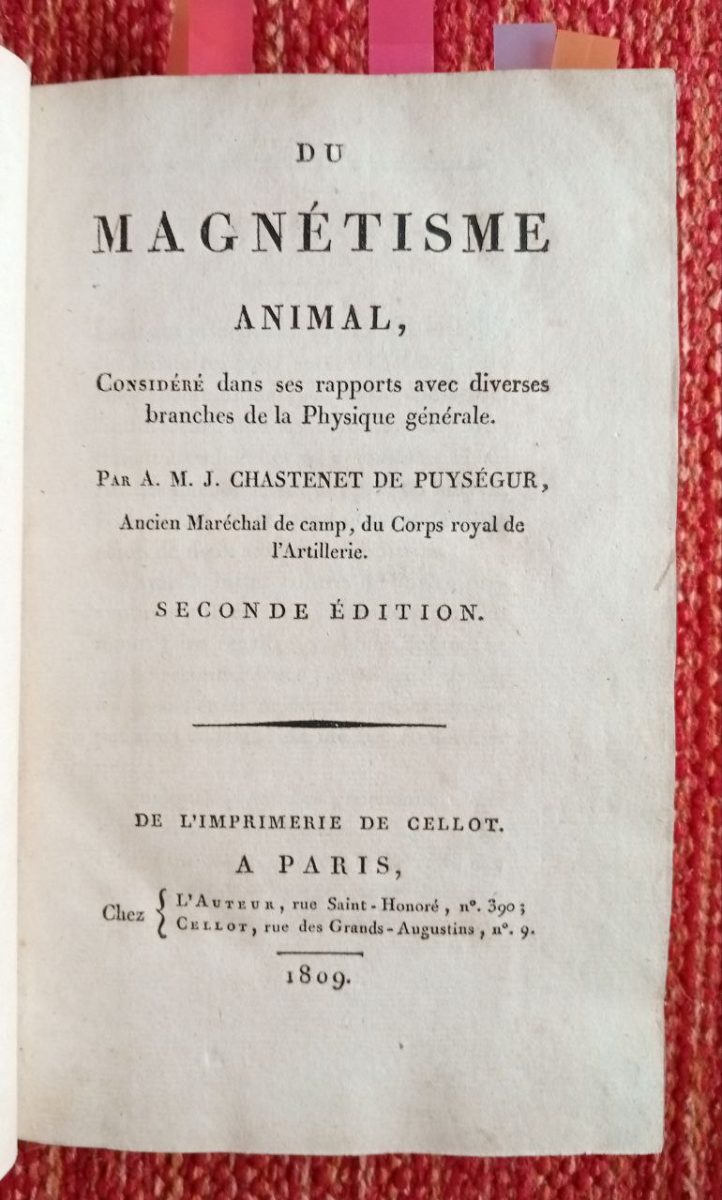
Excerpt from Amand-Marie-Jacques de Chastenet,
Marquis of Puységur’s 1809
‘Du Magnétisme Animal’,
From chapter XII.
A-Of the only way to convince oneself
of the reality of a thing is to experiment it.
B-The foundation of the Harmonic Society of Strasbourg.
The observation that I have drawn, with many others who had rushed to learn from Doctor Mesmer, from the little benefit we have gained from attending his classes, gave me an important awareness, that practice alone would prove correct: It is, before thinking to explain anything, we must first make sure that the audience which is listening is convinced also about the existence of this very thing. How could Dr. Mesmer, through reasoning only, hope to make his students believe the reality of a natural phenomenon they were not aware of?
Did both, Mister Sicard and Mister Hüy, with all of their combined talents, thought to achieve, the first for deaf to hear a sound and the latter, for born-blind to see light?
One particular observation, intrinsic to animal magnetism, is that when it comes to human faculties in Man, it is only by experimenting this or that faculty that we ought to recognize it, or by seeing its effects manifest upon beings bound by mutual trust.
All of the effects that Doctor Mesmer showed us, very real-no doubt about that-but observed by us with our doubts and biases, so, therefore, their reality could not be admitted as such. It is only after having acquired myself much later the conviction of the existence of animal magnetism, that I have strongly realized the impossibility to share it with others.
The dark description of the few experiences and facts I’ve collected earlier in Paris around a fashionable somnambulism phenomenon observed directly, especially with the famous miss Madeleine, can only give a weak idea of how suspicious I was and how it mortified my desire to believe. Even, friendship & the esteem for others in my entourage were no shield for my doubts, raised against my reason and my good faith.
So, such was my unfavorable state of mind, when I was about the re-join my regiment in Strasbourg in May 1785, that I have received a letter from Count of Lutzelbourg, who, in the name of a Society I was belonging, expressed the desire it had to, not only be instructed by me of the principles of animal magnetism, but also for its members to witness themselves the effects I have obtained.
We ought to recall the sort of floating effervescence and eagerness, deeply characteristic of our Time, towards different metaphysical systems-all claiming to bring mankind to the knowledge of extraordinary things-and which have made a few of their inventors very famous.
The societies of the Free-Masons of Germany and Sweden had allied themselves with Swedenborg; in Rome and Paris, Cagliostro had made many proselytes; and there was a society of Martinists in Lyon. Doctor Mesmer, among those great characters, only seemed to me a second rate prophet, because the bulk of his doctrine resulted only in the healing of the sick.
But, because the phenomenon of magnetic somnambulism made them curious and made them eager to see it with their own eyes, the Free-Masons of Strasbourg would, on their side, suspend all other research until I arrive, if I would agree to comply to their request.
Happy with the prospect to become more closely acquainted with a society I had in all time heard nothing but flattering and affectionate testimonies, I hurried to accept. Endowed with the powers granted by Doctor Mesmer, I left, with all my possible zeal, to fulfil in Strasbourg the function of my ‘apostolate’.
On the very first day, I have met members of the Society and i have asked them to invite all the remaining members to a meeting the day after to be held at one of their member’s house. When the time of the meeting arrived, around fifteen or sixteen members gathered. This is the essence of what I have said to them:
‘Gentlemen, I am deeply convinced of the existence of the animal magnetism; and it will be a great satisfaction for me to be able to convince you too. But, before starting explanations about Doctor Mesmer’s doctrine, and especially about what my experience taught me, as much regarding the magnetic agent-principle, than upon the manner to use it, I demand yourselves to fulfill a condition to which those who will not be eager to accept it will not be admitted by me to the instructions you have kindly asked me to provide you. (The agreement was quasi-unanimous) This is the preparatory condition that I imperiously require from you, Gentlemen, to firmly believe, in advance, to the reality of the effects, of which I promise to explain their causes. (you can imagine the surprise my statement produced! Some said: ‘How could you require from us a preliminary act of faith upon a thing we ignore all?) No, Gentlemen, I do not ask you to believe in me, but rather in you; and after warning you against all illusions of your senses and of your imagination, to gather for yourself your intimate judgment‘.
As some were expecting me to communicate at once Doctor Mesmer’s notebooks (which I had decided not to do), some members felt I was adopting a rather mystical attitude:
-‘Just debrief with us what you have learned; add what you know of experience; it is for us, after, to decide whether we want to believe or not to what you will say.’
To whom I replied:
-‘ No, because i do not possess Doctor Mesmer’s physiological and medical knowledge, nor the pleasant eloquence of MM Nicolas Bergasse and Jean-Jacques Duval d’Esprémesnil. These three famous men couldn’t manage to persuade their listeners about the truth of animal magnetism. Why would I have the presumptuous folly to believe I would be able to, more than them? The certitude of a natural phenomenon has always been preceded by the desire to know more about its cause: one cannot become curious to know the explanation of a thing which reality one does not believe in. Therefore, Gentlemen, the effects of animal magnetism as long as they are unknown to you, will remain as if they are inexistent. You would not be able to look up the explanation i may give you, other than the development of an illusion, which of course you would not partake in. I have too much the desire to show you the truth I am convinced of, to not brush away all the obstacles which would prevent you to notice it.’
Once agreed upon the necessity of persuading oneself of the effects of magnetism, before receiving any explanation, we discussed solely upon the methods to use to operate them. But, if I would act alone, I could only bring back the unfruitful scenes of bewilderment that my previous attempts brought me, I made to these Gentlemen the following proposition:
‘For six weeks of my time, I commit my self to stay home and to welcome every morning all of the sick people you will bring me; I do not care about their age or sex, or which disease they are afflicted with; just some of you will gather at my place too before the beginning of the seances, in order to see how they are started and will only go home when the last patient would have left, so that I will never find myself alone with them.
I want to add that it is impossible that there will be among your sixteen members nobody able to manifest the effects of the magnetic action. It will be up to you, Gentlemen, to convince yourself of its reality; when you will assure me that you do not doubt it anymore, not only will I communicate all the teachings you have asked for, but I promise more: I will also indicate the means to repeat yourself everything you have seen me operate during that period.’
The agreement was then duly sealed, my hosts busied themselves in finding the required patients. A few days later, after learning that a good number of patient could be gathered, I started my practice with those who were presented to me. Everything went on as I have forecasted. The very first day, a few patients felt the effects of my magnetic action, and after five or six seances some even became somnambulists healers.
Out of my consideration for my patients to not bother them with the observation of their ailments, and to avoid any premature surprise among my onlookers, I submitted them only gradually with all the experiences they would be capable of: talking about their conditions, reporting about what they would feel and about the cause of their ailments; this is what I started to ask them. We needed to ensure if it was true that they would not rememorate what they have said while being in a somnambulistic trance, because, among all the ones in an hypnotic sleep were men. Among them, I had distinguished two individuals more mobile than the others; I submitted them to trials which would grant them to manifest very passively all of the phenomenon of magnetism and electricity.
Each assistant, by imitating what they were seeing me doing, acquired in a short time the certitude of these astonishing effects; but what really achieved to convince them was the verification of the veracity of all what the somnambulists seers prophesized-four or five days earlier-announcing what would happen to them, happened to the exact hour and minute ! As I had the rule to not go to any member’s home, I was only told of these facts generally a day after.
A month went by without those who had observed, with care and with the necessity assiduity, all the effects that were operated, not coming to me and not assuring me that they were intimately convinced of their reality. If it was so, I told them, then we are ready to start our explanations and classes. But, without stopping, every morning, the care to our patients. Because, having started to treat them, our duty was to heal them, and I must warn you that the cure of a magnetic somnambulist is effective only when the magnetizer cannot induce a hypnotic sleep in them anymore.
…/… (A Via-Hygeia note: what follows are the lessons given by Puységur, which we will share at an other time). At the end of the classes we can read:
-‘Dear Friends, what is certain is that you were six weeks ago, alike ignorant apprentices, quite inexperienced, and that after eight days you became good and agile fellows of my craft, and that today you became masters, as much instructed as I am.’
and later, closing chapter XII:
When I left to take command of the artillery regiment in Strasbourg in 1789, I had the great satisfaction to meet again with its Harmonic Society and with all of my friends there and to see it survive during the shake-down of all the old social institutions that was happening at that time. The Society still existed when I left Strasbourg in 1791 and it is only after the dispersion or reclusion of most of its members, that in 1792, finally, it ceased to exist. (A Via-Hygeia Note: Heartbreaking).
*
Introduction
section 3
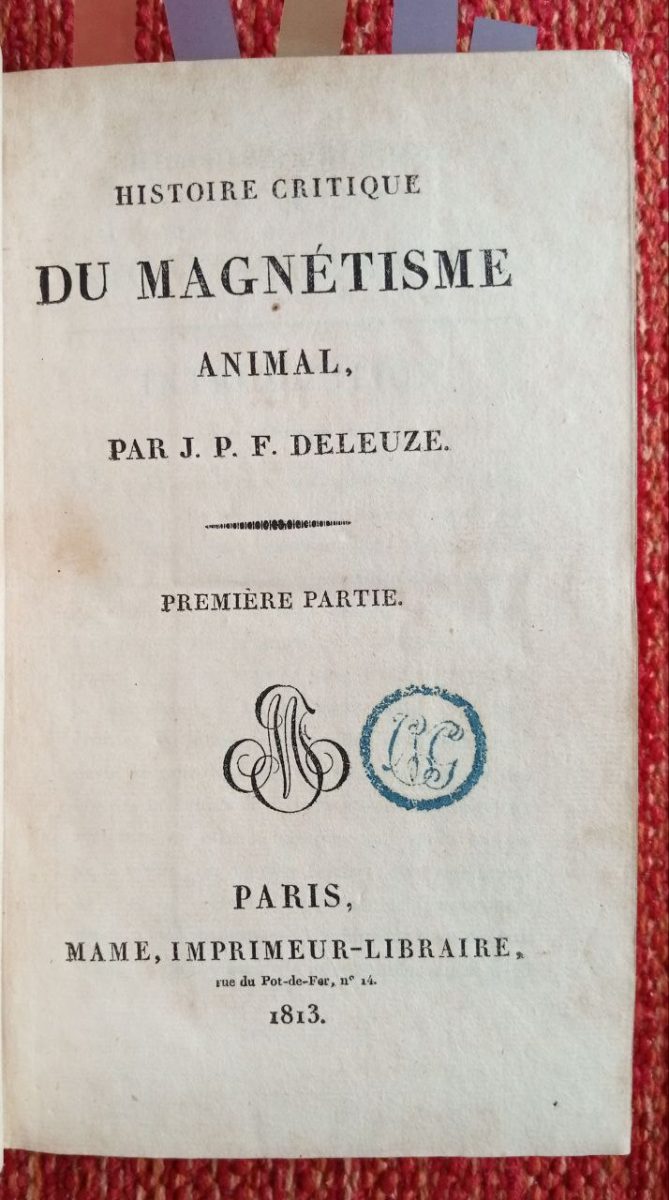
Excerpt from
Joseph-Philippe-François Deleuze’s 1813
‘Histoire du Magnétisme Animal’
From Chapter IV
Of the method used in Magnetism
We can distinguish three schools linked to the doctrine of magnetism: Mesmer’s, Puységur’s and of the Spiritualists. (A Via-Hygeia note: Hence the presence in this post of Emma Hardinge Britten. We can add a fourth one, with Deleuze’s own impressive school of experimentation and healing, even though Deleuze claims to belong to Puységur’s school). These three different schools differ over the theory and over the method.
Doctor Mesmer’s method is rooted upon a system similar to that of Epicurus; As it is delineated in the beautiful verse of Lucretius. The method of the Spiritualists, which counts many devotees in Lyon, is more closely related to the Platonic philosophy. As for Mister de Puységur’s method, it is solely embedded upon observation.
Doctor Mesmer admit the existence of a universal fluid that permeates the space we breathe in, and which is the mean of communication between all bodies. He admits, like Epicure, a subtle matter, emanations, etc…
The Spiritualists believe that all phenomenon are produced by the soul and that physical action is almost pointless.
Mister de Puységur recognizes a physical action, in which the soul intervenes through the power of the will, and through practices that experience alone revealed to us.
These three school are not enemies; they are even hardly rivals, alike the schools of philosophy: in all three, despite the diversity of theory and methods, we reach the same result.
Doctor Mesmer, according to his theory, has given principles that make of magnetism a particular art: he sees in the human body poles; in the fluids, currents that we may drive or reinforce; in the sicknesses, a lack of harmony or an obstacle to the free circulation of the fluid; in the crisis, a mean for healing: he believes that this fluid can be accumulated, concentrated, that this fluid can be reflected by mirrors, reinforced by sound; and according to this theory he submits the practice of magnetism to regular methods, the use of which demands a preliminary education.
The Spiritualists affirm that all depends on the will: after having established a relationship (in French, un rapport) to determine and fix the attention; they believe not to be in need of touching. They act solely by the action of thought, intention and prayer.
Mister de Puységur uses primarily touching; it varies according to the method and the circumstances. He does not admit the theory of the poles, nor the action of the planets: he recognizes the power of the will, but he firmly believes that in order to direct the action of this will, we need to act physically upon the patients, and even upon the ailing parts of the body. Mister de Puységur did not develop a system; he never thought of one. He just shared successively the opinions that were suggested to him by the very facts, and it is only through his practice and that of his disciples that we are able to judge his theory.
Of course, many magnetizers, without belonging to one of these schools, take something from each of them; but it is within these three schools that we can place those who have adopted a determined theory.
I do not claim to decide between these three schools; but if I am to give my intimate feeling, i confess that I am to be placed among the disciples of Mister de Puységur.
Doctor Mesmer’s theory is obscure; it seems contrary to the accepted principles of physics, and i believe it to prone to many objections. I consent to the existence of a universal fluid and it to be the cause of the great phenomenon of nature; I consent that we assimilate this fluid with the ambient light; but, even by admitting this supposition, do we better conceive how we have the power to direct this fluid and to act through great distances? Which relationship can there be between the reciprocal influence of the stars and the influence of Man upon his kind? Doctor Mesmer established poles in the human body, so mote it be: but then how to recognize these poles? If they are not fixed, is it not as they do not exist?
As for the Spiritualists, I do not comprehend their theory very well: it seem to me that it belongs to an illusion, and even though I do not doubt the immortality of the soul, I firmly think that it is through physical means that we can act upon organized bodies.
Afterall, i have already said that all magnetizers achieve more or less the same results, what ever their theory might have been. Both doctor Mesmer and the Lyon Spiritualists have also achieved healings and induced somnambulists; but I believe that Doctor Mesmer prescribes methods that I deem not necessary, and that the system of the Spiritualists may lead us into errors; while in Mister de Puységur’s school, the methods are simple, and everything is rooted in one first fact: incomprehensible without doubt, but firmly established by observation and experience, and therefore it is useless to seek its explanation.
But, in placing myself among the disciples of Mister de Puységur, in recognizing the accuracy of his principles, I am not completely in agreement upon the most adequate manner to direct the action of magnetism.
Mister de Puységur does not seem to care about the choice of methods; he believes it is enough to touch a patient, or to present his hand in from of him to produce the most beneficial effects, and that we place naturally the hand upon the part of the body that suffers. I know the weight the opinion of a man has, who has practiced magnetism for so long and with such a success, but it is impossible for me to share it.
I have for me my own experience, the instruction of all the somnambulists that I have consulted, the advices given by the somnambulists of Strasbourg, by those around Mister Tardy, and even a few in the entourage of Mister de Puységur. All of them have indicated methods that were different according to circumstances.
Mister de Puységur fears that in giving a proper theory of the methods, we ought to make magnetism an art, and that it would lead us to believe that these methods are by themselves an efficiency independent to the will aiming towards the good. This would be, without doubt, an error: but, that the methods are a secondary matter, a mean to direct an agent without it they would not achieve anything, it would mean therefore they cannot have a particular influence. Mister de Puységur does not pay much attention to that, because of a great habit that became in him a sort of instinct, that directs him in his practice, and because the influence of his attention is such that it is overwhelming over everything else.
But, in general, I think that those who magnetize to heal patients without the intermediary of a somnambulist ought to chose carefully the methods they are using. Though, a theory of the methods would still serve to fix the attention; it would be very useful.
(A Via-Hygeia note: We will also share at a later date Deleuze’s classes,
as they are very impressive and factual).
*
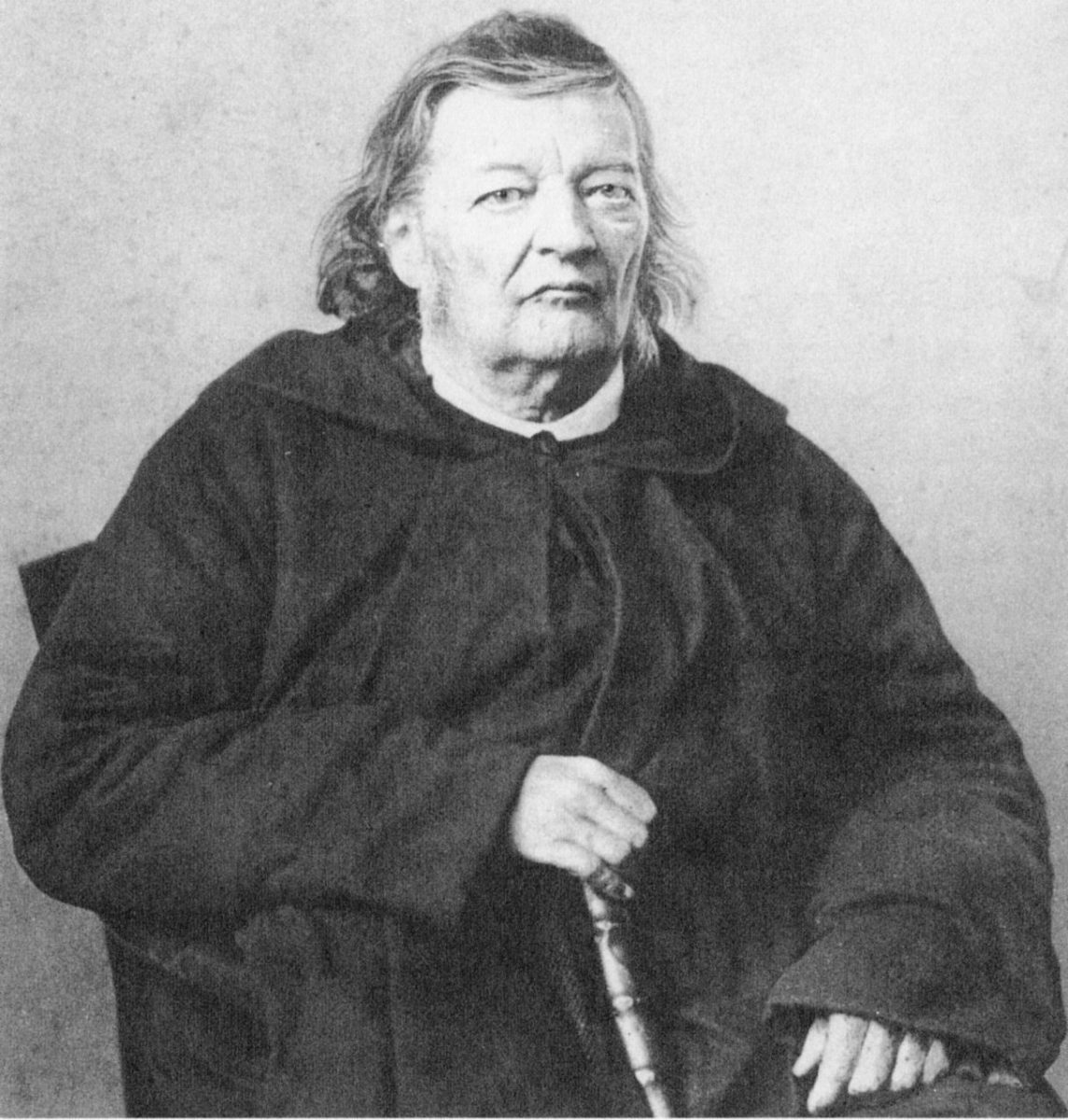
Mesmer &
his two unlikely
but genuine disciples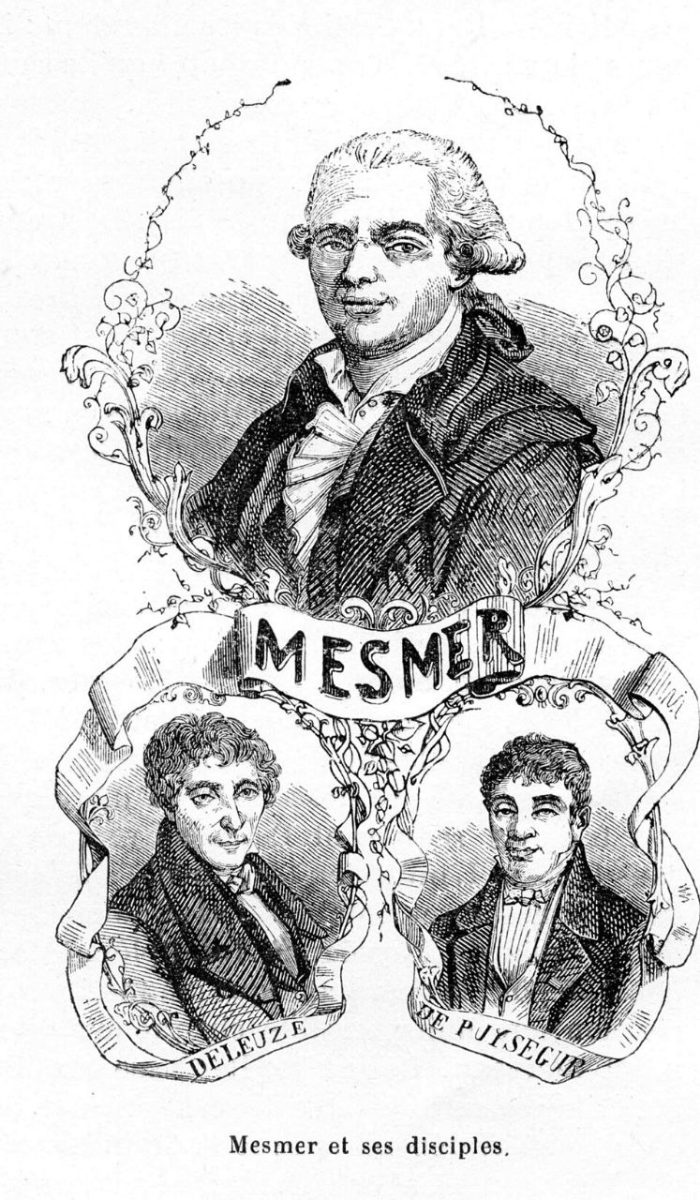
*
Introduction – section 4
The Mesmer
Biopic
*
Coming soon:
A Little Franz Anton Mesmer Sampler
– Part 2: Selected Writings.
***
Leave a Reply