
Circle of Transmission: The Living Loom
A Little Aaron Zev Aescoly-Weintraub Sampler: Part 2 – A 1928 Selection of Hasidic Terminology & Lexicology
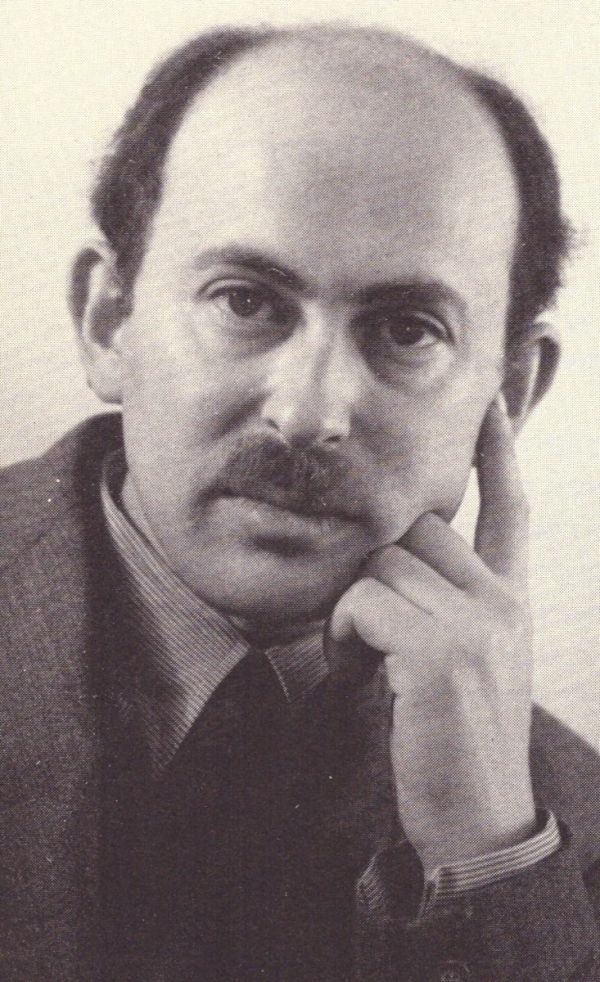
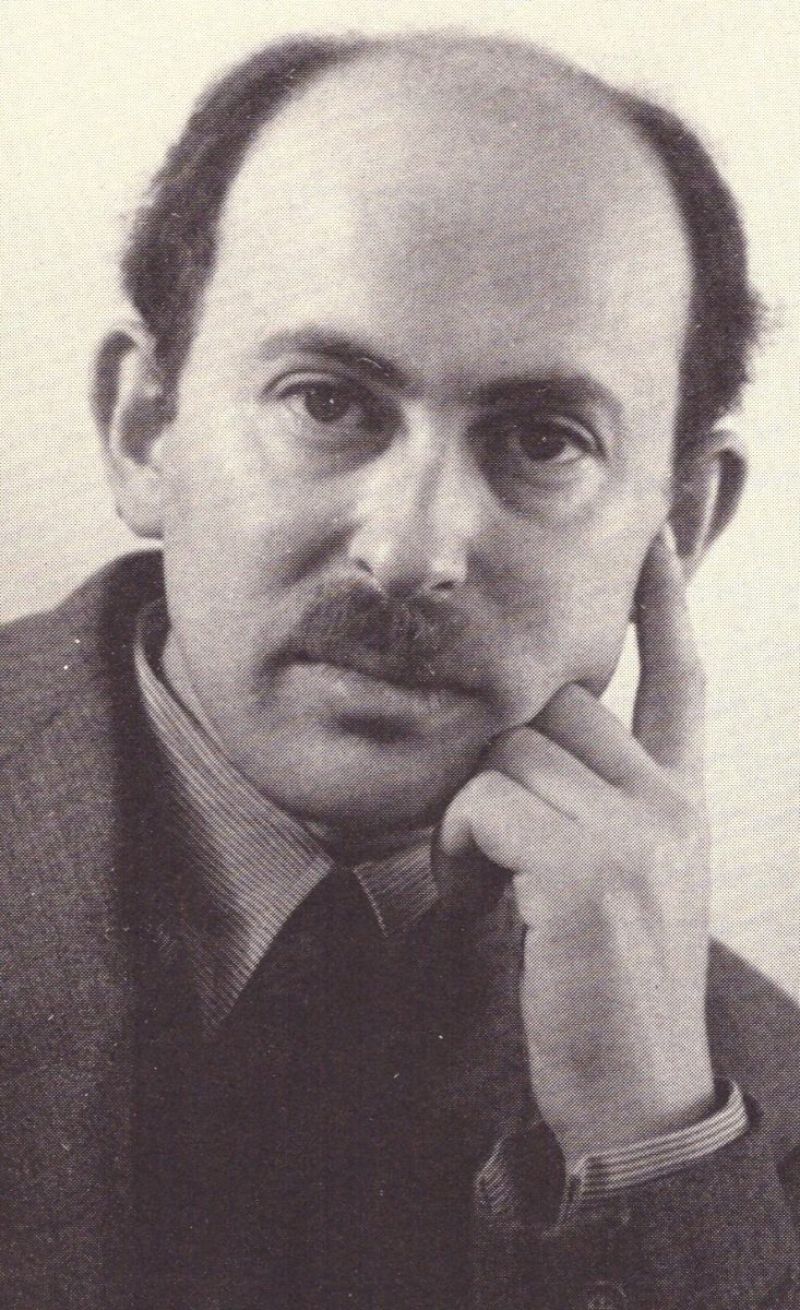
A 1947 picture of Professor Aaron Zev Aescoly-Weintraub,
(Lodz 1901- Jerusalem 1948). Source: Wikipedia.
*
Today’s sharing from the Blue House of Via-HYGEIA, is part 2, the continuation of a series devoted to honoring the memory of a long forgotten figure in Jewish scholarship, who deserves to be better known beyond modern research circles, professor Aaron Zev Aescoly-Weintraub.
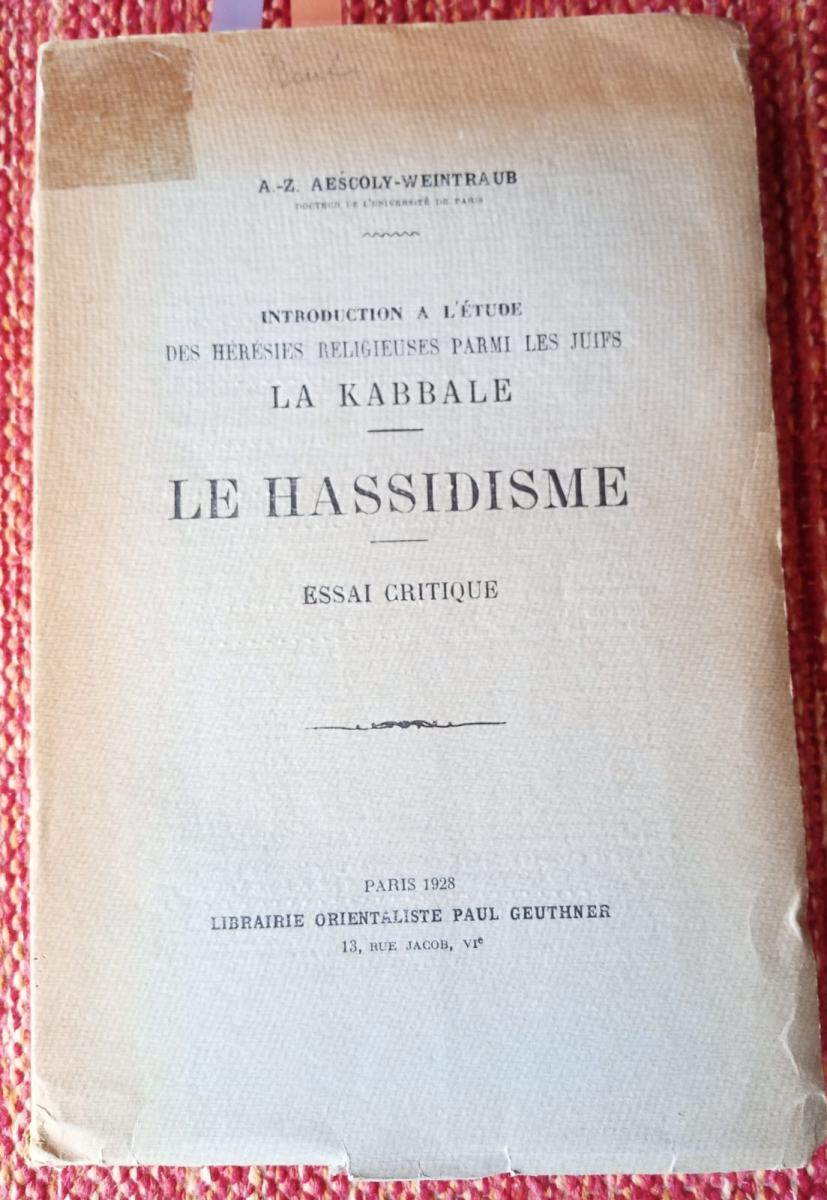
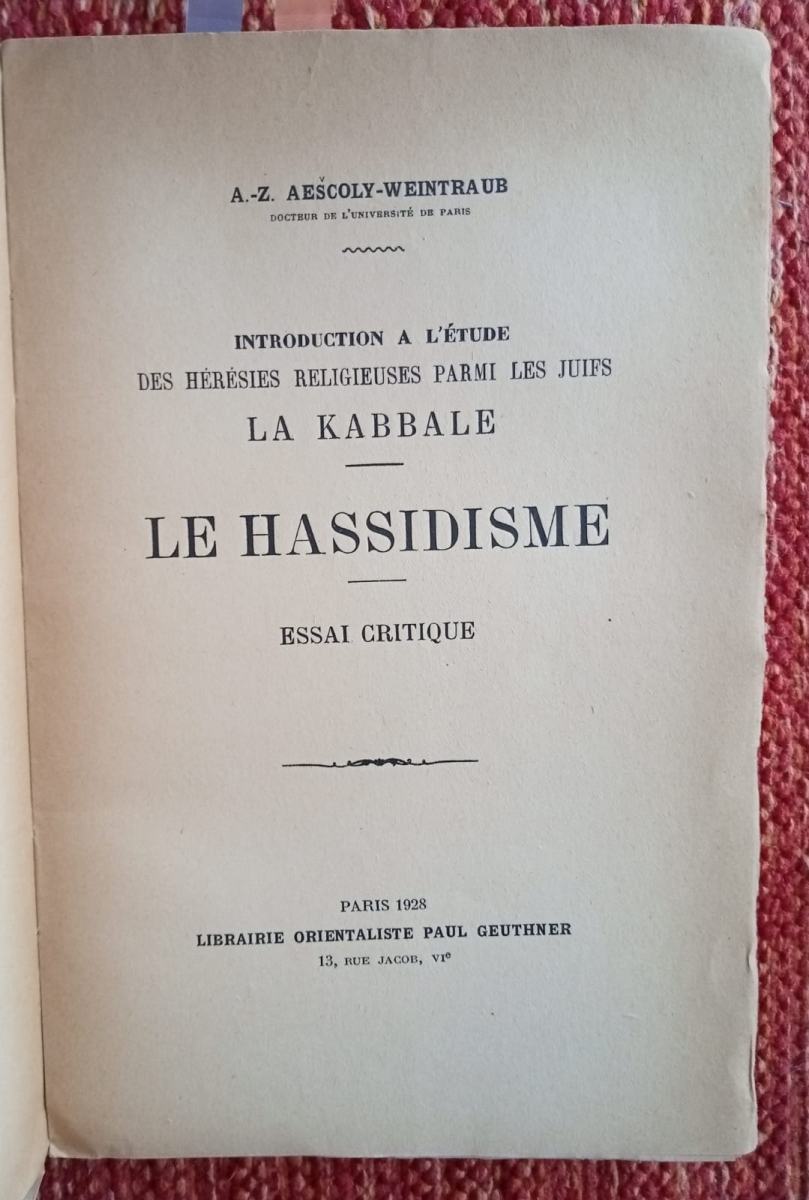
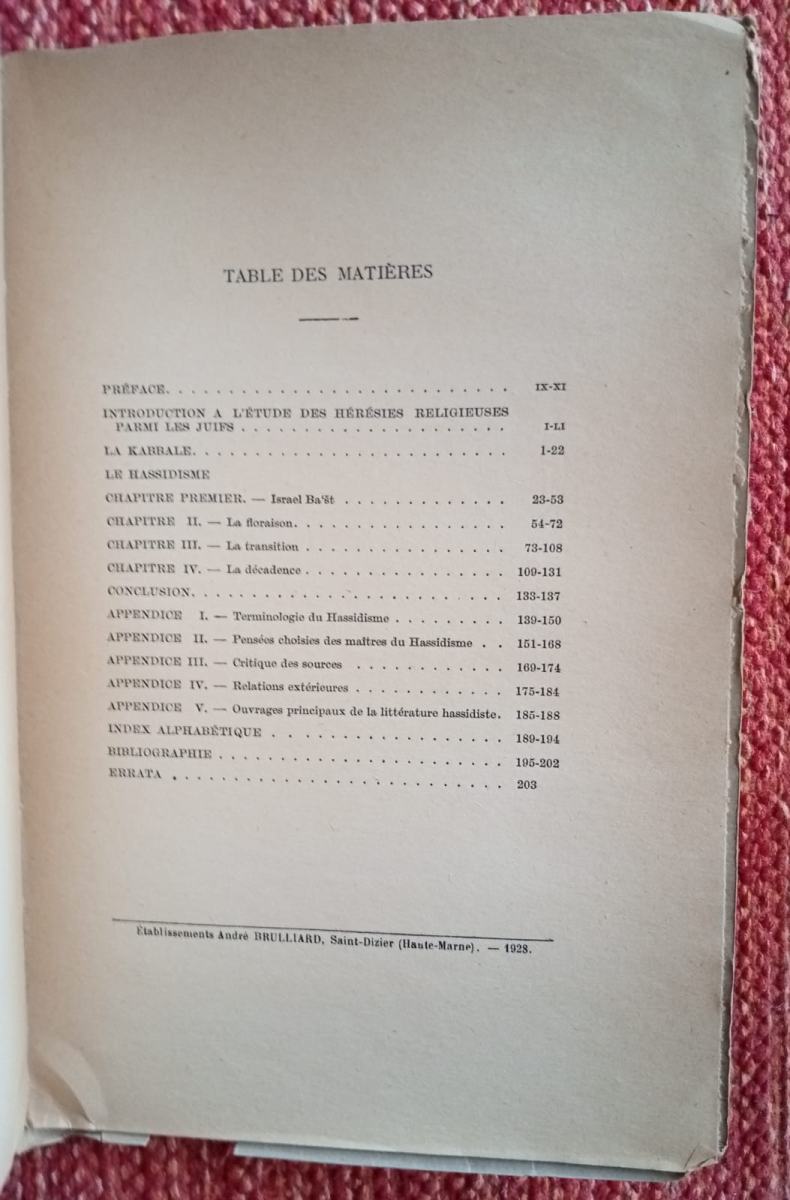
We have chosen the whole chapter appearing as an appendix, devoted to Hasidic terminology & lexicology, excerpted from ‘Introduction to the Study of the religious heresies among the Jews: Kabbalah & Hasidism-A Critical Essay.‘ Librairie Orientaliste Paul Geuthner, Paris 1928. From page 139 to 150. A Via-HYGEIA English translation from the original French.
A forthcoming part 3 of our commemorative sampler will be the sharing of another chapter: ‘Selected Thoughts of the Hasidic Masters‘.
**
Introduction to the Selection
Hasidism, having achieved to create a particular social class, has influenced the language of its supporters. Its hegemony was so strong over their language-which became the language of the popular class- that even modern books, completely laic, written in Hebrew and in Yiddish, are full of terms and expressions, of linguistic formulations borrowed from the Hasidic world in order to express modern spiritual notions.
Through a whole literature, these terms have influenced the whole eastern Jewish world. These linguistic acquisitions appeared under a double aspect: Linguistic formations in Yiddish that are actualized only in daily casual conversations of the Hasidim, and new Hebrew terms disseminated into the spoken language, due to the influence of a specifically Hasidic literature. Though, it is more about semantic character change than lexicographic creations.
We will select here only the Hebrew terms and will leave aside the Yiddish words of Slavic or German origin, partly of local usage and specific to particular geographical regions, and, through usage have lost their primitive meaning.
Furthermore, these words rarely express abstract values. Yet, we have made exceptions for the terms accepted in all of the countries inhabited by the Hasidic communities, and of which the Hebrew equivalent only did represent mere translations of a spoken language vocabulary.
*
The Selection
Abreviations:
BH: Biblical Hebrew, MH: modern Hebrew from the Mishnah and the Midrashim, MMH: Modern medieval Hebrew or Rabbinical Hebrew, AR: Aramaism, JG: Judeo-German or Yiddish.
*
1. AHABHAH (BH): Love.
To unite with God’s love and love God. This love is a Behina (see below), a quality required from the ‘men of the degrees‘. The true moral acquisition of Man ultimately ought to be Love. The Yir’ah-the fear of God-is but an inferior Behina, accessible to common people. This term was accepted by Hasidism and developed in the meaning it had already in the earlier religious literature.
2. AHABHATH ISRAEL: The Love for Israel.
A term proper of medieval Jewish literature. Hasidism gave it a particular meaning: The love of neighbor in general. By putting Man at the center of the universe, Hasidism also puts the love for Humankind above the love for God. Rabbi Levi Yitzchok of Berditchev distinguished himself with this strong Middah (A good quality, see below).
3. EMETH (BH): Truth.
Truth is an important Middah. God used it to create the world, according to the Midrash. For Hasidism truth is an essential Behina, an fundamental condition to approach God. This conception borrowed to Jewish medieval literature, was deepened and bears now a mystical color.
This way to conceive truth, as a primordial demand was popular among the disciples of Rabbi Pinchas Shapiro of Koretz, of Rabbi Raphael from Berditchev and other masters from the Polish-Lithuanian Commonwealth.
4. BEHINAH (MH): Quality.
This technical term plays an important role in the spiritualism of the Hasidic doctrine, without having a fixed or determined meaning. Sometime, it expresses the same meaning as Middah, and the same with Madrégah (level, steps). The best translation would be qualitative notion.
5. BEHIRAH (MH): The Choice.
Expresses in Hasidism the same idea than in the religious non-deterministic literature: the freedom of Man to chose between the good path and the wrong one. The nature of this choice holds a few specifics linked with the whole Hasidic doctrine, especially the ‘Meditations‘ of Rabbi Shneur Zalman of Liadi, upon the theological problems of determinism.
6. GADLUTH (MMH): Greatness.
A term of the religious philosophy expressing divine greatness.
7. DEBHEQUTH (MMH): Adhesion.
An important virtue with 3 possibilities to consider: 1. To attach oneself completely to God in all the actions of life; an acceptation borrowed to medieval moral literature. 2. To devote oneself to the action itself. 3. To attach oneself to a Tzadik (a righteous one). The last two ideas are purely Hasidic, even though number 2 comes from earlier kabbalistic origins. From this context, we get : zix dveyken, implying a sarcastic meaning, to simulate Debhequth.
8. HAQPADAH (MH): Attention, pedantic.
In Hasidism, this term designate the character of certain Tzadik characterized by a gloomy and pedantic nature. Such and such Tzadikim had the habit to curse or to hit people. But, the result of the literal meaning of their words and behavior could very well be that the cursed or the beaten knew they were delivered from their worries. From this context, we get : maqpid zayn, haqpada hoben and qapdan.
9. HITHLAHABHUTH (MMH): Flaming.
The flaming of moral and psychic strengths until the total obliteration of the senses following a saintly action, a good deed, the achievement of a random act. Flaming is the sine-qua-non condition of Service, especially during prayer.
10. HITH’ALUTH (MMH):Ascension.
Generally, a term synonym of Aliya. (note:The Hebrew word aliyah translates as “elevation” or “going up.” In the context of the synagogue, the word aliyah refers to being called up to the Torah reading during services. In the modern era, “making aliyah” means moving to Israel. Source: Habad dot org).
11. HITHPA’ALUTH (MMH): A Wonder, a Surprise,
Expresses the state of exaltation induced by the sight of a wonder, of an extraordinary wonder, through the admiration of the divine works within the world of ideas, or through something that moves the Tzadik, such as a teaching, a melody, a mystical episode.
12. HABAD: Designate the teaching and ideology of Rabbi Shneur Zalman of Liadi and of his successors. Also, it is an abbreviation of the three sephirot, Hokhmah, Binah, Da’at.
13. HOKHMAH (BH): Wisdom. Science (MH).
Early Hasidism dislike it, being more fond of the credulity of the common people. Yet, from this condemnation there are exceptions: true science. The Hokhmah Nistarah or hidden science. The notion of Hokhmah ‘elohit or divine wisdom is understood rather as an intuition through the grace of God, rather than a scientific and critical knowledge.
14. HASIDUTH (MH): Piety.
Feelings in accordance with the spirit of Hasidism. This term has also a ironic meaning: To take a Hasidic posture in trivial things. From this context, we get: hassiduth praven (from the Polish Prawik) meaning to take a Hasidic posture. This expression has the meaning as smokes from the Polish cmokac, meaning to smak one’s lips.
15. HISONIUTH (MMH): Exteriority.
Notion opposed to Penimiuth: Hisoniuth does not have a proper existence; it is the negation of Penimiuth, which soul ought to be penetrated, because matter, evil, does not have a reel existence, being the ‘vase’ only of the Good, of the omnipresent divine spirit.
16. TAHARAH (BH): Purity.
It is the purity of the thoughts, of the Middoth, of the spiritual being. To be pure is to be devoid of vices caused by terrestrial life.
17. YIHUS’ASMO (MH): Nobility of character.
As a movement of popular origin, Hasidism was defiant of the favored treatment given to people born out of nobility. It demanded that every member start all from scratch again themselves and reach the true nobility by themselves, the nobility of character.
Here below is a characteristic anecdote in which Rabbi Elimelech Weisblum of Lizhensk was the protagonist: A stranger came to him and presented himself as the grandson of the famous Talmudist Rabbi Isaac of Hamburg. The master said to him: ‘I know of no way to save you, since you are of noble birth.’ Later, It is only after a long moment of prayer that Rabbi Elimelech changed his terrible judgment and said: ‘It wasn’t your personal fault if Rabbi Isaac of Hamburg was your grandfather‘.
18. YORED (BH): Descent, same as Yeridah.
19. YERIDAH (MH): Descent.
A notion opposed to the concept of Aliya: moral decline, moral degradation. The descent to a lower Madrégah (level, steps) than the level we were before. From this context, we get: Yored, someone who has descended a or many spiritual levels, someone declining in his spiritual journey. In popular language, Yored means someone rich who became poor. Hasidim uses it as moral decline or moral poverty.
20.KAVANAH (MH): Intention.
Hasidism kept the Lurianic concept of Intention. The fact to give oneself completely to a commandment as we perform it, like prayer, or any kind of action. Intention becomes the very principle of action: inner preparation and concentration.
21. MIDDAH (BH): Measure. (MH): Quality.
Moral quality. Middah tobhah & Middath ra’ah, good and bad qualities, are terms well known in the earlier religious literature. Hasidism uses the word Middah without a complement is enough to designate a good quality.
22. MADREGAH (BH): Stairs, Steps. (MH): Level.
Each moral quality possess different degrees. Yet, usually this term is used to talk of a superior degree in the moral life. From this context, we get: Ba’al Madrégah, the holder of a degree, someone who exemplify superior moral strength.
23. MOHIN (AR): Brains.
Literally, to possess brains, a Zoharic expression. To find oneself upon a particularly elevated Madrégah; to be able to penetrate the kabbalistic mysteries. from this context, we get a vulgar expression: Zix Moixenn, ‘to become cerebral‘, to abstract oneself from the visible world and to live in an entirely spiritual world.
24. MOPHETH (BH): A Marvel, A Miracle, a Wonder.
A supernatural act performed by the Tzadik, such as the healing of a dire ailment, the realization of a blessing given by the Tzadik. From this context, we get: Ba’al Mopheth, the holder of miracles, a faith healer Tzadik. The expression has a ironic undertone when spoken by the Hasidim of a certain elite, as they pretend that the Tzadik should better take care of the salvation of the souls.
25. MESIRATH NEPHES (MH): The freeing of the Souls.
This is a Talmudic and medieval expression: the making of an random act in which the sacrifice of the body is potential, or to put one’s life in danger. Mesirah Nephes is required in the performance of each Miswah (Mitzvah, or Commandment, Miswoth or Commandments), and it is mandatory in the love of neighbor.
26. MIKHSOL (BH): Obstacle. (MH): Fall.
To result in a fall, to commit a sin. This conception is based upon the idea that divine will is present everywhere, even in evil. From this context, we get: nikhsal vérenn (BH) and (JG): to have flinched (avoir bronché, in French).
27. MITHNAGED (MH): The opponent.
It was used to denigrate rabbinical opponents of the Hasidic movement. Later, it was extended to anybody skeptical of the Tzadik supernatural powers.
28. NIGUN (MH): Melody.
Melody plays an important role in the Hasidic universe. Every being embodies inside melodies, because the universe is full of them. The Nigun, alike the soul, can become captive of Impurity and must be saved. There are melodies particularly sacred, like those of Rabbi Shneur Zalman of Liadi, especially Hitpa’aluth, Exaltation, those of Rabbi Nahman of Brestlov, of Rabbi Levi Yitzchok of Berditchev, etc…
29. NOPHEL (BH): See Nephilah below).
30. NEPHILAH (MH): A Fall, a Drop.
The decline of a man of a high status from the moral point of view. From this context, we get: Nophel, the person who fell into the world of Madrégah. Occasionally, this term replaces Nephilah ham-Mohin.
31. NEPHILAH HAM-MOHIN (MH and AR): The fall of the brains.
The accidental and abrupt fall of the person who is on a high MADREGAH and who is a Ba’al Mohin. The instant loss of the brains is considered as a punishment. It is a Zoharic notion.
32. NISOS (MH): Sparkle.
The word is used in its Zoharic and Lurianic capacity to designate the holy origin of each soul, from its primitive seed. The task of the Tzadik is to save and revive the sparkles of the souls imprisoned in the Impurity and to bring them back home.
33. SEGULAH (BH): Particularity.
A word used by the ‘elite’ Hasidim to designate the remedies given by the Tzadik. It has an ironic tone it did not have before and is also about mocking everything connected with the magical powers of the Tzadik.
34. SIGGUPH (MH):Maceration, Seeping.
There were Tzadikim who endured painful macerations. But, the Hasidic doctrine considers them as opposite to the true Service, because they threaten to lead into Asbhuth (deep affliction). They are also opposite to the notion of perpetual spiritual ascension, depending on JOY.
35. OBHED (BH): Laboring, Laborer, Worker.
A Tzadik, or a Hasid who labors with fervor in his prayers and their Kavanoth. The ideal for a Hasid is to become a laborer (servant), even while performing mundane acts.
36. ‘ANA(Y)W (BH): Humble. (MMH): Modest.
The Hasidic ideal of modesty is pay attention to the good in oneself and evil in others. The sign of a true Aniwuth is to not even being conscious of it.
37. ‘INYAN (BH): Being. Gist. Nature.
This word refers to the nature, the substance, the intimate character of a random matter.
38.‘ALIYAH (BH): Ascension, Rise.
The moral and psychic rise to a Madrégah. From this context, we get: Ben-‘Aliyah, Ascending man. Occasionally, it replaces:
39. ALIYAH NESAMAH: The ascension of the soul.
The ascension of the soul into the heavens, and the penetration of the living into the celestial realms. This power has been gifted only to the Baal Shem Tov (Israel Ba’st) and to a few Elects.
40. AMQUTH (MH): Deepness. Exploration.
The deepening of the issues related to the divine and the human. This term relates only to a meditative deepening or exploration. It is a common word with the Habadists.
41. ‘ASBHUTH (MMH): Deep affliction.
This word is the opposite of Simhah; it is the main source of moral evil. It kills the inner life who only knows in its depth joy and it diverts it from the influence of the circulating perpetual vitality of the Good and from God. When the forces of evil cannot blast the resistance of someone; they then use ‘Asbhuth, through which they may eventually overcome. This must be avoided at all costs. ‘Even though affliction is not a sin, it still can take you where no sins are able to go‘. (From Rabbi Aaron of Karlin, Letter XI, printed also with the ‘Epistle about Moral Matters‘, written by Rabbi Solomon Al-‘Ami, published in Warsaw in the name of a late Polish Tzadik).
42. PIDION (BH): Enfranchisement, Liberation, Salvation.
The amount of money given to the Tzadik with the Kvitel or Kvitl. This refers to a practice developed in Hasidism in which a Hasid writes a note with a petitionary prayer and gives it to the Tzadik in order to receive the latter’s blessing. It is customary to chose an amount that represent a symbol, for example 18, or corresponding-through gematria-to the name of the person for who the Tzadik prays.
43. PENIMIUTH (MMH): Interiority.
Inner life, intimate feelings, the knowledge acquired through inner exploration. Penimiuth is the opposite to Hisoniuth. Every action ought to come out from Penimiuth and dominate daily life, which is under the negative and misleading influence of Hisoniuth.
44. PE’ULAH (BH): Action.
The positive influence of an idea, a habit, a teaching upon Man, and their practical consequences upon one’s service to God and for the moral ascent.
45. SA’AR (MH): Worries, Troubles.
The word is about moral suffering, especially when it is caused by events belonging to superior realms, or in relation with the love of neighbor. Sa’ar is also looked upon as a proper moral quality inherent to the Tzadik and is often quoted in relationship with the Exile of the Shakinah, or with the Love for Israel. Even though Sa’ar is of a superior quality, if it is prolongated, it may degenerate into Asbhuth.
46. QEDUSAH (MH): Holiness, Sainthood.
Man ought to sanctify himself through his humanness, through daily deeds and bring them into a moral reality.
47. QELIPPAH (MH): Peel.
This is the usual and allegorical designation of the Sitra Ahra, the impurity and its forces. This term takes its origin in the Zohar, in which it designate one of the fundamental notions of the kabbalistic teaching.
48. QAPDAN (MH): See Haqpadah above.
49. RAHBHUTH (MH):Generosity, Liberality.
Frankness and Generosity. It also designate the quality of a joyous man in the service and the performing of the Commandments.
For Generosity, in a laic acceptation, or inferior to the great service, the word Braitkait is preferred; it is a Yiddish translation of the Hebrew term, Rahbhuth.
50. RAHANIM (BH): Pity, Mercy.
Pity is a Middah, God used in creating the world. Hasidism, following Kabbalah, made it a psychological Middah. Mercy is linked with Love and must flow from it.
51. SIBHRUTH HAL-LEBH (MMH): Contrition of the heart.
This word depicts a state of someone who blames himself and punishes himself. It is in opposition to the bad Asbhuth. ‘After a period of Sibhruth hal-Lebh, we are happy to socialize with others, while after Asbhuth, we cannot stand company‘. (From Rabbi Aaron of Karlin. Book quoted above).
52. SELEMUTH (MH): Totality, Perfection.
This word depicts moral perfection of a man caused by the harmonic efforts of his spiritual strengths; as everything is in God, God is totality and perfection. Man ought to gain his perfection through his Middoth.
The Selemuth is a Behinah we ought to put in each one of our acts, inner concentrating towards action.
53. SEKINAH: Mystical term designating the presence of God, or or the divine person. Hasidism conceives it by following the Zohar. Yet, the notion is of a larger and more general nature among the Hasidim than with the Lurianists. The Shekinah is the divine heart of Humanity, the omnipresent order of mercy. The exile of the Shekinah (sekhintha be-galuta) is a common motif in Hasidic language.
54. SIPHLUTH (MH): Humility.
To have a bad opinion of oneself, to deny oneself. This moral quality is tolerated and even recommended, up to a certain point. But, we ought to avoid it because of its affinity with the Asbhuth. In the Hasidism of a later period, Siphluth occasionally plays the role of Sibhruth hal-Lebh.
55. S’IMHAH (BH): Joy.
This word refers to inner joy and is the main condition asked to reach the Good. Joy is an original bliss. As long as Man does not lose his joy, he can always get up from a fall and dominate himself. ‘When we speak of the Simhah, it does not refer to the joy that goes along the performance of a Mitzwah, because it is obviously mandatory, but the joy taken from within it.’ (From Rabbi Aaron of Karlin, see above).
56. TORAH (BH): Teaching, Instruction.
The edifying sentences and sayings the Tzadik pronounces at his table, even when it does not refer to a passage of the Holy Scripture. Though, the usual habit is to consider Torah as an moral sermon, based upon a passage of the Scriptures, or a commentary of a biblical text.
57. TIPH’ERETH (BH): Splendor, Glory. (MMH kabbalistic): Magnificence.
One of the ten Sephiroth. In Hasidism, it concerns, alike all of the others, the inner life of Man. It indicates the quality of the Madrégah. Magnificence is a superior quality very few workers reach.
58. TIQQUN (MH): Achievement, Re-adjustment. Repair.
1. This term mean the readjustment of one’s actions. The erasure of the traces sin has left in the soul. It is also the achievement of the personal task given to Man at his birth, or the work consisting in re-adjust one’s action achieved in a former live.
2. It means also the deliverance of the souls of the sinners, wandering in the inferior world, unable to find asylum in the heavens, who are banished and dwell in the underworld. This task falls upon the Tzadikim in each generations, who especially take care of those souls.
3. This term also bears a specific Hasidic meaning, as it evokes a collective banquet given in honor of the anniversary of the death of a Tzadik. This banquet is celebrated in virtue of the kabbalistic idea that at that date, each year, the soul of the deceased rises higher. The joy of the Hasidim gathered here-under contributes to accelerate this ascension.
*
Addition of German-Jewish Terms:
Goutter Yid (guter Jude)-‘A good jew‘ designate in popular language a Tzadik.
*
Goutt vortt (gut Wort), designate a good word. The is how the Torah of the Tzadik is designated, when they are sentences pronounced occasionally, without special intention, and only containing popular ideas, understandable by everyone.
*
Kvittel (receipt), a note. The note given to the Tzadik at the moment when it is received by him. Through this note, the Hassidim recall themselves to the Tzadik. The names of the petitioners are written in it, with member of their family. Moral or material matters are specified and the wishes they have about them.
The Kvittel contains a demand transmitted to God through the interaction of the Tzadik, whose help is necessary in every matter. The reading of the Kvittel is the witness of the capacity of the Tzadik. kvitlekh are also left on the tombs of deceased Tzadikim. The great Tzadikim, according to popular belief, know the content of a Kvittel without the need to open it.
*
Source
*
*
Coming soon:
A Little Aaron Zev Aescoly-Weintraub Sampler: Part 3 –
‘Selected Thoughts of the Hasidic Masters’.
***

Related Articles

Leave a Reply