
Circle of Transmission: The Living Loom
Weaving the ‘Sermon on the Mount’: A Gurdjieffian Work Perspective

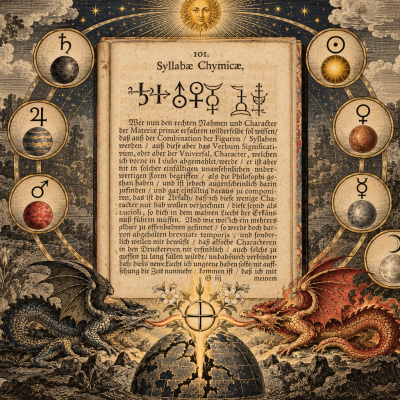
Featured Illustration Legend:The Sermon as a Path of Ascent. An ancient manuscript opens onto a landscape in which the written word gradually becomes woven thread, and the thread becomes a mountain path. A solitary traveler follows this quiet ascent toward the light.
The image evokes the article’s central movement: from the literal word to its inner realization, from the death of the old man to receptivity, community, surrender, and grace.
The hand resting upon the manuscript suggests the human participation required in the Work, while the emerging mountain suggests that the teaching itself becomes the path when it is inwardly received.
*
Today’s sharing from the Blue House of Via-HYGEIA is a weaving of the Sermon on the Mount, approached from a Gurdjieffian Work perspective. The article reads the Sermon not as a static moral code, but as a living anatomy of inner ascent.
The Gospel text of Matthew 5–7 is brought into dialogue with the psychological insights of Maurice Nicoll, the communal vision of J.G. Bennett, the lived encounters of G.I. Gurdjieff, and the mystical surrender of Johannes Kelpius, tracing a movement from the death of the old man toward the reception of grace and the birth of a new heart.
**
This essay brings the Gospel text of Matthew 5–7 into dialogue with four distinct interpretive and contemplative traditions: the psychological commentaries of Maurice Nicoll, the communal teachings of J.G. Bennett, the autobiographical encounters of G.I. Gurdjieff, and the mystical writings of Johannes Kelpius. Scripture quotations are drawn from the New Revised Standard Version (NRSV).
I. The Intuitive Progression:
A Map for the Ascent
The Sermon on the Mount is frequently misread. To the modern eye, it often appears as an impossible moral code—a beautiful but crushing list of demands that highlight our inherent shortcomings. To the literalist, it is a historical artifact, bound to the ethics of a bygone era. Yet, for those who approach it with an inner ear, the Sermon calls out as something entirely different. It is not a burden to be carried, but a map to be followed. It is a dynamic, living architecture of inner transformation.
However, a map is useless without the capacity to read it, and a journey cannot be made in isolation. To actualize the blueprint of the Sermon, we cannot rely on literalism or isolated, ego-driven effort. It requires a profound and intuitive progression: a psychological shedding of the ‘old man‘, a lived encounter with the divine, a communal embodiment of a new ethic, and ultimately, a total surrender to grace.
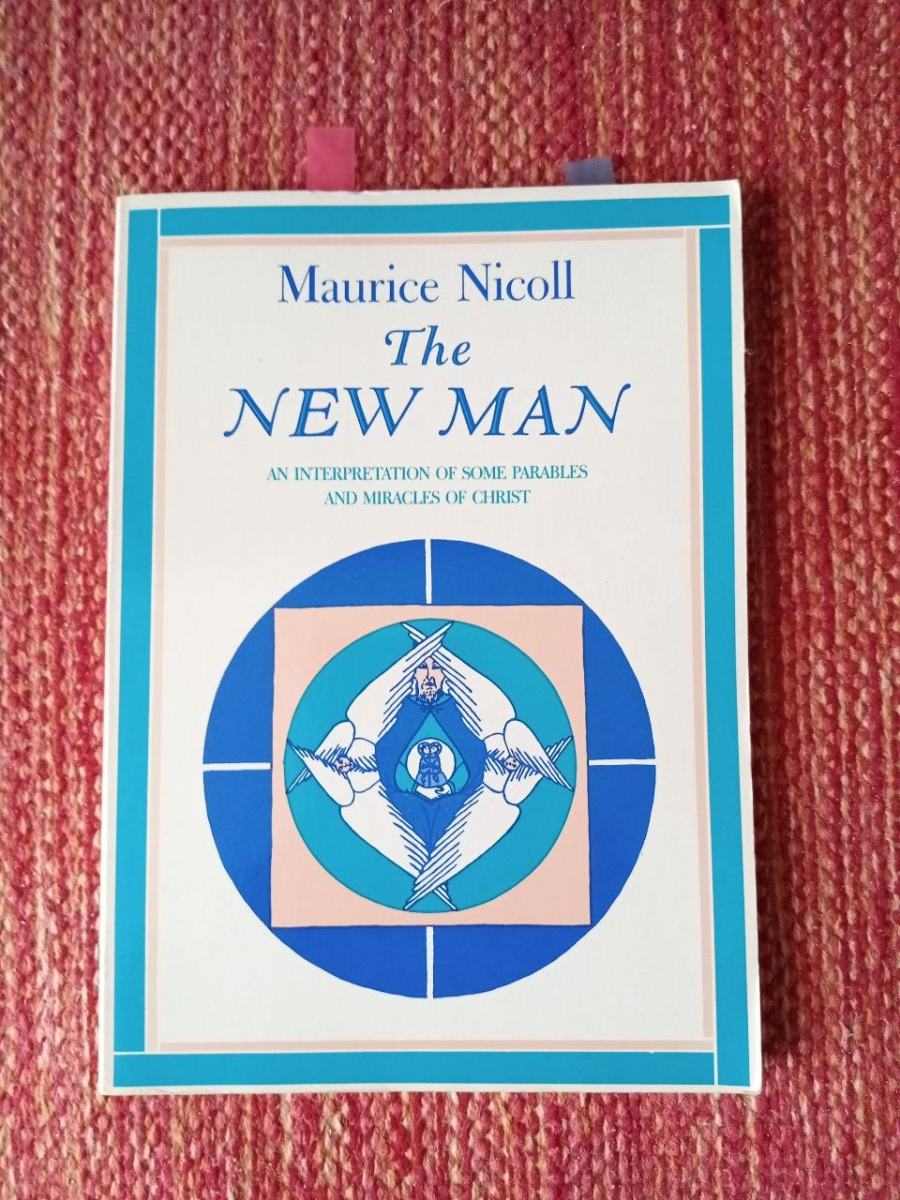
To trace this arc, we must weave a contemplative reading across the Gospel text and four interpretive voices. We begin with the Gospel text and Maurice Nicoll’s psychological threshold, as outlined in his work The New Man. We then witness the lived crucible in G.I. Gurdjieff’s account of Professor Skridlov from Meetings with Remarkable Men. From there, we turn to J.G. Bennett’s communal blueprint in Needs of a New Age Community, return to Nicoll to guard against the loss of spiritual savour, and finally arrive at the summit of surrender with the 17th-century mystic Johannes Kelpius in A Method of Prayer.
This is not merely an academic exercise. It is the anatomy of an ascent.
II. The Threshold:
From ‘Doing’ to ‘Being’
In Matthew’s Gospel, Christ’s teaching on the Mount follows the external exhortations of John the Baptist and precedes the deeper mysteries conveyed through the Parables. John the Baptist represents the outermost ring of the teaching. He thunders at the crowds, demanding repentance, and when the people ask, “What then must we do?“, he gives them external duties: share your coats, do not extort, be content with your wages.
In Nicoll’s reading, John the Baptist represents the ‘literal man‘. He asks what to do, but, according to Nicoll, he cannot comprehend the inner change required to enter the Kingdom. When John asks Christ if he is the one they are waiting for, Christ replies by pointing to inner, psychological healings: the blind receiving sight, the deaf hearing. John, grounded in the harsh, literal truth of the external Word, falls into doubt. He cannot see that the Word of God is a medium of connection between ‘earth‘ and ‘heaven‘ within a man.
Christ’s Sermon on the Mount shatters this literalism. He does not begin by telling his disciples what to do; he begins by telling them what they must be.
“Blessed are the poor in spirit, for theirs is the kingdom of heaven.” (Matt 5:3)
Here, at the very threshold of the ascent, we encounter the great reversal. To understand this, Nicoll points out that we must invert our usual assumptions. To be ‘rich in spirit‘ is not a state of spiritual wealth. It is the suffocating, closed-off state of self-love, vanity, and self-complacency. The man who is ‘rich in spirit‘ is full of himself; he ‘hears himself all the time‘. He is deaf to the higher levels because his own internal chatter drowns them out.
To be poor in spirit—οἱ πτωχοὶ τῷ πνεύματι (hoi ptōchoi tō pneumati)—is, in Nicoll’s reading, to become as a beggar in spirit: utterly empty of this false spiritual wealth. It is the man who feels his own nothingness, who knows he possesses no inner ‘I’, and who therefore has the space to actually hear the teaching of the Kingdom.
This emptying is painful, which leads directly to the second Beatitude: “Blessed are those who mourn, for they will be comforted.” (Matt 5:4) Nicoll interprets this not as outward weeping for worldly losses, but as the deep, psychological mourning for the parts of ourselves that are asleep—the grief of recognizing the ‘dead‘ within our own inner being.
And from this mourning arises the capacity for the third Beatitude: “Blessed are the meek, for they will inherit the earth.” (Matt. 5:5) The Greek word πραεῖς (praeis), from πραΰς (praus), means meek, gentle, or mild. Nicoll develops the word through the image of something ‘tamed‘, like a wild animal, setting this inner meekness against the reactive forces of anger and resentment. To inherit the ‘earth‘ is, in this reading, not simply to acquire physical land, but to receive an inner territory in which the Kingdom of Heaven can become present. One can enter this inner territory only as the wild, natural resentments and passions of the ego are gradually brought under control.
This is the threshold. Before a community can be built, before a living encounter with the divine can occur, the ‘old man‘ of self-love and literalism must be stripped away. We must become beggars. Only when we are empty of ourselves can we begin the work of the ascent, moving toward the crucible of lived encounter and, eventually, the communal binding that awaits us higher up the mountain.
III. The Crucible of the Ascent:
The Death of the Old Man
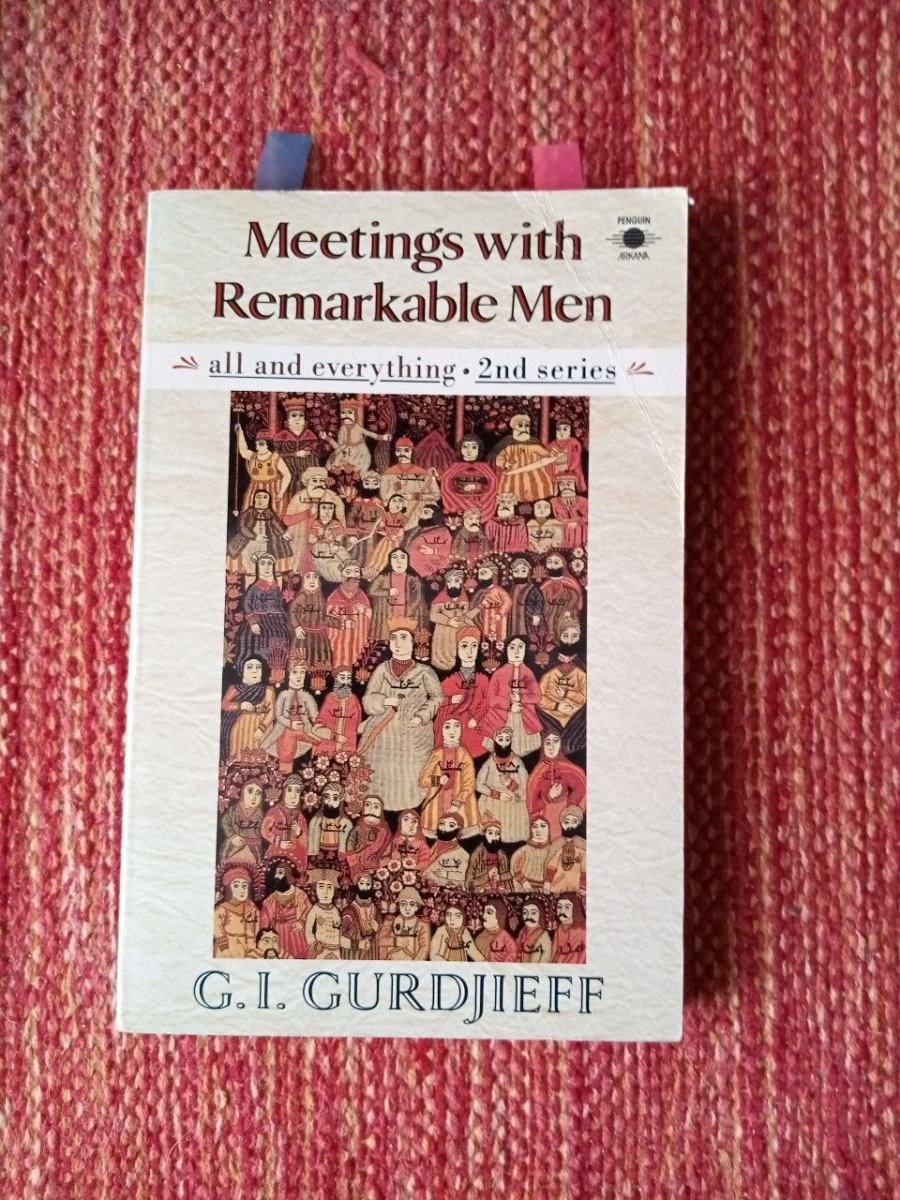
Psychological theory remains abstract until it is tested in lived experience. The shedding of the ‘old man‘ is not merely a conceptual shift; it is an event that alters one’s entire state of being. We see this illustrated in G.I. Gurdjieff’s Meetings with Remarkable Men, in the account of Professor Skridlov.
Skridlov begins his journey as an archaeologist seeking the road to self-realization by excavating the ancient ruins of Egypt. He approaches the divine with the tools of the mind, believing that truth can be unearthed like a relic. But on the slopes of Mount Bechow, he encounters Father Giovanni, a man who operates on an entirely different frequency of being.
Father Giovanni does not offer Skridlov a new philosophical system. Instead, he systematically dismantles Skridlov’s intellectual vanity. He forces the professor to confront the inadequacy of his self-satisfaction. The climax of this encounter is not an intellectual breakthrough, but a profound emotional rupture. Stripped of his defenses, Skridlov weeps.
Yet, this is not the weeping of grief or self-pity. In Gurdjieff’s account, Skridlov describes it as weeping from profound tenderness. It is the sudden, overwhelming recognition of the “actualization of Our Maker Creator.” In this moment, the rigid, calculating ‘old man‘ dies, and a new, receptive capacity for feeling is born. This is the lived reality of the Beatitude: “Blessed are the pure in heart, for they will see God.” (Matt 5:8) Purity of heart is the cleansing of self-emotions so that the heart can finally mirror the higher level and perceive the divine tenderness that was always there, obscured only by the noise of the ego.
IV. The Community of the Ascent:
Trusting the Pattern
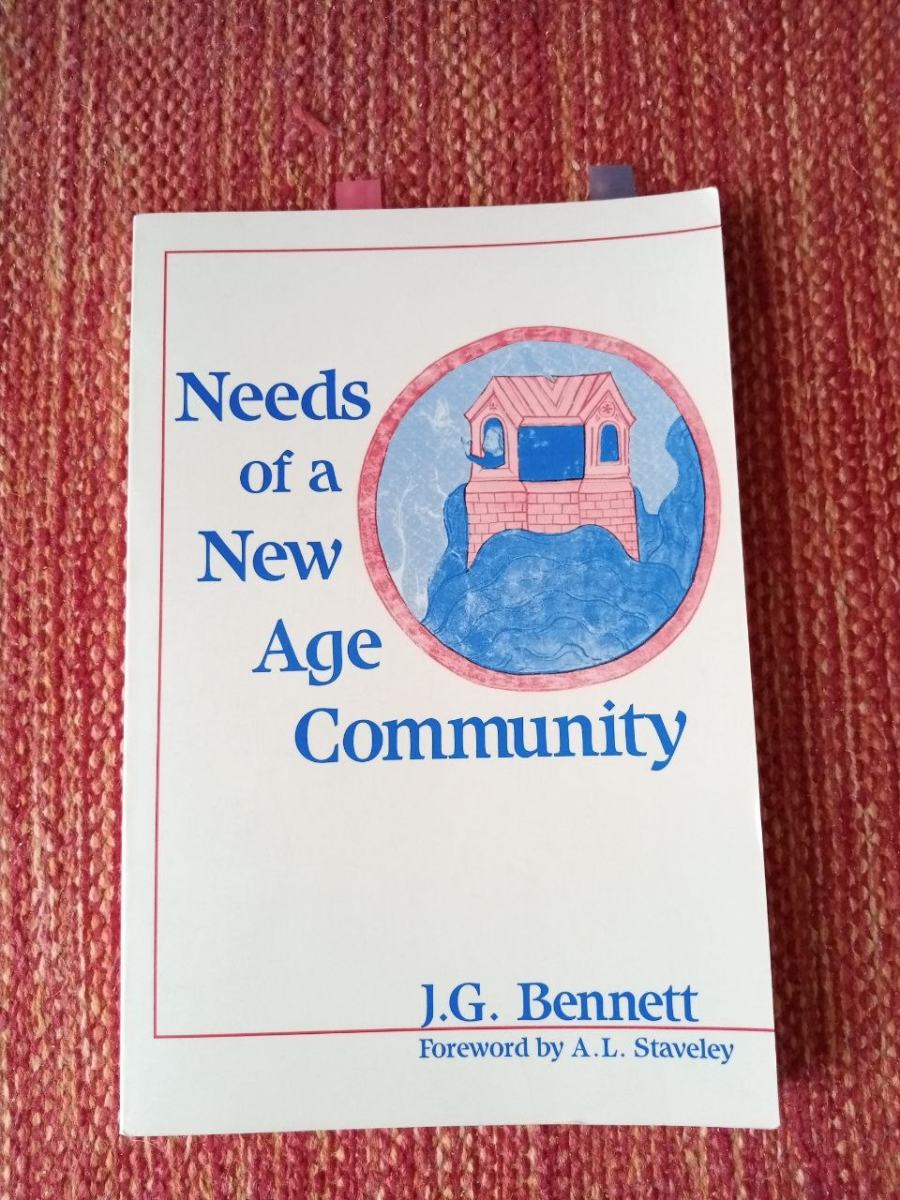
But the Sermon was never meant to remain private. As J.G. Bennett elucidates in Needs of a New Age Community, the Sermon functions as what Gurdjieff called a legominism—a structured, practical training document designed for a community preparing to survive the collapse of civilization. Just as the 1st-century Christians faced the fall of empires, so too does the modern world face the fragmentation of the pax technica, the fragile peace of the global technological order. For Bennett, the Sermon provides the blueprint for a “new age community” that can help ‘from within‘.
But how does a community of ‘beggars in spirit‘ hold together without fracturing into egoic factions? Bennett points to the Beatitude: “Blessed are the peacemakers, for they will be called children of God.” (Matt 5:9) Peacemaking, in this context, is not the passive avoidance of conflict. It is the active, conscious generation of what Bennett calls the reconciling third force.
Bennett’s concept of the third force provides a later, esoteric language through which the relational dynamic of the Sermon can be contemplated. In any human gathering, there are affirming and denying forces—opposing viewpoints, clashing egos, and inevitable tensions. The ‘peacemaker‘ is the one who can stand consciously between these opposing tensions without resorting to reaction or retaliation. Non-retaliation interrupts the automatic cycle by which opposing forces reproduce one another. This provides one way of understanding the Sermon’s teaching on non-resistance to evil. To allow oneself to be imposed upon, without retaliating from wounded pride, allows a community to withstand immense external pressure.
Instead of relying on human calculation and the desire for control, the community must learn to trust the ‘pattern‘ or the divine order. In this reading, Christ’s injunction not to worry about one’s life (Matt 6:25) points toward a profound trust: if a community aligns itself with the unconditioned world of the Kingdom, the conditioned world may be received without the same compulsive need for control.
Finally, this community operates on the principle of emanation, not ostentation. ‘Hide your work’, the teaching implies. The light of this community does not shine through visible, self-righteous observance of laws. It shines silently through what emanates from its inner being.
V. The Danger of the Salt:
Uniting Truth and Good
We return to Nicoll now because the greatest danger on the higher slopes is no longer the literalism of the old man, but the spiritual pride of the new. We can learn the psychology of the Beatitudes, understand the mechanics of the ‘third force‘, and form a community of seekers. Yet, as Nicoll warns in The New Man, there is a flaw that can render this effort useless. It is the danger of the salt losing its savour.
“You are the salt of the earth; but if salt has lost its taste, how can its saltiness be restored? It is no longer good for anything, but is thrown out and trampled under foot.” (Matt 5:13)
For Nicoll, salt becomes a symbol of the conjunction of two distinct elements: Truth and Good. The Truth is the knowledge of the teaching—the mechanics of inner work, the understanding of the Beatitudes. The Good is the inner desire for the actual transformation, the longing for union with the divine.
The salt loses its savour when a person practices the Truth of the teaching without the inner desire for the Good it leads to. They acquire the knowledge, but they do not actually want to change. They use the teaching to feed their self-esteem, to feel superior to others, and to justify their own righteousness. The teaching, which was meant to be a solvent for the ego, becomes a fresh source of vanity and rivalry. It becomes salt without savour.
This is the exact fragility that a spiritual community must guard against. If a community is built merely on the shared ‘Truth‘ of a doctrine, it will inevitably fracture into factions and self-righteousness. The only antidote is the conscious, continuous effort to unite Truth with Good internally. As Christ commands, “Have salt in yourselves, and be at peace with one another.” (Mark 9:50) Peace in the community is the active, living proof that the members have united the knowledge of the Work with the genuine, humble desire for the Good.
VI. The Summit and the Surrender:
The Plea for Grace
We have mapped the psychology, established the communal ethic, and guarded against the traps of the ego. But there comes a point on the ascent where human effort reaches its limit. The ‘old man‘ can be recognized, the ‘third force‘ can be invited, the ‘salt‘ can be preserved—but the final transformation cannot be manufactured. It must be received. Grace is not a supplement to effort; it is the ground of effort.
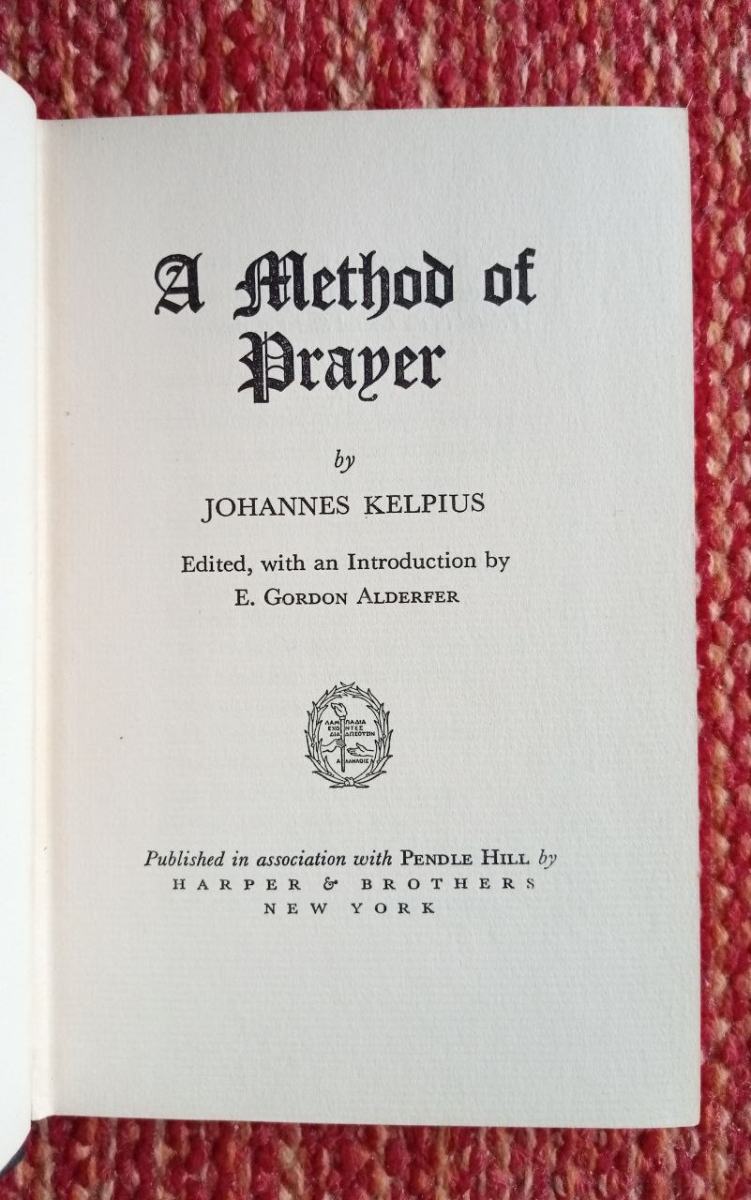
This is the moment of ultimate surrender, captured by the 17th-century mystic Johannes Kelpius in the final lines of his A Method of Prayer. After describing the intense inner struggle of the soul—the division between the desire to resign oneself to God and the fear of losing one’s own ‘prop‘ of self-love—Kelpius points to the only way out:
“Thus must we refrain from all Conversation with the Creatures, especially with ourselves, (which consists in Selfishness) through Self-denial, and ascend the Mountain (spiritually) which is the highest Degree of Contemplation.”
Notice the return to the mountain. Just as the disciples climbed the mountain to hear the Sermon, and just as Professor Skridlov wept on the summit of Mount Bechow, Kelpius recognizes that the highest state of being requires a total withdrawal from the ‘conversation‘ of the ego. It is the final, radical emptying of the ‘beggar in spirit‘.
From this summit, the work shifts from doing to joining. We do not pray our own prayer; we step into the current of the divine prayer itself:
“Let us ascend the Mountain with Jesus Christ; let us pray as he has prayed; let us contemplate, let us love; so shall we perform God’s Prayer. O divine Jesus! I join with thee in thy Prayer which thou hast in Solitude by Night prayed; in this Prayer of God grant that we may perform no other Prayer.”
The psychological death of the ego, the harmonious binding of the community, and the visceral tenderness of the heart all converge here. The seeker realizes that the ‘Kingdom of Heaven‘ is not a place to be reached, but a state of being to be entered by grace.
Kelpius concludes with a plea that brings the article back from psychology and communal technique to grace, Spirit, and the creation of a new inner vessel:
“O God! send this internal Spirit over the whole Earth; so will it be a-new created. Let this Spirit rest on the Waters of thy usual and wonted Grace, which thou offereth to all Men; so will it distribute an overflowing Fruitfulness. O give us new Hearts! Amen, O Jesus!”
VII. Conclusion:
The Circle Closes
When we weave these voices together, the Sermon on the Mount reveals itself as a living anatomy of human transformation.
The underlying architecture of this ascent is a profound shift in the meaning of emptiness. The journey begins with the ‘poverty of spirit‘—the recognition of our own nothingness. But this poverty does not culminate in a void. Rather, it creates the necessary space, the receptivity, in which the divine can act. Through the death of the old man, the binding of the community, and the surrender of the will, this initial emptiness is gradually filled.
The mountain is not a metaphor for a distant, unreachable heaven. It is the state of being we climb toward in this very life. The Beatitudes are not a checklist of our moral failures, but the very air we breathe as we ascend.
The Sermon on the Mount is not a burden to be carried. It is a mountain to be ascended, together, until we are empty enough to be filled. The new heart is not the reward of the ascent; it is the gift that makes the ascent possible.
Sources / Works Cited
- The Holy Bible, New Revised Standard Version (NRSV). Matthew 5–7; Mark 9.
- Bennett, J.G. Needs of a New Age Community: Talks on Spiritual Community and Fourth Way Schools. Sherborne: Coombe Springs Press, 1977. (Chapter 6: The Sermon on the Mount, Parts 1 & 2).
- Gurdjieff, G.I. Meetings with Remarkable Men. New York: Penguin Arkana, 1963. (Chapter: Professor Skridlov).
- Kelpius, Johannes. A Short, Easy and Comprehensive Method of Prayer. New York: Harper, 1951. (Final lines, circa 1700.) The Harper edition omits the final page of the text. A complete version, including this missing ending, is available at Pass the WORD, which was prepared from a separate source-copy of the 1761 original that preserves the final page.
- Nicoll, Maurice. The New Man: An Interpretation of Some Parables and Miracles of Christ. London: Stuart Watkins, 1950. (Chapter 9: The Sermon on the Mount).
***

Related Articles


Leave a Reply