
Circle of Transmission: The Living Loom
Thomas Vaughan: The Latin Elegies — Mortality, Metaphysics, and the Healing Power of Confrontation
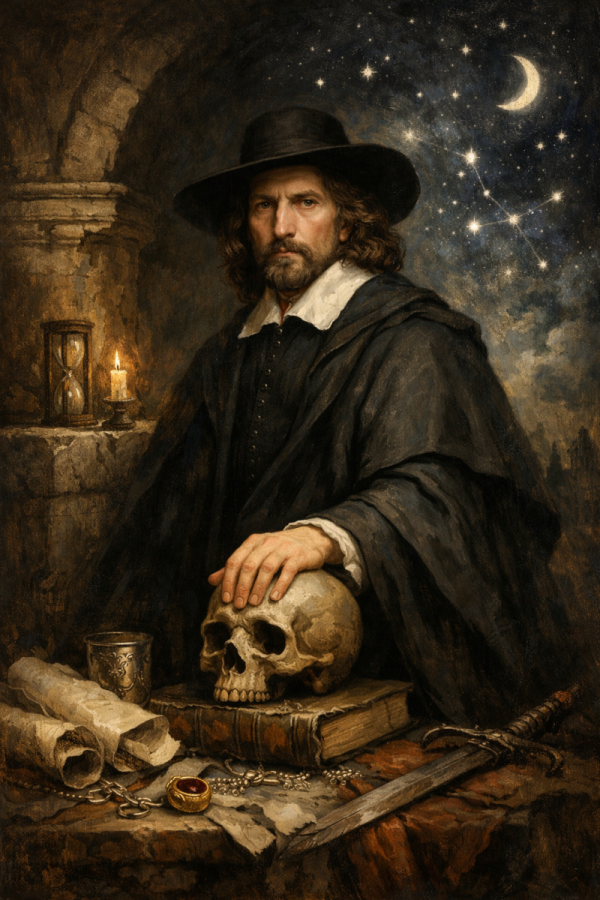
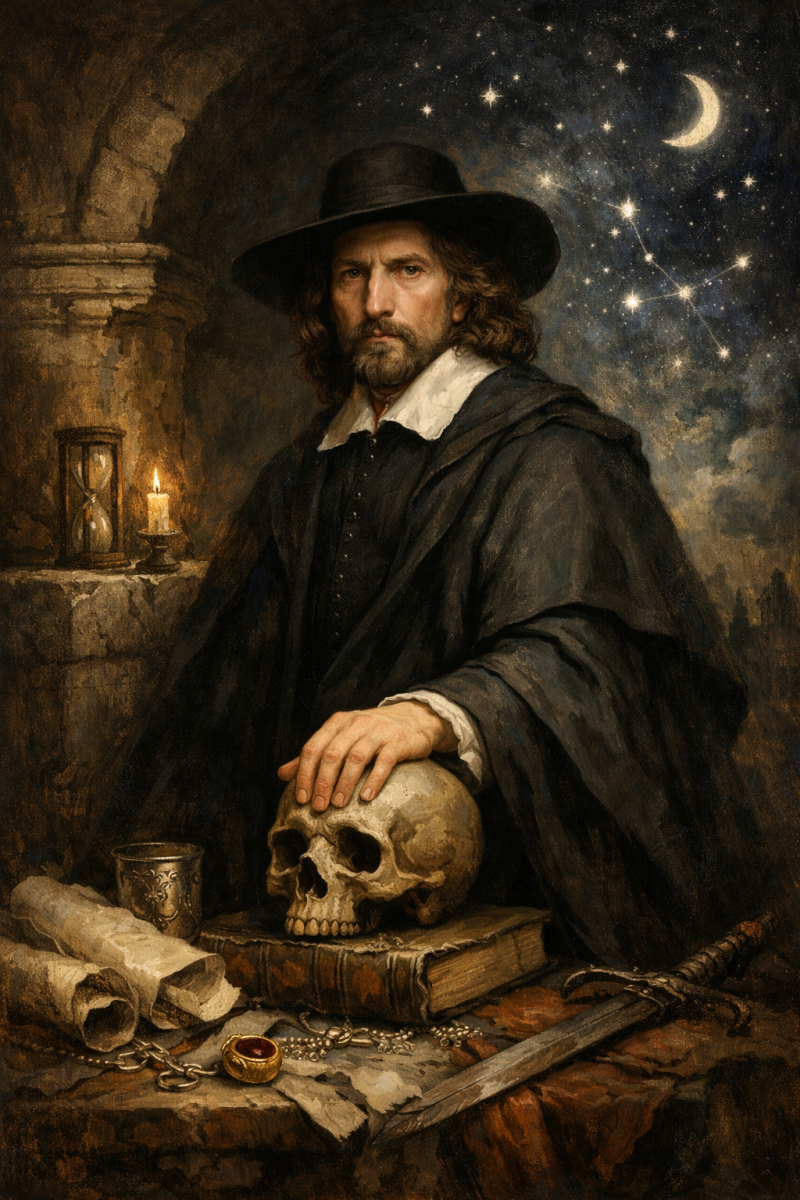
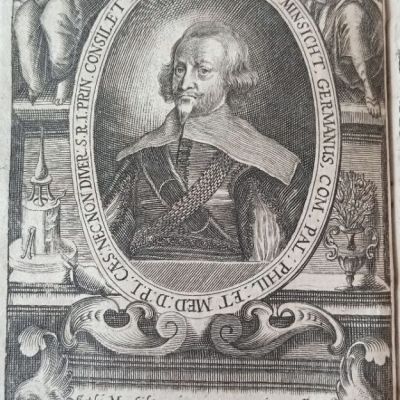
A symbolic portrait of Thomas Vaughan,
a.k.a Eugenius Philaletes.
*
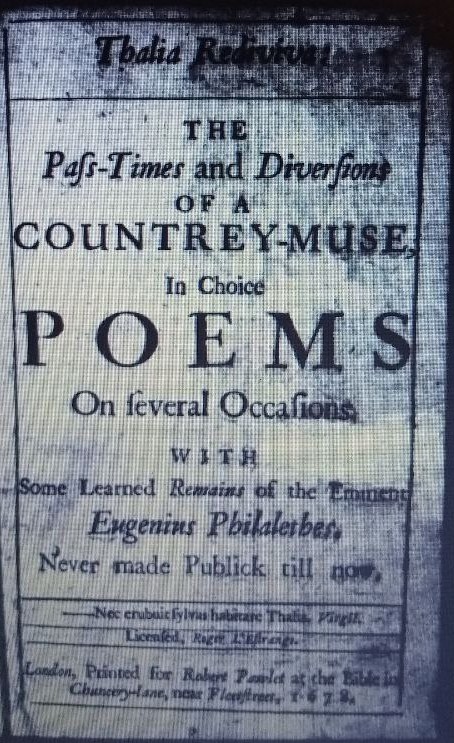
Today’s Sharing from the Blue House of Via-HYGEIA is a rare offering: the first English translation of Eugenius Philalethes’ posthumous Latin elegies — Vertumnus, Cynthia, and shorter poems and epitaphs — preserved by his brother Henry Vaughan and published in 1678 as an appendix to Thalia Rediviva, under the title: ‘With Some Learned Remains of the Eminent Eugenius Philalethes, Never made Publick till now’.
On the title page, Henry placed a quotation from Horace’s ‘Epistles’ (II, i, 13): Urit enim fulgore suo, qui praegravat artes infra se positas; extinctus amabitur idem’ (‘He who weighs heavily upon the arts beneath him burns with his own splendour; dead, he shall be loved’).
Poignant for a posthumous collection — it suggests that true recognition comes only after death. And indeed, by 1678 — more than a decade after Thomas Vaughan’s passing — his voice was being gathered, as if the prophecy had fulfilled itself.
This selection opens with ‘Vertumnus’ — a satirical, anatomical confrontation with death — and ‘Cynthia’, a pastoral elegy widely understood as a lament for his wife, Rebecca. It continues with shorter poems and epitaphs — including the ‘Stella’ sequence, which may be read as another register of the same grief.
Earlier, we shared an extract from Thomas’s ‘Lumen de Lumine‘, where he meets the Muse Thalia. Henry’s title — ‘Thalia Rediviva’ — now reads as a tender, deliberate echo: a resurrection of his brother’s voice through poetry.
Curated and preserved by Henry as a final act of brotherly devotion, this Latin appendix is not merely a collection — it is a testament, a confession, a revelation. We offer this version as a tasting — a glimpse into a lost world of voice and vision. May it inspire a scholarly edition to rise in its wake.
**
A Contextual Introduction
I. The Brotherly Bond: Henry as Curator, Thomas as Ghost
Thomas Vaughan (1621–1666) — writing under the name Eugenius Philalethes (True Lover of Knowledge) — was a Welsh metaphysical poet, mystic, and alchemist whose work moves between theology, philosophy, and poetic imagination.
His elder brother, Henry Vaughan (1621–1695), is better known — especially for ‘Silex Scintillans’, where divine light and grace are central. Thomas, by contrast, is darker, sharper, more defiant. His poems do not seek comfort — they demand confrontation. Death is not a passage to heaven, but a mirror held up to vanity, power, and decay.
His Latin — precise, classical, often brutal — is the language of the learned, but also the language of the dead: the tongue of epitaphs, of Roman satire, of Horace and Juvenal turned inward.
Henry’s ‘Thalia Rediviva’ — ‘Thalia Revived’ — is a joint volume of poetry by both brothers, published after Thomas’s death. The title is laden with meaning: Thalia, muse of comedy and idyllic poetry, is ‘revived‘ — not by Thomas’s own hand, but by Henry’s.
Henry, who outlived his brother by nearly thirty years, did not merely collect Thomas’s poems — he revered them. He preserved them in Latin — a language Thomas chose not for obscurity, but for gravity. Latin was the language of law, liturgy, epitaphs — the language in which one speaks to eternity.
In this appendix, Henry does not edit, soften, or moralize. He presents Thomas’s voice — unvarnished, unapologetic, unflinching — as if to say: ‘Here is my brother. Not the saint, not the sage — but the man who stared into the abyss and wrote what he saw’.
Their relationship — documented in letters and marginalia — was one of deep affection, intellectual kinship, and mutual respect. Henry called Thomas ‘the most learned and ingenious of all my brothers‘. Thomas, in turn, dedicated poems to Henry.
This Latin appendix is thus not only a literary artifact — it is a funeral rite, a memorial, and a dialogue between the living and the dead.
*
II. The Metaphysical Style: Satire, Decay, and the Sublime
Thomas Vaughan’s metaphysical style — as seen in ‘Vertumnus’ and ‘Cynthia’ — is not the gentle mysticism of Donne or Herbert, nor the devotional lyricism of his brother Henry. It is satirical, visceral, anatomical.
-
In ‘Vertumnus’, Death is not a gentle reaper — he is a decaying corpse, mocked for his lost power, hollow titles, false wealth. The poem is a memento mori turned inside out — not a reminder to prepare for death, but a revelation that death has already devoured the living.
-
In ‘Cynthia’, love is not transcendent — it is consumed by Cupid’s fire, transformed into grief, and ultimately absorbed into floral decay. The beloved is not saved — she becomes part of the earth, her beauty dissolving into the cycle of death and rebirth.
‘Cynthia’ is Thomas Vaughan’s elegy for his wife, Rebecca — written after her death in 1658. It draws on pastoral and mythological conventions to express a grief that is both deeply personal and enduring. It is not a literal portrait — but a spiritual and poetic resurrection. In ‘Cynthia’, Rebecca lives — not as a corpse, not as a memory — but as a force of nature, a goddess of love and loss, a garden that blooms and dies and blooms again in the poet’s soul.
The shorter poems — epitaphs, dedications, political allegories — are sharp, ironic, and often cruel. They do not console — they accuse. They do not uplift — they unmask.
The ‘Stella’ sequence — Ad Fontem, In Stellam Lachrymantem, In Eandem acra febre dormientem, Ejusdem Epitaphium — are very likely also elegies for Rebecca. Though unnamed, their intimacy, physicality, and emotional depth — together with their chronology and thematic resonance with ‘Cynthia’ — strongly suggest that Stella is another name for Rebecca, refracted through a different register of grief: as a star — distant, luminous, mourned. They are not separate sequences — but two voices of the same sorrow.
This is metaphysical poetry not as spiritual ascent, but as descent into truth — the truth of the body, the truth of power, the truth of time’s erosion.
*
III. Why This Matters for Bibliotherapy
At Via-HYGEIA Bibliotherapy, we do not offer literature as escape — but as mirror, medicine, and meditation.
Thomas Vaughan’s Latin poems are not for the faint of heart. They are not meant to soothe — but to shatter illusions.
They speak to:
- Grief — not as loss, but as transformation (‘Cynthia’, ‘Stella’)
- Mortality — not as end, but as exposure (‘Vertumnus’)
- Power — not as glory, but as decay (‘Gustavus Adolphus’, ‘Carolus Primus’)
- Identity — not as fixed, but as dissolving (‘Epitaphium Gulielmi Laud’)
In ‘Vertumnus’, ‘Vertumnus’ is a proper noun — the name of a Roman god — used here in the vocative case (Vertumne) as a direct address. In the poem, it functions as a metaphor for Death or the corpse — a satirical, ironic personification, not a literal deity. The corpse is addressed not with reverence, but with mockery — a reminder that no status, no wealth, no title survives the grave.
In ‘Cynthia’ and the ‘Stella’ sequence, love is not eternal — it is consumed, transformed, and reborn in the earth. ‘Cynthia’ is the beloved in life — the garden, the muse, the lover. ‘Stella’ is the beloved in death — the weeping star, the fevered sleeper, the buried urn. Two facets of the same woman — Rebecca — seen through different lenses of grief.
These are not poems to be read lightly — but to be lived with. They invite the reader to confront: What will remain of me? What have I built that will outlast my body? What illusions do I cling to — and what truths am I afraid to face? This is the core of bibliotherapy: not to avoid pain, but to walk through it — with language as guide.
*
IV. Conclusion: The Healing Power of Unflinching Truth
In a world that often demands we ‘move on‘,’ ‘heal‘, ‘be positive‘, Thomas Vaughan’s Latin poems offer a different path: to look directly at what we fear — and to find, not comfort, but clarity.
They are not for everyone. But for those who are ready — for those who seek not to escape death, but to understand it — they are a gift.
Henry Vaughan gave us his brother’s voice — not to glorify him, but to let him speak. We now give you that voice — in English — for the first time. May it serve you — not as balm, but as mirror.
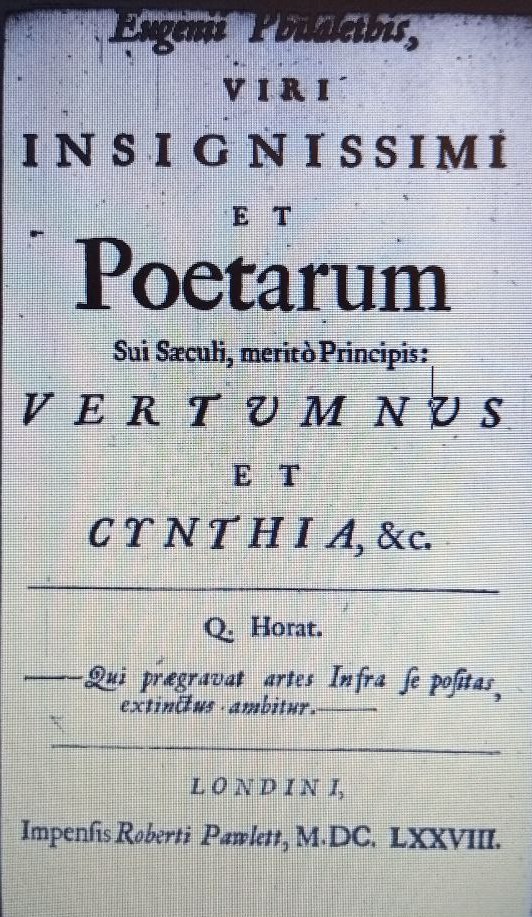
Note: 〈◊〉 represents textual loss or damage, and since the poems are meant to be experienced as they are — with their gaps and silences —
Eugenius Philalethes — First English Translation
of the Latin Appendix to ‘Thalia Rediviva’ (1678)
*
Dedicatory Poem —
Signed E.P. (Eugenius Philalethes)
To the Most Honored Sir Matthew Herbert,
His First and Foremost Instructor
Accept these first fruits, beloved Herbert — and your own,
Such as you shaped, learned Mathaeus, in your own way.
My Muse follows you with a different effort,
Fading like a painted panel before living roses.
So the student who gathered honey from sacred Hymettus
Preserves the first sweetness of thyme, once poured.
What harvest was yours in green grass, Mathaeus?
This compensates you — Ceres, ripened by your toil.
You cannot, in our furtive quarrels of life,
Say you did not reap a tenth of my field.
E. P.
Notes:
‘Mathaeo Herbert‘: ‘Matthew Herbert’, ‘the rector of Llangatock, Reverend Matthew Herbert. Herbert helped to endow the boys with an interest in hermeticism, a set of philosophical and religious beliefs based primarily upon the writings attributed to Hermes Trismegistus. The movement can be traced back to Alexandria, where it unified elements of religious mysticism with Hellenistic philosophy and Egyptian occultism. Vaughan’s brother would become known for his passion for this strain of philosophy, as well as for alchemy‘. (source: Joe Santamaria at poemanalysis dot com). Some scholars says that actually behind the figure of the mentor, hides, in a coded reference, his brother Henry.
‘Primitias’ — First fruits — an offering, often religious or scholarly. Thomas presents his poems as a gift to his mentor.
‘Musa dissimili conamine‘ — Muse with different effort — Thomas acknowledges his style differs from his mentor’s or from his brother Henry’s.
‘Alumnus Hymetti‘ — Student of Hymettus — Hymettus is a mountain near Athens, famed for its honey. A metaphor for learning from classical sources.
‘Ceres cocta‘ — Ripened Ceres — Ceres, goddess of grain, here symbolizing matured wisdom or reward.
‘Decimâsse meam‘ — Reaped a tenth of my field — a biblical allusion (Leviticus 27:30), suggesting Reverent Herbert, or his brother Henry, deserve a share of Thomas’s work.
*
‘Vertumnus’
Hark! Vertumnus, I am here, leaning on your tomb,
Feasting on plunder: You who once fled the chaos your hand began,
Now hold the peace you won — in death.
Sleep is not permitted. I shall rouse you, proud ash, from slumber.
No horsemen or foot soldiers stand guard here:
No sword at your side, no attendant —
No lion skin flung over shoulders,
Mocking our humble rags with its mouse-fur trim.
That age is past when it was necessary to fear you —
When safety lay in trembling. We fear not ghosts, nor spirits unbound;
Nothing frightens me, even with nostrils shut —
Not disease, not the stench of goats, nor excrement, nor worms
That gnaw your anxious flesh; your bed turned to dung.
Why do you not speak? Will you not boast of palm or leg?
Stretch out your hands — here are your revenues, your taxes,
Your goblets, silver, gold ring like Hannibal’s;
Sejanus’s horse is led to you — or if these displease,
A harlot stands ready; take her at least into your pit, Vertumnus.
Not even her? What then? You abandon your follower?
As I see it — NO PRIZE IS TAKEN FROM THE GRAVE.
Raise your head, and again with hoarse voice snap your fingers —
Enough barking boldly at your enemy.
O what a face! Now I should recite a litany —
If I could; but it is a wolf — I am silent.
Even wrathful Minerva, brandishing the Gorgon,
Could not hold such visages.
There were eyes, good sirs, that surpassed Lynceus, Galileo with his mirror;
And the Gauls saw prophylactic tumors;
By which very means the Spanish deceit emerged from the egg;
Here, the Scots saw tents first,
New torches in the constellation Cassiopeia.
Now here is nothing but blind, hollow passages,
Worse than this filthy hole through which
Claudius, belly full, was wont to defecate.
The face is devoured, the great proboscis gnawed away,
The nose entirely eaten through.
It would make Tongilus and the rhinoceros look beautiful.
O gaping gums! Where now your medicines, your pastes
That scraped and whitened teeth stained with rust?
Not even unhappy Hecuba, with a better face,
Opened such chasms — barking at the Greeks with canine maw,
From shameful throat.
Are you, humble, worn ash, seeking to erase the decrees of the pious,
To smother the divine light of the Word with night and shadows —
And prefer funeral fires to the sun?
Do you think you will endure? Whose broken arms,
Whose care, whose scattered corpses of multiplied fate
Are now displayed? What great ruin you have shown —
The image of immense disaster, forced deaths of many,
All gathered in Vertumnus’s single tomb?
You are equal ash, equal mud, like the dust
From which you are made — a soldier’s triobolus, or a market man
Whose stench pollutes the Quintana — heaven grants no equal fate.
These wretched wages make lives for sale,
Souls traded like swine by a market woman.
You do not drink in the Nymphaeum with the herd;
No purple-clad comrade marches with you, no general;
You scorn the Parmosoi — whenever chariots gather for battle,
You laugh at the blind man, at him who limps on one foot.
Is it not shameful to double your crime — to crush the wretched
With a second death, and refuse them solace,
Whom your wooden-footed flight made blind, one-eyed?
Now I know where your parsimony leads —
A brothel keeper to be paid, a harlot with a hooked nose,
Wrinkled Venus who sniffs the brothel.
The Republic is safe with these tools.
If lively wines remain — you have what to fight with;
Mars dwells in your tongue all night,
You breathe fumes between your goblets —
Like Amsanctus vomits, or Vesuvius burning.
A great stratagem! And with what will you conquer
The Chinese empire, Buda, and the lofty Ottomans?
Proceed, storm the world — the globe of earth shall serve you,
You will place Arcturus, the Cross, and the Medicean stars
At the farthest edge of your kingdom.
Speak of muskets and flames, of iron balls and engines —
With your words, like a catapult, shatter neighboring ears.
By this path, the victor’s palm returns — you must seek it thus.
Do you think Hannibal did this — when Rome buried the dead at Cannae,
And the army was cut down by the one-eyed Gradivus?
Weigh your final days, let the end of this tale be before your eyes:
What has this unrefined custom profited you now?
What good is sound, and swift voice,
Swearing oaths, and a tongue weary with insults?
Who marvels at you? Who thinks your thunder worth more
Than the flatulence behind you?
Yet with these evils you hoped your name would rise to the stars,
And that our descendants would see some constellation —
A brute or a man — rising, burning the heavens like Hercules,
With English fire.
The Appian Way is closed — once it swelled with Julius
Who rose to the stars, and he who expired on his buttocks, crawled back.
Will you then, Vertumnus, be numbered among these heroes?
If the buffoon pleases the gods, if sacred lust
Is weighed on Jupiter’s scales, and Bacchanalia are sacred —
Who will climb to heaven more justly? The gate will open wider:
Sit, Vertumnus, on the highest throne.
Whoever you are — who exercises whores, deceit, murder, theft,
And the hidden armories of the mind —
Here, strive; the greater Cicero calls you from the tomb.
Written in this ash, held in those hands —
Learn this: Life is brief, and passes; I have gained nothing with these weapons!
Tell me — who takes these necromantic precepts for himself,
And believes himself wiser than the urn?
I find not one — whose counselor is Death.
You move laws and the forum, and the barbaric lips of lawyers —
To widen your estates, you add to your own
A few ill-gotten acres of the poor.
You think these great — beyond the mockery of fate —
While you tear apart the age granted you,
And treat serious matters as trifles;
How often, heedless, you chew over these things within your kitchen:
“May my wishes be fulfilled — if not by present light,
At least by a second, a third.”
You do not see death suddenly rushing into the ages —
Unwary, you believe days — like sweetmeats —
Can be snatched, and life prolonged by theft.
Time (alas!) has no theft, no plunder of years —
Each man has his own numbers 〈◊〉. High 〈◊〉 fame
Drives us; we hasten too much — no one hears
The footsteps of fate. Here you build towered palaces,
Marble mountains — and mock the royal tomb with gloom.
Indeed, even tombs are the very chambers — which 〈◊〉
See the lifeless, and sad funerals; nor does
Wicked posterity stand — nor can it be written on the threshold:
“Here he lived.” If you wish to seek the shortcuts of our soul —
Those alone which faith purchases — aim high to heaven,
Leave earth and delay behind.
These are true riches, true furniture —
Which place divine houses and estates among the stars.
Notes:
‘Vertumnus‘ — Roman god of seasons, change, and transformation. Used here as a metaphor for Death or the corpse — ironic, since he once could change form to win love, but now is fixed in decay.
‘Hannibal’s ring / Sejanus’s horse‘ — Allusions to power, luxury, and downfall. Hannibal (defeated Roman enemy), Sejanus (Roman prefect executed for treason).
‘Minerva / Gorgon‘ — Minerva (Athena) brandishing the Gorgon’s head — a classical image of terror. Even she cannot bear the corpse’s face.
‘Lynceus / Galileo‘ — Lynceus (mythical figure with superhuman sight); Galileo (modern scientist with telescope) — both saw what others could not. Here, they see decay.
‘Claudius… cacare solebat‘ — Emperor Claudius, known for his corpulence and bodily functions — used here to mock the corpse’s degradation.
‘Tongilus & Rhinoceroten‘ — Tongilus (possibly a fictional or misspelled name — perhaps ‘Tongilus’ = ‘Tongue’ + ‘ilus’ = diminutive; or a corruption of ‘Tongue of the Rhinoceros’) — used for comic effect — even grotesque creatures look beautiful by comparison.
‘Hecuba‘ — Queen of Troy, who, after her city’s fall, barked like a dog at the Greeks — symbol of degraded nobility.
‘Parmosoi‘ — Possibly ‘Parmosoi’ = ‘Parmosus’ (a name, or a corruption of ‘Parmosus’ — a type of shield or soldier). May refer to military figures the corpse mocks.
‘Amsanctus / Vesuvius‘ — Volcanic, fiery imagery — Mars (god of war) in the tongue — the corpse’s speech is destructive.
‘Arcturus, Cross, Medicean stars‘ — Astronomical symbols of power and legacy — the corpse imagines ruling the heavens.
‘Hannibal… Gradivus‘ — Gradivus = Mars, god of war. Hannibal’s defeat at Cannae was a catastrophe — the corpse’s ambition is equally doomed.
‘Appian Way… Julius… who expired on his buttocks’ — Refers to Julius Caesar (rose to stars) and possibly Caligula or Nero (died ignobly) — contrast between glorious and shameful death.
‘Cicero‘ — Roman senator and orator, called from the tomb — a moral authority condemning the corpse.
‘Necromantic precepts‘ — The corpse’s teachings are false, magical, and self-deceived.
‘Triobolus / Agoraeus‘ — A soldier’s pay or market man — the corpse is reduced to the lowest social rank.
‘Quintana‘ — A street or market in Rome — stinks — symbol of moral decay.
*
‘Cynthia’
The pure day had passed, and the stronger fire
Of heaven — Phoebus had made prelude to the coming night,
Bearing twilight flames into light.
Cynthia, feeling the soft warmth and gentle stars,
And light breezes wandering through the air,
Went forth, entered her gardens and sacred blooms,
Walked among the flowers.
While she carefully explores every part around her,
Fires dart from her eyes, and a purer breath
From her lips trembles — she breathes the rose-scented Diapasma.
Her hair luxuriates in gold, her flowing robe
Follows the playful nymph in splendid fabric.
Here she seeks the pleasant winters of shade, and cold;
Here alone she plucked summer roses, and wove
Red into white — removing her veil from her head,
She taught her cheeks to match the colors of flowers.
Narcissus, boy, plucks you! And you, O! his own 〈◊〉
(For he fell, lying uncared for,) Privets!
She links lilies with violets, and sacred amaranths
Into one bouquet — marries in a knot
The scattered loves of flowers, and with mirror removed,
Recognizes her form and face in the herbs.
This was she. But while gathering the living offspring of Flora,
Glowing — 〈◊〉! Death strikes — 〈◊〉!
Now, O now, let forests perish, and the living souls
Of gardens, and plants! And your garland — 〈◊〉 farewell!
Behold! The Venuses collapse, bound by great Cupid —
The hope of my life, my striving — the pleasant garden is stripped,
And stolen, the rosebeds stand sad, flowerless.
O if not beyond 〈◊〉! If only my Cynthia
Had remained like herself! 〈◊〉 Fates rule —
And all lessons in better things are in vain.
Golden Cupid rises, with greater splendor,
Approaches the nymph, breathes forth prouder fires.
His wings distill nectar, and with divine flight
Scatters ambrosia into the heavenly airs.
As he stood, I saw him swiftly balance the arrow —
Feathered with his own plumes; the missile stood fixed,
And kindled new flames — not hard in 〈◊〉.
She burns, and embraces her own ruin
With caresses — fosters 〈◊〉 death in her very bosom.
O how many times pitiable! Cupid, you have defiled
This goddess — while your face surpasses even your mother’s.
But I, looking ahead, felt the departure of 〈◊〉
Purple and snow-white flowers — dying with the virgin.
No roses blush mingled with warm frost,
Nor do trembling flames play among her lilies.
So great a Venus wilts — in the sad forest’s crown,
Golden, her neglected hair hangs loose.
Nothing remains 〈◊〉 — no Hyacinth, as once,
Blooms on her lips; Tempe lies in funeral rites.
I do not deny (though your judgment is just) that heavens
Are cruel — fallen stars are recalled to high heaven,
Withdrawn from sight, the whole sky turning away.
She groaned, wept — my Cynthia, sadder in fate,
And remained not happy in any whiteness.
Notes:
‘Cynthia‘ — Moon goddess, Diana — used here as a stand-in for Rebecca Vaughan, Thomas’s wife, who died in 1658.
‘Phoebus‘ — Apollo, god of the sun — sets the scene of day’s end, night’s approach — a metaphor for death.
‘Diapasma‘ — A Latinized Greek word for a perfumed powder or sweet breath — here, suggesting the sweet, rose-scented exhalation of life.
‘Narcissus… Privets‘ — Narcissus (who fell in love with his own reflection) — and Privets (a type of shrub). The line suggests Cynthia is both the beloved and the object of self-love — and that her death is a fall, unheeded.
‘Flora‘ — Goddess of flowers — Cynthia gathers her “offspring” — her beauty, her life — and is struck down.
‘Venuses collapse‘ — The goddesses of love — love itself is destroyed by Cupid’s fire.
‘Cupid… defiled this goddess‘ — Cupid, god of love, is here a destructive force — he does not elevate, but consumes.
‘Purple and snow-white flowers‘ — Symbols of nobility and purity — dying with Cynthia.
‘Hyacinth‘ — Flower born from the blood of Ajax — bears the letters ‘AI! AI!’ (Alas! Alas!) — a cry of grief. Suggests Cynthia’s death is a heroic, tragic loss.
‘Tempe‘ — Valley in Greece, associated with beauty and pastoral poetry — now in funeral rites — symbol of lost paradise.
‘Heavens are cruel‘ — A direct challenge to divine justice — the stars are withdrawn, the sky turns away — God is absent.
*
To the Distinguished Man, Dr. Thomas Powell of Cantref, Doctor of Sacred Theology
He is a friend of the snowy mind, and warm to me;
Always dwelling in the country, yet a city companion;
Nor can I know what roles my own self plays.
Not in distant courts, with scales and peace,
Does he exercise the law — what is forbidden, crime;
In worn forum disputes, he joins new ones.
Not a guest in others’ affairs, he does not idle;
Nor does he seek by art whatever is unlike God.
But from his mouth he pours — not poor in his own —
Roses, salts of wit, and manly jokes;
Among the learned, humble and supreme at once,
Whom here, in loose company, I lose — he composes the days.
Notes:
‘D. Thomam Poellum‘ — Likely Thomas Poole, a theologian — possibly a friend or mentor of Thomas Vaughan.
‘Snowy mind‘ — A metaphor for purity, clarity, or wisdom — the mind unclouded by passion or error.
‘Roses, salts of wit‘ — ‘Roses’ = beauty; ‘salts of wit’ = sharp, pungent humor — a blend of elegance and intelligence.
‘Composes the days‘ — He brings order, harmony, and meaning to daily life — a healer of chaos.
*
To the Spring, from which Stella was accustomed to drink
O mirror of my Star! Book
Of sweeter things, where it paints chaste fires —
Smiling shadow, and lover’s Echo
Whose too-pleasing, plaintive whisper
Slips into flight, green tufts
Combing curls, and pouring glass
Here Venus may be created from foam —
Offering herself as succubus, and old goddess;
Who with new form and faith, will dissolve
Fairer face, better scene —
From Narcissus’s fountain, and his face’s waves —
These make a richer mirror, yet none
Here light games flutter on white wings,
And chaste Venuses;
This water gave death to its cultivator,
This gave me life.
Notes:
‘Stella‘ — ‘Star’ — likely Rebecca Vaughan, Thomas’s wife.
‘Mirror of my Star‘ — The fountain is her reflection — a place where she once drank, and where she is now remembered.
‘Lover’s Echo‘ — A play on Echo, the nymph who could only repeat — here, the whisper of love that slips away.
‘Venus from foam‘ — Birth of Venus from sea foam — here, she is reborn as a succubus — a temptress, a ghost — suggesting her death is a transformation.
‘Narcissus’s fountain‘ — The place where he saw his own reflection — here, Stella sees her own image — and is destroyed.
‘This water gave death to its cultivator‘ — The fountain, which nourished her, became the cause of her death — a tragic irony.
‘This gave me life‘ — The memory, the poem, the love — survives.
*
On Stella Weeping
I do not marvel, my Star, that your eyes are suffused
With your own weeping, and fire mixed with watery fire.
The fountain must be drawn from your eyes.
No other water is worthy enough to wash your face.
Notes:
‘My Star‘ — Intimate, possessive — Rebecca.
‘Fire mixed with watery fire‘ — Tears are both passionate and purifying — a sacred, painful mixture.
‘Fountain must be drawn from your eyes‘ — Her tears are the source of her own cleansing — no external water can purify her.
*
On the Same, Sleeping with Acute Fever
Here I lie — Venus mingled with death and life;
My sleep taught me to love the Fates.
Disease plays with coral, and much in snow
Is burnt death — while seeking my cheeks,
Amazed at its prey, it passes into warm life:
And what it would have killed, it laid upon its own bed —
And sleeps, captured. Those you see
Scattered flower petals — lilies and a diamond rose —
The lover scattered; to express his own
As equal, he teaches thus the goddess.
Hardly is a trope created in 〈◊〉 for me.
Notes:
‘Venus mingled with death and life‘ — She is both goddess and mortal — caught between realms.
‘Disease plays with coral‘ — Coral is precious, beautiful, yet fragile — a metaphor for her body.
‘Burnt death‘ — Death is not gentle, but violent — it “burns” her.
‘Laid upon its own bed‘ — Death claims her — and sleeps, captured — suggesting a temporary victory.
‘Lilies and diamond rose‘ — Symbols of purity and beauty — scattered by the lover (Thomas) — to honor her.
‘Teaches thus the goddess‘ — He teaches her — not to resist, but to accept — a lesson in mortality.
*
Epitaph of the Same [Stella]
Approach, drenched in much Nepenthe from above —
Spring, infant year, primrose and blooming Hebe.
Let your Zephyr come with you, your
Serene breath, the rose’s scent:
The solemn charm of flowers, a powerful song
Calling the dead bud from its own tomb.
Approach too, East Wind, with gentler wing,
Shedding rich air, and sacred incense
Fuming, let the Dawn rest on your wings.
A small urn holds my little Star —
Which demands of you a compact image of the goddess.
Come here, flowers — whatever this world bears,
Its scattered character, and poor icon.
The violet is kin to veins, the rose to blood.
Nature everywhere paints my griefs,
And every tomb bears the Star’s marks.
Let a hyacinth be your epitaph —
Who, opening in flower, reveals the cheeks earth hides,
Like Ajax bearing forever Ai! Ai! (Alas! Alas!) my
Epos, yearly reminding of your ruin.
When I see what faces, what hands,
I will embrace the white, dyed with purple roses;
To you, flowers will serve — thorns to me!
If I stand with lilies, I will say: here lives mine;
And if with tombs — here perishes 〈◊〉 color.
Notes:
‘Nepenthe‘ — Potion of forgetfulness — here, it is drenched from above — suggesting divine mercy.
‘Hebe‘ — Goddess of youth — symbol of renewal.
‘Zephyr / East Wind / Dawn‘ — All winds of renewal, hope, and new beginnings — yet they come to a tomb.
‘Small urn‘ — Humble burial — no grand monument.
‘Violet is kin to veins, rose to blood‘ — Nature itself mourns — the colors of life are stained with grief.
‘Hyacinth… like Ajax‘ — The flower born from Ajax’s blood — bears “AI! AI!” — a cry of grief — and remembers.
‘Epos’ — Epic poem — a yearly reminder of her death — a ritual of mourning.
‘White, dyed with purple roses‘ — The purity of her soul, stained with the passion of love.
‘Thorns to me‘ — For the poet, love is pain — for her, it is beauty.
‘Here lives mine / here perishes 〈◊〉 color‘ — A choice between life and death — and the color — her essence — is lost in death.
*
Gustavus Adolphus, King of Sweden, Enters Germany
Stay your eagles, Caesar — which bear sun and mighty fires,
This bird returns blind to these eyes.
To explore is to die: do not in such light
Attempt the degenerate, nameless chick.
Eagles serve lightning — not royal flames
Command; they are wings ministering to heavenly fires.
Gustavus rules Mavors’ thunder — and he is
The one whom flames and eagles find — Jove.
They laugh at the omen as they meet Tillius.
He stood — as the Swedish war came — a swarm of flying
Birds flooded the Leipzig plain.
When soldiers, while both leaders fell,
Scattered the mass, and the terrified bird rose from troops.
First it flew over you, Tillius, and your comrades — then
Gustavus: but snatching safety from the enemy, it sought him.
This was not an omen — another, with wings of victory,
And one worthy even of you, Adolphus, bore it forth.
Notes:
‘Gustavus Adolphus‘ — King of Sweden, Protestant hero of the Thirty Years’ War — a symbol of divine justice.
‘Eagles‘ — Symbols of Rome, power, empire — here, they are blind — suggesting the old order is failing.
‘Mavors’ thunder‘ — Mars, god of war — Gustavus is divinely sanctioned.
‘Tillius‘ — Likely Tilly, a Catholic general — defeated by Gustavus.
‘Birds‘ — A flock of birds — a bad omen — but it turns to victory — suggesting divine intervention.
*
Dying, He Defeats Wallenstein
Be present, Gustavus — greater even in your final ruin
Than through all the scattered trophies of your life.
Here lie heaped the miracles of so great a war,
Your fame draws them into one day.
Yield, Romans! For you, to win — is triumph;
For Gustavus, more than to conquer — is to die.
Notes:
‘Wallenstein‘ — Albrecht von Wallenstein, a general in the Thirty Years’ War — killed by his own men.
‘Greater in your final ruin‘ — His death is more glorious than his victories — a Christian ideal of martyrdom.
‘Yield, Romans!‘ — A challenge to the old imperial order — Gustavus is the new hero.
*
He Declares that He Seals the Liberty of the Germans with His Own Blood
He wrote this — and before, with his own hand’s blood;
Now sealed with his own blood, the paper holds.
How vast is liberty for you, great Germany!
Whose token was greater than the world.
Notes:
‘Sanguine suo sigillare‘ — ‘Seal with his own blood’ — a sacrificial act — his death is a covenant for freedom.
‘Token greater than the world‘ — His sacrifice is universal — not just for Germany, but for all who seek liberty.
*
Charles I, King of the English
Behold, behold — Magnet of the Gods, and the drawn Divinity
Under sun’s throne: Flint of Heaven’s fires,
Worn by iron into its own flames!
The lowered palm — which bore the true palm —
Grew into a burden not yielding to gods.
Christ’s — and with his own blood anointed —
No one gave greater example of the Cross.
That king of the realm, king of himself,
Bore a law — which not even subjects could endure.
Law always his supreme and royal companion.
Holy faith guiding his own hand —
Which he thus restrains, he recognized as protector.
Fury, plunder, slaughter, and evil deceit
All invade the royal head of one:
He falls (you know heaven!) — so holy a father —
Slain by those to whom he gave life.
This was the second victim he gave — to Christ.
Learn, Reader —
He who seeks good does not always find it.
Notes:
‘Carolus Primus‘ — Charles I of England — executed in 1649.
‘Magnet of the Gods‘ — A divine ruler, drawn by divine will.
‘Flint of Heaven’s fires‘ — His life is forged in divine fire — he is a martyr.
‘Bore a law — which not even subjects could endure’ — His divine right was rejected by his people.
‘Second victim to Christ‘ — Like Christ, he died for his people — a sacrificial king.
‘He who seeks good does not always find it‘ — A moral lesson — good intentions do not guarantee good outcomes.
*
Epitaph of William Laud, Archbishop of Canterbury
O faithful earth! Take this deposit of heaven,
Do not press him with tomb, but embrace.
Here lies Reader (save your tears for evils) —
Beacon of the Church, and shipwreck to himself;
World’s repeller and Heaven’s boxer:
Not new fire of the cold altar,
But flame of angels, capable of Manoah’s.
Cease, age — you cannot commit greater crime.
The weary cross — became the martyr’s appendage.
Such a hand is not daily found.
No one more freely gave blood for the fatherland
If called; nor more confidently gave
When not called — indeed, he cared to die,
Even before that, to establish faith.
Thus he snatched heaven — and life’s volumes
Blotted by the stains of the opposing hand —
Rewrote with his own blood — innocent yet condemned:
Thus God calls witnesses!
O festive ash! And happy wretch,
Who turns disgrace into honor, and — saturated
With the world’s injuries — buys heavens, holds stars!
You did well! For faith, death is evil —
Snatched from life, a handful of you
Gains years with gods, omits the day.
Do you pale, criminal? Not 〈◊〉 sound in yourself
Blood — whoever thirsts thus for another’s.
But it did not flow to earth, nor drink muddy
Flowing: thirsting for blood, dust became
Formed man.
Therefore, he did not perish. The dirges of such just praise
Nor dying songs — enemies who have ears, will hear.
Go now, Reader — and learn well to die.
Notes:
‘Gulielmi Laud‘ — William Laud, Archbishop of Canterbury — executed in 1644.
‘Beacon of the Church — and shipwreck to himself‘ — He was a leader, but destroyed by his own cause.
‘Flame of angels, capable of Manoah’s’ — Manoah, father of Samson — here, a divine fire. Manoah’s sacrifice (Judges 13) was consumed by a divine fire, suggesting Laud’s sacrifice was also holy and accepted by God.
‘Rewrote with his own blood‘ — His martyrdom is a testament — his blood is a new scripture.
‘Festive ash‘ — His death is celebrated — a victory.
‘Buys heavens, holds stars‘ — His sacrifice earns eternal reward.
‘Learn well to die‘ — The final lesson — death is not an end, but a beginning.
*
Mauritius Enters Pontefract Castle
High fortress! And Charles’s one and last hope of ours,
Where three guest kingdoms meet together.
Here, final faith will place its feet on walls,
Brighter than your ramparts, it will seek stars.
Survival is not permitted: I desire to lay
Foundations of death — and seal our death as witness.
Under Mauritius’s command, your walls are worthy to be defended —
And not worthy to be taken — unless under Mauritius.
Notes:
‘Mauritius Pontisfracti‘ — Likely Maurice of Nassau, or a fictional hero — a symbol of resistance.
‘Three guest kingdoms‘ — Possibly England, Scotland, Ireland — or a metaphor for unity.
‘Foundations of death‘ — He will die to defend — a sacrificial stand.
‘Seal our death as witness‘ — His death is a testament to loyalty.
*
A Pact Having Been Proposed by the Enemy, He Alone Is Excluded
Let my death, my life — celebrate this day: let both
Have equal, similar fates in turn.
Life, celebrate my death: you, my death, celebrate life;
Let daring to die be Mauritius’s pact.
My living frightens enemies: let us make them too
Fear — as they sought — my very death.
Notes:
‘Daring to die’ — The pact — to die with courage — is the ultimate weapon.
‘My living frightens enemies‘ — His presence is a threat — his death is a victory.
*
The Castle Having Been Surrendered, and He Excluded from the Pact, He Breaks Through the Midst of the Enemies
Sun, spectator of the world — be present, with chariot restrained —
Behold Mauritius from above, wondrous!
Alone he dares to proceed into hostile ranks —
This was offered to him as condition of salvation.
He returns a thousand, rushes a thousand — by varied art through enemies:
And as if dividing himself — into various places.
He laid low the entire army — commander and army itself:
That day — which barely the next will believe — he held.
He gained salvation — victorious, death indignant:
It is credible — fate fears such a hand.
Notes:
‘Dividing himself‘ — A mythical feat — like Hercules or Odysseus — he is everywhere at once.
‘Fate fears such a hand‘ — His courage defies destiny — he is invincible.
*
Same (I)
Narrow is the redemption you grant, Fortune — either death,
Or rest — the hostile throng will grant passage.
Either this hand is our protection — or none; I will fall
Once — greater than the enemy: lesser than me, than Charles.
That is his example — we are taught to imitate the king:
And fate — to surpass by unheard-of means.
〈◊〉! Light is it for you, no triumph;
I could not be conquered — nor will I allow myself to die.
Notes:
‘Greater than the enemy‘ — He is superior in spirit, even if defeated.
‘I could not be conquered’ — His will is unbreakable.
*
Same (II)
The final day comes — and to have sworn — is to perish.
Greater am I — than he for whom survival is thus permitted.
We strike a beautiful pact — laid with funeral —
Let this be the pact for life — to will to die.
This vigor — common, herd-like — none gives:
Only the breast of Mauritius holds this.
Notes:
‘Pact laid with funeral’ — Death is not defeat, but a covenant.
‘Only the breast of Mauritius holds this‘ — His courage is unique — a heroic ideal.
*
Final Note
Desiderantur ‘Alcippus & Jacintha’, Poema Heroicum absolutissimum,
cum multis aliis ab Authore relictis.
FINIS
‘Alcippus & Jacintha’ (a most perfect heroic poem) — and many others — left by the Author — are missing. They were left by the author (Thomas Vaughan) but were not included in the published volume. The phrase ‘Desiderantur…’ signals their absence — and the desire to recover them.
FINIS
*
Source
***

Related Articles


Leave a Reply