
Circle of Transmission: The Living Loom
Charles Mopsik – Unity of Being, Unity of the World – Part 2/3

Charles Mopsik
Picture by Marc Attali
*
With today’s sharing from the Blue House of Via-HYGEIA, we continue our perusal of a very substantial study by Charles Mopsik, ‘Unity of Being, Unity of the World‘, excerpted from ‘Chemins de la Cabale, vingt-cinq études sur la mystique Juive’, Editions de l’Eclat in 2004. A Via-HYGEIA English translation from the original French. Our present part 2 runs from page 82 to 92, and the concluding part 3 (out of 3), running from page 92 to 103, will come soon.
**
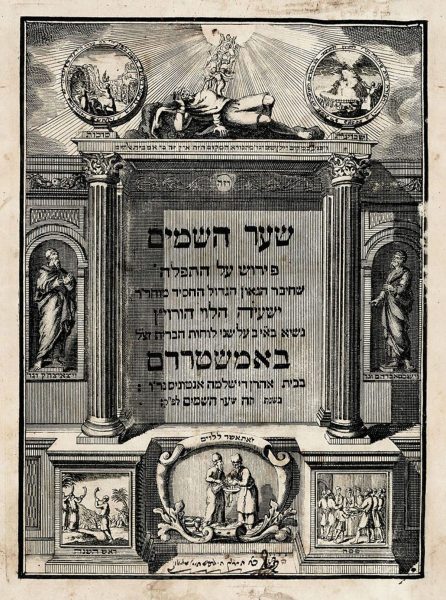
‘You know very well that the intention of the prayers is to con-join the Zair (anpin) and its Female, and to have them couple. When the Temple was still standing (in Jerusalem) their marrows were on a permanent sharing mode and did not vanish; but nowadays, they have retreated from their in-between, and this is why the Zair and its Female are called ‘lost’ or ‘fallen’, and the aim of our prayers is to reconstitute their marrow. Is our intention not to couple them, so that their mating procreates a flow and souls in the world? The descent of the drop of semen proceeds from these marrows, and if they do not possess a marrow, how could they procreate? This is why a child is not sexually mature, because his marrow does not reach him before puberty; this is why marrow is given by parents. There are two sorts of marrow. The first kind is the secret of the marrow of the six extremities (of the inferior sephirot); the second kind are the marrows of the three first (sephirot), in concordance with what we will, in a while, explain about the Name.
Before they (Zair and its Female) are coupled during the recitation of the prayer-performed while standing up (Amida), marrows are needed; this is why there, in the celestial Palace of Love, where the secret of the straight path is being prepared within the Benevolence of the Throne, feminine waters are being constituted in order to awaken the superior coupling of the Father and the Mother, who are in the Emanation; through the syzygy of the Father and the Mother, they procreate and gush marrows for the Zair and its Female, so that they couple during the Amida. Consequently, the aim of the recitation of the Shema is connected with the syzygy of the Father and the Mother and the descent of the marrows towards the Zair and its Female. After that, during the prayer of the Amida, the syzygy of the Zair and its Female happens. This is why the commandment of the recitation of the Shema is greater than the prayer itself (Amida). Indeed, our saintly master (Rabbi Judah ha-Nassi) and the other wise men whose occupations were the Torah, did not pray; but, at the time of the recitation of the Shema they would only say the first verse, because it concerns the syzygy of the Father and the Mother, while the rest of the recitation concerns the healing of the 248 organs of the Zair-as we are about to see with the explanation about the Name, may it be blessed!
This is the reason why we ought to abandon our being to the four capital punishment outlined by the rabbinical tribunals when we utter the ‘One’, which is not the case during the Amida. Because, as we are still (within the world of Creation), we are not in the obligation to stay standing, alike when performing the Amida prayer, because then we are within the world of Emanation-and this is the opinion of the school of Hillel, according to which anyone ought to recite the text of the Shema in his own way (by sitting or standing up)-and even on the contrary, because the coupling of the Father and the Mother is located in a very elevated and hidden place, and that we are in the world of Creation, we ought not to stand up. Thus, we utter the verses of the Torah, the passing of the Shema into the world of creation, but this passage is not located elsewhere than in the world of Emanation, and this coupling is provoked by the awaking of the feminine waters in the Palace of Love (of the world of Creation). In brief, the secret of the recitation of the Shema consists in coupling the Father and the Mother and to provide marrows to the Zair and its Female-and these marrows descend way down until the Palace of Love (of the world of Creation); then Malkhut can rise towards Emanation, and become an integral configuration, etc.
We ought to explain, in a lengthy manner, this subject about the study and the recitation of the Shema itself. Know that the Zair and its Female are called ‘children’ of the Father and the Mother: as for us, children of humanity, also children of individuals living in this world, we are called ‘children of YHVH our God’, being the Zair (YHVH) and its Female (our God). And, the feminine waters Malkhut has risen for the Zair are the secrets of the souls of the Just which are their children, and the secret of the feminine waters that the Mother rises towards the Father are the Zair and its female of their marrow, which are the secret of the interior soul of the Zair and its Female, which are their children. The intention of unification of the recitation of the Shema is the coupling of the Father and the Mother, to which follows-during the uttering of the words of the Amida:’establish peace’-the union of Tiferet and Malkhut. Hence, we ought to precede the superior syzygy to the inferior syzygy.
We have already indicated that, alike the inferior coupling of Tiferet and Malkhut, the superior coupling requires also the awakening of the feminine waters, which are the souls of the Just, children of Tiferet and Malkhut, for the inferior coupling of Tiferet and Malkhut; the superior coupling also requires the awakening of the feminine waters of Tiferet and Malkhut-which are their children (Father and Mother’s offspring). And because Zair and its Female, ought to get prepared in order to rise and be within the secret of the feminine waters, for this very reason we attract for both of them an influx due to the secret of the Shema Israel. And after they have received this influx, they are in accordance with the secret of the feminine waters and then the Father and the Mother unite, according to the secret of Knowledge (Daat) which has gathered them.
After what I have just delineated-that the Zair and its Female must receive an illumination of the Father and the Mother, and that they become feminine waters for the coupling of the Father and the Mother-a difficulty then rises for us to understand how can the preliminary Illumination originate from the Father and the Mother and is being received by the Zair and its Female (so that they become feminine waters) if there is no syzygy from above? Because there is above no syzygy before the feminine waters are being formed in the Zair and its Female, right?
To answer this, know that, there are two syzygy of the Father and the Mother. The first is an external coupling, the second is an interior one. The external coupling aims to vivify the worlds and to give them the necessary substances. This syzygy is happening on a permanent basis and never ceases, because if it would, even for a instant, all the worlds would be annihilated. The coupling does not need the rising of the feminine waters from the Zair and its Female, because it is not a syzygy of an integral nature; this coupling happens only in the external levels; it is un-ceasing and un-interrupted, because if it did, as we just said, all the worlds would fade away.
The second syzygy aims to provide marrows to the Zair and its Female in order to give birth to souls in the world: this is the interiority of the worlds, as we know. This coupling is not permanent: you will find, here and there, in the Zohar that it is about a separation, if we could use this word, that reaches way up to the Father and the Mother, in the manner our beloved masters said: ‘The Blessed holy has pledged that he will not enter the Jerusalem of Above (before entering the Jerusalem of below)’. Because those two Jerusalem are the secret of the Mother and of Malkhut. The feminine waters (of the sephira Binah) answer to the need for souls in the coupling-which is the interior aspect of the world-they are the Zair and its Female. And if they do not rise, this coupling does not happen above.
Through the word Shema (Listen!), Malkhut receives from the seven sephirot from below the Mother, which is the Intelligence, and the feminine waters are being formed, and Hokhmah and Binah unite according to the interior syzygy thanks to Knowledge (Daat) which unites them: this is the secret (of the words) ‘YHVH our God YHVH’, which are the secret of Hokhmah, Binah and Daat, and this illumination is spread to the Father and Mother from the Arikh Anpin.‘
(From the ‘Sidour Chaar ha-Chamiym’ (‘The Hidden Meaning Of The Recitation Of The Shema’, Jerusalem, 1973. Page 170 to 172).
*
The descriptive elements of the exchange and interaction processes between the masculine and feminine configurations, horizontally (between the Zair and the nouqba, its female), and vertically (between them and the Father and the Mother), are reflecting considerations deeply rooted into sexual physiology, as it was known at the time of composition of this text. The semen is produced by the ‘marrows’; it extract its fertilizing substance from the cerebral liquor, the ‘kernel’ of the being, that the bones also have, and it can be introduced within the divine configurations through the action of prayer. The recitation of the Shema act in an efficient way to provoke the syzygy from above, that of the sephirot Tiferet and Malkhut, and the interior one from above, that of Hokhmah and Binah, called ‘Father’ and ‘Mother’. Its efficiency is grounded upon this dynamic system of exchange of intra-divine powers, more even than upon a static structure.
From the beginning of this text, the ‘historical’ situation of Israel-The destruction of the Temple of Jerusalem and the interruption of the consecutive cult-seems to be the direct cause of the cessation of the union between the masculine and feminine poles. And it is up to prayer to tackle the hierogamy between Tiferet and Malkhut (and even between Father and Mother). Due to this union, prosperity, benediction and abundance of souls are spread, terms evocating the obtained fertility through the sacred rites of sacred marriage of the ancient East, and especially of the hierogamic rites of Sumerian origin, as described in a very excellent manner by Samuel Noah Kramer, the famous Assyriologist in a rightly famous book, ‘The Sacred Marriage‘ (The French edition: ‘Le Mariage Sacré‘, Berg, Paris, 1983, with an appendix by Jean Bottéro, also an Assyriologist).
This vigorous resurgence of the hierogamic motive found in a late esoteric writing-itself belonging to a quite large earlier current-had lead the historians of the Antiquity and the Biblical scholars to reconsider the ancient Israelite cult. It is not to daring to allow our selves to think the Kabbalah did only reflect, with a certain frankness, one of the essential religious meaning attached formerly to the function of the Jewish Temple: The old spring-well of Mesopotamian hierogamic myths and rituals, which goes back to at least the third millennia before our common era, and which exerted considerable influence among the successors and neighbors of the Sumerian people. The Acadians, Canaanites, and other Semitic groups, could be integrated into the religion of Israel by undergoing a reorganization which made possible, at least in part, its absorption into new monotheistic categories.
Even though the Hebrew Bible is very cautious to allude about such things, it is not far fetched that a hierogamic meaning was attributed to the Temple-an underlying and bordered by the official theological meaning-but does still continue to play a role in the collective mentality, and that would have so deeply impregnated the memories, so that centuries later, it surfaces again in writings expressing the conceptions of the protectors and transmitters of the ‘secret’. For instance, the reading Samuel Noah Kramer does of the ‘Song of Songs‘, the similarities of content and form he has noticed with Sumerian tablets that narrate diverse aspects of the Sacred Marriage between an earthly king, representing his divinized royal ancestor Dumuzi, and the goddess Innana, would put some scholars upon the trail: Acquiring to Kabbalistic texts the status of historical documents, which traditions would date back to the most remote Antiquity.
For once, the most serious historical criticism corroborates the claim, repeated many times, of the very ancient character of their conceptions. Far from being late inventions of medieval obscurantists, like many of the scholars of the ‘science of Judaism’, prominent heirs of the Haskalah, have claimed, they testify of the beliefs and the cultic practical significations that were born and developed over a few millennia in the middle East.
This does not, in any way, mean that we are ought to admit a perfect correspondence between the conceptions of the Kabbalists and those of the men of the Antiquity. Multiple factors had to intervene to bend the system of representation and re-elaborate the initial data. But how to explain the undeniable similitudes existing between the antic forms, pre-biblical, of the Sumerian Hierogamy and the medieval esoteric forms of the syzygy between masculine and feminine entities, if not by guessing the more or les subterranean crossing, in the history of the Israelite cult, of these sacred marriage motives?
*
Ancient sources
The esoteric conception of the liturgical proclamation of divine unity is not a personal invention of Rabbi Moses of Leon, and it does in deed originate from mystical sources that are perfectly identified. In an ancient tradition recalled by Rabbi Eleazar of Worms, the Creator and the Shekinah are depicted as husband and wife, and Israel’s prayers are perceived as means to elevate the Shekinah up towards her divine husband. It is allowed to guess that a similar finality was given to the proclamation of Unity. Moreover, an author, contemporary to the early kabbalists-but who did not engage with them-Rabbi Elhanan ben Yaqar from London, conceives also divine unity as the union of two entities, as he indicates in his ‘Commentary upon the creation of the world‘:
‘After the completion of the whole work of creation, when the day of Sabbath came, God’s Breath placed his Shekinah upon Glory. Then, Breath and Glory united, and they did not separate so that YHVH be One; alike with Man, his body is united with the soul of life. Then, the two names YHVH and Elohim found harmony on the day the totality of the work of creation was completed, and the day of Sabbath was consecrated.’ (‘Sefer Sod ha-Sodot‘, edited in Hebrew by J. Dan in ‘The Circle of the early Kabbalists’, Akademon notebook, Jerusalem, 1986, page 131).
In order to correctly comprehend this passage, we ought to consider it first as an exegesis of Genesis 2:4, in which for the first time in the storytelling, God is designated by two names side by side, YHVH & Elohim, a particularity that has raised later the attention of the rabbinical commentators. They made comments such as this double denomination happens when the announcement of the completion of the creation was made: ‘God blessed the seventh day and sanctified it, because in it he rested from all of the work that Elohim has created by operating the creation; such was the genesis of heaven and hearth when they were created, the day YHVH and Elohim made the heaven and the earth.’ (Genesis, 2:3-4). Thereby, in the Midrash Bereshit Rabbah, an anonymous master comments (sometimes, Rabbi Ḥiyya is mentioned): ‘He mentioned a complete Name in regard of a complete world.’ (13:3). But, each of these names correspond, according to the ancient tradition (see Bereshit Rabbah, 12:15), to a divine attribute: YHVH corresponds to the attribute of Mercy (midat ha-rahamim), Elohim to the attribute of Judgment (midat ha-din). The mention of these two names in the verse therefore means the union of two divine aspects in one sort of ‘coincidentia oppositorum‘.
The divinity manifests in its fulness when the creative action is ending and the Sabbath is about to begin. In Rabbi Elhanan’s text mentioned above, these names designate two degrees of manifestation called, the Breath of the Living God & Glory. When their union is completed, ‘YHVH is One‘. Divine unity is but the union of two of His powers-here divine Breath & Glory. But, also, there is nowhere mention of a male & female dimension, even though we can consider that the divine names, YHVH and Elohim mirror back these two attributes, they are therefore, they are likely to be apprehended as masculine and feminine principles. A grammatical element can confirm this supposition. The Hebrew verb, the verbal expression translates-‘have found their harmony‘- in the sentence: ‘ The two names YHVH and Elohim found their harmony‘ is ‘nit’omemou‘. furthermore, this verb is formed from the substantif ‘te’om‘, which means ‘twin‘. These two divine names become united as twins, such is the meaning of the preposition we spoke of above. The couple formed by twins in the rabbinical literature suggests the figure of the ideal male-female couple. Hence the expression ‘my perfect‘ or in Hebrew, tamati, in the ‘Song of Songs‘, which qualifies the beloved woman must be understood-according to the Shir ha-Shirim (Canticle) Rabbah-‘teoumati‘, which means ‘my twin‘ (Canticle Rabbah, 5:2).
Each of Jacob’s children had as a consort his proper twin, according to the ‘Pirqe of Rabbi Eliezer‘ (chapter 36). Rabbi Elhanan ben Yaqar’s text can be linked to an interesting development by the kabbalist Joseph Gikatila (13th century), who writes, after quoting the sentence from the Bereshit Rabbah:
‘When the works of the beginning were completed, the Scriptures starts to mention YHVH-Elohim regarding to the fulness of the world. Then, know that the entire secret of the divine Unity is the secret of YHVH-Elohim. The sign is: ‘Listen Israel to YHVH our God, YHVH is One!’ (Deut. 6:4). This is how you ought to know that everywhere in the Torah YHVH-Elohim is mentioned, which is the complete Name, all the tings that are found in the biblical section in which are mentioned YHVH-Elohim, they are accomplished by all of the attributes together, and by the attribute of Judgment and the attribute of Mercy; all in the perfect fulness with the attributes Judgment and Mercy. According to this principle, the Torah says: ‘The rock, perfect is its action’ (Deut. 32:4); the explanation is: The Rock decreeing the verdict does neither acts with violence, nor decides of the sentence with cruelty, but ‘perfect is its action’: before deciding of the verdict, it consults the two attributes, the attributes of Grace and the attribute of Judgment; this is the meaning of ‘perfect is its action’, because the word ‘perfect’ (tanim) is the core secret of these two things; it is as he would say: ‘twins’ (teoumim), but it is a manner of politeness to say about the two things from above to use the expression ‘tanim’ (perfect) and for the two things from below to use the expression ‘teoumim’ (twins). Below they are ‘twins’ and above ‘perfect’, because below they appear as two things, a thing and its opposite, but above everything has the same direction, every thing opposite has the same finality.’ (Chaare Orah, page 41b).
Divine unity is presented as the union of these two attributes, perceived as opposite poles forming a couple of twins, which constitute ‘above‘ a perfect union and which coincide & converge despite their apparent opposition in the world ‘below‘. These two attributes, being also two divine Names, manifest their fulness once the story of the creation is completed. It is their re-union that is the object of the recitation of the Shema. The divine dual-unity is observed through the two opposing attributes which coincide in God Himself, and this representation, based upon very ancient Jewish conceptions, provide a general frame in which the motive of unity, conceived as the union of the masculine and feminine dimensions, got itself inserted in a quite natural manner. In fact, we ought not to see in the concept of the unity of the male and female principles as a late development in Kabbalah of the divine attributes couple, but rather, on the contrary, it is a primitive substrate translated solely into a more theological language within the motive of the union of the attributes.
Mircea Eliade says that: ‘As all attributes co-exist in the divinity, we ought to see in the same manner, under a more or less manifest appearance, the two genders. Divine androgyny is nothing else than an archaic formula of the divine dual-unity: the mythical and religious thought-even before expressing this concept of the divine dual-unity in metaphysical (esse-non esse) or theological (manifest-non manifest)-started to express it in biological terms (bi-sexuality)‘. (‘Traité d’Histoire des Religions‘, page 352-353).
What the Kabbalists will impress into this rabbinical and theological material is a regression to the primordial and symbolical level, bringing the more abstract constructs to the foundational level of the Jewish religious thought. An operation simply so surprising that it integrates in its process notions that were borrowed from philosophy: in this case from a Neo-Platonism already inclined-it is true-to a return movement towards mythical radicalities.
The very first explanation properly Kabbalistic of the reading and declamation of the Shema was transmitted to us by Rabbi Acher ben Saul from Lunel (later Narbonne), a twelve century Provencal Rabbi, in his ‘Sefer ha-Minhagot‘:
‘We recite the Shema Israel. Explanation: each Israelite says to himself and to his kin: ‘Accept that ‘YHVH our God, which is Glory enthroned over the Kerubim, ‘YHVH is One!’, it is the supreme Crown. Some say that it is connected to the Tiferet Israel…There is here a great mystery.’ (quoted by Joseph Dan in ‘Les cercles des premiers cabalistes‘ (in Hebrew), page 153).
It is very clear that it is the recognition of the unity of the two entities which is considered the aim and signification of the proclamation of the Shema. It is not impossible that ‘Glory enthroned upon the Kerubim‘ designate here a feminine entity, whereas the Crown-or rather more precisely, Tiferet-refers to the masculine dimension.
The proclamation of the Shema is followed by a formula which must be spoken in a low voice. One Aggada from the Talmud has been interpreted by the Kabbalists as expressing the sorrow of the Shekinah when She saw that the Israelites were proclaiming the unity of the Husband or Groom and did not mention Her-or in a very elusive manner with the use of the letter daleth (ד) in the word Ehad (אֶחָד: One), a letter that also means ‘poverty’. There are many versions-all quite similar- of the same tradition: Rabbi Meir ben Solomon Abi-Sahula in his ‘Explanation upon Mahmanide’s Commentary‘, (Warsaw, 1875, page 32, column b), and Rabbi Isaac of Acre in his ‘Meirat Enayim‘, (Erlanger Editions, Jerusalem, 1981, page 271-272), have re-used and remodeled this story and it is here worth quoting from Rabbi Bahya ben Asher ibn Halawa, who in his ‘Commentaries upon the Torah‘ (Chavel Editions, Chapter III, page 277), wrote this:
‘Because Moses did not explicitly evoke the dimension of Malkhut, and even though it is alluded to it in the letter Daleth, the Wise Men told a parable: ‘The daughter of a king smelled the sent of a spicy dish, If she admits it openly, it would be a disgrace for her, and if she does not tell about it, she will suffer from this. What did the servants do? They brought the dish to her, discreetly (behachai)’ (Pessahim, 56a).
The explanation of this parable is as such: The daughter of the king who smelled the spicy dish is the Shekinah who smelled the praises of the tribes and the unity they were proclaiming of the Great Name. If She would have proclaimed with Her own mouth: ‘Even though He is unique, She is also unique’, that would have been shameful for her; but, also if she wouldn’t have said it, She would have suffered because Her own glory would not have been conjoined to His glory. This is why, the Israelites are called the servants of the Shekinah, who came to say ‘discreetly’: ‘Blessed is the Name of the Glory of the Crown’, which is the inferior unity.’
The first part of the formula of Unity which is pronounced with a loud voice, corresponds to the higher union ‘above‘, that of the superior Sephirot; the second part is said in a low voice (with the exception of the Yom Kippur day), it corresponds to the inferior union ‘below’, in which the feminine dimension is fully acknowledged & evoked. These examples testify that divine Unity was understood as the fulness of the union of at least two entities, one being male & the other feminine.
*
Source

*

Coming soon
Charles Mopsik – Unity of Being,
Unity of the World – Part 3/3
*
Return to
***

Related Articles

Leave a Reply