
Circle of Transmission: The Living Loom
Aesch Mezareph: A Critical Edition- Part 2: The Kameot and the Astrological Milieu
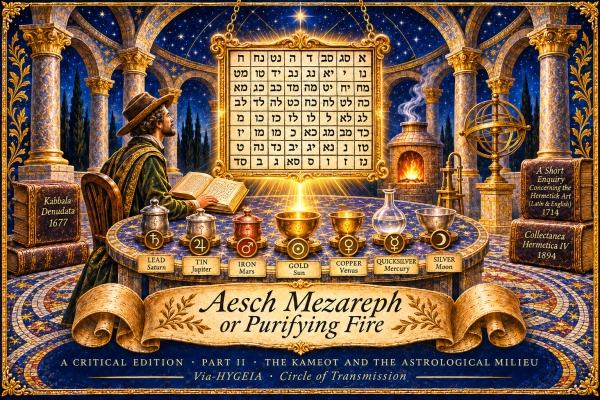
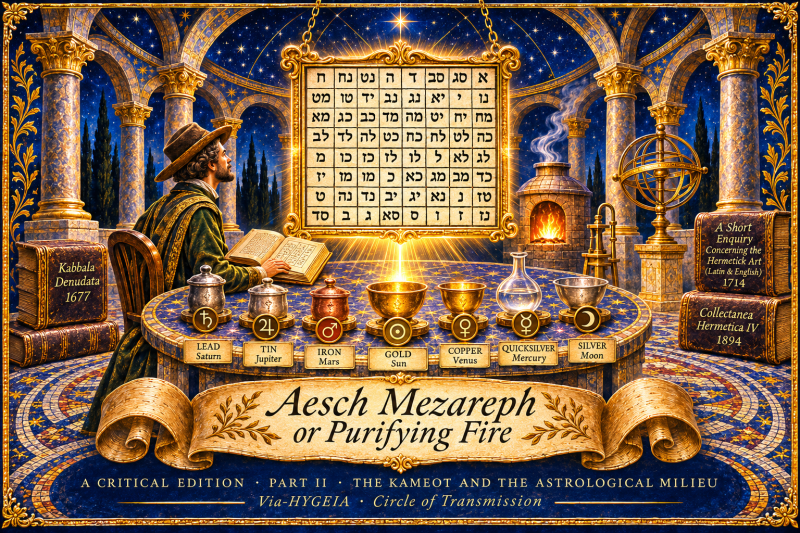
Featured Illustration Legend: Within a celestial temple beneath the starry dome, the contemplative alchemist sits before a planetary table bearing the vessels and symbols of the seven metals. Above the table, the Aqua kamea is suspended beneath the North Star, establishing the vertical axis between celestial order, numerical correspondence, and the work of purification.
The athanor burns in the background, while the open book and mosaic pavement situate the operation within the material and intellectual world of the alchemical art.
The composition brings together the numerical, planetary, and metallurgical dimensions explored in Part II, with the alchemist’s contemplation at the centre of their correspondence.
*
Today’s sharing from the Blue House of Via-HYGEIA is the second part of our critical edition of the Aesch Mezareph: an investigation of its seven planetary squares—Solar, Lunar, Martian, Jovian, Venusian, Saturnian and Mercurial—and the numerical structures, textual variations and symbolic correspondences they preserve.
We examine their mathematical properties, compare the four surviving presentations (1677, 1714 Latin, 1714 English and 1894), and explore their possible place within the wider history of astral magic and Kabbalistic thought.
This second part is the fruit of a long and exacting revision process: repeated examination of the witnesses, reconstruction and verification of the numerical grids, comparison of variant readings, and careful separation of documented evidence from interpretation and historical hypothesis.
Rather than smoothing over inconsistencies, we have sought to preserve the questions they raise—and the clues they may offer to the history of this enigmatic work. The edition is far from perfect, and any errors that may still be found are ours.
**
Introduction to Part 2:
The Seams as Signatures
In Part 1 of this edition, we established the verbal text of the Aesch Mezareph and documented significant fractures in its transmission. These fractures are central to the present edition’s interpretation of the text. Part 1 documented a transmission marked by interventions, relocations (specifically the relocation of the Phinehas/Lancea lemma from its alphabetical position in K into the Iron chapter by E and W), and errors, rather than a smooth line of descent from Knorr’s 1677 Latin to the 1714 English and Westcott’s 1894 revision. Part 1 concluded with a promise: the text’s deepest historical secrets lie in its grids.
Part 2 fulfills that promise. We now turn to the seven magic squares (kameot) appended to the alchemical chapters.
Witness Key and Scope
To ensure clarity throughout the apparatus and commentary, the following sigla and definitions are used:
-
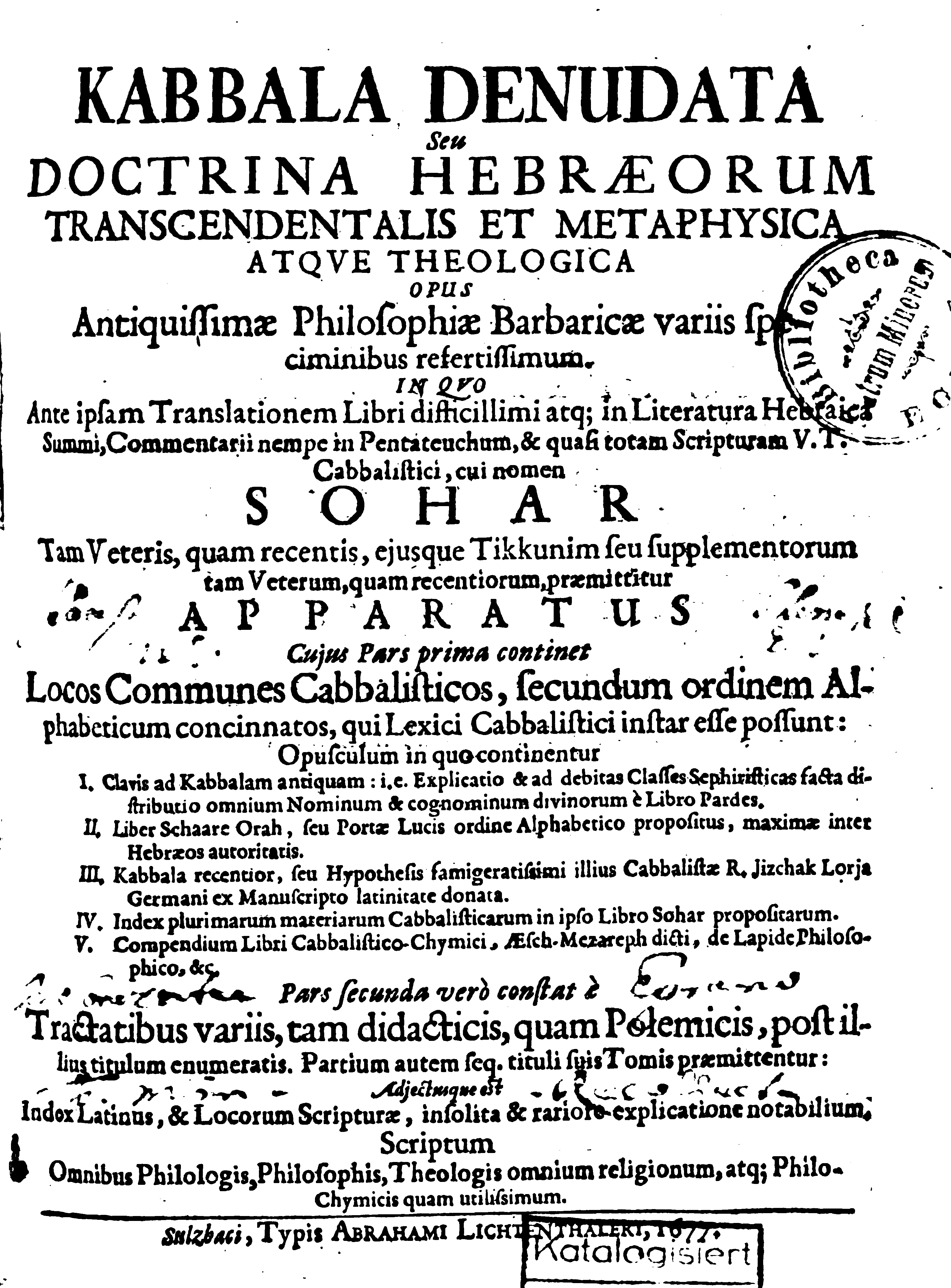
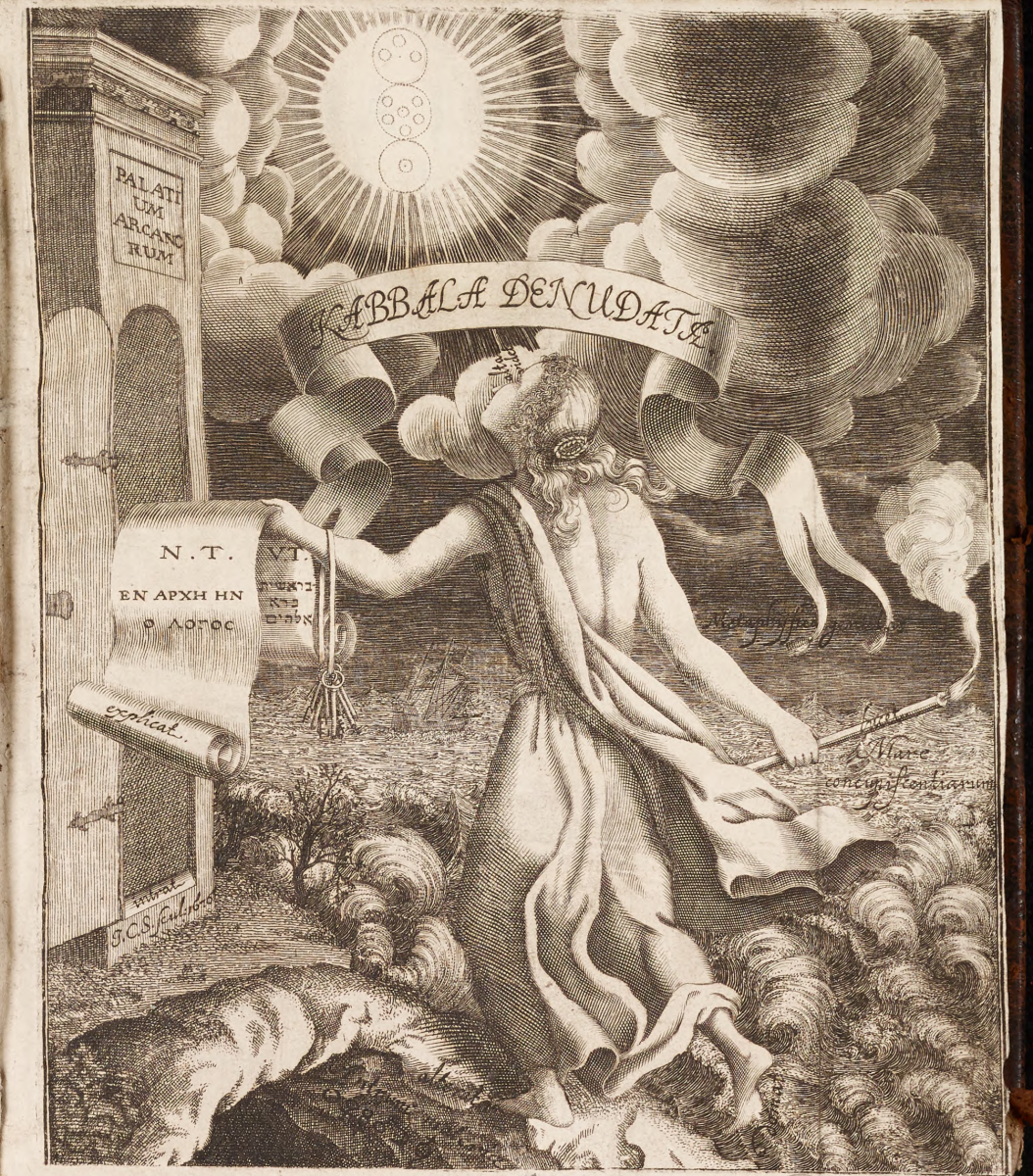
K: The 1677 Latin witness (Christian Knorr von Rosenroth, Kabbala Denudata, vol. 1, Sulzbach, 1677).
-
L: The 1714 Latin presentation (in A Short Enquiry Concerning the Hermetick Art, London, 1714, pp. 1–80).
-
E: The 1714 English presentation (in the same volume as L, pp. 1–83, translated by “A Lover of Philalethes”).
-
W: The 1894 English edition (W. Wynn Westcott, Collectanea Hermetica, vol. IV, London, 1894).
Scope Note: The seven grids have been collated across the four witnesses. K is transcribed as the base witness; the apparatus records selected variants, corrections, and substitutions in L, E, and W. The edition does not reproduce all 28 witness grids in parallel. Where a variant is discussed, that discussion is based on a full cell-by-cell comparison of the relevant witness for that square; where no variant is discussed, the collation was selective (checking the constant and principal diagonals rather than every cell). Claims of direct image verification are stated individually where applicable.
Chapter Numbering Note
Chapter 1 of the verbal text contains no magic square. It establishes the general principles of the metals and their Sefirotic correspondences, and it provides the framework within which the seven squares are introduced in the chapters that follow. Because the first chapter therefore has no square to transcribe, the present part begins directly with the Gold / Sun square, which the verbal text places in Chapter 2, and proceeds through the remaining six squares in sequence. The chapter numbers used below are consecutive and begin at Chapter 2 for this reason: Chapter 2, Gold; Chapter 3, Silver; Chapter 4, Iron; Chapter 5, Tin; Chapter 6, Brass; Chapter 7, Lead; Chapter 8, Quicksilver. Readers consulting the verbal text will find the corresponding squares distributed across its chapters II–VII; because the verbal text places both the Silver and the Iron squares under its Chapter III, the consecutive numbering used here (Chapters 3 and 4) preserves the order of the verbal text’s chapters without reproducing their numbers exactly.
A Note on Provenance and Authorship
The origin of the Aesch Mezareph remains a historiographical question. Traditional scholarship has often argued for a lost medieval or early modern Hebrew Vorlage (see, e.g., Scholem, Alchemy and Kabbalah, pp. 75–77). Within this framework, Georges Lahy has recently conjectured that the lost original was composed by an Italian Kabbalist between the late sixteenth and early seventeenth centuries (Lahy, Esh Metsaref, 2019). Alternatively, the possibility of a seventeenth-century Christian Kabbalistic composition or adaptation (by Knorr or his circle) remains among the hypotheses to be considered. This edition does not presuppose the existence of any specific lost Vorlage, nor does it attempt to resolve the question of authorship. Its primary concern is the textual evidence preserved in the surviving witnesses.
The Hygeia-Circle of Transmission Heuristic
Our method remains strictly bound to the hierarchy established in Part 1: Witnesses → Apparatus → Commentary. In the following chapters, we provide transcriptions of the K base grids, with declared editorial conversion to Arabic numerals, together with their computational verification.
The grids are not treated here merely as mathematical puzzles; the edition also examines their possible theurgical function. The second half of each chapter is devoted to the Hygeia-Circle of Transmission Commentary.
It is crucial to clarify that the “Hygeia-Circle of Transmission” is not a historical artifact, a manuscript, or a specific medieval guild. It is a modern editorial heuristic devised for this edition — a conceptual framework that groups four parallel thinkers (Fakhr al-Din al-Razi, Johannes Trithemius, Ramon Llull, and Athanasius Kircher) whose traditions help us contextualize the operative logic of the grids.
This heuristic is informed by the Via-Hygeia Circle of Transmission — a methodological framework that views texts not as static objects of scholarship to be archived, but as “living threads to be woven”. It represents a shift from “prescription to cultivation,” where the text is not a doctrine to be administered, but a symbolic companion to be tended. In this spirit, our commentary does not claim that the author of the Aesch Mezareph read these specific thinkers. Instead, we offer them as comparative historical and philosophical lenses — parallels that illuminate the intellectual milieu in which planetary grids operated.
A Note on the Classification of Commentary Claims
The commentaries below often map the squares to specific Sefirot and make claims about the operative logic of the grids. To keep the documentary and interpretive registers distinct, each commentary claim is classified at its head as follows:
-
Documented parallel: A specific source passage, square, page, or textual datum from the listed thinker or witness is cited. The claim is as strong as the citation.
-
Comparative interpretation: The editor proposes a conceptual resemblance or symbolic reading, drawing on a thinker’s general position (with the relevant work and section noted) but not citing a pinpoint passage. No direct dependence is implied. Where Trithemius is cited only at the level of a general work or book (e.g., Steganographia, Book III, without a specific chapter or passage), the claim is an editorial analogy, not a documented Trithemian use of the particular square. Where al-Razi is cited, the claim is provisional: the present edition uses the editor’s working English translation of the Turkish edition of al-Maṭālib al-‘Āliyah (vol. 3, pp. 427–459; Istanbul: Turkuvaz, 2022; trans. Demirli, Altaş, Güdekli, and Demir), which is itself a translation from the Arabic. The specific doctrinal formulations attributed to al-Razi in each chapter are to be verified against the Arabic original; until then, no such formulation should be treated as established.
-
Transmission hypothesis: A possible historical relationship between traditions, proposed but not established by the witnesses.
The apparatus records the witness evidence, including explicit mappings and textual variants; the commentary distinguishes these from the editor’s structural and gematria-based interpretations.
*
Note: Although the verbal text opens with a general chapter that establishes the Sefirotic framework for the metals, this first chapter contains no magic square (kamea). Because there is no grid to transcribe or analyze in Chapter 1, the present part begins directly with the Gold / Sun square, which the verbal text places in Chapter 2, and proceeds consecutively through the remaining squares to Chapter 8.
Chapter 2:
The Gold / Sun Square (6×6)
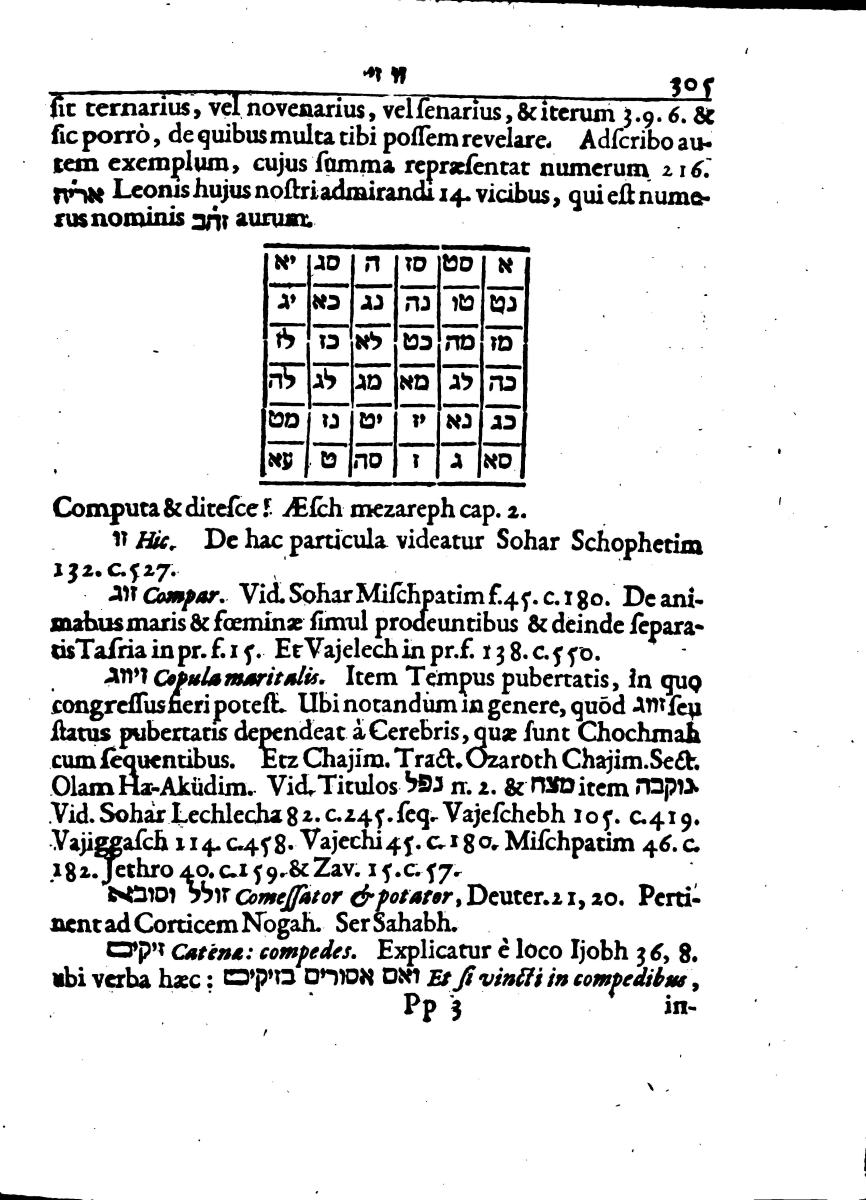
I. Editorial Transcription (Arabic Numerals)
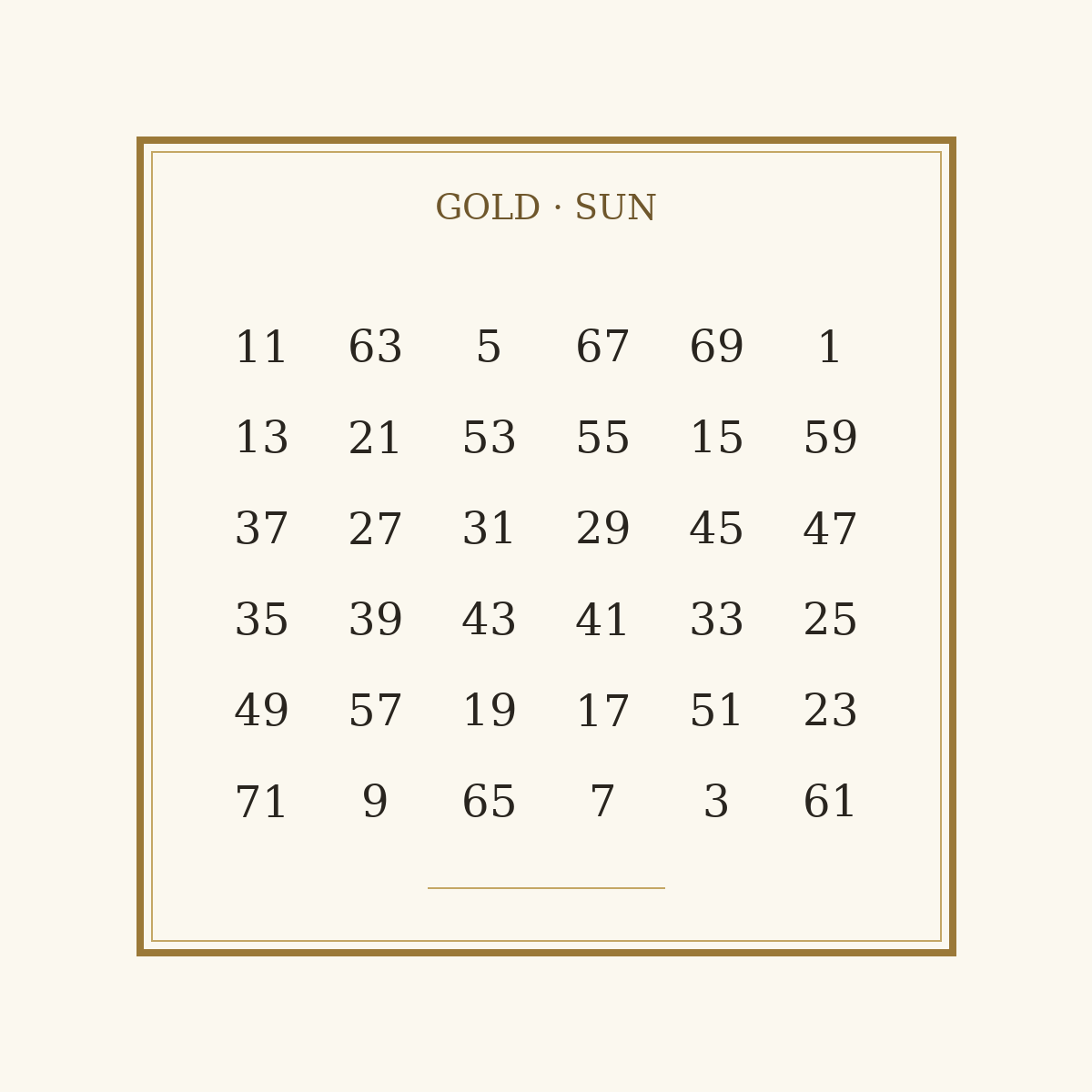
II. Mathematical Apparatus
Contents: The first 36 positive odd integers (1, 3, 5, …, 71).
Verification: All rows, columns, and principal diagonals sum to 216. Total sum: 1,296.
The Affine Transform: The grid is mathematically related to the standard Agrippan solar square by the affine transformation *x* ↦ 2*x* − 1 (that is, each entry *x* of the standard square is mapped to 2*x* − 1). This transforms the entries 1–36 into the odd-number sequence 1–71. Since each row contains six entries, the row constant transforms from 111 to 2(111) − 6 = 216. The total grid sum is 2(666) − 36 = 1,296. The mathematical relationship is demonstrable; the historical intention behind it remains unresolved.
The Gematria (Witness Evidence): E (p. 26) and W (p. 19) explicitly state: “whose Sum represents the Number 216 of Arjeb our wonderful Lion 14 times, which is the Number of the Name Zahab, Gold.” The witness text explicitly connects 216 to the Lion and 14 to Gold. (Calculation: Aryeh = 216 = 1+200+10+5 = א+י+ר+ה. Zahab = 14 = 7+5+2 = ז+ה+ב).
The “14 Times” Crux: The grid total is 1,296, whereas 216 × 14 = 3,024. Thus, the phrase “216 … 14 times” does not correspond to the total sum of the grid. Its intended numerical reference remains unresolved.
1894 Intervention: Westcott (W, p. 50, n. 31) notes: “The Magic Square given is not the true Square of Sol,” and appends a standard Agrippan square (constant 111) as a comparative grid. We preserve the 1677 grid (216) as the base text.
III. Commentary: The Lion-Graft and the Solar Severity
al-Razi — Comparative interpretation (provisional): Al-Razi’s al-Maṭālib al-‘Āliyah treats talismanic mechanics in which the Sun figures as a primary active force. The precise doctrinal formulation in that text remains to be verified against the Arabic original (via the Turkish edition, vol. 3, pp. 427–459); the present comparison is offered provisionally. The grid’s sequence of odd numbers may be read, comparatively, in relation to this account of solar activity.
Trithemius — Comparative interpretation (editorial analogy): Trithemius’s Steganographia (Book III, on planetary operations) treats planetary grids as numerical seals for intelligences. The 216 constant may be interpreted, within this edition’s Kabbalistic reading, as a seal associated with the Lion. This is an editorial analogy, not a documented Trithemian use of this specific square.
Kircher — Documented parallel: Kircher’s Arithmologia (1665, p. 69) prints the standard 1–36 grid (constant 111).
Note: These comparisons illuminate possible interpretive contexts; they do not establish that the square’s original construction was intended to encode this association, nor do they establish a historical relationship between Kircher and the Aesch Mezareph.
*
Chapter 3:
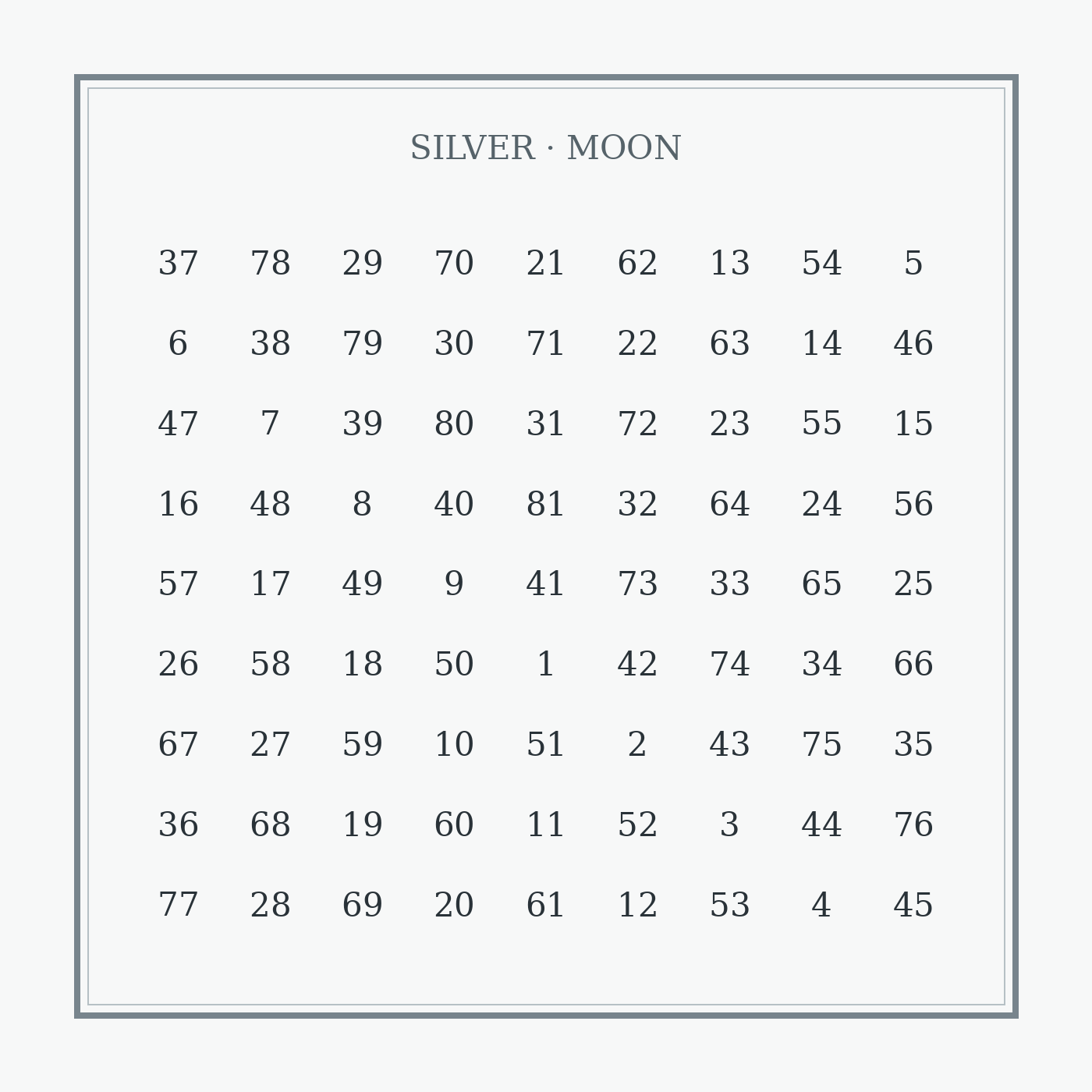
The Silver / Moon Square (9×9)
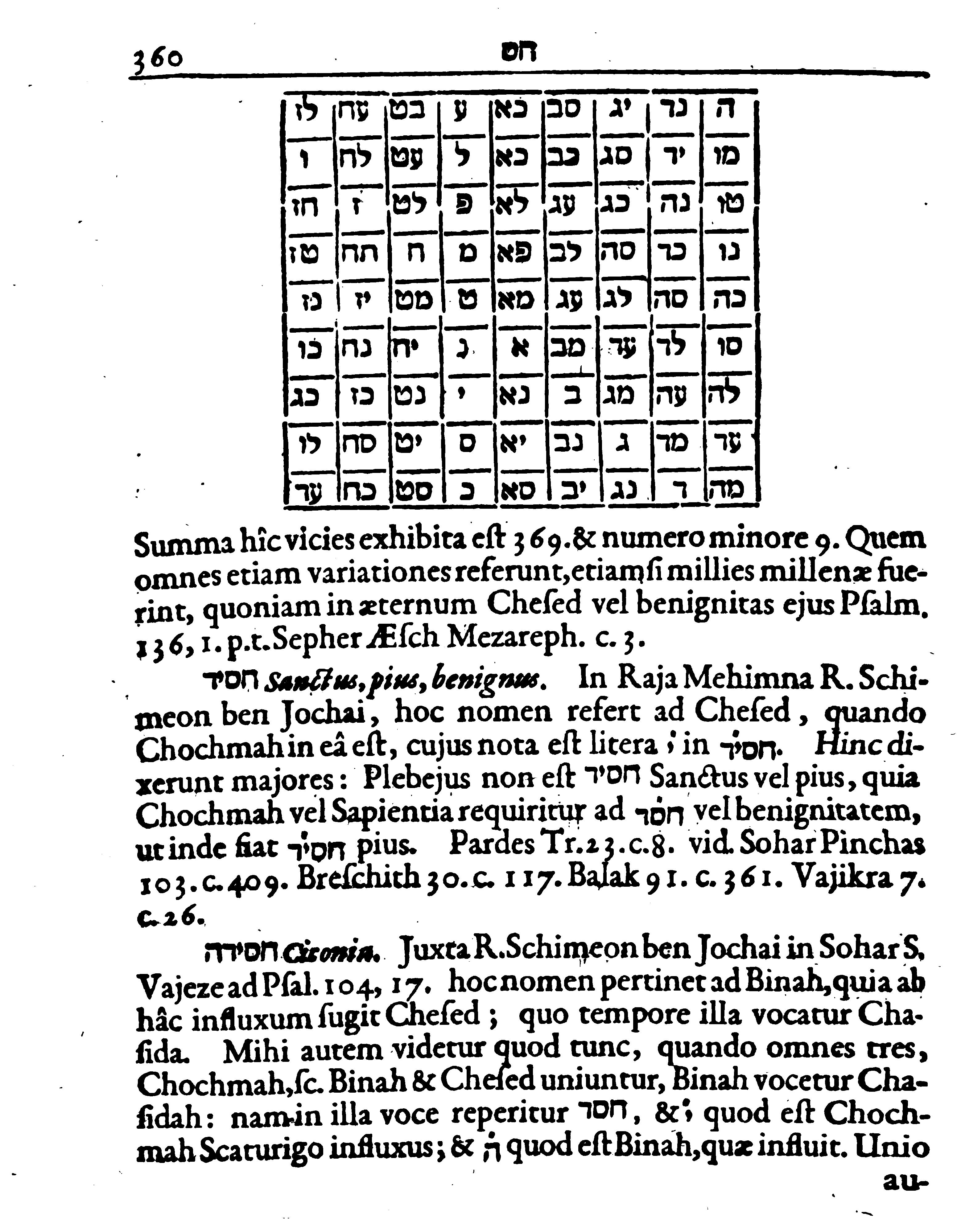
I. Editorial Transcription (Arabic Numerals)
II. Mathematical Apparatus
Contents: Integers 1–81.
Verification: All rows, columns, and principal diagonals sum to 369. Total sum: 3,321.
Textual Variants:
-
Spelling: K, L, and E print Cheseph. W (n. 1, p. 51) notes that the Hebrew form in the witness he consulted reads Keseh; the editor conjectures that this may be a typographical variant of Keseph (silver), but the conjecture is not established, and the reading of the relevant witness has not been independently verified. The observation is recorded as an editorial conjecture, not a correction.
-
Psalm Citation: K cites Psalm 12:7 (Hebrew numbering, corresponding to Vulgate 11:7). E and W cite Psalm 12:6 (Protestant numbering).
-
Abbreviation: K and L use p.t., likely denoting per totum.
III. Commentary: Lunar Mercy and the White Work
al-Razi — Comparative interpretation (provisional): Al-Razi’s al-Maṭālib al-‘Āliyah treats lunar mechanics; the Moon is associated in that text with moisture and generation. The precise doctrinal formulation remains to be verified against the Arabic original; the comparison is offered provisionally. The grid’s Chesed/Jesod mapping is the editor’s interpretive reading.
Trithemius — Comparative interpretation (editorial analogy): The 369 constant may be read as a numerical vessel for lunar mediation. The association with the intelligence Chashmodai is offered as an editorial analogy; the specific Trithemian passage has not been identified, and the claim should not be taken as a documented Trithemian use of this square.
Llull — Comparative interpretation (provisional): The number 9 (the order of the square) is a structural feature of Llull’s Ars, which operates with a fixed set of correlative principles; the square is also structured by 9. The specific Lullian work and section supporting the ninefold structure have not been identified in the present edition, and the comparison is offered provisionally. The claim that 9 corresponds specifically to “the nine-letter alphabet (B–K) and the nine dignities” is not adopted: the range B–K is not self-explanatory as a nine-letter sequence (it comprises ten letter positions if read inclusively, and the omission of J requires explanation), and the alphabetic apparatus of the Ars and its dignities should not be treated as interchangeable without a precise source.
Kircher — Documented parallel: Kircher prints the Sigillum Lunae in his Arithmologia (1665, p. 72) and states explicitly: “omnes columnæ… referunt summam 369” (all columns… yield the sum 369). The citation documents Kircher’s publication of the square; it does not establish a historical relationship between Kircher and the Aesch Mezareph.
*
Chapter 4:
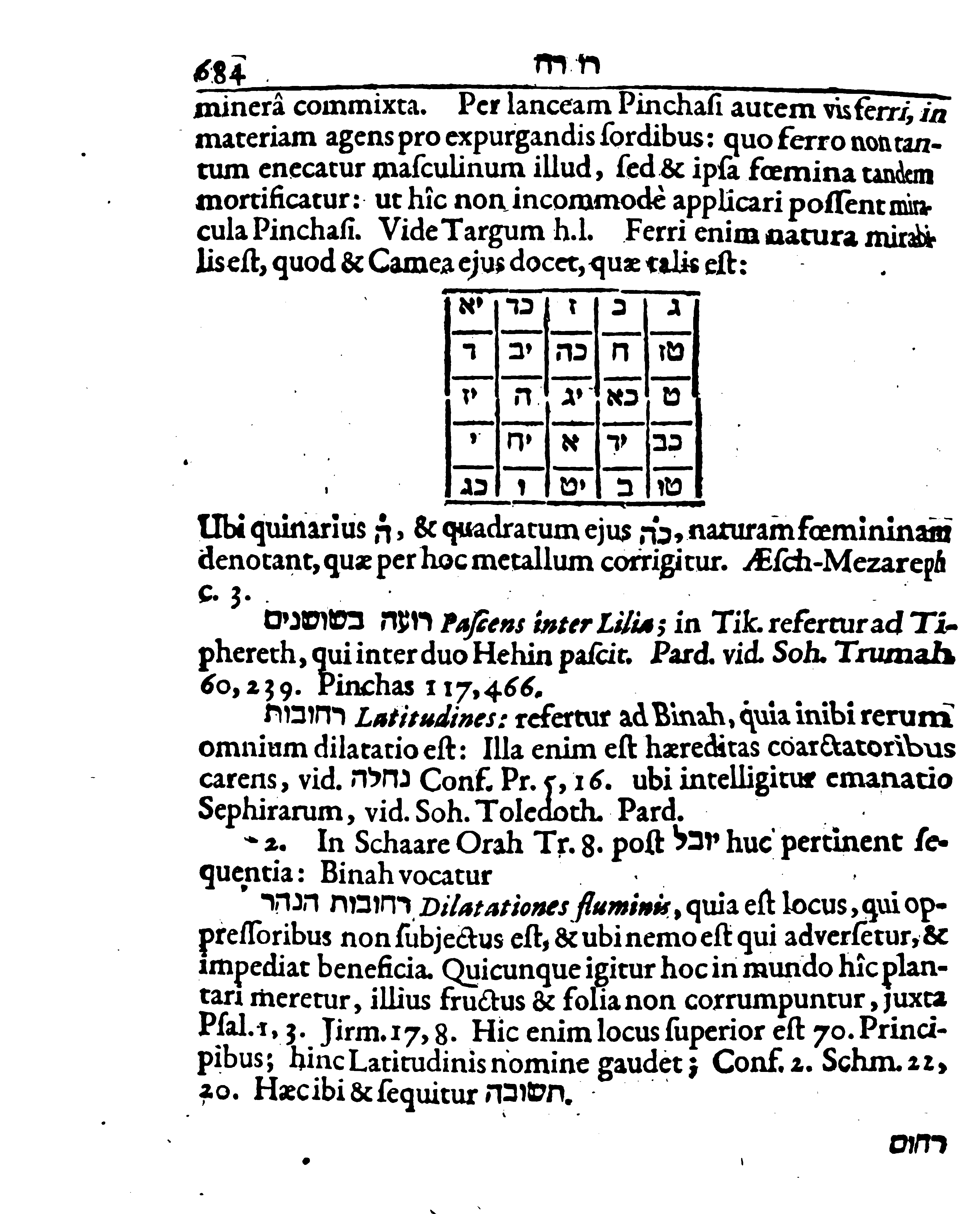
The Iron / Mars Square (5×5)
I. Editorial Transcription (Arabic Numerals)
II. Mathematical Apparatus
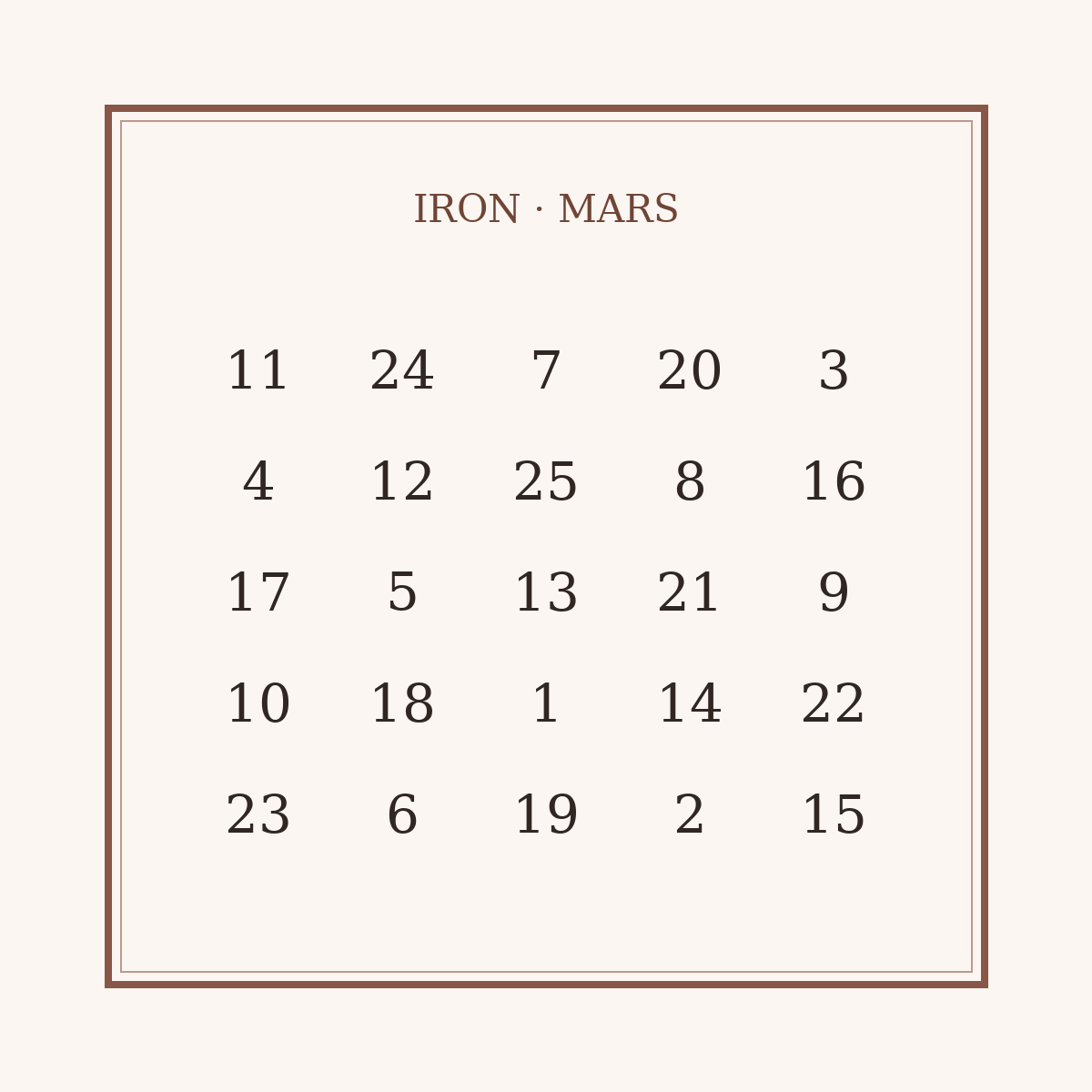
Contents: Integers 1–25.
Verification: All rows, columns, and principal diagonals sum to 65. Total sum: 325. It is a normal 5×5 magic square.
Witness Collation: The numerical contents of the 25 cells are identical across all four witnesses: K (p. 684), L (p. 36), E (p. 42), and W (p. 26). This identity has been verified against the respective page images. The collation concerns cell values; it does not establish identity of layout, typography, or surrounding annotations. W adds the gloss: “whose lines add up to 65 each way.”
Witness Text (K/L): “Ubi quinarius 5, & quadratum ejus 25, naturam foemininam denotant, quæ per hoc metallum corrigitur.” (Where the number 5, and its square 25, denote the feminine nature, which is corrected by this metal).
III. Commentary: Martian Severity and the Binding of Gevurah
al-Razi — Comparative interpretation (provisional): Al-Razi’s al-Maṭālib al-‘Āliyah discusses the natures of the planets; Mars is characterised in that text as hot and dry, an instrument of war. The precise doctrinal formulation remains to be verified against the Arabic original; the comparison is offered provisionally. The 5×5 grid may be read as binding the active Severity of Mars to the passive Iron.
Trithemius — Comparative interpretation (editorial analogy): The grid may be read as a cryptographic key aligning the material realm with the celestial hierarchy during the planetary hour of Mars. The specific Trithemian passage has not been identified; the claim is an editorial analogy.
Llull — Comparative interpretation: The number 5 may be mapped to the fifth Sefirah (Gevurah). This mapping is the editor’s interpretation.
Kircher — Documented parallel: Kircher reproduces this as the Sigillum Martis (1665, p. 68).
*
Chapter 5:
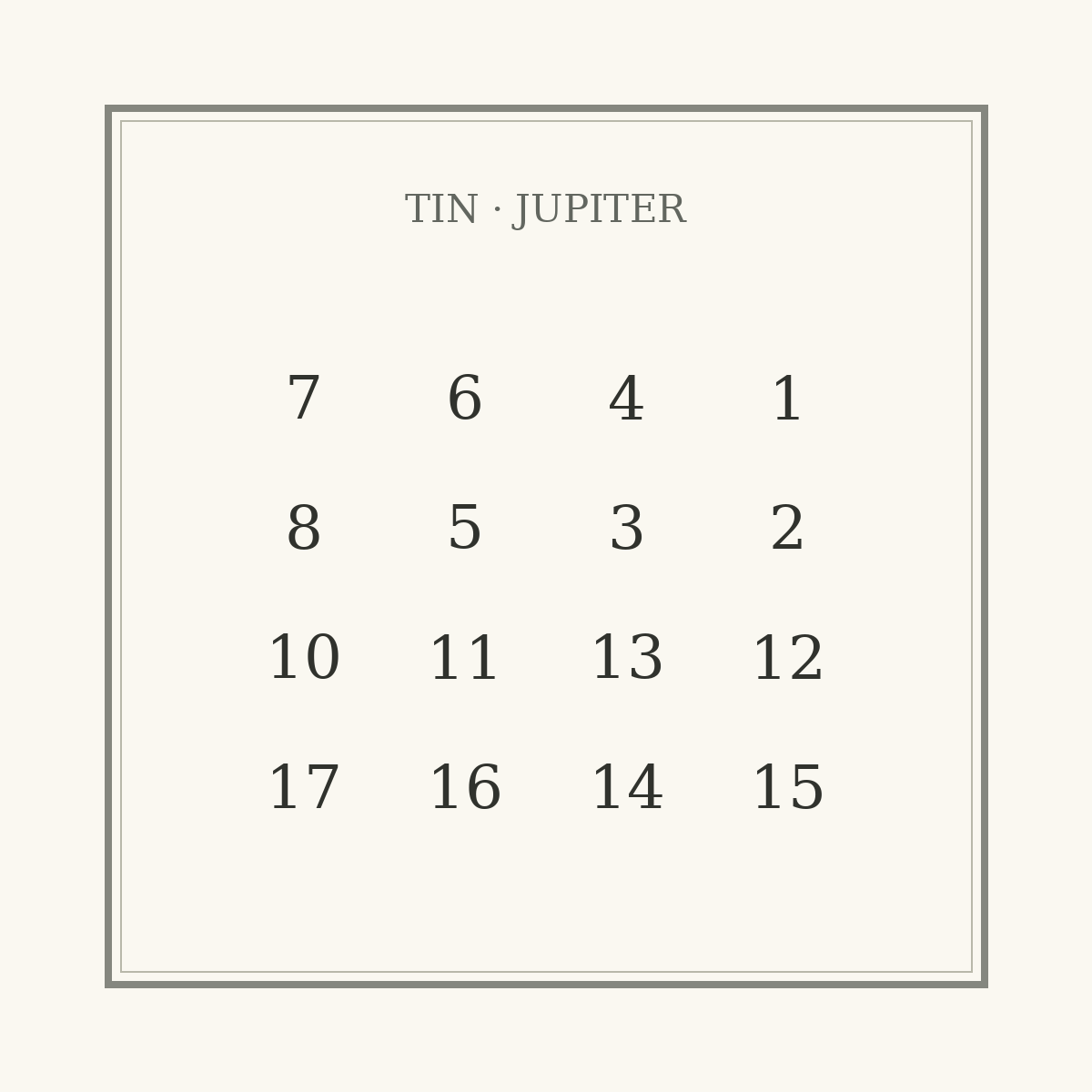
The Tin / Jupiter Square (4×4)
I. Editorial Transcription (Arabic Numerals)
II. Mathematical Apparatus
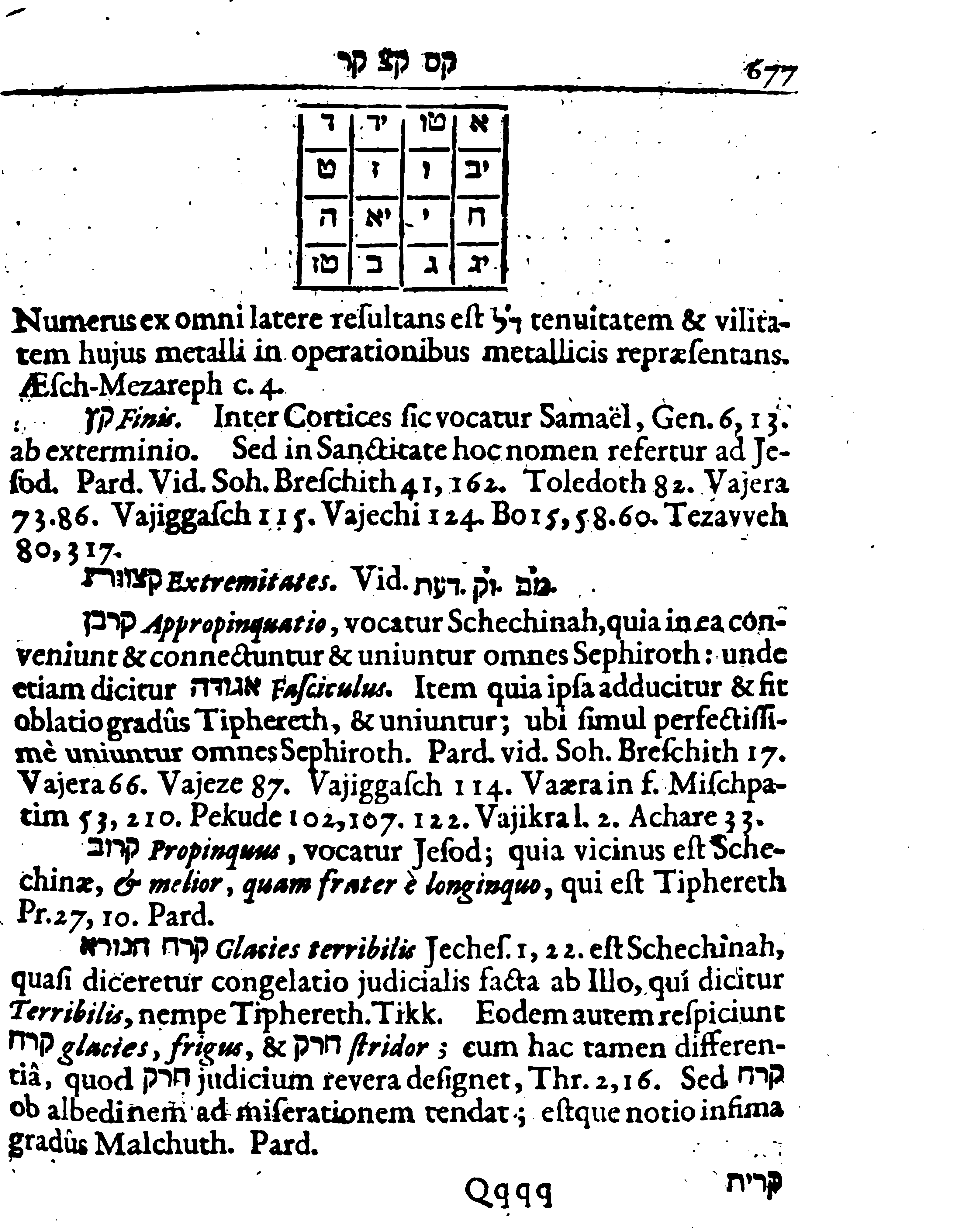
Contents: The grid includes 1–16, but features a 17 and omits a 9.
Verification:
-
Row sums: 18, 18, 46, 62
-
Column sums: 42, 38, 34, 30
-
Principal diagonals: 40, 32
-
Total Sum: 144 (Expected for 1–16 is 136).
Apparatus Note (The 17/9 Crux): The 1677 (K) and 1714 Latin (L) witnesses print a mathematically broken grid. K/L explicitly report the constant as 5, while E/W claim 34; in either case, the K/L printed grid fails, as its row, column, and diagonal sums demonstrate. The 1714 English translator (E) prints the standard Agrippan square (constant 34). Westcott (W) reproduces the E grid.
The Dal Crux: K/L read “Numerus ex omni latere resultans est 5…” (The number resulting from every side is 5). E/W read “the Number… is Dal.” W (n. 8, p. 53) explains: Dal (דל) = 4 (Daleth) + 30 (Lamed) = 34.
-
Hypothesis 1 (Misread): K/L misread the Hebrew Dal (34) as the numeral 5. This is a hypothesis about the transmission of the reading.
-
Hypothesis 2 (Palaeographic): The difference between דל and לד may preserve evidence of an unstable Hebrew-letter reading in the transmission. Both forms yield 34 by gematria. Neither, however, explains the reading 5 in K/L. The origin of that numeral remains unresolved.
Both hypotheses remain conjectural and are offered for further investigation. No proposed mechanism in the present edition explains how the reading 5 arose.
III. Commentary: The Broken Talisman and the Vessel of Jupiter
al-Razi — Comparative interpretation (provisional): Al-Razi’s al-Maṭālib al-‘Āliyah discusses Jupiter as a governing and beneficent planet. The precise doctrinal formulation remains to be verified against the Arabic original; the comparison is offered provisionally. Tin’s “tenuity and vileness” make it a challenging vessel. The 1677 broken grid may be read as a symbolic manifestation of the failure of the material to properly receive the celestial form. Limit: This reading is symbolic and does not imply that the 17/9 substitution was intentional.
Trithemius — Comparative interpretation (editorial analogy): The 17/9 error breaks the mathematical regularity of the grid. E’s presentation supplies the standard Agrippan square, restoring that regularity. The claim is an editorial observation, not a documented Trithemian analysis of this square.
Llull — Comparative interpretation: The 4×4 square may be read as expressing the quaternity of the elements; the substitution of 17 for 9 may be read as disturbing that quaternity. This is the editor’s interpretation.
Kircher — Documented parallel: Kircher’s Sigillum Jovis (1665, p. 66) is a complete normal magic square.
*
Chapter 6:
The Brass / Venus Square (7×7)
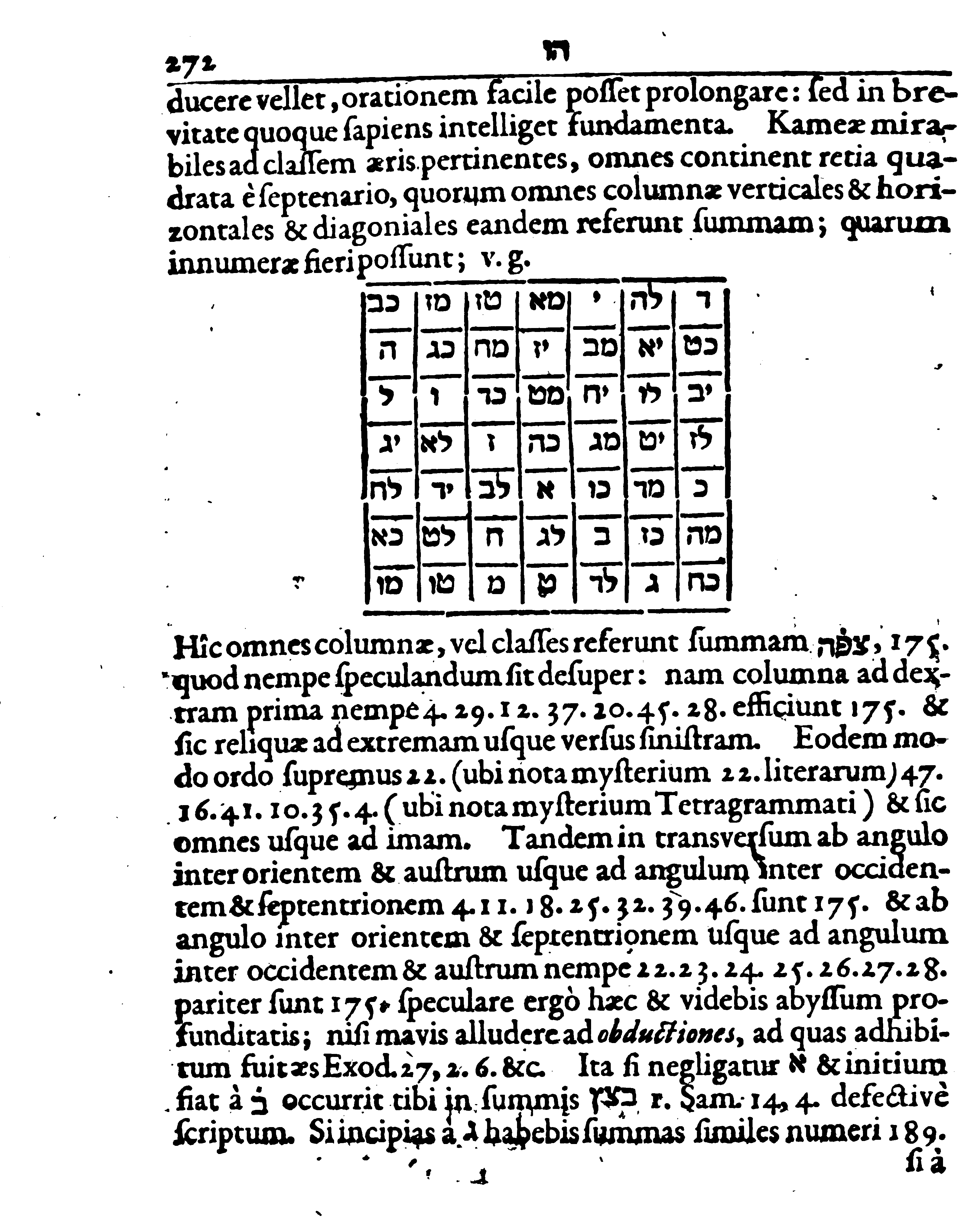
I. Editorial Transcription (Arabic Numerals)
Read left-to-right visually, row by row:
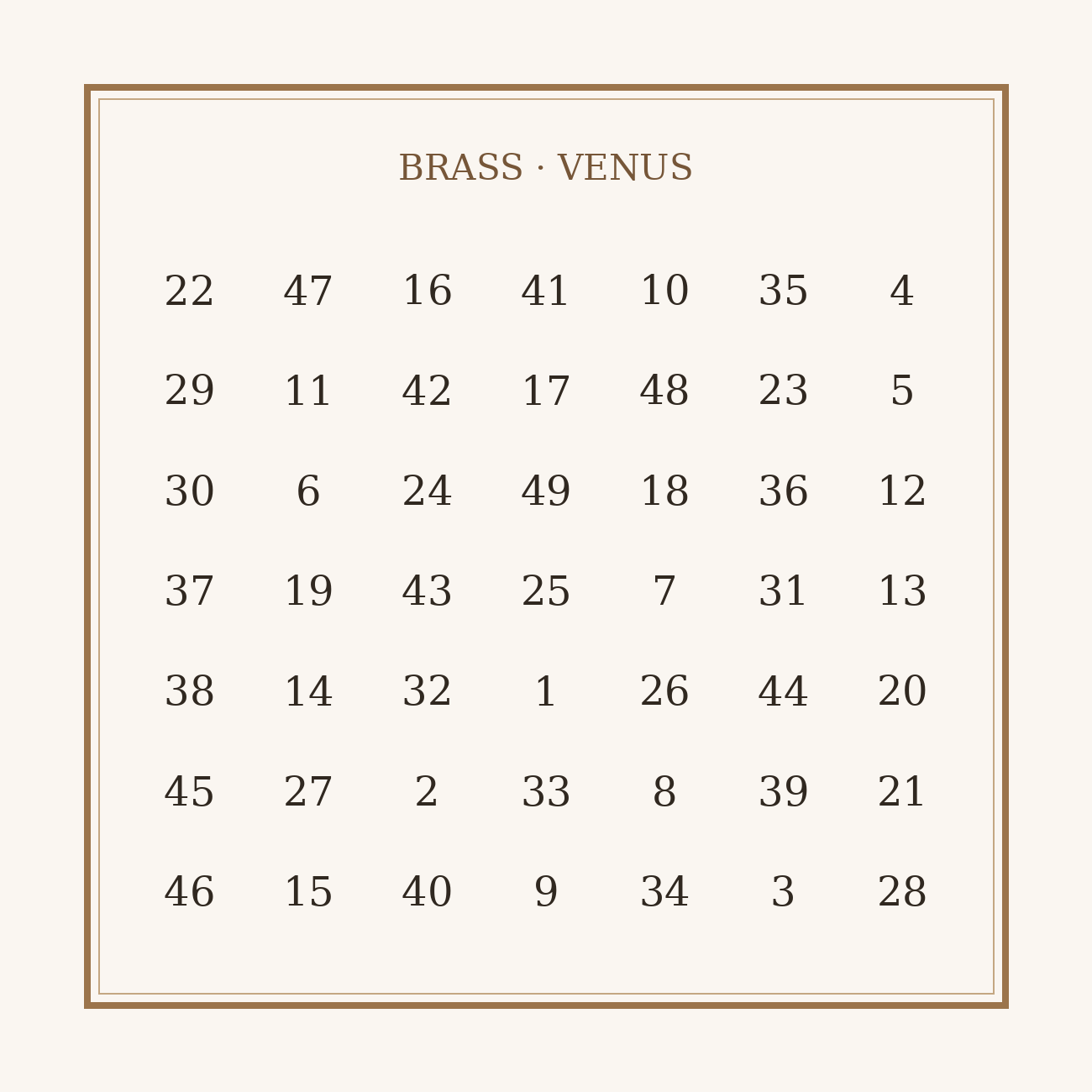
A Note on Reading Direction
The reading direction of the grids must be distinguished from the direction of the Hebrew script in which their accompanying textual material is written. Hebrew is read from right to left within each line, and from top to bottom between lines. This convention does not, in itself, prescribe a particular route through the cells of a numerical square.
Accordingly, the present edition preserves the printed orientation of each witness and does not impose a general reading path upon the grids. Specific instructions are recorded where the witnesses provide them: the boustrophedon (zigzag) path of the Brass/Venus square, and the retrograde instruction for the Quicksilver/Mercury square, to be read from bottom to top and from right to left.
These particular directions are treated as textual evidence, distinct from the ordinary direction of Hebrew writing and from the left-to-right notation of the Arabic numerals used in the editorial transcriptions.
II. Mathematical Apparatus
1. Contents: Integers 1–49.
2. The Serpentine Layout: The grid is the standard Venus square with rows 2, 4, and 6 reversed. All seven rows sum to 175; this is consistent with the serpentine arrangement, though equal row sums alone would not prove deliberateness, since reversing the order of entries within a row cannot alter its sum. The principal evidence for the reversal is the explicit zigzag instruction and the reported path, not the row sums. The two principal diagonals of the printed arrangement also sum to 175 (main diagonal: 22+11+24+25+26+39+28 = 175; anti-diagonal: 4+23+18+25+32+27+46 = 175). This is an additional mathematical property of the serpentine layout; it does not make the printed grid a normal magic square, since the columns do not sum to 175.
3. The Boustrophedon Path: The 1677 text explicitly instructs the reader to trace a zigzag path down the grid. The text provides the exact path for the first column of the instructed zigzag: 4, 29, 12, 37, 20, 45, 28. As the Latin text states: “columna ad dextram prima nempe 4. 29. 12. 37. 20. 45. 28. efficiunt 175” (the first column on the right, namely 4, 29, 12, 37, 20, 45, 28, make 175). This path is not the first visually printed column (which reads 22, 29, 30, 37, 38, 45, 46); it alternates between the rightmost printed column (4, 12, 20, 28) and the leftmost (29, 37, 45). Its sum is 175.
4. The Septenary Net (Alternative Paths): The text gives alternative starting points. The K/L series (175 → 189 → 206 → 213) has irregular increments (+14, +17, +7). W’s sequence (189, 196, 203) is a uniform +7. The irregularity in K/L is apparatus-worthy evidence, independent of reconstruction.
| Witness | Start | Cell sequence | Sum | Status |
| K/L | 1 | 4, 29, 12, 37, 20, 45, 28 | 175 | Reconstructed |
| K/L | 2 | Not supplied by witness | 189 | Reported; sequence unresolved |
| K/L | 3 | Not supplied by witness | 206 | Reported; sequence unresolved |
| K/L | 4 | Not supplied by witness | 213 | Reported; sequence unresolved |
| W | — | Not supplied by witness | 189, 196, 203 | Reported; sequence unresolved |
5. Witness Layout: The L and W witnesses print the standard Agrippan square (verified against L p. 46 and W p. 31), which sums to 175 on all rows, columns, and diagonals.
III. Commentary: The Cryptographic Net of Venus
al-Razi — Comparative interpretation (provisional): Al-Razi’s al-Maṭālib al-‘Āliyah discusses Venus in relation to love and harmony. The precise doctrinal formulation remains to be verified against the Arabic original; the comparison is offered provisionally. The 7×7 grid may be read as a dynamic net for generating pathways of attraction.
Trithemius — Comparative interpretation (editorial analogy): The boustrophedon layout may be read as a steganographic layer. It invites comparison with early modern cryptographic practices (see Steganographia, Book III, and Polygraphia). The specific Trithemian passage has not been identified; the comparison is an editorial analogy.
Llull — Comparative interpretation: The text invokes the “Mystery of the 22 Letters.” The grid may be read as a combinatorial machine for generating meaning.
Kircher — Documented parallel: Kircher presents the standard Agrippan square (1665, p. 70), without the boustrophedon layout found in K/L.
*
Chapter 7:
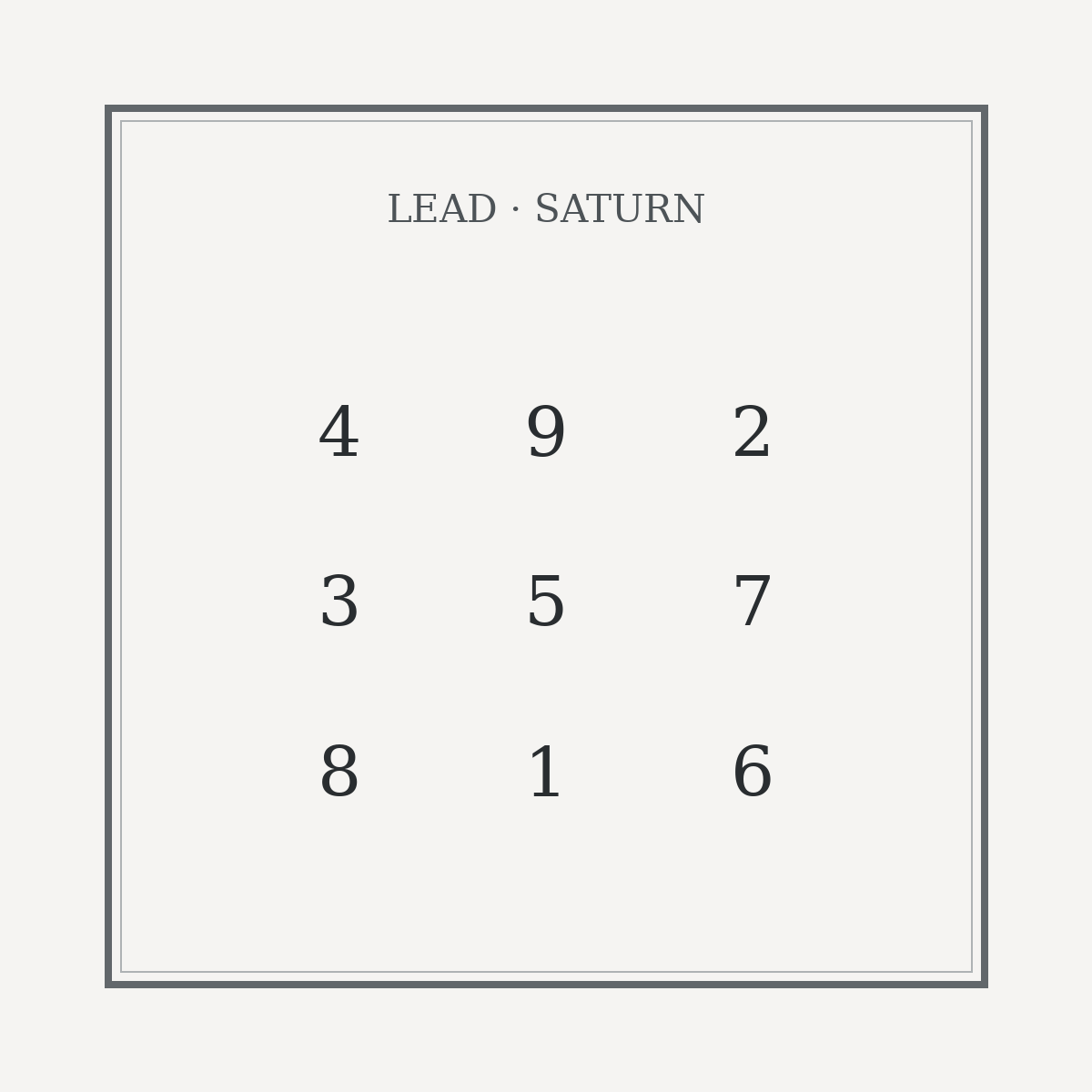
The Lead / Saturn Square (3×3)
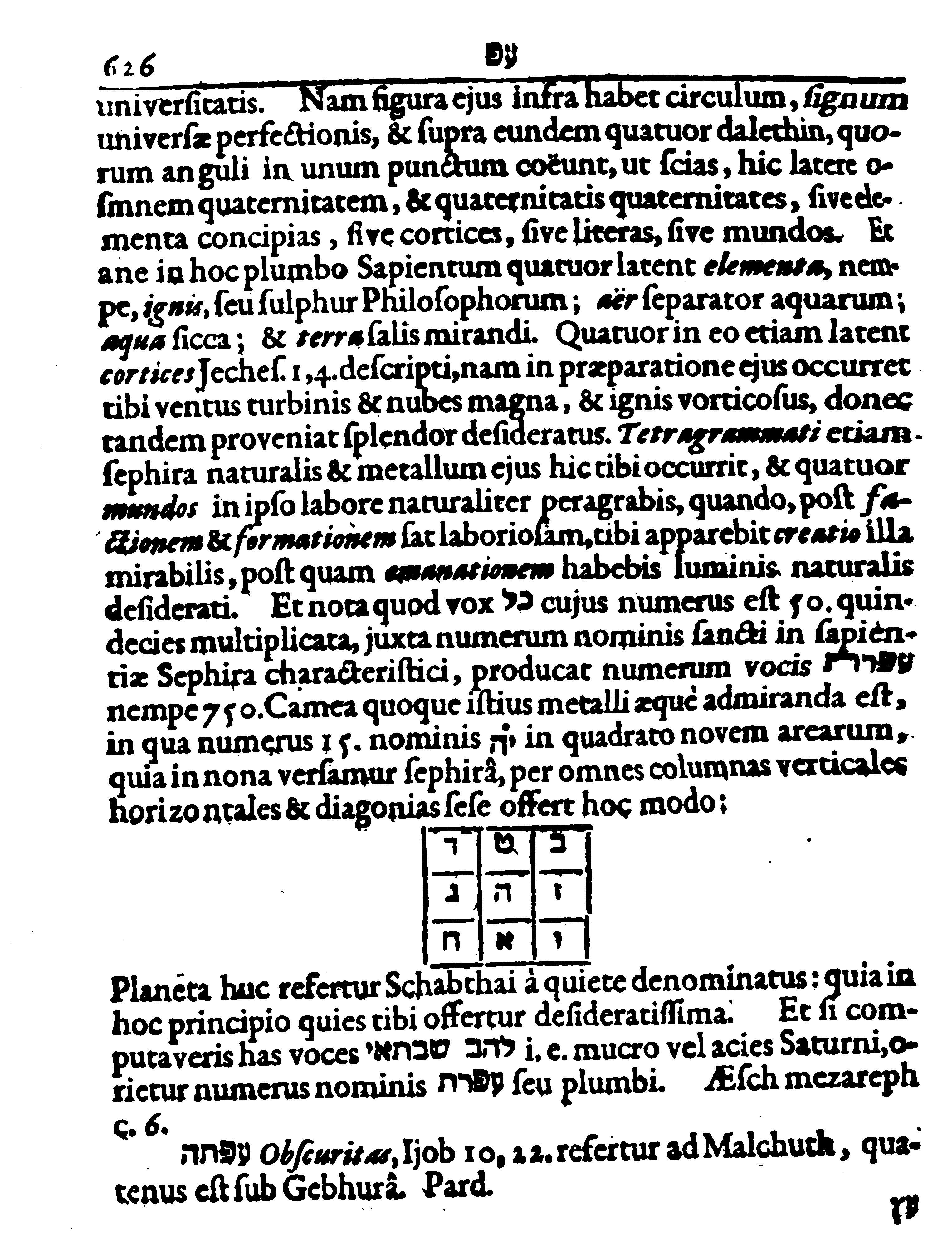
I. Editorial Transcription (Arabic Numerals)
II. Mathematical Apparatus
Contents: Integers 1–9.
Verification: All rows, columns, and principal diagonals sum to 15. Total: 45.
1894 Variant (W): Westcott prints a variant grid: 4 9 2 / 3 1 7 / 8 5 6. W’s variant transposes 1 and 5 within the middle column. All three column sums remain 15; the row sums become 15, 11, 19 and both diagonals become 11 (main 4+1+6=11; anti 2+1+8=11). Total remains 45.
The Lexical Crux: K and L print the Hebrew כל (Kol, “All”, gematria 50). E transliterates it as “Chol” but glosses it as “All”. W (n. 11, p. 55) corrects E’s transliteration in his notes (Kol, transliterated KL from Kaph-Lamed, is 20 + 30 = 50) but retains “Chol” in the body text.
III. Commentary: The Saturnian Kernel and the Weight of Wisdom
al-Razi — Comparative interpretation (provisional): Al-Razi’s al-Maṭālib al-‘Āliyah discusses Saturn as the heaviest and most remote planet. The precise doctrinal formulation remains to be verified against the Arabic original; the comparison is offered provisionally. The 3×3 square may be read as the primitive, foundational state of the Work.
Trithemius — Comparative interpretation (editorial analogy): The square may be read as a dense cryptogram, a Saturnian secret for the ponderous intellect. The specific Trithemian passage has not been identified; the claim is an editorial analogy.
Llull — Comparative interpretation: The text describes a figure with a circle and four Daleths (4) meeting at a point. Interpretation: This may symbolize the elements originating from a single divine source (the circle). The 1894 variant disturbs this reading.
Kircher — Documented parallel: Kircher’s Sigillum Saturni (1665, p. 65) reproduces the standard square.
*
Chapter 8:
The Quicksilver / Mercury Square (8×8)
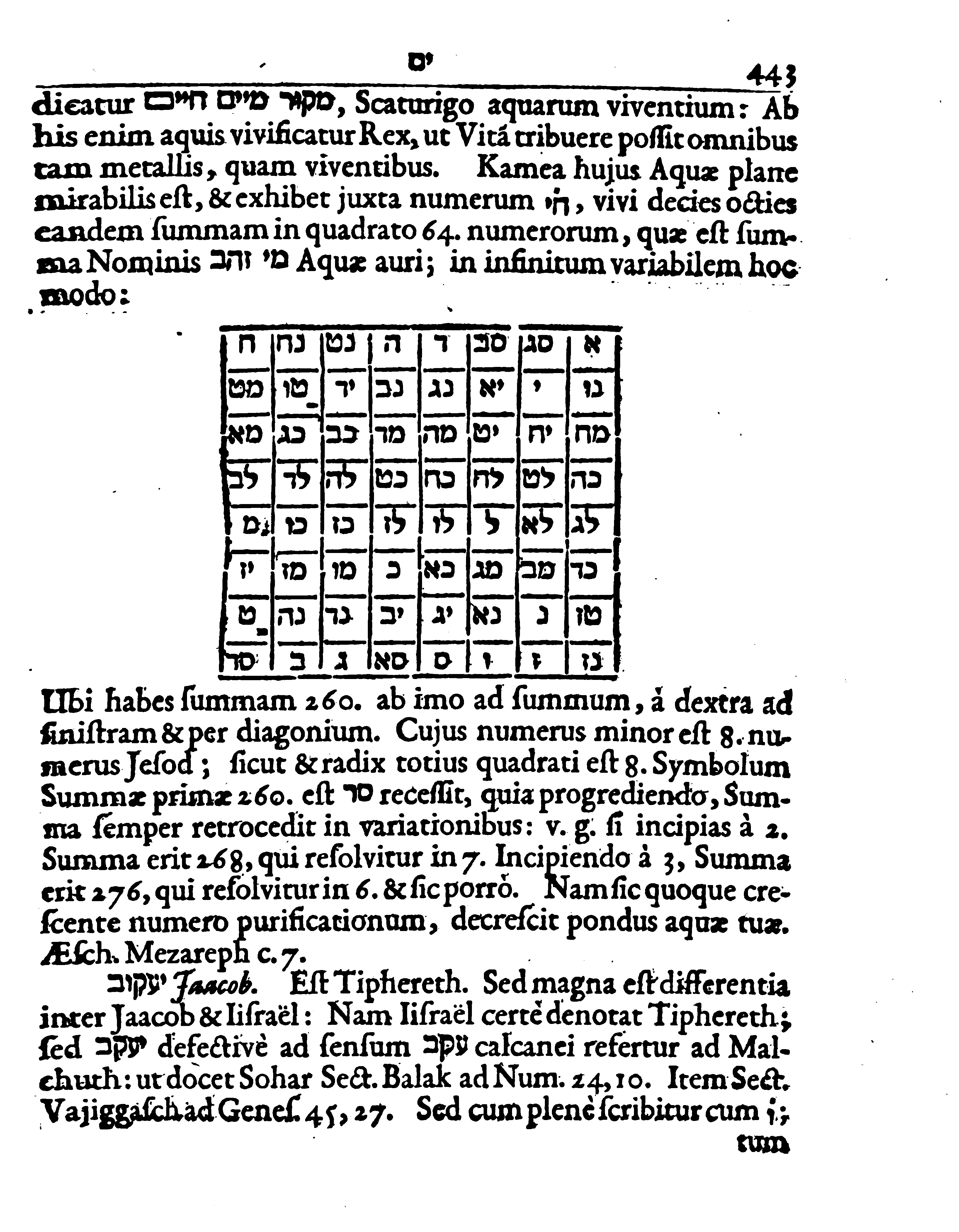
I. Editorial Transcription (Arabic Numerals)
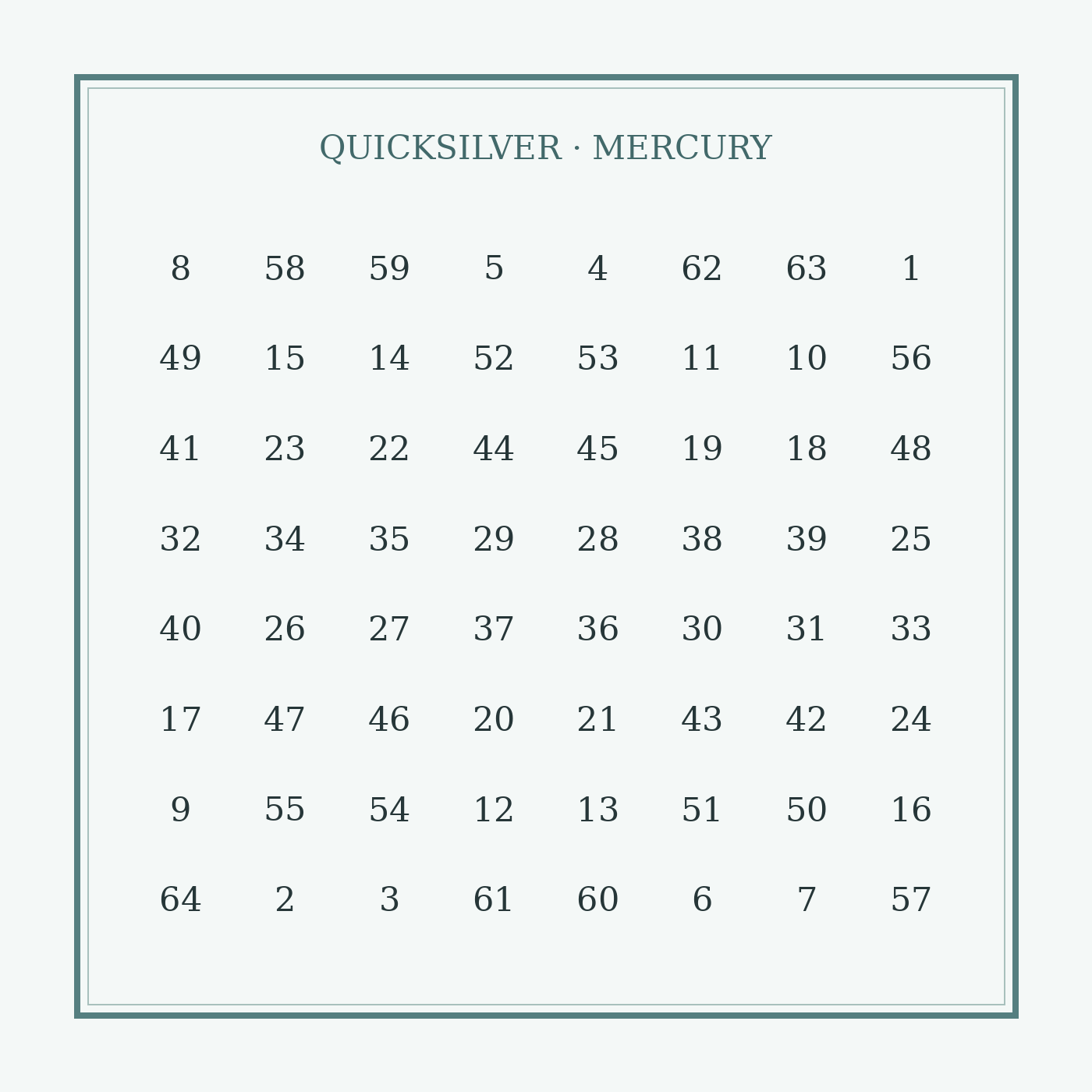
Reading Direction. For the general conventions governing the reading direction of the grids, see A Note on Reading Direction above. The specific instruction for this square—to read from bottom to top and from right to left—is retained here as part of the witness’s textual evidence.
II. Mathematical Apparatus
1. Contents: Integers 1–64.
2. Verification: All rows, columns, and principal diagonals sum to 260. Total: 2,080.
3. The Reading Instruction and Layout: The text explicitly instructs the reader to read “ab imo ad summum, a dextra ad sinistram” (from bottom to top, from right to left). The 1677 grid itself is printed in the standard Agrippan orientation (the transcription begins 8 58 59…, not the reversed 57 7 6…). The instruction is a retrograde reading directive, not a physical rotation of the woodcut.
4. The Variations: The text gives alternative sums based on different starting paths.
| Witness | Start | Cell sequence | Sum | Status |
| K/L | 1 | Standard layout | 260 | Verified |
| K/L | 2 | Not supplied by witness | 268 (reduces to 7) | Reported; sequence unresolved |
| K/L | 3 | Not supplied by witness | 276 (reduces to 6) | Reported; sequence unresolved |
III. Commentary: The Fluid Foundation and the Scribe of Heaven
al-Razi — Comparative interpretation (provisional): Al-Razi’s al-Maṭālib al-‘Āliyah discusses Mercury as a mediating planet. The precise doctrinal formulation remains to be verified against the Arabic original; the comparison is offered provisionally. The 8×8 grid may be read as the vessel for this fluid mediation.
Trithemius — Comparative interpretation (editorial analogy): The instruction to read “from bottom to top” may be read as a steganographic key. The specific Trithemian passage has not been identified; the claim is an editorial analogy.
Llull — Comparative interpretation: The number 8 may be associated with the Resurrection, the completion of the physical creation (7) and the beginning of the spiritual. This is an editorial symbolic reading; the source for the specific association has not been identified in the present edition.
Kircher — Documented parallel: Kircher presents the Sigillum Mercurii (1665, p. 71) in its standard orientation.
*
Postface:
The Harranian Hypothesis
and the Convergence of Traditions
The history of the Aesch Mezareph may extend beyond its first surviving witness in 1677. The possibility of an earlier Hebrew Vorlage remains a historiographical question; the present edition does not presuppose its existence. To explore that question, this edition proposes a model of intellectual convergence, here termed the Harranian Convergence.
Note: “Harranian Convergence” is the provisional name given here to a comparative hypothesis; it does not establish Harran as the historical source of the Aesch Mezareph.
This model is not presented as a proven chain of custody. It is a hypothesis of intellectual convergence, supported by the comparative correspondences documented in our commentaries and recent scholarship on the transmission of Arabic occult philosophy (Saif, 2015, see especially pp. 15–45). In each stage below, three registers are distinguished: (a) what the cited source demonstrates; (b) what the broader historical literature proposes; (c) what the edition hypothesises.
*
The Model
*
1. The Sabian Matrix.
Documented: Thabit Ibn Qurra’s De Imaginibus (ed. Carmody, 1960) is a treatise on talismans and astral images. The Ghayat al-Hakim, attributed to Maslama al-Qurtubi, is extant in a Latin version — the Picatrix — edited by David Pingree (London: Warburg Institute, 1986). The Latin version attributes the work to Maslama al-Majriti; Pingree’s introduction discusses this attribution. The work is a theurgical manual describing magic as the binding of celestial spirits into terrestrial matter.
Proposed by scholarship: That Harran was a centre of Sabian astral magic, and that these texts transmit that tradition, is proposed by the secondary literature.
Edition’s hypothesis: That this Sabian matrix may offer a comparative antecedent for the operative logic of the Aesch Mezareph’s squares.
*
2. The Islamic Synthesis.
Documented: Al-Kindi’s De Radiis (ed. d’Alverny and Hudry, 1974) discusses a physics of astral rays. Fakhr al-Din al-Razi’s al-Maṭālib al-‘Āliyah (vol. 3, pp. 427–459, “Upon the Determination of General Principles Valid in Magic Based on the Method of the Stars”) discusses the general principles of magic based on the method of the stars, including talismanic and astral mechanics.
Proposed by scholarship: That al-Razi and al-Kindi systematised earlier astral magic into a philosophical framework is proposed by the literature.
Edition’s hypothesis: That this framework supplies the philosophical grammar later presupposed by the Aesch Mezareph.
*
3. The Latin Abstraction.
Documented: Cornelius Agrippa’s De occulta philosophia (1533) codifies planetary squares into standardised grids in Book II, Chapter 22. Athanasius Kircher’s Arithmologia (1665, pp. 65–72) presents the same grids as arithmetic demonstrations.
Proposed by scholarship: That Agrippa drew on the medieval Arabic tradition (see Saif, 2015) is proposed by the literature.
Edition’s hypothesis: That Kircher’s mathematical presentation is a later abstraction of grids whose operative sense survived in other channels.
*
4. The Kabbalistic Appropriation.
Documented (verbal text): The Aesch Mezareph establishes a Sefirotic framework for the metals (K pp. 116–118, the generalia). The verbal text relates each metal to a Sefirah; this relationship is explicit in the witness.
Edition’s hypothesis (square–Sefirot relation): The present edition examines whether, and how, the numerical squares themselves are to be mapped onto the Sefirot. The witness does not, in the generalia, explicitly state that the squares are so mapped; the examination of the squares within the Sefirotic framework is the editor’s proposal. The departure from the standard solar square — the odd-number sequence with constant 216, explicitly associated in E (p. 26) and W (p. 19) with Aryeh and Zahab — is the strongest textual evidence for such a mapping, but it is not itself a general statement that all seven squares are mapped onto the Sefirot.
Proposed by scholarship: That an early modern Jewish author (or Christian Kabbalist) assembled this synthesis in the 16th or 17th century is one hypothesis among several. Georges Lahy has recently conjectured that the lost original was composed by an Italian Kabbalist between the late sixteenth and early seventeenth centuries—a hypothesis that aligns well with the text’s evident synthesis of standard Agrippan grids, Paracelsian alchemy, and Kabbalistic Sefirot (Lahy, Esh Metsaref, 2019).
Edition’s hypothesis (authorship): That the author encountered the Agrippan grids and mapped them onto the Sefirot. The identity of the author, the precise date of the alteration, and its intentionality remain unresolved.
*
Conclusion
The Aesch Mezareph is not established here as the final link in a single chain of transmission. Its grids permit comparison with several traditions of planetary magic, numerical symbolism, and Kabbalistic interpretation. The surviving witnesses establish the textual and numerical forms; the historical relationship among these traditions remains a question for further research.
*
Avenue for Future Research
The present edition establishes the textual and numerical forms of the seven squares and examines their possible theurgical logic. It does not claim to close the historical questions those forms raise. The following are directions that further research might pursue; they are offered as questions the edition opens, not as defects it leaves unresolved.
The origin of the reading 5 in the Tin square. The 1677 grid is defective: it contains 17 in place of 9, and the constant it reports (5) is not the constant the printed cells yield. Neither the Dal hypothesis nor the Lamed-Daleth hypothesis accounts for how the numeral 5 arose (see Chapter 5). A palaeographic study of the relevant Hebrew witnesses might clarify the transmission.
The authorship and date of the Aesch Mezareph. The possibility of a lost medieval Hebrew Vorlage, the possibility of a seventeenth-century Christian Kabbalistic composition, and Georges Lahy’s recent conjecture that the text was written by a late-sixteenth-century Italian Kabbalist all remain open (see the Note on Provenance and the Postface). A full codicological and philological study of the text’s Hebrew sources—and a deeper investigation into the Italian Kabbalistic milieu of the late Renaissance—would materially advance the question.
The relationship between the metals and the squares. The verbal text establishes a Sefirotic framework for the metals (K pp. 116–118). Whether the numerical squares are also mapped onto the Sefirot, or whether the square–Sefirot relation is the present editor’s proposal, is a question the witness does not settle (see the Postface, §4). The Gold square’s departure from the standard solar grid is the strongest textual evidence for such a mapping, but it is not a general statement.
The comparative figures. Al-Razi’s general principles of astral magic, Llull’s ninefold structure, and Trithemius’s planetary seals are offered in this edition as comparative lenses, not as documented sources (see the Note on Classification). The question whether any of these traditions has a historical relationship to these specific grids—as opposed to a conceptual resemblance—is one for further source-critical work. The al-Razi material in particular awaits a full collation of the Arabic original with the Turkish edition used here.
The Harranian transmission. The model proposed in the Postface is a hypothesis of convergence, not a demonstrated chain (see the Postface). A full collation of Munich, Cod. hebr. 214, and the Latin Picatrix against the printed squares would test the model directly. The Gold square’s “216 … 14 times” phrase, which does not correspond to the grid total of 1,296, is one of several points at which such a collation might begin.
*
Back Matter
*
Bibliography
Primary Witnesses
-
Knorr von Rosenroth, Christian. Kabbala Denudata seu Doctrina Hebraeorum Transcendentalis et Metaphysica atque Theologica, vol. 1. Sulzbach: Abraham Lichtenthaler, 1677. [K]
-
[Anonymous, “A Lover of Philalethes”]. A Short Enquiry Concerning the Hermetick Art. London: [s.n.], 1714. L: Latin text with commentary, pp. 1–80.
-
[Anonymous, “A Lover of Philalethes”]. A Short Enquiry Concerning the Hermetick Art. London: [s.n.], 1714. E: English translation with annotations, pp. 1–83.
-
Westcott, W. Wynn [as “Sapere Aude”], ed. Aesch Mezareph or Purifying Fire, in Collectanea Hermetica, vol. IV. London: Theosophical Publishing Society, 1894. [W]
Modern Translations and Receptions
-
Lahy, Georges (Virya). Esh Metsaref. French edition and exegesis based on the 1677 Kabbala Denudata. Roquevaire, France: Editions Lahy, 2019.
Comparative Milieu Sources
-
Agrippa, Cornelius. De occulta philosophia libri tres. Cologne: Johann Soter, 1533. (Book II, Chapter 22 cited; the edition consulted for this chapter is the Cologne 1533 printing.)
-
al-Kindi. De Radiis Stellarum. Ed. M.-T. d’Alverny and F. Hudry, Archives d’histoire doctrinale et littéraire du Moyen Age 41 (1974): 139–260.
-
Maslama al-Qurtubi. Ghāyat al-Ḥakīm (Picatrix), Latin version, edited by David Pingree. London: Warburg Institute, 1986. The Latin version attributes the work to Maslama al-Majriti; see Pingree’s introduction for discussion of this attribution.
-
al-Razi, Fakhr al-Din (1149/1150–1209). al-Maṭālib al-‘Āliyah min al-‘Ilm al-Ilāhī, vol. 3, pp. 427–459: “Upon the Determination of General Principles Valid in Magic Based on the Method of the Stars.” Turkish edition: Istanbul: Turkuvaz Haberleşme ve Yayıncılık, 2022. Joint translation from the Arabic into Turkish by Ekrem Demirli, Eşref Altaş, Hayrettin Güdekli, and Osman Demir. Note: The English renderings in the present edition are the editor’s working translation of this Turkish text; no published English edition has been used. Until the relevant Arabic passages have been checked directly, the al-Razi material in the commentary is to be treated as comparative interpretation, not as documented parallel. Link to the English here.
-
Ibn Qurra, Thabit. De Imaginibus. Ed. Francis J. Carmody. Berkeley: University of California Press, 1960.
-
Warnock, Christopher, and John Michael Greer, trans. Astral High Magic: De Imaginibus of Thabit Ibn Qurra. Iowa City, IA: Renaissance Astrology, 2011. (Translation from the Latin critical edition of Francis J. Carmody, with commentary by Christopher Warnock.)
-
Kircher, Athanasius. Arithmologia. Rome: V. Mascardi, 1665.
-
Llull, Ramon. Selected Works of Ramon Llull. Edited and translated by Anthony Bonner. Princeton: Princeton University Press, 1985.
-
Trithemius, Johannes. Steganographia. Frankfurt: Johannes Berner, 1606.
-
Trithemius, Johannes. Polygraphia. Frankfurt: Johannes Berner, 1606.
Secondary Sources
-
Noble, Michael-Sebastian. Philosophising the Occult: Avicennian Psychology, Lettrism, and the Arabic Commentaries on the “Theology of Aristotle”. Berlin: De Gruyter, 2021.
-
Saif, Liana. The Arabic Influences on Early Modern Occult Philosophy. Basingstoke: Palgrave Macmillan, 2015.
-
Scholem, Gershom. Alchemy and Kabbalah. Translated by Klaus Ottmann. Putnam, CT: Spring, 2006. (See especially pp. 75–77 on the question of a lost Hebrew Vorlage.)
*
*
***
Related Articles


Leave a Reply