
Circle of Transmission: The Living Loom
Beams from the Soul: Karl von Eckartshausen’s Poems of Menschenliebe-A Reader’s Anthology

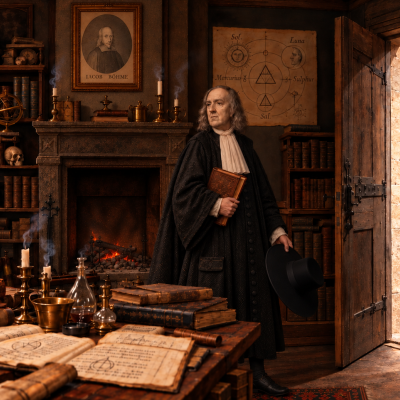
Featured illustration’s legend: Beams from the Soul — An imagined portrait of Karl von Eckartshausen in contemplation within the Temple of Nature: surrounded by books, flowers, classical art, and the instruments of cosmic inquiry, he looks outward from the inner world toward the living landscape below. The rising light evokes the movement at the heart of this anthology—from Nature and perception toward the awakened heart and, finally, Menschenliebe, the love of humanity.
*
Today’s sharing from the Blue House of Via-HYGEIA is Beams from the Soul: Karl von Eckartshausen’s Poems of Menschenliebe — A Reader’s Anthology. Karl von Eckartshausen (1752–1803), best known as the author of The Cloud upon the Sanctuary and Insights into Magic, is generally remembered as a major figure of late-eighteenth-century Christian theosophy and Western esotericism.
This new Circle of Transmission project retrieves a vital, often eclipsed facet of his work: the humanitarian poet, the social critic, and the moralist of the Enlightenment. Our aim is to present Eckartshausen’s poetry as a form of “applied theosophy”—the conviction, repeatedly expressed in these poems, that spiritual insight must ultimately become Menschenliebe (love for humanity).
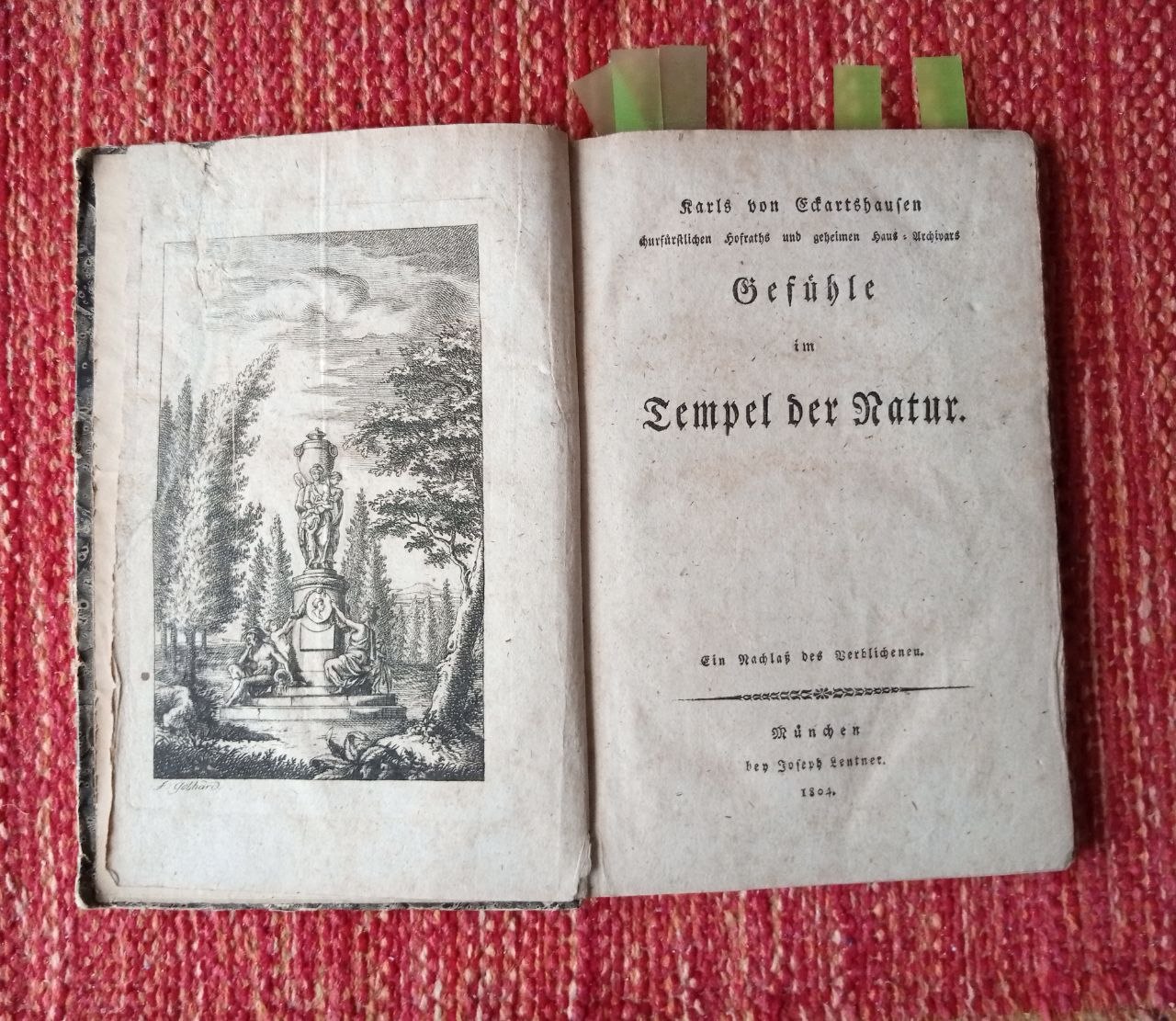
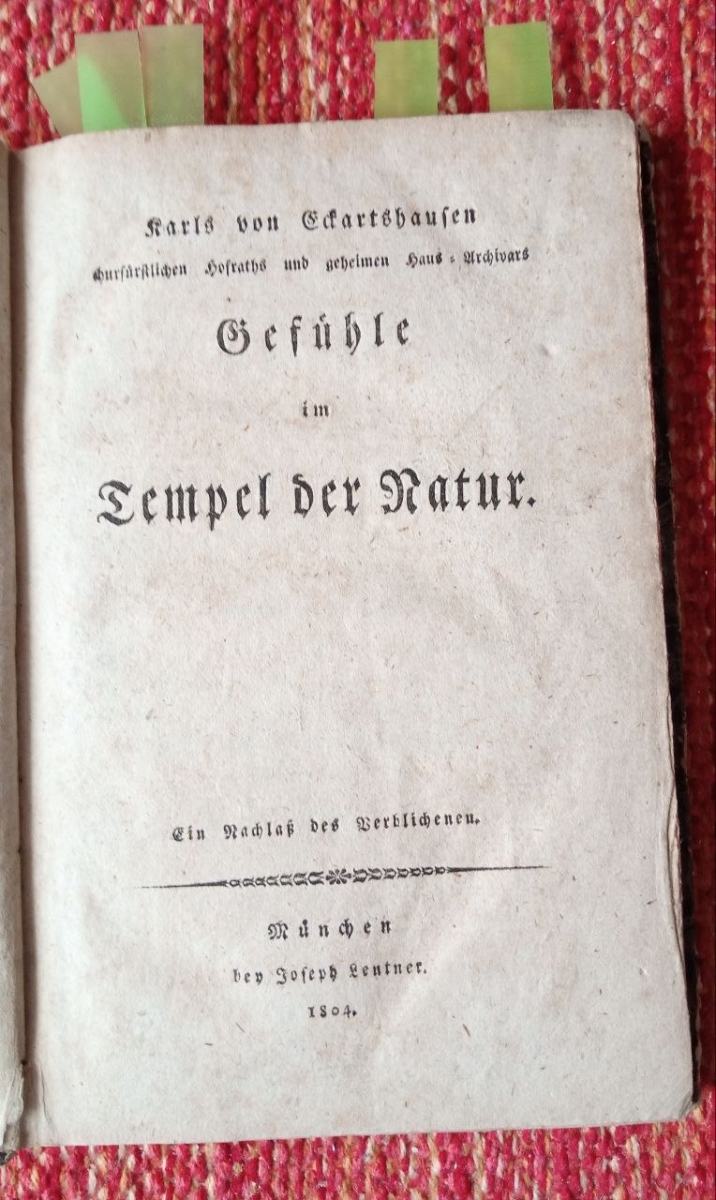
We present this complete English translations of seven of his most striking moral poems from his posthumous collection (Nachlaß), Gefühle im Tempel der Natur (1804), accompanied by contextual and interpretive commentaries. Through these lenses, we read these poems not merely as historical artifacts, but as a Via Hygeia—a way of healing-for the enduring human diseases of alienation, greed, violence, and spiritual fragmentation.
We invite you to step into the Temple of Nature and discover the beams from the soul of a mystic whose poetry continually brings spiritual knowledge back to the question of how we live—and how we love.
**
Epigraph
Adapted from the spiritual ethos of
Die Wolke über dem Heiligthum (1802)
“The outer temple is Nature, but the inner temple is the Soul.
He who reads the Book of Nature with the eyes of love shall find the sanctuary
of the Godhead within his own breast.”
*
The Architecture of the Anthology
The article follows a deliberate spiritual and intellectual itinerary, divided into four movements:
- I. The Contextual Framework: An introduction and editorial principle situating Eckartshausen within the South German constellation of Christian mysticism, theosophy, Pietism, and Enlightenment moral thought. It introduces the central hermeneutic thread of the anthology: the journey from reading the “Book of Nature” to understanding the “language of colors,” and finally to the “sacred writing of love in the heart.”
- II. The Seven Complete Poems: Our complete English translations accompanied by concise contextual and interpretive commentaries.
- III. The Afterword: “The Temple of Nature in the Present,” a reflection on the contemporary resonance of Eckartshausen’s concerns with human division, self-interest, and the relationship between inner and outer life.
- IV. The Apparatus: A little Glossary of Key Terms, clarifying eighteenth-century concepts such as Gottheit, Freygeist, and Empfindsamkeit, together with a Selected Bibliography of Eckartshausen’s relevant works.
*
Source Provenance & Editorial Principle
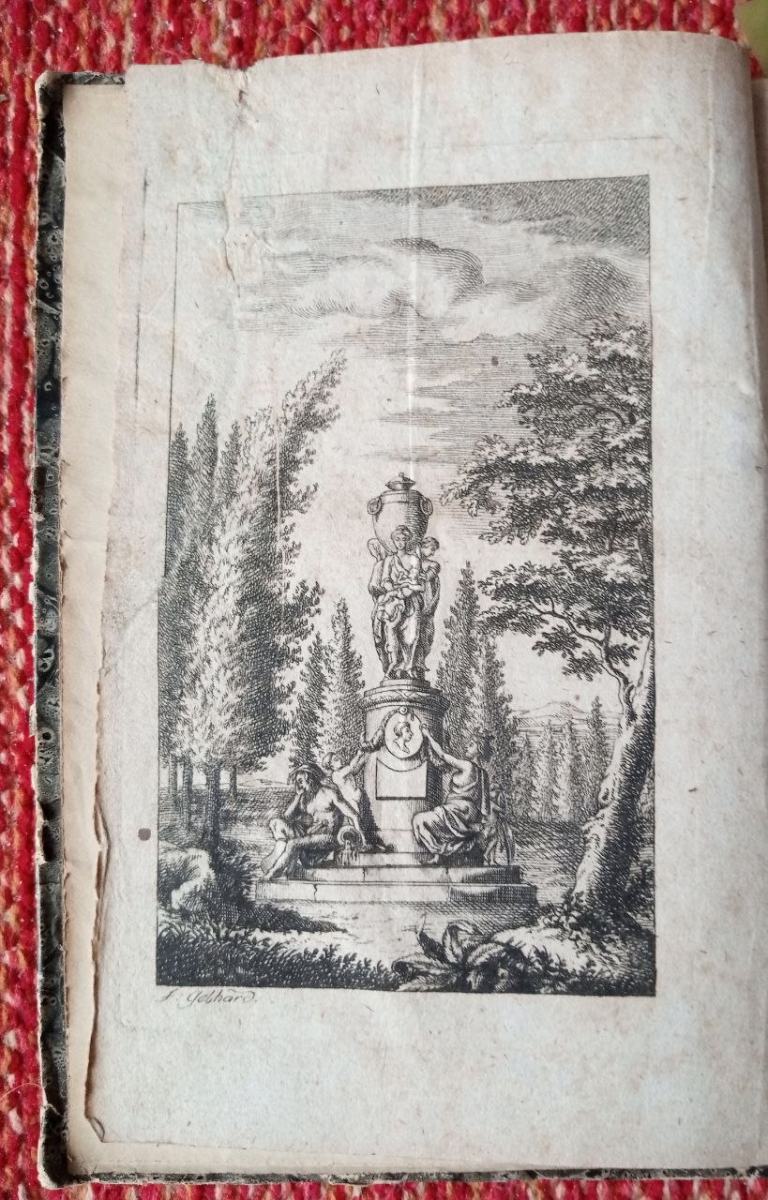
The texts in this anthology are derived from the first edition: Gefühle im Tempel der Natur. Ein Nachlaß des Verblichenen (Munich: Joseph Lentner, 1804). The translations are original to this edition. They seek to remain close to Eckartshausen’s syntax, imagery, and semantic range while allowing contemporary readers to follow the argument and rhythm of the poems. Where an interpretive difficulty arises, the commentary identifies the issue rather than silently resolving it. The didactic Taschenbuch für Fürsten has been arranged in poetic stanzas to make its rhetorical structure more readily perceptible; this formatting is editorial.
*
A Contextual Introduction:
The Humanitarian Mystic
Karl von Eckartshausen (1752–1803) is an important figure in the history of German Christian esotericism. As the author of Die Wolke über dem Heiligthum (The Cloud upon the Sanctuary, 1802) and the multi-volume Aufschlüsse zur Magie, he belongs to the late eighteenth-century world of Christian mysticism, theosophy, Pietism, and enlightened moral philosophy.
Yet to view Eckartshausen solely through the lens of esoteric speculation is to miss another vital facet of his work. His posthumous collection Gefühle im Tempel der Natur (Feelings in the Temple of Nature, 1804) reveals the Enlightenment moralist, social critic, and poet of Empfindsamkeit (Sentimentalism).
His thought belongs to a wider South German constellation in which the legacies of Jakob Böhme and Friedrich Christoph Oetinger are particularly important. From the perspective of Via-HYGEIA, the poems can be read as an applied theosophy: spiritual insight is tested by its consequences for human conduct. The “Temple of Nature” becomes a practical counterpart to the inner “Sanctuary” of Die Wolke, while the social critique becomes a call toward Menschenliebe—love for humanity.
*
Presentation of the Sequencial Flow
of this Little Anthology
Rather than a mere collection of excerpts, this anthology follows a deliberate spiritual itinerary across four movements:
I. The Human Being in Society: “Society” and “Prejudices”. Humanity is bound together by divine love, but prejudice, violence, and self-interest rupture these bonds.
II. The Soul and Perception: “To Miss von Baader” and “My Wish”. The recovery of the soul occurs through feeling, art, friendship, and awakened interior perception.
III. Solitude and Return: “The Mountain”. The soul rises above the world in transcendence, yet the poem leaves open the ethical question of returning to human suffering.
IV. Love Made Ethical: “Love and Moderation” and “A Pocketbook for Princes”. Spiritual insight matures into social responsibility, political ethics, and the disciplined ordering of desire.
Throughout these movements, a conceptual thread emerges: Eckartshausen’s world is fundamentally one of reading. We move from the Book of Nature to the language of colors in art, to the writing of duty in the heart, and finally to love as a principle of human life. The movement may be summarized as Nature → Art → Heart → Love.
*
The Selected Poems
The seven poems are presented here in complete English translation. The translations aim to preserve Eckartshausen’s imagery, argument, and rhetorical movement while using contemporary English syntax. Original printed page transitions are retained in the editorial source work but are not reproduced in the body of the reader’s edition.
I
The Human Being in Society
Humanity is bound together by divine love,
but prejudice, violence, and self-interest rupture these bonds.
01
Society
(A thought at the breaking of dawn)
You! — Artist of your own torments,
Poor mortal! — your bliss
Hangs upon the chains of love,
Which form the society of men.
Ah! Wretch! why do you seek
To tear these chains asunder,
And, out of the stubbornness
Of your unjust soul, accuse them
Of being a burden to humanity! —
Ah! how pitiable is the error
That deceives you!
Know, wretch!
— you hasten yourself
Toward your own ruin! —
Do you then fail to recognize
the power of these bonds?
Through them, parts of the world are fettered,
And distant climes are united. —
In vain are men separated
By the immeasurable partition of the sea;
Nothing remains upon the globe of the earth
That the chain of society does not link.
The whole world is now but a single land,
And the consequence of this divine harmony,
Makes every dwelling place my fatherland,
And every mortal my bosom friend.
Sacred bonds, which I revere,
Goddess of Society!
where are the altars
That mortals build for you?
Fearfully I look around,
And murderous hands
Stretch forth, to desecrate
your holy temple.
Already the deed of the second
Of those born
Foretold the bloody offense
Against your rights.
O you — worthy heirs of his
cruel crime! You surpass the bleeding deed
Of the first murderer.
Executioners and sub-executioners
fill the noble Regions of nature;
Dying victims sink in blooming valleys,
And the lilies in the valley turn red
From the shed blood of our brothers.
There I see those bloodthirsty men,
To whom the first of the citizens
Gave the name of heroes.
These men, born to be brothers,
Sink the flashing steel
Into a brother’s heart:
The earth trembles at the sight of the madmen,
And turns pale beneath the purple
Of the trickling blood
Of its dying inhabitants.
But what kind guardian spirit
Of the scattered mortals United
them again in groves of love? —
Civilized nations arise,
And people embrace one another in society;
Happily man hastens from age to age,
And enjoys the fruits of their goods.
But how ashamed, and forsaken
Did you flee again like an exile
From the happy regions,
Guardian spirit of humanity!
And the salvation and happiness of mortals
Follow after you, fleeing in long rows.
Oh! From how many bloody battles
Does your gaze shudder back,
By how many enemies
Are you surrounded?
Always busy pursuing you,
Man swears at the altar
Of self-interest.
Immodesty is on the lips of hundreds,
And unites with the monster of suspicion,
To pull humanity apart.
As treacherous as it is fearful,
Slander hides in the corner,
And kills with invisible daggers.
Oh! Flee—flee far from that mortal
Who makes only himself the object of his love:
He who seeks only himself
Cannot be worthy of humanity.
Flee the dark fanatic,
Who arms the hands of the Deity with thunderbolts,
Though the Deity is but love itself.
The savagery that leads him to this dream
Was never a virtue;
For tell me—if virtue could exist without
brotherly love,
What vices would you even be able to condemn?
Oh! Tear the laurels from the guilty brow
Of the proud warrior,
The cruel fruits of his conquest,
And the all-too-fortunate prize of vices
Purchased with human blood.
Let them boast of their deeds;
One day, the Temple of Memory
Shall strike the names
of these murderers from its records;
In their place, humanity
Will write more enduring names,
Names—of love and of peace.
The sweet name of the Fatherland
No longer echoes in our groves;
The happy times have vanished
Since the phantom of war
Covered the earth with human blood,
And kings soared to conquests
Over heaps of shattered skulls
Of their citizens.
No Codrus was to be found
in these times anymore,
And Lisbon tumbled into abysses,
Without there being a Curtius
Among this multitude of the sacrificed.
O Nature! how they desecrate you,
How they ignore your power!
When will your clear call
Lead man to his duties;
When will one read the duty of humanity,
Written in the heart with fire
By the hand of love? — Ha!
Then bold folly will dare in vain
To extinguish this sacred script,
Which love wrote for eternity.
Not independence
Should be the pride of our life:
The Deity gave us our being
For the welfare of humanity, our brothers.
The day of my birth
Already gave my brother a right
To all my days!
My very existence promised him support;
My life is not my own —
You princes,
do not boast of your crowns,
For you carry only one more burden.
Does your duty not reveal
That man exists only for his fellow man?
Oh, if only the smallest spark
Of the noblest of all flames,
From the Eternal’s fire of love,
Could fall into every human soul,
And awaken the extinguished embers
To act for the welfare of our brothers!
Oh, let us feel the bliss,
And the pleasure of being good!
Commentary:
The poem presents social existence not as a limitation of the individual but as a network of mutual obligations. Eigennutz (self-interest) stands against the bonds of love through which humanity becomes a genuine community. Its movement from war, suspicion, and violence toward the “sacred script” written in the heart gives the poem its central ethical force: human beings do not fulfill themselves through isolation but through responsibility for one another. The closing appeal to the “Eternal’s fire of love” brings the social argument into explicitly religious territory.
*
02
‘Prejudices’
(were set by Man
in the place of Truth)
Flee, friend!
the slave-chain of black prejudices;
In the light of truth, let our torch be lit,
And shine for us upon the dark paths
of our wanderings.
Tear, friend!
the blindfold from the forehead of Error;
And even if the people build altars to it,
Then consider, that the error of millennia
Always remains error.
To love humanity, let this be our philosophy.
Virtuous he created them,
the Creator, the mortals:
Still the dawn of his goodness shines
over every creature,
And gifts of life, bliss
His fatherly hand pours out
Over every mortal, whether he lives
in the hut of the cannibals,
Or in the palace of Europe’s kings.
Yet dissatisfied with the gifts of nature
It was man himself, who poisoned these gifts for himself.
Falsehood raised its serpent’s head,
And its poisonous foam
Extinguished the writing that in the Book
of Nature was inscribed.
Through the hands of the ‘Bonzen’ [priests/clerics]
they wrote down
New laws, which God and Nature did not know,
And for the most loathsome of vices Self-interest built altars.
Mars was appointed the deity of murder,
And Jupiter, that most shameless scoundrel,
Who violated every virtuous girl,
To this Jupiter, Rome and Athens dedicated their temples.
To Venus, too, they built altars,
The goddess of the most shameful lust,
And incense they scattered to Priapus,
And profaned innocence at his altars.
These were the gods of Rome,
The gods of the Spartans,
Until Socrates, the wisest of men,
Dared to wage war against these fantasies.
But in vain did Virtue raise her voice,
The clamor of vice drowned her out,
And Socrates fell as a victim
At the altar of prejudice.
So it is with men; they persecute the one,
He who wants to tear the blindfold from their eyes:
He who, in friendship, dares
To break the chains that weigh them down,
He bleeds, strangled by their own hand.
Gentle Nature!
When will you again assert your rights?
When will your warming beam
Melt the ice from their hearts,
That keeps them bound,
Just as cold and frost
Bind Helvetia’s high mountains.
In vain is my wish:
Wisdom Remains the portion of only a few men.
The oppressive burden of stupid prejudices
Remains eternally the lot
Of the greatest part of mankind.
Commentary:
The poem attacks prejudice as a falsification of the “Book of Nature,” while distinguishing the love of humanity from inherited dogma. ‘Bonzen‘ is an eighteenth-century polemical term for religious functionaries or clerics; Eckartshausen uses it here in his criticism of priestly authority, not as a rejection of faith itself. The invocation of Socrates turns the poem into a meditation on the persecution of those who challenge inherited error. The final image of Nature’s warming beam melting the “ice” of prejudice brings moral awakening back into the language of the natural world.
*
II
The Soul and Perception
(The recovery of the soul occurs through feeling,
art, friendship, and an awakened interior perception)
03
To Miss von Baader
(As she was painting Ariadne on Naxos)
Where have you perhaps borrowed such art,
You painter of souls!
To represent feelings visibly,
And to chain the passions,
And to hold them fast in colors,
And to bind them through brushstrokes? —
Prometheus stole fire from the gods once
To bring humans to life:
You stole even more, you thief of the spirit!
Your brush can only come from Olympus;
It must be the brush with which
Zeus once Painted the plan of creation.
It is that very one; yet you did not steal this brush;
Zeus gave it to you —
your eye penetrated deep into the sanctuary Of Art —
the sister of Nature,
From whom you learned to draw souls,
And to express passions,
And to embody spiritual forces,
You herald of psychology!
Your painting is a book,
for those who can read it,
And if I believed in no soul,
Then I would want to go to that painting,
And I would sense it—the language of colors
Says more than words can say,
By cold metaphysicians;
A single brushstroke of yours
is an entire study of the soul.
Commentary:
Eckartshausen presents painting as a form of spiritual perception. The artist is a “painter of souls” because she makes inward states visible, turning color and gesture into a language capable of communicating what ordinary discourse cannot. His use of Seelenkunde—literally “knowledge of the soul”—is especially revealing: art becomes a means of psychological knowledge. The image of the painting as “a book, for those who can read it” also anticipates the larger hermeneutic movement of this little anthology, in which Nature, art, the heart, and human love become successive forms of readable meaning.
*
04
My Wish
If it were indeed granted to me
To choose among the gifts of the gods,
Then I would never have chosen gold, nor silver,
Never vain honor, never the splendor of the throne.
All this would be dust to me.
Reason and Spirit!
You alone could have made me long for them,
But I no longer even crave you;
I see so many people unhappy because of you,
And what are you then,
Reason, without Feeling?
Mighty Deity!
You who give life to all,
Grant me from your most magnificent gifts—
From your blessings—only a few.
Give me a feeling heart, a friend,
And sound common sense.
Commentary:
The poem rejects material wealth and empty honor in favor of three modest gifts: a feeling heart, a friend, and sound common sense. Its point is not a rejection of reason itself, but a warning against reason when separated from feeling and human relationship. The final triad brings together characteristic Enlightenment concerns—sensibility, friendship, and practical judgment—while placing them within Eckartshausen’s religious vocabulary of divine gifts.
*
III
Solitude & Return
(The soul rises above the world in transcendence—
but must descend again to remain compassionate)
05
The Mountain
Receive my greeting, majestic mountain,
Whose head is shrouded in clouds,
Receive my greeting!
For love of you I left the flowering field,
The brooks rippling in the valley,
The shade of the forests —
Everything I left, in order your high,
lonely summit to climb.
Oh, how peaceful I am here!
Closer to the Godhead, further removed from men,
Who in my eyes now swarm like ants.
Here I am safe for a time from their persecutions.
From afar I survey all of nature;
She alone is still great,
All else, being the work of men,
Is small, and vanishes before my eyes.
Here I feel the purest impulse for adoration,
Nothing disturbs me; no sorrowful image of a sufferer
Draws my attention,
All that is called human misery is far beneath me,
Even the struggle of the elements.
I live in a pure sphere.
The thunder rolls beneath me,
The lightning snakes beneath my feet,
Above me there is peace and all is serene.
My gaze encompasses entire regions,
I see the storms of the ocean,
Like a clockwork mechanism
In immeasurable distance.
I am exalted above everything
That lies in the depths.
Only the greatness of the Godhead hovers around me
in a holy shudder,
And every one of my thoughts is adoration.
Ah! why must I return again,
To visit once more a world
Where vice and falsehood sit enthroned!
With every step that I descend,
I feel that I am approaching the world again.
Truth covers itself again with its veil,
And the closer
I come to the human race,
The more I feel
that error and darkness surround it.
Commentary:
The poem draws strongly on the eighteenth-century experience of the sublime: the mountain offers distance, grandeur, silence, and an overwhelming sense of the divine in nature. Yet the ascent is deliberately unstable. From the summit, human beings appear small and suffering becomes distant; on the descent, truth becomes veiled again and error returns. The poem therefore turns an experience of transcendence into an ethical question: can spiritual elevation remain spiritually fruitful if it loses contact with human suffering? Its unresolved tension gives the poem much of its power.
*
IV
Love Made Ethical
(Spiritual insight matures into social responsibility,
political ethics, and the disciplined ordering of love)
06
Love and Moderation
Feeling of tenderness, you gift of beautiful souls!
You heavenly gift, which the Deity gave us!
Let your beauty be placed before my eyes, And
imprint your angelic image upon my heart. Feeling
of tenderness! You reflection of pure love!
Who bestows joy of life, and gives life’s bliss.
You, the archetype of the Deity!
You, the impulse of the purest impulses!
How great our “Self” becomes when our soul loves.
What are you, Love?
Say, how many people know
What it truly means to love;
people flirt, pine, and kiss,
Embrace one another,
look at each other,
and in that tender longing
Our heart feels that it misses something deep within.
O humanity!
Do learn: the true source of love
Lies not in the senses; it is a part of the spirit;
It is a gentle fire, a possession of the soul,
And does not offer its treasure for sale to the senses alone.
If only the mask attracts, the beautiful outer shell,
Then this inclination is not love; no, it is sensuality,
Man gradually becomes the plaything of passion,
And your love sinks upon the sacrificial altar of time.
The senses are indeed the ladder of feeling;
If the heart discovers through them the responsiveness of beauty,
Then a force lures us, just as the flower lures the bee,
But satiety soon punishes our lustfulness.
Man so loves to enjoy what flatters his senses;
Of everything that attracts him, he desires the pleasure.
Love of his own self is the reason that he feigns,
And he often deceives himself with a handshake and a kiss.
Among a thousand lovers, often not even one truly loves,
As soon as one examines what it means to truly love.
For among thousands, often no one listens to his own heart,
Until time and circumstance finally tear him from his slumber.
He who truly loves is far from self-love,
His beloved alone is his other “Self”;
Therefore no love lasts except that of pure impulses,
For sensuality within us is always changeable.
Habit and pleasure make our life grow weary,
He who enjoys much, always enjoys less;
If you wish to strive for true happiness, for true joys,
Enjoy with reason, and you shall be happier.
Sensual lust can never fill your entire heart,
The wise man tastes only with gentle moderation;
The fool devours joy, and will soon feel displeasure,
For nature avenges such coarse satiety.
He who knows true love enjoys love modestly,
He never surfeits his heart, which always has desires;
He knows that desires alone are the spice of our joys;
They all cease once our heart is satisfied.
The senses become dull through sensual enjoyment,
And satiety awakens loathing instead of pleasure.
Only the wise, who know how to often go without,
Are aware of the bliss, joy, and reward of moderation.
Duration constitutes happiness, not intensity and brevity;
Through these, feeling wears itself out within the body;
Virtue alone is the spice of true love,
Vice is its enemy; lust is its grave.
Over-satiety was always the reef of human joys;
He who has delved into the heart of human joy,
Sips true pleasure with uncorrupted lips
And with that refinement for which the clever man strove.
Humanity loves to change and seeks new joys,
He hates even beauty itself if he feels its monotony;
Then it becomes a burden to him, he seeks to part from it,
And often frees himself from his fetters by force.
Only the heart alone can give love endurance,
And often far surpasses the most charming form;
The heart gives new being, and a new impetus to life,
And does not let the warmest love grow cold through habit.
You young women, learn the magic powers of love,
Remember that virtue alone is the strongest of bonds;
Make being virtuous your daily business,
And whoever loves you once will remain eternally faithful.
Commentary:
Eckartshausen distinguishes tenderness and spiritual love from sensual appetite. The senses may awaken attraction, but desire becomes destructive when it is allowed to govern itself without measure. The poem therefore presents moderation not as denial but as the condition for duration: pleasure becomes durable when joined to virtue, affection, and the heart’s capacity to remain inwardly alive. The closing address to young women reflects the didactic conventions of its period, but the larger argument is universal: love requires the ethical cultivation of desire.
*
IV (continuation)
Love Made Ethical
(Spiritual insight matures into social responsibility,
political ethics, and the disciplined ordering of love)
07
A Pocketbook for Princes
Prince! fear a God who rules above you,
This is the first step that leads to wisdom.
Love religion; be always the savior of virtue;
Remove from your court the vain mockers of faith.
He who forgets the fear of God knows no duty,
He who does not love his God does not love the Prince either.
The freethinker is a man who is arrogant in himself,
Who knows nothing of faith, who has forgotten his God:
Who is without virtue, and without inner strength,
A slave and a servant to every passion,
Who swears loyalty to you today, and does not keep it tomorrow,
Who oppresses his fellow man and manages his office poorly,
Who boldly profanes everything that is still called holy,
Who drives the steel into the breast of his best friend,
When he wishes to kill: who acts without principle,
And dares every vice whenever the desire strikes him.
Tell me, if a monster that so strives for vice,
Lives at your side, Prince! at your court,
What misery threatens you yourself, and your whole states!
He who fears no God dares to betray princes.
Only he, my dear Prince! who possesses true virtue,
Only he, believe me, is a good man in the state.
He knows piety, and follows his duties faithfully;
To him, the Prince is always worthy; his fatherland always sacred.
Recognize this man by his fairness,
Free from hypocrisy in honest integrity.
He who mocks virtue at your court, Prince!
Believe that he is evil, and gathers with the wicked.
A good man is never ashamed to dedicate himself to virtue,
He is never ashamed, my Prince! to be a good Christian.
It has always been, Prince! the artifice of many great men,
To call matters of faith frivolous antics.
The reason is obvious: faith restrains us,
And malice wishes to be entirely unrestrained.
Loud is the contradiction of believing in a God,
And yet at the same time plundering lands at one’s whim.
Not like an executioner does the Christian slay his neighbor:
He knows the value of humanity; his Gospel.
With humility he follows the sacred laws,
And he will never violate the duty of love for mankind;
He follows pure love.
In this holy book
Nothing is written of robbery, of human deceit, and curses.
And yet, men still wish to murder, rob, and oppress;
Therefore,
they must nonetheless patch together
a little faith for themselves:
And if it cannot be patched well, then they
madly and boldly Trample the law into the
ground with shamelessness,
Following only passion and the stimulation of their lusts,
As if the heart knew not a single syllable of God.
Faith, it is said, O Prince!
is only made for the common people;
By the “Great ones”
it has always been laughed at in their hearts.
Outwardly, one must appear to be something for the sake of the people;
But inwardly, a Prince may believe or think Whatever he himself desires.
These base men!
How miserable they would often like to see their princes!
The reason, my Prince, is very easy to fathom here:
Vice can only find protection among the vicious.
The wicked man knows it well: if princes are virtuous,
Then vice will soon be banished from their court.
Despise those, my Prince! who are ashamed of their faith,
For they are inclined toward every [shady] undertaking.
Whoever is ashamed of faith is ashamed of his duty:
He who fears no deity fears no princes either.
But be on your guard, my Prince!
Do not immediately curse everyone
whom men call a freethinker; you must first investigate.
Slander often brands a man with hypocritical cunning as a freethinker,
when he is no freethinker at all.
Once, a wicked man wrote upon falsely devised lists
many honest men of the state, as if they were non-Christians.
“What should I do?” asked the Prince,
recognizing the malice; “Better,” he continued,
“to enroll yourself as a villain:
For if I were to remove these people from my court,
I would have to sleep in the lap of evil hypocrites.”
Tell me then, where would I find peace and rest again
among people who are as wicked and malicious as you?
At court you will find, my Prince!
among other crowds of base men,
also a group of bigots,
who are far worse than any freethinker ever was,
because hypocrisy covers them; one does not see the danger,
because for the most part,
they bring the most upright men
of the state into hidden snares through slander.
They speak constantly of God,
constantly of religion,
And yet their entirely black heart knows not a single word of it.
They bow and scrape; their faith consists only of grimaces,
And no one in the world can hate as they do.
Even the serpent, my Prince! has no poison so deadly,
And never has a man caused so much evil.
They want to lead your heart on leading-strings,
And confuse your head, my Prince! through fanaticism,
And weaken your heart: for once the heart is weak,
They have won; you yield to the impression.
Then they extract from you by hypocrisy whatever they wish to obtain,
Even if humanity itself and countries must fall.
Their artifice is based on your timidity,
They deceive your heart with false piety.
Nothing is worse, my Prince! than error in the conscience:
One falls into it so easily, and is torn away from it with such difficulty.
One pursues evil, blinded by appearances,
And believes oneself still virtuous even in vice.
One follows passion, and often has people killed,
And then imagines one only needs to pray again.
The death-sweat that still drips from human brows
Is made right again if one runs into temples. Prince!
Vices that one would hardly trust to books
Were often committed by those who built churches.
Look back at history; often a barbarian,
A curse to all humanity, built the most magnificent altar,
And believed he could reconcile himself with God—
-For the tears he extorted fromhumanity—
once more upon his deathbed.
Flee the bigot, Prince! tolerate none around you;
For if you listen to him, oh Prince!—oh, then it is he who already rules.
In your name, he will murder and trample,
And then pray upon the corpses for those he has strangled.
Hold fast to this maxim, my Prince! the fall of a monarchy
Is caused by both freethinking and bigotry.
Be pious, my noble Prince! dedicate your early youth
To the love of humanity, for it is the most beautiful virtue.
A pious king is a god upon his throne,
Humanity’s happiness is his wish, their bliss is his reward.
With decorum you must, Prince! enter into holy temples,
Not babbling like a woman; with decorum you must pray:
For books and singing—I tell youwithout hesitation—
Do not constitute true devotion; they are often merely hypocrisy.
The soul speaks to God; its plea pierces to the stars,
My Prince! yet the mouth must never distance itself from the heart.
Let truth be dear to you, my Prince! only she alone
Exalts kings and can be their protective shield.
What you promise, my Prince! let it be your duty to keep;
The sanctity of one’s word—that was the pride of the ancients.
Fulfilling your word, Prince, is always your duty;
Yet do not give your word thoughtlessly.
Be kind and friendly, Prince!
Let the subject read in your gaze
His well-being, his salvation, his entire happiness.
How blessed is the wish, and how pure the happiness,
To be the father of one’s people and their ruler!
Never oppress the poor man, never increase his burden,
And remember: he is just like you, made of dust and earth.
Always remember: you too are a son of Adam;
Created like the peasant from a fragile clay.
At the sacrificial hearth of the grave, every man one day sinks down,
And just as a beggar rots, so do the limbs of kings.
Consider the burden of the poor that presses upon his shoulders,
And if you have freed him, then call yourself fortunate.
Give to each his wage; it is hard-won
Through labor and diligence: but that is what it means to earn it.
He who shuns work and yet wishes to be rewarded,
Lock him in the madhouse with his own kind.
The money that you receive, you must not squander;
The subject, my Prince! only entrusts it to your hands.
You must manage it; you must not squander it,
For thrift, my Prince! is also the duty of princes.
Look at the people there, who are half-dying from poverty,
And learn how hard it is to earn one’s money.
How can one carouse and waste away thousands,
See the poor peasant, and rest unfeelingly?
See what a black bread the poor man digests,
Who sees his pennies in your hands.
See his children; — my heart breaks — O God!
They cry now for help, and beg now for bread.
Look at their rags, visit their hut —
I know, yes Prince! you hear the subjects’ plea.
I see in your eye, where a tear stands,
That poverty moves you, which pleads for mercy.
Be a father, be a husband, be a prince, in your hands
Lies the welfare of entire lands.
Do not let yourself be blinded.
Do not believe that the throne of princes makes you fortunate,
If your proud heart despises the plight of poverty.
Only here in the heart, Prince! lies true happiness in life;
Birth can give a throne; only the heart can give happiness.
Treat everyone well as your subject,
And see—you are a human yourself—him also as a human.
Allow even the beggar in, and let him speak with you,
And when you punish, my Prince! then punish the crime,
And always spare the human, be lenient with his flaws;
Think: princes also fail, and princes are also weak.
Let your heart always defend the criminal’s cause,
And if you must punish, then punish without revenge.
Always think: a prejudice makes people great and small;
One honors the greatest thief, and locks the small one in.
Often, when a murderer dies, those who murder thousands
Are rewarded by prejudice with ribbons and with medals.
But without punishment, Prince! no crime can exist,
Only let reason always harmonize with the punishment.
If you let the small thief be hanged in your lands,
With what right can you grant freedom to the great?
Punishment strikes everyone equally; for everyone the same law;
There, status does not ennoble, and no lineage saves.
Prince! never give your power into the hands of the rich,
And may nobility never blind your heart!
He bows low before you; calls himself slave, subject,
And, if you overlook his nature, he becomes a tyrant.
In secret he envies you, Prince! for rank and greatness,
He always seeks your fall, and watches for every weakness.
Prince! be, I pray you, never too familiar with him:
The chance event that weakens you is what he builds upon.
Consult history. It has always been this way.
You can still read the truth in many a chronicle.
The nobility’s greatness grows when that of the sovereign falls.
So it has always gone, dear Prince! in the world.
There, where the strongest rules, the strong are servants,
But their hearts never forgive the loss of their self-proclaimed rights.
He seizes the opportunity, and if he then succeeds,
Then it is the tyrant who oppresses lands.
For if the Fürst gives his power out of his own hands
Then the one to whom he gives it becomes a silent co-regent.
Prince! never value status; honor only the man,
And consider only the good Unterthan to be great,
In whom you may trust, who hastens to meet you,
Sharing his heart with your well-being and your citizens.
Not he who counts ten thousand ancestors on parchment,
If loyalty and true virtue are missing from his heart.
He who is proud of his birth; arrogant in his rank,
Who knows nothing, and understands nothing,
except to oppress poor people: If you speak thus—
and believe me, Prince!—if this is your own speech,
Then the courtier himself will soon mimic you at court.
Despite all this, my Prince! never forget loyalty,
And what the merit of true greatness may be.
Remember with gratitude what every person in the state
Has done for you, for the land and the people, and for the whole.
And consider that kings with their millions
Are never in a position to reward the Ehrenmann.
If the heart does not reward us—virtue and our duty—
Then kings with their millions do not reward at all.
Always seek out the noble man; remove the fool from the court,
And the flatterers, who like him were steeped in wicked malice.
Never listen to slanders, and when evil things are spoken,
Listen to the accused; do not pass judgment before then.
When you are weary from your Staatsgeschäfte,
Then devote yourself to pleasure and draw new strength.
Hunt, play, do what you will, only do not forget virtue,
And even amidst pleasure, think of a Prince’s duty.
For entertainment, Prince! you may indeed sometimes hunt.
Yet never, my Prince, should you boldly risk your life.
It is your duty to watch over your own life;
How often has a mere fall brought death to princes.
Seek to guide even your pleasures by the light of reason,
And remember that a good man has duties toward animals too.
Cruelty must never desecrate a noble heart;
Even toward animals, one must remain humane.
Let the hunt, my Prince, serve only for your delight,
But you should not value it more than your duties:
Never let it become a passion; if the stag and the wild boar
Are everything to you, then what shall the peasant be?
Never choose such a pursuit for merriment and joy,
Through which, dear Prince, your subjects suffer.
Tell me, can a good heart count the day as joyful,
If a poor man is tormented to death by it?
You must never fail to recognize the noble worth of humanity;
In the cup of true pleasure, there are no human tears.
Enjoy the happiness, my Prince, that your heart gives you,
When every subject loves you, even the beggar.
Let rest and peace always dwell in your lands,
And learn the great art of always sparing humanity.
Spare your subject; protect his property and goods:
If humanity is dear to you, then spare human blood.
Woe to him, Prince! who dares to spill it out of greed,
Unless it is done to protect the land and the people;
For the fatherland, for you, everyone in the state gladly gives
Their life, blood, and property, for everyone is a soldier.
Every person, believe me, Prince! will gladly give his life for you,
And everything he has, for the well-being of the whole.
When you make treaties, Prince! with foreign princes,
Base them upon your word, and not upon the circumstances or power.
Consider the matter beforehand, and let your will be firm:
To the wicked man alone is his word of honor a game.
He alone scorns the holiness of words;
And punishable is the man who desecrates them through power.
Where can one find equity, where justice, where order to be found,
If princes themselves do not bind themselves to their words?
The sanctity of the word guarantees the rights of nations,
And he who desecrates it always acts poorly.
If one considers the most sacred things to be mere trifles,
Then it is a consequence of greater tyrannies:
Where, when the time demands it, the man swears and promises,
And an hour later breaks the holy oaths.
Men ofhonor do not act so.
Read through history;
A scoundrel broke his word; the man of character kept his duties.
If you have been led, noble Prince, into something
That is harmful to people, then say:
I have erred. You remain a human being, my Prince!
To err is no shame;
But let your lands never be the victims of that error.
Tell me, where is the person who is never deceived?
If one recognizes the mistake, one has only half erred.
But, Prince! If there was ever a man upon whom you could rely,
And he betrayed you with malice in your trust,
Then punish him, and let him be the victim of his lie;
The greatest vice is called: to desecrate trust.
I give you my word, Prince! You shall see it yourself;
Men will not dare so easily to deceive you anymore.
Often it is only attempted; and when you show weakness,
Feeling the injustice of a matter, half-suspecting and half-silent,
Then the transgressor dares it in your holy name,
Boldly relying on your leniency to condemn the innocent;
And when the cry then reaches your ears,
And the call of innocence soars up to the throne,
Then the evil worm stays silent, and smiles in the stillness,
And says, when you ask him: Prince! it was your will.
My will? You shall then speak with a threatening face,
My will, monster! it was not my will.
I only trusted in you; and if I have been deceived,
Then my heart never failed, and I was only lied to.
And you, who deceived me, and dishonored my court,
You are a villain, and worthy of my punishment.
The burden of the crown, Prince! shall not bewilder you;
It is not always hard to govern men,
If one desires what is good. Never lose your courage;
Prince! be a friend to virtue, and you already govern well.
Fill the highest offices in the land at all times With the virtuous,
Prince! then you will never be in want.
Listen to every grievance; never consider any too small;
Even the smallest can be worthy of investigation.
As soon as this is known, everyone will hesitate
To desecrate the laws and the rights of humanity.
Deceiving princes was always the trickery of the wicked;
Through weakness, they were only made certain of their deed.
How often has a command destroyed virtue,
Which the best prince often signed unknowingly!
Vice always feigns righteousness when it instigates evil,
And protects itself from justice with a princely signature.
If it was not your will, then say: regarding these matters,
My name never stood: (this will bring you honor)
And even if I signed something evil while being deceived,
Do not hold it against me, for I remained only human.
But he who dared to obtain things by fraud,
He shall depart from my court and from my lands.
Only that sovereign is great who always keeps
His passions in balance, and knows law and duty.
Who never exposes his vulnerability to vices in his weakness,
Who mocks vanity and honors virtue as greatness.
Who always loves the truth; who is never a servant to cowardice,
And grants justice to beggars in the state just as he does the rich justice.
Who seeks no applause but that of great souls,
Not from the courtiers, who are always pretending;
They think as others think; those without a mind of their own,
Governed now by a servant, now by a mistress.
They always bow low, never offering a noble contradiction,
And praise whatever is praised—even vices and crimes.
The night of flattery, which always surrounds princes,
Scarcely allows even the best of them to know who truly loves him.
And if equality alone can build the foundation of friendship,
How shall he find a friend instead of a hypocrite?
Believe me, my good Prince!
An oath does not create a friend;
It grants loyalty only to servants, and rarely affection.
He whose heart alone chains him to your virtue—
He is the one who loves you, who saves you from vice.
Not the one who flatteringly tells you what you like to hear,
And who, following your every wish, gives you only what you want;
Who, crawling like a worm with a deeply bowed brow,
Ogles every servant and smiles at every wench.
Believe me, Prince!
The pure light of truth never shines for him
Before whom everything is disguised, and whom no one contradicts;
Who errs majestically, and only sees what does not flee from him
By the twilight of a weak glimmer.
It is easy for a Prince to be deceived by a friend,
Because everything at court lies with feigned virtue.
Learn, Prince! as I have said, to endure the truth,
And never be ashamed to consult a man of virtue,
For who knows everything well? Consider that
one is always learning,
And that a vain pride always keeps wisdom at a distance.
The man, my Prince! is great,
who does not build proudly upon himself,
Who thinks, and deliberates, and tests, before he trusts.
Who, when he hears everything, always chooses the wisest course,
The man, my Prince! is great, because he only rarely fails.
He who lives in the hut — oh, if only he always dared! —
He would sometimes, Prince! have much to say to the sovereign.
Visit him often as a friend; speak with the poor man,
And listen to what he says with careful consideration.
The temple of truth stands in the shadow of lovely beech trees;
There is her dwelling-place, Prince! the prince himself must seek her.
She does not come to court; there at the golden gate,
Even if she should arrive there, she is seldom let inside.
Rather, she lives for the most part in the abandoned huts,
And flees from the palace, and from corrupt customs.
Follow me, my Prince! descend to your subject,
For you do not dishonor yourself: divinity’s most beautiful gift
That is a good heart; the divinity itself is goodness,
And if the worm pleads to her, she hears its request.
Always listen to the poor, and be like Edward,
And as Henry the Fourth was on the throne of Valois.
They sought happiness and fame on royal paths,
In philanthropy and the blessing of their lands.
Prince! be like the sun: in the kingdom of nature
Its mild power attracts, not just its height;
Emulate it in kindness; through its gracious glances
It warms the cedar tree and gives the violet happiness.
It shines in the valley just as it glows on the mountains,
And its delight is also intended for the worm.
The highest happiness of princes on this wide earth,
Is to love as one should, in order to be so loved.
Never call the bloodlust of war “heroic courage”;
Never call oppression “earnestness”;
never the power of the great “the Good.”
Even in abundance, learn to go without in moderation,
And feel the true pleasure of shed tears of joy.
Glorify the field, and sanctify the grove.
In a word, my Prince! learn to be a Regent.
Never shall pride and envy block the light of goodness;
Grant virtue peace, and wisdom trust.
Happiness is where the countryman lives, far removed from deceit,
Contented with black bread and with the earthen pitcher.
In the shade of a tree, a thousand hearts thank
The Prince for their welfare and happiness in innocent jests.
How comforting it is, Prince, to dedicate oneself entirely to humanity,
To be the creator of their happiness and their salvation.
Peace of mind, the greatest happiness of life,
Even the greatest Prince seeks in vain upon his throne.
In the heart alone; blinded by no delusion;
There the good person encounters angelic joy.
There, where there is only folly, wild passions ravage
The fruits of our happiness, and turn all to wasteland.
Prince! where virtue dwells, even the parched sand turns green,
And roses give their scent where once one found thorns.
Even if no colonnade leads to proud rooms,
Where gold shines on walls; where the foot on marble glides;
No luxuriously soft bed boasts purple covers,
Yet you have everything there that your heart desires.
In the lap of nature, Prince! are the true joys;
The wise man tastes them, and is humble in doing so.
Imagine, my dear Prince! the most beautiful, lovely meadow,
Where new beauty laughs in the face of nature.
Look at your subject; for you he plucks the roses;
The entire region seems to caress you gratefully.
Tell me, if every person now laughs happily around you,
Can he be unhappy who makes others happy?
A throne has never decided the true happiness of princes;
Prince! only doing good makes one satisfied everywhere.
When people call you father, then you will one day feel the delight,
The source of true happiness; it wells up in your breast.
Compare the bliss that a good prince enjoys,
With that man who locks himself away in his cabinet.
Who looks upon his subject in slave-chains,
Who loves no man, and trusts no man;
Even while enjoying heaped-up delicacies
He lacks peace, and feels his conscience.
When grief and misery are painted on every brow,
When no cheerful look beams from any eye;
When everything flees from him, when poverty, when the shame,
Which always follows poverty,
to the edge of the grave Pursues the needy,
and still presses upon his remains,
When everything is wretched; say, is a prince happy?
Let him count tons of gold; conquer lands,
And take possession of whatever might delight a heart:
Let his table await him, covered with silver,
Filled with everything that tastes good to gourmet tongues:
Let the wide anteroom resound with the crowd
Of subjects who sell themselves to him.
In vain he puts on a mask upon his face;
Yet dark grief does not leave his brow. In vain may the courtiers bless him;
The cries of the subjects still pierce his ear.
If he is a glutton, does he truly enjoy peace?
Often an entire country melts away in a single ragout.
If he is a drunkard, and in order to drink his fill,
Ventures to sell humanity for wine;
If as a libertine he consumes the poor man’s property,
Steals his daughter, and dishonors his wife;
If he is a warrior, and never enjoys peace,
Until human blood flows for him like water;
Consider, dear Prince! and tell me, do you believe
That such a sovereign shall ever enjoy happiness?
In contrast, see the image of the prince whose will
Watches over the happiness of humanity; see, a cheerful stillness
Covers his wise brow, which no reproach ever clouds,
Because everything tells him that he loves mankind.
He walks in the fields and needs no guard;
His defense is his heart, and under every roof
There lives a subject with love and with courage,
And joyfully sacrifices for him the last drop of blood.
He falls asleep among roses; with graceful images
His own heart will depict for him the happiness of the peoples.
So it is, my good Prince!
He who is moved by virtue,
Who wishes only to bring happiness; who governs like a father,
And who shares his good heart with his citizens,
Supports the poor, and hastens to rescue them;
Who turns justice into welfare; who gives and upholds laws;
He alone deserves, my Prince, the crown of a world.
Though fame may honor proud victors far and wide,
Do not believe, my Prince, that they are truly happy.
If their land does not love them, think: no pleasure touches them;
Not even love, if it is born of compulsion.
The citizen’s heart must attach itself to the prince of its own free will;
Only this chain shall never be broken by time.
Let the love of his subjects be his only desire,
For without it, my Prince, what would princes be?
Reflect, Prince, I beg you, upon what I tell you;
Remember it on many a gloomy day:
For even the throne is not always free from sorrow,
And grief and melancholy lurk even within the royal purple.
You may feel the wound of every misfortune in your breast,
When everyone flees from you in that heavy hour,
When a prince’s splendor and greatness are entirely forgotten,
And illness proves that he is only a man;
For when the eye sees the vanity of greatness,
And the approaching pallor of death bleaches even the royal purple,
Then, Prince, remember my words with kindness;
Die in peace, and the God of goodness will reward you there.
Commentary:
The poem belongs to the long Fürstenspiegel (Mirror for Princes) tradition, but its political counsel is strikingly practical. A ruler must be guided by truth, justice, mercy, restraint, and the welfare of the poor; he must listen to criticism, judge conduct rather than rank, and never confuse outward piety with virtue. Eckartshausen sets two figures against one another: the Freygeist and the bigot.
The Prince is explicitly warned not to condemn anyone merely because others have labelled him a freethinker, since slanderers may use the accusation to conceal their own malice. Yet the bigot is presented as an even more insidious danger: he constantly speaks of God and religion while his heart remains untouched by either, reducing faith to gestures, grimaces, and outward appearances. Such false piety can manipulate the ruler, disguise hatred as devotion, and ultimately turn religion itself into an instrument of violence.
Against both extremes, Eckartshausen sets an inward measure: genuine faith must become virtue, and virtue must become Menschenliebe. The legitimacy of authority is therefore tested not by profession, reputation, or religious display, but by the good it accomplishes for human beings.
*
Afterword:
The Temple of Nature in the Present
Eckartshausen wrote these poems at the threshold of the nineteenth century, yet their central question remains close to our own: what happens to a society when human beings cease to recognize one another as members of a common moral world? His poems move repeatedly from perception to responsibility—from the reading of Nature and art to the formation of the heart and finally to Menschenliebe. Their relevance today lies less in prediction than in recognition. The diseases he describes—self-interest, suspicion, violence, vanity, and indifference to suffering—remain human possibilities. His answer is equally simple and demanding: the restoration of the world begins with the restoration of the heart.
There is, moreover, something in these poems that invites them to be heard as well as read. Their direct addresses, exclamations, appeals, questions, admonitions, and changes of emotional register give them an almost theatrical quality. In our own reading, we have found moments in which the language gathers into powerful, almost litanical flows—repetitive, insistent, accumulative—while elsewhere it softens into something like a Romantic gentle breeze, intimate, contemplative, and tender. These contrasting currents seem to hold within them something of the extremes of Eckartshausen’s age: its moral fervor, religious intensity, social indignation, and its growing sensitivity to feeling, nature, and the inner life. What is striking is how the poetic medium itself holds these opposites in balance. To read or speak the poems aloud is therefore to encounter not only their ideas, but their changing temperatures of feeling.
This makes them particularly rewarding for the reader, speaker, or actor. Their voices, gestures, indignations, tendernesses, sudden appeals, and changes of pace offer genuine possibilities for oral and even theatrical interpretation. The pleasure lies partly in discovering how the text comes alive through the human voice: the moral argument becomes rhythm, the exhortation becomes gesture, and the inward movement of the poem becomes something shared between speaker and listener.
*
Source
The translations in this little anthology are based on Karl von Eckartshausen, Gefühle im Tempel der Natur. Ein Nachlaß des Verblichenen (Munich: Joseph Lentner, 1804). The complete German original is available through the Internet Archive.
[Read the German original here]
*
Appendix A:
Glossary of Key Terms
Aufschlüsse zur Magie: Insights into Magic. Eckartshausen’s major multi-volume work on magic, nature, spiritual knowledge, and hidden laws.
Die Wolke über dem Heiligthum: The Cloud upon the Sanctuary (1802). Eckartshausen’s best-known mystical work, presenting an inner Christian path toward divine knowledge.
Empfindsamkeit: Sentimentalism. An eighteenth-century literary and cultural movement emphasizing sensibility, emotion, sympathy, and the cultivation of the “beautiful soul.”
Freygeist: Freethinker. An eighteenth-century term whose meaning could range from an independent or heterodox thinker to a person regarded as irreligious or morally unrestrained. In Taschenbuch für Fürsten, Eckartshausen uses it polemically but also warns against condemning a person merely because others have labelled him a freethinker.
Gottheit: Godhead; Divinity. Eckartshausen uses the term in contexts concerning the divine source of life, nature, love, and moral order.
Menschenliebe: Love for humanity; philanthropy. A central ethical ideal in the present anthology.
Schwärmerey: Enthusiasm; fanaticism. A term that can denote excessive or misguided religious enthusiasm, especially when emotion becomes detached from sound judgment.
Seelenkunde: Soul-knowledge; knowledge of the psyche. In the present anthology, the term is especially significant in relation to art as a means of perceiving and representing inward life.
*
Appendix B:
A Selected Commented Bibliography
Eckartshausen, Karl von. Aufschlüsse zur Magie aus geprüften Erfahrungen über verborgene philosophische Wissenschaften und verdeckte Geheimnisse der Natur (4 vols., 1788–1792). Eckartshausen’s major work on magic and hidden natural knowledge. It provides important background for the present anthology, particularly where nature, spiritual perception, and moral transformation intersect.
*
Eckartshausen, Karl von. Die Wolke über dem Heiligthum (1802). Eckartshausen’s best-known mystical work. Read alongside Gefühle im Tempel der Natur, it illuminates the relationship between his inward theology and his concern with the ethical transformation of human life.
*
Eckartshausen, Karl von. Gott ist die reinste Liebe, Mein Gebeth und meine Betrachtung (Munich, 1790). A devotional and mystical work centered on divine love. It provides an important context for the vocabulary of love, divine goodness, and the human heart that runs through the present anthology.
*
Eckartshausen, Karl von. Gefühle im Tempel der Natur. Ein Nachlaß des Verblichenen (Munich: Joseph Lentner, 1804). The posthumous collection from which the seven poems in this anthology are drawn. It reveals a poetic and humanitarian dimension of Eckartshausen’s thought that deserves to be read alongside his better-known mystical writings.
*
***

Related Articles


Leave a Reply