
Circle of Transmission: The Living Loom
The Architecture of Grace: Suspended Time in ‘The Peony Pavilion’ and ‘Der Rosenkavalier’

Featured illustration’s Legend: A Visual Meditation on Suspended Time. Across the mist-covered water, two distant worlds appear almost as memories: the garden pavilion of The Peony Pavilion and the Viennese horizon of Der Rosenkavalier. Between them, a nearly invisible luminous line traces the slow movement of a musical phrase, neither belonging entirely to one world nor the other.
The still water, drifting petals, fading reflections, and suspended light evoke the moment in which musical time seems to cease its forward movement. What separates the two traditions becomes, for an instant, a shared space of listening: the interval in which the melody hovers, the defenses fall away, and presence becomes possible.
*
Today’s sharing from the Blue House of Via-HYGEIA is “The Architecture of Grace: Suspended Time in The Peony Pavilion and Der Rosenkavalier.” Two musical worlds, separated by three centuries, meet in a mysterious experience of suspended time. Through the dream of Du Liniang and the final duet of Der Rosenkavalier, we explore melody, resonance, vulnerability, and the strange grace that appears when music allows the clock to fall silent. Two distant shores remain distinct. Only the water between them becomes still.
**
A contextual Introduction
For years, I have listened to two vastly different pieces of music in a continuous loop. On one side of the needle is the dream sequence (Jing Meng) from Tang Xianzu’s 1598 Kunqu masterpiece The Peony Pavilion. On the other is the final duet from Richard Strauss and Hugo von Hofmannsthal’s 1911 opera Der Rosenkavalier.
Separated by three centuries, entirely different musical systems, and opposing philosophical worldviews, these two passages share an ineffable quality. They both provide a profound musical balm. They both feature soaring, lyrical melodic lines that seem to detach from the forward march of the drama. And, most importantly, they both can produce a strikingly similar, breathtaking sensation of being suspended in time.
To pinpoint this ‘something‘— to understand how a Ming dynasty bamboo flute and an early twentieth-century Viennese orchestra can produce such a remarkably similar feeling of grace — requires us to look closely at the mechanics of musical time. But it also requires us to ask a more intimate question: what is it about these two moments that makes us feel safe enough to stop defending ourselves?
*
I. The Alchemy of Suspended Time: Melody and Rhythm
The sensation of ‘suspended time‘ in music is often produced through a deliberate weakening of rhythmic momentum. Both The Peony Pavilion and Rosenkavalier achieve this through the radical elongation and circularity of their melodic lines.
In the Kunqu tradition, the dream sequence of The Peony Pavilion relies on the shuimo qiang (水磨腔), famously translated as the ‘water-polished tune‘. This vocal style is the acoustic embodiment of suspension. Through techniques of metric augmentation (such as zeng ban, the expansion of the beat), the rhythmic value of the text is vastly expanded, stretching a single syllable across an exceptionally slow, lingering temporal cycle.
The melody does not drive forward toward a cadence; it circles, hovers, and lingers, like water polishing a stone. The musical time is not linear; it is cyclical and spatial. When Du Liniang dreams of her lover among the peonies, the melody refuses to let the moment pass. It traps the listener in a timeless, erotic present, creating a suspended reality where the urgency of the waking world is entirely dissolved.
Strauss achieves a profoundly similar effect in the Rosenkavalier finale, but through a different alchemy. Coming immediately after the complex, polyphonic, and rhythmically driven trio of renunciation, the final duet for Octavian and Sophie is a masterclass in melodic simplification and expansion. Strauss strips away the contrapuntal tension. The vocal lines become long, lyrical, and diatonic, moving in gentle, parallel thirds and sixths.
By removing the rhythmic friction of the preceding scenes and relying on the natural, breathing phrasing of the melody, Strauss creates a ‘timeless present‘. The music feels as though it is floating outside the narrative, suspended in the amber of the lovers’ realization. In both works, the melody stops ‘telling the story‘ and simply ‘inhabits the moment‘.
*
II. The Timbre of Grace: Blending and Resonance
This suspension of time is deepened by the specific timbral choices in both works — the way the voices blend with their accompaniment to create a unified, ethereal sound.
In The Peony Pavilion, the voice is shadowed by the qudi (曲笛), the transverse bamboo flute. This creates a texture known as heterophony. The flute does not play a separate counter-melody; it follows the singer’s fundamental melodic contour, adding independent, micro-ornamental variations. The result is a single, composite sound-color.
The boundary between the human breath and the bamboo instrument dissolves. This timbral blending acoustically represents the dissolution of boundaries in the dream state. The grace of the music lies in its singular, unbroken thread of sound, wrapping the listener in a cocoon of pure qíng (情, emotion/passion).
In the Rosenkavalier duet, Strauss uses the vast resources of the late-Romantic orchestra to achieve a similar effect of unified grace. The vocal lines of the soprano (Sophie) and mezzo-soprano (Octavian) are supported by a shimmering orchestral texture — harp glissandi, divided strings, and warm woodwinds. The parallel motion of the voices creates a psychoacoustic effect where the two characters sound as one entity.
The orchestration acts as a halo, elevating the human voices into a realm of idealized, suspended beauty. Whether through the intimate heterophony of a bamboo flute or the lush, shimmering halo of a hundred-piece orchestra, both works use timbre to lift the listener out of the mundane and into the graceful.
*
III. The Metaphysical Divergence: Two Shores, One Still Water
If the musical effect — the suspension of time, the melodic grace — is so remarkably similar, why do these two pieces feel like they are speaking from different sides of the human soul? The answer lies in the philosophical context that surrounds the music. This is where the two works diverge, making their shared acoustic effect all the more miraculous.
Tang Xianzu’s Peony Pavilion is famously a ‘book of qíng’. In the cosmology of the play, the dream operates as an ontological reality — a cosmic truth that waking society has suppressed. The music suspends time because the dream is a realm that exists outside the constraints of mortality. The suspended grace of the shuimo qiang is the sound of a soul conquering time. The dream is so real that it will eventually lead to Du Liniang’s death, and her physical resurrection.
Hofmannsthal, whose libretto engages with the Schopenhauerian concept of renunciation (Verzicht), frames the opera’s climax through a completely different lens. For the Marschallin, the dream of youth is beautiful but inherently transient. When Sophie sings in the final duet, “Ist ein Traum, kann nicht wirklich sein” (It is a dream, it cannot be real), she expresses the overwhelming, dream-like wonder of new love.
Yet this moment of wonder is only made possible by the Marschallin, who has just stepped away. The Marschallin’s presence, however, gives this moment its philosophical depth: she has gracefully relinquished that very dream. The suspended grace of the final duet is not a conquest of time, but a graceful surrender to it. The music halts the clock so that the Marschallin can step outside of it, blessing the young lovers before returning to the linear march of her own aging.
They do not mean the same thing. They do not belong to the same metaphysical universe. Yet, for the listener, their music can temporarily create a remarkably similar experience.
*
IV. The Naked Moment: Vulnerability as Musical and Human Truth
And yet, for all their metaphysical divergence, both works arrive at the same irreducible human core. The balm we feel when listening to these passages in a loop is not merely the product of clever melodic elongation or shimmering orchestration. It is the sound of human beings being naked enough to fully embody a moment and taste it without defense.
Vulnerability, in both traditions, is not a weakness to be overcome but a quintessential human virtue to be inhabited. And both composers — Tang Xianzu in 1598, Strauss in 1911 — understood that the only way to make this vulnerability audible was to strip the music down to its most exposed, most defenseless state.
Consider the performer’s body. In The Peony Pavilion, the shuimo qiang demands a kind of vocal nakedness that is almost frightening in its exposure. The singer sustains a single syllable over an expanded rhythmic cycle, employing a finely controlled, narrow vibrato and intricate internal ornamentation that leaves the voice unusually exposed, without the continuous, wide vibrato that often characterizes the Western operatic tradition.
There is nowhere to hide in that sound. A single lapse in breath control, a single moment of tension in the throat, and the illusion shatters. The performer must be completely, terrifyingly present — naked before the audience, naked before the moment, trusting that the sustained tone will hold.
In Der Rosenkavalier, the vulnerability is of a different register but equal intensity. In the final duet, Strauss asks his singers to sustain pianissimo high notes while appearing to whisper to each other. The soprano and mezzo-soprano must sing at the very edge of audibility, where the voice is most fragile, most likely to crack. The parallel thirds and sixths, stripped of the chromatic armor that protected the music earlier in the opera, are harmonically naked. There is no dissonance to create tension, no modulation to propel the narrative forward. There is only the pure, exposed interval of two voices trusting each other completely.
This is the vulnerability of the characters as well. Du Liniang, confined since birth to the women’s quarters, has never seen a man, never touched a lover, never been permitted to desire. Her dream is an act of radical emotional nakedness — a surrender to qíng so total that it will literally kill her when she wakes. She does not defend herself against the dream; she opens herself to it completely, tasting every petal, every breath, every impossible moment of contact.
The Marschallin’s nakedness is the vulnerability of maturity. She is not a young woman discovering desire for the first time; she is a woman who knows that desire has an expiration date. Her renunciation is not a stoic performance of strength but a deeply vulnerable admission of mortality. She is naked before time itself. And yet, in that nakedness, she achieves a grace that the opera’s younger, more defended characters cannot yet access.
And then there is the listener. This is perhaps the most important dimension of all, and the one that explains why these two passages have served as balm for so many of us, looped endlessly through headphones in the small hours of the night. The suspension of time that both works create is not merely a musical effect; it is an invitation. When the melody stops driving forward, when the rhythm releases its grip, when the harmony stops modulating and simply hovers, the listener is given permission to stop defending themselves as well. The music creates a space in which we can be naked enough to embody our own moments — to taste our own grief, our own joy, our own transience — without the need to explain, justify, or armor ourselves against them.
This is why the balm works. It is not escapism. It is the opposite of escapism. It is the sound of two vastly different musical traditions arriving at the same radical proposition: that the highest human virtue is not strength, not control, not the mastery of time, but the courage to be fully, defenselessly present within it. To be naked enough to taste the dream while it lasts. To be naked enough to let it go when it must end.
*
Conclusion: The Mirror of the Dream
When we listen to the dream sequence of The Peony Pavilion and the final duet of Der Rosenkavalier in a loop, we are not just hearing two beautiful melodies. We are hearing two vastly different cultures open, for a moment, onto the same acoustic sanctuary.
Tang Xianzu uses the circular, water-polished melody of the Kunqu flute to suspend time because the dream is a reality to be preserved. Strauss uses the lyrical, parallel harmonies of the Viennese orchestra to suspend time because the dream is a beauty to be savored before it fades. One is the music of resurrection; the other is the music of letting go.
The two distant shores remain distinct. Only the water between them becomes still.
Yet, in the exact moment the melody peaks — in the breath between the singer and the flute, in the shimmering halo of the Strauss strings — the philosophical differences melt away. What remains is the balm. What remains is the grace. What remains is the sound of human beings brave enough to stand naked before the passage of time, tasting it fully, defending nothing, holding nothing back.
Both works remind us that whether we are trying to conquer time or gracefully surrender to it, the human soul requires moments where the clock simply stops, the armor falls away, and the music takes over. And in those moments, we are finally, mercifully, naked enough to be whole.
*
Appendix:
A Listening Guide to Suspended Time
The Context: Du Liniang, confined to her boudoir, falls asleep and dreams of a lover in the garden.
What to Listen For: Pay close attention to the shuimo qiang (water-polished tune). Listen for how a single syllable of text is stretched across multiple beats (zeng ban), forcing the musical time to slow to a crawl. Notice the qudi (bamboo flute) shadowing the voice. They do not play separate melodies; they breathe together, creating a single, unbroken thread of sound. The ‘suspension‘ happens in the spaces between the ornaments, where the melody hovers, refusing to let the moment pass.
Listen here:
*
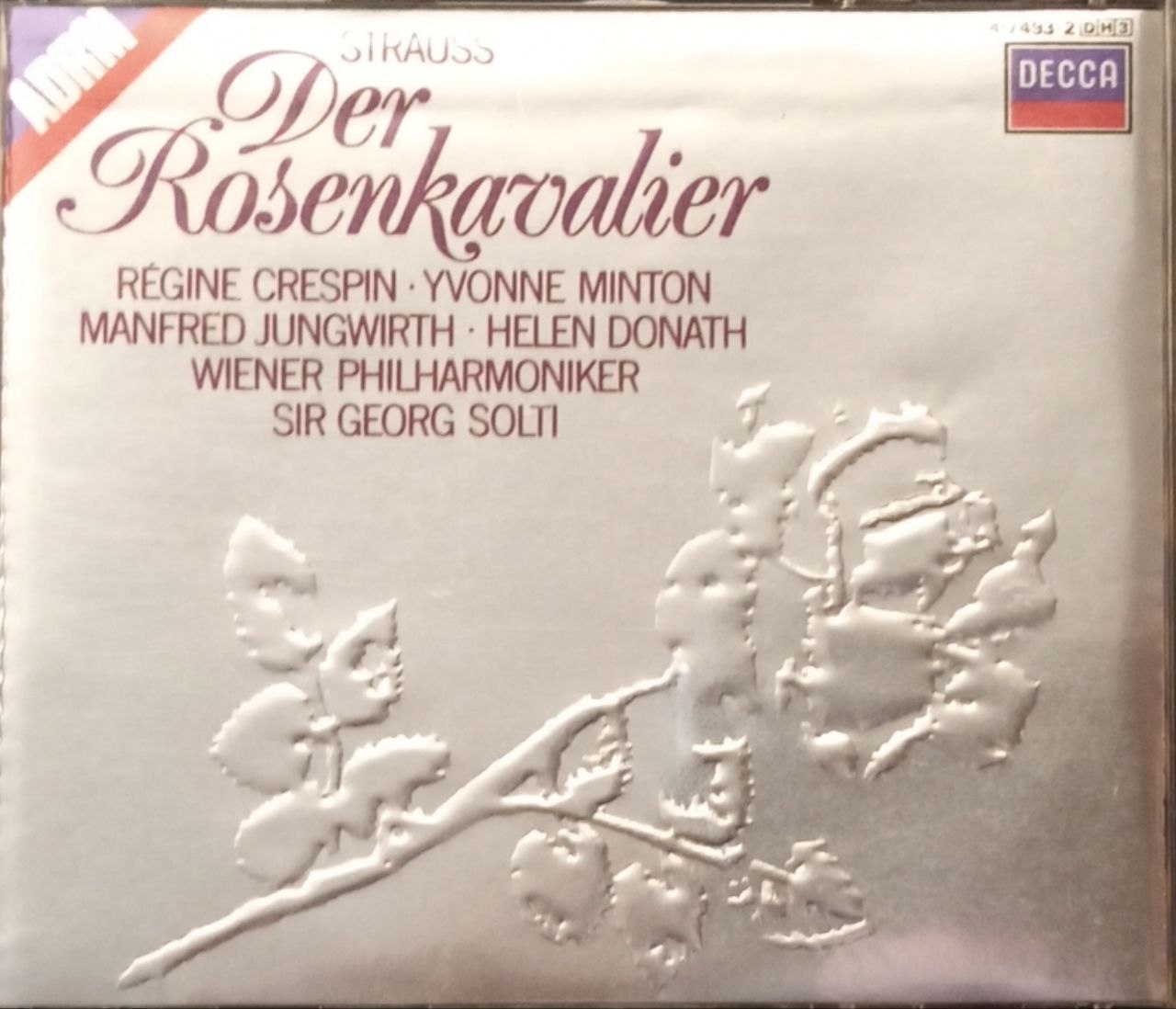
The Context: The Marschallin clears the shabby inn room of its vulgar inhabitants, relinquishes her young lover Octavian to Sophie, and steps into the shadows.
What to Listen For: Listen for the shift in texture. The trio (“Marie Theres‘”) is complex, polyphonic, and emotionally dense. But when the Marschallin exits and the final duet begins (“Ist ein Traum, kann nicht wirklich sein“), the armor drops. The voices simplify into parallel thirds and sixths, sounding as one entity. Listen for the extreme vulnerability of the singers sustaining pianissimo high notes at the very edge of audibility, supported only by the shimmering, timeless halo of the strings and harp.
Listen here, from 2:57:40 to the end:
***


Related Articles


Leave a Reply