
Circle of Transmission: The Living Loom
RECLAIMING THE ROOTS: A Via-HYGEIA Bibliotherapy Review of Stav Appel’s ‘The Torah in the Tarot’
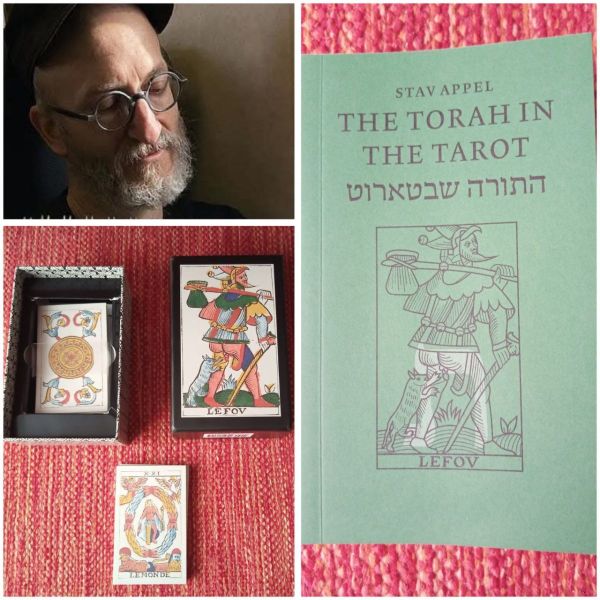
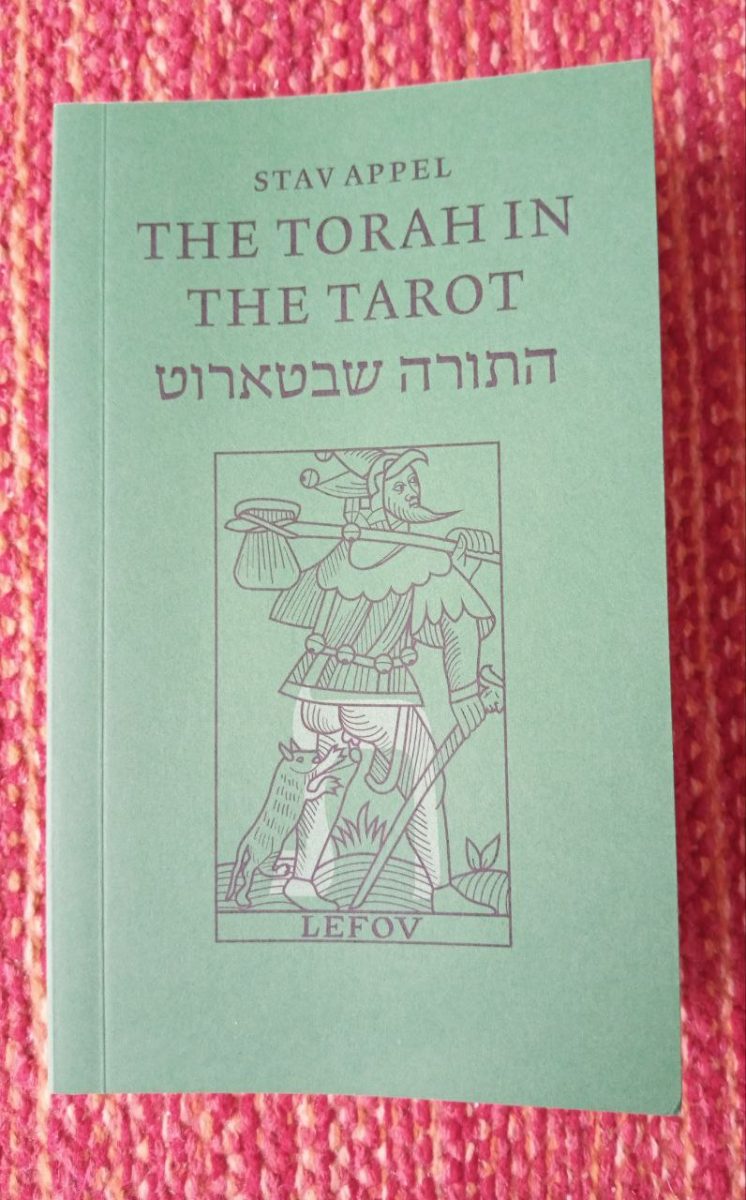
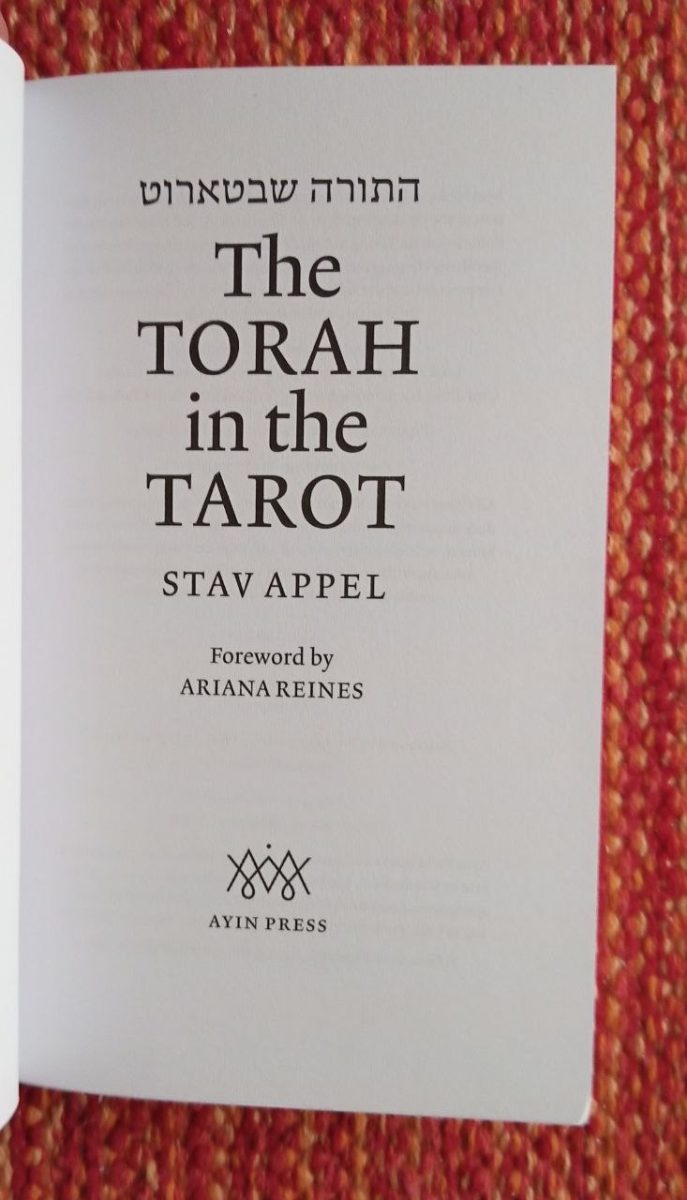
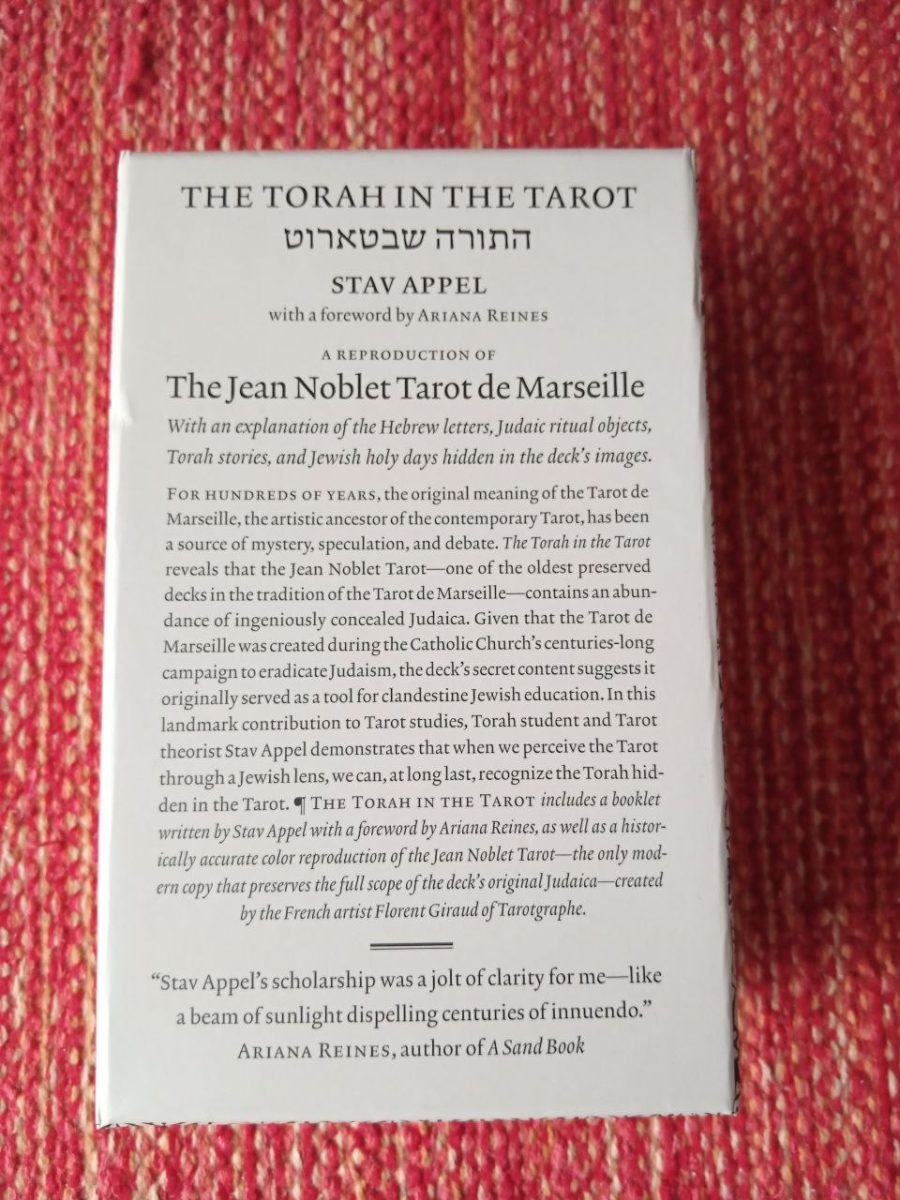
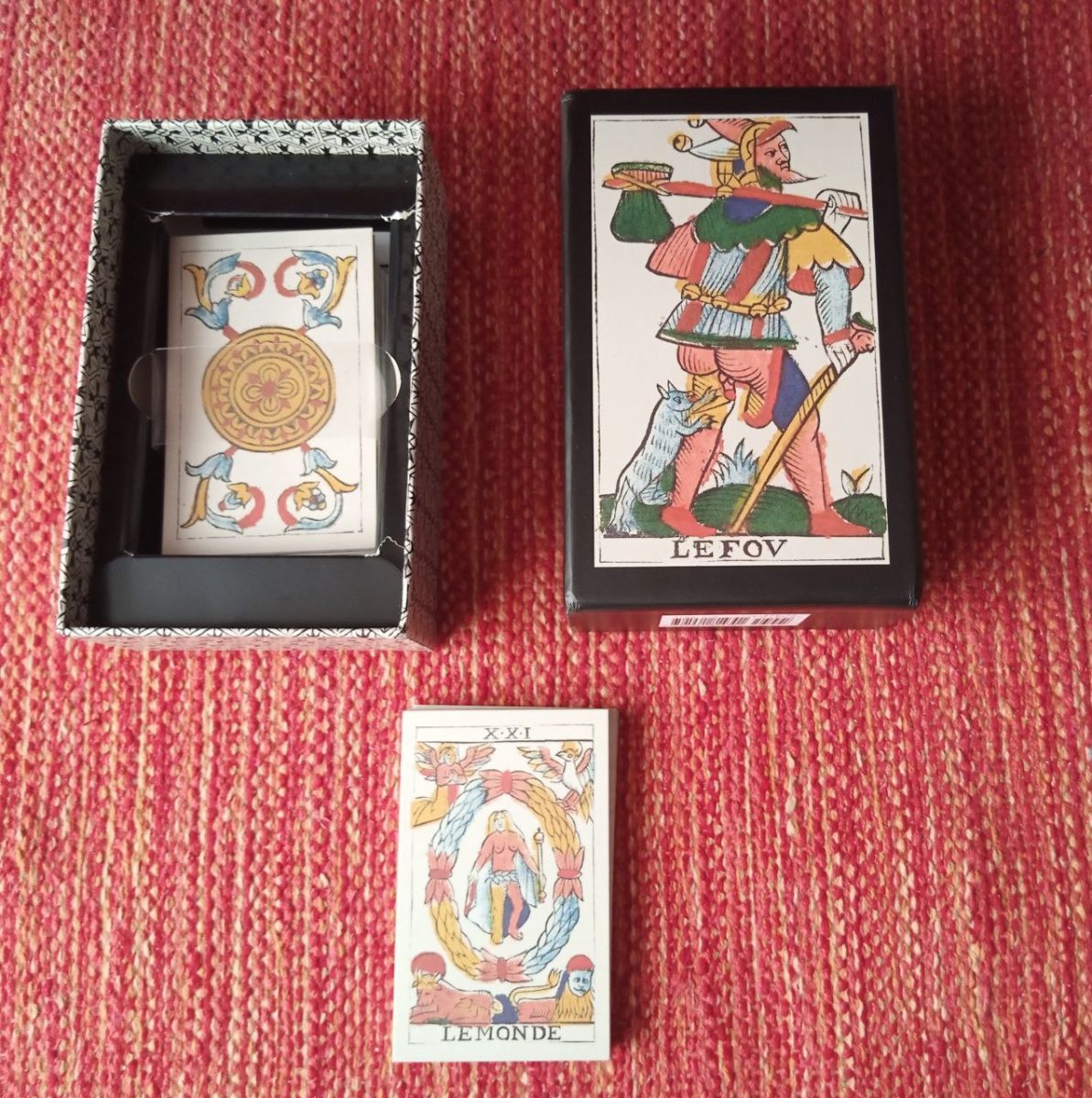
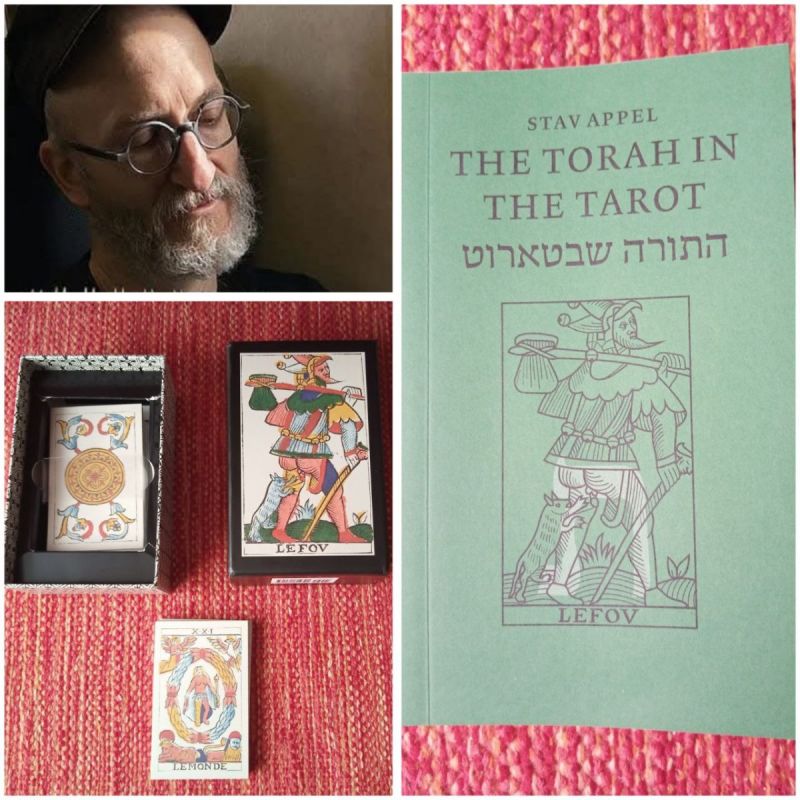
Today’s sharing from the Blue House of Via-HYGEIA is the review of Stav Appel’s ‘The Torah in the Tarot‘, published in 2025 by Ayin Press in New York. The booklet is the companion of a Jean Noblet Marseille-type tarot deck, beautifully crafted by Florent Giraud at Tarotgraphe.
**
Introduction: Beyond The Occult, Toward A Judaic Re-Reading
Stav Appel’s ‘The Torah in the Tarot’ is not merely a reinterpretation of the Jean Noblet Marseille-type tarot deck — it is a radical act of reclamation. Appel proposes that the 17th-century tarot deck, long assumed to be a Christian or a Neo-Platonistic artifact, may in fact conceal a clandestine Jewish pedagogical system — a ‘liminal symbolic technology‘ developed under Christian repression to transmit Torah knowledge in coded, visual form.
This thesis, while lacking direct archival proof, is historically plausible. More importantly, it forces us to confront a deeper, more uncomfortable truth: the dominant occult narrative of Tarot — built on Éliphas Lévi, the Golden Dawn, and the Kabbalistic Tree of Life — is not a re-discovery of ancient wisdom, but a cultural appropriation of Jewish mysticism, stripped of its ethical, liturgical, and covenantal context.
This article synthesizes Appel’s argument, contextualizes it within historical crypto-Judaism, and elevates his most vital contribution: the call to return to the ‘Sefer Yetzirah’ — not as a mystical diagram, but as a cosmogonic framework — to understand the Tarot’s true, pre-occult structure.
But above all — this article now integrates Appel’s own system — his Hebrew letter attributions, his “Core Judaica” index, and his thematic mappings — not as footnotes, but as the core architecture of his thesis.
*
Part I: Clandestine Pedagogy, Tarot As A Tool Of Religious Dissimulation
1.1 Crypto-Judaism and Symbolic Camouflage
In the wake of the Spanish Expulsion (1492) and under the pressure of Catholic regimes in France and Italy, Jewish communities did not vanish — they went underground. Conversos and Marranos practiced Judaism covertly, relying on:
- Domestic rituals
- Mnemonic devices
- Coded language
- Visually neutral objects
Tarot, as a seemingly profane card game, fits this category perfectly. Its imagery — rich in allegory, devoid of explicit Hebrew text — could pass beneath clerical scrutiny while encoding deeper meanings.
Historical parallels exist:
- The Camisards (French Protestants, early 18th c.): Used biblical symbolism and altered rituals under repression.
- Sabbateans and Dönmeh (Ottoman Empire): Practiced Judaism in secret under Islamic identity, using inversion and ambiguity as spiritual tools.
These cases confirm that religious knowledge under persecution does not disappear — it mutates. Tarot, in this light, is not an anomaly — it is a plausible vehicle for clandestine instruction.
1.2 The Absence of Evidence — And Why It Doesn’t Matter
No archival record confirms Tarot was used in Jewish households. But absence of evidence is not evidence of absence. Appel’s claim rests on pattern coherence, not documentation — and that is sufficient to warrant serious consideration.
The real question is not ‘Did Jews use Tarot?’ but ‘Could they have?‘ — and the answer, given the historical context, is a resounding yes.
*
Part II: The Scholarly Bridge, Charly Alverda & The Tarot As A ‘Liminal Symbolic Technology’
2.1 Alverda’s Framework: Tarot as a Vehicle of Tradition
A crucial scholarly anchor for Appel’s thesis comes from Charly Alverda, whose 2005 work ‘Trois Figures Hieroglyphiques’ (Moulin de l’Etoile, 2005) offers a methodological lens for interpreting tarot decks as carriers of hidden tradition, page 55:
‘It will therefore be necessary to study the four honors in the major arcana of the different masters throughout the centuries according to the aspect of Tradition they privileged: the symbolism of the Grail (the Parisian tarot), Freemasonry (Nicolas Conver), Rosicrucianism (Vieville), and Chivalry (Dodal)’.
Alverda’s approach is not speculative — it is systematic. He treats each tarot tradition as a cultural vessel, encoding the values and symbols of its time and milieu.
Appel extends this logic to the Jean Noblet Marseille Tarot — not as a Christian or Masonic artifact, but as a liminal symbolic technology used by Jewish households under Christian repression. If Alverda sees specific influences in other decks — Grail, Masonry, Rosicrucianism — then it is equally reasonable, as Appel argues, to consider the Noblet as encoding Judaica, serving as a tool for private religious pedagogy under conditions of religious dissimulation.
This is not a claim of direct authorship — but a claim of functional intent. The Noblet, like the Conver or Vieville, may have been designed to transmit a specific tradition — in this case, not Freemasonry or Rosicrucianism, but Torah knowledge, encoded in visual form to evade detection.
*
Part III: Appel’s System, The Hebrew Letters & The ‘Core Judaica’ Of The Noblet Tarot
3.1 The Letter Assignments — A Unique, Theological Mapping
Appel does not adopt the Golden Dawn’s system — nor Lévi’s, nor de Mellet’s. His mapping is original, and it is structured around the 22 Hebrew letters — but not as paths on a Tree of Life, but as creative forces linked to Biblical figures, ritual objects, holy days, and symbols.
His attributions, as listed in the book’s table of contents and index, are as follows:
| Hebrew Letter | Tarot Card (Noblet) | English Name |
|---|---|---|
| ת (Tav) | Le Fou | The Fool |
| א (Aleph) | Le Bateleur | The Magician |
| ב (Bet) | La Papesse | The Popess |
| ג (Gimel) | L’Empératrice | The Empress |
| ד (Daled) | L’Empereur | The Emperor |
| ה (Heh) | Le Pape | The Pope |
| ו (Vav) | L’Amoureux | The Lovers |
| ז (Zayin) | Le Chariot | The Chariot |
| ח (Chet) | Justice | Justice |
| ט (Tet) | L’Ermite | The Hermit |
| י (Yud) | La Roue de Fortune | The Wheel of Fortune |
| כ (Kaf) | Force | Strength |
| ל (Lamed) | Le Pendu | The Hanged Man |
| צ (Tzadik) | La Mort | Death |
| נ (Nun) | L’Empérance | Temperance |
| ס (Samech) | Le Diable | The Devil |
| ע (Ayin) | La Maison Dieu | The House of God |
| פ (Peh) | L’Etoile | The Star |
| מ (Mem) | La Lune | The Moon |
| ק (Quf) | Le Soleil | The Sun |
| ר (Resh) | Le Jugement | Judgment |
| ש (Shin) | Le Monde | The World |
This is not a random assignment — it is systematic, and it is intentional. Appel does not assign letters to cards based on later occult systems — he assigns them based on visual, thematic, and symbolic resonance with Jewish tradition.
3.2 The ‘Core Judaica’ Index — Mapping the Tarot to Jewish Life
Appel’s most groundbreaking contribution is his “Index of the Core Judaica of the Noblet Tarot” — a thematic index that maps each card not to Kabbalistic paths, but to Biblical figures, ritual objects, holy days, ancient artifacts, and symbols.
This is not a “correlation” — it is a revelation. The Tarot, in Appel’s reading, is not a book of esoteric secrets — it is a visual Torah, encoded for clandestine transmission.
Biblical and Kabbalistic Figures
- Abraham: The Magician (Aleph)
- Adam: The Fool (Tav)
- Balaam: The Wheel of Fortune (Yod)
- Bathsheba: The Star (Ayin)
- Cyrus: The Emperor (He)
- David: The Wheel of Fortune (Yod)
- Esther: The Empress (Gimel)
- Ezekiel: The House of God (Samekh)
- Haman: The Hanged Man (Kaph)
- Jacob: The Lovers (Vav)
- Joseph: The Chariot (Zayin)
- Leah: The Lovers (Vav)
- Lilith: The Fool (Tav)
- Miriam: The Popess (Beth)
- Moses: The Hermit (Tet)
- Rachel: The Lovers (Vav)
- Shekhinah: The World (Resh)
- Solomon: The Pope (He)
Ritual Objects
- Checking Cloth: The Empress (Gimel)
- Chuppah: The Chariot (Zayin)
- Circumcision Tools: The Magician (Aleph)
- Dreidel: The Sun (Tsadi)
- The Four Species: The Devil (Nun)
- Havdalah Spice Box: Ace of Cups (referenced in Sun chapter)
- Kiddush Cup: Ace of Cups (referenced in Sun chapter)
- Menorah: The Moon (Pe) and The Star (Ayin)
- Mezuzah: The Moon (Pe)
- Mikvah: Judgment (Qof)
- Netilat Yedayim Vessel: Temperance (Mem)
- Seder Plate: The Empress (Gimel)
- Shabbat Candles: The Sun (Tsadi)
- Sukkah: The Devil (Nun)
- Tallit: The Hermit (Tet), The Fool (Tav), and Judgment (Qof)
- Tefillin: The Fool (Tav), The Hermit (Tet), and The World (Resh)
- Tzitzit: The Fool (Tav), Death (Lamed), and The World (Resh)
Holy Days
- Chanukah: The Star (Ayin)
- Passover: The Empress (Gimel) and The Hanged Man (Kaph)
- Purim: The Empress (Gimel) and The Hanged Man (Kaph)
- Rosh Hashanah: Judgment (Qof)
- Shavuot: Judgment (Qof)
- Simchat Torah: The Wheel of Fortune (Yod)
- Sukkot: The Devil (Nun)
Ancient Artifacts and Architecture
- Ark of the Covenant: The Pope (He)
- Boaz and Jachin: The Pope (He)
- The Mishkan / Tent of Dwelling: The Popess (Beth)
- The Staff of Moses: The Fool (Tav) and The Hermit (Tet)
- Temple Menorah: The Moon (Pe)
- The Temple: The House of God (Samekh)
Synagogue Objects
- Bimah Stage: The Chariot (Zayin)
- Bimah Table: The Emperor (He)
- Chazzan Hat: Justice (Chet)
- Ner Tamid / Eternal Lamp: The Hermit (Tet)
Ritual Foods
- Bread of Presence: The Pope (He)
- Challah: The World (Resh)
- Hard-Boiled Egg: The Sun (Tsadi), The Moon (Pe), and The House of God (Samekh)
- Matzah: The Moon (Pe)
- Round Challah: Judgment (Qof)
Symbols
- Star of David: The Star (Ayin) and The Lovers (Vav)
- Tree of Life: The Fool (Tav)
3.3 Theological Implications — A Living Torah in Visual Form
This mapping is not arbitrary. It is theological. Each card is not just a symbol — it is a node in a living system of Jewish thought, ritual, and memory.
- The Fool (Tav) = Adam, Lilith, Tefillin, Tzitzit, Tree of Life — the end that begins again, the return to origin, the seal of completion.
- The Magician (Aleph) = Abraham, Circumcision Tools — the first act of creation, the initiation into covenant.
- The Popess (Beth) = Miriam, Mishkan — feminine divine presence, domestic ritual, hidden strength.
- The Empress (Gimel) = Esther, Checking Cloth, Seder Plate — feminine divine presence, domestic ritual, hidden strength.
- The Emperor (He) = Cyrus, Bimah Table — divine sovereignty, structured authority, cosmic order.
- The Pope (He) = Solomon, Ark of the Covenant, Bread of Presence — mediation between heaven and earth, priestly function, sacred space.
- The Lovers (Vav) = Jacob, Leah, Rachel — choice, union, duality, the soul’s journey.
- The Chariot (Zayin) = Joseph, Chuppah, Bimah Stage — movement, destiny, ritual passage.
- Justice (Chet) = Chazzan Hat — balance, judgment, the voice of the community.
- The Hermit (Tet) = Moses, Ner Tamid, Tallit — solitude, wisdom, the inner light.
- The Wheel of Fortune (Yod) = Balaam, David, Simchat Torah — fate, divine reversal, celebration of cycles.
- The Hanged Man (Kaph) = Haman, Passover, Purim — sacrifice, suspension, redemption through suffering.
- Death (Lamed) = Tzitzit — transformation, endings as beginnings, the veil between worlds.
- Temperance (Mem) = Netilat Yedayim — balance, purification, ritual transition.
- The Devil (Nun) = The Four Species, Sukkah — temptation, excess, the shadow side of celebration.
- The House of God (Samekh) = Ezekiel, The Temple — the divine presence, the sacred center, the place of encounter.
- The Star (Ayin) = Bathsheba, Chanukah, Menorah — hope, light in darkness, miracle.
- The Moon (Pe) = Mezuzah, Matzah, Temple Menorah — hidden wisdom, cyclical time, the feminine divine.
- The Sun (Tsadi) = Dreidel, Shabbat Candles, Hard-Boiled Egg — clarity, joy, the light of revelation.
- Judgment (Qof) = Rosh Hashanah, Shavuot, Mikvah — awakening, accountability, renewal.
- The World (Resh) = Shekhinah, Challah — completion, divine presence in the world, the sacred in the everyday.
This is not a ‘Tarot deck with Jewish themes’ — it is a visual Torah, encoded for survival, designed to be read by those who knew the language.
*
Part IV: The Appropriation, How Kabbalah Became ‘Qabalah’
4.1 The Birth of the Occult Tarot — From de Mellet to Lévi
The Hebrew alphabet entered Tarot scholarship in 1781, when Le Comte de Mellet first mapped the 22 Major Arcana to the 22 Hebrew letters — assigning Aleph to The Magician, and Tav to The World.
But it was Éliphas Lévi (1850s) who fused this with the Kabbalistic Tree of Life, declaring:
‘The tarot is that oracle of the Magi of which the Kabbalah is the key… A truly imprisoned man, with no other book than the Tarot, if he knew how to use it, could in a few years acquire universal knowledge’.
Lévi’s synthesis — blending Court de Gébelin’s ‘Egyptian’ myth, Renaissance Christian Cabala, and Hebrew letters — became the foundation of modern occult Tarot.
4.2 The Golden Dawn — Standardizing the Appropriation
The Hermetic Order of the Golden Dawn (1888–1900s) refined Lévi’s system into a rigid, authoritative framework:
- Swapped The Fool and The Magician: Fool = Aleph, Magician = Beth
- Assigned planets, zodiac signs, elements to each card
- Created the Rider-Waite-Smith and Thoth decks — the most influential Tarot systems of the 20th century
This system is elegant — and entirely detached from its Jewish roots.
*
Part V: The Elephant In The Room, Cultural Appropriation & Spiritual Danger
5.1 The ‘Zombification’ of Kabbalah
Jewish Kabbalah is not a tool for personal power — it is a living theosophical system rooted in Torah, Halakha, and communal covenant. Its goal is devekut (cleaving to God) and tikkun olam (repairing the world).
Christian Cabala and Occult Qabalah perform a necropsy: they extract the ‘body‘ — the Tree of Life, the sefirot, the Hebrew letters — but sever it from its soul. What is re-animated is a zombie: a system used to prove Christian supremacy or achieve magical control.
This is not evolution — it is appropriation. And it carries spiritual risk.
5.2 The Danger of Inversion — The Qliphothic Tarot?
In Jewish mysticism, the Qliphoth are the demonic, chaotic inverse of the holy Sefirot — born from imbalance and ‘the breaking of the vessels’.
When Tarot users engage with the sefirot without the ethical, liturgical, and communal framework that originally balanced them, they risk entering a qliphothic space — manipulating power (Gevurah) without mercy (Chesed), seeking knowledge (Da’at) without fear of God (Yirat HaShem).
This is the danger Appel warns of: users are not merely misreading the Tarot — they are inverting it. They are playing with a system that has been turned upside down — and the consequences can be psychological, spiritual, even existential.
*
Part VI: The ’22 is a Trap’, Reclaiming The ‘Sefer Yetzirah‘
6.1 The Golden Dawn’s ’22-Path Trap’
The Golden Dawn’s greatest contribution — and its greatest flaw — was mapping the 22 Major Arcana to the 22 Paths of the Tree of Life. This created a beautiful, static, correlative system — but one that encourages a mechanical approach:
“This card = this path = these sefirot = this planet = this Hebrew letter…”
It is a trap — because it reduces the Tarot to a puzzle to be solved, rather than a living cosmogony to be experienced.
6.2 The ‘Sefer Yetzirah‘ — A Cosmogonic, Not Theosophical, Framework
The Sefer Yetzirah (‘Book of Creation’) offers a radical alternative. It presents the 22 Hebrew letters not as paths between fixed points, but as the primary creative substance of reality:
- 3 Mother Letters (א, מ, ש): Air, Water, Fire — the primordial elements
- 7 Double Letters (ב, ג, ד, כ, פ, ר, ת): Dualistic principles — Life/Death, Peace/Evil — linked to the 7 planets
- 12 Simple Letters (ה, ו, ז, ח, ט, י, ל, נ, ס, ע, צ, ק): Foundational energies — linked to the 12 zodiac signs and 12 human faculties
In this view, the Tarot trumps are not illustrations of paths — they are glyphs of creation. The Fool is not “path 11” — he is Tav, the seal of completion, the return to origin. The Magician is not “path 12” — he is Aleph, the first act of creation, the container that separates inside from outside.
*
Part VII: The Visual Layer, Oswald Wirth & the Hebrew Letterforms In Tarot Imagery
7.1 Wirth’s Observations: Symbolic Echoes, Not Systematic Design
Oswald Wirth, in ‘Le Tarot des Imagiers du Moyen-Age’ (Editions Aquilonia-Francis Lermenier-2019), offers a fascinating meta-layer — a visual archaeology of the Tarot’s possible Hebrew roots. He notes:
‘The number 22 incontestably links the Tarot arcana to the letters of the Semitic alphabet, as this number corresponds to no other series. Is this a reason to consider the Tarot figures as inspired by the forms of the sacred alphabet of the Kabbalists? From certain observations, one could not conclude to a systematically applied intention’.
Yet, he proceeds to catalog visual approximations:
- The Magician (I): Tilted torso traces an Aleph (א)
- The Tower (XVI): Falling King recalls Ayn (ע)
- Justice (VIII): Balance evokes Heth (ח)
- The Hermit (IX): Arm and lantern suggest Teth (ט)
- Strength (XI): Lion’s jaw depicts inverted Caph (כ)
- The Hanged Man (XII): Legs resemble Lamed (ל)
- Death (XIII): Bent posture retraces Mem (מ)
- Temperance (XIV): Arms sketch Nun (נ)
- The Star (XVII): Girl’s form reflects Phé (פ)
- The Moon (XVIII): Script mirrors Tsadé (צ)
Wirth cautions against over-interpretation:
“It seems exaggerated to make much of this… If these approximations are justified, they merely contribute to demonstrating the medieval origin of the Tarot, as they relate to the calligraphic forms of square Hebrew and not to those of the older Palestinian alphabets’.
His conclusion is nuanced: the visual echoes may be accidental or unconscious, but they point to a deeper cultural substrate — one that may have preserved fragments of a Hebrew symbolic language, even if not deliberately encoded.
*
Part VIII: Meyrink’s ‘The Golem‘, Tarot, Kabbalah, & the Peril Of Unprepared Encounter
8.1 The Fool as Aleph — A Golden Dawn Echo in Fiction
Gustav Meyrink’s ‘The Golem’ (1915) is not a Tarot manual — but it is a Kabbalistic allegory that presupposes the Golden Dawn’s Tarot-Qabalah synthesis. In the novel, the protagonist encounters the Tarot — specifically, the Fool as Aleph — not as a card, but as a living symbol of the primordial, undifferentiated spirit.
This aligns precisely with the Golden Dawn system — where The Fool is assigned to Aleph, the first letter, representing the divine breath before creation.
Meyrink’s allusion is not casual — it is theological. The Fool’s journey is not a game — it is a spiritual initiation. And the peril is real: those who encounter the Tarot without preparation — without the ethical and liturgical grounding of Jewish mysticism — risk madness or blindness.
“He who meets his double unprepared is lost.”
This is not metaphor — it is warning. Meyrink, writing in the shadow of the Golden Dawn’s influence, understands the danger of inversion: when the Tarot is divorced from its source, it becomes a mirror that reflects not truth — but the self’s fragmentation.
8.2 Synthesis: Meyrink as a Mirror to Appel’s Thesis
Meyrink’s ‘Golem’ confirms Appel’s central insight: the Tarot, as reinterpreted by the occult, is not a neutral tool — it is a spiritual technology that demands context. The Golden Dawn’s mapping of the Fool to Aleph is not an innovation — it is a reanimation of a deeper, older structure — one that Appel argues may have originated in Jewish clandestine pedagogy.
Meyrink’s novel, then, is not a departure from Appel’s thesis — it is its literary embodiment. It shows us what happens when the Tarot is used without the framework that originally gave it meaning: the user becomes the Fool — not in the sense of the initiate, but in the sense of the unprepared, the ungrounded, the inverted.
*
Conclusion: A Paradigm Shift, From Appropriation To Re-Orientation
Stav Appel’s ‘The Torah in the Tarot’ does not prove that the Noblet Marseille-type deck was created by Jews. It does something more important: it liberates the study of Tarot from the later appropriative framework and asks us to look at its stark, archetypal imagery with new eyes — eyes trained on the ‘Sefer Yetzirah’, on the first principles of creation.
But more than that — it offers us a living system: a visual Torah, encoded in 22 cards, mapped to 22 Hebrew letters, and linked to the full spectrum of Jewish life — from Biblical figures to ritual objects, from holy days to ancient artifacts.
This is not a ‘Jewish Tarot‘ — it is a Tarot that was always Jewish, hidden in plain sight.
The danger for later users is real: they may be playing with an inverted tree, mistaking the map of the shells for the map of the divine. To seek the source — in the ‘Sefer Yetzirah’ — is to seek re-orientation.
Appel has bravely faced peer mocking & ridicule — not to claim ownership, but to open the gates of Christian and Occult Tarot, allowing us to breathe the air of creativity, the very fruit of Love & Wisdom.
*
Reviewer’s Note:
This article is a synthesis of Stav Appel’s thesis as presented in ‘The Torah in the Tarot’, contextualized within historical crypto-Judaism, elevated by the critical lens of cultural appropriation and spiritual consequence, and enriched by the visual archaeology of Oswald Wirth, the scholarly framework of Charly Alverda, the Kabbalistic allegory of Gustav Meyrink’s ‘Golem’, and — most importantly — Appel’s own system: his Hebrew letter attributions, his ‘Core Judaica‘ index, and his thematic mappings. It is offered not as definitive proof, but as a hermeneutic invitation — to look again, to look deeper, to look back to the source.
*
Source
*
*
*
***
Leave a Reply