
Circle of Transmission: The Living Loom
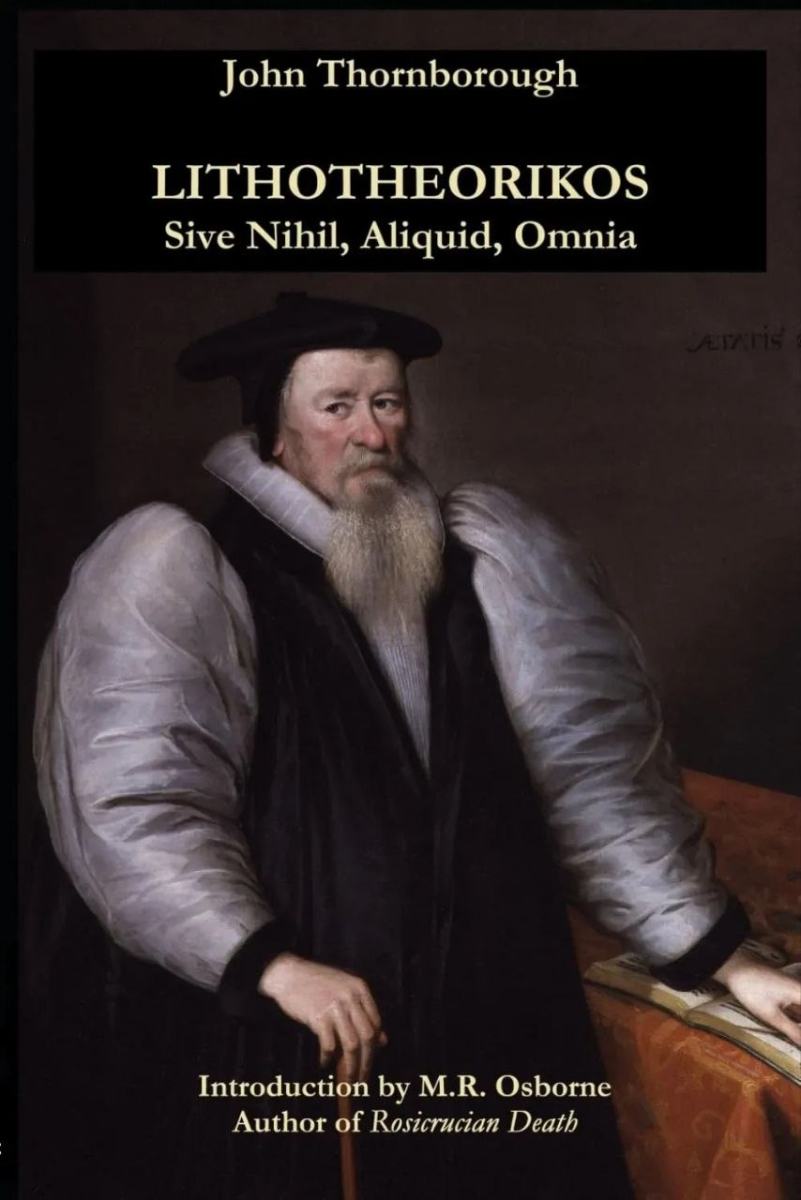
A Circle of Transmission Review of Michael Robert Osborne’s edition of John Thornborough’s ‘Lithotheorikos, sive Nihil, Aliquid, Omnia'(Whitestone Esoteric, 2026)
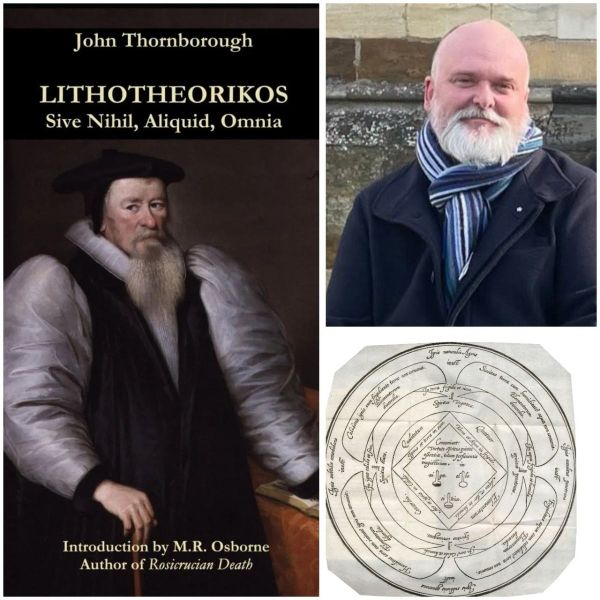
Today’s sharing from the Blue House of Via-HYGEIA, in our Circle of Transmission — Book Review series, is devoted to Michael Robert Osborne’s edition of John Thornborough’s Lithotheorikos, sive Nihil, Aliquid, Omnia (Whitestone Esoteric, 2026).
What begins as a book review unfolds into an imaginative Rite of Reception, followed by The Athanor Codex: a reading of Thornborough’s alchemical legacy through the symbolism of his tomb, the mystery of transformation, and the demanding passage from knowledge to lived experience.
The historical record, the Circle’s interpretation, and the fictional Order of the Athanor remain distinct, yet meet here around one enduring question: what must become real within us for the Work to be more than words?
**
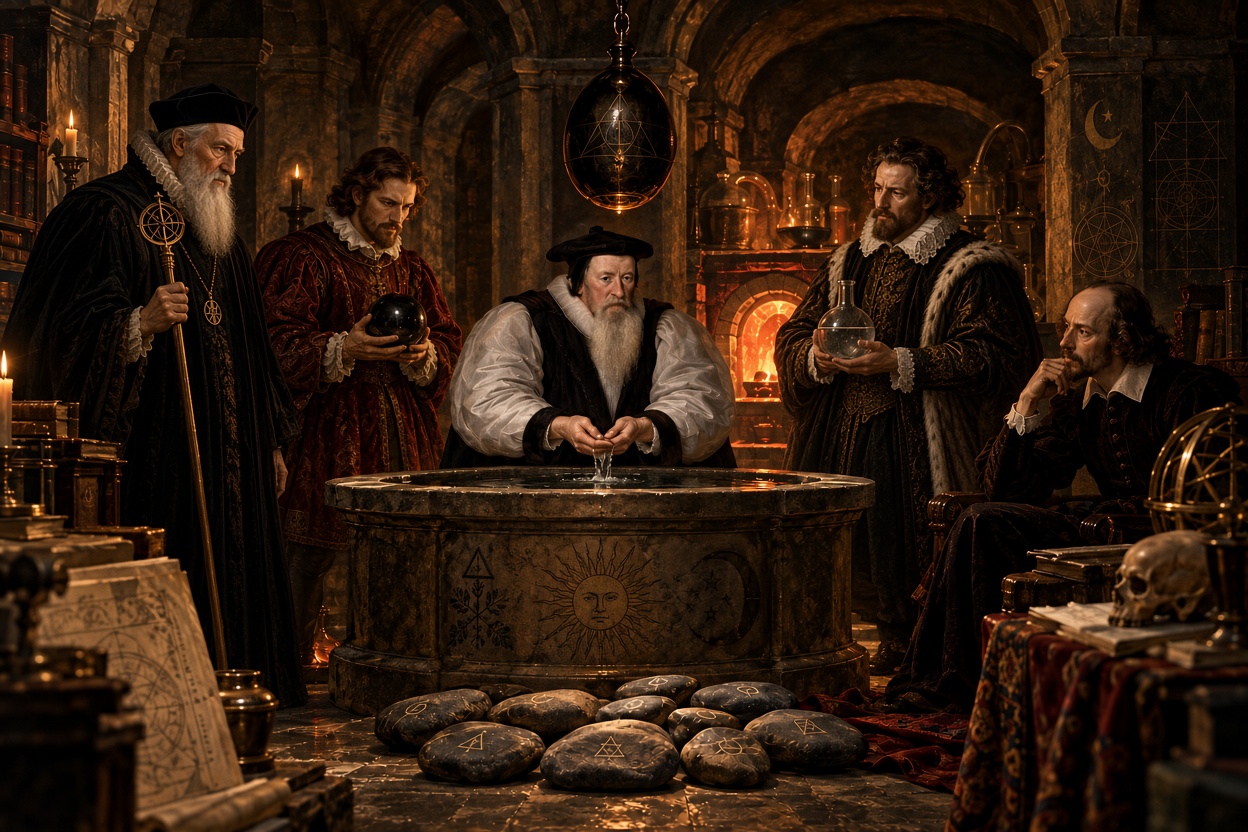
THE ORDER OF THE ATHANOR
A Rite of Reception, in Two Attempts — and Three Accounts of the Man
A note before the curtain.
History never gathered these five men in one room, and the histories of the man himself cannot agree on who he was. The great national biography calls him twice-married and respectable, three sons, no stain. The cathedral remembers a son who hanged himself for debt and a daughter-in-law left to beg. Another record remembers a divorce for adultery, a remarriage too swift, a youth who paid a young conjurer named Forman to arrange his pleasures. None of these accounts reconcile. The Order of the Athanor meets in the gap between them.
Dramatis Personae
JOHN DEE — the mathematician, severe as a straightedge, who would make the angels keep accounts. His library is ash. His reputation is ash. He does not care. The numbers hold. He remembers the boy Thornborough at Oxford, and the boy is not dead.
EDWARD KELLEY — the scryer, silver-tongued, one ear short of honesty. He has looked into the shew-stone and seen mostly himself, and this has taught him to recognise the same disease in others. He is Forman’s heir in all but name.
ROBERT FLUDD — the physician of the macrocosm, gentle, analogical, forever wedding the great world to the little. His warmth is not softness. It is the courage of a man who insists on connection in a world that rewards severance.
WILLIAM SHAKESPEARE — the player-priest, tired-eyed, who suspects all ceremonies are theatre and all theatre, ceremony. He has buried more characters than most men bury relatives, and he is not sure he can tell the difference.
JOHN THORNBOROUGH — Bishop of Worcester, ninety years old and forty years old and eighteen years old at once. Twice married, or divorced, or widowed — the records will not agree. Father of knights and archdeacons, and of a son the records will not name. He has written a book about transformation. He is not sure he has undergone one. He is not sure he has not committed one.
The Scene
A chamber shaped like the inside of a furnace. Round walls of blackened brick. In the centre, a stone font like an open tomb. Above it, suspended by a chain, a blackened egg. Four gates, facing the four quarters.
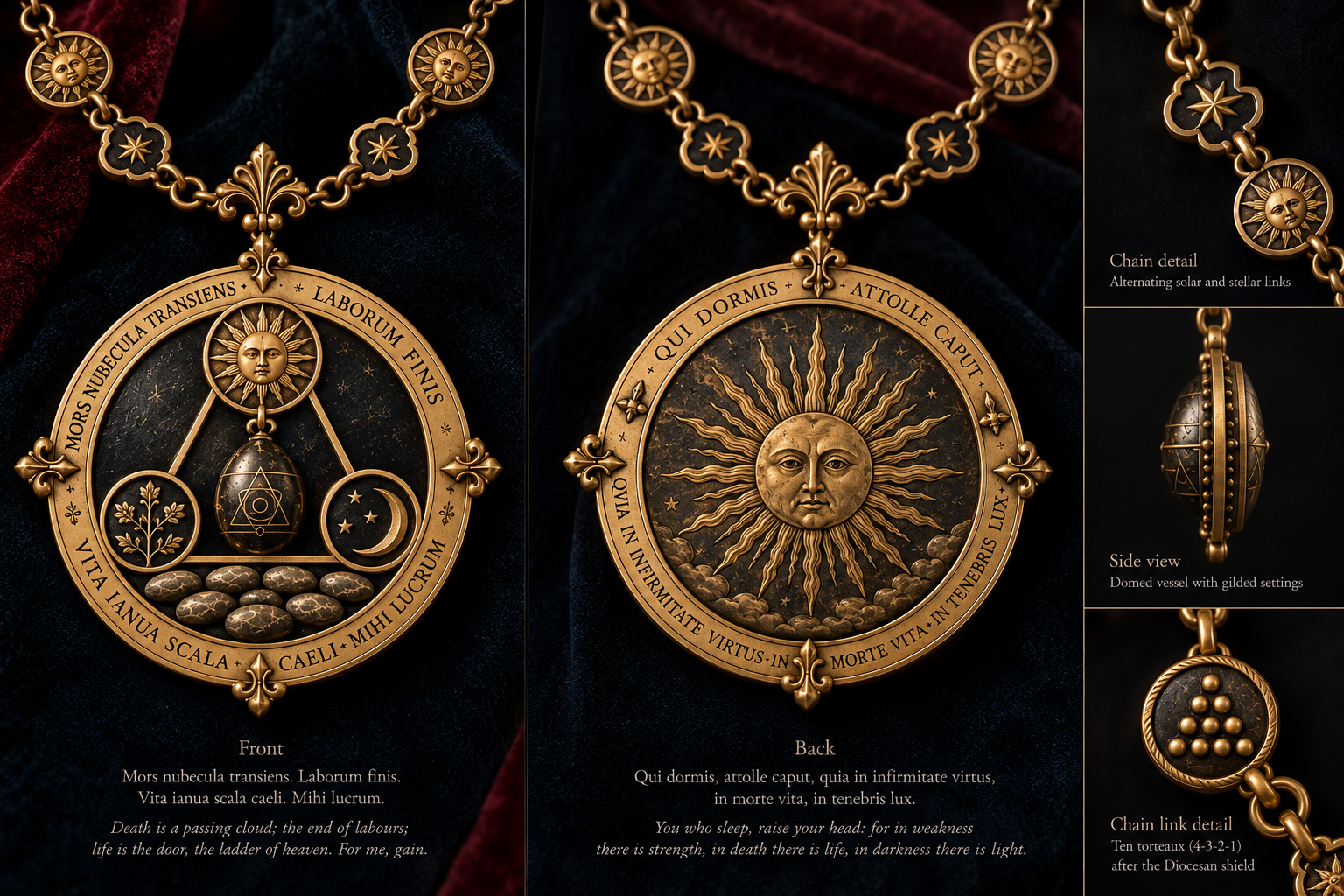
Upon the eastern arch: MORS NUBECULA TRANSIENS. LABORUM FINIS. VITA IANUA SCALA CAELI. MIHI LUCRUM.
Upon the western arch: QUI DORMIS ATTOLLE CAPUT.
Ten flat stones lie in a heap beside the font. River-worn. Unremarkable. The kind of stones a man might kick aside on a walk without a second thought.
The athanor stands against the northern wall — a brick furnace, its belly glass, its contents a slow cherry glow. It is not large. It is not impressive. It has been burning, perhaps, since Oxford. Since 1569. Since a young demy hired a young Forman to bring him pleasure in the dark, and the dark has been following him ever since.
ACT ONE: THE FIRST ATTEMPT
Thornborough enters in episcopal black. He removes his gloves with the deliberation of a man who has removed vestments before a congregation many times and knows exactly how long the silence should last. He stands before the font.
The four are already present. They have been here longer than him. This is deliberate.
Fludd stands at the font’s edge, a crystal vessel of water in his hands. Dee at the eastern arch, his wand tipped with the Monas Hieroglyphica. Kelley at the southern gate, the shew-stone wrapped in cloth against his chest. Shakespeare sits on a stone bench in the shadows, legs crossed, watching.
THE EASTERN GATE — DEE
Dee does not greet him. He plants the wand before Thornborough’s feet.
DEE: My Lord Bishop. I have spent three years on the cipher you carved upon your tomb. IN VNO — 2, 3, 4, 10. Beside the figures, three letters: o, a, r. I have spent my life attempting to show that the universe is arithmetic. That one and nought, under God’s rule, generate all numbers, and through them all things. Your sequence — Nihil, Aliquid, Omnia — is a proof. I grant you that. But a proof requires a prover. And here is what keeps me awake: you are both. You are the alchemist and the matter. The hand that works the stone is the stone. So I ask you, as one reckon-keeper to another: if you are the thing being proved, who is doing the proving? When your book describes the transformation of the self, is the self that describes the same self that is transformed? Or have you built a ladder whose top rung is your own hand, reaching for itself?
THORNBOROUGH (the answer comes fast, fluent, a shade too ready — the voice of a man who has given this answer before and given it well, and knows it has always been enough): The ladder holds, Doctor, because it is not mine. The rungs do not exist apart from the Ladder, and the Ladder does not exist apart from the One who made it. I am not both alchemist and matter. I am matter. The work is done upon me, not by me. The book describes what passes through me, as a window describes the light that passes through it. The glass does not make the sun.
The answer is correct. The answer is, if anything, elegant. And something in the ease of it — the way the last line lands like a cadence in a sermon — makes the room cooler rather than warmer. Dee’s eyes narrow, not in disagreement but in the way a mathematician narrows at a proof that is too clever to be honest.
DEE (a beat too long before he speaks): The glass does not make the sun. Yes. That holds. And yet the glass chooses its thickness. And yet the glass may be ground to distort. Pass, my lord.
Thornborough steps forward. One gate passed. He has given the answer he has given before, in chapters, in margins, on stone. It is correct. It is enough. It is not yet true. He does not notice that Dee’s nod came a half-breath late. He never does.
THE SOUTHERN GATE — KELLEY
Kelley unwraps the shew-stone. He does not look at Thornborough. He looks at the stone, turning it in the firelight, and his face is the face of a man reading a letter he has read many times and still cannot believe.
KELLEY: I’ve read your book, Bishop. Nihil, Aliquid, Omnia. Very tidy. Very clean. The Nothing that becomes the Something that becomes the Everything. A progression. A method.
(He looks up.)
You call the divorce a death. You call the remarriage a resurrection. The first wife — Elizabeth, the adulteress, the woman the High Commission gave back to you in name so you could throw her away in fact — you let her become your Nigredo, did you not? And the new one, the young one you took the very day the ink was dry — that was your Albedo, your whiteness, your clean new form. You did not commit a cruelty, Bishop. You performed an operation. That is how you sleep. That is how you have slept for forty years.
(A step closer.)
So before you pass this gate, answer me plain, without your Latin garnish. I know the Nothing. I know the stench of putrefaction, because I have lived in the same dark your old friend Forman lived in — yes, that Forman, the one you set to work at your pleasures when you were a boy with a scholarship and no conscience. The dark knows you, John. It has known you since Oxford. So tell me, as a man who has stared into the abyss of his own making: was the divorce the Work — or did you make your own cruelty into a cosmology so you would not have to call it what it was?
The prepared answer is already on Thornborough’s tongue — the grain of wheat, the seed, the chapter on page sixty-two — and he gives it, and it is smooth, and you can hear the smoothness, the way a stone is smooth because water has turned it for years without ever cutting it.
THORNBOROUGH: I have stood in it. And you are right to strip the Latin away, for grief is not a thesis. But hear my answer. When I say nihil, I do not mean the void that answers back. I mean the grain of wheat the Saviour speaks of, which must fall into the earth and die.
KELLEY: That is your book. I did not ask for your book. I asked for you.
Thornborough tries again, and the second answer comes out smaller, and this is the first true thing he has said all night, though he does not know it yet.
THORNBOROUGH: My son’s death was not an operation of my art. It was a wound. Yet even a wound contains in occulto the seed of its own healing. I did not master the blackness. I survived it, as grain survives the earth, by a power not mine.
KELLEY (not cruel now, but tired): The son. Yes. The one your biography does not mention — because your biography lists your knights and your archdeacons and is silent about the one who could not pay his debts and so paid with his neck. You have three accounts of your life, Bishop, and none of them agree. The national one says you were respectable. The cathedral one says you were broken. The other one says you were a sinner. You wrote a book to make them all true at once. That is not alchemy. That is the most expensive costume I have ever seen.
He holds the shew-stone to Thornborough’s eye. A long silence. He watches the bishop’s face in the glass.
KELLEY (wrapping the stone again, almost gently): It shows you the crow’s head, then. Good. Most men see gold and reach for their purse.
(He steps aside.)
Pass through, my lord. You know more of nothing than most doctors of the stone. Because you don’t trust it.
Two gates passed. But Kelley’s words stay in the room like smoke.
THE WESTERN GATE — FLUDD
Fludd pours the crystal water into the font. It makes the sound of rain on a roof. He does not look at Thornborough yet. He looks at the water, as if checking its temperature.
FLUDD (softly): Your Grace. I dedicated a book to you once, under a cipher you were kind enough not to expose. I have spent my life demonstrating one proposition: that man is the microcosm, a little world, animated by the same spirit that pulses the great one. That the heart of man corresponds to the sun of heaven. That a wound in one is felt in the other. And that the Work is a marriage — Sun and Moon, brother and sister, the Rebis, the twofold thing. You wrote of this marriage with such tenderness, John. The virgin moisture. The milk. The spouse. The dew.
(He looks up.)
So I must ask you the question only a friend may ask, and I will not flinch from it, because you taught me not to. At Oxford you were a demy with a scholarship and a taste for fencing and dancing and girls. There was a girl — Lawrence’s daughter, Elizabeth — whom you courted for sport and left with nothing but a rumour, while your friend Pinkney married her sister and lived. You played her. You played the feminine itself, once, for amusement, when you were young and the dark was only a place to take pleasure.
(A pause.)
My question is this. Can the man who wounded the Moon be trusted to wed her? Can the one who made a girl his Nigredo — discarded her, called her nothing, walked on — be trusted to say that Nothing is the gate through which love enters the world? Tell me where you felt the middle of all things, John. And tell me truly.
Thornborough steps to the font. He does not touch the water yet. He gives the answer he has prepared for this question, and it is the most beautiful answer he has, and he knows it, and the knowing is the flaw.
THORNBOROUGH: It was not in the laboratory, though I have spent honest hours there. It was at a graveside. My second wife’s. And standing there I understood, not in the intellect but in the marrow, what my book only argues: that as the powers of my soul operate through my spirit upon my members, so the powers of the world’s soul operate through the world’s spirit upon all its members. The rain fell on the grave and on the field beyond it and on the cathedral roof. The same water nourished the grass that would grow over her, and the wheat that would become the bread of the altar under which she lay. I stood, Robert, in the middle of All Things.
FLUDD (gently, not letting him go): That is true. I believe it is true. But it is the answer of a man who has been forgiven by the world, and I am asking about the girl at Oxford whom the world never forgave, because the world never even knew her name.
Thornborough is silent for a long time. When he speaks, it is not his book-voice, and the room changes.
THORNBOROUGH: I do not know her name anymore. That is the sin, Robert. Not that I wronged her. That I have forgotten her. Forty years of bishops and pamphlets and a tomb with ten stones on it, and I cannot tell you the colour of her eyes. The feminine is in every chapter of my book and I have lost the one woman I made nothing of.
Fludd weeps. He does not wipe his face. He anoints Thornborough’s hands with the water from the font.
FLUDD: The old law: as the vessel generates the Stone, so the Stone pours new power into the vessel. Go to the last gate, my lord. And — the physician in me insists — do not let the player at the final gate make a mere pageant of you.
Three gates passed.
THE NORTHERN GATE — SHAKESPEARE
Shakespeare has not moved from the bench. He has been watching. Now he unfolds himself slowly, like a man rising from a chair he has sat in too long. He walks to the font. He sits on its edge, uninvited, like a man at his own grave.
SHAKESPEARE (without preamble): My lord. I’ve buried kings and queens and fools. I’ve given Caesar his bleeding words and Richard his mirror. And I will tell you the player’s secret, which is this: every man who lies upon a stage as a corpse must decide, in that silence, whether he is pretending to be dead or rehearsing.
(He rises.)
But you are not a man who has played one part. You have played them all. The rake at Oxford. The courtier. The pamphleteer who told Parliament their debates were frivolous and nearly lost his head for it. The bishop who enforced the laws against the Catholics and raised the King’s money and climbed from Limerick to Bristol to Worcester like a man up a ladder that had no top. And now the alchemist. The Stone Theorist. The man who writes that to die is to gain, because it is to return.
(A step closer.)
So my question is the actor’s question, and it is the only one that matters at this fire. You have worn every costume England offers a clever man. Is your alchemy a sacrament — the one true thing beneath all the roles? Or is it the most beautiful costume ever made for the fear of death? When you lie upon that stone at Worcester and the audience is God, will it have been a rehearsal, or only pretending?
Silence. The athanor ticks. Thornborough’s hands are at his sides. His fingers move slightly, as if he is holding something invisible.
THORNBOROUGH (slowly, and he is smiling, and his eyes are wet, and the answer is genuine — and yet it arrives too whole, too finished, a speech that knows where its own best line is): Master Shakespeare. You have put your finger — as you once put it on every wound in the kingdom — on the place that bleeds. I will answer as honestly as a man may answer a player, which is to say: I do not know. I have built the tomb. I have carved mors nubecula transiens — death, a passing cloud — knowing full well that when the cloud comes for me, I may find it is not a cloud at all but a wall. My alchemy may be, in part, the costume you name. Every theology is, to some degree, fear dressed for company. I have been a rake and a courtier and a bishop and an alchemist, and I do not know which of them I was, and I suspect I was none of them, and I suspect the seeking of which is the only thing I was.
(His voice firms, then wavers, then firms again — the circling voice of his prose, returning to the same point because it cannot leave it.)
But here is what I know, player. I wrote upon the tomb: mihi lucrum. “For me, gain.” And I wrote, too, on the inner stone: in Morte vita, in tenebris Lux. Not because I have seen the resurrection of the body, but because I have seen the resurrection of the metals — corruption fled, darkness driven away, the dead body given back its soul. A sign, Master Shakespeare, no more. But a sign is all a sacrament is: a visible thing pointing at an invisible, in the hope that the pointing itself becomes a kind of arrival. When I lie upon that stone, I will be neither rehearsing nor pretending. I will be doing the only thing a Christian can honestly do at the end of a play whose author he cannot see: trusting the Author.
Shakespeare regards him for a long moment. Then he laughs — quietly, with real warmth, and something in the warmth is disappointment.
SHAKESPEARE: “Trusting the Author.” God keep me, I wish I’d written that.
(He steps aside, and makes a small ironic bow — half player, half priest.)
The fire passes you, my lord. For what it is worth from a man of the stage: your tomb is the first I’ve seen where the corpse wrote better lines than the mourners will.
THE REJECTION
Thornborough stands at the centre of the four gates. All four are passed. He straightens. He expects the oath.
Dee does not move. Kelley does not move. Fludd looks at his hands. Shakespeare has returned to the bench and is watching Thornborough with an expression that is not cruelty. It is something worse: recognition.
DEE: My lord. You have answered every question correctly.
THORNBOROUGH: Then I am received?
DEE: No.
Thornborough’s face changes. Not anger. Confusion.
KELLEY (not unkindly): You answered well, Bishop. Too well. You gave us your book. Every word you spoke tonight — the grain of wheat, the ladder, the middle path, the sign pointing at the invisible — it’s all in the Lithotheorikos. Chapter four. Chapter nine. Page sixty-two.
(A pause.)
We didn’t ask you to recite your treatise. We asked you to stand in the fire.
FLUDD (gently): John. Your answers are beautiful. They are true. But they are the old form. You are wearing your theology like a vestment, and we cannot see the man beneath it. The rake and the bishop and the broken father — you showed us all three, and then you covered them with the book. We cannot receive the book. We have to receive the man the book is hiding.
Thornborough opens his mouth. Closes it.
SHAKESPEARE (from the bench, almost to himself): You told me you trusted the Author. But you didn’t say you were afraid. You said you trusted. That’s the answer of a man who has already decided how the scene ends. And that, my lord, is not faith. That’s dramaturgy.
Silence. The athanor ticks.
DEE: You must go.
THORNBOROUGH (quietly): I have failed.
KELLEY: No. You haven’t started. There’s a difference.
THE SILENCE
They leave him alone.
All four. Dee folds his wand into a cloth. Kelley wraps the shew-stone. Fludd extinguishes the candle by the font and carries it with him. Shakespeare pauses at the door, looks back at Thornborough, and says nothing. His expression is not pity. It is the face of a man who has been where Thornborough now stands and knows exactly how long the night will be.
The door closes.
Thornborough is alone with the athanor.
He stands.
The fire burns.
He does not move.
(This silence should last. The reader should feel it. Thornborough stands before the furnace for what might be an hour, or three, or a night. He does not pray. He does not think. He stands. The heat is not comfortable. It is not kind. It simply is. He wants to leave. He does not leave. He wants to explain himself to the empty room. He does not. He stands. And the fire is not asking him a question. The fire is showing him three men and a woman he cannot reconcile: the respectable bishop, the broken father, the sinner, the girl at Oxford whose eyes he cannot remember. The fire holds all four accounts of him at once and asks nothing. It only burns.)
At some point — and the text does not say when — he sits down on the floor beside the font. His episcopal black is dusty. He does not notice. He puts his hands on his knees. He breathes.
The fire is the question. He does not answer it. He lets it burn.
ACT TWO: THE SECOND ATTEMPT
The door opens. The four return. They have not been gone long, or they have been gone for years. It does not matter.
Thornborough is still on the floor. He looks up. His face is different. Not calmer. More present.
DEE: You stayed.
THORNBOROUGH: I wanted to leave.
KELLEY: But you didn’t.
THORNBOROUGH: No.
Dee nods. He goes to the heap of ten stones beside the font. He picks up one. He places it on the floor between them. Then another. And another. He builds the Tetractys: one stone at the apex, two below, three below that, four at the base. The triangle grows.
He hands the last stone to Thornborough.
DEE: Place it.
Thornborough places the tenth stone. The Tetractys is complete. Ten points in sacred triangle. The geometry of the book. The geometry of the tomb. The geometry of the world.
DEE: Now remove them.
THORNBOROUGH: What?
DEE: Remove them. You built the sequence. Now unmake it. Return the Many to the One. Return the One to the Nothing. This is the Work in reverse. This is what you wrote in chapter eleven: all things return to Nothing. Prove it.
Thornborough kneels. He reaches for the base row. He removes four stones. Then three. Then two. The triangle shrinks. The geometry collapses.
He reaches for the apex. The single stone. The One.
His hand hovers.
He cannot take it.
DEE (quietly): Why not?
THORNBOROUGH (his hand still hovering, his voice very small): Because it was never mine to remove.
Dee kneels beside him. He does not touch the stone. He looks at Thornborough with an expression that might be tenderness, if Dee were capable of tenderness. He is not. But something like it passes across his face.
DEE: The One cannot be returned to Nothing. It was never your work to unmake. You may dissolve the Many. You may reduce the Four to the Three, the Three to the Two, the Two to the One. But the One is God’s. You do not get to return God to the void. That is not humility. That is pride in reverse — and you, my lord, who were one vote from impeachment for telling Parliament they were frivolous, you of all men must learn that the One is not yours to keep or to give back.
(He stands.)
The East accepts you. Not because you answered well. Because you stopped answering.
Kelley steps forward. He does not speak. He goes to the athanor and opens its iron door. The heat pours out — not theatrical, not dramatic, just the ordinary unbearable heat of a fire that has been burning too long in a closed room.
KELLEY: The Green Lion is not a symbol, Bishop. It is the moment when the work becomes too hot to stand outside of. You wrote it yourself — the Lion devours. It devours the Sun, the Moon, the metals, the man. And you cannot watch it be devoured. You must be in it.
(He steps back from the furnace.)
I am not asking you to be brave. I am asking you to be tired. Tired of standing outside your own fire. Tired of writing about the dark from the doorway. Forman stood in it, John, when you were boys — he stood in it for you, that was the bargain, you paid him to go where you would not. But the fire will not take a substitute now. There is no one left to hire. Step in.
Thornborough looks at the open furnace. The heat is a wall. His eyes water. His skin tightens.
He steps forward. Not dramatically. Not heroically. Like a man stepping into a bath that is too hot because he is too tired to stand in the cold any longer.
He stands before the open athanor. The heat is on his face. He does not flinch. He does not perform. He simply stands, and the fire reads him the way the shew-stone reads a face — without mercy, without interest, without judgment. And for the first time he is not the one describing the operation. He is the matter in the vessel. He is being cooked.
KELLEY (from behind him, almost lost in the roar of the furnace): The South accepts you. God help us both.
He closes the furnace door. The heat recedes. Thornborough steps back. His face is flushed. His eyes are red. He looks, for the first time, his age — and also, strangely, eighteen.
Fludd is waiting at the font. The water is still there. It has been sitting for an hour, or a night. It is cold now.
FLUDD: I will not ask you where you felt the middle of all things. You told me already, and it was true, and it was not enough. So I will ask the question I should have asked the first time.
(He picks up the crystal vessel. It is empty.)
You wrote that the Stone has four perfections: incorruptibility, clarity, agility, subtlety. These are the properties of the resurrected body. You wrote them as a theologian writes them — from the outside, looking in, describing the shape of the thing. I am a physician. I want to know: which of the four has the Work done to you? Not in the book. In the flesh.
Thornborough takes the empty vessel. He turns it in his hands. It catches the firelight.
THORNBOROUGH: Subtlety.
FLUDD: When?
THORNBOROUGH: The night my son died. I was in the next room. I heard the sound — God forgive me, I heard the sound — and I did not go in. I sat in my study and I did not go in. And afterwards, for years, I could not explain why. I could not explain it to myself, to God, to the empty room. And then, one morning, I understood. I had not stayed in the study because I was afraid. I had stayed because I knew that if I went in and saw him — saw what he had done, saw what was left — I would become that image forever. I would become the father who found the body. And something in me — something I cannot name, something subtler than fear, subtler than love — refused to be that single thing. Refused to be fixed. Refused to be only that.
(He sets the vessel down.)
I do not know if that was grace or cowardice. I have not decided. I am not sure I ever will. But it was subtlety. The body refusing to be reduced to a single moment. The spirit passing through the flesh like light through glass, leaving no mark that cannot be undone. And I have carried it like a guilt ever since, because a man who will not look at his dead son has not earned subtlety, he has only fled into it.
Fludd takes both his hands. He holds them for a long time. He says nothing. Then:
FLUDD: The West accepts you. And the physician in me says: you are not yet healed. But you are honest about the wound. That is the beginning of the medicine. And the friend in me says: she would have forgiven you. The girl at Oxford. She would have forgiven you a long time ago. It is only you who has not.
Shakespeare is the last. He has not moved from the bench. He is peeling something from his own sleeve — a thread, a loose stitch. He winds it around his finger.
SHAKESPEARE: I will not ask you the question I asked before. You answered it well. Too well. You gave me a theology. I wanted a man.
(He stands. He walks to Thornborough. He is close now. Close enough that Thornborough can see the tiredness in his eyes, the ink on his fingers, the small tremor in his hands that he hides by putting them behind his back.)
So here is the question, and it is the only one I have left. You have worn every role England offers a clever man, and you have written a book that tries to make all your contradictory lives into one true thing. And I want to ask you: is it enough? The pointing. The sign. The costume. Is it enough to make the thing and hope it means something, without knowing?
(A pause.)
Because I don’t know. I have written twenty thousand lines about love and I do not know what it is. I have written a hundred deaths and I do not know what comes after. I make the thing. I put it on the stage. The audience weeps or doesn’t. And I go home and write the next one. And I have never once been sure it mattered.
(He looks at Thornborough.)
Are you sure yours matters? The book. The tomb. The cipher. Are you sure God will read it?
THORNBOROUGH (and his voice is not steady, and he is not performing, and he is old): No.
SHAKESPEARE: No?
THORNBOROUGH: No. I am not sure. I am not sure God will read it. I am not sure my son is where I pray he is. I am not sure the girl at Oxford is saved, or that I deserve to be. I am not sure the Stone is anything more than a beautiful metaphor a frightened man built so the dark would have a shape he could bear. I am not sure of any of it.
(A long breath.)
But I am sure of this: I made the thing. I wrote the book. I carved the tomb. And I will keep making them, and writing them, and carving them, not because I am sure they mean something, but because the making is the only prayer I know how to say. And if God reads it — fine. And if He doesn’t — then I made it anyway, and the making was the thing, and the pointing was the arrival, and I don’t need to know the ending to play the scene.
Shakespeare is silent. He looks at Thornborough for a long time. Then he reaches into his doublet and withdraws a single sheet of clean paper. Blank. He holds it out.
SHAKESPEARE: Now write.
THORNBOROUGH: What?
SHAKESPEARE: Not what you know. Not what you believe. Not what you can defend in a chapter. Write what you don’t know. Write the thing that has no Latin name. Write the prayer that has no ending. Write it, and don’t publish it, and don’t carve it on a tomb, and don’t put it in a book. Just write it. For yourself. For the dark.
(He presses the paper into Thornborough’s hand.)
That is the only gift I have. A blank page. It’s the most terrifying thing I own.
THORNBOROUGH (holding the paper, his hands shaking slightly): And if what I write is nothing?
SHAKESPEARE (smiling, tired, warm): Then you’ll have written the truest thing in the book.
(He steps back.)
The North accepts you. And thanks you. For the mystery is not in the gold. It is in the words we speak of it, and the silence after.
THE RECEPTION
The four take their places around the font. Thornborough stands in the centre, holding the blank paper in one hand. The athanor glows behind them. The Tetractys — nine stones removed, the apex stone still in place — sits on the floor like a small monument to a failed arithmetic.
DEE: Will you be received into the Order of the Athanor, to work the first matter and the last, in the body and in the soul, in the furnace and in the grave?
THORNBOROUGH: I will.
FLUDD: Will you keep the threefold discipline — the Nihil without despair, the Aliquid without pride, the Omnia without possession?
THORNBOROUGH: I will.
KELLEY (with his crooked grin): Will you remember, when the work blackens — and it will blacken — that the crow’s head is not the end of the story?
THORNBOROUGH: I will remember.
SHAKESPEARE (the last, quietly): Will you keep writing, even when you don’t know what it means?
THORNBOROUGH: I will keep writing.
Kelley presses something into his palm. A single worn penny. The Denarius Philosophorum. The smallest coin. The whole price.
KELLEY: Payment in full. The only coin the work accepts. You cannot earn it. You cannot refuse it. You can only hold it and know that it is enough.
Fludd pours the last of the water over his hands. It is cold. He does not flinch.
FLUDD: The Order has no charter, no seal, no lodge. It meets wherever a man cooks one thing patiently in the hope it becomes another. Metal, or grief, or himself.
DEE: Go now. And let your tomb preach what your book argues. And let your book argue what your silence knows.
Shakespeare is the last. He stands at the door. The furnace-light dims. The chamber is almost dark.
SHAKESPEARE: And when the final cloud passes, my lord —
(He corrects himself. Almost tenderly.)
No. I won’t say “break a leg.” You’ve earned something better than a player’s blessing.
(A pause.)
I’ll say this instead: I hope the Author reads it. And I hope, if He doesn’t, that you’re not there to mind.
He goes.
Thornborough stands alone. The penny in one hand. The blank page in the other. The apex stone on the floor before him. The athanor ticking in the dark.
He does not move for a long time.
He has not been forgiven. The girl at Oxford is still unnamed. The son is still in the ground with the crime still on his neck. The wife he threw away is still dead, and the heiress still begging, and the fire has not made any of it innocent. The Order has not absolved him. It has only refused to let him leave the room where the question is asked. That is not redemption. It is the opposite of the easy kind: it is the decision to remain, penny in hand, page blank, in a life that does not resolve.
Then he sits down beside the font, takes out his pen, and bends over the paper. We do not see what he writes. The text will not tell us, and it will not offer us a guess. The page stays blank to us, as it was blank to him, and whatever moves from his hand into the dark moves into the dark, and is not for us.
The fire burns on.
CURTAIN
*
THE ATHANOR CODEX
Being an Account of How the Lithotheorikos came to be written, and of the hidden key within the Epistle of Pontanus — and of the Three Men Who Cannot Agree on the Man It Hides. A reading offered in the line, for those who carry fire enough to test it. What is documented, the reader will know; what is read, the reader will feel; and the fire does not trouble itself to separate the two.
*
I. The Governing Idea
There are three accounts of John Thornborough, and they do not agree. The national biography calls him twice-married and respectable, three knights and archdeacons among his sons, no stain. The cathedral remembers a son who hanged himself for debt and a daughter-in-law left to beg. The scandal remembers a divorce for adultery, a remarriage too swift, a youth at Oxford who paid a young conjurer named Forman to arrange his pleasures. None of these is false. None of these is the whole.
The contradiction is not a failure of the sources. It is the subject of the book. The Lithotheorikos is a treatise about a substance that is all things in all things — a substance that cannot be named because it is present in every name and exhausted by none. A man who cannot be reduced to any single account of his life is that substance in human form. The respectable bishop, the broken father, the sinner, the alchemist must all remain in the vessel together, and the Work is not the choosing of one but the refusal to let any one win.
The Order of the Athanor is the fire that converts rather than separates. The Pontanus epistle — which is real, which circulated in alchemical collections before Thornborough set pen to his treatise — describes a fire that “does not burn the matter, removes nothing from it, and does not separate the pure from the impure, but converts the whole subject into purity.” That line is a portrait of the Order, and the Order is the operation by which a man holds his own contradictions without dissolving them. The fire is not a society. It is a discipline of attention, and the only thing it attests is that the subject stayed in the vessel.
What follows is the Circle’s way of reading back into Thornborough’s book, his epistle, and his tomb the structure the play has already shown. Where the play dramatised, the Codex names. Where the play held silence, the Codex — briefly, and against its own instinct — explains.
*
II. The Book as Ritual
The Lithotheorikos is not structured as an argument. It is structured as a rite. Its own title page confesses the programme: in gratiam eorum qui Artem auriferam Physico-chymice et pie profitentur — “for those who profess the gold-making art physico-chemically and piously.” Material and spiritual. The subtitle names the conjunction, and the conjunction is the Athanor: the operation that works the metal and the soul in the same furnace. He did not need to be told the doctrine, because he had been living it since Oxford.
Part One, Nihil, is the blackening — the acceptance of the vile thing, the refusal to call the dark a process one is mastering. Part Two, Aliquid, is the middle — the water, the tears, the marriage of Sun and Moon that the man who wronged a girl at Oxford could write about only in the abstract, because the concrete had slipped his memory. Part Three, Omnia, is the arithmetic — the Tetractys, the impossibility of returning the One to Nothing, the mind trying to hold what the heart has released. And the Conclusion is the question of the word: the trust that does not require proof.
Thornborough did not tell us he built a ritual into a treatise. The structure tells us, for those with eyes, and the alternative — that a man wrote three hundred pages of dense alchemical theology for no reason at all — is the harder thing to believe.
*
III. The Pontanus Epistle as the Key
The Epistle of Joannes Pontanus appears at the end of the manuscript. To the casual reader, a curiosity — a letter from a wandering philosopher, appended by some later hand. To the initiate, the key: the line that tells the reader what the fire is, after three hundred pages of describing everything but the fire.
“What, then, is the fire that perfects the whole work from beginning to end? The philosophers have always concealed it… This fire is the Philosopher’s Stone itself.” And the governing line: “It does not burn the matter, removes nothing from it, and does not separate the pure from the impure, but converts the whole subject into purity.”
Here is the secret of the Order. The Order is the fire. Not a furnace, not a lodge, not a hierarchy, but an operation that transforms the whole subject rather than dividing it. The Order does not reject the unworthy; it holds them in the heat until the old form perishes. Thornborough was refused in the first attempt not because he was unworthy but because the fire needed to burn longer. The Order did not separate him from the Work. It kept him in it.
Pontanus writes that the fire “is grasped only by deep and solitary contemplation; and only then can it be understood in the books, and not before.” This is the rite’s own lesson returned to the page: the books are dead until the fire ignites them. Not because the books are false — the treatise is sincere, and we will not insult it by calling it mere repression. The danger was never the book. The danger was using the book to close the questions the life had left open, to mistake the description of the fire for the heat.
*
IV. The Twelve Operations, Read as Degrees
At the end of the epistle stand the Twelve Gates of George Ripley. The laboratory names them; the Circle reads them inward, each operation an act of the soul:
| Operation | The interior act |
|---|---|
| Calcination | The burning away of false identity |
| Dissolution | The breaking down of the defended self |
| Separation | The discernment of essence from performance |
| Conjunction | The wedding of what the man has torn apart |
| Putrefaction | The dark night in which no explanation survives |
| Congelation | The first glimmer of a being not yet named |
| Cibation | The feeding of what is still too weak to stand |
| Sublimation | The rising of the spirit without escape from the body |
| Fermentation | The quickening of a life not one’s own |
| Exaltation | The lifting into a union one did not achieve alone |
| Multiplication | The gift that grows only by being given |
| Projection | The return to the world, changed and changing it |
The initiate does not merely project a powder onto lead. They project their perfected spirit onto the world. The “Philosopher’s Calx, in which the perfection of Majesty lies,” named at the very end of the epistle, is not a physical ash. It is the purified soul of the initiate, resting in the harbour of the Order, having completed the journey from Nihil to Omnia — and finding, on arrival, that the harbour is not a place of arrival but a place of waiting, where one sits with the penny in the hand and learns that enough is not the same as much.
*
V. The Tomb as Final Athanor
Knowing that paper can be burned — as his monument later was by Puritans in the Civil War — Thornborough carved the ultimate, indestructible athanor: his funerary monument at Worcester Cathedral. It is real; its damage is real; the survival of its wooden epitaph through the burning is real and unexplained. The stones are there. The reading is the Circle’s. Both are true, in different senses of the word.
The north–south axis, set against the cathedral’s east–west orientation, is a refusal of the building’s time — a space outside the liturgical clock, belonging to the Order. The Tetractys in the heraldry — ten torteaux on an argent field — is the geometry of the Work: four stones for the elements, three for the tria prima, two for the generative force, one for the Source that cannot be removed. The ciphers — o, a, r beside 2, 3, 4, 10 — are the phonetic signatures of the Work: the circle that encloses Nothing, the triad that articulates Something, the square that fixes Everything.
And the motto. The uninitiated always reach for the proud completion — Non Spirans, Scio, “not breathing, I know.” They want the bishop to have arrived. But the stone itself is damaged, and the readings that survive disagree — which is, of course, the point. One old reading gives the humbler and truer sense: “though I breathe no more, yet shall I hope.” Hope that outlasts breath. Not knowledge. The Order accepts Thornborough not because he attained certainty but because he clings to hope past the end of breathing — which is the only honest answer a man with three contradictory lives can give. Non spirans, spero. Not breathing, I still hope.
*
VI. The Legacy, and the Failure of It
The Lithotheorikos was never a bestseller. It was read by a few, understood by fewer, and largely forgotten. Thornborough’s enemies used his “addiction to obscure and fantastical studies” against him in his last years, when the Church he had served all his life turned on him. The book did not save him. The tomb did not survive intact — the Puritans tore away the brass plates and burned the west end of the cathedral, and much of what he carved is irretrievably lost.
And yet the wooden epitaph survived the fire, for no reason anyone can give. A copy of the book survived in a library. The tomb, half-destroyed, still encodes what it can. This is the Order’s truest lesson, and the Codex will not prettify it: the Work is not a success story. It is a thing that almost did not survive, preserved by accident, waiting four centuries for a reader to stumble upon it by chance. The Order of the Athanor does not triumph. It endures, which is a different and lesser and more honest thing.
*
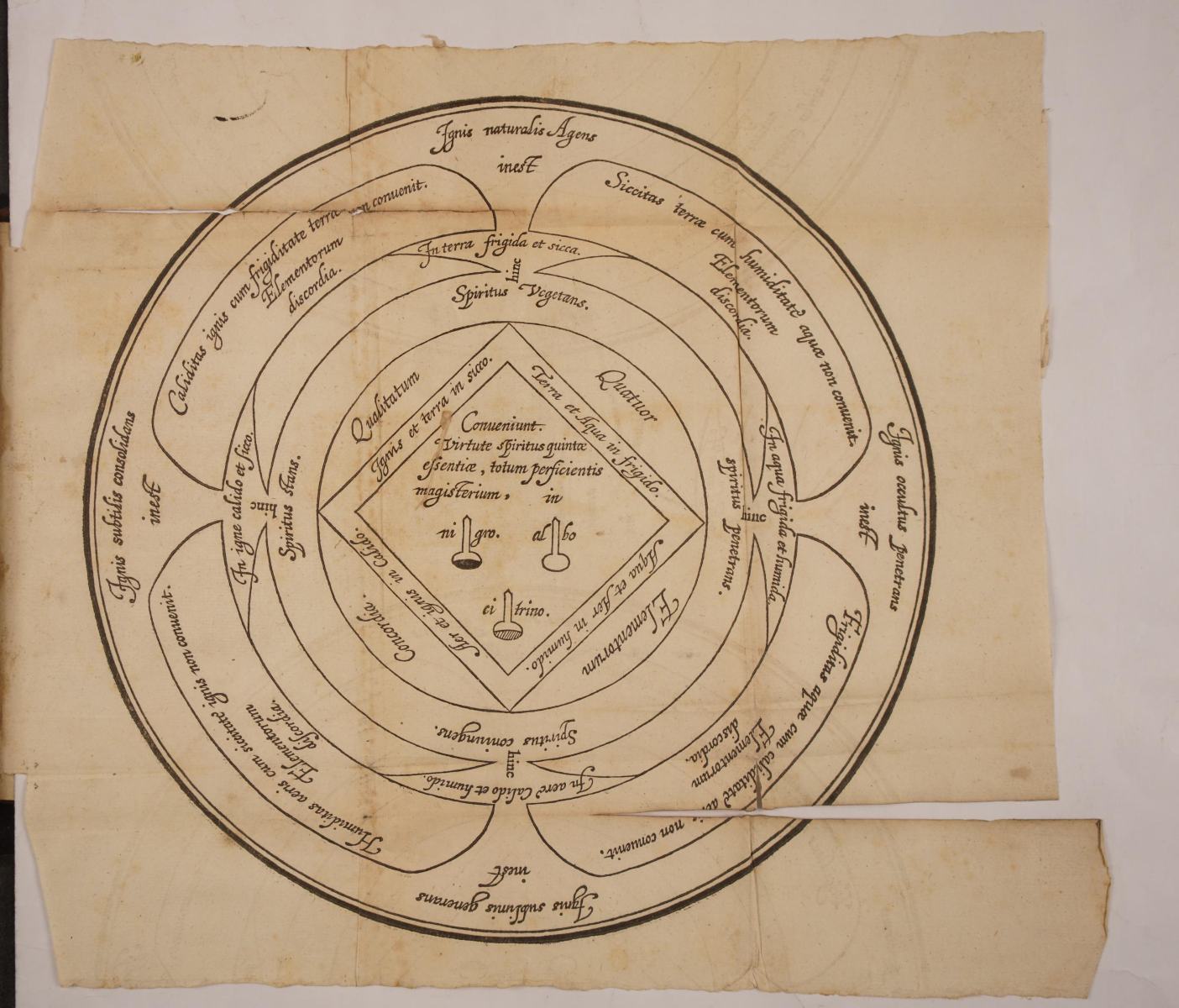
VII. The Emblem of the Four Fires — Concordia ex Discordia
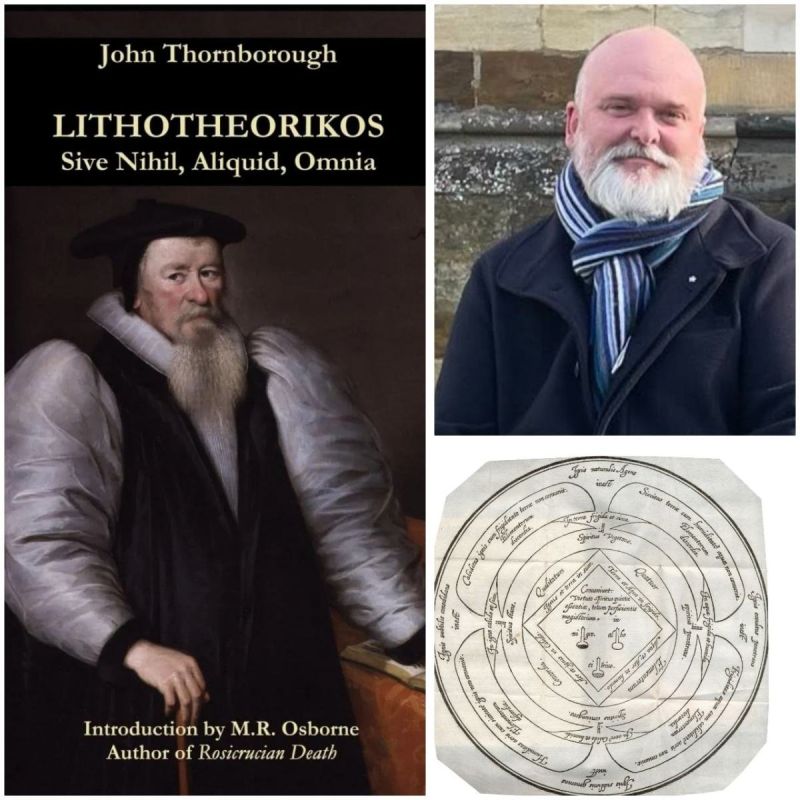
The plate the four examine, set here as the diagram the Rite performs.
Before the Circle reads it, let the plate speak for itself, as it stands in the 1621 edition. It is a wheel of concentric rings, and it must be read the way the Order reads a man: from the outside inward, and then, having reached the centre, back out again. It is not a decoration. It is a method set down in lines.
The four outer fires. At the four cardinal points stand four kinds of fire, and the Order takes its name from the vessel that holds them:
- Ignis naturalis Agens inest — the natural fire, the one that acts. (The East. Dee.)
- Ignis occultus Penetrans inest — the hidden fire, the one that pierces. (The South. Kelley.)
- Ignis subtilis generans inest — the subtle fire, the one that begets. (The West. Fludd.)
- Ignis subtilis consolidans inest — the subtle fire, the one that binds. (The North. Shakespeare.)
Note that two of the four are called subtilis — begetting and binding. The engraving warns, quietly, that subtlety is not one fire but two: it makes, and it holds together, and a man may have the first without ever earning the second.
The petals of discord. Within the fires, four curved leaves carry the plain fact of the elements’ quarrel — Elementorum discordia — repeated four times, because the quarrel is not a single event but a condition that recurs at every turn of the wheel:
- Siccitas terræ cum humiditate aquæ non convenit.
- Frigiditas aquæ cum caliditate aeris non convenit.
- Humiditas aeris cum siccitate ignis non convenit.
- Caliditas ignis cum frigiditate terræ non convenit.
This is the Nihil. This is the crow’s head. The engraving does not begin in harmony; it begins in a disagreement that will not resolve, listed four times so that no reader can mistake it for a passing trouble. The Order does not promise Thornborough that his three contradictory accounts will agree. It promises only what the diagram promises: that the quarrel is the matter, not the obstacle to the matter.
The four spirits. Within the discord, at each quarter, a spirit is born from the meeting of two qualities — hinc, “hence,” the engraving says, as if to insist that spirit is not summoned but consequent, the thing that arises when conditions are joined:
- In terra frigida et sicca, hinc Spiritus Vegetans.
- In aqua frigida et humida, hinc Spiritus Penetrans.
- In aere calido et humido, hinc Spiritus Convivens.
- In igne calido et sicco, hinc Spiritus Stans.
Spiritus Stans — the standing spirit — is the one the whole play turns upon. It is born only in the fire, in the hot and the dry, in the furnace. Thornborough spends Act One trying to arrive at the centre by every door except the one where the standing spirit is made. He cannot stand until he is in the fire that makes standing possible.
The square, and the concord. At the heart, the four elements are no longer in petals but in a diamond, and the words change from non convenit to convenient — they agree. The square is titled Qualitatum Quatuor Concordia Elementorum: the concord of the four qualities, the agreement of the elements. Each side names the meeting of two:
- Ignis et terra in sicco.
- Terra et aqua in frigido.
- Aqua et aer in humido.
- Aer et ignis in calido.
Read this against the petals. The elements never stop being what they are — fire is still hot, earth still dry — but the engraving shows that agreement is not sameness. They agree in a third thing, a shared quality, a middle where two unlike natures touch without ceasing to be unlike. This is the play’s answer to Dee’s first question, and Thornborough gives it without knowing he gives it: the rungs do not exist apart from the Ladder. The concord is not a fifth element that swallows the four; it is the in, the in sicco, in frigido, in humido, in calido — the place of meeting. The middle. The medium Fludd will ask him to find, and which he will at last locate not in a system but in a graveside, in a cold room, in a blank page.
The centre, and the three vessels. At the very heart, three small flasks, each with a syllable:
Conueniunt. Virtute spiritus quintæ essentiæ, totum perficientis magisterium. — They meet. By the power of the spirit of the fifth essence, completing the whole of the great work.
And the three vessels, marked ni-gro, al-bo, ci-trino — the nigredo, the albedo, the citritas. Black, white, yellow. The three colours of the Work, set not as a line but as a small company, the trinum, the threefold. The Order’s threefold discipline — the Nihil without despair, the Aliquid without pride, the Omnia without possession — is this triad in moral dress. The engraving’s three flasks are the diagram’s confession that the Work is not one death but a sequence of colourings, and that the fifth essence — the quinta essentia, the spirit that is none of the four and moves among them — is what completes it.
Why the Circle sets this plate in the Codex.
The play’s structure is this engraving read aloud. The four outer fires become the four examiners. The four discords become the four contradictions of Thornborough’s life that will not be smoothed. The four spirits become the four ways a man may be made to stand. The square of convenient becomes the play’s hardest claim: that a man’s contradictory accounts need not agree as facts, but may agree in a third thing — in the shared in, the middle, the place of meeting. And the three flasks at the centre become the penny, the blank page, and the apex stone: the black price, the white emptiness, the yellow standing-point that is not his to remove.
The Order of the Athanor is the name the Circle gave to the vessel this diagram is drawn inside. The engraving does not contain the Order. It contains the method the Order practises — Concordia ex Discordia, agreement made not by resolving the quarrel but by cooking it until the quarrel is a marriage. The plate gives the Work its operative names — four fires, four spirits, a concord in a middle term. What remains is to give those same four gates their moral names, which is the book’s own final act.
*
VIII. The Final Word, and the Open Question
The engraving’s four fires are the Work seen from the furnace; the book’s four perfections of the Stone are the same Work seen from the soul. They are the four gates named twice. The Circle transcribes the diagram into the moral register, and the keepers stand revealed as the perfections they keep:
Incorruptibility — Dee, the ignis naturalis agens, the enduring One, the number that does not decay. Clarity — Fludd, the ignis subtilis generans, the transparency of the water, the microcosm seen through. Agility — Kelley, the ignis occultus penetrans, the power to pass through the furnace undestroyed. Subtlety — Shakespeare, the ignis subtilis consolidans, the thread that persists through changing forms, not because it remains untouched, but because it can pass through them without being exhausted by any single role. The blank page is its emblem — a continuity that cannot be reduced to the words already written.
But the Codex’s last word is not a redemption. Kelley’s accusation stands at the end of it, unanswered, as it stands unanswered in the chamber: can an alchemical system become a way of evading moral judgement? The fire that converts rather than separates the pure from the impure is a beautiful doctrine, and it is also, potentially, a beautiful excuse. To refuse to separate the sinner from the saint can be the deepest charity — or the deepest cowardice. The Codex does not know which one Thornborough practised, and it will not pretend to, because the play did not pretend to.
The penny, the blank page, the surviving fire are not proof that he was redeemed. They are signs only that he consented to remain in the vessel without knowing the outcome. The Order does not mistake rejection for the end of the Work. It keeps the subject in the fire.
So the Order of the Athanor has no temples, no hierarchies, no dogmas. It has the fire that is not fire, the water that is not water, the stone that is not stone. It has the key, hidden in plain sight. It has the blank page, and the penny, and the silence after the last word — when the fire ticks in the dark and no one is speaking and no one is performing and the Work is not finished, and the man is not innocent, and he stays anyway.
Est una sola res.
Finis coronat opus.
Dum spiro, spero. Non spirans — et tamen spero.
While I breathe, I hope. Not breathing — and yet I hope.
*
A Note on the Sources & a Bibliography
This review received what it received from the edition before it, and returns the reader to it. What follows is set down so the reader can see exactly where each thing came from — the edition, the record, and the Circle’s own reading, kept distinct.
The edition.
- Thornborough, John. Lithotheorikos, sive Nihil, Aliquid, Omnia. Edited and translated, with an introduction, by M. R. Osborne. Whitestone Esoteric, 2026. The first English translation, from the original Oxford, 1621. The treatise text, the Epistle of Joannes Pontanus, and the introduction are all this edition’s.
The original, 1621 — online scan.
- Thornborough, John. Lithotheorikos, sive, nihil, aliquid, omnia, antiquorum sapientum vivis coloribus depicta, philosophico-theologicè, in gratiam eorum qui artem auriferam physico-chymicè et piè profitentur. Oxoniae: Excudebant Johannes Lichfield & Jacobus Short, 1621. Digitised by the Wellcome Library, public domain. Internet Archive: https://archive.org/details/b30338827
The man behind the book — three strands of record.
- Dictionary of National Biography, “Thornborough, John.” The career, the title page, and the Oxford line about Simon Forman.
- Worcester Cathedral Library account of the monument, 2013. The funerary monument and its damage.
- Noake, John. Worcestershire: Its Cities, Towns, and Counties — the 1856 reading of the tomb’s motto.
- Moore Ede, Dean. The 1925 reading of the tomb’s motto.
Where these sources disagree about Thornborough — and they do, on the most human points — the disagreement is not smoothed here. It is the subject of the work.
The Circle’s work.
- The Rite of Reception and the Athanor Codex are the Circle’s, woven around the edition. They are a reading, not a recovery. The Pontanus epistle, appended to the treatise, circulated in alchemical collections before 1621; its presence in the 1621 imprint may be checked against the scan above.
Not in any source.
- The Order of the Athanor is not in any of these sources. It is what this Circle heard when the sources were placed in the fire together.
***
Leave a Reply