Today’s sharing from the Blue House of Via-HYGEIA begins with a question: When does what we believe become something we truly know?
Walter Lewin’s celebrated pendulum experiment offers us a point of departure: the confidence that grows through repeated testing and understanding. This is an analogy, not a claim that physical laws and spiritual truths are the same.
We then turn to John Cennick (1718–1755), the eighteenth-century preacher whose journey through Methodism and Moravianism invites us to examine the nature of living faith. We approach him as a spiritual experimentalist of the heart—our interpretive proposal, not a historical title. What did he seek in a religious community? What convinced him that faith had become inwardly real? And how did his discernment evolve?
Our presentation brings together a preamble on faith and experience, the central article on Cennick, and two of his texts: The Danger of Infidelity (1753) and The Assurance of Faith (second edition, 1772). Together, they invite us to look beyond inherited belief and outward profession towards faith as an inward reality that transforms life.
The invitation is to examine our own experience: What have we merely accepted, what have we truly tested, and what has become a living understanding within us?
**
Preamble:
A Pendulum, and the Meaning of Trust
In his famous pendulum demonstration, Professor Walter Lewin places himself beneath a suspended weight and trusts the laws of physics he has tested and taught. The demonstration makes visible something that is easy to overlook: trust need not be blind. It may arise from repeated experience, from an understanding of how things work, and from a knowledge that has become more than an abstract proposition.
When Lewin reenacted the experiment at MIT on 16 May 2011, he had not performed it for twelve years. Clinging to a five-metre pendulum, he swung back and forth while the audience counted. The result was as the laws of physics predicted: the pendulum’s period remained the same with or without his mass. As the MIT News report records, Lewin celebrated the outcome with the words: “I told you! Physics works!”
Behind such a seemingly spontaneous demonstration lay painstaking preparation. Lewin was known for rehearsing his lectures, sometimes running through a demonstration three times, with the final rehearsal as early as five in the morning. His trust was not casual confidence; it rested on knowledge, testing, and disciplined preparation. The experiment became a public encounter with a law that could be observed rather than merely asserted.
This offers us a point of entry into a wider question. What happens when something we have learned intellectually becomes something we know through experience? Repeating a statement is not the same as understanding it; accepting a proposition is not necessarily the same as discovering its reality. The pendulum makes this distinction tangible.
The comparison we shall explore here is metaphorical, not a claim that physical experiment and spiritual faith are the same kind of knowledge. Yet Lewin’s demonstration invites us to ask what trust means when it is no longer merely borrowed from another person’s authority, but has been tested, examined, and made inwardly intelligible.
Watch Professor Walter Lewin’s pendulum demonstration:
*
A Via-Hygeia-Circle of Tranmission reflection
upon Faith as living understanding:
Faith is the repeated experience
of an information
that has been worked
into a holistic coherent system
and then brought,
even beyond systems
and crystallizations,
into
a living
understanding.
Living understanding = Faith.
Learning by experiment
the laws of the Universe
is the core of the Hermetic path,
so to get rid of the ‘magical mind’
that creates virtual and false definitions of reality.
Takes guts, but is a sustainable, joyful, liberating process.
This Hermetic emphasis on testing and lived experience offers the lens through which Via-HYGEIA approaches the encounter with Cennick below. It does not make Cennick a Hermetic thinker, nor does it translate his Christian theology into another system. Rather, it opens a comparative question: how does professed truth become lived reality?
From tested trust
to the experimentalist of the heart
What does it mean for faith to become living understanding? And what happens when a person refuses to let faith remain merely a system of propositions, inherited forms, or intellectual assent?
The pendulum offers a metaphor for tested trust. But when we turn from physics to the spiritual life, the nature of the inquiry changes. The question is no longer simply whether a law can be observed repeatedly, but whether what one professes to believe has become inwardly real—and whether that reality can be discerned in the conduct of one’s life.
The eighteenth-century preacher John Cennick (1718–1755) offers a compelling historical witness through whom to explore this question.
Cennick’s sermons insist that Christian faith cannot be reduced to outward observance or the acceptance of correct doctrines. In The Danger of Infidelity, delivered at Bristol in 1742, he calls his listeners to examine themselves and distinguish living faith from mere assent. Faith must become an inward reality, grounded in the grace of Christ and the witness of the Holy Spirit, and must bear fruit in the life of the believer.
In The Assurance of Faith; or, The Experience of a True Christian, based on a discourse delivered at Glenevy in County Antrim in 1754, Cennick returns to inward assurance. The sermon’s structure moves from distress, through the assurance of pardon and acceptance, to the love of God as the source of deliverance. It presents mercy as something experienced in the heart, while warning that assurance does not remove the need for vigilance.
His life, meanwhile, was marked by changing religious affiliations, questions of doctrine and ecclesiastical order, moments of commitment, and continuing self-examination. These movements should not be romanticized as a perfectly consistent programme of spiritual experimentation. Nor should they be dismissed, without further inquiry, as mere denominational instability.
Instead, they invite us to ask a more searching question: What was Cennick seeking in a religious community, what counted for him as evidence that he had found it, and how did his judgments develop as he continued to examine his faith?
This is the point of departure for our study, John Cennick (1718–1755): The Spiritual Experimentalist of the Heart. The expression is our interpretive proposal, not a historical designation. It asks whether Cennick’s sermons, diary, and correspondence reveal a persistent concern with the passage from professed belief to inwardly experienced and lived truth.
The connection with Lewin is therefore an invitation to reflection, not an equation between two different kinds of inquiry. Lewin’s demonstration concerns the repeatable operation of physical laws; Cennick’s concern was Christian faith, understood through Scripture, Christ’s grace, and the transforming work of the Spirit. What brings them into conversation is the question of how trust becomes more than an abstract proposition.
The Hermetic path calls for examining the mind’s constructions and moving towards a more living understanding. This is Via-HYGEIA’s interpretive point of entry, not a description of Cennick’s own intellectual framework. The journey begins with an experiment of physics. It leads us towards a historical inquiry into the experience of the heart.
John Cennick (1718–1755):
The Spiritual Experimentalist of the Heart
Living Faith, Inward Assurance, and the Search for a Religious Home
(Beyond the wandering preacher)
John Cennick’s changing religious affiliations can easily be read as evidence of denominational instability. Yet such a reading risks turning a complex spiritual life into a simple story of movement from one religious home to another. His sermons, diary, and correspondence invite a more careful question: what did he seek in a religious community, what counted for him as evidence that he had found it, and how did his judgments change as he continued to examine his faith?
The phrase “spiritual experimentalist of the heart” is offered here as an interpretive proposal, not as a historical self-designation. It does not imply that Cennick followed a modern experimental method, nor that every change of allegiance was a deliberate test. It suggests instead that his writings repeatedly return to a central concern: faith must become inwardly real, and its reality must be discerned in the life of the believer.
*
I. The necessity of living faith
In The Danger of Infidelity, a discourse delivered at Bristol in 1742, Cennick takes as his point of departure Paul’s injunction: “Examine yourselves, whether ye be in the faith” (2 Corinthians 13:5). The sermon challenges the assumption that baptism, catechism, a creed, or assent to the truth of Scripture is sufficient evidence of living faith. Outward membership and correct profession may coexist with an inward life that has not been transformed.
For Cennick, faith is not simply a conclusion reached by the understanding. In The Danger of Infidelity, he calls it a divine testimony and evidence in the heart, through which the believer comes to know Christ’s love and redemption. This does not mean that experience replaces Scripture or Christian doctrine. Rather, the sermon presents inward assurance within a Christian framework of Scripture, Christ’s grace, and the work of the Holy Spirit.
Self-examination therefore becomes necessary. The question is not only whether one holds the right propositions, but whether one has experienced the mercy of Christ and whether this faith bears the fruits of a changed life. Cennick distinguishes living faith from dead assent while maintaining that good works are not the ground of justification: they are the fruit of faith, not its purchase price.
*
II. From examination to assurance
The Assurance of Faith; or, The Experience of a True Christian, based on a discourse delivered at Glenevy (modern spelling: Glenavy), County Antrim, in 1754, develops the theme from another angle. Its opening draws on Isaiah 38:17; Hebrews 10:22 also belongs to the sermon’s scriptural frame. Cennick describes distress, the assurance of pardon and acceptance, and the love of God as the source of deliverance.
His account is not a simple celebration of emotional intensity. He acknowledges that believers do not all pass through the same degree of spiritual anguish, and he warns against pride in one’s own trials. Suffering is not a spiritual achievement. The decisive point is the discovery of unmerited mercy: the believer seeks forgiveness and comes to experience it in the heart.
Assurance, in this account, is not permission to abandon vigilance. Cennick does not suggest that an inward experience makes further moral effort unnecessary or renders sin impossible. Rather, the experience of grace should deepen the believer’s dependence on Christ and produce a more watchful, loving life. Experience is thus neither a self-validating private authority nor a substitute for Christian discipline. It is interpreted through Scripture, grace, and its effects.
*
III. A life of discernment
Cennick’s early changes of religious allegiance took place amid concrete disputes about salvation and the Christian life. His alignment with George Whitefield’s Calvinist position placed him at odds with John Wesley’s Arminian theology; their differences also touched on Christian perfection and the interpretation of extraordinary manifestations during revival meetings. The separation at Kingswood in 1741 was therefore more than a personal rupture. It belonged to a wider conflict over doctrine, religious experience, and the forms through which revival should be sustained.
Cennick’s subsequent attraction to the Moravians brought him into another distinctive ecclesiastical and devotional tradition, one that he embraced while continuing to examine its principles and practices. During his time among the Moravians in Germany in 1745–1746, he raised reservations about Moravian principles and ecclesiastical order. He investigated these questions rather than simply accepting reports at face value. By February 1746, his correspondence expresses a stronger conviction concerning the Brethren’s order and doctrine, while also indicating a willingness to serve where the congregation appointed him. This is evidence of discernment, but it should not be simplified into a perfectly linear progression.
The Marienborn diary offers a more intimate view of this process. Entries from late February 1746 record a period of self-examination and distress, including the writing of an account of his life and spiritual state since arriving at Marienborn. The diary then describes relief, followed by sleep “in the arms of my God and Saviour.” The episode offers a vivid instance of inward scrutiny conducted within a framework of Christian trust.
Cennick also recognized spiritual worth beyond the boundaries of his own group. In a letter to the Fetter Lane congregation from Dublin in July 1746, he wrote that “the best souls of all the sects and churches abide quite hearty to me.” This striking statement deserves to be read in its own right. It suggests breadth of spiritual sympathy, though it should not be turned into a claim that he embraced doctrinal relativism or that all ecclesiastical distinctions had ceased to matter to him.
*
IV. The criteria of the experiment
If the phrase “spiritual experimentalist” is useful, it is because it helps organize several questions that arise from Cennick’s writings. It does not mean that he tested faith as a physicist tests a physical law. His field of inquiry was explicitly Christian, and the criteria he names are shaped by Scripture, Christ’s grace, the witness of the Holy Spirit, and the fruits of faith.
1.The difference between profession and reality: Can inherited belief, outward observance, and correct doctrine be distinguished from a faith that has become inwardly real? The first sermon repeatedly presses this question through self-examination.
2.The character of assurance: How is forgiveness known—not merely hoped for or affirmed, but experienced as mercy? The second sermon places assurance within the believer’s relation to Christ and God’s unmerited love.
3. The fruits of experience: What changes when faith becomes living? Cennick looks for a life shaped by love, holiness, vigilance, and gratitude, while insisting that such fruits do not earn salvation. This inward reality found expression not only in his preaching and ministry, but also in his hymnody, through which his faith entered a wider devotional life.
4.The religious community: Can a church or fellowship sustain the kind of faith its teaching proclaims? Cennick’s changes of affiliation and his reservations about ecclesiastical order make this a legitimate historical question, though the evidence does not permit us to attribute a single unchanging criterion to every decision.
*
V. The verdict of the experiment
Cennick’s religious trajectory should not be reduced either to instability or to a perfectly consistent quest whose outcome was always clear to him. Robert Edmund Cotter’s research is especially important here because it restores the tensions, contradictions, and shifting emphases visible in Cennick’s correspondence and diary. The record presents a person formed through relationships and communities, not an isolated seeker whose inward experience alone dictated every choice.
Nevertheless, the sermons provide a substantial thread of continuity. Cennick repeatedly refuses to identify Christian faith with bare assent, outward form, or the rigid crystallizations of a merely nominal profession. Faith must become experience; experience must be understood within the Christian account of grace; and living faith should be visible in the life it transforms. The thread is real, even if it does not explain every turn in his biography.
*
Conclusion:
When faith becomes real
The pendulum demonstration and Cennick’s sermons belong to different domains. One makes the reliability of physical law visible through a demonstration; the other speaks of the believer’s experience of divine grace. Their connection is metaphorical, not evidentiary. Yet both invite reflection on the distance between repeating a proposition and knowing something through experience.
To call Cennick a “spiritual experimentalist of the heart” is to propose a way of reading his life, not to settle the question in advance. His sermons ask whether faith has become real within the heart; his diary and correspondence show a life of questioning, commitment, and self-examination. Taken together, they invite us to consider how inward assurance, doctrine, community, and lived conduct meet—and sometimes remain in tension.
The central questions of this study are therefore threefold: What did Cennick understand living faith to be? How did he recognize its presence in himself and in the religious communities he encountered? And to what extent did this understanding shape the life he lived?
*
Bibliography & source note
Primary sources
Cennick, John. The Danger of Infidelity; or, The Necessity of a Living Faith in Christ. The substance of a discourse delivered in Bristol in 1742. London: printed by John Hart, Popping’s-Court, Fleet-Street, 1753. The first edition consulted is held in the Via-HYGEIA study library. The supplied Volume I PDF is a later fifth edition (1791), useful as a comparative witness but not a substitute for a complete line-by-line collation of the 1753 copy.
Cennick, John. The Assurance of Faith; or, The Experience of a True Christian. The substance of a discourse delivered at Glenevy, County Antrim, Ireland, in 1754. Second edition. London: printed and sold by M. Lewis, No. 1 Pater-noster-Row, 1772. The copy consulted is held in the Via-HYGEIA study library. The working transcription of printed pages 3–24 was checked against the supplied photographs for the claims summarized here; uncertain OCR readings should not be quoted without checking the page images.
Cennick, John. Village Sermons on the Following Important Subjects. Vol. I. Supplied PDF of a later collected edition, title page identifying the fifth edition, London, 1791. Used as a comparative witness and for text location; not treated as the text of the 1753 first edition.
Cennick, John. Village Sermons on the Following Important Subjects. Vol. II. Supplied collected-volume PDF; The Assurance of Faith appears at scan pages 297–318. Used for text location and comparison, not as a substitute for the Via-HYGEIA study-library second edition of 1772.
Secondary sources
Cotter, Robert Edmund. John Cennick, 1718–1755: His Role in the Eighteenth-Century International Revivals: Formation; Doctrine; Activity in Ireland. PhD thesis, Queen’s University Belfast, 2019. https://pure.qub.ac.uk/en/studentTheses/john-cennick-1718-1755-his-role-in-the-eighteenth-century-interna/
Cotter, Robert Edmund. “John Cennick in Germany: His Marienborn Diary, 1745–1746.” Journal of Moravian History 21, no. 1 (2021): 60–102. https://doi.org/10.5325/jmorahist.21.1.0060
Yeager, Jonathan M., ed. Early Evangelicalism: A Reader. Oxford: Oxford University Press, 2013. “A Conversion Story,” excerpts from John Cennick’s 1745 autobiography, discuss the Calvinist–Arminian division in early Methodism. https://doi.org/10.1093/oso/9780199916955.003.0020
Cotter, Robert Edmund. John Cennick (1718–1755): Methodism, Moravianism and the Rise of Evangelicalism. London: Routledge, 2022. https://doi.org/10.4324/9781003226741
Catalogue record
Wellcome Collection. The Danger of Infidelity; or, the Necessity of a Living Faith in Christ. Publication record for the 1753 London edition printed by John Hart. https://wellcomecollection.org/works/adnhbz2z
*
APPENDICES I & II
*
Appendix I:
‘The Danger Of Infidelity; or, the Necessity of a Living Faith in Christ’. The Substance Of A Discourse Deliver’d in Bristol, In the Year 1742.
But follow after Faith, 1 Tim. vi. 11. Without Faith it is impossible to please God, Heb. xi. 6. Contend earnestly for the Faith once deliver’d to the Saints, Jude 3. Believe in the Lord your God, so shall ye be established; believe his Prophets, so shall ye prosper, 2 Chron. xx. 20. Hold the Mystery of Faith in a pure Conscience, 1 Tim. iii. 9.
By JOHN CENNICK, Late of Reading in Berkshire.
LONDON: Printed by JOHN HART in Popping’s-Court, Fleet-street. 1753.
2 Cor. xiii. 5. Examine yourselves whether ye be in the Faith.
IF the Holy Ghost had not known and foreseen how some would have made Mistakes, thro’ the subtil Working of Satan, and the Weakness of their own Hearts, in the Matter of Faith, there would have been no Need of this Exhortation: And if I was not convinced that many, even now, suppose they believe, who are far from it, I would not have chosen this Subject; but as this is the Case, now in Christendom, that many err concerning Faith, and deceive themselves, crying Peace when there is no Peace, I shall speak briefly of the true Scriptural Doctrine of Faith, and of the Benefits which we receive thereby; and then pray you, in the Apostle’s Manner, to search yourselves, and examine your Hearts, if ye have Faith; or, be of that Number, who concerning Faith are Reprobate.
Now ye know how trifling a Matter almost all Men make of Faith; and hence it is that so many foolishly ask, Why, have not we all Faith in Christ? Have not we been Baptiz’d, learn’d the Catechism and the Creed, and don’t we all confess the Bible to be the Word of God? Would ye have us think ourselves Heathens and Infidels? I thank God, (says one) I have believed from my Cradle; another has been a Believer ever since he could understand, &c. &c. All this proves they know little about the Matter, but would make me question if they know at all what that precious Thing means. I don’t think it would be proper to say directly to all Sorts of People, You don’t believe, You have not Faith, because our Saviour’s Method is best; Believest thou on the Son of God? And yet this Way of Dealing with some would make them angry; and would appear just as impertinent to many who name Jesus Christ’s Name, as if one should ask, Have you got Eyes? Do you see? But however this may seem, ’tis a necessary Question, and I wish all who hear me To-day, would ask their own Hearts and examine themselves, Am I in the Faith? Do I believe? Happy is that Man who can say, with the poor Man in the Gospel, Lord, I believe, Help my Unbelief!
The common Description and Definition of Faith in Christ, is the Consent and Assent to the Truth and Veracity of the Scriptures; and if this was a true Account, then our Saviour need not to have scrupled if he should find Faith upon Earth at his Second Coming; nor the Apostles to have given such a Charge concerning keeping the Faith: for all who call themselves Christians are Believers, and their Number is many Millions in the World, But bear with me, and let me tell you, as a Servant of Jesus Christ, and as your Servant, for Christ’s Sake, such a Notion is dangerous, and against the Mind of all the Scriptures, and the Apostle of our Profession in particular, who has spoken so honourably of Faith, and made sure all his Promises to them that believe. Luther had said, Faith is a Divine Work, wrought in the Heart by the Holy Ghost: And a greater than Luther, said, Faith is the Substance of Things hop’d for; the Evidence, or, as some translate it, the Witness, the Persuasion and Assurance, of Things unseen.
Faith is a Divine Testimony and Evidence in our Hearts, whereby God assures us, that he who is, and was, and is to come, was once a Man for our Sakes, and has died for us on the Cross, and took all our Sin and Curse upon himself, and has loved us with everlasting Love; has heal’d us by his Stripes, has wash’d us in his Blood, justified and seal’d us to the Day of Redemption; and this we believe and know, this we have learn’d of the Father, this no Man can teach his Brother, nor any Woman her Neighbour, but this all must learn of God, as is written in Isaiah, All thy Children shall be taught of the Lord, and great shall be the Peace of thy Children, Isaiah liv. 13. This all Men have not, but all who ask it have it, all who seek it shall find it, and none have need to perish for lack of it, but apply to him who reveals his Wisdom to the Babes, and he shall not apply in vain; but all must have it, or fall thro’ Unbelief; for without Faith ‘tis impossible to please God, and he that believeth not shall be damn’d.
To be short, As sure as one believes that there is such a Country as America, tho’ one has not been there; or such a Mountain as Teneriff, tho’ we have not seen it; or such a Thing as Sea, tho’ we have not been near it; so verily can a Man believe the Promises of God, concerning Jesus Christ and his Righteousness, which are given and read to us, only with this Difference, that of the former Things, a Man may be firmly persuaded, and venture all that he has in the World upon the Truth of it, and yet get nothing by it; but no Man can believe the latter, without enjoying, at the same Time, the very Blessings and Substance of what he believes, because Faith is the Substance of Things hoped for; and it is done to us in the Moment we believe according to our Faith; we can thenceforward say, I believe and know thou art the Christ the Saviour of the World: I believe thou hast loved me, and given thyself for me. Blessed are they that are of Faith, Gal. iii. 9.
It is most certain, That a Believer shall be saved, as it is written, If thou believest in thy Heart on the Lord Jesus, thou shalt be saved, Rom. x. 9. Our Saviour says the same in his last Words, He that believeth, and is baptized, shall be sav’d, Mark xvi. 16. and St. Paul and Silas to the Jailor at Philippi, Believe in the Lord Jesus, and thou shalt be sav’d, Acts xvi. 31. But who can think all who profess Christianity will be sav’d? or hope, all who are call’d by his Name shall escape Judgment, let them live wicked as they will? When our Saviour has so plainly said, that in the last Day, Many shall come to him, and say, Lord, Lord, we have been called by thy Name, we have eat and drank in thy Presence, &c. to whom he shall say, Depart from me, I never knew ye, Matt. vii. 22.
Now one of these two Propositions are true; either but few have Faith, or such as have Faith can be lost. The Holy Ghost contradicts the latter throughout all the Bible; shall we oppose him, God forbid! Let God be true, and every Man a Liar. No wicked Man has Faith. No Drunkard, or Unclean Person, no Whoremonger, or Adulterer, or Swearer, or Railer, or Persecutor, or Friend of this World, is a Believer. He is dead to God while he lives, and his carnal and dead Consenting to the Scriptures will profit him nothing: He is without Faith, and no true Christian. He that believes, obtain’d his Faith from the Holy Spirit, and is taught of God, and he knows it, and has that Understanding, which St. John mentions in the 5th Chapter of his Epistle, and at the 20th Verse, Whereby we know him that is true, and are in him that is true, even in his Son Jesus Christ, and this is eternal Life.
But why need we many Words? Hear ye the Word of the Lord! (a) He that believeth shall not perish, but have eternal Life. (b) Whosoever believeth on him is born of God. (c) He that believeth hath the Witness in himself. (d) To them gave he Power to become Sons of God, even to as many as believe on his Name. (e) Whosoever believeth shall receive Remission of his Sins: But the Time would fail me to bring together all the Proofs of this Doctrine which are to be met with in the Holy Scriptures, for then I must bring the whole Bible; for therefore was all written that you might believe on the Name of the Son of God, and have eternal Life thro’ his Name, 1 John v. 13. John xx. 31. By all these Scriptures you may easily try, if you have Faith. Enter then into thy Closet and shut the Door after thee: Hold an Assize in thy own Breast, and judge thyself, that thou may’st not be judg’d of the Lord. Examine thyself if thou art in the Faith; ask thy Heart, Have I eternal Life? Am I born of God? Are my Sins remitted? Am I a Child of God? else what Good does my dead Faith do? What Benefit have I by the Death and Blood of Jesus? Or what are his Sufferings and Wounds to me, if I am not heal’d and help’d thereby? Nor let such Thoughts rise in thy Heart, as if none could now be thus blessed, or have the same Faith, which once the Disciples and Martyrs had; for there is but one Faith, and except thou hast that one Faith, thou can’st not be saved; nor reason sophistically, as if ‘twas possible to have true Faith, eternal Life, and Pardon of Sins, and thou not know it, for ’tis Anti-scriptural.
(a) John iii. 15. (b) 1 John v. 1. (c) 1 John v. 10. (d) John i. 12. (e) Acts x. 43.
All his People KNOW him, from the least to the greatest. His Sheep KNOW him; and, therefore, says St. John, I have written to you, that ye may KNOW that you have eternal Life; and thus in the Text, St. Paul shews you how to find out, if you have Faith, or not. What! he says, know ye not that Jesus Christ is in ye? Be honest and upright, don’t desire to quiet your Consciences, or cry to your Hearts, as, in another Sense, Paul cry’d to the Jailor, Do thyself no Harm; but be jealous about your Estate, and examine whether you are in the Faith! Awake out of your slumbring Condition, nor be content till you can say, I believe! I believe Jesus loved me, and died for me, with this Faith begins eternal Life and all Happiness.
It is this that justifies and brings Peace to the Heart: It is to this the Holy Ghost bears Witness that we are the Children of God; and where this Faith is in the Heart, there the Souls overcome the World; are deliver’d from Sin, are wash’d and sav’d from the Dread of Death, thro’ which all their Life-time they were subject to Bondage, and set above the Fear of Hell and Satan, as if both were abolished for ever: But where this true and living Faith is not, there Satan and Sin reign; there the Soul is in continual Terror, and has a Sort of constant fearful Looking for Judgment and fiery Indignation; and well it may be so, for no Creature is safe without it. The most self-righteous and seemingly holy, and even the sincere Man, who seeks to make himself good and just, is, after all, but almost persuaded to be a Christian. He still is uneasy and restless, because yet he lacks one Thing; One Thing is still needful; ’tis Faith in the Blood of Jesus Christ!
How some People can reconcile the Fears of Death and Eternity, with real and inward Christianity, or the secret Doubtings, and falling into desponding Thoughts about their Interest in Jesus, with Faith, that I don’t understand. Can one who believes his Name is in the Book of Life, be afraid to die? Or can one, who believes Jesus, the Lamb of God, has taken away his Sins, shudder at the Approach of Eternity? O ’tis not likely. Does the Child tremble, because his School is done, that he may go home to his dear Parents, whose only Son he is? Or does the poor shipwreck’d Mariner shudder to see the Day-break, and find himself just a-shore? Or does the Slave lament to be ransom’d and freed, or the poor Prisoner weep and grieve to have his Prison-Door open’d, and his Chains knock’d off, because his King has pardon’d him? Ye know, my Brethren, ’tis contrary to Nature. But just as the way-faring Man rejoices to see the End of his Journey, or the Labourer, who has toil’d hard all Day, is glad to rest, so a Believer rejoices, when his chilling Limbs forebode his Departure, or his faul’ring Eyes presage his hastening End.
As he believes, so he expects to meet the Lamb, his Saviour, in Peace, and so he shall find it, and not be disappointed. Yea, the Believer, when he but thinks on the happy Moment when he shall depart and flee away, has his Heart leap for Joy, and he hastens on with Expectations and Longings, which can’t be utter’d for that Time of Grace: And whence comes this? Because he believes; because he has that Faith once delivered to the Saints. He has that holy Dependence on God his Saviour, which the former Children of God had, and by which the Confessors and Witnesses of Christ, in all Ages, so gladly yielded to all Sufferings, and even to lay down their Lives. But the greatest Heroes in Christianity were weak, and like other Men, till by Faith they waxed valiant in their Fight, and obtain’d the Witness that they pleased God! Then Life was Christ, and Death was Gain.
Examine thyself now, then, and see if thou hast Faith! Dost thou believe in Jesus that he is thy Saviour? Does thy Heart bound and dance in thee to answer, Yes, I believe? I believe he is my Lord, my Rock, and my strong Salvation! How would it be with thee, should now the Sun, that rul’d this Day, be darkened, and the Moon and Stars withdraw their shining? Suppose that now one should surprise thee, by telling thee, He is coming on the Clouds of Heaven, with all his Angels; the Sea and its Waves are roaring, and the Mountains and Hills removing, and Heaven and Earth fleeing before the Son of Man! How would it sound to thee? Would thy Heart be glad? Should’st thou like to feel the Earth trembling underneath, and see yonder blue Sky filled with Myriads of blessed Spirits, and hear all the Angels hailing down the God whose Vesture is dipp’d in Blood, with all their Harps and Trumpets sounding before him, and hear louder and louder the Voice of the Archangel, and the Trump of God, Arise, and come to Judgment! Put the Case near to thee, for that Day shall surely come, and thine Eyes shall see the Son of the Most High God descending, to divide between his Sheep and the Goats; and dost thou believe that thou should’st meet him with Joy? Can thy Soul think on it with Pleasure? Can’st thou say, Yes, Lord Jesus, I long for thee: O come quickly! Then happy thou and blessed be the Day when thou wast born; for so surely as thou trustest in him, so surely as thou believest in Jesus, so surely shall he confess thee in that Day, and thou shalt enter with him into the Bride-Chamber, and be ever with him.
But, examine thyself: How camest thou by this Faith? How was it when thou believedst? Methinks I hear thee say, O, I was once, like others, dead while I lived, I loved Pleasure, was fond of the World, and contented myself with the Form of Godliness, ’till the Lord called to me, as he did once to Adam, Where art thou! till he stop’d me, in the Height of my Sin, (as he did Balaam, with his Sword in his Hand) and made my Heart hear him say, Why persecutest thou me! Then did I awake, and my whole Life and all my Sins became a Burden intolerable, and more than I could bear; I was afraid I should never be sav’d: A Sense of my Guilt was ever before me, and my Heart failed within me: I attempted to make Vows and Resolutions of Amendment; and, if possible, would have made myself Righteous; but Oh! I said, all my Righteousness was filthy Rags; Sin reviv’d, and I died, I was ready to perish; I felt my Heart like a Stone; my Hypocrisy, and Shame, and Sins, became abominable in my Eyes, so that I was quite miserable, and felt how well I deserv’d Hell.
I knew my Infidelity; I knew I did not, I could not believe on the Son of God; I wanted Faith in him, and wish’d to know he loved me; But then did the Holy Ghost direct me to him, shew’d me my bleeding High-Priest, led me to the Living Fountain of his Blood, and made me feel that the least Drop could wash me whiter than Snow! O how did I languish and thirst for his Blood! How did I sigh for his Wounds, and wish to be sav’d! I believ’d he could save me, and none beside; and now was I drawn to him; now came the Day much to be remember’d, the Time of Grace; I call’d upon the Redeemer, and my constant Thought was, Have Mercy upon me! Have Mercy upon me! I held him with an unspeakable Longing for Grace, and then did he smile, and I received Faith in his Name; then did he whisper, Thy Sins are forgiven. I believ’d he lov’d me, and shed his Blood for me; I believ’d, and felt my Sins were done away, and my Iniquity purg’d! All was new in a Moment; I had eternal Life, I was born of God, and God’s Spirit bore Witness with my Spirit, that I was a Child of God. I had the Witness in myself, and was sure the Promises of God were true. I believed, and knew, that I was my Beloved’s, and my Beloved was mine.
This, this is the Language of a faithful Soul; this is the natural Way in which an enamoured Christian expresses the Manner of his Believing in Jesus. He knows he was once blind, he knows he was once in Unbelief, ’till the Comforter came, whose first Work and Office is to convince of Sin, because they believe not in Christ; and then, secondly, he convinces of Righteousness, namely, the Righteousness of the Lord our God, the Righteousness of the second Adam, which Righteousness is made ours by Faith, and justifies all who believe in Jesus, from all Things, from which it is impossible to be justified by the Law, or Works, or any Thing else.
I know this Doctrine sounds strange and uncouth to many Ears, especially to such as have never question’d their Faith or Belief in our Saviour. But, as I said before, whenever Men think I have always believed, it is a manifest Argument they have not believ’d to this Day. Wonder not, then, if such condemn this Doctrine, or despise it; nor be discouraged if thou art persecuted and slander’d for contending for this Faith. If you should get such People to confess this, and no other is the true Faith of God’s Elect, they would see themselves stripp’d of their Christianity in a Moment, and could say, as once Laban did to Jacob, Thou hast taken away my Gods, and what have I got more! ’Tis therefore so hard to convince such that they believe not, that it needs the Holy Ghost, and none else can do it. ’Tis against the Pride of our Nature, to suffer one’s self to be accounted an Infidel, or Unbeliever; and yet, like it or not, all are such who have not eternal Life, Forgiveness of Sin, and the inward Witness in their Hearts, that Jesus Christ our Saviour loves them.
Whoever then here examines himself, and finds he is not in the Faith, let him with Tears and Shame confess it before our Saviour, and resolve not to be satisfied till they have it. Cry in your Hearts to him who is the Author and Finisher of Faith: And tho’ some should try to hinder you, by persuading you, that you need not be concern’d, that you are certainly good Christians, that God does not require such Things at your Hands, &c. do as Bartimeus, cry so much the more a great deal, till Jesus stands still, and says to you, What will you that I should do unto you! But, above all, don’t let Unbelief be cherish’d or encourag’d, that is the worst Sin of all. ’Tis a Mercy and a Blessing, when a Soul can believe who Jesus is, namely, the Lord and a Saviour. Do you believe this, then say, Lord Jesus, if thou wilt, thou can’st make me clean; thou hast Power to quicken and give eternal Life to whom thou wilt; thou art the Lord of Heaven and Earth, all Souls are in thy Hands, and nothing is too hard for thy Right Hand to bring to pass; say to my Heart and Eyes, Ephphatha, be open’d, and grant me a Confidence towards thee what thou art pleas’d to call Trusting and Believing in thee; increase my Faith, and let me see the Glory of God; let thy Spirit cry in my Heart, Abba Father!
There are many who will not believe that Faith is now the same as formerly, or that thereby we can know the Lord, or be persuaded he loves us, or feel our Sins forgiven; and, for my Part, I don’t know what such People pretend to believe more than the Devils. Believe what they will beside, it brings no true Happiness to the Heart, and is no more than confessing, how good our Saviour was to the Primitive Christians, what Wonders he did in our Fathers Days, and how the Saints found Mercy, but now it is as if all was ceas’d; and the God, whose Name is the Unchangeable, is alter’d, and his Faith no more of Effect. How can such an one get Forgiveness, when he does not believe ‘tis to be gotten? Or, how can he believe to Salvation, who does not expect to be sav’d here, or be assur’d of going to Heaven, thro’ Faith, when he denies there is any such Thing in the World? He can’t have it! He cannot enter into the Rest, because of Unbelief. Our Saviour’s Word and Promises are rejected by such an one, and God shall reject him, because he has not believed the only begotten Son of God.
This was that Sin which ruined so many in Israel, in the Time of Moses; They were destroy’d of the Destroyer; they were slain with Serpents: There perish’d, in one Day, 23000; and wherefore? Because they err’d in their Hearts, and believ’d not, so God sware in his Wrath, they shall not enter into my Rest. This hindered our Saviour to do many mighty Works in Nazareth, because of their Unbelief. And this was his Resolution when he bless’d his Disciples, and was taken up from them upon Mount Olivet, He that believeth, and is baptiz’d, shall be sav’d, but he that believes not, shall be damn’d, Mark xvi. 16. So, on the other Hand, All Things are possible to him that believeth. Only believe, says our Saviour, and thou shalt see the Glory of God: Believe on me, and thou shalt see greater Things than these.
‘Tis hence, that our Saviour so often ask’d such as came to him, Believest thou that I can do this? And always tells such as he had heal’d, or pardon’d, Thy Faith hath sav’d thee; thy Faith hath made thee Whole: Be it unto thee according to thy Faith. And ’tis on this Account that the Apostles have spoken such excellent Things of Faith; how thro’ it the Fathers knew they were righteous, walk’d with God, had the Testimony that they pleas’d him, wrought their Righteousness, were blessed and justified, and had Peace with God; and especially in the 11th Chap. of the Hebrews, after the Scripture had observed how all the Prophets and noble Champions of God, who saw afar off the Promises, and believed and died in Faith, it is said; wherefore, God was not asham’d to be called their God, but prepared for them a City. And in all St. Paul’s Epistles, but especially to the Romans, Galatians, and Ephesians, he sets forth, that we are justified and made righteous only by Faith in Christ; that our Faith, as Abraham’s, is imputed to us for Righteousness; and that ’tis not our good Deeds, strict Life, or observing the Law, will make one just before God, but Faith in the dying and crucified Lamb; and it is a manifest Error, and dangerous, when People have suppos’d to get Heaven any other Way; or, in Opposition to the Faith, assert we must be justified and sav’d by our Works: Of such People there are two Sorts, some who make nothing of Faith, but place all in the moral and obedient Life of Man, and these are a Sort of polish’d Heathen, a refin’d Company of Atheists, who can sooner venture upon their Works, than upon the Blood of the Son of God, and who hope to get in by some other Way than by him.
No! they never shall, he has sworn, and will not repent: To me shall every Knee bow. And that God, whose Dying and Redemption they despise, and make light of, shall esteem them Thieves and Robbers in the Presence of all the Angels, because they enter’d not in by the Door Christ, but sought to climb up some other Way. They may do what they will, and build as well as they please, and glory in their Duties, their Charity, and moral Life, it is all filthy Rags, it shall fall, and great shall be the Fall of it, because it is built upon Sand.
But there is another Sort of Men, who have a Notion of their doing part, and Christ the rest; that is, they will be the Foundation, and Christ shall be the Top-stone; they the first, and he the last. They will take his Righteousness, the Piece of new Cloth, to mend their old Raiment: These are such, who knowing they have not true Peace of Heart, nor any Certainty that they shall be sav’d, imagine not that the Fault is in their being Unbelievers, but they think they must do a great deal, and so add and join together their Works and Faith, and so make up their Righteousness, and and so fly to St. James’s Epistle, and reason, Can Faith save a Man? Is not our Faith made perfect by Works? Was not Abraham himself justified by Works, and Rahab?
I answer, The Faith St. James speaks of all who are called Christians have, but it will not save them, ’tis a dead Faith, such as Devils have, who believe there is one God and tremble, but are not better for all their Belief; so it is St. James sets at nought such a Believing, and bids us to shew it by our Works; and whenever I see Men living sinful Lives, and yet prating of Faith, I would say, shew it by your Fruits; and know that, as yet, you have neither Part nor Lot in the Matter. Where true Faith is, there is a holy Life; there are, indeed, the Fruits and good Works which adorn the Gospel of God our Saviour, and shew to the World that we are just and faithful Men; and this is what St. James means, when he says, Abraham was justified by Works, when he offered up his Son Isaac upon the Altar: That is, then he was justified in the Sight of his whole House, and in the Sight of his Servants, when he spared not his only Child, but offer’d him up when God call’d him to do so. But who can forget how many Years before this it was, that Abraham believed God, and his Faith was accounted to him for Righteousness? Even before Isaac was born, or himself circumcis’d, and he received Circumcision, as a Seal of the Righteousness which he had by Faith, being yet uncircumcis’d.
But the true Matter is this, before God nothing avails but Jesus Christ and Faith in his Blood; and whosoever believeth, his Faith shall be reckon’d to him for Righteousness; and the Obedience, and Good Works, and Life and Suffering of Jesus, with all his Merits, are thereby ours, and we know it, and stand before God therein perfect and just; and this, and this only is our Wedding-Garment, our White Robe, our clean Linen: But before Men, Faith alone don’t justify, for there our Good Works must shine, that they may see them, and glorify our Father which is in Heaven. And, as I said before, ‘tis Nonsense to boast of Faith when one is a Slave of Sin, a Breaker of the Law, a Lover of the World, an unclean Person, such know not what Faith is; for Faith purifies the Heart: by Faith we are saved from Sin, we overcome the World by Faith; and this Faith is not of ourselves, it is the Gift of God: It is not natural, ’tis from above, and is the greatest Blessing a true Christian has in the World, for hereby he sees Jesus; has Peace thro’ the shedding of his Blood; is persuaded of Salvation, and feels and is confident he has eternal Life; so that he can say to the Honour of our only Lord Jesus Christ, I live, and yet not I, but Christ lives in me; and the Life which I now live, I live by the Faith of the Son of God, who loved me, and gave himself for me.
And whereas another doubts if Jesus be the Lord, he believes in him: Another doubts if Jesus loves him, he believes it, and rejoices with Joy unspeakable and full of Glory: Another doubts if Faith alone justifies before God, he believes it, and is justified and saved already: Another doubts and questions, if one can know Jesus before Death, he believes and knows him to be with him, and in him, and his Body is now his Temple. Another has Scruples about his eternal Estate, he believes, I am wash’d, I am justified, I shall be with him for ever, I am seal’d to the Day of Redemption: Whether I live, I live to the Lord, or whether I die, I die to the Lord; whether I live or die, I am the Lord’s.
In short, as David and St. Paul say, I have believ’d, and therefore have I spoken; so a Believer speaks, because he believes, and is not afraid: But others, who have not Faith, whom John calls the Fearful and Unbelievers, are afraid to speak, and continue in Doubt and Fear; or if they are not sincere, they scruple not to brand the true Faith with all opprobrious Names, and call it Blasphemy, Presumption, and all that is bad: But let such know, a Time shall come when they shall rue such Behaviour, and feel the Want of the Faith they have despis’d; for who can escape? Who enters Eternity, or leaves the World cheerfully, but he who believeth that Jesus is his Lord God and Saviour, and whose Blood has wash’d away all his Sins? You see then how necessary it is to try your own Hearts, and examine yourselves if you are in the Faith: Do this, then, in the Presence of that Son of Man, whose Eyes are like a Flame of Fire, and let your Hearts be lifted up to him, till you can joyfully, and without Fear, say, I believe thou art my Lord and my God; thou hast cast all my Sins behind thy Back; thou hast loved me and died for me: So shalt thou go thy Way rejoicing, and live and die in Faith, and be happy and blessed here and hereafter. Amen.
F I N I S.
*
An H Y M N
(published right after)
1
HOW happy He, who firm depends
On Christ, nor doubting taints?
But earnest for that Faith contends
Deliver’d to the Saints.
2
Whose faithful Spirit feels within,
His everlasting Love.
Whom he believes, tho’ now unseen
Unless by those above.
3
No more in Darkness left to grope,
By Faith inlight’ned now,
His Heart enjoys the Living Hope,
And foretastes Heav’n below.
4
His Name, he knows is now inroll’d
Among that chosen Train
Who, highly favour’d, Him behold,
Who once for them was slain.
5
O Holy Ghost, whose Office ’tis,
That Faith to me impart:
That Earnest of eternal Bliss,
That Witness in my Heart.
6
Inspire me with that Confidence
In Jesus, and his Death,
That chearful I may go from hence,
To th’ Author of my Faith.
*
A Commentary of Appendix I
The Danger of Infidelity; or, The Necessity of a Living Faith in Christ (1753)
From Assent to Living Faith
In The Danger of Infidelity, John Cennick begins with Paul’s injunction, “Examine yourselves, whether ye be in the faith” (2 Corinthians 13:5). The imperative governs the entire sermon. Cennick is not principally concerned with whether his hearers identify as Christians, accept the authority of Scripture, or possess the conventional marks of religious belonging. His concern is whether their professed faith has become an inward reality.
The distinction he draws is uncompromising. Baptism, catechism, doctrinal agreement, and assent to the Bible may establish a person’s religious identity, but they do not, in themselves, establish living faith. Cennick challenges the assumption that familiarity with Christian teaching is equivalent to the experience of its truth. His argument turns upon a decisive difference between knowing about the promises of Christ and experiencing those promises as inwardly real.
Faith, in his account, is a divine work of the Holy Spirit: an inward testimony through which the believer comes to know Christ’s love, the forgiveness of sins, and the reality of redemption. Cennick invokes Hebrews 11:1, understanding faith not simply as agreement with propositions concerning unseen things, but as their substance and evidence. His comparison with belief in distant countries or unseen places sharpens the distinction. A person may firmly accept the existence of something without possessing it; saving faith, by contrast, is understood to bring the believer into an experiential relation with what is believed.
This is why self-examination occupies such a central place in the sermon. Cennick asks his readers to test their faith by its consequences: assurance of forgiveness, deliverance from the dominion of sin, peace with God, and a transformed manner of life. He rejects both complacent religious convention and the attempt to establish righteousness through moral achievement. Good works matter, but as the fruits of living faith, not as a substitute for it or the foundation of justification. His reading of James is therefore not a dismissal of ethical conduct, but an insistence that outward conduct must disclose an inward reality.
The sermon also presents a recognisable spiritual movement: awakening to one’s condition, the collapse of confidence in self-righteousness, the discovery of one’s need for Christ, and the experience of forgiveness through grace. Cennick describes this movement with the intensity of personal testimony. Yet his account is prescriptive as well as descriptive: he is setting forth what he regards as the marks of genuine Christian faith, not offering a neutral psychological account of every believer’s experience.
For the present study, the importance of this text lies in the criterion it establishes. Faith must be examined rather than merely assumed; it must become inwardly effective rather than remain an inherited formula. This provides a valuable lens through which to approach Cennick’s religious journey. It does not, by itself, explain his changing affiliations, nor prove that every change was the result of a conscious experiment. It does, however, give us a question to carry into the biographical record: by what signs did Cennick discern the presence of living faith, and how did his understanding of those signs inform his judgments about religious life and community?
Read in this way, The Danger of Infidelity establishes the first movement of our inquiry: from profession to experience, and from the apparent possession of belief to the demanding work of examining whether it has become real.
*
Original Text
*
Appendix II
John Cennick (1718–1755)
The Assurance of Faith; or, The Experience of a True Christian
(Being the substance of adiscourse delivered at GLENEVY
in the County of ANTRIM in IRELAND, In the YEAR 1754).
Let us draw near with full Assurance of Faith, having our Hearts sprinkled from an evil Conscience, and our Bodies washed with pure Water, HEB. x. 22.
THE SECOND EDITION.
LONDON: Printed and sold by M. LEWIS, No. 1. Paternoster-Row. 1772.
*
ISAIAH XXXVIII. 17.
Thou hast in Love to my Soul delivered it from the Pit of Corruption,
for thou hast cast all my Sins behind thy Back.
THESE Words are a Part of that Writing which Hezekiah the good King of Israel wrote after a Recovery from Sickness, and is a Sort of a Song of Thanksgiving, and a Relation of his happy Experience, viz. of his own natural Estate, and of the Work of Conversion on his Heart.
I prize this Portion of holy Scripture the more, because under the Law, the Believer generally walked in a Cloud, and but few seemed permitted to look behind the Veil, and to experience the Blessedness which through the Gospel is every Child of God’s proper Right and Privilege.
From Moses until Christ, that Veil which was upon all Nations darkened the Israelites also, and in great Measure overshadowed the whole Church of God which was among the Jews; and only a small Number of choice and chosen Men and Women, such as the Prophets, and those who believed their Report, had true Ideas of the Kingdom and Redemption of him that should come; and hence it was that the Prophets who spoke plainly of Christ, and who having searched diligently and found out the Sufferings of Christ and the Glory that should follow, in a Sort of Ecstasy and Rapture uttered the glad News, were as coldly received, and often, if not always, the most persecuted and most despised of their Time.
The Truth was, they could not relish the Testimony of the Men inspired, but liked rather to hear of being the greatest People in the World, to be prospered in all their Wars, to be rich, to reign, to enjoy a Flow of Milk and Honey, and to abound in all Plenty, and to have Kings among themselves whose Dominions should have no End, and to see all the Heathen Hewers of Wood and Drawers of Water subject to them. They loved this World, and erred in their Hearts about the World to come; and this made their Chief Minister sigh over them, when he was finishing his Course, “O that they were wise, that they understood this, that they would consider their latter End.” They were, as too many of us are, fond of Things temporal, and careless of Things eternal; Lovers of the Shadows, but thoughtless and inadvertent in the Substance.
But stiff-necked and disobedient as they were, there were among them in all Ages, Men, who like Hezekiah, fought after the best Riches, and who followed the Example of their Fathers, “counting themselves in the World Strangers and Pilgrims, and looking for a heavenly Country and a City that has Foundations whose Builder and Maker is God.”
These fought and found the Lord: These received the Remission of their Sins, and their Songs of Praise are often filled with Expressions of the Assurance of Faith. These abound among the Psalms, which however collected by the sweet Singer of Israel, are not his alone, but the Work of many Saints who with him partook of the same Faith, and were illuminated by the same Paraclete and Comforter.
It is easy to prove out of the Psalms of David and others, as well as out of Isaiah, Ezekiel and Zechariah, that they who believed truly in our Saviour, though so far off, knew their Sins were forgiven and blotted out, to be remembered no more; and this Grace they prophesied should come unto us: But there is something particularly beautiful in that Writing of Hezekiah, out of which I have been reading. It is to me a solid and weighty Account of God’s Dealings with him, and tallies with the Experience of all true Christians in the World.
Three Things are particularly to be observed in his Relation.
First, The Distress he was in before our Saviour spoke Peace to him and delivered him from his Sins.
Secondly, The Assurance he had of being pardoned, and accepted by his heavenly Father, and saved; and how boldly he testifies that this must be the Case with all the Children of God.
Thirdly, The Cause of all; which he says, was the Love of JEHOVAH to him: of each of these, let me speak a little.
And First, I will mention his Distress. He was outwardly troubled with Sickness, and within with Fears, and Heaviness: He wept sore for Fear of dying, and was in Bitterness about his Peace with God. He expected every Morning to be cut off, through a grievous Boil that caused his Illness; and every Evening he dreaded more than meeting a Lion, that the Lord would remove him, while a more heavy Burden lay on his Heart; for he doubted if he should ever see the Lord in the Land of the Living. There are few Lovers of Jesus who read this pathetic Writing, but with Tears in their Eyes think, ‘Ah dear Saviour, so it was with me; thus I thought once; this was my Case. I cried and mourned alone. I sat moping and grieving in secret like a Dove. I seemed to sigh unregarded, like the Swallow that chatters alone on the House-top. I was in pain for a Saviour; I mourned for him as one mourneth for his only Son. I was in Bitterness for him whom I had pierced, as one is in Bitterness for his First-born.’
Thus it was with poor Hezekiah; nor was he comforted till the Lord pitied him, and saw his Tears, and sent Mercy and Pardon to him. O this was a happy Sickness, a sanctified Visitation! For this little Moment’s Affliction he shall thank the Lamb to all Eternity. It was grievous for a few Days, but had the desired Effect, and helped to lay him low at the Throne of Grace; and now behold he who turned to the Wall upon his Bed and wept, he who dreaded to be consumed, and expected daily when the Lord would make an End of him, is now in Peace. He has found a merciful Saviour, and is with him; he once trembled to think he should behold Men no more, and be no more with the Inhabitants of the World; now he sees the Son of Man, and is with the Inhabitants of the World above. O that Sickness might thus be blessed to all those who pine away with it! They have much Time, and are released from the Employments and hurrying Business of this Life, O that they would turn to him “who himself bore their Sicknesses and carried their Infirmities,” and pray him to help them to the Place where Sickness, Sorrow and Pain is no more, and where all Tears are wiped away from their Eyes.
They may have many or few to comfort them with Hopes of doing well again, recovering their Health, &c. but till they have the Assurance of their Part in Jesus Christ, they need the right Comforter, and are without the best Friend: Had they his Presence, then, when none else were near to comfort them, he would be near, and to have him is better than Life, and to die in him is Gain.
It is very common for Persons, before their Assurance of the Love of Christ, to be in Misery and sore afflicted. To me it would be a great Proof that a Man was unconverted, who never knew what it was to be so pained at his very Heart, so concerned about his Soul’s future Welfare, that he could not rest or be easy. Such who sleep on and take their Rest, and never experience that Distress, which our Saviour calls “Hungering and Thirsting, being weary and heavy laden, being ready to perish, &c.” were never awakened, they are in a carnal Security and dead to the divine Life, dead to the Faith, dead to the Lord, and to their own Souls. They deserve that Character in the Prophet, “Careless and at ease in Sion.” But though in general Children of God in this Sense through much Tribulation enter the Kingdom; yet there are Instances of some who have been so drawn by Love, and carried so like Lambs in the Shepherd’s Bosom, that they are excused from much Pain, and saved from many Sorrows; yet altogether are they not Strangers to that Heart uneasiness which I have been speaking about. Many have therefore called it the Pangs of the New Birth, and our Saviour himself so compares it, John [xvi. 20.]
Who can forbear to be uneasy when the Holy Spirit awakes him from his dangerous Sleep, shews him his wicked Heart and Life, sets before him in Order his Sins, and how great Wrath he justly deserves? Who, unregenerate and conscious of his being a natural and carnal Man, can do otherwise than shudder when he knows he must die, and after that come to Judgment; and when he feels that if he should be called away as he is, he must perish in eternal Burnings, and be numbered among foolish Virgins, Hypocrites and Unbelievers? But what can pierce still deeper and cut with more intense Pain, is the Conviction that we have slighted Christ, slighted and disesteemed his Person and Merits, his Sufferings and Blood, his Shame and Humiliation, his Labour and Servitude, and as it were, trampled under Foot the holy Things wherewith he redeemed us; besides denying and refusing the tender Calls of his Spirit, and rejecting his Convictions. These Reflections, when the Eyes of the Soul are opened, cause inexpreßible Sadness and Grief. These make the Heart sink, and the Tears flow Day and Night, this makes the Stoutest tremble and sigh, nor can all the World cure them whose Eyes God has thus enlightened.
In the same Manner when he has touched those deaf Ears “which refused to hear the Voice of the Charmer,” and said Ephatha, they no more listen to the Scriptures with a cold untouched or unaffected Heart, but the Thunders of Mount Sinai make the Marrow in their Bones quake; and then often betwixt Satan who labours hard to disturb, discourage and perplex them, carnal Friends with their Threatenings and Promises, false Teachers with their smooth Doctrines and Self-righteousness, and their own more false and deceitful Hearts, they are overwhelmed with Trouble and Confusion, and for Fear, lest amidst all those Dangers they should lose eternal Life, they are brought to the very sharpest Pain, and deepest Distress. An unusual Thoughtfulness makes them heavy, and Temptations and many groundless Suggestions dishearten them to the last Degree, but all this in the End makes them resolve to cast themselves down before our dear Saviour’s Feet with this Determination, If I perish, I will perish there.
Souls in this Case are to be pitied, but they are safe, they are in good Hands; he who sweat Blood in his Agony knows the right Time to help, and he who brought them to the Birth, will surely give Strength to bring forth. Nor can I believe a Soul who sincerely wants Salvation, and who more than all Things dreads being parted from our Saviour or his Love, will perish; they may have Fears, but he will deliver them out of all. Who reads the Psalms which were the Experience of David and others under the Old-Testament, and who thinks only on the Reason why Paul, after he was so shocked at his Entry into Damascus, could neither eat or drink for three Days and Nights, but continued praying, will not be surprised if a Soul in our Time should be so broken and cast down under a Sense of his Sin and Want of Jesus. The Behaviour of Mary the Thief, those who were pricked to the Heart under Peter’s Discourse at Pentecost, the Jailor at Philippi, and many others are only Instances of this Kind; and as I said before, Hezekiah is far from being the only Person who fell under such a Concern, as made him express the Language of his Heart in such a Manner; for all the Children of God drink of it. Jesus has drank up the Dregs. He has taken the bitter Draught, the Wormwood and the Gall, and he lets us pledge him.
It is both safe, and also an Honour to us that we have thus been tried. Safe, because when Souls are thus stripped of all their false Hopes, their legal Righteousness, and fancied Goodness, they see, feel, and are assured of their own Vileness, Inability, and lost Estate; and are divinely assured that they must perish for ever and ever, unless Jesus out of free mercy and mere Pity and Compassion should help them. They are, as it were, in the deep Mire and Clay, in the Shadow of Death, on the Verge and Brink of Hell, and know nothing less than a Miracle of Grace can deliver them. This is safe for them; for thus does the Holy Ghost do with them, to bring them off entirely from all Self-goodness, and from every Hope from Angels and Men, to fly to the Cross as poor, guilty, condemned and Hell-deserving Wretches, at whose Heels the Avenger of Blood pursues with all his Terrors.
This is safe for them when they have found Mercy, for they are saved from ascribing any Thing to their own Deservings, and to their own Merits; they know, they remember well (when a Self-righteous Thought rises, or any Thing that would be Self-admiring, or Self-pleasing stirs) what a lamentable, helpless and ruined Condition they were in, when Jesus saw their Tears, heard their Cries, had Pity on their Pain and delivered them; and this makes them thank, and adore, and love him, on whose Head are many Crowns, and with Shame and deepest Gratitude they lay all the Glory of their Salvation and Happiness at his Feet, who only is worthy to receive Blessing and Thanksgiving, because he was slain.
It is an Honour; for thereby we taste a little, we sip of the Cup which he drank, and can guess, with some Justness, what our dear Lord felt, when the Sins of all were laid on him. We do not really taste the Wrath of God, nor the Punishment; for that the Lamb took on himself and bore alone; but what we experience is in Apprehension, and is somewhat of that Distress and Amazement which Jesus shared so powerfully when he foresaw what he must undergo for his poor People, when the Cup ready mixed was held out, and when his Sweat was like Blood.
This also learns us to prize the Redemption. We reflect with eternal Joy, From what a Death has he delivered us!
There is, at the same Time, a Danger in this awakened State, of which I have been treating. A Soul can value itself on Account of what it has sustained, and despise them who have not been tried in the same Way, or who have not so long laboured in the Fire. This is from the old Root of Self-righteousness, and is unseemly in the Eyes of Jesus, and odious in the Sight of a Soul truly converted.
Very often the Stubbornness of a Soul, the being loath to part with all its own Holiness, its Hardness of Heart, and false Knowledge, causes it much Trouble, and creates it much unnecessary Uneasiness. Did a Soul directly, on the Sight of its own lost State, fly to our Saviour, and with all Simplicity believe in him, it would escape and get out of the Hands of the Adversary, and before the Spirit of the Law could assault, or terrify, or Satan tempt, or the Avenger reach them, they would get into the City of Refuge, and so be out of the Reach of all Perplexity. Let then, whoever is troubled in Mind, concerned about being happy, or afraid of miscarrying, immediately apply to the Lamb; they will never be more fit to come to him, than in the Moment they are sensible of their Poverty and Sinfulness. When is a Man more fit to go to the Surgeon, than when wounded and with his Bones dislocated and broken? When is a Person more fit for the Physician, than when exceeding sick?
When does the Sinner more need a Saviour, than when ready to perish? May every Trouble, every Sickness, every Conviction bring you and me to the Feet of Jesus Christ! So it was with Hezekiah, when presently his Sickness of Body and Soul took a Turn. He was almost overcome with his Misery, and with his Heart ready to burst, when he cried out, “Lord, I am oppressed! undertake for me.” Our Saviour heard, and knew the Time was come to deliver him, and immediately did undertake for him, and released him at once from the Sickness of his Body, and the Sin of his Soul; and thus he does to all Souls in like Distress. When they turn their Faces and Hearts to him, when they have done with all other Hopes, Refuges and Helps, and pray to him alone, one may safely say to such, “Ye are not far from the Kingdom of God.” Ye are nigh to be delivered indeed. Your Salvation slumbereth not, and your Redemption lingereth not.
O if there be any who hear me, who are oppressed, lay hold on the Horns of this Altar, and use Hezekiah’s availing Prayer, “Lord I am oppressed, undertake for me. I am in a perilous Condition beset on every Side, O take my Part. I am a Debtor, undertake for me: Thou canst free and set me at Liberty, for against thee only have I sinned; and thou Lord, if thou wilt, canst make me clean. I am like a poor Man who has had a Suit at the Bar, undertake for me. Thou mighty Counsellor advise me, thou Almighty Advocate, plead my Cause, and gain my Suit.” This do out of the Bottom of thy Heart, and thou shalt prove that true of Jesus: “He is a Friend of Publicans and Sinners.”
But now it is Time, that I speak on the Second Thing remarkable in Hezekiah’s Writing, and that is, the Assurance he had of his being pardoned and forgiven.
“Behold (he says) for Peace, I had great Bitterness: but thou hast, in Love to my soul, cast all my Sins behind thy Back.” This is generally the Language of a pardoned and accepted Sinner. This is the joyful Sound of them that come to Christ. This is the Right and Privilege of every Believer in Jesus.
Let who will oppose this comfortable Doctrine, it is true, and all that seek shall find it so; and they who oppose and contradict it, speak against the Oracles of God, and the Experience of his Children. Unbelief has invented all the fallacious and delusive Arguments against the Assurance of Faith; and because the far greatest Part of Mankind are void of this excellent Gift, therefore those who would fain be accounted true Christians, who have it not, are on the strongest Side, and have the Advantage of all the carnal and plausible Reasons for their being safe, though ignorant of it; but they have no Ground in the Scriptures. These are swift Witnesses against such as plead for walking in Darkness, not knowing whither they are going. “Let us draw near, says the Apostle, with full Assurance of Faith.” Another Apostle exhorts the Professors of Christianity, “to make their Calling and Election sure.” And John says, “that all the Scriptures are written that Men might believe on the Name of the Son of God, and have eternal Life through his Name, and that they might know that they had eternal Life.” This is the Nature of Faith, it is itself the Evidence of Things unseen, it is the Substance of a hoped for Heaven and eternal Glory; it has always with it the eternal Life which is in Jesus Christ. “All my People, saith the Lord, shall know me. We know him that is true. We know that when this earthly House is dissolved, we have a House with God eternal in the Heavens. I am persuaded, nothing shall separate us from the Love of God.
I know that my Redeemer liveth, and that I shall see him for myself.” But why need I rehearse so many Scriptures, since all aim at nothing less than that the believing Soul might be happy here and hereafter? To ascertain this to the Faithful, the Holy Ghost is given, that he might comfort the Children of God, shew them the Things of Christ, glorify him, and dwell in them for ever. “He beareth Witness with our Spirit, that we are the Children of God.” He leads into all Truth, he reveals the good Things to us, which the Eye hath not seen nor Ear heard. He sheds abroad the Love of God, seals to the Day of Redemption, and is the Earnest of our everlasting Inheritance.
The Prophets and Apostles would have been but poorly off, if they had not been assured of being happy for ever. The primitive Christians would have had also but little encouragement to attempt the Conversion of the Heathen, if there had been no more Certainty of eternal Happiness in true Christianity, than in the strict moral Life of a Heathen; nor could the Martyrs, in all Ages, have met Death so cheerfully and with Songs of Joy, if they had not had the Assurance of Faith, and thereby enjoyed Christ’s Love in them. But they had it, and every true Believer has it also. Some Insincerity at the Bottom, some darling Sin, or cherished Unbelief hinders all who have it not. It is a great Gift, but not too great for him that bestows it. It is worthy of its Giver. It is the Way in which he manifests himself to his Children, as he does not unto the World; and must be sought for, for it is the hidden Treasure, it is what no Man knoweth saving him that receiveth it.
A truly poor Sinner does not ask, How is it possible? How can this be? But because Jesus has promised it, he believes, and seeks and finds it; while one, who has much Knowledge in his Head, thinks he has attained Something great, and settles upon his Lees, with his Heart still among the Fearful and Unbelieving. Those above all others are to be blamed, who hinder Souls to press after this Blessedness. Surely they have it not themselves, for did they enjoy it, they would be eager to have all their Hearers enjoy the same precious Faith; but therein they shew how unwilling they are to think themselves mistaken, and unconverted. Surely they love Darkness rather than Light, and do not want to be undeceived, but are the blind Leaders of the Blind.
When they say, No one in this Life can know our Saviour, or their Sins forgiven; how have they read the Scriptures? Why! With Eyes that could not see, and they have heard it with Ears that could not hear, and thought thereon with a Heart that could not understand; for all the Scriptures teach, that if any Man says he has Communion with God, and walks in Darkness, he lieth. He that follows Christ shall not walk in Darkness, he shall have the Light of Life. He shall know whither he goeth, and the Way he shall know.
When they say, We cannot know till we die; how weak is their Doctrine? for might not they affirm as well, that we should not know then? Who ever came from the Dead to let us hear how it passed with them? Or where have the Scriptures taught a Lesson so carnal? If a Believer in Christ do not know if he shall be happy till he dies, then wherein does he excel our holy Faith? Or why is it preferable to that of the Turks, or the Worshippers of Confusius? They who are sincere among these, hope they shall be happy, but do not know it; and if we did not know, we and our Religion are on a Level with them and their Darkness.
O adored by the Lamb, who is the Sun of Righteousness in this benighted World! And who does not leave his Flock like bewildered Sheep, but is with them, dwells with them, and in them, comforts them, is found of them, manifests himself to them, and gives them to know him.
Should he forgive us only then [when] we depart, he would lose his Glory; for we could not praise him to others, nor tell to his Honour what he had done for us; and therefore, full of Joy Hezekiah breaks out, “The Grave cannot praise thee, Death cannot celebrate thee, they that go down into the Pit cannot hope for thy Truth.” As if he would have said, should Men not know thy Forgiveness till Death, then they could not praise thee before their Children, nor tell of their experiencing thy Grace and Mercy. When once the Body is laid to rest in the Grave, it is too late to expect it to celebrate thy Praises. They that go to the Tomb, cannot relate thy Mercies, nor can they, who venture into Eternity without thy Pardon, hope for thy Truth; but the “Living, the Living, he shall praise thee,” as I to day; he shall tell his believing Friends, his Neighbours, “O come hither, and hearken, and I will declare what God has done for my Soul.”
I was once in a poor Way, I was in Bitterness for want of Peace with God my Saviour, and lo! out of Love to my Soul, he has cast all my Sins behind his Back. Thus, he says, “The Father shall make known thy Truth to his Children;” he shall tell them, I am a Witness, my Sons, my Daughters, that Salvation is in the Lord; I have found it, I have sought his Mercy and experienced it in my Heart, and therefore can lay my grey Hairs with Joy in the Grave.
O dear People! do not dream of Enjoyments after Death, who have been so negligent of your Interest in our Saviour now in your Life-time, as not to insure to yourselves his Love and Forgiveness. Do not fancy Death, and after Death, is the only right Time to know his Salvation: “the Living, the Living, he shall praise him,” as Hezekiah did. Now is the right Time to be assured that you shall go to heaven. “Now is the accepted Time, now is the Day of Salvation.”
Only the Assurance of Faith renders this Life happy and comfortable; and at the same Time entirely abolishes the Fear of Death and Hell, and creates the truest Love and Thankfulness to our Saviour. As for such who wantonly and wildly confess, If they knew they should be saved, they would live in all Manner of Sins; let them know, as long as they are in that Mind, they shall never have it, nor Heaven neither. They are on Satan’s Side, and willing Servants of Sin.
A Soul who has found this Blessedness of Faith, has far other Thoughts. He loves our Saviour too dearly to grieve him, and prizes his dear-bought Happiness too much, to forfeit the Enjoyment of it one Hour for all the World. Would to God all who name the Name of Jesus, knew this Faith! the Earth would be a nether Heaven and Paradise.
One walking in the Assurance of Faith with Humility and real Poverty of Spirit, which always accompany it, not only has Peace in Respect of the Confidence he has of being accepted of his heavenly Father, through his beloved Son Jesus; but he walks with God as Enoch and Noah did; he has (to use the New-Testament Language) Communion and Fellowship with the Father and the Son, and can speak to his dear Saviour as a Child to his Father, and as a Man talketh with his Friend, so he converses, by Prayer, continually with his Lord; and is familiar and intimate with God, who made and loved him beyond all he could ever ask or wish. He knows his Redeemer, he is acquainted with God, and at Peace with him: an eternal Covenant of Peace is made and in Force between him and the Lamb; the Mountains may depart, and the Hills be carried into the Deep of the Sea, but the Covenant of Peace, which the Lamb of God has established with him, shall not be removed, World without End; nor will our Saviour be angry with him any more, nor will he leave or forsake him, but the Ark of his Presence shall dwell with him, and he will be with him going out and coming in, and in all Troubles, in all Company, in all Countries and Places the Lord himself will comfort him and give him Rest.
The Dread of endless Death, the Gnawings of a guilty Conscience, and the Terrors of Judgment to come and Eternity, vanish out of his Heart; the Death of Christ has devoured up all other Deaths, and his Misery and Pain has swallowed up and devoured all Curses and Dangers, so that the Peace of God, Jesus Christ’s own Peace, and that which he has had from Everlasting, rules in him; and he trusts in the Lord, and is not afraid. For, who can he fear? because of what should he tremble? the Mighty God of Jacob, the Omnipotent King of Saints, the Lord of Hell and Death is on his Side! He has forgiven him; Who can lay to his Charge, or impute Folly to him? The Blood of the Lamb has washed him so white, that he, who could see no Iniquity in Jacob, nor behold Perverseness in Israel, looks on him as fair, “altogether fair, and without Spot.” Thus does he live blessed, and in the glorious Liberty of the Children of God.
Thus he dwells safely alone, and enjoys the Kingdom of God within himself; while the noisy World are clamouring without: and the nominal Christians, and such as are not upright and sincere, through Unbelief in Jesus, go unhappy, and miss the Enjoyment of the unsearchable Riches of Christ, and his Presence and Love in this World. This is the Happiness of a Disciple of Christ. Of this I am a Witness; and thus shall it be done to the Man whom the King delight to honour. Such Honour have all his Saints,
Such can say to enquiring Souls, whose Faces are towards Sion, I am the Man, who have been, of all others, a Sinner. I have lived careless and mistaken in the World, dead to God while I lived: but after I was awakened by the Voice of my Beloved, I fought him with Tears, and with a Heart ready to break. I lay down in Sorrow, and rose oppressed; nor could eat or drink in Peace, but was always sighing for Mercy, till the Lord shewed me Mercy, and manifested himself to me; and now I have found him whom my Soul loveth. I have my Eyes open to his Love; I have found the Lord! I now live to him, and he lives in me. I am his, and he is mine.
But should it be asked, Is there then no Danger of losing this Happiness? Can a Person, who has Faith, sin no more? Yes verily, there is Danger; for pardoned and beloved as the Believer may be, yet he is a Sinner, and will carry his old spoiled Nature of Flesh and Blood to the Grave. He must be as a Centinel watching over it and its dead Fruits; for though he has a new Heart and a new Spirit, he has a sinful Body, in which rise and stir the Motions of Sin, and which nothing can damp or overcome but the Sprinkling of the Blood of Christ.
This keeps the Soul low and ashamed, and obliges him to live a Sort of Life like Martyrdom; he feels Defires and Lufts which must be crucified, and however they may be natural, and not so abominable in their first Motions, yet they must be denied and mortified; They war against the Soul, and are contrary to the chaste Nature of the Virgin-like Spouse to whom the Believer is wedded. All Acts of Careleßness, and especially any Thing of Disobedience, and refusing or not heeding the tender Rebukes and Warnings of the Holy Spirit, lead into Darkness: and when an Unfaithfulness is allowed but a Moment, it brings a Cloud and Vail over the Sanctuary. This, Experience, as well as Scripture, teaches the Christian, and therefore, like David, he finds it good to hold fast by the Lord. He continues with Jesus, and will not stir from his Cross and crucified Person. It is his strong Hold, his Fortress and Safe-guard, his only Refuge in any Danger, his only secure Place.
If a pardoned and absolved Person should venture into any Sort of unlawful Love, unjust Behaviour, worldly and carnal Pleasures, he must not wonder if his tender Father visits his Offences with a Rod, and his Sins with Scourges: or should Selfishness, Pride, one’s own Righteousness or the like be indulged, he will sensibly feel a Withdrawing of the Powerful Presence of our Saviour; and to perceive the Heart cold toward him, or be conscious of an Indifference to his Merits, or to find any Thing separate, though but for a little, between the Lamb and him, is worse to the Soul than Death, and far, far more to be dreaded by the sincere Christian and true Convert.
As none can rightly guess at his Happiness, who is assured of his Part and Interest in Christ, but him who has the same; so none but one in his Case, can be capable of thinking what Pain that Heart can feel who has backslidden from its first Love, and forfeited the sweet Company of the beloved Jesus. It is indeed a Heaven upon Earth, to be in his Favour, and to walk with him in Peace; and a nether Hell to feel the Lord departed, and withdrawn grieved away. Like as Mary was happy and blessed at her Lord’s Feet, while he said, “Thy Sins, which are many, are forgiven thee;” and was as miserable when she could not find him, but thought him taken away, and so continued seeking and weeping till he appeared to her again: So a faithful soul is in his right Mind, in his right Place, and would not change States with an Angel, while he feels the Love of God which transcends and surpasses Knowledge in his Heart; but weeps Day and Night if he can but imagine he has displeased the Saviour, and cannot rest or be comforted till anew our Saviour smiles and visits him, and restores his Peace. Then all his tears are wiped away, and he learns with a tender Heart “to go and sin no more.”
But now I must speak in the Third Place, of the Reason and Cause of all this Blessedness; and this is the pure unmerited Love of our Lord and Saviour Jesus. “Out of Love to my Soul, Hezekiah says, he cast all my Sins behind his Back.” There can be no other Reason assigned for it: It could not have been our Righteousness, we have none. It could not have been our Merits; he purchased it for us before ever we were born. It is, as I said, Grace, Free Grace; and this is constantly taught in the Bible.
This should make every poor Heart leap for Joy. For though you have no Goodness, no Sort of inherent Claim to this Bliss, yet you are invited to come and take freely of it; nor need you be afraid. Jesus loves you freely, and though neither himself nor you can see any Thing worth his Notice in you, yet he loves you with everlasting Love, and is not willing that you should perish, but have everlasting life.
Come then all you that are poor in Spirit, you that are self-condemned and guilty, you that are hungry, thirsty, and in want; yea, you worst of Sinners, Publicans and Harlots, Drunkards and Winebibbers, Sensualists and Roiters! And above all, ye dear Souls that have fought for Righteousness under the Law, with a troubled Head and Heart; and you that have been awakened to see your own spoiled and corrupted Hearts, [so] that you have lost nearly all Hope and Courage!
Come ye to the Lamb, and he will ease you; he will undertake for you; he will cast all your Sins behind his Back, and put a new Song in your Mouth, even Praises and thanksgiving to our God. O come boldly and in Faith, nothing doubting. Open your Mouth wide, and he will fill it. Ask any Thing, and he will do it for you. Ask then the Forgiveness of Sins, and to be assured of your eternal Happiness in him, and you shall receive it.
So shall you be blessed here and for ever, and safe living and dying. Ye shall be Witnesses of his Love to your Children, and to the rising Generation; and in the Lord’s own good Time, ye shall go to him, and see him whom ye love so much here, and be for ever with him. Amen.
F I N I S.
*
A Commentary of Appendix II
The Assurance of Faith; or, The Experience of a True Christian (second edition, 1772)
Assurance, Grace, and the Inward Witness
In The Assurance of Faith, Cennick takes up a question already implicit in The Danger of Infidelity: if living faith is more than doctrinal assent, how is its reality experienced, and what does that experience make possible? Preaching from Isaiah 38:17—“Thou hast in Love to my Soul delivered it from the Pit of Corruption, for thou hast cast all my Sins behind thy Back”—he reads Hezekiah’s thanksgiving as a testimony to the movement from distress to pardon, and from pardon to the assurance of divine love.
The sermon is organised around three elements: the distress preceding the experience of peace; the assurance of forgiveness and acceptance; and the love of God as the cause of this deliverance. This structure matters. Cennick does not present assurance as an achievement secured by human effort. The believer’s distress may awaken the recognition of need, but the deliverance itself comes through divine mercy. The decisive movement is not from moral accomplishment to reward, but from the collapse of self-reliance to the reception of grace.
Cennick gives considerable attention to the inward turmoil that may precede assurance: fear, self-examination, sorrow over sin, and the painful discovery of the inadequacy of one’s own righteousness. Yet he also introduces an important qualification. Although he describes distress as common in the Christian experience, he acknowledges that some may be drawn by love and spared much anguish. Suffering is therefore not, in itself, a spiritual merit or an indispensable measure of authenticity. What matters is not the quantity of distress endured, but the movement towards Christ and the recognition that salvation depends upon grace. He explicitly warns against pride in one’s trials or the temptation to judge others whose experience has followed a different course.
The second movement of the sermon concerns assurance itself. For Cennick, the believer is not meant to remain indefinitely in uncertainty about the forgiveness and love of God. He appeals to Scripture’s language of knowledge, witness, and confidence, presenting the Holy Spirit as the one who makes the promises of Christ inwardly known. Assurance is not simply optimism about the future; it is an experienced relation to Christ that transforms the believer’s understanding of life, death, and the present moment. His appeal to Hezekiah’s declaration that the living shall praise God underscores the importance of recognising divine mercy during one’s lifetime, so that it may be confessed and witnessed to others.
Nevertheless, assurance is not a licence for carelessness. In the latter part of the sermon, Cennick insists that the believer remains vulnerable to sin, pride, self-righteousness, and spiritual negligence. A failure to heed the warnings of conscience and the Holy Spirit may cloud the experience of divine presence. The person who has found assurance must therefore remain vigilant, not in order to purchase or deserve grace, but because the relationship with Christ is understood to be the very centre of spiritual life. Assurance and self-examination are not opposites: the former gives confidence, while the latter guards against complacency.
The sermon thus develops the first appendix’s distinction between outward profession and inward reality. The Danger of Infidelity asks whether faith is genuinely present; The Assurance of Faith explores the experience of that faith as pardon, inward witness, and confidence grounded in divine love. In both, Cennick rejects the idea that religious identity or moral effort alone can establish the believer’s standing before God. Yet the second text adds a crucial dimension: the reality received through grace must continue to shape the believer’s conduct and relationship with Christ.
For our central inquiry, this text offers a second criterion by which to read Cennick’s life. It shows what assurance meant within his preaching and how he understood its source, fruits, and vulnerabilities. It cannot independently establish how consistently he applied these principles when judging particular religious communities, nor can it reduce the complexity of his affiliations to a single psychological pattern. That question requires the sermons to be read alongside his correspondence, diary, and documented decisions.
The two appendices therefore belong together. The first asks whether faith has become living; the second asks what it means to experience that living faith as assurance, and how such assurance is sustained without turning into presumption. Together they give substance to our interpretive proposal of Cennick as a spiritual experimentalist of the heart—provided we understand this as our analytical description, not his own terminology. The experiment is not a test that places God under human control. It is the believer’s examination of the self, the reception of grace, and the ongoing discernment of whether professed faith is becoming an inward and transformative reality.
*
Original Text
***
More about John Cennick: https://en.wikipedia.org/wiki/John_Cennick

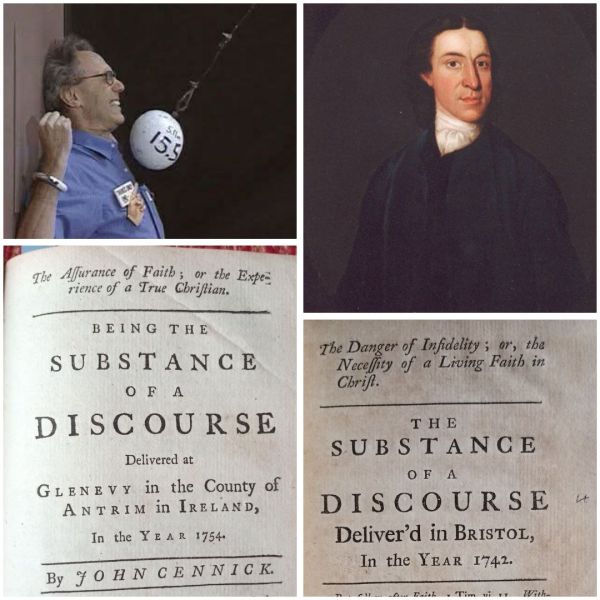
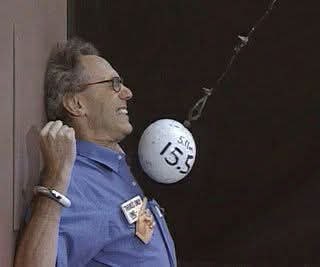
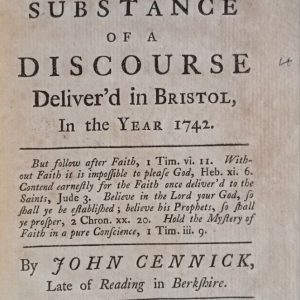
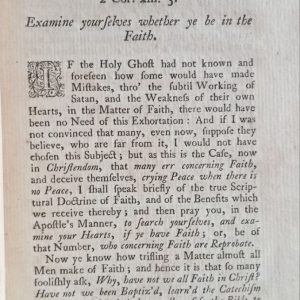
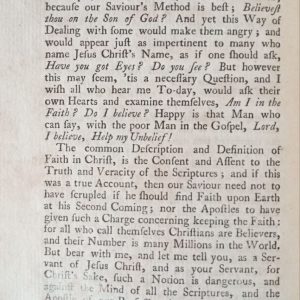
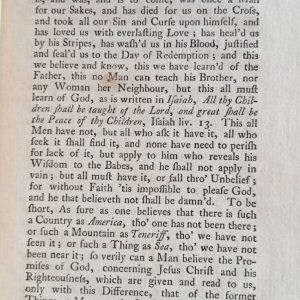
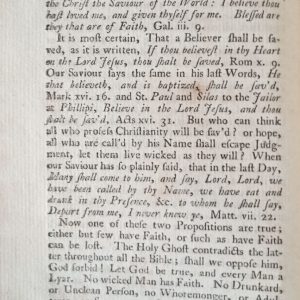
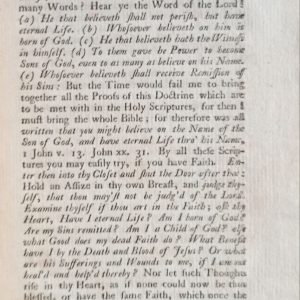
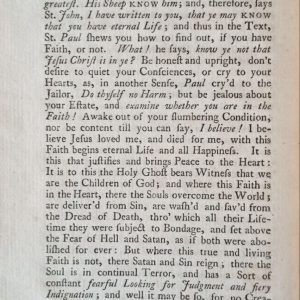
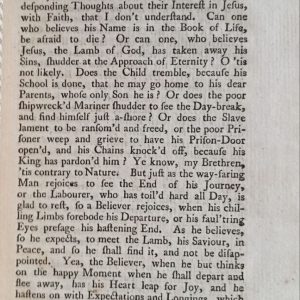
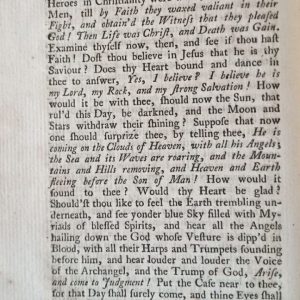
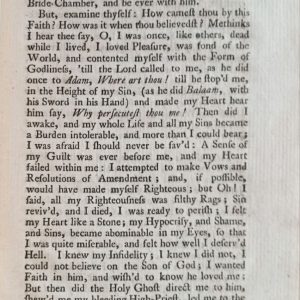
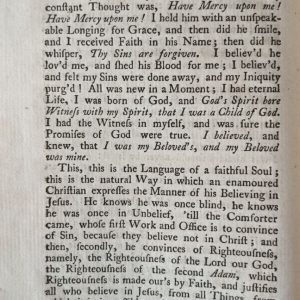
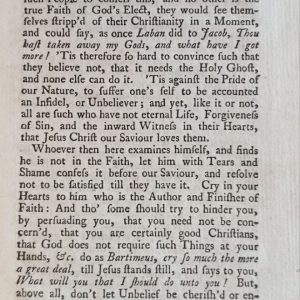
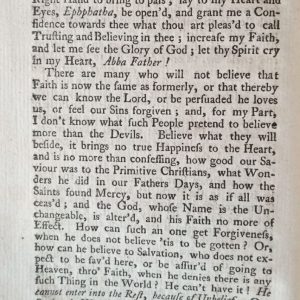
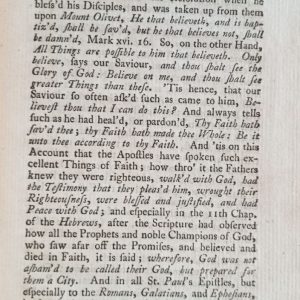
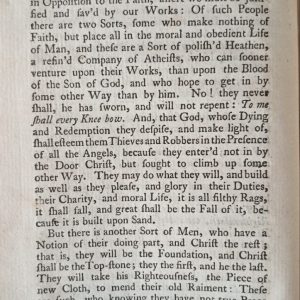
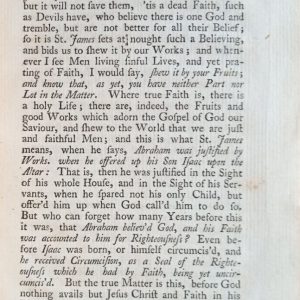
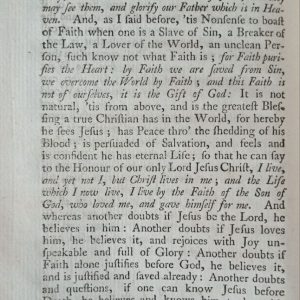
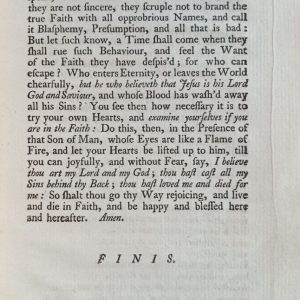
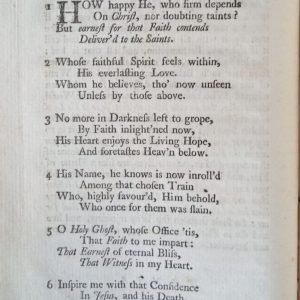
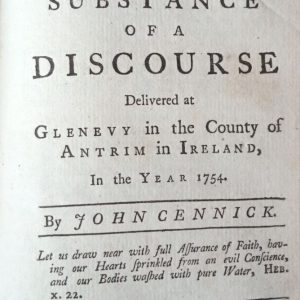
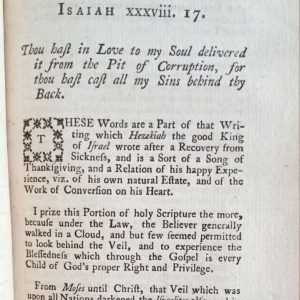
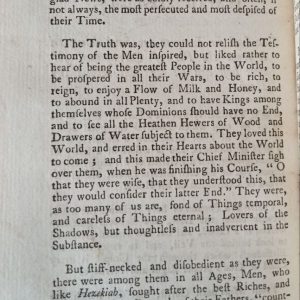
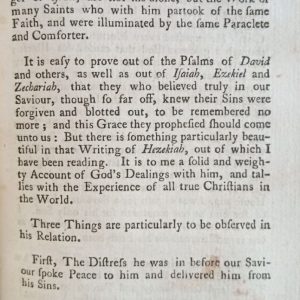
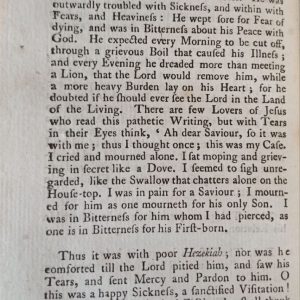
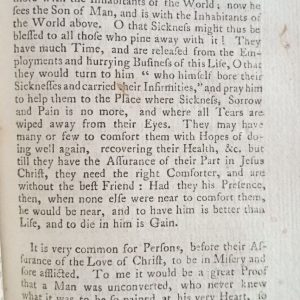
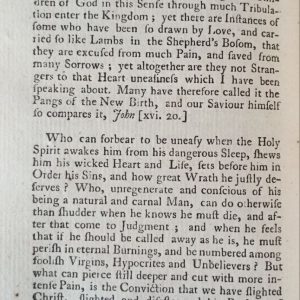
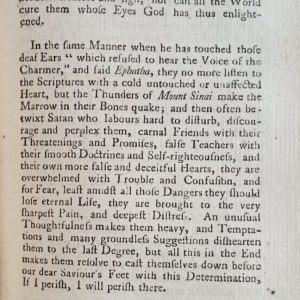
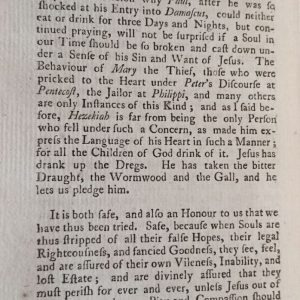
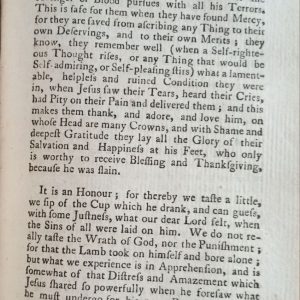
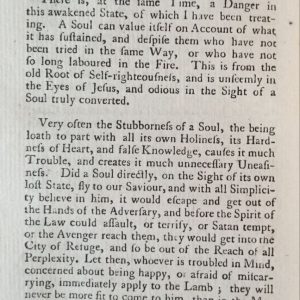
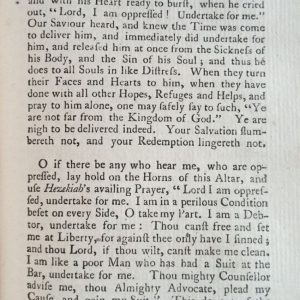
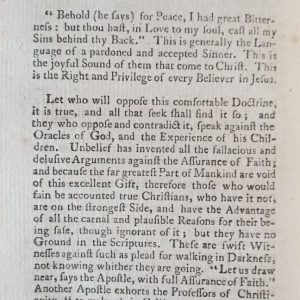
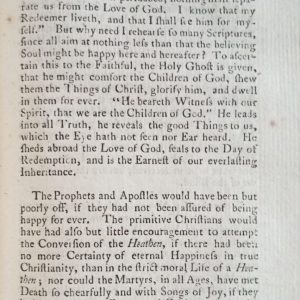
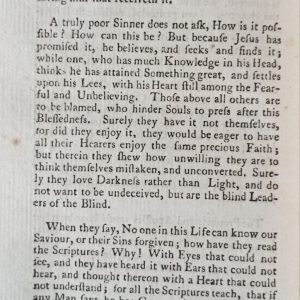
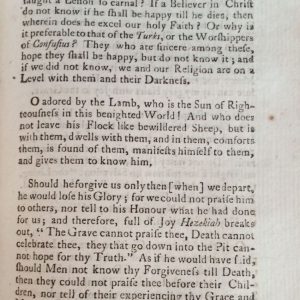
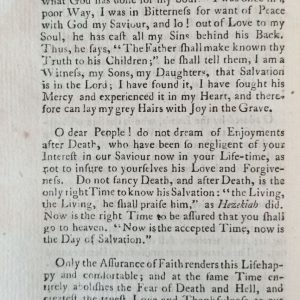
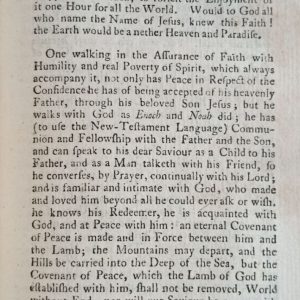
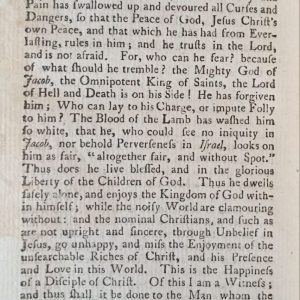
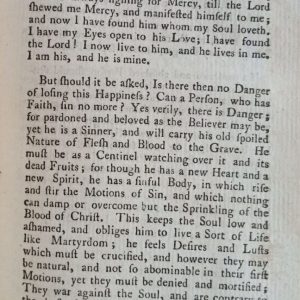
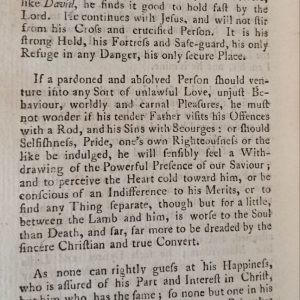
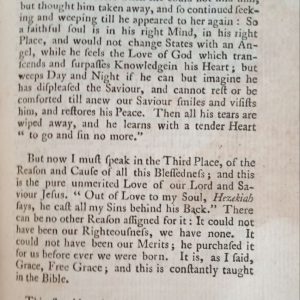
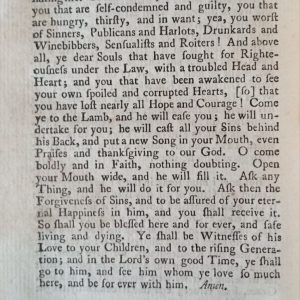

Leave a Reply