
Circle of Transmission: The Living Loom
John Pordage — From ‘Göttliche und Wahre Metaphysica’ (1715), Volume I, Chapter XII, §§143–146 — A Companion Reader and First English Translation

Featured illustration legend: A modern imaginative reconstruction — not a historical portrait. In the quiet of his study, John Pordage returns to the mysteries of God, the worlds, and the ancient Hebrew wisdom as received through the Christian Kabbalistic tradition. The open books and manuscripts evoke the patient labour of transmission: a conversation carried across languages, centuries, and spiritual horizons.
This illustration accompanies our companion reader and first English translation of the part of Chapter XII of the Göttliche und Wahre Metaphysica (1715), Volume I, §§143–146, in which the most ancient Jewish doctrine of God, the various worlds, and their order is discussed — and interpreted through Christian Kabbalah. The page that follows introduces the edition; a second illustration below at Section IV of the Contextual Introduction shows Loth Fischer in the household where the translation was made.
*
Today’s sharing from the Blue House of Via-HYGEIA is a companion reader and inaugural English translation of the part of Chapter XII of John Pordage’s Göttliche und Wahre Metaphysica (1715), Volume I, §§143–146, in which the most ancient Jewish doctrine of God, the various worlds, and their order is discussed — and interpreted through Christian Kabbalah.
We approach this difficult and fascinating text in three movements: a contextual introduction situating Pordage, his sources, and the decisive editorial mediation of Loth Fischer; a carefully annotated English translation of §§143–146, preserving the structure and technical language of the German edition; and a postface accounting for the questions the text leaves open, with the repositories where those questions may be pursued.
Our aim is not merely to transmit an old text, but to make its layers visible: the historical sources, the translator’s and editor’s interventions, the theological correspondences, and the uncertainties we have not been able to resolve. This is a presentation of a neglected text, not a critical edition; where the sources are firm we say so, and where they are not we mark the uncertainty and invite correction.
Through this work of translation, contextualization, and candid reflection, we invite the reader into a living conversation with the wisdom of the past — and, where the present offering falls short, to take up the baton and carry the work forward, toward a possible critical edition.
**
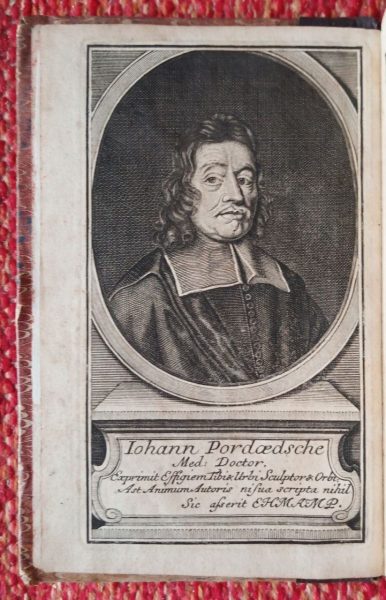
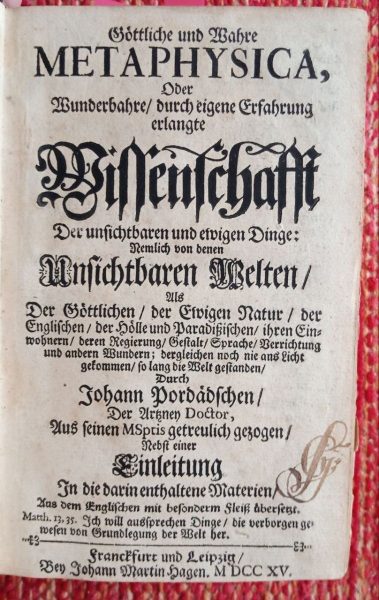
(Frontispiece and title page from our copy at the Via-Hygeia Study Library)
*
A Contextual Introduction
I. The Author and the Work
John Pordage (1607–1681) was an English Anglican priest, astrologer, and Christian reader of the Jewish mystical tradition. He was rector of Bradfield in Berkshire from 1644 until his ejection in 1654 on charges of heresy and blasphemy, and again after the Restoration until 1663, when he was deprived of his living a second time. His later years were spent in London, where he gathered around himself a small community of seekers and wrote the visionary and metaphysical works on which his reputation now rests.
The Göttliche und Wahre Metaphysica is his most substantial systematic work. It was not published in English during his lifetime. The German edition of 1715, from which the present translation is made, is a translation of a lost English manuscript, prepared and edited by Loth Fischer (1640–1705), a Nuremberg-born radical Pietist who moved to Utrecht after his banishment in 1684. The title page describes the work as “faithfully drawn from his manuscripts” (Aus seinen MSptis getreulich gezogen) and “translated from the English with particular diligence” (Aus dem Englischen mit besonderm Fleiß übersetzt). Without Fischer, Pordage’s most important systematic work — including the section presented here — would be entirely unknown to us.
The architecture of the 1715 volume. The edition has three distinguishable levels, and the reader who wishes to follow the argument will find it useful to keep them in mind.
-
The Einleitung. Fischer’s introduction, comprising the Vor-Erinnerung (preliminary reminder), the table of chapters, seven preliminary chapters on Pordage’s life and sources, and the editorial notes throughout. Chapter XII is part of this introduction — Fischer’s presentation of Pordage’s Hebrew doctrine — not Pordage’s own text.
-
The First Book. Chapters I–XIII, presenting Pordage’s doctrine. Chapter XIII, the Beschluß des ersten Buchs (Conclusion of the First Book), closes the book. Chapter XII stands at the end of the first book, as the last substantive chapter before the conclusion.
-
The Second Book. Chapters I–X, presenting Pordage’s visionary experiences and his systematic theology. This is where Pordage’s own voice is most directly present, translated by Fischer but not framed by him as the Hebrew material is.
The distinction matters because the reader who wishes to know what Pordage himself taught must look to Book II, and to those passages in the Einleitung where Fischer is quoting or closely paraphrasing Pordage. The Hebrew material of Chapter XII is Fischer’s presentation, drawing on the sources listed below, and it should be read as such.
The scope of this edition. Chapter XII of the Göttliche und Wahre Metaphysica begins before and extends beyond the section translated here. The present edition translates only the part that treats of the most ancient Jewish doctrine of God, the various worlds, and their order. This part corresponds to §§143–146. The material that precedes §143, and the material that follows §146 — including the further testimonies of the ancients gathered after it — lie outside the edition’s scope and are not included.
Within that first movement, four sections can be distinguished. Section 143 presents the doctrine of the ancient Hebrews concerning God and the various worlds, drawing on the Sefer Yetzirah and its commentators. Section 144 draws a systematic comparison between this Hebrew doctrine and Pordage’s own system. Section 145 presents the testimonies of the ancient Jewish theologians themselves, chiefly through Rittangel and the Kabbala Denudata. Section 146 presents the system of Abraham Cohen de Herrera, with its five worlds and its doctrine of Adam Kadmon. Taken together, these four sections are Fischer’s most sustained engagement with the Hebrew tradition, and they offer the clearest statement of how he read that tradition in relation to Pordage’s system.
*
II. The Oxford Milieu:
A Proposed Intellectual Setting and Hypothesis
The setting in which Pordage’s engagement with the Hebrew tradition took shape was the wider intellectual world of mid-seventeenth-century England, and in particular the networks of scholars, clergy, and seekers whose interests ranged from the Church Fathers to the Zohar, from Neoplatonism to the new science. This is a proposed intellectual setting, not a documented circle. The relationships among the figures discussed below are matters of published scholarship and, in some cases, of inference; the connections to Pordage himself are often plausible but not proven. The reader who wishes to pursue these questions will find the relevant repositories named in the Postface.
The Everard circle: John Everard (c. 1584–1641) was a radical Puritan preacher and translator, known for his renderings of the Corpus Hermeticum and of the Theologia Germanica. His circle — if “circle” is the right word for a loose network of shared interests and occasional correspondence — included Robert Fludd (1574–1637), the physician and Hermetic philosopher; Thomas Vaughan (1621–1666), the alchemist and Hermetic author; and Elias Ashmole (1617–1692), the antiquary and astrologer and a founding member of the Royal Society. Everard died in 1641, before the mature work of Vaughan and Ashmole; the connections among these figures are matters of shared interests and overlapping networks rather than of a single organized group.
The Cambridge Platonists: More directly relevant to Pordage’s intellectual formation, if less directly documented, is the tradition of the Cambridge Platonists and the wider circle associated with them. Henry More (1614–1687), in particular, provided a model for the Christian philosopher’s engagement with the Jewish mystical tradition. More’s Enchiridion Metaphysicum (1671) argues for the reality of incorporeal substance and for the presence of God in all things. More is cited in the Einleitung as a witness to the doctrine of God as the place and space of all things, and the citation places Pordage’s own treatment in a wider context of Christian philosophical engagement with questions about divine presence and extension.
Beside More stood two figures through whom the Jewish mystical tradition passed more directly into English philosophical circles: Anne Conway (1631–1679) and Francis Mercury van Helmont (1614–1698). Conway, whose Principles of the Most Ancient and Modern Philosophy was published posthumously in 1690, was in close correspondence with More and developed a metaphysics shaped in part by her reading of the Kabbalah. Van Helmont, the Flemish physician and Kabbalist, was Conway’s physician and companion; he introduced her to the Kabbala Denudata and was himself in direct correspondence with Christian Knorr von Rosenroth, its editor. Van Helmont was in England in the 1670s and 1680s, and it is through this circle — More, Conway, Van Helmont — that the Lurianic Kabbalah first reached English readers in a form that philosophical theologians could use. The connection to Pordage is plausible but not documented; the reader who wishes to pursue it will find the relevant repositories named in the Postface.
The Abendana brothers: Jacob Abendana (d. 1685) was rabbi of the Sephardic community in London in the last four years of his life, from 1681. His brother Isaac (d. 1699) taught Hebrew at Oxford and Cambridge from at least 1663. Both came to London from Holland after the Restoration and were much in demand among English scholars. They were at the center of the networks that connected Jewish learning to the Christian universities. Whether Pordage had contact with them, directly or indirectly, is treated as an open question in the Postface.
The question of contact: No direct evidence of contact between Pordage and Jewish scholars has been found (yet). The chronological, geographical, and intellectual conditions make contact plausible, but the edition does not assert it. The reader who wishes to pursue the question will find the relevant archival leads in the Postface.
*
III. Pordage’s Sources: The Hebrew Tradition
Fischer’s engagement with the Hebrew tradition in Chapter XII was mediated through three principal channels: the Latin translations of the Sefer Yetzirah by Johann Stephan Rittangel (1642), the Kabbala Denudata of Christian Knorr von Rosenroth (1677–1684), and the Porta Coelorum of Abraham Cohen de Herrera (included in the Kabbala Denudata). These three sources, together with the Tikkunei Zohar and the Sha’arei Orah of Joseph Gikatilla, provided the textual foundation for the chapter’s Hebrew material.
Rittangel’s Sefer Yetzirah (Amsterdam, 1642)
The first Latin translation of the foundational Kabbalistic text, accompanied by a substantial commentary drawing on Rabbi Shabbethai ben Abraham Donnolo (c. 913–c. 982) and other Jewish commentators. Johann Stephan Rittangel (1606–1652) was a Christian Hebraist of Jewish origin who converted to Christianity and became professor of Oriental languages at Königsberg. His translation and commentary were widely used by Christian readers of the Jewish mystical tradition in the seventeenth century, and they provided the framework within which Fischer read the Sefer Yetzirah.
The Kabbala Denudata (Sulzbach and Frankfurt, 1677–1684)
The most substantial project of Christian engagement with the Jewish mystical tradition in the seventeenth century, edited by Christian Knorr von Rosenroth (1636–1689). It included Latin translations of large portions of the Zohar, the Tikkunei Zohar, the Sha’arei Orah, and other works, together with a substantial apparatus of commentary and interpretation. It was one of the principal means by which the Lurianic Kabbalah became known to Christian scholars in the seventeenth and eighteenth centuries. This is a general contextual claim; it does not mean that every source passage in Chapter XII has been traced to its original textual setting. The apparatus marks the attributions with degrees of certainty.
Herrera’s Porta Coelorum
The most systematic presentation of the Lurianic Kabbalah in the Kabbala Denudata. Abraham Cohen de Herrera (c. 1570–1635) was a Portuguese Marrano who settled in Amsterdam and became one of the leading figures of the Amsterdam Kabbalistic circle. His Porta Coelorum presents the Lurianic system in a rigorously philosophical form, drawing on Neoplatonism and scholasticism as well as on the Zohar. It is the source of the five-world system presented in §146 of the present chapter.
The Tikkunei Zohar and Gikatilla’s Sha’arei Orah
The Tikkunei Zohar, a section of the Zohar attributed to Rabbi Simeon bar Yochai, presents the Patach Eliyahu, the opening discourse in which Elijah reveals the structure of the Sefirot. The Sha’arei Orah (Gates of Light) of Joseph ben Abraham Gikatilla (1248–1305) offers a systematic exposition of the Sefirot and the divine names. Both were consulted by Fischer through the Kabbala Denudata; the present edition follows the German as Fischer gives it, with the source attributions marked according to the degree of certainty they carry.
A note on terminology: “Christian Kabbalism” is a modern scholarly category, used here descriptively, and the authors discussed — Knorr von Rosenroth, Rittangel, Herrera, Fischer — did not describe themselves in those terms. The edition retains the category because it has become standard in the scholarship, but it should not obscure the fact that these were Christians engaging with a Jewish tradition, often with distinct and sometimes conflicting aims.
*

IV. The Decisive Mediation of Loth Fischer
Loth Fischer (1640–1723) was a Nuremberg-born notary and, until 1679, proofreader for the printer Christoph Endter. A radical Pietist, he was first an associate of Johann Georg Gichtel and later a member of the Philadelphian Society — the circle founded by Jane Lead and John Pordage himself. He moved to Holland in the 1680s and was in Utrecht by 1694, where he lived with his wife, Margaretha Catharina, and their children.
The date of his death has been given in some sources as 1705, but the burial records of the Utrecht archive list a Loth Visser on 23 February 1723, almost certainly identical with Fischer. The later date is also the more probable on internal grounds. If Fischer had died in 1705, he could not have been involved in the preparation or printing of the 1715 Metaphysica. The 1715 edition, however, bears the marks of a living editor throughout: the Vor-Erinnerung, the table of chapters, the Einleitung, the Beschluß des ersten Buchs, and the small notes are all the work of an editor bringing his own project to press. There is no trace of a posthumous editor, nor any note indicating that the work was left incomplete at the author-editor’s death. The 1723 date is therefore adopted here.
Fischer’s editorial career before Pordage
Fischer was not a translator who happened to encounter Pordage’s manuscript. He was, for more than a decade before the Metaphysica, the chief German mediator of the Philadelphian tradition. His editorial work began with the German edition of the sixteenth-century “Familist” author Hiel (1687/90), which has been shown by modern scholarship to be his rather than Friedrich Breckling’s. In the mid-1690s he began translating and publishing the works of Jane Lead, the co-founder of the Philadelphian Society, and his correspondence with Lead continued until her death.
The pattern of his work is consistent. He translated Lead’s Garden-Fountain (Garten-Brunn) in 1697, appending a translator’s postscript to the reader in which he spoke directly to the reader, explained the delay of the following volumes, warned against a tract falsely attributed to Lead, and signed with a formulaic phrase rather than a name. He then turned to Pordage. The 1698 German edition of Pordage’s Theologia Mystica appeared in Amsterdam through the publisher Wettstein, with a translator’s postscript of the same kind. The 1699 German edition of Pordage’s Sophia followed, also through Wettstein, again with a postscript. By the time he came to the Göttliche und Wahre Metaphysica in 1715, Fischer had already translated and edited at least four substantial works of the Philadelphian corpus, and had developed a settled editorial practice.
The Philadelphian Society was founded in London in 1695 by Jane Lead and John Pordage. Fischer’s membership in this circle — and his work translating Lead’s writings into German from the mid-1690s — places him at the centre of the network through which Pordage’s manuscripts were transmitted to German-speaking readers. He was not an external translator commissioned for a job; he was a member of the community that Pordage had founded, and he brought to the translation both personal knowledge of the circle and a deep familiarity with its sources.
The editor woven with the author
Fischer’s editorial work is not a separate document to be found elsewhere. It is the 1715 edition itself. His arrangement of Pordage’s fragments, his clarifications, his kleine Anmerkungen, and his Einleitung are woven into the German text. When we read the Metaphysica in German, we are reading a text in which the editor is present throughout.
The situation is comparable to that of Hypatia of Alexandria, as Alan Cameron has argued. Hypatia did not write the Arithmetica of Diophantus, the Almagest of Ptolemy, or the Elements of Euclid. She edited them — and, Cameron argues, her editorial work survives within the texts themselves, woven into the versions that have come down to us in the form of corrections, clarifications, expansions, and structural decisions. Her voice is not a separate voice; it is the voice through which the authors’ work reaches us. The parallel to Fischer is analogical, not exact. Hypatia’s texts were canonical works of an established tradition, while Pordage’s manuscript was not; her editorial task was to preserve and clarify what already existed, while Fischer’s was to arrange and connect what Pordage had left in fragments. But the underlying situation is the same: the author’s name on the title page conceals the editor through whose labour the text reaches us, and the editor’s presence is woven into the text itself.
This is why the voice-attribution system of the present edition — [P], [Ed.], [F], [M] — is both necessary and necessarily imperfect. It is an attempt to disentangle what Fischer wove together. The disentangling is never complete. Where Fischer’s voice cannot be separated from Pordage’s, the edition says so, rather than pretending to a precision the evidence does not support.
The title page and Fischer’s stated method
The title page of the 1715 edition states:
Aus seinen MSptis getreulich gezogen / Nebst einer Einleitung In die darin enthaltene Materien / Aus dem Englischen mit besonderm Fleiß übersetzt.
Faithfully drawn from his manuscripts / Together with an introduction into the matters contained therein / Translated from the English with particular diligence.
This confirms three facts of decisive importance. First, Pordage’s original was an English manuscript (MSptis), now lost. Second, the translation was made aus dem Englischen mit besonderm Fleiß — with particular diligence. The translator is not named on the title page, but the Beschluß des ersten Buchs (Chapter XIII) identifies him as the editor of the volume. His name is Loth Fischer. Third, the volume contains an Einleitung — an introduction — which is Fischer’s own composition, distinguished from Pordage’s own text, which begins in Book II, Chapter I.
In the Beschluß des ersten Buchs (Chapter XIII, §2), Fischer states his method explicitly:
Hinführo will ich nun meines vorhabenden Authoris Dr. Johann Pordage Sinn mit seinen Worten getreulich ausdrucken / ohne etwas von dem Meinigen einzumischen. Und wann ich zu besser Erläuterung der Sache etwas beysüge / solle es zwischen zwey Häckelein [ ] eingeschlossen werden.
Henceforth I will faithfully express the meaning of my intended author, Dr. Johann Pordage, with his words, without mixing in anything of my own. And when I add something for better explanation of the matter, it shall be enclosed between two little hooks [ ].
This is a direct statement of the editorial convention. Brackets [ ] mark Fischer’s own additions. Everything outside brackets in Book II is Pordage’s own words as translated by Fischer. In the Einleitung — including the section presented here — the situation is more complex: Fischer is presenting, arranging, and interpreting sources, and his voice is present throughout.
Fischer further explains why he had to exercise his own judgment in the disposition of the whole work:
Was aber die Disposition oder Zusammenordnung des gantzen Wercks / und Connexion oder Aneinanderhängung der Theile betrifft / habe ich mein eigen Urtheil in etwas folgen müssen / weil der Author selbst seine Schriften nicht in den Stand gesetzet / in welchem er sie der Welt mitgetheilet haben wollen: Sondern sie nur zu seiner Gedächtnüß entworffen / und zu unterschidlichen Zeiten von eben derselben Materie auf unterschidliche Arth geschrieben / und theils unvollkommen gelassen gehabt. Derowegen ist diß gegenwärtige Werck nur ein Zusatz (aber so vollständig als immer möglich gewesen /) seiner Schriften.
But as regards the disposition or ordering of the whole work, and the connection or linking together of the parts, I have had to follow my own judgment somewhat, because the author himself did not set his writings in the state in which he would have wished to communicate them to the world: rather he sketched them only for his memory, and wrote at different times on the same matter in different ways, and left some parts incomplete. Therefore this present work is only a supplement (but as complete as ever possible) to his writings.
This explains the composite nature of the German text. Fischer is not merely a translator; he is an editor who has arranged, connected, and supplemented Pordage’s manuscripts. The voice-attribution system of this edition is designed to mark these layers wherever they can be distinguished, and to say so where they cannot.
Fischer also notes that he has not followed earlier printed extracts:
Endlich muß ich noch melden / daß ich bey Verfertigung dieses Auszugs mich nicht nach dem gerichtete / was schon vor einigen Jahren von der ewigen Welt und von der ewigen Natur in Druck gekommen / sondern allein seinen Original-Schriften gefolget bin.
Finally I must also report that in preparing this extract I have not directed myself by what was already published some years ago concerning the eternal world and the eternal nature, but have followed solely his original writings.
This is a critical statement for the textual history. Fischer distinguishes his own edition from earlier printed extracts and claims a more faithful access to Pordage’s meaning. It is also consistent with his editorial practice in the Lead volumes, where he distinguished the author’s authentic text from a tract falsely attributed to her.
The claim of the section
The text argues that Pordage’s system is in agreement with the most ancient Jewish doctrine. This is Fischer’s apologetic claim, not a historical conclusion. The present edition documents how Fischer reads the Jewish sources and how he presents them in relation to Pordage’s system; it does not endorse the claim that those sources anticipated Pordage. That distinction is maintained throughout.
What the present edition does seek to make visible is the role Fischer played in bringing this text to any reader at all. Without him, Pordage’s most important systematic work — including the section presented here — would be entirely unknown to us. All English editions of the Metaphysica, including the present one, are therefore re-translations from Fischer’s German, not from Pordage’s English. To read the Metaphysica is to read Fischer as much as to read Pordage; and to acknowledge this is not to diminish the author but to acknowledge the editor through whose labour the author reaches us.
*
V. The Structure and Argument of the Excerpts in Chapter XII
The present edition translates only the part that treats of the most ancient Jewish doctrine of God, the various worlds, and their order. This part corresponds to §§143–146.
§143 presents the doctrine of the ancient Hebrews concerning God and the various worlds. It begins with the En-Soph, the infinite Being, and traces the emanation of the four worlds — emanation, creation, formation, and making — through the Centrum and the ten Sefirot. The section is a summary exposition of the Kabbalistic system as Fischer understood it, drawing chiefly on Rittangel’s Sefer Yetzirah and on the Kabbala Denudata. Its purpose is to establish the Hebrew doctrine in its own terms before drawing the comparison with Pordage.
§144 draws a systematic comparison between the Hebrew doctrine and Pordage’s own system. The En-Soph is identified with Pordage’s Spirit of Eternity; the Centrum with his Eye of Eternity; the three supreme Numbers with his Tri-Unity; the seven lower Numbers with his seven Spirits; the four worlds with his Archetypal World, Eternal Nature, Angelic World, and visible world. The comparison is supported by the testimony of Onkelos, whose Aramaic Memra (“Word”) is taken as evidence that the ancient Hebrews understood the plurality of persons in the Godhead. The section is the heart of the chapter’s argument.
§145 presents the testimonies of the ancient Jewish theologians themselves. The section is built around extensive quotations from Rabbi Shabbethai’s commentary on the Sefer Yetzirah, from the Tikkunei Zohar, and from the Kabbala Denudata. The quotations are chosen to illustrate the doctrine of the Sefirot, the relation of the Sefirot to the En-Soph, and the great sin of separating the Sefirot from one another. The section is the longest in the chapter and the most source-dependent.
§146 presents the system of Abraham Cohen de Herrera, with its five worlds and its doctrine of Adam Kadmon. The section is based on the Porta Coelorum as included in the Kabbala Denudata, and it presents Herrera’s system in a series of numbered paragraphs. The section is the most philosophical in the chapter.
The excerpt’s argument. The excerpt as a whole is a sustained argument for the agreement of Pordage’s system with the most ancient Jewish doctrine. It is not a work of Jewish scholarship in the modern sense; it is a Christian reading of the Jewish mystical tradition, in which that tradition is read through the lens of Christian theology and philosophy. The present edition documents this reading without endorsing its conclusions. The reader who wishes to pursue the questions left open by the chapter will find them named in the Postface.
*
VI. The Textual History and Editorial Method
The present edition is based on two copies of the 1715 Göttliche und Wahre Metaphysica, Volume I: the Source Library PDF, used throughout the earlier phase of the project, and the Bavarian State Library copy, which supplied the opening and closing pages of the volume. The two copies agree in all substantive readings. Where the Source Library PDF is illegible or ambiguous, the Bavarian copy has been consulted.
The German text is a composite with at least three distinguishable layers: Pordage’s own text (as translated by Fischer), Fischer’s editorial additions, and Martens’s editorial additions. The voice-attribution system of this edition is designed to mark these layers wherever they can be distinguished. The Vor-Erinnerung and the Beschluß des ersten Buchs provide external confirmation of the editor’s function and of the bracket convention.
The translation is based on the 1715 edition, corrected against OCR and against the Source Library AI-assisted English translation (2026). The AI-assisted translation is used only for comparison and never as authority; it contains OCR-propagated errors and inconsistent terminology, and all departures from it are recorded in the apparatus.
The Hebrew and Latin sources have been consulted in their original editions or in the Kabbala Denudata. Where Fischer’s citation is imprecise, or where the source has been identified with difficulty, this is noted in the apparatus. The commentary is designed as a companion reader: it provides exegetical notes on the Kabbalistic sources, explains technical terms, identifies scriptural citations, and traces Fischer’s Christian reading of the Hebrew tradition. It is intended to be read alongside the translation, not as a separate apparatus.
This edition is not a critical edition. It is a presentation of a neglected text, with apparatus intended to make the argument navigable and to invite scholarly scrutiny of the questions that remain open. Where the sources are firm, the edition says so. Where the attributions are uncertain, the edition marks the uncertainty. Where further work is required, the edition names the work and the repositories where documents are held.
*
VII. Editorial Conventions
Editorial additions and clarifications are enclosed in square brackets [ ], following Fischer’s own stated practice in the Beschluß des ersten Buchs. The voice-attribution sigla are used throughout the edition:
| Siglum | Meaning | Confidence |
|---|---|---|
| [P] | Pordage’s own text (as translated by Fischer) | Editorial judgment |
| [Ed.] | Editor’s voice (Fischer and/or Martens), when they cannot be distinguished | Editorial judgment |
| [F] | Fischer’s editorial additions, where identifiable | Editorial judgment |
| [M] | Martens’s editorial additions, where identifiable | Editorial judgment |
| [Ritt.] | Rittangel’s own Latin exposition or commentary | Editorial judgment |
| [Shab.] | Rabbi Shabbethai ben Abraham Donnolo, where attribution is certain | Confirmed |
| [Ritt./Shab.] | Rittangel’s mediation of Donnolo, where the two cannot be fully distinguished | Uncertain |
| [TZ] | Tikkunei Zohar | Confirmed |
| [KD] | Kabbala Denudata | Confirmed |
| [Herr.] | Abraham Cohen de Herrera, Porta Coelorum | Confirmed |
| [Gik.] | Joseph Gikatilla, Sha’arei Orah, where attribution is certain | Confirmed |
| [Gik.?] | Gikatilla attribution plausible but not certain | Uncertain |
| [P/Ed.?] | Ambiguous; voice uncertain | Uncertain |
Note on sigla. The distinction between [Ritt.] and [Shab.] is observed wherever the source permits. Where the text is mediated through Rittangel’s commentary without clear attribution, [Ritt./Shab.] is used. Similarly, [Gik.?] marks passages where the Gikatilla attribution is plausible but not certain. Uncertain sigla mark attributions that would require further examination of the primary witnesses; they are retained not as defects but as invitations to further work.
Chapter XII (§§143–146) is part of Fischer’s Einleitung, not of Pordage’s own text. It is therefore marked [Ed.] throughout, except where Fischer is quoting or closely paraphrasing Pordage, which is marked [P]. The Hebrew section (§§143–146) is Fischer’s presentation of Pordage’s Hebrew doctrine, drawing on the sources listed above.
The following translation decisions are adopted:
| German | English |
|---|---|
| Drey-Einigkeit | Tri-Unity |
| Dreyfaltigkeit | Trinity |
| Muster-Welt / Mundus archetypus | Archetypal World |
| Binah / Klugheit | Intelligence (with Understanding in apposition) |
| Innenlichtkeit | Inner Light |
| Principium | Principium (untranslated) |
| Stille Ewigkeit | Silent Eternity |
| Ewige Natur | Eternal Nature |
| Göttliches Chaos | Divine Chaos |
| Ungründliches Wesen | Unfathomable Being |
| Sefirot | Sefirot (or Numbers) |
| En-Soph | En-Soph |
Note on Drey-Einigkeit and Dreyfaltigkeit. Dreyfaltigkeit is the standard German term for the Trinity. Drey-Einigkeit is a coinage that emphasizes the unity of the three more strongly than the three-ness. Fischer uses both, and the distinction is preserved in the translation. Where the terms first become important in the argument, this note is repeated in the apparatus.
These decisions are recorded in the Standardized Glossary and applied consistently throughout the edition.
*
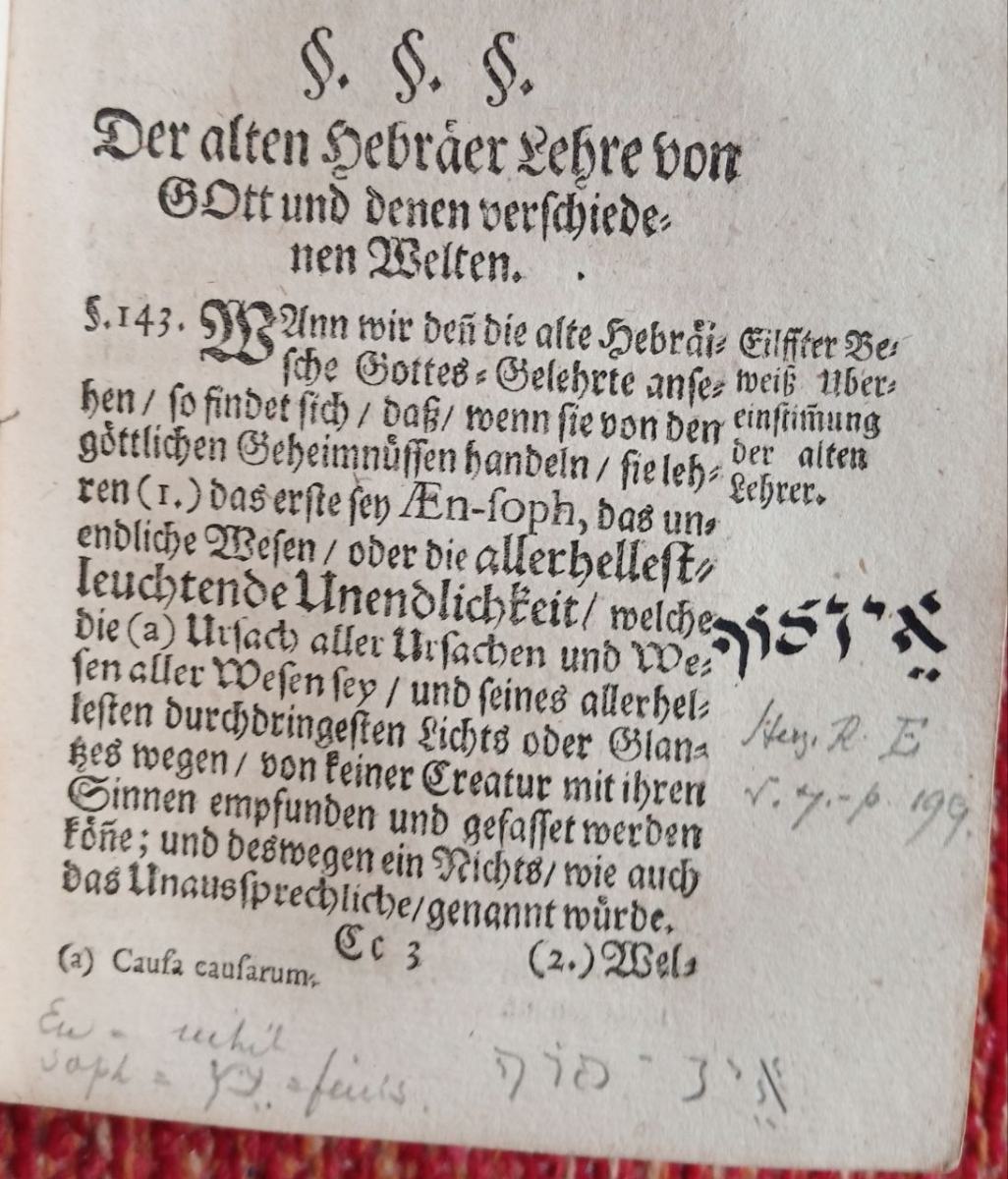
And now the text:
The Part of Chapter XII of John Pordage’s Göttliche und Wahre Metaphysica (1715), Volume I, §§143–146, in which the Most Ancient Jewish Doctrine of God, the Various Worlds, and Their Order is Discussed — and Interpreted through Christian Kabbalah
§143. The Doctrine of the Ancient Hebrews concerning God and the Various Worlds
§143.1 — En-Soph, the Infinite Being
Translation
[Ed.] (1) When we consider the doctrine of the ancient Hebrews concerning God, we find that when they treat of the divine mysteries, they teach: that the first is En-Soph, the infinite Being, or the all-holiest shining Infinity, which is the causa causarum and the Being of beings, and which, on account of its all-holiest, all-penetrating light or splendor, cannot be perceived or grasped by its creatures with their senses; and is therefore called a Nothing, as also the Ineffable.
(p. 405)
Apparatus
-
En-Soph (Heb. אֵין סוֹף, Ēn Sōf), “Without End” / “Infinite.” Fischer’s An-foph transliterates the Hebrew. Standard Kabbalistic term for the Godhead in its absolute transcendence, prior to all emanation.
-
causa causarum (Lat.), “Cause of causes.” Drawn from the Latin apparatus in Rittangel’s Sefer Yetzirah (1642).
-
ein Nichts (“a Nothing”). Kabbalistic Ayin, as distinct from Yesh. The paradox is retained by Fischer; cf. Kabbala Denudata.
-
das Unaussprechliche (“the Ineffable”). Lat. ineffabile.
§143.2 — Emanation and the Four Worlds
Translation
[Ed.] (2) Which [Infinity], on account of the multitude of the creatures, so that they might enjoy, instead of the inaccessible [light], a lower light more agreeable to them, has through its emanations (emanationes) descended step by step, and has more and more withdrawn or veiled its all-holiest splendor; and this not only in one, but in several worlds, distinguished by different degrees and steps of subtlety, namely in the emanation world, the creation world, the formation world, and the making or building world.
(p. 406)
Apparatus
-
Ausflüße (“emanations”). Lat. emanationes. The term is used throughout the chapter for the Sefirot.
-
The four worlds. The standard Kabbalistic Azilut (Emanation), Beriah (Creation), Yetzirah (Formation), and Asiyah (Action). Fischer follows the Latin designations of the Kabbala Denudata.
-
Subtilisät (“subtlety”). Lat. subtilitas. Scholastic term for the degree of immateriality of a being.
§143.3 — The Centre and the Supreme Crown
Translation
[Ed.] (3) To this end, therefore, as far as the emanations are concerned, It — the Infinity — first directed and fixed or established its all-holiest rays together into a centre or middle point, which is called the supreme Crown, and contains in itself three hidden depths, and is also the root of all other emanations or numbers.
(p. 407)
Apparatus
-
Centrum (“centre”). Lat. centrum. The first self-limitation of the En-Sof, the point of contact between the Infinite and the emanated worlds. It is not identical with the first Sefirah; see below.
-
höchste Krone (“supreme Crown”). Heb. כֶּתֶר (Keter), Lat. corona summa. The first of the ten Sefirot. The distinction between the Centrum (the point of contact) and the Keter (the first Sefirah, the first “Number”) is preserved throughout this edition. The relation between the two is part of the argument of §143.3–§143.4.
-
drey verborgene Tiefen (“three hidden depths”). Lat. tria delubra. Fischer’s Tiefen renders the Hebrew tehomot. The “three hidden depths” are the three supernal Sefirot: Keter, Hokhmah, Binah.
-
Zahlen (“numbers”). Lat. numerationes. Standard translation of Heb. סְפִירוֹת (Sefirot).
§143.4 — The Three Upper Numbers
Translation
[Ed.] (4) From this supreme Crown there came forth, in the second step, the three most excellent and supreme Numbers, namely the supreme Crown (in a more precise sense), Wisdom, and Intelligence or Understanding; which are also called the three Minds (tres mentes).
(p. 407)
Apparatus
-
Weißheit (“Wisdom”). Heb. חָכְמָה (Hokhmah), Lat. sapientia. The second Sefirah.
-
Klugheit (“Intelligence”). Heb. בִּינָה (Binah), Lat. intelligentia seu prudentia. The third Sefirah.
-
drey Gemüther (“three Minds”). Lat. tres mentes. The three supernal Sefirot considered as a unity.
-
Oberste Krone (in a more precise sense). The first Sefirah Keter, here distinguished from the Centrum which is also called “supreme Crown.” This distinction is preserved: the Centrum is the point of contact between the En-Sof and the emanated worlds; Keter is the first of the ten Sefirot. The relationship is developed in §143.7–§143.8.
§143.5 — The Seven Lower Numbers
Translation
[Ed.] (5) These three then poured themselves forth, in the third degree, into seven lower Numbers.
(p. 407)
Apparatus
-
Sieben niedrigere Zahlen (“seven lower Numbers”). The seven lower Sefirot: Ḥesed, Gevurah, Tif’eret, Netzaḥ, Hod, Yesod, Malkhut.
-
dritter Grad (“third degree”). The third level of emanation.
§143.6 — The Ten Numbers as Divine Essence
Translation
[Ed.] (6) These ten Numbers, as also the Centre, are of the Being or substance of the Godhead, and nothing else than voluntary revelations and emanations of the all-highest and all-glorious light, namely the Inner Light (Innenlichtkeit), in which those [Numbers] were hidden, throughout the whole Inner Light without any end and without any goal; and which [Numbers] have revealed their manifold virtues and powers through these emanations in each and every world to the creatures in a manner suited to their capacity.
(pp. 407–408)
Apparatus
-
Innenlichtkeit (“Inner Light”). Fischer’s term for the innermost divine light. Rendered “Inner Light” throughout this edition. The term is not attested in the standard Kabbalistic literature. Or Pnimi (אוֹר פְּנִימִי, “inner light”) is a possible source, but the identification is not certain; the term may be Fischer’s own coinage. The crux is recorded here.
-
freiwillige Offenbarungen und Ausflüße (“voluntary revelations and emanations”). The Sefirot are not necessary productions of the Godhead but voluntary self-revelations.
-
Wesen oder Substanz der Gottheit (“Being or substance of the Godhead”). The Sefirot are of the divine substance, not created ex nihilo.
§143.7 — The Perfect Unity and the Flame-Coal Image
Translation
[Ed.] (7) Therefore they are also, together with the Centre and the Inner Light itself, one perfect Unity: because they are, as said, nothing else than the revelation of what was hidden in the Infinity. For the Centre has revealed itself in the three Minds or three supreme Numbers, and the three Minds have revealed themselves in the seven lower Numbers; so that everything that is in the seven Numbers is also found in the three Minds; and what is in the three Minds is also found in the unity of the Centre; and what is in the unity of the Centre is also in the Infinity. Which [Infinity] is the root of all roots, pours itself into all, and is among them, in their midst, in their most universal, and also outside them, and in all parts of their parts; of which those — the ten Numbers and the Centre — have need, but It — the Infinity — has no need of them. So that the Numbers are lights that have their being and their splendor from the Infinity itself, which they resemble, and with which they are united as the flame with the coal.
(pp. 408–409)
Apparatus
-
vollkommene Einheit (“perfect Unity”). The Sefirot are one with the Centrum and the Infinity.
-
Wurzel aller Wurzeln (“root of all roots”). The Infinity as the ultimate source of all being.
-
wie die Flamme mit der Kohle (“as the flame with the coal”). Classic Kabbalistic image of the relation between En-Soph and the Sefirot.
§143.8 — Distinction and Degrees of the Numbers
Translation
[Ed.] (8) Notwithstanding this unity, they are nevertheless distinguished and are therefore called Numbers, because they can be numbered. And indeed they are distinguished not only by number but also by degree; so that the three supreme Numbers — the supreme Crown, Wisdom, and Intelligence — are the first revelation of the Centre, and are of equal dignity among themselves, and of equal high being, as a highest One. The remaining seven, however, are not of equal dignity with these three, in that they flow forth properly or immediately from these three, but not properly or immediately from the Centre itself.
(p. 409)
Apparatus
-
Grade (“degrees”). The distinction among the Sefirot is not merely numerical but hierarchical.
-
höchstes Ein (“highest One”). The three supernal Sefirot are “one” in a higher sense than the seven lower.
-
gleich hohes Wesens (“equal high being”). The three supernal Sefirot share the same essence as the Centrum.
§144. Comparison of the Hebrew System with Pordage’s System
§144.1 — Introduction and Comparison Framework
Translation
[Ed.] (1) And so that all this may be proved, I will here set forth the passages from which I have drawn this short summary; especially since these testimonies of the ancients are not in everyone’s hands. But first I will make a short comparison between this system or structure and that which our Pordage has left us.
Here it becomes immediately clear that their Infinity is that Spirit of Eternity in its first natural state, of which He says that He extends infinitely everywhere over all worlds, even over the Archetypal World.
The Centre of the ancients is this full Eye of Eternity [Auge der Ewigkeit].
The three supreme Numbers are Pordage’s all-holiest Trinity: the Eye, the Heart, and the Holy Spirit proceeding from both.
(p. 409)
Apparatus
-
Muster-Welt (“Archetypal World”). Lat. mundus archetypus. The first of Pordage’s worlds.
-
Auge der Ewigkeit (“Eye of Eternity”). Pordage’s term for the first principle.
-
Dreyfaltigkeit (“Trinity”). Distinguished from Drey-Einigkeit (“Tri-Unity”).
§144.2 — En-Sof = Spirit of Eternity; Centre = Eye of Eternity
Translation
[Ed.] (2) As Rittangel in his translation and interpretation of the Book Yetzirah, from which I have taken all this, proves at length: that the ancient God-learned of the Hebrews understood the mystery of the all-holiest Tri-Unity under the three supreme Numbers. This will also become not indistinctly clear from the passages that follow.
Here I will only note further that the Hebrew text of Scripture ascribes a Heart to God, and the Chaldean paraphrast or interpreter Onkelos expresses this by the word Memra [Word]. For example, where Gen. 6:6 says: “And it repented Him that He had made man on earth, and it grieved Him in His heart,” Onkelos has rendered it: “And God turned to Himself with His Word, that He had made man on earth.” And Gen. 8:21: “And the Lord smelled the sweet savour, and said in His heart: I will not again curse the ground for man’s sake,” the Chaldean interpreter has rendered: “And God received His offering in grace; and the Lord said in His Word: I will not again curse the ground for man’s sake.”
Which all, and more besides, that will be found in the following passages, agrees very well with Pordage’s doctrine.
The seven lower Numbers compare with the seven Spirits of God, which Pordage says are the next after the Holy Tri-Unity.
Finally, the four worlds — the emanated, created, formed, and made or built — correspond with Pordage’s original Archetypal World (of which he writes that it is emanated from God, and is God’s Being or substance itself), the Eternal Nature, the Angelic, and this visible world.
(pp. 410–411)
Apparatus
-
“the ancient God-learned of the Hebrews.” Literally die alten Gottes-Gelehrten der Hebräer; a recognizably early modern construction for what would now be called “the ancient Hebrew theologians.”
-
Memra (Aram. מֵימְרָא, Mēmrā), “Word.” Aramaic term used by Onkelos in his Targum.
-
Onkelos. Traditional author of the Aramaic Targum on the Pentateuch.
-
sieben Geister Gottes (“seven Spirits of God”). Cf. Rev. 1:4, 3:1, 4:5, 5:6.
§144.3 — The Three Supreme Numbers as Tri-Unity; Onkelos and the Memra
Translation
[Ed.] (3) The three supreme Numbers — the supreme Crown, Wisdom, and Intelligence — are the Tri-Unity: the Eye, the Heart, and the Holy Spirit proceeding from both. The Hebrew Scripture ascribes a Heart to God; the Chaldean paraphrast Onkelos renders this by Memra; the Memra is the second person of the Trinity.
(p. 410)
Apparatus
-
Drey-Einigkeit (“Tri-Unity”). Distinguished from Dreyfaltigkeit (“Trinity”). Dreyfaltigkeit is the standard German term for the Trinity; Drey-Einigkeit is a coinage emphasizing the unity of the three.
§144.4 — The Seven Lower Numbers as the Seven Spirits of God
Translation
[Ed.] (4) The seven lower Numbers compare with the seven Spirits of God, which Pordage says are the next after the Holy Tri-Unity.
(p. 411)
Apparatus
-
Sieben Geister Gottes (“seven Spirits of God”). Cf. Rev. 1:4, 3:1, 4:5, 5:6.
-
die nächsten nach der Heil. Drey-Einigkeit (“the next after the Holy Tri-Unity”).
§144.5 — The Four Worlds Comparison
Translation
[Ed.] (5) Finally, the four worlds — the emanated, created, formed, and made or built — correspond with Pordage’s original Archetypal World (of which he writes that it is emanated from God, and is God’s Being or substance itself), the Eternal Nature, the Angelic, and this visible world.
(p. 411)
Apparatus
-
die Vier Welte (“the four worlds”). Azilut, Beriah, Yetzirah, Asiyah.
-
Muster-Welt (“Archetypal World”). Lat. mundus archetypus.
-
Ewige Natur (“Eternal Nature”).
-
Englische (“Angelic”).
-
Sichtbare Welt (“visible world”).
§145. The Sources Speak: Rittangel, Rabbi Shabbethai, and the Tikkunei Zohar
§145.1 — Editor’s Introduction to the Sources
Translation
[Ed.] Now we wish to hear the ancient Jewish theologians themselves, as they are presented to us by Rittangel in the translation and exposition of the Book of Formation.
(p. 412)
Apparatus
-
Buchs Jezirah. The Sefer Yetzirah (“Book of Formation”).
-
Rittangel. Johann Stephan Rittangel (1606–1652), professor of Oriental languages at Königsberg.
§145.2 — Rabbi Shabbethai Speaks
Translation
[Ritt./Shab.] (1) First, then, Rabbi Shabbethai speaks: Behold, thus the mystery is revealed to us, which we have explained: namely, that the wisest Kabbalists or theologians have said that the three most distinguished or first Numbers — which are the Supreme Crown, Wisdom, and Intelligence — are of equal dignity, as a perfect One. And it is also to be noted here why they have said that they are of equal dignity as a perfect One, and not simply One; since indeed all Numbers or emanations are One. Without doubt because the three first — the Supreme Crown, Wisdom, and Intelligence, which are three Minds — are nothing other [than the revelation of the Centre].
(p. 412)
Apparatus
-
Rabbi Shabbethai. Rabbi Shabbethai ben Abraham Donnolo (913–c. 982). His commentary on the Sefer Yetzirah (Sefer Ḥakhmoni) is a distinct textual tradition from Rittangel’s 1642 exposition. Where the passage derives from Rittangel’s own commentary, [Ritt.] is used; where the source is Donnolo as mediated by Rittangel, [Ritt./Shab.] is used.
-
die meisten Cabbalisten. The German die meisten means “the majority,” but in context means “the most authoritative.”
-
vollkommen Eines. “as a perfect One.”
§145.3 — The Three Orders and the One-Three-Seven Formula
Translation
[Ritt./Shab.] (2) The first order is the mystery of the Centre: the second order is the mystery of the three Minds: the third order is the mystery where the Minds have poured themselves forth into seven Numbers; which all together make ten Numbers: and are One, Three, Seven. And behold, all these together are a perfect Unity. For the Centre has revealed its hidden depths in those three Minds, and the three Minds are revealed in the seven Numbers; and everything that is found in those seven Numbers is also found in the three Minds; and everything that is found in the three Minds is also found in the unity of the Centre; and everything that is found in the unity of the Centre is also found in the Infinity — blessed be the same.
(p. 412)
Apparatus
-
Ordnungen. “orders.” The three orders are the three stages of emanation.
-
Eines / Drey / Sieben. The formula One, Three, Seven.
-
verborgene Tiefen. Lat. delubra.
-
gebenedeyet sey dieselbe. “blessed be the same” — a liturgical formula.
§145.4 — Manifest and Hidden: The Ladder of Concealment
Translation
[Ritt./Shab.] (3) And there is no distinction among these Numbers, except that they are manifest in the seven lowest Numbers; in the three Minds, however, because of the glory of their light, they are hidden. And the three Minds likewise, in regard to the Centre, are manifest in themselves; but in the Centre, because of its glorious radiance, they are hidden. Thus it is also with the Centre, in regard to the Infinity — blessed be the same: for the Infinity, in regard to its most glorious light, has no end nor goal. The Numbers are manifest; but in the Infinity — blessed be the same — they lie hidden without any end or goal.
(p. 416)
Apparatus
-
offenbar / verborgen. “manifest” / “hidden.”
-
ohne alles Ende und ohne alles Ziel. Echoes the Kabbalistic description of En-Sof as without end (beli sof).
§145.5 — One Power and Virtue: The Condescension of the Light
Translation
[Ritt./Shab.] (4) All are but one power and virtue of the most high and most perfect Unity, without any end and goal; and the whole number ten is contained in the mystery of the unity of the Infinity — blessed be the same. This reveals the power and virtue of its unity in the mystery of the condescension or moderation of its light through the ten Numbers. And nothing is in the manifest but what is also in the hidden; just as there is only one power and virtue in the hidden, so also in the manifest there is no more than one power and virtue.
(p. 417)
Apparatus
-
eine Krafft und Tugend. A hendiadys: two terms that together express a single reality.
-
Niederlassung oder Mäßigung. “condescension” or “moderation.” The language here is of the accommodation of the divine light, not of the later Lurianic doctrine of Tzimtzum (contraction). The doctrine of contraction appears explicitly at §145.41. The relation between the two is a matter for the commentary, not for the apparatus.
-
nichts ist in dem Offenbaren / als was auch in dem Verborgenen ist. A hermeneutical principle: the manifest is not a different reality from the hidden.
§145.6 — Why Only the First Three Are Equal in Dignity
Translation
[Ritt./Shab.] (5) And it is of no significance if one asks: why only the first three and most eminent Numbers are said to be of equal dignity as a perfect One, since indeed all are of equal dignity as a perfect One? It is because the first manifestation of the Centre is in those three Minds, and the root of these three Minds is hidden in the Centre, to which they are immediately united; therefore they are of equal dignity as a perfect One, in respect to the seven lower Numbers, which are only further derived from the three Minds, and thus are not immediately united with the Centre itself; in which the three Minds are of the same root, and they — the seven Numbers — are immediately united with them, but not with the Centre itself. Therefore the three Minds are of equal dignity as the Centre itself, because they are the first manifestation of the Centre.
[M] From Pordage’s system this may be grasped more clearly and briefly. The three first Numbers, or three Minds, are and reveal themselves in the Centre, and according to their place are not distinct from it. But the seven lower Numbers, or seven Spirits, are according to place distinct from the Centre and the three Minds.
(p. 418)
Apparatus
-
[M] — Martens’s interpolation.
-
gleich der Würde. “equal in dignity.” The OCR reads Bürde, a corruption of Würde.
§145.7 — The Supreme Crown as Root of the Root
Translation
[Ritt./Shab.] (6) And although the Supreme Crown, which is the Centre itself, is the root of the seven Numbers, and thus all are nothing other than the revelation of the Supreme Crown; yet it is not their immediate root, but the root of their root — namely, of the three Minds. The Supreme Crown is the root of the three Minds, and these are the root of the seven Numbers; therefore it is called the root of their root.
(p. 419)
Apparatus
-
Wurzel ihrer Wurzel. “root of their root” — technical term.
§145.8 — Immediate and Mediate Emanation
Translation
[Ritt./Shab.] (7) The three Minds are properly and immediately derived from the Centre itself: which is not the case with the seven Numbers, which properly or immediately flow from the three Minds, but not immediately from the Centre itself. Therefore it is said of them that they are of equal dignity and majesty as a perfect One, just as the Centre itself is; namely, in respect to the seven Numbers, which are not of equal dignity as a perfect One, like the unity of the Centre; although the aforesaid seven Numbers are likewise all One.
(p. 419)
Apparatus
-
gleich der Würde und Hoheit. “equal in dignity and majesty.”
§145.9 — The Tree Analogy
Translation
[Ritt./Shab.] (8) We wish to give an analogy of this: A tree has roots, and out of the root arises the trunk, out of the trunk come the branches; therefore there are three grades or steps: the root, the trunk, the branches. And all of this taken together is One Tree: because the root, which is hidden, reveals its influence in the trunk and unites itself with the trunk; and the trunk reveals its influence in the branches and unites itself with the branches themselves, which sprout forth from it; and in summary, they all hang upon the root and unite themselves with it; so that, were it not for the influence of the root, both the trunk and all the branches would wither away together; for which reason these three parts together — root, trunk, and branches — are called One Tree.
(p. 419)
Apparatus
-
Gleichnüß. “parable” or “similitude.”
-
in Summa. Lat. “in summary.”
§145.10 — The Supreme Crown as Hidden Root
Translation
[Ritt./Shab.] (9) Thus now in this matter of which we treat: the Supreme Crown, which is the mystery of the Centre, is the hidden root itself; and the three Minds are the trunk, which unify themselves immediately with the Centre itself; and the seven Numbers, which are the branches, unite themselves with the trunk.
(pp. 419–420)
Apparatus
-
Geheimnüß des Centri. “mystery of the Centre.”
§145.11 — The Supreme Crown as “the One”
Translation
[Ritt./Shab.] (10) And for this very reason, because the Supreme Crown is the Root with which all unify through its influence, and all have need of it — the Root — and are contained within its Unity: for this reason, I say, the Supreme Crown is called by its true and proper name: the One. And the Book Yetzirah aims at this when it says: ‘What will you be able to count before the number One?’ It means to say: because nothing can be conceived or understood in the Supreme Crown except that it is One; namely, I say, that it is One and the first among all emanations; what can you then imagine or grasp before it? It refers to the Infinity, which is before the Supreme Crown.
(pp. 421–422)
Apparatus
-
das Eine. The Hebrew Echad.
-
Sefer Yetzirah quotation. Sefer Yetzirah 1:7.
§145.12 — One Is No Number
Translation
[Ritt./Shab.] (11) And just as One is no number, and yet its power extends and spreads into number — for if One were not, there would be neither two nor three nor four, etc. — so it is also with the power and virtue of the Supreme Crown, whose influence extends and spreads itself over all.
(p. 422)
Apparatus
-
Eins ist keine Zahl. “One is no number” — the classical philosophical paradox.
§145.13 — The Crown of the One and the Soul/Body Analogy
Translation
[Ritt./Shab.] (12) The Supreme Crown is also distinguished from the Numbers in regard to itself, insofar as it is in some measure equal or similar to the Infinity — which may it be highly praised! — because it is equal and close to it, it is called the Crown of the One, which is no number; that is, it is not equal to those ten Numbers, which are called numbers for the reason that one counts them: whereas on the contrary the Supreme Crown cannot be counted like the remaining Numbers, because it is not equal to the others, in that all ten Numbers require it and its influence, because of the power and virtue of the Infinity found within it; it, on the other hand — the Supreme Crown — is not in need of those. And it indeed encompasses the Numbers, but these do not encompass it; just as the soul encompasses the body, but the latter does not encompass the soul. Thus is the Supreme Crown also hidden before the Numbers.
(pp. 422–423)
Apparatus
-
Krone des Einen. “Crown of the One.”
-
die Seele den Leib begreift / dieser aber die Seele nicht. Standard Kabbalistic image.
§145.14 — The Supreme Crown as Both Not a Number and a Number
Translation
[Ritt./Shab.] (13) And just as One taken together with others makes a number; that is, when a number is present, the One is counted with the rest; for example 1, 2, 3, 4, 5. Thus also the Supreme Crown, although in and of itself it is no number, as we have explained above, because it is not equal to the other ten Numbers; yet it is a number in regard to the Numbers that flow out from it; that is, when we wish to count how many have flowed out, it — the Supreme Crown — is also added to the description of the number of emanations and is counted among them, to indicate that it too has emanated; and thus it helps to make up the number, alongside the rest of the emanations, so that one counts it right at the beginning of the ten Holy Numbers: because it likewise, just like the others, has emanated and is included in the description of the number of emanations.
(pp. 422–423)
Apparatus
-
zehen Heiligen Zahlen. “ten Holy Numbers.”
§145.15 — The Supreme Crown Is Dark Before the Infinity
Translation
[Ritt./Shab.] (14) Because the Infinity — which may it be highly praised! — is itself the Root of all Roots, which unites itself with all and pours itself into all, and is as much under them, in them, and in their innermost parts, as well as outside them, and in all parts of their parts; just as all parts require it, but it does not require them; so that even the Supreme Crown, the first Centre, is dark in regard to it — the Infinity — just as the author of the Book Tikkunim has written: ‘The Supreme Crown, although it is the primordial light, the bright light, the brightest light of the brightest lights; yet its light is nevertheless dark in regard to the very first Cause.’ He intends to suggest with this interpretation that the Supreme Crown with its three degrees or stages — which are called the primordial light, the bright light, and the brightest of all bright lights — is nonetheless dark in regard to the greatest light of all, which is called the Cause of all Causes.
(pp. 423–425)
Apparatus
-
Wurzel aller Wurzeln. “Root of all roots.”
-
das Buch Tykunin. Tikkunei Zohar.
-
Lumen primordiale / Lumen splendidum / Lumen splendidorum omnium splendidissimum.
§145.16 — The Supreme Crown Counted with the Others
Translation
[Ritt./Shab.] (15) Therefore the Supreme Crown, in consideration and comparison with the Most High and the Greatest of all Lights — namely the Infinity, who may be highly praised! — is counted with the others, and helps make up the number of the others, and is likewise called an emanation like them, until one counts ten emanations; although it can in no way be compared with the others.
(p. 425)
Apparatus
-
zehen Ausflüße. “ten emanations.”
§145.17 — Rabbi Simeon bar Yochai: The Body/Soul Analogy
Translation
[Ritt./Shab.] (16) Likewise, Rabbi Simeon bar Yochai has written in the aforementioned Book Tikkunim, whose memory be for a blessing: the primordial light — the Supreme Crown — although it is hidden and concealed, and the beginning of all numbers, and of all signs and centres, and modes; yet, in view of the Cause of all Causes, it is like the body in view of the soul; because in the Cause of all Causes there is no form, shape, or any likeness; for where the eye cannot reach, who will be able to make a likeness? He intends to indicate with this interpretation that, although the primordial light is earlier than all numbers, it is also hidden and concealed from the numbers themselves, because of the great glory of its light; so that in it neither any characters, as in Intelligence, nor centres, as in Wisdom, nor modes or qualities, which are in the mystery of the lower orders, are comprehended. Yet this highest degree in the Supreme Crown, in view of the blessed Infinity, is like the body in view of the soul; for just as the body does not comprehend nor reach the soul, so that highest degree which is found in the Supreme Crown does not comprehend or reach the Infinity.
(pp. 425–426)
Apparatus
-
Rabbi Simeon bar Yochai. Hebrew Shimon bar Yochai (שִׁמְעוֹן בַּר יוֹחַאי).
-
dessen Gedächtnüß im Segen seye. Translation of the Hebrew honorific zikhrono livrakha.
-
Characteres / Intelligentia / Modi.
§145.18 — Transition: The Outflow of the Numbers
Translation
[Ritt./Shab.] (17) We have seen that in this chapter it is necessary to explain one of those mysteries of Wisdom which concerns the manner and way of the outflow of the Numbers; and this is it: Behold, this is the short summary of all that which we have treated in the previous chapters concerning the renewed and ancient things; namely, that ten Numbers flowed out, and were not created nor…
(p. 426)
Apparatus
-
erneuerten und alten Dingen. Technical Kabbalistic phrase: chadashot ve-yeshanot.
-
Textual note. The 1715 text breaks off here. The clause is completed at §145.19, where the objection concerning time and existence begins.
§145.19 — The Objection Concerning Time and Existence
Translation
[Ritt./Shab.] (18) But the opponent might here object and say: if the matter stands thus, then the outflow of the Numbers is their very renewal itself; because there was a time before they flowed out, and in that very same time they did not yet exist and did not yet have their essence; but after they flowed out, they first began to be and to have an essence. Was there therefore a time when the Numbers did not yet exist — far be it! — and were they accordingly also renewed — far be it! And behold, it is not enough that we are not satisfied with the explanation which we have given in another place concerning the renewed and ancient things; namely, that even those can be called new which are renewed, just like the first man. Furthermore, this very strong and important objection is made in the Kabbalah or Divinity: the Numbers belong to the essence of the Deity; but this the Deity is not subject to time, but is found in time without time; because God is without beginning, eternal, without end, and has Himself given to time its beginning and its essence. If this is now so, how is it then fitting to say that the Divinity has flowed out? Because its outflowing would be nothing other than its renewal, in that after its outflowing it would be an essence, but before the same it would not have been — far be it!
(pp. 427–429)
Apparatus
-
welches ferne sey. “far be it!”
-
in der Zeit ohne Zeit. “in time without time.”
-
Cabbala oder Gottes-Gelehrtheit.
§145.20 — The Answer: Emanation in Relation to Creatures
Translation
[Ritt./Shab.] (19) But we answer the opposing side: that the outflowing of the Numbers is to be understood in respect to the created things, not in respect to themselves; because their outflowing happens to reveal itself to the creatures, so that they might enjoy the light of the Numbers and through the Numbers or emanations might be governed. However, in respect to themselves, they were before their outflowing in a much more excellent state, and of a much greater radiance of the brightest and strongest light; so that before the glory of their brightest and most penetrating light, it would have been impossible for the creatures to endure the radiance of their light, to enjoy it and to be governed through their strongest light; just as weak eyes, when they look into the sun at bright noon, become dark and cannot gaze upon the sun. But the cause of this is not the lack of sunlight, but rather the weakness of the power of sight in the eyes, which cannot endure the sun’s light in the purity and glory of its radiance. So it is also the case with the outflowing — which be highly praised. Before the outflowing of the Numbers, their light was so strong that the eye of the understanding was too weak and too dark to grasp it; and the outflowing is nothing other than a lowering of their light from the source of the outflowing to that which has flowed out, and from one thing flowed out further to another thing flowed out, according to the mystery of the different degrees and levels, so that they might to some extent be grasped by the creatures in the radiance of their light. See, therefore we may understand that because we cannot grasp the strongest light of the Numbers before their outflowing, it would be quite wrongly concluded that they in fact had not existed before their outflowing.
(pp. 429–430)
Apparatus
-
schwache Augen. “weak eyes.” Platonic and Neoplatonic commonplace (cf. Plato, Phaedo 99d; Plotinus, Enneads I.6.9).
-
Auge des Verstandes. “eye of the understanding.”
-
Niederlassung. “lowering” — the same term translated as “condescension” in §145.5.
§145.21 — The Bat and the Moonlight
Translation
[Ritt./Shab.] (20) For example: the bird called the bat, which is a type of bird with sight too weak to look upon the sun, and only flies about at night by moonlight, which light pleases it well and is very pleasant, and which it uses with the greatest delight. Behold, this bird has never seen the sunlight itself, but only the light of the moon, which is an outflow or extension of the sunlight, and a moderation or reduction of the power of the sunlight within the moon. Therefore it is clear that this bird, because it has never seen the light of the sun, would falsely claim — if it were to say — that there is no sunlight in the world, because it — the bat — has never seen such. But rather it is all the more clearly revealed here in the fact itself that there is a very strong and bright sunlight, so much so that because of its glorious radiance and essence the bat cannot endure or look at it, and for that very reason cannot fly by day. Therefore this bird is forced only to fly by night, and to enjoy the outflowed and moderated sunlight which is poured out and spread within the moon; for it is not able to look upon the magnitude and intensity of the sunlight as it is in the sun itself.
(pp. 430–432)
Apparatus
-
Fledermaus. “bat” — traditional symbol of the soul that cannot endure the full light of the divine.
-
Mondenschein. “moonlight” — described as an outflow (Ausfluss) of the sunlight and a moderation (Mäßigung) of its power.
§145.22 — The Numbers Before Their Outflow
Translation
[Ritt./Shab.] (21) The same is also found in the outflowing of the Numbers; for we must not deny that the Numbers actually existed before their outflowing, because we cannot grasp it with our intellect; but rather the opposite follows from it: namely, that the Numbers before their outflowing were actually at their most powerful and strongest. For they were all full of the light of Infinity, without any end and goal for all eternity; so that by reason of their most bright light we cannot grasp them nor become partakers of them. But so that Infinity might do good to its creatures, and to them according to their varying capacity, instead of its inaccessible light communicate a lovelier and more pleasant one, it has allowed its essence to flow out in such a way that the outflow is nothing other than a moderation of its most powerful light.
(p. 432)
Apparatus
-
das Licht der Unendlichkeit. “the light of Infinity.”
-
nach ihrer unterschiedenen Fähigkeit. “according to their varying capacity.”
§145.23 — The Descent Through the Four Worlds
Translation
[Ritt./Shab.] (22) And for that reason, Infinity has moderated its most powerful light in the mystery of the cause and the caused; it also diminished and lowered its light from the world of emanation into the world of creation, and from the world of creation into the world of formation, and from the world of formation into the world of action; and thus the Numbers have descended step by step and moderated their radiance, until their light became very lovely and pleasant to the creatures, so that they are able to enjoy such light.
(pp. 432–433)
Apparatus
-
The four worlds. Aziluth (Emanation); Beriah (Creation); Yetzirah (Formation); Assiah (Action).
§145.24 — The Sefer Yetzirah and Rittangel
Translation
[Ritt./Shab.] (23) The author of the Book of Yetzirah speaks in Chapter I, Section 2: There are ten Numbers beyond and alongside the Ineffable One; about which Rittangel himself thus writes:
[Ritt.] We have seen that it is proper to explain how the Ineffable One’s infinite Light — I say, its most pure, clearest and brightest, its most intense light without aim or end — has allowed to flow out, not out of a sense of obligation, but only to do good for its creatures, and to show them the quality of its goodness, and to reveal its divinity and glory, and in its mercy and grace to govern the lower worlds, which are truly and perfectly separated and divided from the archetypal or divine world. — The archetypal or divine world is neither renewed, nor created, nor formed, nor made, as all other worlds are — namely the created, formed, and made world — but from the essence of Infinity itself, which may be highly praised, all outflows have flowed forth, which in the Book of Yetzirah are called the ten Numbers of the Ineffable, of which we speak here; and they are nothing other than His very own essence, because they have flowed forth from the midst of the interior of His being, from the depth of His innermost powers, and from the ground of His own self-subsistence.
(pp. 433–434)
Apparatus
-
Sefer Yetzirah quotation. Sefer Yetzirah 1:2.
§145.25 — The 620 Pillars, 73 Sparks, and 67 Lights
Translation
[Ritt./Shab.] (24) For example: the 620 pillars of the brightest light, which are flames of His Infinity, and which flame out from the midst of the Supreme Crown itself, are nothing other than His very own innermost essence. Likewise also the 73 sparks of the hidden light, which are drawn into Wisdom, and the 67 lights of the hidden depths in the mystery of the 50 gates of Intelligence, are nothing other than His own and innermost essence itself; because they have all flowed forth from the own self-subsistent essence of Infinity — which may be highly praised.
[Ed.] Marginal gloss: I am inclined to think that these are, as it were, the various kinds of stars, which Pordage calls powers (Virtutes), having flowed forth from the most brilliant Centre of each world.
(pp. 434–435)
Apparatus
-
620, 73, 67. The source gives the numbers without arithmetic. The correspondences 620 = Keter, 73 = Hokhmah, 67 = Binah are gematria; the source does not make them explicit. Marked here as editorial suggestion, not as a statement of the source.
-
50 gates. The fifty gates of Binah. The tradition that Moses attained forty-nine of the fifty, with the fiftieth reserved for the Messiah, is attested in the Zohar and later Kabbalistic literature; it should be presented as a tradition, not a universal doctrine.
§145.26 — The Patach Eliyahu: Elijah Opens His Mouth
Translation
[Ed.] (25) In the Tikkunei Zohar:
[TZ] Elijah opened his mouth and said: O Lord of the worlds! You are the One without number; You are high above all heights, hidden among all hidden things. No sense or understanding can grasp You. You are the One who brought forth the ten Orders, which we call Numbers, to enlighten both the hidden worlds, which have not been revealed, and those which are revealed. And in these You hide Yourself from the children of men; and You are the One who is bound with them and unites Yourself with them. You are in their innermost part. Whoever now separates one of these ten from the others, it is considered as if he had separated and divided You Yourself.
(p. 438)
Apparatus
-
Tikkunei Zohar. The Tikkunei Zohar (“Corrections of the Zohar”), a 14th-century Kabbalistic work.
-
Patach Eliyahu. “Elijah opened” — the standard opening formula.
-
HErr der Welten. “Lord of the worlds” — Aramaic Ribon Olamim.
§145.27 — Elijah Speaks of the Infinity and the Four Worlds
Translation
[TZ] (26) But Elijah the prophet speaks of the Infinity, which is to be highly praised, which is the Being of all beings, the Entity of entities, and the Cause of all causes; and of the emanation of His ten Numbers, which She causes to flow forth — highly praised be the same; and of the creation of the world, which She has created — blessed be the same; and of the formation of the worlds, which She has formed; and of the making of the worlds, which She has made — praised be the same. For which reason the Infinity — which is to be highly praised, which is the Being of all beings and the Cause of all causes — is called the Prince, Lord, and Regent of all worlds, insofar as from it all have flowed forth and been created, formed, and made. For She namely has let flow forth the emanated world, and created the created world, which is the Throne of Glory, and formed the formed world, which is the Angelic World, and made the made world — the world of construction — which in itself encompasses all celestial spheres and what is in them, and all works of creation to the centre-point of the earth.
(p. 440)
Apparatus
-
Wesen aller Wesen. “Being of all beings” — scholastic ens entium.
-
welche Sie verursachet auszufliessen. The feminine pronoun Sie, referring to die Unendlichkeit (Infinity).
§145.28 — The Two Ways of Knowing the Infinity
Translation
[TZ] (27) And behold, we have to look upon and understand the Infinity — which be highly praised — in two ways: that is, on the one hand, insofar as it has become known and manifest to us in regard to the made, formed, created, and emanated things through a distinct and clear knowledge, just as if it stood directly before our eyes and sight; on the other hand, however, where it — the Infinity — is hidden from everyone in regard to its essence and nature — which be highly praised — so that one can neither grasp nor understand anything of it in any way; as the divine wise man has said: ‘The highest that we know of You is that we know or can know nothing of You.’
(p. 440)
Apparatus
-
zweyerley Weise. “two ways.” Manifest knowledge and hidden knowledge.
-
der göttliche weise Mann. “the divine wise man” — a citation from Dionysius the Areopagite (Pseudo-Dionysius), Mystical Theology 1.1.
§145.29 — “You Are the One, and Indeed Not According to Number”
Translation
[TZ] (28) You are the One, and indeed not according to number. This must be understood and interpreted according to what the students of nature have said: that the Essence of all essences and Cause of all causes is not like a One that is counted; because when One is counted and reckoned, the remaining numbers which are counted with it are equal to the One; whereas on the other hand the Unity of Infinity — which be highly praised — has no second, because nothing is equal to it that could be counted with it. The reason why it is called One is because it has some similarity in something with the number One.
(pp. 440–442)
Apparatus
-
Naturkündiger. “students of nature” — natural philosophers.
-
hat kein zweytes. “has no second.”
§145.30 — “You Are High Above Everything High”
Translation
[TZ] (29) You are high above everything High. That is: the Numbers are called ‘high’ because they are placed in the height of the world in a degree of essence and dignity above all dignities. — And You are high above all in essence and dignity, because You are the Essence of all Essences and the Cause of all Causes: You are He who causes the emanations to flow forth.
(p. 442)
Apparatus
-
hoch über alles Hohe. Hebrew ram al kol ramim.
§145.31 — “You Are the Most Hidden Among All Hidden Things”
Translation
[TZ] (30) You are the most hidden among all hidden things. He means to say: that the Numbers are hidden and concealed, so that the intellect cannot grasp them, even if it were to exert all its mental powers to grasp their essence and nature. — And You are much more hidden and concealed; so that even the Numbers search for where the place of Your glory might be; because the true essence of Infinity — to whom eternal praise is due — cannot be grasped.
(p. 442)
Apparatus
-
der Verborgenste unter allen verborgenen Dingen. Hebrew tmir tmirin — “the hidden of the hidden.”
-
der Verstand. “the intellect.”
§145.32 — The Ten Orders as Tools of Creation
Translation
[TZ] (31) You are He who has brought forth the ten Orders. That is: Infinity has caused to flow forth and produced from its very own essence ten Orders, which are the ten Numbers, as tools, to set the world in order and to maintain it; through which ten Orders He, as Creator, Former, and Master Builder, works in everything that He has created in the created world, and what He has formed in the formed world, and what He has made in the made world. He intends to signify that these ten Numbers are to the Infinity as if they were tools in the hand of the Craftsman, with which to set all His works in order and to establish them.
(pp. 442–444)
Apparatus
-
zehen Ordnungen. “ten Orders.”
-
Werckzeuge. “tools” — Latin instrumenta.
-
Schöpfer / Formirer und Baumeister. Latin Creator, Formator, Fabricator.
§145.33 — The Fire and Coal Analogy; The Indissoluble Bond
Translation
[TZ] (32) Lest we should perhaps go astray when we think and say that these ten Orders are distinct from the Infinity — far be it! — just as a tool is distinct from the Craftsman; because we call these ten Orders the aforementioned Numbers; that is, Lights, which shine forth from the essence of the Infinity itself — who is to be highly praised — in that they hang upon the Infinity and are united with it; just as the fire-flame is linked with the coal: because the virtue and power of the coals, their effect and virtue, which they have hidden in their root, the coal allows to be seen through the flame; and before its appearance, the flame lies hidden in the power and virtue of the coals, so that no flame is seen in the coal. Just as also after the appearance of the flames — which arise from the essence of the coals themselves — they are inwardly linked and united with the coal; so that it is impossible to bring forth and produce a flame without the coal, because the flame is constantly united and linked with the coal by an indissoluble bond. So too are the Numbers — which are, as it were, holy flames and lights, arising from their hidden origin, namely from the hidden essence of Infinity itself, who is to be highly praised — these Numbers, I say, are all linked, bound, and united with Infinity; and they constantly cling to Infinity — who is to be highly praised — through an eternal union, bond, and connection; and for all eternity, one shall not be divided or separated from the other.
(p. 444)
Apparatus
-
welches ferne sey. “far be it!”
-
unauflöslichen Band. “indissoluble bond” — Latin vinculum indissolubile.
§145.34 — The Garment Metaphor; Concealment and Revelation
Translation
[TZ] (33) And in the same you hide yourself from the children of men. That is: although Infinity — who is to be highly praised — performs all effects through its Numbers — which likewise are to be highly praised — and hides its own effect, as if such did not happen through it, but rather through the Numbers — which are to be highly praised — nevertheless Infinity acts in all those Numbers. Therefore he also says: and you hide yourself in them. Just as a man who covers his body with his clothes, in which he, as it were, hides himself, puts them on and clothes himself with them, also does not show or allow himself to be seen in any other way than through his clothes, with which he is covered; so that his covering and hiding is in truth his revelation, and his revelation is his clothing and covering. — So also will Infinity — who is to be highly praised — not be seen nor grasped or recognized through the effects which flow directly from it…
(p. 446)
Apparatus
-
du verbirgest dich in denselben. “you hide yourself in them.”
-
seine Verdeckung und Verbergung in Wahrheit seine Offenbarung ist / und seine Offenbarung ist seine Kleidung und Verdeckung. A chiasmus: concealment = revelation; revelation = concealment.
-
Textual note. The passage continues at §145.35.
§145.35 — The Mediation of the Numbers
Translation
[TZ] (34) —but only through their Numbers; because the effects of Infinity in the world are understood and become manifest through the Numbers, but not actually or immediately from Infinity itself.
(p. 447)
Apparatus
-
nicht aber eigentlich oder unmittelbar. “but not actually or immediately.”
§145.36 — The Numbers as Workmen and Craftsmen
Translation
[TZ] (35) And you are the One who is linked and united with them. That is: although the Numbers are, as it were, the workmen and craftsmen who become known in all worlds, yet the effect itself is in no way separated or detached from Infinity, so that one might think and say: the Numbers are the primary cause of the effect, and Infinity has nothing to do with the effect. No — the matter is not so — far be it! — because Infinity itself is the primary cause of the effect; because the influence of its providence binds and unites them through a most perfect bond and unity; so that precisely Infinity pours itself into the Numbers, into their innermost part, and into all parts of their…
(pp. 447–448)
Apparatus
-
Werckleute und Handwercks-Leute. “workmen and craftsmen.”
-
die Haupt-Ursache. “primary cause” — Latin causa principalis.
-
Vorsehung. “providence” — Latin providentia.
-
Textual note. The passage continues at §145.37.
§145.37 — The Complete Dependence of the Numbers on God
Translation
[TZ] (36) —parts. Because they have connected and united the Numbers with the essence and nature of Infinity itself, just as the flame is joined with the coal. And without its power and providence — may it be highly praised — they effect nothing at all; just as it is impossible for the power of the flame to act where it is not linked with the coal. And that is what he says: You are the One who is linked with them, etc. Because, namely, Infinity is the root and origin in the operation of the Numbers, and these are linked with that Infinity in each and every operation.
(p. 448)
Apparatus
-
nichts mit einander würcken. “effect nothing at all.”
-
Wurzel und Ursprung. “root and origin.”
§145.38 — The Great Sin of Separation
Translation
[TZ] (37) And because you are in the innermost — namely, of the Numbers — therefore whoever sunders and separates one from the other, it is as if he had made such a separation and division in you yourself. That is: because Infinity — which be praised — is the innermost flame of light of the Numbers, which from the greatest Light — which may be highly praised, that has neither goal nor end — have broken forth as sparks; and Infinity clothed itself in the power of the lights which have flowed out from it as sparks, in order to produce its effects through the Numbers. Therefore, whoever separates one from the other — that is, whoever says that the power of the light of this Number is not in that one, and the power of another Number is not in this or that one, and thus mutilates, divides, separates, and tears one Number away from the other — the same commits a great sin, just as if he had made such a separation and division in the unity of the Infinity itself — which may be highly praised. The cause of this is: since the Infinity is a most perfect and highest Unity, and the Numbers from its highest Unity — as essential powers of this Unity itself, which may be highly praised — have flowed forth; thus it follows necessarily that, just as the Infinity — which may be highly praised — is a Unity of one essence, so also the Numbers, which are of its very essence itself, must be a Unity of one essence. — But if you mutilate them and cause a division among the Numbers, saying: what is found in this Number is not found in the other; it is just the same as if you undertook such mutilation and division in the Infinity itself — which may be highly praised — and said that the Infinity was — may it be far from us! — composed of many particular, different, mutilated, and divided pieces; which is not fitting to say of the unified and pure Unity.
[M] It is to be noted that the author places the cause of indivisibility in the pure Unity of one essence, but not in non-extension or non-expansion.
(pp. 448–450)
Apparatus
-
grosse Sünde. “great sin.”
-
einwesigen und blossen Einheit. “unified and pure Unity” — Latin simplici et pura Unitate.
-
[M] — Martens’s note.
§145.39 — The Kabbala Denudata: The Light of Infinity Permeates the Numbers
Translation
[Ed.] (38) After we have now cited these passages from Rittangel, we wish to add yet one thing and another from the Kabbala Denudata and other writings of the ancient Rabbis which are gathered together therein.
[Gik.?] It is known that the Light of Infinity permeates and passes through the entire being of the Numbers, and enters into each of them, and mixes with them, and emerges behind them outwards…
(p. 452)
Apparatus
-
Kabbala Denudata. The Kabbala Denudata, compiled by Christian Knorr von Rosenroth.
-
Source. The attribution to Gikatilla’s Sha’arei Orah is plausible but not certain. Marked [Gik.?].
-
Textual note. The passage continues at §145.40.
§145.40 — The Cause of All Things Fills and Surrounds All Worlds
Translation
[Gik.?] (39) At the very top is the Cause of all things, above which there is no other God, just as there is none below it, nor toward the four ends of the world. But It filleth all worlds, and surroundeth them everywhere.
(p. 452)
Apparatus
-
die Ursach aller Dinge. “the Cause of all things.”
-
gegen die vier Ende der Welt. “toward the four ends of the world.”
§145.41 — The Tzimtzum, the Or Ein Sof, and the Empty Space
Translation
[KD] (40) I know that before the emanations flowed forth, and before the created things were created, the highest Light was fully spread out, and everything that can be called a place or a ‘Where’: It filled, so that there was no empty place where the Light had not reached, and absolutely no vacant space, but everything was full of the infinite Light, of such breadth that, according to all the understanding one might grasp of it, it had neither goal nor end; because nothing existed except this wide-reaching Light, which through a pure, single-natured equality was the same on all sides, and was called Or Ha-En-Sof, that is, the Light of the Infinite. — But when this Breadth took it into its mind to create worlds, and through the outflowing of itself to bring forth other things, thereby to bring to light the perfection of its active powers, its names and its titles, which is the moving cause for the creation of the world; then such light was, to some extent, contracted into itself, and withdrew from a certain point all around on all sides, so that a vacant place remained, called the empty space, which was equally distant on all sides from the said point, which was exactly in the middle.
(pp. 452–454)
Apparatus
-
Or Ha-En-Sof. Hebrew Or Ein Sof.
-
zusammen gezogen. “contracted into itself” — the Kabbalistic Tzimtzum.
-
lediger Platz. “vacant place” — Hebrew chalal panui.
-
Source. Attributed to the Kabbala Denudata (Gikatilla or another Kabbalistic author).
§145.42 — The Two Essences of God and the Tzimtzum
Translation
[Ed.] (41) This withdrawal of the divine light — just as it is impossible in its first fundamental essence, so it finds in its secondary essence absolutely no difficulty — and has been found true by our Pordage through manifold experience.
(p. 454)
Apparatus
-
ersten Grund-Wesen. “first fundamental essence” — Latin essentia primitiva.
-
zweyten Wesen. “secondary essence” — Latin essentia secundaria.
-
durch vielfältige Erfahrung wahr befunden. “found true through manifold experience.”
§145.43 — Herrera’s Five Worlds
Translation
[Herr.] (42) The First Cause of all things, or the Infinite (Ein Sof), contains within itself all world-structures, namely the World of Ein Sof, or the Infinite; the World of Atzilut, or the Outflowing; the World of Beriah, or the Creation; the World of Yetzirah, or the Formation; and the World of Asiyah, or the Making, etc. — Rabbi Abraham Cohen de Herrera, The Gate of Heavens, Dissertation 2, chapter 4, section 10.
(p. 455)
Apparatus
-
R. Abraham Cohen Irira. Abraham Cohen de Herrera (c. 1570–1635).
-
Welt Aen-foph. Hebrew Olam Ein Sof.
-
Porta Coelorum. The Latin title of Herrera’s work.
- Recapitulation. This passage is repeated at §146.1, marking the formal opening of the next section. See the note there.
§146. Herrera’s Porta Coelorum: The Five Worlds
§146.1–§146.3 — The Fifth World (Olam Ein Sof) and the Divine Unemanated World
Translation
[Ed.] (1) [Herr.] The First Cause of all things, or the Infinite (Aen-Soph), contains in itself all world-buildings: namely the World of En-Soph, or of the Infinite; the World of Azilut, or of Emanation; the World of Beriah, or of Creation; the World of Yetzirah, or of Formation; and the World of Asiyah, or of Making. — R. Abraham Cohen Irira, Porta Coelorum, Diss. 2, c. 4, §10.
[Ed.] From this latter passage, together with the vastness of God and the four worlds (the emanated, created, formed, and made, of which those wise Jews whom Rittangel cited had made mention, and which worlds are also found in Pordage’s works), it further appears that there were some among the ancient wise who posited a fifth world beyond the four mentioned, namely Olam Ha-Aen-Soph, or the World of the Infinite. — Said R. Abraham Cohen Irira in the same place, Diss. 2, c. 6, §5.
(2) Which World of the Infinite appears to be one and the same with our divine unemanated World, of which we treated above in Chapter VI.
(3) And it will hopefully not be unwelcome to the reader to find here a clear and briefly composed idea or representation of this World of the Infinite, according to the opinion of the Hebrews; wherefore we will not weary of citing the following from the said author.
(pp. 455–456)
Apparatus
-
Olam Ha-Aen-Soph. Hebrew Olam Ha-Ein Sof (עוֹלָם הָאֵין סוֹף), “World of the Infinite.” The fifth world, beyond the four standard worlds. Herrera is the source.
-
Adam Kadmon. Hebrew Adam Kadmon (אָדָם קַדְמוֹן). See §146.5.
-
principiatum. Latin, “that which is first produced.” The first effect of the first cause. See §146.4.
-
Porta Coelorum. “Gate of Heaven.” The Latin title of Herrera’s work, included in the Kabbala Denudata.
-
Recapitulation. The citation from Herrera at §146.1 recapitulates the passage quoted at §145.43. The repetition is a feature of the 1715 edition, marking the formal opening of §146. Whether it is Fischer’s editorial decision or a feature of the sources he drew on cannot be determined from the witness in hand.
Commentary
The opening of §146 marks the formal transition from Fischer’s presentation of the Sefer Yetzirah tradition and the Tikkunei Zohar material to the system of Abraham Cohen de Herrera. The recapitulation of the Herrera citation — already quoted at the close of §145 — is deliberate: it establishes that what follows is a fuller exposition of the same source.
The designation of a fifth world beyond the standard four is Herrera’s distinctive contribution. The standard Kabbalistic scheme has four worlds (Azilut, Beriah, Yetzirah, Asiyah). Herrera adds a fifth, Olam Ha-Ein Sof — the World of the Infinite — above them, corresponding to what Fischer identifies with Pordage’s “divine unemanated World” (the Archetypal World of the Ewige Welt).
§146.4 — The First Cause and the First Original Work
Translation
[Herr.] (4) He says: The First Cause, the infinite Godhead, which the Kabbalists call Ein Sof (the Infinite), has brought forth immediately and first of all only one single first original work (principiatum), and this most perfectly; through it, consequently, all other things. — Porta Coelorum, Dissertation 1, chapter 9, rubric and §6; and Dissertation 2 throughout.
(pp. 456–457)
Apparatus
-
Anfangs-Werck (“first original work”). Latin apparatus: principiatum — “that which has been given a beginning from a first principle.” The term denotes the first term in an emanative order, not a creation ex nihilo. The English retains “first original work” to follow Fischer’s German; the technical Latin term is recorded here.
-
Ein Sof (Heb. אֵין סוֹף). The Infinite. See §143.1.
-
Herrera citation. Herrera, Porta Coelorum, Diss. 1, c. 9; Diss. 2 passim.
Commentary
The doctrine of the principiatum is the hinge between the unmanifested Infinite and the manifest worlds. The First Cause does not bring forth many things at once, but one single first original work; and through it, all others. The economy of emanation is thus mediated — a single first term through which the rest proceed.
The term principiatum matters. It is not “creation” (which would imply a bringing-forth from nothing) and not “emanation” in the abstract (which would not mark the first term). It is the first thing to have received a beginning from the First Principle — the first term in the emanative order.
§146.5 — Adam Kadmon, the First Man
Translation
[Herr.] (5) This first original work is called Adam Kadmon, or the first Man, and also the supreme Crown. The latter must not be confused with the Crown of which we have already spoken.
Why this first original work is called a Man is explained by Herrera through several reasons. It is sufficient here to cite two:
First, just as the human being is the small world (microcosm), so Adam Kadmon is the great world (macrocosm), containing and holding within itself all things brought forth by the First Cause.
Second, just as the material human being occupies the highest place among lower things, so Adam Kadmon occupies the highest place among those that are above.
(p. 457)
Apparatus
-
Adam Kadmon (Heb. אָדָם קַדְמוֹן). “Primordial Man,” “First Man.” See §146.8, §146.22–§146.26.
-
höchste Krone (“supreme Crown”). Here identified with Adam Kadmon, not with the first Sefirah Keter of §143.3–§143.4. The distinction is deliberate and is drawn explicitly in the text.
-
Mikrokosmos / Makrokosmos. The Greek terms are supplied by the editor; the German uses kleine Welt and grosse Welt.
-
Herrera citation. Herrera, Porta Coelorum, Diss. 2, c. 1, §1.
Commentary
The identification of Adam Kadmon with the supreme Crown is not the same as the identification of the Centre with Keter in §143.3–§143.4. There, the Centrum is the point of contact between the En-Sof and the emanated worlds; Keter is the first of the ten Sefirot. Here, Adam Kadmon is the first original work — the first principiatum — and is called the “supreme Crown” in a distinct sense. The text explicitly warns against confusing the two.
The two reasons Herrera gives for the name Man are structural, not anatomical. The human being is a microcosm because the order of the greater world is reflected in the smaller; Adam Kadmon is the macrocosm because it contains, in primordial form, the order of everything subsequently brought forth. The second reason — the place at the summit — reinforces the first: just as the human being stands at the top of the lower creation, so Adam Kadmon stands at the top of what is above it.
§146.6 — The Divine Understanding
Translation
[Herr.] (6) The infinite and immeasurable God is understood in the most perfect manner through His own understanding, which is not distinct from God Himself. Thus, within Himself and through Himself, He comprehends all independent beings and perfections contained in Him as their root and cause, according to their power. These proceed from Him innumerably and can, without contradiction, unfold into infinite beings in infinite times and places. — Porta Coelorum, Dissertation 3, chapter 7, §1.
(p. 457)
Apparatus
-
Verstand (“understanding”). The divine intellect, not to be confused with the human Verstand of §145.20. Herrera’s Latin: intellectus divinus.
-
independent beings and perfections. The Latin entia et perfectiones is here rendered in its full sense: the many things and their perfections as they subsist in the divine understanding before their manifestation.
-
without contradiction (absque contradictione). The phrase is significant: it marks the divine understanding as the mode of possibility itself.
-
Herrera citation. Herrera, Porta Coelorum, Diss. 3, c. 7, §1.
Commentary
This paragraph introduces the divine understanding as inseparable from God Himself. The many beings and perfections are comprehended within their source before their manifestation. The distinction between being contained in God and proceeding from God is central: the passage does not present the plurality of beings as existing independently before their origination. Their root and cause are in the divine understanding, from which they may proceed into manifestation.
The phrase “without contradiction” is significant. It marks the divine understanding as the mode of possibility itself — the ground from which what comes to be can come to be, without involving any contradiction in the divine essence. The creation of the worlds is therefore not a change in God, but the unfolding in time and place of what is eternally comprehended in Him.
§146.7 — The Free Self-Limitation of God
Translation
[Herr.] (7) This divine Understanding — as it recognizes in itself an infinite power and capacity, according to which it could bring forth things and beings without goal and end, in infinite times and places — is restricted by His will and free choice to bring forth only those hidden wonders which it has decided in its counsel should be brought forth; and which are not only possible in being, power, and number, but also in a certain space assigned and limited to them, and in such an order of times that they had not been before. Consequently, it has passed over many things in itself which it has neither willed nor ever will will to bring forth.
(p. 458)
Apparatus
-
freyer Willkühr. “free will” — Latin liberum arbitrium. The freedom of God in creation.
-
eingeschräncket. “restricted” — Latin restringitur. The divine understanding restricts itself, not by any external necessity, but by its own free decision.
-
vorbey gegangen. “passed over.” The things God has not willed to create are not non-existent in the divine mind; they are passed over, not brought forth.
-
Herrera citation. Herrera, Porta Coelorum, Diss. 3, c. 6–7.
Commentary
The doctrine of the free self-limitation of God is the key to Herrera’s system at this point in the argument. God could have brought forth infinite things, but He freely chose to bring forth only those He willed. The doctrine safeguards the freedom of creation against any emanationist necessity: the divine understanding does not produce automatically, but by will and counsel.
The two phrases that carry the argument are restringitur (“is restricted”) and in certo spatio (“in a certain space”). The divine understanding restricts itself by its own choice; and it does so not only in number but in space and time. This is the first appearance in §146 of the theme that will be developed in §§146.18–§146.22: the self-limitation of the Infinite for the sake of the created worlds. The connection to the Tzimtzum tradition, discussed at §145.41, is genuine but should not be asserted here; the apparatus records the passage and leaves the question to the commentary.
The things God has “passed over” (vorbey gegangen) are not nothing. They subsist in the divine understanding as possibilities God has willed not to actualize. The doctrine preserves both the fullness of the divine understanding and the freedom of the divine will.
§146.8 — Adam Kadmon as the First Thought
Translation
[Herr.] (8) This divine Understanding — namely, the object of His understanding, the idea, the image and pattern of all creatures, which He has conceived in His understanding — this divine Thought is Adam Kadmon, or the first Man, who immediately and first of all proceeds from the Infinite.
(pp. 458–460)
Apparatus
-
Adam Kadmon. Hebrew Adam Kadmon (אָדָם קַדְמוֹן).
-
Idée, Bild und Muster aller Creaturen. Latin idea, imago et exemplar omnium creaturarum.
§146.9 — All Things Contained in Adam Kadmon
Translation
[Herr.] (9) In this Adam Kadmon are contained, without doubt, all persons and Numbers — not only of the two divine worlds, but also of the other three.
(p. 460)
Apparatus
-
Personen und Zahlen. “persons and Numbers” — partzufim and Sefirot.
-
zwey göttliche Welten. “two divine worlds” — the World of the Infinite and the World of Emanation.
§146.10 — The Fifty Gates of Binah
Translation
[Herr.] (10) In this Adam Kadmon are contained the fifty gates of Intelligence, through which all things that exist in the lower worlds are comprehended in their root.
(p. 460)
Apparatus
-
fünfzig Pforten der Klugheit. “fifty gates of Intelligence” — Hebrew nun sha’arei binah. Confirmed in Herrera’s numerical list (Porta Coelorum, Diss. 7, c. 8, §1): Binah 50. portas.
-
The Moses tradition. The tradition that Moses attained forty-nine of the fifty gates, with the fiftieth reserved for the Messiah, is attested in the Zohar and in later Kabbalistic literature; it should be presented as a tradition, not a universal doctrine.
§146.11 — The Holy Names and Letters
Translation
[Herr.] (11) In this Adam Kadmon are contained the holy Names and the letters of the divine language, through which all things are formed and named.
(pp. 460–462)
Apparatus
-
heilige Namen. “holy Names.”
-
Buchstaben. “letters.” Herrera: Unde patet ratio, quare literæ intra Adam Kadmon locentur; nempe, quia sunt principia Sephirarum.
§146.12 — The Three Modes of Existence
Translation
[Herr.] (12) In this Adam Kadmon are contained all things in three modes: first, causal, or eminently such (causalis, vel eminenter talis); secondly, formal and substantial (formalis & substantialis); thirdly, equivocal, or analogical and remote (æquivocè, vel analogicè & remotè talis).
(p. 462)
Apparatus
-
causalis, vel eminenter talis. “causal, or eminently such.”
-
formalis & substantialis. “formal and substantial.”
-
æquivocè, vel analogicè & remotè talis. “equivocal, or analogical and remote.”
-
Mirandulanus. Pico della Mirandola, whose Heptaplus is a source for this threefold division.
§146.13 — The Three Classes of Natures
Translation
[Herr.] (13) All natures, according to the opinion of the Platonists and of Mirandulanus, are divided into three classes: the first is causal, or eminently such (causalis, vel eminenter talis); the second is formal and substantial (formalis & substantialis); the third is equivocal, or analogical and remote (æquivocè, vel analogicè & remotè talis).
(p. 462)
Apparatus
-
Platonicorum. The Platonists.
-
Mirandulanus. Giovanni Pico della Mirandola (1463–1494).
-
The three Latin technical terms. See §146.12.
§146.14 — The Divine Ideas as Exemplars
Translation
[Herr.] (14) These divine ideas, figures, and unities are the exemplars or patterns, and the formative and operative causes of all lower things.
(pp. 462–463)
Apparatus
-
Ideen, Gestalten und Einheiten. Latin ideae, species, monades.
-
Ebenbilder oder Muster. “Exemplars or patterns” — Latin causae exemplares.
§146.15 — General and Special Ideas
Translation
[Herr.] (15) Of these unities, some are general, which contain the others: namely the ten En-Sophic Sefirot; others are special, namely the patterns and operative causes of the lower things contained in the seven Numbers.
(pp. 462–463)
Apparatus
-
allgemeine Ideen. “General ideas” — Latin ideae generales.
-
besondere Ideen. “Special ideas” — Latin ideae speciales.
-
Sephiroth En-sophicae. The ten Sefirot as they exist in the En-Sof.
§146.16 — Adam Kadmon as the First Idea
Translation
[Herr.] (16) This first and most high idea and image of all things, which is Adam Kadmon, has marked out and, as it were, circumscribed all things, and has set them their boundary, goal, and measure.
(p. 463)
Apparatus
-
erste und allerhöchste Idee und Bild.
-
abgecircelt. “marked out” or “circumscribed.”
§146.17 — Adam Kadmon as the Realm of the Infinite
Translation
[Herr.] (17) This first idea and pattern of all things is, as it were, the realm with which the Infinite is clothed and covered.
(pp. 463–464)
Apparatus
-
Reich. “realm” or “kingdom.”
-
bekleidet und verdecket. “clothed and covered.”
§146.18 — The Self-Limitation of the Infinite
Translation
[Herr.] (18) Although the infinite Godhead extends to all places that can be thought or are possible, and fills them with the light of its countenance: nevertheless, when it wished to reveal itself and bring forth other natures, it restricted itself, and as it were contracted and narrowed itself, and left a certain place in the infinite spaces and rooms which it had previously entirely filled.
(p. 464)
Apparatus
-
restrinxerit, & quasi contraxerit coarctaveritque se. Latin: “it restricted, and as it were contracted and narrowed itself.”
-
locum quendam. “a certain place” — the Latin is locum quendam, not locum vacuum. The vacancy is implied by the withdrawal of the light but is not stated in the Latin.
§146.19 — The Empty Space
Translation
[Herr.] (19) This certain place, in respect of the former highest and first radiance of the second divine essence, is called by the Kabbalists the first space or the first air.
(p. 465)
Apparatus
-
erste Raum oder die erste Luft. Hebrew avir kadmon.
-
zweyten göttlichen Wesens. “second divine essence” — the essentia secundaria of §145.42.
§146.20 — The Channel
Translation
[Herr.] (20) In this space the Godhead has entered anew, not entirely nor everywhere, but only at a particular place — namely, at the centre — as it were through a thin channel.
(p. 465)
Apparatus
-
Canal. “channel” — Hebrew tzinor. The Latin is canalis tenuis — “thin channel.”
-
Centro. The “centre” is supplied from the surrounding context (§146.24), not from the immediate Latin of §146.20.
§146.21 — Adam Kadmon Fills the Space
Translation
[Herr.] (21) This space Adam Kadmon filled, and is enclosed therein, and in him all beings and things, which are all finite and limited.
(p. 465)
Apparatus
-
erfüllete. “filled.”
§146.22 — Adam Kadmon as Composite
Translation
[Herr.] (22) This Adam Kadmon is the light which the Infinite has poured back into the place; so that Adam Kadmon must be regarded as the first original work of the Infinite in its perfect state, as something composite — namely, from the space that arose through the contraction of the Infinite, as its being or matter, and the light that shone into it, as its form.
(pp. 465–466)
Apparatus
-
zusammengesetztes. “composite.”
-
Wesen oder Stoff. “being or matter” — the materia.
-
Form. “form” — the forma.
§146.23 — The Two Divine Worlds
Translation
[Herr.] (23) In this Adam Kadmon are contained all persons and Numbers, not only of the two divine worlds, but also of the other three.
(p. 467)
Apparatus
-
Personen und Zahlen. “persons and Numbers.”
-
zwey göttliche Welten. “two divine worlds.”
§146.24 — The Unity of the Infinite and the Numbers
Translation
[Herr.] (24) The unity of the Infinite is not immediately with the Numbers of the emanated world, but with those which are in Adam Kadmon; indeed, the Infinite or the Cause of all causes is not even most closely united with the ten Sefirot of Adam Kadmon himself, but through the aforementioned contraction — by which the Infinite moderated its glory and excellence, that is, through its second, contracted, or moderated essence — and through the channel already mentioned.
(p. 467)
Apparatus
-
Zurückziehung. “contraction” — the Tzimtzum.
-
gemäßigtes Wesen. “moderated essence” — the essentia attemperata of §145.42.
-
Canal. “channel” — the tzinor.
§146.25 — The Three Degrees of Divine Manifestation
Translation
[Herr.] (25) In this first beginning — namely, in Adam Kadmon — are contained, without doubt, all persons and Numbers, not only of the two divine worlds, but also of the three remaining: so that the perfections which in the first cause are known only by way of negation, in this first beginning flow into one another in a more particular and intimate way, and there are found in their own formal being as certain determinate unities for all self-subsistent Numbers and beings: first, in this Adam Kadmon, or first beginning, according to the first degree; secondly, in the lights or Numbers of the World of the Infinite, which have flowed forth from Adam Kadmon; thirdly, in the Sefirot of the emanated world, according to the third degree, and so on in the three remaining worlds.
(pp. 468–469)
Apparatus
-
erster Anfang. “first beginning.”
-
Negations-Weise. “by way of negation.”
-
gewisse und bestimmte Einheiten. “certain determinate unities.”
§146.26 — All Things in Adam Kadmon
Translation
[Herr.] (26) In Adam Kadmon are contained all general species, special kinds, and individual things — that is, the patterns of all things.
(p. 470)
Apparatus
-
allgemeine Arten, besondere Gattungen und einzelne Dinge. genera, species, individua.
-
Muster. “patterns.”
§146.27–§146.35 — Adam Kadmon as Intermediary; The Orders of All Things; The Letters and the Sefirot; The Numbers as Means; The Sefirot as Rays; The Return of All Things; The Systema En-sophicum; Pordage’s Apology
Translation
[Herr.] (27) In Adam Kadmon are contained all the persons and numbers, not only of the two divine worlds, but also of the other three.
(28) In the first original work [Adam Kadmon], the general species, special kinds, and individual things are contained.
(29) Through these patterns all things receive their being, just as words and speeches are composed of letters; and such speeches and words are the Sefirot or Numbers.
(30) The Numbers are the means through which the First Cause is made understandable; they are the vessels of the power of God, the instruments of His operation; seven lights from which He shines forth; seven forms and patterns through which all things are brought forth; souls and powers through which all things are given being, life, and movement.
(31) And so God has brought forth all things through His understanding and will, and out of free choice. And although He could have brought things forth immediately, He has preferred to bring them forth through His Numbers and persons: which, although they have their origin from another [namely from God], are nevertheless not His creatures, but His rays.
(32) And these rays are the letters of the great Name, the Sefirot, through which all things were made.
(33) And all things return to their source, as the rays to the sun, as the rivers to the sea.
(34) This is the World-Building of the Inner Light, according to whose pattern the emanated world flowed forth; and according to which the created world (the Throne of Glory), the formed world (the Angelic World), and the made world (the material world) were brought forth.
(35) I have been somewhat more lengthy in recounting these worlds because the doctrine of the Kabbalists is very confused, and I have not yet seen anyone who has composed an easy and truth-conformable system and concept of their doctrine, and communicated it to the learned world.
[Ed.] (36) Since this, then, was the opinion of the ancient Hebrews concerning God, it is no wonder that among His other attributes they also adduce this: that He is the Place and Space, namely the innermost and first, in which all things are and move. To this also goes that saying of Moses: “Lord, Thou hast been our dwelling-place from generation to generation; before the mountains were brought forth, and before Thou hadst formed the earth and the world, even from everlasting to everlasting, Thou art God.” (Ps. 90:1–2)
(pp. 467–477)
Apparatus
-
Systema En-sophicum. “En-Sophic system.”
-
Ort und Raum. “Place and Space.”
-
Ps. 90:1–2. Proof-text for the doctrine of God as the dwelling-place of Israel.
-
Henry More, Enchiridion Metaphysicum, c. 8, §15 (cited in Fischer’s marginal note).
Here ends the part of Chapter XII of the first book that concerns the most ancient Jewish doctrine of God, the various worlds, and their order.
The formal conclusion of the chapter, as Fischer gives it in the 1715 edition, reads: “Here ends Chapter XII of the first book, treating of the greatness and vastness of God, and of the agreement of Holy Scripture, as well as other writers both ancient and modern, with Dr. Pordage: especially concerning the most ancient Jewish doctrine of God, the various worlds, and their order.” That formal conclusion is retained here for reference. The present edition translates only the Hebrew section (§§143–146). The chapter continues in §§147–153 with the “Further Testimonies of the Ancients,” which are not included.
Note on the text. The translation follows the German of the 1715 edition as witnessed by the Source Library PDF and verified against the Bavarian State Library copy (VD18 80374271, Asc. 3869-1). Hebrew and Latin technical terms have been collated against Rittangel’s Sefer Yetzirah (1642), the Kabbala Denudata (1677–1684), and Herrera’s Porta Coelorum as printed in Volume 1, Apparatus in Librum Sohar, Pars Tertia & Quarta (Sulzbach: Abraham Lichtenthaler, 1678). The apparatus records only the principal technical terms; a fuller glossary is provided separately. Where the source breaks off or continues across editorial subdivisions, the break or continuation is marked explicitly.
POSTFACE
Open Questions & Further Work
A Note to the Reader
This edition is offered as a companion reader and first English translation of the part of Chapter XII in which the ancient Hebrew doctrine is discussed. It is not a critical edition, and it does not claim to have resolved every question the text raises. What follows is an honest account of what remains open, and of where the documents are held that would allow these questions to be answered.
The Postface is offered as a gift to the reader who wishes to go further: not as a defect of the edition, but as a door left open.
*
1. What This Edition Is and Is Not
What it is:A readable English translation of §§143–146 of the Göttliche und Wahre Metaphysica (1715), with apparatus sufficient to follow the argument, page references to the German original, a glossary of technical terms, and an honest mapping of where the ground is firm and where it is not.
What it is not: A critical edition in the technical sense. The translation has not been collated against additional witnesses. The source attributions in the apparatus reflect the editor’s best judgment and are marked with degrees of certainty rather than presented as established. The bibliography reflects what has been consulted; it does not claim completeness.
What it invites:Correction, refinement, and extension. The edition is published under CC BY-SA 4.0 precisely so that it may be revised and built upon.
*
2. The Abendana Question:
A Plausible but Unverified Connection
Whether John Pordage had personal contact with the Abendana brothers — Jacob (1630–1685) and Isaac (c. 1640–1710) — is one of the more promising avenues left open by this edition. No direct evidence of contact has been found in Pordage’s surviving writings or in the records of his circle. But the chronological, geographical, and intellectual conditions make contact plausible, and the question is answerable by archival work in a small number of well-defined collections.
The factual background. Jacob Abendana (d. 1685) was rabbi of the Sephardic community in London in the last four years of his life, from 1681. His brother Isaac (d. 1699) taught Hebrew at Oxford and Cambridge from at least 1663. Both brothers came to London from Holland after the Restoration and were much in demand among English scholars, who turned to them to solve Hebraic problems and to procure Hebrew books for themselves and for university libraries. Both worked on the first translations of the Mishnah into European languages, making available to Christian scholars the central core of the Talmud, the Jewish “oral” law. Isaac Abendana also invented the Oxford diary. They were at the center of the networks that connected Jewish learning to the Christian universities in the period when Pordage was in London (the 1660s and 1670s) and when Fischer was preparing the German edition in Utrecht (after 1684).
The repositories where documents are held. The following collections would need to be consulted to establish or exclude contact:
-
The archives of the Spanish and Portuguese Jews’ Congregation (Bevis Marks), London. These contain the records of the congregation during Jacob Abendana’s tenure as Haham, including correspondence and community minutes.
-
The Bodleian Library, Oxford, and Cambridge University Library. Both hold Isaac Abendana’s manuscripts, including his unpublished Hebrew-Latin lexicons and his correspondence with Christian Hebraists.
-
The British Library. Its manuscript collections include correspondence of the Cambridge Platonists and of the wider English Hebraist network, in which Isaac Abendana appears.
-
The Ets Haim Yeshiva and the Amsterdam Portuguese-Jewish archives. The Abendana family’s roots were in Amsterdam; correspondence between the brothers in England and their Amsterdam correspondents may refer to English contacts.
-
The Utrecht University Library and the Nuremberg city archives. Fischer was in Utrecht after 1684 and was a Nuremberg native. Any correspondence of Fischer’s that survives may throw light on his own contacts with Jewish scholars.
-
The Huntington Library, San Marino, California. Its collections of seventeenth-century English religious and philosophical correspondence include material related to the Pordage circle, the Cambridge Platonists, and the Van Helmont circle.
A likely intermediary. Francis Mercury van Helmont (1614–1698) is a plausible intermediary between Pordage and the Jewish scholars of the period. Van Helmont was in England in the 1670s and 1680s, was closely connected to Anne Conway and Henry More, and was in direct contact with Knorr von Rosenroth. If Pordage had any indirect access to Jewish learning through a living intermediary, van Helmont is the figure most likely to have provided it.
What would constitute evidence. A letter, diary entry, or community record mentioning Pordage by name in connection with a Jewish scholar; a letter of Isaac Abendana referring to an English Christian reader of the Jewish mystical tradition whose description matches Pordage; an entry in the Bevis Marks records of a Christian visitor in the relevant period; or a reference in Fischer’s correspondence to a Jewish source or intermediary by name.
Absent such evidence, the question remains open. The present edition does not assert contact. It invites the archival work that would settle the question.
*
3. The Donnolo–Rittangel Chain
The siglum [Shab.] identifies Rabbi Shabbethai ben Abraham Donnolo (c. 913–982), author of Sefer Ḥakhmoni, an early commentary on the Sefer Yetzirah. The siglum [Ritt./Shab.] marks passages where Rittangel’s mediation of Donnolo cannot be separated from Rittangel’s own commentary. The distinction matters because Rittangel’s 1642 edition has a complex bibliographic history, and because Donnolo’s Sefer Ḥakhmoni is a distinct textual tradition.
What is firm. The quotations in §145.2–§145.18 are from a commentary on the Sefer Yetzirah that Rittangel used, and the page reference p. m. 65 in §145.2 identifies the locus in Rittangel’s edition.
What is not firm. Which passages derive from Donnolo’s own text, which from Rittangel’s Latin exposition, and which from Fischer’s synthesis.
What would be required to resolve the question. Collation with Rittangel’s 1642 edition and with a critical edition of Donnolo’s Sefer Ḥakhmoni. The relevant holdings are at the Bodleian Library, the British Library, and the Jewish Theological Seminary.
*
4. The Gikatilla Attribution
The passages in §145.39–§145.41 are attributed in the apparatus to the Kabbala Denudata, with the Gikatilla attribution marked [Gik.?] where uncertain. The attribution of short passages to Gikatilla is not always determinable, since the Kabbala Denudata assembles many sources.
What is firm. The passages are from the Kabbala Denudata (Sulzbach and Frankfurt, 1677–1684), edited by Knorr von Rosenroth.
What is not firm. Which specific work in the Kabbala Denudata each passage derives from — Gikatilla’s Sha’arei Orah, or another Kabbalistic source assembled by Knorr.
What would be required to resolve the question. Collation with the Kabbala Denudata‘s own apparatus and with the published scholarship on the sources Knorr assembled. The relevant volumes are available in most research libraries, and the work is within reach of a specialist.
*
5. The Relation Between
Moderation and Contraction
In §145.5, the German speaks of Niederlassung (“condescension”) and Mäßigung (“moderation”). In §145.41, the text speaks explicitly of the divine light contracting, withdrawing from a point, and leaving a vacant space (lediger Platz). Whether these are two distinct doctrines in Fischer’s presentation, or two aspects of one, is a question for the commentary.
What is firm. The term Tzimtzum does not appear in §145.5. The language of contraction and withdrawal appears explicitly in §145.41.
What is not firm. Whether the relation between the two is one of identity, of development, or of distinct doctrines.
What would be required to resolve the question. A sustained examination of Fischer’s vocabulary across the Einleitung and the Metaphysica as a whole, and comparison with the sources he drew on. The work is within the reach of a scholar with access to the full 1715 edition and the Kabbala Denudata.
*
6. The Innenlichtkeit Crux
Fischer’s term Innenlichtkeit (“Inner Light”) is not attested in the standard Kabbalistic literature. Whether it renders a Kabbalistic phrase (Or Pnimi, “inner light”), a Pordagean English term, or is Fischer’s own coinage, is a question the edition leaves open.
What is firm. The term appears in §143.6 and is used throughout the chapter.
What is not firm. Its origin.
What would be required to resolve the question. Examination of Pordage’s surviving English writings (including Theologia Mystica and the Ewige Welt translations) for a possible English source term; examination of Fischer’s other writings for the term or its cognates; and comparison with the Kabbalistic vocabulary as assembled in the Kabbala Denudata.
*
7. Repositories for Further Research
The following archives and libraries have been named throughout this Postface as potential research leads:
-
Archives of the Spanish and Portuguese Jews’ Congregation (Bevis Marks), London. Congregational records for the tenure of Jacob Abendana as Haham (1681–1685).
-
Bodleian Library, Oxford. Isaac Abendana’s manuscripts; Hebrew-Latin lexicons; correspondence with Christian Hebraists.
-
British Library, London. Correspondence of the Cambridge Platonists and the English Hebraist network.
-
Cambridge University Library. Isaac Abendana’s manuscripts and teaching materials.
-
Ets Haim Yeshiva and the Amsterdam Portuguese-Jewish archives. Correspondence between the Abendana brothers and their Amsterdam connections.
-
Huntington Library, San Marino, California. Seventeenth-century English religious and philosophical correspondence, including material related to the Pordage circle, the Cambridge Platonists, and the Van Helmont circle.
-
Jewish Theological Seminary, New York. Holdings relevant to the Donnolo–Rittangel question.
-
Nuremberg city archives. Records concerning Loth Fischer’s family and education.
-
Utrecht University Library. Correspondence and papers of Fischer’s Utrecht period.
-
Bavarian State Library, Munich. The 1715 copy of the Göttliche und Wahre Metaphysica (VD18 80374271), for direct collation.
Where a specific collection, catalogue, or archival series is known, it has been named. Where not, the entry is offered as a potential research lead. The edition invites scholars with access to these collections to correct, refine, or extend what is offered here.
🌿Closing note. The edition has done what it can. Where it falls short, the baton passes. If the work is carried forward — toward a fuller identification of the sources, a more precise textual history, or a critical edition of the German — the offering has served its purpose 🌿
APPENDICES
*
Appendix A: Standardized Glossary
A.1 Hebrew and Aramaic Terms
| Hebrew / Aramaic | Transliteration | English | Notes |
|---|---|---|---|
| אֵין סוֹף | Ēn Sōf | En-Soph, the Infinite | The Godhead in its absolute transcendence, prior to all emanation. |
| אָדָם קַדְמוֹן | Adam Kadmon | Primordial Man | The first principiatum, the first thing produced by the En-Sof. |
| עוֹלָם הָאֵין סוֹף | Olam Ha-Ein Sof | World of the Infinite | In Herrera, the fifth world; see §146.1. |
| עוֹלָם אֲצִילוּת | Olam Atzilut | World of Emanation | The first of the four standard worlds. |
| עוֹלָם בְּרִיאָה | Olam Beriah | World of Creation | The Throne of Glory. |
| עוֹלָם יְצִירָה | Olam Yetzirah | World of Formation | The Angelic World. |
| עוֹלָם עֲשִׂיָּה | Olam Assiah | World of Making | The material cosmos. |
| כֶּתֶר | Keter | Crown | The first Sefirah. |
| חָכְמָה | Hokhmah | Wisdom | The second Sefirah. |
| בִּינָה | Binah | Intelligence / Understanding | The third Sefirah. |
| חֶסֶד | Ḥesed | Mercy | The fourth Sefirah. |
| גְּבוּרָה | Gevurah | Severity | The fifth Sefirah. |
| תִּפְאֶרֶת | Tif’eret | Beauty | The sixth Sefirah. |
| נֶצַח | Netzaḥ | Victory | The seventh Sefirah. |
| הוֹד | Hod | Splendor | The eighth Sefirah. |
| יְסוֹד | Yesod | Foundation | The ninth Sefirah. |
| מַלְכוּת | Malkhut | Kingdom | The tenth Sefirah. |
| סְפִירוֹת | Sefirot | Numbers / Emanations | The ten emanations of the Godhead. |
| צִמְצוּם | Tzimtzum | Contraction | The self-limitation of the En-Sof. |
| חָלָל פָּנוּי | Ḥalal Panui | Empty Space | The space left by the Tzimtzum. |
| צִנּוֹר | Tzinor | Channel | The channel through which the divine light re-enters the empty space. |
| אוֹר אֵין סוֹף | Or Ein Sof | Light of the Infinite | The primordial light that proceeds from the En-Sof. |
| מֵימְרָא | Mēmrā | Word | The Aramaic term used by Onkelos for the divine YHWH. |
| שְׁכִינָה | Shekhinah | Indwelling Presence | The feminine aspect of the divine. |
| פַּרְצוּפִים | Partzufim | Configurations | The configurations of the Sefirot in Lurianic Kabbalah. Not to be confused with Christian Trinitarian “persons.” |
| תִּקּוּנִים | Tikkunim | Corrections | The Tikkunei Zohar, a section of the Zohar. |
| זֹהַר | Zohar | Splendor | The foundational text of Kabbalah. |
A.2 Latin Terms
| Latin | English | Notes |
|---|---|---|
| causa causarum | Cause of causes | The En-Sof as the ultimate source. |
| ens entium | Being of beings | The En-Sof as the ground of all being. |
| emanationes | Emanations | The Sefirot as outflowings. |
| mundus archetypus | Archetypal World | The first of Pordage’s worlds. |
| mundus emanationis | World of Emanation | Azilut. |
| mundus creationis | World of Creation | Beriah. |
| mundus formationis | World of Formation | Yetzirah. |
| mundus fabricae | World of Making | Asiyah. |
| corona summa | Supreme Crown | Keter. |
| tres mentes | Three Minds | The three supernal Sefirot. |
| tria delubra | Three hidden depths | The three supernal Sefirot. |
| numerationes | Numbers | The Sefirot. |
| centrum | Centre | The first self-limitation of the En-Sof. |
| flamma et carbo | Flame and coal | The relation of the Sefirot to the En-Sof. |
| vinculum indissolubile | Indissoluble bond | The union of the Sefirot with the En-Sof. |
| causalis, vel eminenter talis | Causal, or eminently such | The first mode of existence. |
| formalis & substantialis | Formal and substantial | The second mode of existence. |
| æquivocè, vel analogicè & remotè talis | Equivocal, or analogical and remote | The third mode of existence. |
| principiatum | That which is first produced | The first effect of the first cause. |
| essentia primitiva | First essence | The En-Sof in itself. |
| essentia secundaria | Secondary essence | The En-Sof in its self-revelation. |
| canalis tenuis | Thin channel | The tzinor. |
| locum quendam | A certain place | The space left by the Tzimtzum. |
| absit! | Far be it! | A formula warding off a blasphemous thought; equivalent to Hebrew chalilah!. |
| chalilah! | Far be it! | The Hebrew equivalent of absit!. |
A.3 German Technical Terms
| German | English | Notes |
|---|---|---|
| An-foph / En-soph | En-Soph | Fischer’s transliteration of the Hebrew. |
| Ausfluß / Ausflüße | Emanation(s) | Lat. emanationes. |
| Auge der Ewigkeit | Eye of Eternity | Pordage’s term for the first principle. |
| Centrum | Centre | The first self-limitation of the En-Sof, in the sense of §143.3. Not simply identical with Keter. |
| Drey-Einigkeit | Tri-Unity | Distinguished from Dreyfaltigkeit (“Trinity”). |
| Dreyfaltigkeit | Trinity | The standard German term. |
| Ewige Natur | Eternal Nature | Pordage’s second world. See the Ewige Welt. |
| Göttliches Chaos | Divine Chaos | The undifferentiated divine ground; see the Ewige Welt. |
| höchste Krone | Supreme Crown | Keter. |
| Innenlichtkeit | Inner Light | Fischer’s term for the innermost divine light. See the Postface, §6. |
| Klugheit | Intelligence | Binah. |
| Muster-Welt | Archetypal World | Mundus archetypus. |
| Niederlassung | Condescension / Lowering | In §145.5, the accommodation of the divine light; not equivalent to the Lurianic Tzimtzum (contraction), which appears explicitly at §145.41. |
| Principium | Principium | Untranslated technical term; see the Ewige Welt and the Metaphysica generally. |
| Sefirot / Zahlen | Sefirot / Numbers | The ten emanations. |
| Stille Ewigkeit | Silent Eternity | The divine ground before emanation; see the Ewige Welt. |
| Ungründliches Wesen | Unfathomable Being | Fischer’s term for the En-Sof; see the Ewige Welt. |
| Weisheit | Wisdom | Hokhmah. |
| Zahlen | Numbers | Sefirot. |
*
Appendix B: Index of Names
Abendana, Isaac (c. 1640–1710), Jewish scholar, taught Hebrew at Cambridge and Oxford; worked on a Latin translation of the Mishnah, unpublished in manuscript. II, Postface §2.
Abendana, Jacob (1630–1685), Jewish scholar, appointed Haham of the Spanish and Portuguese Synagogue in London, 1681. II, Postface §2.
Ashmole, Elias (1617–1692), English antiquary and astrologer, associated with the Everard circle. II.
Böhme, Jakob (1575–1624), German mystic and theologian, one of Pordage’s principal sources. I.
Donnolo, Shabbethai ben Abraham (c. 913–982), Jewish physician, scholar, and author of Sefer Ḥakhmoni, an early commentary on the Sefer Yetzirah. III, §145.2–§145.18, Postface §3.
Everard, John (c. 1584–1641), radical Puritan preacher and translator, central figure of the Everard circle. II.
Fischer, Loth (1640–1705), Nuremberg-born radical Pietist, translator and editor of the 1715 German edition. I, IV.
Fludd, Robert (1574–1637), English physician and Hermetic philosopher, associated with the Everard circle. II.
Gikatilla, Joseph (1248–c. 1325), Spanish Kabbalist, author of Sha’arei Orah. III, §145.39, Postface §4.
Herrera, Abraham Cohen de (c. 1570–1635), Portuguese Marrano Kabbalist, author of Porta Coelorum. III, §146.
Knorr von Rosenroth, Christian (1636–1689), German Christian Hebraist, editor of the Kabbala Denudata. III.
*
Appendix C: A Select Bibliography
Primary Sources
Pordage, John. Göttliche und Wahre Metaphysica, Oder Wunderbahre, durch eigene Erfahrung erlangte Wissenschafft Der unsichtbaren und ewigen Dinge. Frankfurt and Leipzig: Johann Martin Hagen, 1715. Volume I. VD18 80374271. Shelfmark Asc. 3869-1. Bavarian State Library, Munich. URN: urn:nbn:de:bvb:12-bsb10266435-1.
Pordage, John. Göttliche und wahre Metaphysica (1715). Digitized copy held by the Embassy of the Free Mind (Bibliotheca Philosophica Hermetica, Amsterdam) and made available through Source Library. https://sourcelibrary.org/book/divine-and-true-metaphysics-pordage. Includes OCR of the German original and an AI-assisted English translation (2026, version 1.0.0; DOI: 10.5281/zenodo.21471981), consulted for comparison only.
Pordage, John. Theologia Mystica. London, 1683.
Pordage, John. Theologia Mystica. German edition. Amsterdam: Wettstein, 1698. Translated and edited by Loth Fischer.
Pordage, John. Sophia. Das ist die Holdseelige ewige Jungfrau der Göttlichen Weisheit. German edition. Amsterdam: Wettstein, 1699. Translated and edited by Loth Fischer.
Pordage, John. Einleitung in die Ewige Welt. German translation, 1715.
Lead, Jane. Garten-Brunn (Garden-Fountain). German edition. 1697. Translated and edited by Loth Fischer.
Rittangel, Johann Stephan, trans. and comm. Sefer Yetzirah. Amsterdam, 1642.
Knorr von Rosenroth, Christian, ed. Kabbala Denudata. 2 vols. Sulzbach and Frankfurt, 1677–1684.
Herrera, Abraham Cohen de. Porta Coelorum. In Kabbala Denudata, vol. 1, Apparatus in Librum Sohar, Pars Tertia & Quarta. Sulzbach: Abraham Lichtenthaler, 1678. Diss. 1–8.
Gikatilla, Joseph. Sha’arei Orah. In Kabbala Denudata, vol. 1.
Tikkunei Zohar. Consulted through Knorr von Rosenroth’s Latin mediation in the Kabbala Denudata.
More, Henry. Enchiridion Metaphysicum. London, 1671.
More, Henry. Opera Philologica. London, 1675.
Böhme, Jakob. Aurora; Principia; Dreyfaches Leben; Mysterium Magnum. Cited in the Einleitung.
Hiel, ——. German edition of the works of the sixteenth-century “Familist” author. 1687/90. Edited by Loth Fischer (attribution established by Pietsch 2018).
*
Secondary Literature
Bloom, Harold. Kabbalah and Criticism. New York: Seabury, 1975.
Cameron, Alan. “Isidore of Miletus and Hypatia: On the Editing of Mathematical Texts.” Greek, Roman, and Byzantine Studies 31 (1990): 103–127.
Idel, Moshe. Kabbalah: New Perspectives. New Haven: Yale University Press, 1988.
Katz, David S. “The Abendana Brothers and the Christian Hebraists of Seventeenth-Century England.” The Journal of Ecclesiastical History 40, no. 1 (1989): 28–52. DOI: 10.1017/S0022046900012121.
Pietsch, Andreas. “Expanding the Boundaries of Orthodoxy? The German Edition of the Works of Hiel.” Church History and Religious Culture 98 (2018): [pages to be verified].
Schmidt, Carl. Jakob Böhme und die Kabbala. Halle, 1919.
Scholem, Gershom. Major Trends in Jewish Mysticism. New York: Schocken, 1941.
Further scholarship on the following topics is required, and the edition invites it: Pordage’s life, writings, and intellectual environment; Fischer’s editorial role and the textual history of the 1715 edition; early modern Christian engagement with the Jewish mystical tradition; the history of the Sefer Yetzirah and Donnolo’s Sefer Ḥakhmoni; Herrera and the reception of Lurianic Kabbalah. The present list reflects what has been consulted; it does not claim completeness.
*
Digital Sources
The present edition is based on two copies of the 1715 Göttliche und Wahre Metaphysica, Volume I.
The Source Library copy. The working digital facsimile, held by the Embassy of the Free Mind (Bibliotheca Philosophica Hermetica, Amsterdam) and made available through Source Library:
Göttliche und wahre Metaphysica (1715). Source Library, https://sourcelibrary.org/book/divine-and-true-metaphysics-pordage
The Source Library edition includes the German original with OCR and an AI-assisted English translation (2026, version 1.0.0; DOI: 10.5281/zenodo.21471981). The AI-assisted translation has been used throughout this edition for comparison only, never as authority; where it differs from the German original, the German has been followed and the departure noted in the apparatus. This copy supplied the continuous text of the part of Chapter XII presented here — §§143–146.
The Bavarian State Library copy. A second copy of the same edition, with the following bibliographic identifiers:
-
VD18: 80374271
-
Shelfmark: Asc. 3869-1
-
URN: urn:nbn:de:bvb:12-bsb10266435-1
-
Library stamp: BIBLIOTHECA REGIA MONACENSIS
-
Catalogue record: https://www.deutsche-digitale-bibliothek.de/item/RDMACKUPTVGJNLBDMMVL3WTFXOH6T6Q6
This copy has been consulted for verification of the title page, the Vor-Erinnerung (the editor’s preliminary reminder), the table of chapters, and the closing pages of the volume. Where the Source Library copy was illegible or ambiguous, the Bavarian copy was consulted. The two copies agree in all substantive readings.
A further public facsimile. A digitized copy of the same edition is held at the Universitäts- und Landesbibliothek Sachsen-Anhalt and available through Share_it: https://opendata.uni-halle.de/handle/1981185920/89116 (DOI: 10.25673/87161). It has not been consulted for this edition, but is offered as a further route to the source for readers who wish to consult it.
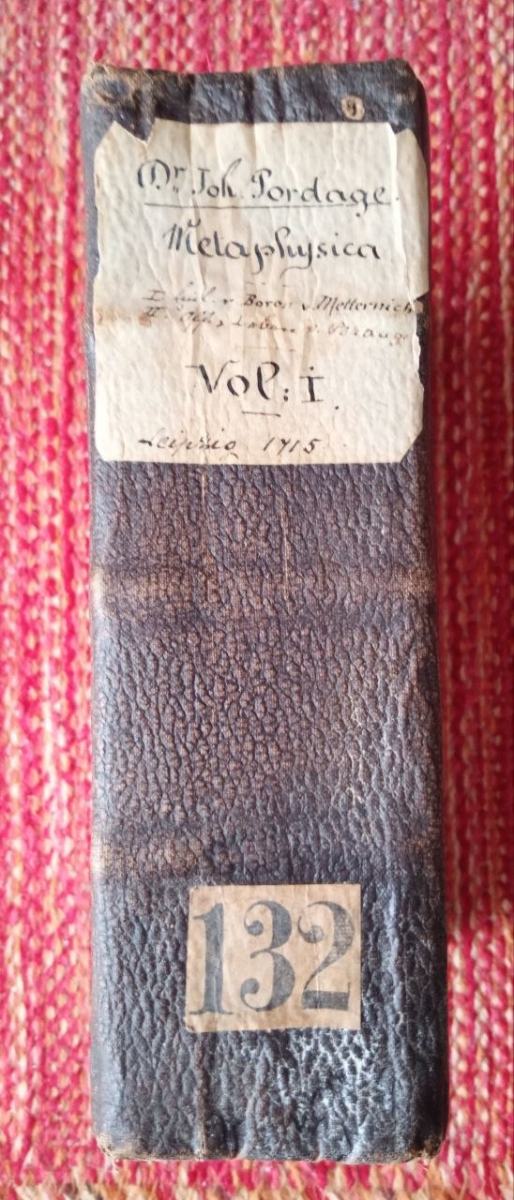
*
Coming Soon
The next offering from the Blue House of Via-HYGEIA will be devoted to Book II of the Göttliche und Wahre Metaphysica: selections from Chapters I–X, presenting Pordage’s visionary experiences and his systematic theology. This is where Pordage’s own voice is most directly present, translated by Fischer but not framed by him as the Hebrew material is.
The diagrams from the Einleitung — the cosmological figures of the Archetypal World, the seven worlds in emanation order, and the centres of each — will serve as the visual base for the sharing of Pordage’s doctrine and theosophical vision. They are the key to the vocabulary through which Pordage’s system becomes intelligible. Publication expected next month.
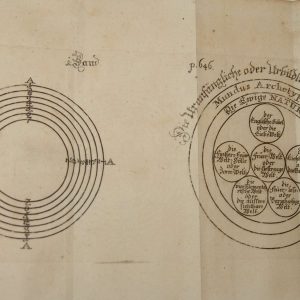
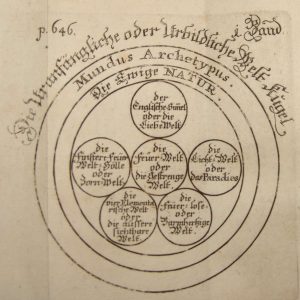
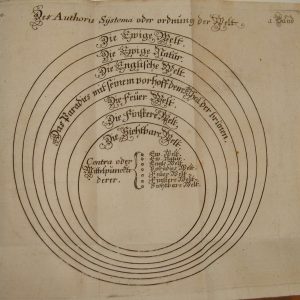
***


Related Articles


Leave a Reply