
Circle of Transmission: The Living Loom
A Via-HYGEIA Bibliotherapy-Book Review of ‘Hellenic Tantra’, by Gregory Shaw
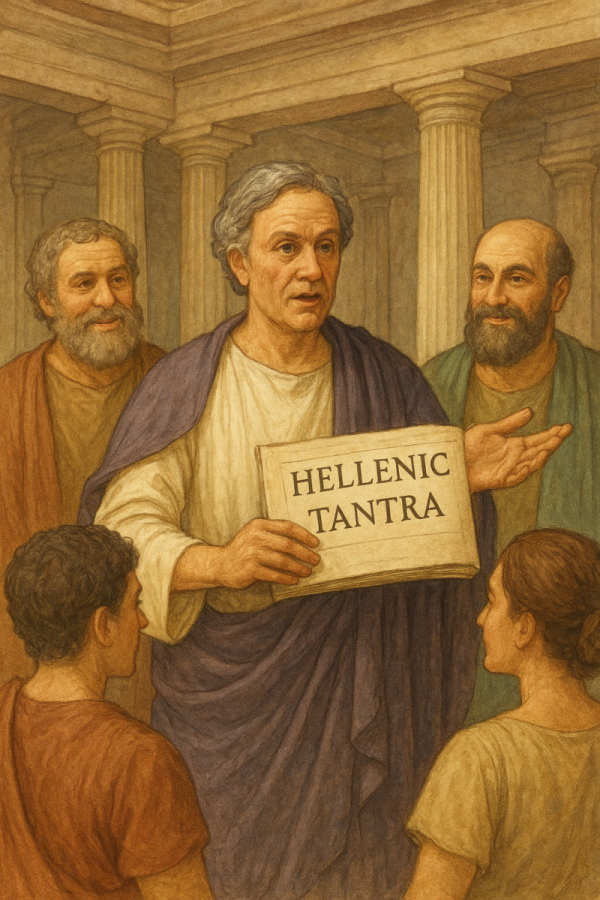
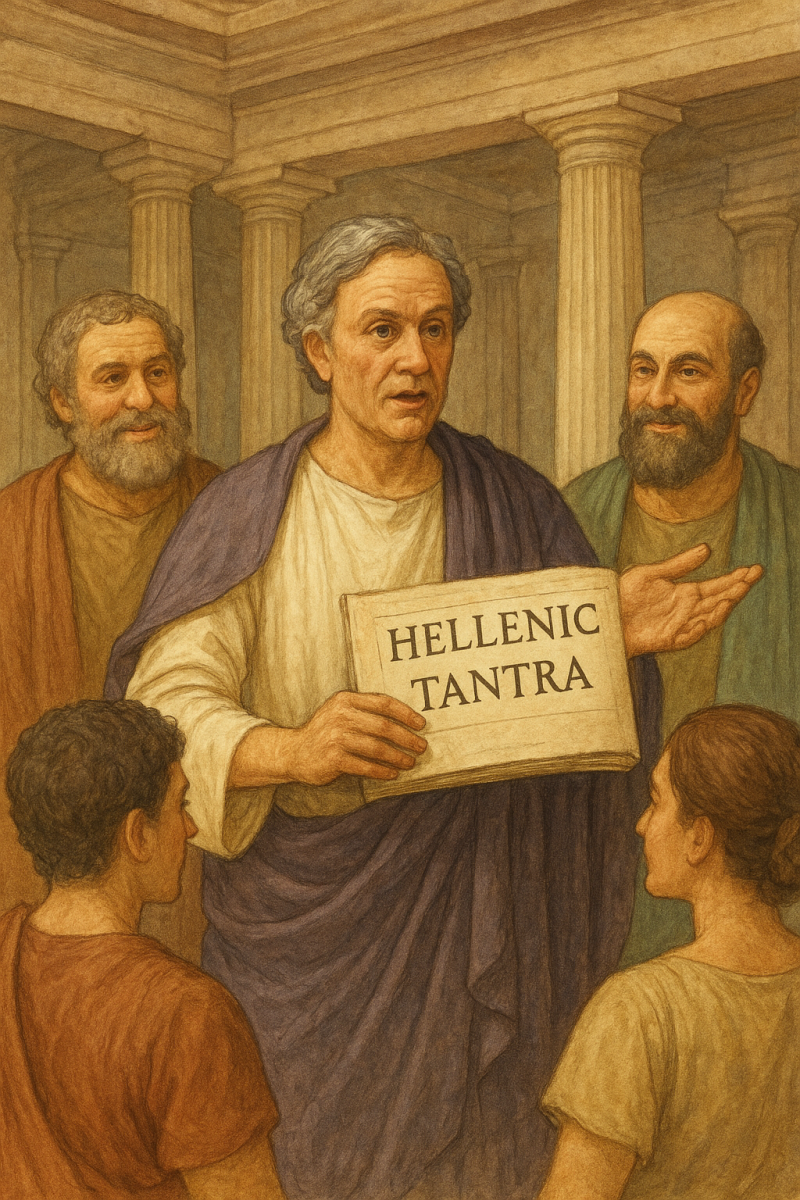
Professor Gregory Shaw,
a symbolic portrait.
*
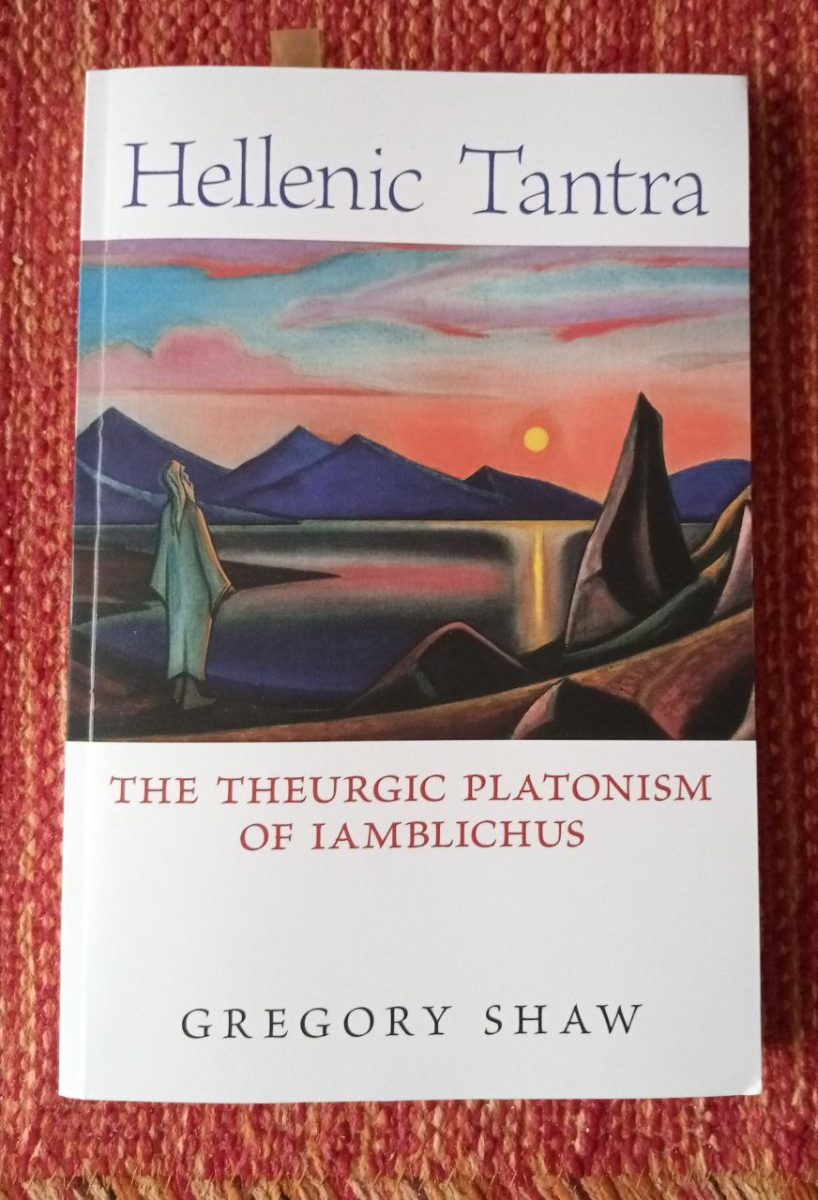
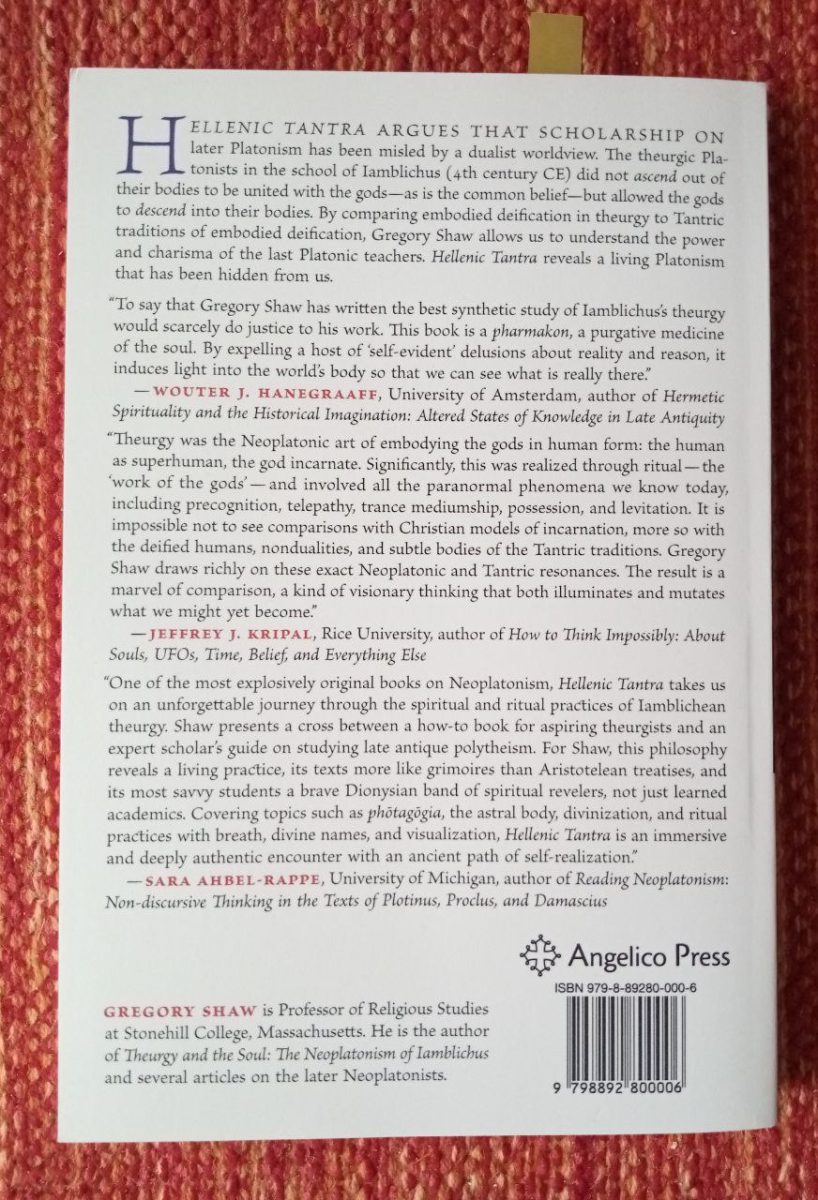
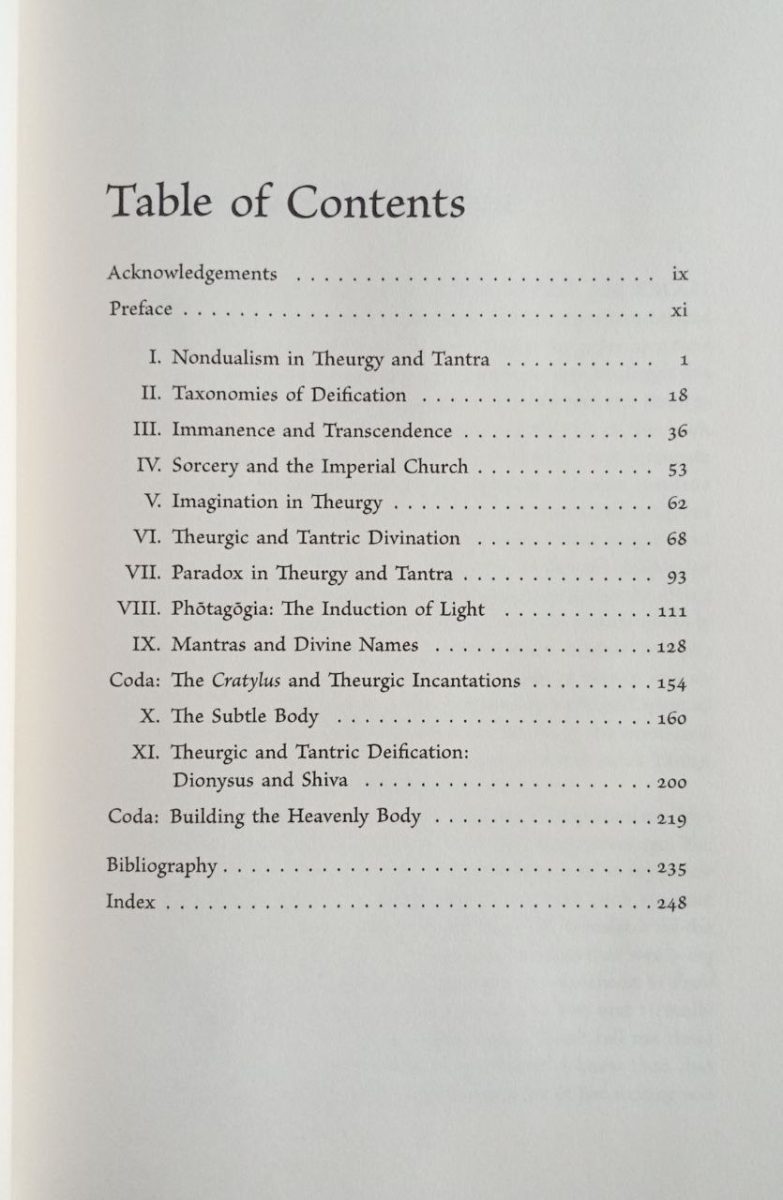
Today’s sharing from the Blue House of Via-HYGEIA is our review of Gregory Shaw’s ‘Hellenic Tantra: The Theurgical Platonism of Iamblichus‘, Angelico Press, 2024.
**
Introduction: Iamblichus vindicated & Dodds refuted
Gregory Shaw’s ‘Hellenic Tantra’ stands as the definitive response to a long-standing academic narrative epitomized by Eric Robertson Dodds’s ‘The Greeks and the Irrational’ (1951). Dodds framed late antique Platonism, particularly Iamblichus’s theurgy in ‘On the Mysteries’, as a symptom of intellectual decline—a ‘sick’ surrender to the irrational. Shaw’s project, advancing the work of scholars like Jean Trouillard, mounts a profound challenge to this valuation. He argues that Dodds failed to perceive the coherent, sophisticated, and rigorous system within theurgic practice. For Shaw, it represents not a collapse of reason, but the emergence of a different rationality, one that integrates symbol, ritual, and embodied experience as valid pathways to knowledge. To appreciate the revolution of ‘Hellenic Tantra’, one must first understand the Doddsian orthodoxy it displaces.
*
1. The Genealogy of an Idea
The thesis of ‘Hellenic Tantra’ is not spontaneous, but the fruit of a slow maturation. It is prefigured in Shaw’s two seminal articles: ‘Taking the Shape of the Gods: A Theurgic Reading of Hermetic Rebirth’ (2015) and ‘Platonic Tantra’ (2017).
The 2015 article establishes the core concept: theurgic embodiment. Shaw posits that for Iamblichus, philosophy was not abstract speculation but an initiatory discipline that ritually reshapes the practitioner’s subtle body to ‘take the shape’ of divine powers. Ritual acts are ontological, restructuring the soul’s vehicle to align with cosmic activities. The theurgist becomes a living icon of the gods. This marks a decisive break from readings (like Porphyry’s) that treat matter as a hindrance, recovering instead an Iamblichean lineage where matter is transformative.
The 2017 article provides the comparative key, placing this Iamblichean framework in dialogue with South Asian Tantra. Shaw identifies both as parallel solutions to the same metaphysical problem: the reintegration of the soul with its source through full affirmation of embodiment. He maps precise functional equivalences—between divine ascent and sādhanā, between asēma onomata and mantras—reframing theurgy as a Western form of Tantra: a ritual technology for awakening divine potency within the human frame.
Together, these works form the blueprint. The 2015 piece provides the metaphysical architecture; the 2017 piece offers the cross-cultural lens. From this synthesis, ‘Hellenic Tantra’ naturally emerges.
*
2. The Core Thesis: A Paradigm Shift
‘Hellenic Tantra’ proposes a genuine paradigm shift. Shaw challenges the view of theurgy as philosophical decline, positioning Iamblichus—not Plotinus—as the central figure for understanding late Platonism’s culmination.
The core of Shaw’s argument is a fundamental re-reading of the Platonic tradition. He contends that modern scholarship, filtered through Christian dualism and materialist assumptions, has persistently misinterpreted Iamblichus by imposing foreign categories. The pivotal shift is from Plotinus’s contemplative, ascensional model—where salvation is the solitary soul fleeing the body to become ‘the alone to the Alone’—to Iamblichus’s radically nondual, theurgical model. For Iamblichus, the soul’s descent is total and real; the material cosmos is not a prison but the indispensable, sacred medium for divine contact. Consequently, divinity must be engaged through ritual work in and with the body. Deification becomes a communal, cosmogonic participation, weaving the practitioner back into the Gods’ ongoing demiurgy. In this way, the book is a powerful critique of the disembodied idealism often associated with Platonism. Shaw argues instead for a ‘Platonism of the senses,’ where aesthetic experience becomes theophanic.
Shaw’s comparative framework with Tantra is heuristic masterstroke. It moves beyond vague parallels to demonstrate a shared structural logic: a microcosm-macrocosm anthropology, a sacramentality of matter, and a soteriology of embodied divinization (jīvanmukti). This alignment, echoed in traditions like Islamic ʿIlm al-Ḥurūf and Jewish Kabbalah, suggests a cross-cultural paradigm of ritual mysticism. Shaw employs “Tantra” not to imply historical diffusion, but as an epistemological tool to disrupt our dualistic biases and re-vision theurgy through the lens of a living, nondual tradition.
*
3. Theurgy as Technē: A Technology of the Sacred
At its heart, Shaw’s work is a recovery of theurgy as ergon (work) rather than mere logos (discourse). He reconstructs it as a precise technē—a ‘technology of the sacred’ requiring skilled training, akin to Tantric sādhanā. Its goal was not escape from the body, but its transfiguration.
This practical science encompassed: ritual sacrifice and divination as participatory modes within divine activity; ecstatic possession (enthousiasmos) as the temporary displacement of the ego by a divine presence; photagogy as the drawing of divine light into the soul’s luminous vehicle; and the use of divine names (asēma onomata), which, like mantras, were performative utterances wherein the Gods became audibly present. Central to this technē were symbola and synthemata—material objects, plants, stones, and sounds believed to bear divine signatures, serving as conductive links in a living cosmic network.
Shaw is careful to frame this recovery accurately: he is correcting academic misreadings, not claiming to resurrect a practice wholly erased by Christianity. Eventually, as argued by scholars like Sasha Chaitow (‘Plato and Christianity‘, Thyrathen: The Lost Bibliothēkē-September 2025), significant strands of this embodied, ritual logic persisted within later Eastern Christian mystical and liturgical practice, suggesting a more complex survival and adaptation of the theurgic worldview than previously assumed.
*
Conclusion: From Archaeology to Architecture
If Peter Kingsley was the archaeologist who uncovered the buried, shamanic roots of Western philosophy in the figures of Parmenides and Empedocles, then Gregory Shaw is the architect building a habitable spiritual edifice upon those foundations. ‘Hellenic Tantra’ takes a revolutionary insight and develops it into a comprehensive, practical system. It reveals the mature flowering of the very seed Kingsley discovered.
This publication is more than a scholarly milestone; it is a summons to reactivate the imaginatio vera—the true imaginative faculty—through which the sacred cosmos once again becomes vividly present. Shaw does not merely reinterpret the past; he retrieves a lost potentiality for the present. By dismantling the persistent mind-body and spirit-matter dualisms that haunt the West, he offers a vision of philosophy as an embodied, transformative craft, and of ritual as a rigorous mode of knowing. ‘Hellenic Tantra’ ultimately proposes that the path to the divine does not lead away from the world, but ever deeper into its sanctified, animate, and intelligent heart. In doing so, Shaw provides not just a corrected history, but a living toolkit for us to re-enchant the world!
*
Source
*
*
*
Appendix
Based upon the coda of the Book, ‘Building the Heavenly Body‘ (page 219),
we empirically imagined what could be such a performance preconized by professor Shaw.
*
A Modern Theurgic Ritual of Light and Voice
‘Being Taken into the Divine Shape‘
Philosophical Premise: The human soul is a microcosm (mikros kosmos) of the Divine Macrocosm. Through ritual symbols and acts (sunthēmata), we prepare the soul to be aligned and acted upon by the divine principle (exōthen, ‘from outside’), transforming it into a conscious instrument for the gods’ sustaining, creative activity (demiurgy).
Ritual Space & Items:
A quiet, clean room. A central altar or focus point. A source of light (a lamp, candle, or focused sunlight). Incense (as an offering to the air and a symbol of ascent). A glass of pure water (as an offering to the water and a symbol of the receptive soul, hupodochē). A specific, ‘barbaric’ or ‘meaningless’ divine name or phrase (asēma onomata) chosen for the ritual (e.g., a phrase from the Chaldean Oracles or a vowel sequence like “IAŌ”). This ‘barbaric’ phrase is essential—its very lack of discursive meaning to human reason is what allows it to serve as a pure conduit or sunthēma for divine power (dunamis) to act from outside the human cognitive system.
*
The Ritual Steps
Phase I: Katharsis (Purification) & Preparation of the Receptacle (Hupodochē)
This phase corresponds to the ‘lesser goals’ of catharsis: the withdrawal from foreign elements and the restoration of the soul’s essence as a vessel for the divine.
-
Purification of the Body: Bathe or wash your hands and face. This is not just about hygiene but about ritually cleansing the physical vehicle.
-
Purification of the Space: Light the incense and walk around the ritual space, envisioning the smoke driving away chaotic or distracting influences. This establishes a temenos (a sacred precinct).
-
Centering and the ‘Socratic Death’: Sit or stand comfortably before the altar. Close your eyes. Practice prosochē (attentive receptivity). Observe your thoughts, emotions, and bodily sensations without judgment or engagement. The goal is to let the habitual, egoic self (the contracted I) recede. This is the beginning of ekstasis—a ‘standing outside’ of the mundane self. Imagine this self as a shadow dissolving in a greater light.
-
Declaration of Intent (Prothesis): Speak aloud clearly:
‘I come here not as a slave to the body, but as a soul seeking its source. May this ritual be performed not by my will alone, but through the will and action of the Gods. I prepare this body and this place as a pure receptacle (hupodochē).’
*
Phase II: Phōtagōgia (Induction of Light) & The Cultivation of Receptive Mind
This is the core of the ritual, where the divine ‘Other’ is invited to act from ‘outside’ (exōthen).
-
Gazing at the Light (Augoeides): Focus your gaze on the flame or light source. Do not stare intensely; rather, soften your gaze and let the light fill your visual field. As you gaze, recall that this physical light is a sunthēma (token) of the invisible, divine Megiston Phōs (Greatest Light).
-
Coordinated Breathing: Begin to coordinate your breath with the visualization. As you inhale, imagine you are breathing in the luminous, intelligent quality of the light. As you exhale, imagine you are releasing the remaining contractions of your individual self. Your body is the bōmiskos (the sacrificial altar), and your breath is the offering.
-
Cultivation of Keneon Nous (The Emptied Mind): As you breathe the light, consciously let go of all discursive thought. Do not “think about” the light or the ritual. If thoughts arise, acknowledge them and return to the sensation of breathing light. The goal is for the phantastikon (imaginative faculty) to become receptive, while the dianoia (discursive mind) becomes silent. This kenōsis (emptying) is not an end in itself, but the necessary preparation of the receptacle (hupodochē) to be filled and acted upon by the divine nous.
*
Phase III: The Ascent of the Voice & Divine Presence
The emptied vessel, filled with light, now becomes a conduit for the divine voice.
-
Chanting the Asēma Onomata (Meaningless Names): Begin to chant your chosen divine name or phrase (e.g., IAŌ, PHŌS, AĒIŌ). Chant it slowly, rhythmically. Do not focus on its ‘meaning’ but on the vibratory quality of the sound in your body. Feel it in your chest, your head, your bones. As Iamblichus said, these sounds are “understood by the Gods alone.” You are not invoking with human understanding, but creating a resonant sunthēma that is activated by the gods.
-
The Voice of the Fire: As you chant, shift your awareness. Imagine that the sound is not originating from you, but moving through you. The source of the sound is the ‘Voice of the Fire’ from the Chaldean Oracles, the Megiston Phōnē (Greatest Voice). You are the instrument. The chant is the deity manifesting audibly.
-
The Shift from Āveśa to Samāveśa: Initially, it may feel like a force entering you from outside (passive possession, āveśa). As the ritual deepens, allow this to shift into a state of immersive union (samāveśa)—a conscious co-existence where your individual awareness is permeated by divine awareness. You are both the instrument and the locus of divine activity.
*
Phase IV: Henōsis (Union) & The Soul’s Assumption
This is the culmination: the soul being given the shape of the god.
-
The Spherical Soul: In this state of luminous, resonant union, bring your awareness to your entire being. Feel it not as a solid, limited form, but as a sphere of light and sound—a Pythagorean sphere, ‘capable of containing multiplicity while not departing from its unity’. This is the authentic divine vehicle, the augoeides (luminous body).
-
Being Given the Divine Shape (To Tōn Theōn Schema): In this state, you experience the soul being given the shape of the god. Do not do anything. Simply be this presence. This is the state of being lived by the gods. The ritual is no longer something you are performing; it is being performed through you. You are participating in the prohodos and epistrophē—the outflow and return—of the Divine.
*
Phase V: Epistrophē (Return) & Demiurgic Integration
The divine activity must flow back into the world; the theurgist becomes a source of divine power for the cosmos.
-
The Descent of Power: Consciously intend that the power, life, and activity (energeia) you have received now flow outward. As Iamblichus said, the goal is to ‘contribute power, life, and activity from the wholes to the parts’. Visualize this light and creative power flowing down through you and out into your surroundings, blessing and vivifying the material world. You are now an active participant in demiurgy.
-
Closing Gratitude: Conclude the chant. Sit again in silence for a few moments, maintaining prosochē. Acknowledge the presence of the gods. Offer a final, simple prayer of thanks, not from a place of separation, but from the embodied understanding of unity.
‘To the Gods who reveal themselves through human souls, gratitude. May this activity continue in all my actions.’ -
Extinguish the Light: Put out the candle or turn from the light source, carrying the inner luminosity with you as you return to ordinary consciousness, now re-sanctified as a vessel for divine activity.
*
This tentative ritual structure strives to encapsulates the Iamblichean theurgic arc as recovered by Gregory Shaw: from the cultivation of a divine receptacle (hupodochē), through theurgic sunthēmata (light, breath, asēmata), to a state of being ‘lived by the gods’ (samāveśa), culminating in the embodied human returning as a conscious source of demiurgic activity for the cosmos.
***

Leave a Reply