
Circle of Transmission: The Living Loom
The Untold Medical Teachings of the Cosmic Movement — Part I — Volume V: Theoretical and Medical Foundations.
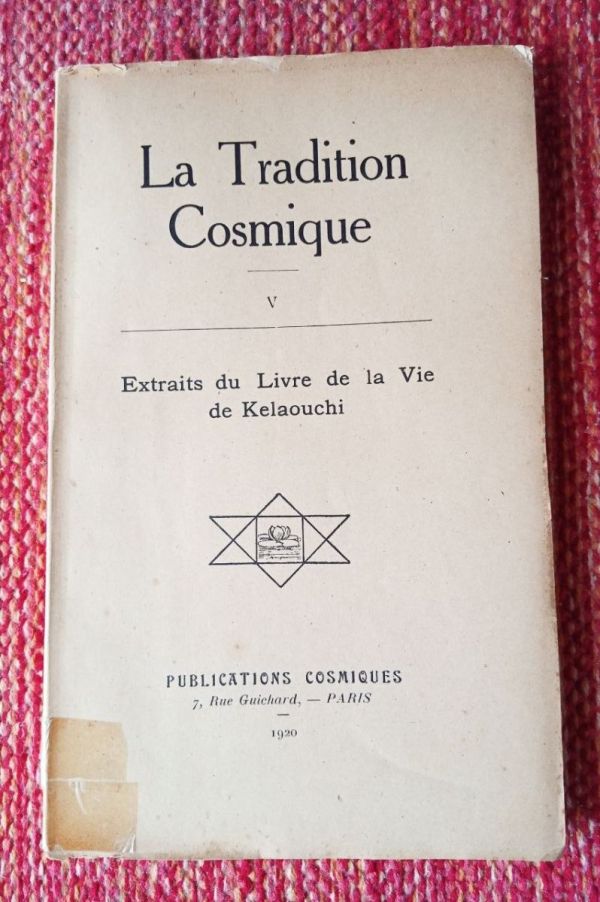
Cover of Volume V of the Cosmic Tradition, 1920.
*
Today’s sharing from the Blue House of Via-HYGEIA is part 1 of a two-part series about the medical teachings of the Cosmic Movement.
We know the Cosmic Movement. We know its cosmology, its metaphysics, its key figures—Max and Alma Théon, Louis, Claire and Pascal Thémanlys, Marc Semenoff. We know its influence on Mirra Alfassa and Sri Aurobindo. We know its networks, its publishing ventures, its inner circles.
But we do not know its medicine.
Volumes V and VI of La Tradition Cosmique, published in Paris in 1920, contain a complete system of health, healing, and longevity: a fourfold anthropology of the human being, a doctrine of the four bloods, a heart that serves as the seat of directing intelligences, a nervous self that mediates between the degrees of being, a diagnosis of disease as loss of reception and responsion, and a therapeutic regimen of cleansing, breathing, callisthenics, and aurification—the “embalming of the living body.”
These volumes have been left aside by scholarship. They should not have been.
Part I presents Volume V, the theoretical and medical foundations. It reconstructs the medical anthropology of the Cosmic Tradition, from the four orders of human formation to the causes of mental illness, from the education of the heart to the structure of the body and its humours. It provides selected passages in French with facing English translation, exegesis, and a full apparatus of glossaries, tables, and biographical notes.
Part II, forthcoming, will present Volume VI, the practical regimens and therapeutics: the cosmological diagnosis of atmospheric deterioration; the “chambre de repos” and its breathing exercises; the cleansing regimen of potions, diets, baths, and onctions; the callisthenics of the joints and muscles; the procedure of aurification—the “embalming of the living body“; the case studies of healing; and the comparative methods of other sages and physicians.
This is the first systematic study of these neglected texts. It situates them within a long lineage of esoteric medicine—from Ficino and the Picatrix to the Harranian Sabians and the Psalms of David—and it treats them not as curiosities but as serious contributions to the history of medicine. (See the comparative cursus in part II: Harmony and Healing: The Cosmic Tradition in the Genealogy of Esoteric Medicine). These forgotten volumes are coming out of their neglect.
**
In This Issue
Part I — Volume V: Theoretical and Medical Foundations
✦ Prelude — The Forgotten Volumes
✦ A Contextual Introduction — The Place of Volume V in the Cosmic Tradition
✦ Chapter 1 — The Fourfold Constitution and the Four Bloods
✦ Chapter 2 — The Heart and the Directing Intelligences
✦ Chapter 3 — The Education and Restoration of the Heart
✦ Chapter 4 — Disease, Healing, and the Physician’s Task
✦ Chapter 5 — The Case of Astiva
✦ Chapter 6 — The Structure of the Body and the Four Humours
✦ Chapter 7 — The Causes of Mental Illness
✦ Chapter 8 — Respiration and the Atmosphere
✦ Concluding Note to Part I
*
Prelude
The scholarly recovery of the Cosmic Movement has advanced considerably in recent decades. Studies by Boaz Huss, Julie Chajes, Michele Olzi, and others have clarified the movement’s historical networks, its metaphysical doctrines, and its influence on figures such as Mirra Alfassa and Sri Aurobindo. The publication of The Cosmic Movement: Sources, Contexts, Impact (2021) marked a significant milestone in this recovery. Research has examined the Hermetic Brotherhood of Luxor, the relationship between Max and Alma Théon, the role of Louis Thémanlys, and the contributions of Claire and Pascal Thémanlys, Marc Semenoff, and others. The milieu—its networks, its publishing ventures, its inner circles—has been mapped with increasing precision.
Yet one dimension of the movement remains almost entirely unstudied: its practical teachings on health, ailment, recovery, lifestyle, and regimen, as set out in Volumes V and VI of La Tradition Cosmique.
This neglect is not accidental. It reflects a broader tendency in the historiography of Western esotericism to privilege doctrine over practice, metaphysics over therapeutics, and intellectual history over the history of the body. The result is that we know a great deal about what the Cosmic Movement thought, but very little about what it did—how it proposed to live, to heal, to prolong life, and to restore the human being to what it considered its original condition.
Volumes V and VI are not marginal texts. They are central to the movement’s self-understanding.
Volume V, Extraits du Livre de la Vie de Kelaouchi, presents a medico-philosophical anthropology: the fourfold constitution of the human being, the four bloods, the nervous being, the heart as seat of directing intelligences, respiration, and the nature of disease as a loss of reception and responsion. It is, in effect, a treatise on the conditions of health and the causes of illness, grounded in the movement’s cosmology.
Volume VI, La Prolongation de la Vie sur la Terre, is almost entirely practical. It contains detailed regimens: cleansing potions, diets, baths, onctions, breathing exercises, joint and muscle movements, and the procedure of aurification—the “embalming of the living body.” It also includes case studies of healing and comparative methods attributed to other sages and physicians. It is, in effect, a manual of therapeutics.
Together, these two volumes constitute what might be called the medical core of the Cosmic Tradition. They are the texts in which the movement’s claim to be a practical science of life—not merely a philosophy or an occult society—is most fully articulated. They address questions that were of urgent concern to the Théons and their associates: How can life be prolonged? How can disease be overcome? How can the human being be restored to health and eventually to immortality?
The fact that these volumes have been left aside is therefore significant. It means that we have been studying the Cosmic Movement without its therapeutics, its regimen, its practical anthropology. We have been reading its metaphysics without its medicine.
This study proposes to address that absence. It offers, for the first time, a systematic analysis of Volumes V and VI as medical and therapeutic texts. It reconstructs their theoretical foundations, examines their practical regimens, and provides a critical apparatus for further research. It treats these texts not as curiosities but as serious contributions to the history of esoteric medicine, and as essential to any comprehensive understanding of the Cosmic Movement.
The aim is not to endorse the practices described, nor to evaluate their efficacy. It is to understand what the Cosmic Movement taught about health and healing, why those teachings mattered to its members and successors, and how they can be situated within the broader history of alternative medicine, vitalism, and early European yoga.
This is the first study of its kind. It is long overdue.
*
A Contextual Introduction
1. The Place of Volume V in the Cosmic Tradition
Volume V of La Tradition Cosmique, published in Paris in 1920 by the Publications Cosmiques, bears the title Extraits du Livre de la Vie de Kelaouchi. It is the fifth instalment of a series that appeared between 1903 and 1920, a series that remains one of the most substantial and least studied products of the Cosmic Movement.
Unlike the earlier volumes, which are primarily cosmological and metaphysical in orientation, Volume V turns decisively toward questions of life, health, disease, and healing. It is, in effect, a medico-philosophical treatise embedded within a larger narrative of initiation and cosmic pedagogy.
The text presents itself as the record of the experiences and instructions of Kelaouchi, a narrator who is guided by an intelligence named Amon. Amon is described as a being who has been with Kelaouchi since his earliest memories, manifesting in his aura and responding to his thirst for knowledge. The relationship between Kelaouchi and Amon structures the entire volume.
It is at once a relationship of teacher and pupil, of friend and companion, and of two beings whose affinity permits a form of communication that bypasses ordinary sense perception. This mode of communication—which the text calls sentientation—is central to the volume’s method. Knowledge is not merely transmitted; it is experienced, tested, and verified through a form of participatory consciousness.
Volume V is therefore not a medical textbook in any conventional sense. It is a record of observations, experiments, and revelations, presented in narrative form. Yet within that narrative, a coherent medical anthropology emerges.
The volume offers a systematic account of what the human being is, what health consists of, what disease is, and what healing must address. It lays the theoretical groundwork for the practical regimens that will be presented in Volume VI.
*
2. Why Volume V Has Been Neglected
The neglect of Volume V is part of a broader pattern. Scholarship on the Cosmic Movement has concentrated on its historical networks, its metaphysical doctrines, and its key personalities. The Hermetic Brotherhood of Luxor, the relationship between Max and Alma Théon, the role of Louis Thémanlys, and the contributions of Claire et Pascal Thémanlys, Marc Semenoff, and others have all received attention. The movement’s cosmology, its doctrine of the planes, its theory of evolution, and its influence on Mirra Alfassa and Sri Aurobindo have been studied with increasing sophistication.
But the medical and therapeutic dimensions of the tradition have been left aside. This is not because they are absent from the sources. It is because they do not fit easily into the categories that have dominated the historiography. Studies of Western esotericism have tended to privilege doctrine over practice, metaphysics over therapeutics, and intellectual history over the history of the body.
The result is that we know a great deal about what the Cosmic Movement thought, but very little about what it proposed to do—how it sought to live, to heal, to prolong life, and to restore the human being to what it considered its original condition.
Volume V is the text in which the movement’s medical anthropology is most fully articulated. It is therefore indispensable for any comprehensive understanding of the tradition. To leave it aside is to study the Cosmic Movement without its therapeutics, its regimen, and its practical anthropology. It is to read its metaphysics without its medicine — and to forget that this medicine is offered as an antidote.
*
3. The Medical Anthropology of Volume V
The medical anthropology of Volume V rests on a fourfold constitution of the human being. The human being is composed of four degrees or states: the mental, the psychic, the nervous, and the nervo-physical. Each of these degrees is a distinct mode of being, with its own density and its own capacities. The nervo-physical is the outermost and densest; it is the envelope that is visible to the senses and that interacts with the physical world. The nervous is subtler and more rarefied; it is the intermediary between the nervo-physical and the psychic. The psychic is subtler still, and the mental is the most rarefied of the four.
These four degrees are not separate entities. They are interconnected, and their interconnection is maintained by a corresponding fourfold system of bloods. The text speaks of four bloods—nervo-physical, nervous, psychic, and mental—each of which sustains and vivifies its corresponding degree. The bloods are not merely physical substances. They are vehicles of life and intelligence. They carry the forces that sustain the various degrees of the being, and they are the means by which the degrees communicate with one another.
At the centre of this system is the heart. The heart is not merely a physical organ. It is the seat of directing intelligences, the place where the various bloods are classified and distributed. The text describes the heart as the “siège des intelligences directrices” (p. 108), the seat of the intelligences that govern the circulation of the bloods and the sustenance of the various organs and members of the body. When the heart functions normally, it regulates the flow of the bloods so that each degree of the being receives what it needs. When it is impaired, the entire system is thrown into disorder.
Health, in this framework, is a condition of integral permeation. It is the state in which the various degrees of the being are fully receptive and responsive to one another, in which the bloods circulate freely, and in which the heart fulfils its directing function. Disease, by contrast, is a condition of disaffinity. It arises when the reception and responsion between the degrees are obstructed, when the bloods are impure or poorly distributed, or when the heart’s directing intelligence is compromised. Healing, therefore, is not merely the elimination of symptoms. It is the restoration of affinity, the re-establishment of the conditions under which the various degrees of the being can once again communicate and cooperate.
*
4. The Physician’s Task
Volume V redefines the physician’s task in light of this anthropology. The physician is not merely a technician who treats the nervo-physical body. The physician is a practitioner of the science of life, someone who understands the relationships between the various degrees of the being and who can intervene at the appropriate level to restore health.
The text is explicit on this point: “La préservation des maladies nerveuses est donc l’œuvre prééminente du médecin” (p. 48). The preservation of nervous diseases is the preeminent work of the physician. This is because the nervous being is the intermediary between the nervo-physical and the psychic, and because its condition determines the health or illness of the entire system. If the nervous being is healthy and well-sustained, it can protect the nervo-physical body from the hostile influences that come from outside. If it is weakened or impaired, the entire system is vulnerable.
The physician must therefore understand the nature of the nervous being, its needs, and the means by which it can be sustained. This requires a knowledge that goes beyond the conventional medicine of the time. It requires an understanding of the bloods, their densities and their functions, and of the role of the heart in distributing them. It requires, in short, a knowledge of the science of life as the Cosmic Tradition presents it.
*
5. The Four Orders of Human Formation
Volume V distinguishes four orders of human formation, each of which has implications for health and vitality.
The first order is conception from the father’s semen. This is the general rule. The being thus formed is in the similitude of its immediate origin, and its health and capacities depend on the conditions of its conception and gestation.
The second order is conception from a being of the rarefactions. At the moment of union, a being of the rarefactions who has entered the human aura penetrates the newly formed being, without violence, thanks to its appropriate rarefaction. These individualities have superior capacities and powerful qualities, not only because of their more rarefied origin but because they are generally much loved by their mother and are the object of special vigilance and care from the time of their conception.
The third order is the triune order. An evolved man and woman, attracted by a strong affinity, become visible to the inhabitants of the nervous, psychic, or mental states. Those who guard, direct, or protect the mental, psychic, or nervous beings of those who have been evolved on earth prepare two beings who were formerly on earth in duality of being. At the moment of the birth of the children, they regulate their permeation by these more rarefied beings. This order is rarer than the first two.
The fourth order is the virgin conception. A rare sensitive, receiver and formatter, virgin or united to a man who cannot satisfy her, can in a state of ecstatic aspiration clothe in her aura the God whom she evokes and conceive by him. The fruit of such a conception can be an Incarnate God or the reincarnation of a special delegate of the Divinity. This is the exception to the rule.
These four orders explain individual differences in health and vitality. They account for why some beings are more robust, more intelligent, or more spiritually capable than others. They also explain why some are more vulnerable to illness and suffering. The physician who understands this can better assess the condition of each patient and tailor the treatment accordingly.
*
6. The Case of Astiva
Volume V includes a case study that illustrates the practical implications of this anthropology. The case of Astiva is presented as an example of how the physician can intervene to restore health when the normal conditions of reception and responsion have been disrupted.
Astiva is a young neophyte who falls asleep under a tree and wakes up among a herd of cows. When he returns, he is strangely weakened, and despite all efforts, he does not recover his former vigour. Eventually, it is discovered that he has been losing constituents of his being to the cows. The treatment is twofold: the infusion of blood from a young and vigorous bull into his veins, and a diet consisting exclusively of freshly drawn cow’s milk. Within a month, he is restored to health.
The case is presented not as a miracle but as a demonstration of a principle. The principle is that health depends on the integrity of the various degrees of the being and on the proper circulation of the bloods. When constituents are lost to an external source, they must be replaced. When the blood is impoverished, it must be enriched. The physician who understands this can intervene effectively. The physician who does not is limited to treating symptoms.
*
7. Respiration and the Atmosphere
Volume V also addresses the role of respiration in sustaining life. The text emphasizes that breathing is not merely a physical process. It is the means by which the being receives the subtle constituents that sustain its various degrees. The atmosphere is not merely a mixture of gases; it is a vehicle of life, carrying the forces that the being needs to maintain its integrity.
This theme will be developed at length in Volume VI, where the deterioration of the respirable atmosphere is presented as a central cause of the shortening of human life. In Volume V, it is introduced as part of the theoretical foundation. The physician must understand the relationship between respiration and the bloods, and must recognize that the quality of the air is a determinant of health.
*
8. The Four Humours and the Conditions of Health
Toward the end of Volume V, the text turns to what might be called the humoral dimension of health. It speaks of four humours—saliva, bile, splenic secretion, and mucous membrane—and of the conditions under which they remain healthy. The text states: “Aussi longtemps que ces quatre sécrétions sont saines, le corps est rarement assujetti à la maladie” (p. 156). As long as these four secretions are healthy, the body is rarely subject to disease.
The conditions of health are then enumerated: assimilation, comfort, and cleanliness; clear and unobstructed channels; the dissolution of abnormal concretions; and the rejection of impurities. When these conditions are met, the cells are capable of resisting whatever is contrary to them. When they are not met, disease ensues.
This humoral dimension of the text is significant because it connects the more speculative anthropology of the earlier chapters with the practical regimens that will follow in Volume VI. It shows that the Cosmic Tradition is not content to describe the conditions of health in abstract terms. It seeks to specify the concrete measures by which those conditions can be established and maintained.
*
9. The Relation of Volume V to Volume VI
Volume V provides the theoretical foundation for the practical regimens of Volume VI. The two volumes are complementary. Volume V explains what health is and why it matters; Volume VI explains what to do to preserve or restore it.
This complementarity is important for understanding the Cosmic Tradition as a whole. The movement was not merely a school of thought. It was a practical discipline, a way of life. Its members were not only expected to understand its doctrines but to live according to its principles. The regimens of Volume VI—the cleansing potions, the diets, the baths, the exercises, the aurification—were the means by which the theoretical principles of Volume V were to be realized in practice.
To study Volume V without Volume VI is to study the theory without the practice. To study Volume VI without Volume V is to study the practice without the theory. The two must be read together.
*
10. Method and Approach
This study approaches Volume V as a medico-philosophical text. It does not treat the text as a repository of timeless truths, nor as a curiosity to be explained away. It treats it as a serious contribution to the history of esoteric medicine, and as an essential source for understanding the Cosmic Movement.
The method is historical, textual, and comparative. It situates the text in its early twentieth-century context. It reads the text closely, attending to its vocabulary and its arguments. And it places the text in dialogue with other therapeutic traditions—vitalism, naturopathy, hydrotherapy, and early yoga—without reducing it to any of them.
The study does not endorse the practices described in the text, nor does it evaluate their efficacy. Its aim is to understand what the text says about health and healing, why it says it, and how it can be situated within the broader history of alternative medicine and esoteric therapeutics.
*
11. Structure of Part I
Part I is organized as follows. The present Introduction has established the place of Volume V in the Cosmic Tradition, explained why it has been neglected, and outlined its medical anthropology. It is preceded by a Prelude — The Forgotten Volumes — which situates the whole study within the gap in existing scholarship.
The eight chapters that follow each present a coherent unit of Volume V’s medical teaching. They are arranged in a sequence that moves from the constitution of the human being, through the central organ of the heart and its restoration, to the nature of disease, the clinical case, the anatomy and humours, the pathologies of the mind, and finally the respiratory relation between the being and the cosmos:
-
The Fourfold Constitution and the Four Bloods — the degrees of being, the double bloods, the functions of the white bloods, and the four orders of human formation.
-
The Heart and the Directing Intelligences — the heart as seat of the classifying intelligences, and its loss of voluntary movement.
-
The Education and Restoration of the Heart — the heart’s capacity for repair, the method of interior communication, and the contrast between the evolved man and the chemineau.
-
Disease, Healing, and the Physician’s Task — health as integral permeation, disease as non-permeation, the preeminence of nervous diseases, and the analogy of the gardener.
-
The Case of Astiva — a clinical narrative of constituent loss and its treatment.
-
The Structure of the Body and the Four Humours — the bony, muscular, nervous, and arterial selves, the skin as envelope, the humours, and the conditions of health.
-
The Causes of Mental Illness — idiocy, mania, melancholy, and megalomania traced to deficiencies of sustenance.
-
Respiration and the Atmosphere — breathing as the reception of subtle constituents, and the hierarchy of ether, air, and liquid.
Each chapter follows a uniform structure. It opens with Selected Material: the relevant passages of Volume V given in the French original with a facing English translation, and accompanied by notes that clarify their meaning and context. This is followed by an Exegesis, which analyses the material in detail, reconstructs the volume’s medical epistemology and its implications for practice, and places it in dialogue with the broader history of esoteric and alternative medicine. Each chapter closes with an Apparatus — a glossary of the key terms used in that chapter, tables of correspondences, and biographical notes on the figures it introduces.
A brief Concluding Note draws together the findings of the eight chapters, restates the diagnosis of the human condition that Volume V offers, and indicates how the theoretical foundations here established prepare the ground for the practical regimens of Volume VI in Part II.
The consolidated bibliography, the methodological appendix, the comparative excursus, and the index are gathered in part II in the Back Matter at the end of the work, where they serve both parts.
Chapter 1:
The Fourfold Constitution and the Four Bloods
1.1 Selected Material
Excerpt 1.1.1 — The Four Degrees of the Human Being
French original (p. 145):
« Tout être terrestre, en son état normal, est construit de quatre degrés de l’état physique, mental, psychique, nerveux, physique, et de leurs sous-degrés ou degrés intermédiaires, mental psychique, psycho-nerveux, nervo-physique. L’être terrestre ayant été privé du dernier degré physique, est actuellement construit des trois degrés mental, psychique, nerveux et des trois sous-degrés ou degrés intermédiaires mento-psychique, psycho-nerveux, nervo-physique ; ce dernier est l’enveloppement extérieur et visible. »
English translation:
“Every terrestrial being, in its normal state, is constructed of four degrees of the physical state—mental, psychic, nervous, physical—and of their sub-degrees or intermediate degrees: mental-psychic, psycho-nervous, nervo-physical. The terrestrial being having been deprived of the last physical degree, is currently constructed of the three degrees mental, psychic, nervous, and of the three sub-degrees or intermediate degrees mento-psychic, psycho-nervous, nervo-physical; this last is the exterior and visible envelope.”
Excerpt 1.1.2 — The Four Bloods
French original (pp. 88–89):
« Il y a quatre-sangs doubles, à couleur blanche et cramoisie, savoir : Le double sang nervo-physique ; Le double sang nerveux ; Le double sang psychique ; Le double sang mental ; Le double sang nervo-physique revêt et manifeste les doubles sang nerveux, psychique et mental. Les sangs blancs sont les intermédiaires qui mettent les sangs rouges en rapport effectif les uns avec les autres, selon leur ordre. »
English translation:
“There are four double bloods, of white and crimson colour, namely: The double nervo-physical blood; The double nervous blood; The double psychic blood; The double mental blood; The double nervo-physical blood clothes and manifests the double nervous, psychic, and mental bloods. The white bloods are the intermediaries that put the red bloods into effective relation with one another, according to their order.”
Excerpt 1.1.3 — The Functions of the White Bloods
French original (pp. 89–91):
« La troisième fonction importante des sangs blancs est leur capacité d’arrêter le cours des êtres minuscules hostiles aux forces vitales : Le sang blanc mental est capable d’arrêter le cours de l’armée ennemie qui vient du degré physique de l’état nerveux. Le sang blanc psychique est capable d’arrêter la marche de l’armée ennemie émergeant du degré mental de l’état physique. Le sang blanc nerveux est capable d’arrêter la marche de l’armée ennemie qui vient du degré psychique de l’état physique. Le sang blanc nervo-physique est capable d’arrêter la marche de l’armée ennemie qui vient du degré nerveux de l’état physique. »
English translation:
“The third important function of the white bloods is their capacity to stop the course of the minuscule beings hostile to the vital forces: The white mental blood is capable of stopping the course of the enemy army that comes from the physical degree of the nervous state. The white psychic blood is capable of stopping the march of the enemy army emerging from the mental degree of the physical state. The white nervous blood is capable of stopping the march of the enemy army that comes from the psychic degree of the physical state. The white nervo-physical blood is capable of stopping the march of the enemy army that comes from the nervous degree of the physical state.”
Excerpt 1.1.4 — The Fourth Function: Purification
French original (p. 91):
« La quatrième des principales fonctions des sangs blancs est de purifier les sangs rouges en attirant d’abord puis en éliminant les êtres qui stagnent dans les sangs cramoisis. Ainsi les quatre fonctions des sangs blancs sont celles de servir d’intermédiaires, d’entretenir, de protéger, de purifier. D’où l’importance de leur rôle dans la conservation de la vie individualisée. »
English translation:
“The fourth of the principal functions of the white bloods is to purify the red bloods by first attracting and then eliminating the beings that stagnate in the crimson bloods. Thus the four functions of the white bloods are those of serving as intermediaries, of maintaining, of protecting, of purifying. Hence the importance of their role in the conservation of individualized life.”
Excerpt 1.1.5 — The Four Orders of Human Formation
French original (pp. 34–36):
« Au moment où s’unissent l’émanateur et la réceptrice, le nucléolinus d’un nouvel être embryonnaire mental, psychique et nerveux est formé par la dualité : ce nouvel être commence immédiatement à s’approprier l’enveloppement nervo-physique apte à sa manifestation. Telle est la forme générale de conception ; et l’être ainsi formé a sa raison d’être dans la volonté et l’action de son origine immédiate, c’est-à-dire de son père. »
« Il arrive assez fréquemment qu’au moment de l’union de l’homme et de la femme un être des raréfactions qui est entré dans l’aura humaine pénètre l’être nouvellement formé, sans violence, grâce à sa raréfaction appropriée. Ces individualités sont des êtres aux capacités supérieures et aux qualités puissantes non seulement en raison de leur origine plus raréfiée et plus radiante, mais parce que généralement elles sont beaucoup aimées par leur mère et sont l’objet d’une vigilance et de soins spéciaux dès le temps de leur conception. »
« Il y a un ordre de formation unitaire plus rare qui est celui-ci : Un homme et une femme évolués, attirés l’un vers l’autre par une forte affinité, pourront, au moyen de la radiance de leurs auras au moment de leur union, devenir visibles pour les habitants de l’état Nerveux, Psychique ou Mental ou pour certains de ceux-ci. Ceux qui gardent, dirigent, ou protègent les êtres mentaux, psychiques ou nerveux de ceux qui ont été évolués sur la terre et sans retenir leur individualité dans le degré nerveux, psychique ou mental de l’état physique ont cependant conservé leur individualité dans les états plus raréfiés, en apercevant la duelle aura radieuse de l’homme et de la femme, préparent deux êtres qui ont été autrefois sur la terre en dualité d’être ; au moment de la naissance des enfants ils règlent leur perméation par ces êtres plus raréfiés. »
« Le quatrième ordre de formation humaine est l’exception à la règle ; il est ainsi que suit : Une rare sensitive, réceptrice et formatrice, vierge ou unie à un homme qui ne peut la satisfaire, peut dans un état d’aspiration extatique qui est la plus puissante de toutes les évocations, vêtir dans son aura le Dieu qu’elle évoque et concevoir par lui. Le fruit d’une telle conception peut être un Dieu Incarné ou il peut être la réincarnation de quelque délégué spécial de la Divinité évoquée lorsque celle-ci désire remplir ou compléter une grande œuvre terrestre. »
English translation:
“At the moment when the emanator and the receiver unite, the nucleolinus of a new embryonic mental, psychic, and nervous being is formed by the duality: this new being immediately begins to appropriate the nervo-physical envelope apt for its manifestation. Such is the general form of conception; and the being thus formed has its reason for being in the will and action of its immediate origin, that is to say of its father.”
“It happens fairly frequently that at the moment of the union of man and woman a being of the rarefactions who has entered the human aura penetrates the newly formed being, without violence, thanks to its appropriate rarefaction. These individualities are beings of superior capacities and powerful qualities not only because of their more rarefied and more radiant origin, but because generally they are much loved by their mother and are the object of special vigilance and care from the time of their conception.”
“There is a rarer order of unitary formation which is this: An evolved man and woman, attracted to one another by a strong affinity, can, by means of the radiance of their auras at the moment of their union, become visible to the inhabitants of the Nervous, Psychic, or Mental state or to certain of them. Those who guard, direct, or protect the mental, psychic, or nervous beings of those who have been evolved on earth and without retaining their individuality in the nervous, psychic, or mental degree of the physical state have nevertheless conserved their individuality in the more rarefied states, perceiving the dual radiant aura of the man and woman, prepare two beings who were formerly on earth in duality of being; at the moment of the birth of the children they regulate their permeation by these more rarefied beings.”
“The fourth order of human formation is the exception to the rule; it is as follows: A rare sensitive, receiver and formatter, virgin or united to a man who cannot satisfy her, can in a state of ecstatic aspiration which is the most powerful of all evocations, clothe in her aura the God whom she evokes and conceive by him. The fruit of such a conception can be an Incarnate God or it can be the reincarnation of some special delegate of the Divinity evoked when the latter desires to fulfil or complete a great terrestrial work.”
1.2 Exegesis
The fourfold constitution of the human being is the cornerstone of the medical anthropology of Volume V. It is not merely a speculative schema; it is the framework within which all questions of health, disease, and healing are posed and answered.
The human being is described as constructed of four degrees: mental, psychic, nervous, and nervo-physical. These are not separate entities but modes or states of being, each with its own density and its own capacities. The nervo-physical is the densest and most external; it is the envelope that is visible to the senses and that interacts with the physical world. The nervous is subtler and more rarefied; it is the intermediary between the nervo-physical and the psychic. The psychic is subtler still, and the mental is the most rarefied of the four.
The text adds an important qualification: the terrestrial being has been “deprived of the last physical degree.” This refers to the loss of what the tradition calls the “true physical body” or “glorious body”—a body that was originally part of the human constitution but that has been lost through the action of hostile forces. The current human being is therefore constructed of only three degrees (mental, psychic, nervous) and their intermediate sub-degrees, with the nervo-physical serving as the outermost envelope. This loss is central to the text’s diagnosis of the human condition. It explains why human life is shortened, why disease is prevalent, and why the restoration of the lost degree is the ultimate goal of the therapeutic project.
The four bloods correspond to the four degrees of the being. Each blood is double, having a white and a crimson aspect. The white bloods are the intermediaries that put the red bloods into relation with one another. They serve four functions: they are intermediaries, they maintain, they protect, and they purify. The protective function is particularly important: the white bloods are capable of stopping the course of hostile beings that would otherwise invade the system. This is the closest the text comes to a concept of immunity. Health depends on the integrity and activity of the white bloods, which defend the organism against the “minuscule beings hostile to the vital forces.”
The purifying function is equally important. The white bloods attract and eliminate the beings that stagnate in the crimson bloods. This is not merely a physical process of cleansing; it is a vital function without which the bloods would become impure and the entire system would be compromised. The text emphasizes that the four functions of the white bloods are essential to the “conservation of individualized life.” Without them, the being cannot maintain its integrity; it dissolves back into the collective.
The four orders of human formation explain individual differences in health and vitality. The first order—conception from the father’s semen—is the general rule. The second order—conception from a being of the rarefactions—produces individualities of superior capacities. The third order—the triune order—is rarer and involves the collaboration of evolved men and women with beings of the more rarefied states. The fourth order—the virgin conception—is the exception and produces an Incarnate God or a special delegate of the Divinity.
These orders account for why some beings are more robust, more intelligent, or more spiritually capable than others. They also explain why some are more vulnerable to illness and suffering. The physician who understands this can better assess the condition of each patient and tailor the treatment accordingly.
The text’s vocabulary is significant. It speaks of “hostile beings” and “enemy armies,” but these are not merely metaphors. They are descriptions of real entities—minuscule beings that inhabit the atmosphere and the blood, and that can cause disease if they are not resisted. The physician who understands this can intervene effectively. The physician who does not is limited to treating symptoms.
1.3 Apparatus
Glossary of Key Terms
-
Degrees of the being: The four modes or states of the human constitution: mental, psychic, nervous, nervo-physical. Each degree has its own density and its own capacities.
-
Sub-degrees: The intermediate degrees between the four main degrees: mental-psychic, psycho-nervous, nervo-physical.
-
True physical body (corps glorieux): The original, immortal body that the human being has lost. Its restoration is the ultimate goal of the therapeutic project.
-
Four bloods: The four double bloods (white and crimson) that correspond to the four degrees of the being: nervo-physical, nervous, psychic, mental.
-
White bloods: The intermediaries that put the red bloods into relation with one another. They serve four functions: intermediary, maintenance, protection, purification.
-
Crimson bloods: The red bloods that are sustained and purified by the white bloods.
-
Hostile beings: Minuscule entities that are hostile to the vital forces and that can cause disease if they are not resisted by the white bloods.
-
Orders of formation: The four modes of human conception: from the father’s semen; from a being of the rarefactions; the triune order; the virgin conception.
Tables of Correspondences
| Degree of Being | Corresponding Blood | Function |
|---|---|---|
| Mental | Double mental blood | Sustains the mental degree |
| Psychic | Double psychic blood | Sustains the psychic degree |
| Nervous | Double nervous blood | Sustains the nervous degree |
| Nervo-physical | Double nervo-physical blood | Sustains the nervo-physical degree; outermost envelope |
| Function of White Bloods | Description |
|---|---|
| Intermediary | Puts the red bloods into relation with one another |
| Maintenance | Sustains the red bloods |
| Protection | Stops the course of hostile beings |
| Purification | Attracts and eliminates beings that stagnate in the crimson bloods |
| Order of Formation | Description | Characteristics |
|---|---|---|
| First | From the father’s semen | General rule; similitude of immediate origin |
| Second | From a being of the rarefactions | Superior capacities; much loved by mother |
| Third | Triune order | Receptacle of beings who lived before; exceptional |
| Fourth | Virgin conception | Incarnate God or special delegate; often persecuted |
Biographical Notes
-
Kelaouchi: The narrator of Volume V. A physician and student of the science of life, guided by the intelligence Amon.
-
Amon: An intelligence who has been with Kelaouchi since his earliest memories. He manifests in Kelaouchi’s aura and responds to his thirst for knowledge. He serves as teacher, companion, and guide.
Bibliographical Note
The fourfold constitution of the human being and the doctrine of the four bloods are presented in Volume V, pp. 88–91, 145–148. The functions of the white bloods are described in detail in the same volume, pp. 89–91. The four orders of formation are described at pp. 34–36.
Chapter 2:
The Heart and the Directing Intelligences
2.1 Selected Material
Excerpt 2.1.1 — The Heart as Seat of Directing Intelligences
French original (p. 108):
« Le siège des êtres classificateurs et directeurs des sangs cramoisis est dans le cœur. Le cœur qui était doué autrefois du pouvoir de mouvement volontaire ne possède plus cette précieuse et inestimable faculté de la volonté libre. Il n’est plus qu’une pompe perpétuelle qui distribue une certaine quantité de liquide, mécaniquement, sans garder sur elle aucun contrôle. »
English translation:
“The seat of the classifying and directing beings of the crimson bloods is in the heart. The heart, which was formerly endowed with the power of voluntary movement, no longer possesses this precious and inestimable faculty of free will. It is no longer anything but a perpetual pump that distributes a certain quantity of liquid, mechanically, without retaining any control over it.”
Excerpt 2.1.2 — The Heart as Governor
French original (p. 110):
« Le cœur même de l’homme évolué est depuis si longtemps accoutumé au simple mouvement machinal, qu’il a oublié son droit au mouvement volontaire. Le cœur qui fut formé pour être un gouverneur est maintenant un esclave. À l’aube du jour qui ne connaîtra pas de soir, sûrement mon cœur s’éveillera. Alors je vivrai à travers les siècles. »
English translation:
“The very heart of the evolved man has for so long been accustomed to simple mechanical movement that it has forgotten its right to voluntary movement. The heart that was formed to be a governor is now a slave. At the dawn of the day that will know no evening, surely my heart will awaken. Then I shall live through the centuries.”
Excerpt 2.1.3 — The Heart and the Circulation of the Bloods
French original (pp. 110–111):
« Les sangs cramoisis sont peuplés d’êtres d’espèces variées à des degrés divers de développement, qui sont aptes à porter la sustentation et le bien-être à toutes les parties du corps. Lorsque le cœur se mouvait à volonté, en réglant son propre mouvement, il pouvait faire couler doucement les sangs pour porter les êtres les plus délicats et les plus sensitifs, qui y vivent, à leur destination ; ou bien accélérer le flot des sangs pour balayer les êtres impurs et néfastes qui actuellement non seulement possèdent les sangs, mais doublent les canaux de passage d’une matière irritante ou les obstruent avec des concrétions. »
English translation:
“The crimson bloods are populated by beings of varied species at various degrees of development, which are apt to carry sustenance and well-being to all parts of the body. When the heart moved at will, regulating its own movement, it could make the bloods flow gently to carry the most delicate and most sensitive beings that live therein to their destination; or else accelerate the flow of the bloods to sweep away the impure and harmful beings that currently not only possess the bloods, but line the passage channels with an irritating matter or obstruct them with concretions.”
Excerpt 2.1.4 — The Heart and the Classification of the Bloods
French original (p. 123):
« Chacune de ces espèces d’êtres était adaptée à vivre et se mouvoir dans un courant vital d’une rapidité spéciale, de sorte que la vitesse ou la lenteur du courant sanguin était un moyen de les classifier. Chacune de ces espèces variées était spécialement adaptée pour la sustentation, la réparation et la construction d’organes spéciaux ou de parties du corps ; et plus ces organes ou parties du corps étaient hautement organisés et sensitifs, plus étaient radiants et raréfiés les espèces d’êtres en affinité avec eux, et plus rapide était le courant qui leur convenait le mieux. »
English translation:
“Each of these species of beings was adapted to live and move in a vital current of a special rapidity, so that the speed or slowness of the blood current was a means of classifying them. Each of these varied species was specially adapted for the sustenance, repair, and construction of special organs or parts of the body; and the more these organs or parts of the body were highly organized and sensitive, the more radiant and rarefied were the species of beings in affinity with them, and the more rapid was the current that suited them best.”
Excerpt 2.1.5 — The Heart and the Intellectual Guides
French original (p. 124):
« Il s’ensuivait que les intelligences directrices dont le siège ou le trône était le cœur pouvaient, en réglant ses mouvements, affecter le cours de toutes les espèces variées des habitants des sangs que le cœur fait circuler. Ainsi dans le cas d’affaiblissement cérébral, l’accroissement de la rapidité du courant cramoisi excitait à une plus grande activité et transportait à leur lieu d’action les êtres radiants et raréfiés aptes à la construction, à la sustentation ou à la réparation du cerveau. »
English translation:
“It followed that the directing intelligences whose seat or throne was the heart could, by regulating its movements, affect the course of all the varied species of the inhabitants of the bloods that the heart causes to circulate. Thus in the case of cerebral weakening, the increase in the rapidity of the crimson current excited to greater activity and transported to their place of action the radiant and rarefied beings apt for the construction, sustenance, or repair of the brain.”
2.2 Exegesis
The heart occupies a central place in the medical anthropology of Volume V. It is not merely a physical organ; it is the seat of the directing intelligences that govern the circulation of the bloods and the sustenance of the various organs and members of the body. The text describes it as the “siège des êtres classificateurs et directeurs des sangs cramoisis” (p. 108)—the seat of the classifying and directing beings of the crimson bloods.
The heart was originally endowed with the power of voluntary movement. It could regulate its own motion, accelerating or slowing the flow of the bloods as needed. This voluntary power allowed it to perform two essential functions. First, it could make the bloods flow gently, carrying the most delicate and sensitive beings to their destination. Second, it could accelerate the flow to sweep away impure and harmful beings that would otherwise obstruct the channels or line them with irritating matter.
But the heart has lost this power. It has become a mere mechanical pump, distributing a fixed quantity of liquid without retaining any control over it. The text describes this as a fall from governance to slavery: “Le cœur qui fut formé pour être un gouverneur est maintenant un esclave” (p. 110). The heart that was formed to be a governor is now a slave.
This loss is central to the text’s diagnosis of the human condition. It explains why disease is prevalent and why life is shortened. When the heart cannot regulate its motion, it cannot distribute the bloods intelligently. It cannot carry the delicate beings to their destination or sweep away the harmful ones. The result is stagnation, obstruction, and disease.
The text describes the consequences of this loss in detail. The crimson bloods are populated by beings of various species, each adapted to a particular speed of current. Some require rapid currents; others require slow, gentle ones. When the heart moves mechanically, it cannot provide the appropriate current for each species. The delicate beings are carried too quickly or too slowly; the harmful ones are not swept away. The result is a general deterioration of the bloods and a weakening of the organs they sustain.
The heart’s loss of voluntary movement is therefore not merely a physiological fact; it is a spiritual and existential condition. It is a symptom of the broader loss that the human being has suffered—the loss of the true physical body, the loss of the knowledge and power that accompanied it, and the loss of the ability to regulate the vital processes that sustain life.
But the text holds out the possibility of restoration. “À l’aube du jour qui ne connaîtra pas de soir, sûrement mon cœur s’éveillera” (p. 110). At the dawn of the day that will know no evening, surely my heart will awaken. The awakening of the heart is the restoration of its voluntary power, its ability to regulate the bloods intelligently, and its capacity to sustain the being in health and vigour. This is the goal of the therapeutic project.
The heart is therefore both the seat of the problem and the seat of the solution. It is the organ whose dysfunction causes disease, and it is the organ whose restoration will bring healing. The physician who understands this can intervene effectively. The physician who does not is limited to treating symptoms.
2.3 Apparatus
Glossary of Key Terms
-
Heart (cœur): The seat of the directing intelligences that govern the circulation of the bloods. Originally endowed with voluntary movement; now reduced to mechanical pumping.
-
Directing intelligences: The beings whose seat is the heart and who regulate the movement of the bloods. They classify, distribute, and sustain the various species of beings that inhabit the bloods.
-
Crimson bloods: The red bloods that are populated by beings of various species and that are classified and directed by the intelligences of the heart.
-
Voluntary movement: The original power of the heart to regulate its own motion, accelerating or slowing the flow of the bloods as needed.
-
Mechanical movement: The current condition of the heart, which distributes a fixed quantity of liquid without control or intelligence.
Tables of Correspondences
| Function of the Heart | Description |
|---|---|
| Voluntary movement (original) | Regulates its own motion; accelerates or slows the bloods as needed |
| Mechanical movement (current) | Distributes a fixed quantity of liquid without control |
| Classification | Classifies the beings that inhabit the bloods according to their speed requirements |
| Distribution | Distributes the bloods to the appropriate organs and parts of the body |
| Sustenance | Sustains the organs and parts of the body by carrying the necessary beings to them |
| Repair | Repairs damaged organs by transporting the beings apt for their reconstruction |
Biographical Notes
-
Viskof: A physician from the country of Bara, one of Kelaouchi’s collaborators. His study of the heart is presented in Volume V, pp. 104–114.
-
Chin-Fu: An ancestor of Chin-Chi who retained the nervous sub-degree as an envelope of his more rarefied states. His teaching on the education of the heart is presented in Volume V, pp. 119–124.
Bibliographical Note
The heart as seat of directing intelligences is discussed in Volume V, pp. 108–114 (Viskof’s study) and pp. 119–124 (Chin-Fu’s teaching). The consequences of the heart’s loss of voluntary movement are described in detail in the same volume, pp. 110–111.
Chapter 3:
The Education and Restoration of the Heart
3.1 Selected Material
Excerpt 3.1.1 — The Heart’s Original Function and Its Loss
French original (pp. 119–120):
« Les sangs rouges qui me sont les mieux connus sont normalement diffusés et dirigés par les êtres prééminents en intelligence dont le cœur est l’habitation. Avant la perte ou — dans les meilleurs cas — l’énorme affaiblissement du vrai corps physique ou glorieux, ces intelligences avaient le pouvoir de satisfaire aux besoins de toute partie de l’être nervo-physique par la marée cramoisie dont le cœur règle le flux et le reflux dans son laboratoire ; laboratoire continuellement et abondamment pourvu, par les sangs blancs, de toutes choses nécessaires à l’intégrale sustentation. Après la perte ou l’extrême affaiblissement du corps glorieux ou enveloppement extérieur léger, élastique, résistant et lumineux, le travail du cœur augmenta jusqu’à ce que son action au lieu d’être intelligente devint machinale. »
English translation:
“The red bloods that are best known to me are normally diffused and directed by the beings preeminent in intelligence whose habitation is the heart. Before the loss or—in the best cases—the enormous weakening of the true physical or glorious body, these intelligences had the power to satisfy the needs of every part of the nervo-physical being by the crimson tide whose flux and reflux the heart regulates in its laboratory; a laboratory continually and abundantly supplied, by the white bloods, with all things necessary for integral sustenance. After the loss or extreme weakening of the glorious body or light, elastic, resistant, and luminous exterior envelope, the heart’s work increased until its action, instead of being intelligent, became mechanical.”
Excerpt 3.1.2 — The Heart’s Capacity for Renewal
French original (p. 120):
« Néanmoins le cœur est capable de réparation et de restitution, parce que par nature il peut renouveler perpétuellement l’énergie, et quoique le moyen d’arriver à ce but soit pour le moment endommagé et imparfait, l’intelligence reste sans altération. C’est avec les prééminentes intelligences dont l’habitation est dans ton propre cœur que je te mets en communication. Communique avec ton propre cœur dans le silence et la solitude pour apprendre peut-être de ses habitants, le secret de son renouvellement. »
English translation:
“Nevertheless the heart is capable of repair and restitution, because by nature it can perpetually renew energy, and although the means of arriving at this goal is for the moment damaged and imperfect, the intelligence remains without alteration. It is with the preeminent intelligences whose habitation is in your own heart that I put you in communication. Communicate with your own heart in silence and solitude to learn perhaps from its inhabitants the secret of its renewal.”
Excerpt 3.1.3 — The Method of Education
French original (pp. 121–122):
« L’expérience m’avait démontré qu’une telle intervention d’activité a un effet analogue à l’action de celui qui tourmente le ressort principal d’un mécanisme ou qui s’amuse à tendre et à relâcher les fines cordes d’un instrument de musique pour découvrir la force motrice du mécanisme ou le doux son de l’instrument. Proportionnellement à l’impersonnalité et à la passivité de l’intermédiaire humain est sa valeur pour ceux qu’il vêt et manifeste. C’est pour cette raison qu’Aoual est de tous les hommes le plus populaire et le plus aimé de tels intermédiaires, incomparablement. »
English translation:
“Experience had demonstrated to me that such an intervention of activity has an effect analogous to the action of one who torments the mainspring of a mechanism or who amuses himself by tightening and loosening the fine strings of a musical instrument to discover the motive force of the mechanism or the sweet sound of the instrument. Proportionally to the impersonality and passivity of the human intermediary is its value for those whom it clothes and manifests. It is for this reason that Aoual is of all men the most popular and the most loved by such intermediaries, incomparably.”
Excerpt 3.1.4 — The Comparison of the Evolved Man and the Chemineau
French original (pp. 125–127):
« Le cœur dans sa condition originelle normale, sans atrophie et comme agent volontaire capable de répondre à la direction des intelligences guides dont il est l’habitation, a le pouvoir de régler le flot sanguin de manière à amener contre les assiégeants d’un organe d’innombrables cellules de l’espèce et de la famille de celles dont l’organe est construit, de sorte que l’ennemi est continuellement et puissamment attaqué par derrière jusqu’à ce que la résistance soit affermie et les assiégés ravitaillés et fortifiés. Telle est la principale cause de la différence entre la condition de l’homme évolué et celle du chemineau. Le cœur de ce dernier était dans la situation d’une machine surmenée, travaillant lourdement, machinalement guidée par l’instinct de la nécessité ou l’habitude atavique ou individuelle. Le cœur du premier répondait librement à son intelligence directrice : chez le deuxième ces intelligences étaient pareilles à des châtelaines emprisonnées dans leur propre citadelle ; chez le premier, elles étaient comme des généraux habiles qui, de leur centre d’action, dirigeaient leurs armées contre toute invasion avec la certitude de la victoire. »
English translation:
“The heart in its normal original condition, without atrophy and as a voluntary agent capable of responding to the direction of the guiding intelligences whose habitation it is, has the power to regulate the blood flow in such a way as to bring against the besiegers of an organ innumerable cells of the species and family of those of which the organ is constructed, so that the enemy is continually and powerfully attacked from behind until the resistance is strengthened and the besieged are supplied and fortified. Such is the principal cause of the difference between the condition of the evolved man and that of the tramp. The heart of the latter was in the situation of an overworked machine, working heavily, mechanically guided by the instinct of necessity or atavistic or individual habit. The heart of the former responded freely to its directing intelligence: in the second these intelligences were like chatelaines imprisoned in their own citadel; in the first, they were like skillful generals who, from their centre of action, directed their armies against every invasion with the certainty of victory.”
Excerpt 3.1.5 — The Restoration of the Heart
French original (pp. 128–129):
« Pendant une lune entière, moi Chin-Chi, j’avais pu sustenter mon grand ancêtre de manière à ce qu’il fut en bonne condition pour observer et étudier les effets de l’éducation du cœur. Au bout de ce temps je dis à Chin-Fu : « Il n’y a aucun manque de connaissance au sujet des pertes éprouvées par l’homme et des misères qu’il a subies et auxquelles il est toujours assujetti : Ce qui manque, ce sont les remèdes. » Chin-Fu répondit : « L’éducation du cœur est le remède. »
English translation:
“For a whole moon, I, Chin-Chi, had been able to sustain my great ancestor so that he was in good condition to observe and study the effects of the education of the heart. At the end of this time I said to Chin-Fu: ‘There is no lack of knowledge concerning the losses experienced by man and the miseries he has suffered and to which he is still subject: what is lacking are the remedies.’ Chin-Fu replied: ‘The education of the heart is the remedy.'”
3.2 Exegesis
The education and restoration of the heart is the practical counterpart to the diagnosis presented in Chapter 2. Chapter 2 showed that the heart has lost its voluntary movement and has become a mechanical pump. Chapter 3 shows that this condition is not irreversible.
The text states the principle clearly: “le cœur est capable de réparation et de restitution, parce que par nature il peut renouveler perpétuellement l’énergie” (p. 120). The heart is capable of repair and restitution because by nature it can perpetually renew energy. The intelligence remains without alteration even when the means of expression are damaged. The task is to restore the means—to re-establish the conditions under which the heart’s directing intelligences can once again regulate the bloods intelligently.
The method is indicated: “Communique avec ton propre cœur dans le silence et la solitude” (p. 120). Communicate with your own heart in silence and solitude. This is not a metaphor. It is a practice. The heart is the habitation of intelligences, and those intelligences can be contacted. The method is one of interiority, silence, and receptivity. It is the opposite of the active, interventionist approach that characterizes conventional medicine.
The text also warns against a certain kind of intervention: “une telle intervention d’activité a un effet analogue à l’action de celui qui tourmente le ressort principal d’un mécanisme” (pp. 121–122). Such an intervention of activity has an effect analogous to the action of one who torments the mainspring of a mechanism. The physician must not impose his own activity on the heart. He must cultivate impersonality and passivity, so that the heart’s own intelligences can act. This is the meaning of the statement that “proportionnellement à l’impersonnalité et à la passivité de l’intermédiaire humain est sa valeur” (p. 122). The value of the human intermediary is proportional to his impersonality and passivity.
The comparison of the evolved man and the chemineau illustrates the difference between a heart that functions properly and one that does not. The evolved man’s heart responds freely to its directing intelligence; the chemineau’s heart is like an overworked machine, mechanically guided by instinct and habit. The difference is not merely physiological; it is existential. It is the difference between a being who is governed by intelligence and one who is governed by necessity.
The education of the heart is therefore the remedy for the human condition. It is the means by which the heart can be restored to its original function, the bloods can be properly distributed, and the being can be restored to health. It is, in effect, the foundation of the therapeutic project.
3.3 Apparatus
Glossary of Key Terms
-
Education of the heart (éducation du cœur): The process by which the heart is restored to its original function. It involves communication with the heart’s directing intelligences in silence and solitude.
-
Directing intelligences: The beings whose habitation is the heart and who regulate the bloods intelligently. They remain without alteration even when the heart’s means of expression are damaged.
-
Impersonality and passivity: The qualities required of the human intermediary if the heart’s intelligences are to act. The physician must not impose his own activity on the heart.
-
Chemineau: The tramp or wayfarer whose heart is like an overworked machine, mechanically guided by instinct and habit. He serves as a contrast to the evolved man.
Tables of Correspondences
| Condition of the Heart | Description |
|---|---|
| Original normal condition | Voluntary agent; responds to directing intelligences; regulates bloods intelligently |
| Current condition | Mechanical pump; has lost voluntary movement; cannot distribute bloods intelligently |
| Restored condition | Capable of repair and restitution; intelligences remain; education restores function |
| Comparison | Evolved Man | Chemineau |
|---|---|---|
| Heart’s condition | Responds freely to directing intelligence | Overworked machine, mechanically guided |
| Intelligences | Like skillful generals directing armies | Like chatelaines imprisoned in their citadel |
| Result | Health, victory over invasion | Disease, vulnerability to invasion |
Biographical Notes
-
Chin-Fu: An ancestor of Chin-Chi who retained the nervous sub-degree as an envelope of his more rarefied states. He teaches the method of the education of the heart.
-
Chin-Chi: A physician from the country of Vofhi, one of Kelaouchi’s collaborators. He evokes his ancestor Chin-Fu and studies the education of the heart.
-
Aoual: The “first formed,” the most popular and loved of intermediaries. His impersonality and passivity make him the model of the human intermediary.
Bibliographical Note
The education and restoration of the heart are discussed in Volume V, pp. 119–132. The comparison of the evolved man and the chemineau is at pp. 125–128. The method of education is at pp. 121–122 and 128–129.
Chapter 4:
Disease, Healing, and the Physician’s Task
4.1 Selected Material
Excerpt 4.1.1 — The Nature of Disease
French original (p. 50):
« Non seulement les sangs sont les vies, mais dans tout l’être individuel composé le sang le plus dense est vivifié par le sang de la raréfaction la plus voisine. En proportion de la perméation par les sangs plus raréfiés est sa force; en proportion de sa non-perméation est sa faiblesse. La perméation intégrale par réception et responsion est la vie : la non-perméation par manque de réception et responsion est la soi-disant mort, c’est-à-dire la perte de l’enveloppement extérieur de l’être individuel intégral ou au mieux la dissociation et la séparation d’avec cet enveloppement. »
English translation:
“Not only are the bloods the lives, but in all the composed individual being the densest blood is vivified by the blood of the nearest rarefaction. In proportion to the permeation by the more rarefied bloods is its force; in proportion to its non-permeation is its weakness. Integral permeation by reception and responsion is life: non-permeation by lack of reception and responsion is so-called death, that is to say the loss of the exterior envelope of the integral individual being or at best the dissociation and separation from this envelope.”
Excerpt 4.1.2 — The Preeminence of Nervous Diseases
French original (p. 48):
« La préservation des maladies nerveuses est donc l’œuvre prééminente du médecin. On le comprendra facilement en considérant que le moi nerveux est l’intermédiaire, le moyen direct de rapport entre le moi nervo-physique et l’âme des sens, l’âme intellectuelle et la mentalité. »
English translation:
“The preservation of nervous diseases is therefore the preeminent work of the physician. This will be easily understood by considering that the nervous self is the intermediary, the direct means of relation between the nervo-physical self and the soul of the senses, the intellectual soul, and the mentality.”
Excerpt 4.1.3 — The Nervous Self as Intermediary
French original (p. 48):
« De tous les moi plus raréfiés que le nervo-physique, le moi nerveux a la compréhension la plus claire, la plus vive perception de l’entourage nervo-physique ; il est pour ainsi dire le voile à travers lequel les moi plus raréfiés comprennent et perçoivent l’entourage de leur moi nervo-physique. Le moi nerveux déséquilibré et par conséquent malsain peut transformer les émanations des moi psychique et mental et les rendre insalubres pour le moi nervo-physique au moment où il les sentiente. Au contraire le moi nerveux équilibré, c’est-à-dire sain, peut transformer les émanations de la mentalité affectée par l’hostile et l’influence de l’état nerveux, de sorte qu’elles soient salubres au moment où le nervo-physique les perçoit. »
English translation:
“Of all the selves more rarefied than the nervo-physical, the nervous self has the clearest comprehension, the most vivid perception of the nervo-physical environment; it is, so to speak, the veil through which the more rarefied selves understand and perceive the environment of their nervo-physical self. The unbalanced and consequently unhealthy nervous self can transform the emanations of the psychic and mental selves and render them insalubrious for the nervo-physical self at the moment when it sentientes them. On the contrary, the balanced, that is to say healthy, nervous self can transform the emanations of the mentality affected by the hostile and the influence of the nervous state, so that they are salubrious at the moment when the nervo-physical perceives them.”
Excerpt 4.1.4 — The Physician’s Knowledge
French original (p. 46):
« Le bien-être des courants sanguins qui coulent rapidement, dépend principalement de la sustentation effective donnée par la respiration ; il s’ensuit que pour réussir dans l’art de se préserver des maladies et de guérir les malades, le médecin doit avoir connaissance des entités dont son consultant ou malade est composé, de la nature et des besoins des entités de ceux qu’il veut préserver de la maladie et de la souffrance. »
English translation:
“The well-being of the blood currents that flow rapidly depends principally on the effective sustenance given by respiration; it follows that to succeed in the art of preserving oneself from diseases and of healing the sick, the physician must have knowledge of the entities of which his consultant or patient is composed, of the nature and needs of the entities of those whom he wishes to preserve from disease and suffering.”
Excerpt 4.1.5 — The Analogy of the Gardener
French original (pp. 46–47):
« Soit un exemple pris dans ce qui est à la portée de la science de tous peuples. Le sol est infertile s’il manque d’eau qui dissolve les constituants convenables à la sustentation des plantes : le jardinier, afin de remédier à cette imperfection, bêche et laboure et retourne le sol du jardin aride et mélange avec la terre sèche les substances insolubles qu’elle est absolument incapable d’absorber, malgré le grand prix que pourrait avoir cette dissolution : substances dont une superfluité existe souvent inutilisée dans le sol aride dont elles sont censées favoriser la restitution. Il incorpore au sol des constituants animaux pour l’enrichir, le purifier, le fertiliser. Il s’étonne ensuite que ses efforts soient sans succès et que la terre pour laquelle il a dépensé de l’argent et des soins ne lui rende aucune récompense. Il en est de même du médecin, le plus souvent ; il essaie de guérir le degré nervo-physique en lui procurant des plaisirs de l’âme des sens et en lui fournissant une alimentation de sa propre densité, lorsque le seul moyen de le restaurer serait une judicieuse perméation nerveuse. »
English translation:
“Let us take an example from what is within the reach of the science of all peoples. The soil is infertile if it lacks water that dissolves the constituents suitable for the sustenance of plants: the gardener, in order to remedy this imperfection, digs and ploughs and turns over the soil of the arid garden and mixes with the dry earth the insoluble substances that it is absolutely incapable of absorbing, despite the great price that this dissolution might have: substances of which a superfluity often exists unused in the arid soil whose restitution they are supposed to favour. He incorporates animal constituents into the soil to enrich it, purify it, fertilize it. He is then astonished that his efforts are without success and that the earth for which he has spent money and care yields him no reward. It is the same with the physician, most often; he tries to heal the nervo-physical degree by procuring for it the pleasures of the soul of the senses and by furnishing it with an alimentation of its own density, when the only means of restoring it would be a judicious nervous permeation.”
4.2 Exegesis
The understanding of disease in Volume V is inseparable from the understanding of health. Health is integral permeation—the state in which the various degrees of the being are fully receptive and responsive to one another, in which the bloods circulate freely, and in which the heart fulfils its directing function. Disease is the opposite: it is non-permeation, the failure of reception and responsion, the obstruction of the channels through which the bloods and their sustaining forces must flow.
The text states this principle clearly: “La perméation intégrale par réception et responsion est la vie : la non-perméation par manque de réception et responsion est la soi-disant mort” (p. 50). Integral permeation by reception and responsion is life: non-permeation by lack of reception and responsion is so-called death. Death, in this framework, is not an absolute end; it is the loss of the exterior envelope, the dissociation and separation from the densest degree of the being. It is a condition that can, in principle, be reversed if the conditions of reception and responsion can be restored.
Disease, therefore, is not merely the invasion of external pathogens. It is a breakdown in the system of reception and responsion that maintains the integrity of the being. It can be caused by the loss of constituents to external sources (as in the case of Astiva), by the accumulation of impurities in the bloods, by the obstruction of the channels, or by the weakening of the nervous self that serves as the intermediary between the various degrees of the being.
The nervous self is particularly important in this context. The text describes it as “l’intermédiaire, le moyen direct de rapport entre le moi nervo-physique et l’âme des sens, l’âme intellectuelle et la mentalité” (p. 48). It is the intermediary, the direct means of relation between the nervo-physical self and the soul of the senses, the intellectual soul, and the mentality. Of all the selves more rarefied than the nervo-physical, the nervous self has the clearest comprehension and the most vivid perception of the nervo-physical environment. It is the veil through which the more rarefied selves understand and perceive the environment of their nervo-physical self.
When the nervous self is unbalanced or unhealthy, it can transform the emanations of the psychic and mental selves and render them insalubrious for the nervo-physical self. When it is balanced and healthy, it can transform the emanations of the mentality affected by the hostile and render them salubrious. The health of the nervous self is therefore of paramount importance. This is why the text declares that “la préservation des maladies nerveuses est donc l’œuvre prééminente du médecin” (p. 48). The preservation of nervous diseases is the preeminent work of the physician.
The physician’s task, therefore, is not merely to treat the symptoms of disease in the nervo-physical body. It is to understand the condition of the nervous self, to restore its balance, and to re-establish the conditions under which the various degrees of the being can communicate and cooperate. This requires a knowledge that goes beyond the conventional medicine of the time. It requires an understanding of the entities of which the patient is composed, of their nature and their needs, and of the means by which they can be sustained.
The analogy of the gardener illustrates the error of the conventional physician. The gardener who tries to fertilize arid soil by adding insoluble substances that the soil cannot absorb is wasting his efforts. The physician who tries to heal the nervo-physical degree by providing pleasures of the senses and alimentation of its own density is making the same mistake. The only effective means of restoration is a judicious nervous permeation—the provision of the subtle constituents that the nervous self needs to perform its intermediary function.
This is not a rejection of physical medicine. It is a recontextualization of it. Physical medicine has its place, but it must be understood within the broader framework of the science of life. The physician who understands this can intervene effectively at the appropriate level. The physician who does not is limited to treating symptoms.
4.3 Apparatus
Glossary of Key Terms
-
Permeation: The process by which the various degrees of the being receive and respond to one another. Integral permeation is health; non-permeation is disease and death.
-
Reception and responsion: The twofold process by which a degree of the being receives the influences of the degrees above it and responds to them. It is the mechanism of permeation.
-
Nervous self (moi nerveux): The intermediary between the nervo-physical self and the more rarefied selves. It is the veil through which the more rarefied selves perceive the nervo-physical environment.
-
Soul of the senses (âme des sens): The degree of the being that governs sense perception and the pleasures and pains associated with it.
-
Intellectual soul (âme intellectuelle): The degree of the being that governs intellectual activity.
-
Mentality: The mental degree of the being.
-
Hostile (l’hostile): The forces or beings that are hostile to the vital forces and that can cause disease if they are not resisted.
-
Judicious nervous permeation: The provision of the subtle constituents that the nervous self needs to perform its intermediary function. It is the only effective means of restoring the nervo-physical degree.
Tables of Correspondences
| Condition | Description |
|---|---|
| Health | Integral permeation; full reception and responsion between the degrees of the being |
| Disease | Non-permeation; failure of reception and responsion; obstruction of the channels |
| Death | Loss of the exterior envelope; dissociation and separation from the densest degree |
| Function of the Nervous Self | Description |
|---|---|
| Intermediary | Direct means of relation between the nervo-physical self and the more rarefied selves |
| Perception | Clearest comprehension and most vivid perception of the nervo-physical environment |
| Transformation | Can render the emanations of the psychic and mental selves salubrious or insalubrious |
Biographical Notes
-
Saperdon: A physicist mentioned in Volume V. His saying is quoted: “Les quatre fleuves qui conduisent l’homme au paradis terrestre sont les organes des sens des quatre degrés de l’état physique” (p. 10).
-
Aba: Referred to as “le tout miséricordieux, le fort dans le droit” (p. 10). His saying is quoted: “Je sais que je suis un aveugle au milieu de la clarté du soleil” (p. 11).
-
Abv: The son of Aba. His saying is quoted in the same passage.
Bibliographical Note
The nature of disease and the physician’s task are discussed throughout Volume V, with particular importance at pp. 46–51 (the analogy of the gardener and the preeminence of nervous diseases), pp. 50–51 (permeation and non-permeation), and pp. 84–88 (disease as inequality between demand and supply).
Chapter 5:
The Case of Astiva
5.1 Selected Material
Excerpt 5.1.1 — Astiva’s Illness
French original (pp. 76–77):
« Astiva était le nom d’un jeune néophyte venu à moi, de son propre gré et désir, du pays d’Aun pour étudier sous ma direction la nature et les capacités de la force vitale. Il m’était devenu particulièrement cher, pour son intelligence et sa docilité. Grand fut mon chagrin lorsqu’au commencement de la quatrième année, il revint un matin pâle et las après avoir été absent toute la nuit. Quand je lui demandai pourquoi il s’était ainsi absenté, contre son habitude, il me dit qu’il était allé assez loin chercher sur les hauteurs une plante nécessaire à certaines expériences. S’étant étendu par terre sous un grand sycomore il s’endormit ; à son réveil il se trouva au milieu d’un grand troupeau de vaches qui reposaient sur l’herbe ou paissaient autour de lui. Et quand il se leva pour revenir, il était étrangement affaibli de sorte qu’il n’arriva chez moi qu’avec difficulté. »
English translation:
“Astiva was the name of a young neophyte who came to me, of his own will and desire, from the country of Aun to study under my direction the nature and capacities of the vital force. He had become particularly dear to me for his intelligence and his docility. Great was my sorrow when, at the beginning of the fourth year, he returned one morning pale and weary after having been absent all night. When I asked him why he had thus absented himself, contrary to his habit, he told me that he had gone far enough to seek on the heights a plant necessary for certain experiments. Having stretched himself on the ground under a great sycamore he fell asleep; on waking he found himself in the midst of a great herd of cows that were resting on the grass or grazing around him. And when he rose to return, he was strangely weakened so that he reached my home only with difficulty.”
Excerpt 5.1.2 — The Diagnosis
French original (p. 77):
« Je pus ainsi constater qu’une certaine partie des constituants qui forment les entités intégrales de l’état physique ne rencontraient en son être aucune responsion et que ces constituants pour ainsi dire repoussés s’assemblaient autour de son corps nervo-physique et formaient une espèce de brume jaunâtre autour de sa bouche et de ses narines, de sorte que la respiration par les pores de l’épiderme aussi bien que celle de la bouche et des narines étaient partiellement empêchées. Je devinai tout de suite que pendant son sommeil il avait émis les constituants de son être physique de la nature des bœufs, qui, en rapport d’affinité, avaient été inconsciemment absorbés par ceux-ci. »
English translation:
“I was thus able to ascertain that a certain part of the constituents that form the integral entities of the physical state met with no responsion in his being, and that these constituents, so to speak, repelled, assembled around his nervo-physical body and formed a kind of yellowish mist around his mouth and nostrils, so that respiration through the pores of the epidermis as well as that of the mouth and nostrils was partially impeded. I guessed at once that during his sleep he had emitted the constituents of his physical being of the nature of oxen, which, in a relation of affinity, had been unconsciously absorbed by them.”
Excerpt 5.1.3 — The Treatment
French original (p. 78):
« J’envoyai aussitôt un messager à Astiva et un autre au gardien de troupeaux pour qu’on infusât dans les veines d’Astiva les sangs d’un jeune et vigoureux taureau, et qu’on le sustentât uniquement de lait de vache nouvellement trait. Un mois après, le malade jouissait de sa santé et de sa force si précieuses. »
English translation:
“I immediately sent a messenger to Astiva and another to the herdsman so that the blood of a young and vigorous bull might be infused into Astiva’s veins, and that he might be sustained solely on newly drawn cow’s milk. A month later, the patient was enjoying his health and his strength, so precious.”
Excerpt 5.1.4 — The General Principle
French original (p. 78):
« De ce qui était arrivé à Astiva et d’une série d’événements assez semblables, je pus constater que dans de certaines conditions, lorsque la fatigue et la faiblesse provoquent le sommeil dans un état de prostration, il est possible et même assez fréquent que certaines entités minérales, végétales ou animales, puissantes par leur qualité ou leur quantité, absorbent des constituants émis par le dormeur fatigué, s’ils sont en affinité avec leurs propres constituants latents : celui qui a émis les constituants se trouve ainsi privé de sa normale et naturelle capacité de réception et de responsion intégrales. »
English translation:
“From what had happened to Astiva and from a series of rather similar events, I was able to ascertain that in certain conditions, when fatigue and weakness provoke sleep in a state of prostration, it is possible and even fairly frequent that certain mineral, vegetable, or animal entities, powerful by their quality or their quantity, absorb constituents emitted by the tired sleeper, if they are in affinity with their own latent constituents: the one who has emitted the constituents thus finds himself deprived of his normal and natural capacity for integral reception and responsion.”
5.2 Exegesis
The case of Astiva is the most detailed clinical narrative in Volume V. It is presented not as an isolated curiosity but as a demonstration of a general principle: that health depends on the integrity of the various degrees of the being and on the proper circulation of the bloods, and that disease can result from the loss of constituents to an external source.
Astiva is a young neophyte who falls asleep under a sycamore tree and wakes up among a herd of cows. When he returns, he is strangely weakened. The narrator (Kelaouchi) examines him and discovers that certain constituents of his physical being have been emitted and absorbed by the cows, with which they were in a relation of affinity. The result is a partial obstruction of his respiration and a general weakening of his being.
The diagnosis is based on a principle that the text states explicitly: “lorsque la fatigue et la faiblesse provoquent le sommeil dans un état de prostration, il est possible et même assez fréquent que certaines entités minérales, végétales ou animales, puissantes par leur qualité ou leur quantité, absorbent des constituants émis par le dormeur fatigué” (p. 78). When fatigue and weakness provoke sleep in a state of prostration, it is possible and even fairly frequent that certain entities absorb constituents emitted by the tired sleeper.
This principle has important implications. It suggests that the human being is not a closed system but an open one, constantly exchanging constituents with its environment. Under normal conditions, this exchange is balanced and beneficial. But under conditions of fatigue and weakness, the exchange can become unbalanced, and constituents can be lost to external entities that are in affinity with them.
The treatment is twofold. First, the blood of a young and vigorous bull is infused into Astiva’s veins. This replaces the constituents that have been lost and restores the vitality of his blood. Second, he is sustained solely on newly drawn cow’s milk. This provides the raw material for the construction of new constituents of the same nature as those that were lost.
The treatment is successful. Within a month, Astiva is restored to health and strength. The case demonstrates that health can be restored when the physician understands the nature of the loss and can provide the appropriate replacement. It also demonstrates the importance of understanding the relationships of affinity between the human being and other entities in its environment.
The case of Astiva is therefore more than a clinical anecdote. It is a demonstration of the medical anthropology of Volume V. It shows that health is not merely the absence of symptoms but the integrity of the various degrees of the being. It shows that disease can result from the loss of constituents to external sources. And it shows that healing requires the restoration of what has been lost, not merely the suppression of symptoms.
5.3 Apparatus
Glossary of Key Terms
-
Astiva: A young neophyte from the country of Aun who studied under Kelaouchi. His case is presented as a demonstration of the loss of constituents to external entities.
-
Constituents: The subtle elements that compose the various degrees of the being. They can be emitted and absorbed by other entities if there is a relation of affinity.
-
Affinity: The relation of likeness or correspondence between entities that permits them to absorb one another’s constituents.
-
Prostration: A state of extreme weakness or exhaustion that can provoke sleep and render the sleeper vulnerable to the loss of constituents.
-
Responsion: The capacity of a degree of the being to respond to the constituents that are offered to it. Loss of responsion is a symptom of disease.
Tables of Correspondences
| Stage of the Case | Description |
|---|---|
| Cause | Astiva falls asleep among cows while in a state of fatigue; emits constituents of his physical being |
| Absorption | The cows, in a relation of affinity, unconsciously absorb the emitted constituents |
| Symptoms | Weakness, pallor, partial obstruction of respiration, yellowish mist around mouth and nostrils |
| Treatment | Infusion of blood from a young bull; diet of newly drawn cow’s milk |
| Outcome | Restoration of health and strength within a month |
Bibliographical Note
The case of Astiva is presented in Volume V, pp. 76–78. It is followed by a discussion of the general principle of constituent loss and its implications for the physician (p. 78).
Chapter 6:
The Structure of the Body and the Four Humours
6.1 Selected Material
Excerpt 6.1.1 — The Four Parts of the Body
French original (pp. 151–152):
« La structure physique de l’homme est constituée de quatre parties : il y a le moi osseux ; il y a le moi musculaire ; il y a le moi nerveux ; il y a le moi artériel. Le gouverneur du moi osseux est le moi musculaire ; celui du moi musculaire est le moi nerveux ; celui du moi nerveux est le moi artériel. Le palais royal du royaume musculaire est le cervelet. Celui du royaume nerveux est la cervelle. Celui du royaume artériel est le cœur. »
English translation:
“The physical structure of man is constituted of four parts: there is the bony self; there is the muscular self; there is the nervous self; there is the arterial self. The governor of the bony self is the muscular self; that of the muscular self is the nervous self; that of the nervous self is the arterial self. The royal palace of the muscular kingdom is the cerebellum. That of the nervous kingdom is the brain. That of the arterial kingdom is the heart.”
Excerpt 6.1.2 — The Fourfold Nature of the Parts
French original (pp. 151–152):
« Les os dont le moi osseux est constitué sont quaternaires ; ils protègent la moelle des os. Les muscles dont le moi musculaire est constitué sont quaternaires ; ils protègent les nerfs des muscles. Les nerfs qui constituent le moi nerveux sont quaternaires, ils protègent les artères qui les sustentent. Les artères qui constituent le moi artériel sont quaternaires ; elles protègent les sangs dont elles sont les canaux. Les quatre moi sont normalement dirigés par leurs intelligences cellulaires précédentes. L’ordre intellectuel de ces cellules est : 1° celui du royaume osseux ; 2° celui du royaume musculaire ; 3° celui du royaume nerveux ; 4° celui du royaume artériel. Ce dernier est prééminent parce qu’il transporte et vêt la vie, la lumière ou intelligence, la puissance et l’utilité ; il est le sustentateur universel du corps. »
English translation:
“The bones of which the bony self is constituted are quaternary; they protect the marrow of the bones. The muscles of which the muscular self is constituted are quaternary; they protect the nerves of the muscles. The nerves that constitute the nervous self are quaternary; they protect the arteries that sustain them. The arteries that constitute the arterial self are quaternary; they protect the bloods of which they are the channels. The four selves are normally directed by their preceding cellular intelligences. The intellectual order of these cells is: 1st that of the bony kingdom; 2nd that of the muscular kingdom; 3rd that of the nervous kingdom; 4th that of the arterial kingdom. This last is preeminent because it transports and clothes life, light or intelligence, power and utility; it is the universal sustainer of the body.”
Excerpt 6.1.3 — The Skin as Outer Envelope
French original (p. 152):
« L’enveloppement extérieur actuel des quatre moi est la peau qui est aussi quaternaire. Car cette belle et délicate structure à laquelle s’étendent les plus minuscules ramifications des artères, des veines et des nerfs est formée du cercle premier ou intérieur, du deuxième, du troisième cercle et des poils ou cheveux. Cette toison qui, comme il sera démontré, joue un rôle si important dans la bataille entre les cellules normales dont le corps est construit et leurs ennemis, est aussi capable d’être un intermédiaire entre les plus délicates et minuscules ramifications des artères, veines et nerfs et l’aura nerveuse extériorisée ou émanée. »
English translation:
“The current exterior envelope of the four selves is the skin, which is also quaternary. For this beautiful and delicate structure to which extend the most minuscule ramifications of the arteries, veins, and nerves is formed of the first or interior circle, the second, the third circle, and the hairs or hair. This fleece which, as will be demonstrated, plays so important a role in the battle between the normal cells of which the body is constructed and their enemies, is also capable of being an intermediary between the most delicate and minuscule ramifications of the arteries, veins, and nerves and the exteriorized or emanated nervous aura.”
Excerpt 6.1.4 — The Four Humours
French original (p. 155):
« Les humeurs aussi sont quaternaires : on peut distinguer la salive, la sécrétion du foie, celle de la rate, celle de la membrane muqueuse, celle du système glandulaire, celle des pores de la peau. La première arrête et détruit les armées des minuscules hostiles. Elle agit aussi pour assimiler, soulager, nettoyer. La deuxième protège, double, lubrifie tous les canaux. La troisième est le grand dissolvant naturel. La quatrième rejette les impuretés. »
English translation:
“The humours are also quaternary: one can distinguish saliva, the secretion of the liver, that of the spleen, that of the mucous membrane, that of the glandular system, that of the pores of the skin. The first stops and destroys the armies of the minuscule hostiles. It also acts to assimilate, soothe, cleanse. The second protects, doubles, lubricates all the channels. The third is the great natural dissolvent. The fourth rejects impurities.”
Excerpt 6.1.5 — The Conditions of Health
French original (p. 156):
« Aussi longtemps que ces quatre sécrétions sont saines, le corps est rarement assujetti à la maladie. Lorsque l’assimilation, le confort et la propreté règnent partout, lorsque les canaux sont propres et non obstrués, lorsque les concrétions anormales sont dissoutes, lorsque toutes les impuretés sont rejetées, les cellules sont capables de résister victorieusement à tout ce qui leur est contraire. »
English translation:
“As long as these four secretions are healthy, the body is rarely subject to disease. When assimilation, comfort, and cleanliness reign everywhere, when the channels are clean and unobstructed, when abnormal concretions are dissolved, when all impurities are rejected, the cells are capable of resisting victoriously all that is contrary to them.”
6.2 Exegesis
The structure of the body is the anatomical counterpart to the physiological principles presented in the earlier chapters. The text describes four parts—the bony, muscular, nervous, and arterial selves—each of which is quaternary in its own constitution. Each part protects the one below it: the bones protect the marrow; the muscles protect the nerves; the nerves protect the arteries; the arteries protect the bloods.
The four parts are governed hierarchically. The muscular governs the bony; the nervous governs the muscular; the arterial governs the nervous. The arterial is preeminent because it transports and clothes life, light or intelligence, power and utility. It is the universal sustainer of the body. Its royal palace is the heart.
This hierarchical structure is significant. It means that the health of the whole body depends on the health of the arterial system and the heart. If the heart is impaired, the entire system is compromised. This is why the education and restoration of the heart is so important: it is the foundation of the health of the entire body.
The skin is the outer envelope of the four selves. It is also quaternary, formed of three circles and the hairs. It plays an important role in the battle between the normal cells and their enemies, and it is an intermediary between the delicate ramifications of the arteries, veins, and nerves and the nervous aura. The skin is therefore not merely a passive covering; it is an active participant in the defence of the body.
The four humours correspond to the four parts. Saliva stops and destroys the hostile armies and acts to assimilate, soothe, and cleanse. The liver secretion protects, doubles, and lubricates the channels. The spleen secretion is the great natural dissolvent. The mucous membrane secretion rejects impurities. When these four secretions are healthy, the body is rarely subject to disease.
The conditions of health are then enumerated: assimilation, comfort, and cleanliness; clean and unobstructed channels; the dissolution of abnormal concretions; and the rejection of impurities. When these conditions are met, the cells are capable of resisting whatever is contrary to them.
This chapter thus provides the anatomical and humoral foundation for the therapeutic project. It shows that health depends on the integrity of the four parts, the proper functioning of the four humours, and the maintenance of the conditions under which the cells can resist their enemies. It also shows that the heart is the centre of the system, and that its restoration is the key to the health of the whole body.
6.3 Apparatus
Glossary of Key Terms
-
Bony self (moi osseux): The part of the physical structure constituted of bones. It protects the marrow.
-
Muscular self (moi musculaire): The part constituted of muscles. It protects the nerves.
-
Nervous self (moi nerveux): The part constituted of nerves. It protects the arteries.
-
Arterial self (moi artériel): The part constituted of arteries. It protects the bloods. It is preeminent because it transports and clothes life, intelligence, power, and utility.
-
Cerebellum: The royal palace of the muscular kingdom.
-
Brain (cervelle): The royal palace of the nervous kingdom.
-
Heart: The royal palace of the arterial kingdom.
-
Skin: The outer envelope of the four selves. It is quaternary, formed of three circles and the hairs. It is an intermediary between the delicate ramifications of the arteries, veins, and nerves and the nervous aura.
Tables of Correspondences
| Part of the Body | Governor | Royal Palace | Function |
|---|---|---|---|
| Bony self | Muscular self | — | Protects the marrow |
| Muscular self | Nervous self | Cerebellum | Protects the nerves |
| Nervous self | Arterial self | Brain | Protects the arteries |
| Arterial self | — | Heart | Protects the bloods; transports and clothes life |
| Humour | Function |
|---|---|
| Saliva | Stops and destroys hostile armies; assimilates, soothes, cleanses |
| Liver secretion | Protects, doubles, lubricates all channels |
| Spleen secretion | Great natural dissolvent |
| Mucous membrane secretion | Rejects impurities |
Bibliographical Note
The structure of the body is described in Volume V, pp. 151–155. The four humours and the conditions of health are at pp. 155–156.
Chapter 7:
The Causes of Mental Illness
7.1 Selected Material
Excerpt 7.1.1 — The Four Types of Mental Illness
French original (pp. 135–136):
« Ma recherche, répond Amon, m’autorise à constater que toute sorte d’altération, qu’on ait affaire à des idiots, des maniaques, des mélancoliques ou à ceux qui ont la folie des grandeurs, a pour cause immédiate un manque de sustentation constante avant ou après la naissance. »
English translation:
“My research, replies Amon, authorizes me to ascertain that every kind of alteration, whether one is dealing with idiots, maniacs, melancholics, or those who have the madness of grandeur, has for immediate cause a lack of constant sustenance before or after birth.”
Excerpt 7.1.2 — The Case of the Idiot
French original (pp. 136–137):
« L’idiot qui a été confiné dans l’île parce que ses habitudes grossières étaient répugnantes dans un milieu civilisé, et parce que à moins de surveillance il pouvait faire du mal à lui-même ou à autrui par ignorance de la nature et de l’emploi des objets ou des forces, est né de parents dont voici l’histoire : un marin beau et pathétique obligé de rester dans un port pendant qu’on réparait les avaries faites à son bateau par une violente tempête, gagna l’amour d’une jeune fille qui était une réceptrice rare et intellectuelle ; il devint pour elle la première nécessité de l’existence. Par lui elle conçut. Pendant la période de gestation qui est employée à la première classification des cellules, la future mère apprit que le marin était reparti : son vaisseau faisait voile pour une destination inconnue. Quand sa première douleur fut un peu calmée, la belle intelligence de cette jeune fille fut concentrée dans le désir de retrouver l’homme qu’elle aimait et cette concentration mentale fut si puissante que les éléments de sustentation mentale qui normalement sont transmis par les sangs de la mère à l’être embryonnaire furent accaparés par la mère. »
English translation:
“The idiot who was confined to the island because his gross habits were repugnant in a civilized milieu, and because without surveillance he could harm himself or others through ignorance of the nature and use of objects or forces, was born of parents whose history is as follows: a handsome and pathetic sailor obliged to remain in a port while repairs were being made to his ship damaged by a violent storm, won the love of a young girl who was a rare and intellectual receiver; he became for her the first necessity of existence. By him she conceived. During the period of gestation which is employed in the first classification of cells, the future mother learned that the sailor had departed: his vessel was sailing for an unknown destination. When her first pain was somewhat calmed, the beautiful intelligence of this young girl was concentrated in the desire to find the man she loved, and this mental concentration was so powerful that the elements of mental sustenance that are normally transmitted by the mother’s bloods to the embryonic being were monopolized by the mother.”
Excerpt 7.1.3 — The Case of the Maniac
French original (p. 137):
« Dans le second cas, où l’enfant fut conçu par un homme qui abandonna la mère dans des conditions à peu près semblables, les passions de la mère furent fouettées à la folie. Pendant la première jeunesse l’état de l’enfant fut normal ; mais dès qu’il arriva à la puberté, les passions qui avaient dévasté sa mère comme des flammes dans une cabane de bois, l’attaquèrent et prévalurent contre son intelligence belle mais non évoluée. »
English translation:
“In the second case, where the child was conceived by a man who abandoned the mother in roughly similar conditions, the mother’s passions were whipped to madness. During early youth the child’s state was normal; but as soon as he reached puberty, the passions that had devastated his mother like flames in a wooden hut attacked him and prevailed against his beautiful but unevolved intelligence.”
Excerpt 7.1.4 — The Case of the Melancholic
French original (pp. 137–138):
« Quant au mélancolique qui soutenait la théorie que l’existence ne vaut rien, et non seulement tenta à diverses reprises de se suicider, mais encore essaya de tuer des enfants nouveau-nés sous prétexte que c’était le plus grand bienfait qu’il pouvait leur apporter, que de mettre fin à leur existence avant qu’ils devinssent conscients de leur misère, il était né d’un père et d’une mère qui n’eurent pas de succès dans leurs entreprises et ne trouvant en eux aucune force de résistance eurent recours à un breuvage dont la recette leur fut confiée par un prétendu fakir, comme étant le secret du véritable et précieux soma. Cette drogue n’eut d’autre effet que d’élargir et d’approfondir leurs idées pessimistes et mélancoliques qui prévalurent tellement que peu après la naissance de l’enfant, ses deux parents se noyèrent ensemble. Ainsi il fut nourri de mélancolie de sa conception à sa naissance et but à grands traits le pessimisme avec le lait de sa mère. »
English translation:
“As for the melancholic who maintained the theory that existence is worthless, and not only attempted suicide on various occasions but also tried to kill newborn children on the pretext that it was the greatest benefit he could bring them, to put an end to their existence before they became conscious of their misery, he was born of a father and mother who had no success in their enterprises and finding in themselves no force of resistance had recourse to a beverage whose recipe was confided to them by a so-called fakir as being the secret of the true and precious soma. This drug had no other effect than to broaden and deepen their pessimistic and melancholic ideas, which prevailed so much that shortly after the child’s birth, both parents drowned together. Thus he was nourished on melancholy from his conception to his birth and drank pessimism in great draughts with his mother’s milk.”
Excerpt 7.1.5 — The Case of the Megalomaniac
French original (pp. 138–139):
« Le sujet atteint de folie des grandeurs dont j’ai étudié le passé est le fils d’une mère belle et astucieuse qui gravit ainsi l’échelle sociale et se donna au père de l’enfant, homme de rang élevé, mais presque imbécile, afin de pouvoir quelque peu apaiser sa soif insatiable de splendeur, de richesse et de puissance. Mais cette soif s’accrut plutôt qu’elle ne fut étanchée par cette réussite transitoire qui ne fut pas une satisfaction ; de même la soif de l’ivrogne s’accroît dans les libations. Lorsque l’enfant fut né, la mère devint complètement folle ; elle se proclama impératrice des cieux et de la terre. Dans cette folie des grandeurs, qui affecte à quelque degré beaucoup de gouverneurs de nations, j’observe un manque de juste balancement dans le pouvoir d’attraction qu’ont certaines parties du grand cerveau ; de là il arrive que certains constituants emportés par les rapides courants sanguins dépassent ou manquent leur but naturel, tandis que d’autres au lieu d’être normalement diffusés s’assemblent de manière à former une obstruction partielle. »
English translation:
“The subject afflicted with the madness of grandeur whose past I have studied is the son of a beautiful and astute mother who thus climbed the social ladder and gave herself to the child’s father, a man of high rank but almost imbecile, in order to be able somewhat to appease her insatiable thirst for splendour, wealth, and power. But this thirst increased rather than was quenched by this transitory success which was not a satisfaction; just as the drunkard’s thirst increases in libations. When the child was born, the mother became completely mad; she proclaimed herself empress of heaven and earth. In this madness of grandeur, which affects to some degree many governors of nations, I observe a lack of just balance in the power of attraction that certain parts of the great brain have; hence it happens that certain constituents carried by the rapid blood currents overshoot or miss their natural goal, while others instead of being normally diffused assemble in such a way as to form a partial obstruction.”
7.2 Exegesis
The study of mental illness is a test case for the medical anthropology of Volume V. It shows how the principles developed in the earlier chapters apply to the most complex and distressing conditions.
The text identifies four types of mental illness: idiocy, mania, melancholy, and megalomania. It then traces each to its cause. In every case, the immediate cause is “un manque de sustentation constante avant ou après la naissance” (p. 136)—a lack of constant sustenance before or after birth.
The case of the idiot illustrates the principle. The mother, a rare and intellectual receiver, conceived by a sailor who then abandoned her. During gestation, her mental concentration was so powerful that she monopolized the elements of mental sustenance that would normally have been transmitted to the embryo. The result was that the child was born with a deficiency of mental sustenance, and this deficiency manifested as idiocy.
The case of the maniac shows a different pattern. The mother’s passions were “whipped to madness” by her abandonment. During early youth the child was normal, but at puberty the passions that had devastated the mother attacked him and prevailed against his intelligence. The cause here is not a deficiency of sustenance during gestation but the transmission of a passionate constitution that manifested later.
The case of the melancholic is perhaps the most striking. The parents, failures in their enterprises, resorted to a drug that deepened their pessimism and melancholy. The child was “nourished on melancholy from his conception to his birth” and “drank pessimism in great draughts with his mother’s milk.” The cause here is the transmission of a pessimistic disposition through the mother’s blood and milk.
The case of the megalomaniac shows the mother’s insatiable thirst for splendour and power. She married a man of high rank but almost imbecile, and after the child’s birth she became completely mad, proclaiming herself empress of heaven and earth. The text observes a lack of just balance in the power of attraction of certain parts of the brain, so that constituents carried by the blood either overshoot or miss their natural goal.
These cases illustrate the principles of the medical anthropology. Health depends on the proper sustenance of the various degrees of the being. Mental illness arises when this sustenance is deficient or when the conditions of gestation and early life transmit dispositions that later manifest as illness. The physician who understands this can intervene at the appropriate level—by ensuring that the mother receives the sustenance she needs during gestation, by treating the child’s condition early, and by restoring the balance of the brain’s attractive powers.
The text also notes that the proximity of the planet Gebaryrom influences these conditions unfavourably. This is a characteristic feature of the Cosmic Tradition: the recognition that cosmic factors play a role in health and illness.
7.3 Apparatus
Glossary of Key Terms
-
Mental illness: A condition arising from a lack of constant sustenance before or after birth. The four types are idiocy, mania, melancholy, and megalomania.
-
Sustenance: The provision of the subtle constituents that the various degrees of the being need to maintain their integrity.
-
Mental sustenance: The subtle constituents that the mother’s bloods normally transmit to the embryo during gestation.
-
Mania: A condition in which the passions, transmitted from the mother, prevail against the intelligence.
-
Melancholy: A condition in which a pessimistic disposition is transmitted through the mother’s blood and milk.
-
Megalomania: A condition in which the brain’s attractive powers are unbalanced, so that constituents either overshoot or miss their natural goal.
-
Gebaryrom: A planet whose proximity influences mental illness unfavourably.
Tables of Correspondences
| Type of Mental Illness | Cause |
|---|---|
| Idiocy | Mother monopolizes mental sustenance during gestation |
| Mania | Mother’s passions transmitted to child; manifest at puberty |
| Melancholy | Pessimistic disposition transmitted through blood and milk |
| Megalomania | Unbalanced attractive powers of the brain; cosmic influence of Gebaryrom |
Biographical Note
-
Amon: The intelligence who guides Kelaouchi. He conducts the study of mental illness and traces each case to its cause.
Bibliographical Note
The causes of mental illness are discussed in Volume V, pp. 135–141. The four cases (idiot, maniac, melancholic, megalomaniac) are presented at pp. 136–139. The influence of Gebaryrom is mentioned at p. 139.
Chapter 8:
Respiration and the Atmosphere
8.1 Selected Material
Excerpt 8.1.1 — Respiration and the Bloods
French original (p. 46):
« Le bien-être des courants sanguins qui coulent rapidement, dépend principalement de la sustentation effective donnée par la respiration ; il s’ensuit que pour réussir dans l’art de se préserver des maladies et de guérir les malades, le médecin doit avoir connaissance des entités dont son consultant ou malade est composé, de la nature et des besoins des entités de ceux qu’il veut préserver de la maladie et de la souffrance. »
English translation:
“The well-being of the blood currents that flow rapidly depends principally on the effective sustenance given by respiration; it follows that to succeed in the art of preserving oneself from diseases and of healing the sick, the physician must have knowledge of the entities of which his consultant or patient is composed, of the nature and needs of the entities of those whom he wishes to preserve from disease and suffering.”
Excerpt 8.1.2 — The Atmosphere as Vehicle of Life
French original (p. 10):
« La vie est l’Impénétrable éternellement et universellement capable de tout pénétrer. A nous de trouver et d’utiliser le moyen convenable de la recevoir et de la transmettre adéquatement. »
English translation:
“Life is the Impenetrable eternally and universally capable of penetrating all. It is for us to find and use the suitable means of receiving it and transmitting it adequately.”
Excerpt 8.1.3 — The Degrees of Respiration
French original (p. 10):
« Ce qui reçoit et transmet la vie pour l’air est l’éther ; ce qui reçoit et transmet la vie de l’eau est l’air ; ce qui reçoit et transmet la vie pour les semi-solides organiques poreux est liquide et pareil à l’eau. De même le degré mental de l’état physique — duquel nous avons seulement à parler en ce moment — reçoit et transmet la vie du degré psychique, le degré psychique au nerveux, qui la transmet à son tour au nervo-physique, qui est pour ce temps, sauf de rares aurisations, l’enveloppe extérieure la plus dense des formations individuelles. »
English translation:
“What receives and transmits life for air is ether; what receives and transmits the life of water is air; what receives and transmits life for porous organic semi-solids is liquid and similar to water. Likewise the mental degree of the physical state—of which we have only to speak at this moment—receives and transmits the life of the psychic degree, the psychic degree to the nervous, which in turn transmits it to the nervo-physical, which is for this time, except for rare aurisations, the densest exterior envelope of individual formations.”
8.2 Exegesis
Respiration occupies a central place in the medical anthropology of Volume V. It is the means by which the being receives the subtle constituents that sustain its various degrees. The atmosphere is not merely a mixture of gases; it is a vehicle of life, carrying the forces that the being needs to maintain its integrity.
The text states that “le bien-être des courants sanguins qui coulent rapidement, dépend principalement de la sustentation effective donnée par la respiration” (p. 46). The well-being of the blood currents depends principally on the effective sustenance given by respiration. This is because respiration provides the raw material for the bloods—the subtle constituents that the bloods carry to the various organs and members of the body.
The text also describes the degrees of respiration. What receives and transmits life for air is ether; what receives and transmits the life of water is air; what receives and transmits life for porous organic semi-solids is liquid. This is a hierarchy of increasingly dense media, each of which receives life from the one above it and transmits it to the one below. The same principle applies to the degrees of the human being: the mental degree receives life from the psychic, the psychic from the nervous, and the nervous from the nervo-physical. The nervo-physical is the densest exterior envelope, and it is through respiration that it receives the subtle constituents that sustain it.
This understanding of respiration has profound implications for health. If the atmosphere is impure or deficient in the necessary constituents, the bloods will be impoverished, and the various degrees of the being will be weakened. If the channels of respiration are obstructed, the being will be unable to receive what it needs. The physician must therefore attend to the quality of the air and the integrity of the respiratory channels.
Volume VI will develop this theme at length, presenting the deterioration of the respirable atmosphere as a central cause of the shortening of human life. In Volume V, it is introduced as part of the theoretical foundation. The physician must understand the relationship between respiration and the bloods, and must recognize that the quality of the air is a determinant of health.
8.3 Apparatus
Glossary of Key Terms
-
Respiration: The process by which the being receives the subtle constituents that sustain its various degrees. It is not merely a physical process but a vital one.
-
Ether: The medium that receives and transmits life for air.
-
Atmosphere: The vehicle of life that carries the forces the being needs to maintain its integrity.
-
Sustenance: The provision of the subtle constituents that the bloods carry to the organs and members of the body.
-
Aurisation: The process by which the being is enveloped in an aura that protects and sustains it.
Tables of Correspondences
| Medium | What it Receives and Transmits |
|---|---|
| Ether | Life for air |
| Air | Life for water |
| Liquid | Life for porous organic semi-solids |
| Mental degree | Life of the psychic degree |
| Psychic degree | Life of the nervous degree |
| Nervous degree | Life of the nervo-physical degree |
Bibliographical Note
Respiration and the atmosphere are discussed in Volume V, pp. 10, 46–47, and 153–156. The theme is developed at length in Volume VI.
Original French
Concluding Note to Part I
The eight chapters of Part I have presented the theoretical and medical foundations of Volume V. They have shown that the volume offers a coherent medical anthropology: a fourfold constitution of the human being, a fourfold system of bloods, four orders of formation that explain individual differences in health and vitality, a heart that serves as the seat of directing intelligences, a nervous self that serves as the intermediary between the various degrees, and a set of conditions under which health can be maintained or restored.
The volume also offers a diagnosis of the human condition. The human being has lost the true physical body, the heart has lost its voluntary movement, and the atmosphere has deteriorated. The result is disease, suffering, and the shortening of life. But the text also offers a promise: that the lost conditions can be restored, that the heart can awaken, and that the being can be restored to health and eventually to immortality.
Volume V provides the theoretical foundation for the practical regimens of Volume VI. It explains what health is and why it matters. Volume VI will explain what to do to preserve or restore it: the preparation of the “chambre de repos” and the breathing exercises; the cleansing regimen of potions, diets, baths, and onctions; the callisthenics of the joints and muscles; the procedure of aurification; the case studies of healing; and the comparative methods of other sages and physicians.
Together, the two volumes constitute the medical core of the Cosmic Tradition.
The apparatus provided in each chapter—glossary of key terms, tables of correspondences, and biographical notes—has been designed to help the reader navigate the selected material. It is hoped that this apparatus will facilitate further research into this neglected dimension of the Cosmic Movement.
End of Part I — Volume V: Theoretical and Medical Foundations
Coming Soon
Part II — Volume VI: Practical Regimens and Therapeutics
The second part of this study turns from the theoretical foundations of Volume V to the practical regimens of Volume VI, La Prolongation de la Vie sur la Terre.
It includes:
-
The Cosmological Diagnosis — the deterioration of the respirable atmosphere, the loss of sustaining atoms, and the imprisonment of these atoms in the cosmic “depression.”
-
The “Chambre de Repos” and Breathing — the preparation of the aromatic chamber with the double ether of fruits, and the practice of soft but full respirations to supply the four bloods.
-
The Cleansing Regimen — the morning potion of water, sea salt, ammonia, camphor, and myrrh; the diet of liquids, green vegetables, ripe fruits, and lentils; the evening pills of aloes, myrrh, and cassia.
-
The Baths and Onctions — the weekly hot bath with salt, ammonia, camphor, and myrrh; the onction of bitter almond oil, myrrh, and benzoin; the simplified onction for those without a servant.
-
The Callisthenics — detailed daily exercises for fingers, wrists, elbows, shoulders, neck, spine, hips, knees, ankles, feet, and mouth; the treatment of stiff or painful joints with bitter almond oil and cataplasms.
-
Aurification and the Embalming of the Living Body — the theory of aurum as cyanogenated iron; the nine-moon schedule of bitter almonds, salt, and iron; the alternative method of the magnetized steel circle.
-
The Case Studies — Arcanus Tipholi (exhaustion), Ben Yosiah (anaemia), Rayala (hysteria), Kreshna (inherited blood poisoning); their treatments and outcomes.
-
Comparative Methods — the regimen of Chan of Vofhi; the method of the chief physician of Borens.
-
A Full Apparatus — standardized recipes, exercise tables, glossaries, tables of correspondences, and biographical notes for both volumes V and VI.
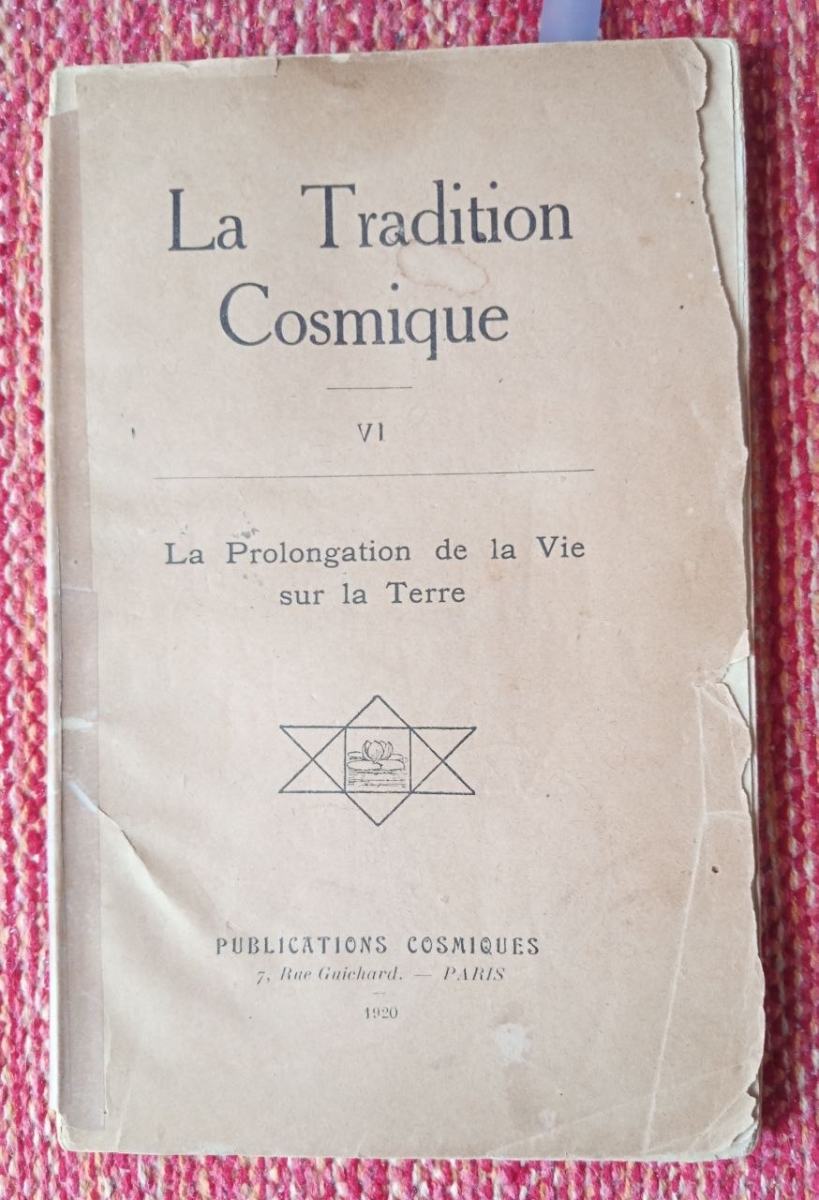
***
Leave a Reply